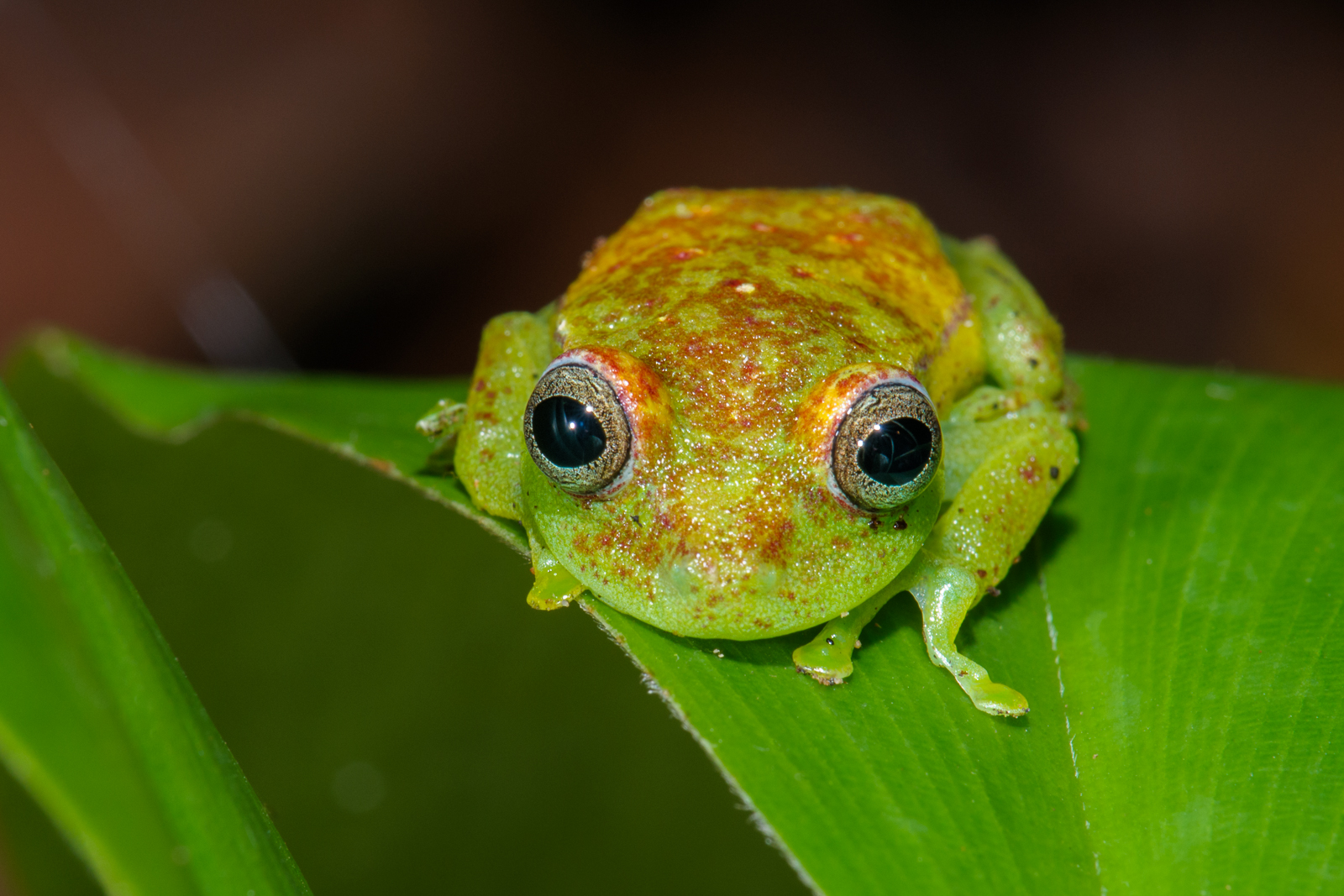
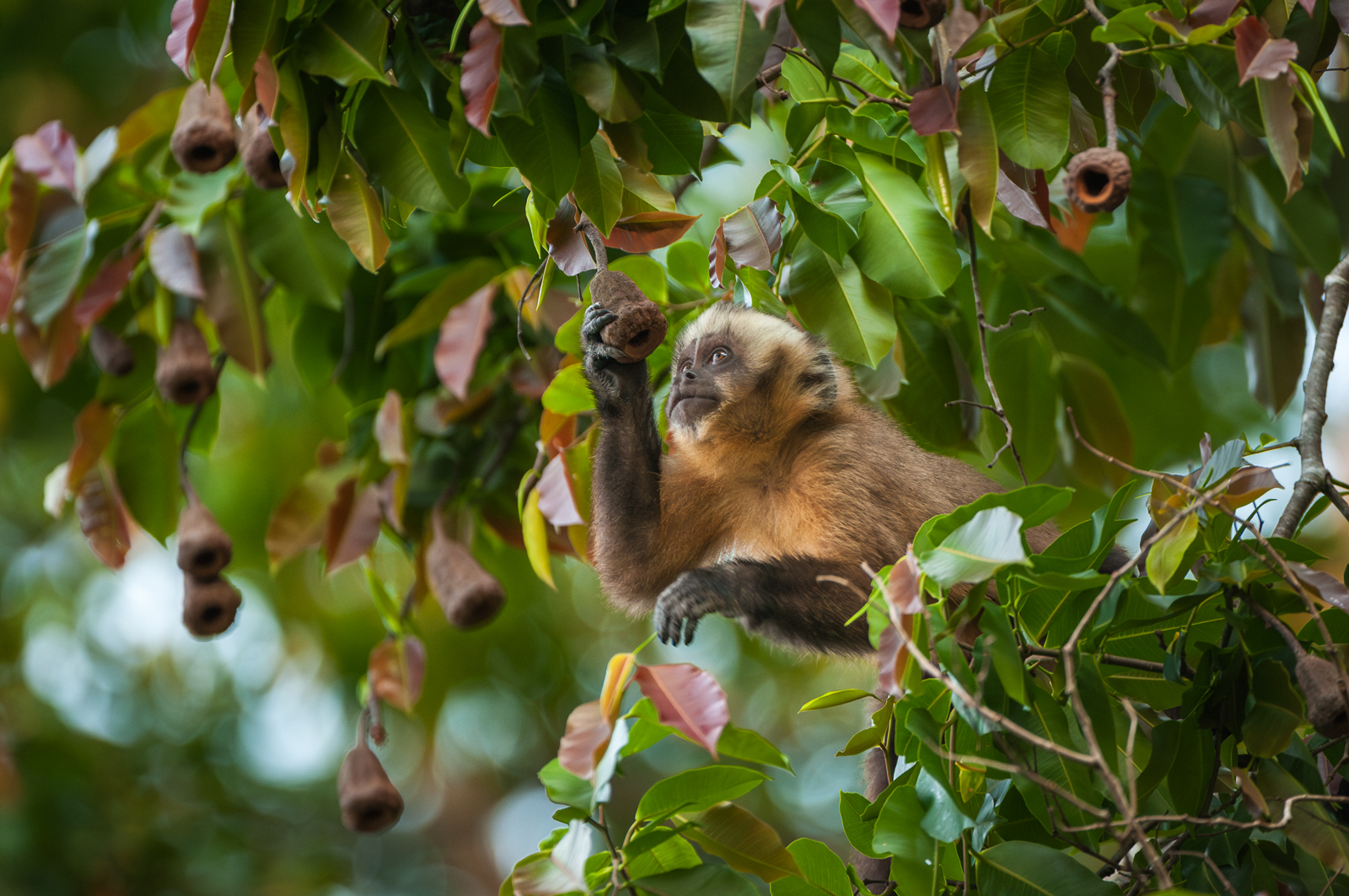
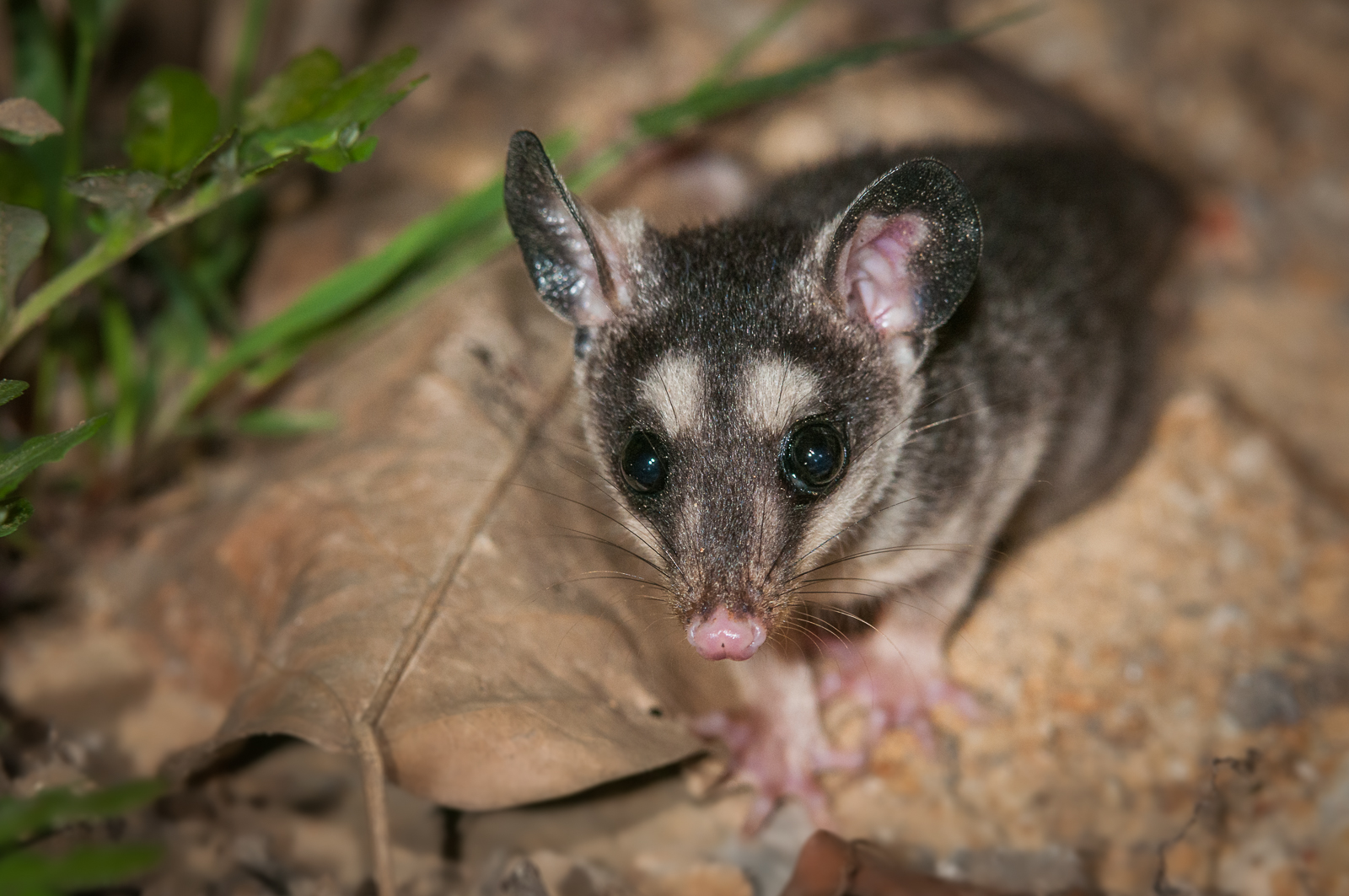
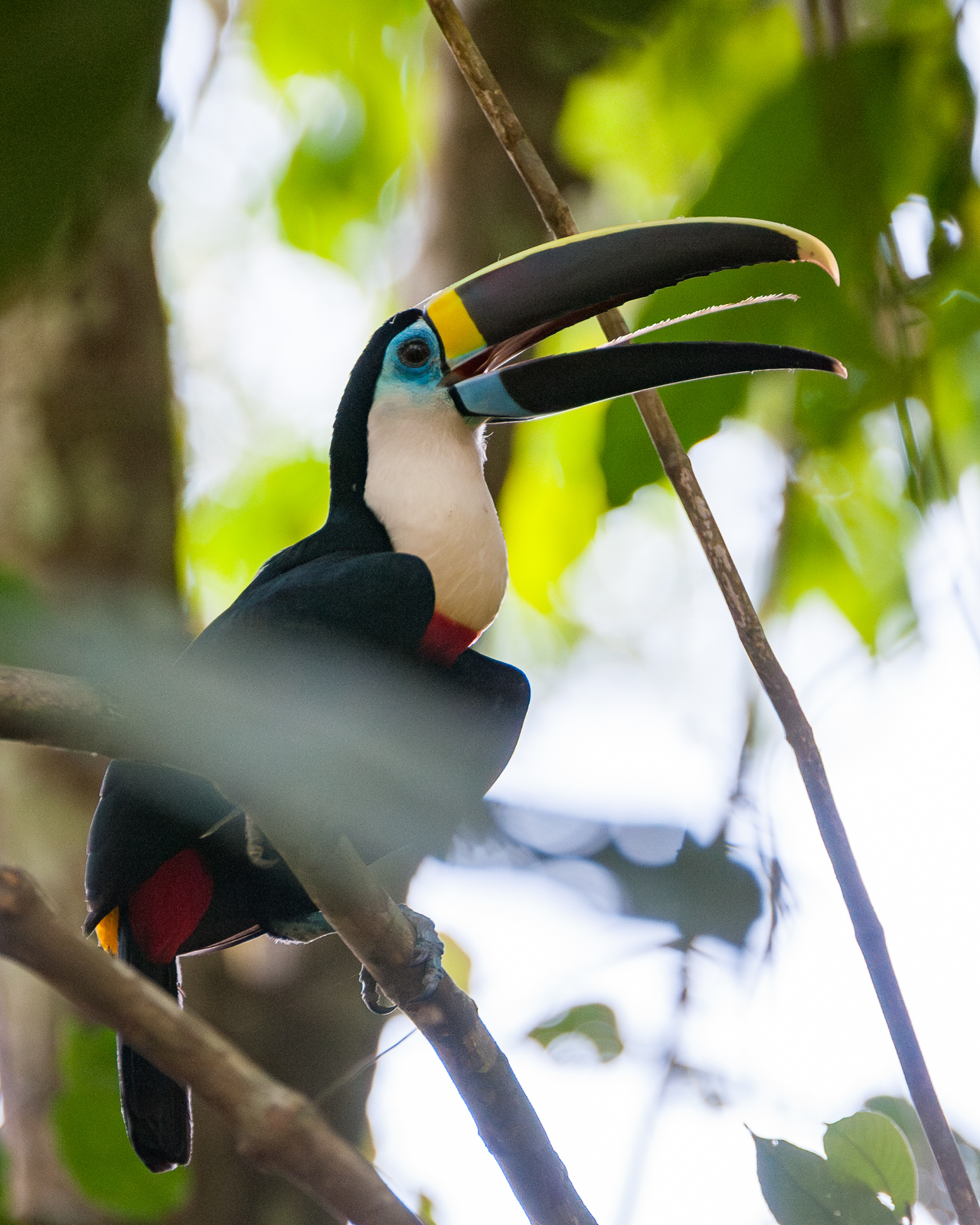
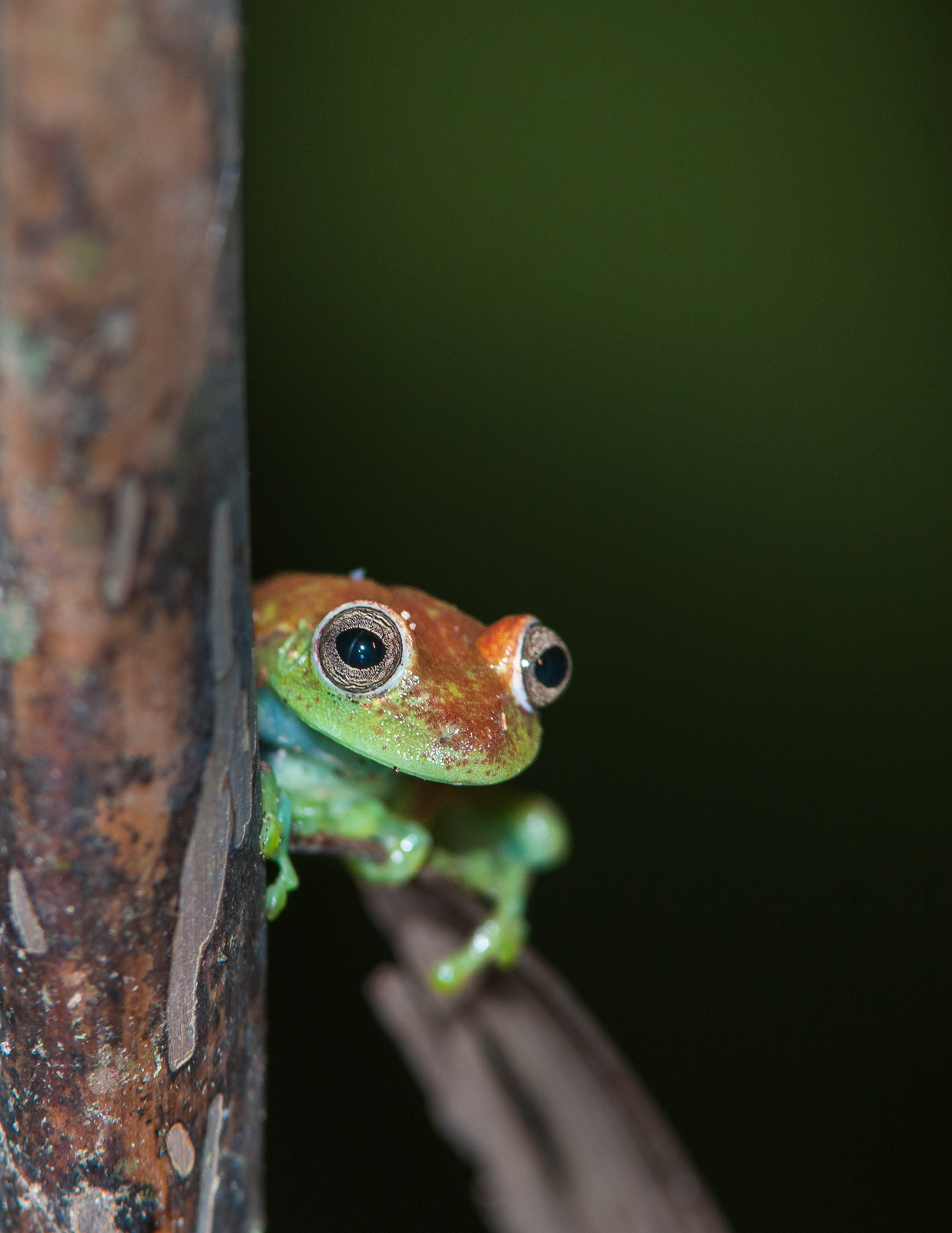
The polka-dot tree frog is quite common in forest-edge and secondary-growth habitats and is often seen perched on broad leaves like this little guy, photographed in Madidi National Park in the Bolivian Amazon. Nikon D300 with Nikkor 70-200mm lens (at 200mm with Canon 500D close up filter) ISO 200, f/20 at 1/60th of a second, Nikon SB-800 flash.
The brown capuchin, also known as the tufted capuchin, is found throughout the upper half of South America. I’ve photographed them in Brazil, Guyana, Peru, Ecuador, and Bolivia where I took this shot. I always thought it looked like this guy was checking the produce before making a commitment. Nikon D300 with Nikkor 200-400mm lens (at 380mm) ISO 800, f/4 at 1/320th of a second.
This one goes back to 2008 when I traveled to the Pampas region of Bolivia. It’s difficult to make an exact identification as there are multiple species of mouse opossum, but I believe this to be the Linnaeus’s mouse opossum — a nocturnal marsupial I spotted on a night hike. Nikon D300 with Nikkor 200-400mm lens (at 260mm) ISO 200, f/6.3 at 1/60th of a second.
I’m starting to pull together a trip to Guyana for late January. In my research, I see I’ll have another shot at white-throated toucans. I’ve photographed them recently in Peru, and also on my first trip to Bolivia where this image was taken in Madidi National Park. Toucan tongues are a lot like a woodpecker’s tongue. It almost looks like a feather. The bristles along the edges help the toucan taste and catch food before eating it.Nikon D300 with Nikkor 200-400mm lens (at 400mm) ISO 800, f/4 at 1/800th of a second.
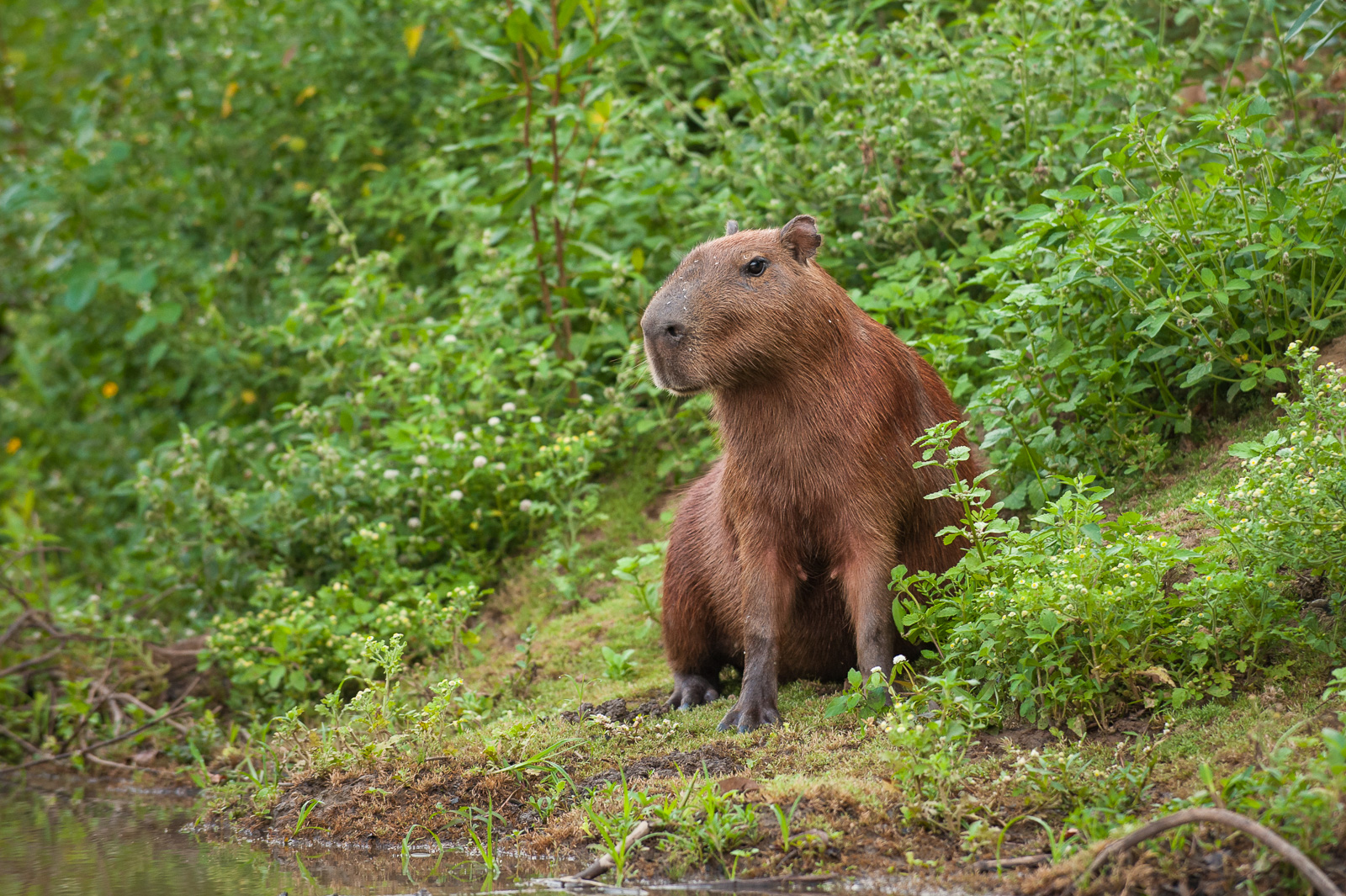
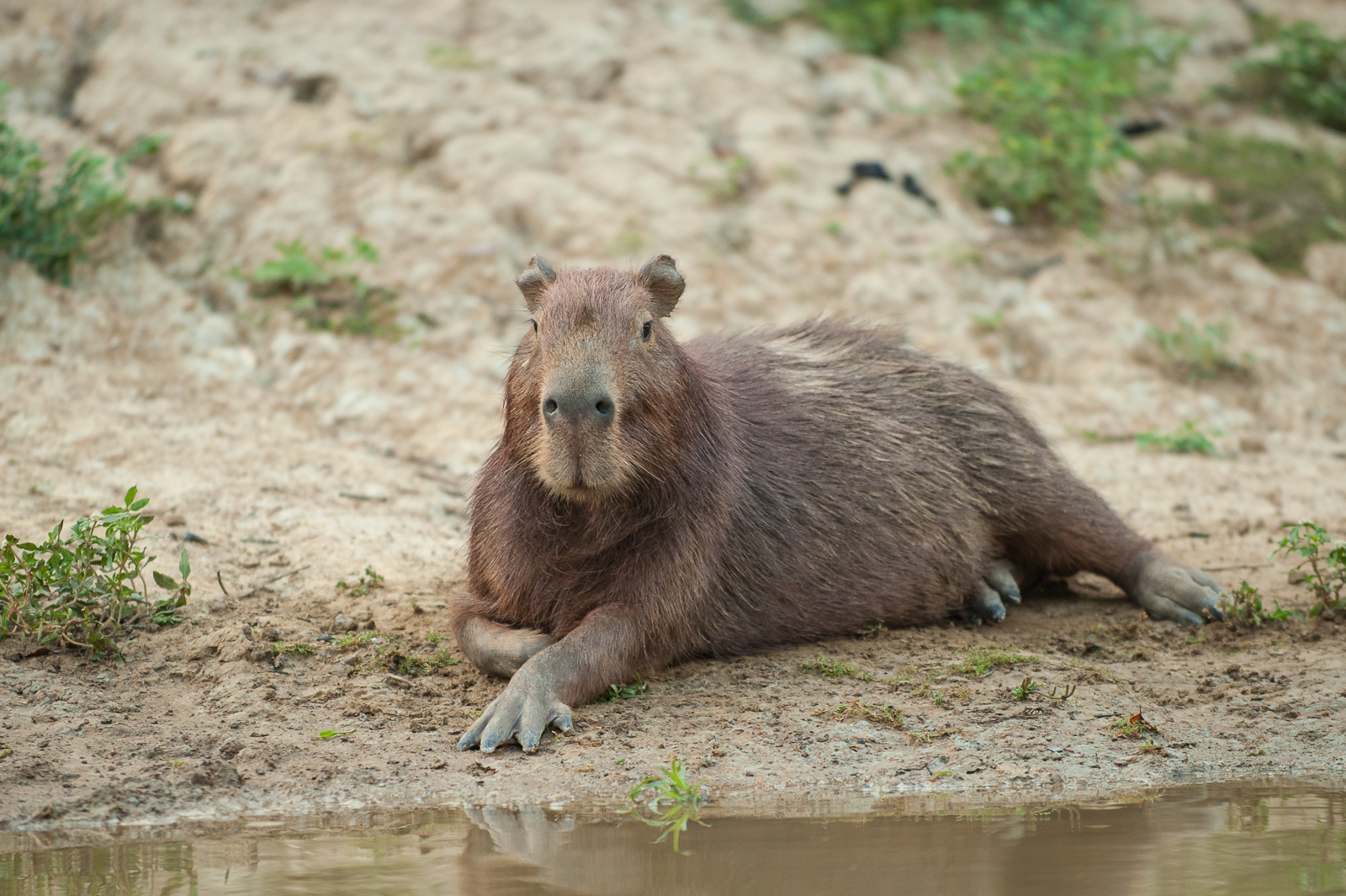
Just a simple shot of a capybara — world’s largest rodent — enjoying the breeze along the Yacuma River in the Pampas region of Bolivia. Nikon D700 with Nikkor 70-200mm lens (at 200mm) ISO 800, f/4 at 1/500th of a second.
A month from today, I’ll finally be back to my international wildlife travels for the first time since before Covid. It’ll just be for a week, but I’ve chosen the Peruvian Amazon. I’ve always loved the Amazon for all it’s varied life both night and day, including the nocturnal tree frogs. This image was taken years ago in the Bolivian Amazon. It’s a polka-dot tree frog. Interesting note about these guys. In 2017, scientists discovered — quite by accident — that their skin is naturally fluorescent. They were studying a frog for other reasons and put it under ultraviolet light. That was only five years ago, but biologists now know that quite a few species of frogs exhibit a natural, bright green fluorescent glow when exposed to UV light. It’s thought that the fluorescence plays a role in communication, camouflage and mating. Nikon D300 with Nikkor 200-400mm lens (at 400mm) ISO 200, f/5.6 at 1/60th of a second, two Nikon SB-600 flash units.
A capybara seems a bit too comfortable along the Yacuma River in the Pampas region of Bolivia. In reality, there’s not a lot of time to relax for capybaras as they are the favorite prey of larger animals in the area like jaguars and caiman. Capybaras are quite robust themselves, and noteworthy for being the largest rodents in the world. Nikon D700 with Nikkor 70-200mm lens (at 200mm) ISO 800, f/2.8 at 1/800th of a second.
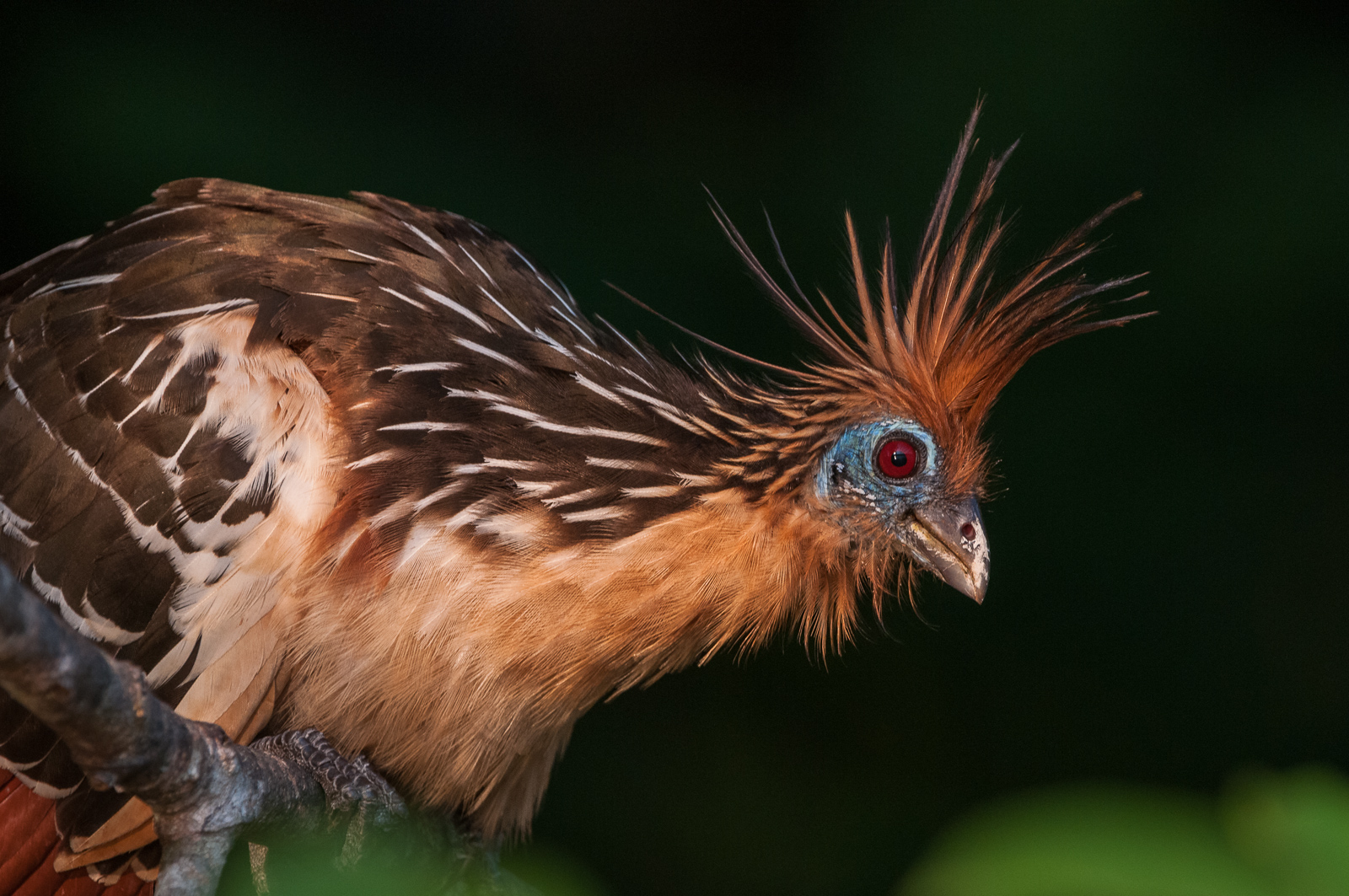
Hoatzin’s are pretty unique birds. They are pheasant-sized and live in much of northern South America, throughout the Amazon region. They are sometimes called the skunk bird or stinkbird because of the foul oder that comes from the fermentation of food in their digestive system. Another interesting fact is that chicks have claws on two of their wing digits. I photographed this hoatzin from a canoe while in the Bolivian Amazon. Nikon D300 with Nikkor 200-400mm lens (at 400mm) ISO 800, f/5.6 at 1/800th of a second.
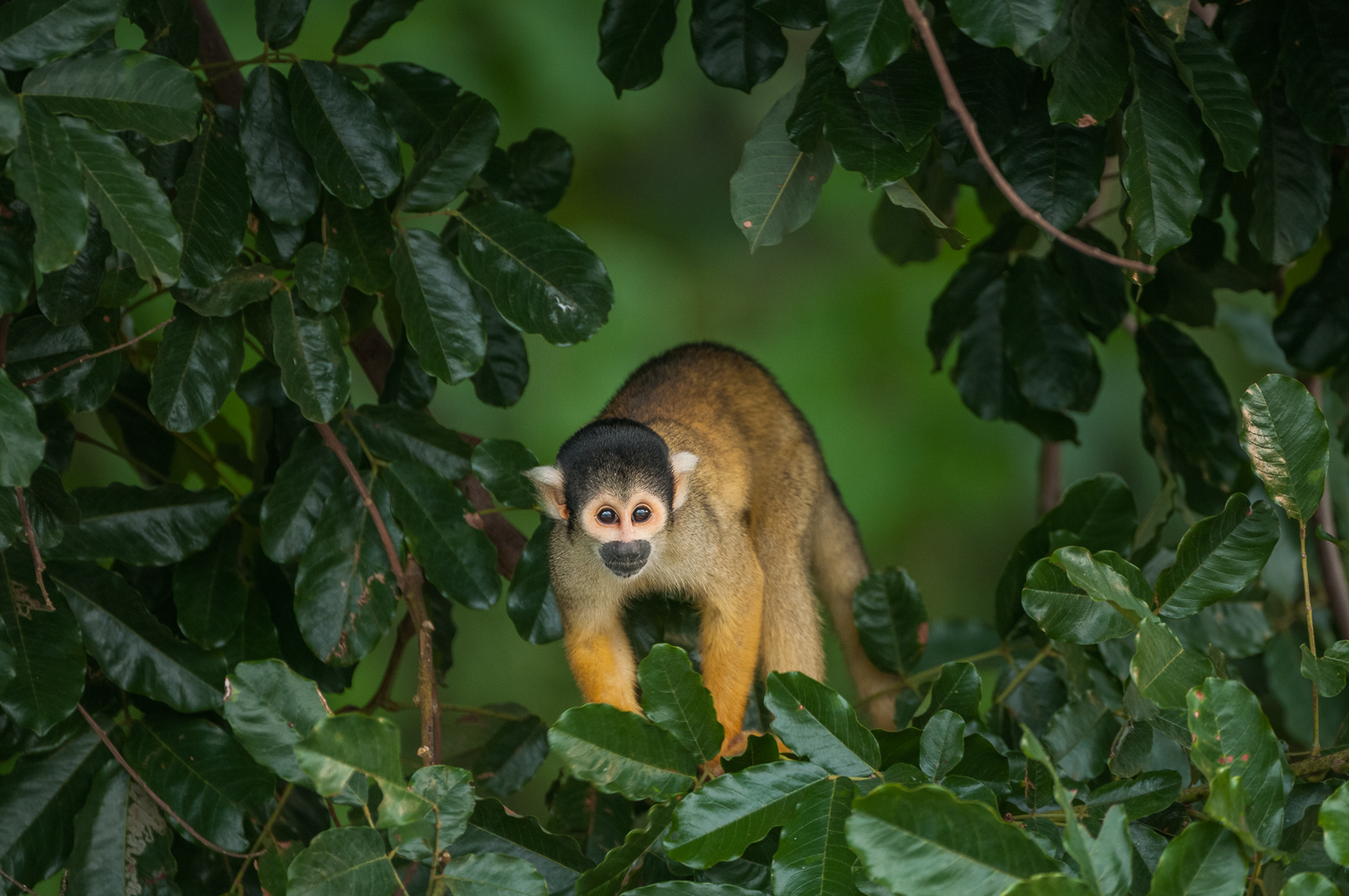
Identifying the various species and sub-species of squirrel monkeys can get confusing. This is the Bolivian squirrel monkey, but also goes by the yellow squirrel monkey. Photographed from a boat in Madidi National Park in the Bolivian Amazon. Nikon D300 with Nikkor 200-400mm lens (at 400mm) ISO 800, f/4 at 1/125th of a second.
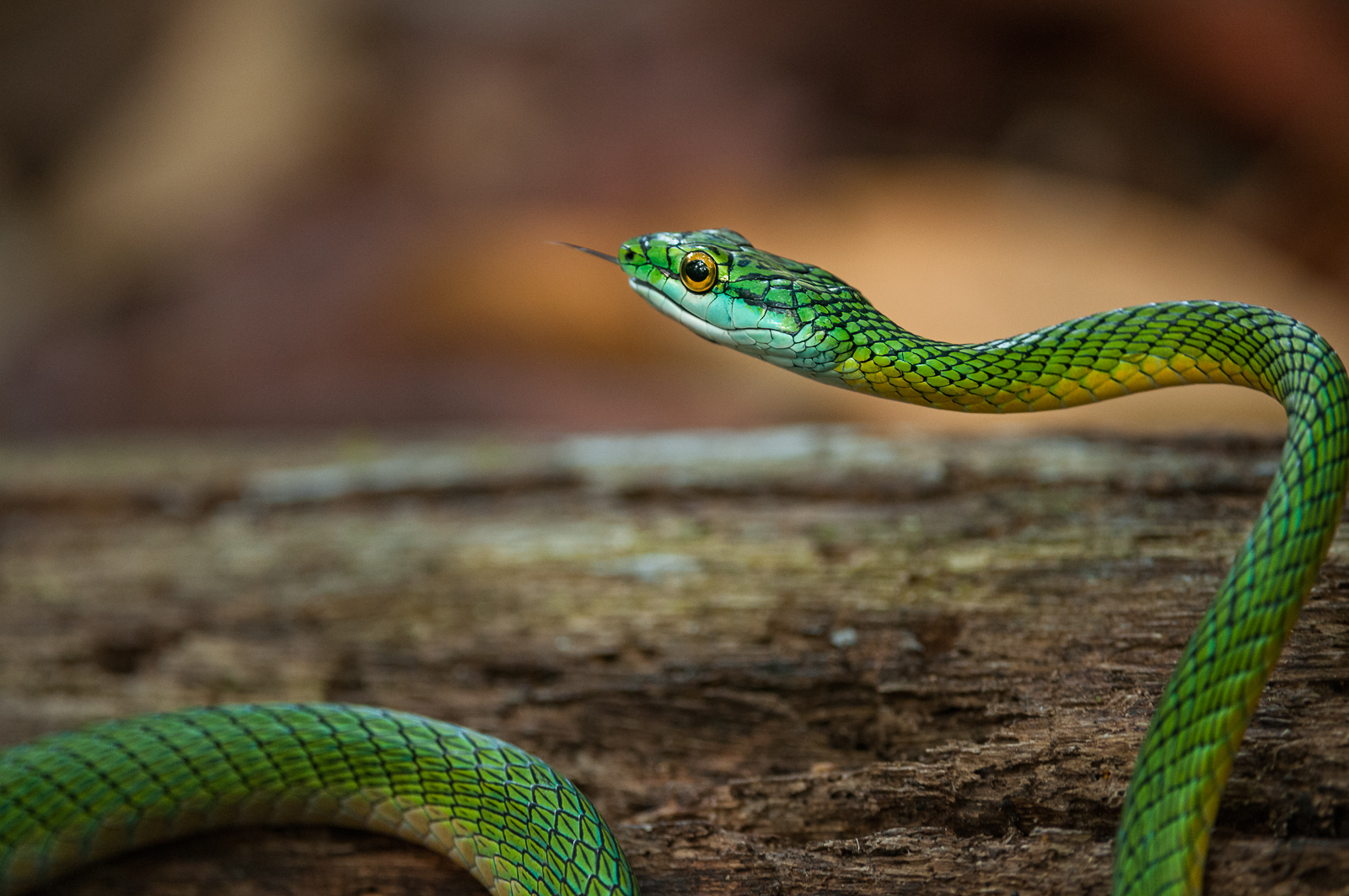
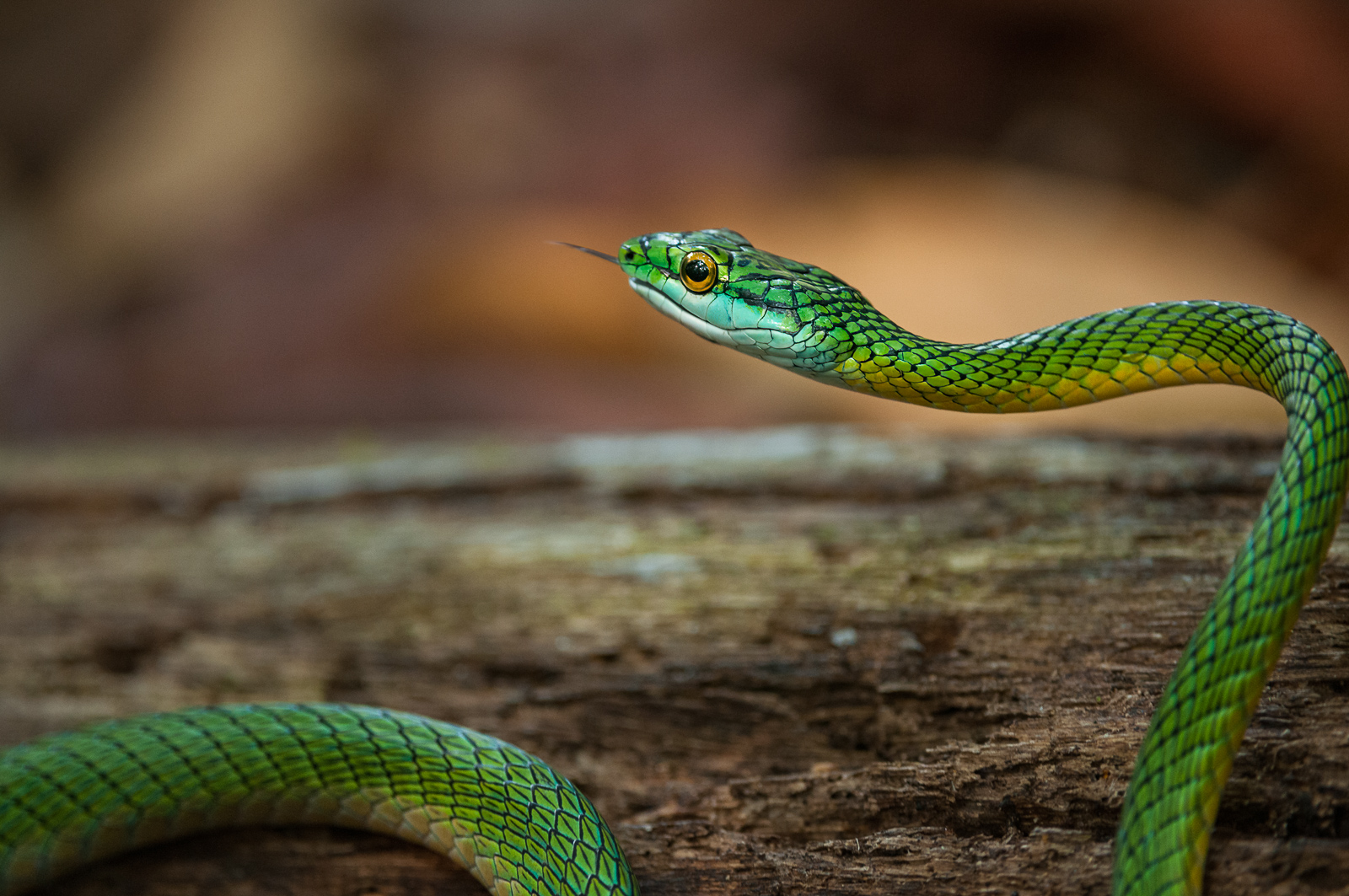
This is one of the better looking snakes I’ve had the pleasure of photographing — the green parrot snake. They are classified as “slightly venomous.” As such, they pose very little threat to humans. If bit, you might experience some localized swelling and a stinging sensation which subsides in a few hours. Luckily, I didn’t get the opportunity to test out the experience. This guy posed for a few shots before slithering off into the forest of Madidi National Park in the Bolivian Amazon. Nikon D300 with Nikkor 200-400mm lens (at 340mm) ISO 800, f/4 at 1/40th of a second.
We use cookies to enhance your experience while using our website. If you are using our Services via a browser you can restrict, block or remove cookies through your web browser settings. We also use content and scripts from third parties that may use tracking technologies. You can selectively provide your consent below to allow such third party embeds. For complete information about the cookies we use, data we collect and how we process them, please check our Privacy Policy