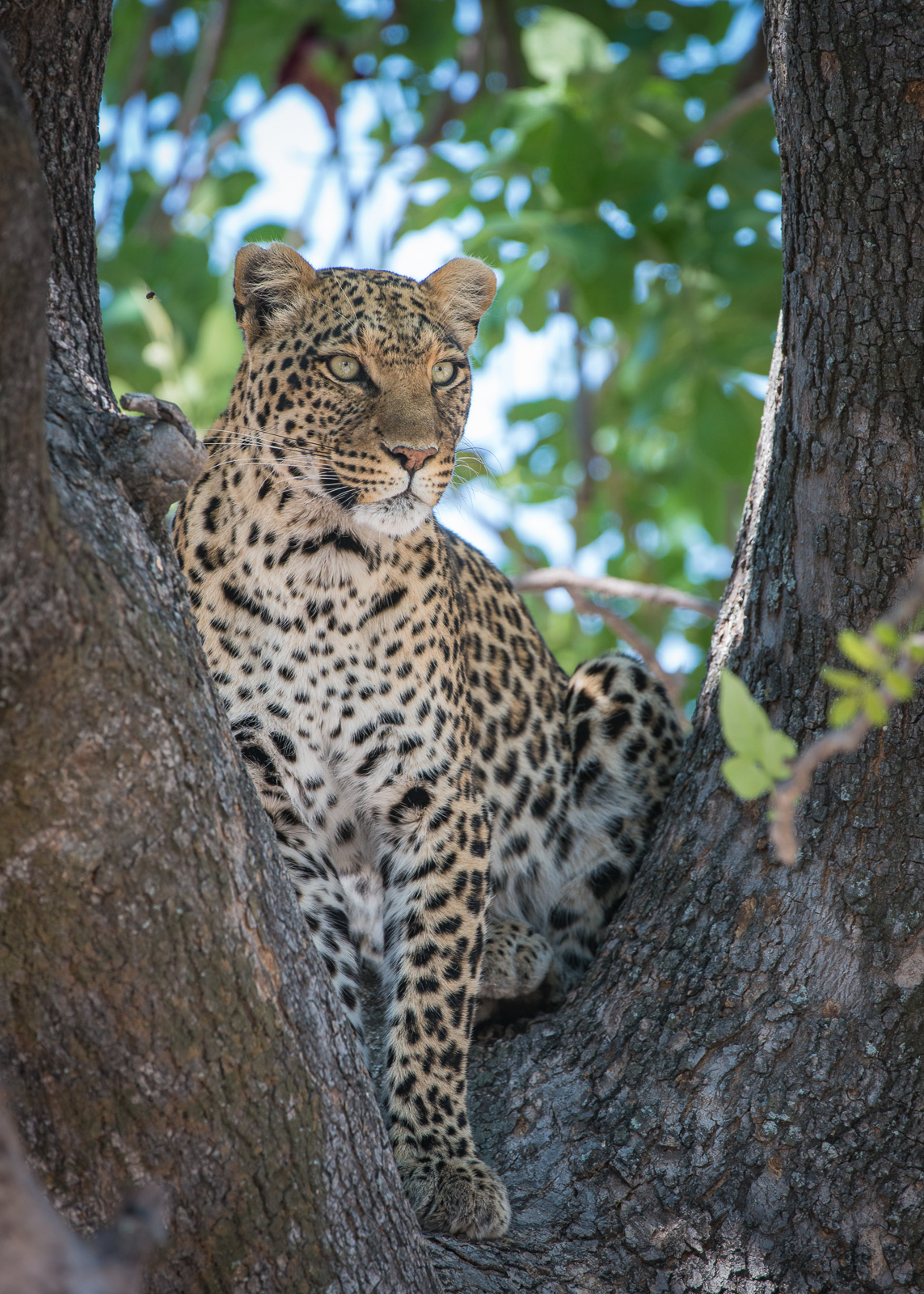
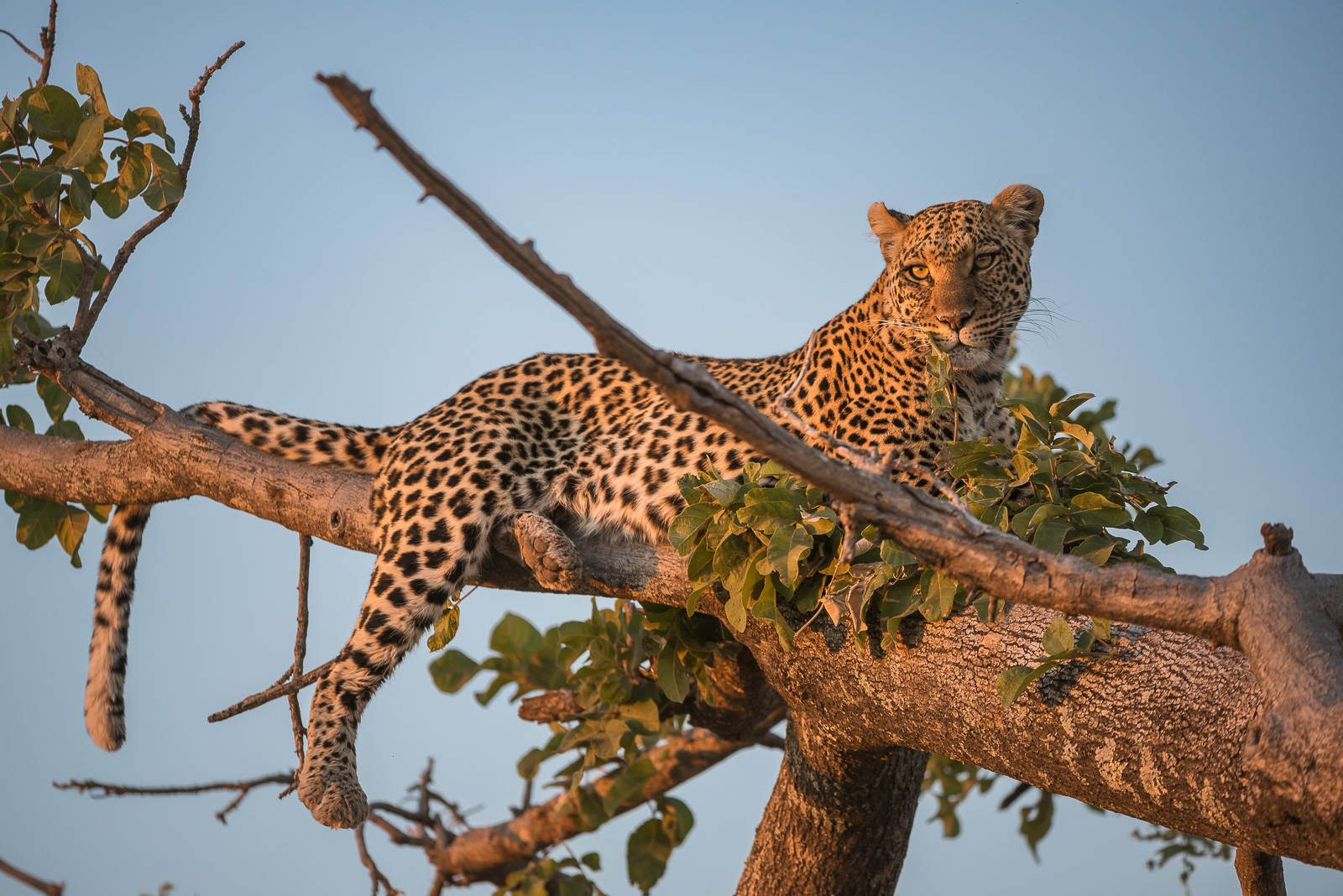
This leopard was watching an unsuspecting herd of impala as they slowly moved toward the tree. Unlike lions, leopards are solitary cats that hunt on their own. It’s rare to see more than one at a time unless it’s a mother with a cub, or a mating pair. I photographed this one in Botswana. Nikon D800 with Nikkor 200-400mm lens (at 400mm) ISO 800, f/5.6 at 1/250th of a second.
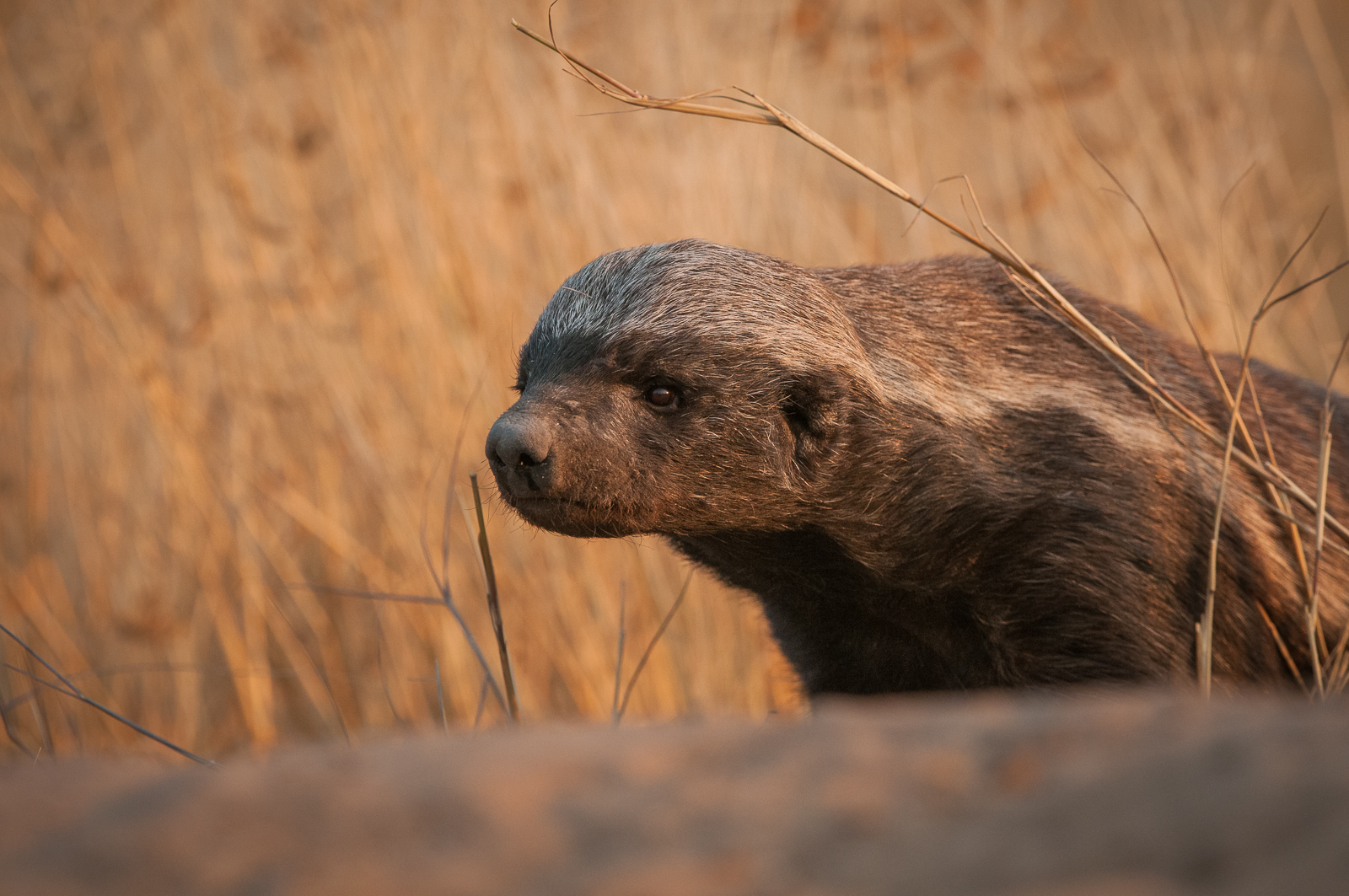
I’ve had a few encounters with honey badgers on my travels to Africa. This was the first of those encounters, photographed late afternoon in the Kalahari Desert of Botswana. Honey badgers have a fierce reputation due to their ability to fight back against larger predators. Their main defense is unusually tough, while at the same time loose skin. When a predator like a leopard gets ahold of a honey badger, the honey badger is able to turn around inside its own skin and fight back while the leopard tries to navigate a fatal bite. This toughness allows the smaller animal to make frequent escapes. Nikon D300 with Nikkor 200-400mm lens (at 330mm) ISO 800, f/5.6 at 1/640th of a second.
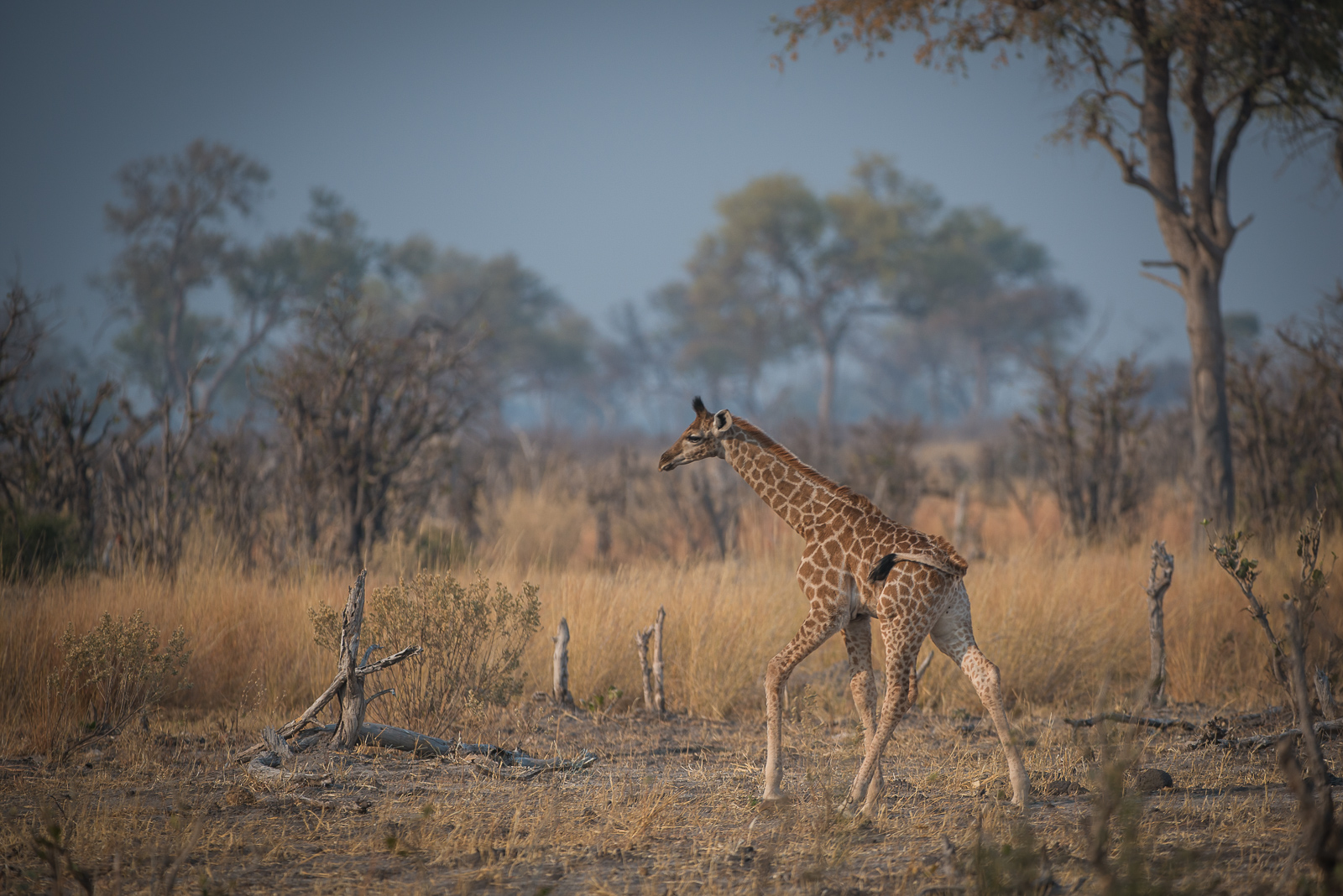
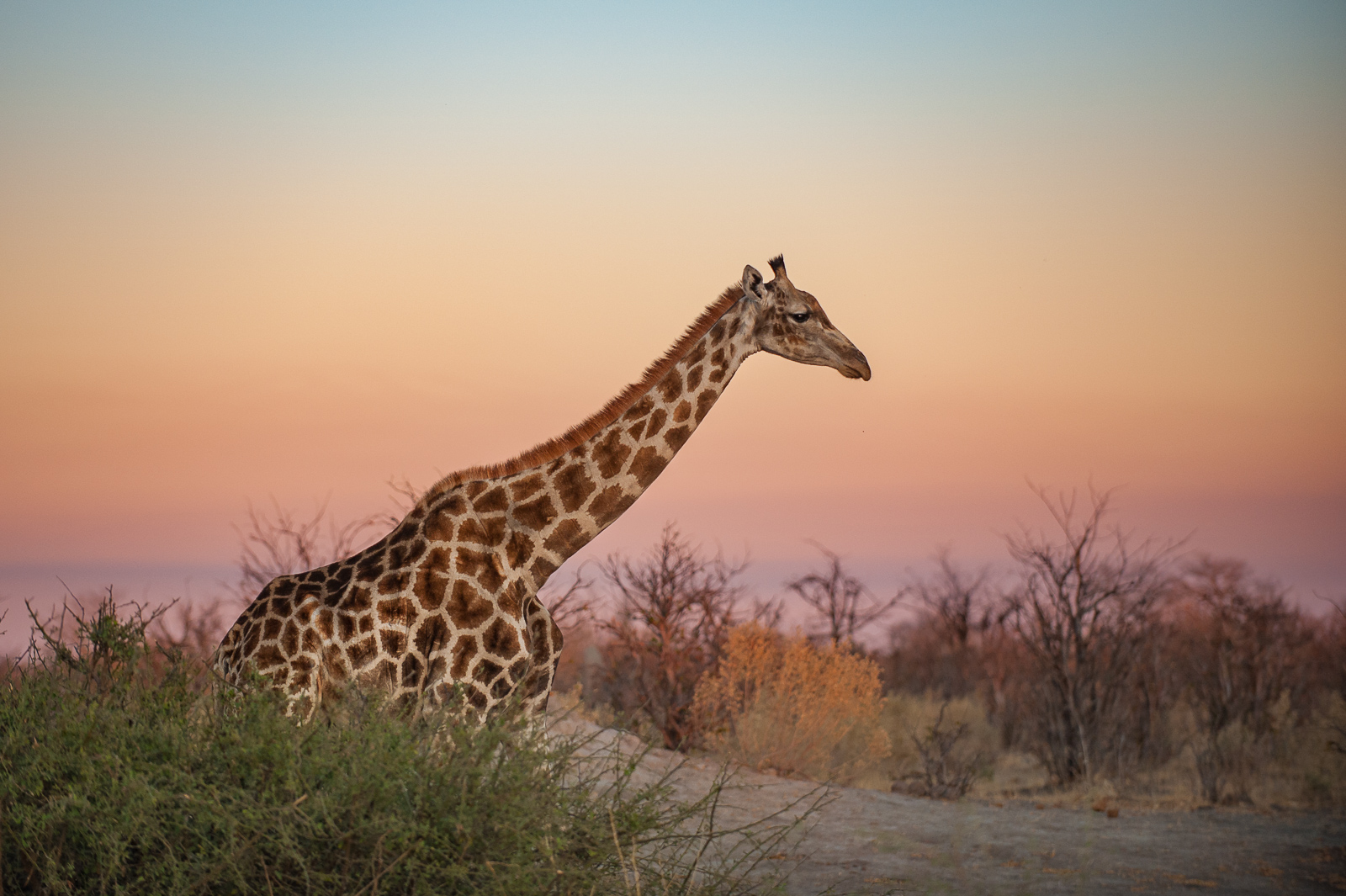
This young giraffe lost track of mom and was heading back to safety. You can see the scrub land conditions that cover much of the Linyanti region of Botswana. Nikon D800 with Nikkor 200-400mm lens (at 330mm) ISO 400, f/4 at 1/2000th of a second.
For the majority of the day, lighting in Botswana’s scrublands can be harsh on sunny days. But when that sun hits the horizon, all that scrub brush takes on a whole new look. And there’s usually a subject or two around to pose for the camera. Nikon D700 with Nikkor 70-200mm lens (at 150mm) ISO 800, f/2.8 at 1/1000th of a second.
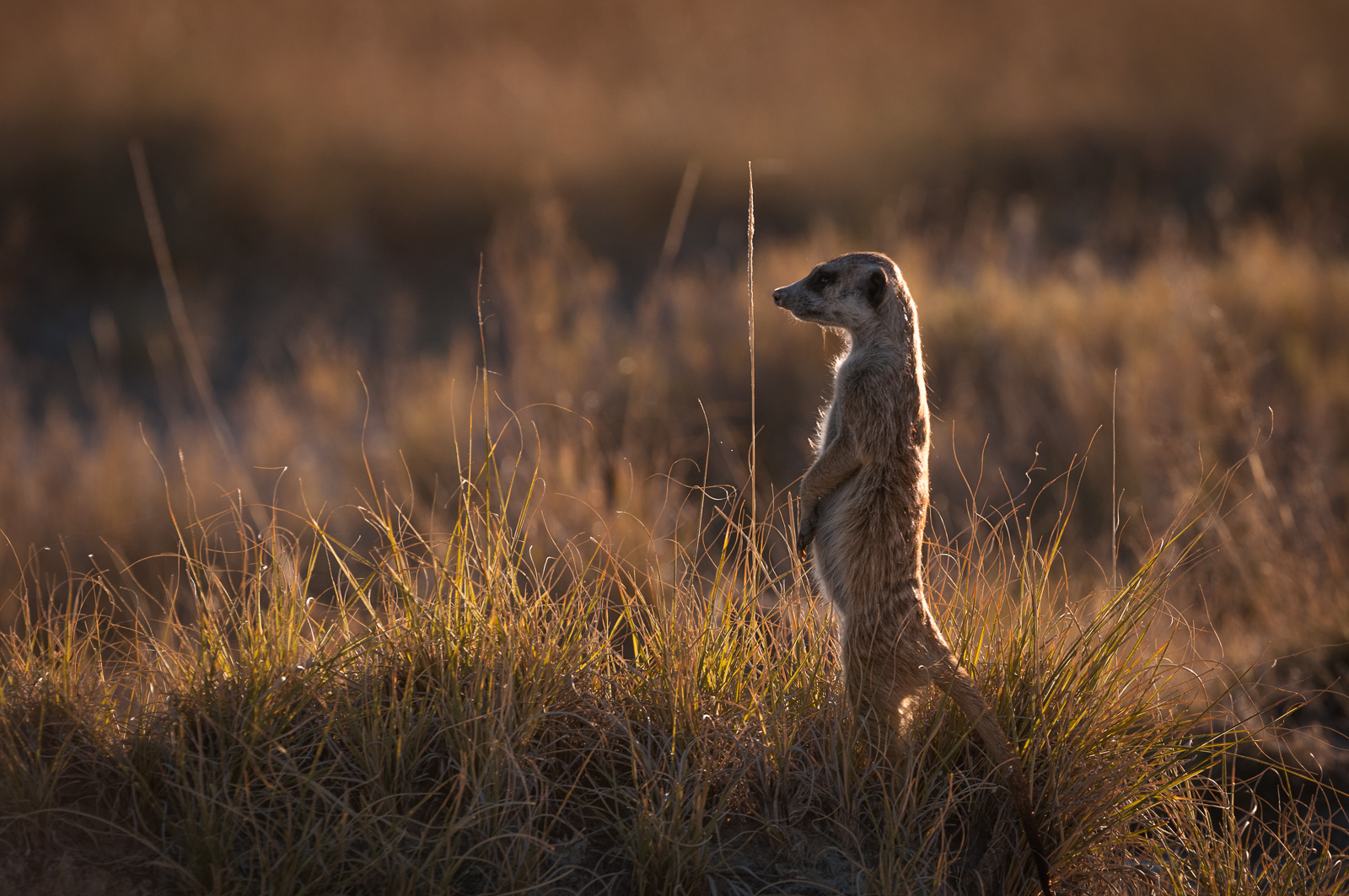
Meerkats do a lot of standing around. But it is well orchestrated standing around. They take turns on guard duty and have a well-oiled system of cooperation when it comes to protecting the gang (or mob as a group of meerkats is also called). Gangs can typically be up to 40 members. Photographed in the Kalahari Desert of Botswana. Nikon D300 with Nikkor 200-400mm lens (at 400mm) ISO 400, f/5.6 at 1/500th of a second.
Leopards hunt both day and night. The sun was setting on the savanna of Botswana, but shortly after I captured this image, the leopard headed out on her nightly hunt. Nikon D800 with Nikkor 200-400mm lens (at 340mm) ISO 800, f/4 at 1/640th of a second.
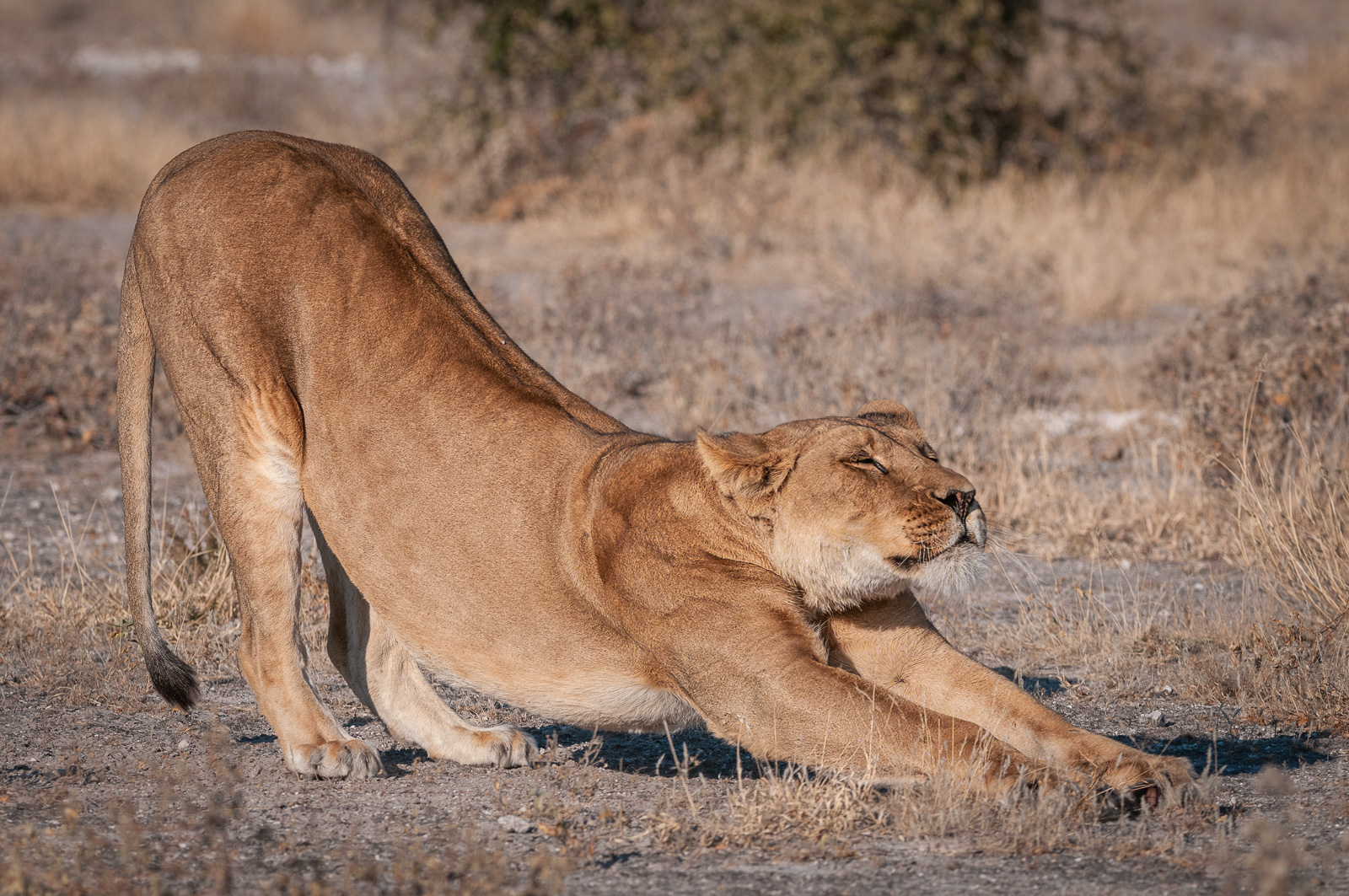
A female lion doing her best downward dog. This image was captured in the Kalahari Desert of Botswana, which proved to be a surprisingly good location for lion sightings. I, of course, wish I could have gotten a lower perspective, but not a good idea to get out of a safari vehicle with big cats present. Nikon D300 with Nikkor 200-400mm lens (at 250mm) ISO 400, f/5.6 at 1/2000th of a second.
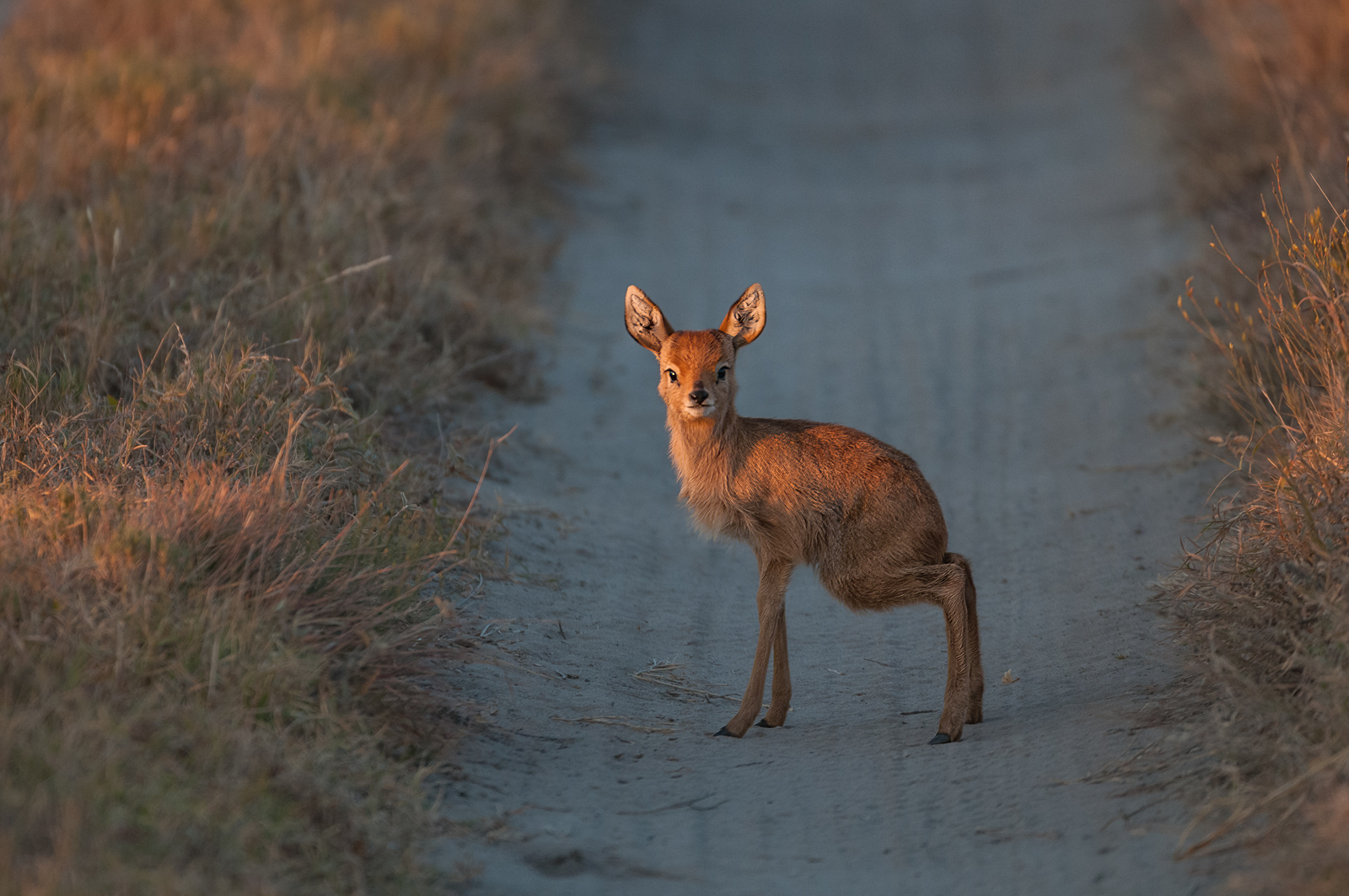
I posted an image of this baby steenbok in the past, but it’s worth a re-post. Even as adults these African antelopes are pretty small, so as calves they are really tiny. For perspective, that’s not the entire width of the dirt road the steenbok is standing in. It’s just one of the two tire tracks that make up the single lane road. Photographed on safari in northern Botswana. Nikon D300 with Nikkor 200-400mm lens (at 400mm) ISO 800, f/4 at 1/640th of a second.
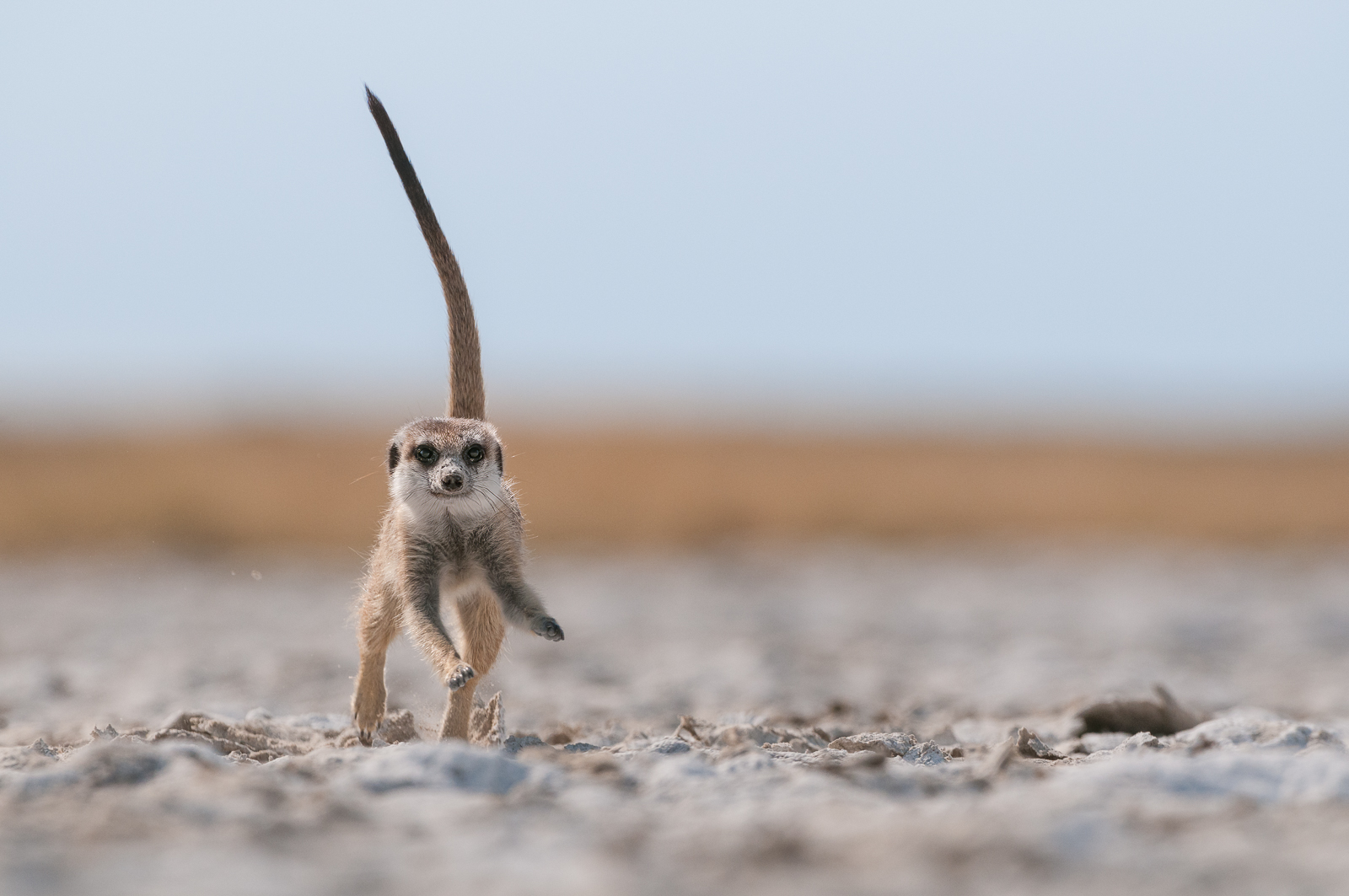
The meerkats put on quite a show when I visited them in the Makgadikgadi Pan in Botswana. Lots of action as they foraged, played and ran around alerting each other of potential danger. Nikon D300 with Nikkor 200-400mm lens (at 400mm) ISO 400, f/6.3 at 1/2500th of a second.
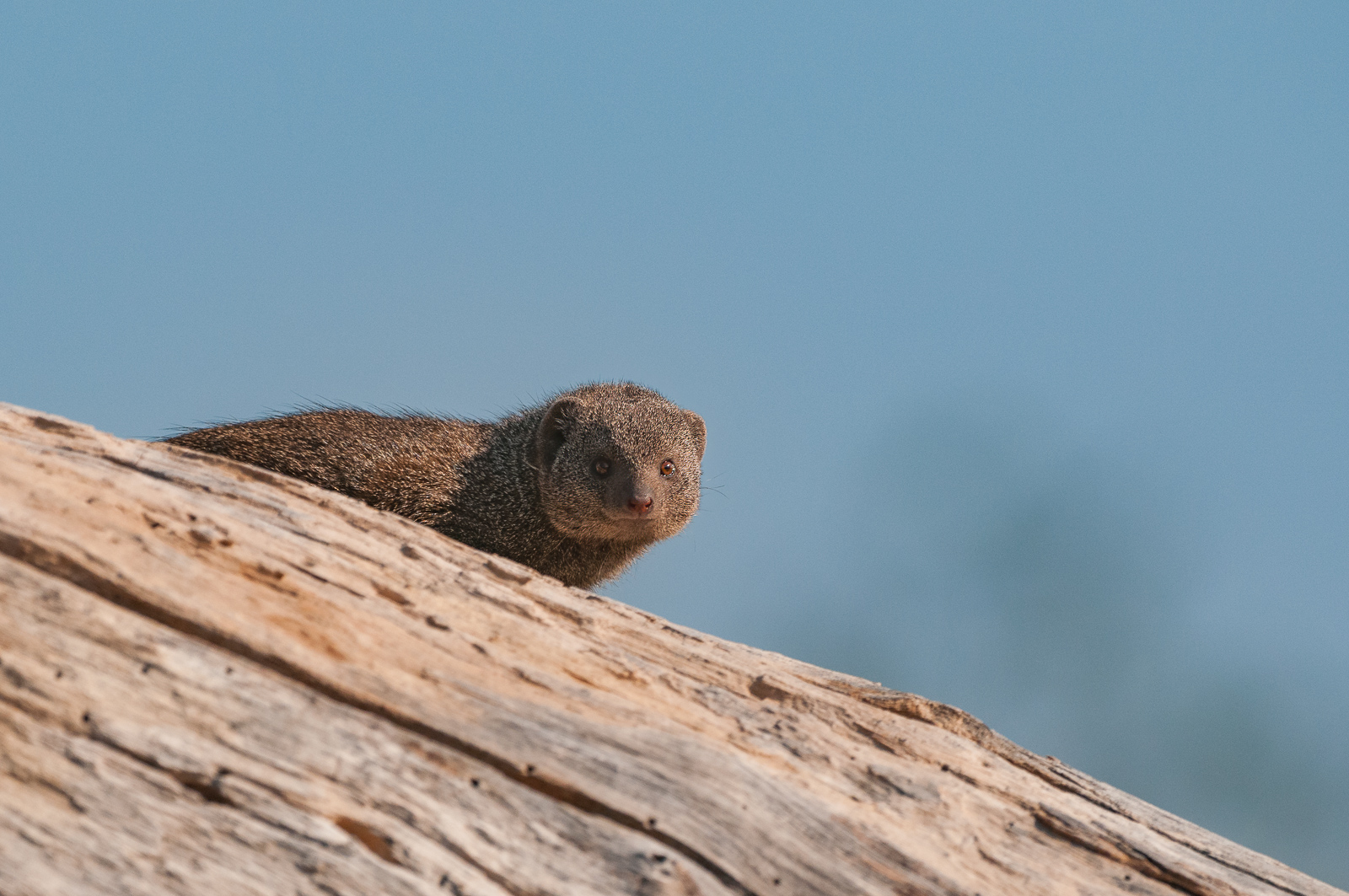
Less favorable light than I typically like to shoot in, but at least I was able to get a clean background for this dwarf mongoose in the Okavango Delta of Botswana. Interesting fact about the dwarf mongoose — they have a mutualistic relationship with hornbills (like the one I posted on February 8th). They will forage alongside each other in order to warn one other of any approaching predators. Nikon D300 with Nikkor 200-400mm lens (at 400mm) ISO 400, f/5.6 at 1/1600th of a second.
We use cookies to enhance your experience while using our website. If you are using our Services via a browser you can restrict, block or remove cookies through your web browser settings. We also use content and scripts from third parties that may use tracking technologies. You can selectively provide your consent below to allow such third party embeds. For complete information about the cookies we use, data we collect and how we process them, please check our Privacy Policy