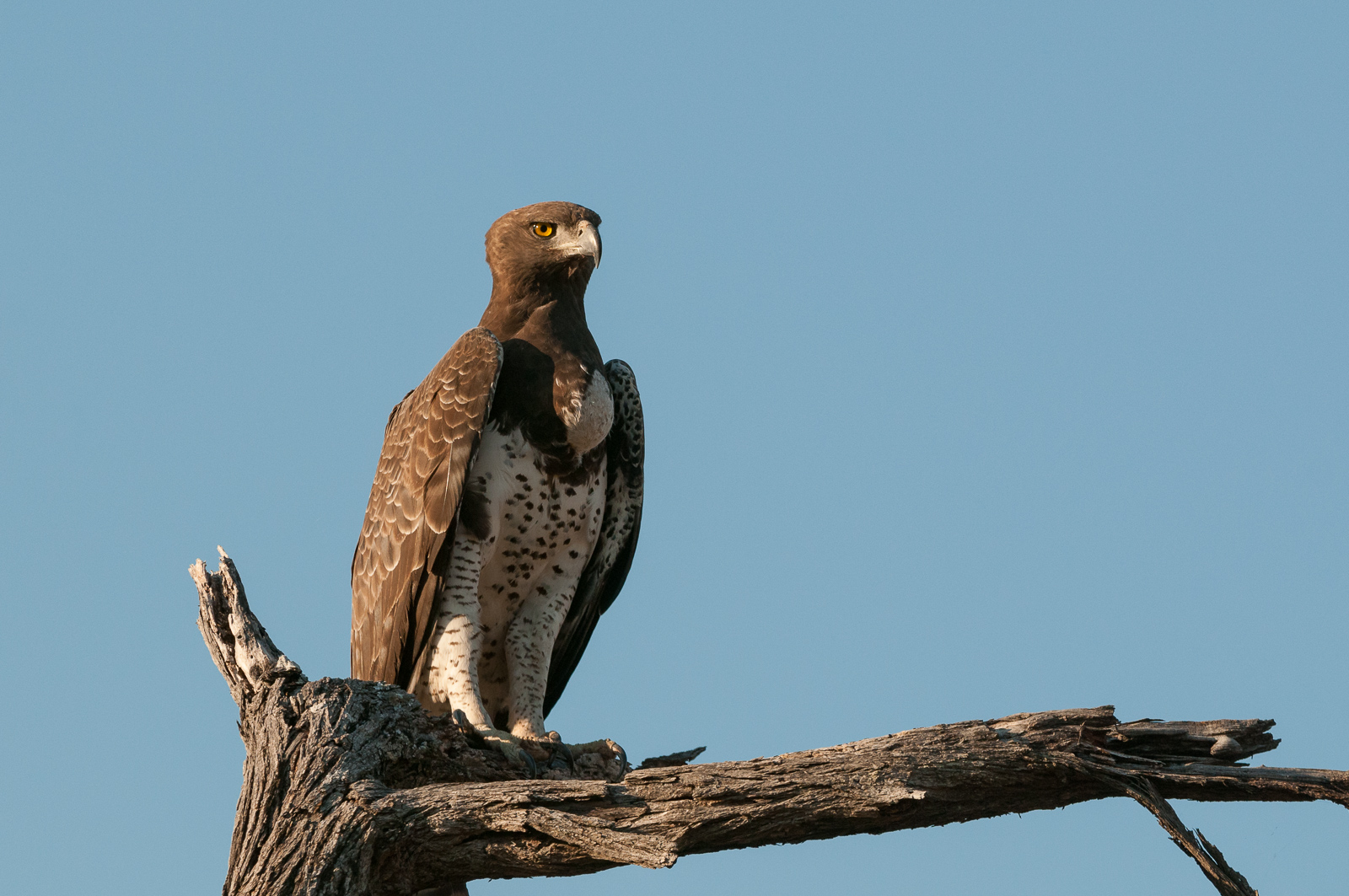
The martial eagle is the apex predator at the top of the avian food chain throughout its range in southern and central Africa. They are very large eagles (with a wingspan of nearly 7 feet) and can be ferociously efficient hunters. Those two traits combined with their spotted chests have earned them the nickname of “leopard of the sky.” When it comes to diet, martial eagles are opportunists, preying on everything from reptiles, amphibians and small mammals to even mid-sized ungulates. Because they will attack livestock and other game, they also happen to be one of the most persecuted bird species in the world. They hunt at much higher altitudes than most raptors, mainly due to their incredible eyesight — courtesy of eyes nearly the size of a human. It is estimated that they can spot prey up to 3.7 miles away. I photographed this one in the Okavango Delta of Botswana. Nikon D300 with Nikkor 200-400mm lens (at 300mm) ISO 400, f/5.6 at 1/1000th of a second.
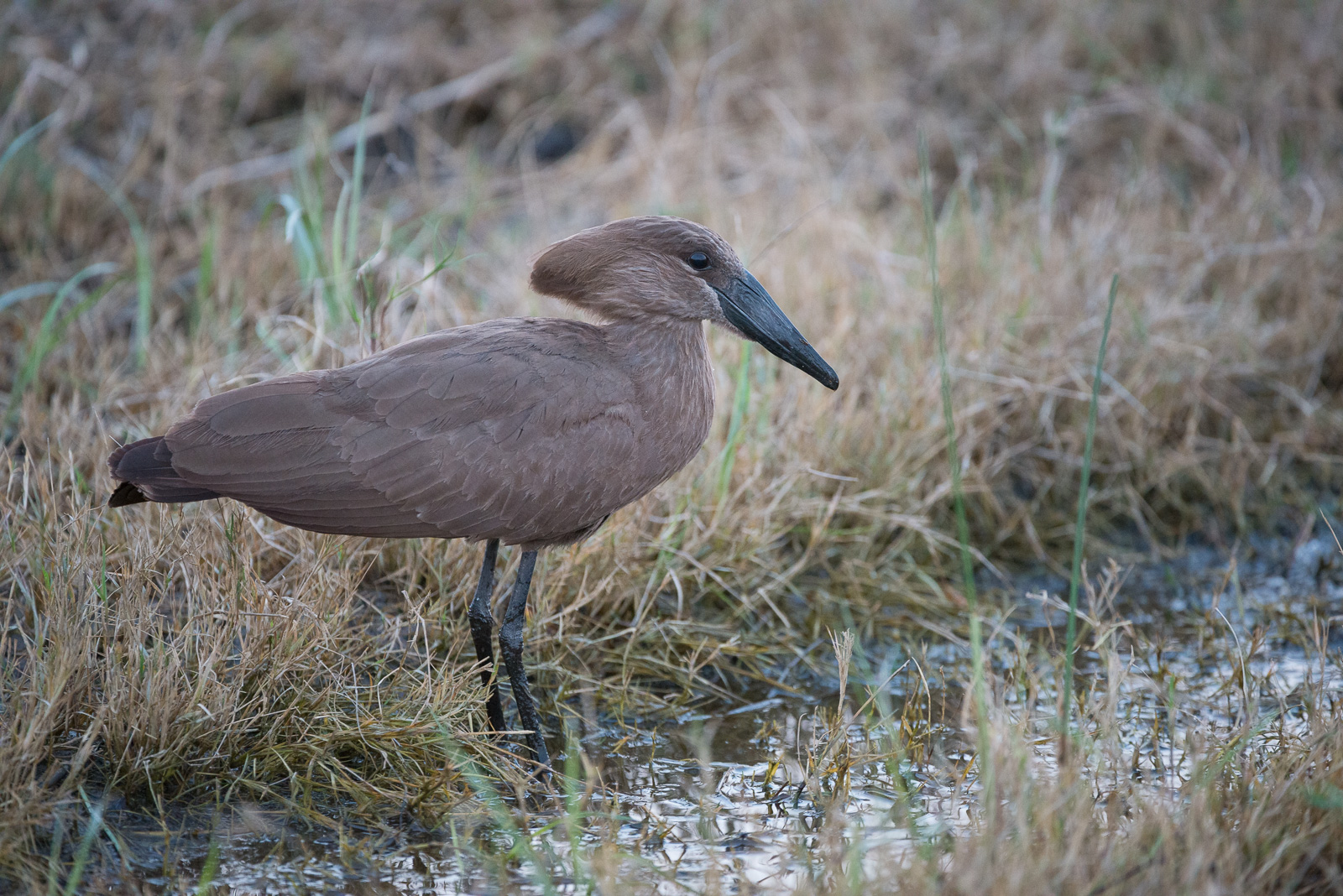
The hamerkop is a fairly common bird throughout much of Africa, but still a good find when you come across one. They get their name from the hammer-like shape of their head. They are generalists when it comes to diet, but prefer fish and amphibians and they can often be seen wading in flooded areas of the savanna. Nikon D800 with Nikkor 200-400mm lens (at 400mm) ISO 3200, f/4 at 1/200th of a second.
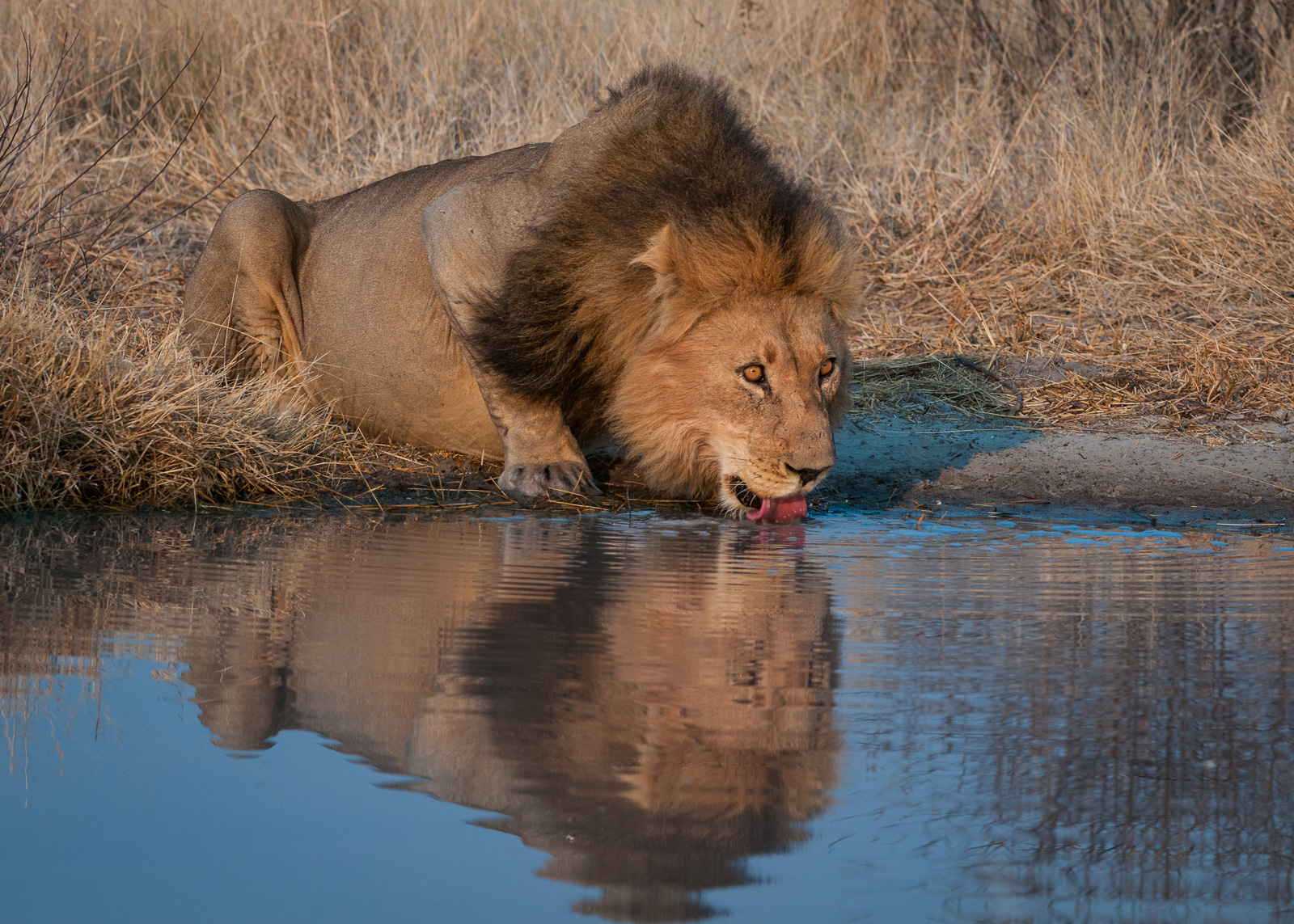
This water hole wasn’t too far from the camp I was staying at in the Kalahari Desert of Botswana. The first few days we had seen quite a few antelope species stopping for a drink, but then finally the big boys showed up. This guy filled up for quite awhile and as soon as he got up to leave, a second big-maned male walked up and took his spot. Nikon D300 with Nikkor 200-400mm lens (at 200mm) ISO 400, f/6.3 at 1/400th of a second.
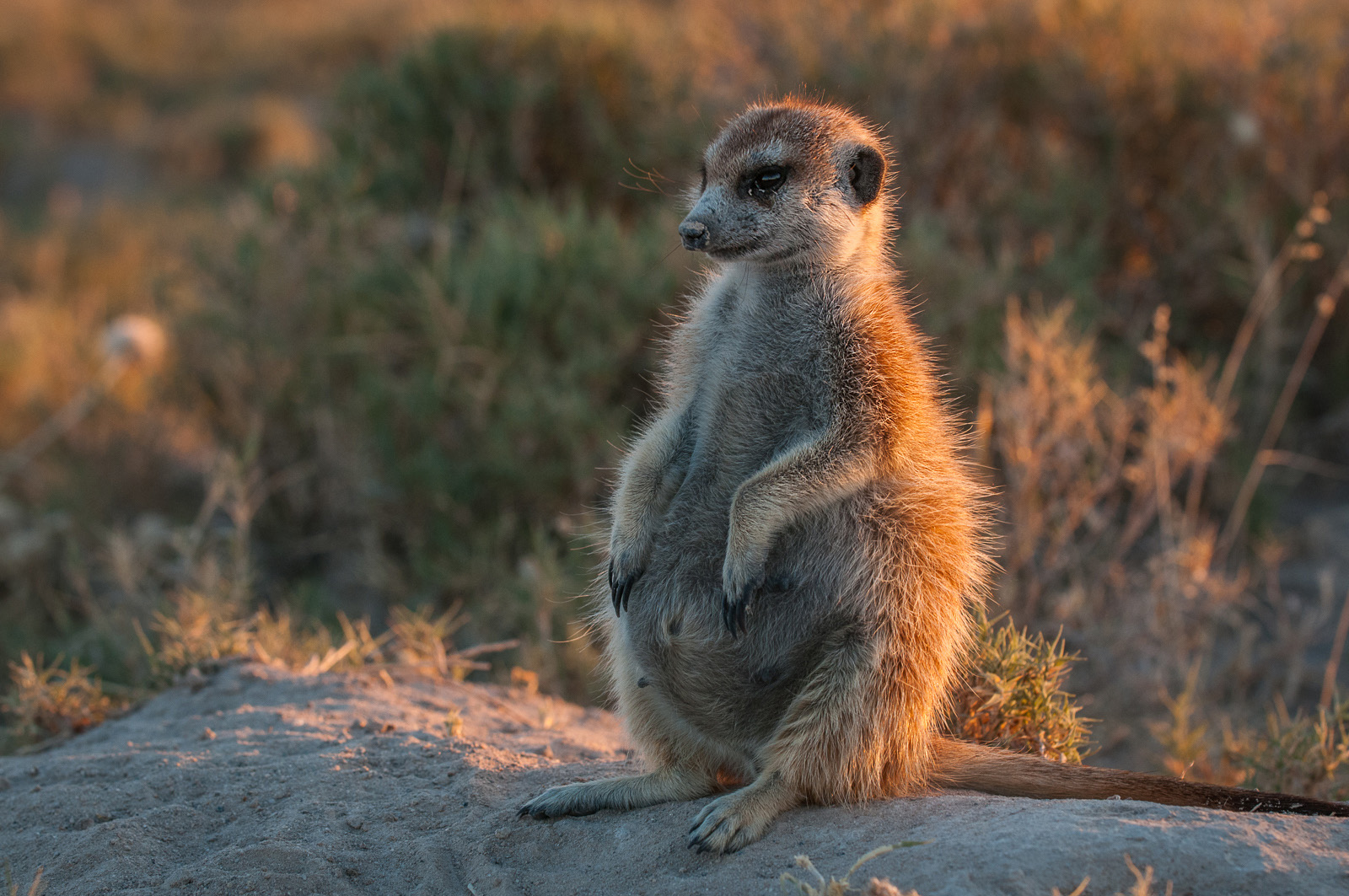
A pregnant meerkat taking a break at the end of the day before heading into the burrow for the night, Makgadikgadi Pans, Botswana. Nikon D300 with Nikkor 70-200mm lens (at 95mm) ISO 400, f/5.6 at 1/200th of a second
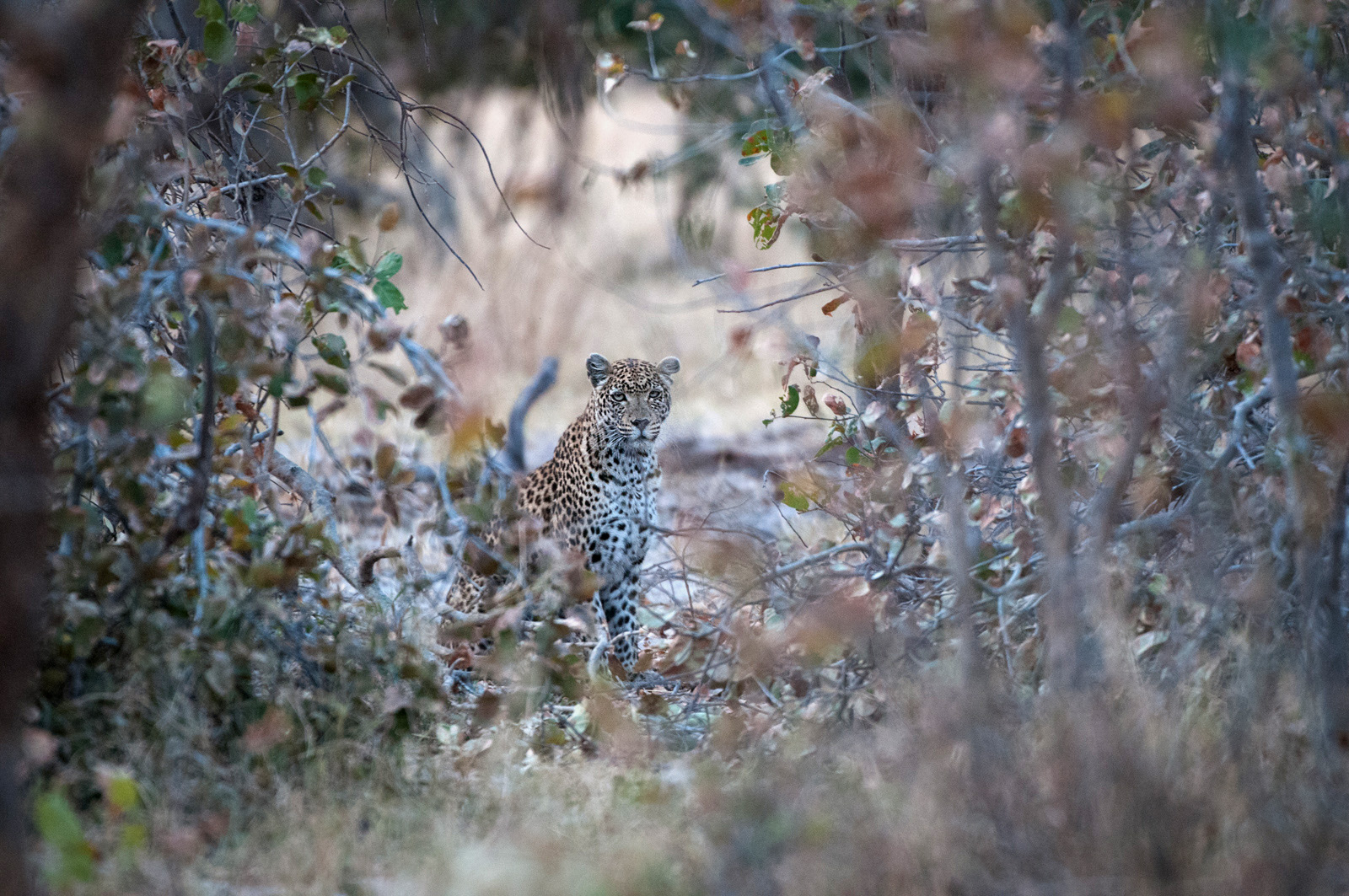
I’ve been on safari in six countries in Africa. Botswana can be the most wild of them, and with the ability to drive anywhere you want, it can be the most enjoyable to track big cats as well as wild dogs. But the scrub forest landscape can also come with more distracting elements, making it more difficult to not only find elusive wildlife, but also to capture good pictures. We had been following leopard tracks for about an hour before we finally found this cat. It was challenging at first to capture images without branches getting in the way, but then for just a moment the leopard entered this circular clearing allowing me a few quick shots when the distractions all of a sudden became a nice framing element. Nikon D300 with Nikkor 200-400mm lens (at 400mm) ISO 1600, f/4 at 1/125th of a second
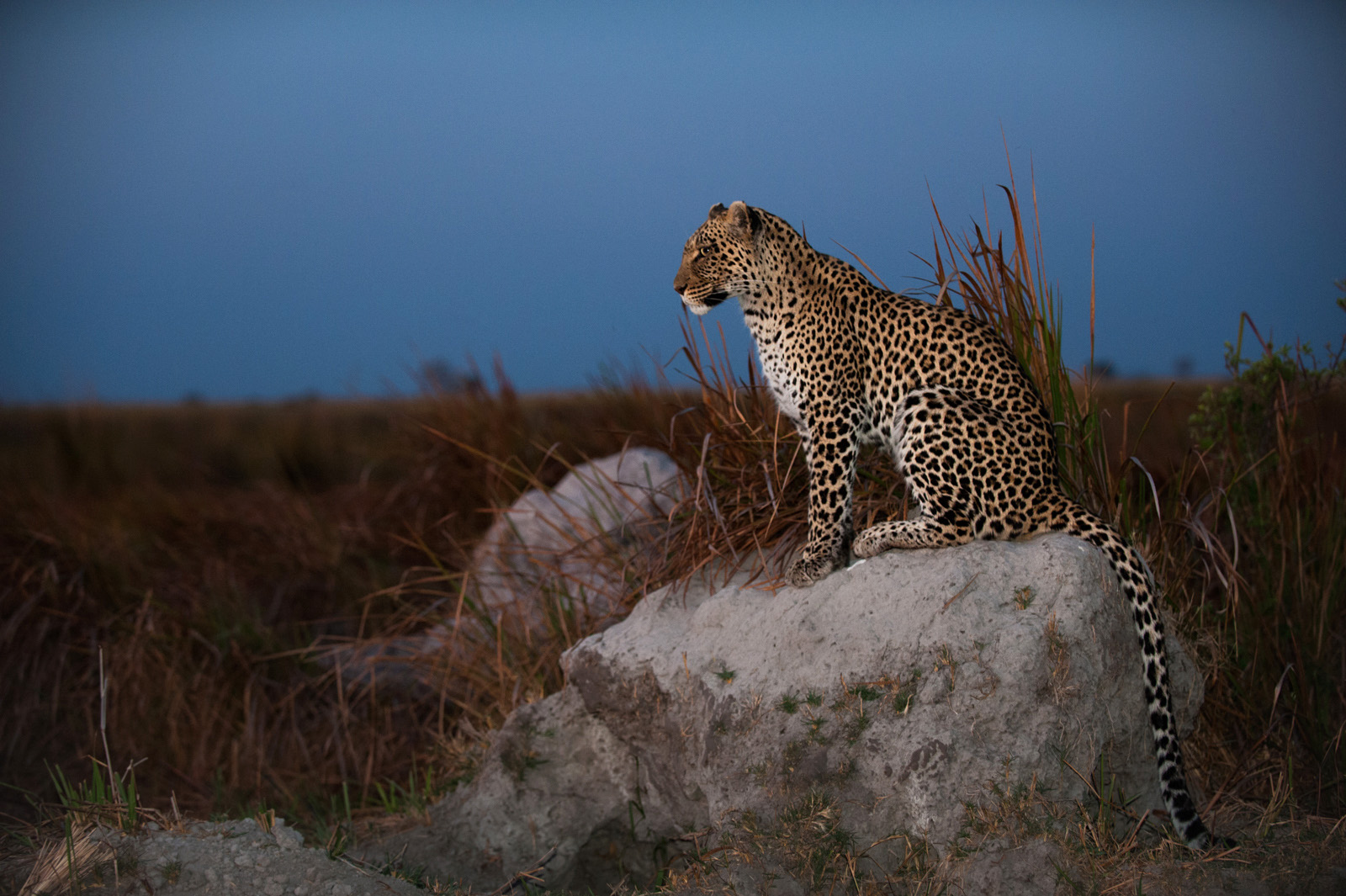
Any leftover light from the day was just about gone when we came upon this leopard resting on a termite mound in the Linyanti concession of Botswana. I used two flash units, a long(ish) exposure and a high ISO to capture the moment just before she set off on a hunt. Nikon D700 with Nikkor 70-200mm lens (at 86mm) ISO 3200, f/2.8 at 1/15th of a second, two Nikon SB-900 flash units
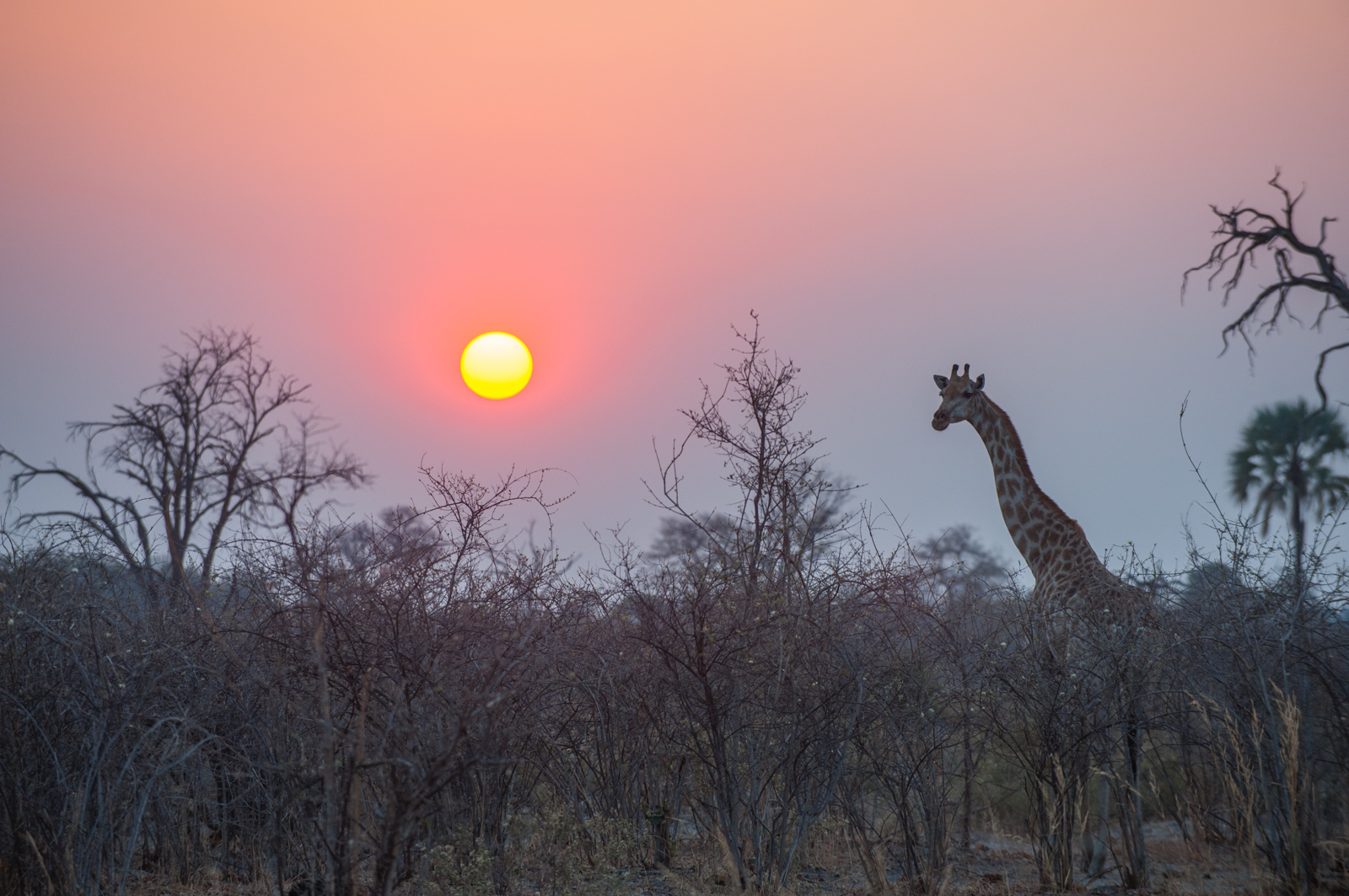
Botswana can be a challenge photographically at times with all the dried shrubbery and branches. Especially difficult when the sun gets high in the sky. But in this instance — with that sun starting to set and plenty of color in the evening sky — I really liked the tangle of all that scrub brush and the giraffe and sun above it all. Nikon D700 with Nikkor 70-200mm lens (at 200mm) ISO 800, f/5 at 1/500th of a second
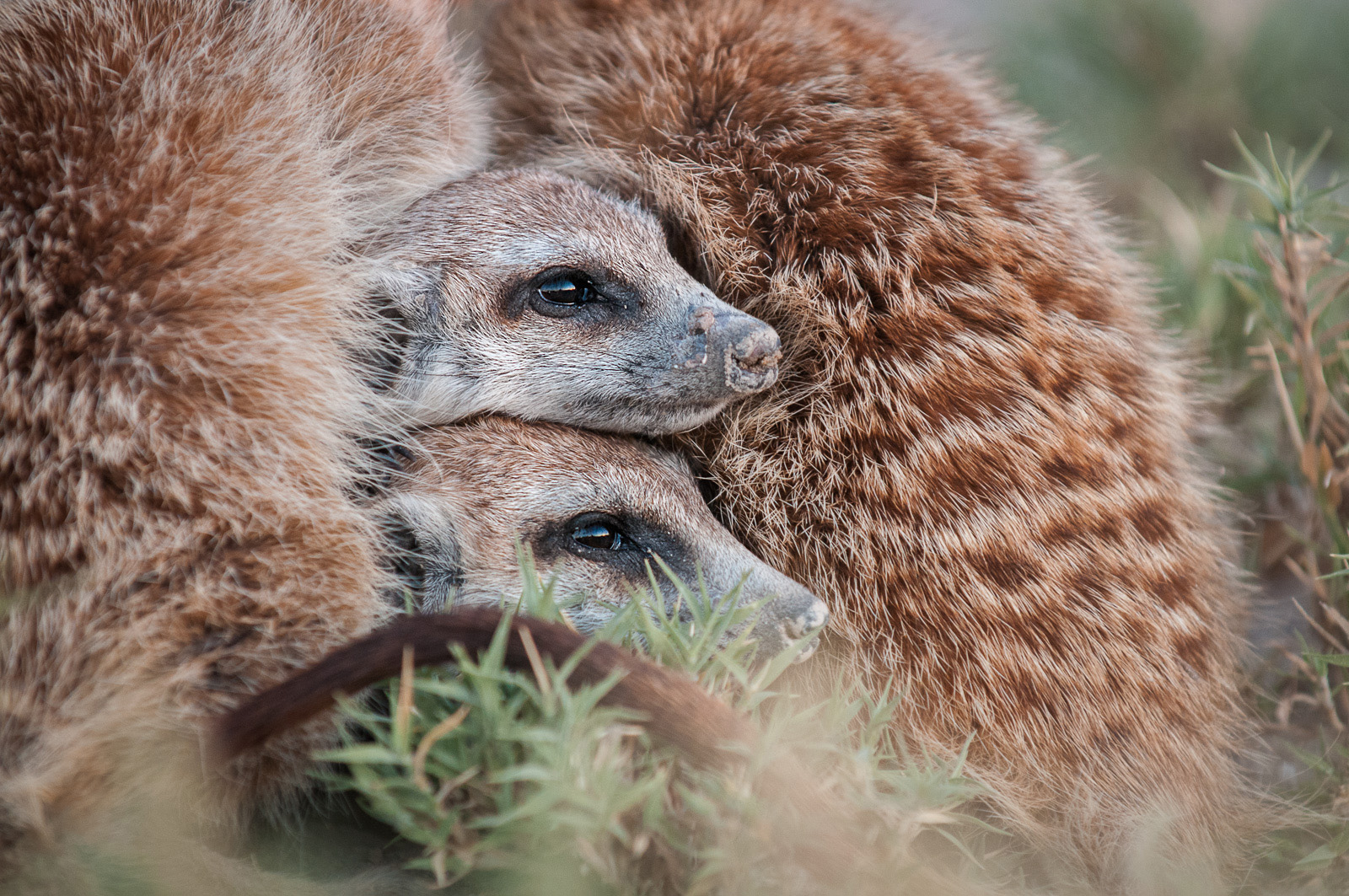
These two meerkats were part of a bundle of about eight that curled up into a furry ball to keep warm as the sun began to set on the Makgadikgadi Pans of Botswana’s Kalahari Desert. Nikon D300 with Nikkor 70-200mm lens (at 200mm), ISO 800, f/4.5 at 1/80th of a second
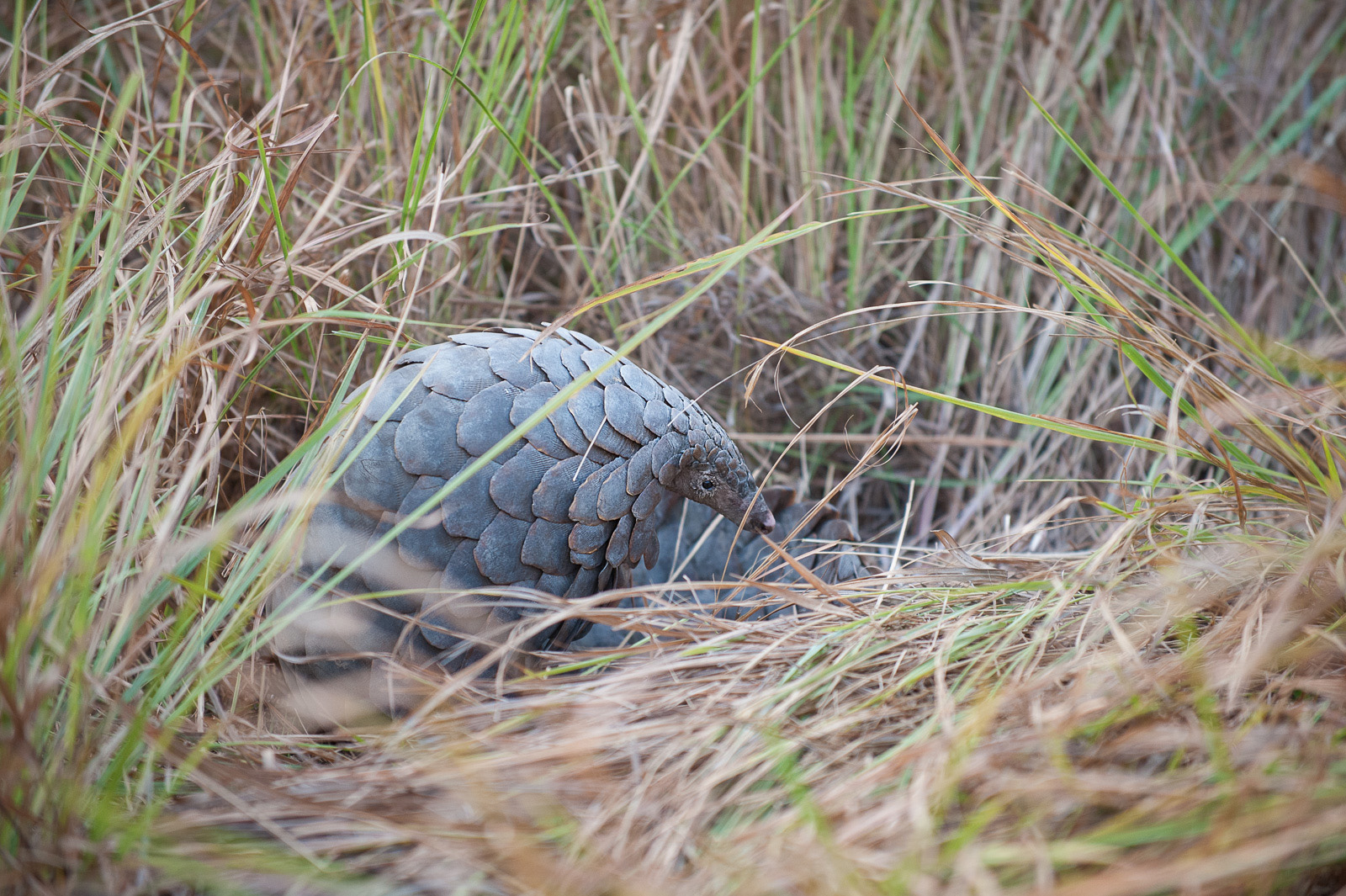
The pangolin is easily one of my best wildlife sightings. They can be very rare to see in Africa. Not only did we see one when in Botswana, we saw one being stalked by a leopard. For protection from predators, pangolins will curl up in a ball. But as soon as the pangolin thought the leopard was asleep, it would uncurl itself and slowly try to sneak away. This is one of those slow uncurl moments. Nikon D700 with Nikkor 70-200mm lens (at 200mm) ISO 800, f/2.8 at 1/320th of a second
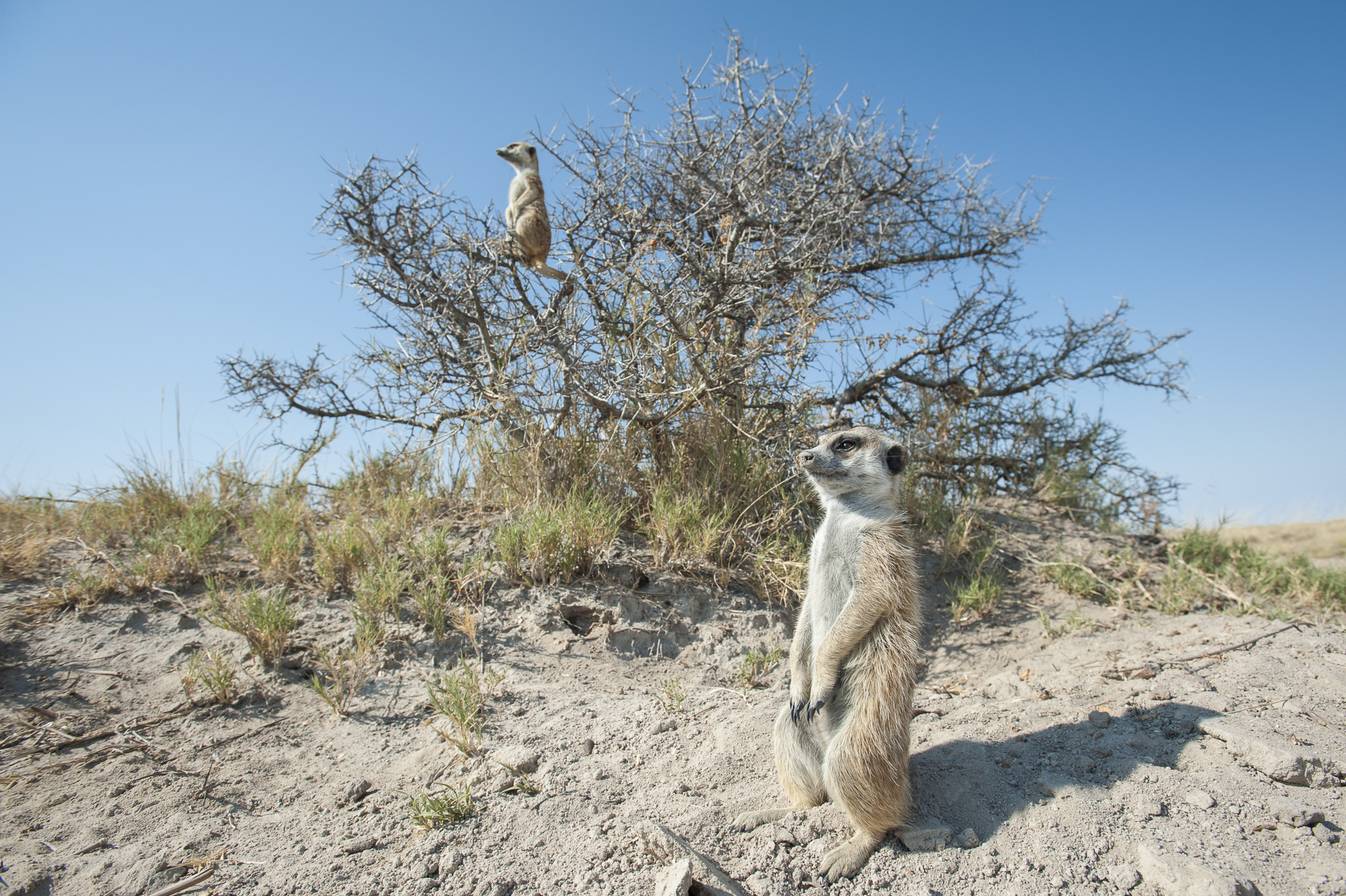
It was fun to see this meerkat sitting in a bush, surveying the landscape for any would-be predators. They like to get as high as possible for the best view. Nikon D700 with Nikkor 17-35mm lens (at 17mm) ISO 400, f/8 at 1/1250th of a second
We use cookies to enhance your experience while using our website. If you are using our Services via a browser you can restrict, block or remove cookies through your web browser settings. We also use content and scripts from third parties that may use tracking technologies. You can selectively provide your consent below to allow such third party embeds. For complete information about the cookies we use, data we collect and how we process them, please check our Privacy Policy