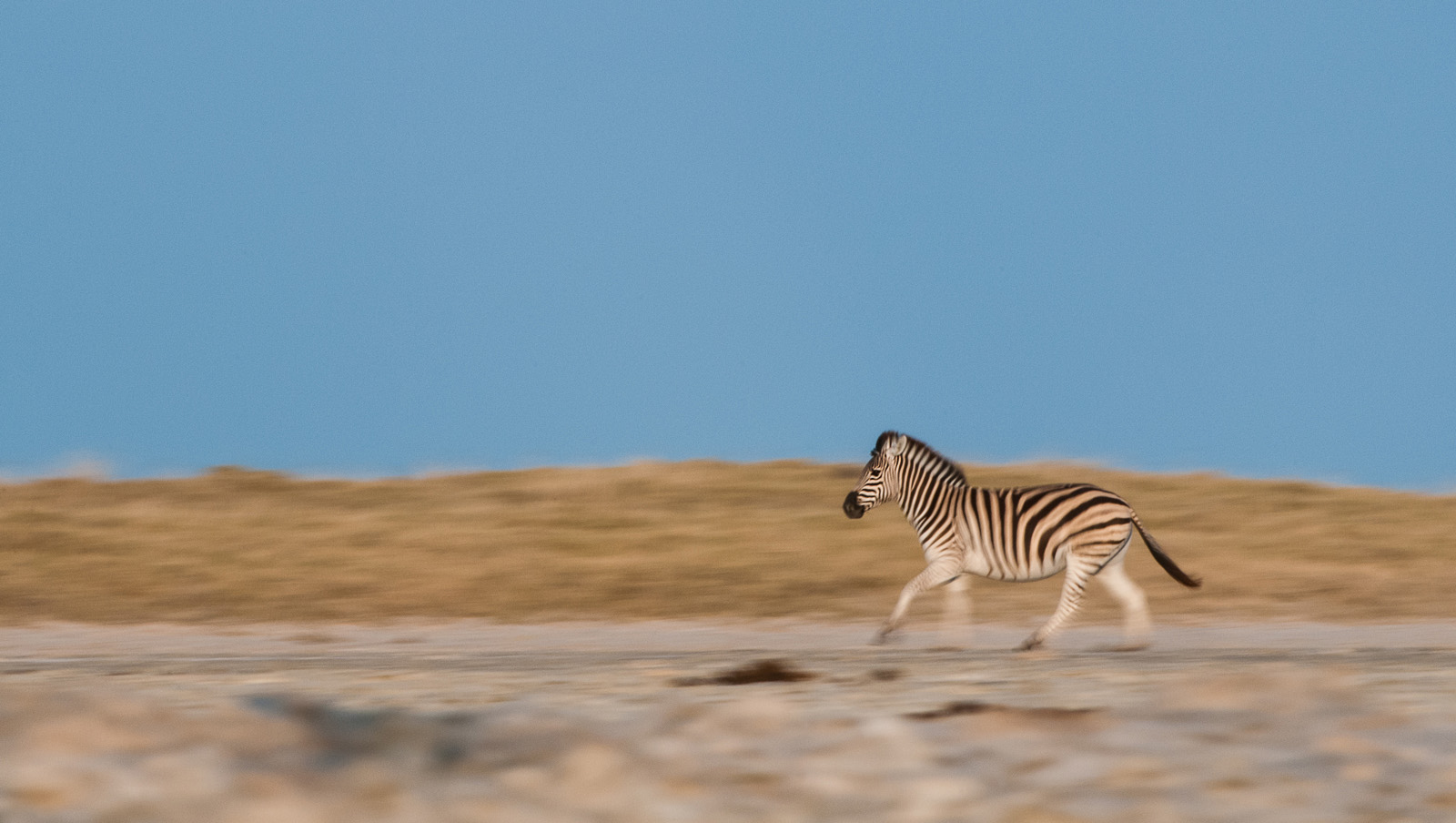
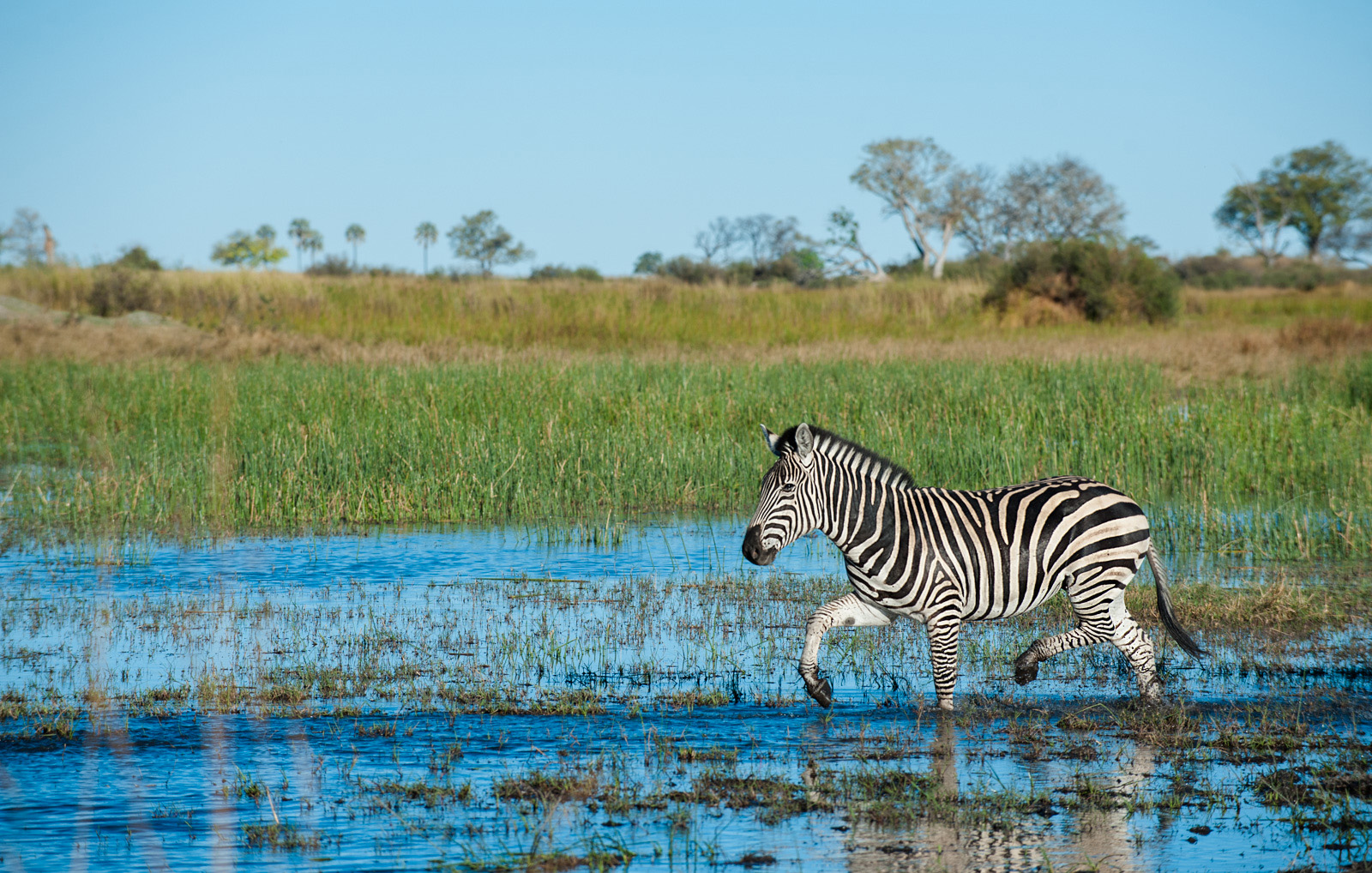
Just a simple shot of a zebra making its way across the Makgadikgadi Pan of Botswana. I used a slow shutter speed and panned with the zebra to give the photo a bit of life. Nikon D300 with Nikkor 200-400mm lens (at 400mm) ISO 400, f/32 at 1/20th of a second
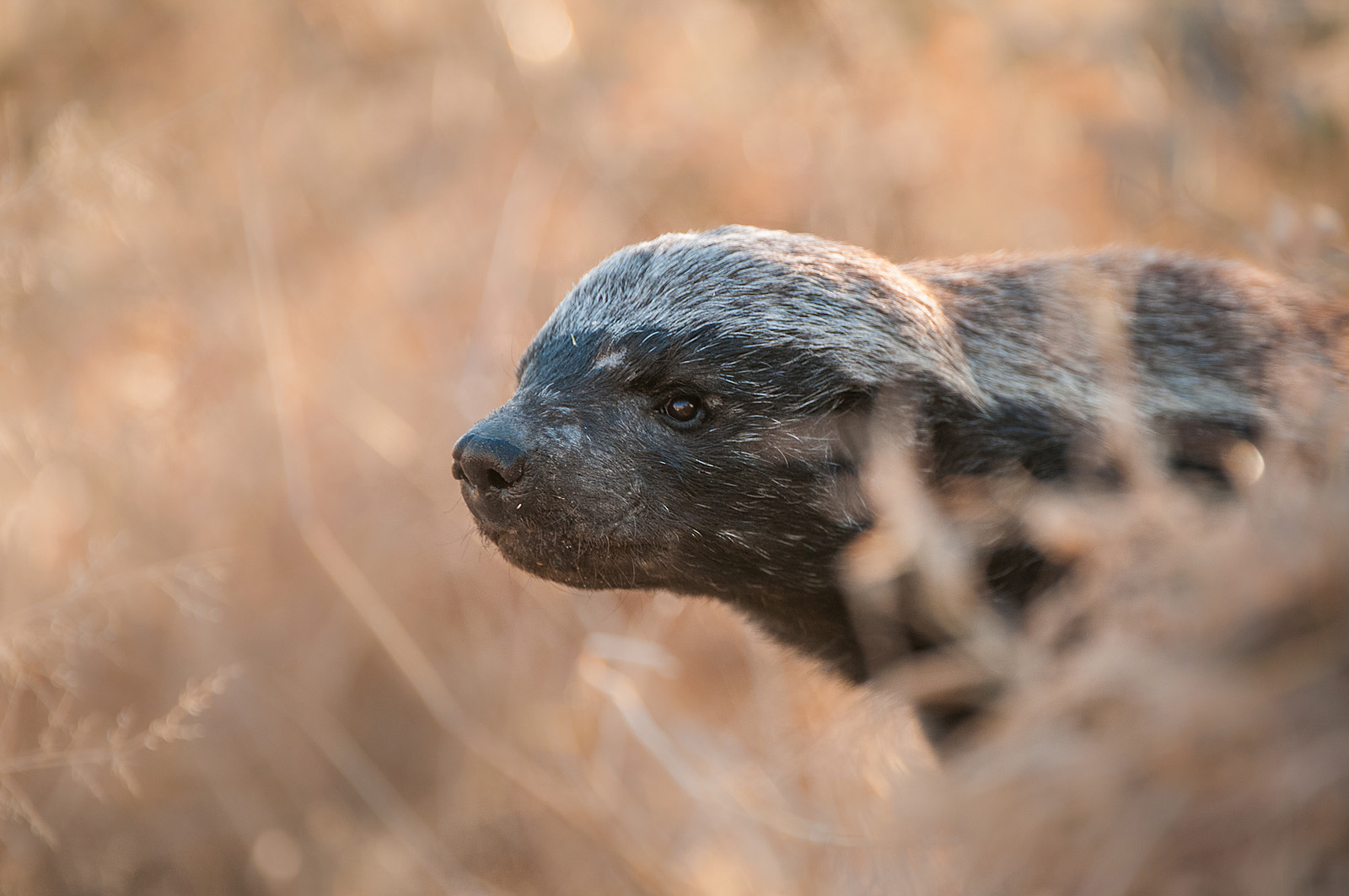
Here’s another one from the Central Kalahari Game Reserve in Botswana. The ratel, also known as the honey badger. These guys can be fierce when confronted. They have extremely tough skin, while at the same time that skin is very loosely attached to the bones. If a predator like a lion gets a hold of one, it has a hard time biting through the skin. While the lion tries to bite, the honey badger can turn itself around in its own skin and start fighting back. This is in large part how they’ve earned their reputation, and why not too many animals will mess with a honey badger. Nikon D300 with Nikkor 200-400mmm lens (at 400mm) ISO 800, f/4 at 1/125th of a second
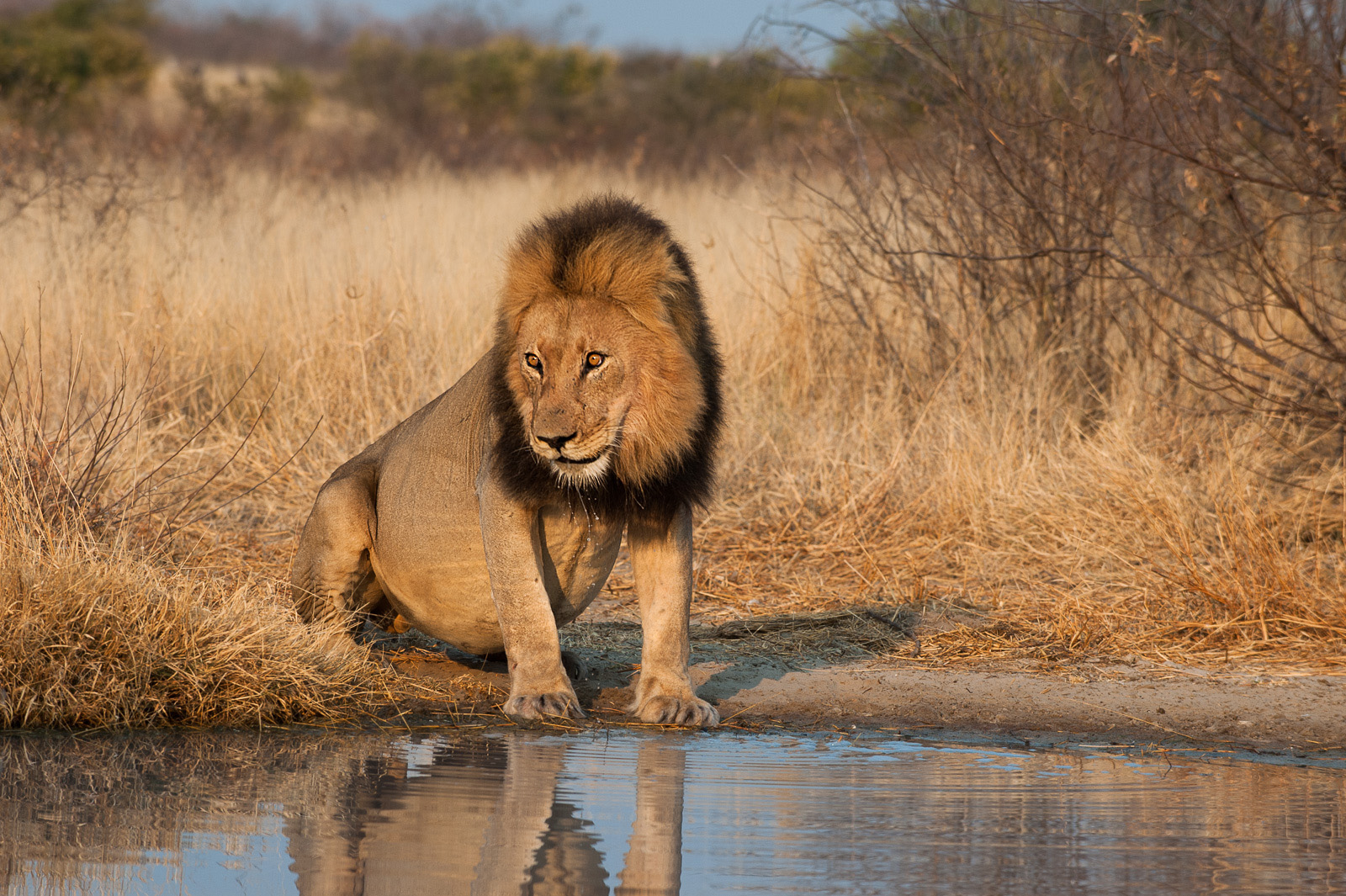
This lion’s mane almost looks like a wig. The males from the Central Kalahari Game Reserve in Botswana are commonly called black-maned lions. Technically, all lions have a bit of black in their mane, but the ones in the Botswanan desert tend to be darker than the norm. This guy was settling in for good drink after feasting on an oryx (check out that massive belly). Nikon D700 with Nikkor 70-200mm lens (at 200mm) ISO 400, f/5.6 at 1/640th of a second
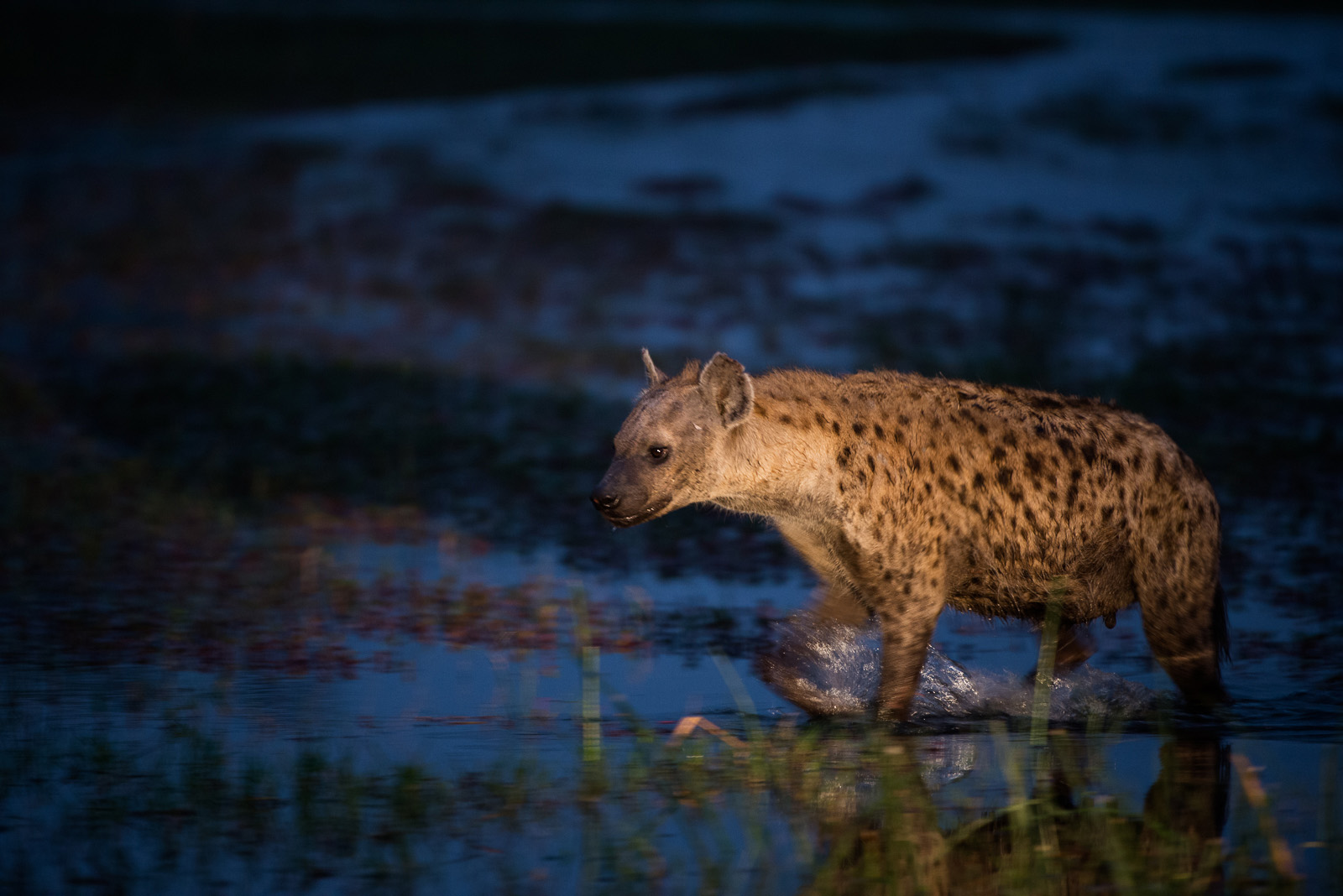
Here’s another one from the Linyanti Concession of Botswana. This time a spotted hyena, spotlit with a flashlight early one morning. There were about five hyenas, playing in a flooded area of the savanna. I didn’t have enough light to capture the action without a flash, but I also wanted to try a few shots with just the flashlight to bring out the ambient light of early morning. I used a very high ISO and a very low shutter speed to get the proper exposure. But at 1/25th of a second, there’s a bit of motion blur, but I think that just adds to the mood. Nikon D800 with Nikkor 200-400mm lens (at 400mm) ISO 3200, f/4 at 1/25th of a second
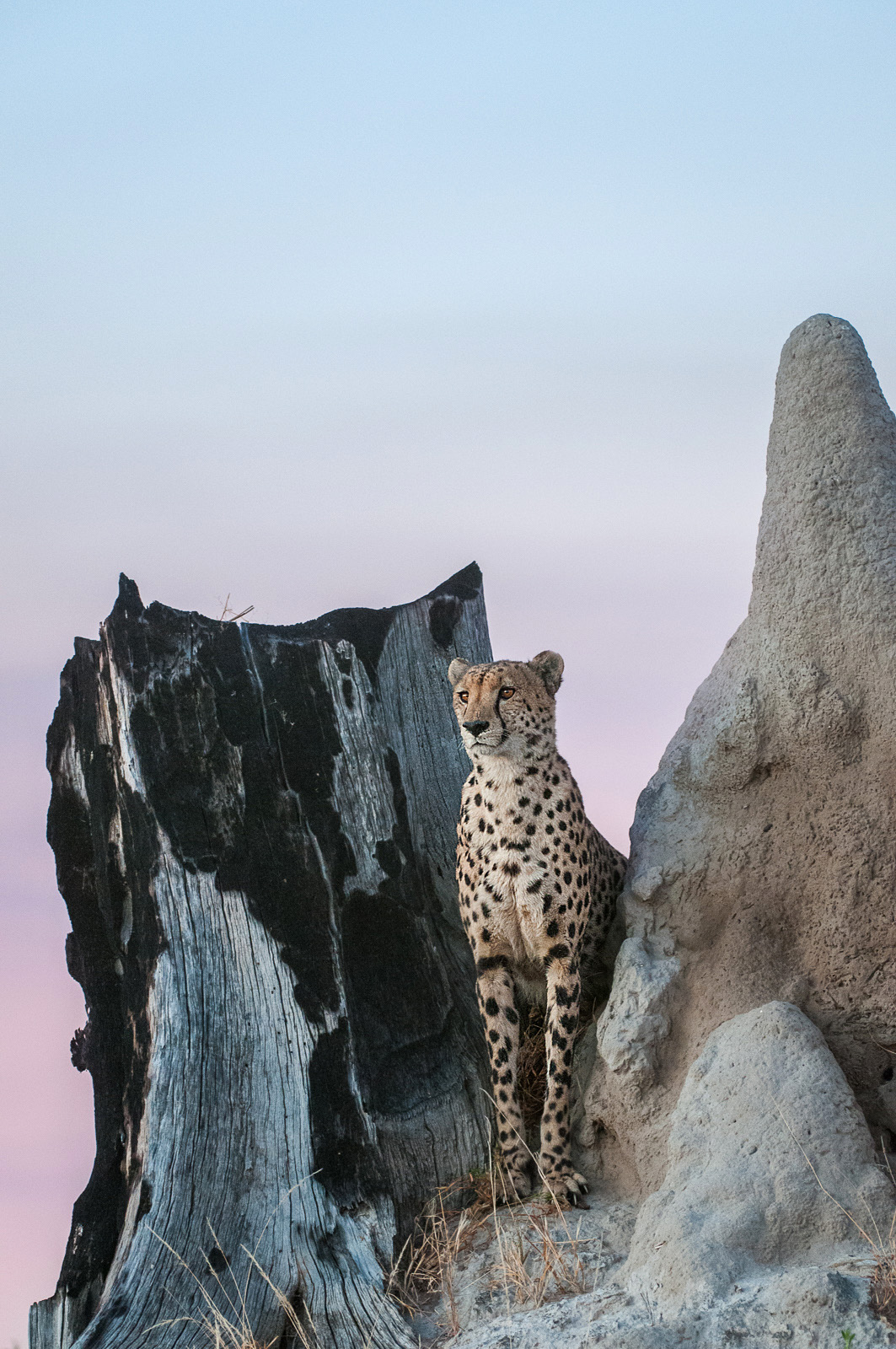
It was just past sunset in Botswana when we came upon two cheetahs atop a termite mound, surveying the savanna for prey. After a few minutes, they darted off after a herd (or dazzle) of zebra but were ultimately unsuccessful. Cheetahs have a kill rate of more than 50%, which is highest among the African cats. Nikon D300 with Nikkor 200-400mm lens (at 200mm) ISO 1600, f/4 at 1/160th of a second
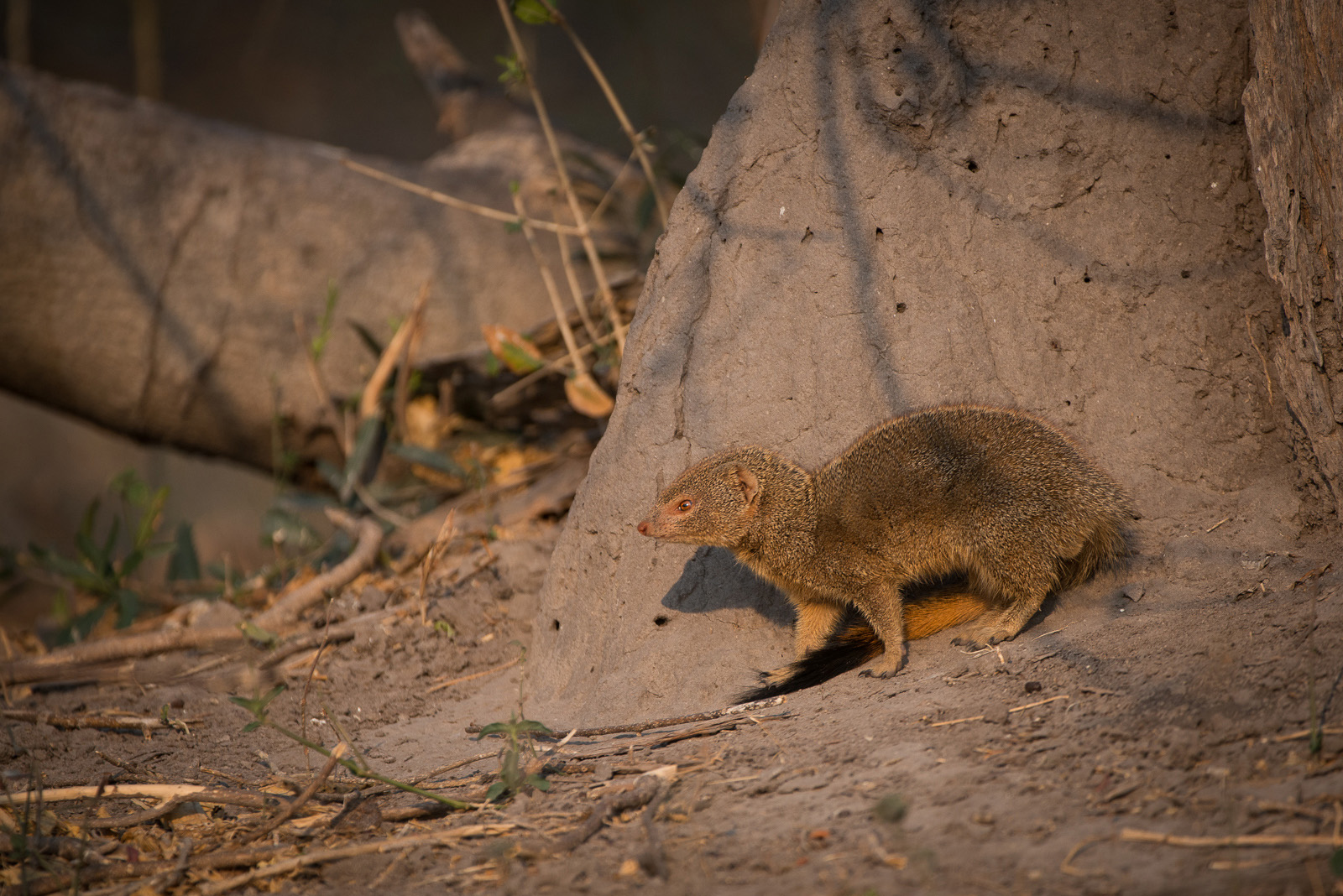
The slender mongoose is a crafty little carnivore widespread throughout sub-Sahara Africa. The species also happens to be a dead ringer for my good friend Tony who got engaged last night. So this one goes out to you Tony and Shardae — for the engagement — and for looking like a slender mongoose. Nikon D800 with Nikkor 200-400mm lens (at 400mm) ISO 400, f/4 at 1/1250th of a second
As common as they can be on safari, I never grow tired of photographing zebras. This one was strutting with purpose across the flooded plain of the Linyanti concession in Botswana. Nikon D700 with Nikkor 70-200mm lens (at 200mm) ISO 400, f/6.3 at 1/1600th of a second
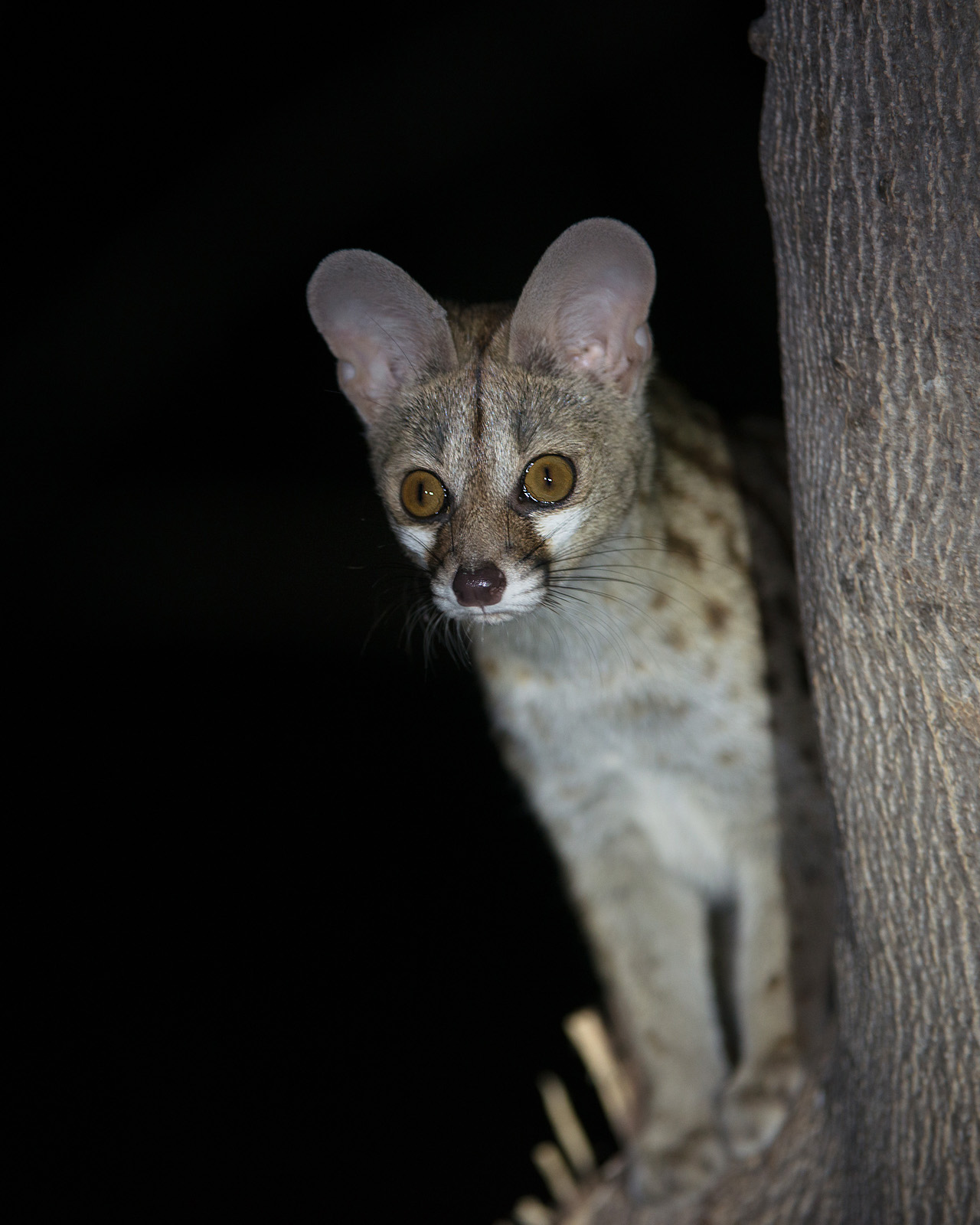
This genet interrupted our dinner one night while on safari in Botswana. I always bring my gear with me to meals just in case of such an occurrence. Usually, nothing, but this time I was able to get a series of shots, a few of which I’ve posted in the past. Genets are strictly nocturnal and a somewhat common sight around camps after dark in eastern and southern Africa. Nikon D800 with Nikkor 200-400mm lens (at 270mm) ISO 640, f/4 at 1/60th of a second
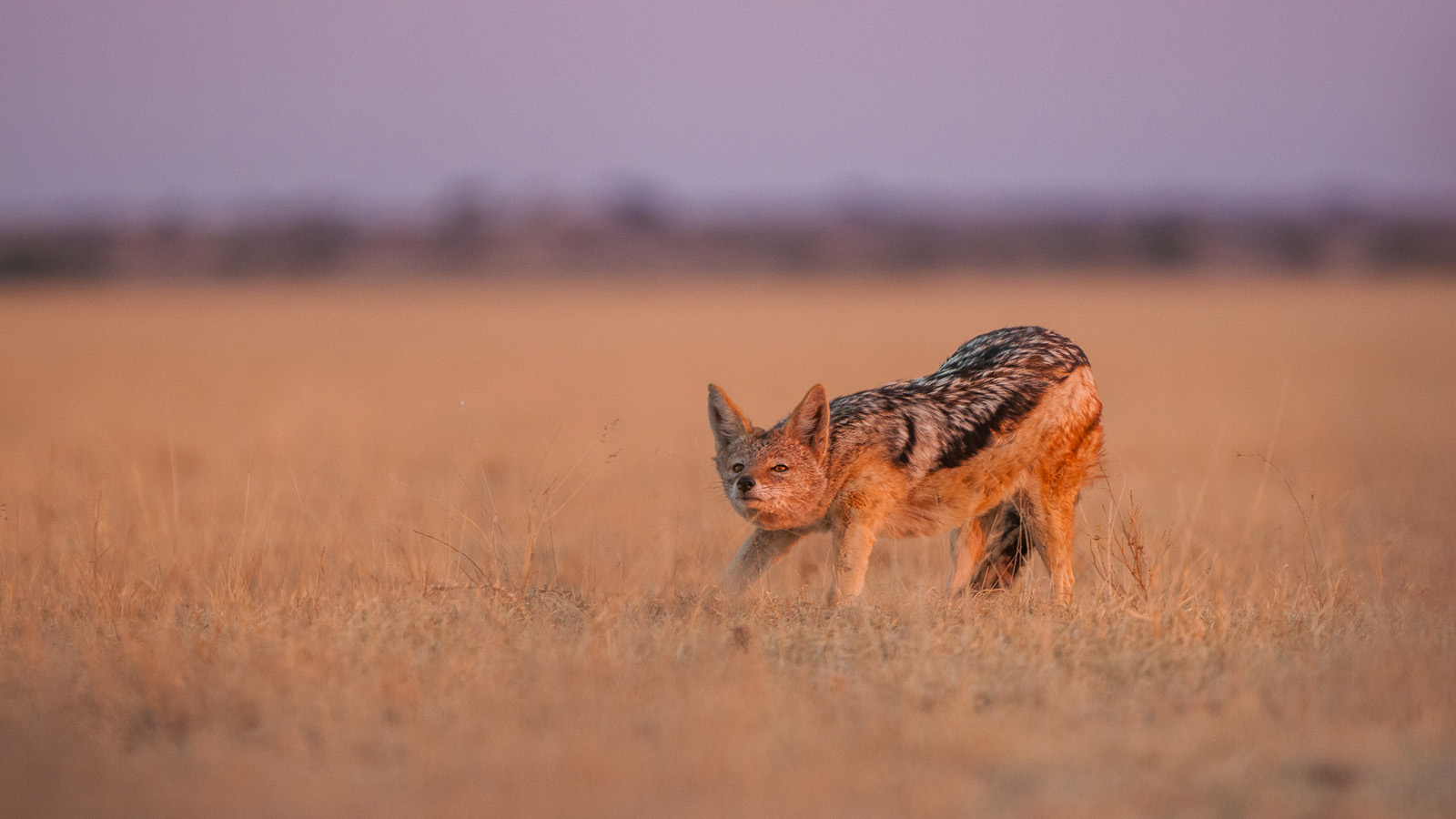
Jackals are sort of the coyotes of Africa and Asia. I’ve photographed two species in Africa and another in India. This is the black-backed jackal and he was doing his jackal-y thing in the Kalahari Desert in Botswana. My three day visit to the Kalahari was made extra special by the fact that I was the only guest at the camp at the time. It was easy for me to get out of the safari vehicle when appropriate to capture eye level shots of all the great wildlife. Nikon D300 with Nikkor 200-400mm lens (at 340mm) ISO 800, f/4 at 1/400th of a second
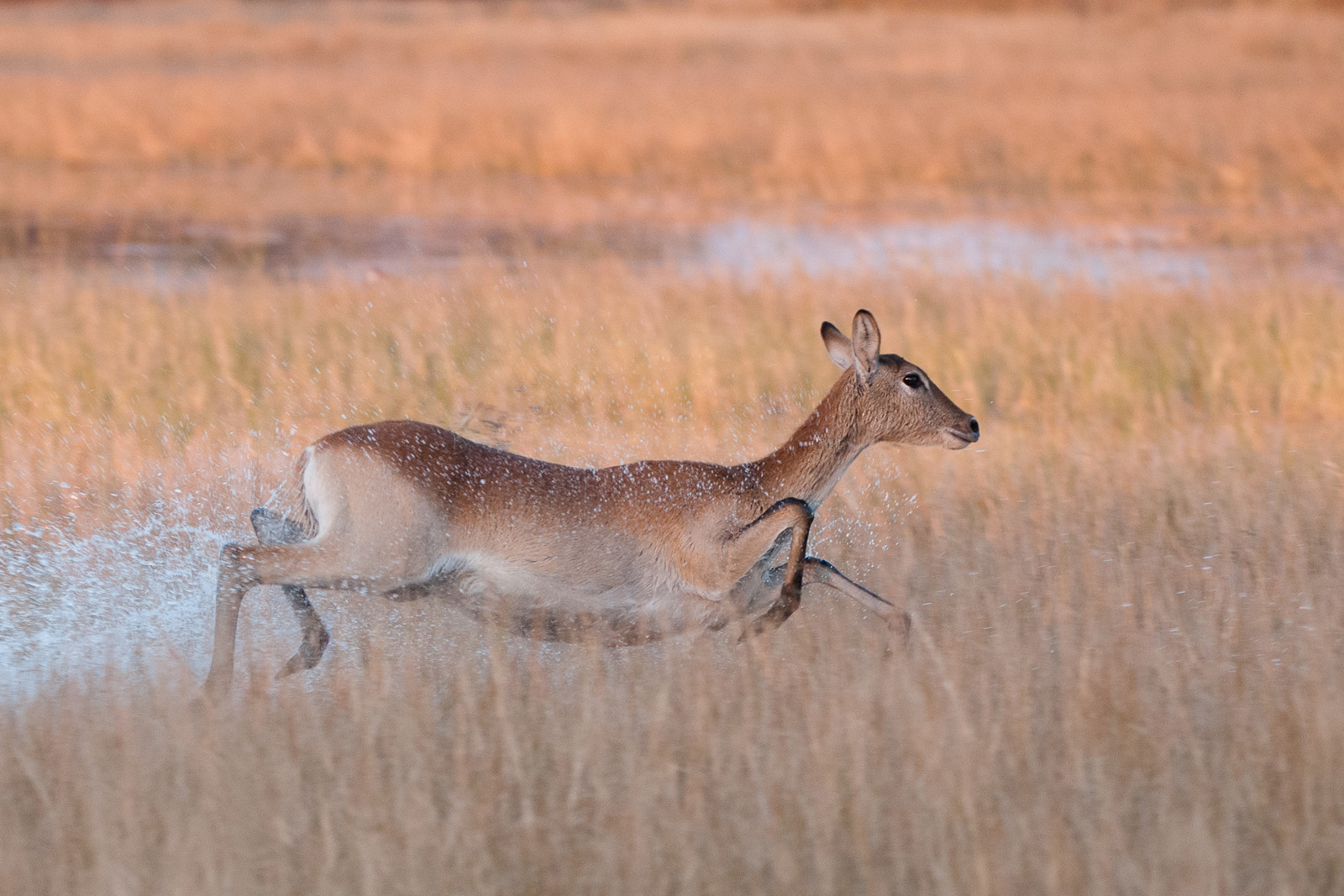
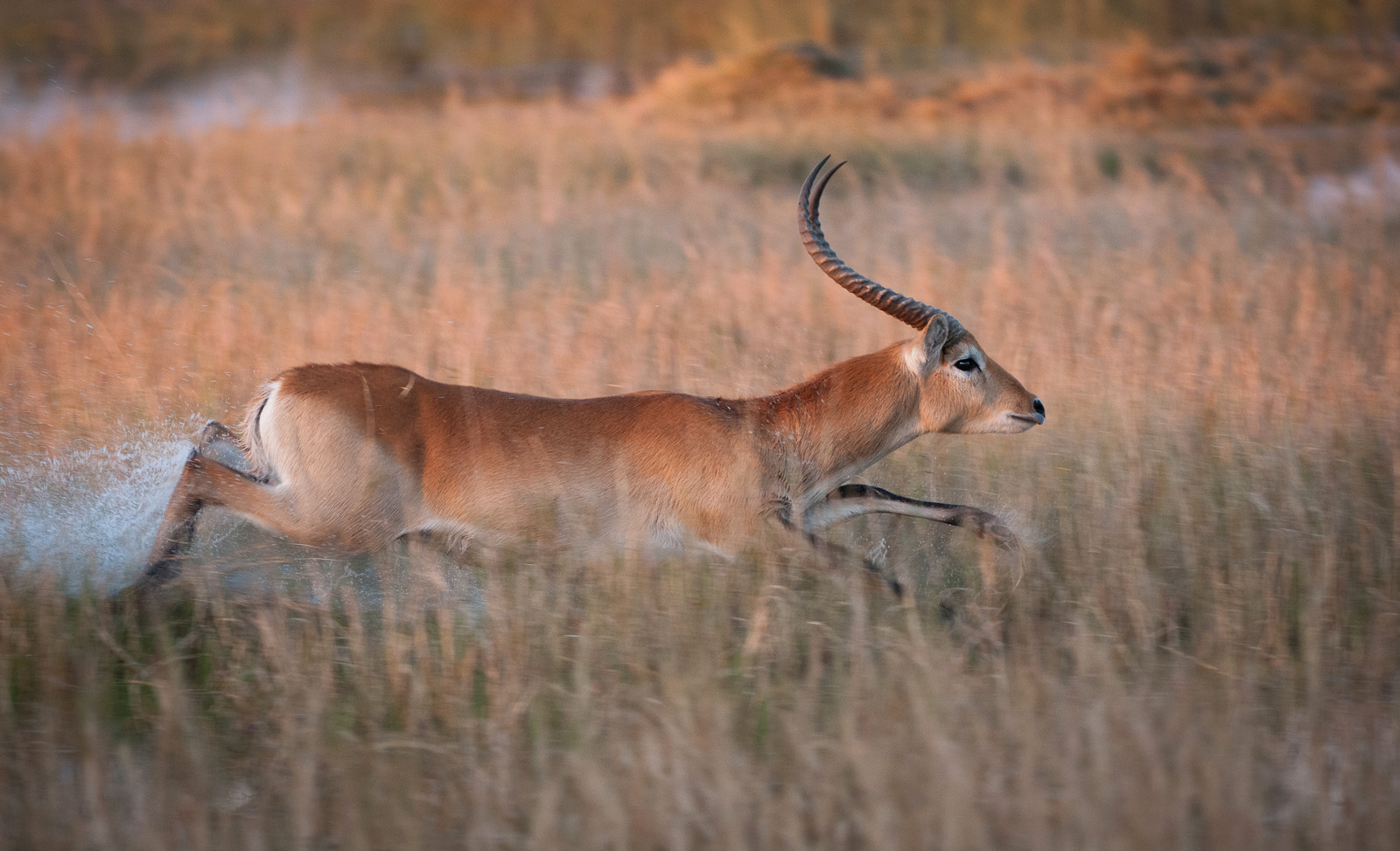
Red lechwe are an African antelope that prefer to spend the majority of their waking hours in or around water. The top photo is the female of the species and the bottom the male. They were both part of a herd that was dashing across the flooded plain of the Okavango Delta in Botswana. Top Photo — Nikon D300 with Nikkor 200-400mm lens (at 220mm) ISO 800, f/4 at 1/400th of a second
Bottom Photo — Nikon D300 with Nikkor 200-400mm lens (at 260mm) ISO 800, f/4 at 1/400th of a second
We use cookies to enhance your experience while using our website. If you are using our Services via a browser you can restrict, block or remove cookies through your web browser settings. We also use content and scripts from third parties that may use tracking technologies. You can selectively provide your consent below to allow such third party embeds. For complete information about the cookies we use, data we collect and how we process them, please check our Privacy Policy