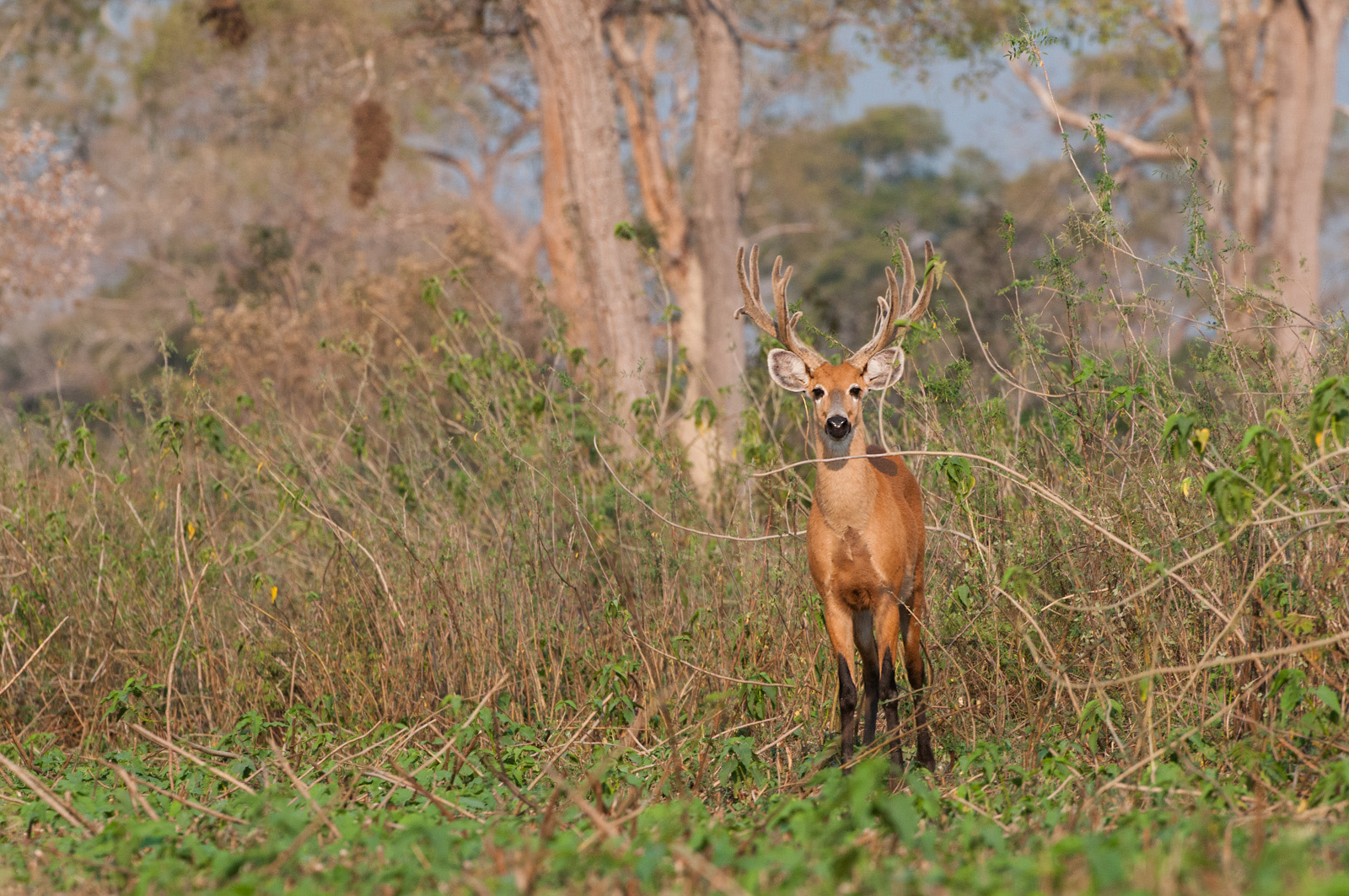
Deer come in many varieties across the globe. They can be found on every continent except for Antarctica and Australia. The marsh deer is native to South America. It is the largest of South America’s 17 different deer species. I spotted this one while hiking a trail in southwestern Brazil. Nikon D300 with Nikkor 200-400mm lens (at 400mm) ISO 400, f/7.1 at 1/500th of a second.
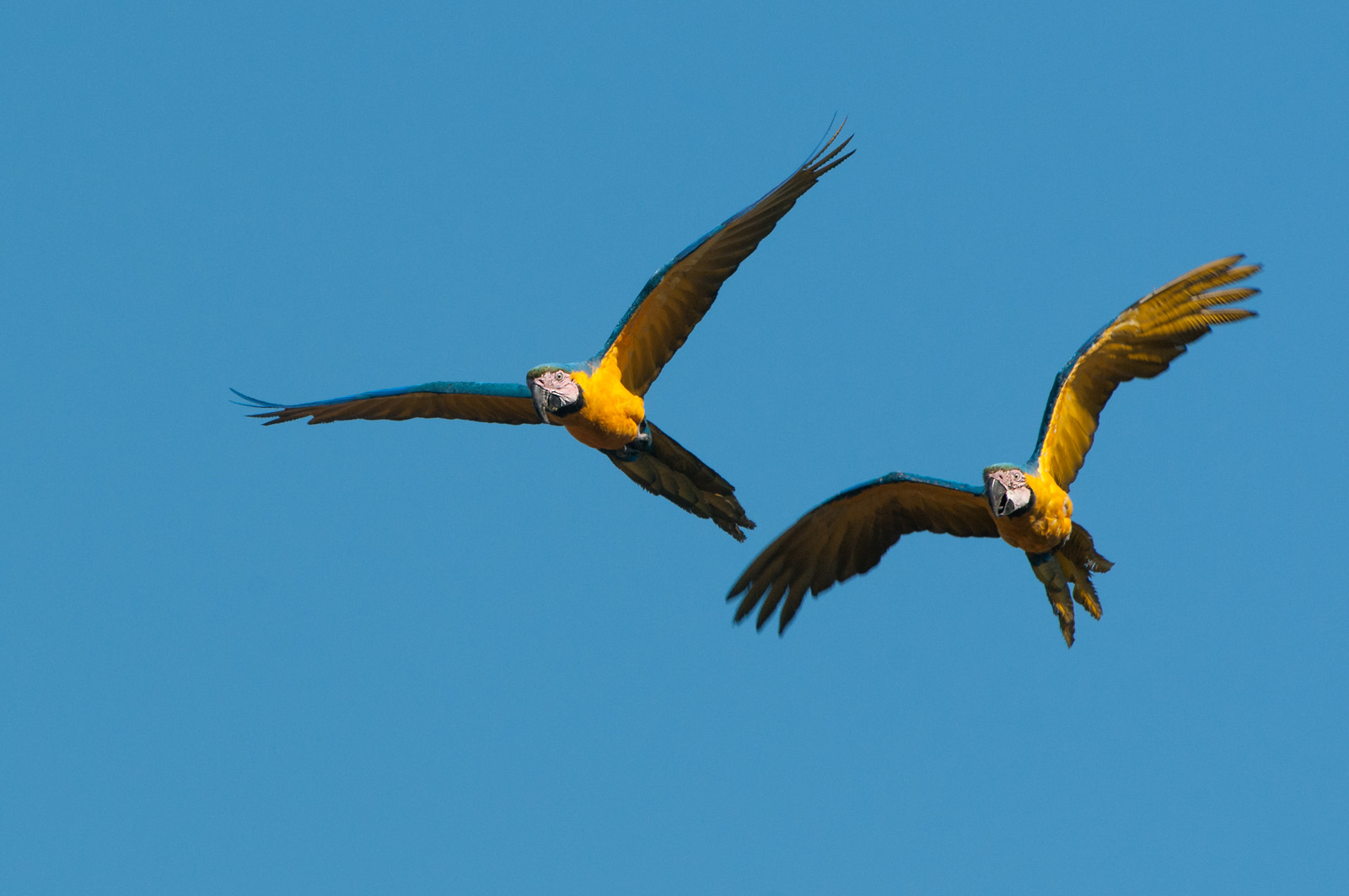
Blue and yellow macaws are big birds. They are almost three feet in length and can weight up to three pounds. Due to their striking colors (mostly blue on top parts and a yellowish/orange on the bottom, with a bit of green on the crown) and their ability to talk, they are popular as pets. I’m glad I got to see them soaring high above the Pantanal in Brail in their natural habitat — usually spotted as a mating pair. Nikon D300 with Nikkor 200-400mm lens (with 1.4 teleconverter for 550mm) ISO 400, f/8 at 1/1000th of a second.
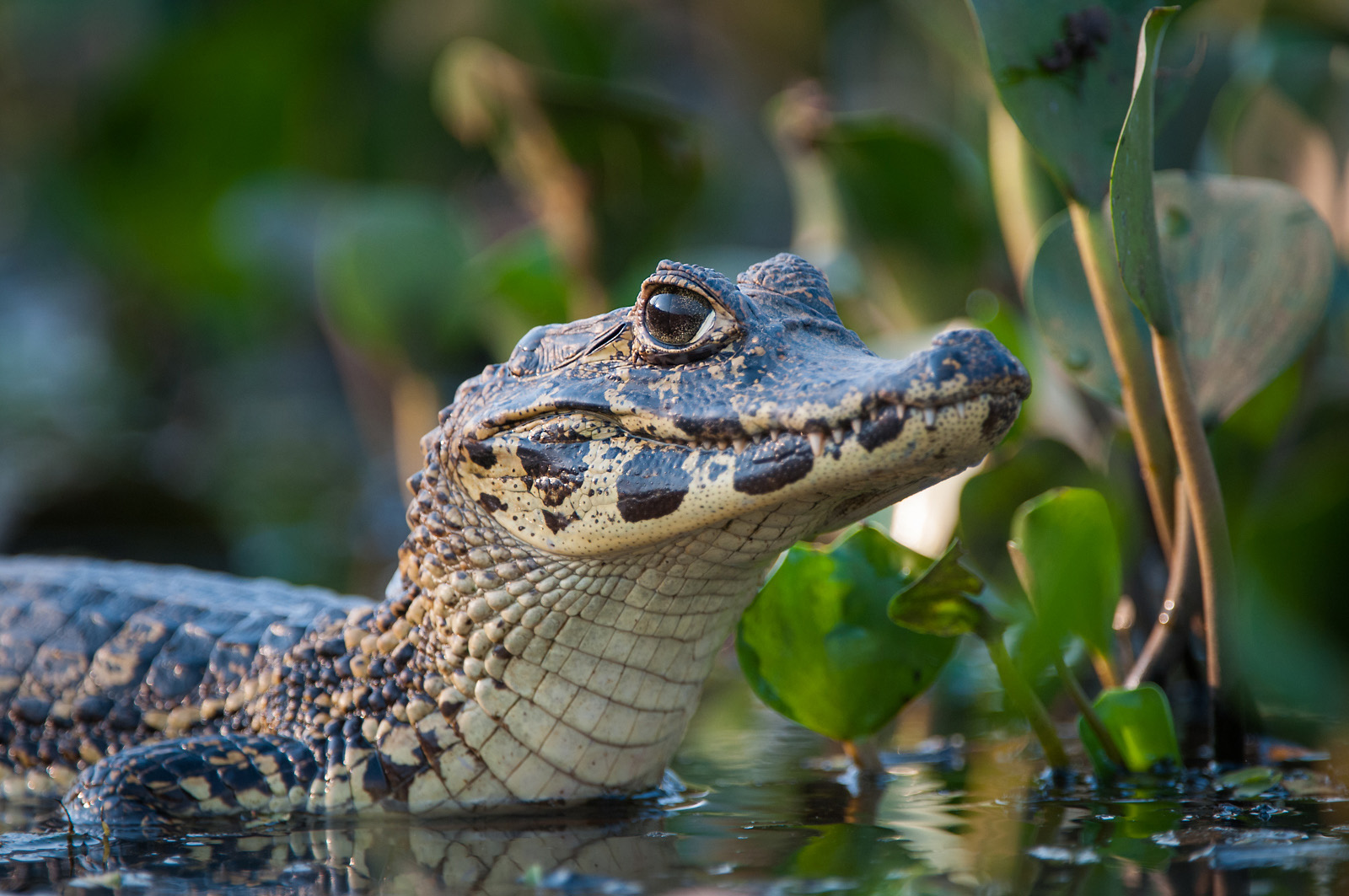
There are many species of crocodilian in the world. I find the yacaré caiman to be among the coolest looking. This was a young guy, hanging out by the banks of the Pantanal in Brazil — the world’s largest tropical wetland. Nikon D300 with Nikkor 200-400mm lens (at 400mm) ISO 400, f/4 at 1/400th of a second.
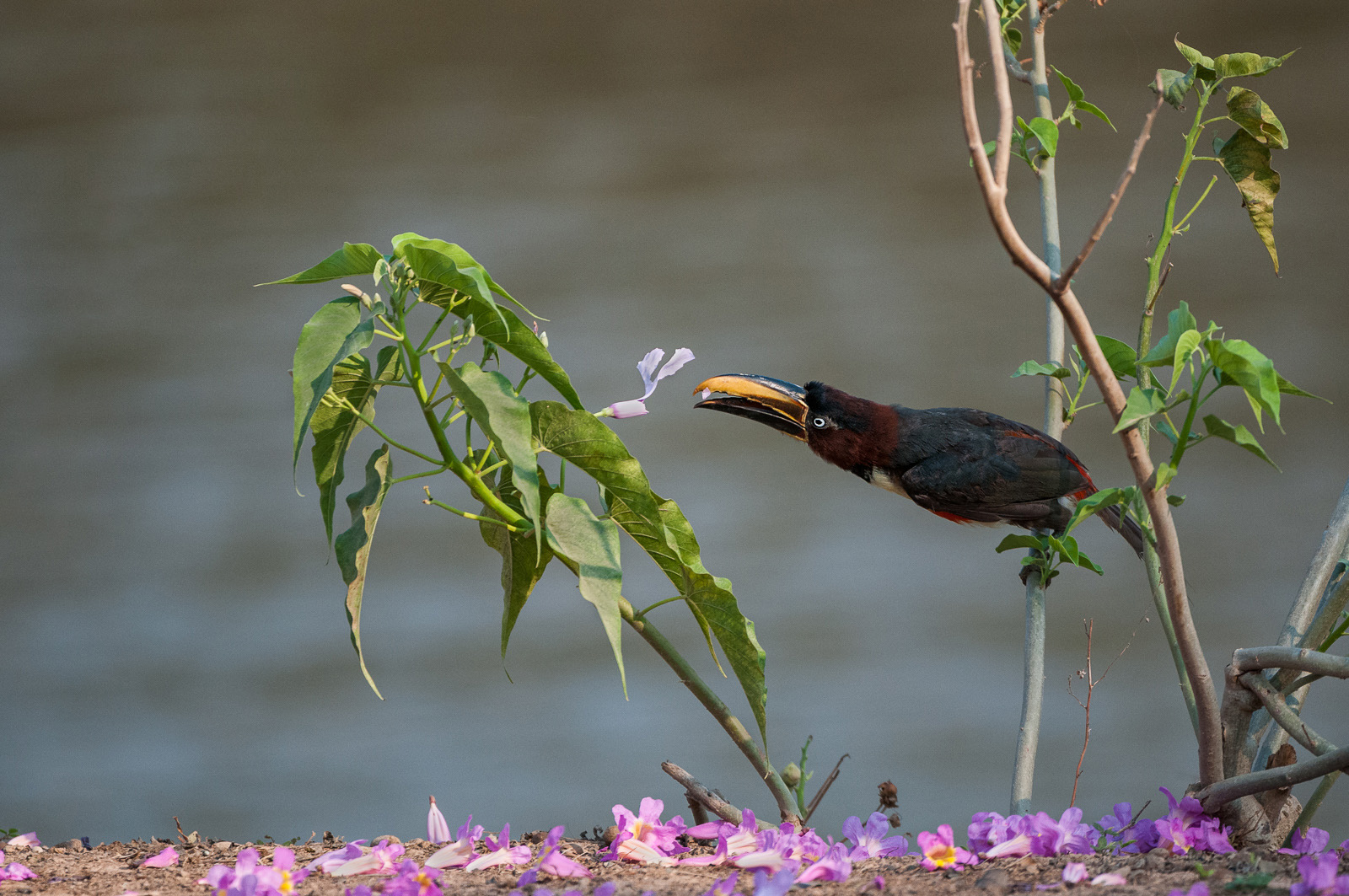
Another scene from the shores of the Pantanal in Brazil. This is a chestnut-eared aracari enjoying a bit of a floral snack. Aracaris have toucan-like beaks and are always a great sighting when visiting Central and South America. Nikon D300 with Nikkor 200-400mm lens (at 400mm) ISO 800, f/4 at 1/2500th of a second.
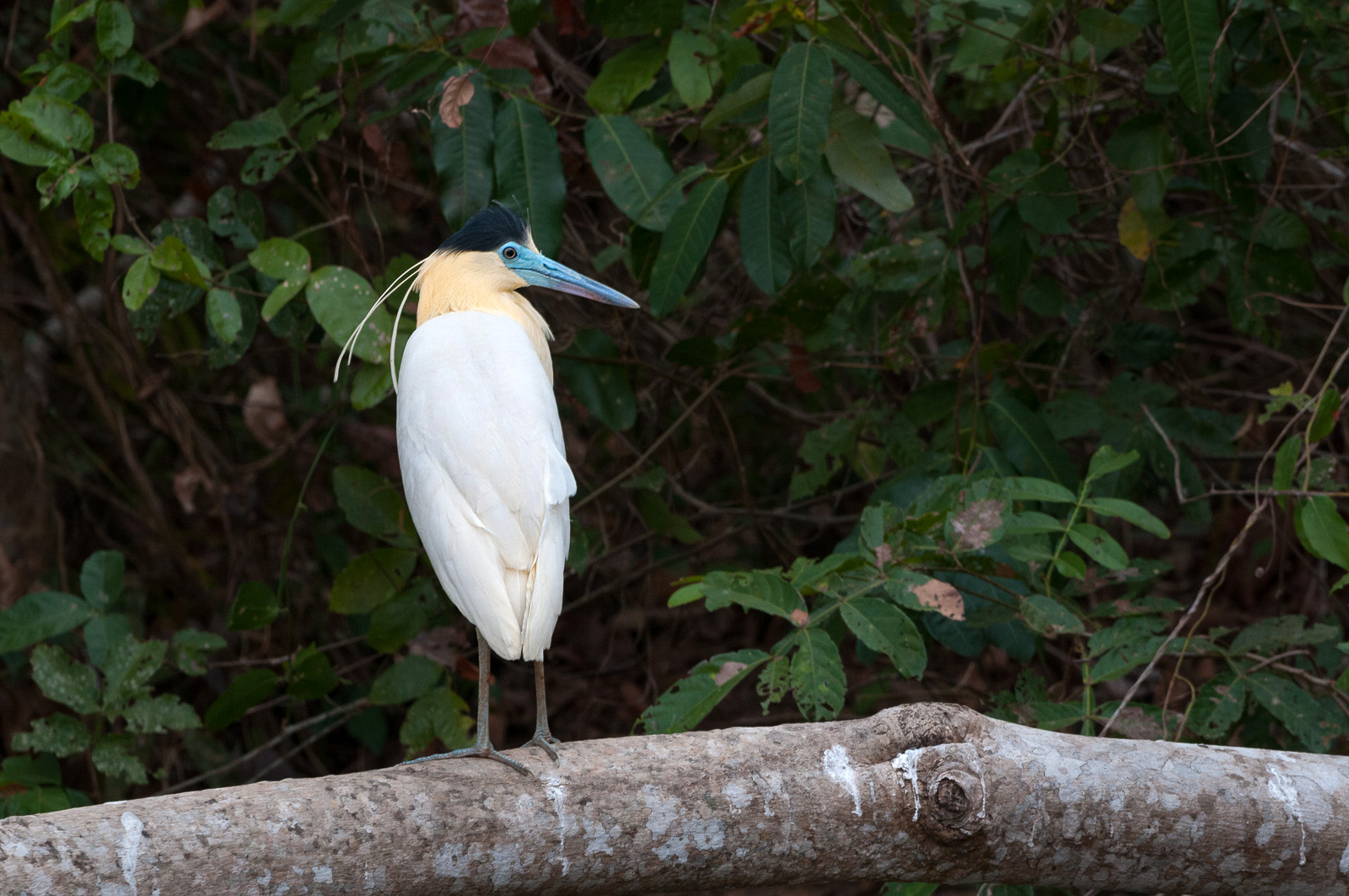
One of the least known herons, the capped heron is a water bird of the Amazon rainforest and surrounding area. I photographed this one in the Pantanal of Brazil. It was the only one that I saw in my time in Brazil. Nikon D300 with Nikkor 200-400mm lens (at 400mm) ISO 400, f/8 at 1/125th of a second.
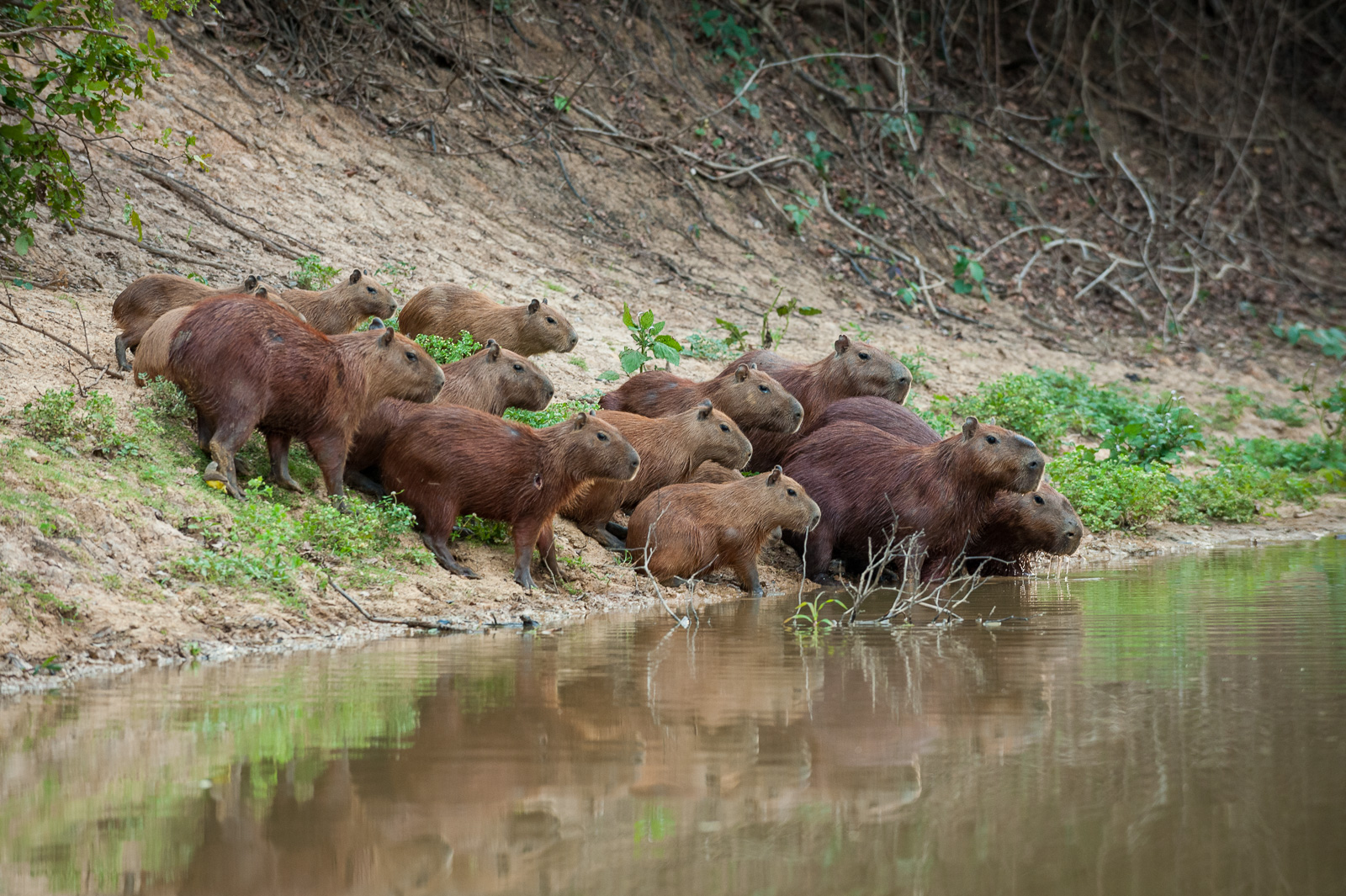
When you’re the main food source for the top predators of a region, you tend to be a bit cautious. These capybaras we’re taking their time about entering the murky waters of the Yucama River in Bolivia. No telling if a caiman was just below the surface waiting for breakfast. Nikon D700 with Nikkor 70-200mm lens (at 200mm) ISO 800, f/5 at 1/125th of a second.
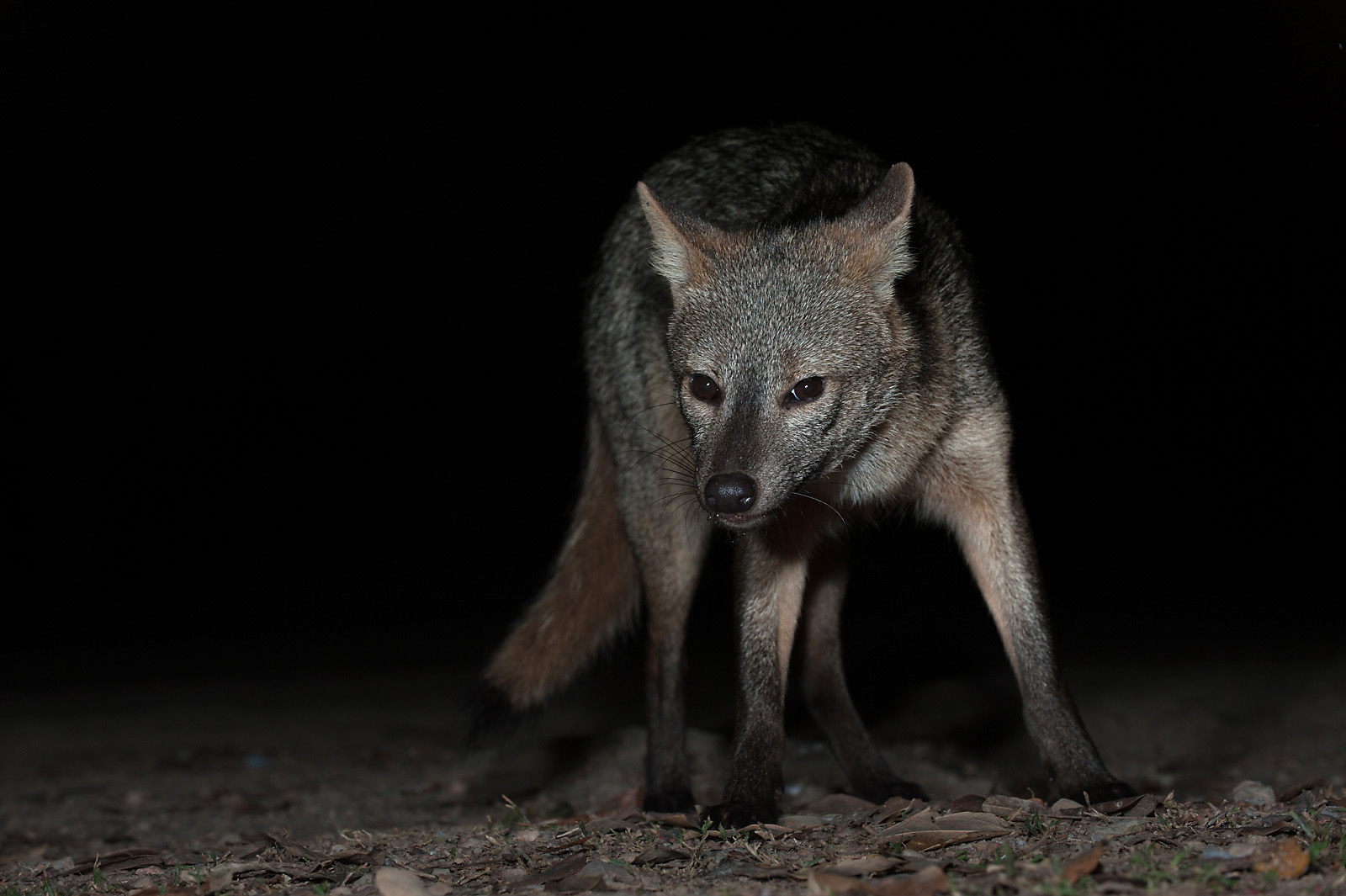
During the wet season, the crab-eating fox searches for crabs out on the muddy floodplains of central South America. Thus the name. This crab-eating fox, however, was looking for something a bit different — no doubt attracted to the smells coming from the lodge I was staying at in the Pantanal of Brazil. Nikon D700 with Nikkor 70-200mm lens (at 105mm) ISO 200, f/10 at 1/60th of a second. Two Nikon SB-800 flash units.
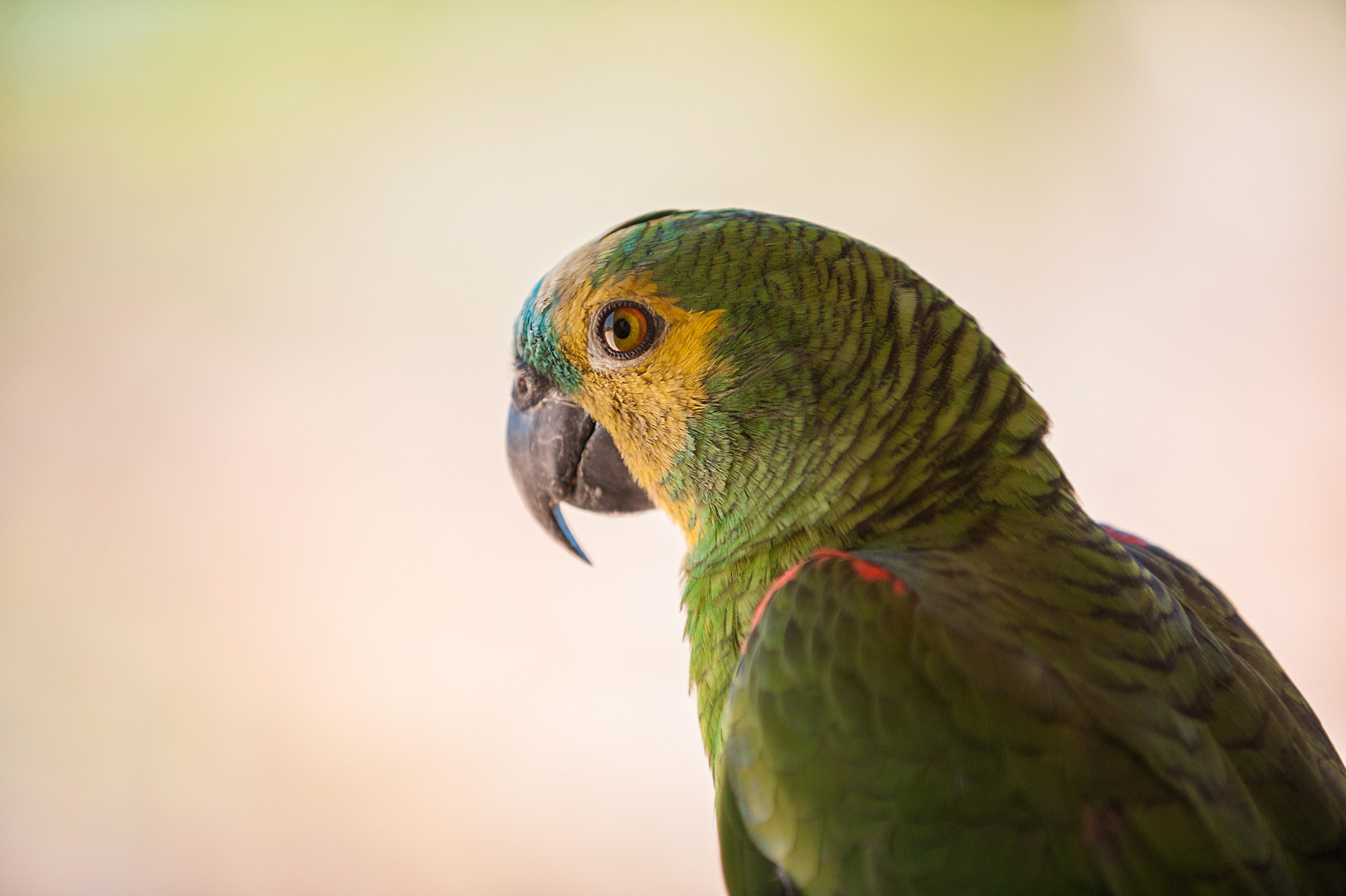
I photographed this turquoise-fronted Amazon parrot in northern Brazil in the wild. That said, they are a very common pet species and this one allowed me a very close approach. It varies from bird to bird, but some turquoise-fronted Amazons are excellent at talking. All of them like to sing. Nikon D700 with Nikkor 70-200mm lens (at 200mm) ISO 800, f/4 at 1/1600th of a second.
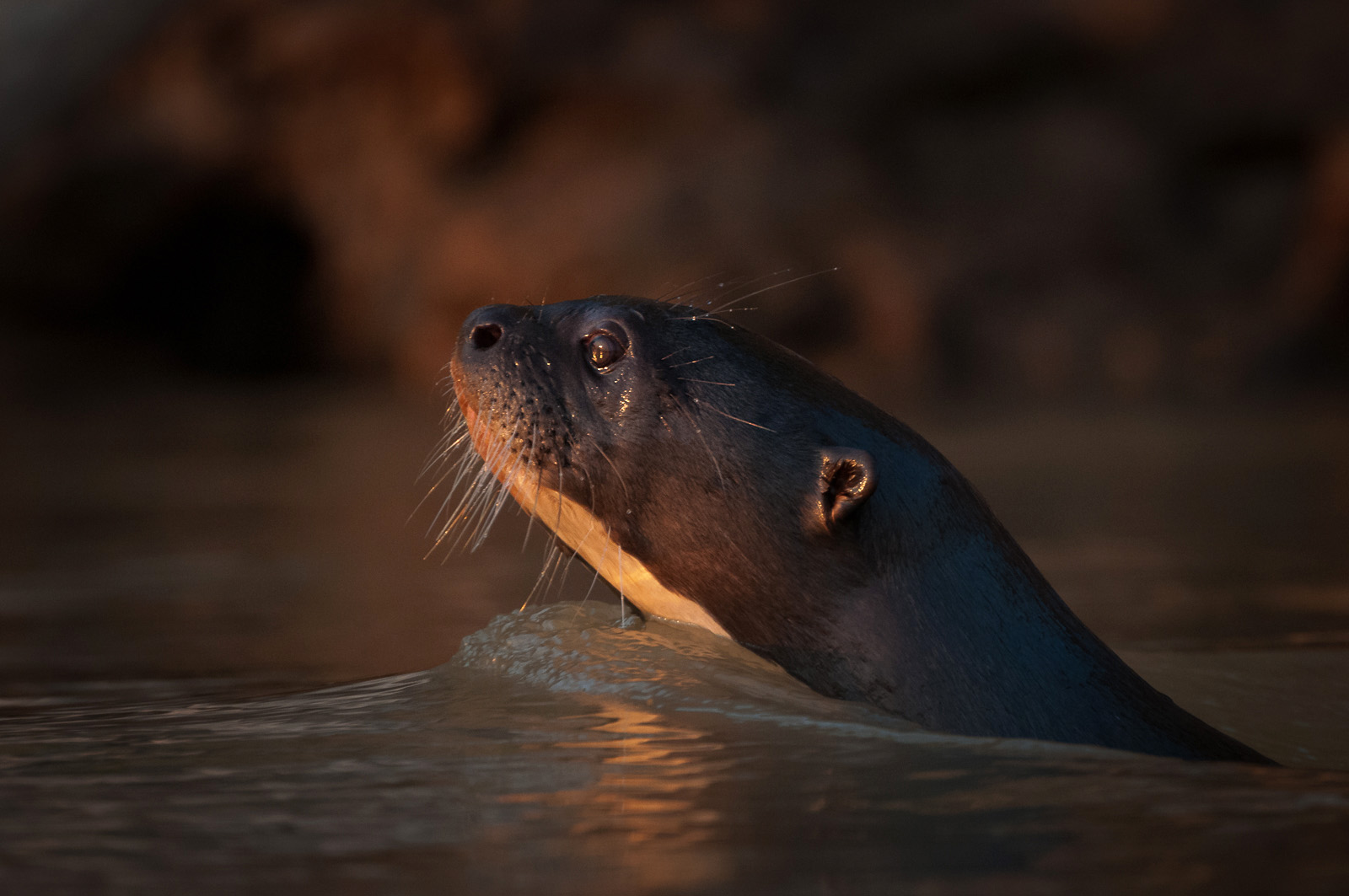
I had some nice late-day light when this giant river otter swam past my boat in the Pantanal of Brazil. Unlike most other members of the mustelid family, these otters are highly social and live in large groups — sometimes as many as twenty individuals, although usually about eight or so. Nikon D300 with Nikkor 200-400mm lens and 1.4 teleconverter (for 550mm) ISO 1600, f/5.6 at 1/400th of a second.
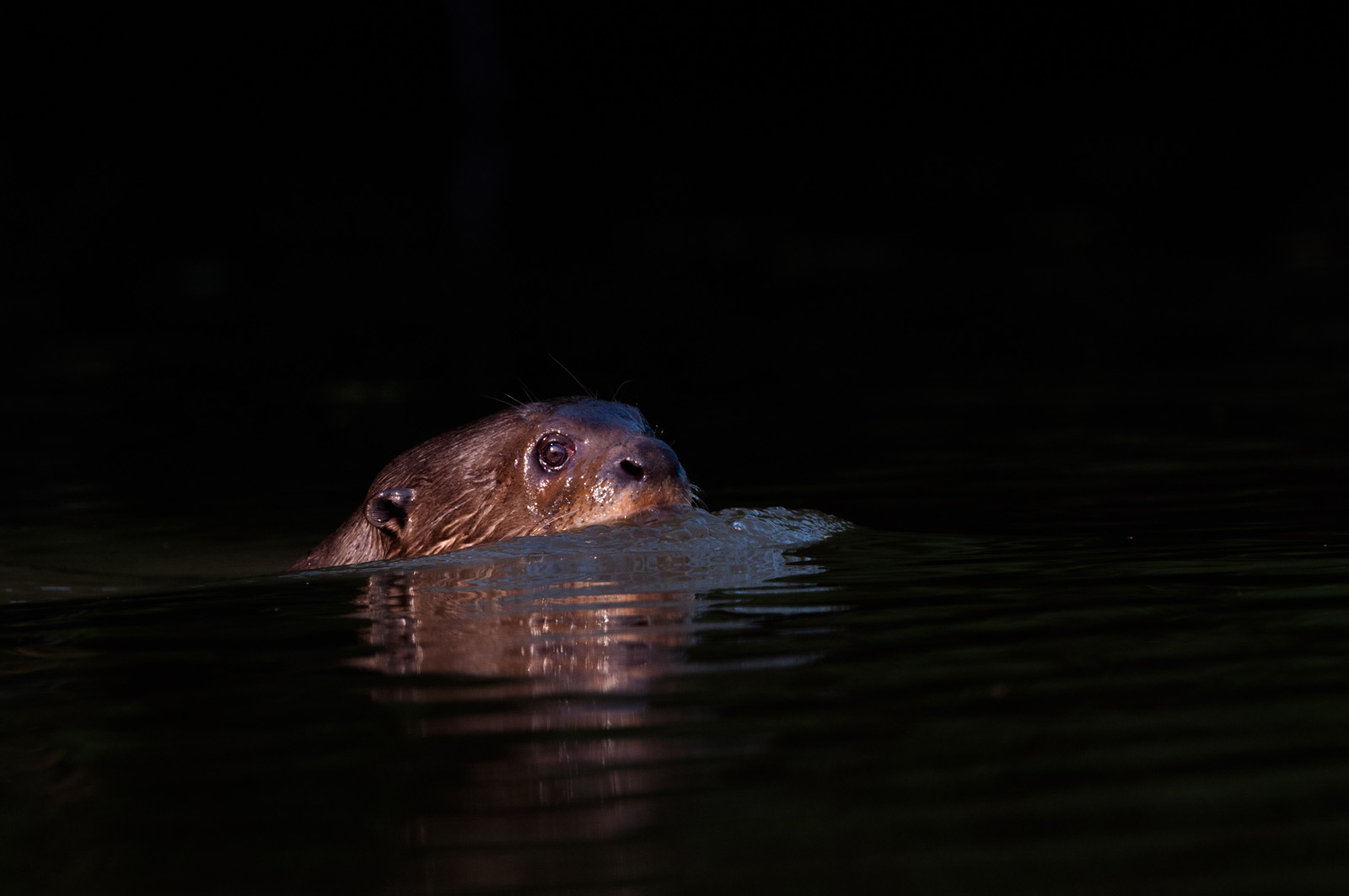
This giant river otter was swimming in a shadowy area along the banks of a tributary in the Pantanal of Brazil, with just hints of the bright sun sneaking through. I was able to close down the aperture a few stops of light to get the face properly exposed while the rest of the image went dark. Nikon D300 with Nikkor 200-400mm lens (at 400mm) ISO 800, f/5.6 at 1/640th of a second
We use cookies to enhance your experience while using our website. If you are using our Services via a browser you can restrict, block or remove cookies through your web browser settings. We also use content and scripts from third parties that may use tracking technologies. You can selectively provide your consent below to allow such third party embeds. For complete information about the cookies we use, data we collect and how we process them, please check our Privacy Policy