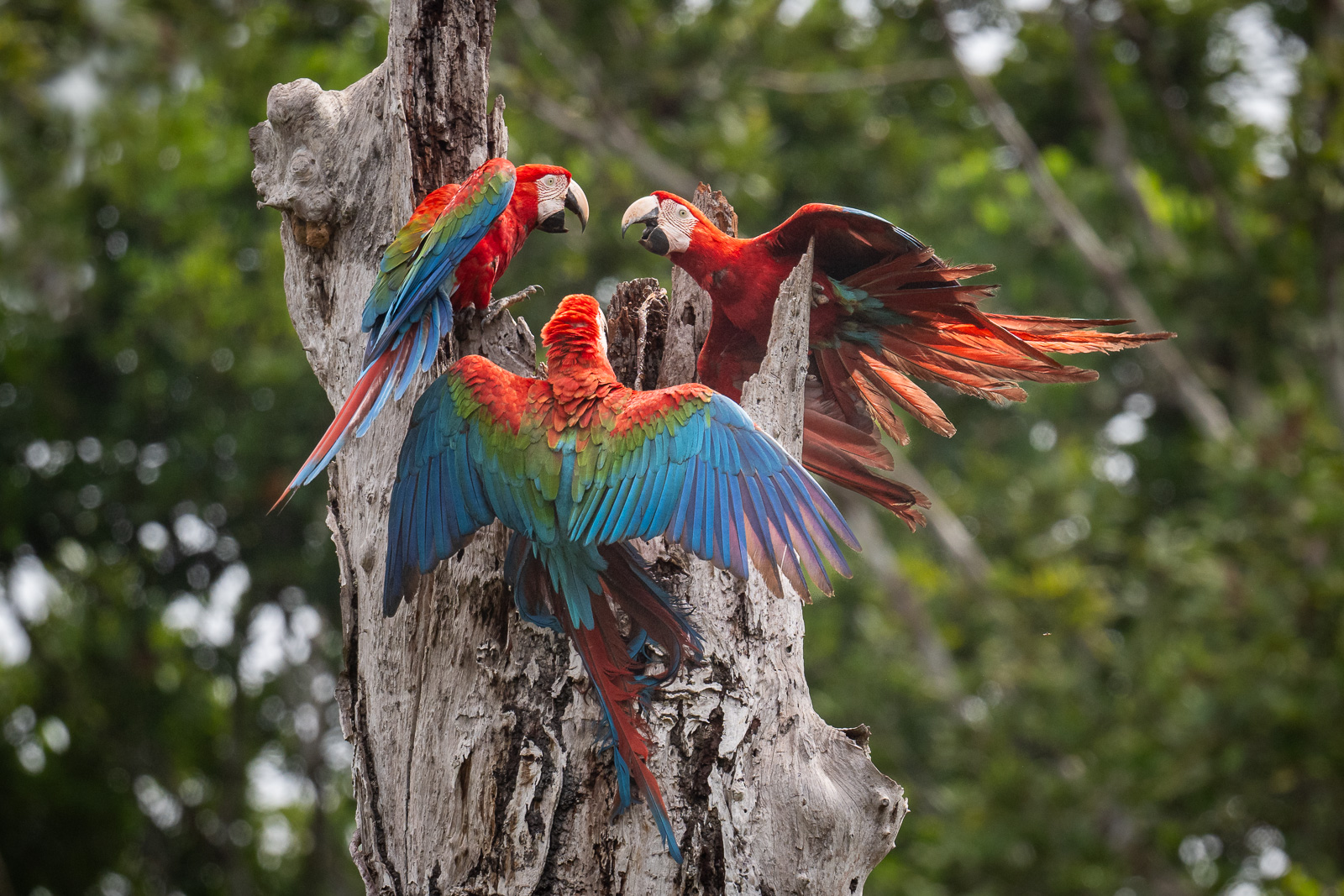
When I go on wildlife trips I always tell myself to take more video. And then I forget. Last year in Africa, I only took a handful of videos, some of which I’ll post soon. And earlier this month in Guyana, I switched over a few times — one of those times being an encounter with a family of squawking red-and-green macaws. Below is a photo I captured of the scene. Video: Nikon Z8 with Nikkor 500mm PF lens, 4K/60fps, ISO 64, f/5.6 at 1/125th of a second. Photo: Nikon Z8 with Nikkor 500mm PF lens, ISO 450, f/5.6 at 1/1000th of a second.
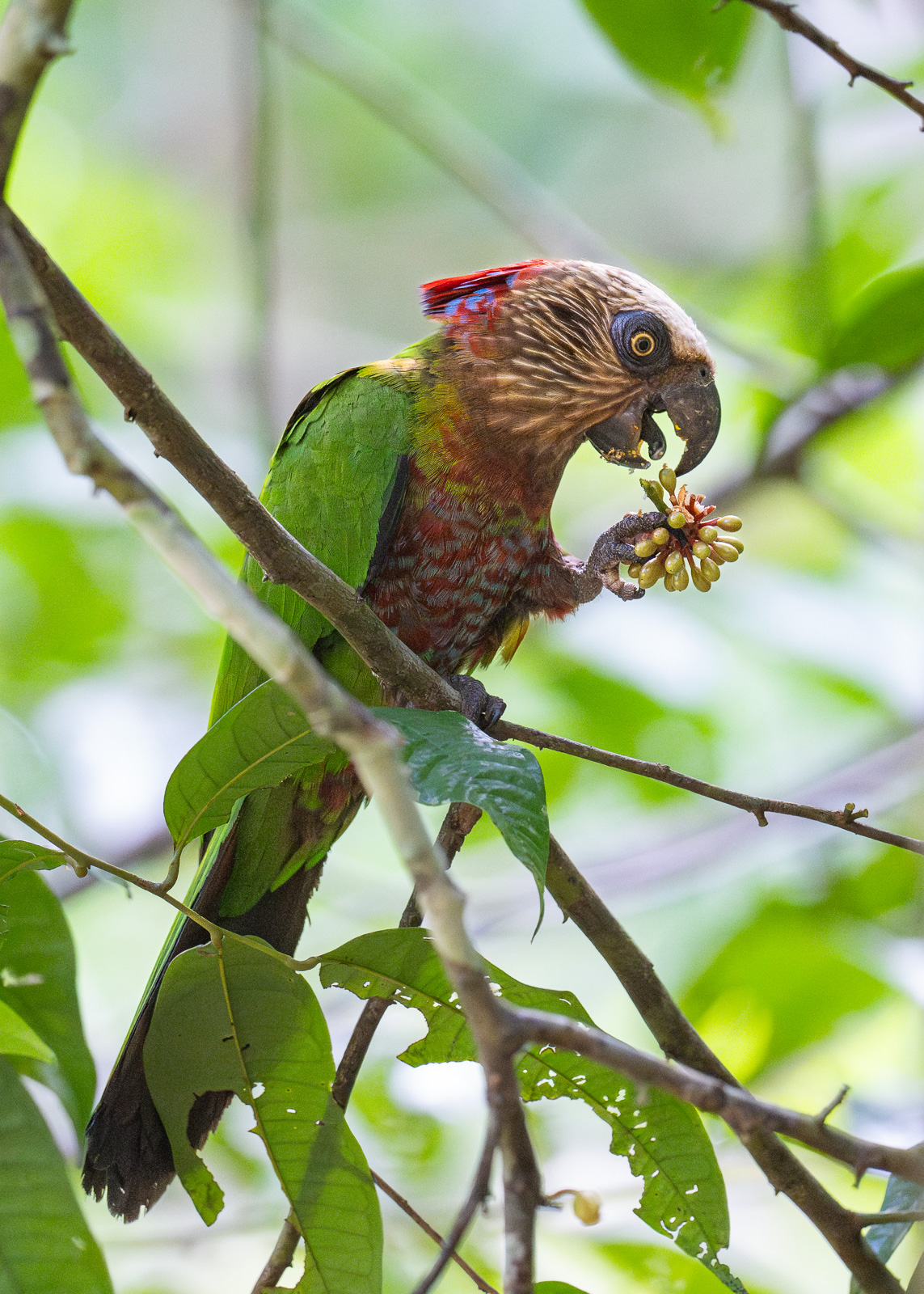
I saw quite a few different species of parrots while in Guyana. This was probably my favorite — the red-fan parrot, also known as the hawk-headed parrot. It’s called the former because of those red and blue feathers on the back of the head — they can be raised to form an elaborate fan, which greatly increases the perceived size of the bird. It is thought that they do this when threatened. He clearly wasn’t threatened by me because he never raised the fan, preoccupied perhaps with all the fruits and berries on the various rainforest trees. Nikon Z8 with Nikkor 500mm PF lens, ISO 12800, f/5.6 at 1/400th of a second.
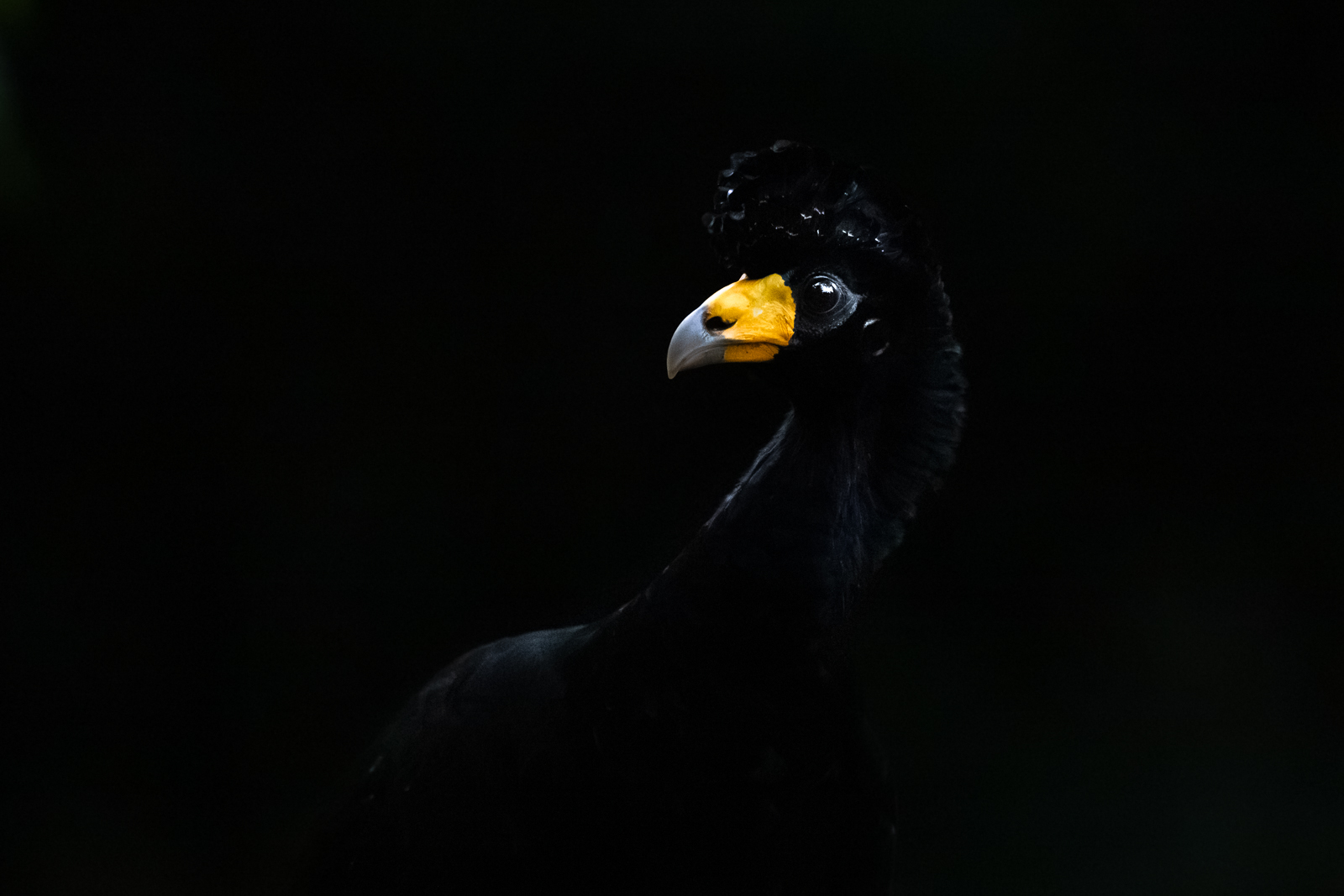
Great curassows are large pheasant-shaped birds that forage on the ground for fruits and insects. Males are uniformly black, except for a bright yellow beak, and have curly crests on top of their heads. A small flock regularly wondered through the backyard of the lodge I was staying at in the Iwokrama rainforest of Guyana. There wasn’t much light left when I was photographing this one, which made for a nice black on black portrait, framed by the few highlights. Nikon Z8 with Nikkor 500mm lens, ISO 12800, f/5.6 at 1/160th of a second.
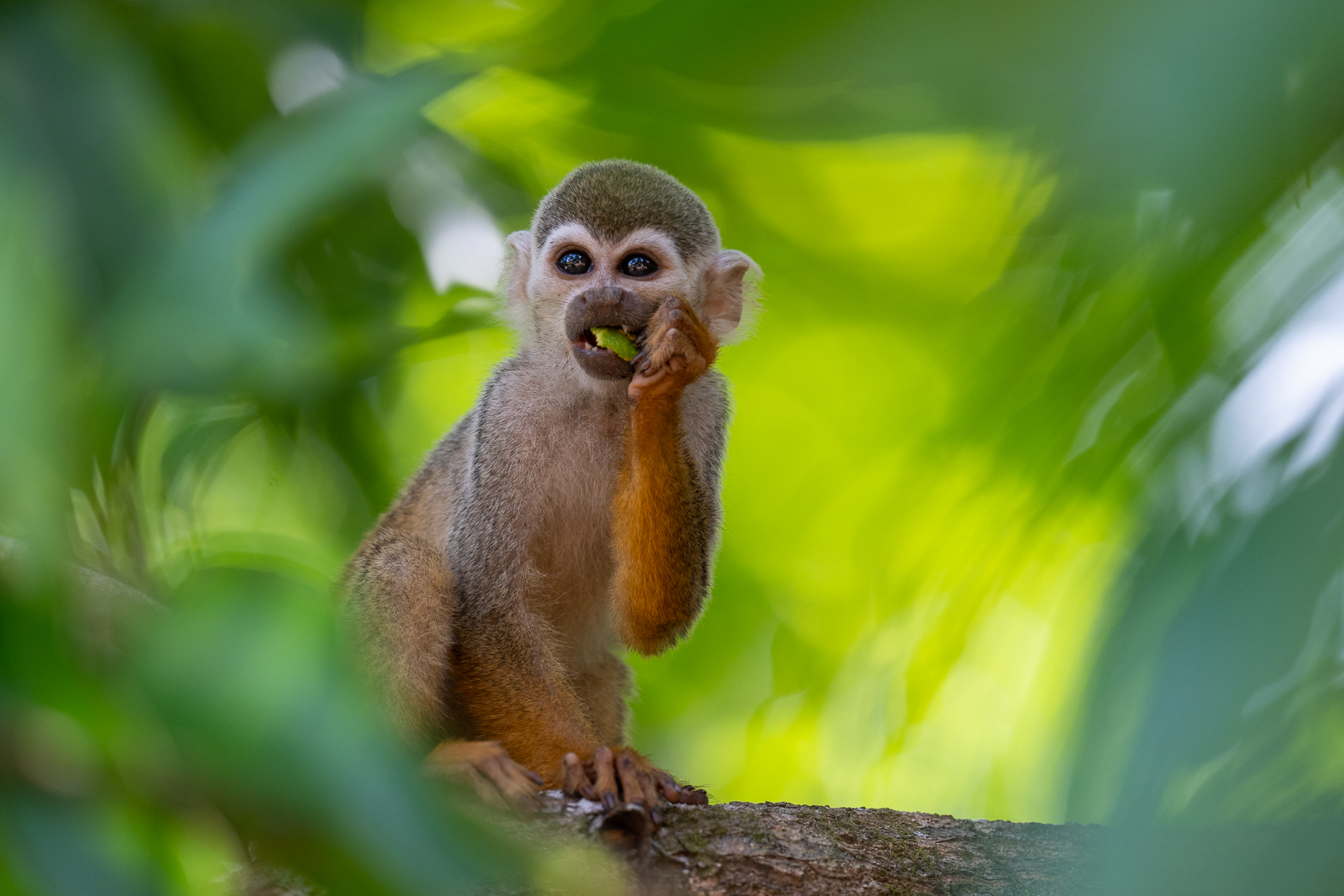
The first lodge I stayed at in Guyana had eight different species of mango tree on the property. Only one of them was fruiting at the time, but the local squirrel monkeys were all over it. I have photographed squirrel monkeys many times before, but was never as close. I realized just how small they really are. I’d say even smaller than a squirrel. Nikon Z8 with Nikkor 500mm PF lens, ISO 1100, f/5.6 at 1/320th of a second.
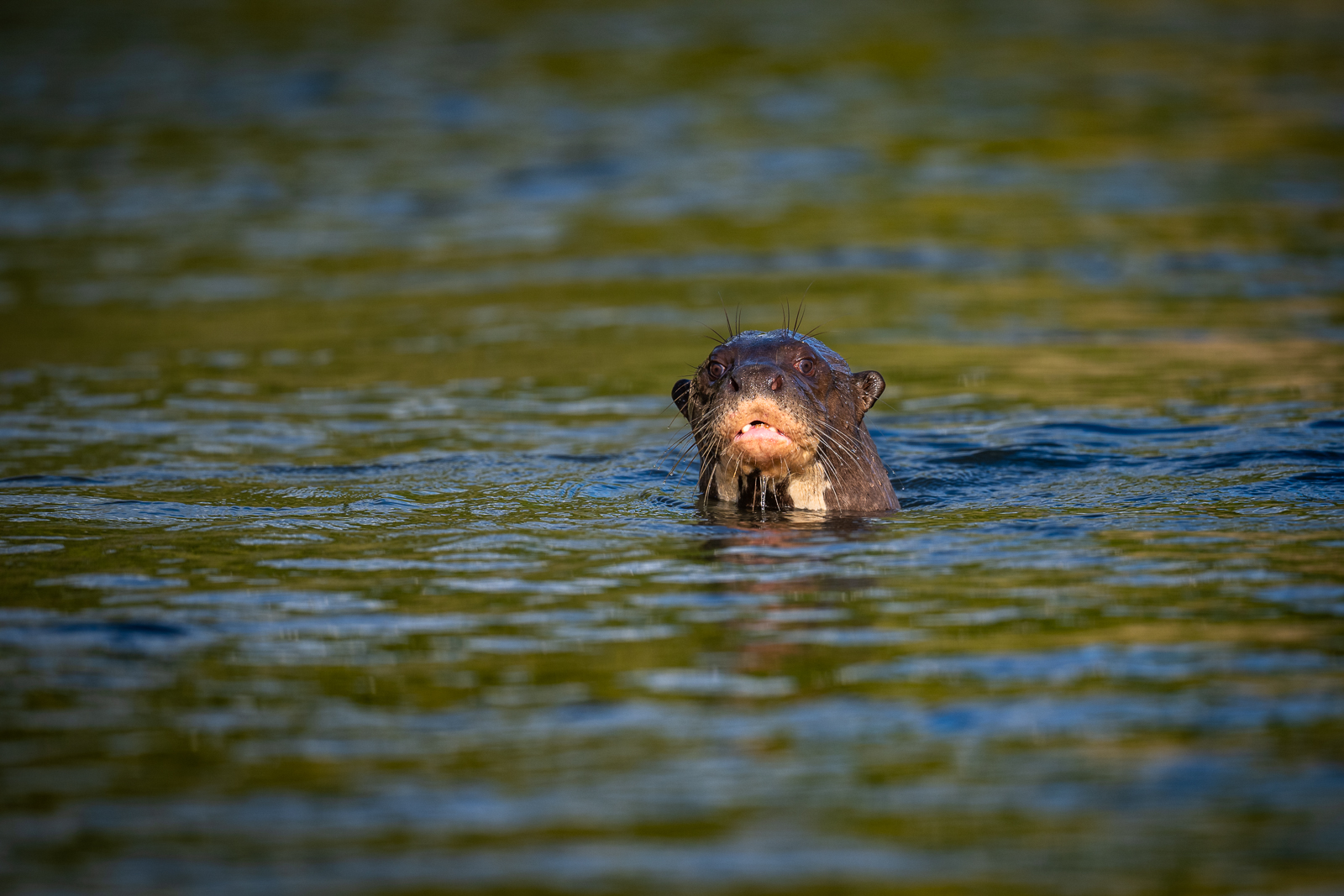
Guyana is called “The Land of the Giants” for good reason. They have the largest eagle in the world (harpy eagle), the largest armadillo, the largest anteater, the largest rodent (capybara), the largest fresh water fish (arapaima), even the largest lily pad (Victoria amazonica) and single drop waterfall (Kaieteur Falls). And of course, plenty of these guys, the largest otters. We saw them a few times, but they were very skittish so I wasn’t able to capture any behavioral shots, just the heads popping out of the water checking us out. Nikon Z8 with Nikkor 500mm PF lens, ISO 280, f/5.6 at 1/1000th of a second.
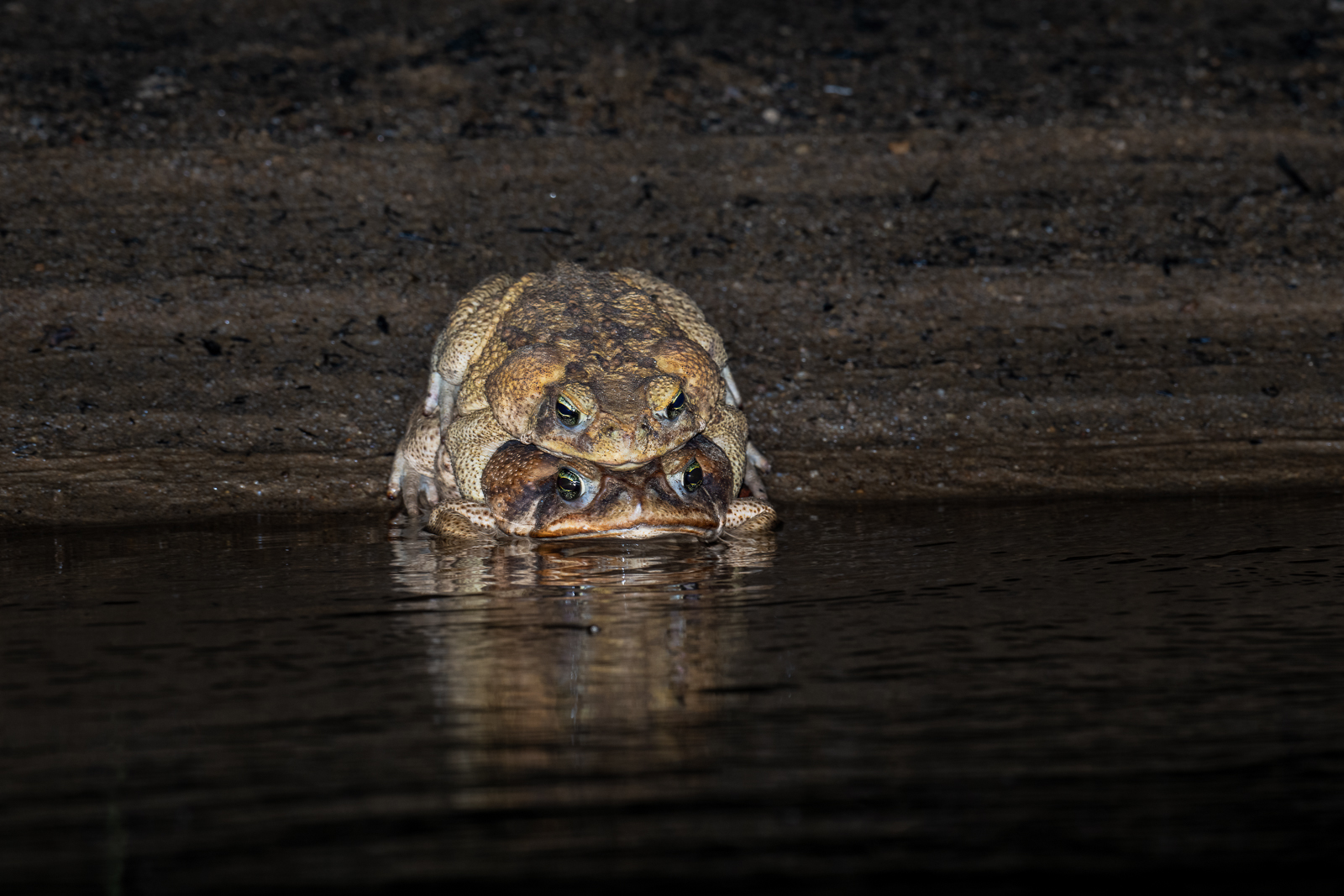
This is what conjugal bliss looks like to the marine toad. Also known as the giant neotropical toad and the cane toad, these guys were all over the place once night fell on the Rupununi region of Guyana. Nikon D850 with Nikkor 500mm PF lens, ISO 500, f/8 at 1/160th of a second, Godox V860iii flash.
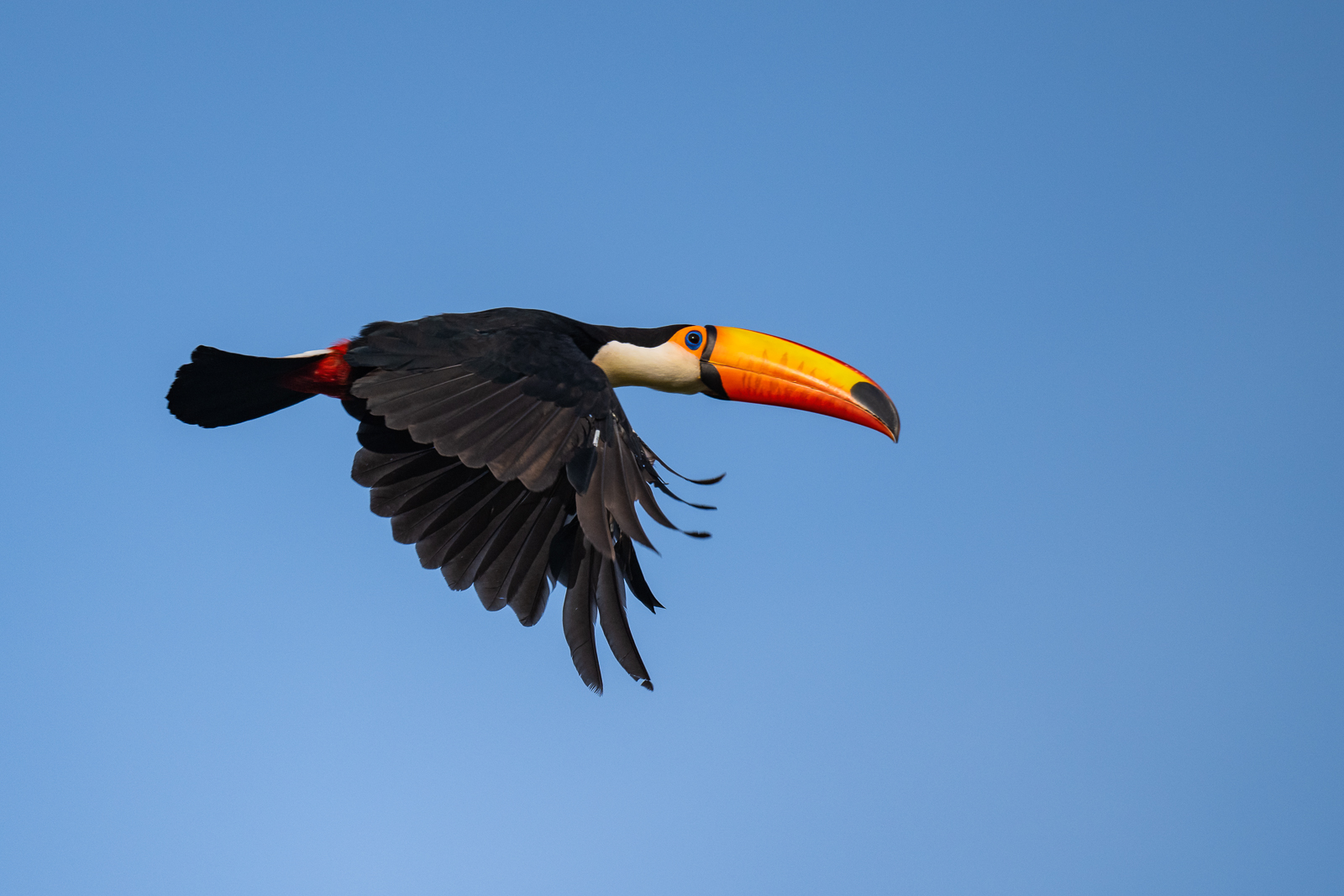
Toucans can be challenging to photograph in the rainforest because they are inevitably high in the canopy. That said, I was thrilled when I came across several toco toucans in the city of Georgetown on my last day in Guyana. I had heard the city’s botanical gardens were a great place for birds, but didn’t know that included toucans. I had previously photographed this species in the Pantanal of Brazil and didn’t know they ranged so far north. Toco toucans are the largest toucan species in the world — and were the toucan featured in a well-known ad campaign for Guinness. Nikon Z8 with Nikkor 500mm PF lens, ISO 220, f/5.6 at 1/1600th of a second.
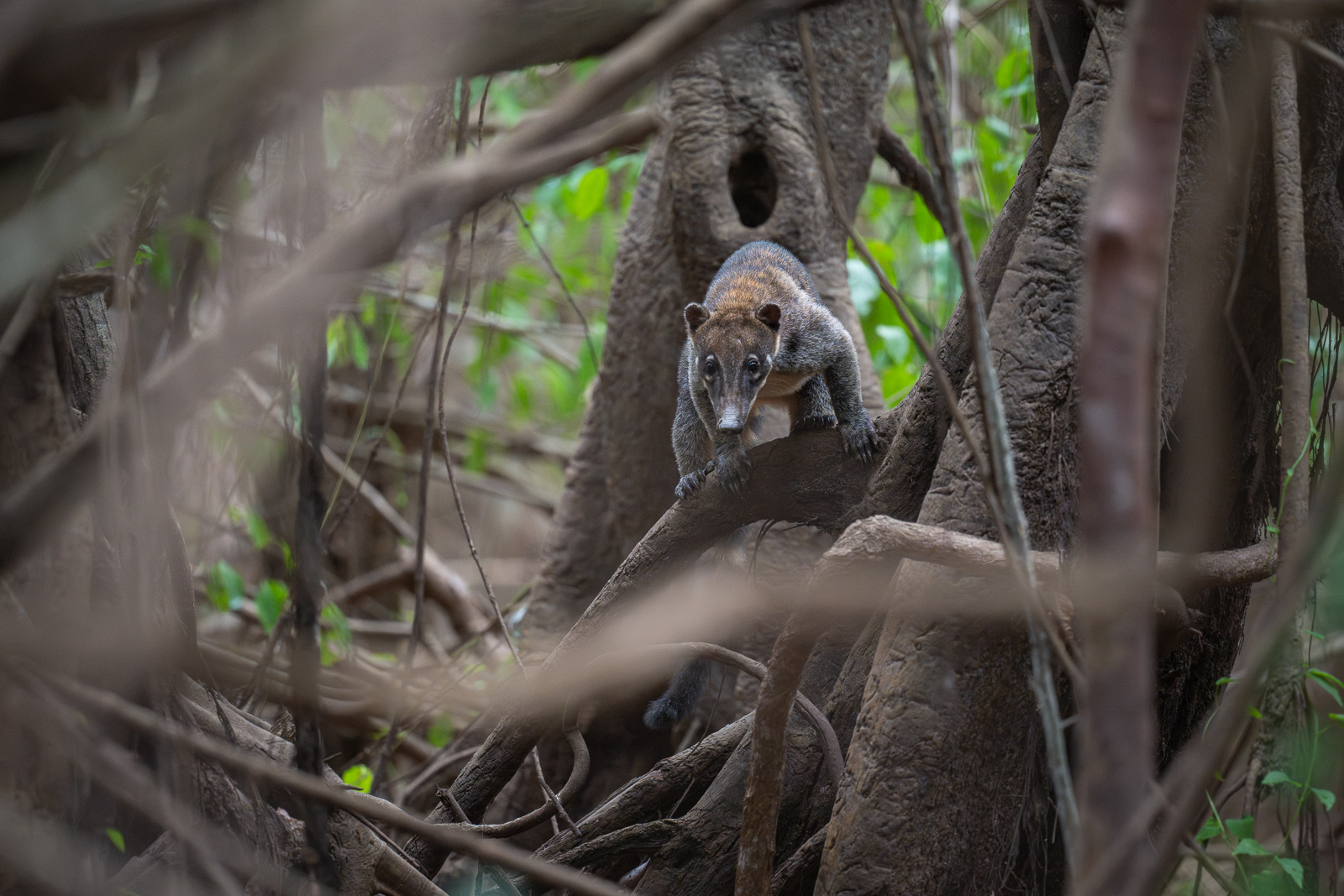
I only saw one group of coatis in Guyana and they were very skittish — much more so than those I’ve seen in other Central and South American countries. That said, I was able to sit quietly in just the right spot and eventually a few of them showed a bit of curiosity before running off. Nikon Z8 with 500mm PF lens, ISO 9000, f/5.6 at 1/500th of a second.
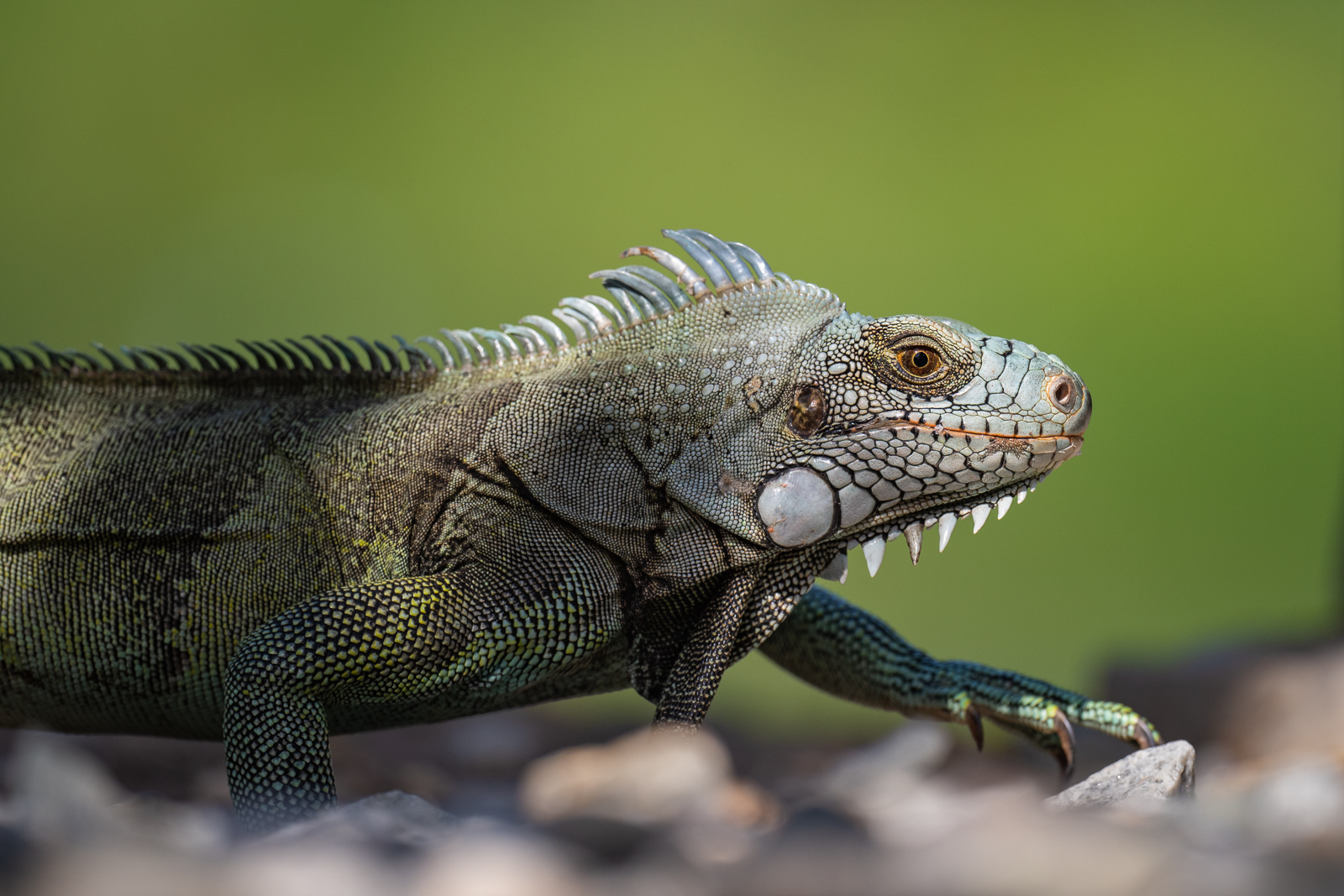
Green iguanas naturally range from central Mexico south to Paraguay and Brazil. Although you may have come across one in Florida, where they were purposely introduced by an exotic pet dealer in the mid 1960s. Allegedly, he released 300 of them and they were able to successfully establish a sustainable population. I photographed this one in Guyana as it strolled along a river bank, beneath a tree where several others were resting. Nikon Z8 with Nikkor 500mm PF lens, ISO 560, f/5.6 at 1/1600th of a second.
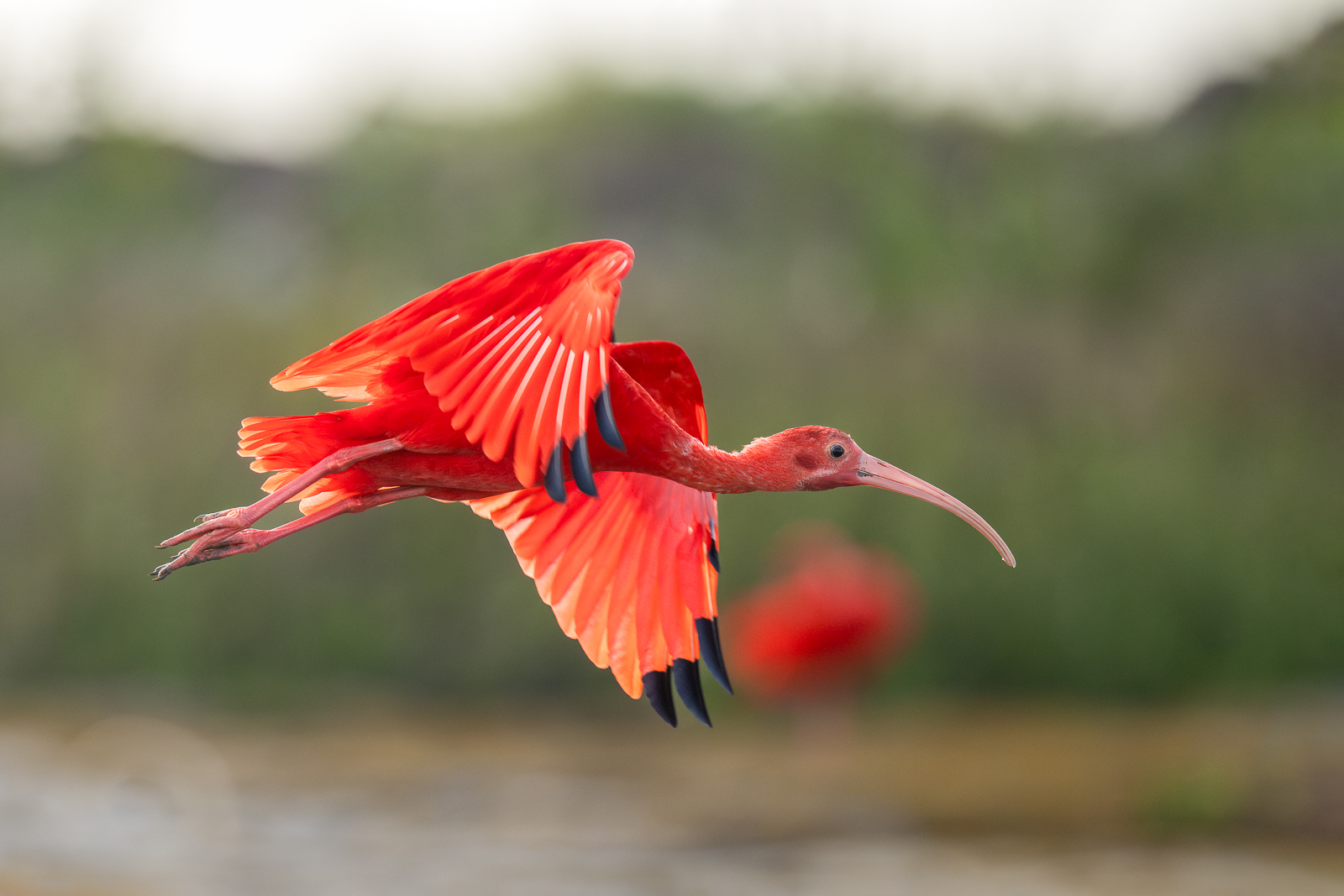
Another of my target species in Guyana was the scarlet ibis. I had photographed these birds before in Trinidad, but at quite a distance as flocks returned from Venezuela to roost for the evening. In Guyana I was able to photograph them at close range and captured all sorts of behavior and many flight shots. Of the 27 species of ibis in the world, the scarlet ibis is certainly the most brilliantly plumed. Nikon Z8 with Nikkor 500mm PF lens, ISO 1100, f/5.6 at 1/2000th of a second.
We use cookies to enhance your experience while using our website. If you are using our Services via a browser you can restrict, block or remove cookies through your web browser settings. We also use content and scripts from third parties that may use tracking technologies. You can selectively provide your consent below to allow such third party embeds. For complete information about the cookies we use, data we collect and how we process them, please check our Privacy Policy