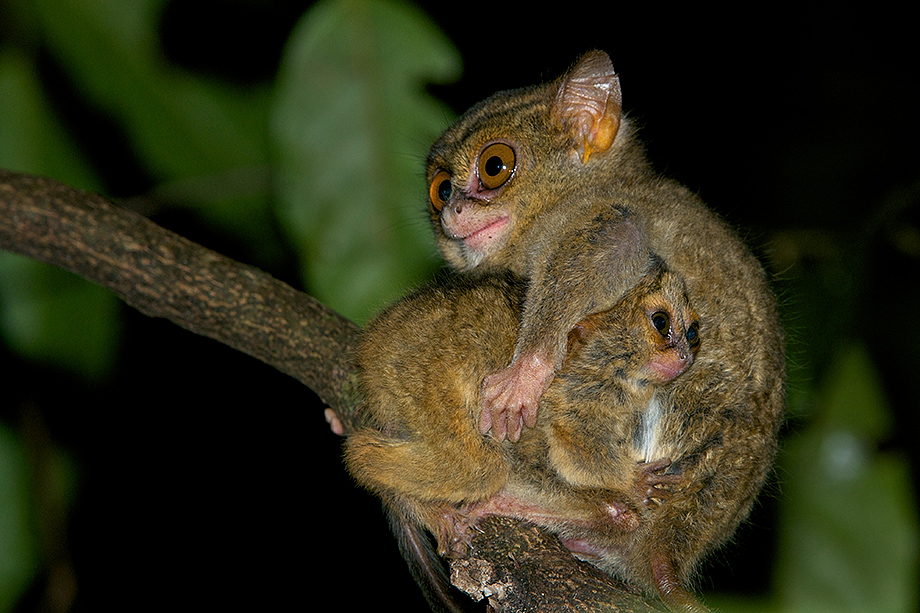
Tarsiers babies aren’t all that much smaller than their parents when they are born. The mother will often carry the baby in her mouth, or tucked under her arm — as is the case in this photo. The mom will find a safe place, leave her baby there, and then go hunting for grasshoppers and other insects.
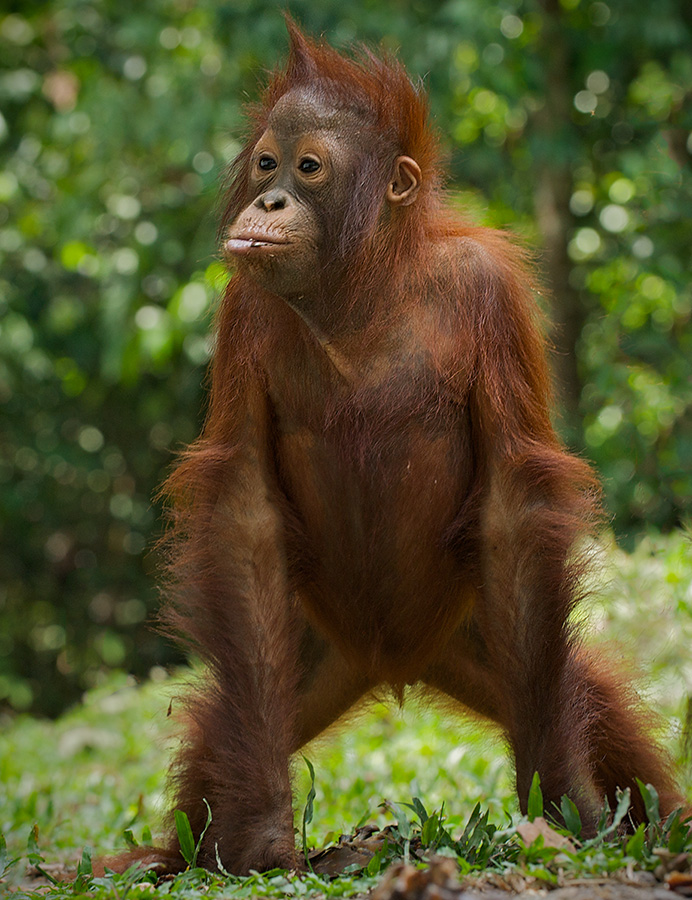
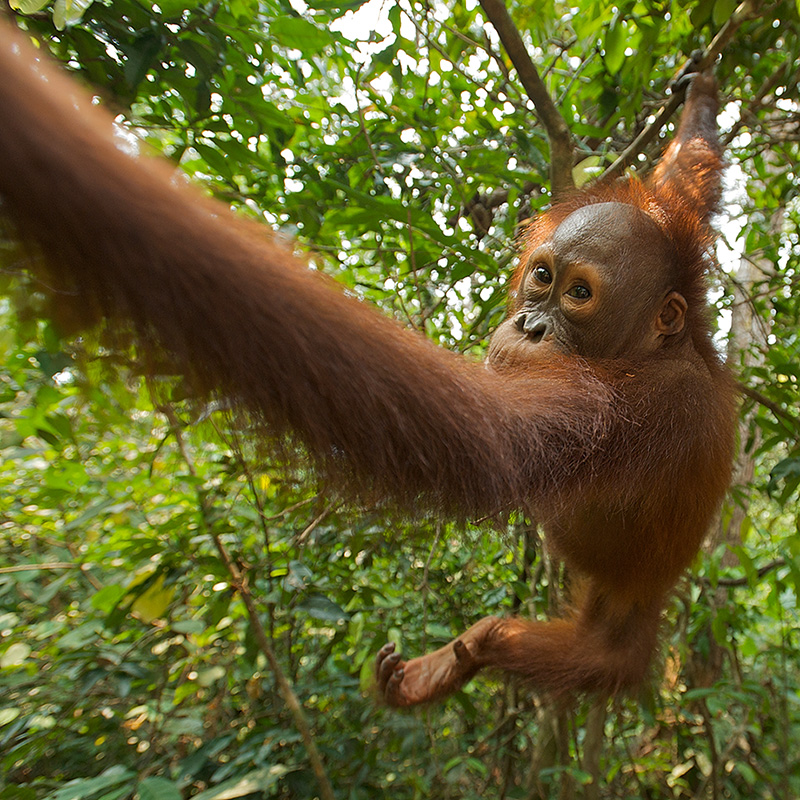
For all you orangutan fans out there, here’s another quick break from the Kenyan action. This young guy was one of the very human-friendly orangutans living in Tanjung Puting National Park in Indonesian Borneo.
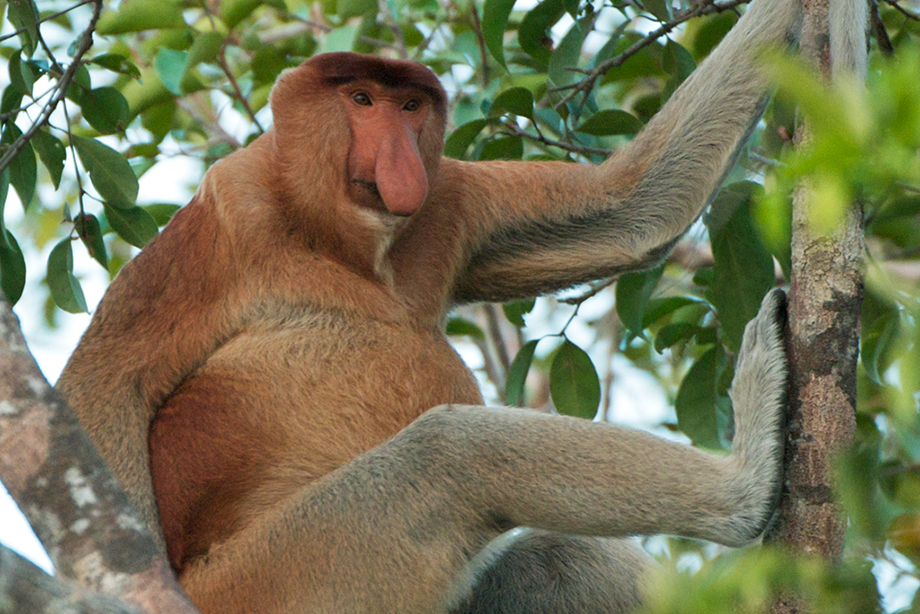
Again, I offer up one of nature’s truly handsome creatures — this time a little more of a close up so you can really appreciate that face. The male proboscis monkey is also known as the Dutch monkey, or simply Dutchman, as the native Borneans felt that with the large nose and belly, the monkeys looked an awful lot like the Dutch colonizers.
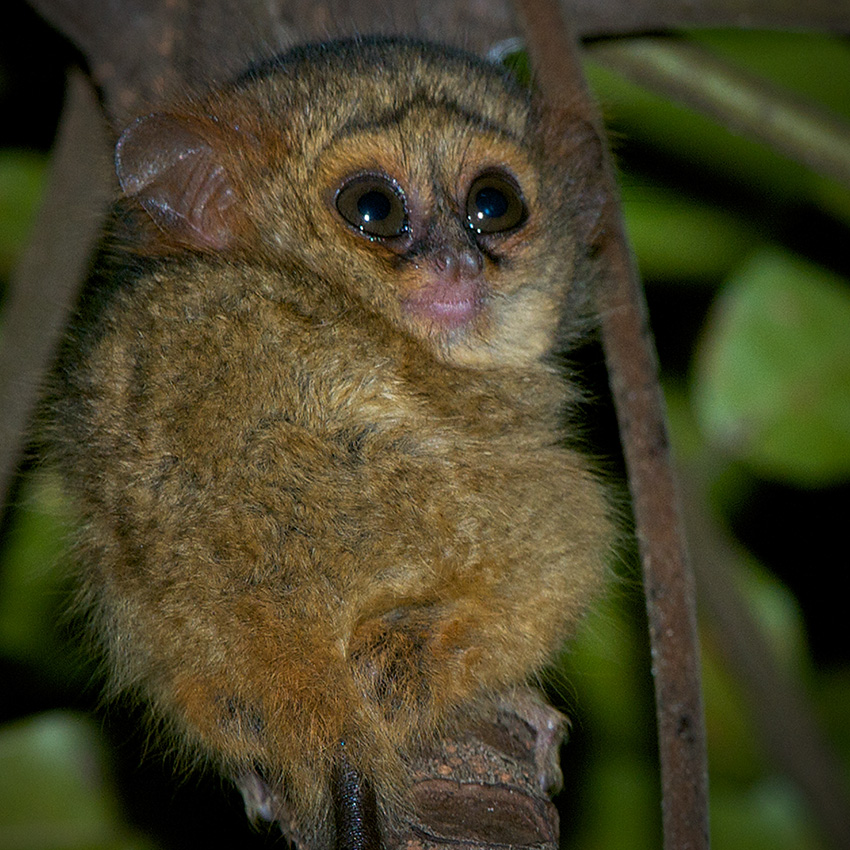
My sister Mo requested a tarsier this week, so I figured I’d go one better and post a baby tarsier. This little thing couldn’t have been much bigger than a softball. For the most part it had been clinging to, and hiding behind its mother, but at one point it jumped over to another branch and I was able to get a few shots in the clear. For those not paying attention to the last tarsier post, these guys are one of the smallest primates in the world, and this particular species of tarsier — the spectral tarsier — lives only on a couple of Indonesian islands. I photographed this guy in Tangkoko National Park on the island of Sulawesi.
Borneo is home to one of the oldest rainforests in the world — even older than the Amazon. Hiking through the jungle there was quite an experience — and although I almost exclusively point my camera at animals, I couldn’t help but grab a few shots of plants in between orangutan sightings. I’m not sure of the exact species of this palm, but its fronds were big — six feet wide, or so, big.
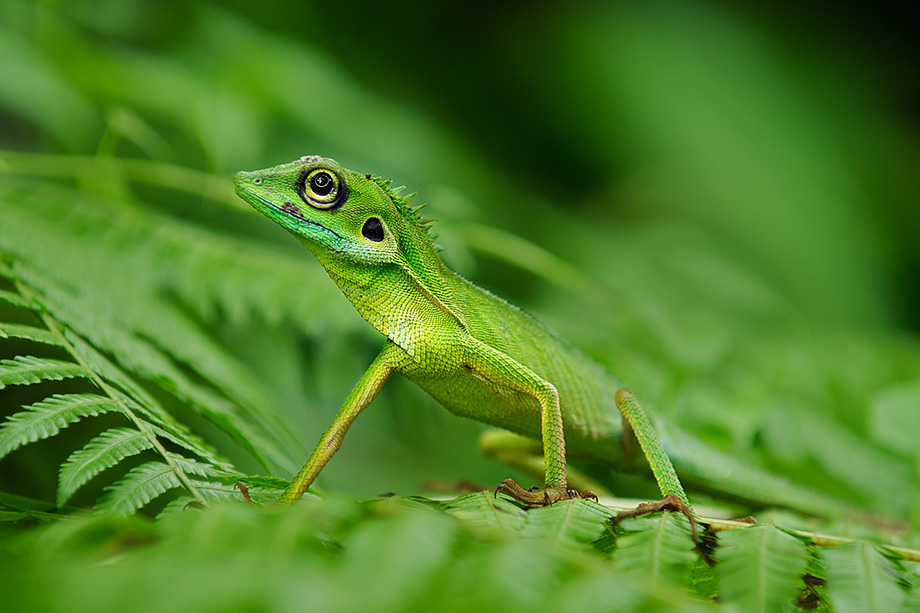
This is a green-crested lizard from the Indonesian island of Sumatra. It appears to be focused on something above, perhaps a butterfly or moth, its most common prey.
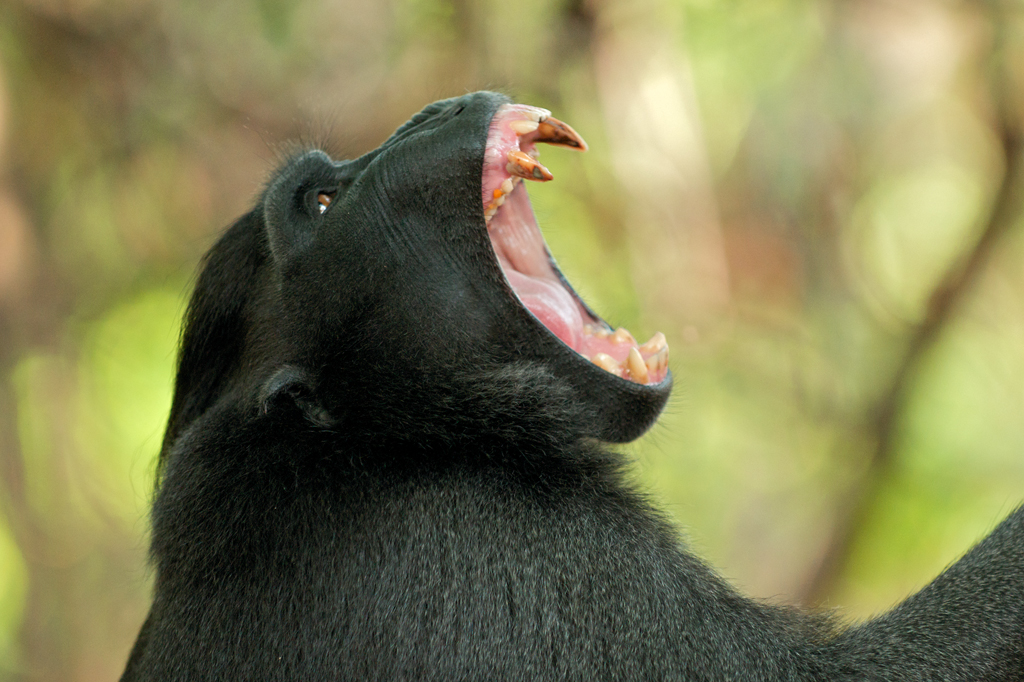
Back for another post, my favorite primate, the black-crested macaque, this time letting out a big yawn. For those new to the blog, these guys are critically endangered and live in Tangkoko National Park in the extreme northern tip of the Indonesian island of Sulawesi.
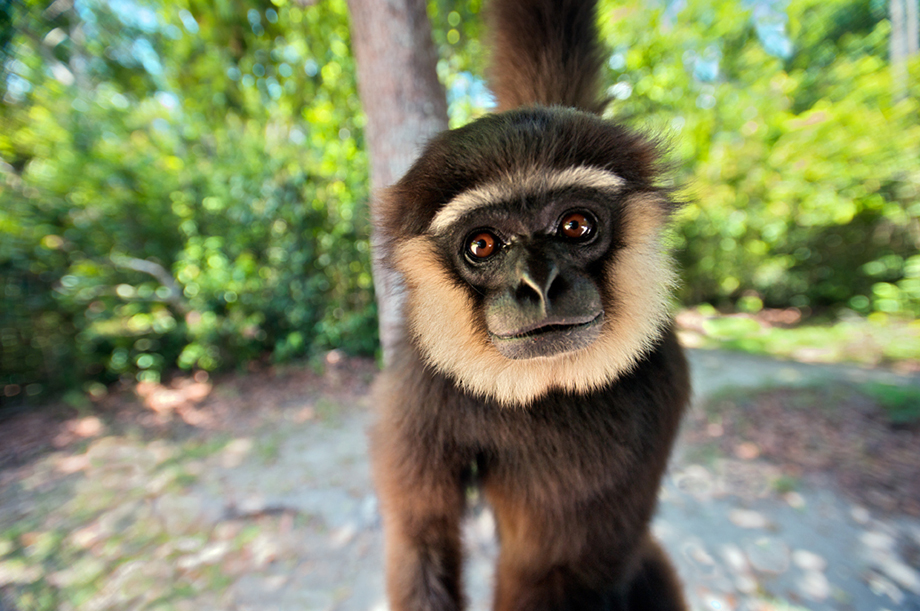
This is an agile gibbon, also known as a black-handed gibbon. You can tell that this one is a male by the white cheeks. He was quite habituated and very curious about me and my guide. In fact, he was hanging only about a foot or so from the front of my wide angle lens when I took this picture. We were in Tanjung Puting National Park in Indonesian Borneo.
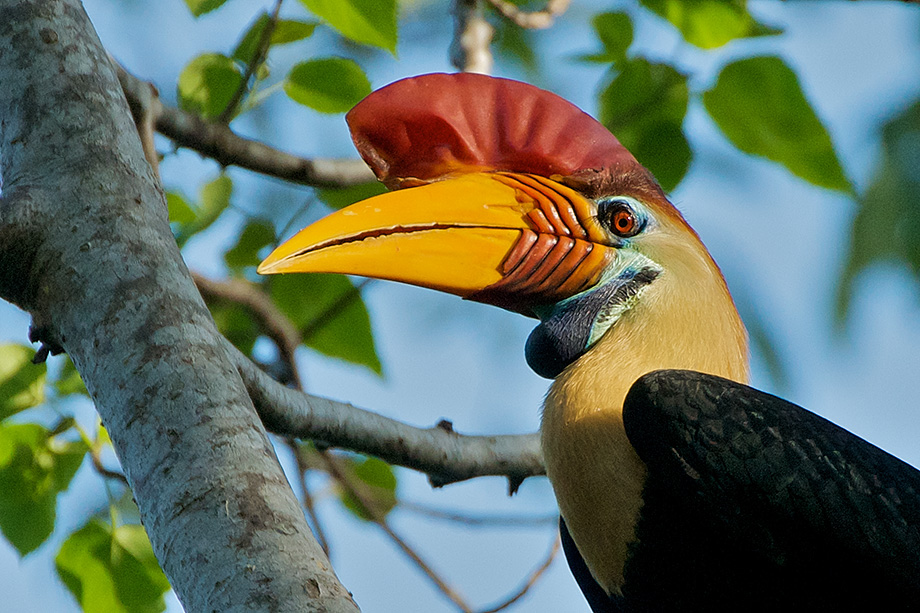
This is a red-knobbed hornbill from Tangkoko National Park in Sulawesi, Indonesia. From the top of the head to the tip of the tail, these hornbills can be four to five feet long. It was quite a sight to see (and hear) them flying through the forest. Usually timid of humans, this particular bird allowed me to take quite a few photos before flying off.
To move through the jungle, orangutans don’t jump from branch to branch, but instead swing on vines and the flexible trunks and branches of thinner trees. This guy had just stopped to investigate my strange bald head, before swinging on past.
We use cookies to enhance your experience while using our website. If you are using our Services via a browser you can restrict, block or remove cookies through your web browser settings. We also use content and scripts from third parties that may use tracking technologies. You can selectively provide your consent below to allow such third party embeds. For complete information about the cookies we use, data we collect and how we process them, please check our Privacy Policy