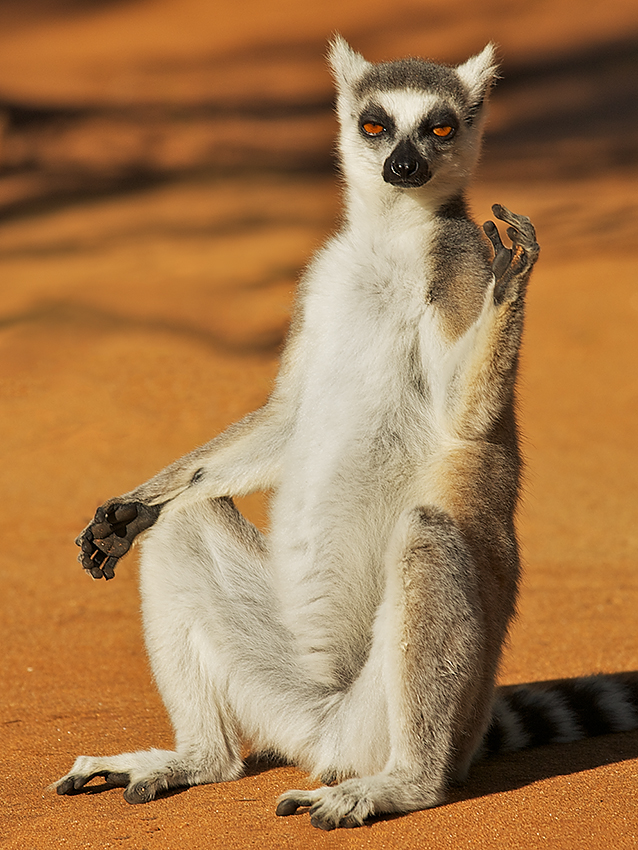
This one is from my trip to Madagascar back in 2007. Of all the lemurs (53 different species depending upon who’s doing the counting) the ring-tailed is perhaps the best known. They’re latin name is Lemur Catta — appropriate because they meow somewhat like a cat. This one was either waving to say hello, or telling me to get the camera out of her face.
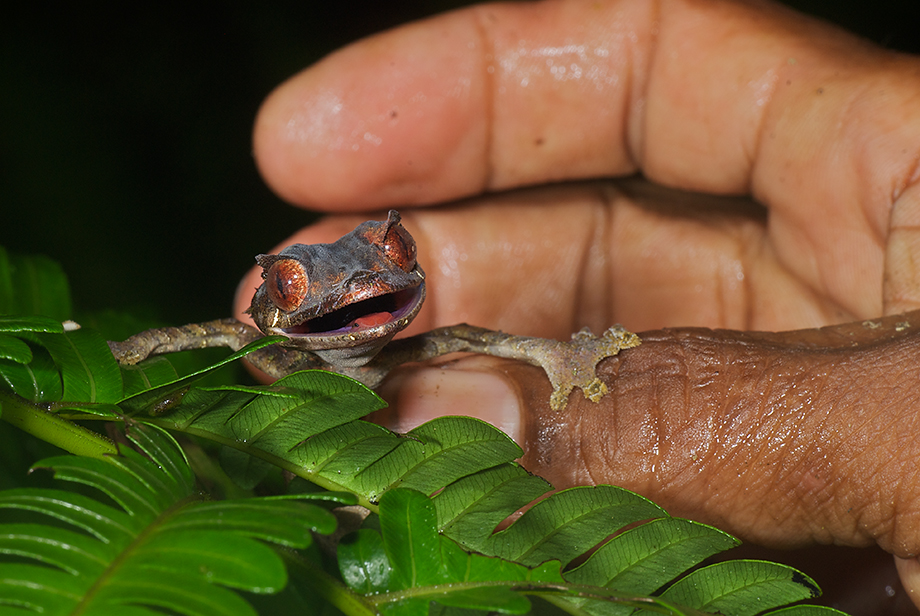
Sometimes you need a hand in there to get a sense of scale. This was a little leaf-tailed gecko that my guide found one night while we were out spotlighting in Ranomafana National Park in Madagascar. In my three weeks in the country, I saw both geckos and chameleons that were as small as an inch long, while others were over two feet.
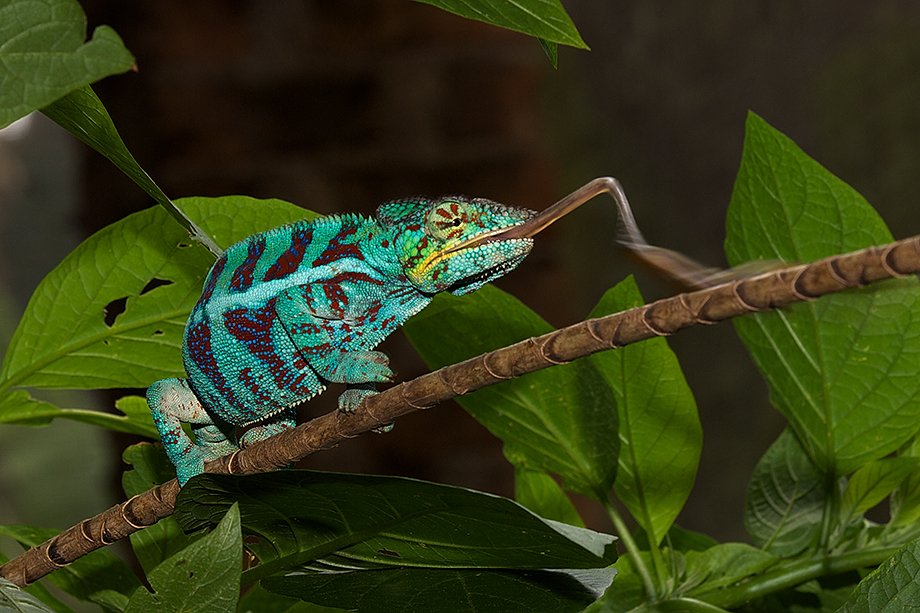
A chameleon’s tongue can be one and a half to two times its body length. The strike for prey happens so fast that it’s hard to get a picture (usually about 0.07 seconds). In my three weeks in Madagascar, I only had two opportunities to see and catch a tongue shot. This is one of them.
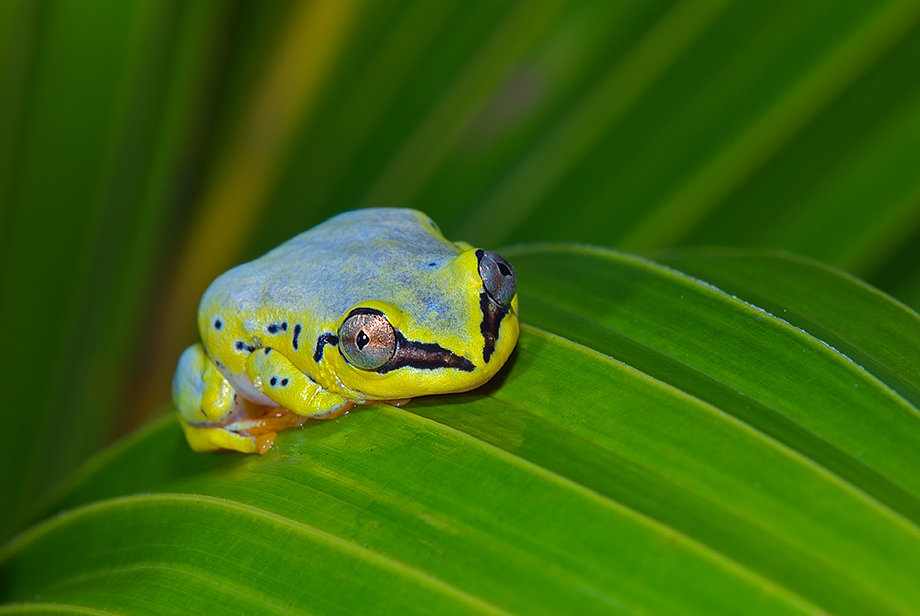
In honor of my frog loving little sister who’s birthday it is today, I had to search through my archives to find a suitable subject. This beauty is a Madagascar reed frog that I photographed in the town of Maroantsetra. I was stranded in the town due to bad weather and spent several days just walking around the grounds of the hotel I was staying at, looking for whatever animals I could find. When young, these frogs are completely yellow (see this link to a juvenile that I saw the next day) but when they mature, they get that nice light blue color on their backs. Happy birthday Mo.
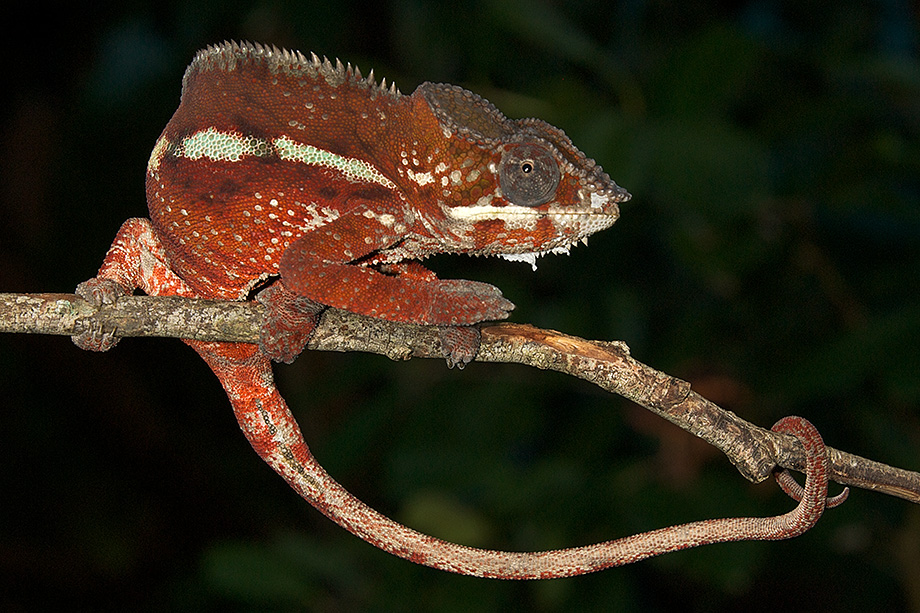
Panther chameleons not only change colors within single individuals, but they also come in different colors depending upon which region of Madagascar they are from. This is a male from the Tamatave area on the east coast where they are predominantly red. I saw him just as the sun was disappearing.
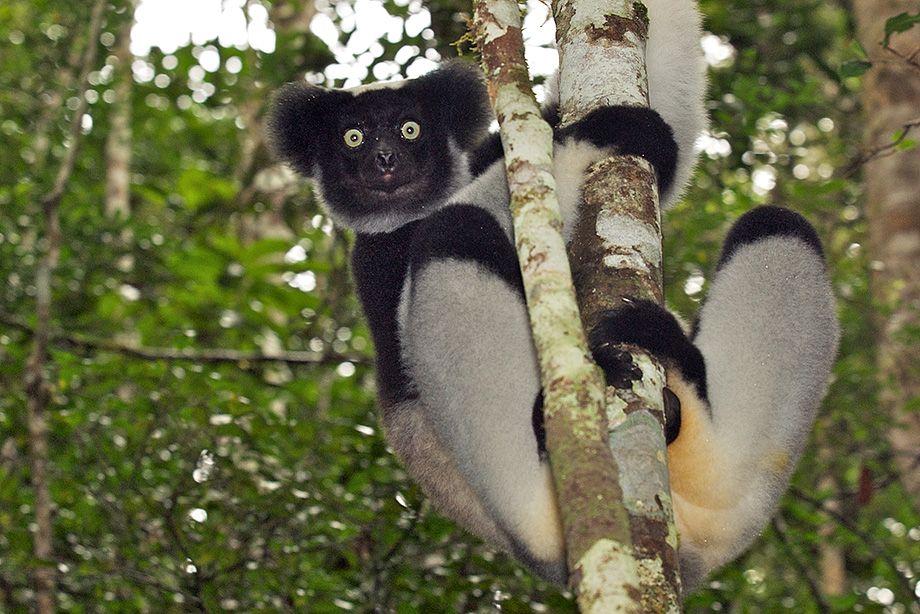
Some of you might remember these guys — the indri indri lemurs (and no, that’s not a typo, indri is repeated in the offical name). They are the largest of all the lemurs at nearly four feet tall, and 21 pounds. Even so, they can be incredibly acrobatic while jumping from tree to tree. As you can see from this guy, they also look a bit like stuffed animals.
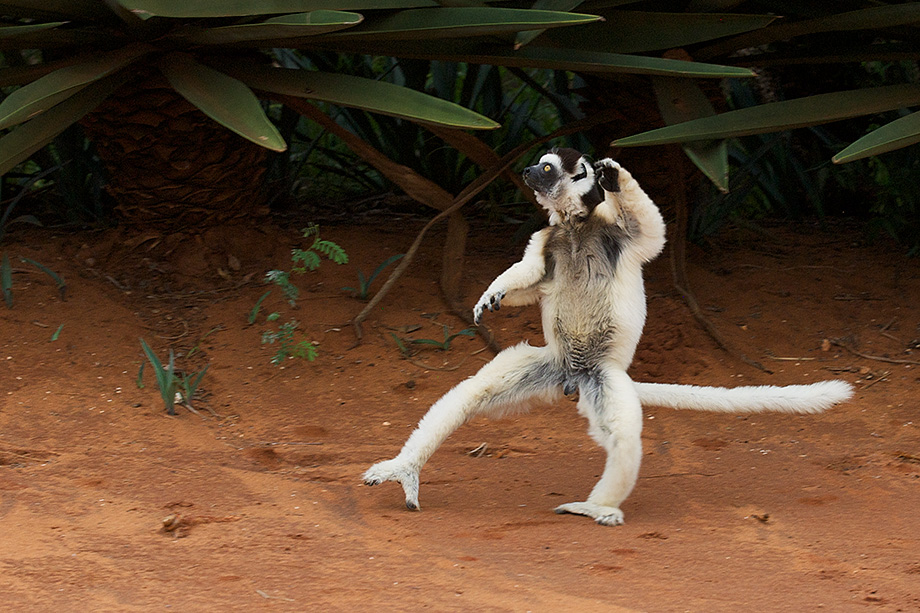
For those who have been receiving my posts for a while, you might remember these guys. This is a Verreaux’s sifaka lemur from Madagascar. They prefer to stay in trees, but when on land they perform a bit of a ballet dance when traveling from one tree to another.
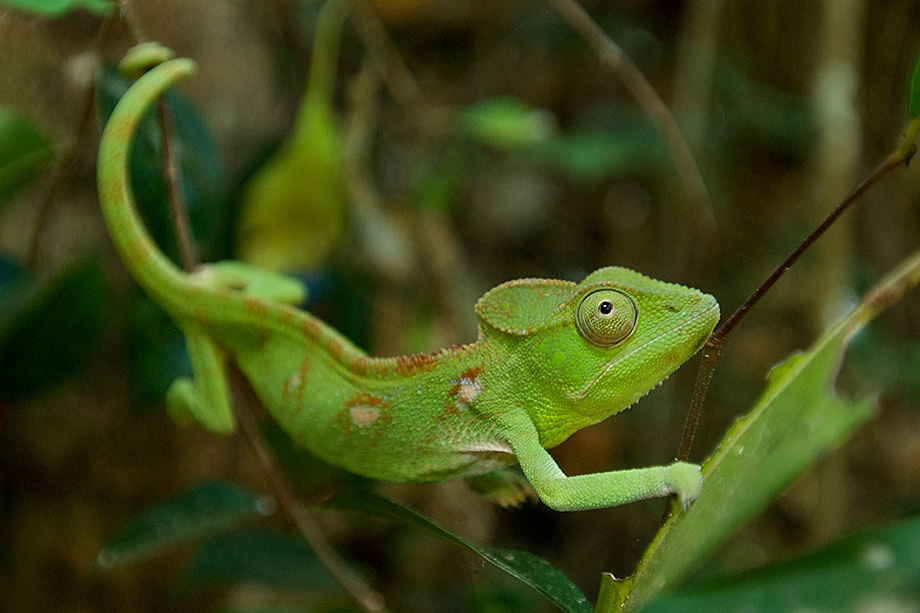
This is a female Oustalet’s chameleon. We crossed paths one afternoon in Ankarafantsika National Park in Western Madagascar. Madagascar is where half of all the chameleons on earth can be found.
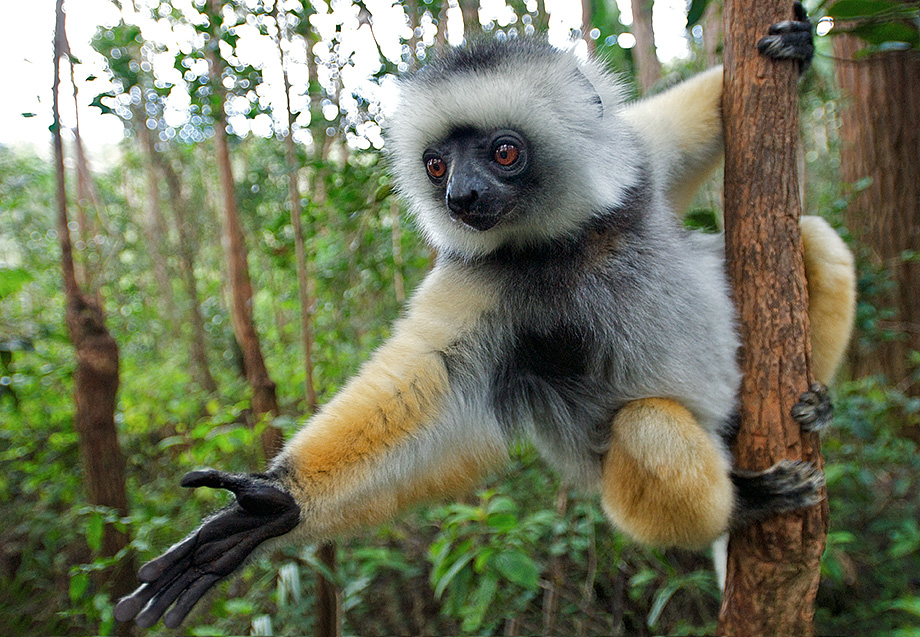
Sifakas are a genus of lemur named for their “shi-fak” alarm call. There are several different species of sifaka, with this guy, the diademed sifaka being the largest among them. Diademed sifakas also happen to be one of the most interesting looking of all the lemurs, with their red eyes and golden, black and white fur. This was one of only two or three diademed sifakas that I saw while in the forests of Madagascar.
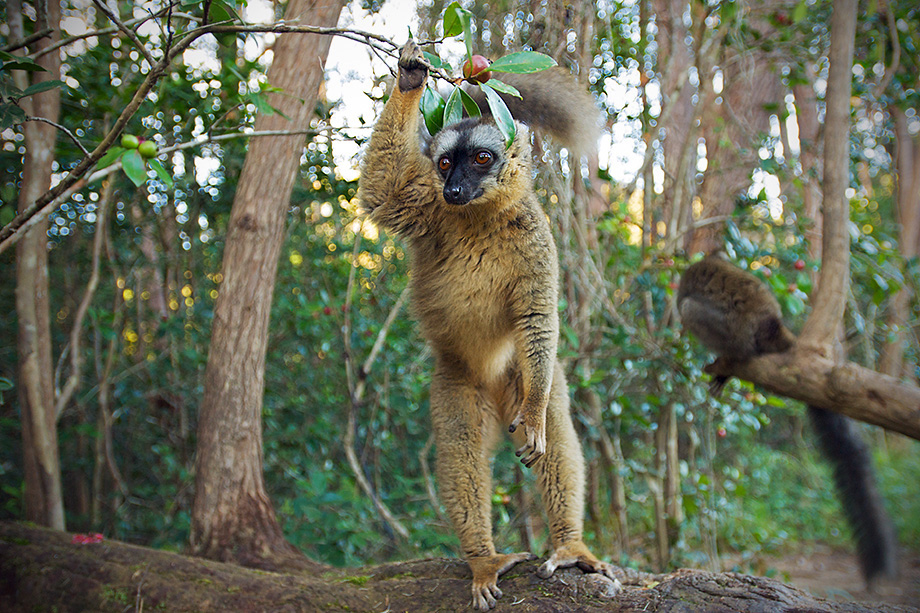
This is a red fronted brown lemur, photographed in central Madagascar. All lemurs are prosimians, meaning pre monkeys, and as the name would suggest, they predate monkeys and apes. There are nearly a hundred different species of lemur, and they all live in Madagascar. On my trip, I was lucky enough to see and photograph 23 of those species.
We use cookies to enhance your experience while using our website. If you are using our Services via a browser you can restrict, block or remove cookies through your web browser settings. We also use content and scripts from third parties that may use tracking technologies. You can selectively provide your consent below to allow such third party embeds. For complete information about the cookies we use, data we collect and how we process them, please check our Privacy Policy