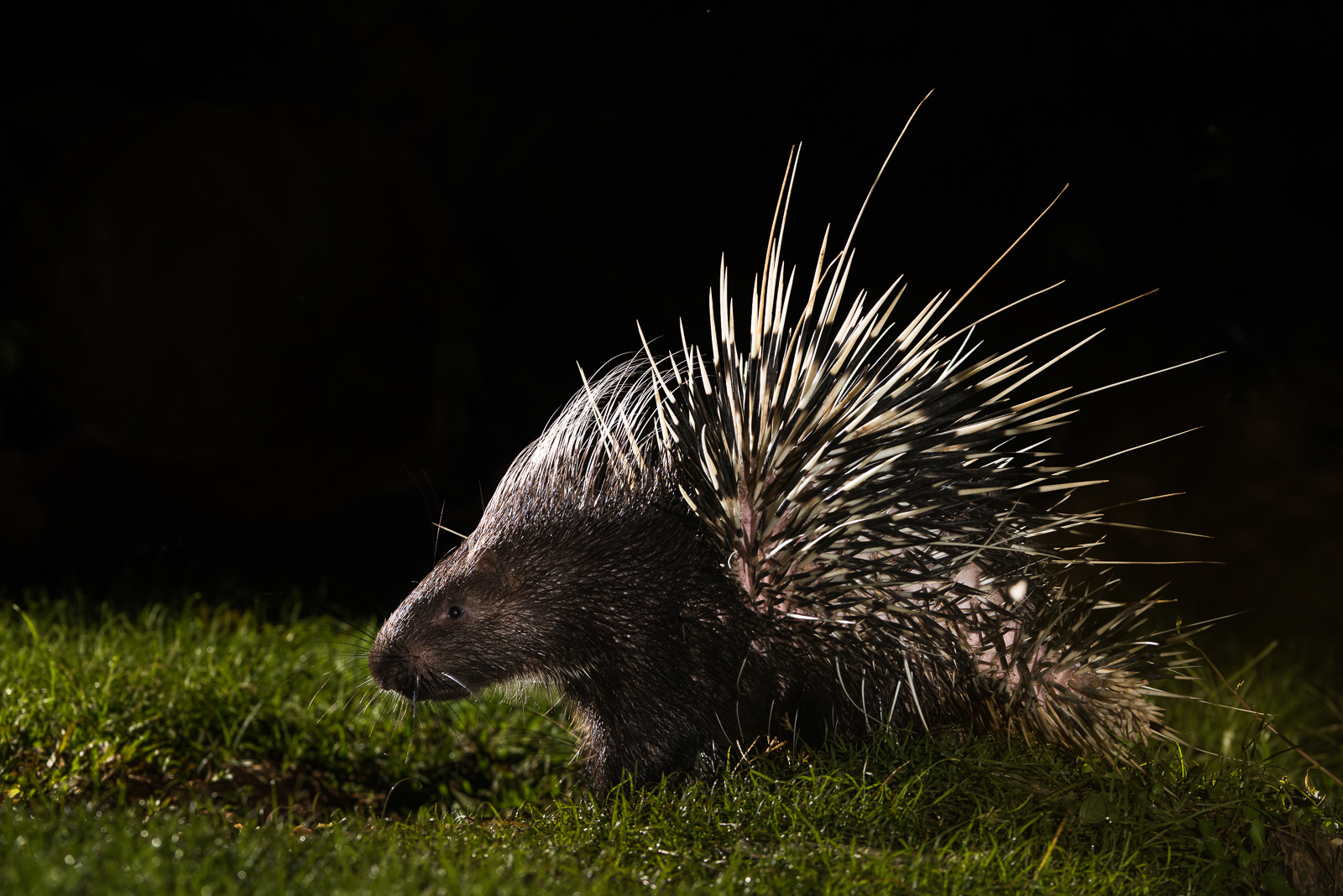
This is the Malayan porcupine. Each night, about six or so of these nocturnal beasts would come creeping around our campground looking for whatever scraps they could find. They are pretty large and stout animals in the rodent order. The quills are actually modified hairs that start soft and become increasingly hard and rigid as the porcupine grows older. Like the civet that I posted the other night, I used a two-flash setup to capture both front and (almost) backlighting. Nikon D810 with Nikkor 200-400mm lens (at 210mm) ISO 400, f/8 at 1/60th of a second, two Nikon SB-900 flash units
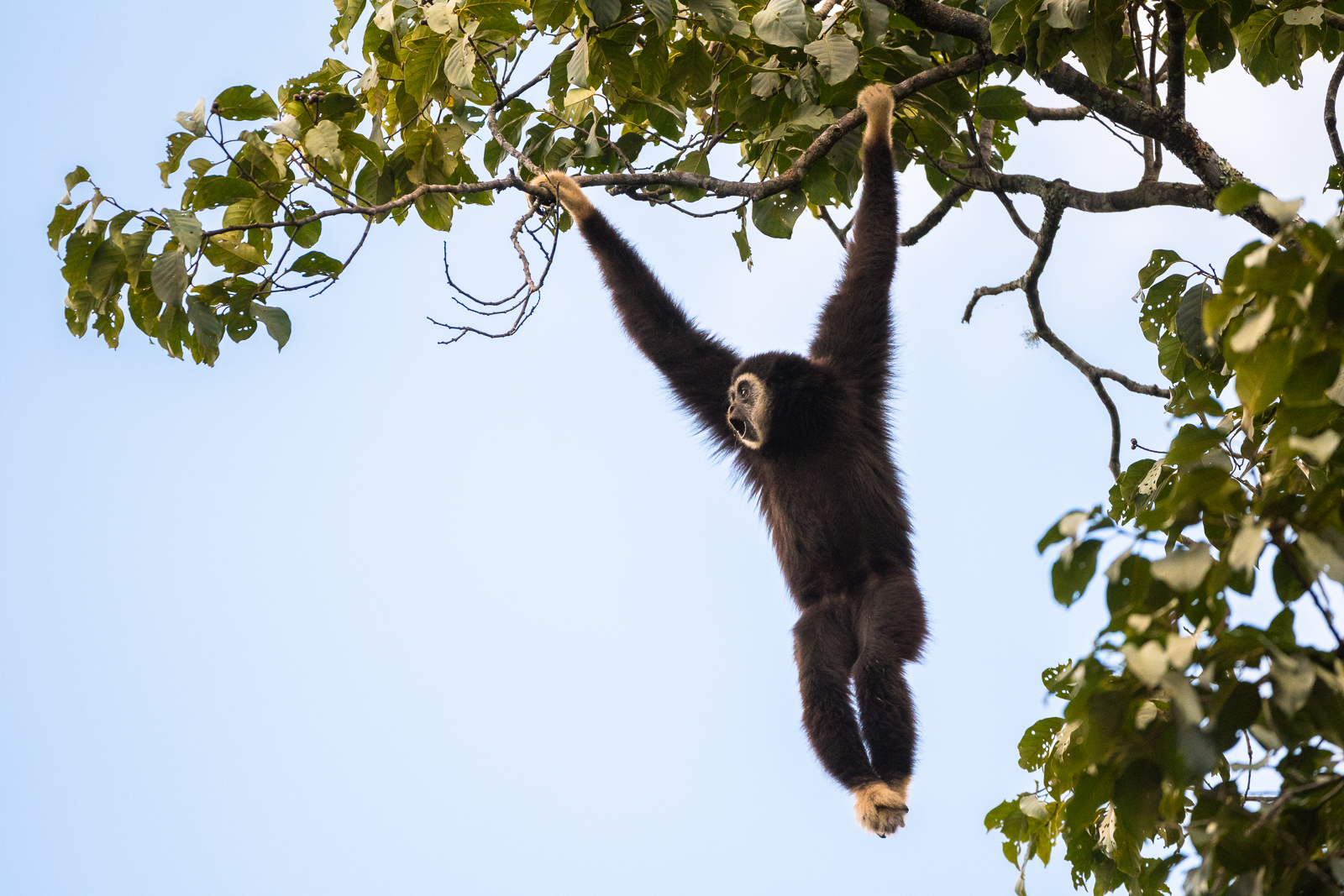
The white-handed gibbon, also known as the lar gibbon, is one of the more spectacular primates I’ve had the pleasure of viewing in the wild. Their acrobatics high up in the canopy of the forest’s tallest trees is pretty amazing. After swinging from branch to branch, they’ll often hang freely from a single branch and sound their call. Gibbons are apes and not monkeys (along with chimpanzees, bonobos, gorillas, orangutans and yes, us humans.) It’s mainly the lack of a tail that distinguishes apes from monkeys. More on these guys in upcoming posts. Nikon D500 with Nikkor 200-400mm lens (at 360mm) ISO 800, f/4 at 1/5000th of a second
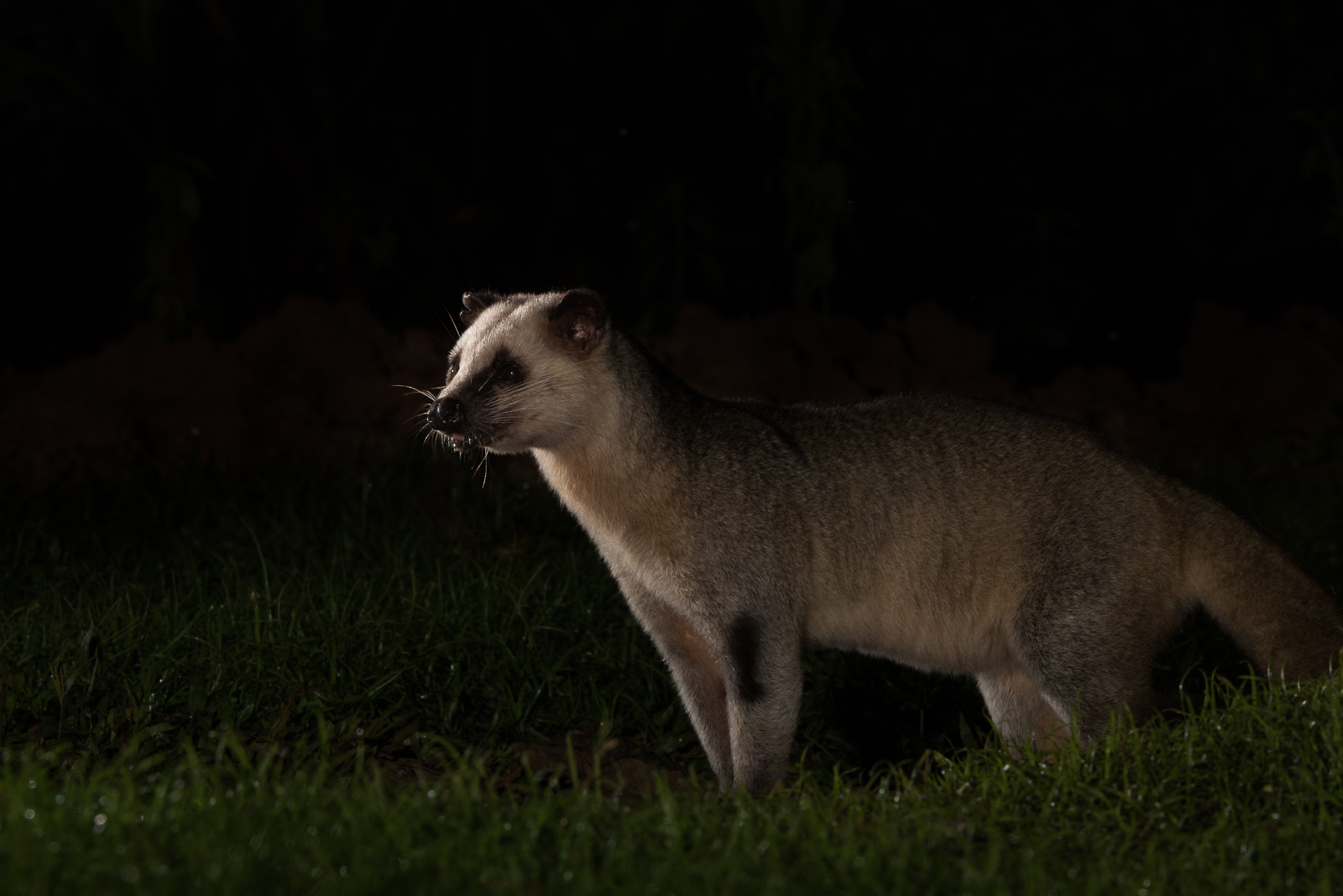
Just back from a week in the jungles of Thailand. I’d like to say that I saw all sorts of exotic and wonderful new creatures, but unfortunately the sightings were few and far between. I did manage to capture five different primate species, Malayan porcupine, giant tree squirrels, a few colorful new birds, butterflies and lizards but missed out on several of the target species that I was hoping for — most notably the slow loris. There’s always next time. My favorite sighting, however, was this masked palm civet. Especially because it walked right into the lighting that I had set up in anticipation of the porcupines which reliably came by the campground every night. I was able to set up both front and back lighting with my two flash units. Unlike most masked palm civets, this guy lacks a more distinctive facial mask of black fur and is more uniformly cream colored rather than the usual grey. Nikon D810 with Nikkor 200-400mm lens (at 290mm) ISO 400, f/18 1/60th of a second, two Nikon SB-900 flash units
We use cookies to enhance your experience while using our website. If you are using our Services via a browser you can restrict, block or remove cookies through your web browser settings. We also use content and scripts from third parties that may use tracking technologies. You can selectively provide your consent below to allow such third party embeds. For complete information about the cookies we use, data we collect and how we process them, please check our Privacy Policy