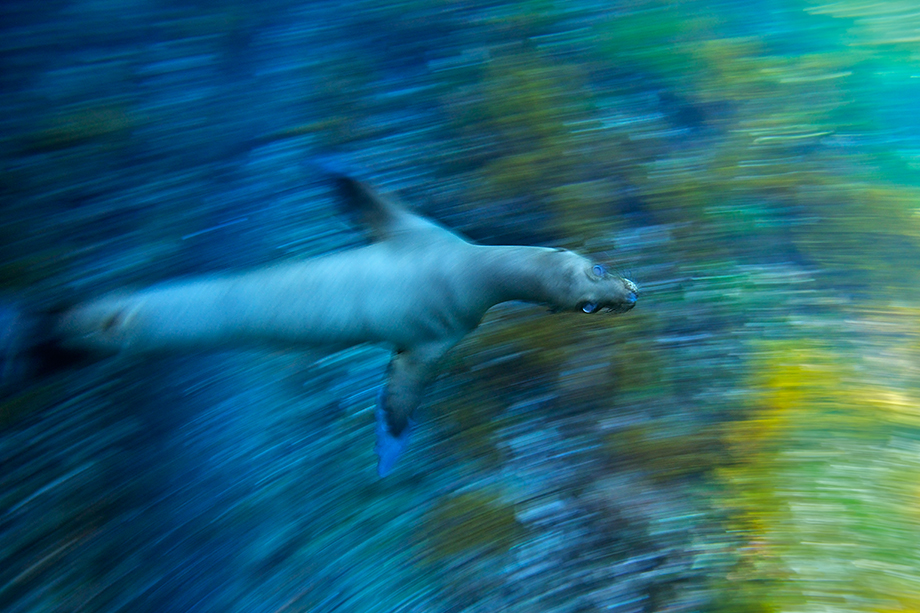
This is one of my favorite underwater photos from the Ecuador trip. We were swimming with the sea lions and they were moving into and out of a shadowed area caused by a nearby cliff. Whenever they went into the dark area I was getting pretty slow shutter speeds due to the lack of light. Knowing this, I tried panning with their movement as they swam below me. On this particular exposure, I was able to keep the focus point on the sea lion’s head to get sharp focus on the eyes while blurring out the colorful background.
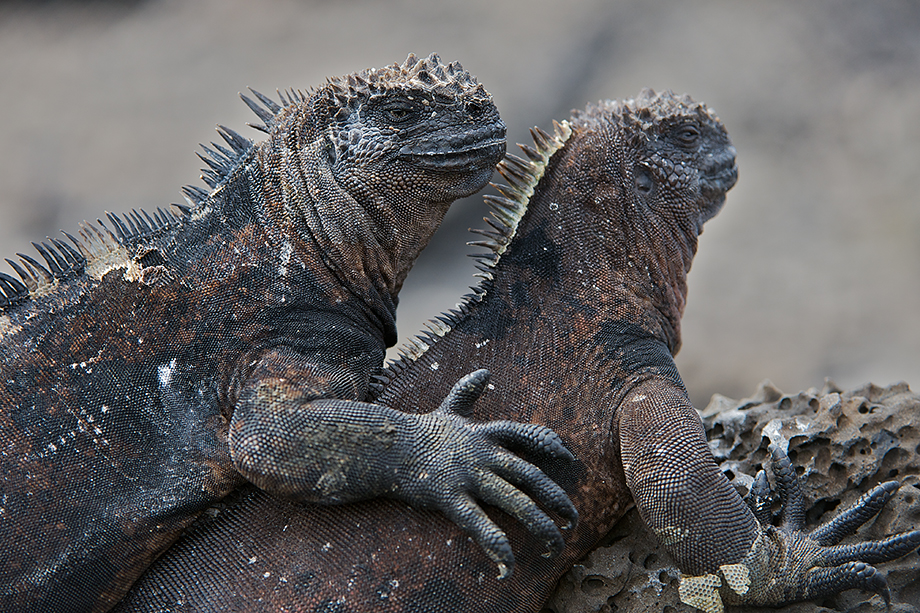
I got engaged this weekend so thought it fitting to find my favorite two lovers from our recent trip to Ecuador. These two exceedingly attractive marine iguanas seemed to fit the bill. Here’s to romance in all its many forms.
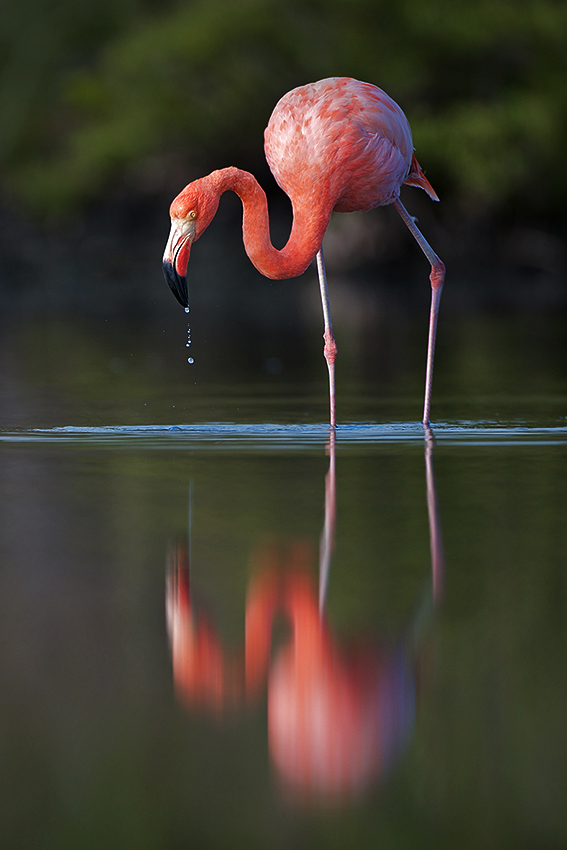
We saw a grand total of one flamingo in the Galapagos Islands. They number only 500 total in the entire archipelago so I guess that’s not too bad. The Galapagos flamingo is thought to be a separate subspecies of the greater flamingo. I was hoping for this one to fly or do something interesting, but ultimately I had to settle for a ground level reflection shot as it waded in a shallow lagoon feeding on algae and plankton.
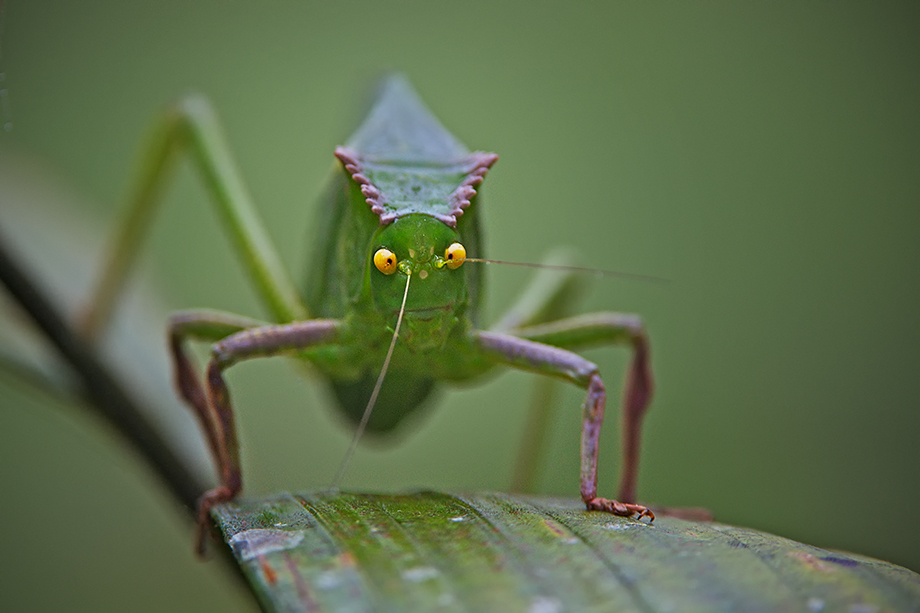
Our Ecuador trip wasn’t just to the Galapagos Islands. We also spent three nights in the cloud forest on the mainland. Basically, the cloud forest is where the Amazon rises up to meet the Andes. Clouds bump into the sides of the mountain and have nowhere to go so they just sit there. Everything is always wet, and therefore, very green and lush with vegetation. I was in search of all the exotic wildlife that lives in this region — pumas, ocelots, spectacled bears, etc. I knew that I was in for trouble when the first thing our guide asked was if I liked bugs. For the most part, that’s what we saw, bugs, until a surprise visitor on our last day (but that’s a story for a future post). For now, I present one of the great bugs of the cloud forest. This is a giant green leaf insect. It was about six inches long, oddly handsome, and a dead ringer for one of the stars of the animated movie “A Bug’s Life.” Unfortunately, this was the last photo ever taken of this poor guy. About ten seconds after snapping the shutter (while I was changing lenses) a hawk swooped down and ended it all. R.I.P. my little green friend.
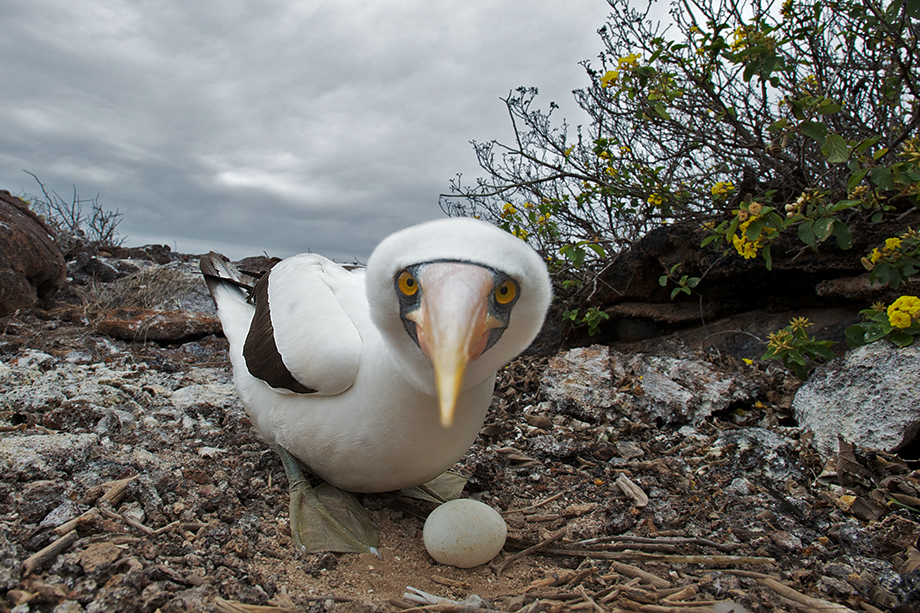
This is a Nazca booby, the second of the three species of booby that I photographed in the Galapagos Islands. Often referred to as a masked booby (although it has recently been classified as a separate species), the Nazca booby is the largest of the three species. They typically lay two eggs, several days apart. If both eggs hatch, the older chick will push the younger chick out of the nest leaving it to die of thirst or cold. The parent will not intervene and the young chick will eventually die. It is believed that this is some sort of insurance policy in case one of the eggs gets destroyed or eaten or never hatches. This mother appeared to have only one egg in her nesting area as she leaned forward to get a better look at my wide angle lens.
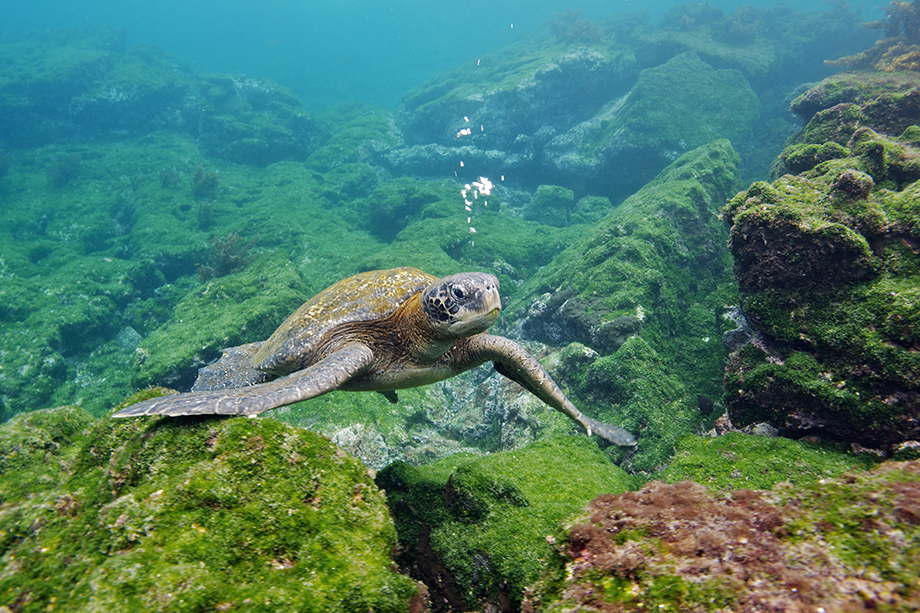
A little something different today — behind the scenes footage from another traveler on our boat. He used his GoPro camera to get this video of me photographing a Pacific green sea turtle (actually, I think I kind of got in his way while he was trying to photograph the turtle). The final frame of the video is the moment that I snapped the photo below.
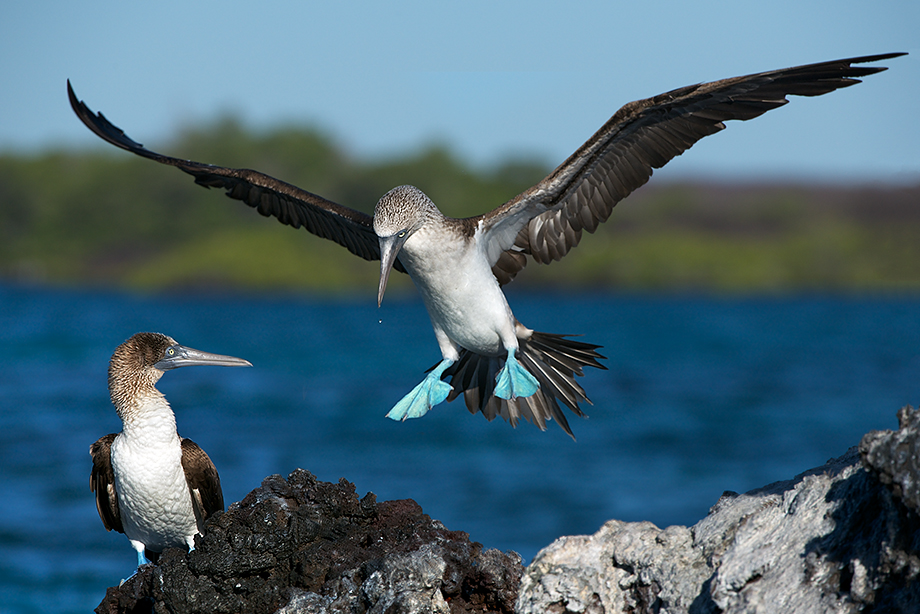
There are three species of boobies in the Galapagos Islands, the Nazca, the red footed, and the blue footed booby. Of these, it’s the blue footed that everyone comes to see. Their feet are actually a sexually selected trait, with both males and females preferring mates with brighter feet. The courtship dance is one of the most comical in the bird world, with mating pairs lifting their feet to display to each other. Unfortunately, mating season had just ended so we didn’t see the dance, but we did see plenty of the blue feet coming in for landings and flying through the air.
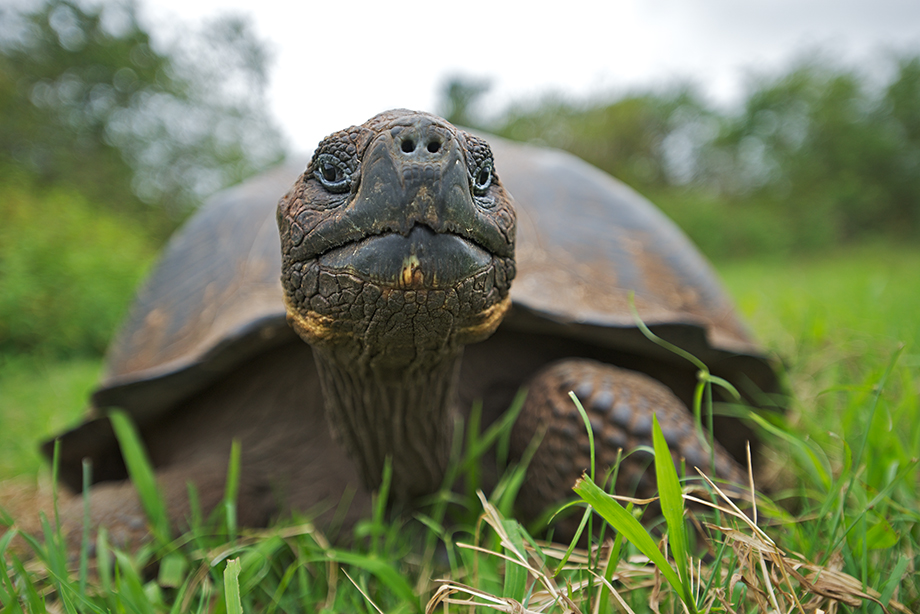
If you had to chose one animal to be the face of the Galapagos Islands it would probably be the giant tortoise. This guy was photographed in the highlands of Santa Cruz island. I got down on the ground about six feet or so from the tortoise before it quickly approached to within a foot. It was mating season and my guide told me that the tortoise probably thought I was a female (fooled by the neck of my long lens and the reflection in the glass). I put down the long lens, grabbed my wide angle and got several shots as the tortoise slowly turned its head from one side to the other, skeptically considering the worthiness of my mating potential. Luckily for both of us, it eventually figured out that it would have better luck elsewhere.
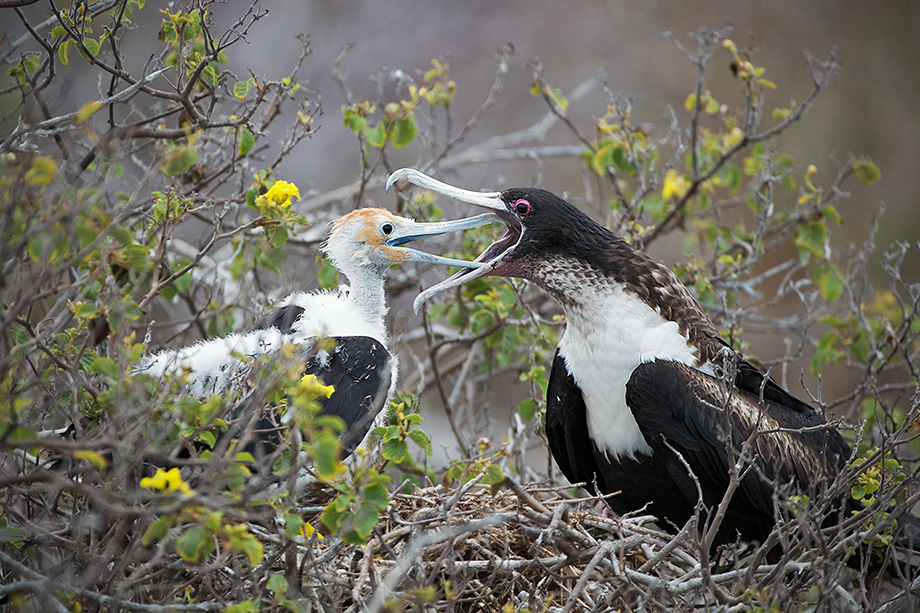
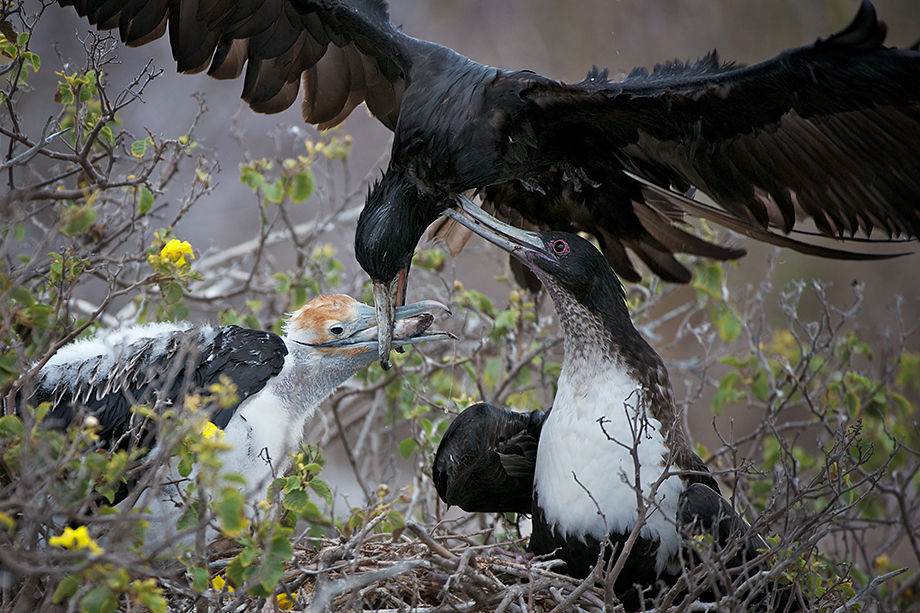
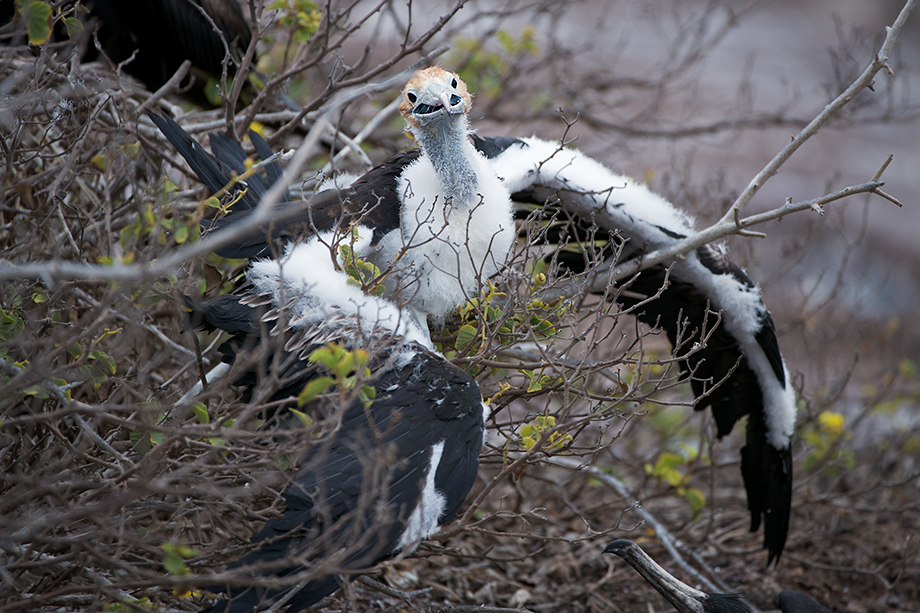
On our first day in the Galapagos — on the island of Genovesa — we were treated to this little domestic drama between a mother magnificent frigatebird, her young chick, and a rogue intruder. All was nice and sweet as the mother prepares to transfer a fish from her throat, into that of the chick. The chick had its entire head in the mouth of its mother at one point and eventually emerged with the fish. And that’s when the trouble began.
A male frigatebird (perhaps even the father we were told by our guide) was lurking in the air above. When he saw the fish in the chick’s mouth, he attacked, hoping for an easy meal.
After an intense battle of will, however, the chick emerged victorious and swallowed the fish in the face of the would be thief.
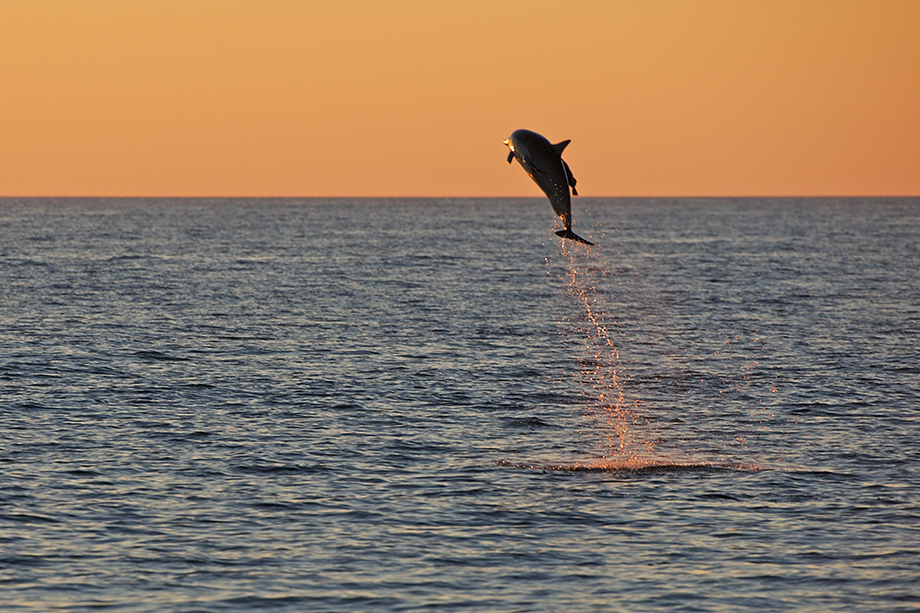
Another highlight of our trip to the Galapagos was running into a huge pod of bottlenose dolphins late one afternoon while traveling from one island to another. There seemed to be a hundred of them, jumping in every direction. Trying to photograph them with a long lens was a bit like playing whack-a-mole. I had to pretty much pick a spot and hope that a dolphin would jump there. This guy was one of my few successful attempts. As you can see, a fairly impressive vertical leap.
We use cookies to enhance your experience while using our website. If you are using our Services via a browser you can restrict, block or remove cookies through your web browser settings. We also use content and scripts from third parties that may use tracking technologies. You can selectively provide your consent below to allow such third party embeds. For complete information about the cookies we use, data we collect and how we process them, please check our Privacy Policy