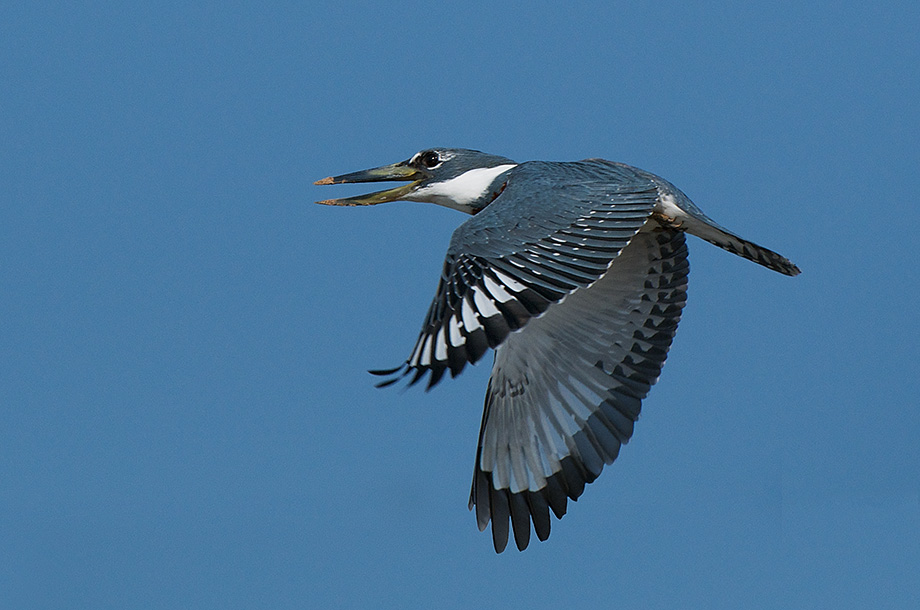
Belted Kingfisher
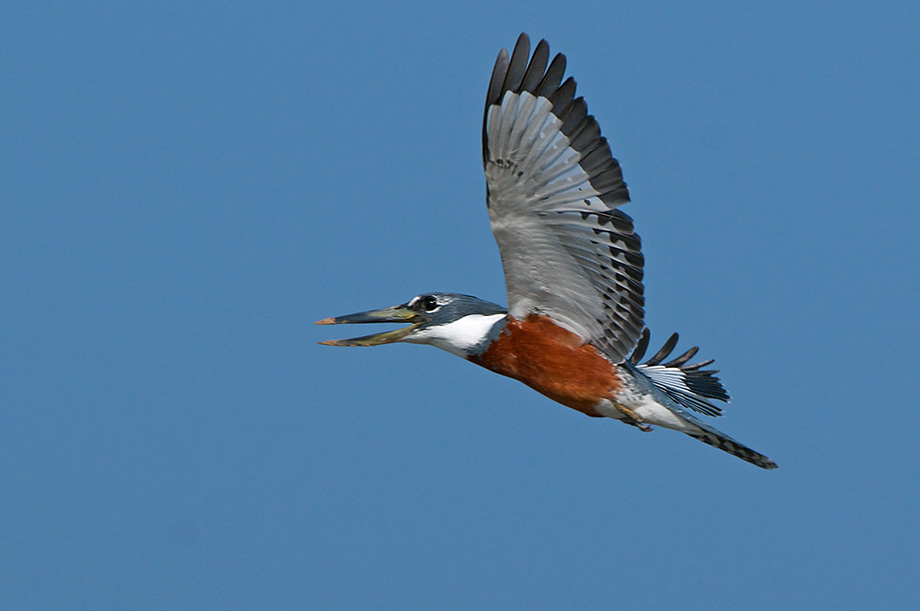 This belted kingfisher gives a much different look when its wings are up than when down. The photographs were taken in the Pantanal of Brazil last September.

This belted kingfisher gives a much different look when its wings are up than when down. The photographs were taken in the Pantanal of Brazil last September.
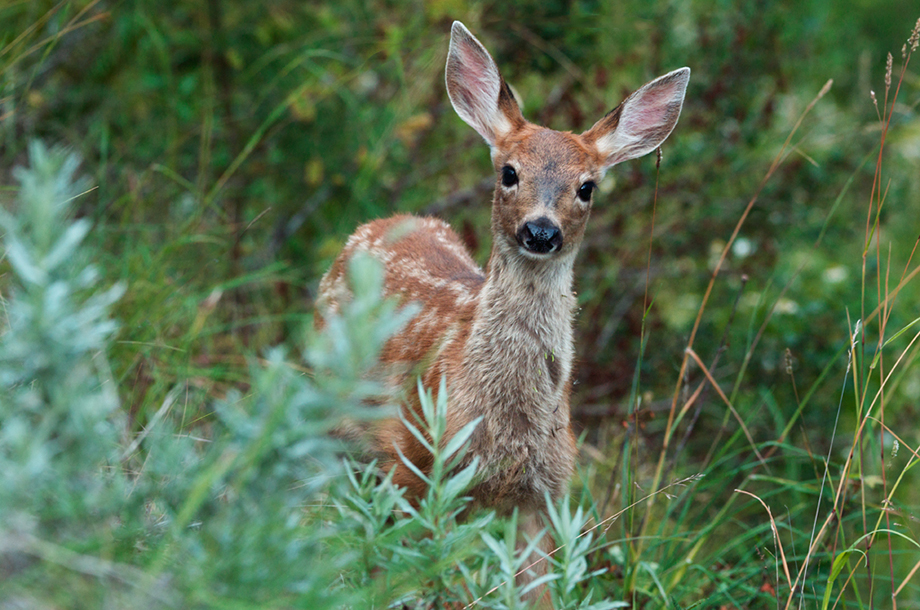
I photographed this young black tailed deer a while back in one of my favorite locations, Olympic National Park in Washington state. The little guy was eating grass along the side of the road with his/her mother and took a quick break to see what I was up to.
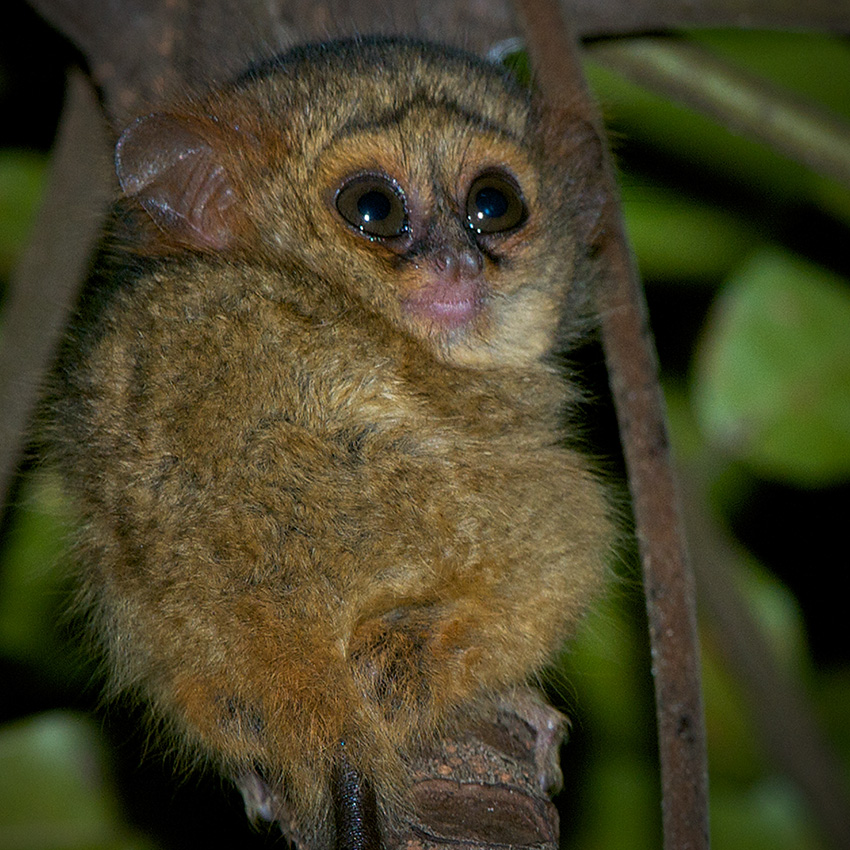
My sister Mo requested a tarsier this week, so I figured I’d go one better and post a baby tarsier. This little thing couldn’t have been much bigger than a softball. For the most part it had been clinging to, and hiding behind its mother, but at one point it jumped over to another branch and I was able to get a few shots in the clear. For those not paying attention to the last tarsier post, these guys are one of the smallest primates in the world, and this particular species of tarsier — the spectral tarsier — lives only on a couple of Indonesian islands. I photographed this guy in Tangkoko National Park on the island of Sulawesi.
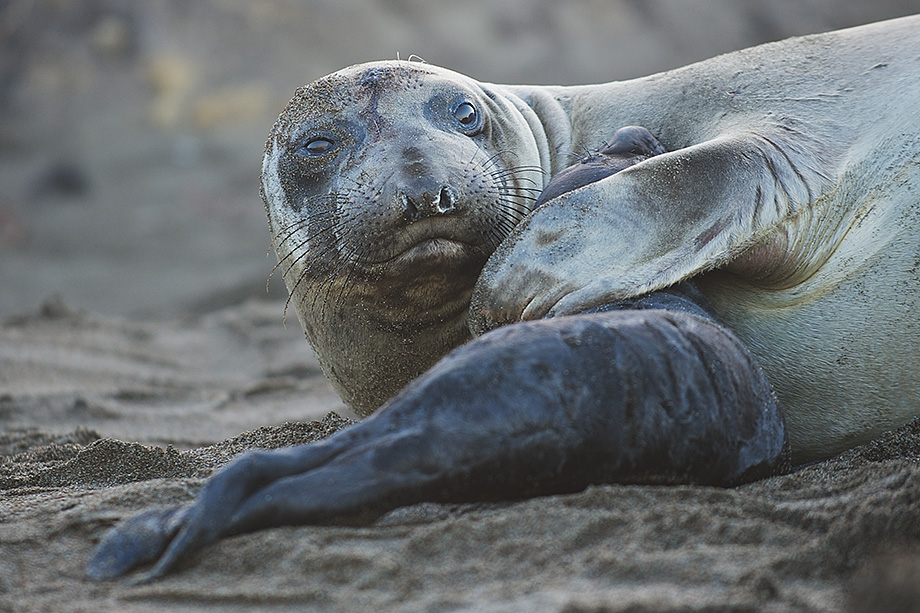
I’ve posted quite a few photos of elephant seals before but I keep finding new ones that I like. This mother was protecting her newborn pup from other agitated seals that were sharing space on the beach (and perhaps from the close approach of a photographer — the only one on the deserted beach last winter near the small town of San Simeon, California).
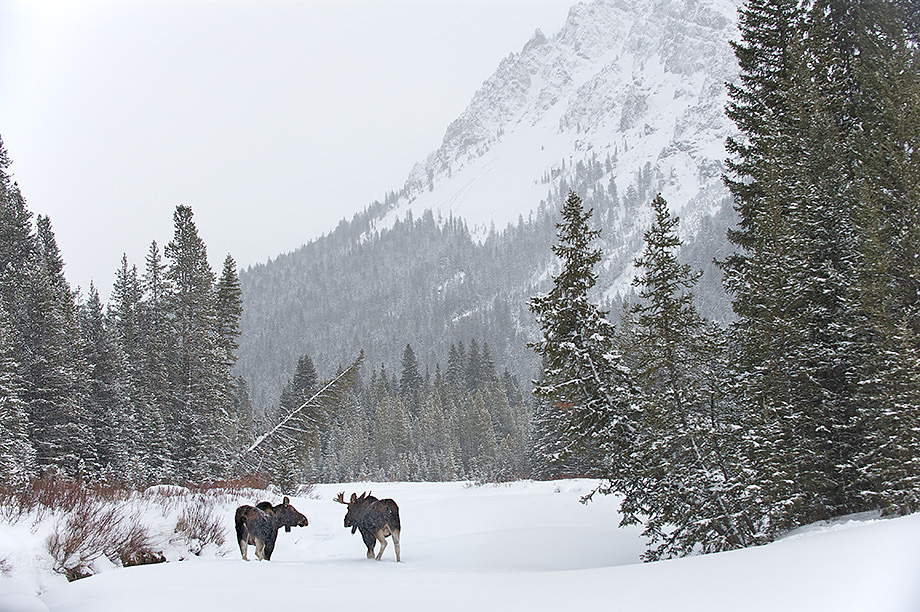
This mother moose and her son seem to be having a bit of a conversation as they walk through the snow. I was driving through Silver Gate, Montana when I spotted them through a stand of evergreens on the side of the road.
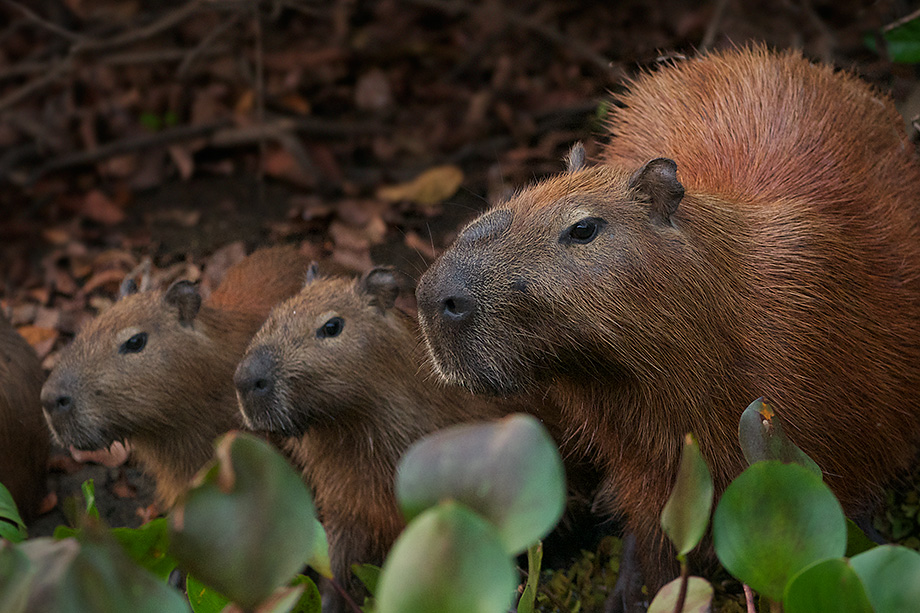
The return of everybody’s favorite giant rodents. These guys are very common along riverbanks throughout South America. In this case, I was in the Pantanal of Brazil. Typically capybaras weigh roughly 160 pounds, but there have been a few recorded cases of individuals hitting the scales in excess of 230 pounds.
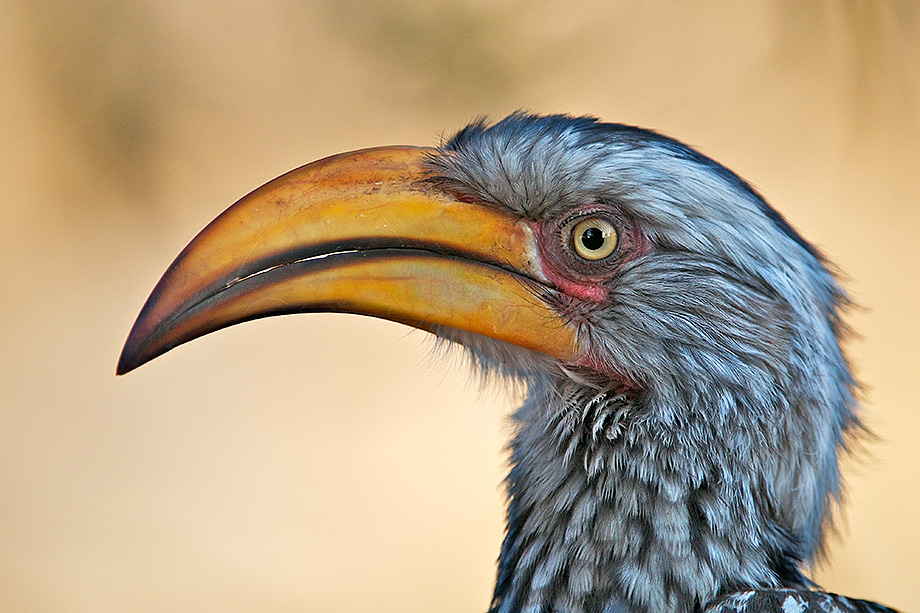
While I was sitting inside a makeshift blind waiting for honey badgers to arrive, several birds stopped by, allowing me very tight portraits. This one is a southern yellow hornbill. I previously posted a shot of this guy looking directly at camera. Here’s one that gives a good look at the beak and facial feathers.
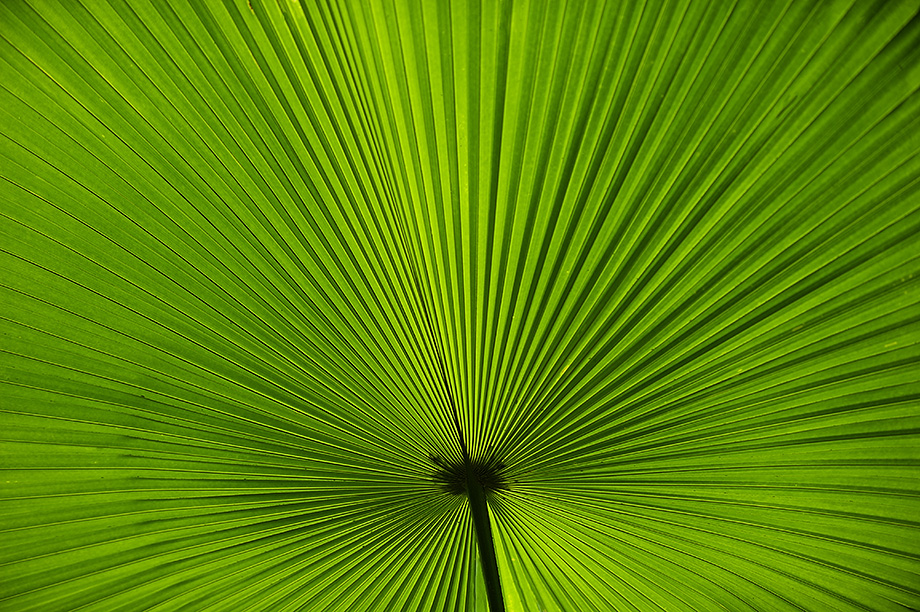
Borneo is home to one of the oldest rainforests in the world — even older than the Amazon. Hiking through the jungle there was quite an experience — and although I almost exclusively point my camera at animals, I couldn’t help but grab a few shots of plants in between orangutan sightings. I’m not sure of the exact species of this palm, but its fronds were big — six feet wide, or so, big.
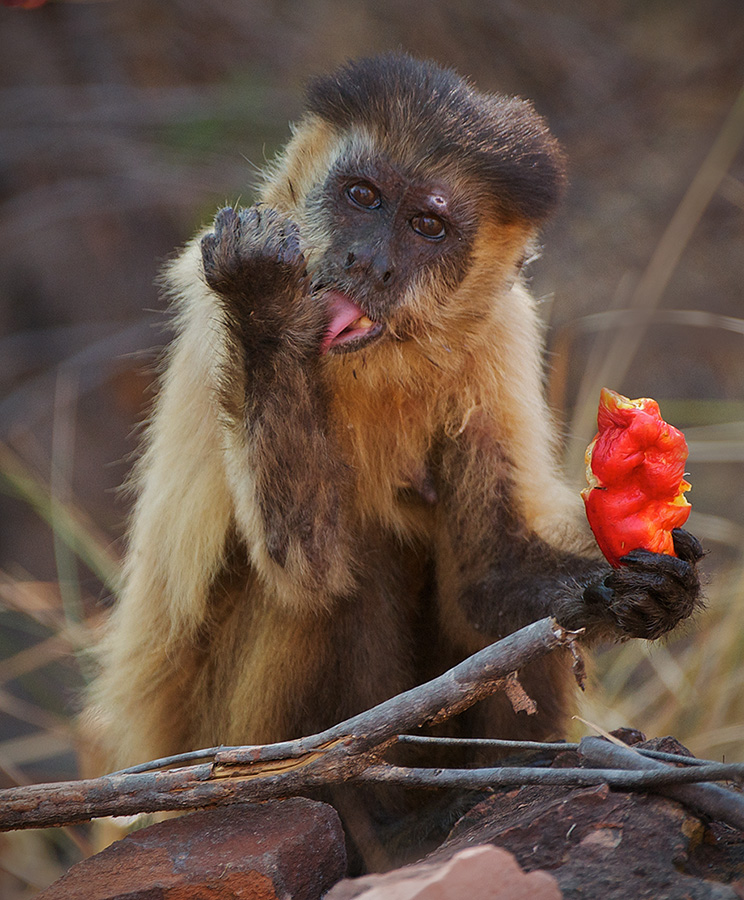
The caju fruit is like the apple of northeast Brazil. It also happens to be the fruit that cashews come from — and that tufted capuchin monkeys love. This female capuchin was squeezing all the juice that she possibly could out of a caju fruit. It was dripping all over the place as she happily lapped it up.
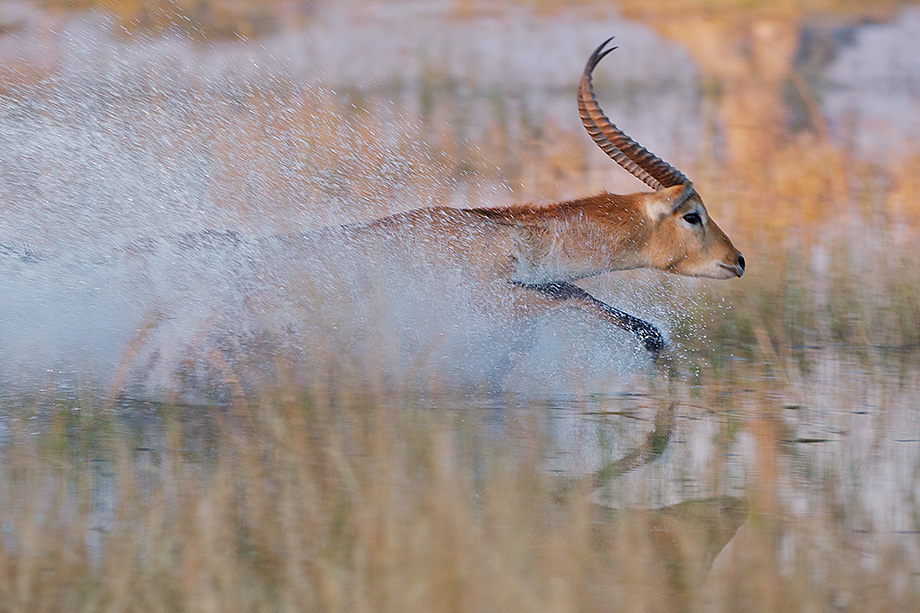
I already posted one shot of this red lechwe dashing through the flooded savanna of the Okavango Delta. Here’s another. Red lechwes spend most of their time in the water eating aquatic plants. Their legs are covered in a water repelling substance allowing them to run quite fast in knee deep water. The water and tall grass also provide protection from predators.