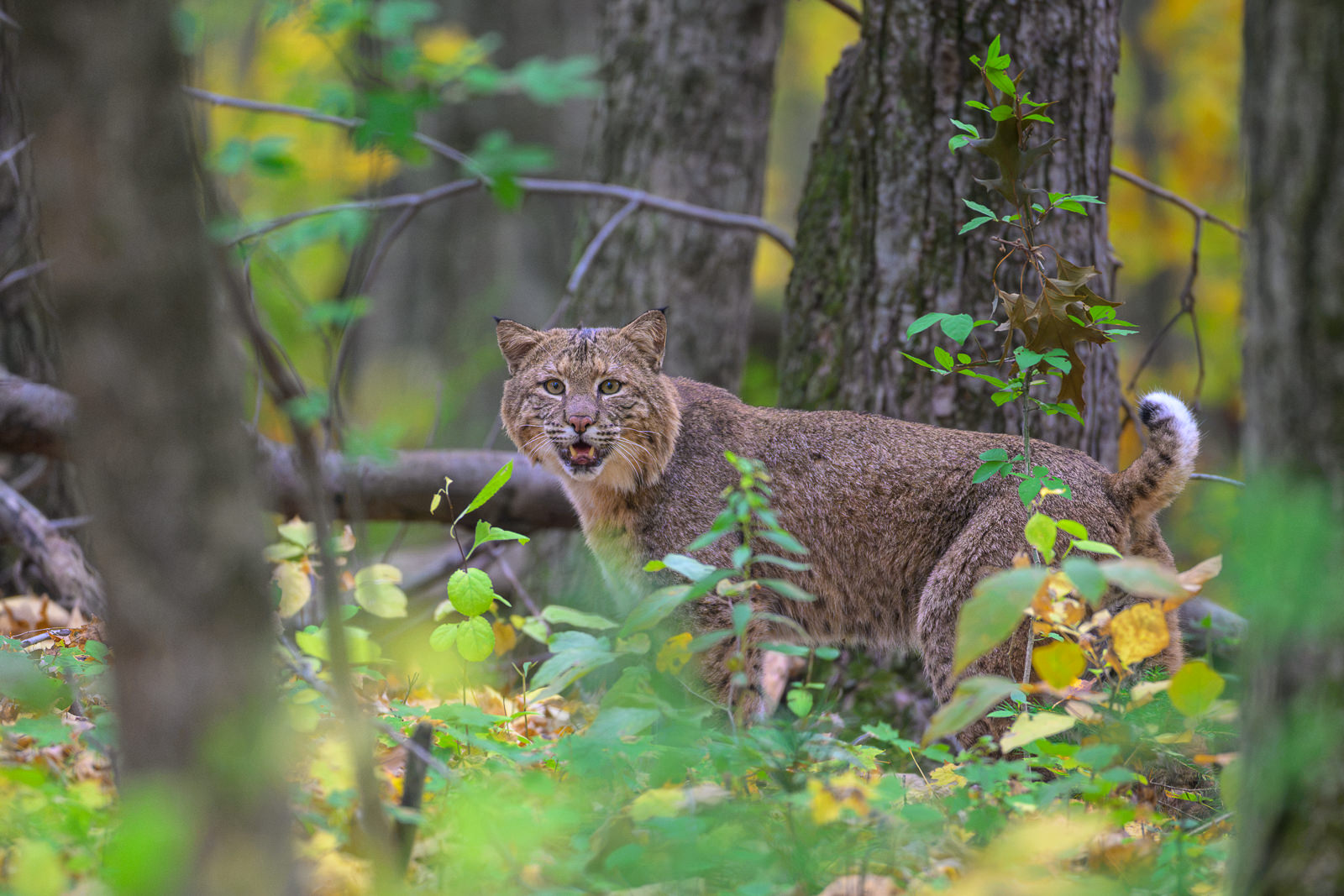
A quick interruption in the Africa postings to bring you this bobcat that walked past my office window today and through my backyard. My wife first spotted a bobcat kitten coming up the front side of our house. I quickly grabbed my camera and quietly got into position on the other side of the property. What emerged wasn’t the kitten, but the mother. I tracked her through the back woods, grabbing multiple shots before she disappeared. I never did see the kitten again but suspect she wasn’t far behind mom, hidden by the still-mostly-green foliage. Nikon Z8 with Nikkor 180-600mm lens (at 600mm) ISO 5000, f/6.3 at 1/640th of a second.
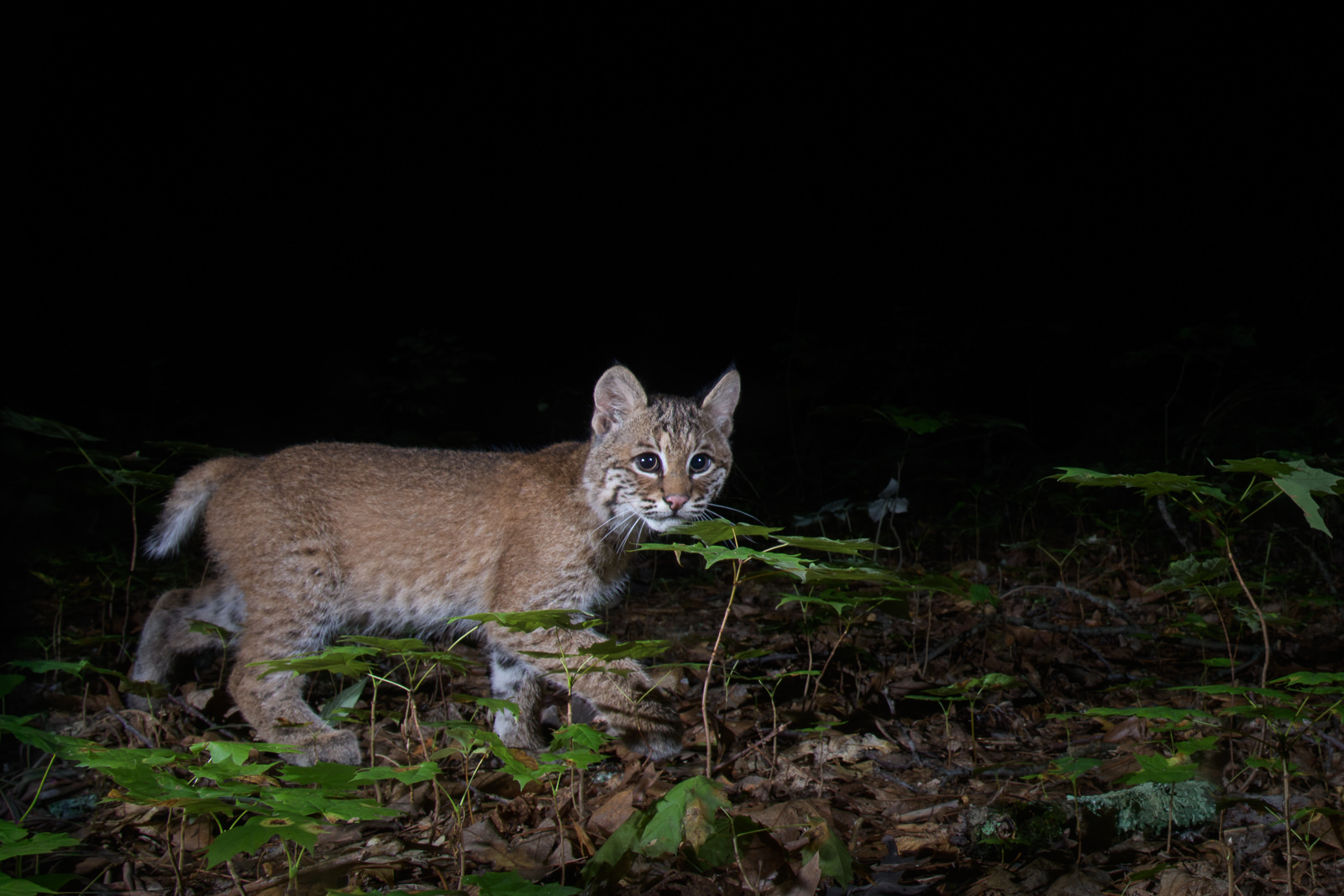
After my last post (last week) I forgot to mention that Karen and I were heading out of the country for a wedding in Italy. We just got back tonight. I wasn’t going to post until tomorrow, but checking the camera trap in the backyard, I saw that a bobcat kitten was up there hanging around. Enjoy. I’ll get back to the Africa posts tomorrow. Nikon D850 with Nikkor 20mm lens, ISO 500, f/14 at 1/200th of a second, Cognisys camera box, field monitor and flash units.
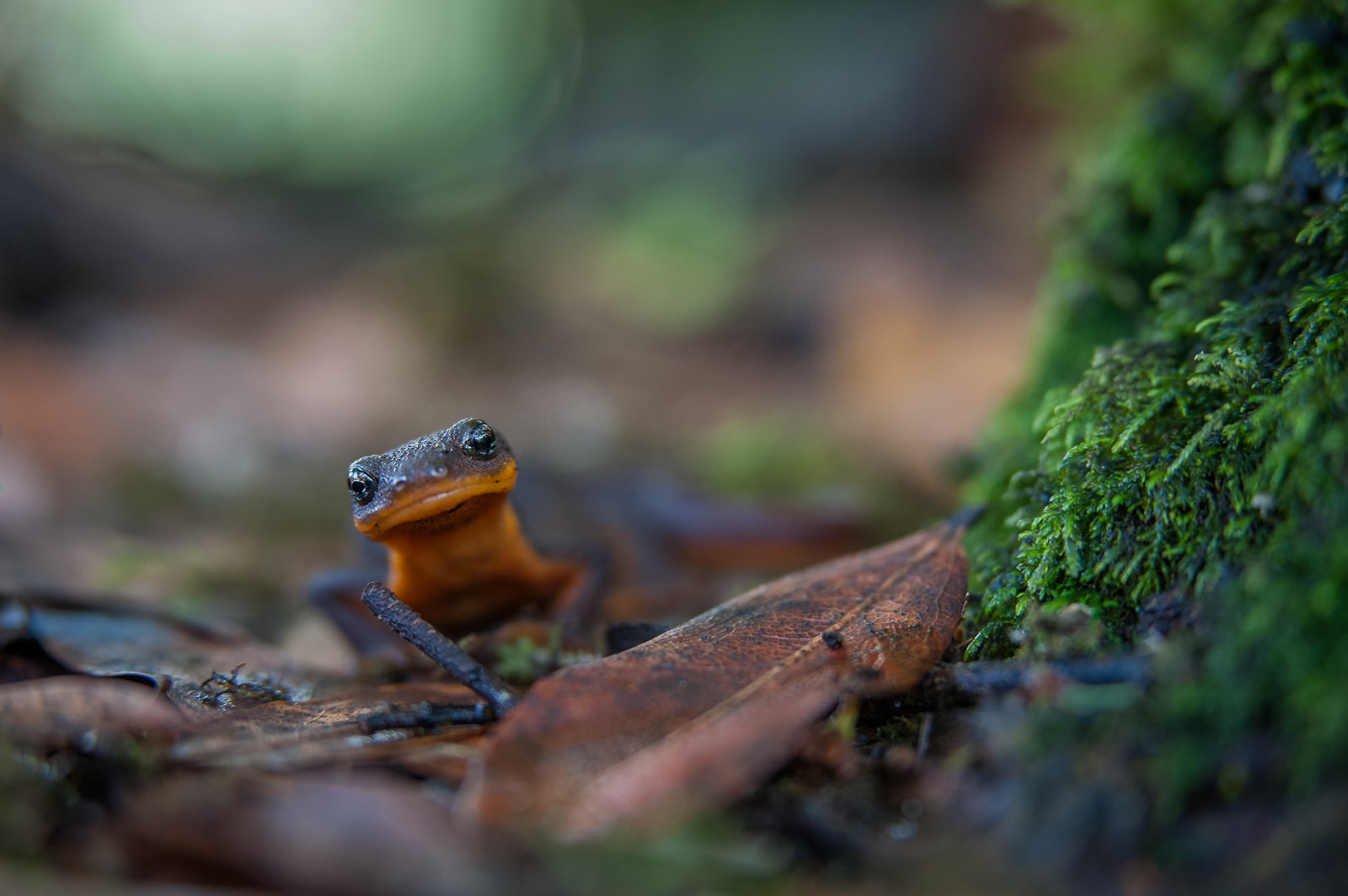
California newts produce tetrodotoxin — the same neurotoxin found in pufferfish — as a defense against predators. Their bright orange undersides serve as a warning, while their rough brown backs help them blend into the leaf litter and streams of coastal California. I came across this one years ago in Point Reyes National Seashore north of San Francisco. Nikon D700 with Nikkor 70-200mm lens (with Canon 500D close up filter) ISO 800, f/3.5 at 1/160th of a second.
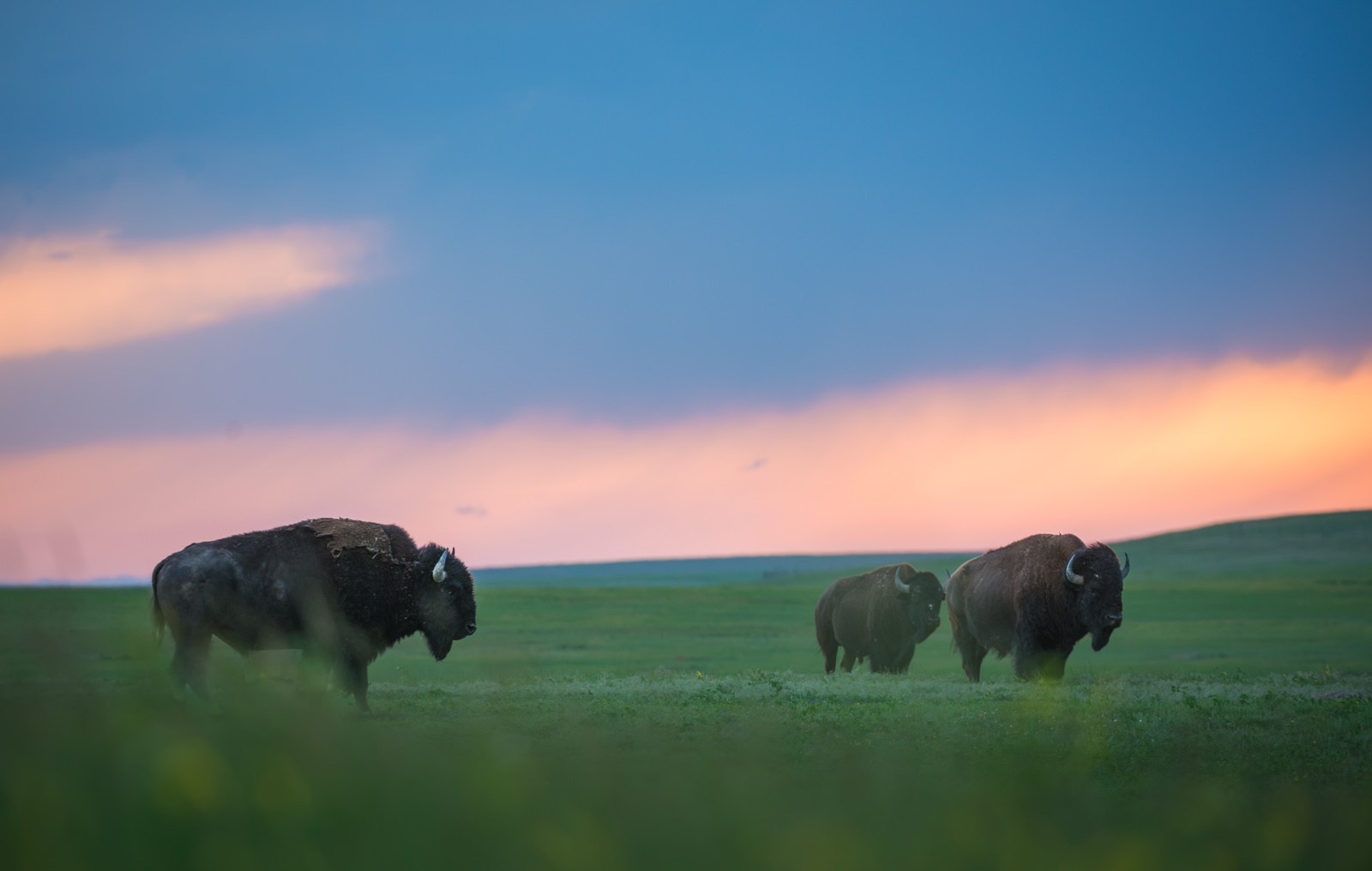
American bison are the largest land mammals in North America, with bulls weighing up to 2,000 pounds. Despite their size, they can run at speeds of nearly 35 miles per hour and have roamed the Great Plains for thousands of years, shaping the grassland ecosystem through their grazing and movement. I captured this image back in 2014 on a short trip to the Badlands of South Dakota. Nikon D800 with Nikkor 200-400mm lens (at 350mm) ISO 800, f/4.5 at 1/400th of a second.
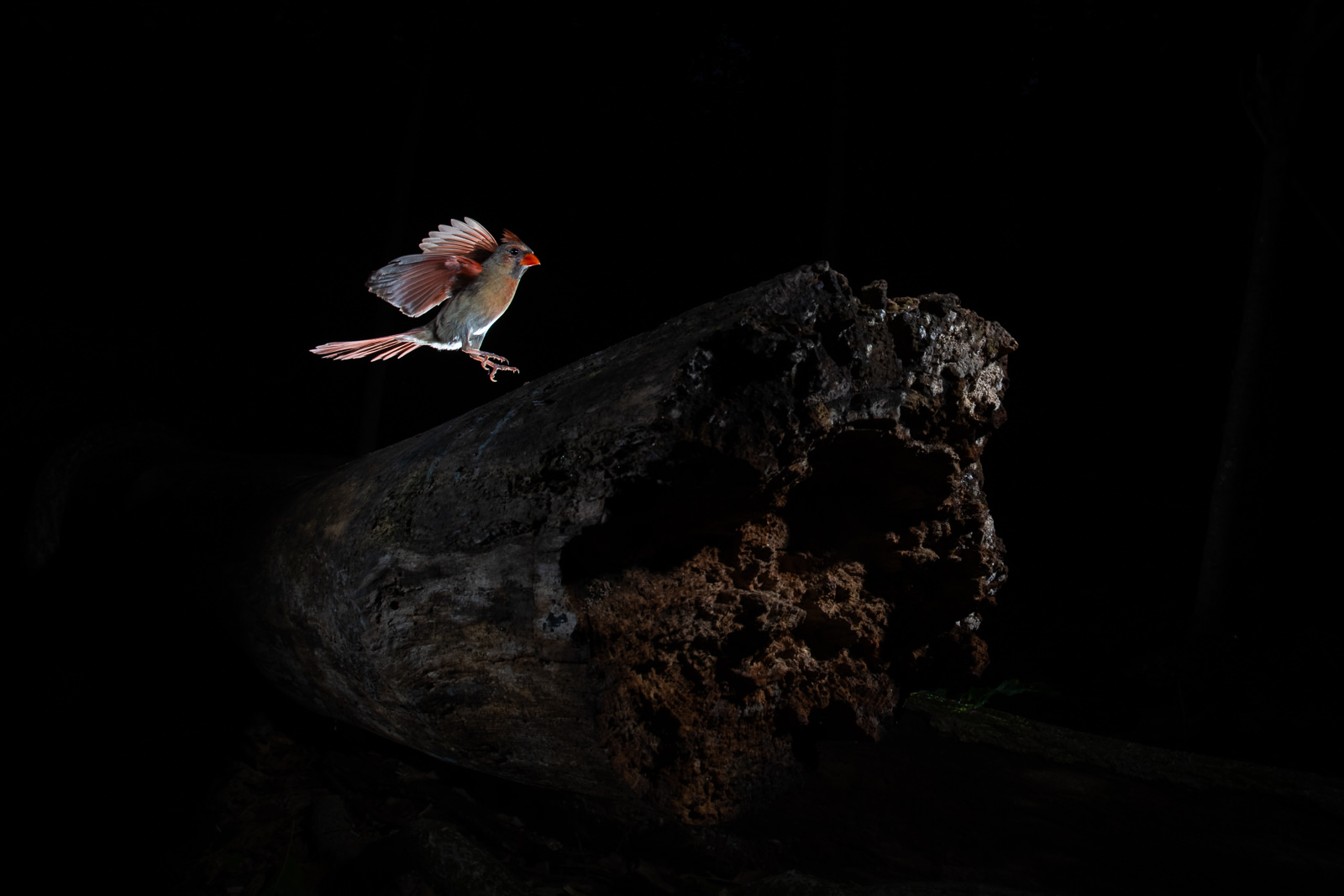
Here’s another one from the camera trap a few years back. A female northern cardinal comes in for a landing on the fallen ash tree that I regularly capture raccoons and opossums traversing on their nightly rounds. Nikon D810 with Nikkor 17-35mm lens (at 17mm) ISO 500, f/14 at 1/160th of a second, Cognisys camera box, trail monitor and remote flash units.
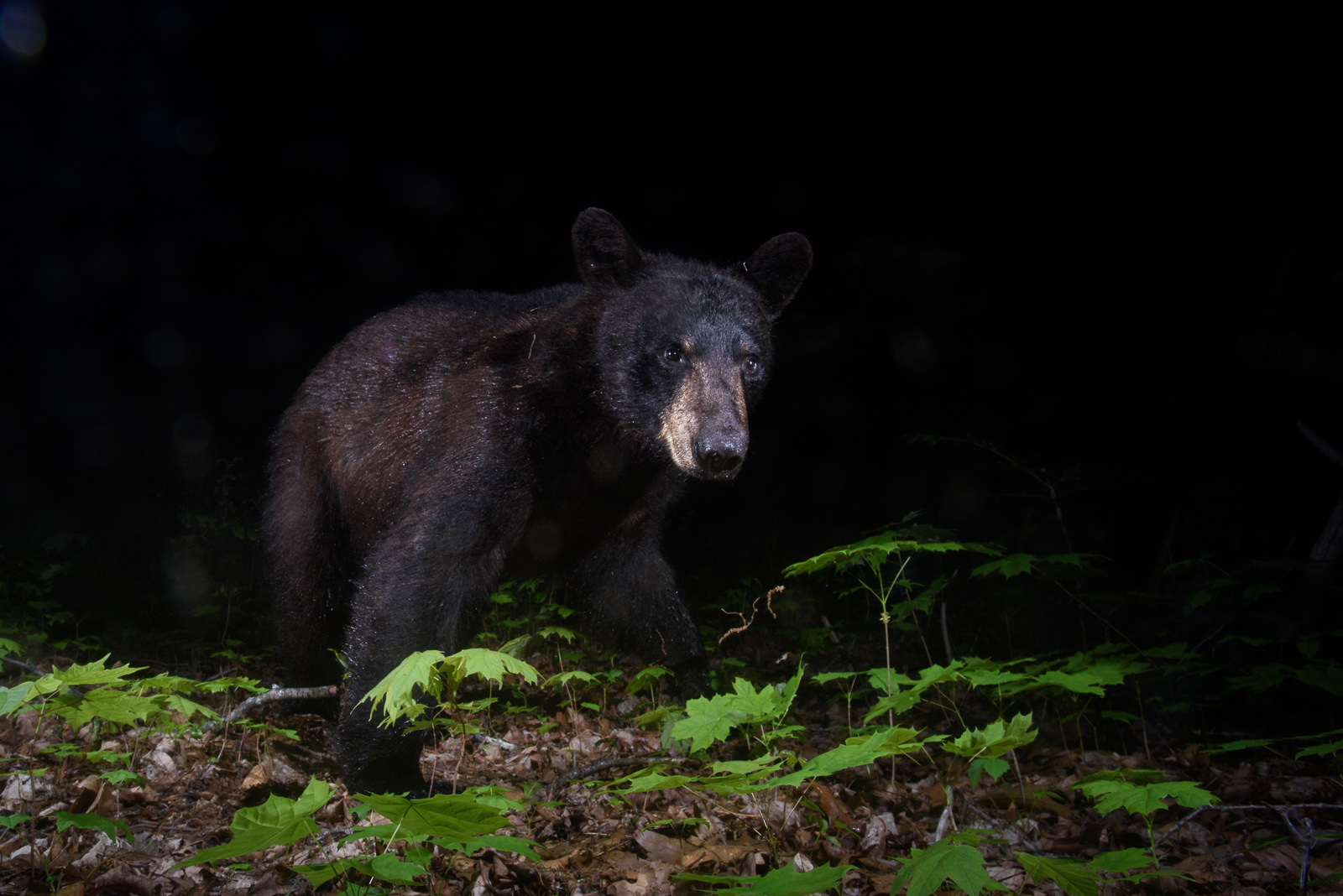
We’ve seen quite a few bears in the yard this year, but so far they’ve been avoiding the camera traps. This one is from last year when they were taking a few more selfies. Nikon D810 with Nikkor 17-35mm lens (at 22mm) ISO 500, f/14 at 1/250th of a second, Cognisys camera box, trail monitor and remote flash units).
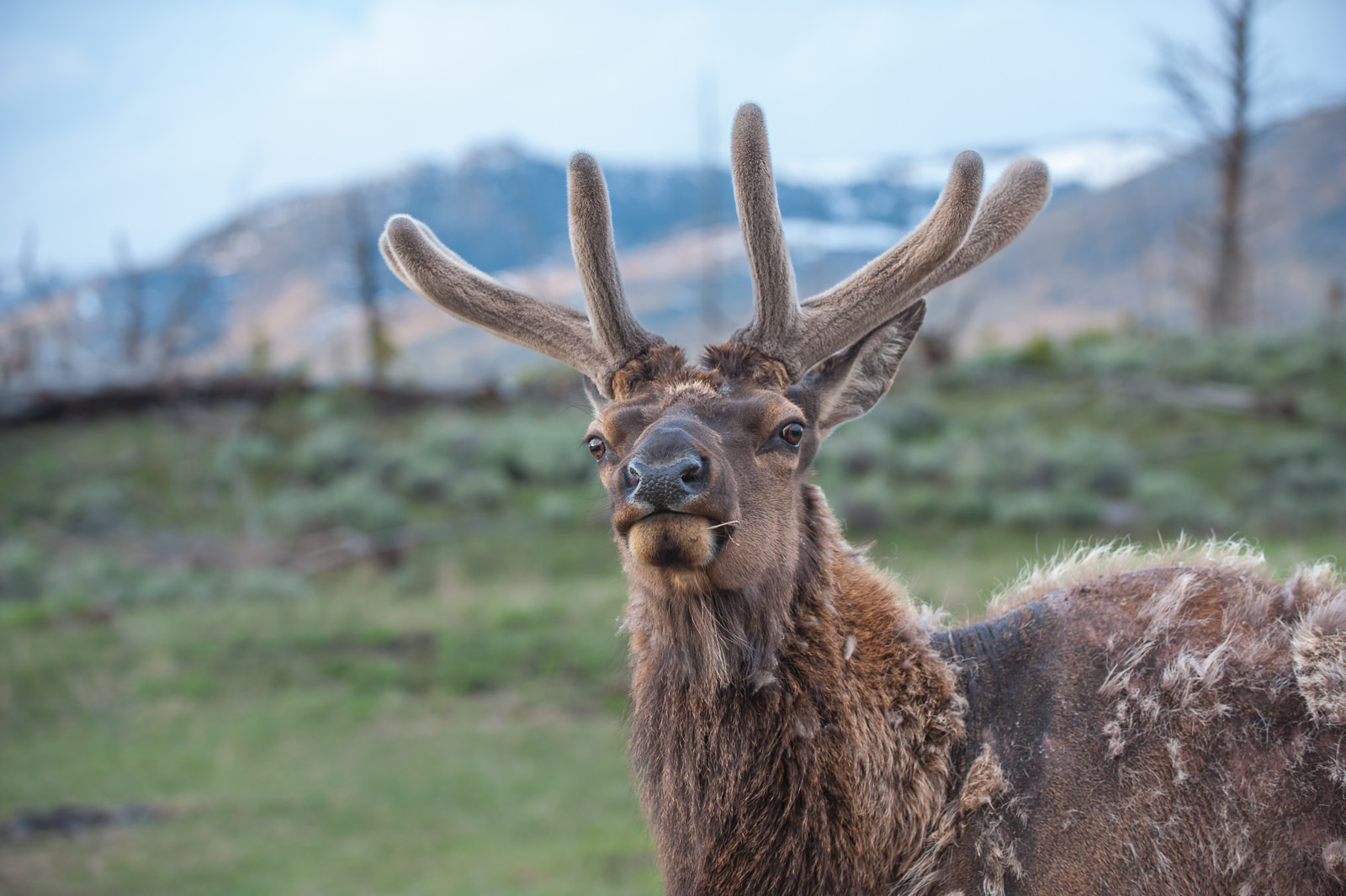
I captured this guy years ago in May, when bull elk are growing a new set of antlers, one of the fastest-growing tissues in the animal kingdom. At the same time, they’re shedding their thick winter coats, leaving them looking a bit ragged as they transition into summer and prepare for the fall rut months ahead. Despite the appearance, however, I think this guy was feeling pretty good about himself. Nikon D700 with Nikkor 70-200mm lens (at 102mm) ISO 800, f/4 at 1320th of a second.
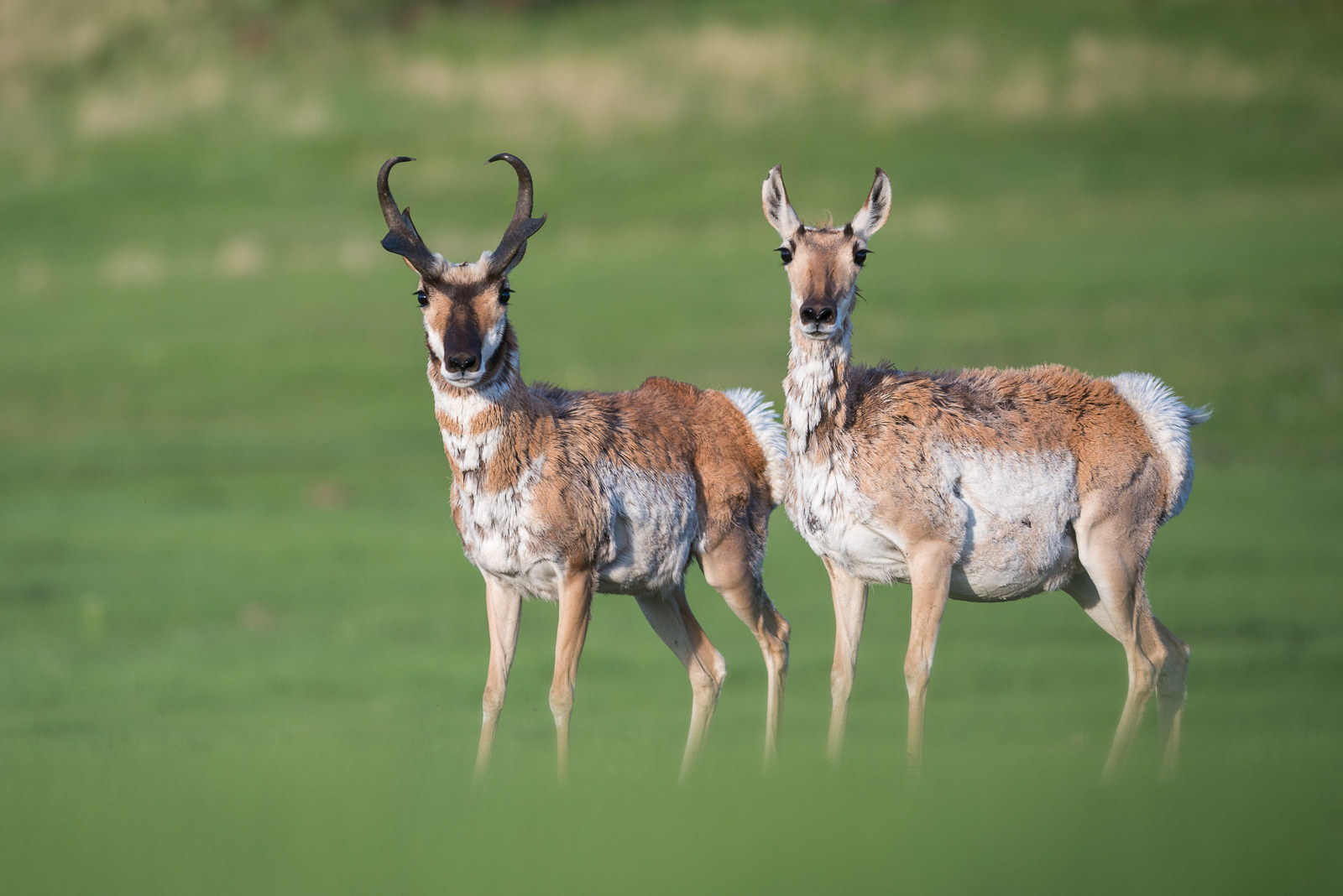
During the breeding season, male pronghorn establish and defend territories, while females carefully select mates and later raise their fawns in the open grasslands. A paired male and female offer a glimpse into the social dynamics of a species whose speed and endurance evolved to outrun predators long vanished from the American West. I took this photograph back in June of 2014 in Wind Cave National Park in South Dakota. Nikon D800 with Nikkor 200-400mm lens (at 300mm) ISO 400, f/4 at 1/1000th of a second.
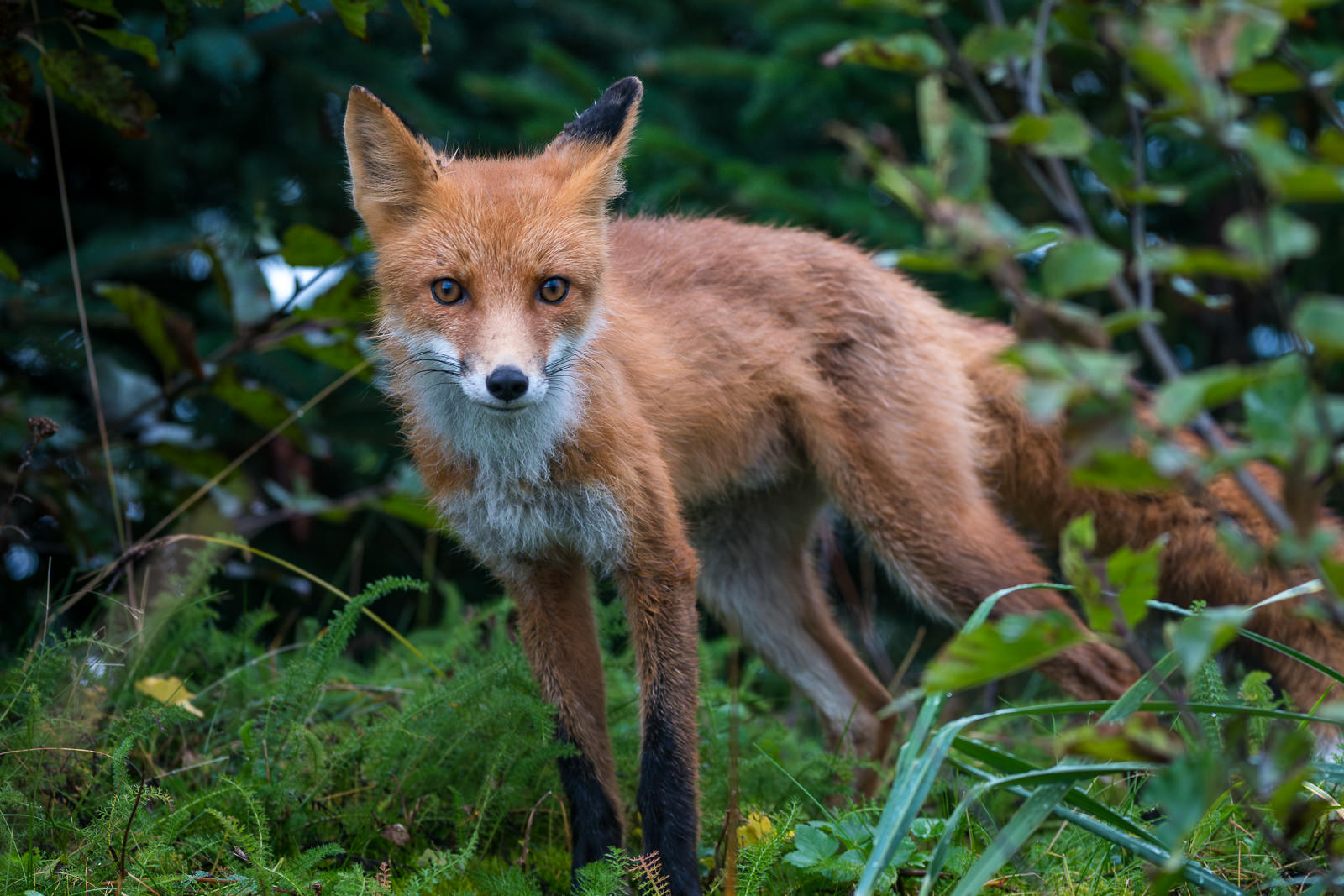
Red foxes are among the most adaptable mammals on Earth, living everywhere from Arctic tundra to forests, farms, and even major cities. I met this one while photographing coastal brown bears in Lake Clark National Park in Alaska. Nikon D500 with Nikkor 200-400mm (at 210mm) ISO 1600, f/4 at 1/250th of a second.
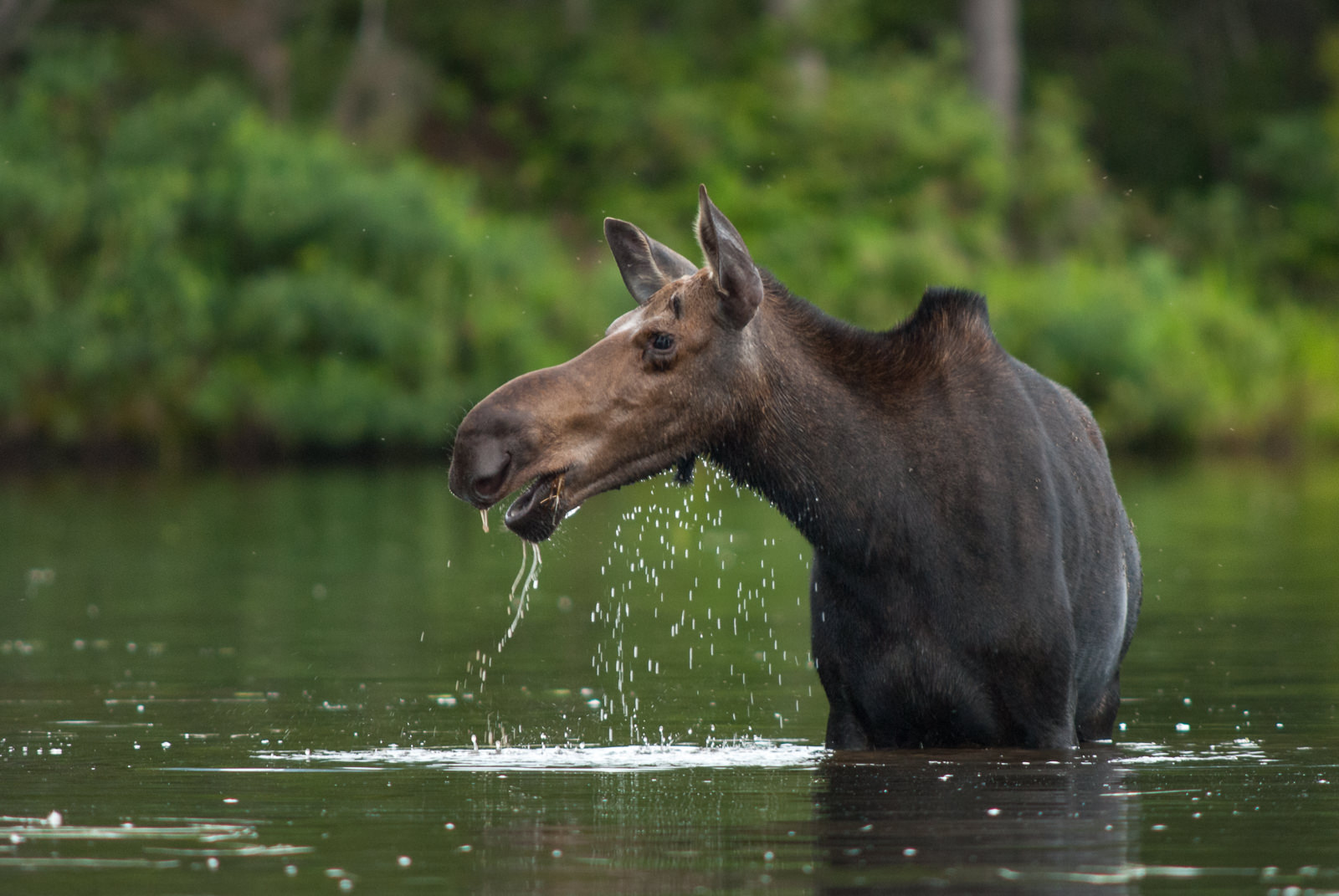
Moose cows in places like Baxter State Park in Maine often wade deep into ponds to feed on nutrient-rich aquatic vegetation growing along the bottom. These underwater plants are packed with sodium and minerals that are difficult to find in the forest. Nikon D200 with Nikkor 600mm f/5.6 manual focus lens, ISO 400, f/5.6 at 1/160th of a second.
We use cookies to enhance your experience while using our website. If you are using our Services via a browser you can restrict, block or remove cookies through your web browser settings. We also use content and scripts from third parties that may use tracking technologies. You can selectively provide your consent below to allow such third party embeds. For complete information about the cookies we use, data we collect and how we process them, please check our Privacy Policy


 A quick interruption in the Africa postings to bring you this bobcat that walked past my office window today and through my backyard. My wife first spotted a bobcat kitten coming up the front side of our house. I quickly grabbed my camera and quietly got into position on the other side of the property. What emerged wasn’t the kitten, but the mother. I tracked her through the back woods, grabbing multiple shots before she disappeared. I never did see the kitten again but suspect she wasn’t far behind mom, hidden by the still-mostly-green foliage. Nikon Z8 with Nikkor 180-600mm lens (at 600mm) ISO 5000, f/6.3 at 1/640th of a second.