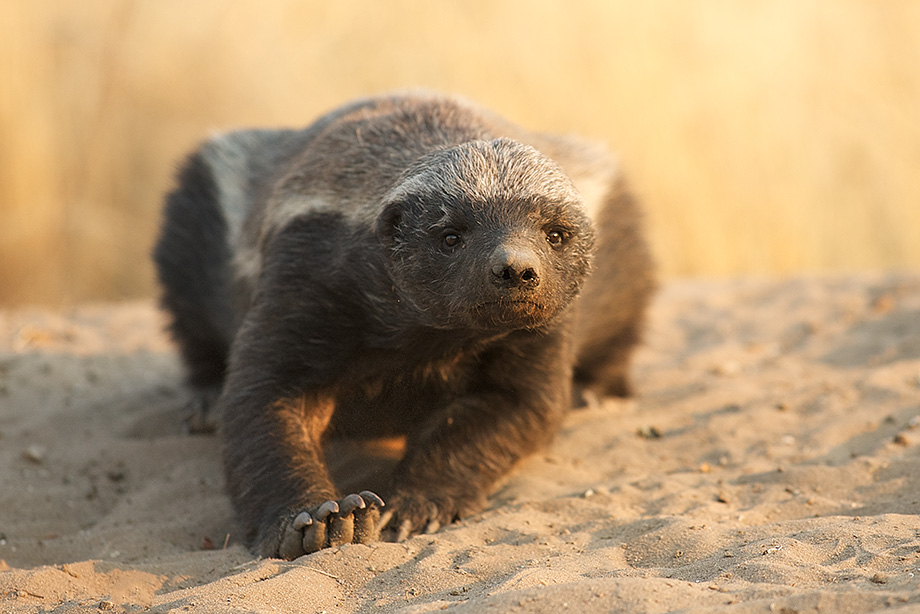
Honey Badger
This is the honey badger, also known as a ratel. Instead of me giving a long description on this most interesting species from the Kalahari Desert, best to leave it to an expert at the following link: http://youtu.be/4r7wHMg5Yjg


This is the honey badger, also known as a ratel. Instead of me giving a long description on this most interesting species from the Kalahari Desert, best to leave it to an expert at the following link: http://youtu.be/4r7wHMg5Yjg
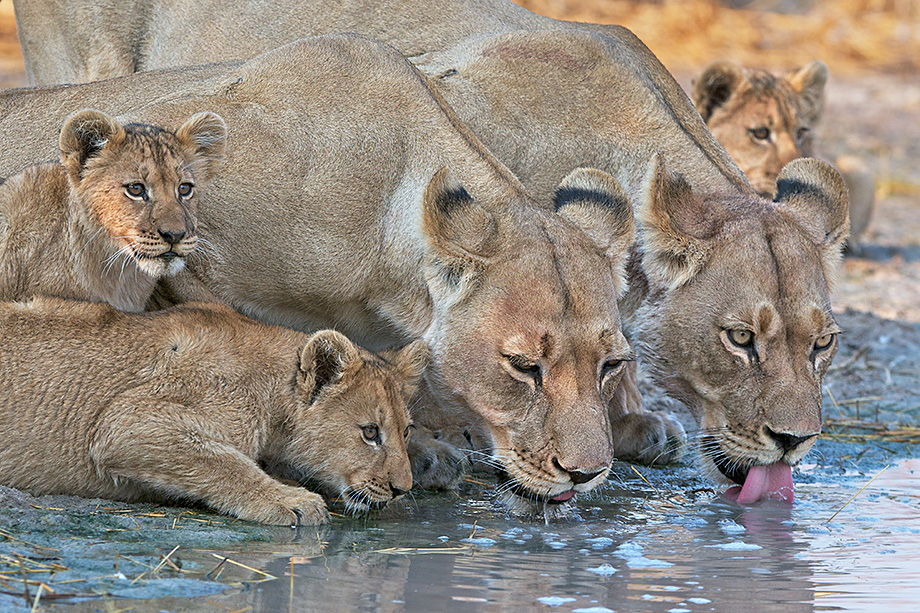
Back from Botswana today — a trip that was at times exhilarating while at others a bit disappointing due to a lack of animal activity. The local guides kept telling me that it was a bad time of year for wildlife, and that because of the extreme cold temperatures the animals weren’t getting up and about. That being said, after two straight weeks of game drives every morning and afternoon, a fair amount of good encounters started to add up. So although it wasn’t the bonanza I had expected based on previous trips to Africa, I was able to get decent to good looks at leopard (one adequate sighting), cheetah (encountered a trio of the same brothers on two occasions), civet, honey badger, elephant, zebra, giraffe, warthog, meerkat, mongoose, baboon, hyena, hippo, water buffalo, jackal, wild dog, wild cat, bushbaby, ostrich and many different bird and antelope species (steenbok, reedbuck, oryx, impala, red lechwee, kudu, springbok, tsessebe, etc) And of course… a few lions. For a while it didn’t look so good for me and lions and I thought I would set a new record by being the only person to ever take a two week safari to Africa and not see lions. This pride of ten (including six cubs, two adult females and two males) was spotted a week and a half into the trip. Up until then I hadn’t seen any. And it was in an area that I wasn’t really expecting to see any lions — the middle of the Kalahari Desert. I’ll upload a few shots of the majestic adult males in a future post, famous for their black manes.
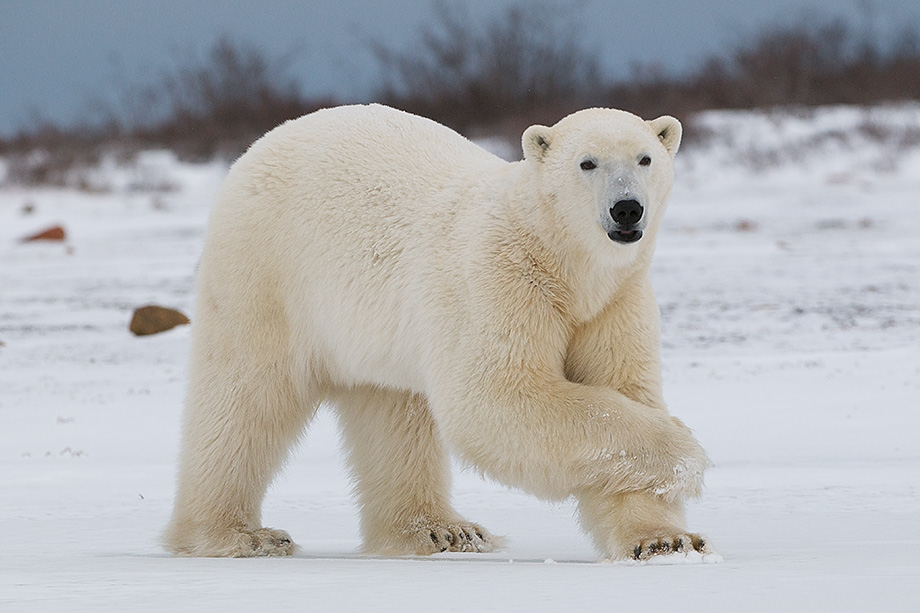
This will be the last post for a while as I head to Botswana tomorrow for a two week safari. In the meantime, thought I’d post one more polar bear from Seal River in Manitoba, Canada. This guy started sliding across the ice and grabbed at his leg as if he could somehow stop the sliding. Enjoy, and see you in two weeks with a bunch of new creatures.
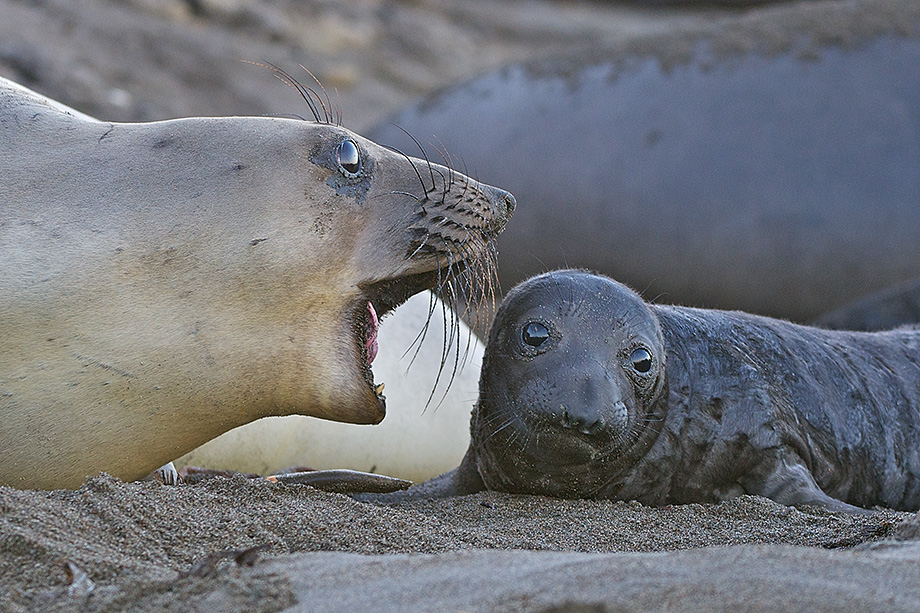
This newborn elephant seal seems a bit disinterested as its mother delivers some sort of a lecture. I was just north of San Simeon, California this past winter and newborn pups and their mothers seemed to be everywhere.
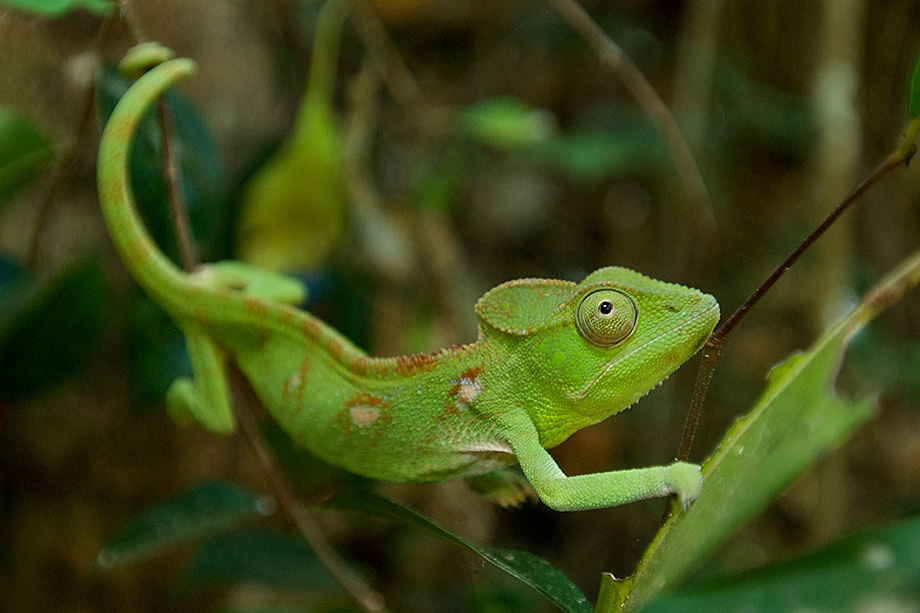
This is a female Oustalet’s chameleon. We crossed paths one afternoon in Ankarafantsika National Park in Western Madagascar. Madagascar is where half of all the chameleons on earth can be found.
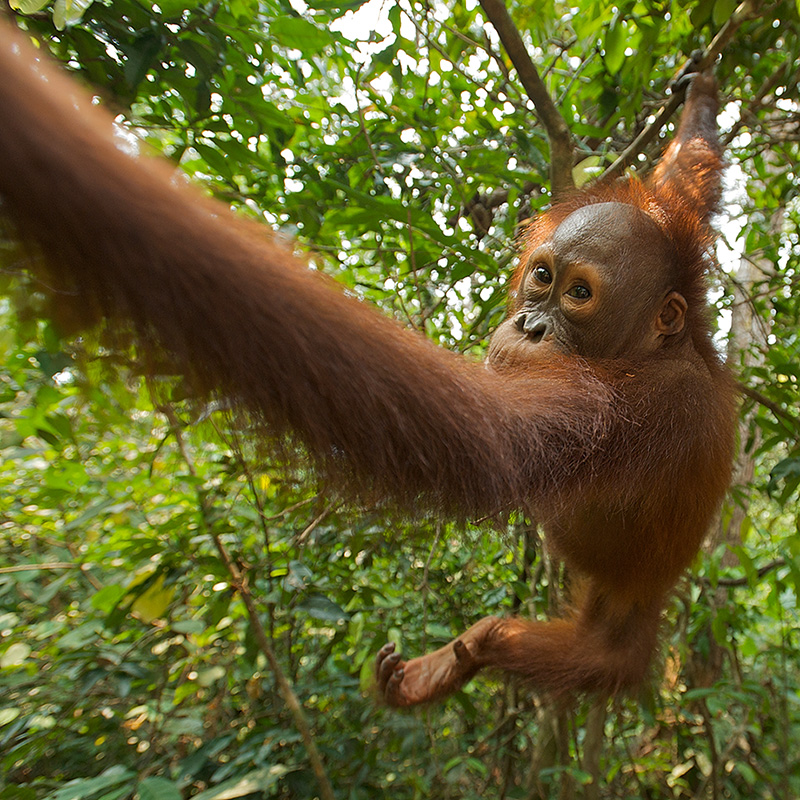
To move through the jungle, orangutans don’t jump from branch to branch, but instead swing on vines and the flexible trunks and branches of thinner trees. This guy had just stopped to investigate my strange bald head, before swinging on past.
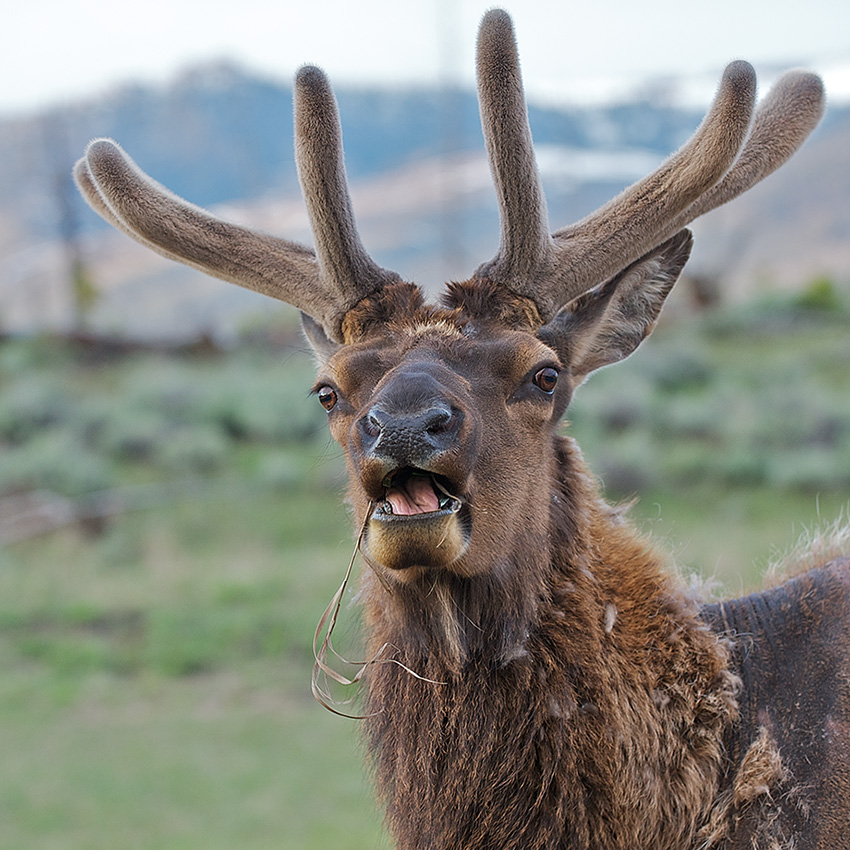
Unlike animals with horns, those with antlers grow and then shed a new set every year. It was the end of May when I photographed this male elk in Yellowstone. His antlers will continue to grow throughout the summer and then in the fall, the velvet skin that you see here will be shed to reveal the hard bone like material underneath. The elk will retain these velvet-less antlers until they are eventually dropped altogether in the winter.
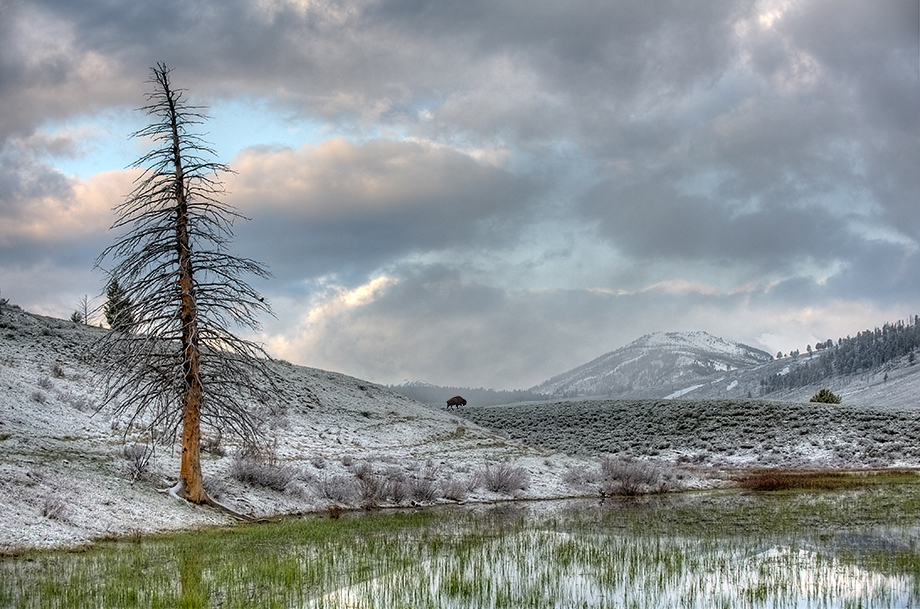
A bison walks along a shallow ridge line in Yellowstone National Park. This guy was taking his time catching up to the rest of the herd that had already descended to the far side of that small hill. Earlier a few had stopped to drink from the lake.
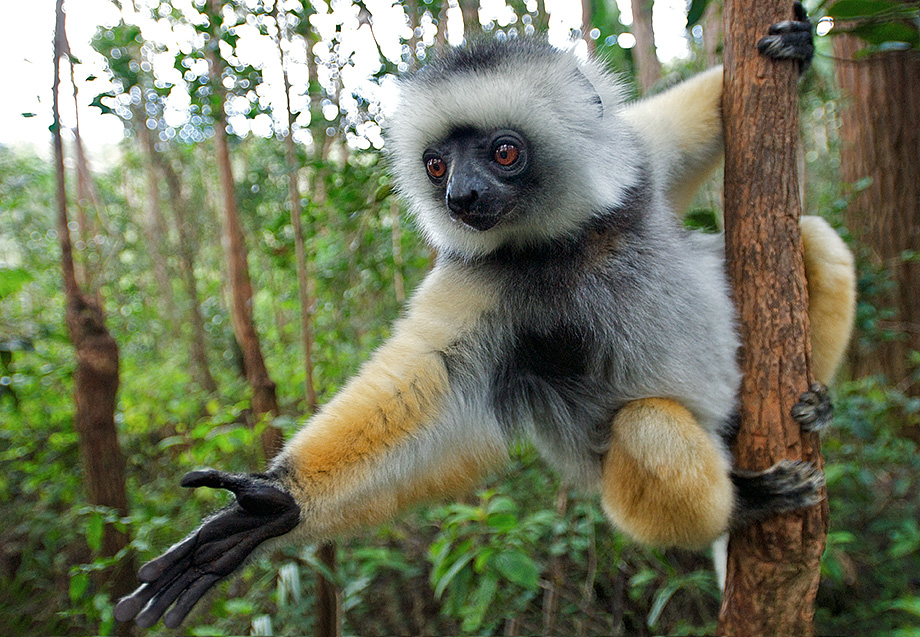
Sifakas are a genus of lemur named for their “shi-fak” alarm call. There are several different species of sifaka, with this guy, the diademed sifaka being the largest among them. Diademed sifakas also happen to be one of the most interesting looking of all the lemurs, with their red eyes and golden, black and white fur. This was one of only two or three diademed sifakas that I saw while in the forests of Madagascar.