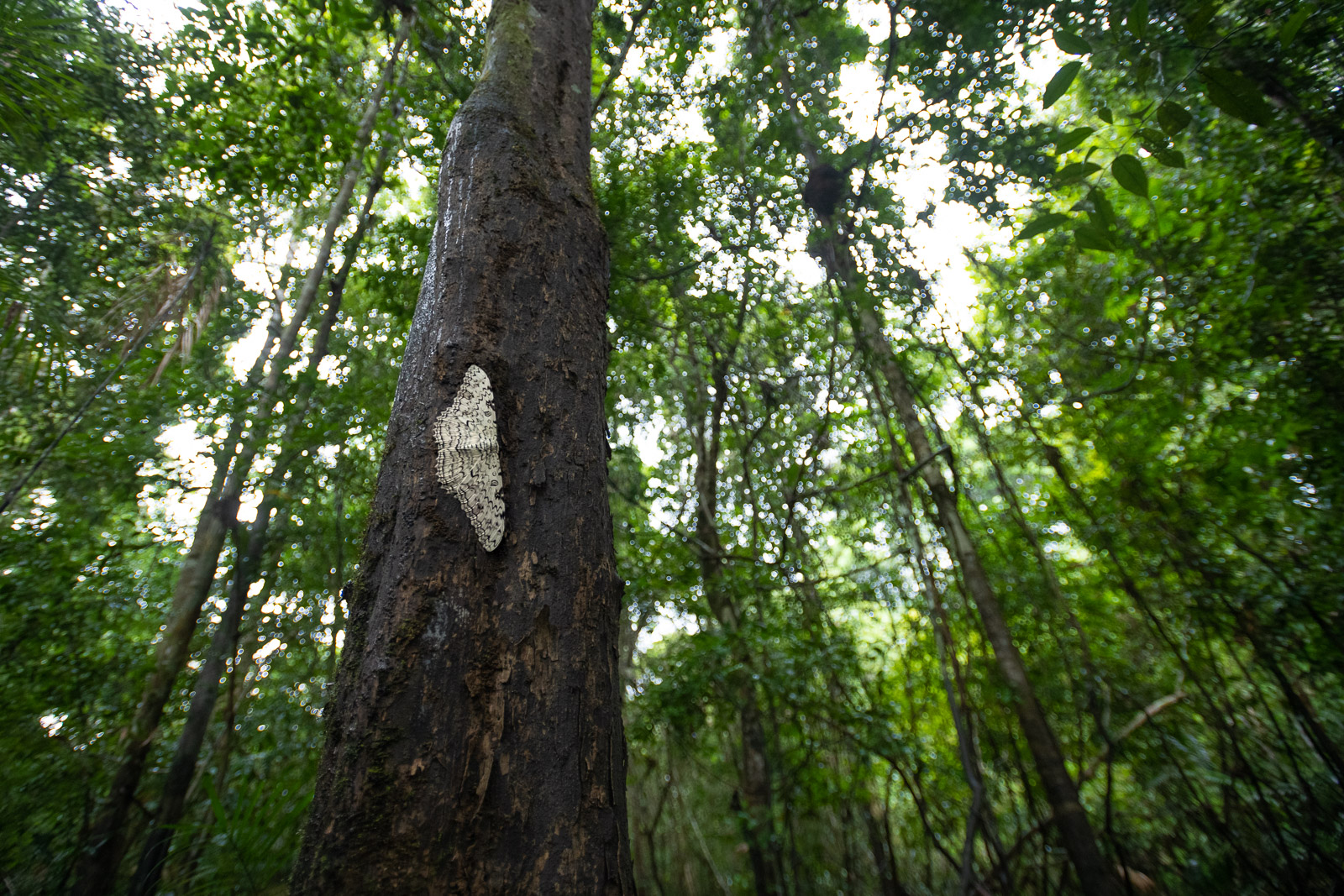
This photo might not look like much because it’s hard to tell perspective. That said, the white witch moth grows to 14 inches wide. This one appeared to be at least that. Photographed early morning in the northern Amazon basin of Loreto, Peru. Nikon D850 with Nikkor 17-35mm lens (at 17mm) ISO 1600, f/2.8 at 1/125th of a second.
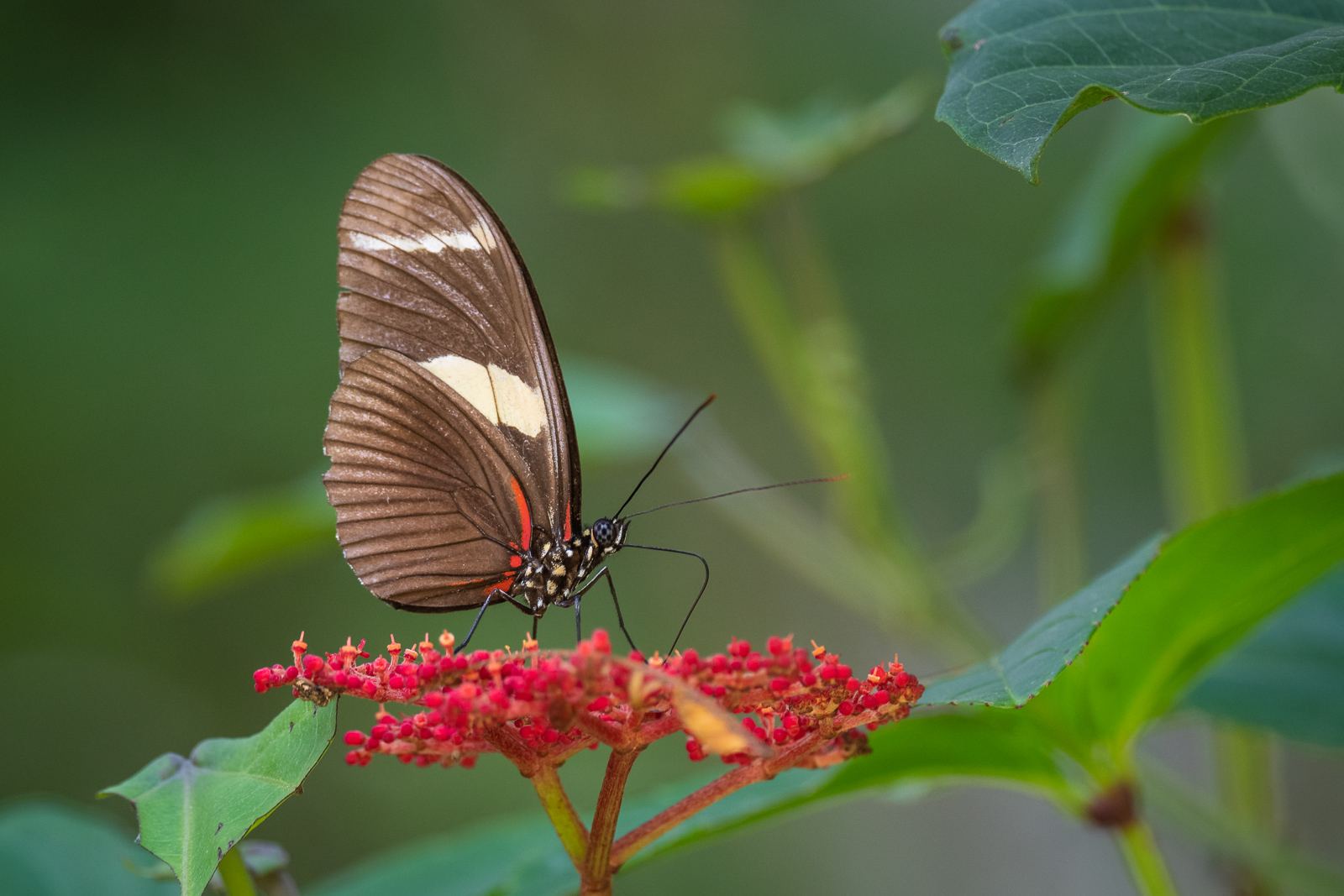
The one type of animal more conspicuous than any other in the Peruvian Amazon were the butterflies. They were everywhere in every possible color combination. This is a Doris longwing. They were active around the grounds of our lodge and kept me busy while waiting to go out on my next excursion. Doris longwings are particularly interesting scientifically because they exhibit polymorphism — which means within the same group of the same species living and mating in the same area, the traits of a gene can manifest in two or more different possibilities. In the case of the Doris longwing, they come in several different color combinations. Nikon D500 with Nikkor 500mm PF lens, ISO 800, f/5.6 at 1/160th of a second, Godox V860iii fill flash.
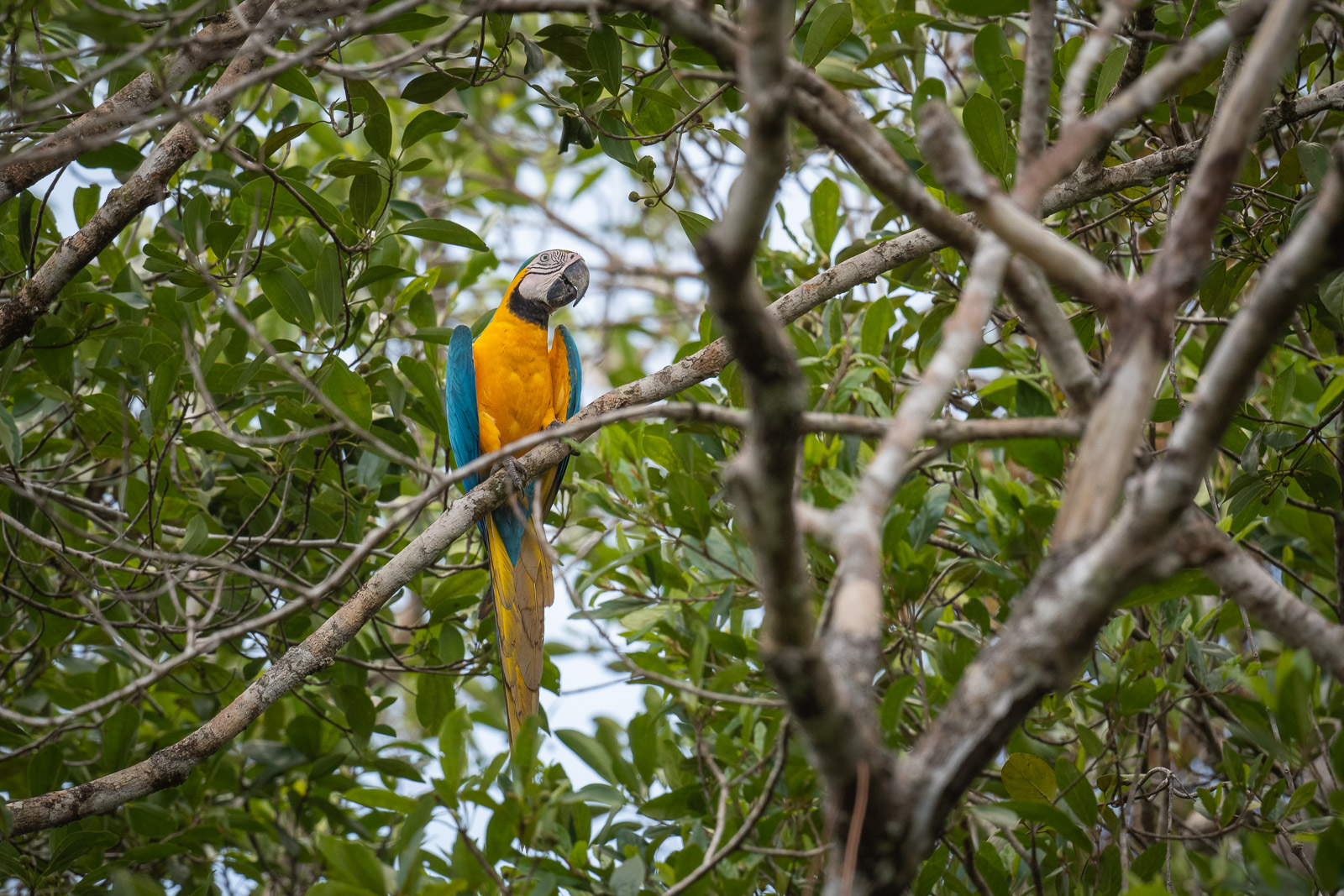
Always great to see macaws living free in their natural habitat. In this case, a blue-and-yellow macaw along a tributary of the Amazon River in northern Peru. Nikon D500 with Nikkor 500mm PF lens, ISO 800, f/5.6 at 1/1000th of a second, Godox V860iii fill flash.
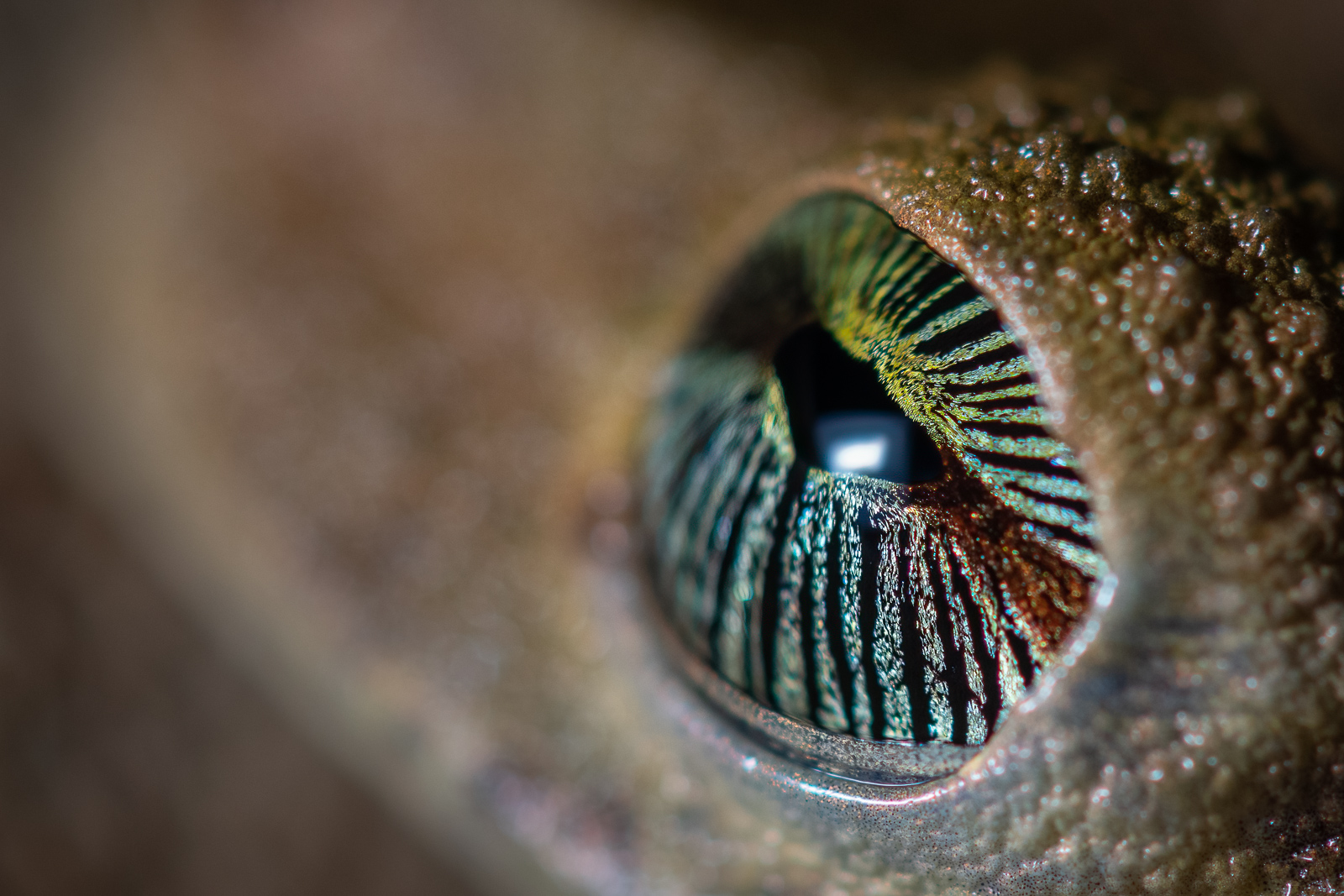
This eye belongs to the giant broad-headed treefrog. He was being quite accommodating so I figured I’d move in for a close up with my macro lens. These guys are a relatively large treefrog. This one was hanging out just outside my cabin last month in the Peruvian Amazon. Nikon D500 with Nikkor 105mm macro lens, ISO 400, f/6.3 at 1/80th of a second, Godox V860iii with Westcott softbox.
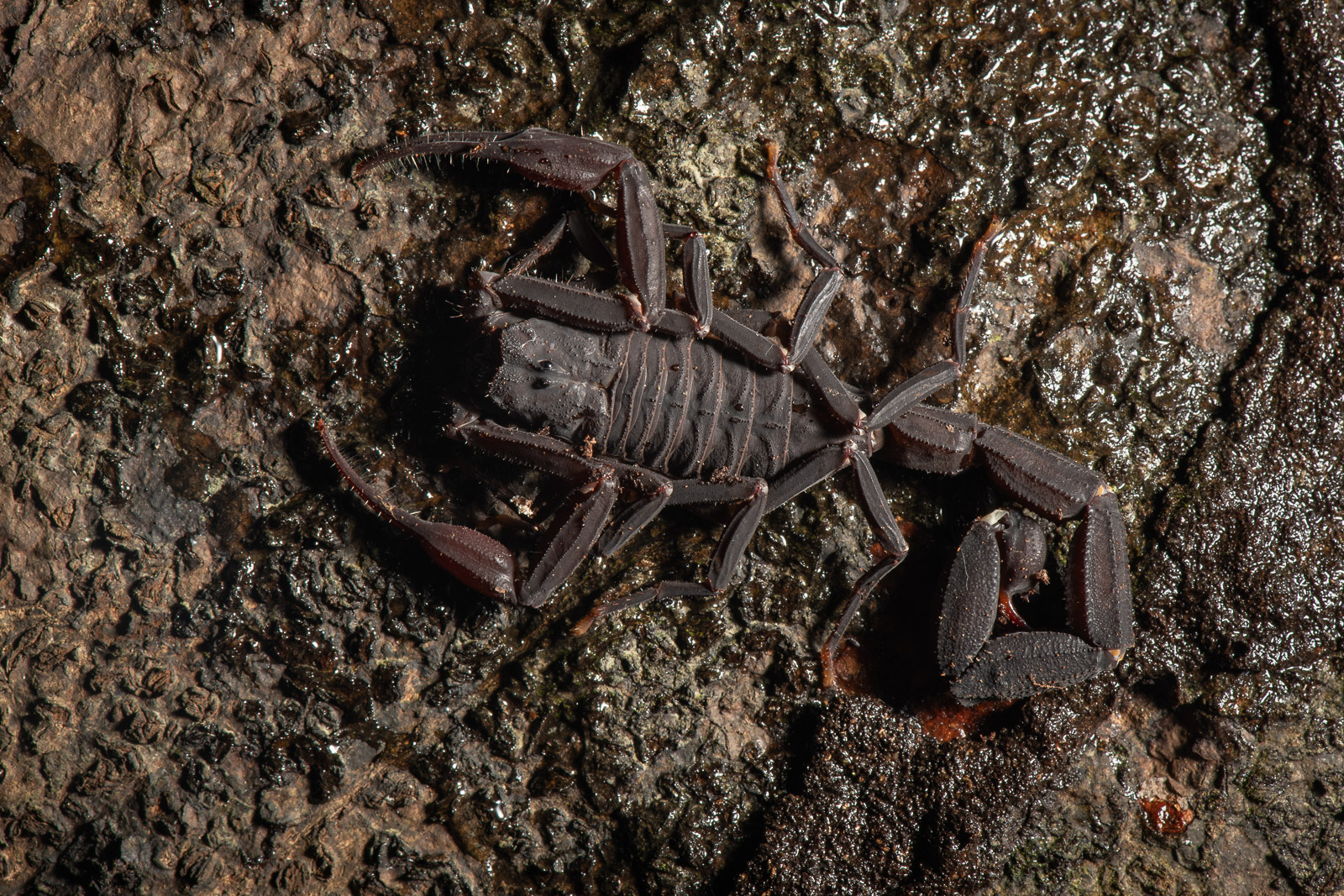
I saw a few of these black scorpions while on night walks in the Peruvian Amazon. My guide didn’t seem too concerned around them, however, Wikipedia describes them as being “significantly venomous.” In this image you can see the little red barb at the end of the tail that does all the damage. They are ambush hunters — blending in with the tree bark, they sit and wait for meals to walk by. Their diet consists of everything from crickets and spiders to lizards and mice. Nikon D850 with Nikkor 105mm macro lens, ISO 250, f/18 at 1/160th of a second, Godox V860iii flash with Westcott soft box.
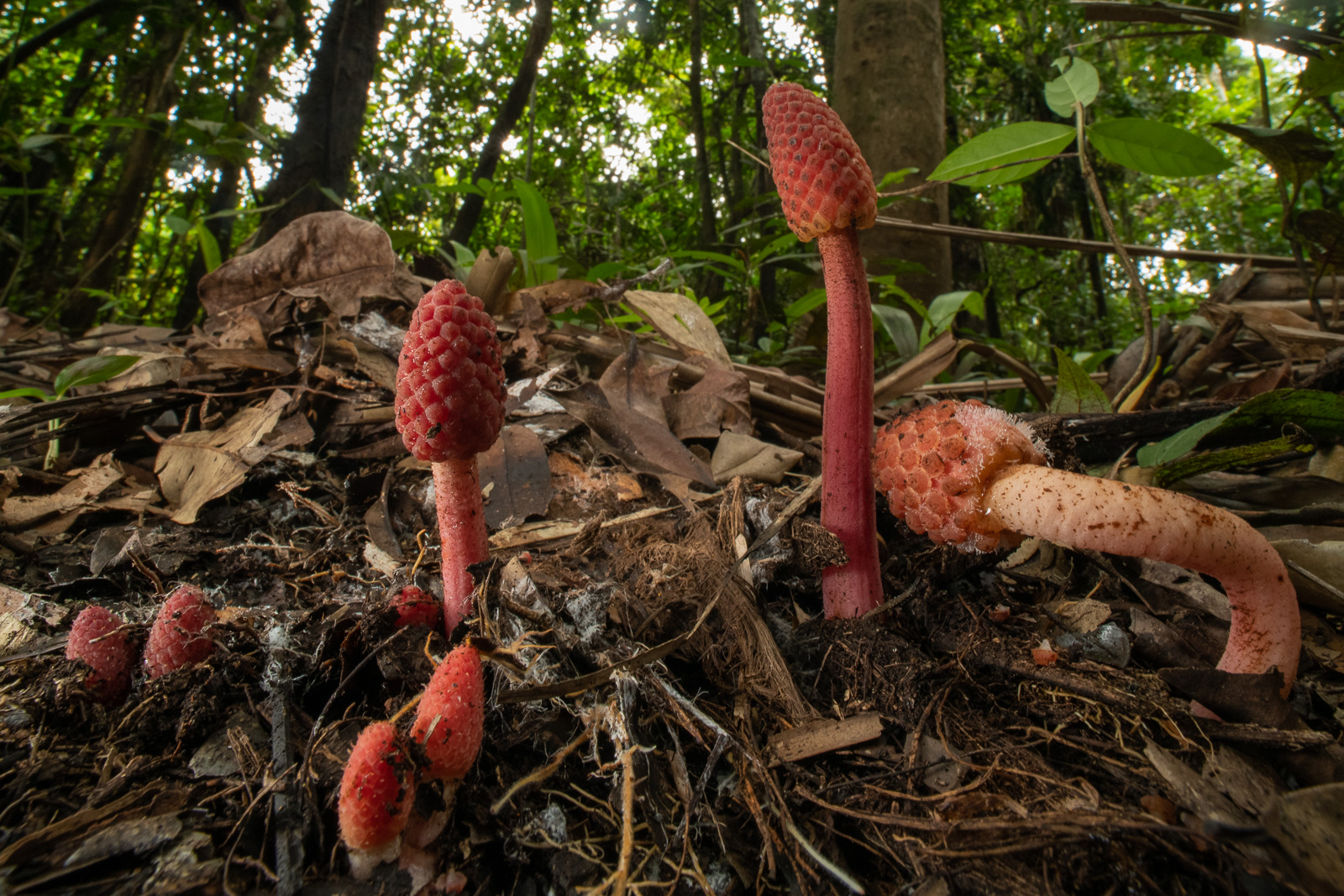
I’m a bit confused as to which species this plant is. I see similar photos called Helosis guyannensis, but then others called Helosis ceyennesis. Either way, it looks like a mushroom, but apparently it’s not. It also looks like raspberries on a stem. Not that either. Found on the rainforest floor in the northern Amazon of Peru. Nikon D850 with Laowa 15mm wide angle macro lens, ISO 1600, f/32, Godox V860iii flash with Westcott softbox.
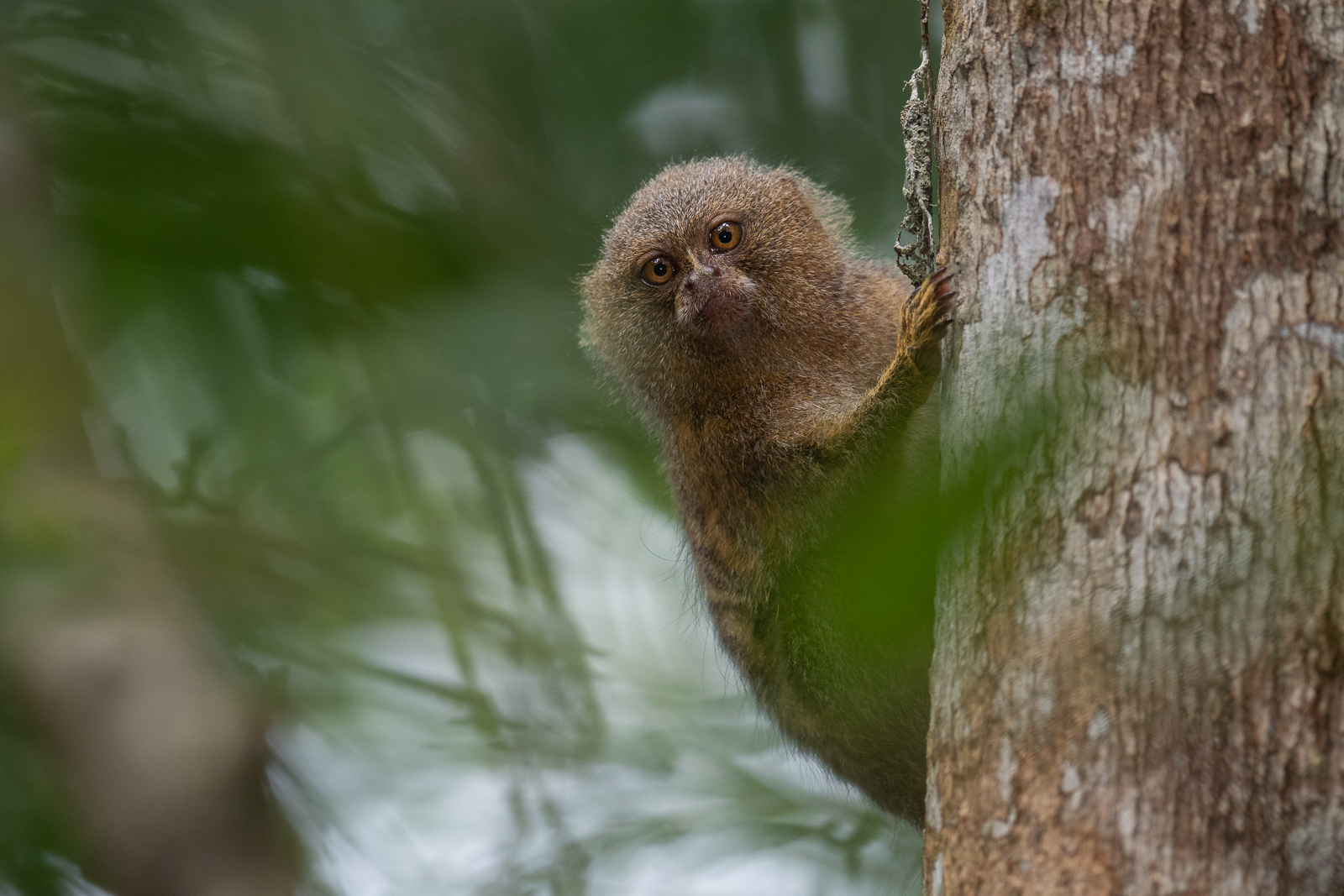
Here’s another of the pygmy marmosets that I photographed in Peru, the world’s smallest monkeys. As mentioned a few weeks ago, they’re only about 5 inches tall (not including the tail). This guy was after a favorite meal — sap from holes in the trunk of that tree. but stopped for a moment to pose for a picture. Nikon D500 with Nikkor 500mm PF lens, ISO 800, f/5.6 at 1/200th of a second, Godox V860iii fill flash.
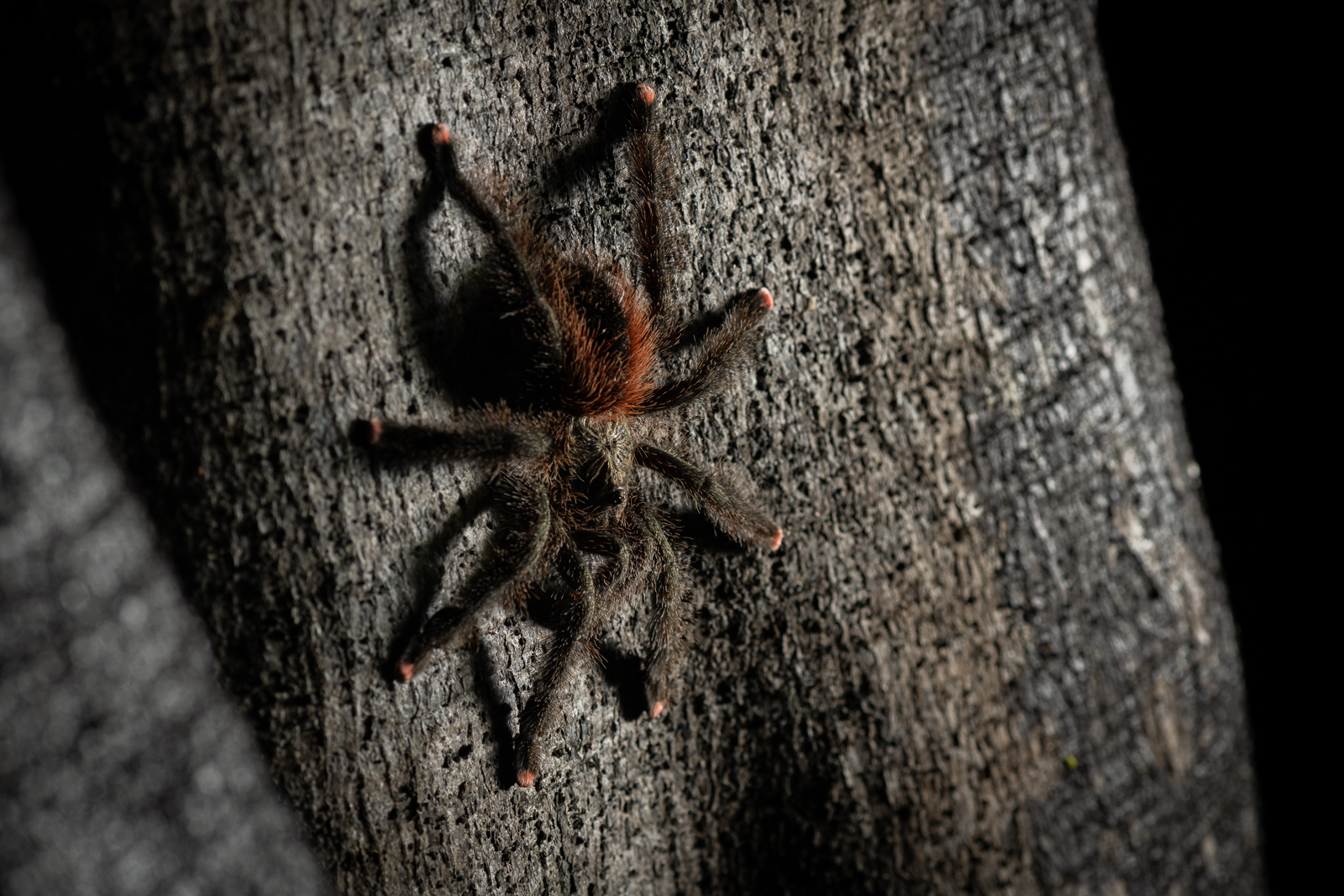
I know tarantulas aren’t for everyone, but this isn’t just any old tarantula. It’s the adorably named pink-toed tarantula. A couple quick facts (other than the pink toes): They eat primarily insects but won’t shy away from a small frog or lizard. They live mainly in trees. And perhaps most peculiar, as a defense mechanism they can throw feces at a would-be assailant. Photographed last month in the northern Amazon basin of Peru. Nikon D850 with Nikkor 105mm macro lens, ISO 250, f/9 at 1/160th of a second, Godox v860iii flash with Westcott soft box.
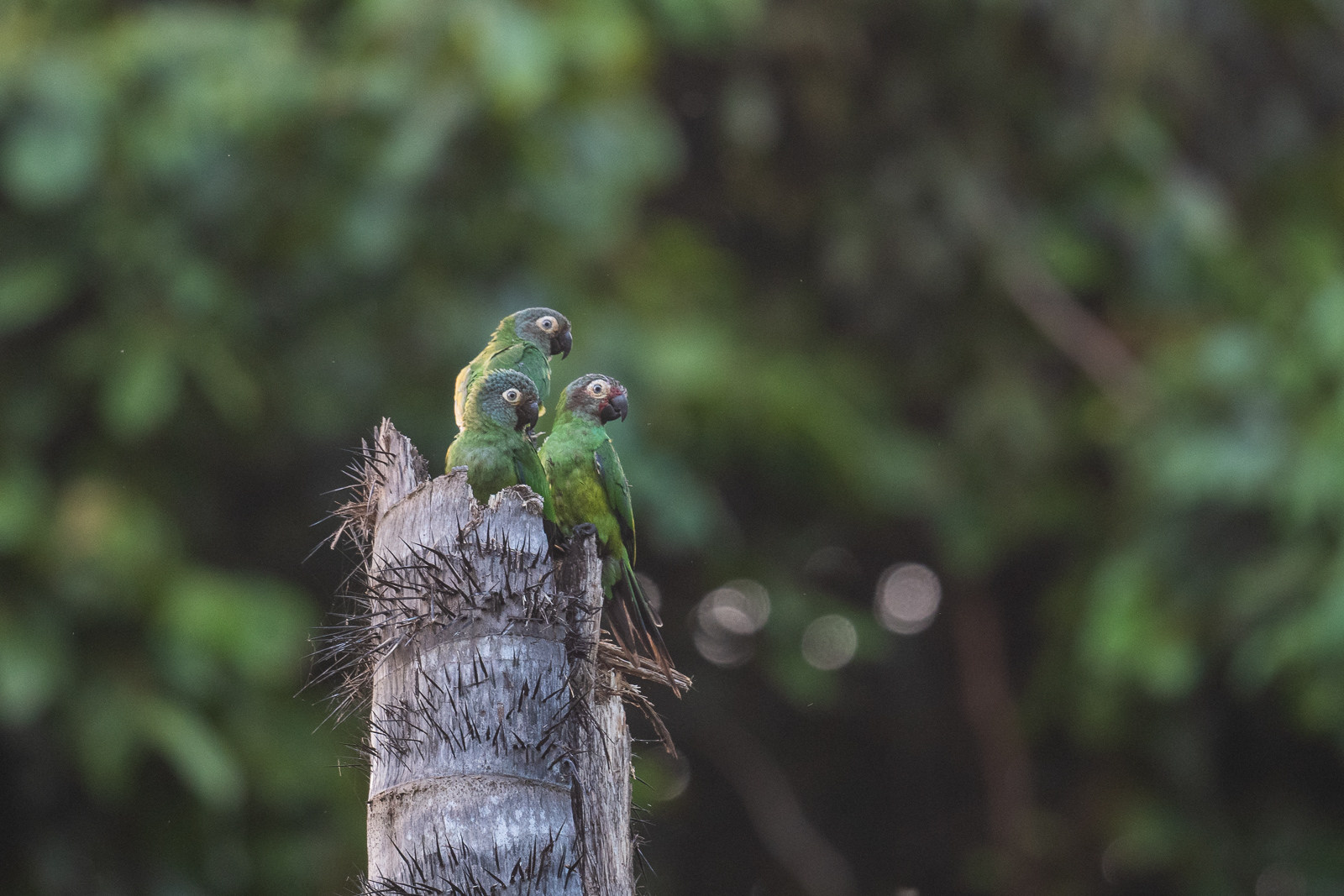
You don’t really get to see the cobalt wings of the cobalt-winged parakeet if not in flight (the cobalt is on the underside of the wings) but I liked this shot of three of them settling in at the end of the day in a dead palm tree along a tributary of the Amazon River in northern Peru. Nikon D500 with Nikkor 500mm PF lens, ISO 1600, f/5.6 at 1/250th of a second, Godox v860iii fill flash.
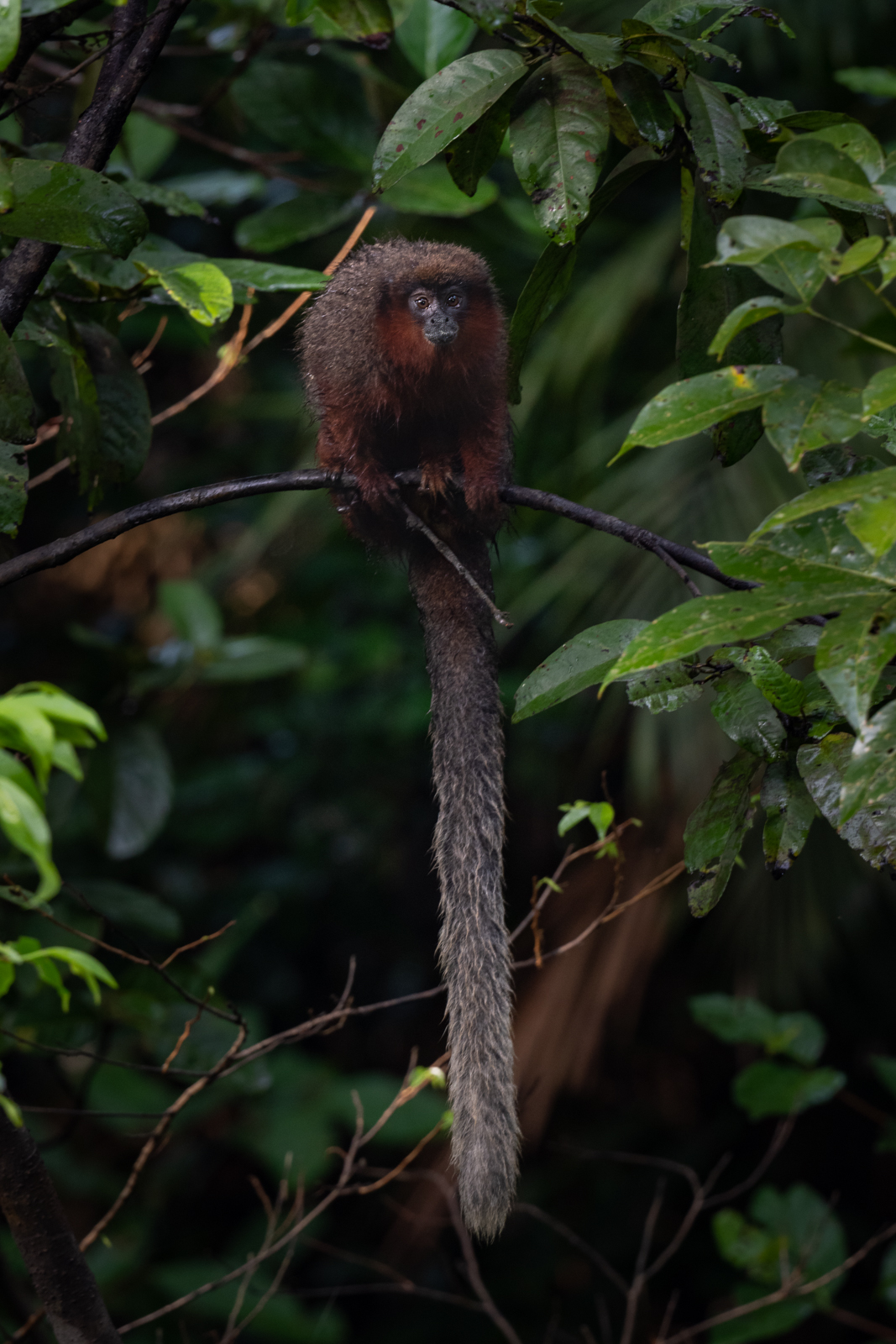
The coppery titi monkey was another new species for me. I saw these small monkeys a few times, this being the best look. They spend 100% of their time in trees, and live in the Amazon basin of both Peru and Brazil, usually around water. They play an important role in the biodiversity of the forests in which they live, by scattering the seeds of the fruits they eat and promoting growth. They also have very long tails and this guy was gracious enough to put it on display for the two seconds it spent on that branch before leaping deep into the forest. Nikon D500 with Nikkor 500mm PF lens, ISO 800, f/6.3 at 1/80th of a second, Godox V860iii fill flash.
We use cookies to enhance your experience while using our website. If you are using our Services via a browser you can restrict, block or remove cookies through your web browser settings. We also use content and scripts from third parties that may use tracking technologies. You can selectively provide your consent below to allow such third party embeds. For complete information about the cookies we use, data we collect and how we process them, please check our Privacy Policy