Sharp-nosed toads are masters of camouflage, relying on their leaf-like shape and coloration to disappear into the rainforest floor. Rather than fleeing from danger, they often remain perfectly still, blending so seamlessly with the leaf litter that they’re easy to overlook even from just a few feet away. For this image, I was inches away with my wide angle macro lens. Nikon D850 with Laowa 15mm wide angle macro lens, ISO 1600, unrecorded f/stop, 1/60th of a second, Godox 860iii flash with diffuser.
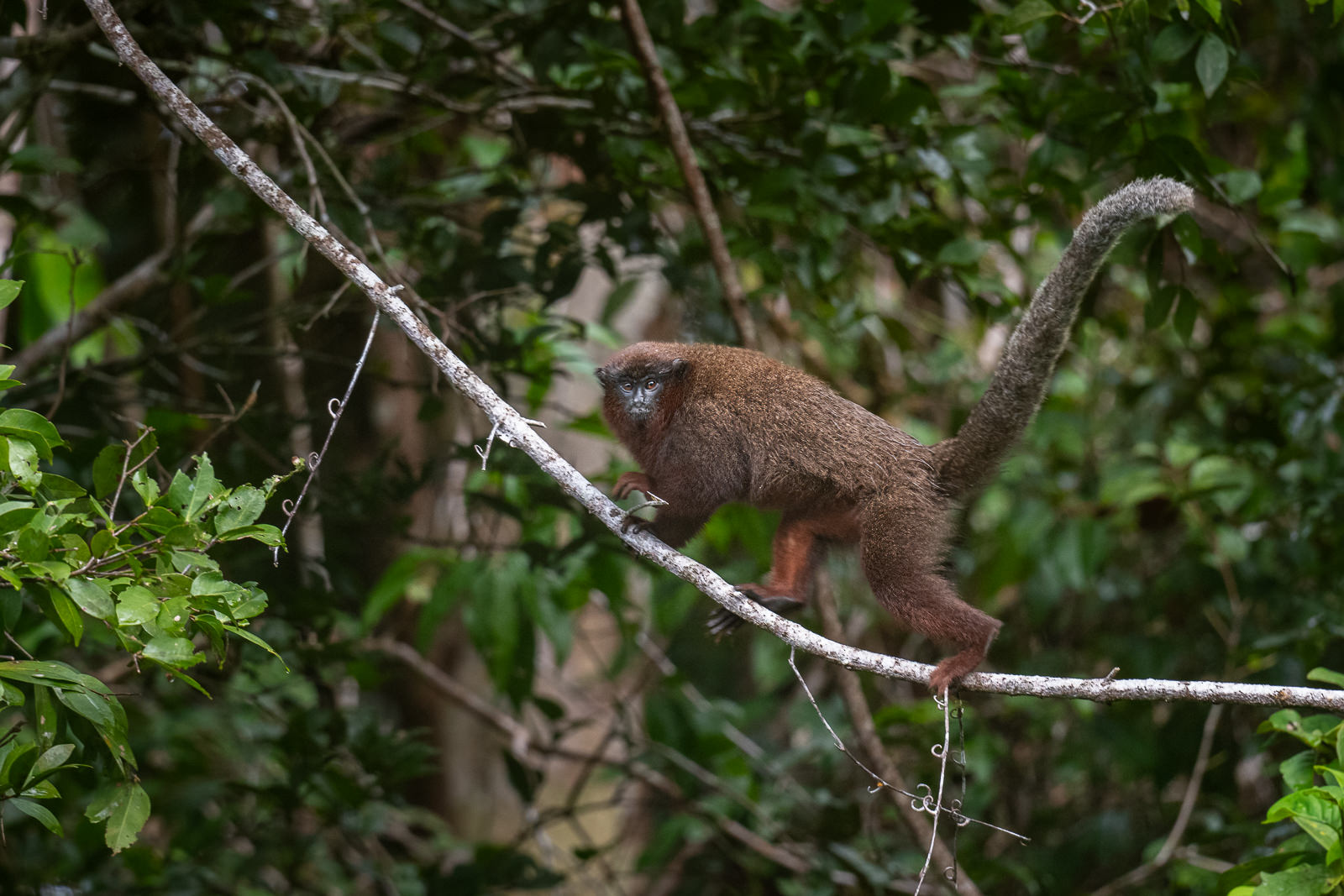
Coppery titi monkeys are agile canopy dwellers that spend nearly their entire lives in the treetops, moving through the forest with quick, deliberate bounds. Their long tails provide balance as they navigate even the thinnest branches. Nikon D500 with Nikkor 500mm PF lens, ISO 1600, f/5.6 at 1/320th of a second.
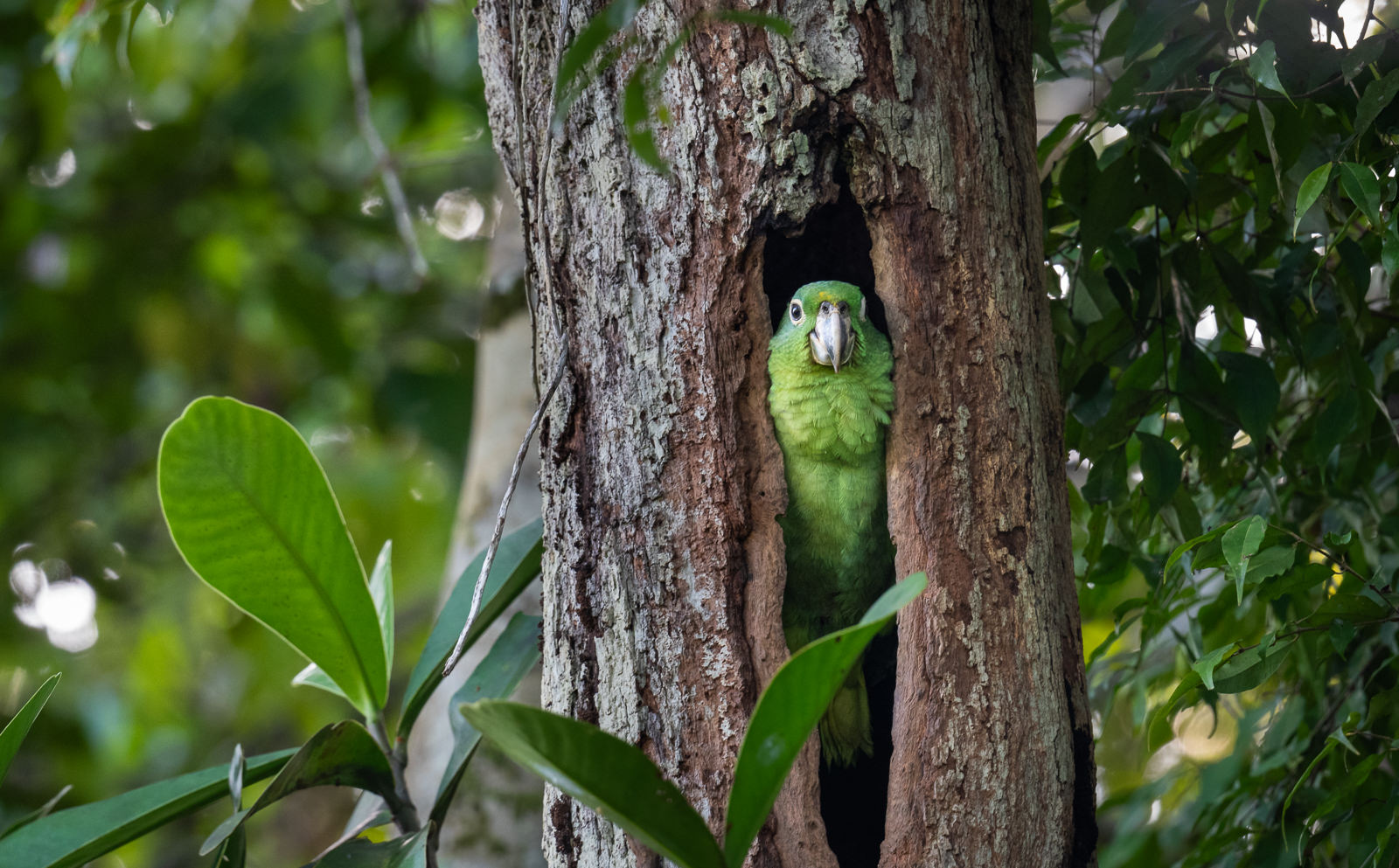
Southern mealy Amazon parrots often nest and roost in natural tree cavities, relying on these sheltered hollows for protection from predators and the elements. Despite being among the largest parrots in the Amazon, they can be surprisingly difficult to spot when tucked inside a cavity high in the forest canopy. We were in a canoe when we spotted this one in the Loreto region of the northern Amazon basin in Peru. Nikon D500 with Nikkor 500mm PF lens, ISO 1600, f/6.3 at 1/100th of a second.
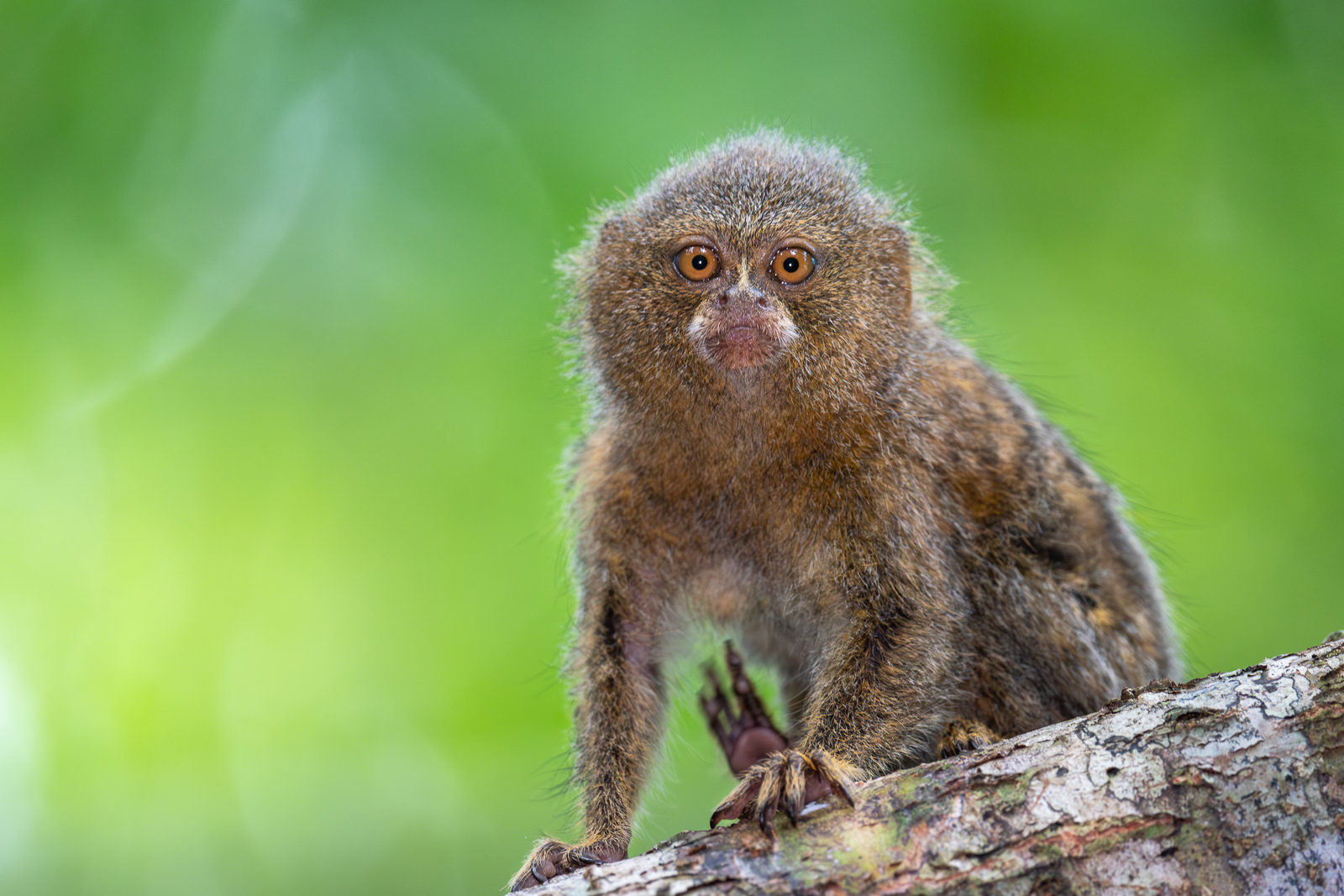
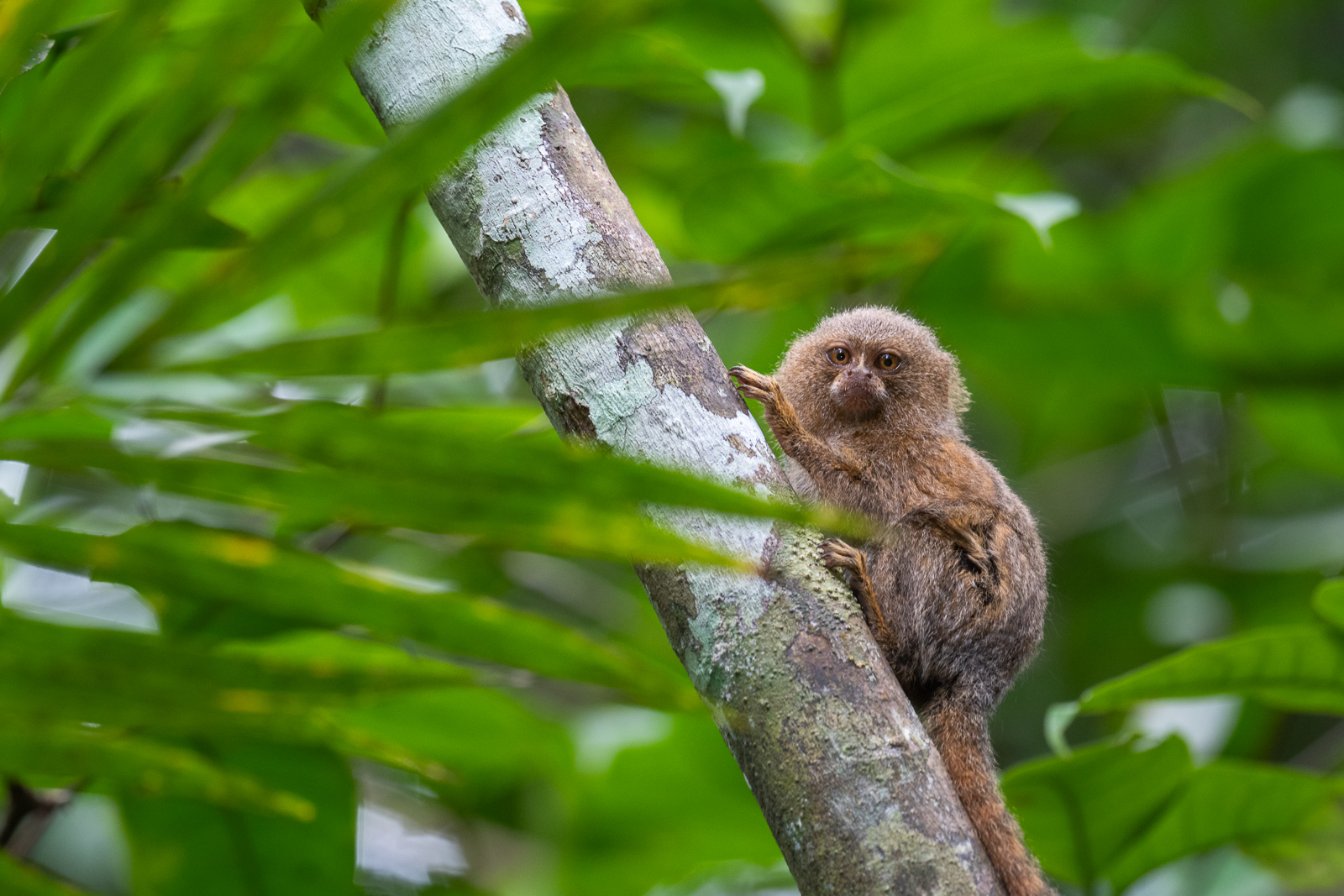
The pygmy marmoset is the world’s smallest monkey, weighing just a few ounces and small enough to fit in the palm of your hand. Native to the Amazon rainforest, it uses specialized lower teeth to gnaw holes in tree bark, feeding on sap and gum — an unusual diet among primates. Despite its tiny size, it can leap impressively-long distances between branches. Nikon D500 with Nikkor 500mm PF lens, ISO 800, f/5.6 at 1/400th of a second.
The pygmy marmoset is the world’s smallest monkey, weighing just 3 to 5 ounces and measuring around 5 inches long (excluding its tail). Native to the Amazon rainforest, it uses sharp lower teeth to gouge tree bark and feed on sap and gum. I saw quite a few of them over two trips to the Loreto region of Peru in the upper Amazon basin. Nikon D500 with Nikkor 500mm PF lens, ISO 800, f/5.6 at 1/200th of a second.
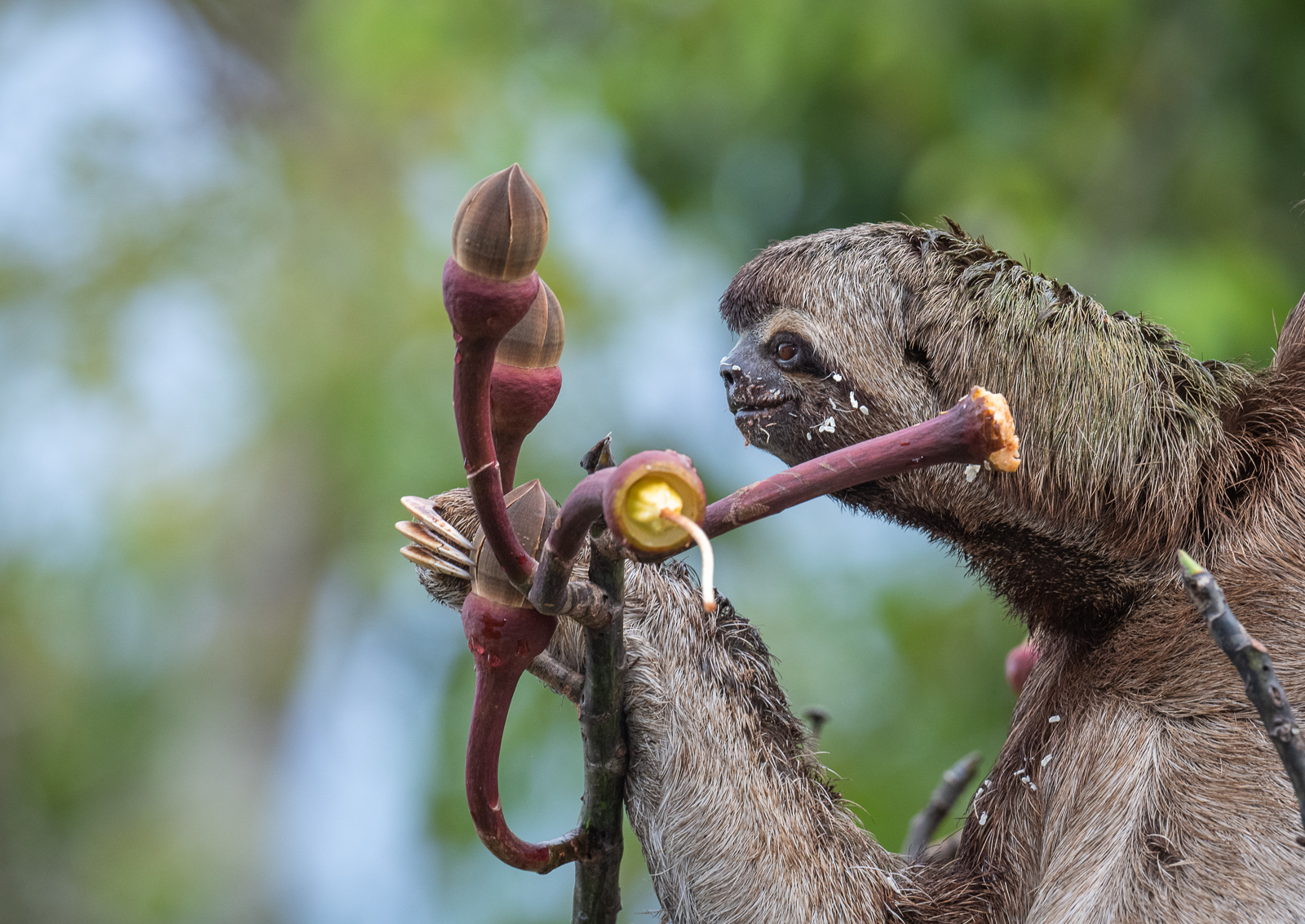
In Peru’s northern Amazon basin, three-toed sloths are often seen slowly munching on the buds, fruits, and tender leaves of the Cecropia tree, a favorite food source that’s both abundant and easy to digest. These trees grow quickly along forest edges and gaps, making them a vital part of the sloth’s high-canopy diet. Nikon D500 with Nikkor 500mm PF lens, ISO 800, f/6.3 at 1/500th of a second, Godox 860iii fill flash.
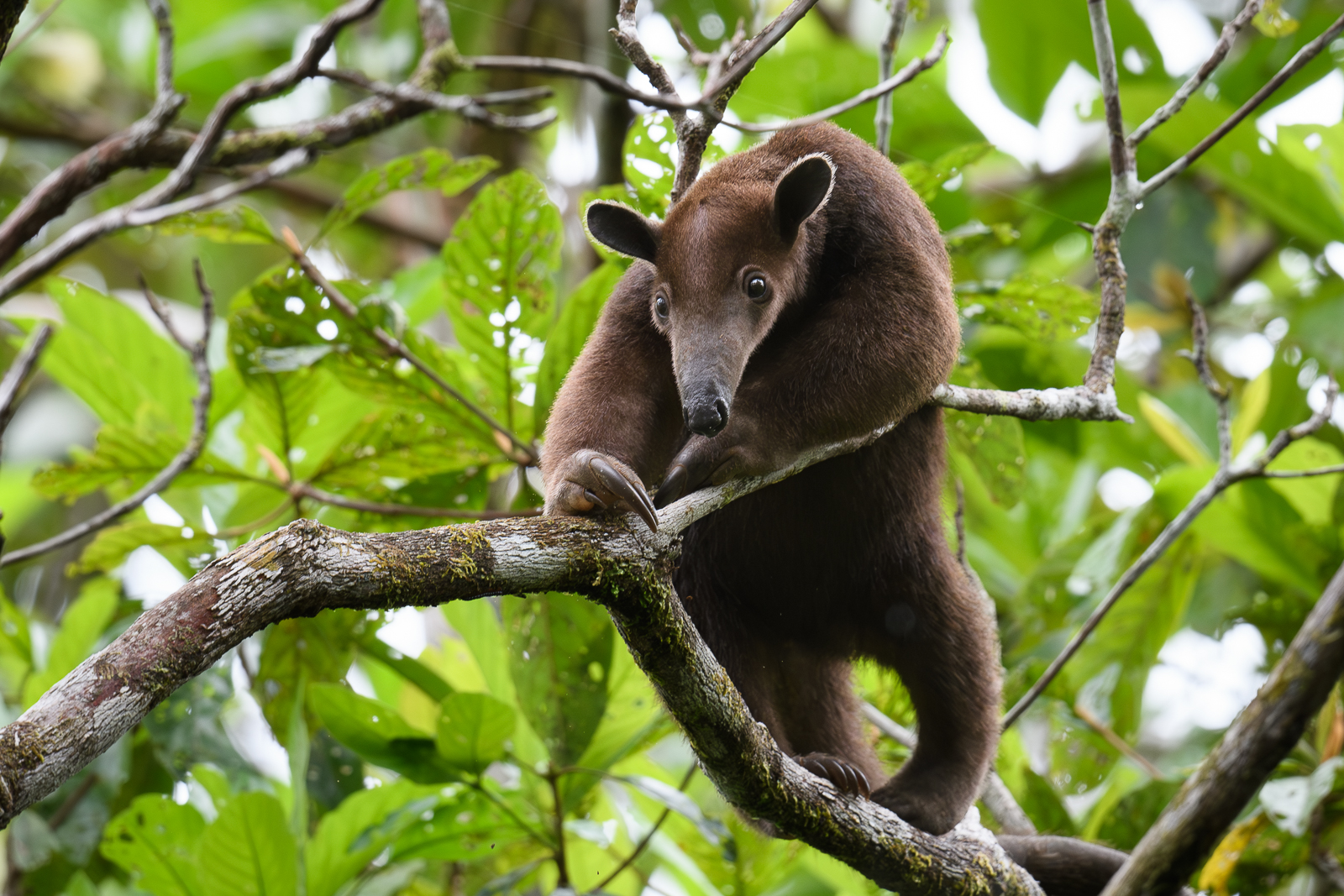
The dark morph of the southern tamandua is a rare variation of this anteater species, typically found in South American forests and savannas (this one in the upper Amazon basin of Peru). While most tamanduas have a pale coat with a black vest-like marking, the dark morph features much deeper overall coloring, sometimes appearing almost entirely chocolate brown or black. This unique coloration may offer better camouflage in dense, shaded rainforest environments. Like all tamanduas, the dark morph uses its powerful forelimbs and long claws to tear into termite mounds and ant nests, then slurps up insects with its long, sticky tongue. Seeing one in the wild is a special treat given how elusive and uncommon they are. Nikon D500 with Nikkor 500mm lens, ISO 1600, f/5.6 at 1/800th of a second.
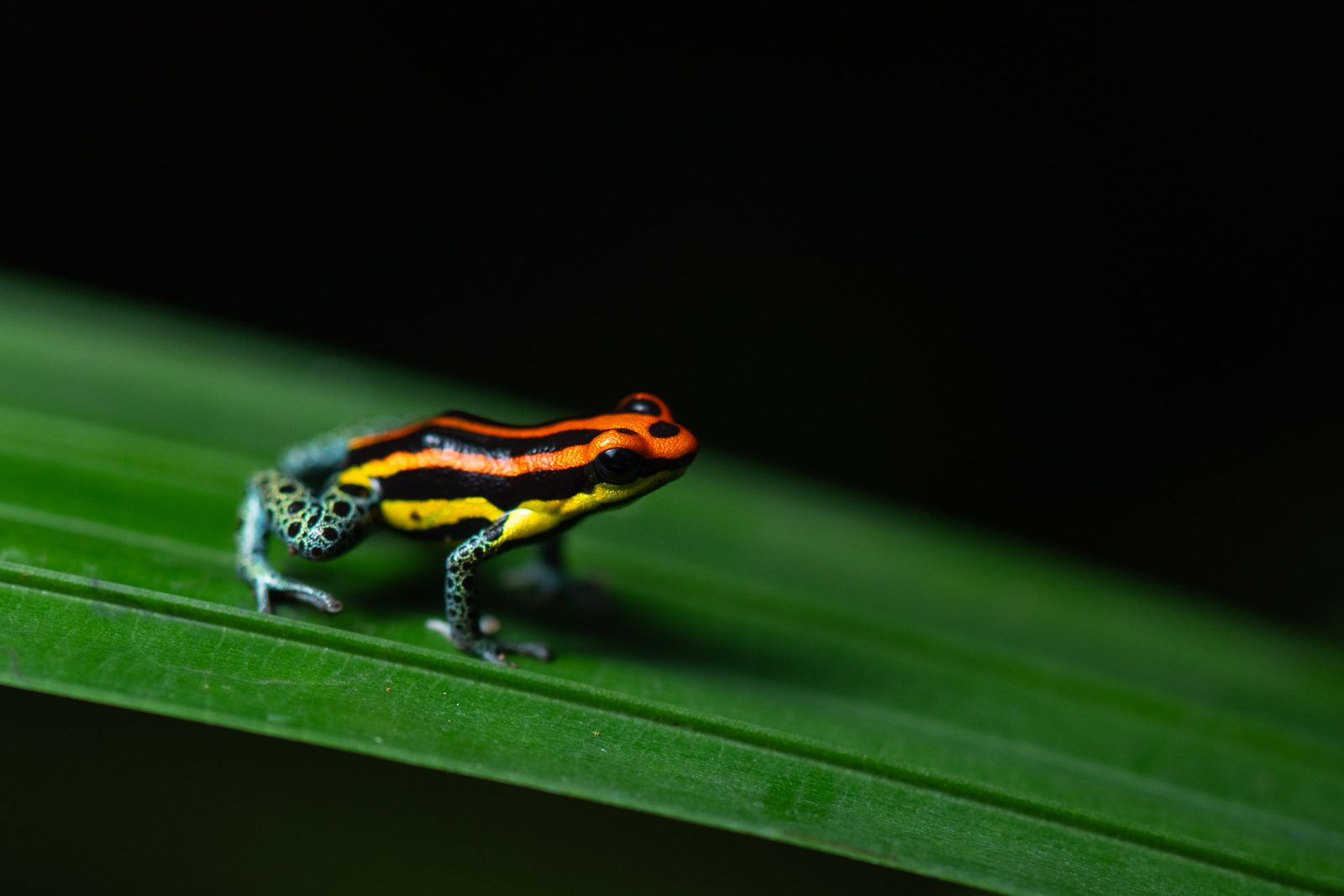
The Uakari poison frog is a tiny but vividly colored amphibian found in the lowland rainforests of Peru, especially in the Amazon basin. Its bright metallic reds, yellows and blues serve as a warning to predators, advertising the potent toxins in its skin. This species is one of the smaller poison dart frogs, often less than an inch long. They lay their eggs in water-filled bromeliads or tree holes, and parents often carry tadpoles on their backs to safe nurseries. Nikon D850 with Nikkor 105mm macro lens, ISO 400, f/5.6 at 1/60th of a second, Godox V860iii flash with Westcott Pocketbox diffuser.
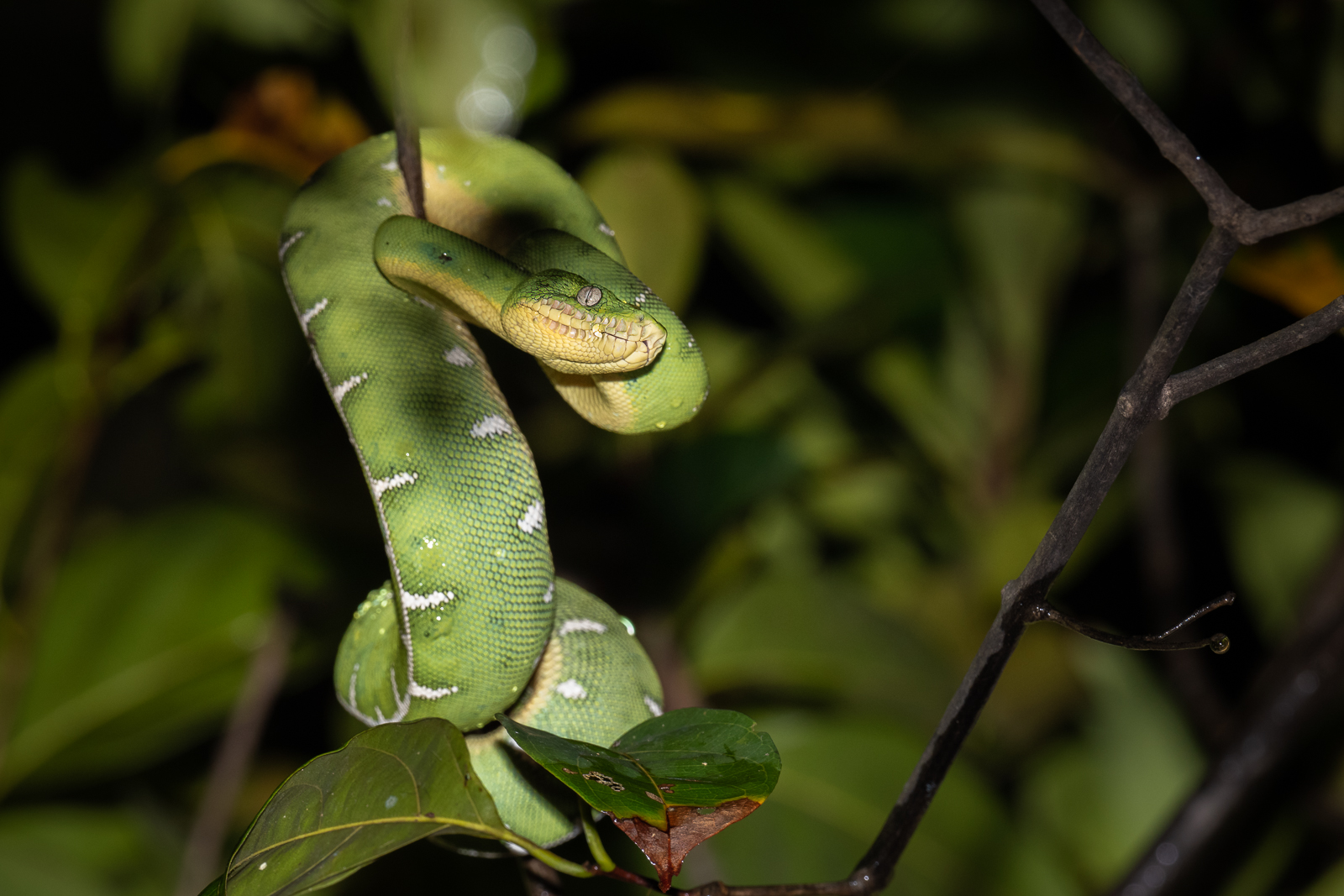
The emerald tree boa is a non-venomous snake native to the rainforests of South America, especially the Amazon Basin. With vivid green scales marked by jagged white stripes, it blends perfectly into the canopy where it spends most of its life coiled on branches. Despite its relaxed appearance, it’s an ambush predator, striking with lightning speed to snatch birds, lizards, and small mammals. Unlike many snakes, the emerald tree boa gives birth to live young—miniature versions of itself that start out orange or red before turning green as they mature. This boa was photographed in the upper Amazon basin of Peru. Nikon D500 with Nikkor 500mm PF lens, ISO 800, f/9 at 1/80th of a second, Godox flash.
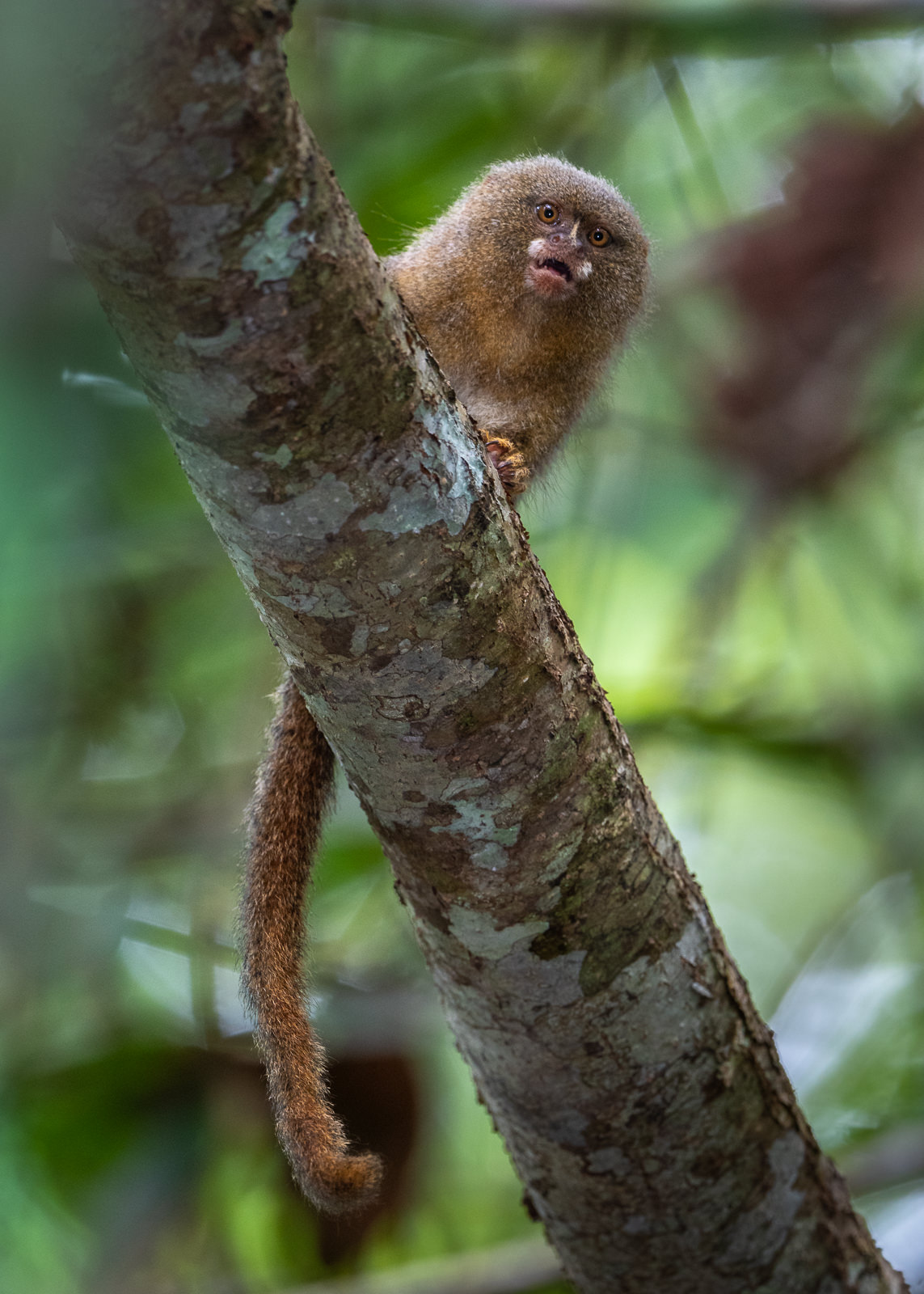
The pygmy marmoset (Cebuella pygmaea) is the world’s smallest monkey, measuring just 5 to 6 inches long (excluding its tail). Native to the Amazon rainforest, it lives high in the trees and feeds mainly on tree sap and gum, which it extracts using specialized lower teeth. Despite its tiny size, the pygmy marmoset is incredibly agile, capable of leaping great distances between branches. Its high-pitched calls help keep family members in touch through the dense forest canopy. Photo captured in Loreto, Peru in the upper Amazon basin. Nikon D500 with Nikkor 500mm PF lens, ISO 800, f/5.6 at 1/160th of a second.
We use cookies to enhance your experience while using our website. If you are using our Services via a browser you can restrict, block or remove cookies through your web browser settings. We also use content and scripts from third parties that may use tracking technologies. You can selectively provide your consent below to allow such third party embeds. For complete information about the cookies we use, data we collect and how we process them, please check our Privacy Policy


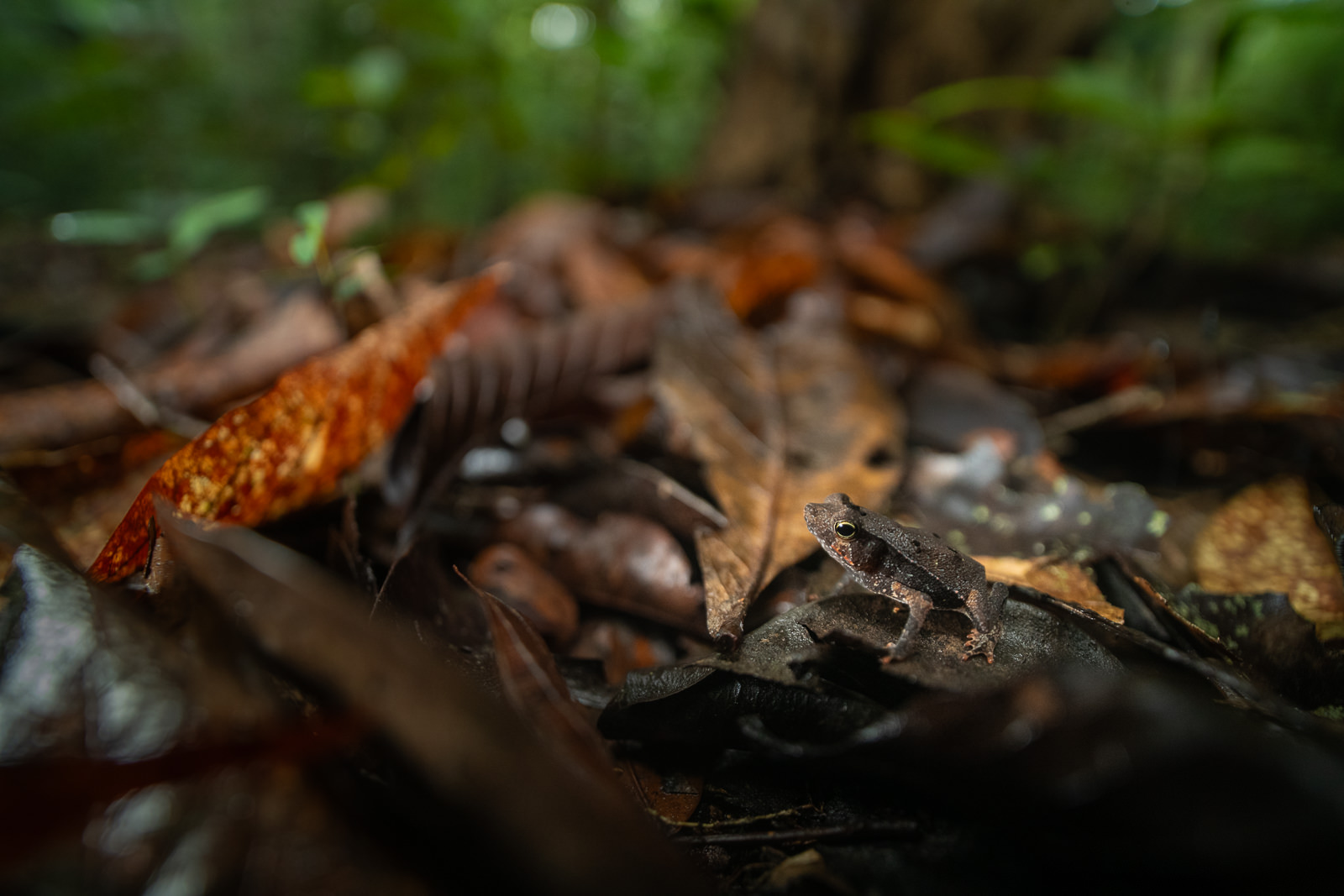 Sharp-nosed toads are masters of camouflage, relying on their leaf-like shape and coloration to disappear into the rainforest floor. Rather than fleeing from danger, they often remain perfectly still, blending so seamlessly with the leaf litter that they’re easy to overlook even from just a few feet away. For this image, I was inches away with my wide angle macro lens. Nikon D850 with Laowa 15mm wide angle macro lens, ISO 1600, unrecorded f/stop, 1/60th of a second, Godox 860iii flash with diffuser.