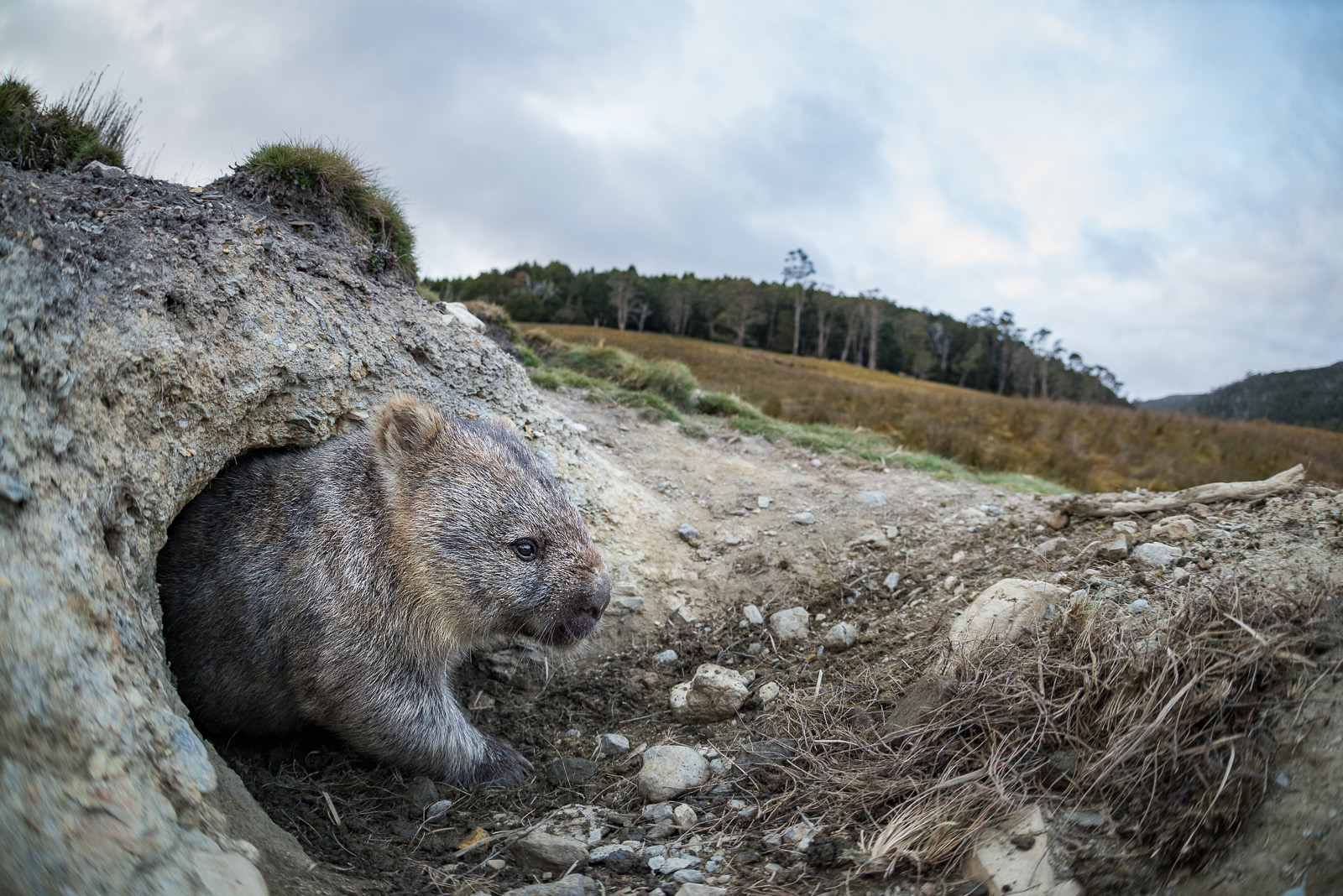
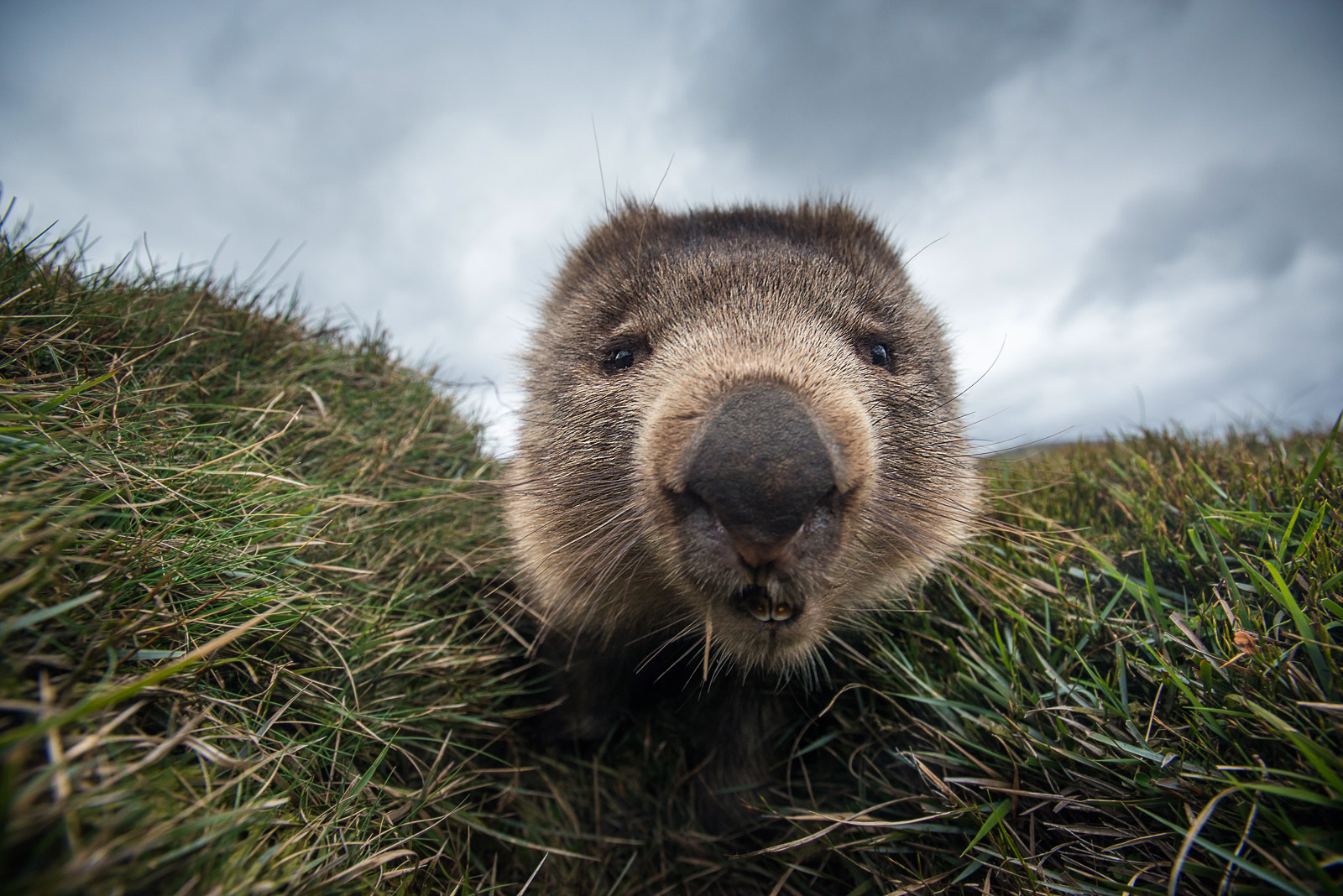
Wombats can often be photographed at very close range. Thus was obviously the case as this one emerged from its burrow in Cradle Mountain National Park in Tasmania. In fact, I had my fisheye lens mounted to my camera, allowing me to get very up close and personal but still show the environment. Nikon D810 with Sigma 15mm fisheye lens, ISO 800, f/4 at 1/125th of a second.
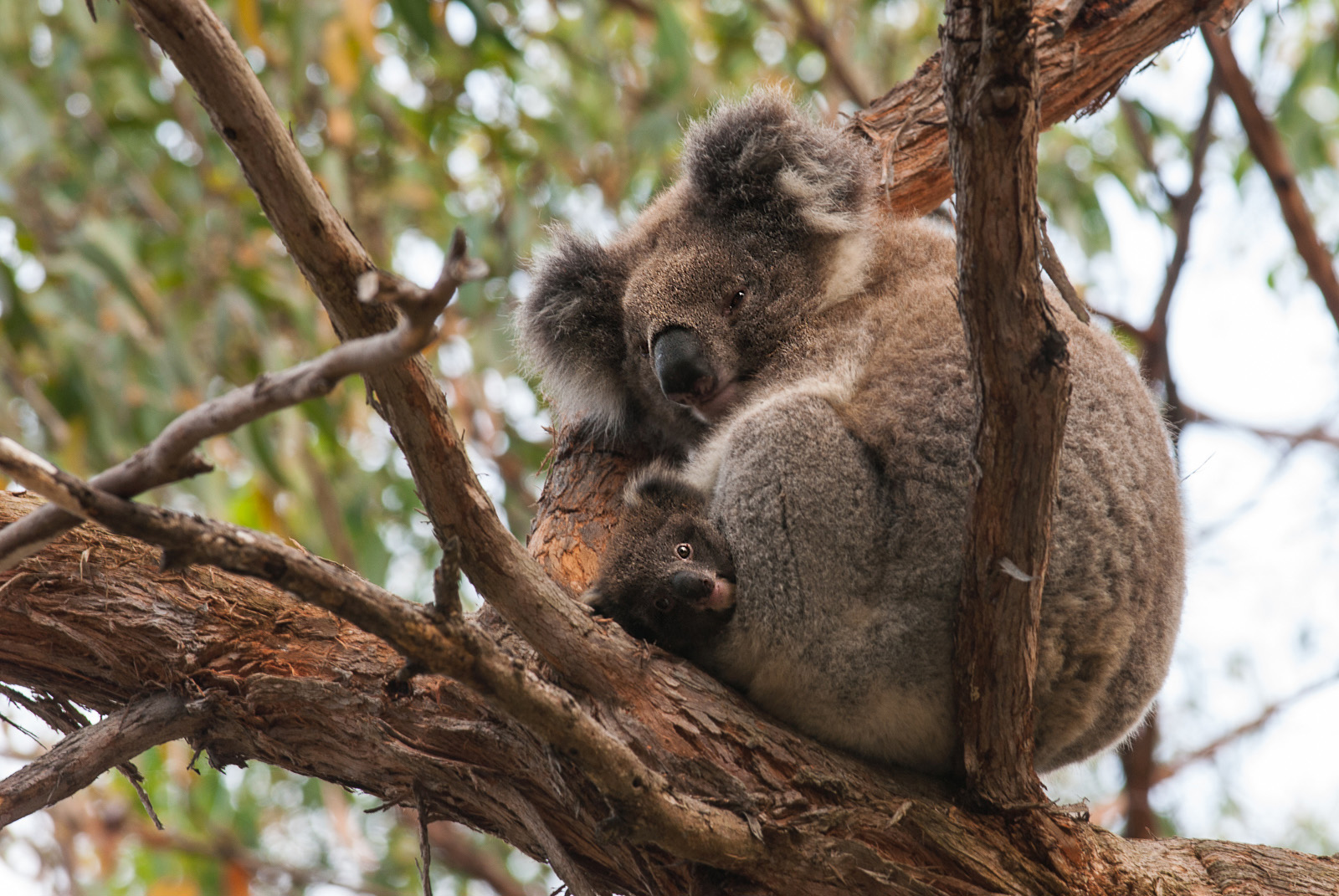
Sometimes I’m amazed at what I miss while out taking photos in the wild. This was one of those cases. I was so focused on capturing a sharp image of this koala in the dim light (1/10th of a second shutter) that I didn’t even notice that on the last few frames of the sequence, a baby popped its head out of the mother’s pouch to see what was going on. It wasn’t until I was reviewing the images later that I saw that little smiling face. Photographed along the Great Ocean Road in Lorne, Victoria, Australia. Nikon D200 with Nikkor 80-200mm lens (at 200mm) ISO 100, f/5.6 at 1/10th of a second.
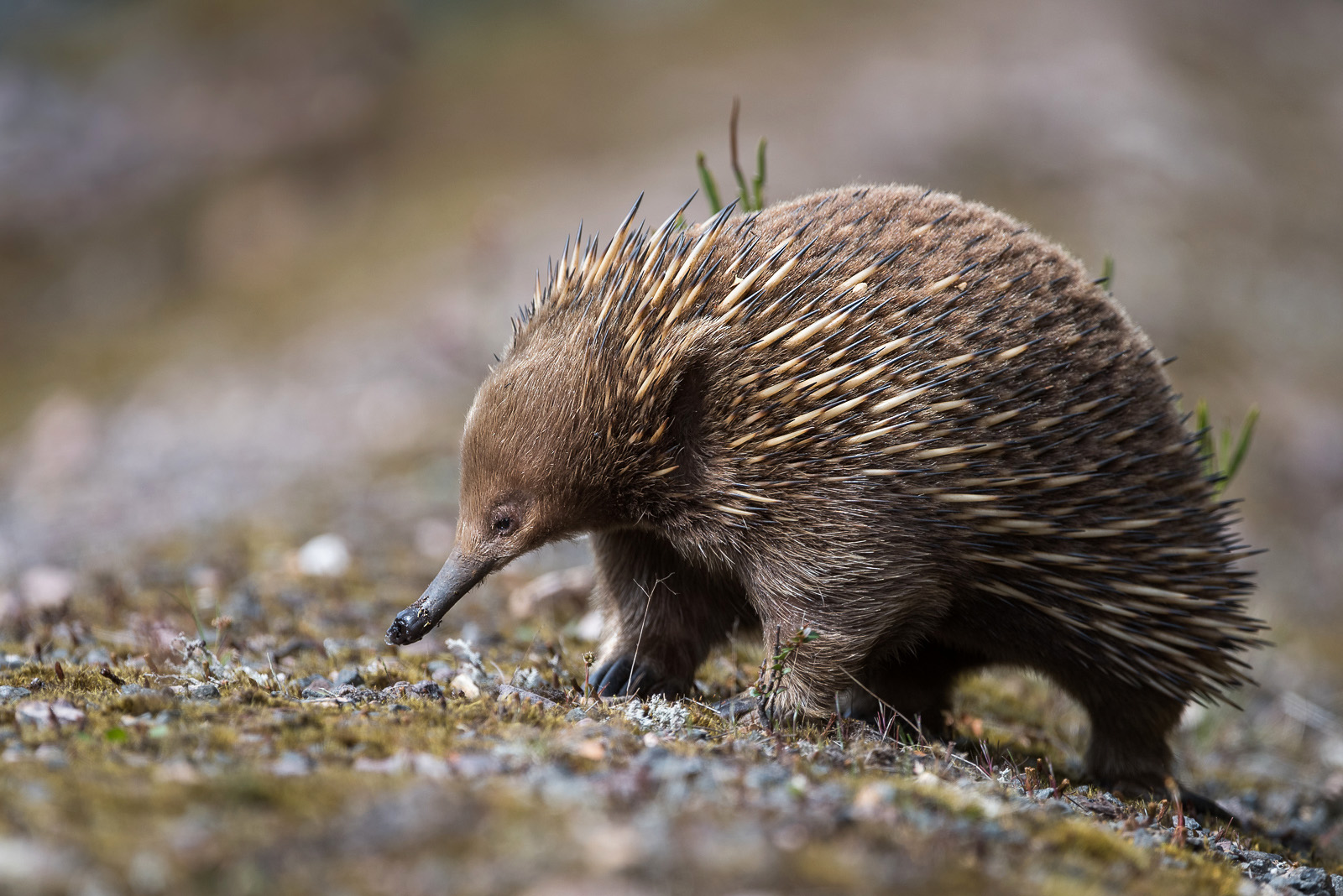
There are four different species of echidna in the world. This is the short-beaked echidna. They are interesting little mammals in the monotreme order. Monotremes are the only mammals that lay eggs. Their namesake “beak” allows short-beaked echidnas to suck up ants and other insects from the ground at an impressive speed. I spotted this one along the side of a road in Cradle Mountain National Park in Tasmania, Australia. Nikon D810 with Nikkor 200-400mm lens (at 400mm) ISO 400, f/5.6 at 1/1250th of a second.
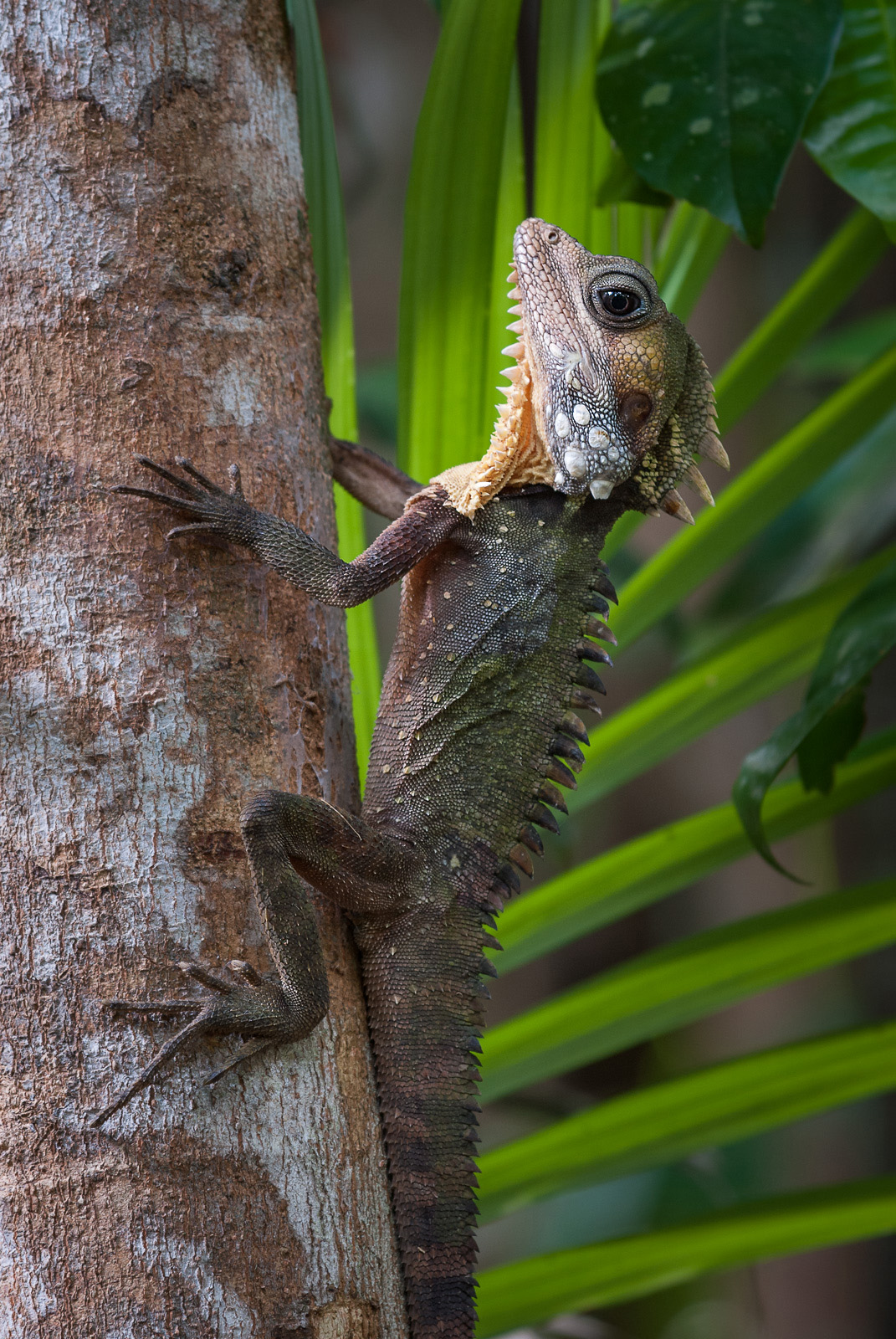
Now that Game of Thrones is back and in full swing, thought I’d post a dragon. Not exactly as fierce as the beasts flying above Westeros, but a rather impressive specimen nonetheless. Meet the Boyd’s water dragon. Also known as Boyd’s forest dragon. They grow to be about two feet in length. This one was spotted in Daintree National Park in Queensland, Australia. Nikon D200 with Nikkor 80-200mm lens (at 200mm) ISO 100, f/5 at .8 of a second.
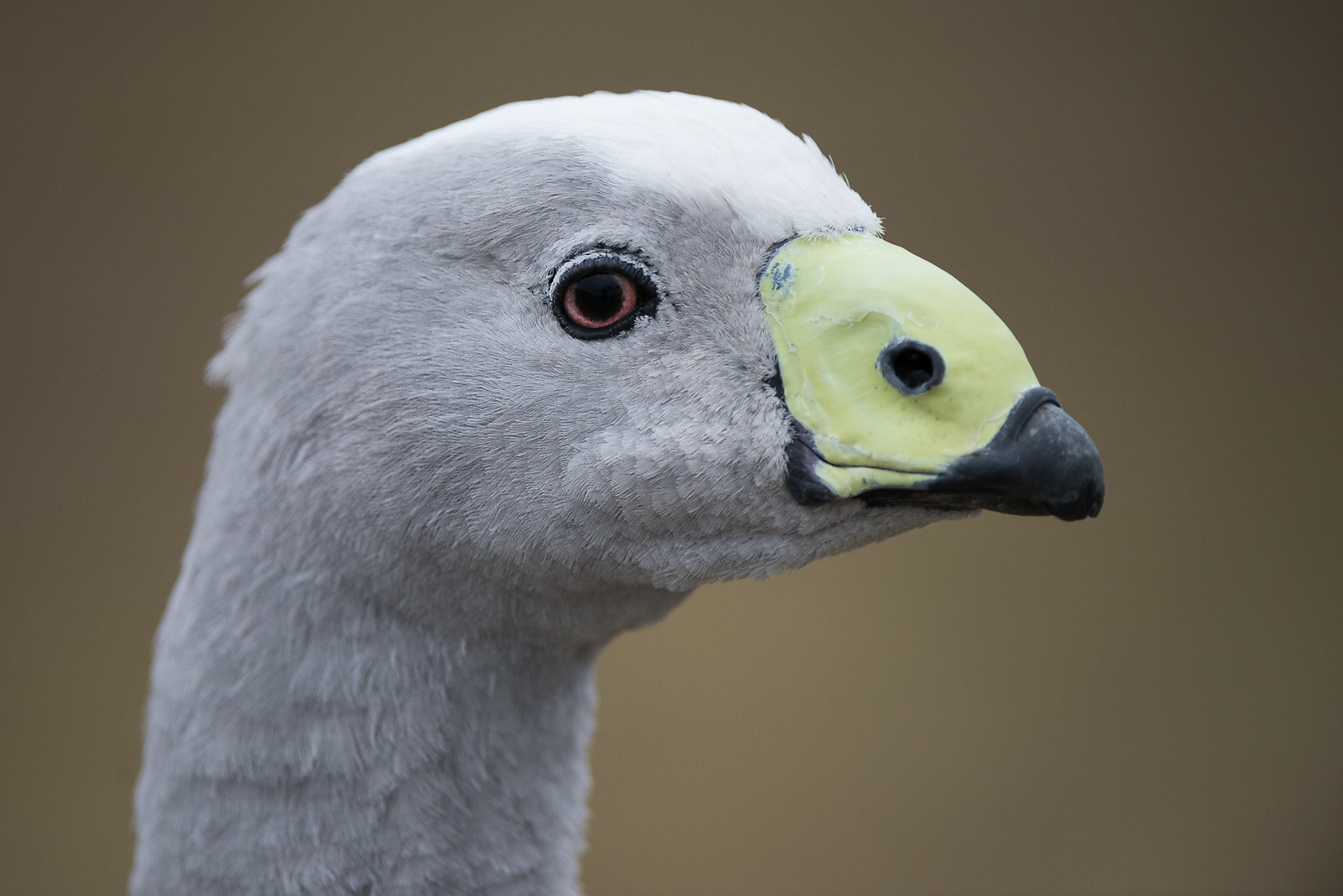
Cape barren geese only exist in the extreme south of Australia (with a small, introduced population also in New Zealand). I photographed this one on Maria Island in Tasmania. They were quite common on Maria Island and, as with most geese, allowed a close approach. Nikon D810 with Nikkor 200-400mm lens (at 400mm) ISO 800, f/4 at 1/1600th of a second.
Wombats eat grass. It’s what they do. This wombat was so focused on the task that he/she hardly noticed that I was there. Perfect situation for my wide angle zoom. Nikon D800 with Nikkor 17-35mm lens (at 17mm) ISO 800, f/5.6 at 1/320th of a second.
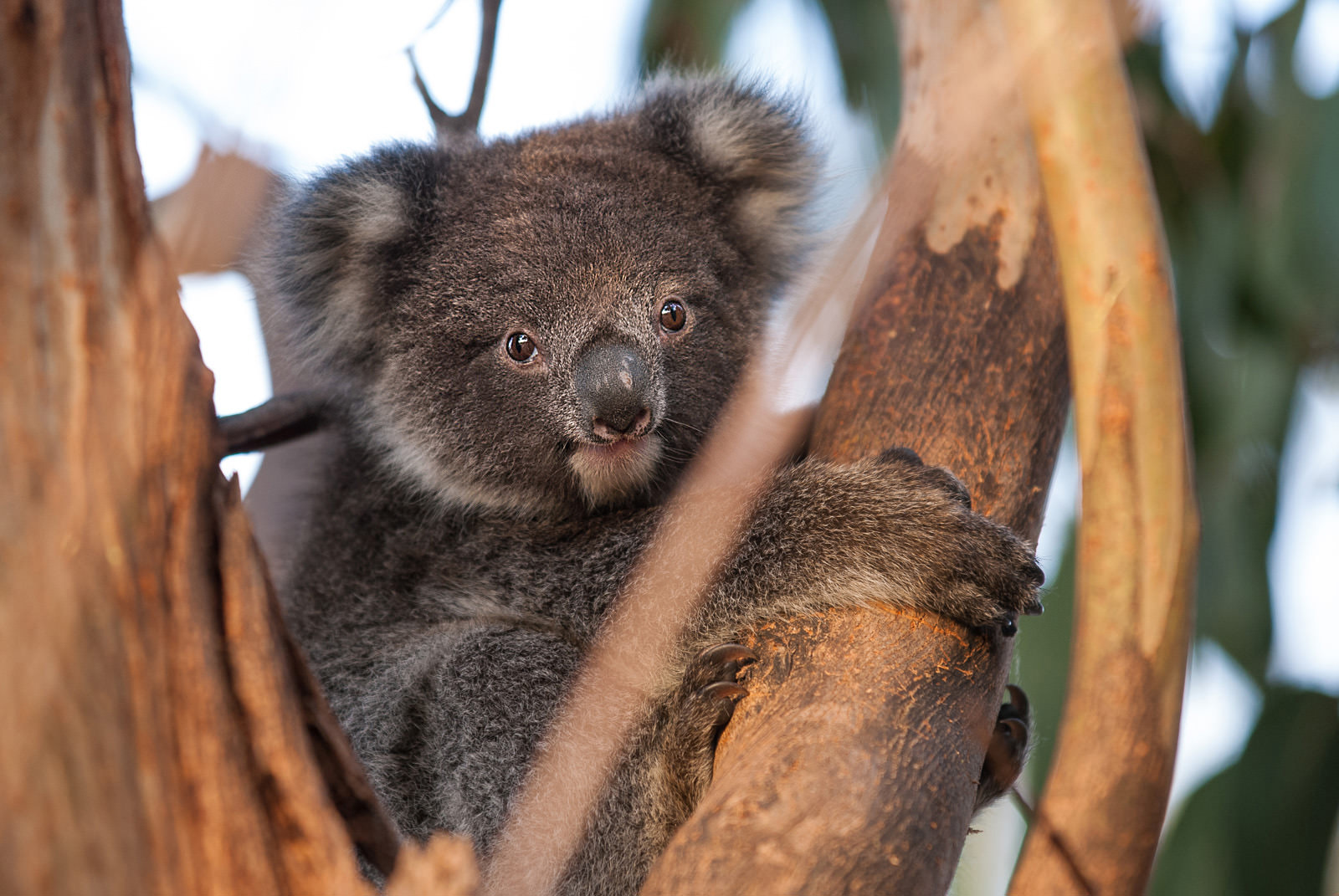
Just a juvenile koala to get the week going. Photographed at Hansen Bay on Kangaroo Island in South Australia. Nikon D200 with Nikkor 80-200mm lens (at 155mm) ISO 200, f/2.8 at 1/80th of a second.
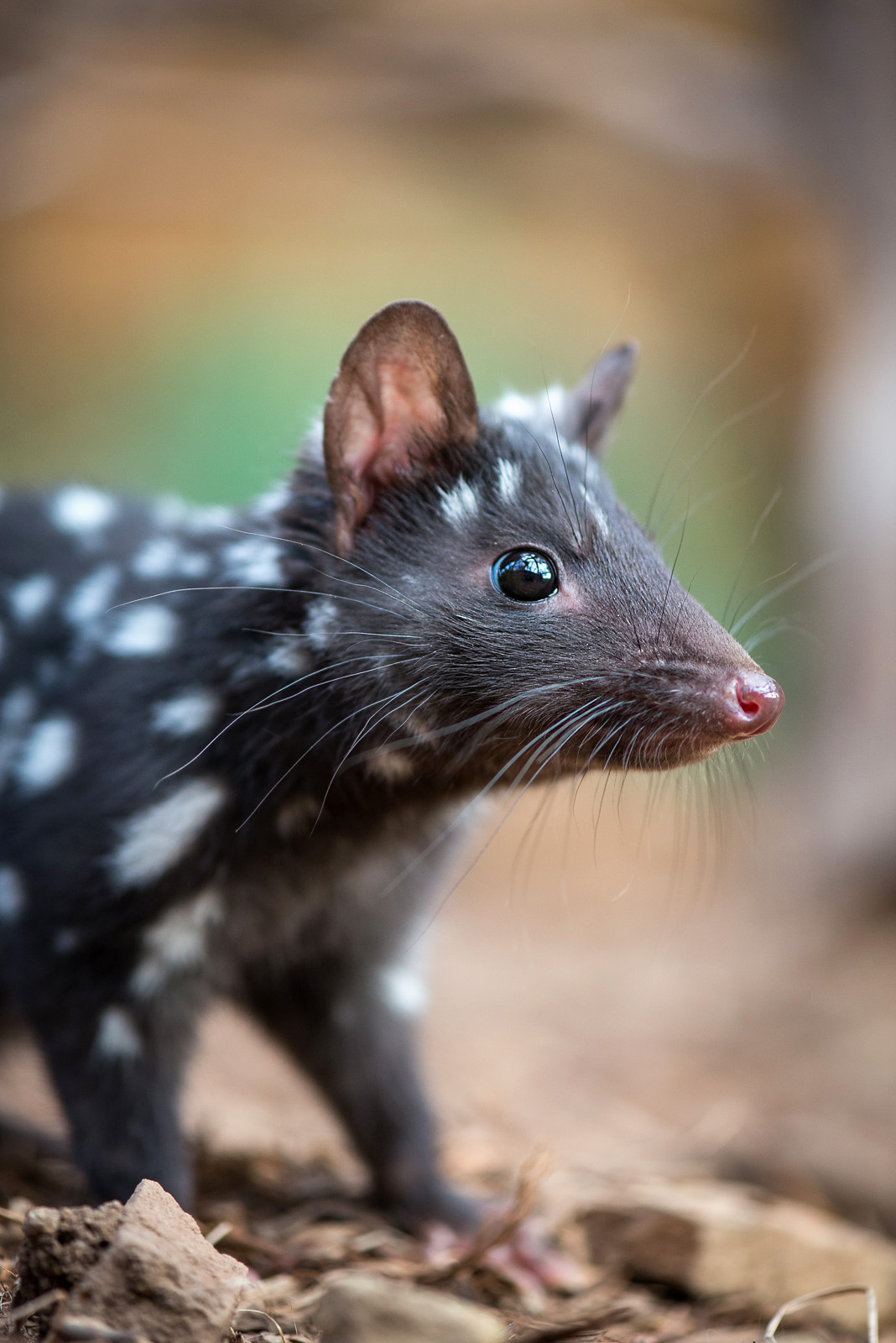
One of the eastern quolls that I had the pleasure of meeting at the Bonorong Wildlife Sanctuary in Tasmania. These little spotted carnivorous marsupials really do rate right up there in the cutest animal category. Nikon D800 with Nikkor 105mm macro lens, ISO 1600, f/3 at 1/320th of a second.
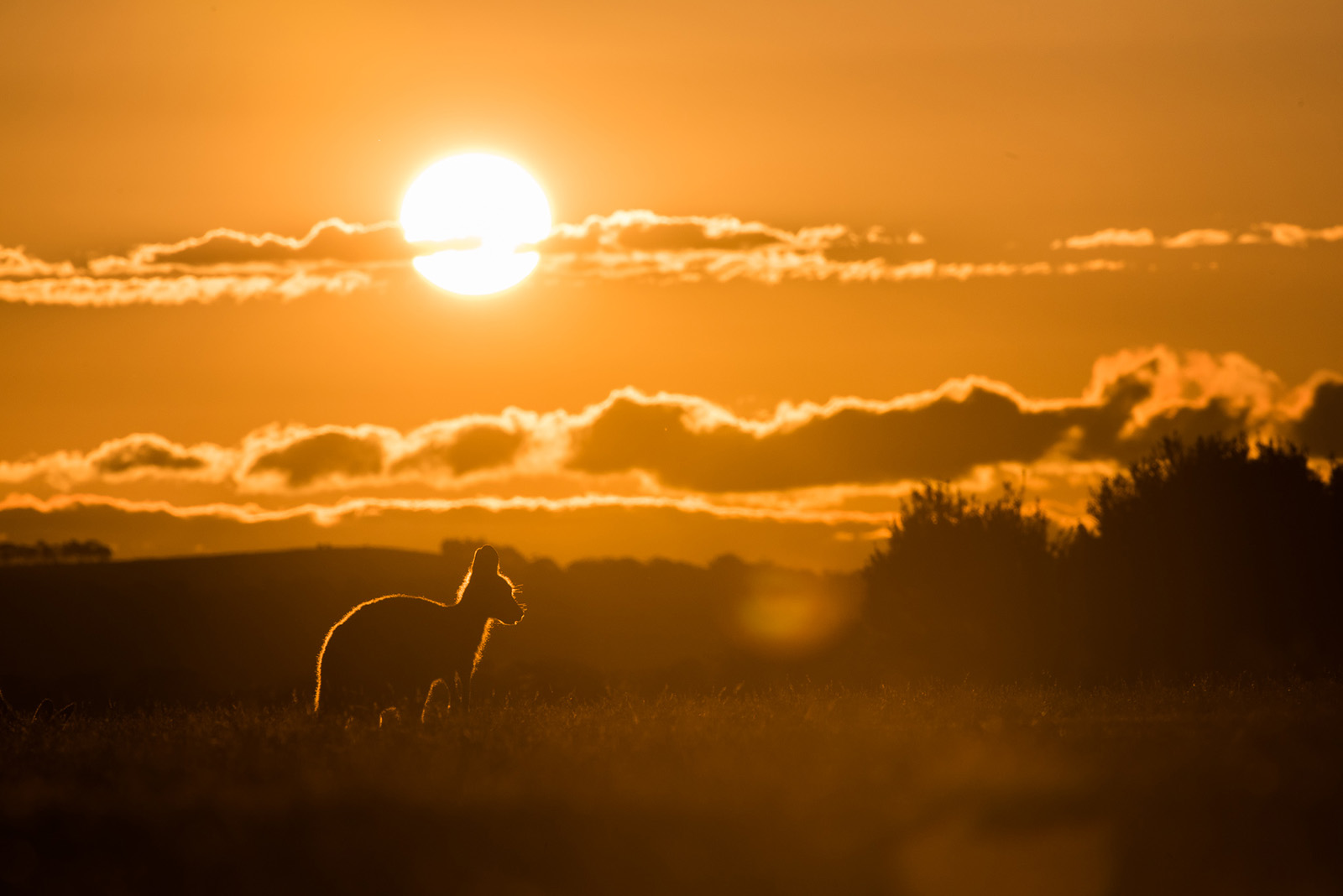
This photo was taken on perhaps my favorite day of a very enjoyable two week trip to Tasmania. I only had a few hours in Narawntapu National Park and thankfully the light cooperated. So did the eastern grey kangaroos, locally known as foresters. I had the place to myself as a large troop of them ate, played and boxed, giving me the opportunity to get a large variety of shots, including some nice rim lit silhouettes like this one. Nikon D810 with Nikkor 200-400mm lens (at 400mm) ISO 400, f/16 at 1/1600th of a second.
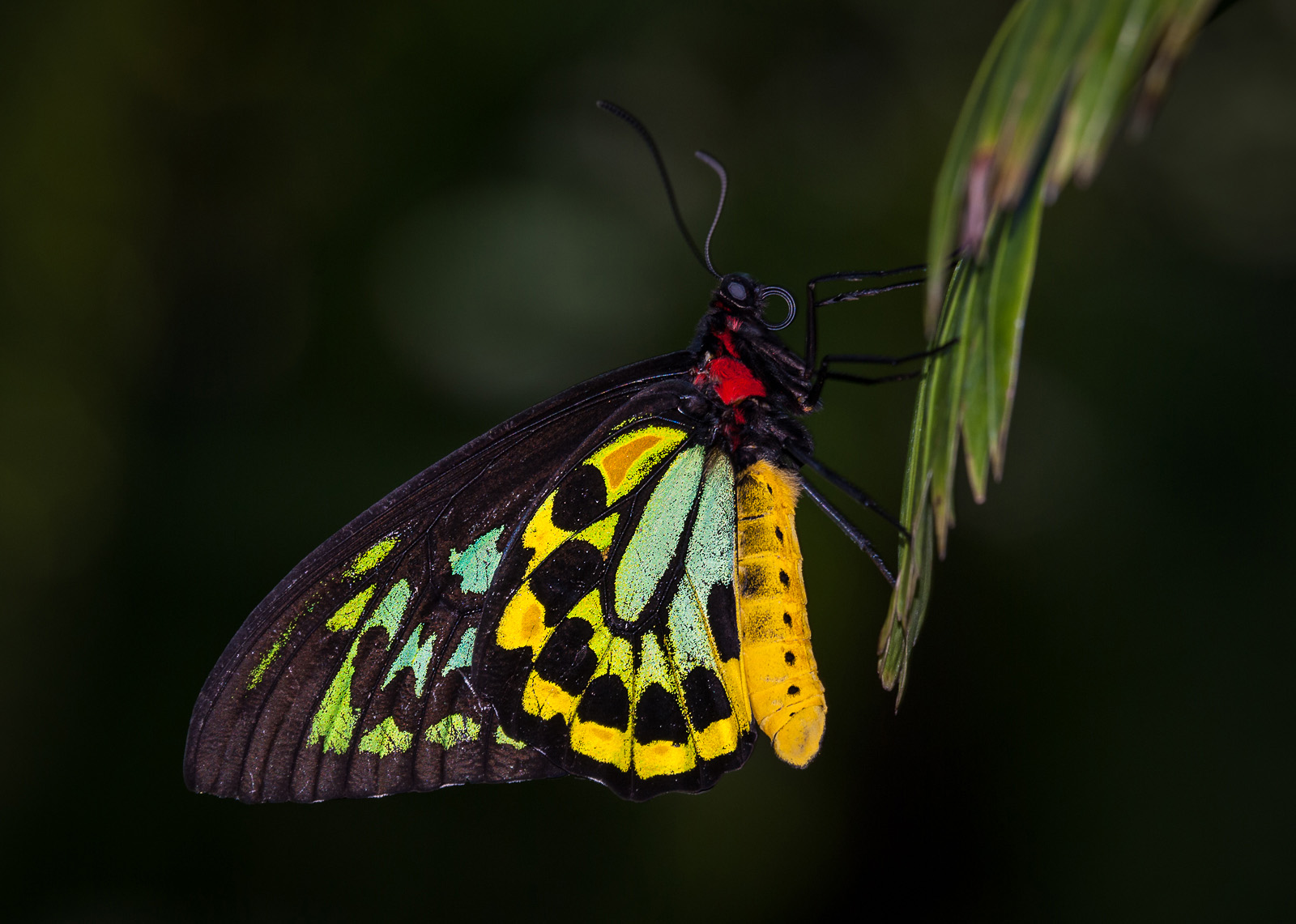
I took this photo in the early days of experimenting with macro when I still used a close up filter screwed to the front of my 80-200mm lens. Definitely a lightweight way to always have macro capability when in the field. The butterfly is a Cairns Birdwing and it was photographed at the Australian Butterfly Sanctuary in Kuranda, Queensland, Australia. Nikon D200 with Nikkor 80-200mm lens (at 155mm with Canon 500D close up filter) ISO 100, f/5.6 at 1/60th of a second, two Nikon SB-600 flash units.
We use cookies to enhance your experience while using our website. If you are using our Services via a browser you can restrict, block or remove cookies through your web browser settings. We also use content and scripts from third parties that may use tracking technologies. You can selectively provide your consent below to allow such third party embeds. For complete information about the cookies we use, data we collect and how we process them, please check our Privacy Policy