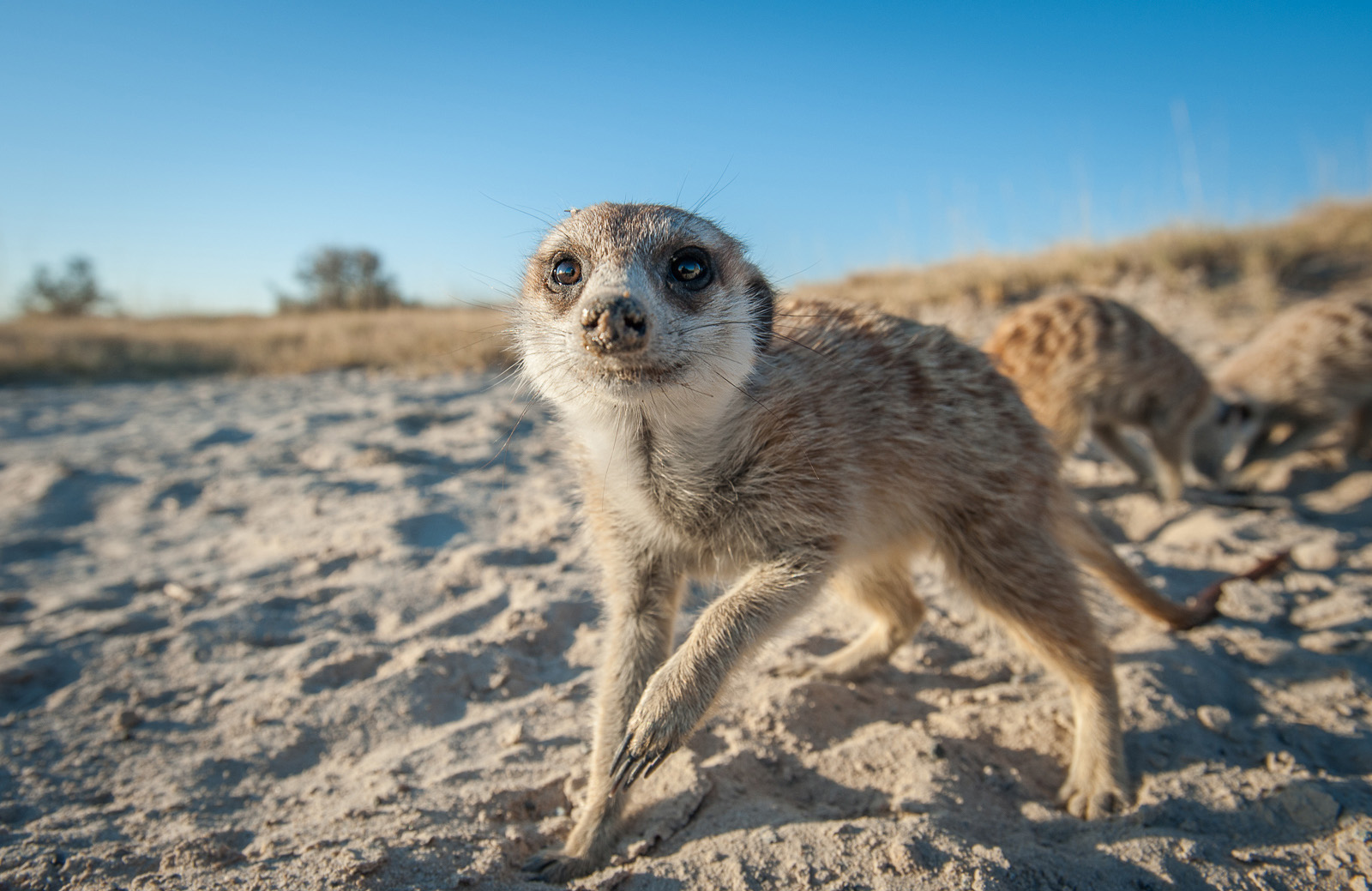
As the sun starts to rise on the Makgadikgadi Pan in Botswana, the meerkats start to wake up and begin playing just outside their burrows. Soon thereafter, they head out into the desert for a day of foraging for insects. This little guy was taking a quick break to check out his reflection in my wide angle zoom lens. Nikon D700 with Nikkor 17-35mm lens (at 22mm) ISO 400, f/8 at 1/640th of a second
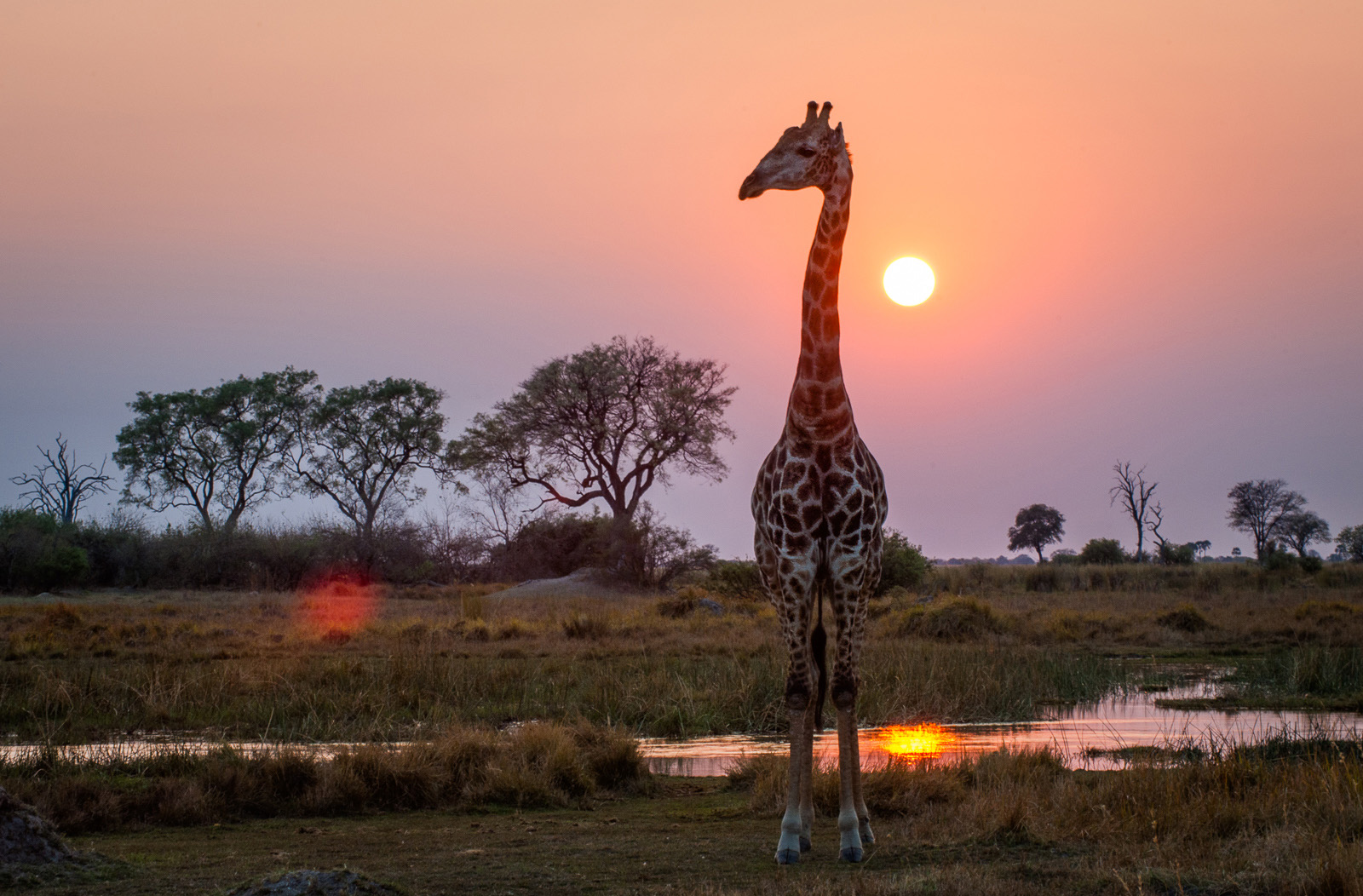
On the final morning of my second trip to Botswana, I met this solo giraffe surveying the landscape as the sun was quickly rising in the background. Nikon D700 with Nikkor 70-200mm lens (at 130mm) ISO 560, f/18 at 1/60th of a second
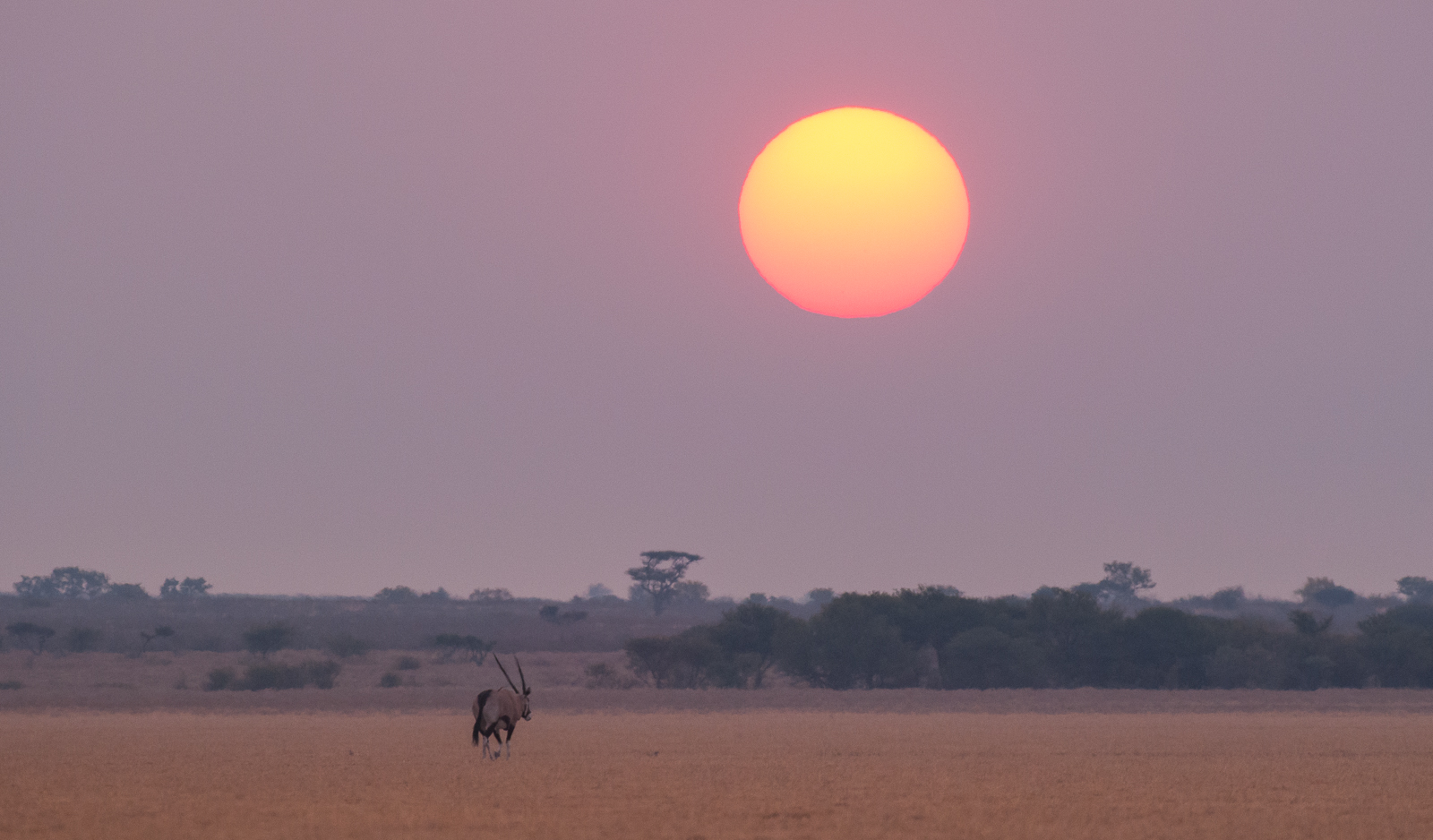
The late day sun can be huge as it sets in the Kalahari Desert of Botswana. Add to that the compression effect of using a long focal length lens and this is what you get. Each afternoon in the Kalahari, I was scrambling around in search of an animal or two to position in front of the sun and the pastel colors that it created. In this case, an oryx appeared to heading home after a long day of grazing. Nikon D300 with Nikkor 200-400mm lens (at 400mm) ISO 800, f/5.6 at 1/160th of a second
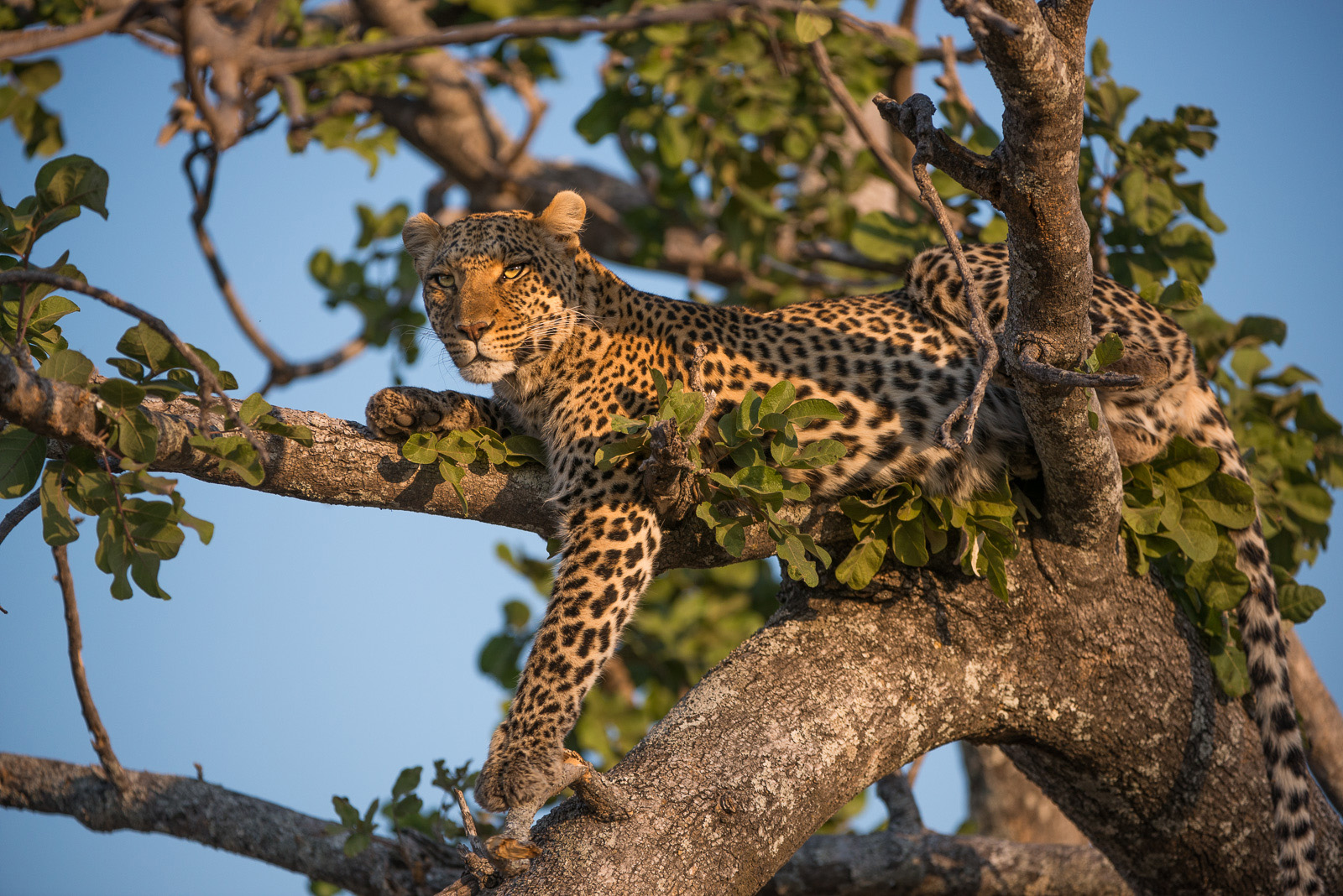
Here’s another one from Botswana. This time a leopard, just hanging out watching the sun go down over the Linyanti plains along the northern border with Namibia, Zimbabwe and Zambia. Shortly after I took this shot and the sun set, the leopard climbed down from the tree and headed out on a hunt. Nikon D800 with Nikkor 200-400mm lens (at 280mm) ISO 400, f/4 at 1/1250th of a second
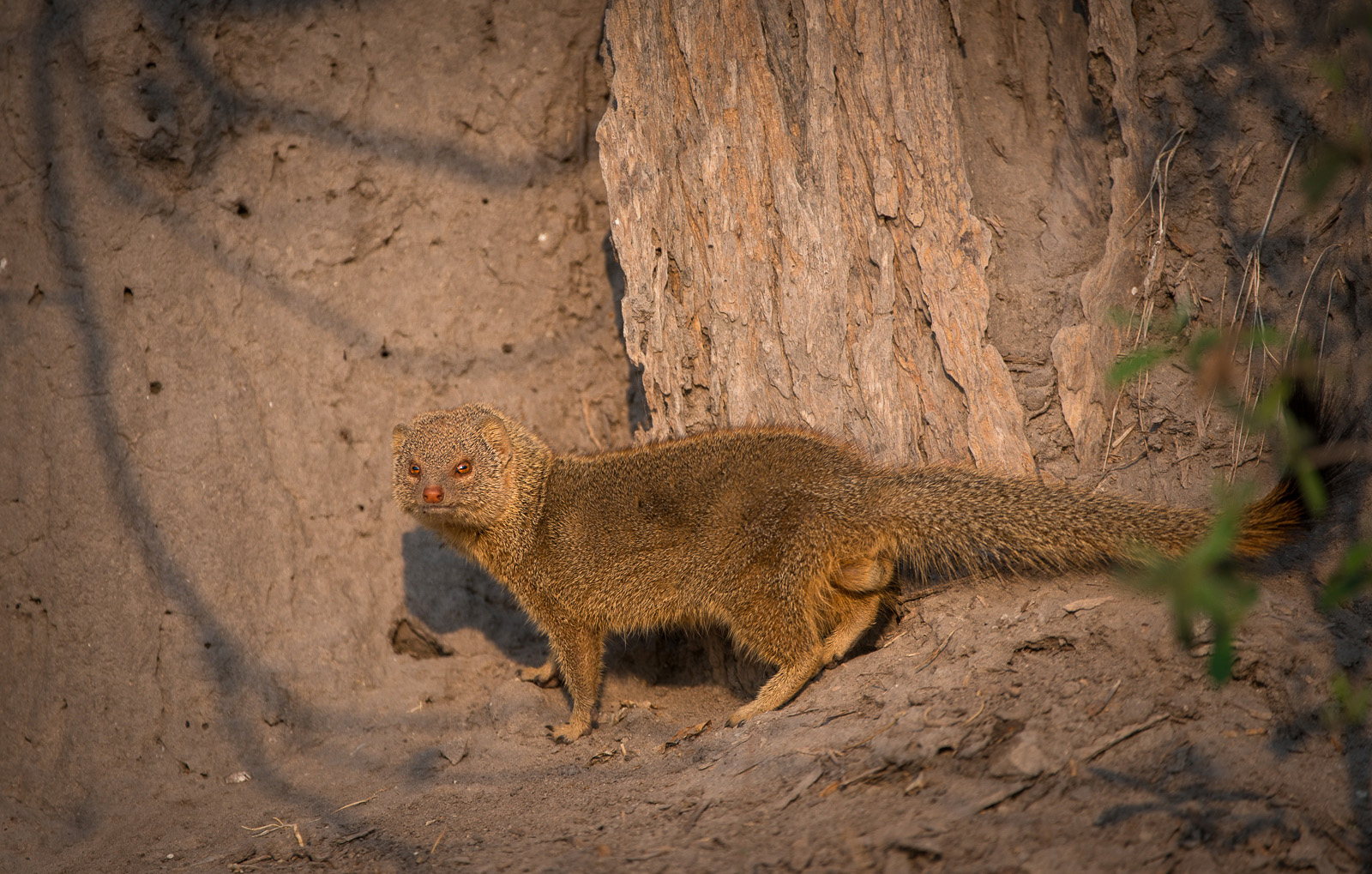
This mischievous looking little guy is a slender mongoose, photographed in Botswana. They are described as opportunistic carnivores. Meaning, they’ll take what they can get. Most of their diet is made up of insects, but they’ll also eat lizards, rodents, snakes, birds, amphibians, and fruit when available. They have a well earned reputation for taking down venomous snakes, although, this doesn’t account for a significant portion of their diet. Nikon D800 with Nikkor 200-400mm lens (at 400mm) ISO 400, f/4 at 1/1250th of a second
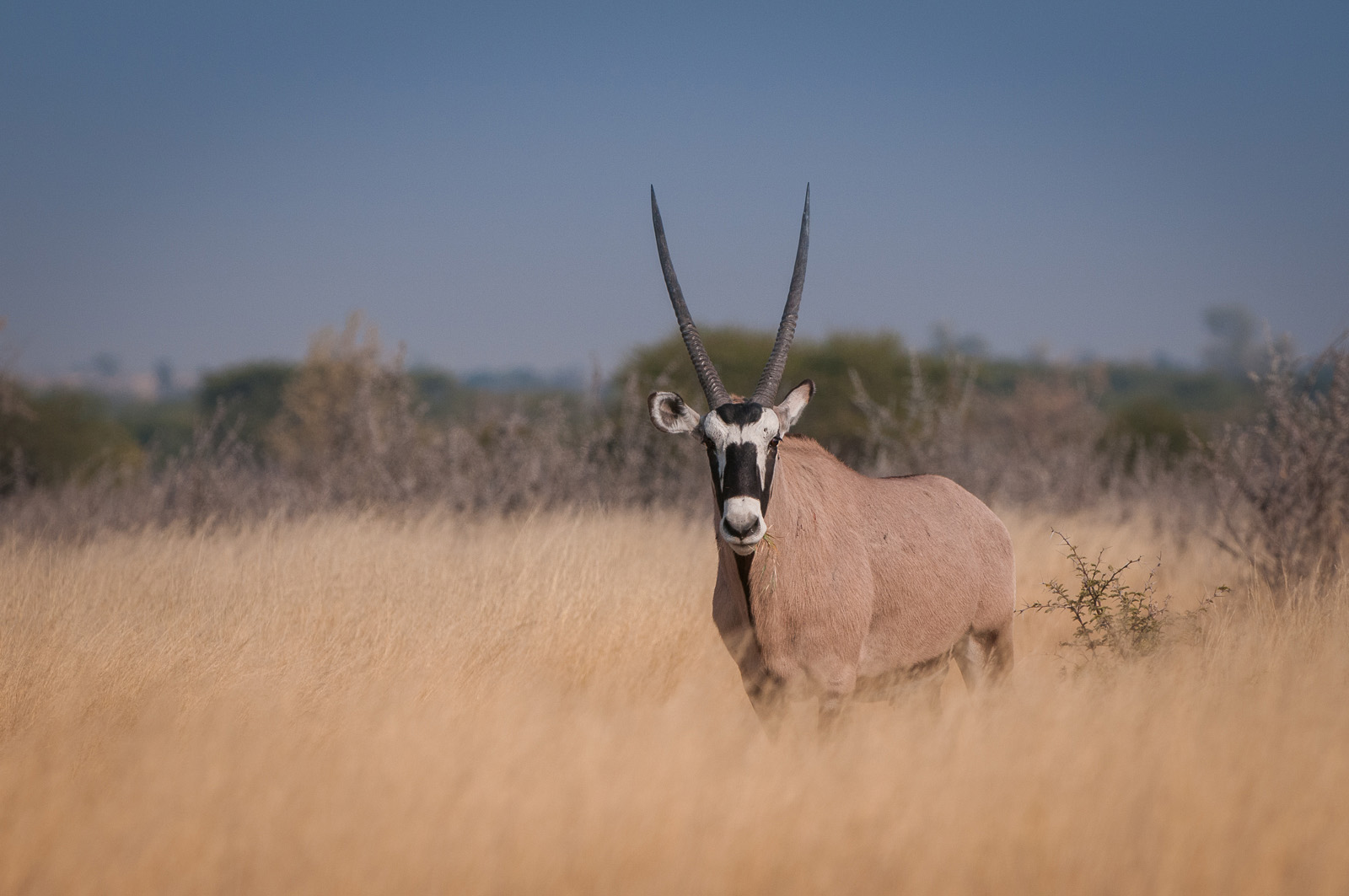
I’ve mentioned before that the oryx is believed to be the antelope that the unicorn is based on. The unicorn creator apparently thought that one horn would be cooler than two. There are four different species of oryx, all large antelopes that range throughout dryer parts of Africa. This one, the gemsbok, was photographed in the Central Kalahari Game Reserve of Botswana. Nikon D300 with Nikkor 200-400mm lens (at 330mm) ISO 400, f/5.6 at 1/1600th of a second
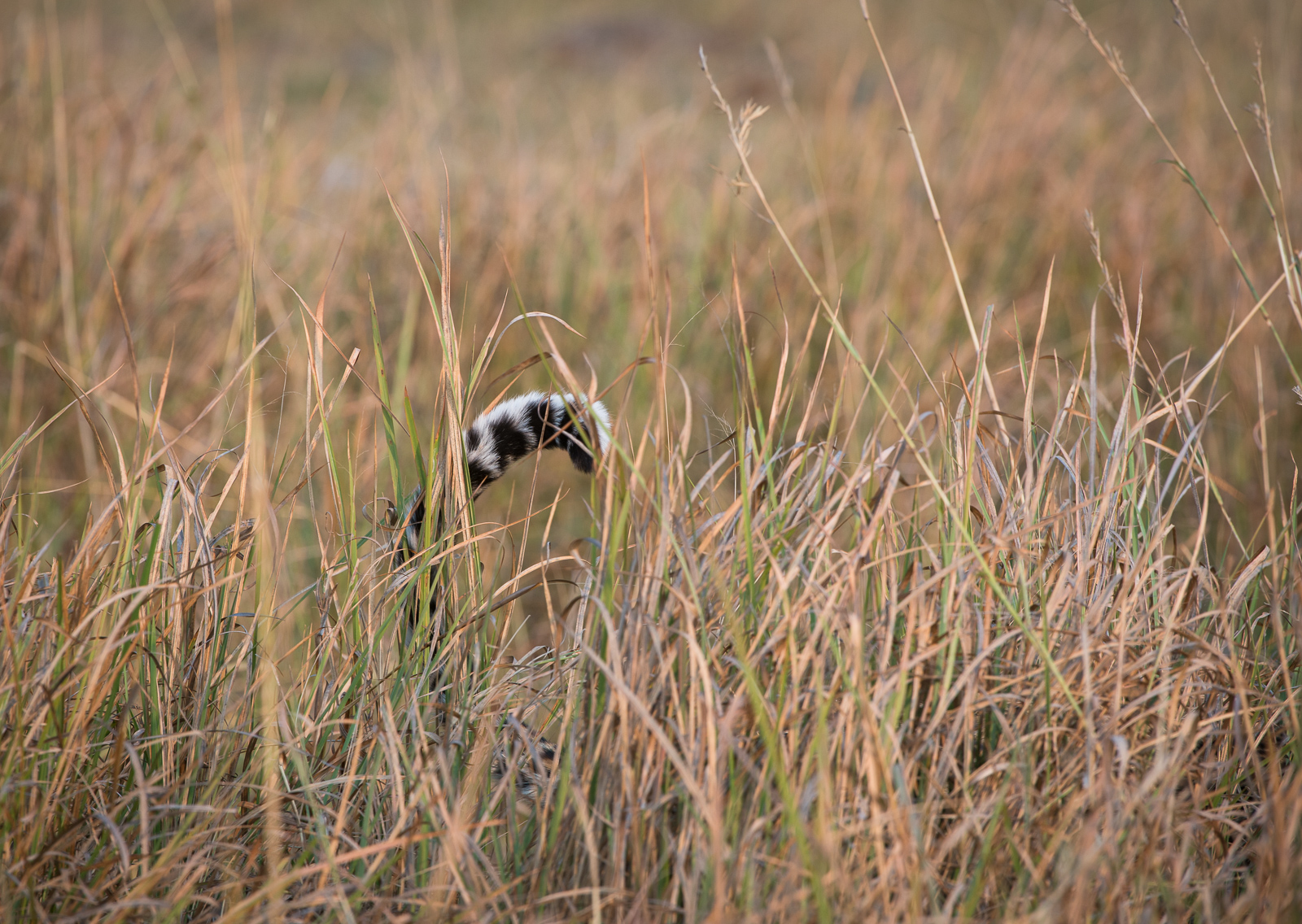
When our guide in Botswana spotted an extremely rare pangolin, I quickly jumped at the opportunity to get out of the vehicle and onto the ground for some eye level shots. Before I could, however, he pulled me back and pointed in the direction of an empty field. What I didn’t see at first was the leopard hiding in the grass and stalking the pangolin. Eventually I saw the tip of the leopard’s tail rising above the grass. I never got my eye level shots of the pangolin but I did get plenty of photos of the Leopard stalking it. Nikon D800 with Nikkor 200-400mm lens (at 400mm) ISO 400, f/7.1 at 1/400th of a second
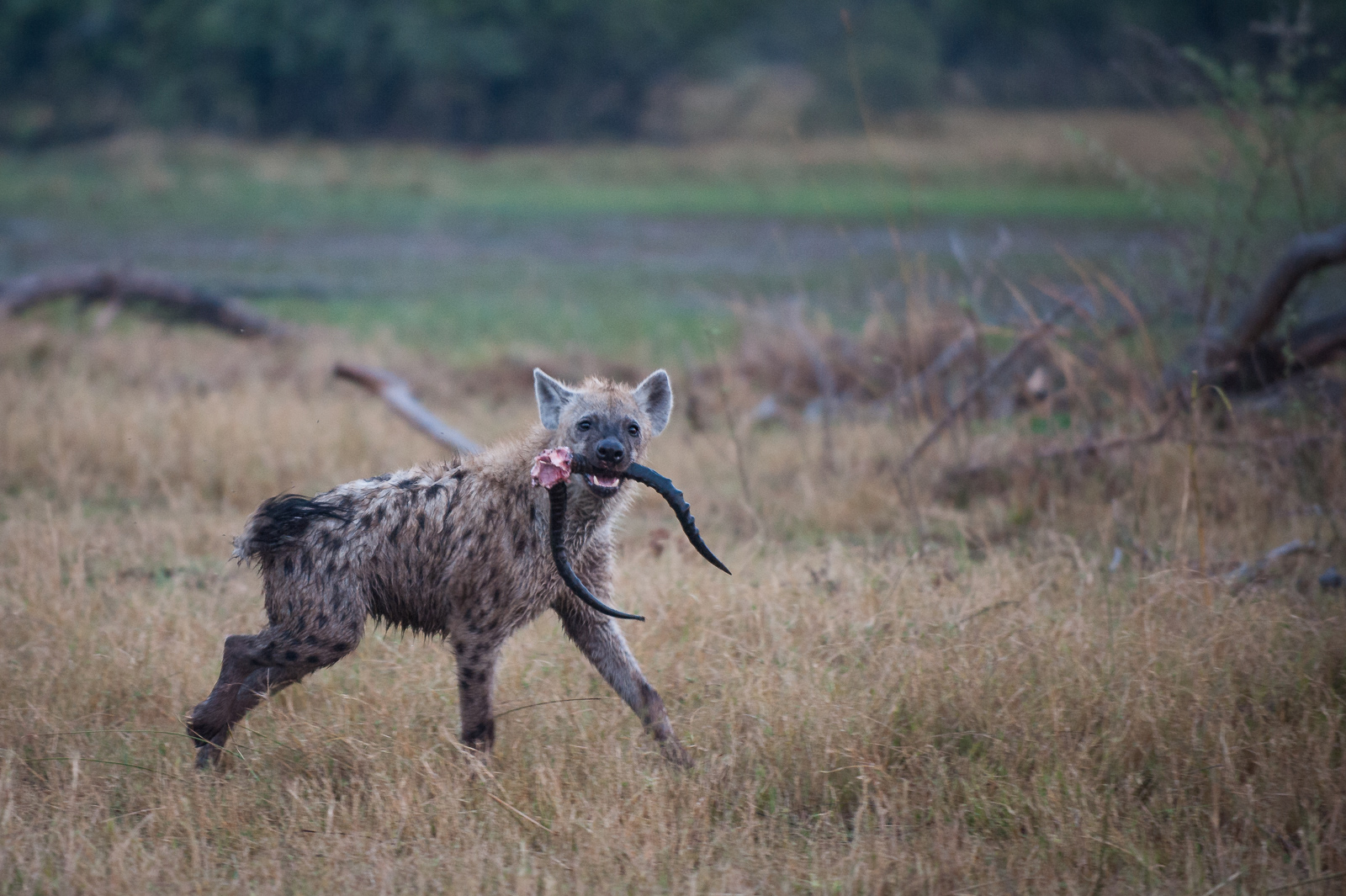
It was very early morning in Botswana, pre-sunrise, when we came upon a small pack, or as they are more commonly called, clan of spotted hyenas. They seemed more playful than usual and were chasing each other around playing keep away with what was left of an impala. Nikon D700 with Nikkor 70-200mm lens (at 200mm) ISO 1600, f/2.8 at 1/200th of a second
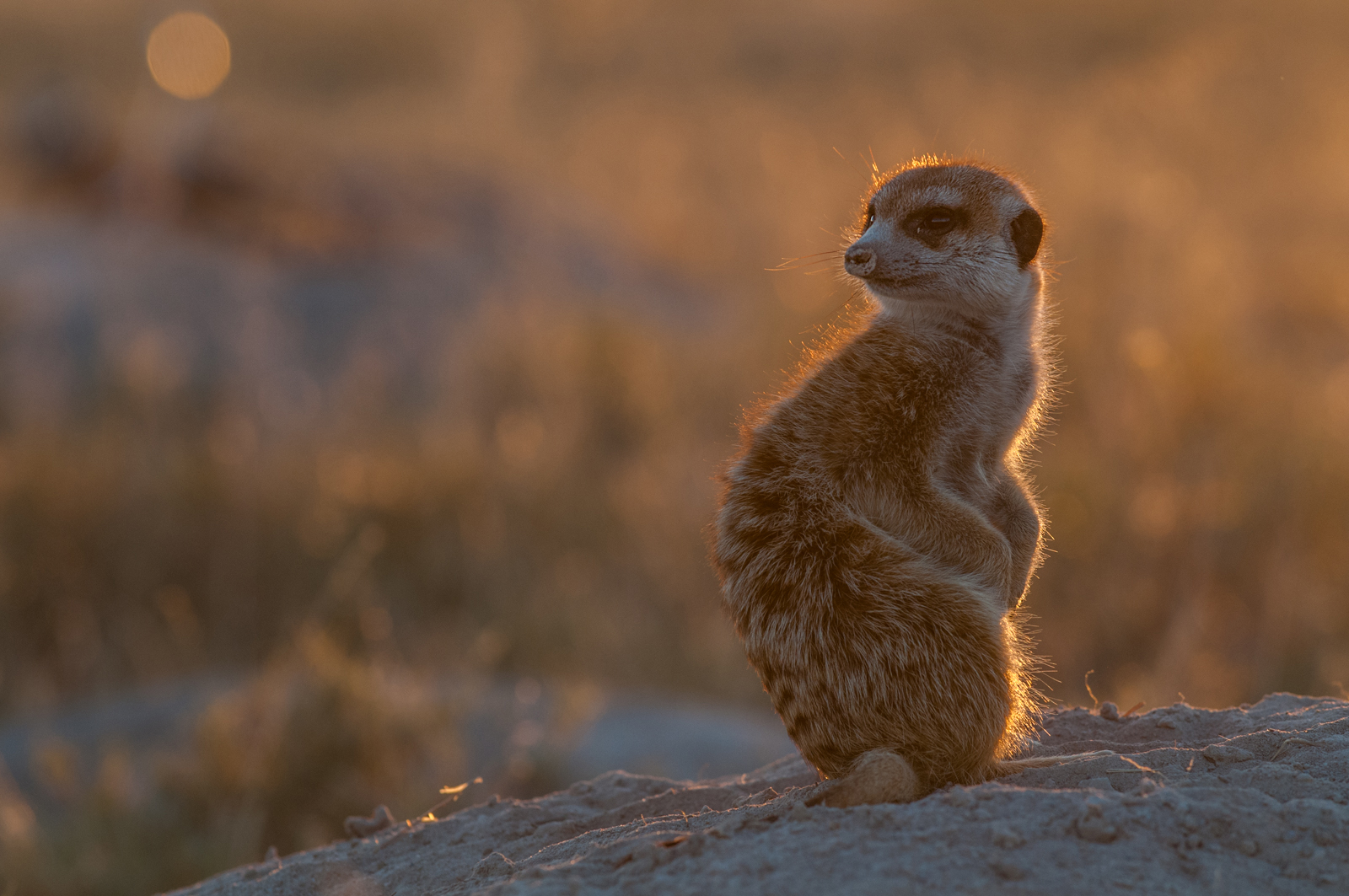
Here’s another one from Botswana. This time from the dry savanna of the northeast at a place called Makgadikgadi Pan, one of the largest salt flats in the world. Among the zebras, and other typical African desert plains wildlife, lives quite a few meerkats. This youngster was waiting for the rest of the clan to get back home after a day of foraging. Nikon D300 with Nikkor 70-200mm lens (at 200mm) ISO 400, f/5.6 at 1/250th of a second
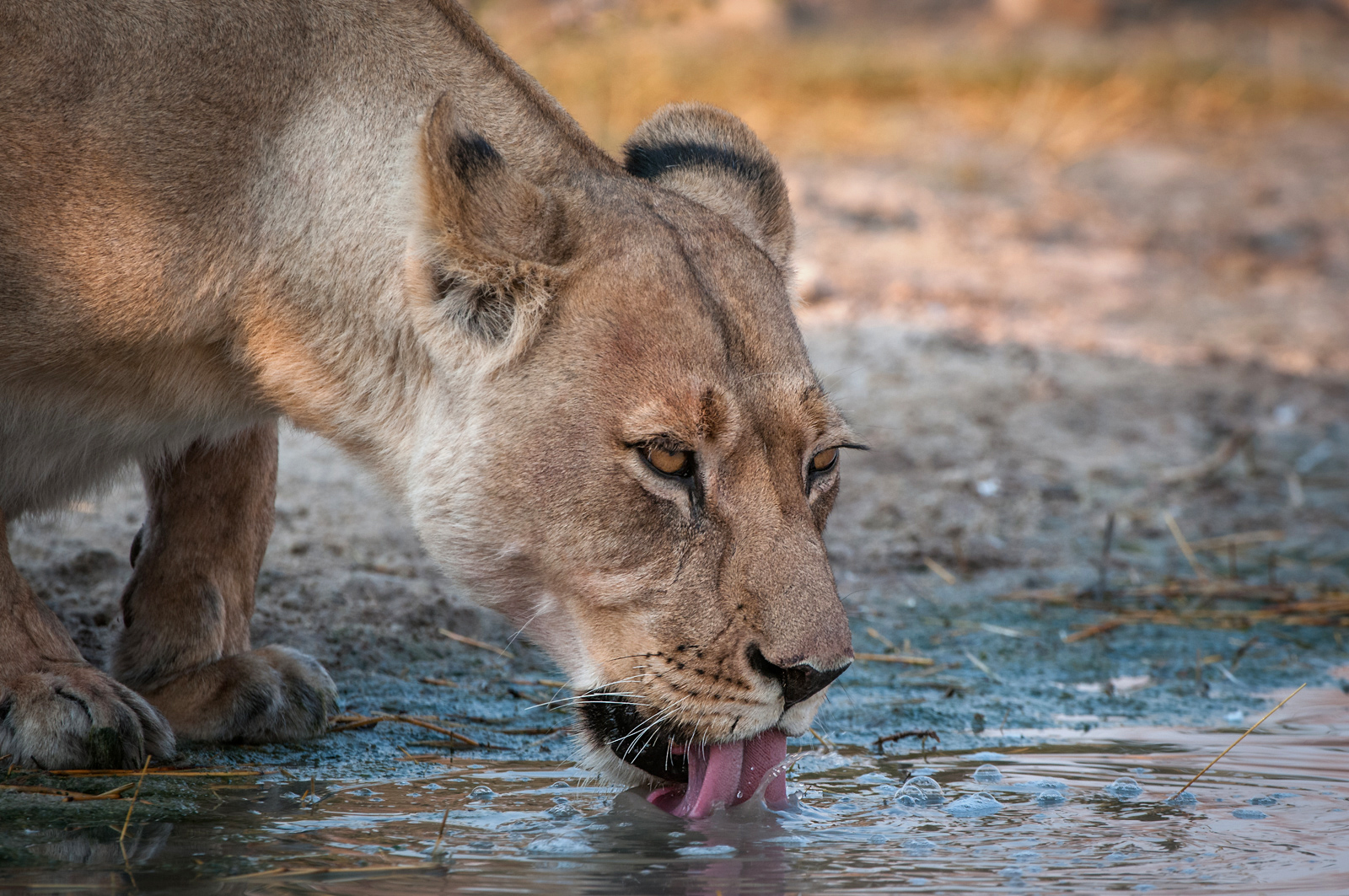
After feasting on an oryx kill with the rest of her pride — including six cubs — this lioness was enjoying a much needed stop at the water hole. Like the ostrich I posted last week, this one was from the Central Kalahari Game Reserve in Botswana. Nikon D300 with Nikkor 200-400mm lens (at 400) ISO 400, f/5.6 at 1/320th of a second
We use cookies to enhance your experience while using our website. If you are using our Services via a browser you can restrict, block or remove cookies through your web browser settings. We also use content and scripts from third parties that may use tracking technologies. You can selectively provide your consent below to allow such third party embeds. For complete information about the cookies we use, data we collect and how we process them, please check our Privacy Policy