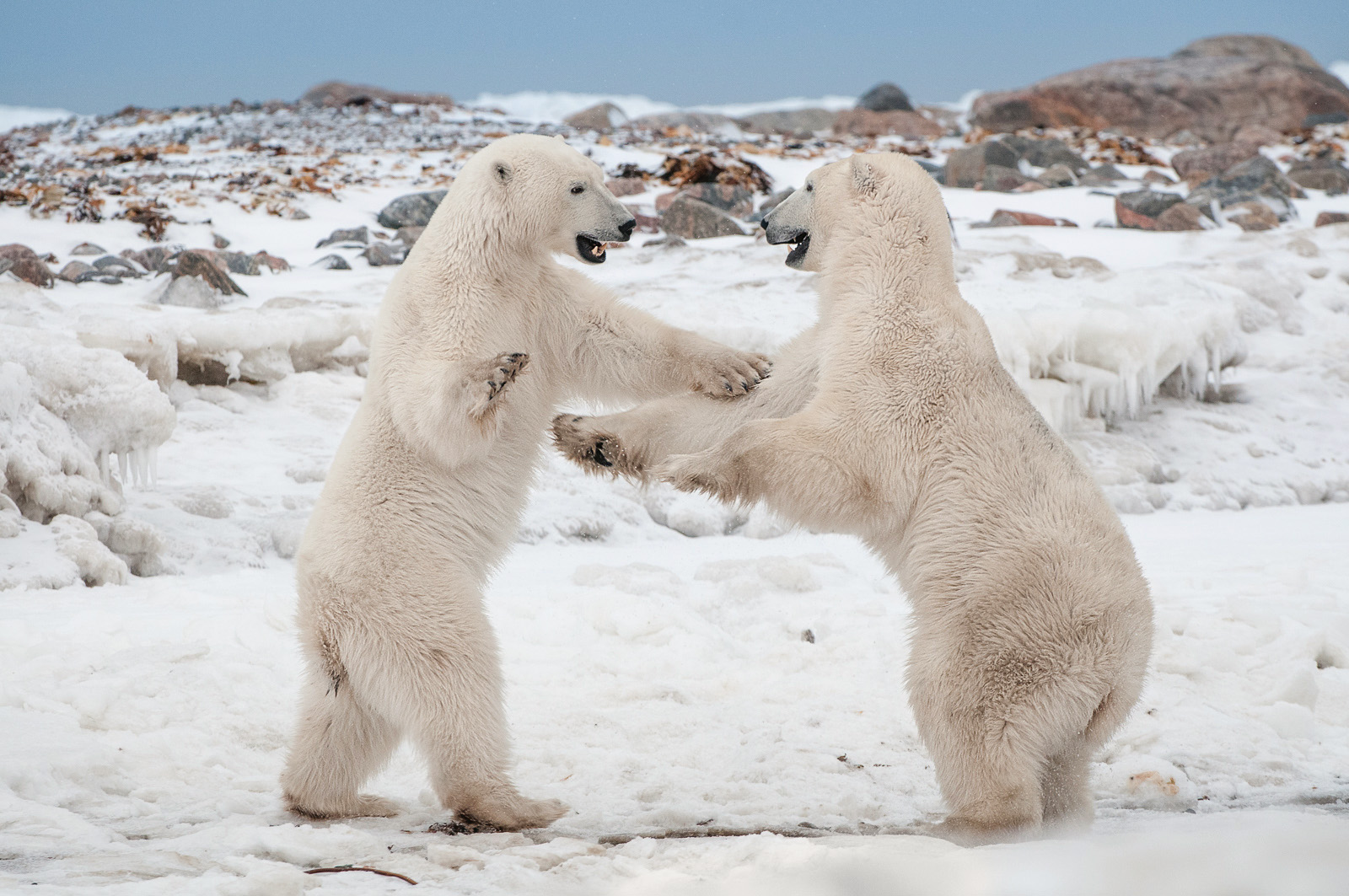
As the weather gets colder, it seemed appropriate to pull an image from my polar bear folder. I saw lots of activity like this while in northern Manitoba, Canada — the bears play fighting while waiting for the Hudson Bay to freeze over so that they could get out there and hunt for seals. Nikon D300 with Nikkor 200-400mm lens (at 340mm) ISO 800, f/5.6 at 1/500th of a second
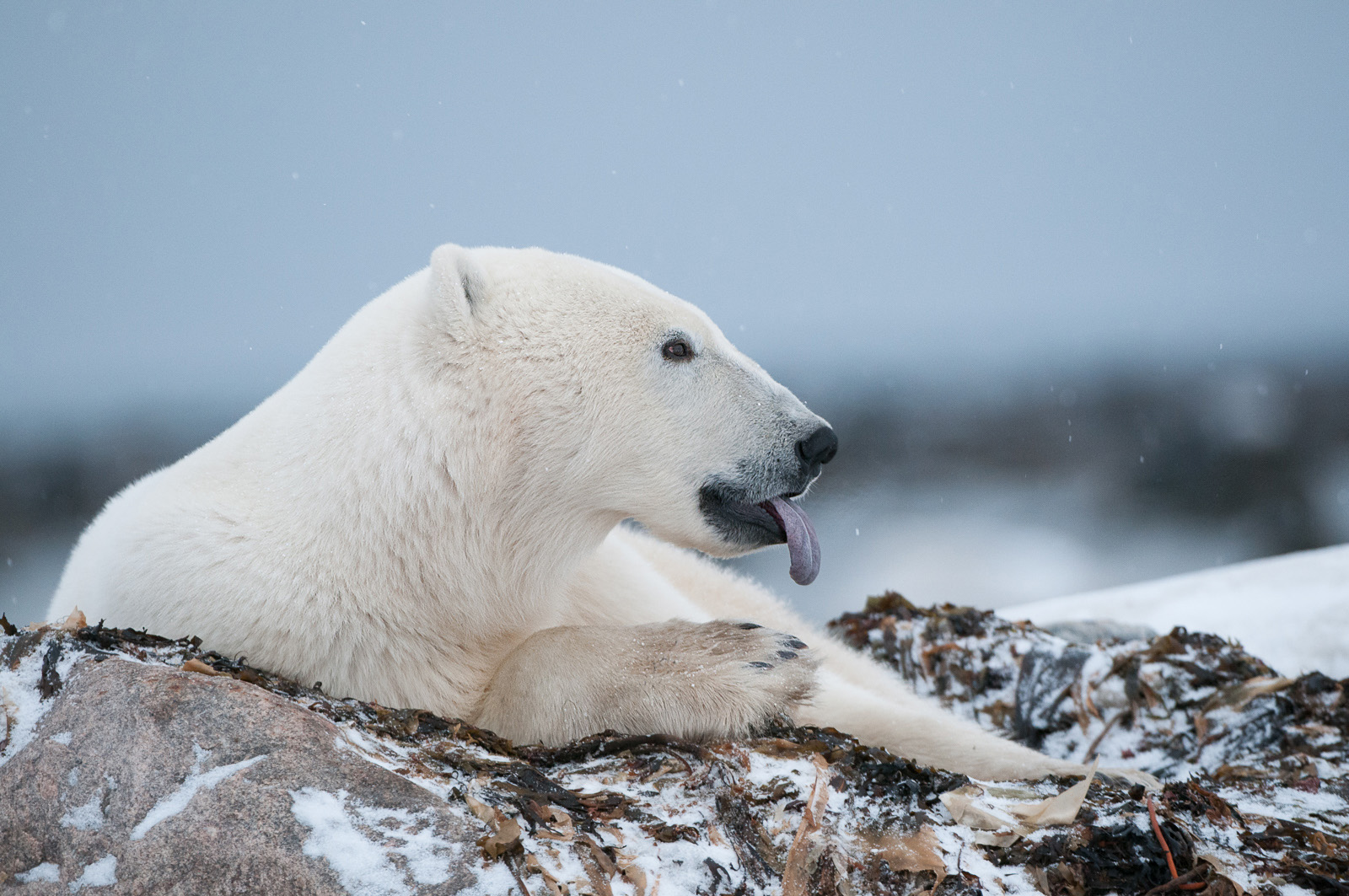
As the weather heats up, thought it would be a good time to post another polar bear. This guy appeared to be catching snowflakes on his tongue, although he was really just giving his paws a good lick. Nikon D300 with Nikkor 200-400mm lens (at 340mm) ISO 800, f/4 at 1/320th of a second
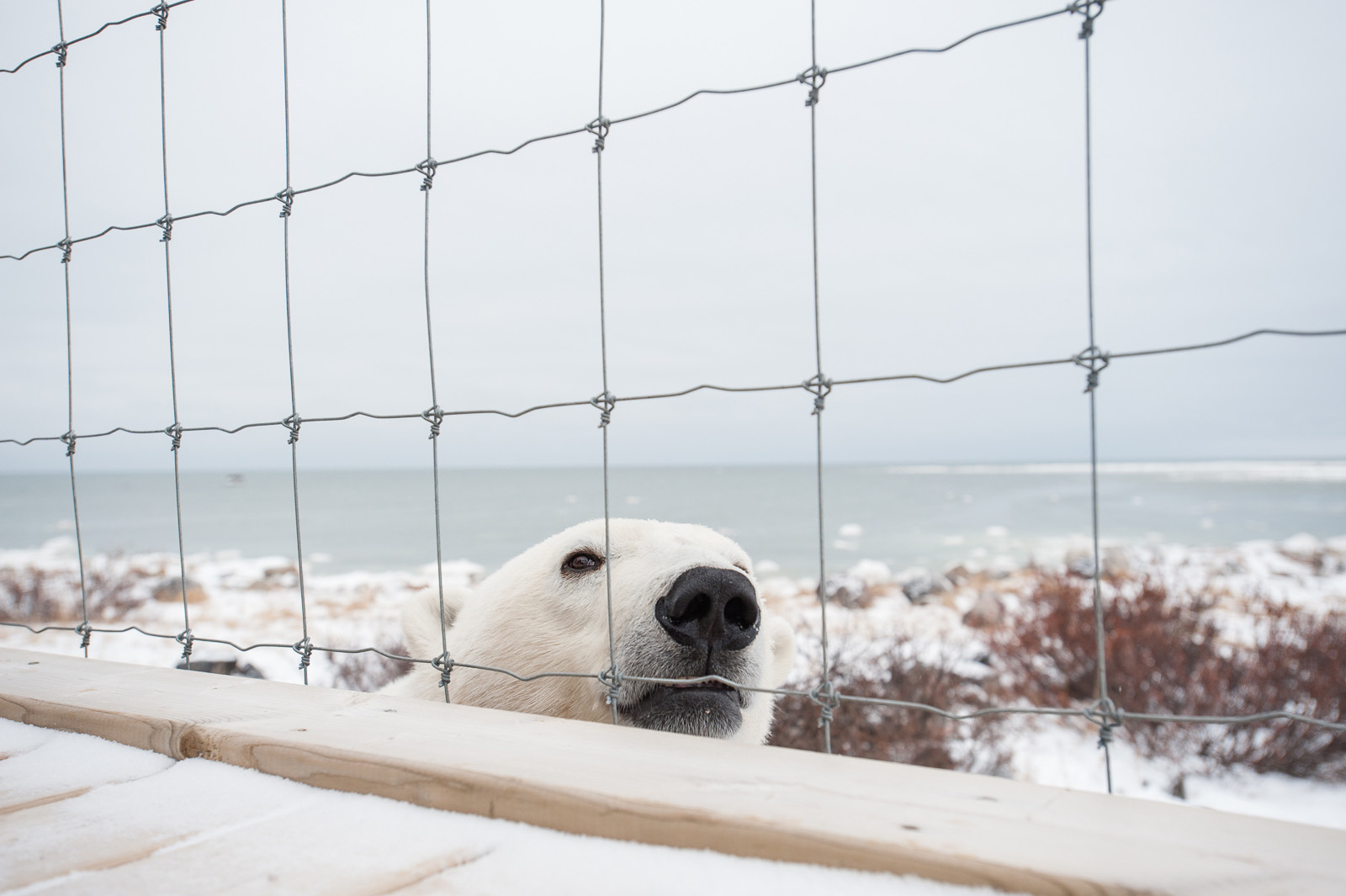
In a bit of a role reversal from what we are used to, at Seal River Lodge in northern Manitoba, Canada, the humans are the ones caged in while the polar bears roam free. While not out on guided hikes, guests are free to view and photograph bears from the safety of a fenced in backyard. Bears are often just outside the fence, attracted by all the interesting smells coming from the lodge and its guests. This large male was peering over the raised viewing platform inside that backyard. Nikon D700 with Nikkor 17-35mm lens (at 35mm) ISO 800, f/5.6 at 1/400th of a second
As you guys know, I don’t always post pictures that I shot the current calendar year. I often post from previous years, but I do try to continually add new photos to the collection. The following are what I consider my top twelve images that were posted — as well as taken — in 2016. I didn’t get out quite as much this year, but did manage to start the year strong with several work trips to California, another to Toronto, followed by a week in Panama, a short visit to my mother in Florida, and finally, a week in Thailand last month. Each trip is represented, and in the order that they were taken. Happy New Year everyone. Thanks for continuing to check out my daily posts. I really appreciate it and the positive feedback keeps me excited to mine my collection each night to find just the right shot.
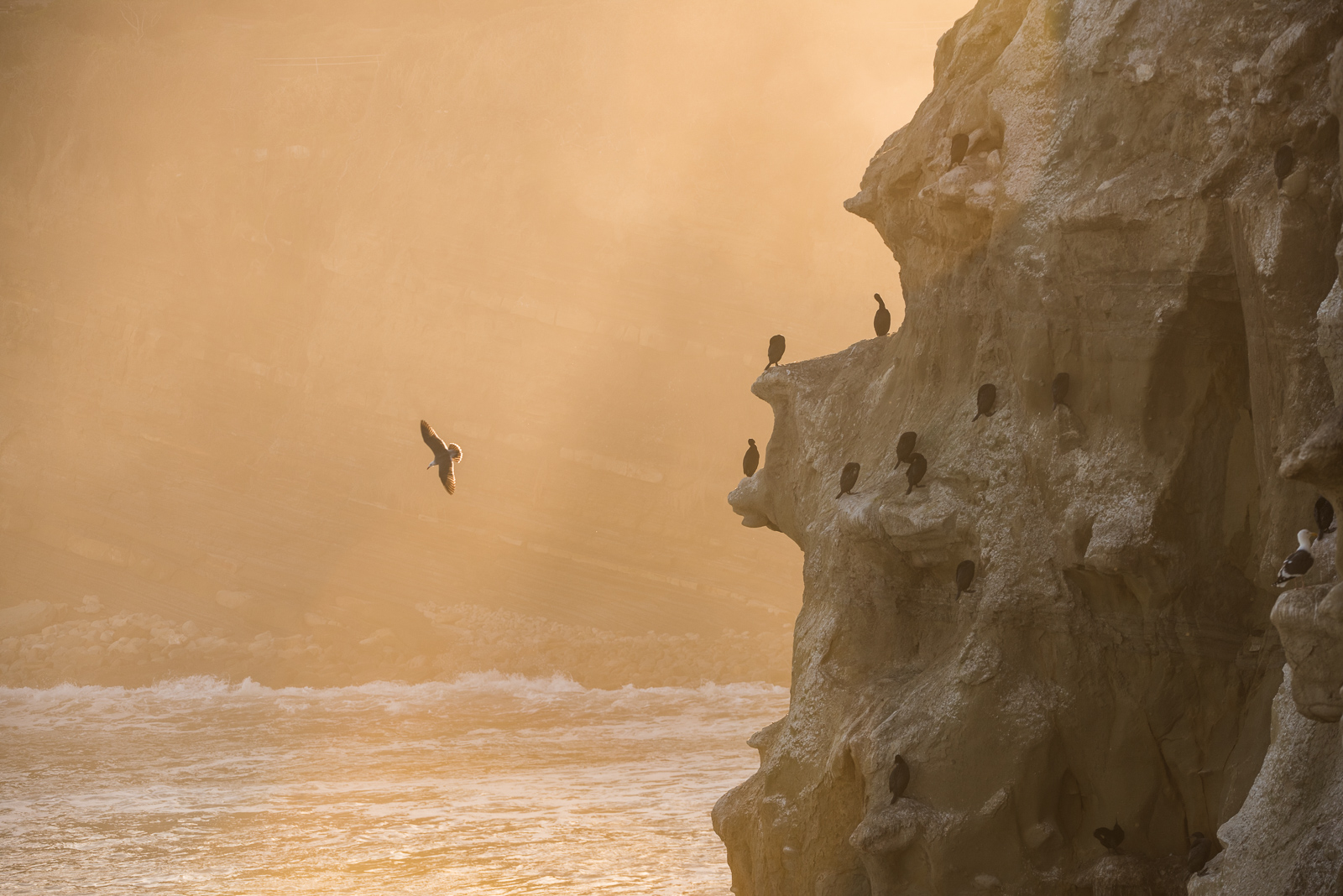
Following a work trip to San Diego back in January, I tacked on a few days and headed north to La Jolla in search of the “Potholes” at Hospitals Reef. On the way, I caught this morning glimpse of Brandt’s cormorants nesting on a cliff while a Western gull flew past. (Nikon D810 with Nikkor 17-35mm lens (at 17mm) ISO 400, f/11 at 1/100th of a second.)
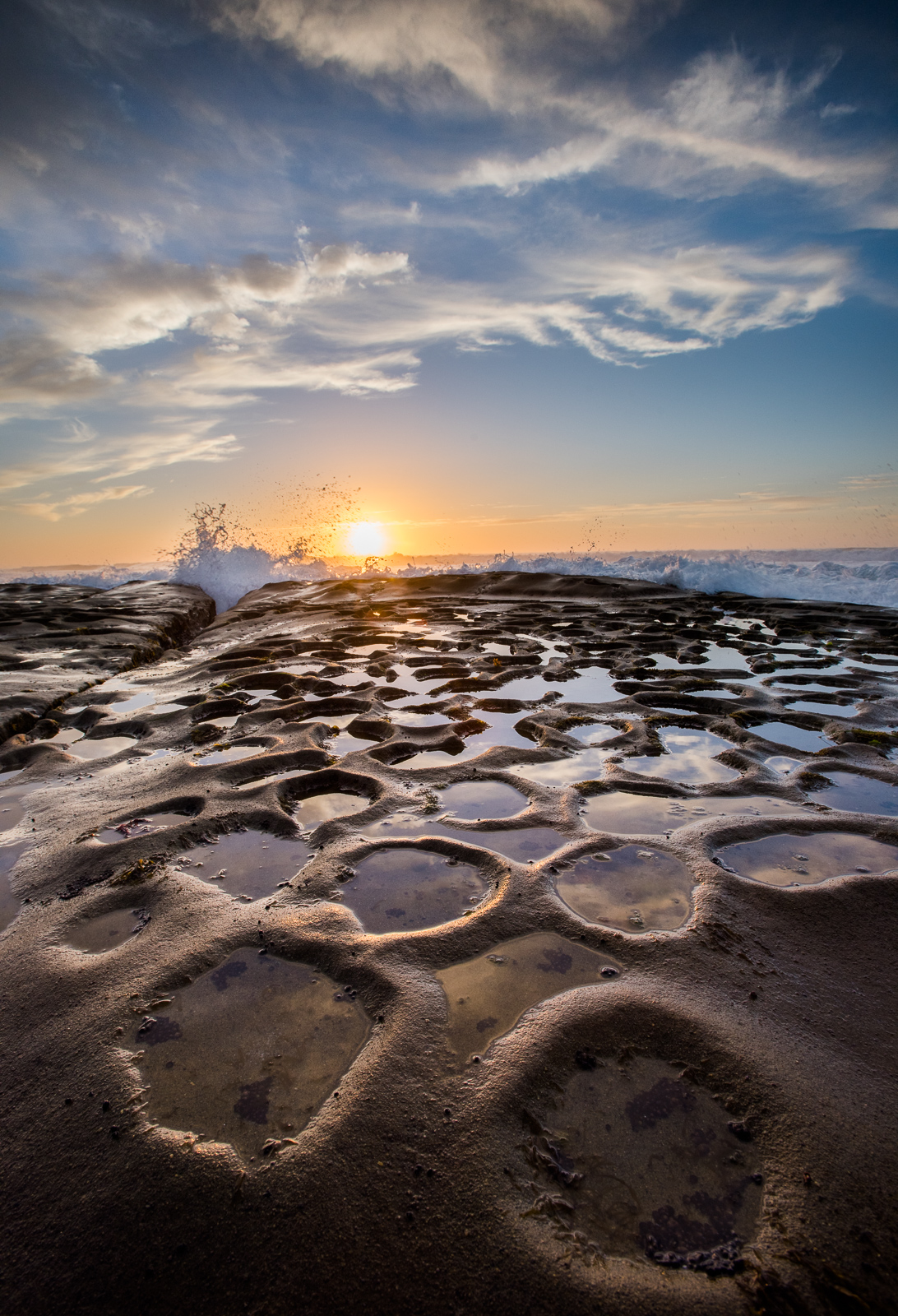
And below is the aforementioned “Potholes.” (Nikon D810 with Nikkor 17-35mm lens (at 17mm) ISO 400, f/11 at 1/100th of a second.)
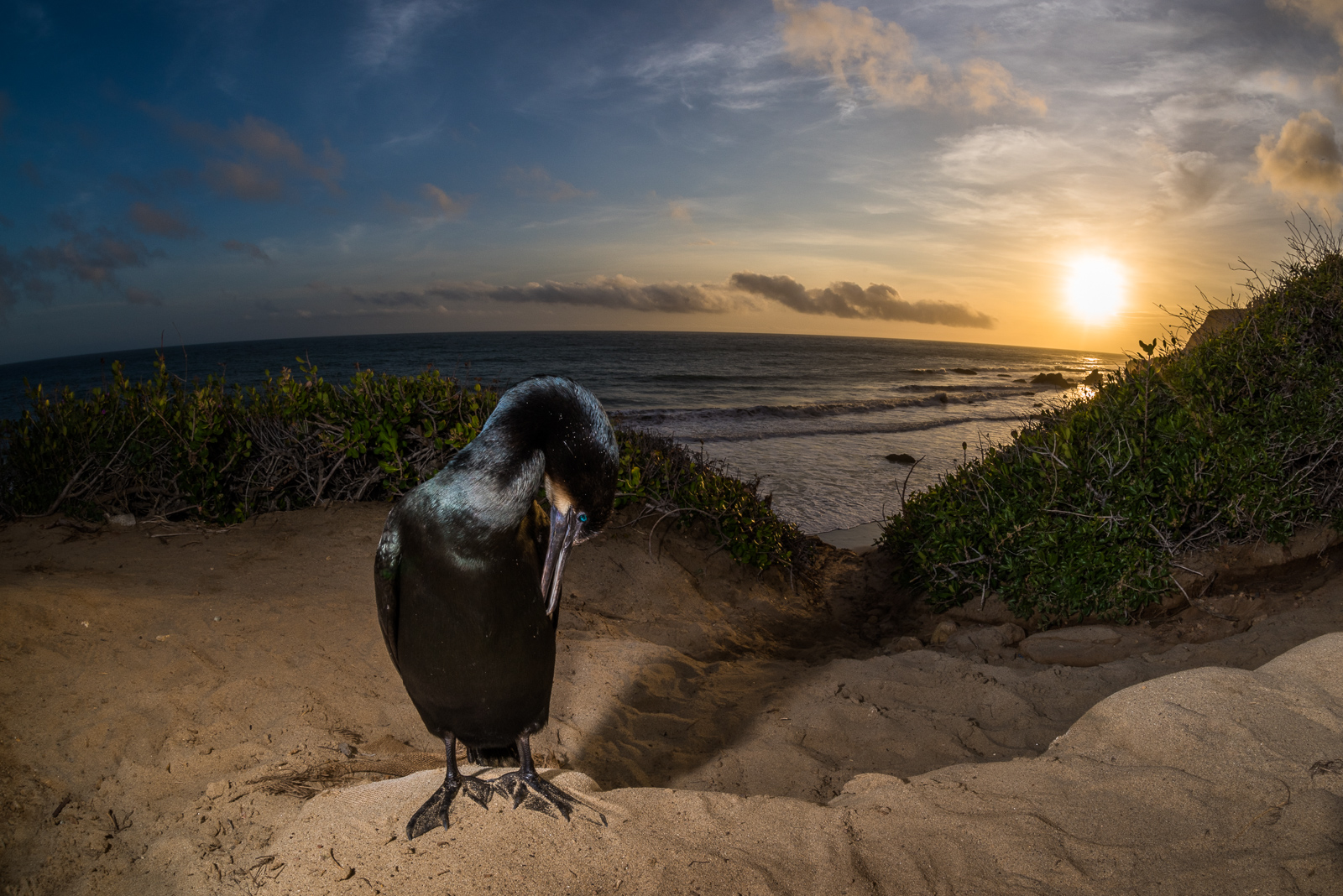
Speaking of Brandt’s cormorants, I met this bold individual two months later at El Matador Beach in Malibu. Always nice when your subject allows you to get so close that you can use a fisheye lens. (Nikon D810 with Sigma 15mm fisheye lens, ISO 200, f/22 at 1/200th of a second, Nikon SB-900 flash unit.)
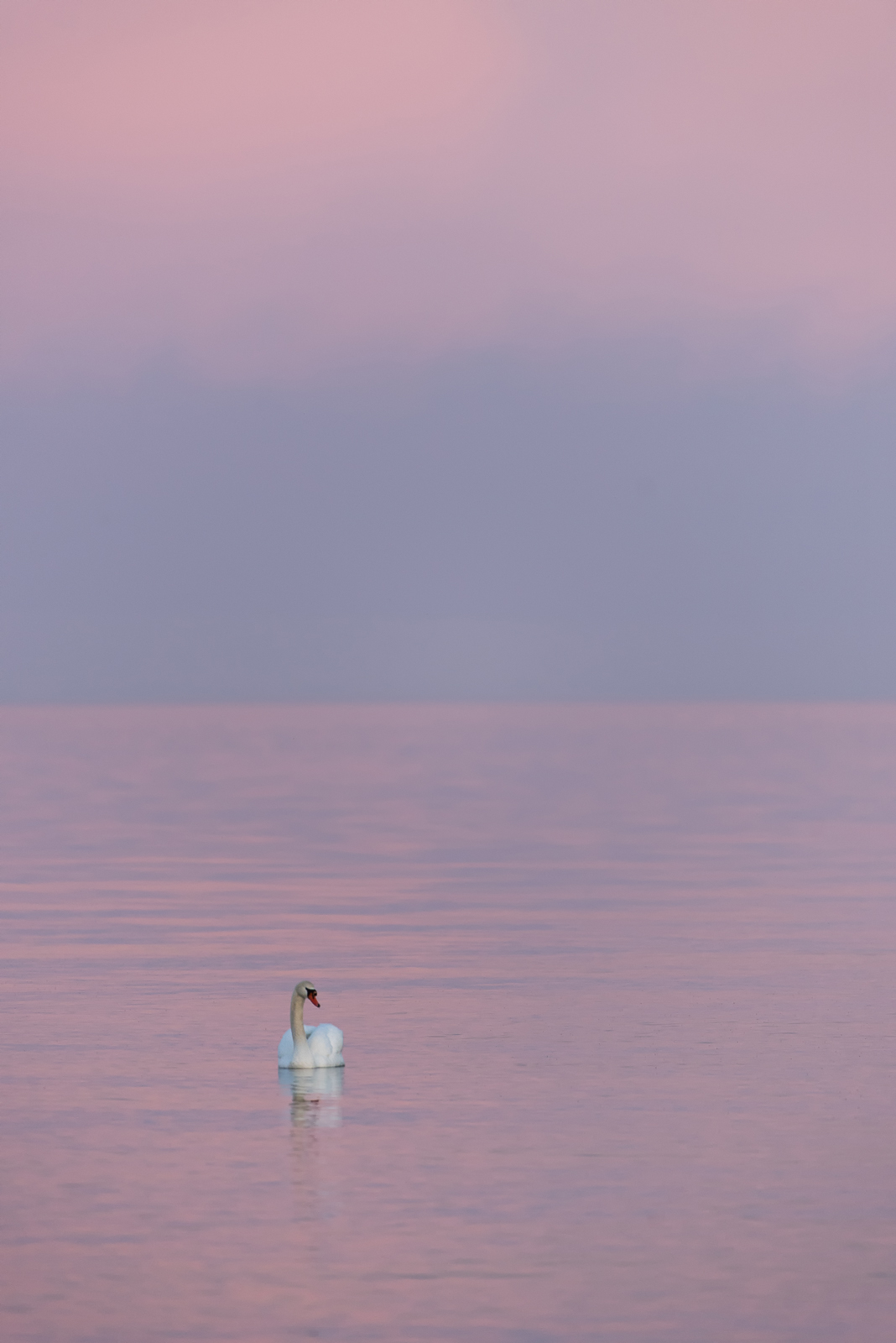
In May, I headed to Toronto for a few weeks to shoot a commercial. In between our busy work schedule, I was able to explore the area’s wildlife hotspots, including several sites around Lake Ontario where I captured this mute swan at sunset. (Nikon D810 with Nikkor 200-400mm lens (at 400mm) ISO 800, f/4 at 1/640th of a second.)
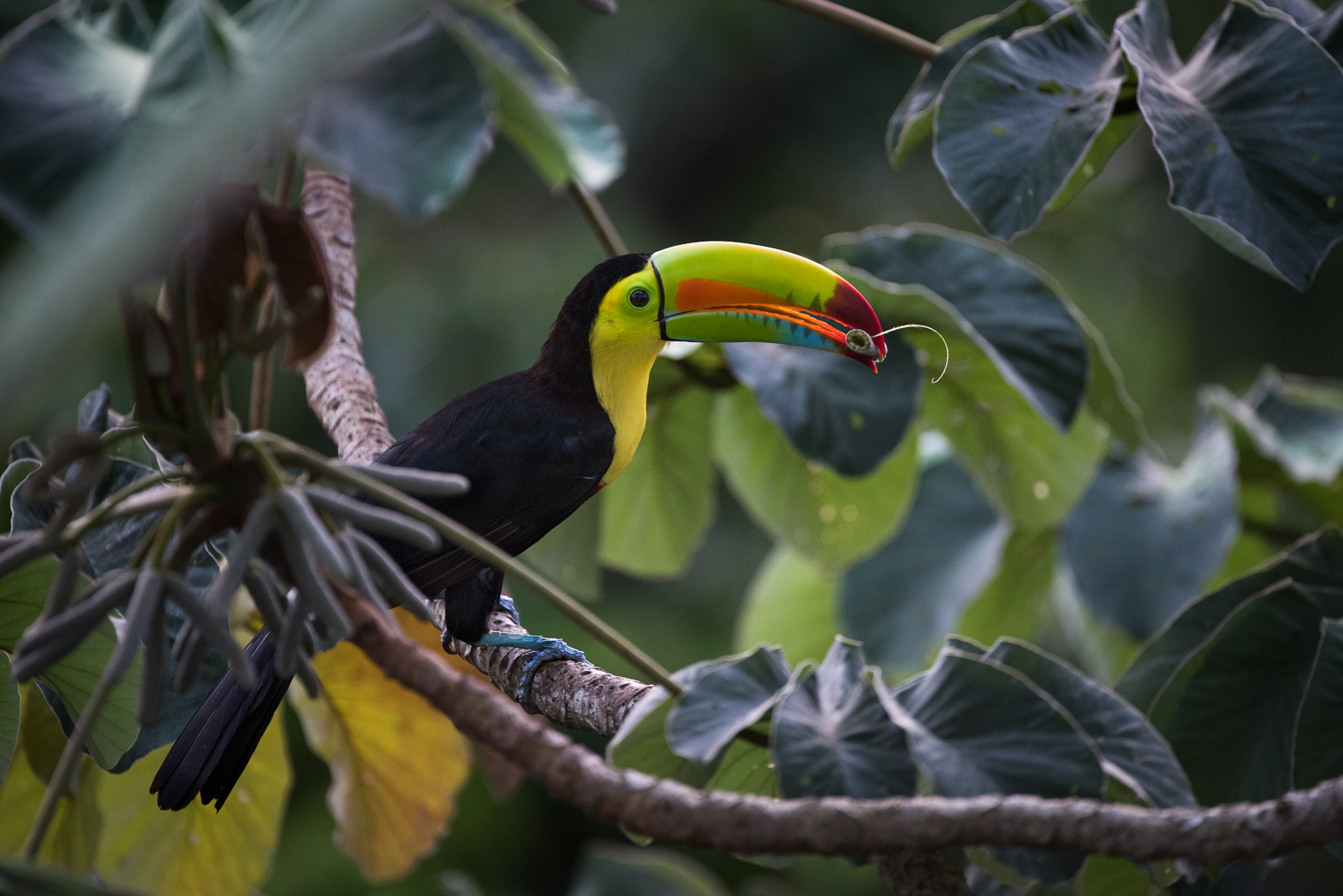
Later in the month, I headed down to Panama for a five night trip. At the top of my wish list was the keel-billed toucan. I saw quite a few at the Canopy Tower Lodge in Soberania National Park not too far from Panama City. This one was feeding on a seed from a cecropia tree. (Nikon D810 with Nikkor 200-400mm lens (at 400mm) ISO 1600, f/4 at 1/320th of a second.)
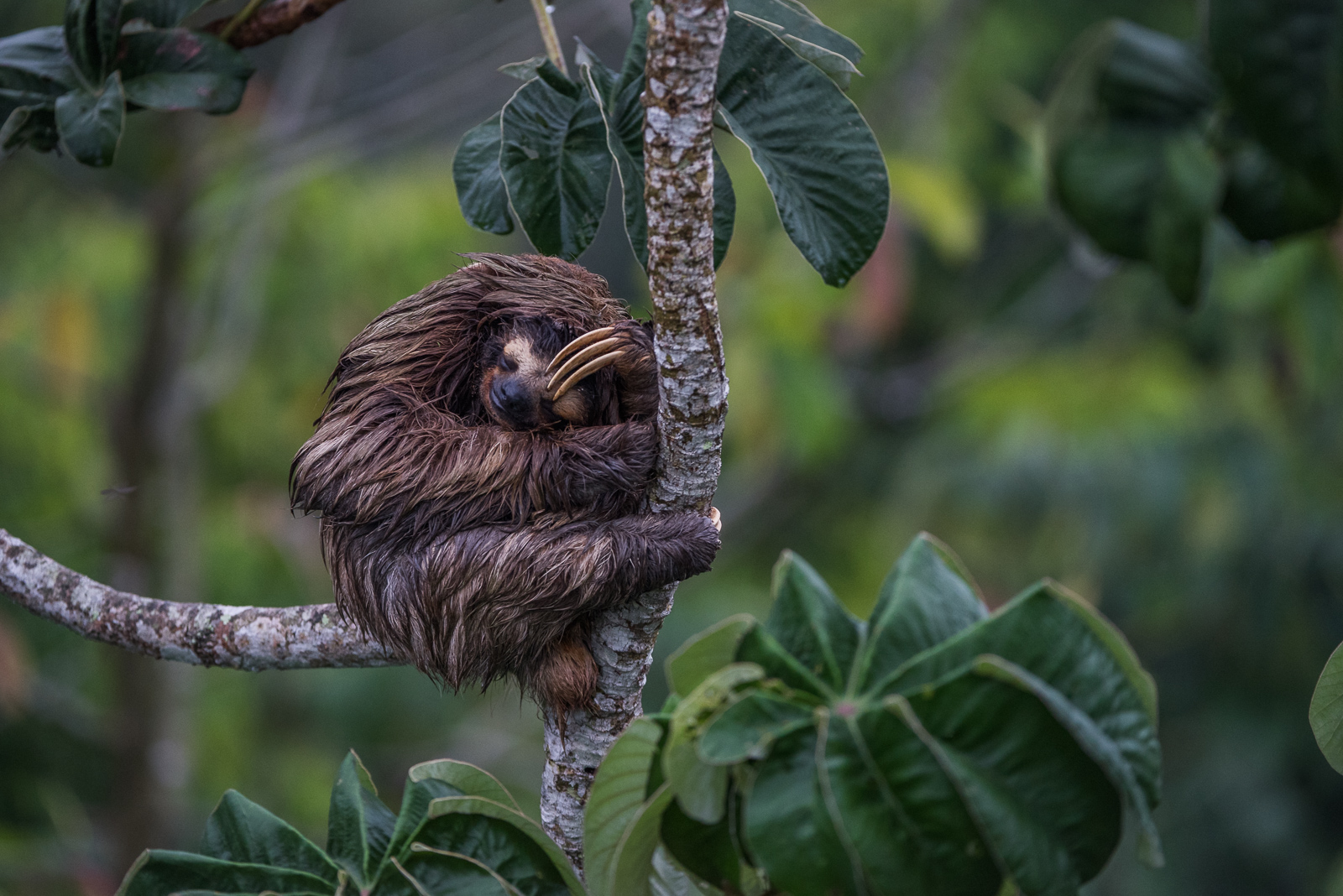
Also from the Canopy Tower was this three-toed sloth. (Nikon D810 with Nikkor 200-400mm lens (at 250mm) ISO 1600, f/4 at 1/100th of a second.)
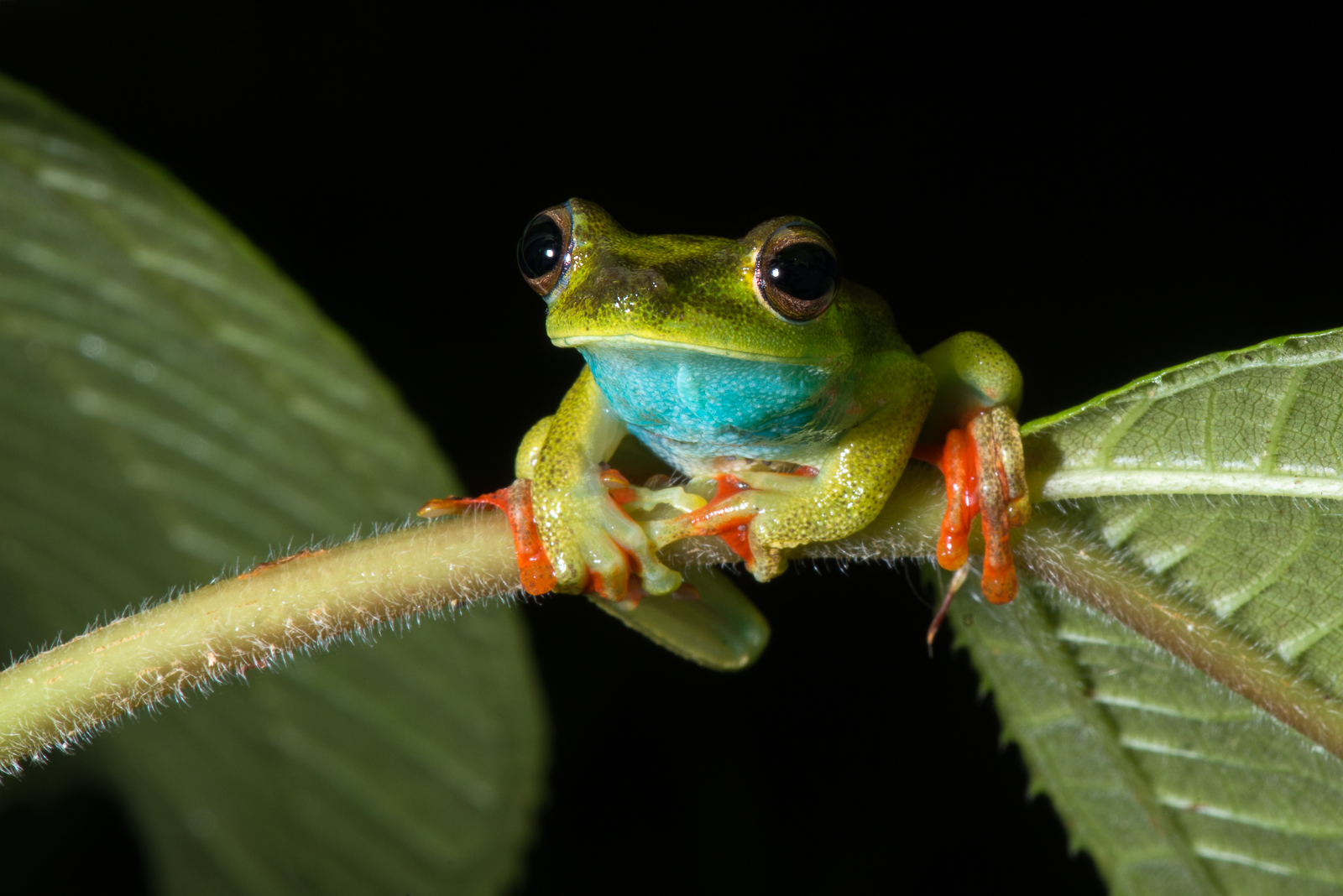
A few hours north brought me to the town of El Valle where I spotted several canal zone tree frogs at night. (Nikon D800 with Nikkor 105mm macro lens, ISO 200, f/25 at 1/60th of a second, two Nikon SB-900 flash units.)
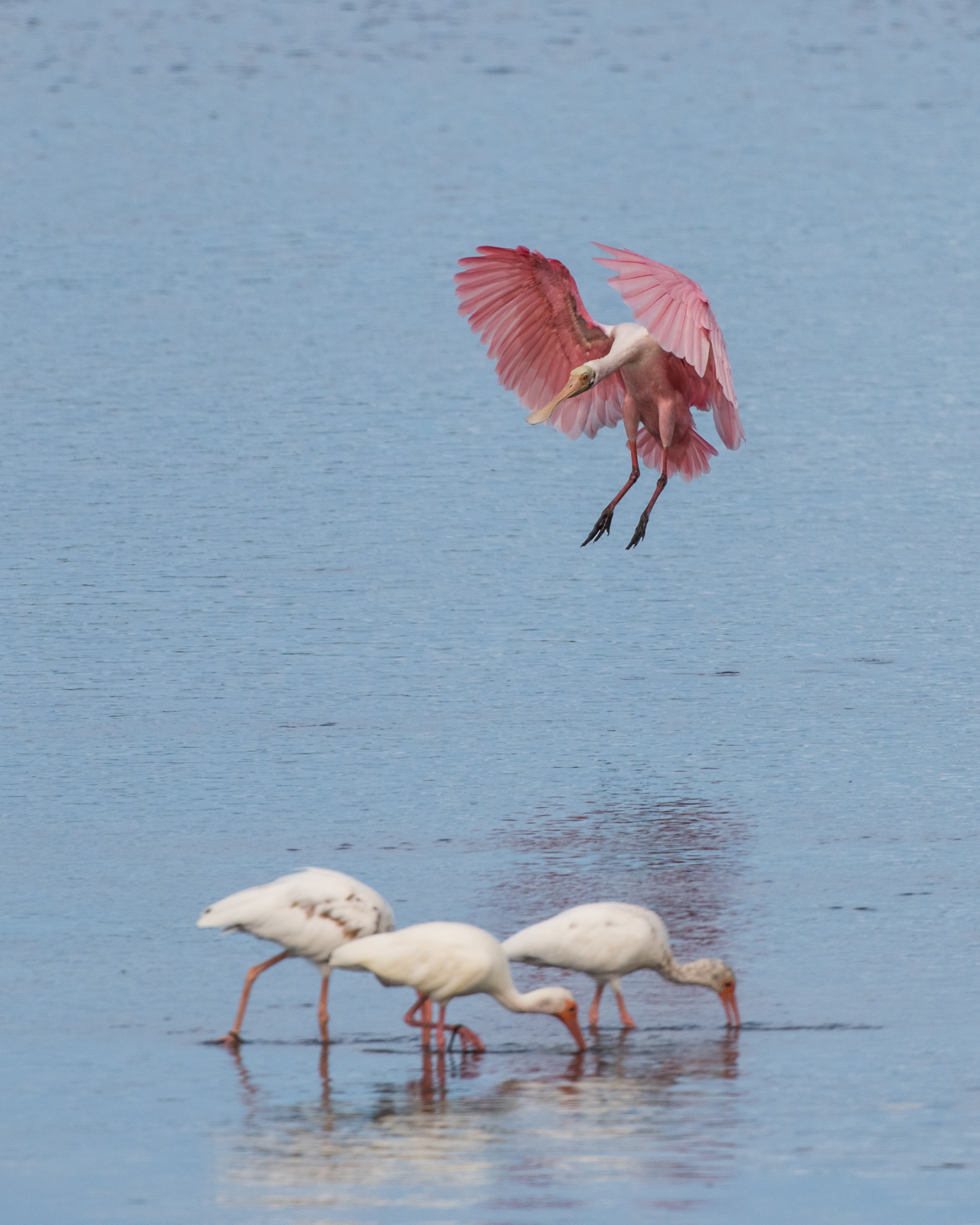
In early July, it was off to Florida for a visit to my mother. We took her to one of my favorite spots, the Ding Darling National Wildlife Refuge. The star attraction at the refuge is the roseate spoonbill. This one was coming in for a landing near three white ibis. (Nikon D810 with Nikkor 200-400mm lens (at 400mm) ISO 400, f/8 at 1/2000th of a second.)
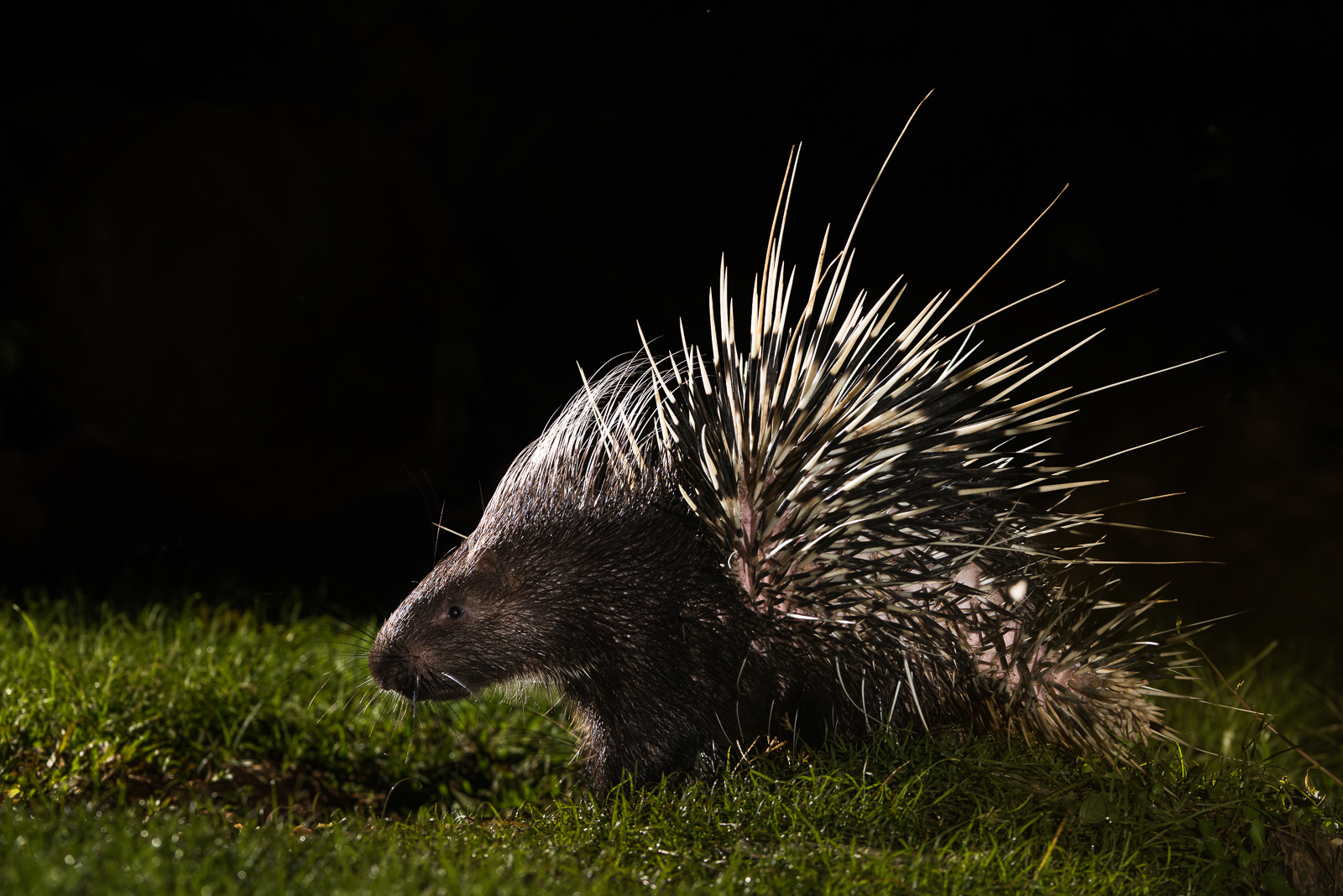
My biggest trip of the year was only a week long, but I saw quite a variety of wildlife in Thailand. Especially in Kaeng Krachan National Park where I camped for three nights. Every night, Malayan porcupines came around the campsite looking for scraps. The predictability of their visits allowed me to be ready with two flash units placed in advantages locations for front and back light. (Nikon D810 with Nikkor 200-400mm lens (at 210mm) ISO 400, f/8 at 1/60th of a second, two Nikon SB-900 flash units.)
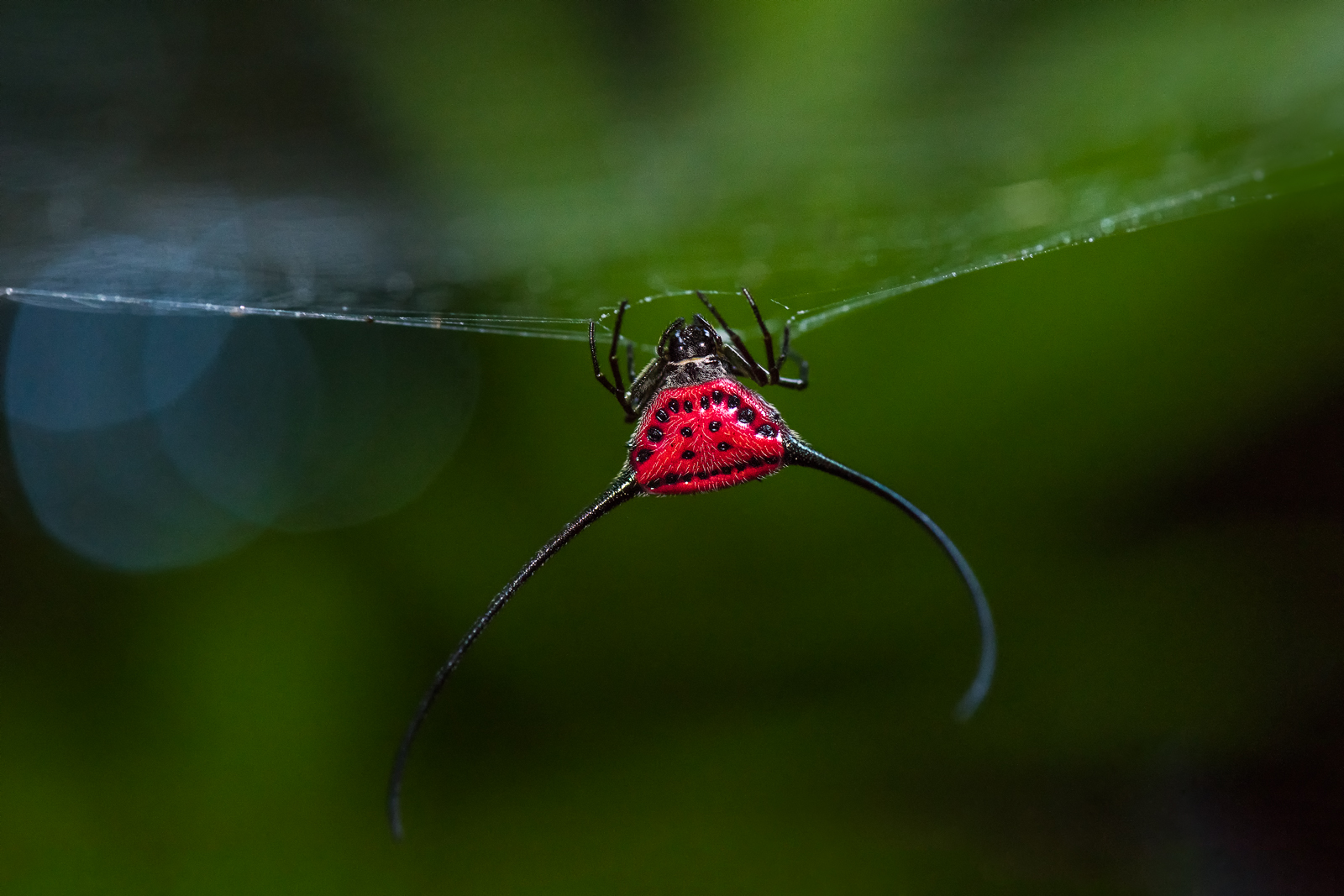
I also saw plenty of little creatures like this red long-horned spider. (Nikon D810 with Nikkor 105mm macro lens, ISO 1600, f/6.3 at 1/60th of a second.)
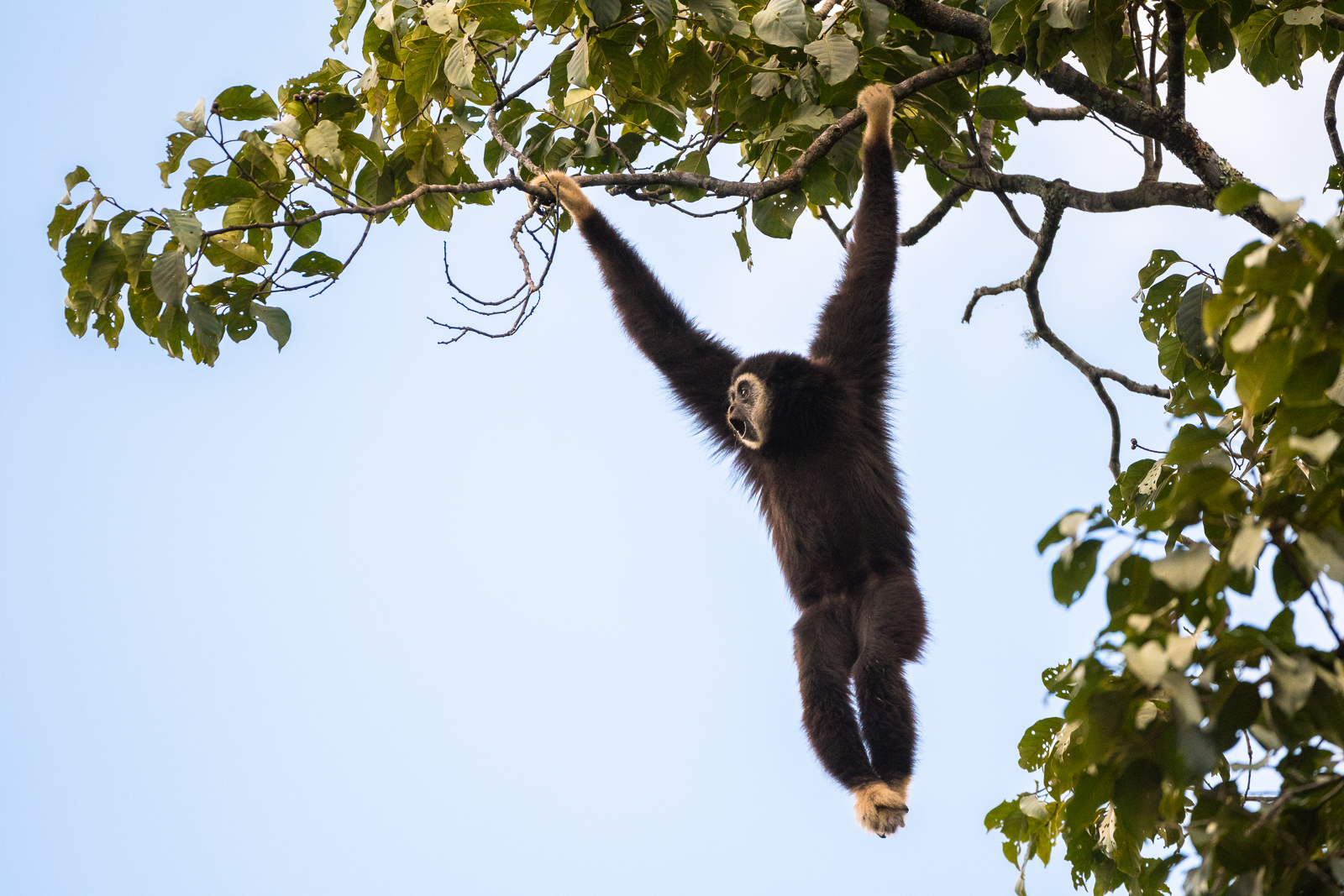
I photographed five primate species, including the white-handed gibbon. (Nikon D500 with Nikkor 200-400mm lens (at 360mm) ISO 800, f/4 at 1/5000th of a second.)
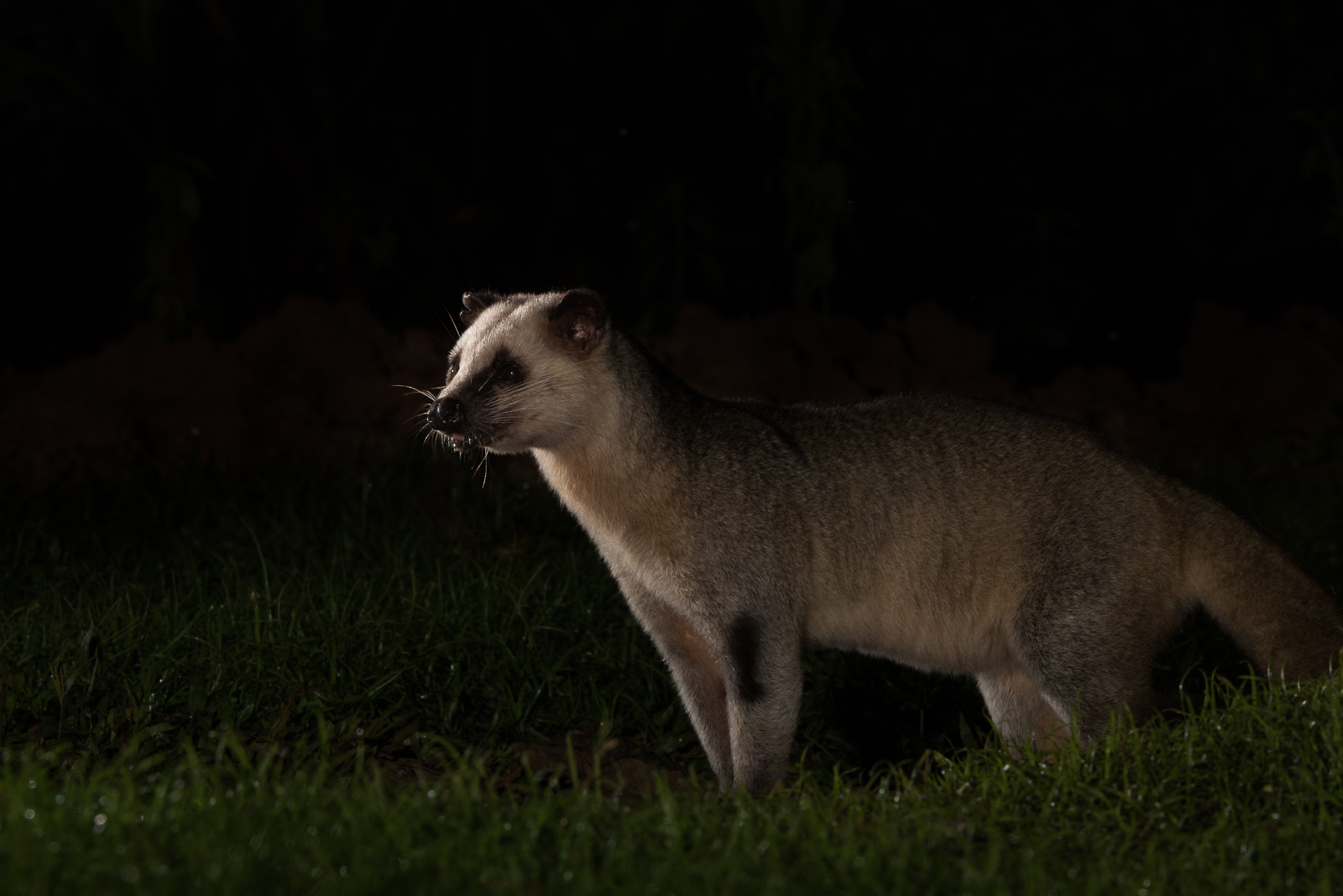
And finally, this masked palm civet who was kind enough to stop by while I had my light set up for the porcupines. (Nikon D810 with Nikkor 200-400mm lens (at 290mm) ISO 400, f/18 1/60th of a second, two Nikon SB-900 flash units.)
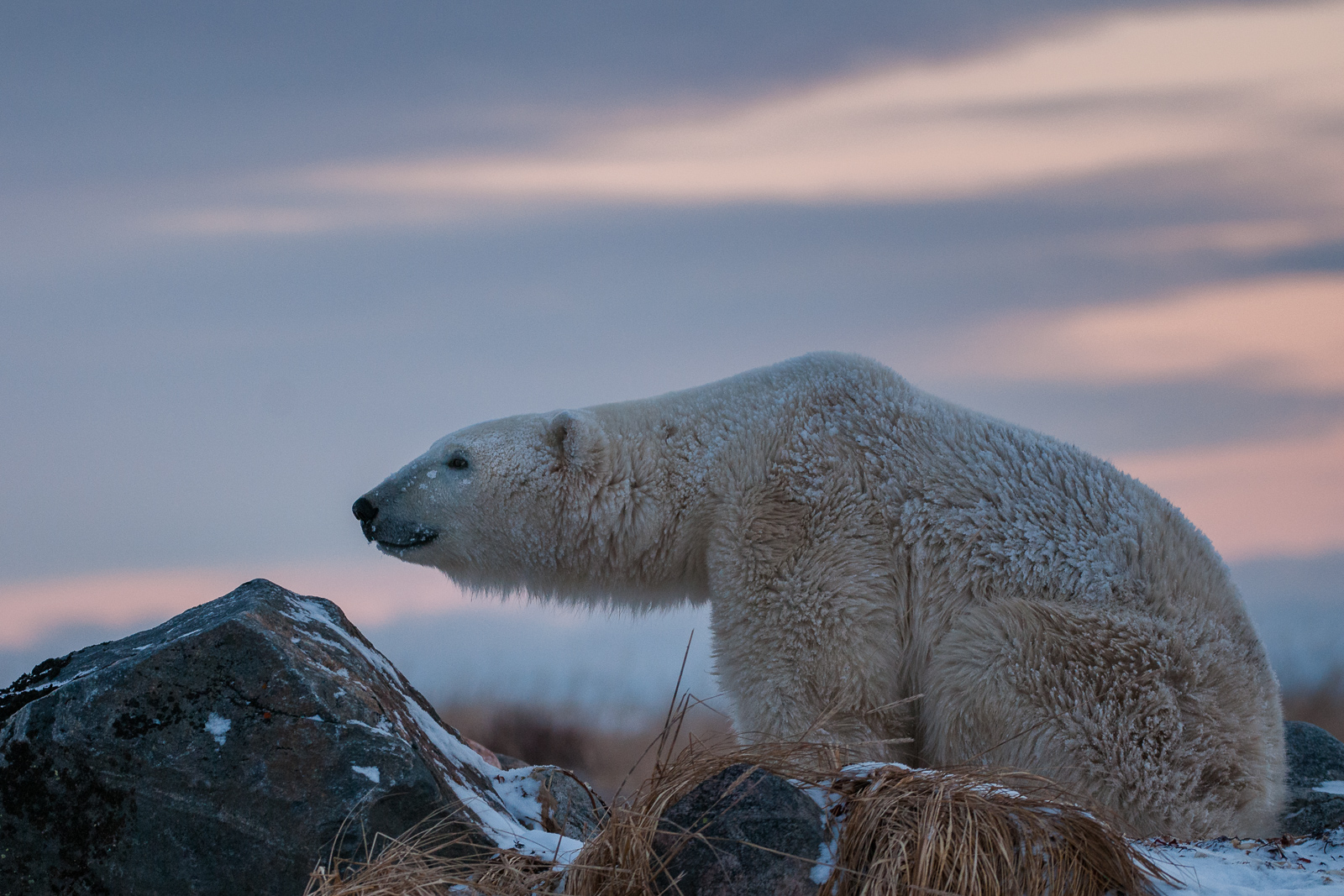
Always seems appropriate to post a polar bear just before the Christmas break. Nanuk, as the Inuit people call the great white bear, overseeing another setting sun in northern Manitoba. Happy Holidays everyone. See you after the break. Nikon D300 with Nikkor 200-400mm lens (at 200mm) ISO 800, f/4 at 1/250th of a second
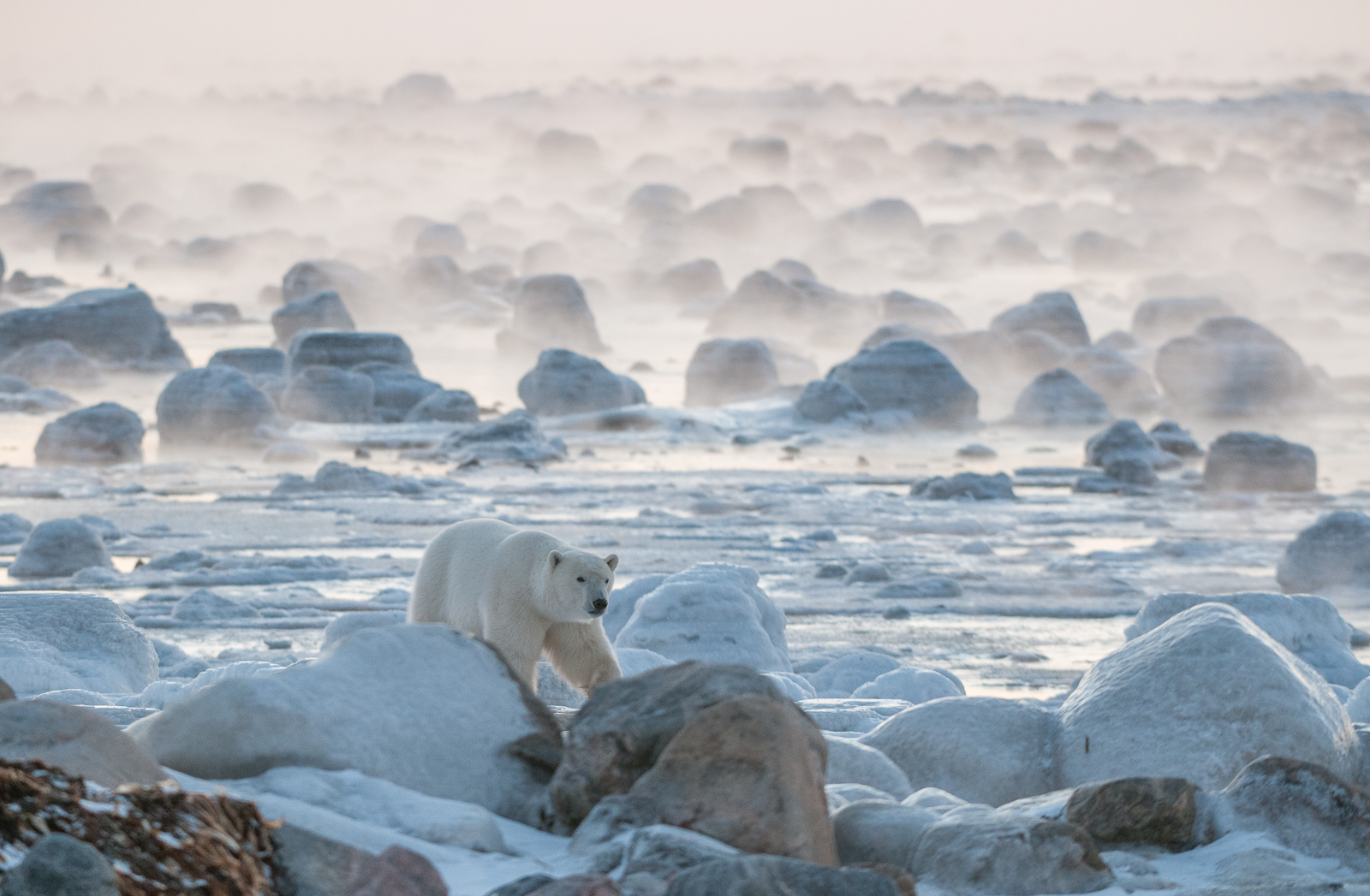
The time to see polar bears in northern Manitoba, Canada is right about now. Between mid October and mid November. That’s when the water freezes on the Hudson Bay and the bears congregate along the shoreline waiting for the ice to be strong enough so that they can go hunt for seals. As the water rises and falls, large boulders of ice form and are left behind. Nikon D300 with Nikkor 200-400mm lens (at 240mm) ISO 800, f/4 at 1/250th of a second
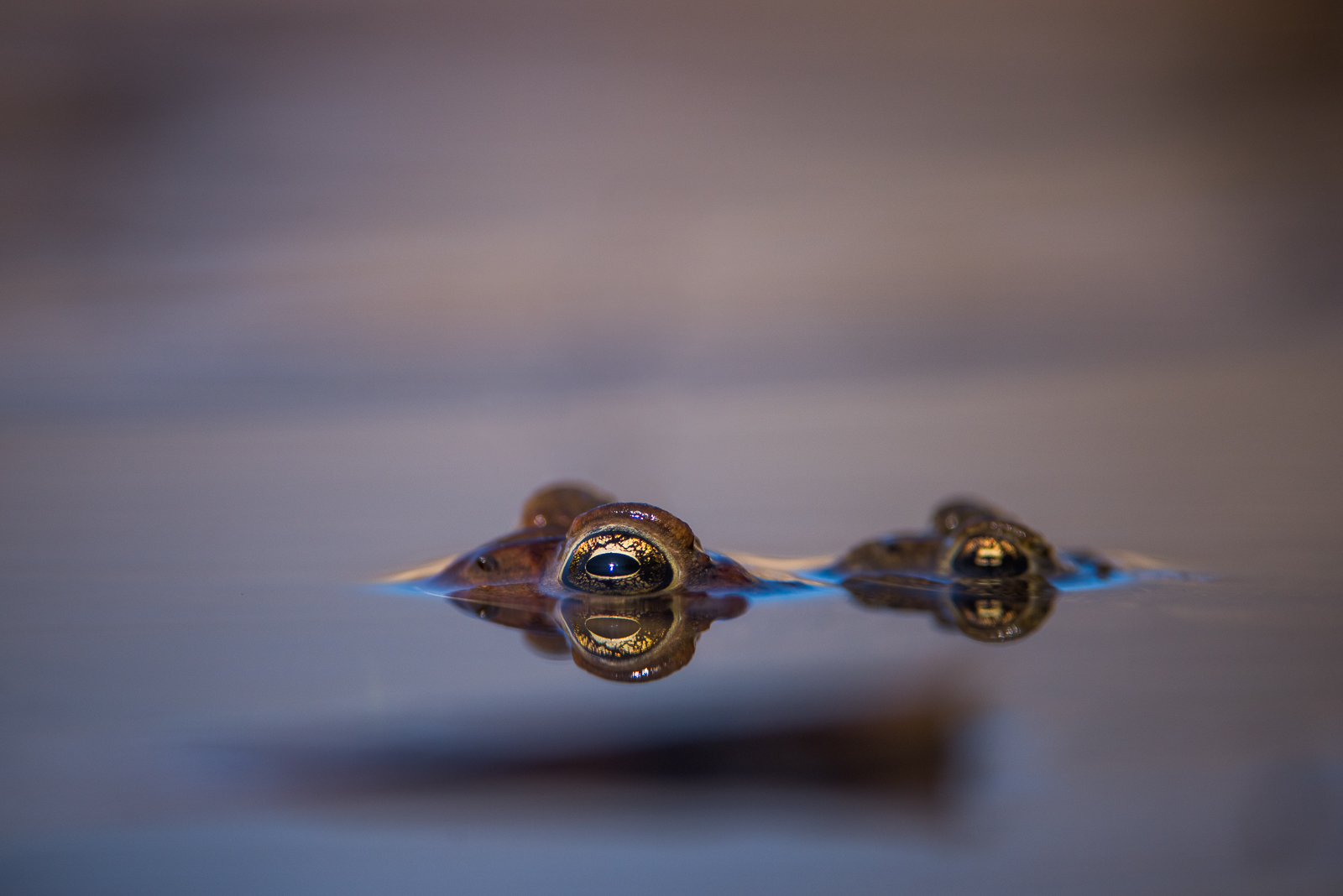
When I visited Toronto back in May, it was mating season for the American toads. I positioned my camera and long lens down on the edge of a pond in Tommy Thompson Park for this shot. The female, as you can see, is quite a bit larger than the male. Nikon D810 with Nikkor 200-400mm lens (at 400mm) ISO 400, f/4 at 1/2500th of a second
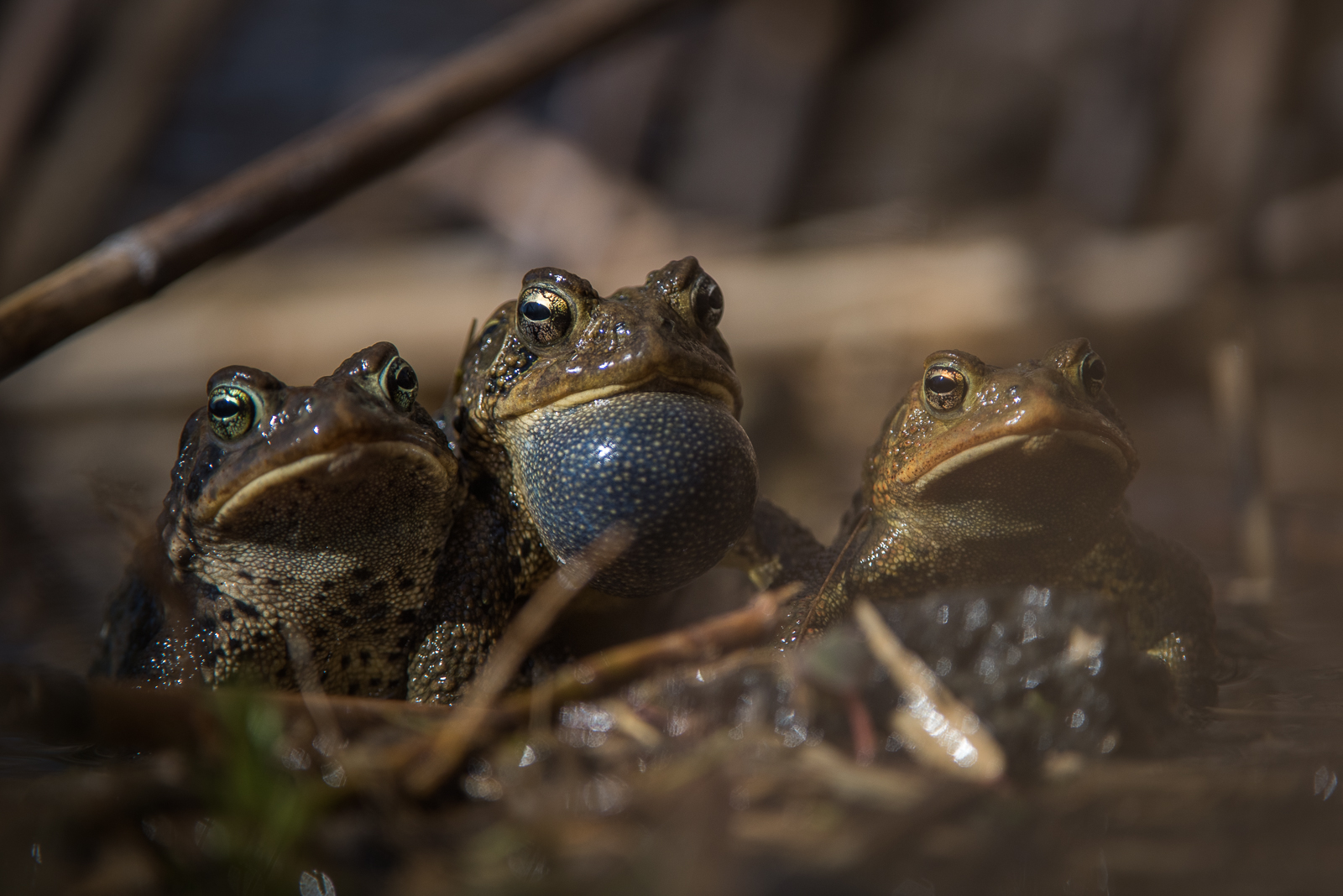
Here’s another one from out on Tommy Thompson Park in Toronto. These three formidable looking amphibians are American toads. A whole lot of mating activity was going on when I was there. The males were singing a chorus to the females, other lovers were already in the process of making more toads, and several mating pairs were surrounded by strands of tadpole eggs. Nikon D810 with Nikkor 200-400mm lens (at 400mm) ISO 400, f/5 at 1/2500th of a second
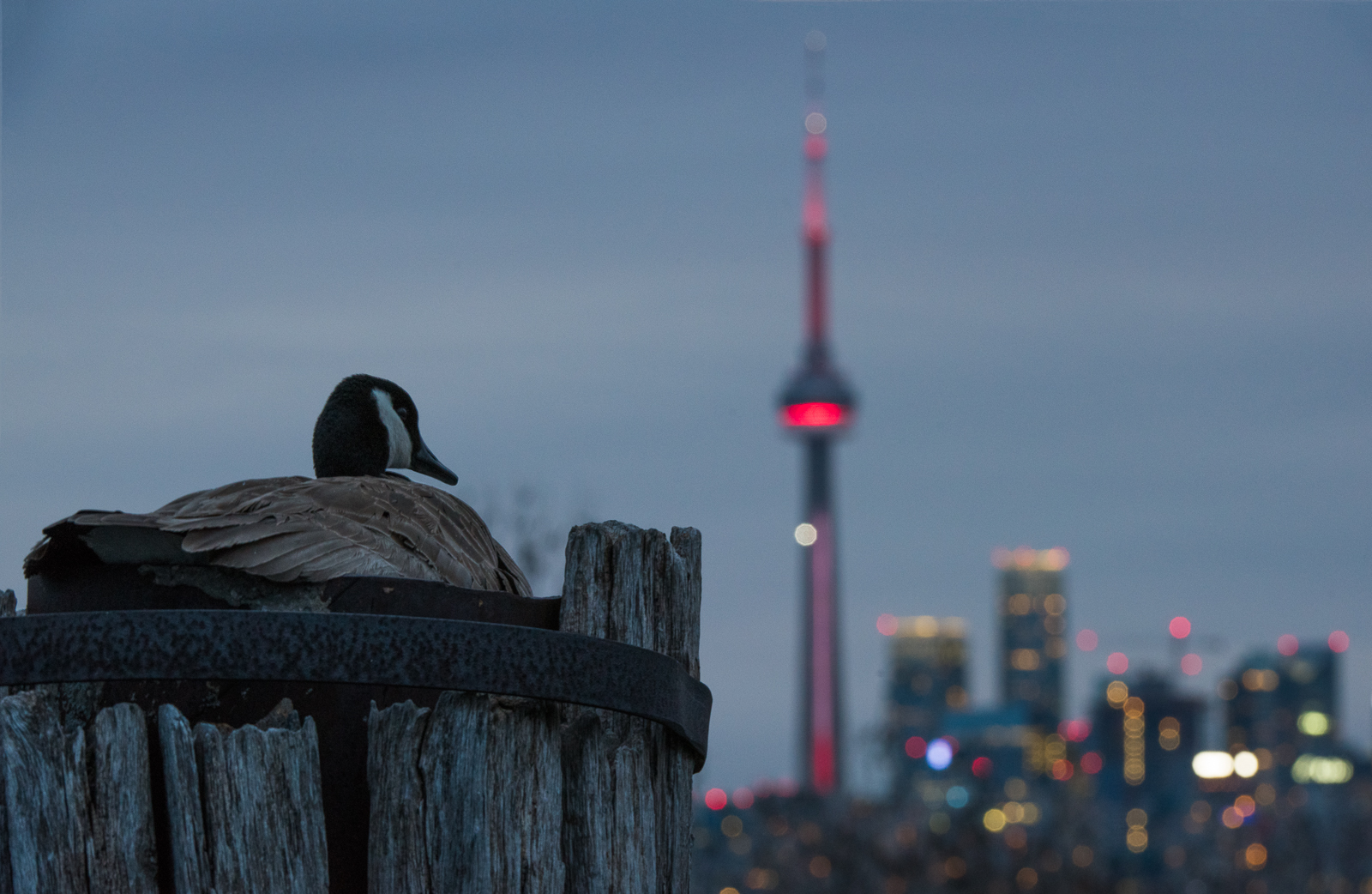
Can’t get much more Canadian than this one of a Canada goose with Toronto’s CN Tower in the background (I suppose a few maple leaves could have been falling around the goose). The CN Tower is an iconic symbol of Canada, and for 34 years it was the tallest free-standing structure and tallest tower in the world. It is now the 3rd tallest tower in the world and remains the tallest free-standing structure in the Western Hemisphere. It has been declared one of modern Seven Wonders of the World by the American Society of Civil Engineers. As for the goose, it was nesting on top of an old piling in Tommy Thompson Park. Tommy Thompson Park, also known as the Leslie Spit, is actually landfill in Lake Ontario that has been reclaimed in a big way by nature. It’s quite an amazing place when migratory birds are nesting. I saw hundreds of black-crowned night herons roosting in the trees, while many more swans were covering the ground. There were also hundreds of cormorants and many other birds, mammals and amphibians in the park that were kind enough to show their faces. Being primarily a business trip with limited time for photography, I only took my 200-400mm lens with me so it was a challenge to get certain shots. To capture the city skyline in this image, I had to sit back as far as I could on a small bridge and get as low as possible. Nikon D810 with Nikkor 200-400mm lens (at 200mm) ISO 1600, f/14 at half a second
Just got back from an 11-day business trip to Toronto. Per usual, I found a few hours here and there to get out with the camera. I had heard that the Toronto area is a good place to see mink and I put forth my best effort to try and find one. Unfortunately, no luck, but I did come across several other creatures along the way, including this mute swan that appeared to be floating in a sea of pastel as the sun set on Lake Ontario. Nikon D810 with Nikkor 200-400mm lens (at 400mm) ISO 800, f/4 at 1/640th of a second
We use cookies to enhance your experience while using our website. If you are using our Services via a browser you can restrict, block or remove cookies through your web browser settings. We also use content and scripts from third parties that may use tracking technologies. You can selectively provide your consent below to allow such third party embeds. For complete information about the cookies we use, data we collect and how we process them, please check our Privacy Policy