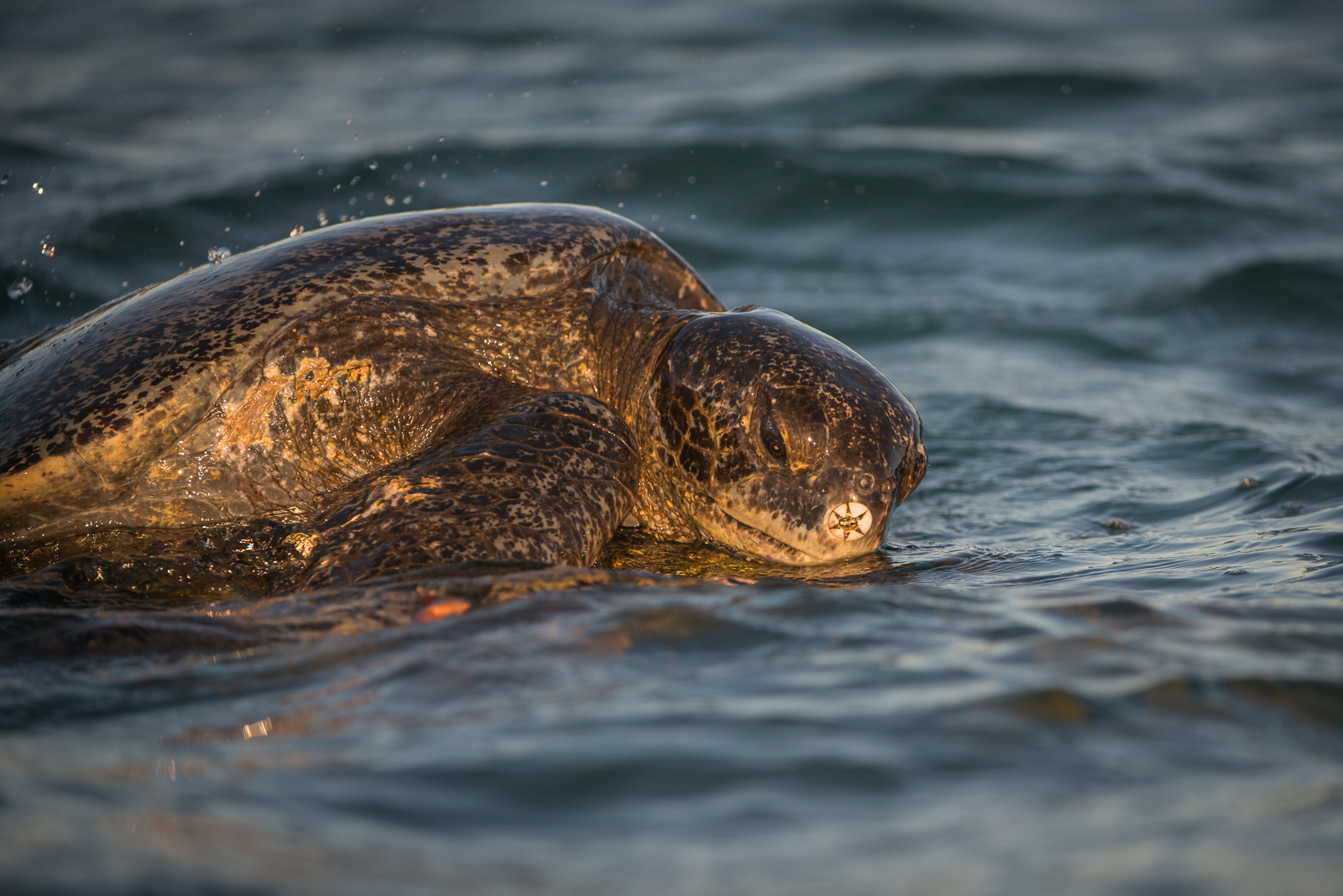
This is actually a Pacific green sea turtle, but that barnacle really picked a conspicuous spot to latch onto. Unfortunately for the turtle (or maybe not) barnacles never move once they attach to a hard surface. You can’t tell from this photo, but there’s a second turtle just under the water and the two were mating. Photographed off Isabella Island in the Galápagos Islands of Ecuador. Nikon D800 with Nikkor 200-400mm lens (at 280mm) ISO 800, f/4 at 1/3200th of a second.
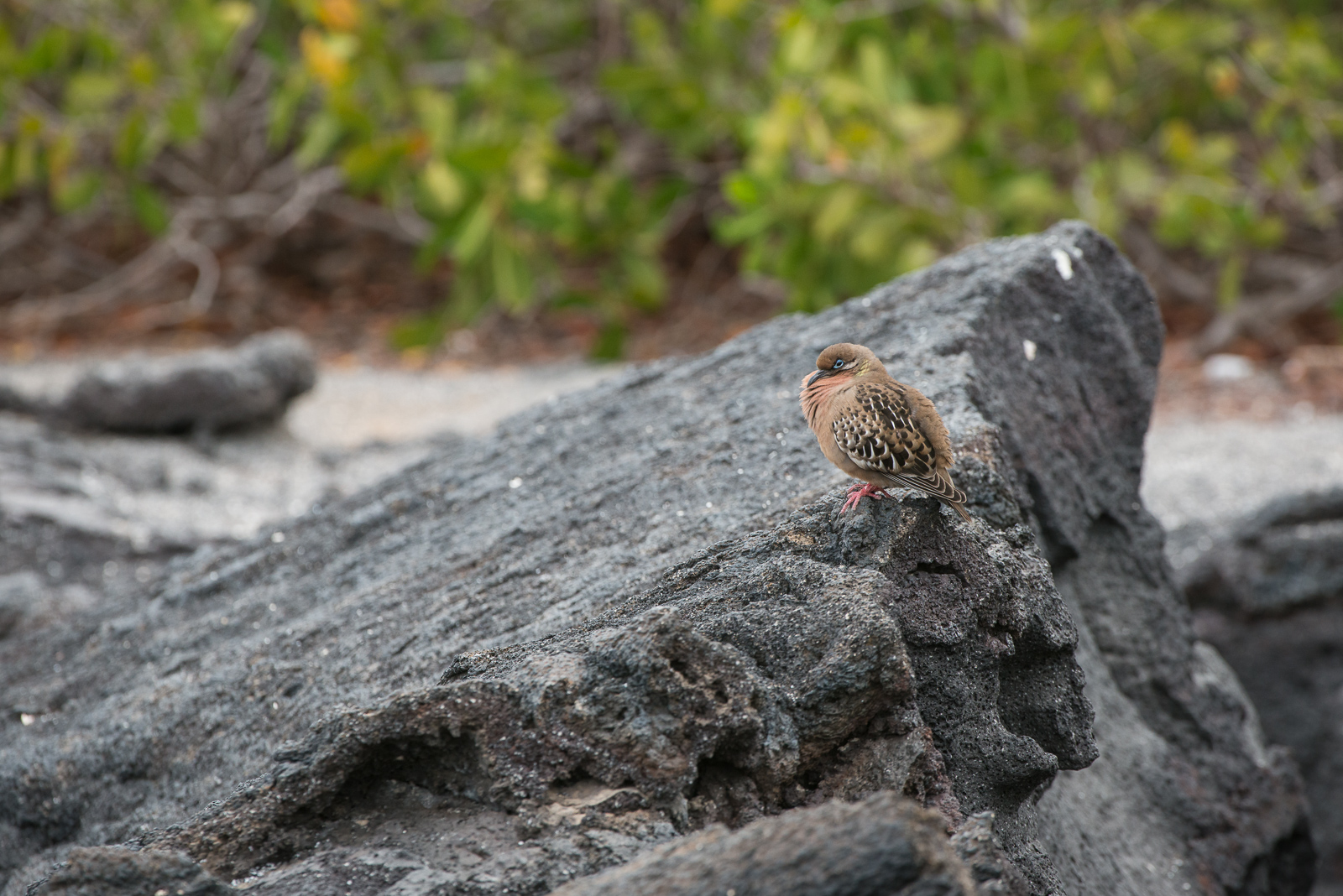
This is what doves look like in the Galápagos Islands. I photographed this one on Fernandina Island, which is primarily made up of volcanic rock such as the perch the dove is resting on. Nikon D800 with Nikkor 200-400mm lens (at 400mm) ISO 800, f/6.3 at 1/400th of a second.
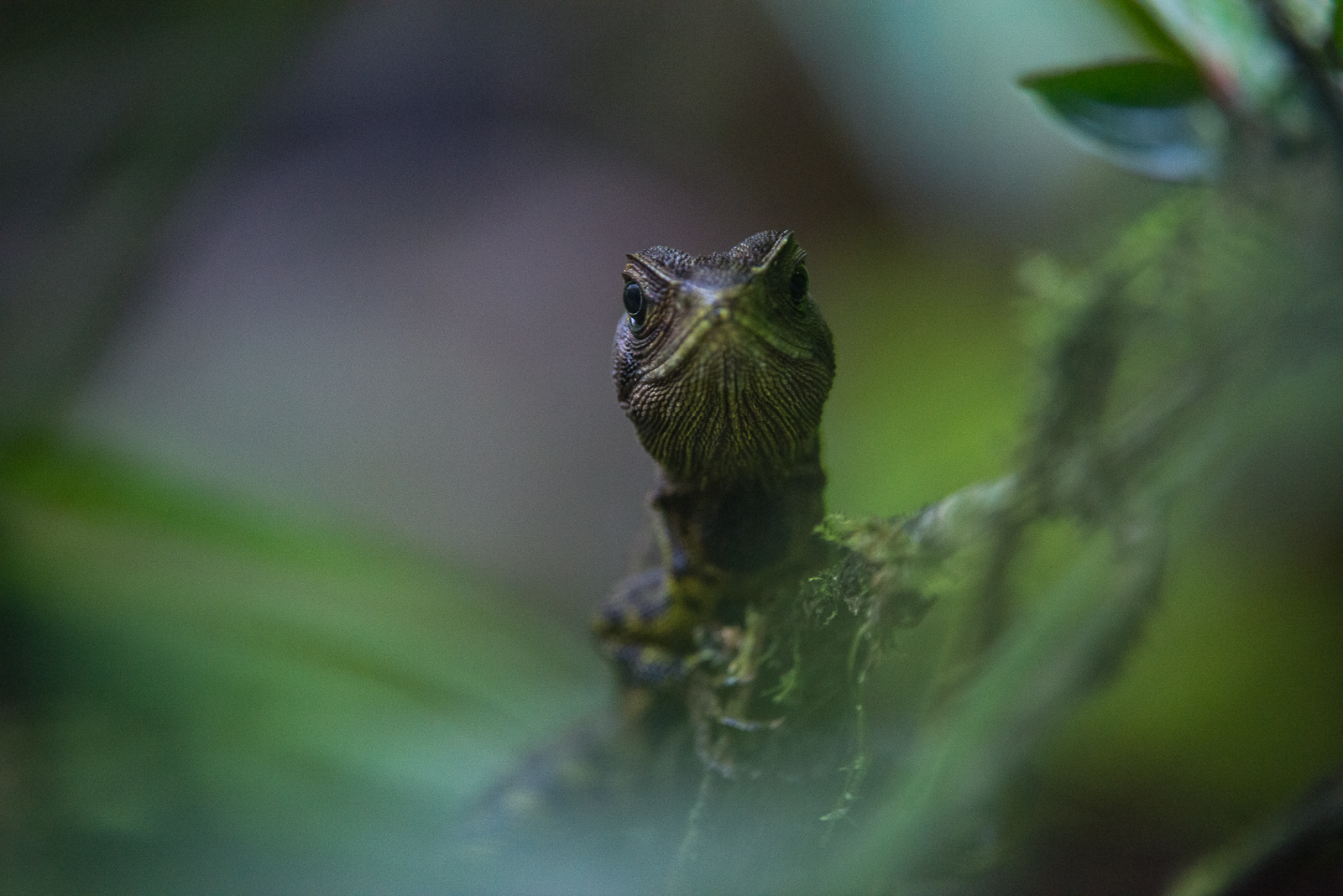
Not really sure who this guy is but he/she was giving me a pretty intense stare down late one afternoon while I was hiking in the cloud forest of Ecuador. Nikon D800 with Nikkor 200-400mm lens (at 360mm) ISO 3200, f/4 at 1/30th of a second.
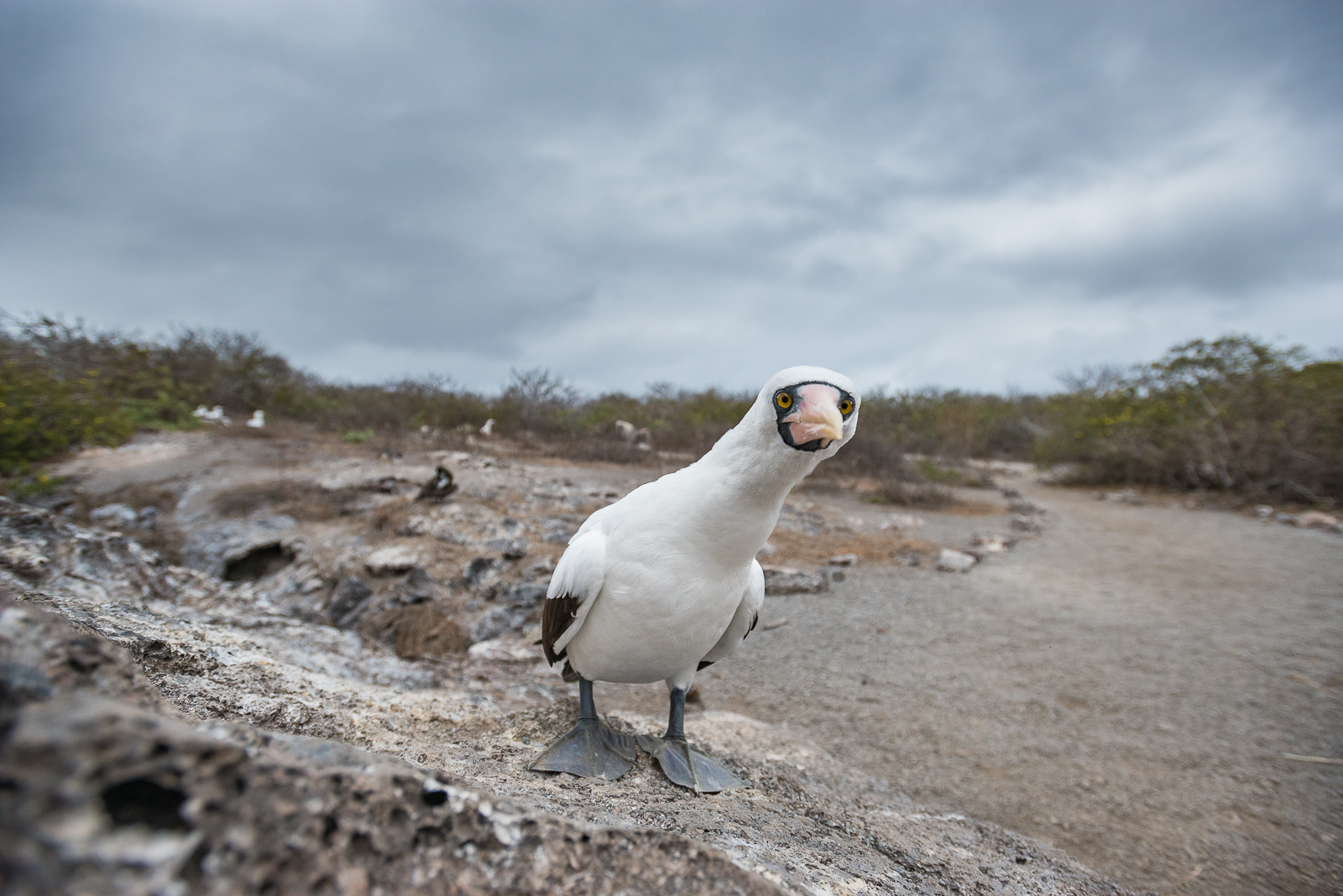
One of the things that makes the Galápagos Islands such a fun place to visit is the curiosity of many of its wild residents. This Nazca booby greeted us as soon as we set foot on Genovesa Island. Nikon D800 with Nikkor 17-35mm lens (at 19mm) ISO 800, f/4 at 1/6400th of a second.
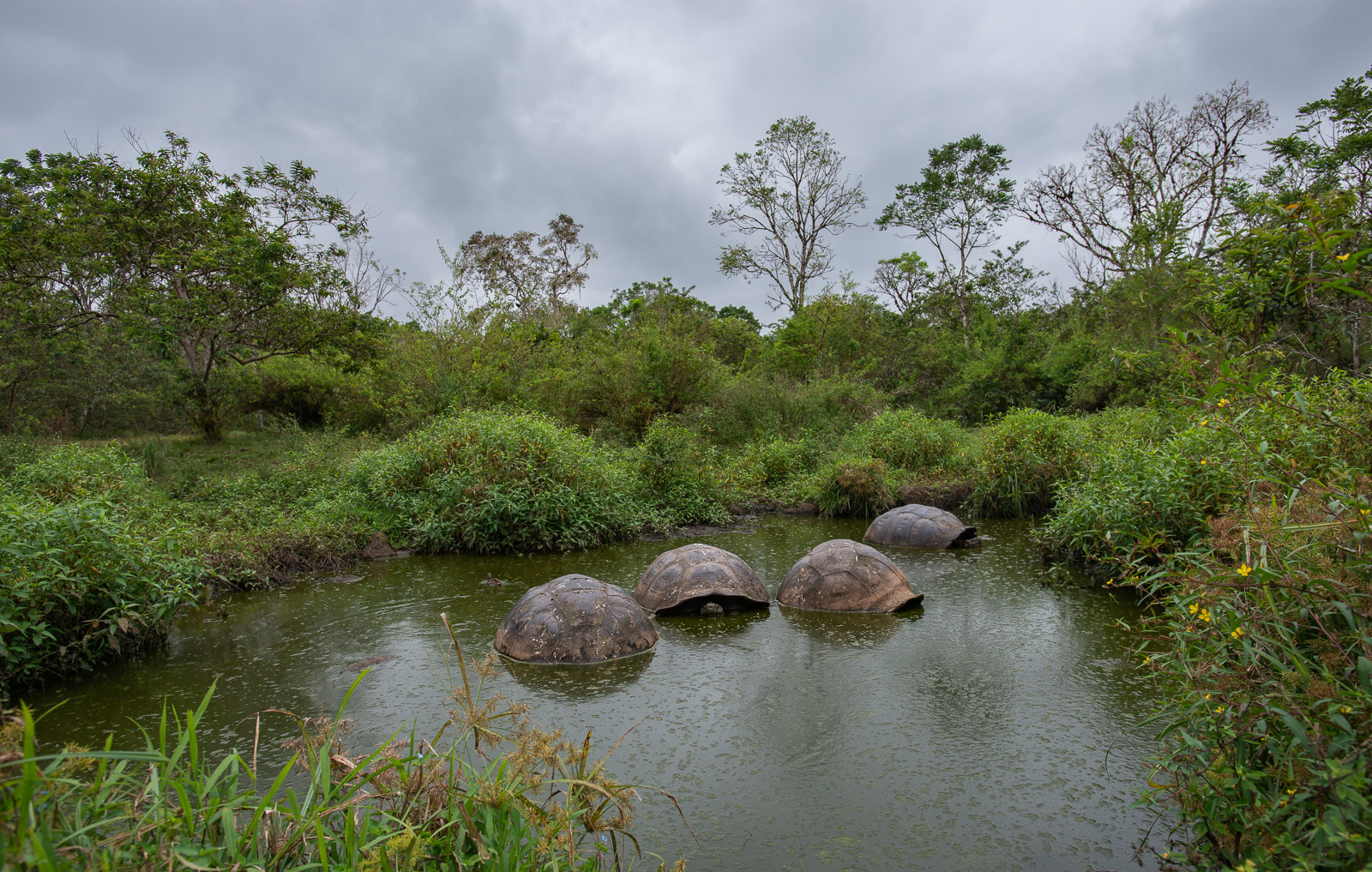
With an average lifespan of 150 years, Galápagos giant tortoises are the oldest reptiles on planet earth. And they really are giants — full grown adults can exceed 550 pounds. They also happen to be endangered and have become a flagship species for conservation efforts in their isolated home range. It was a great experience to be in their presence in the highlands of Santa Cruz Island in the Galápagos. Nikon D800 with Nikkor 17-35mm lens (at 22mm) ISO 400, f/7.1 at 1/1000th of a second.
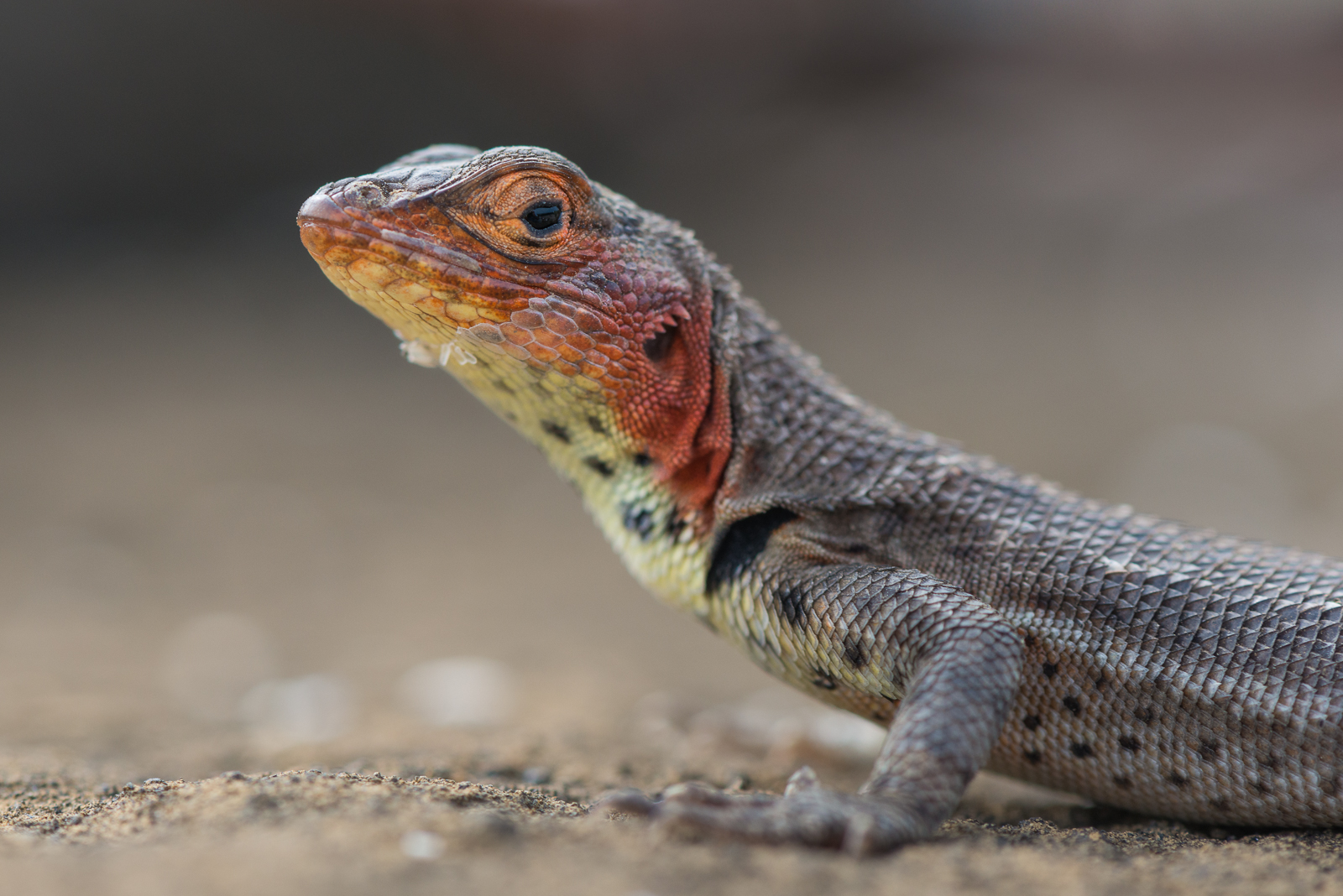
Twenty species of lava lizard are recognized as distinct species. Ten of those species are endemic to the Galápagos Islands. They all have their particular coloring, shape and behavior depending on the island they are found. Those on dark, lava-rock islands tend to be darker than those on lighter sandy islands. This guy was on Santiago Island. I caught him mid-facial peel. Nikon D800 with Nikkor 105 macro lens, ISO 400, f/8 at 1/400th of a second.
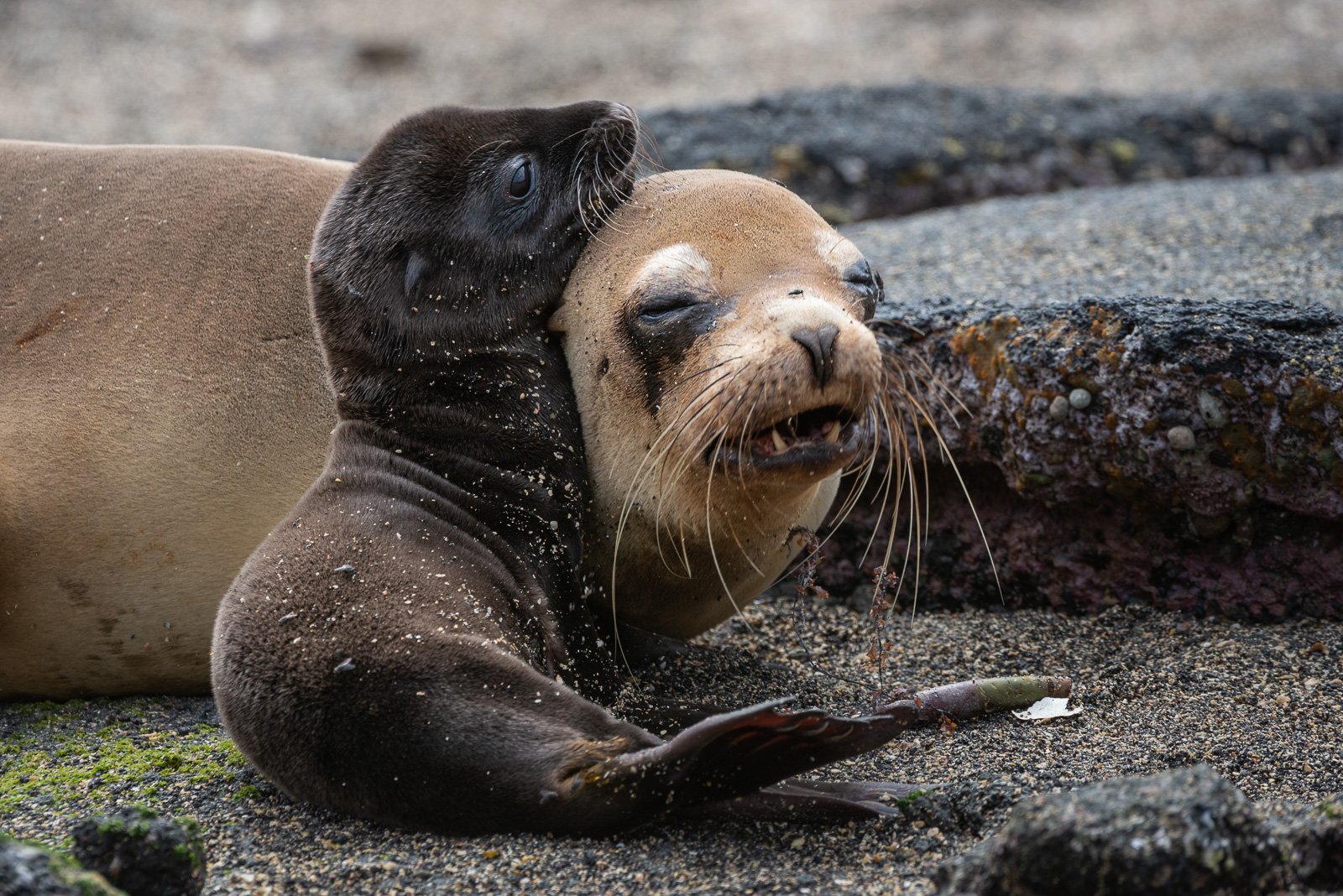
Galápagos sea lions are virtually everywhere in the Galápagos archipelago. In some places, you have to be careful not to trip over them. Their ubiquity, as well as their playful and welcoming nature have earned them the title of “welcoming party” for the islands. In this instance, I was able to capture a tender moment between a mother and her pup. Nikon D800 with Nikkor 200-400mm lens (at 400mm) ISO 400, f/6.3 at 1/640th of a second.
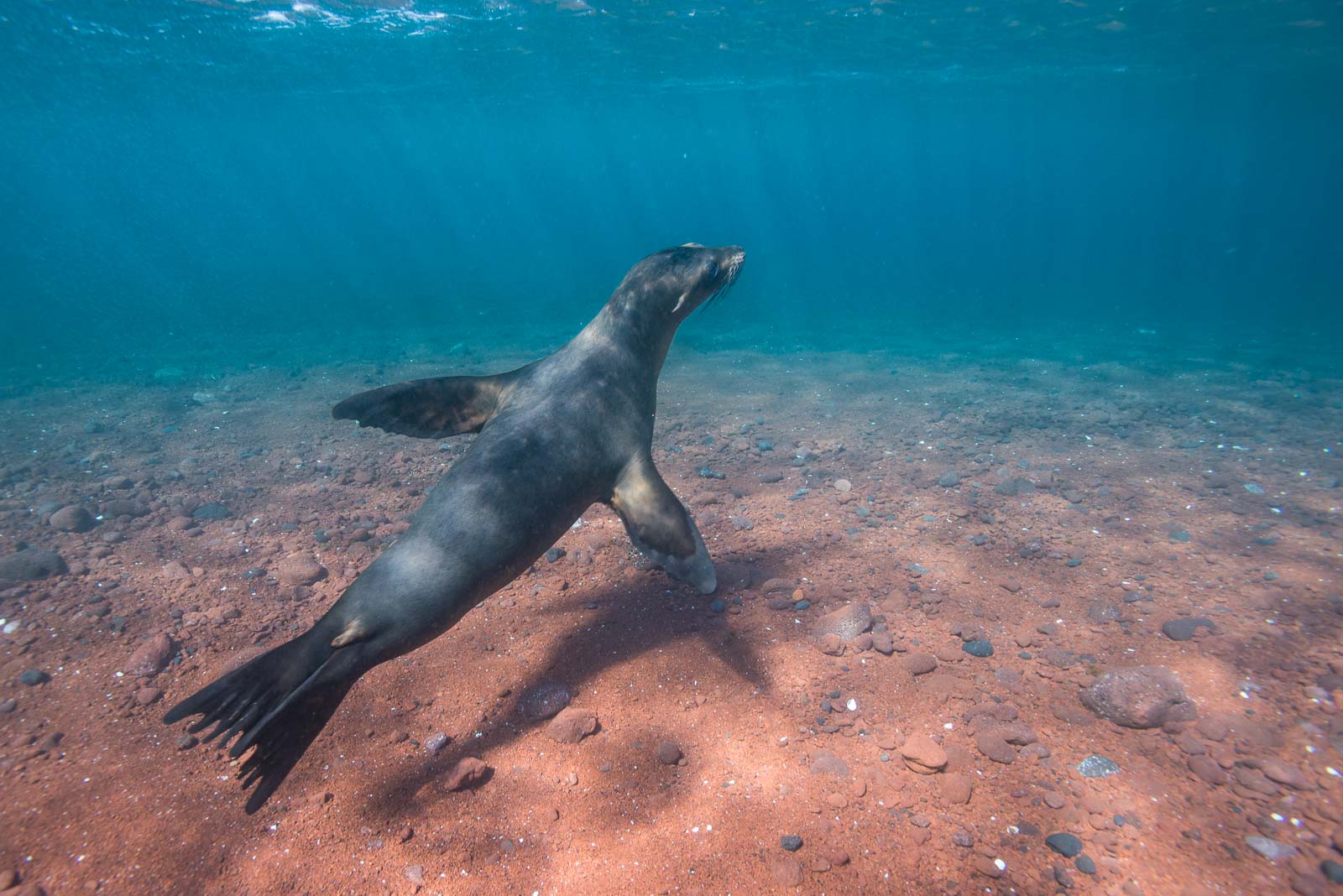
A Galápagos sea lion floats through the clear waters of Rabida Island in the Galápagos. I like that you can see the tail on this one. Each afternoon of our Galápagos trip we had the opportunity to snorkel with sea lions. They rarely disappointed. Nikon D800 with Nikkor 17-35mm lens (at 17mm) in Ikelite underwater housing, ISO 800, f/9 at1/320th of a second.
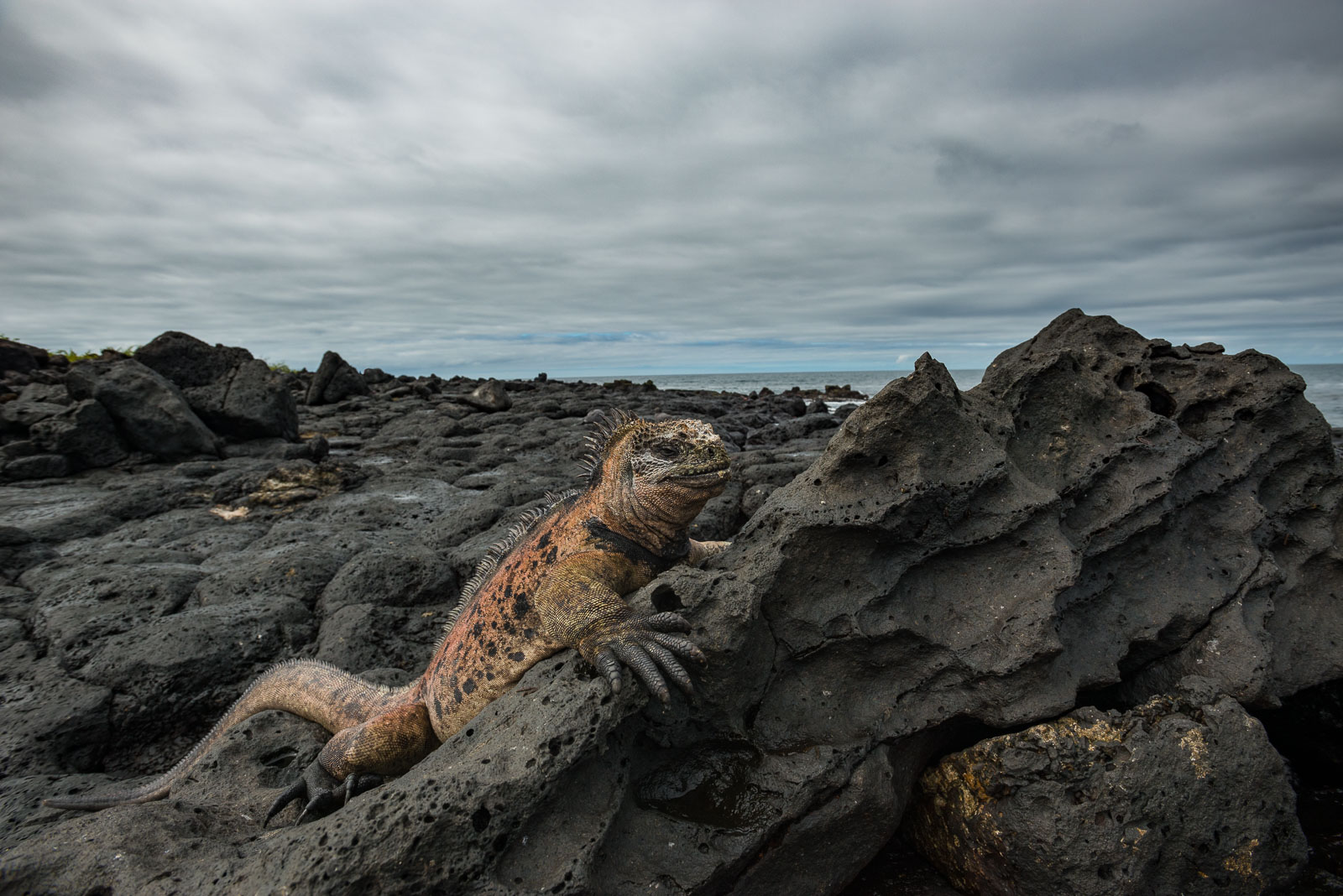
Marine iguanas are the only lizards on earth that swim in the ocean. They are herbivores and as you can see from the lava-rock landscape they inhabit in the Galapagos Islands, there isn’t much foliage to feed on. They’ve adapted to a life in the water where there is a far greater abundance of plant life. I was really hoping for an underwater shot while snorkeling, but they move much more quickly in water than out. No problem getting all sorts of shots as they rested for the good part of the day on the black rock of La Fe Island. Nikon D800 with Nikkor 17-35mm lens (at 17mm) ISO 400, f/10 at 1/800th of a second.
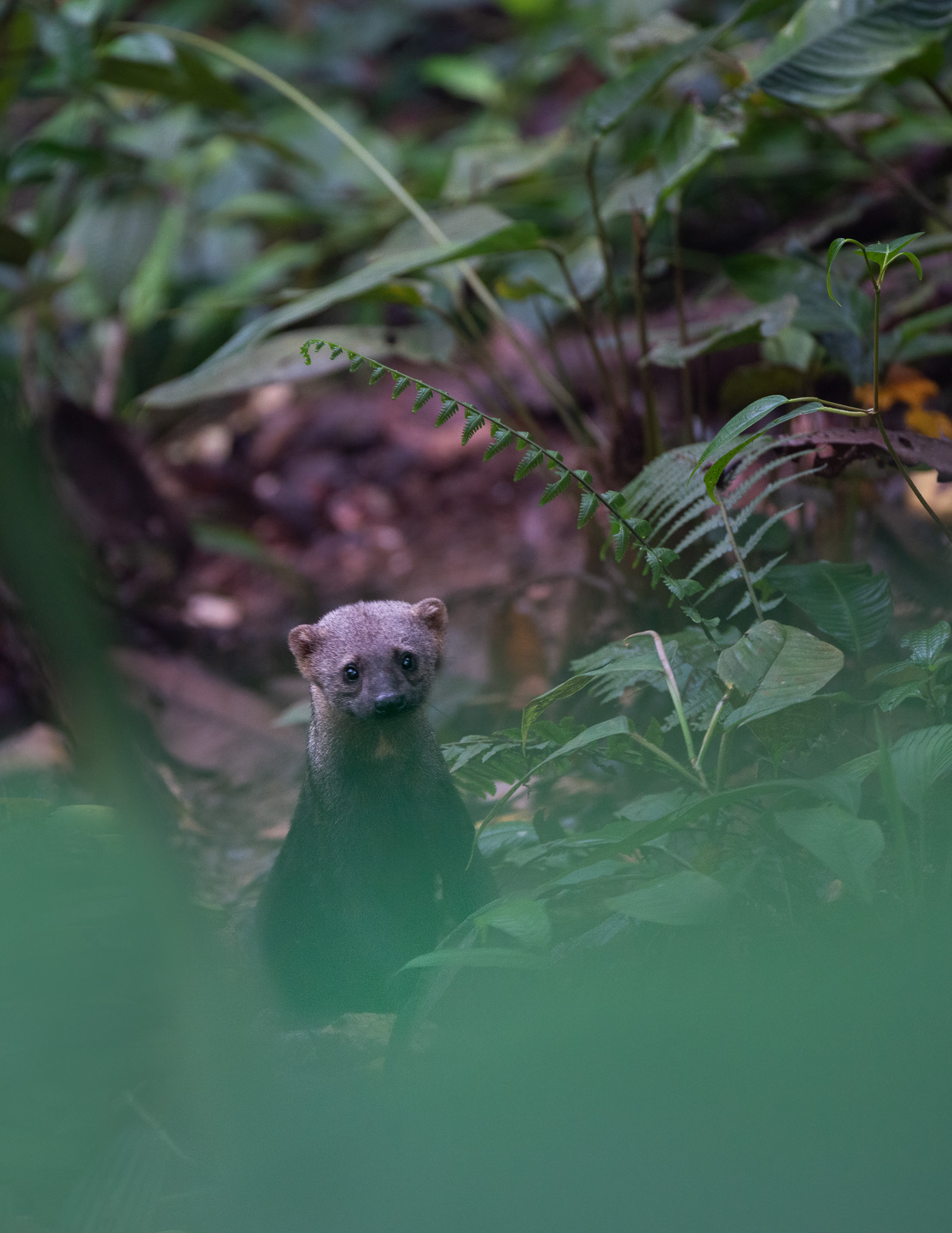
Spotting and being able to photograph a tayra was the highlight of my trip to the Ecuadorian cloud forest back in 2012. I had seen one before in Bolivia, but before I could get a shot, the notoriously skittish member of the weasel family disappeared into the jungle. Tayras spend a good deal of their time in trees, but will also patrol the forest floor in search of food. They are opportunistic omnivores and have a varied diet consisting of rodents and other small mammals, as well as lizards, birds, invertebrates, various fruits and honey. Nikon D800 with Nikkor 200-400mm lens (at 400mm) ISO 1600, f/4 at 1/60th of a second.
We use cookies to enhance your experience while using our website. If you are using our Services via a browser you can restrict, block or remove cookies through your web browser settings. We also use content and scripts from third parties that may use tracking technologies. You can selectively provide your consent below to allow such third party embeds. For complete information about the cookies we use, data we collect and how we process them, please check our Privacy Policy