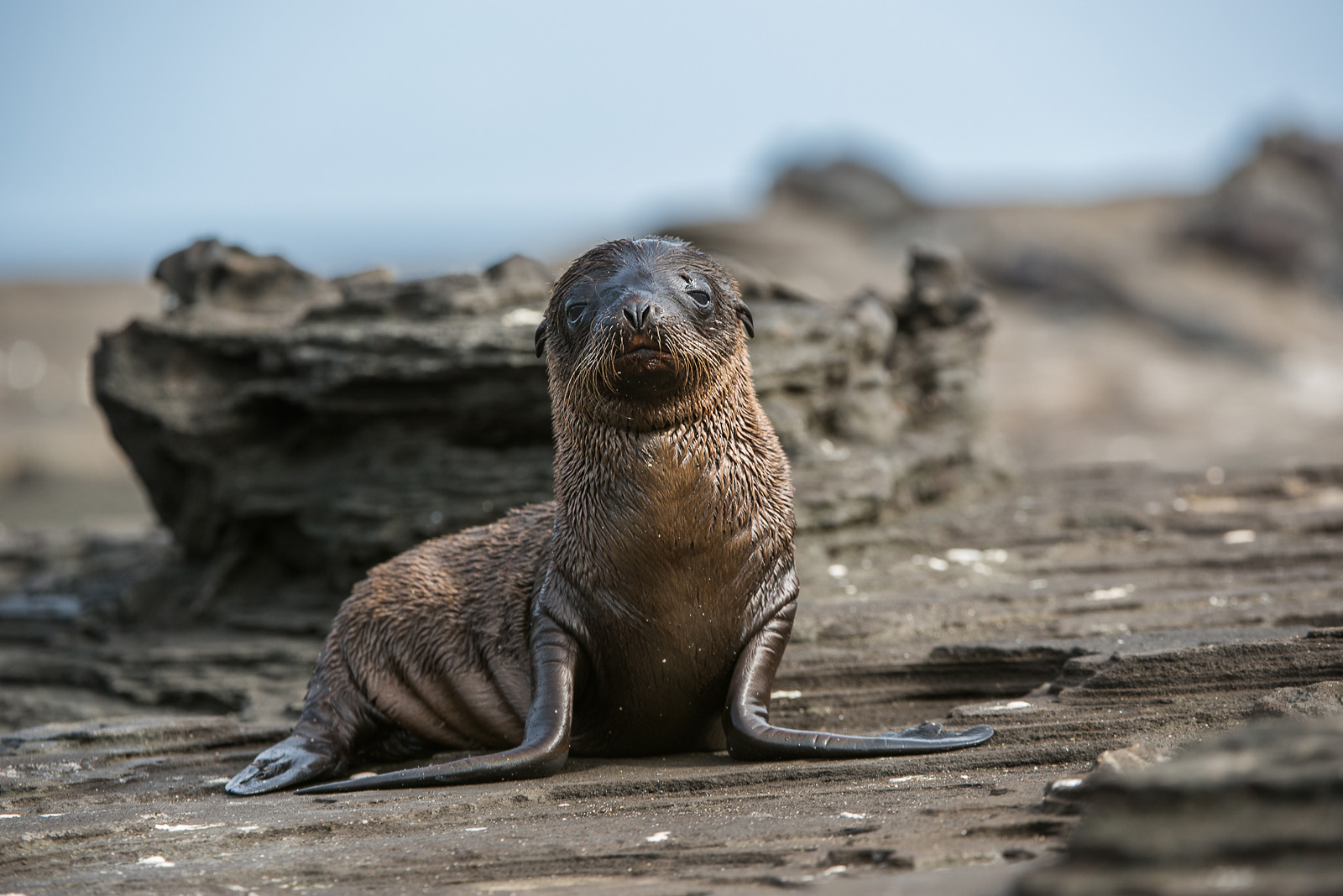
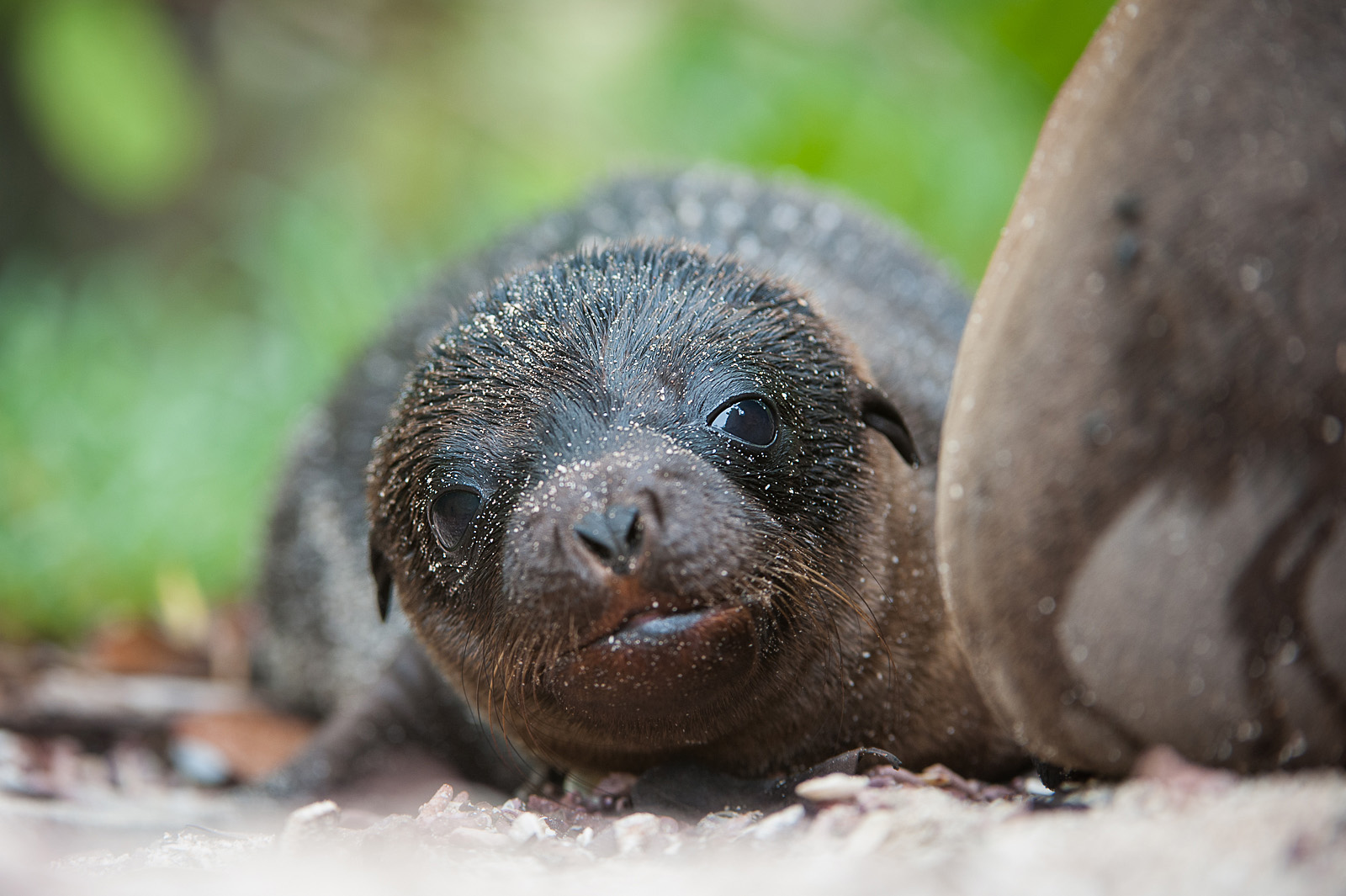
This young Galápagos sea lion was clearly not impressed with the size of my camera. Photographed on Santiago Island in the Galápagos. Nikon D800 with Nikkor 200-400mm lens (at 290mm) ISO 400, f/5.6 at 1/500th of a second.
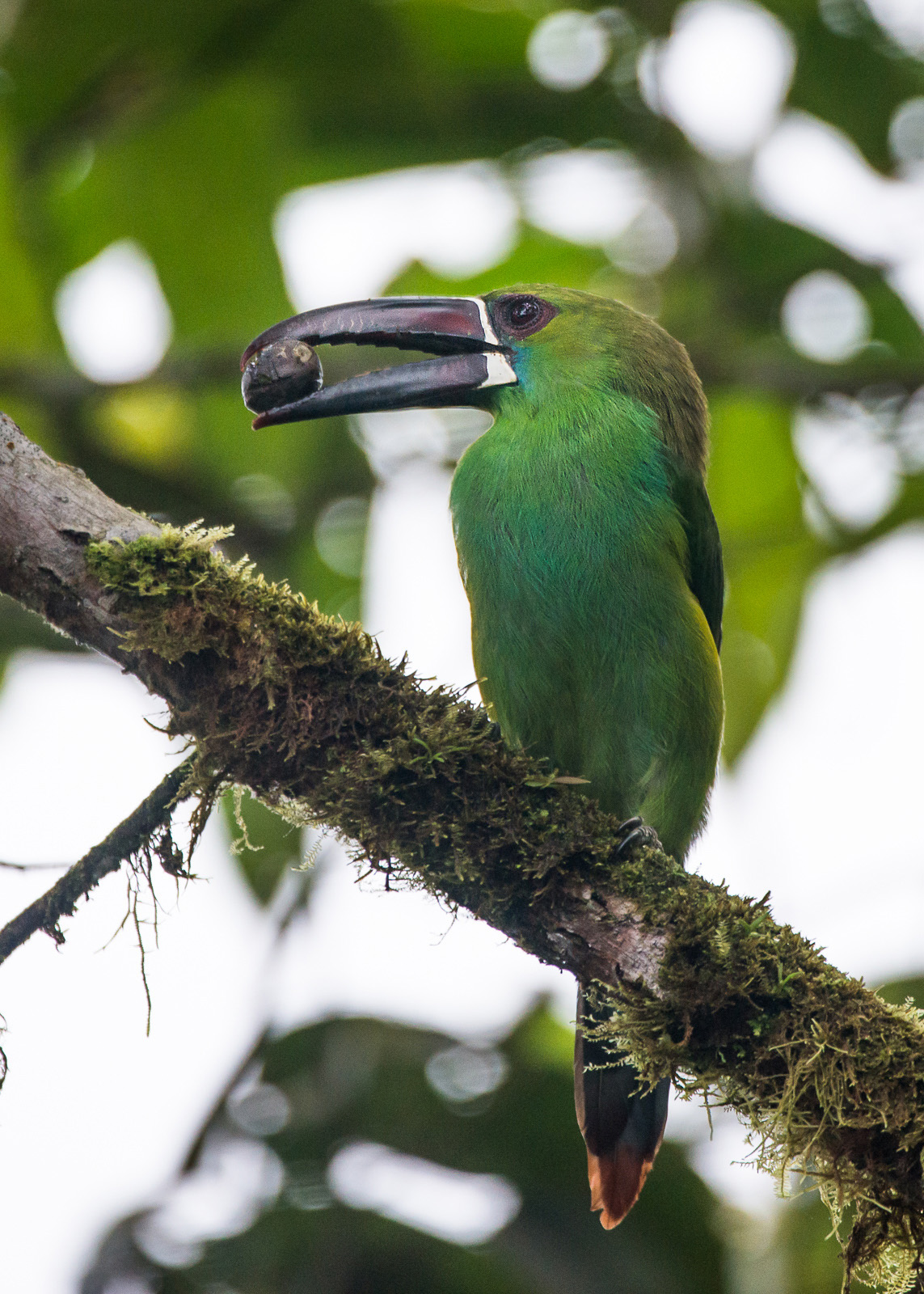
I shot this image of a crimson-rumped toucanet through the glass of my lodge window while staying in the cloud forest of Ecuador (unfortunately, the windows didn’t open). He didn’t allow me to see his namesake crimson rump, but did have the common courtesy to at least display a bit of feeding behavior. Nikon D800 with Nikkor 200-400mm lens (at 400mm) ISO 800, f/4 at 1/640th of a second.
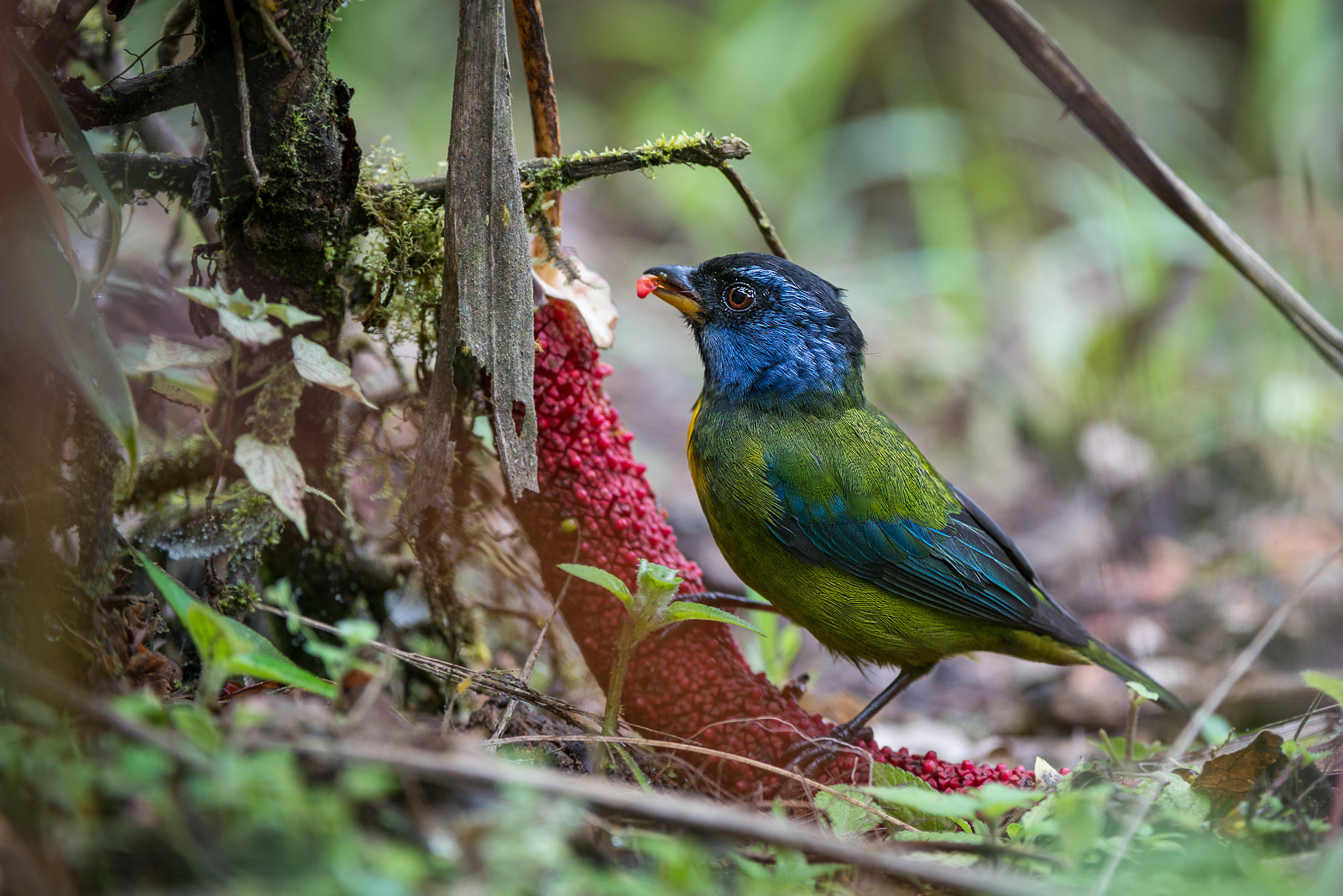
Tanagers come in every color imaginable across an estimated 240 species. They exist mainly in the tropics of the western hemisphere. I photographed this moss-backed tanager high in the cloud forest of Ecuador. Nikon D800 with Nikkor 200-400mm lens (at 250mm) ISO 800, f/4 at 1/320th of a second.
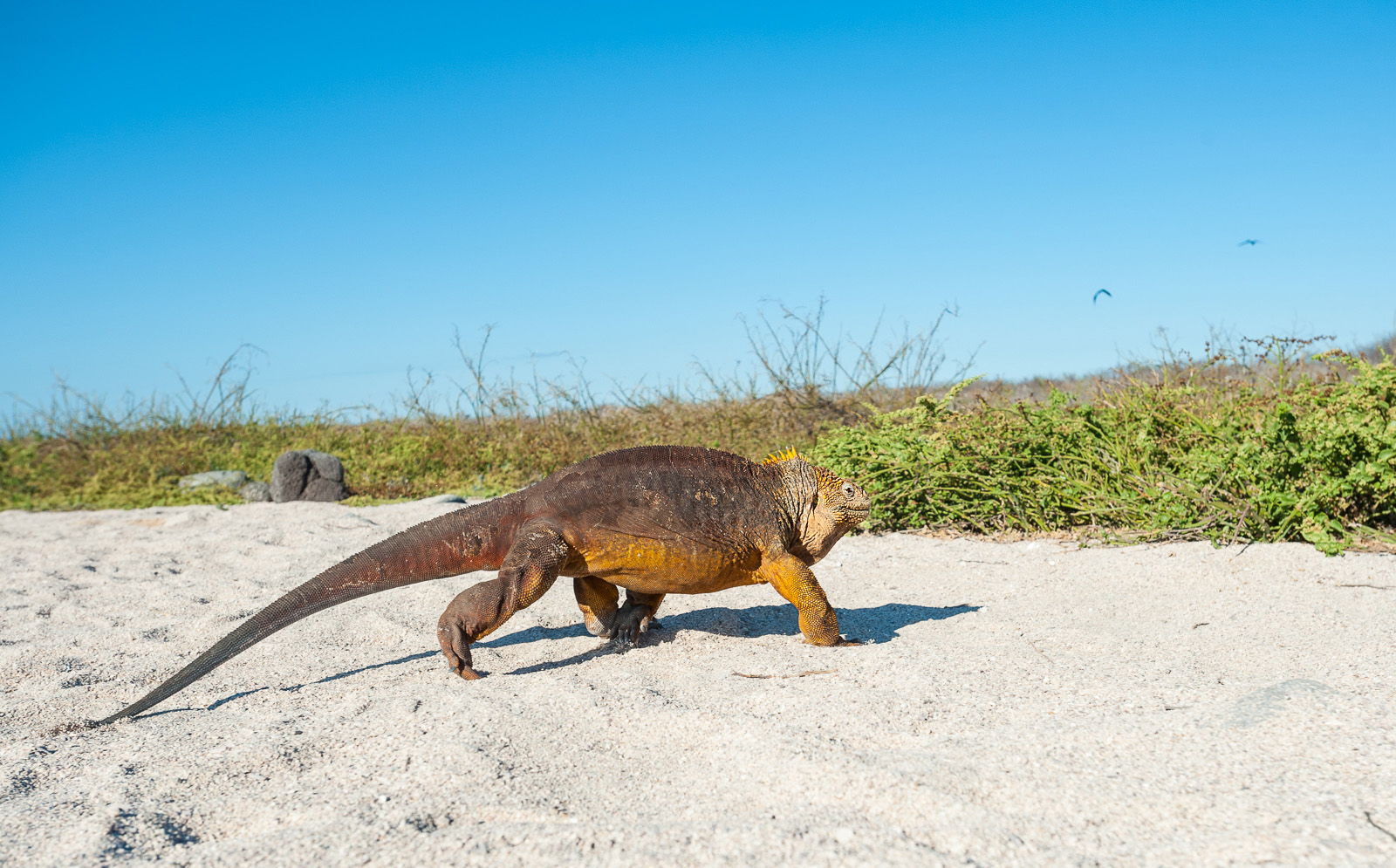
A Galápagos land iguana makes its way across the sandy terrain of North Seymour Island. These guys are big iguanas, usually yellowish/orange in color but they can also be a variety of other colors. Charles Darwin was not impressed as he described them as “ugly animals, of a yellowish orange beneath, and of a brownish-red colour above: from their low facial angle they have a singularly stupid appearance.” Rather unprofessional if I do say so from Mr. Darwin. Nikon D700 with Nikkor 17-35mm lens (at 35mm) ISO 400, f/8 at 1/1250th of a second.
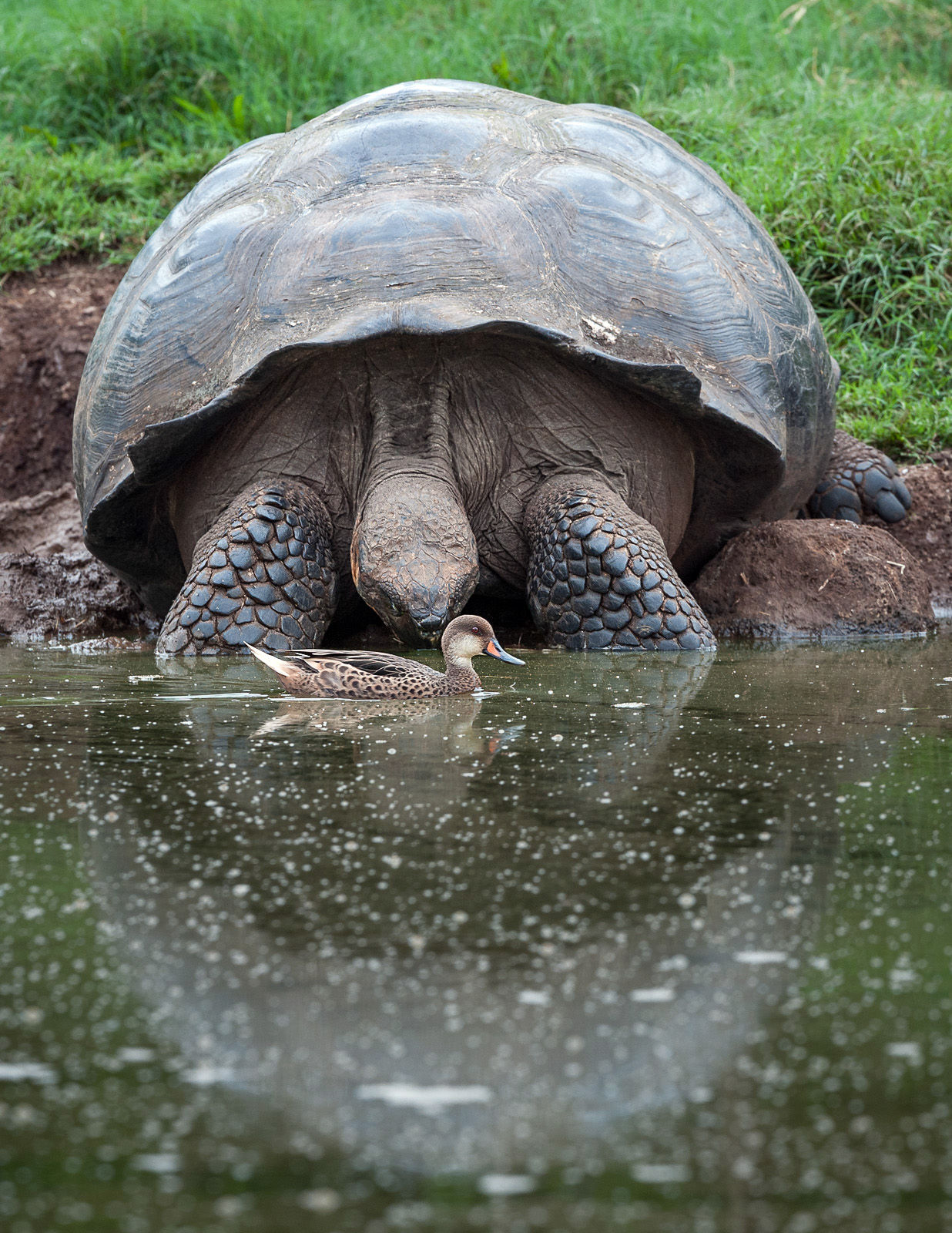
A white-cheeked pintail duck and Galápagos giant tortoise don’t seem to mind sharing the water in a crater pond high in the Santa Cruz highlands of the Galápagos Islands. It was quite prehistoric to watch these giant reptiles going about their business in their natural habitat. Like most of the wildlife in the Galápagos, species tend to live side by side with little conflict. Nikon D700 with Nikkor 200-400mm lens (at 400mm) ISO 800, f/8 at 1/250th of a second.
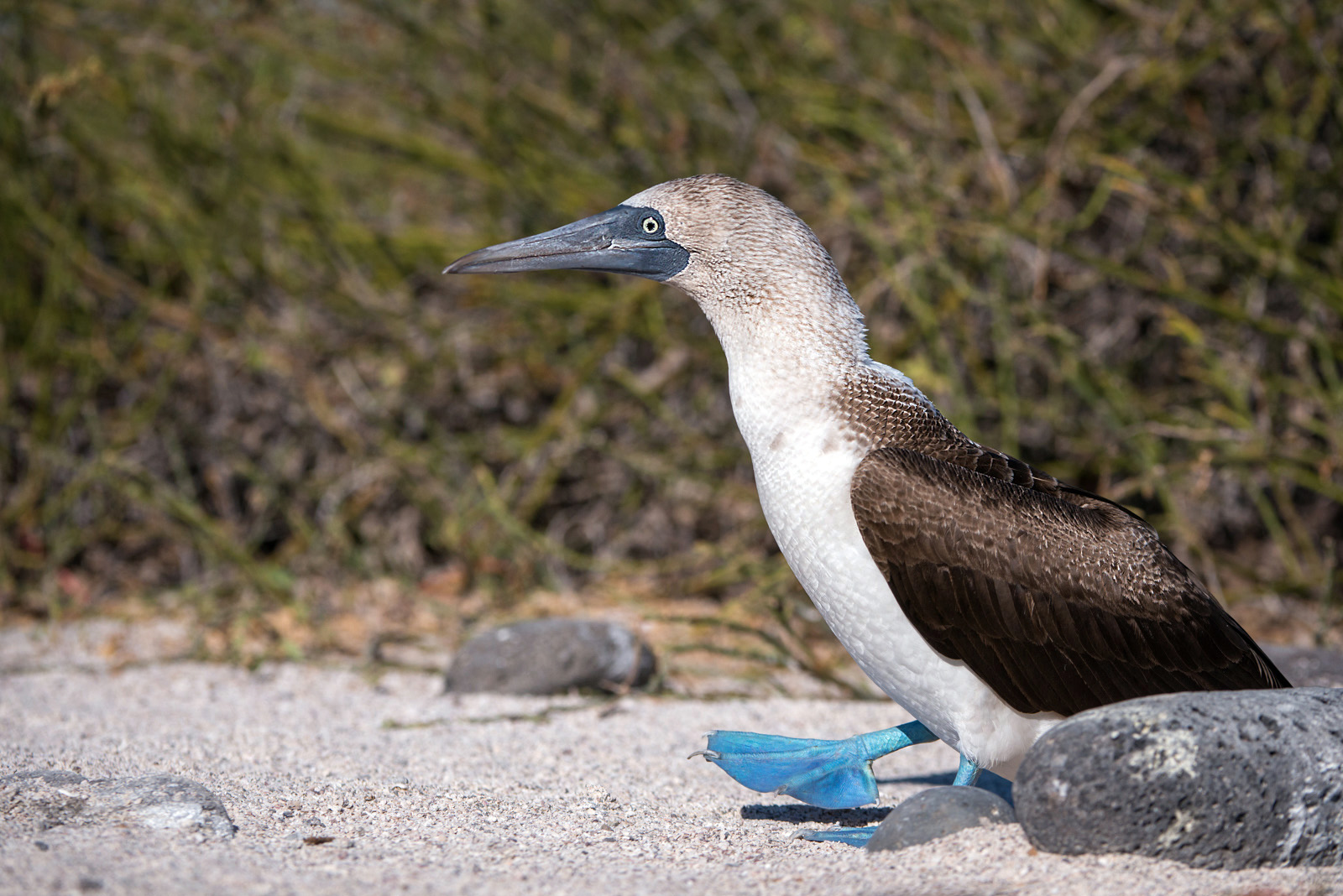
A blue-footed booby showing those characteristic blue feet as it struts across the sand. These guys are one of the iconic species of the Galapagos. I photographed them on several of the islands, including this one on Seymour Island. Nikon D800 with Nikkor 200-400mm lens (at 220mm) ISO 400, f/5 at 1/5000th of a second.
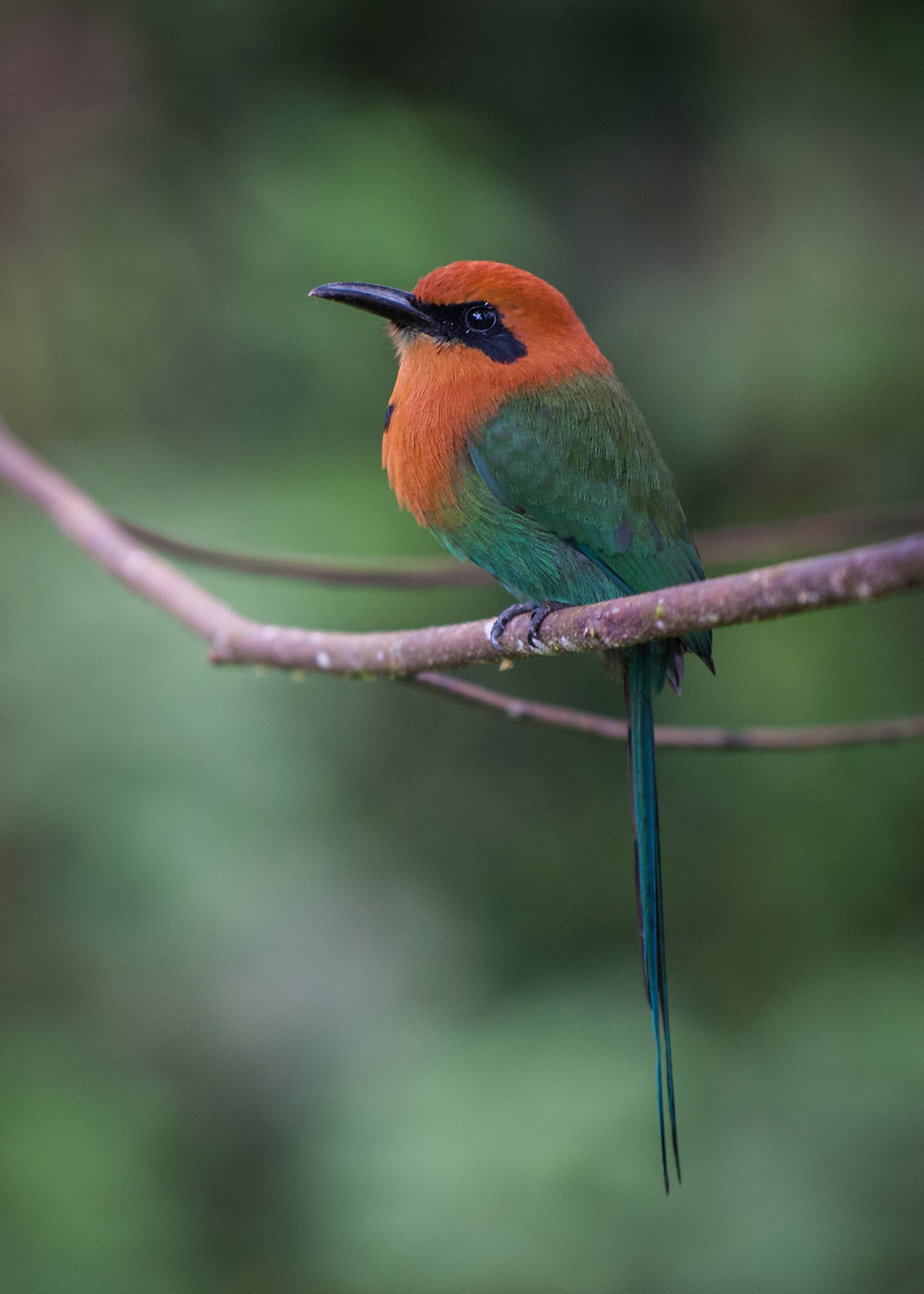
Always nice to run into motmots while in Central and South America. This particular motmot is of the rufous variety. He/she allowed a very close approach, as well as a side angle, enabling me to photograph all that great color in the feathers. This wasn’t too far from our lodge in the cloud forest of Ecuador. Nikon D700 with Nikkor 70-200mm lens (at 200mm) ISO 1600, f/2.8 at 1/160th of a second.
After yesterday’s brief foray into the abstract world of flower anatomy, I’m back today with something a bit more familiar — baby animals. In this case a Galápagos sea lion pup. Karen and I chartered a half day private tour to the tiny island of La Fe, mainly for snorkeling in the surrounding water. We landed our boat on the only sandy patch of land on the island. There were about eight sea lions waiting to greet us as we arrived — including this inquisitive youngster. Nikon D700 with Nikkor 200-400mm lens (at 200mm) ISO 800, f/4 at 1/500th of a second
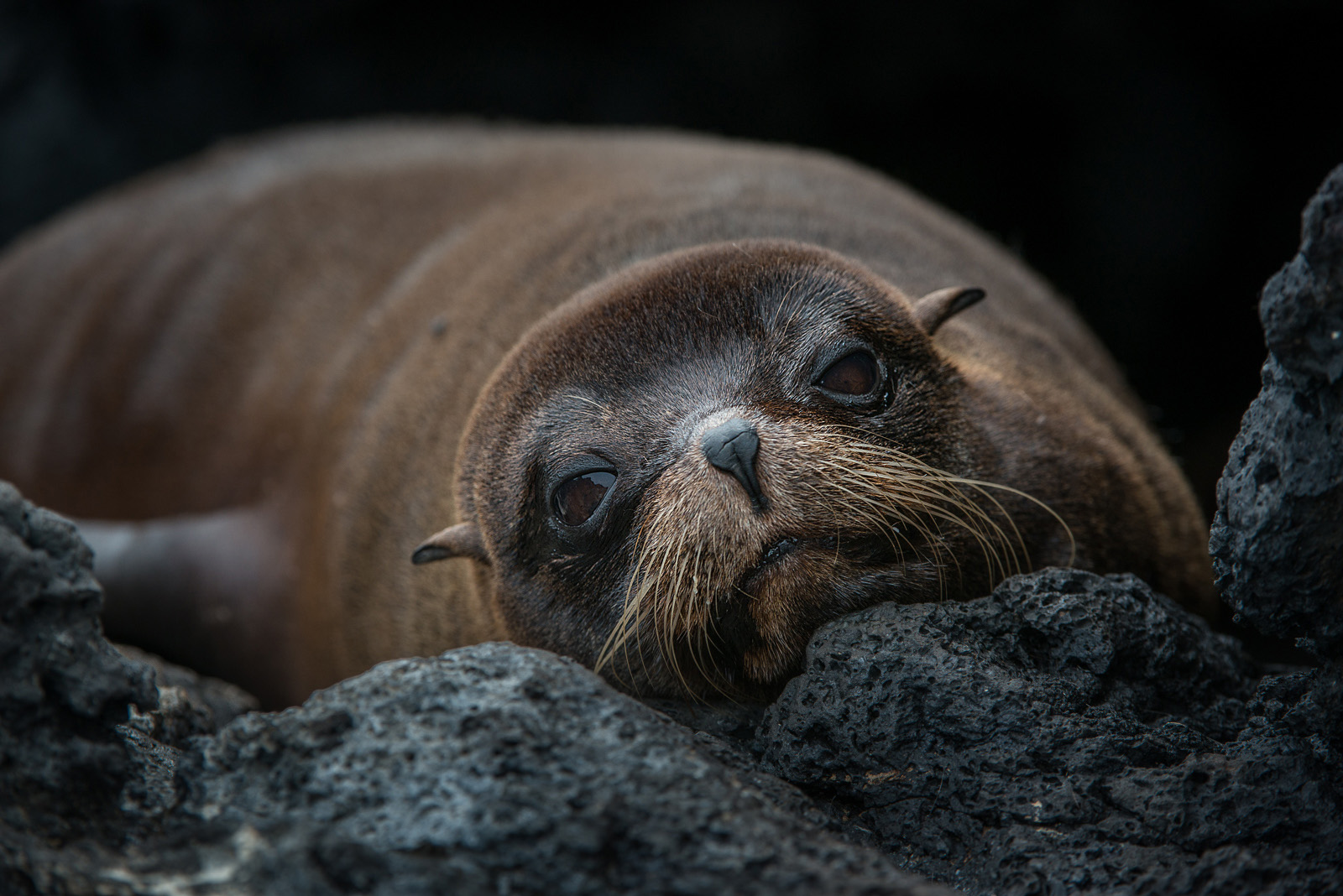
Here’s the other pinniped species that lives in the Galápagos Islands — the Galápagos fur seal. Unlike the sea lions, which were everywhere, I didn’t see too many of the fur seals, and they were a bit more skittish to our presence. This guy was having a good nap atop the, presumably, comfortable lava rocks of Santiago Island. Nikon D800 with Nikkor 200-400mm lens (at 330mm) ISO 500, f/5.6 at 1/640th of a second
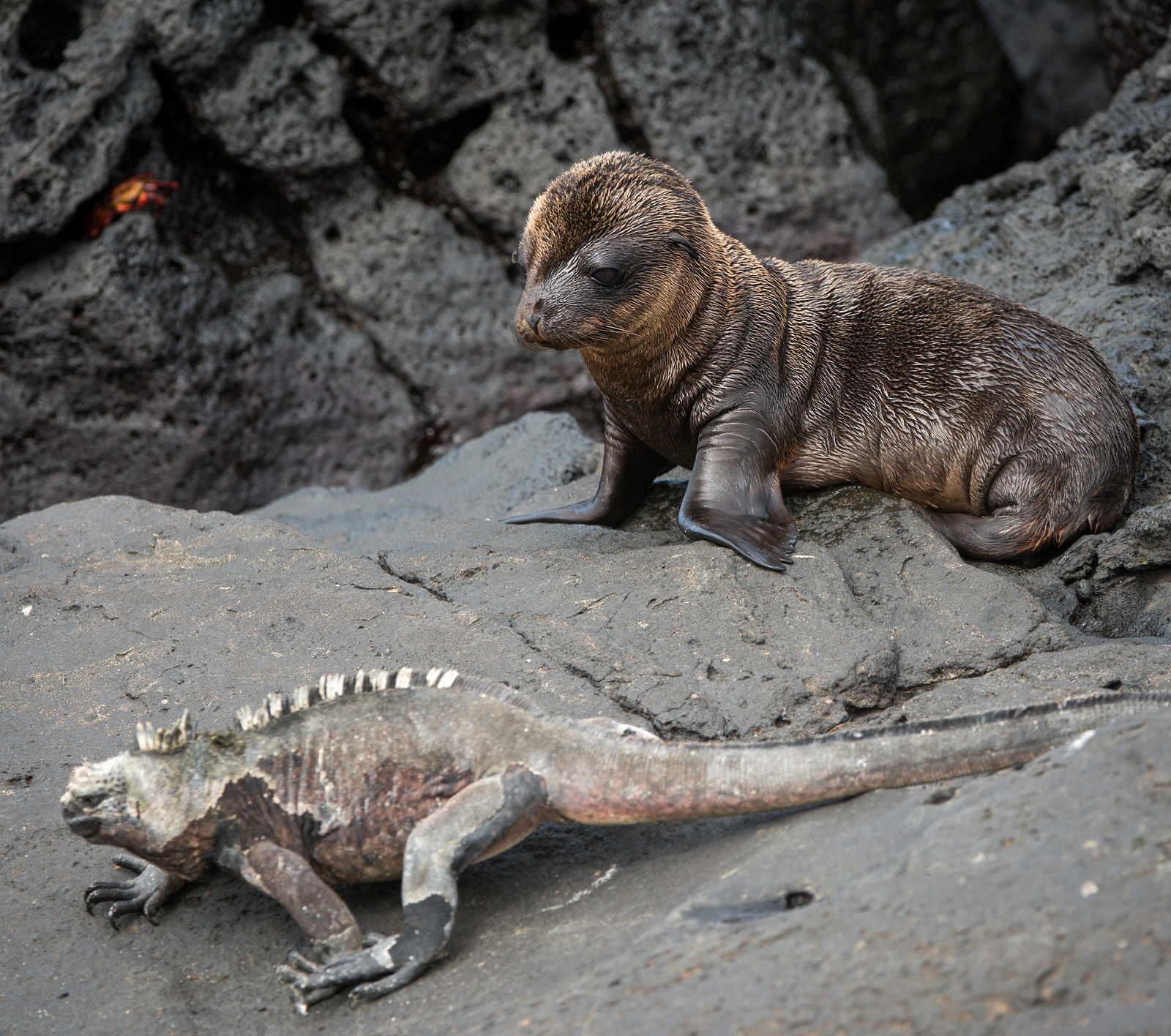
There’s a whole lot of Galápagos going on in this tight framing — a Galápagos sea lion pup, a marine iguana and a Sally lightfoot crab there in the background. Three of the most iconic residents of this amazing place. All three can be found on most of the islands in the archipelago — and in great abundance. This was on Santiago Island, one of the many islands composed primarily of black, volcanic rock. Nikon D700 with Nikkor 200-400mm lens (at 290mm) ISO 400, f/5 at 1/500th of a second
We use cookies to enhance your experience while using our website. If you are using our Services via a browser you can restrict, block or remove cookies through your web browser settings. We also use content and scripts from third parties that may use tracking technologies. You can selectively provide your consent below to allow such third party embeds. For complete information about the cookies we use, data we collect and how we process them, please check our Privacy Policy