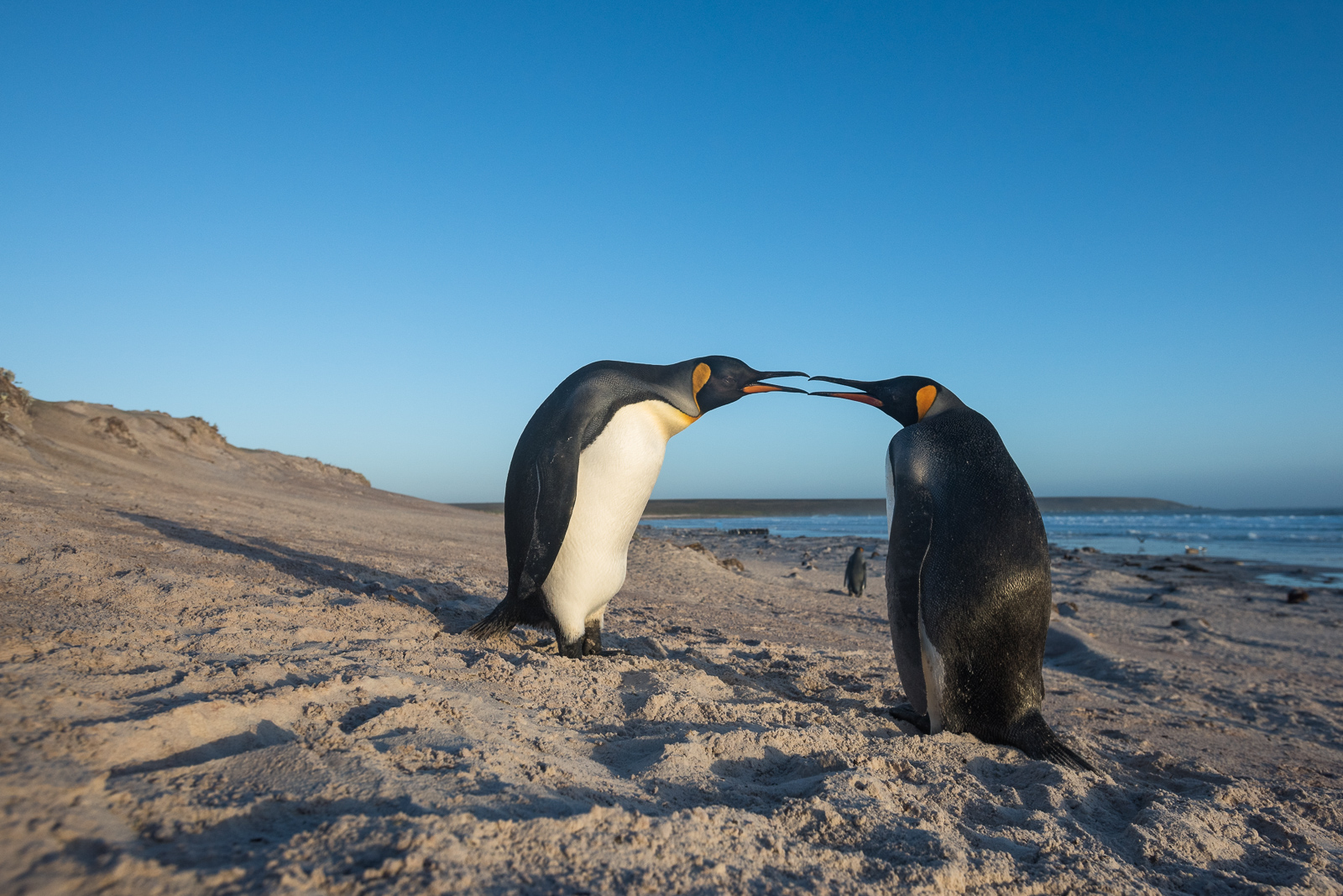
Penguins are true monogamists, usually mating for life. When one of a pair dies, the surviving penguin will carry on alone. A mated pair will often touch beaks as a precursor to preening. I photographed these two king penguins on my final day in the Falkland Islands at Volunteer Point — the most accessible place in the world to see them (not that it was particularly accessible). Nikon D810 with Nikkor 17-35mm lens (at 24mm) ISO 400, f/6.3 at 1/2000th of a second
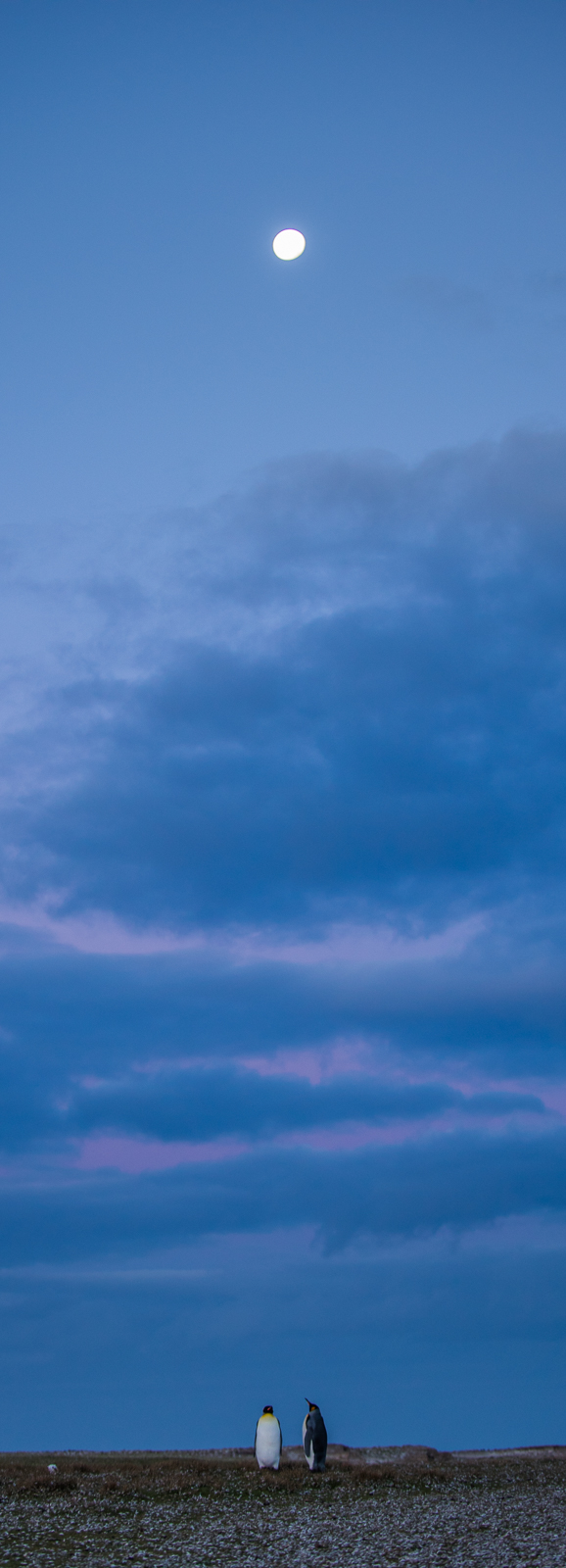
Two king penguins having a chat under the full moon at Volunteer Point in the Falkland Islands. Nikon D810 with Nikkor 70-200mm lens (at 70mm) ISO 400, f/2.8 at 1/125th of a second
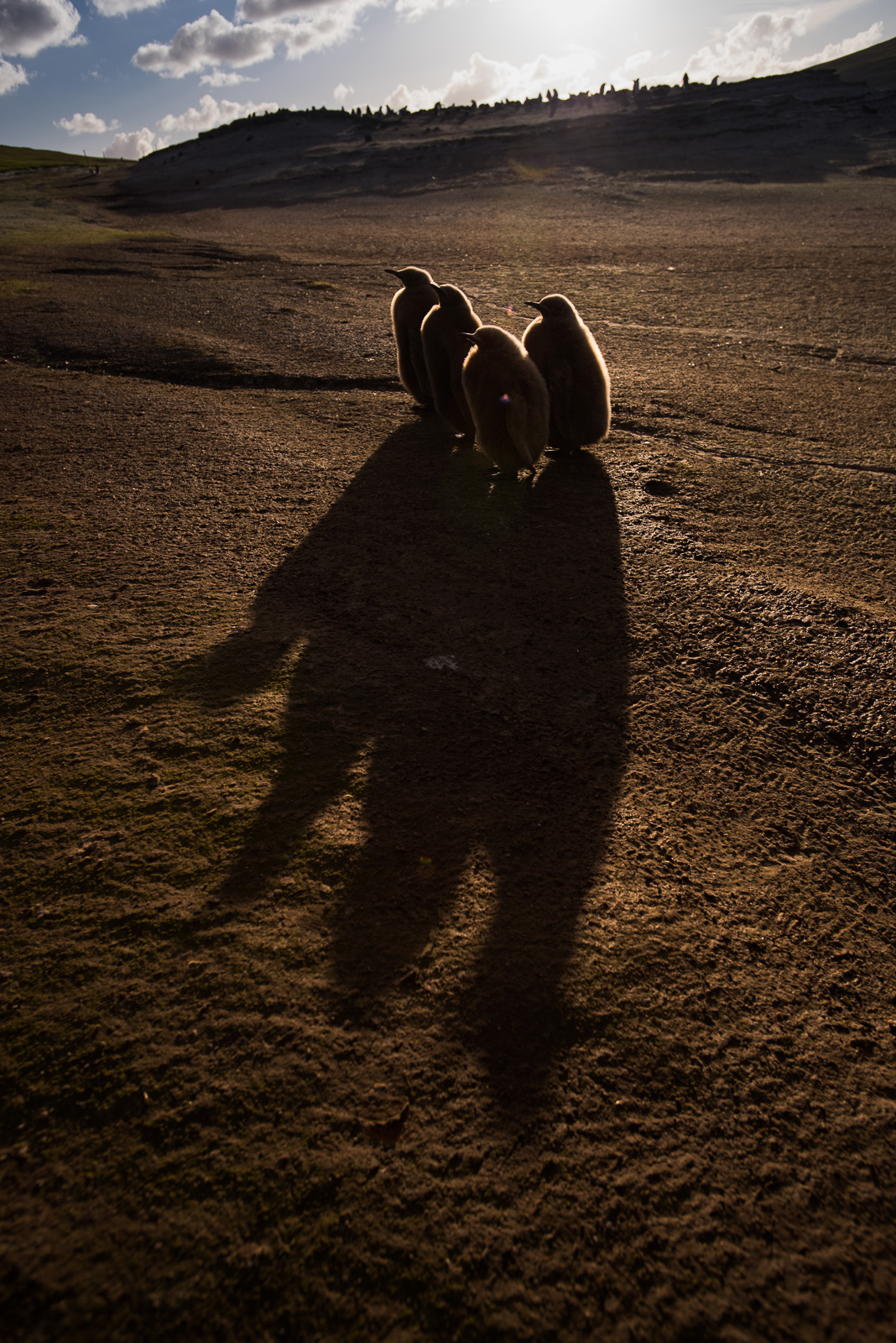
These four baby king penguins created a nice arrangement of shadows across the landscape of Saunders Island in the Falkland Islands — their downy fur picking up a nice bit of back light from the setting sun. Nikon D810 with Nikkor 17-35mm lens (at 25mm) ISO 400, f/5.6 at 1/1250th of a second
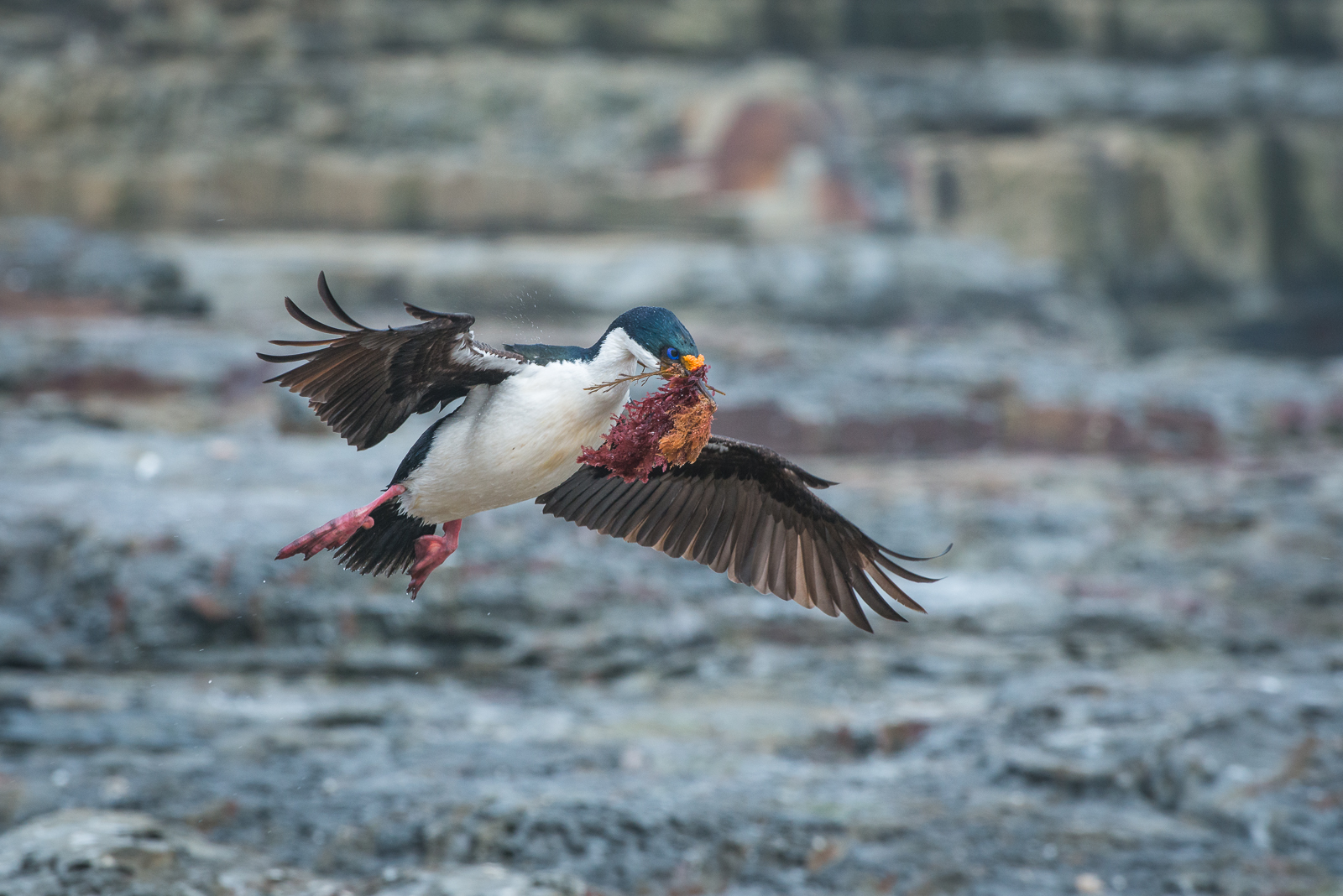
I spent a great afternoon with these imperial shags, also known as imperial cormorants, on the southern tip of Sea Lion Island, which is itself one of the most southerly islands of the Falkland Islands. I had hiked the length of the small island when I came across the colony and it really felt like I had reached the end of the earth. The shags were in the process of nest building and were flying out to sea to collect kelp before returning to their nests. They looked like they had colorful red and orange beards as they came back with beaks full of kelp. Nikon D800 with Nikkor 200-400mm lens (at 400mm) ISO 800, f/7.1 at 1/1000th of a second
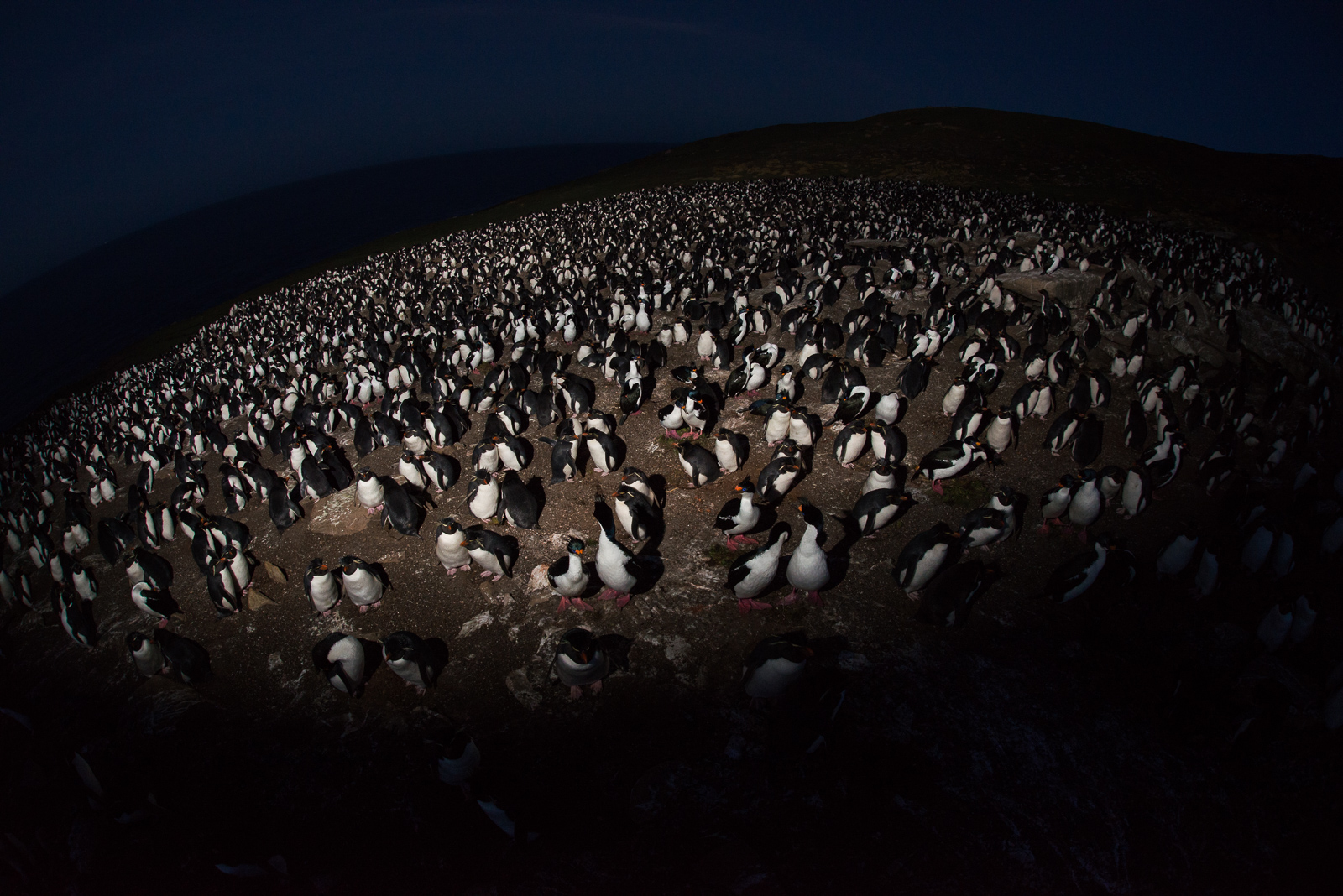
Using a fisheye lens held over my head, plus an off camera flash, I was able to create this spotlit view of a mixed colony of rockhopper penguins and imperial shags. The colony was still quite active just after the sun had gone down on Saunders Island in the Falkland Island, with both species jockeying for position before settling down for the night. The combination of lens, flash and exposure were used to create somewhat of a planetary view of the colony. Nikon D800 with Sigma 15mm fisheye lens, ISO 1600, f/5.6 at 1/60th of a second
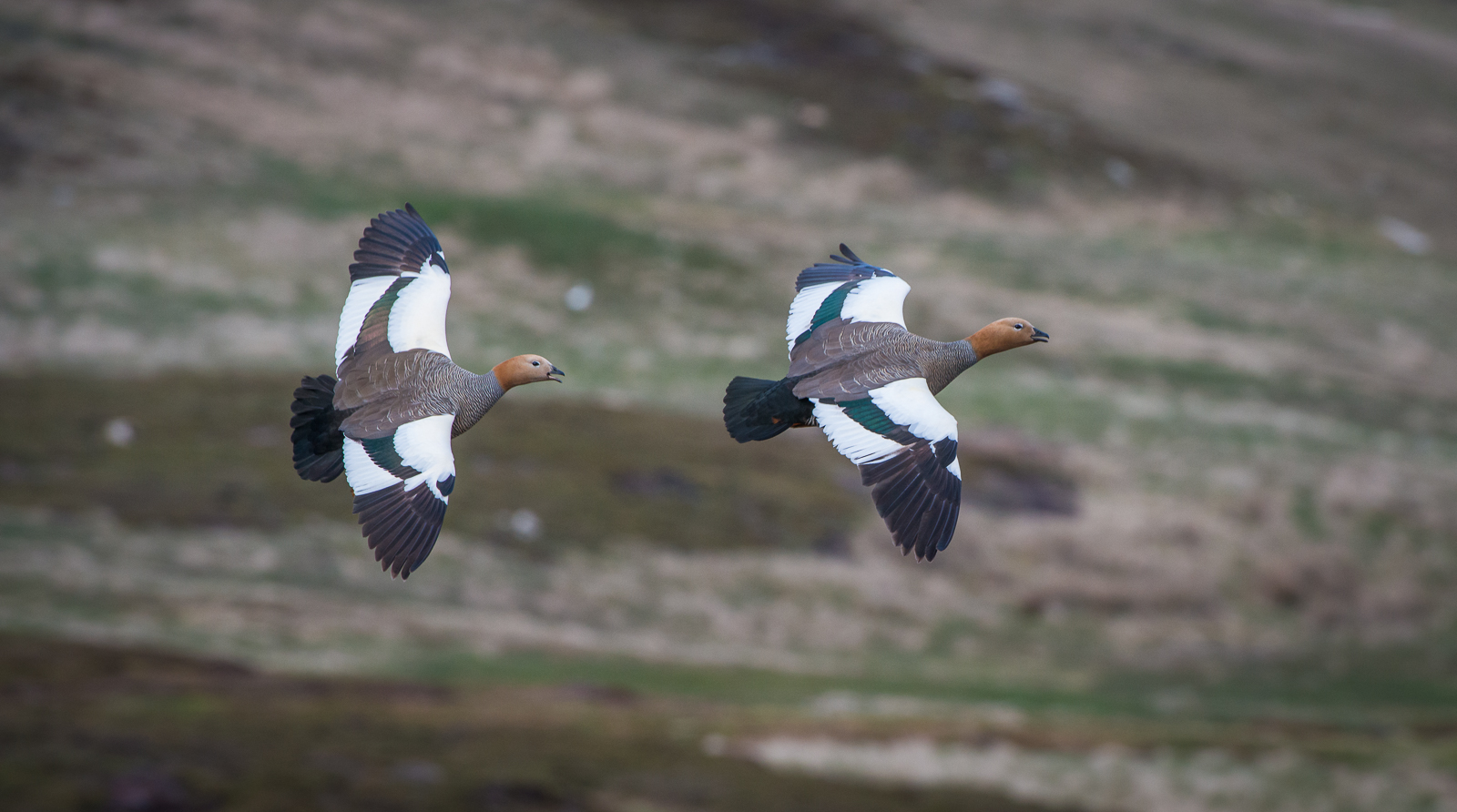
The Falkland Islands are known for penguins. But there are also a lot of geese. And when I say a lot, I mean it. Kelp geese, upland geese, and these guys, ruddy headed geese were everywhere. Always nice to get flight shots, and I captured this one late in the day on Carcass Island. Nikon D800 with Nikkor 200-400mm lens (at 400mm) ISO 800, f/8 at 1/500th of a second
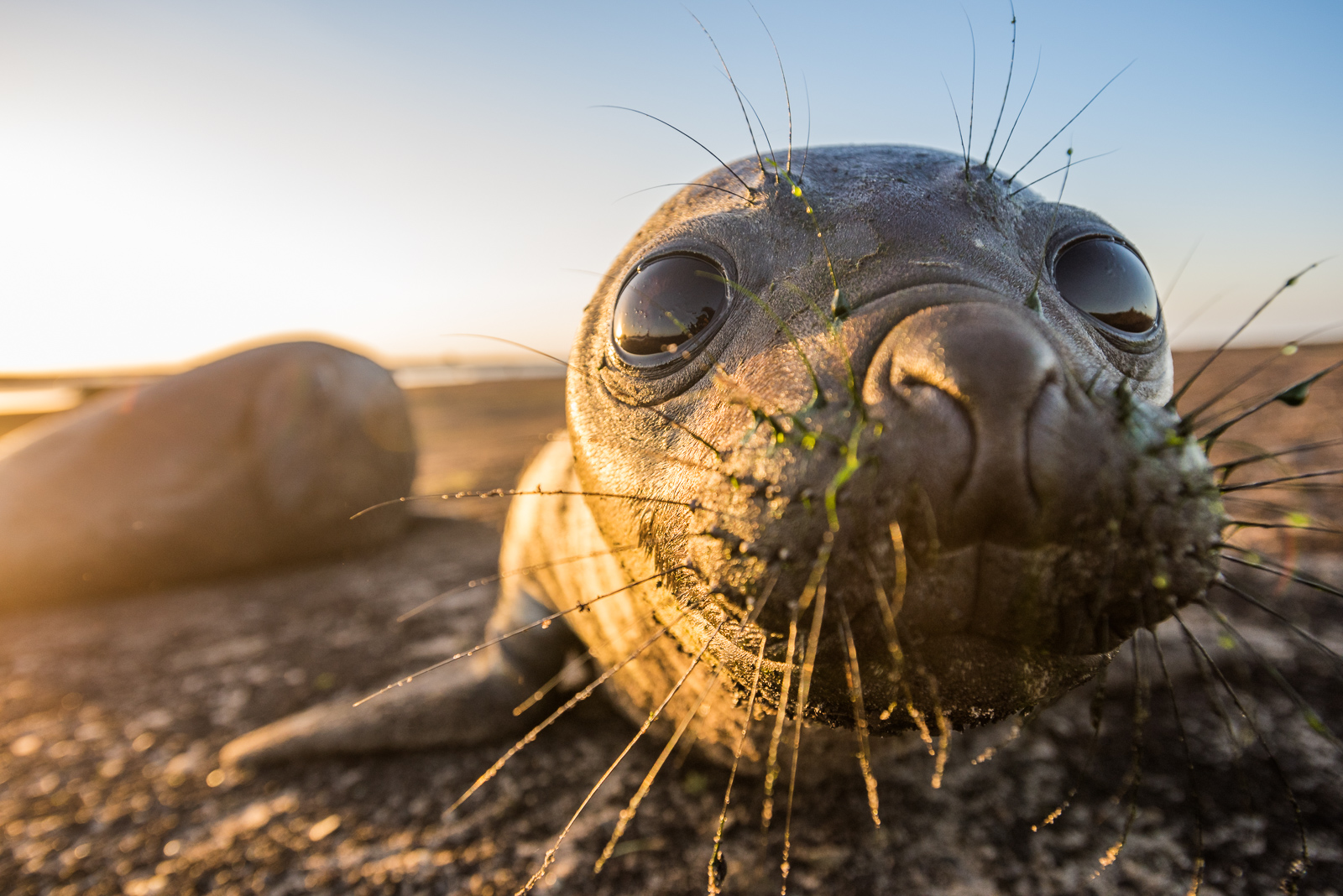
Sometimes the wildlife is as curious about me as I am about it. This baby southern elephant seal pressed its nose right up against my lens before resuming its morning nap. We made our acquaintance on Sea Lion Island in the Falkland Islands. Nikon D810 with Nikkor 17-35mm lens (at 24mm) ISO 400, f/4.5 at 1/500th of a second
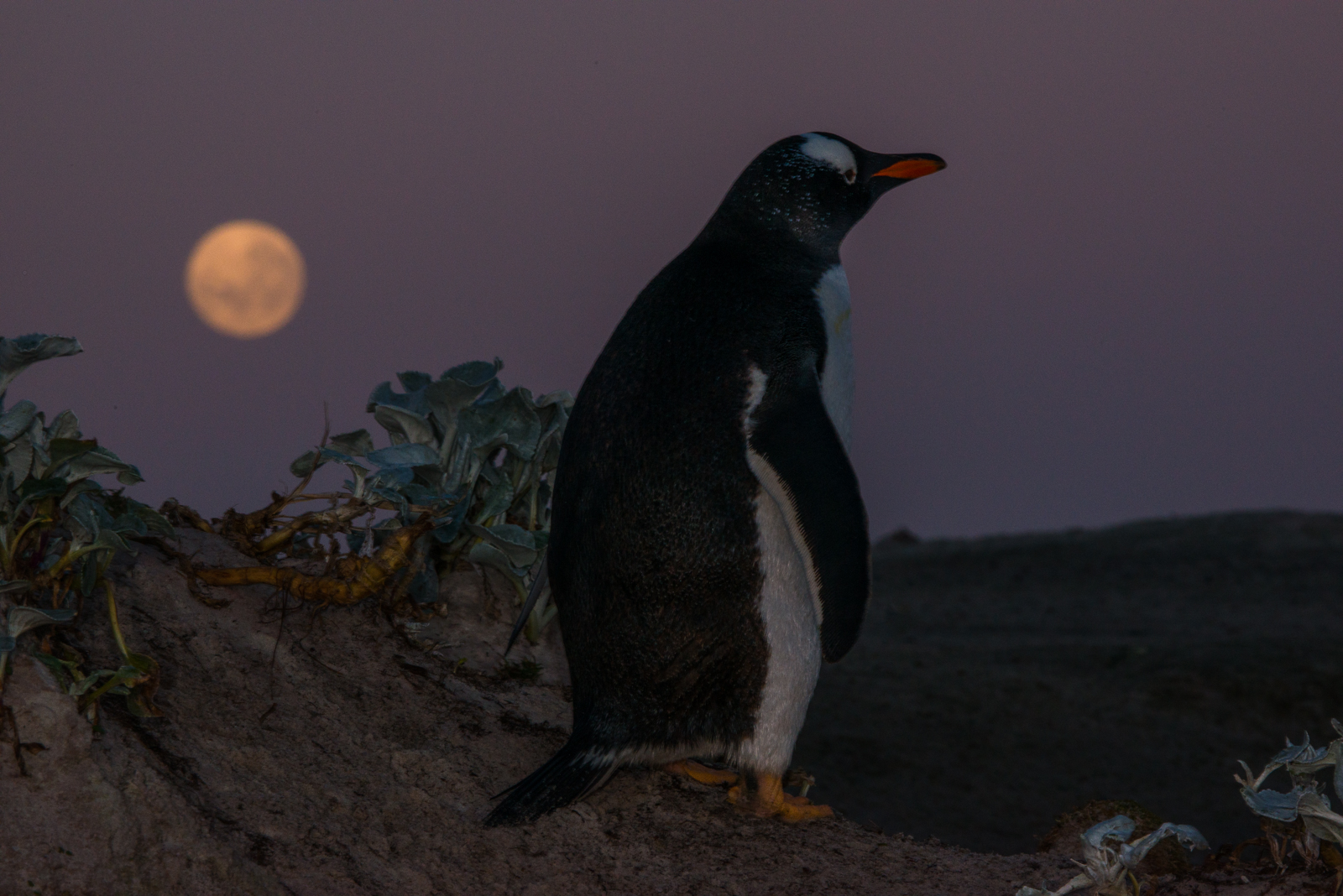
I photographed this gentoo penguin first thing in the morning. By using a longer focal length, I was able to compress the space between the penguin and the moon. A small aperture gave the image more of a night time look than early morning. Nikon D800 with Nikkor 200-400mm lens (at 300mm) ISO 800, f/22 at 1/60th of a second, two Nikon SB-900 flash units
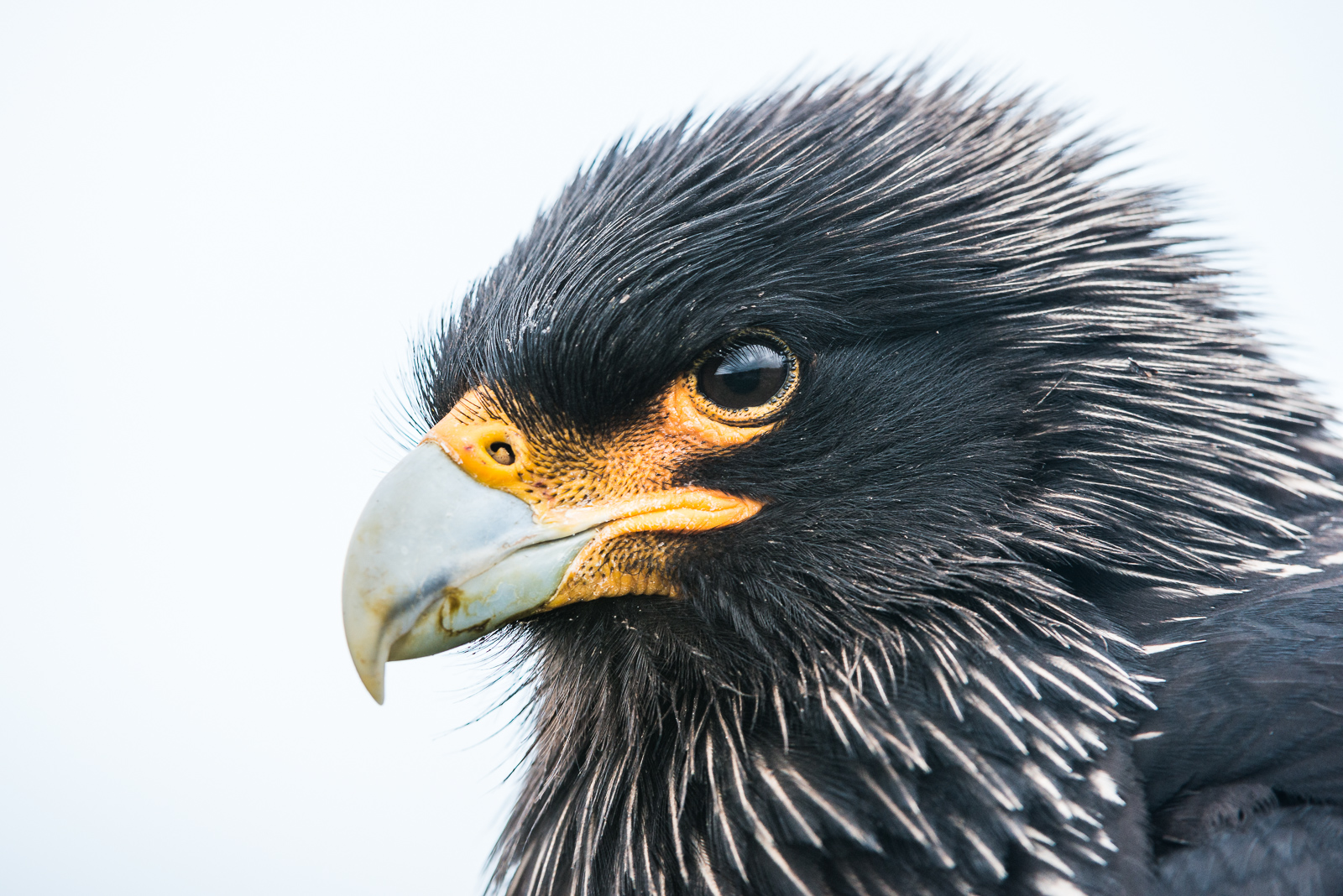
Just a simple headshot here of a striated caracara, locally known in the Falkland Islands as the Johnny Rook. These guys are fairly tame as you can tell from this close up. They were basically following me wherever I went in the Falklands, hoping that a few scraps would fall out of my backpack. This one spent a good part of the afternoon with me while I was photographing elephant seals on Carcass Island. Although they are common in the Falklands, they are an endangered species. Nikon D800 with Nikkor 200-400mm lens (at 400mm) ISO 400, f/6.3 at 1/320th of a second
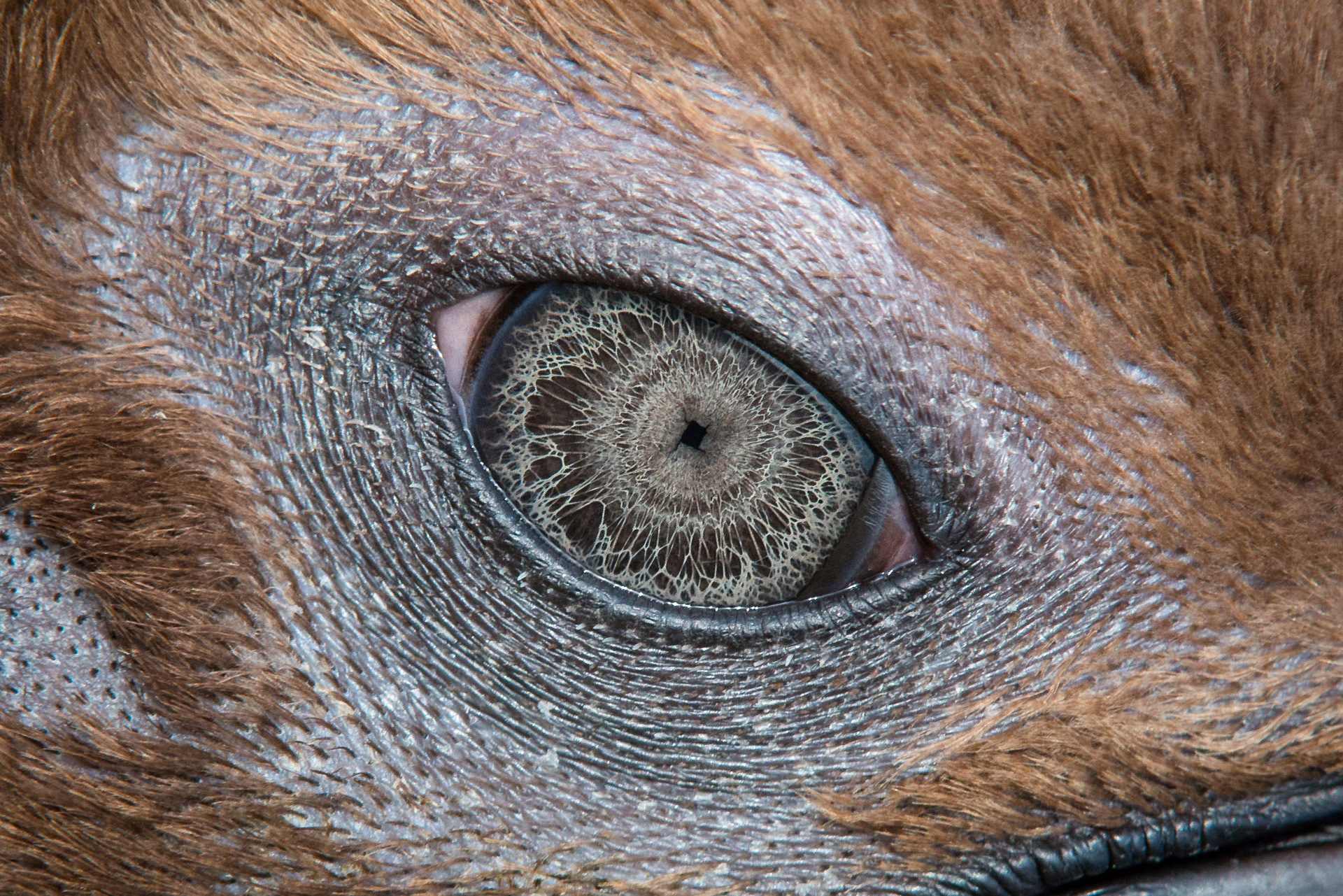
If you ever wondered what a penguin’s eye looks like, this is the post for you. The subject is a baby king penguin and it obviously let me get very close. It’s not a macro shot, however, but rather was taken with my telephoto lens from about ten feet away and then cropped. It’s always nice to have willing subjects and be able to experiment with different angles and points of view. Nikon D800 with Nikkor 200-400mm lens (at 400mm) ISO 800, f/8 at 1/500th of a second
We use cookies to enhance your experience while using our website. If you are using our Services via a browser you can restrict, block or remove cookies through your web browser settings. We also use content and scripts from third parties that may use tracking technologies. You can selectively provide your consent below to allow such third party embeds. For complete information about the cookies we use, data we collect and how we process them, please check our Privacy Policy