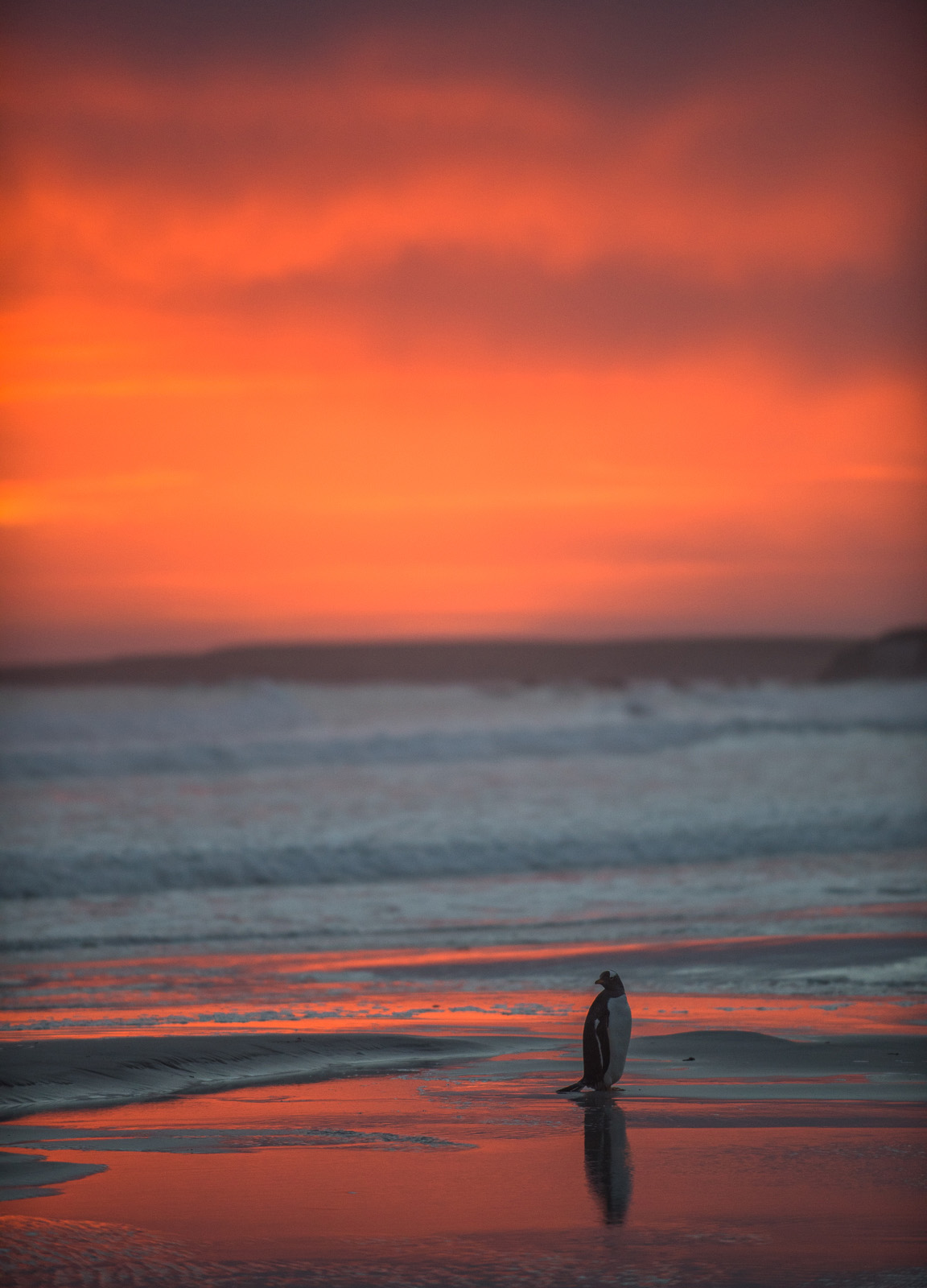
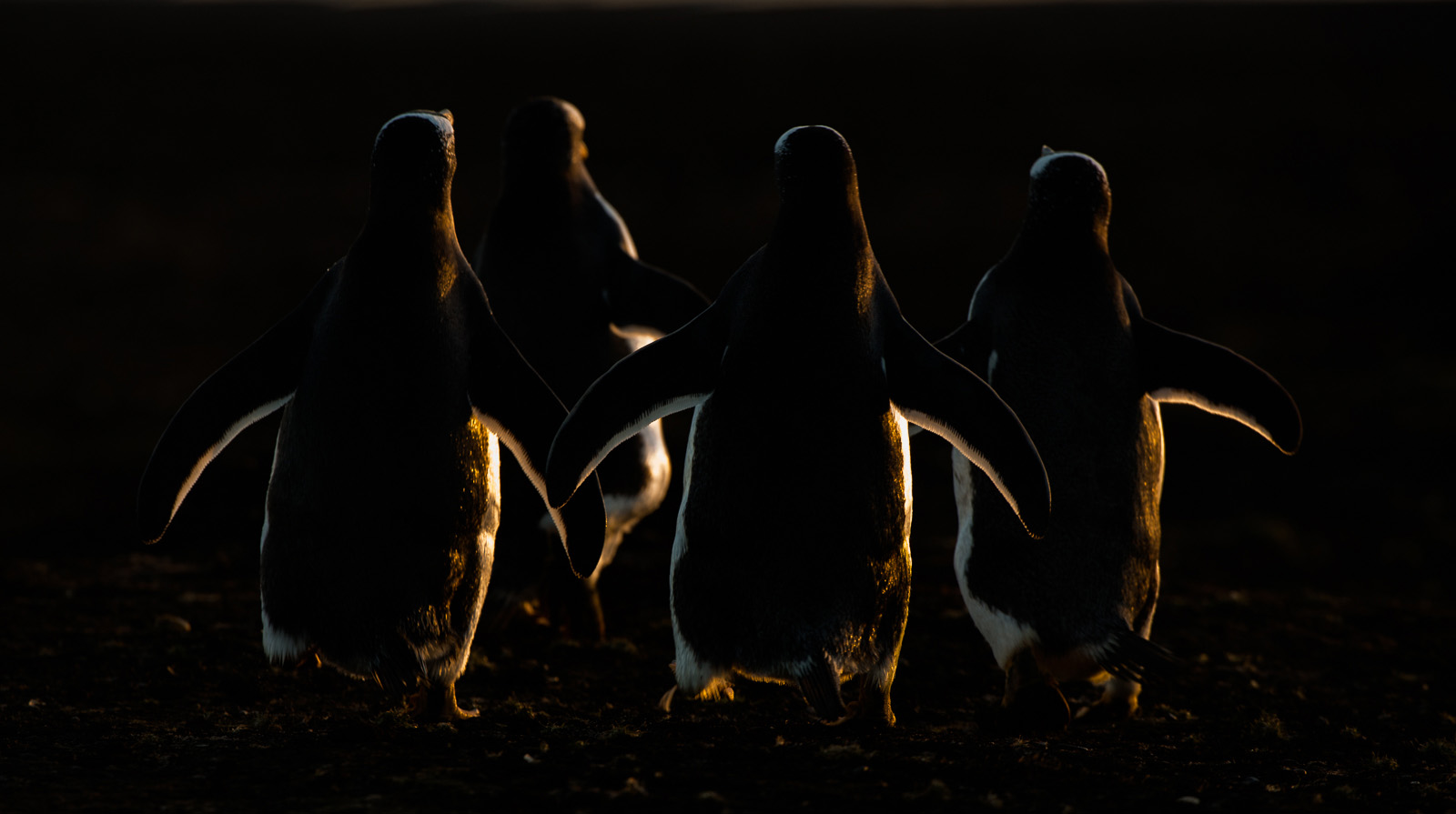
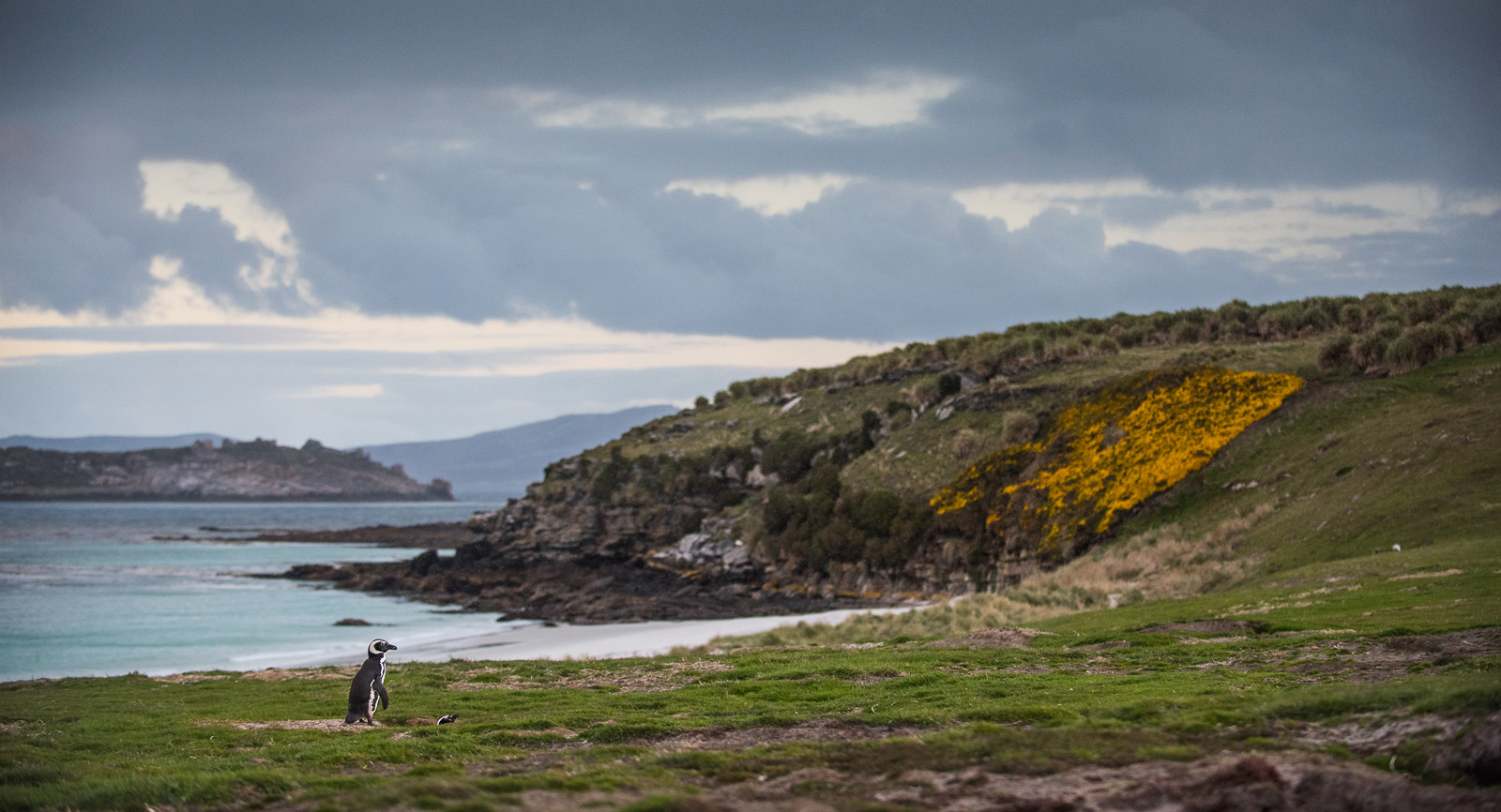
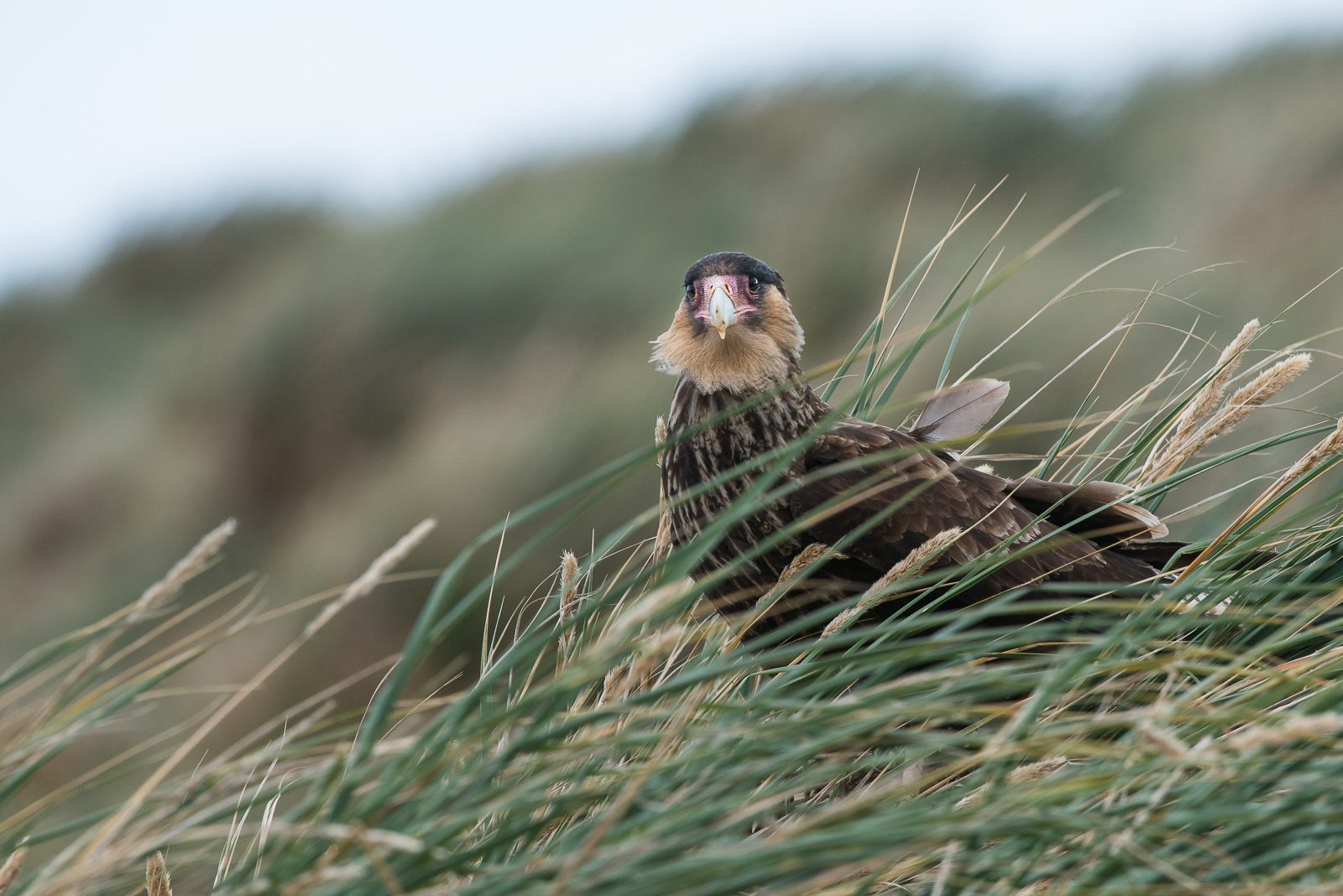
It’s been brought to my attention that today (well, by the time of this posting, yesterday) is World Penguin Day. Couldn’t miss the opportunity to post another of the friendly locals from the Falkland Islands. This is a gentoo penguin, up and at it very early in the morning at Volunteer Point. Nikon D810 with Nikkor 70-200mm lens (at 200mm) ISO 800, f/2.8 at 1/1000th of a second
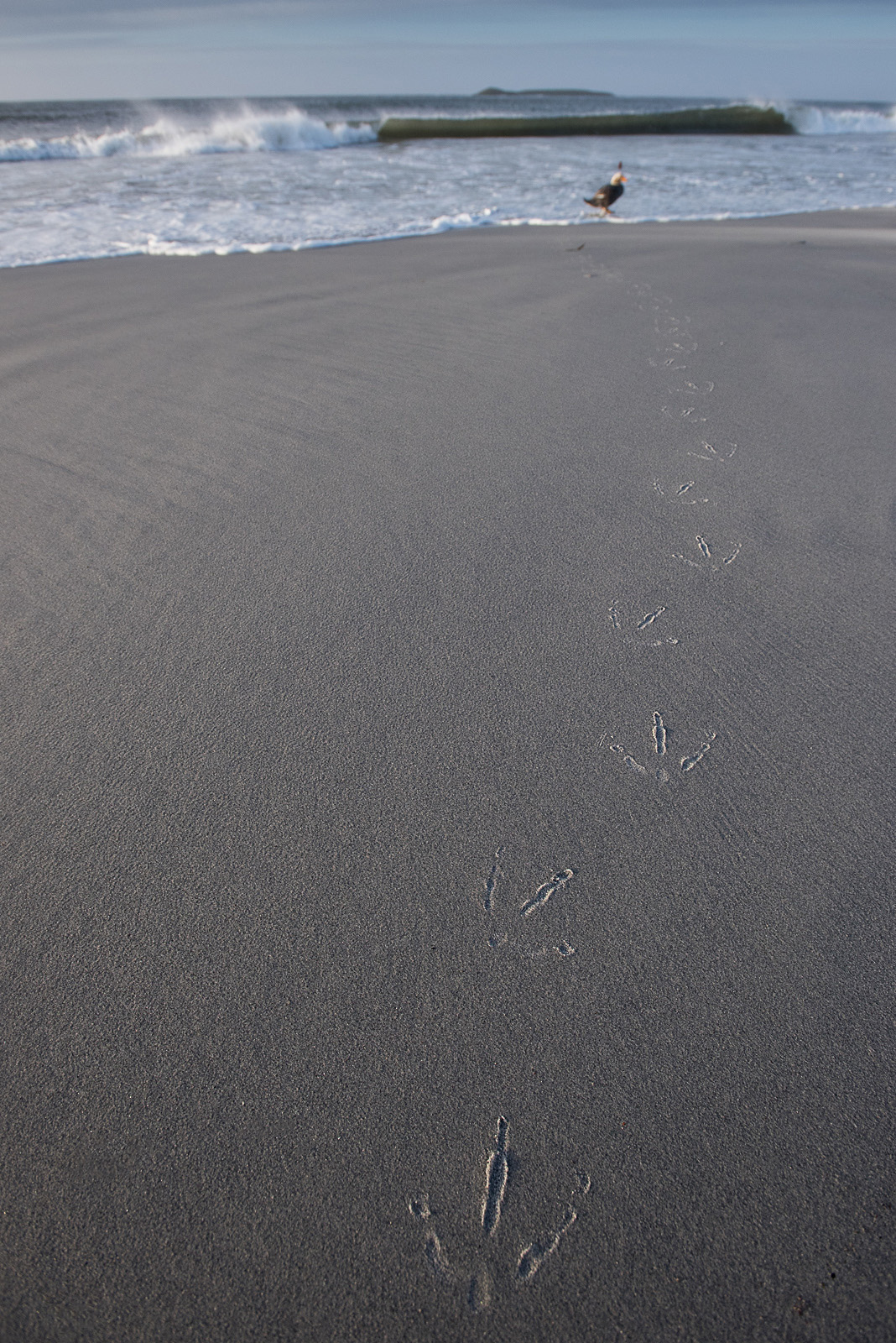
The Falkland steamer duck is one of just two birds endemic to the Falkland Islands. It also happens to be flightless. This particular steamer duck was out for a morning stroll along the shoreline of Sea Lion Island, most likely looking for a little breakfast. Nikon D810 with Nikkor 17-35mm lens (at 17mm) ISO 800, f/6.3 at 1/1250th of a second
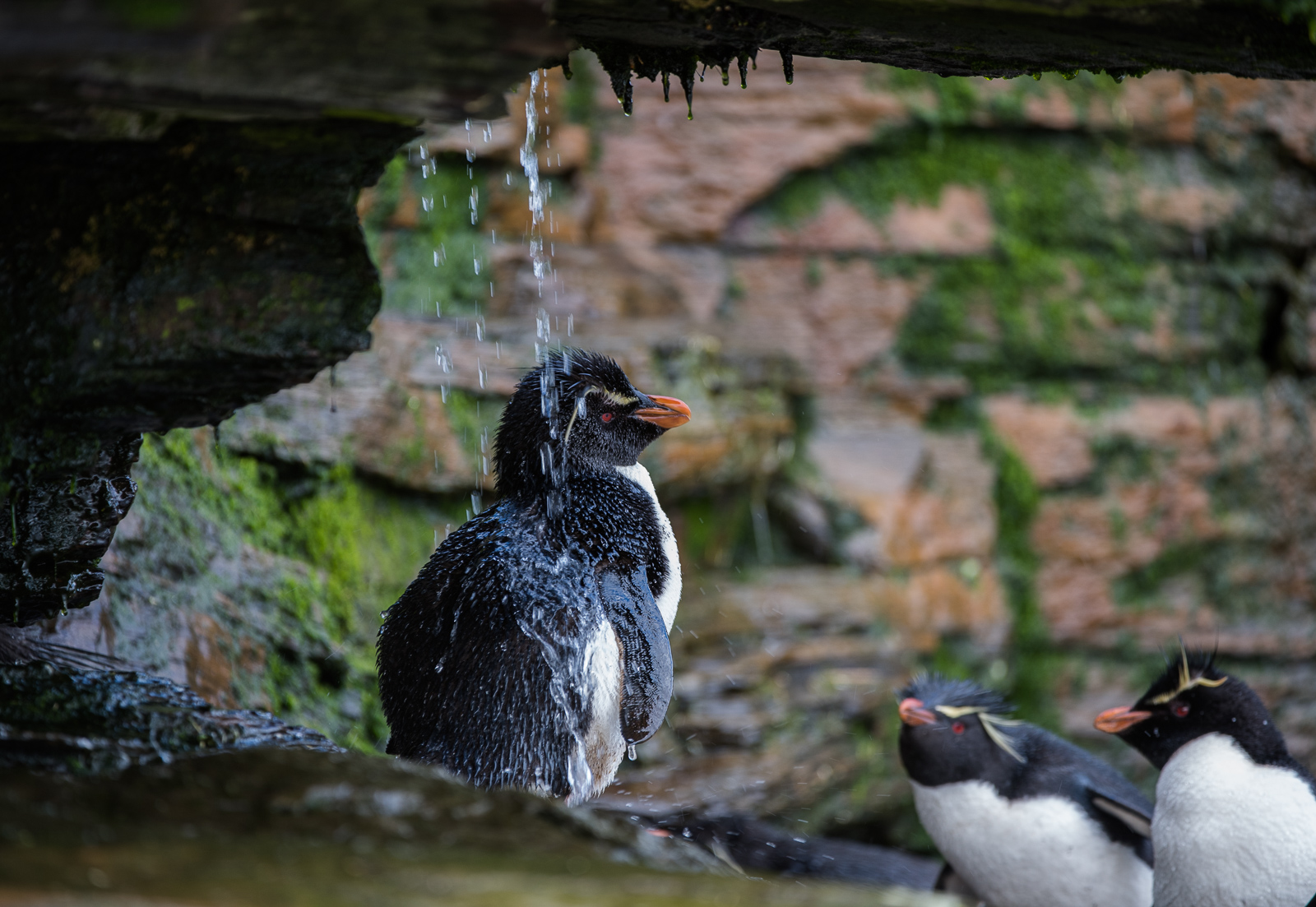
After a long day at sea, rockhopper penguins appreciate a good shower. The competition at this particular shower spot on Saunders Island in the Falklands can get quite intense. For the moment, this rockhopper has won water rights, but those others waiting in line won’t remain patient for long. Nikon D810 with Nikkor 200-400mm lens (at 340mm) ISO 400, f/4 at 1/200th of a second
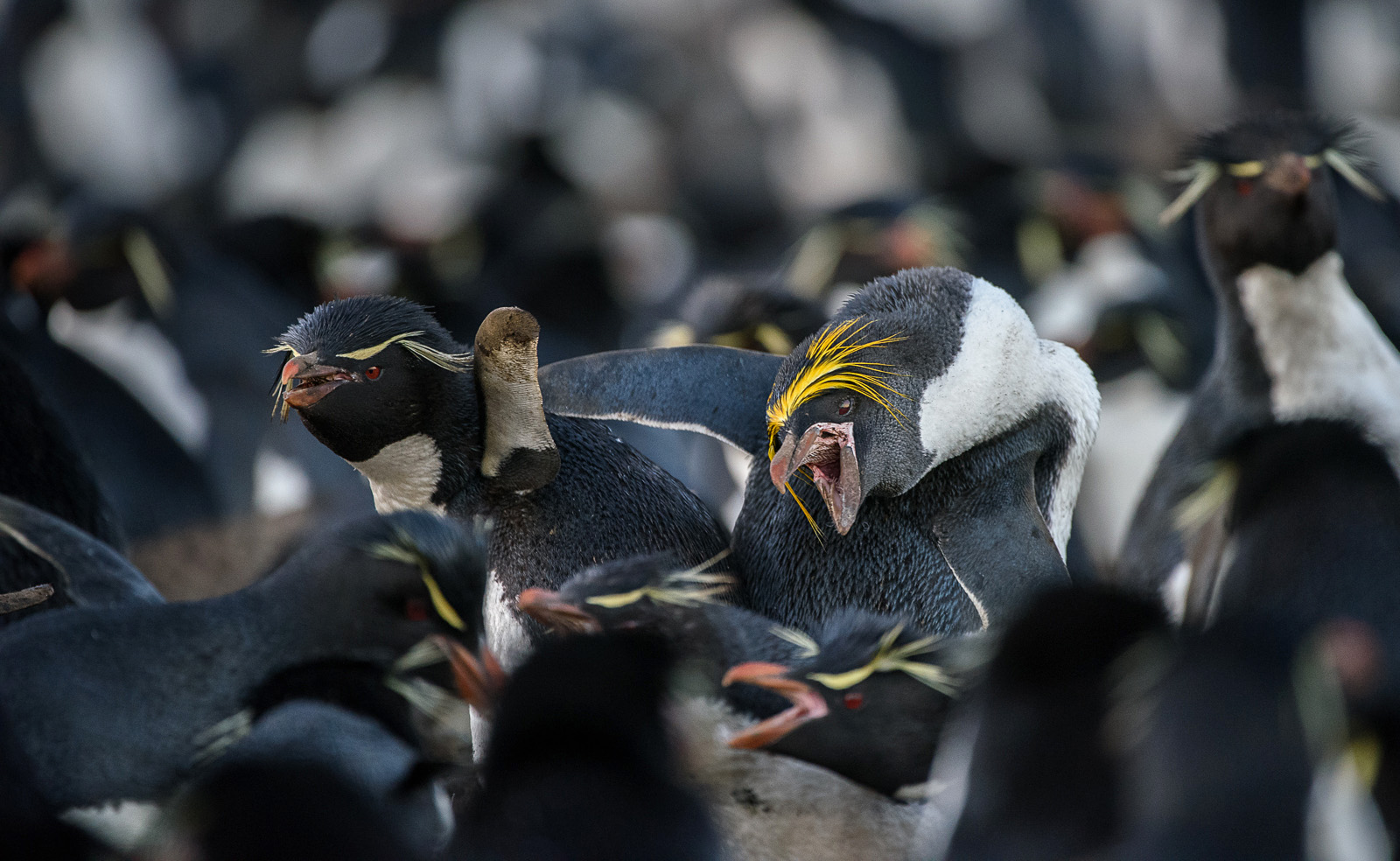
Penguins are everywhere in the Falkland Islands. And macaroni penguins are the most numerous species of penguin in the world. But there aren’t many macaroni penguins in the Falklands. In fact, I only saw a total of four of them in two weeks — always mixed in amongst colonies of rockhopper penguins. This lone macaroni (the one on the right with the nice yellow locks) was mixing it up with all the rockhoppers. From what I was told, the macaroni is a female and the male rockhoppers found her exotic look appealing. They were all trying to “get with her.” The scrum was mostly rockhopper against rockhopper, all vying for the prize, but in the process she was getting knocked around too. Being a bit larger in size than the rockhoppers, she was clearly holding her own. But you can see that the two species are quite similar, although there is a clear difference in size, shape and those yellow strands of hair. Nikon D810 with Nikkor 200-400mm lens (at 400mm) ISO 3200, f/4 at 1/1000th of a second
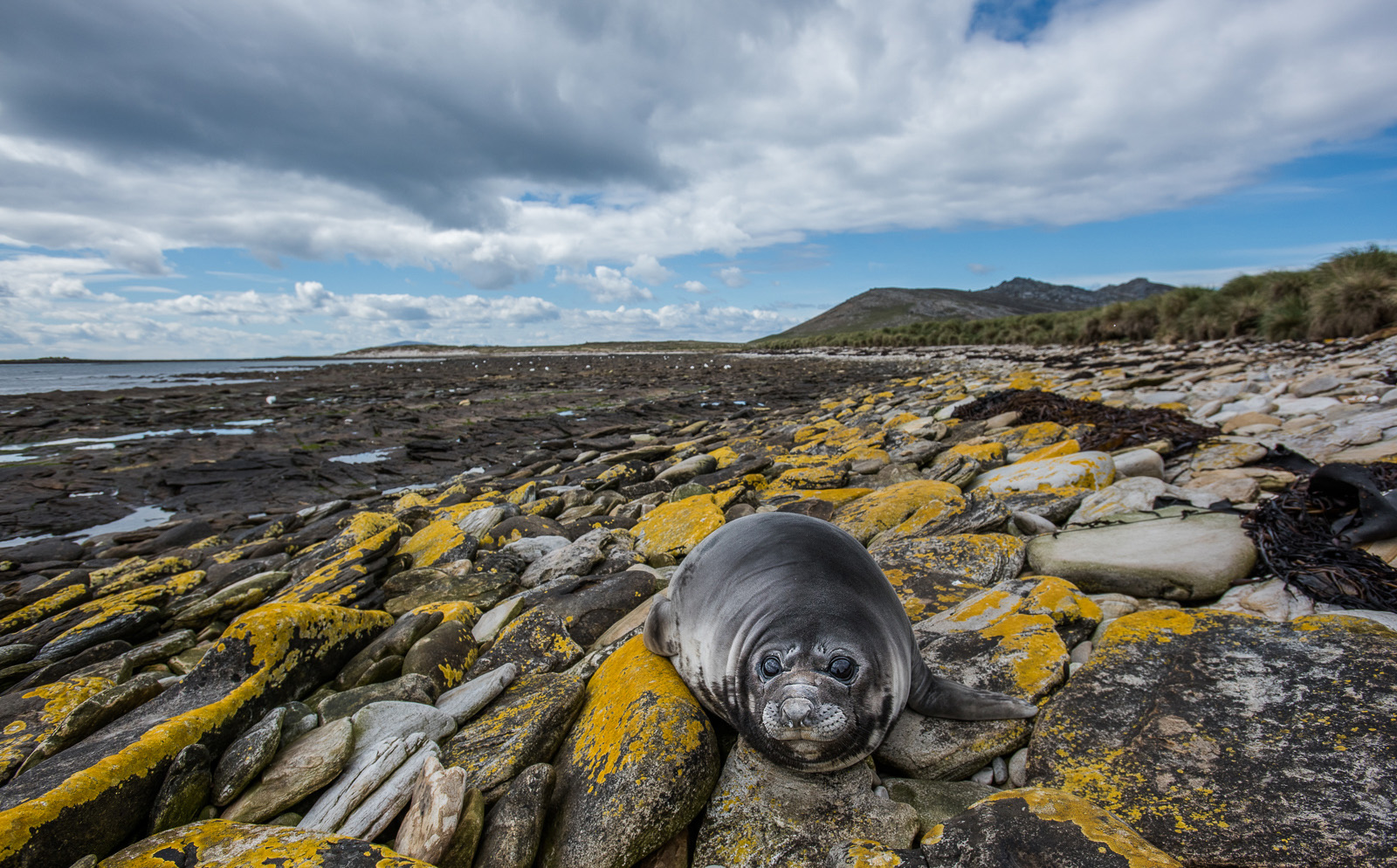
Juvenile southern elephant seals are relatively easy to approach for wide angle shots. Sometimes, they even approach you. They are old enough to be on their own and away from their mothers, but they are still on the small side and not yet the massive beasts that they will become (males grow to more than 20 feet and nearly 9,000 pounds). This young fellow was having a nice rest amongst the lichen covered rocks of Carcass Island in the Falkland Islands. Nikon D810 with Nikkor 17-35mm lens (at 20mm) ISO 400, f/6.3 at 1/2000th of a second
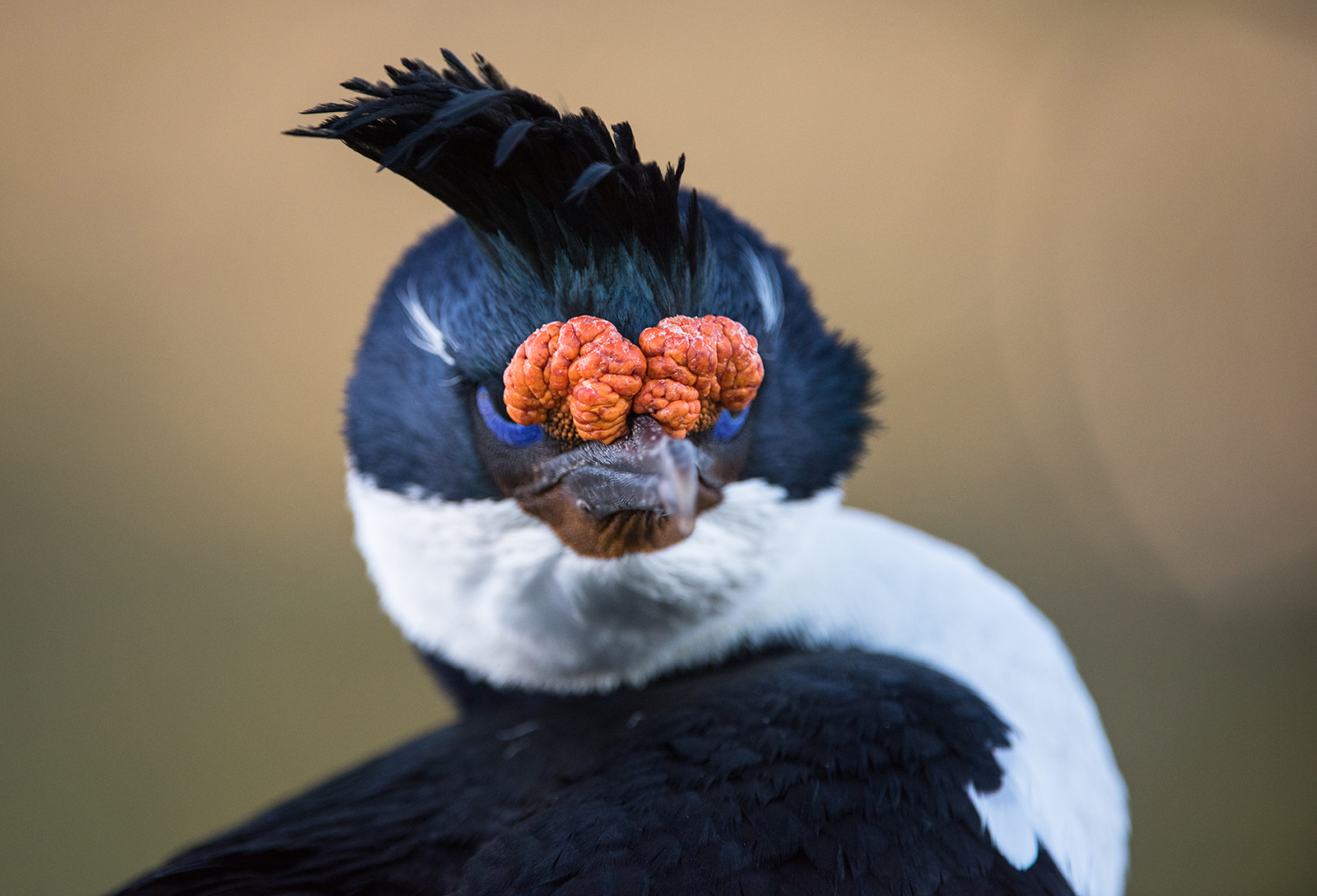
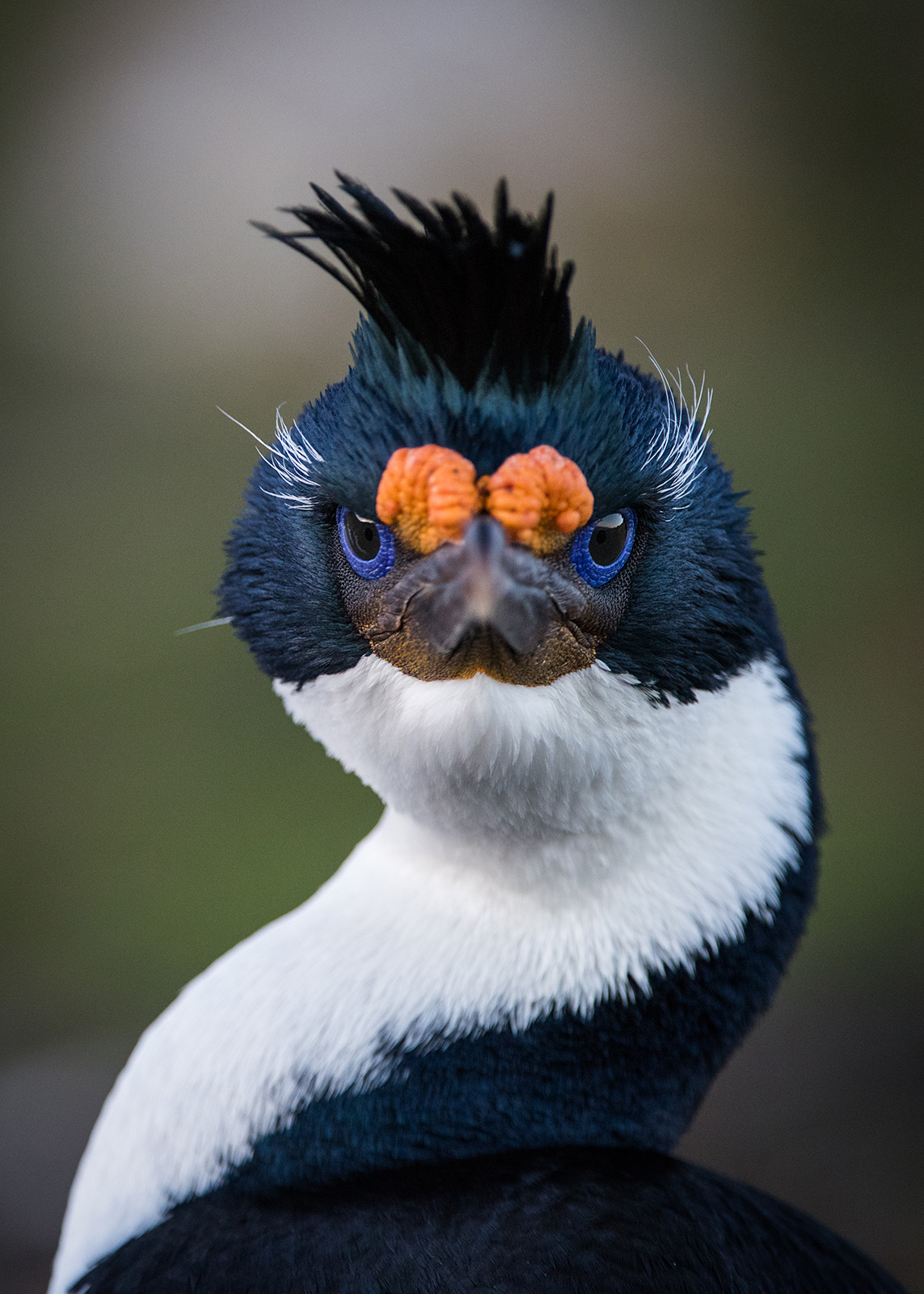
The above photo gives a good look at the ornamental nasal knobs of the imperial cormorant. Below shows how they highlight that gorgeous face. Both photos were taken on Saunders Island in the Falkland Islands.
Above: Nikon D810 with Nikkor 200-400mm lens (at 400mm) ISO 800, f/4 at 1/1250th of a second
Below: Nikon D810 with Nikkor 200-400mm lens (at 400mm) ISO 1600, f/4 at 1/800th of a second
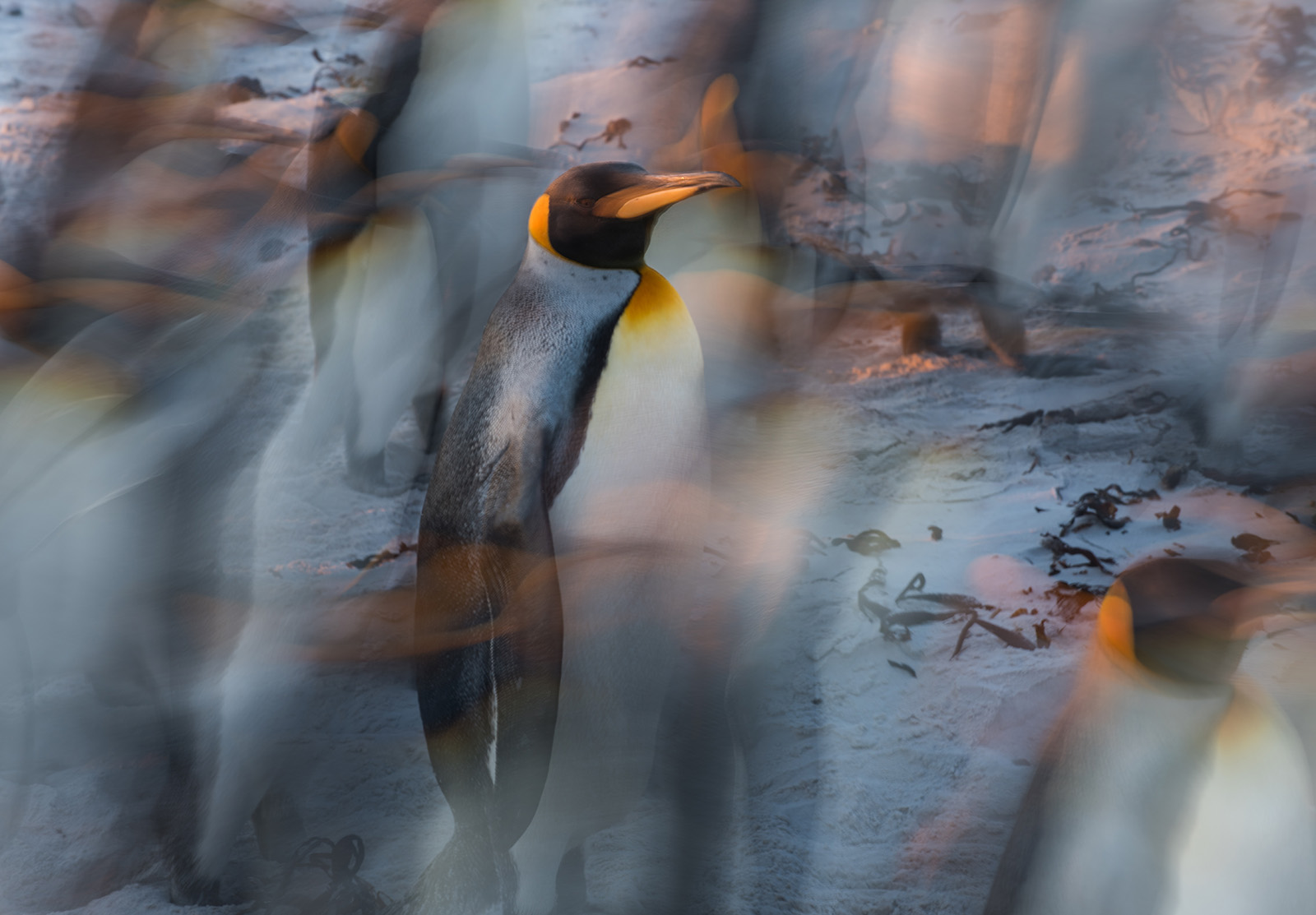
King penguins get up and at it early in the morning. What exactly it is that they are up and at isn’t always clear. They scurry around as a group, heading to the surf, running back from it, then turning and heading parallel to the shoreline in the other direction. I mounted my camera on a tripod and used a slow shutter speed to capture a bit of this organized chaos. Nikon D810 with Nikkor 70-200mm lens (at 170mm) ISO 31, f/18 at 1 second
I’ve mentioned before that it is fairly easy to photograph penguins. You always know where they’ll be because they don’t venture far from their colonies while not at sea. You simply wait for good light and then begin snapping the shutter. In this case, I had nice rim light at the end of the day while these gentoo penguins were heading home after an afternoon of fishing. Nikon D800 with Nikkor 200-400mm lens (at 400mm) ISO 800, f/5.6 at 1/200th of a second
I photographed five species of penguin in the Falkland Islands, with the Magellanics being the only burrowers. Their burrows were evenly spaced out across hillsides, with quick access to the coastline, and you could see penguin heads, or entire bodies, here and there poking out of the landscape. Nikon D800 with Nikkor 70-200mm lens (at 82mm) ISO 1600, f/2.8 at 1/640th of a second
There are quite a few species of caracara. They are all birds of prey and mostly live in Central and South America (they also reach the southern US). I’ve seen the northern crested caracara quite a few times in Texas and Florida. This is the southern crested caracara, also simply called the southern caracara. I was on Carcass Island in the Falkland Islands photographing elephant seals when this guy turned my way. Nikon D800 with Nikkor 200-400mm lens (at 400mm) ISO 400, f/6.3 at 1/640th of a second
We use cookies to enhance your experience while using our website. If you are using our Services via a browser you can restrict, block or remove cookies through your web browser settings. We also use content and scripts from third parties that may use tracking technologies. You can selectively provide your consent below to allow such third party embeds. For complete information about the cookies we use, data we collect and how we process them, please check our Privacy Policy