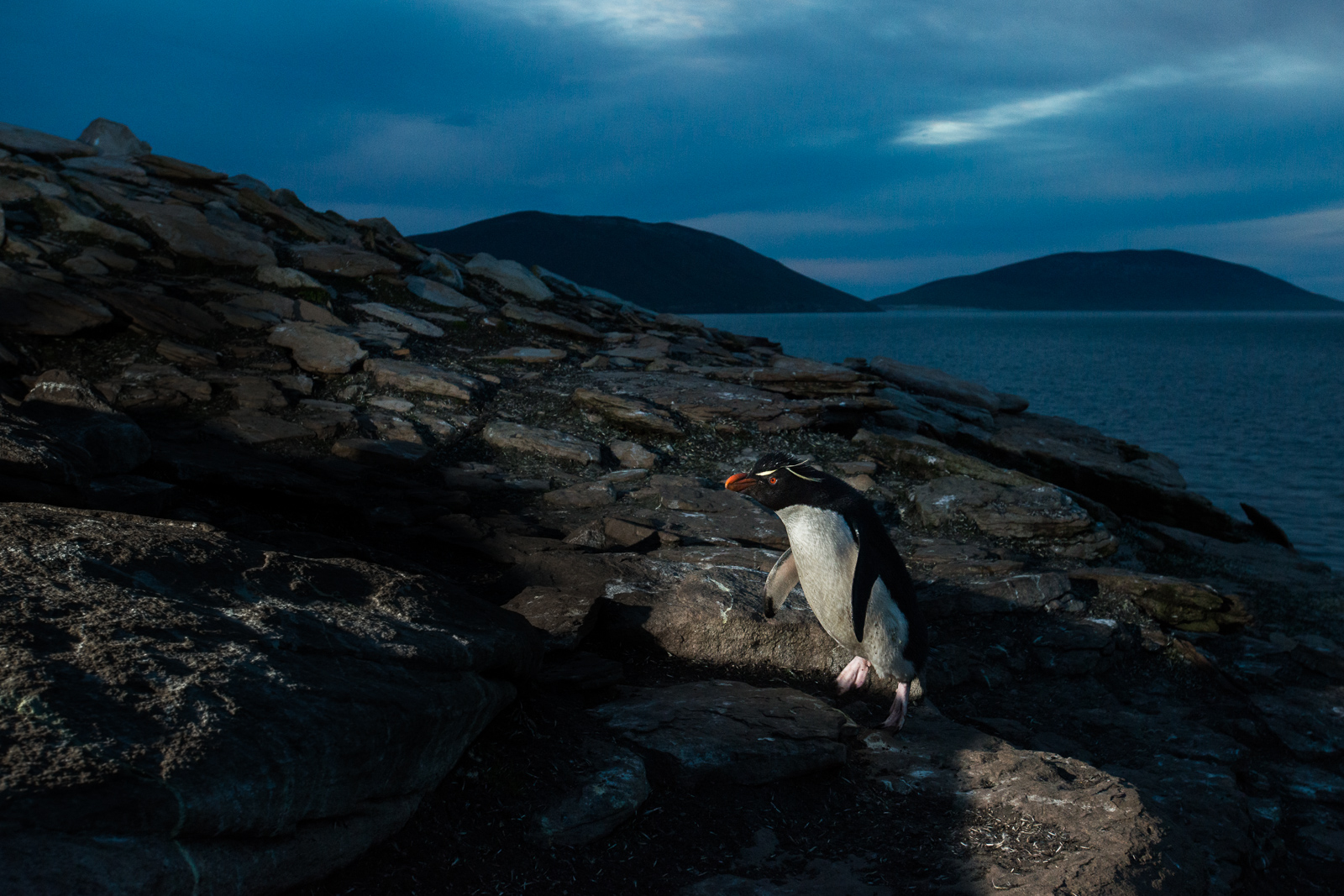
Photographing penguins in the Falkland Islands was certainly one of the most enjoyable wildlife excursions that I’ve ever been on. My first four nights in the Falklands, I was staying by myself in a cabin at the far end of an island that had a total population of two people (they ran a farm on the other side of the island). I basically had the place to myself. Me and thousands of penguins. If I wanted to stay out late with them as they returned from sea after the sun had set, no problem. For this shot, I used an off camera flash to capture a rockhopper penguin as it headed up a rocky slope and back to the rest of the colony. Nikon D800 with Nikkor 17-35mm lens (at 35mm) ISO 1600, f/8 at 1/800th of a second, Nikon SB-900 flash
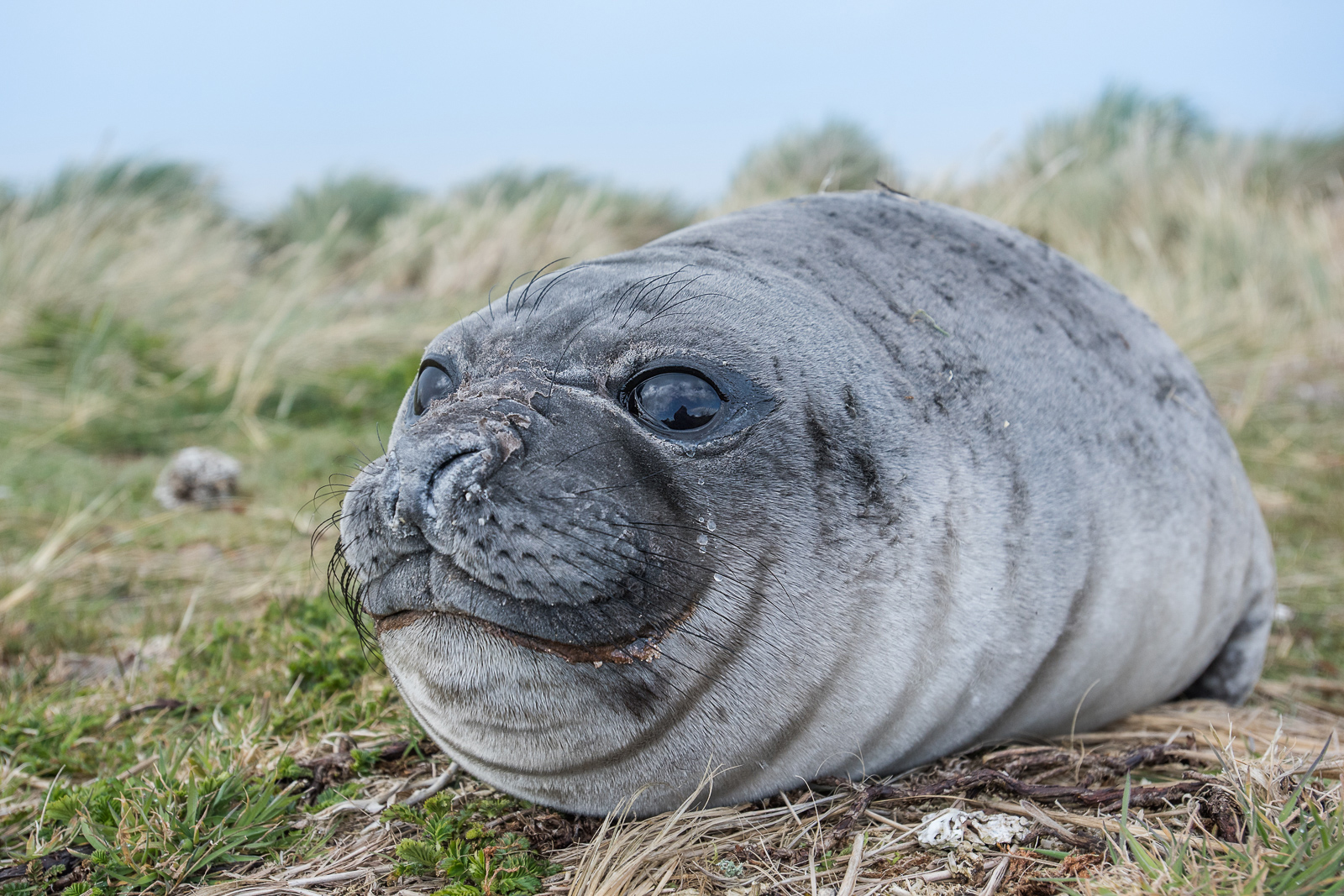
This juvenile southern elephant seal seemed to be shedding a few tears as I snapped its picture. The seal’s eyes, however, were probably just watering from the strong winds that were whipping through the tussock grass on Carcass Island in the Falkland Islands. This was one of those days that the sun was warm and shining one moment and the sky was pelting down frozen rain the next. Typical of an afternoon on the Falklands. Nikon D810 with Nikkor 17-35mm lens (at 35mm) ISO 800, f/6.3 at 1/1000th of a second
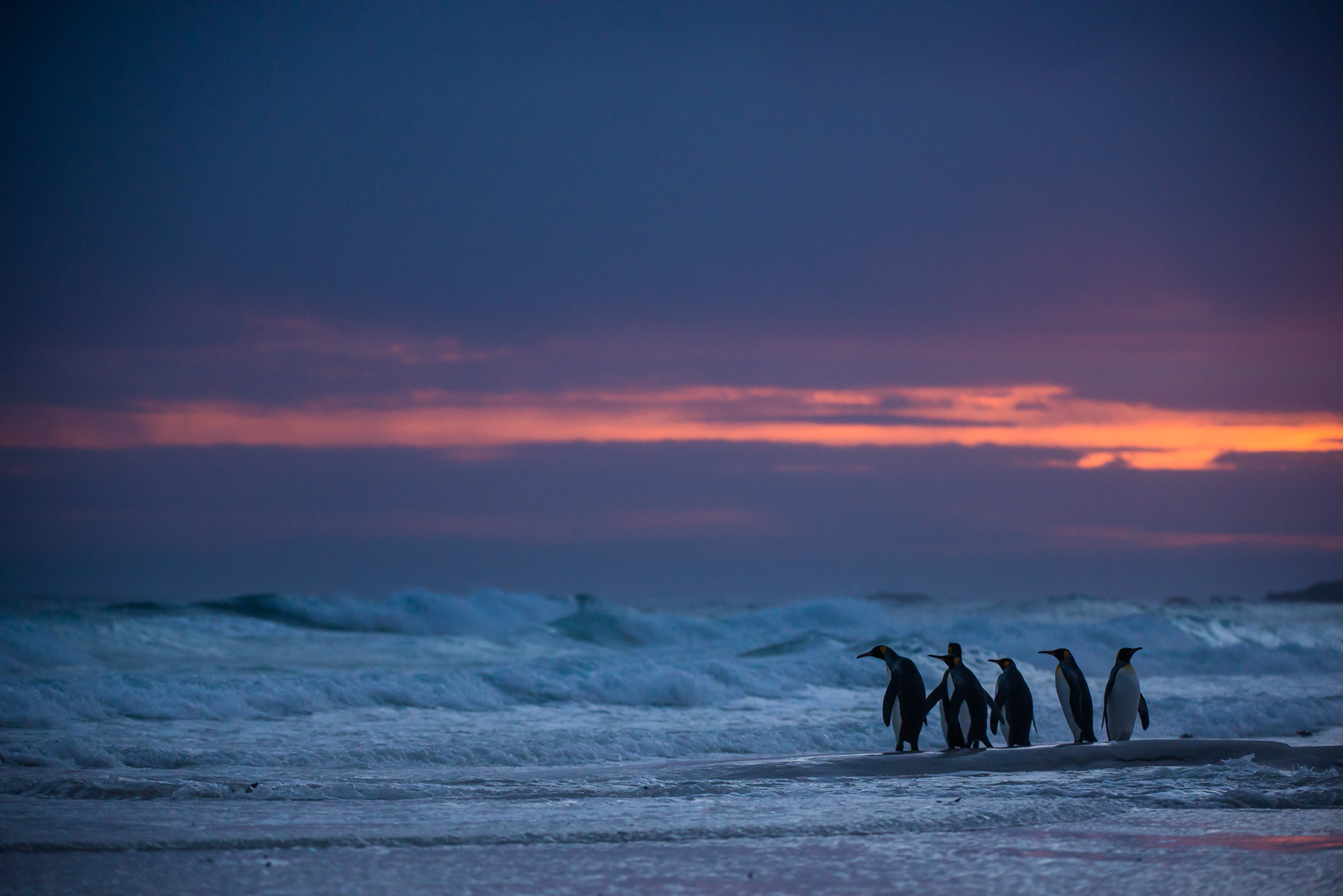
King penguins can be very comical first thing in the morning. They are extremely tentative as they contemplate actually getting into the water. These guys all seemed to be waiting for someone to take the plunge before joining in. Nikon D800 with Nikkor 200-400mm lens (at 200mm) ISO 1600, f/4 at 1/800th of a second
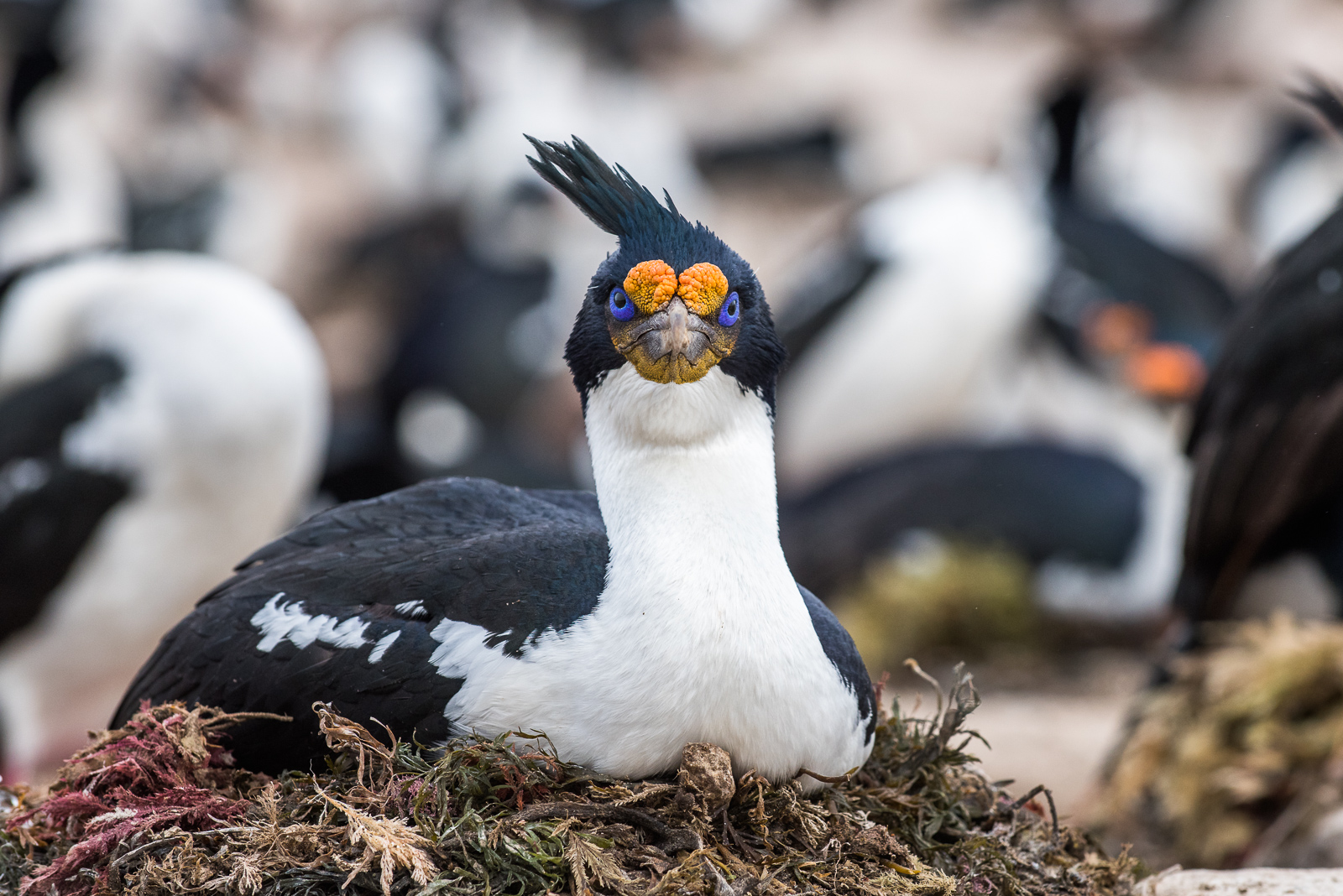
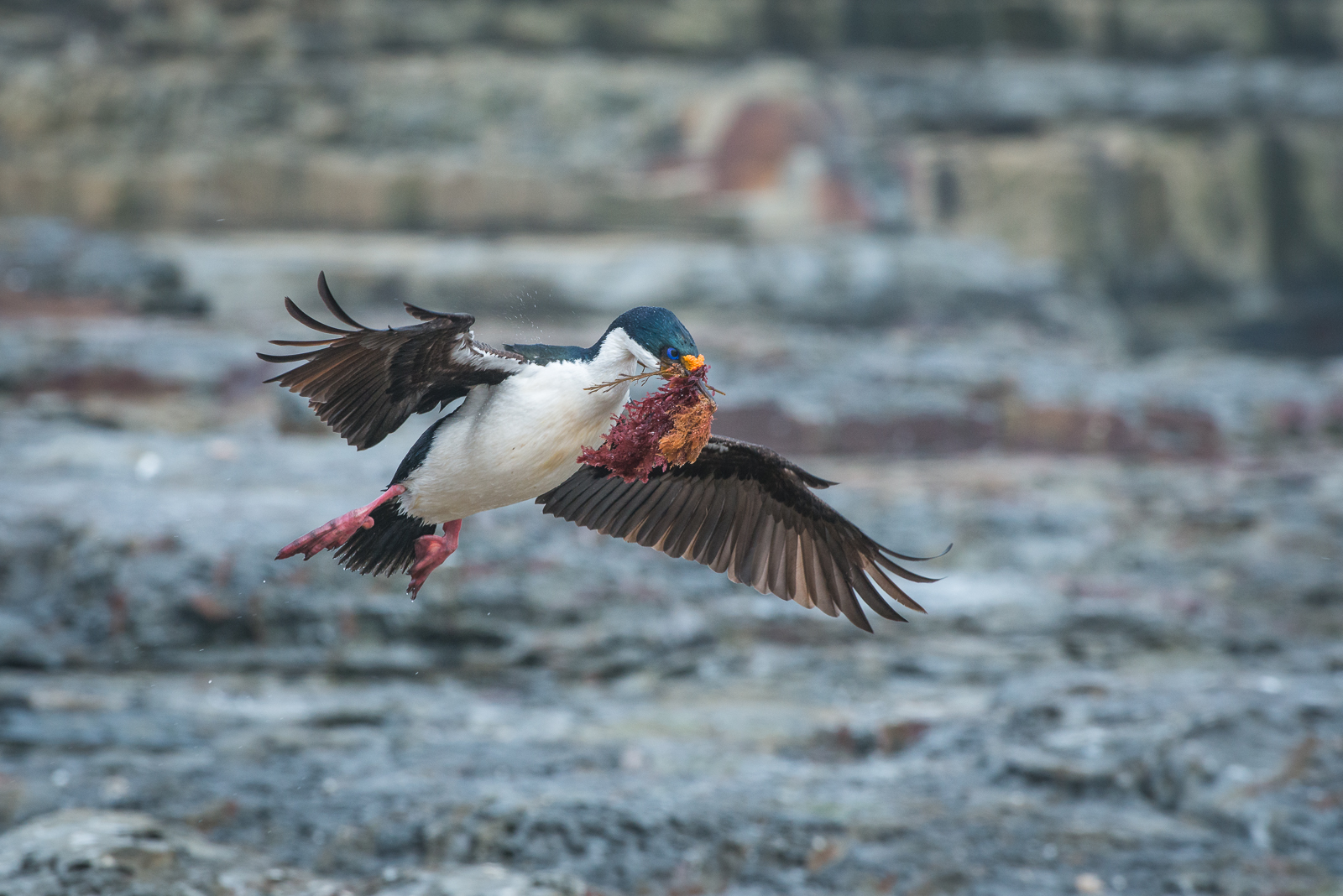
This is the colorful, yet odd looking, imperial shag — also known as the imperial cormorant. They were nesting on the southern edge of Sea Lion Island in the Falklands. All day, they would fly out to sea before returning with a beak full of kelp. Nikon D810 with Nikkor 70-200mm lens (at 175mm) ISO 400, f/5.6 at 1/2000th of a second
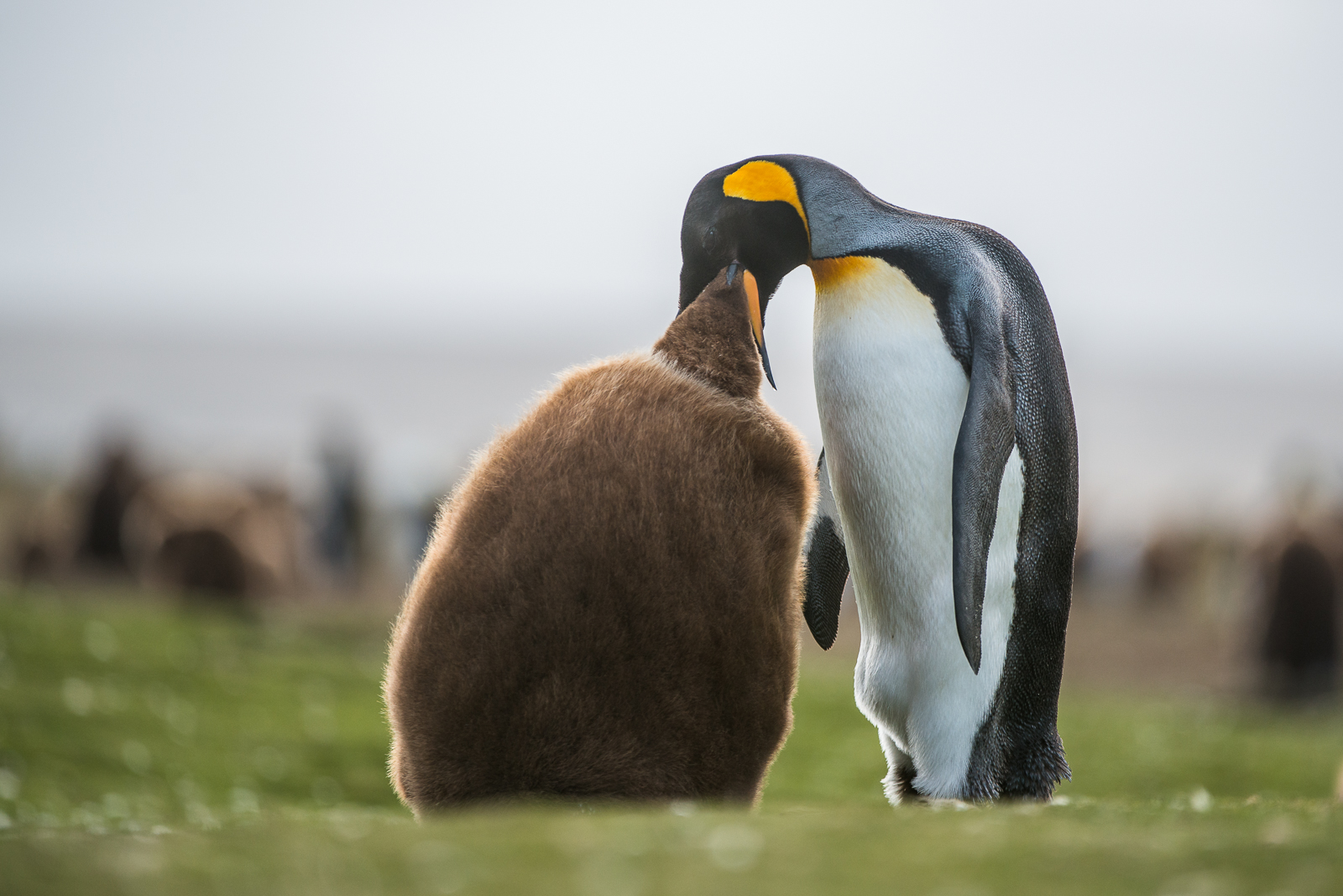
It looks like this mother king penguin is trying to eat the face off of her chick, but she was simply feeding the chick by regurgitating food. This was at Volunteer Point in the Falkland Islands. Nikon D800 with Nikkor 200-400mm lens (at 340mm) ISO 400, f/4 at 1/1250th of a second
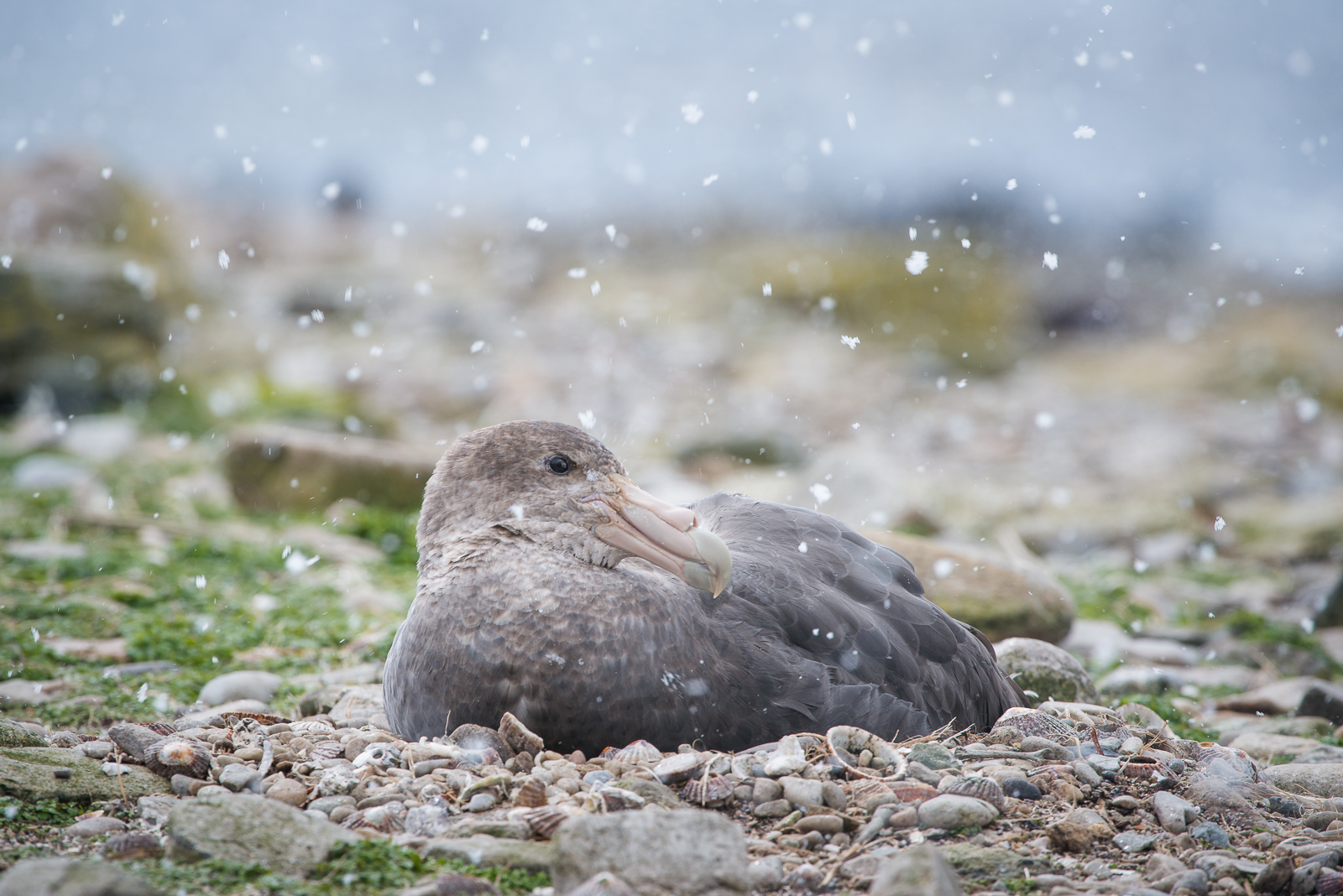
The albatross isn’t the only large seabird with an enormous wingspan to be found in the Falkland Islands. Petrels also call the islands home. Not quite as large as the browed albatross with its eight foot wingspan, the southern petrel measures in at just under seven feet, wingtip to wingtip. This particular southern petrel was nesting on Carcass Island in the Falklands and was sitting on a few eggs. You can see the shells that she used to make her nest. This was taken on a typical day in the Falklands when it was sunny and warm one moment and snowing the next. Nikon D800 with Nikkor 200-400mm lens (at 400mm) ISO 400, f/6.3 at 1/500th of a second
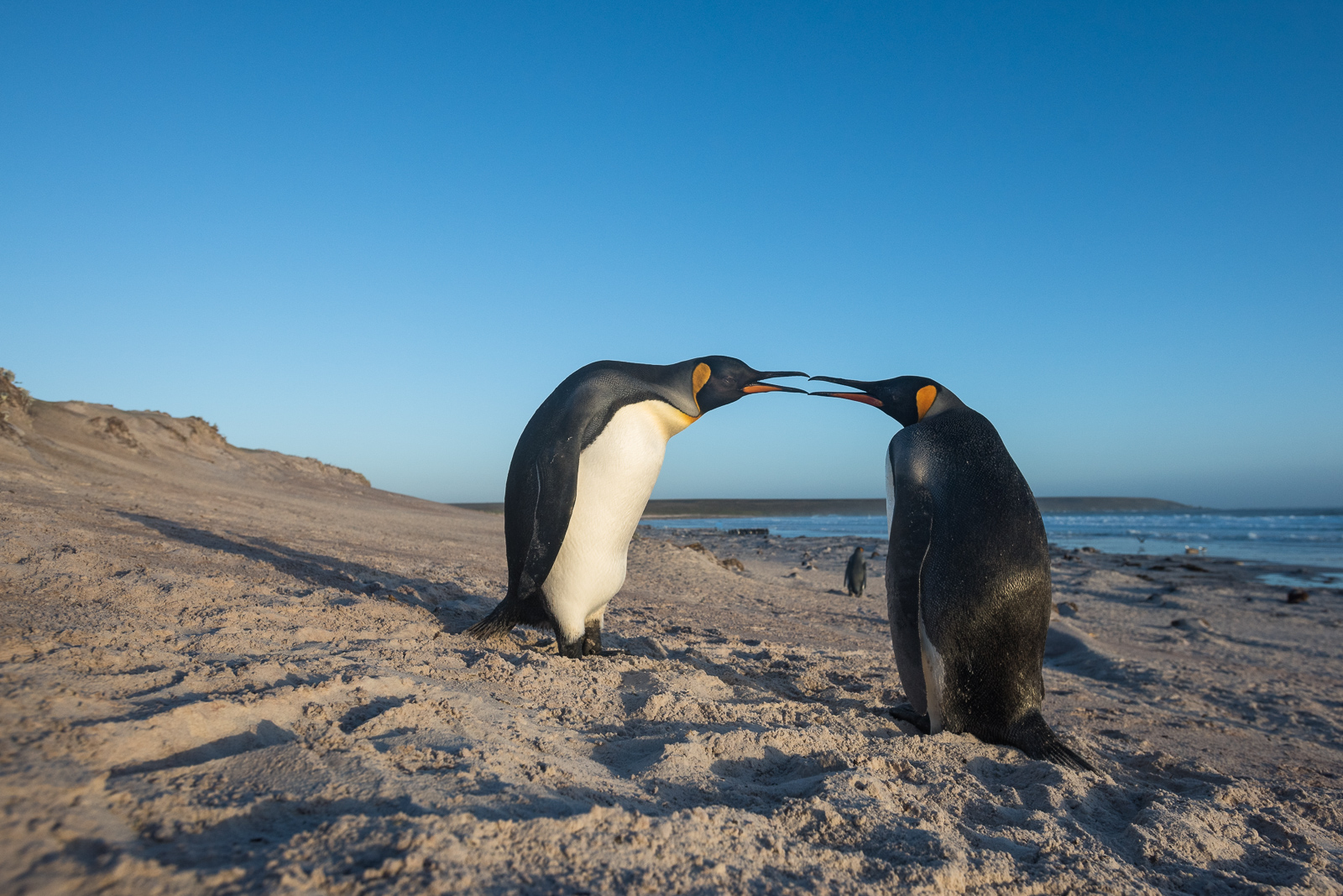
Penguins are true monogamists, usually mating for life. When one of a pair dies, the surviving penguin will carry on alone. A mated pair will often touch beaks as a precursor to preening. I photographed these two king penguins on my final day in the Falkland Islands at Volunteer Point — the most accessible place in the world to see them (not that it was particularly accessible). Nikon D810 with Nikkor 17-35mm lens (at 24mm) ISO 400, f/6.3 at 1/2000th of a second
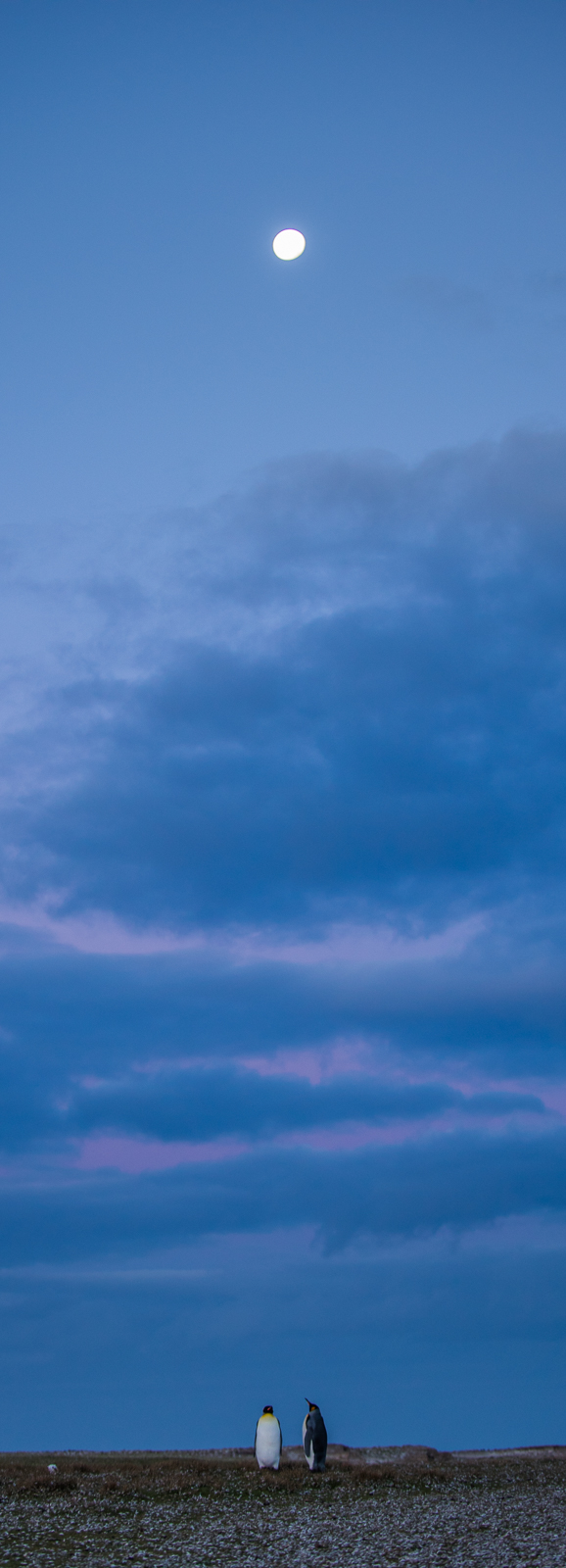
Two king penguins having a chat under the full moon at Volunteer Point in the Falkland Islands. Nikon D810 with Nikkor 70-200mm lens (at 70mm) ISO 400, f/2.8 at 1/125th of a second
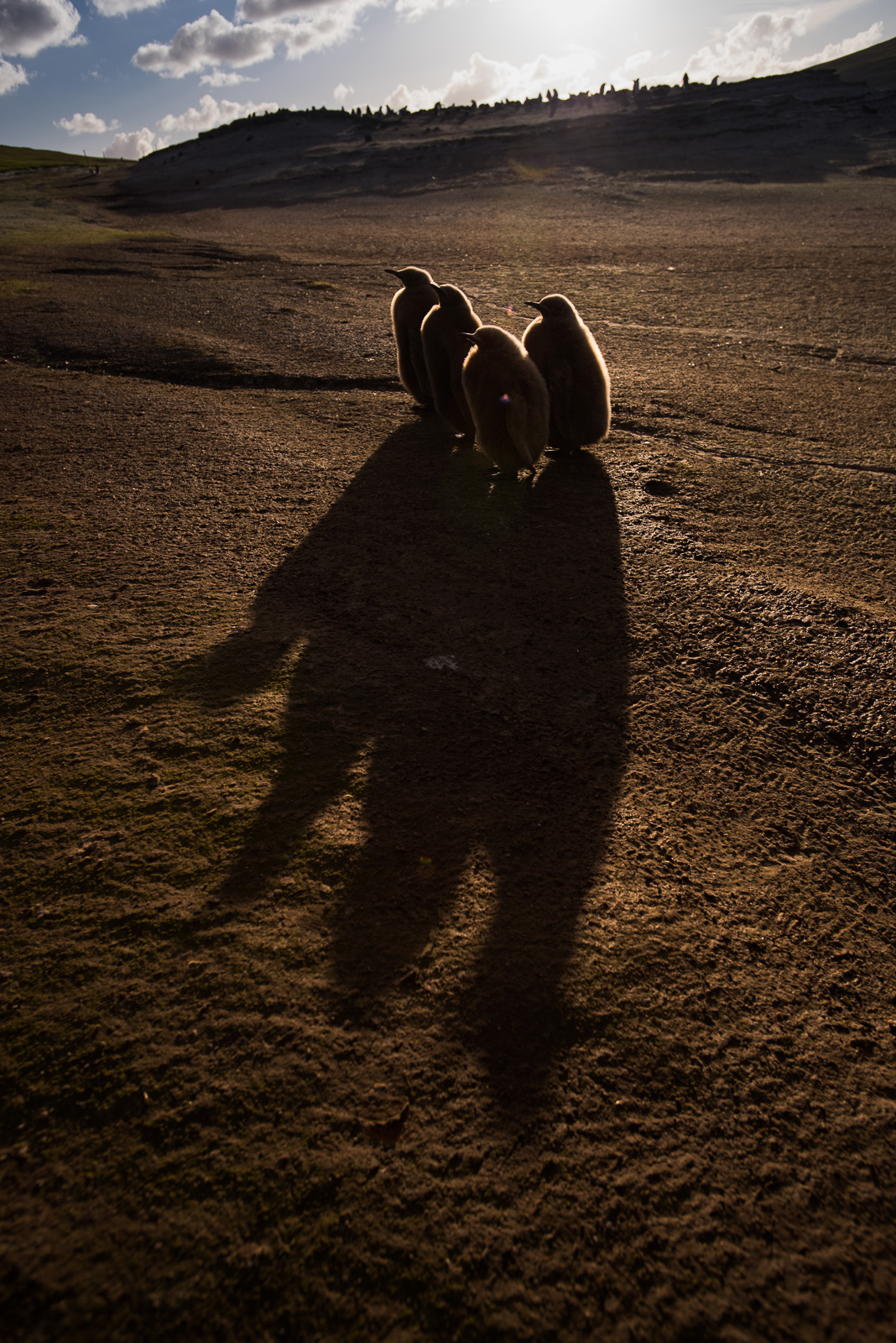
These four baby king penguins created a nice arrangement of shadows across the landscape of Saunders Island in the Falkland Islands — their downy fur picking up a nice bit of back light from the setting sun. Nikon D810 with Nikkor 17-35mm lens (at 25mm) ISO 400, f/5.6 at 1/1250th of a second
I spent a great afternoon with these imperial shags, also known as imperial cormorants, on the southern tip of Sea Lion Island, which is itself one of the most southerly islands of the Falkland Islands. I had hiked the length of the small island when I came across the colony and it really felt like I had reached the end of the earth. The shags were in the process of nest building and were flying out to sea to collect kelp before returning to their nests. They looked like they had colorful red and orange beards as they came back with beaks full of kelp. Nikon D800 with Nikkor 200-400mm lens (at 400mm) ISO 800, f/7.1 at 1/1000th of a second
We use cookies to enhance your experience while using our website. If you are using our Services via a browser you can restrict, block or remove cookies through your web browser settings. We also use content and scripts from third parties that may use tracking technologies. You can selectively provide your consent below to allow such third party embeds. For complete information about the cookies we use, data we collect and how we process them, please check our Privacy Policy