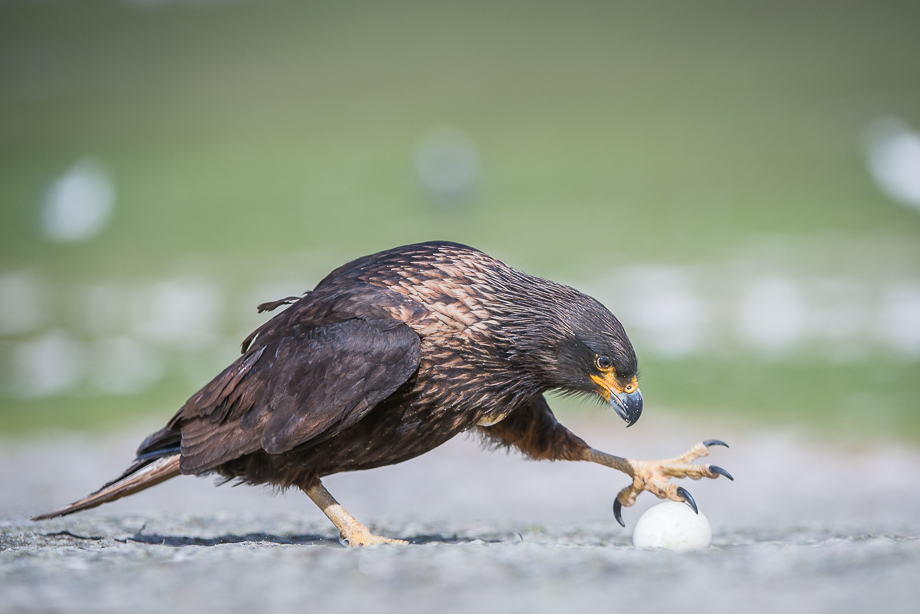
This is a Johnny Rook. At least that’s what the Falkland Islanders call them. Their more official name is the striated caracara, and this one was having a heck of a time trying to break open a gentoo egg that had been pilfered from a nearby penguin colony. All the Johnny Rooks, in fact, seemed to have poor technique when it came to cracking eggs. The other main egg burglars in the Falklands, the skuas, had no problem completing the task. They would impale the egg with their pointed beaks in a single stab. The Johnny Rooks, however, have hooked beaks and therefore employ a far less effective strategy by using their talons. It was as if they were playing soccer, as they kicked the egg from one bird to the other, each trying to keep it to themselves and each failing to crack what appeared to be a very hard egg. Nikon D800 with Nikkor 200-400mm lens (at 210mm) ISO 400, f/5 at 1/2000th of a second
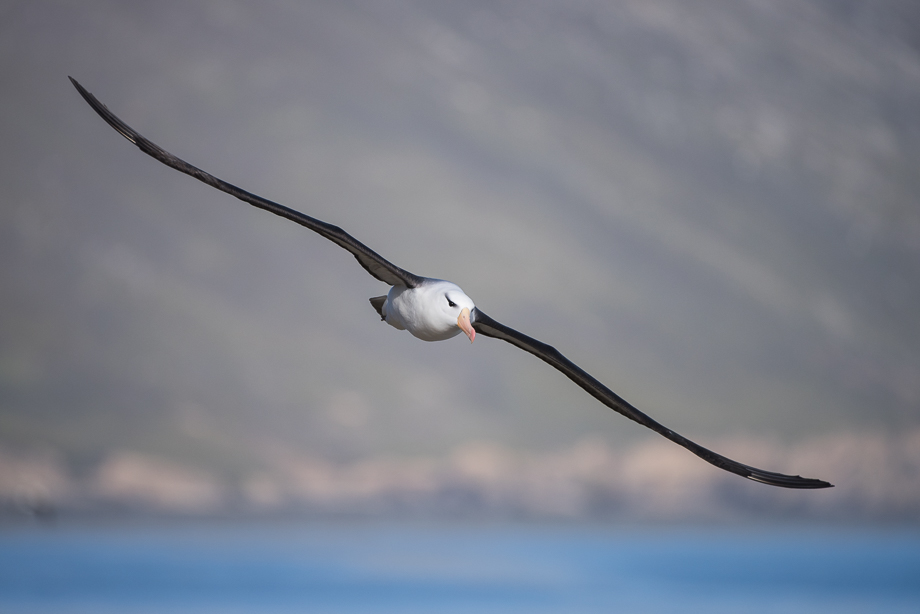
Of the 22 different species, the black browed albatross is considered medium sized by albatross standards. The largest albatrosses have a wingspan of 11 feet. The black browed variety only gets to about 8 feet. Still, that’s a pretty impressive spread. This particular bird seemed to be at least that as it soared along the cliffs of Saunders Island in the Falkland Islands. Nikon D810 with Nikkor 200-400mm lens (at 400mm) ISO 400, f/4 at 1/4000th of a second
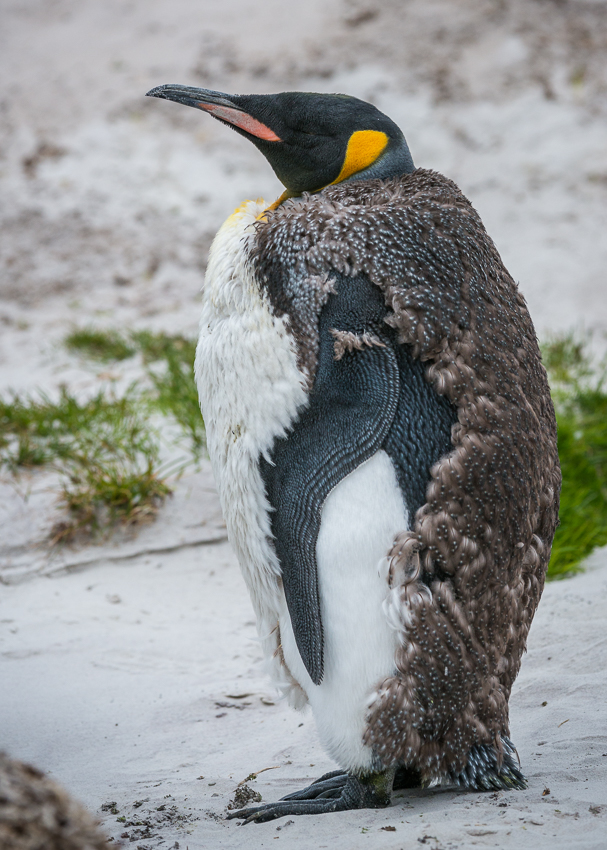
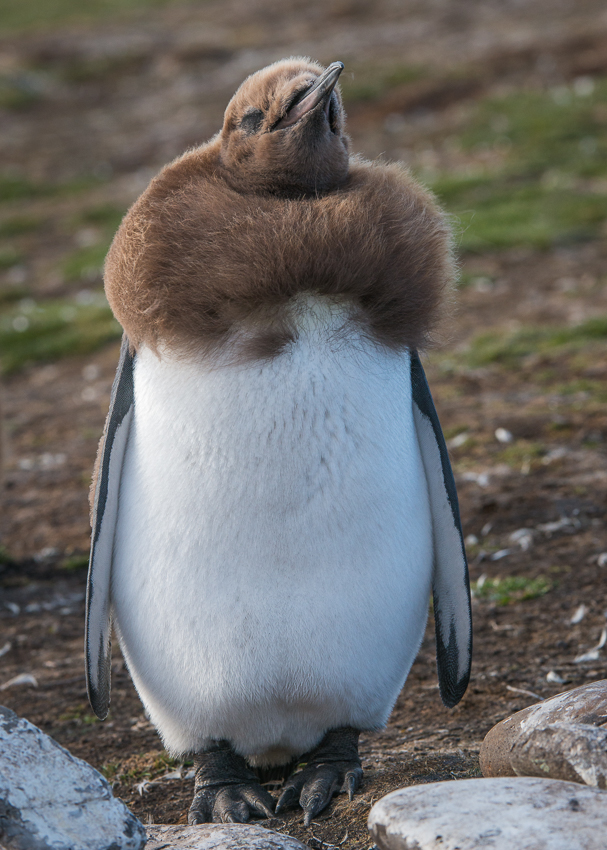
“THE VEST” — Nikon D800 with Nikkor 200-400mm lens (at 260) ISO 800, f/5.6 at 1/2000th of a second
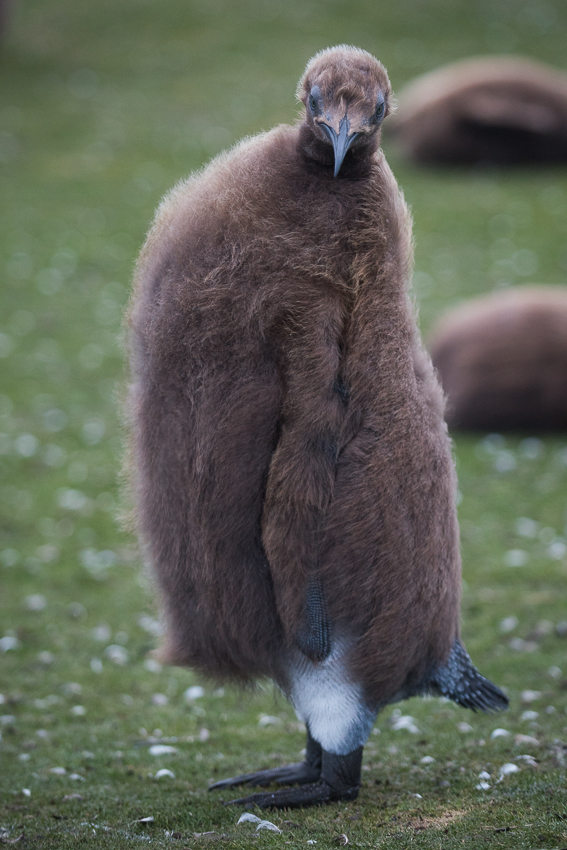
“THE BOA” — Nikon D800 with Nikkor 200-400mm lens (at 250mm) ISO 800, f/8 at 1/640th of a second
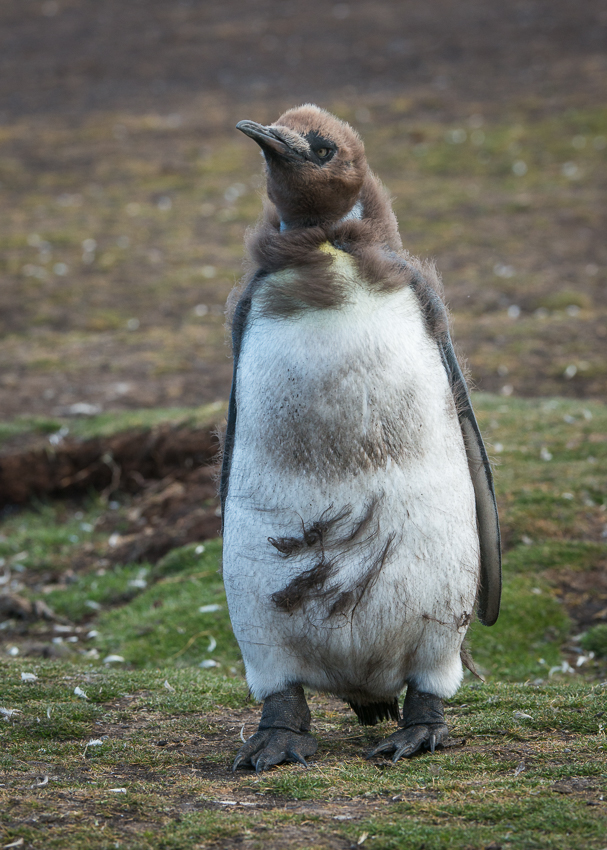
“THE HAIRY BELLY BUTTON” — Nikon D800 with Nikkor 200-400mm lens (at 200mm) ISO 800, f/8 at 1/500th of a sec
“THE HIRSUTE” — NIkon D800 with Nikkor 200-400mm lens (at 310mm) ISO 800, f/8 at 1/1000th of a second
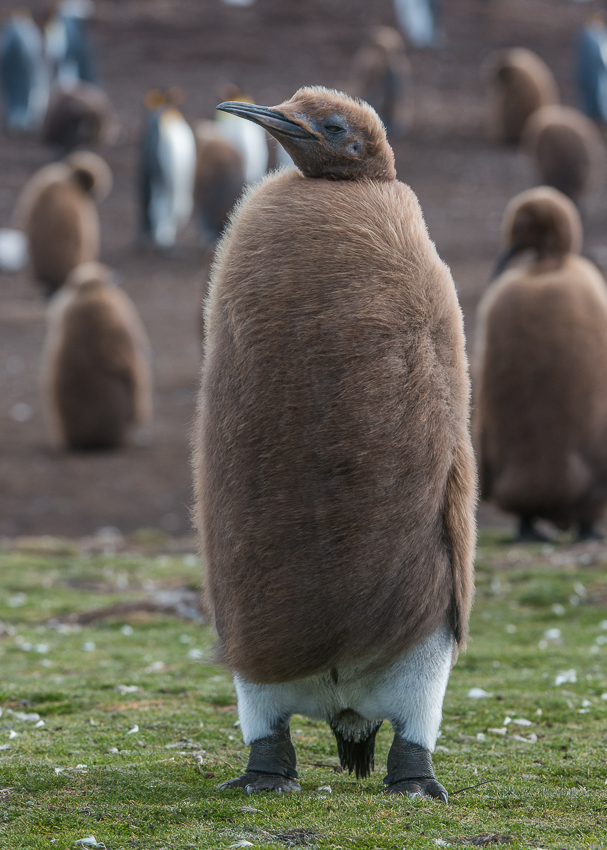
“THE PASHMINA” — Nikon D800 with Nikkor 200-400mm lens (at 210mm) ISO 800, f/8 at 1/500th of a second
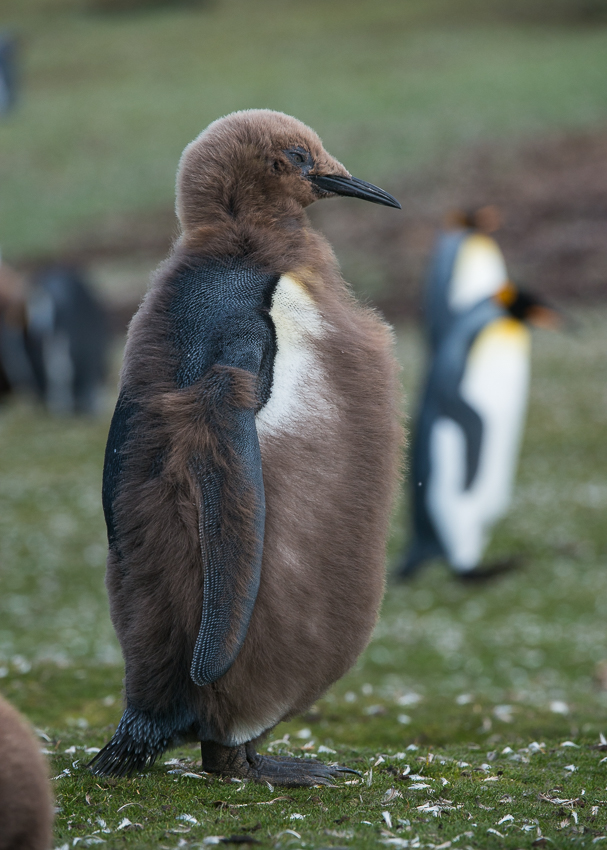
“CHAPS” — Nikon D810 with Nikkor 70-200mm lens (at 125mm) ISO 1600, f/2.8 at 1/100th of a second
King penguins molt after two years of age — basically this means they lose their baby feathers, underneath which they reveal their adult plumage. As you can see, they don’t all progress at the same rate. It was comical to see the half-molted penguins. They looked as if they were partially dressed in varying degrees of clothing, from a furry vest, to a feather boa, to well, that last guy appears to be in chaps.
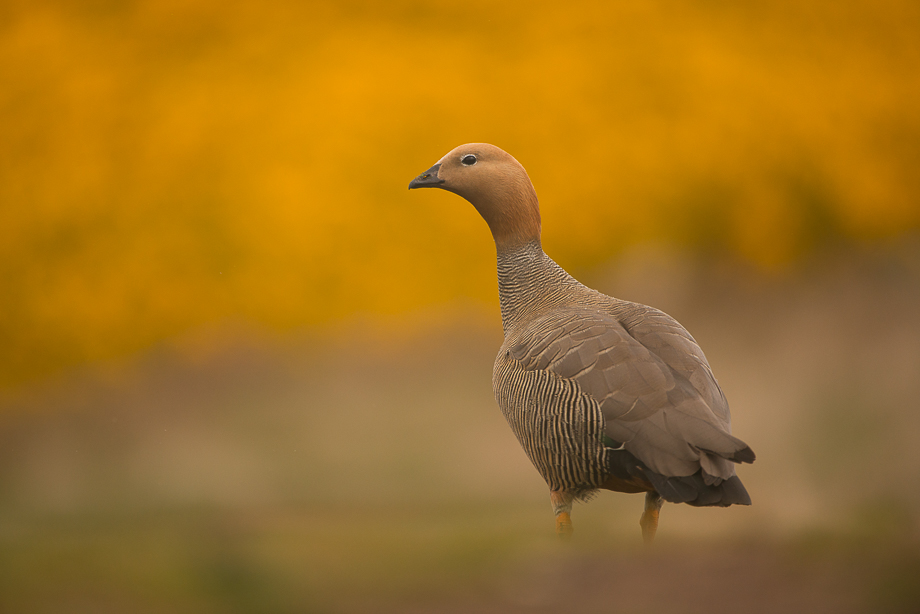
This one goes out to everyone at the Sierra Club Photography Committee of New York. Thanks for having me as your guest speaker tonight. It was a lot of fun sharing my photos and stories from the field. This species of goose is a common sight in the Falkland Islands. For this exposure, I got the camera on the ground to effectively blur out the foreground and background tones of green and yellow vegetation. Nikon D800 with Nikkor 200-400mm lens (at 400mm) ISO 800, f/4 at 1/2500th of a second
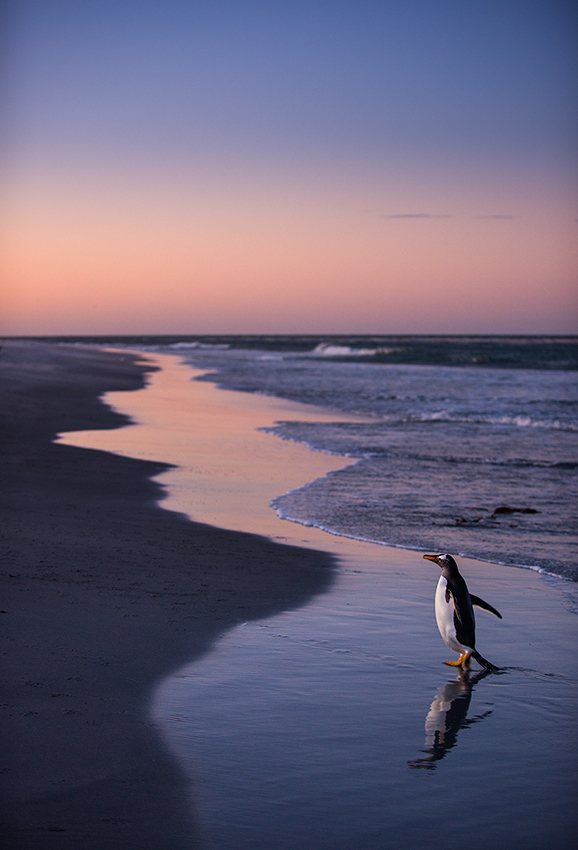
My favorite time of the day on Sea Lion Island in the Falklands was just after sunset when the last of the penguins were heading in from the sea, the orcas were patrolling the shoreline for sea lions and seals, and the receding surf created saturated reflections of the gentoos as they scurried back to their respective colonies. Nikon D810 with Nikkor 70-200mm lens (at 70mm) ISO 1000, f/2.8 at 1/200th of a second
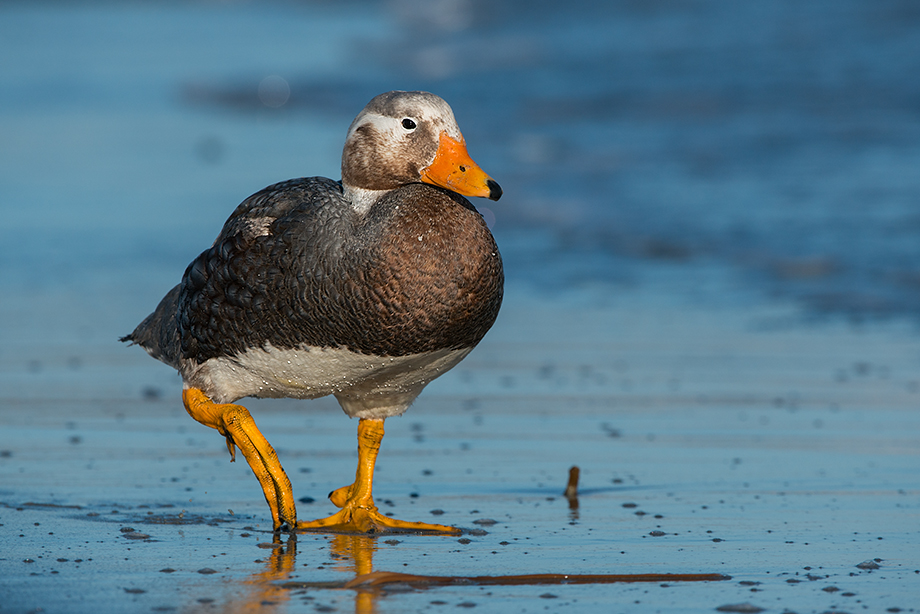
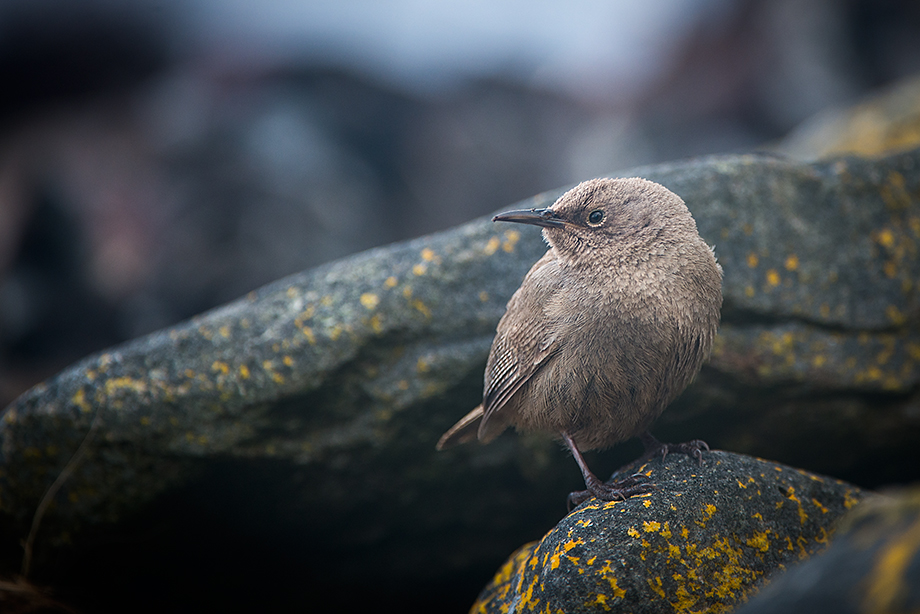
These two fine looking birds are the only true feathered locals in the Falkland Islands. Both endemic to the Islands, they don’t live anywhere else. The steamer duck possesses very short wings and is incapable of flight. They make up for it in personality, however, and were fun to watch as they waddled along the shoreline. The Cobb’s wren was also quite personable despite its rather plain appearance. On Carcass Island, where I photographed this one, they are very tame due to a lack of predators (there are no rodents or foxes or any other small ground carnivores on the island). Along with the tussacbirds (who you’ll meet in a future post), they would literally fly right up to me, even hopping on the front of my lens a few times. Steamer Duck: Nikon D800 with Nikkor 200-400mm lens (at 380mm) ISO 400, f/6.3 at 1/2500th of a second
Cobb’s Wren: Nikon D800 with Nikkor 200-400mm lens (at 400mm) ISO 400, f/4 at 1/800th of a second
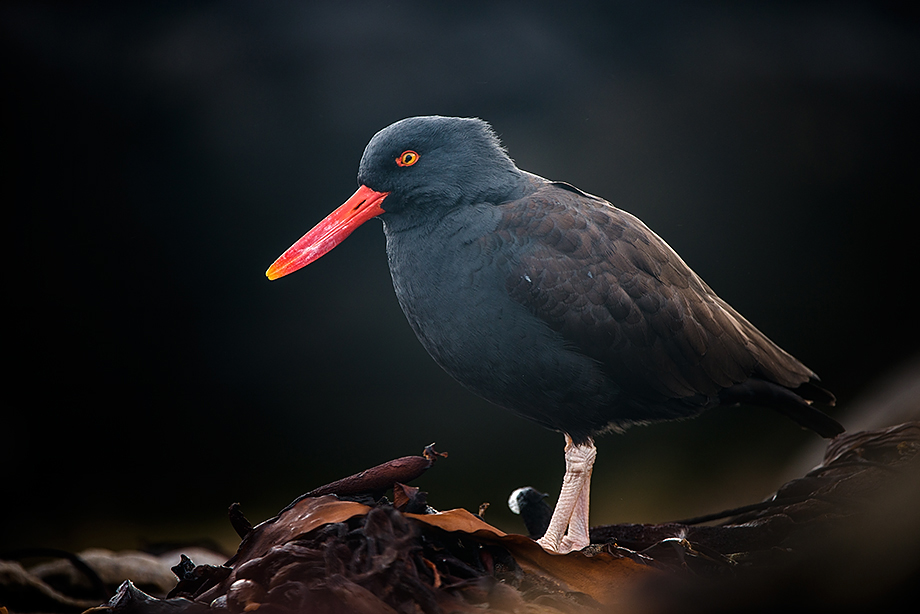
Last week I posted a Magellanic oystercatcher. This guy is the other species of oystercatcher that I photographed in the Falkland Islands — the appropriately named blackish oystercatcher. I didn’t see nearly as many of these guys but was able to get a few good looks. I liked this one against the similarly blackish background. Nikon D800 with Nikkor 200-400mm lens (at 400mm) ISO 400, f/4 at 1/640th of a second
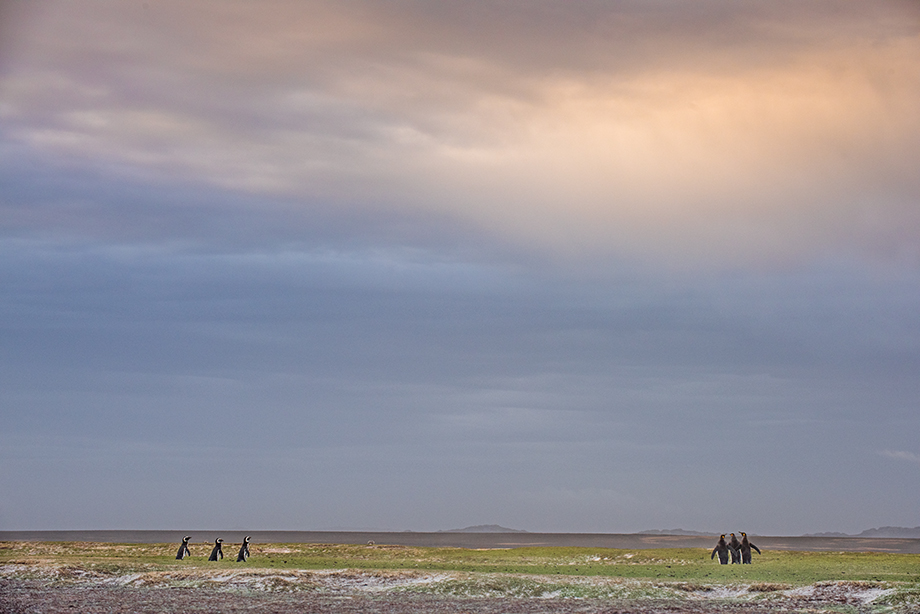
There’s something very West Side Story to me about this one — the Sharks vs. the Jets — or in this case, the Magellanics vs. the Kings. Looks like the three Magellanic penguins on the left mean business while the three kings on the right can’t believe the audacity of their shorter rivals. It’s about to get ugly and only a matter of time before all six break out in song and dance. Nikon D810 with Nikkor 70-200mm lens (at 116mm) ISO 800, f/11 at 1/250th of a second
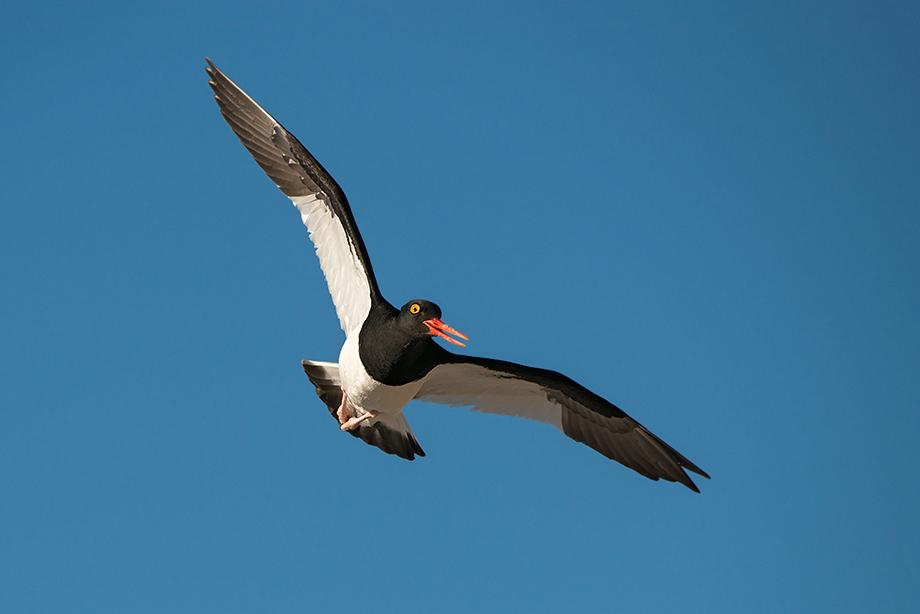
The twelve different species of oystercatchers are widely spread throughout the world. I’ve always been a big fan of these birds and have photographed them on several continents. This guy is the Magellanic oystercatcher — along with the blackish oystercatcher — one of the two species that live in the Falkland Islands. Magellanic oystercatchers can get pretty feisty and I saw them continually dive-bombing a caracara (eagle-like raptor). The caracara must have been too close to a nest that was on the ground. Whatever the case, it gave me a good opportunity to capture flight shots as the two oystercatchers kept circling before diving down. Nikon D800 with Nikkor 200-400mm lens (at 400mm) ISO 400, f/5.6 at 1/3200th of a second
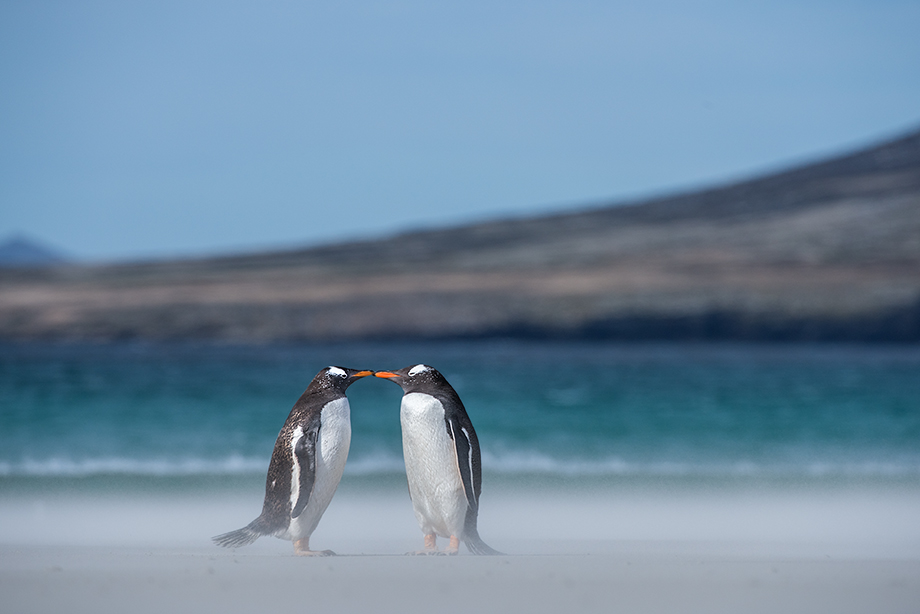
Penguins kiss a lot. In this case, the kissers happen to be gentoo penguins… in a wind storm… on the beach… on Saunders Island.. in the Falkland Islands (of course). Nikon D810 with Nikkor 200-400mm lens (at 400mm) ISO 400, f/7.1 at 1/1600th of a second
We use cookies to enhance your experience while using our website. If you are using our Services via a browser you can restrict, block or remove cookies through your web browser settings. We also use content and scripts from third parties that may use tracking technologies. You can selectively provide your consent below to allow such third party embeds. For complete information about the cookies we use, data we collect and how we process them, please check our Privacy Policy