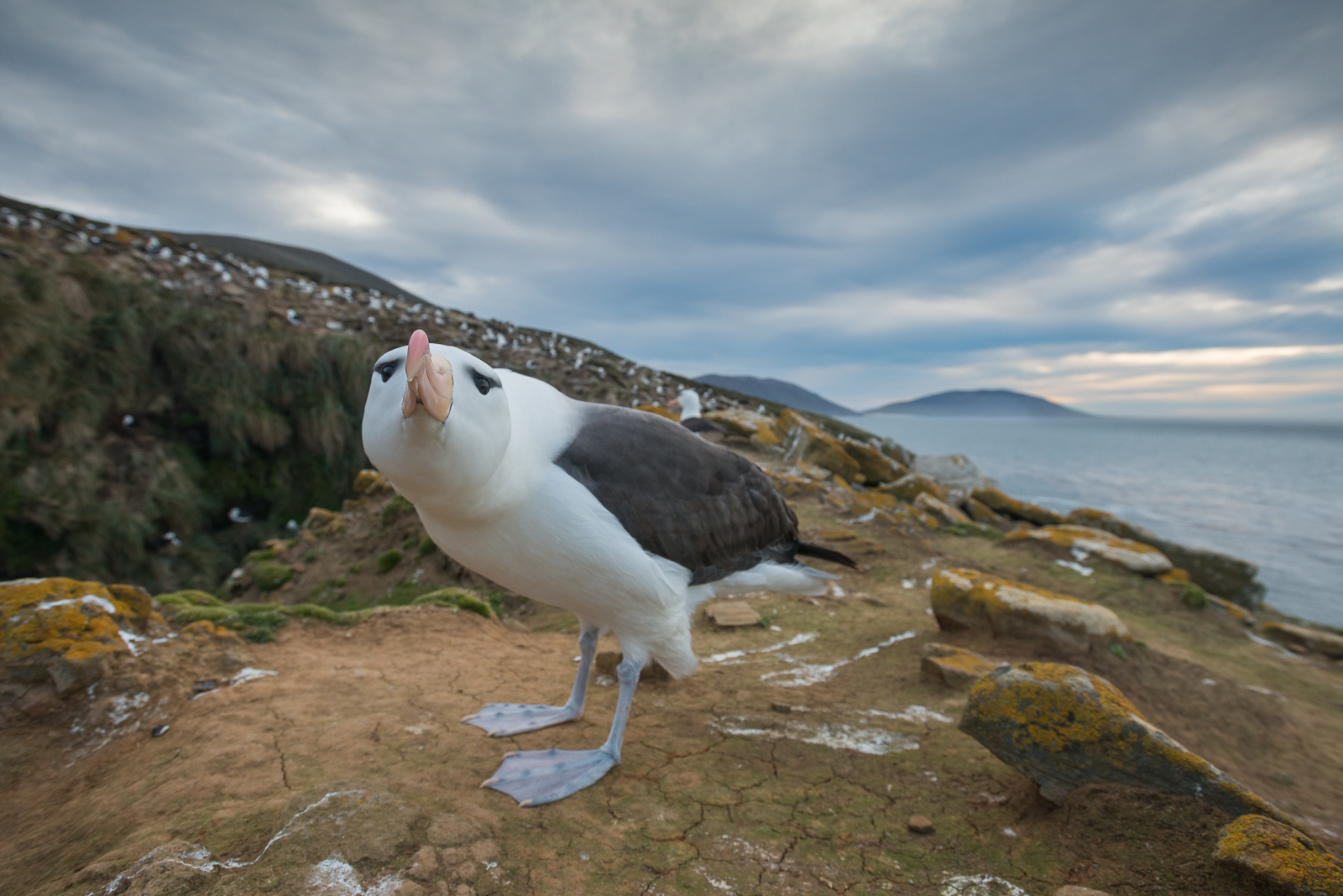
I’ve said it before but it bears repeating — you have to see an albatross to appreciate an albatross. They’re that big. This black-browed albatross was doing her best to see herself in the front element of my wide-angle lens. Photographed on Saunders Island in the Falklands.Nikon D800 with Nikkor 17-35mm lens (at 17mm) ISO 400, f/7.1 at 1/250th of a second.
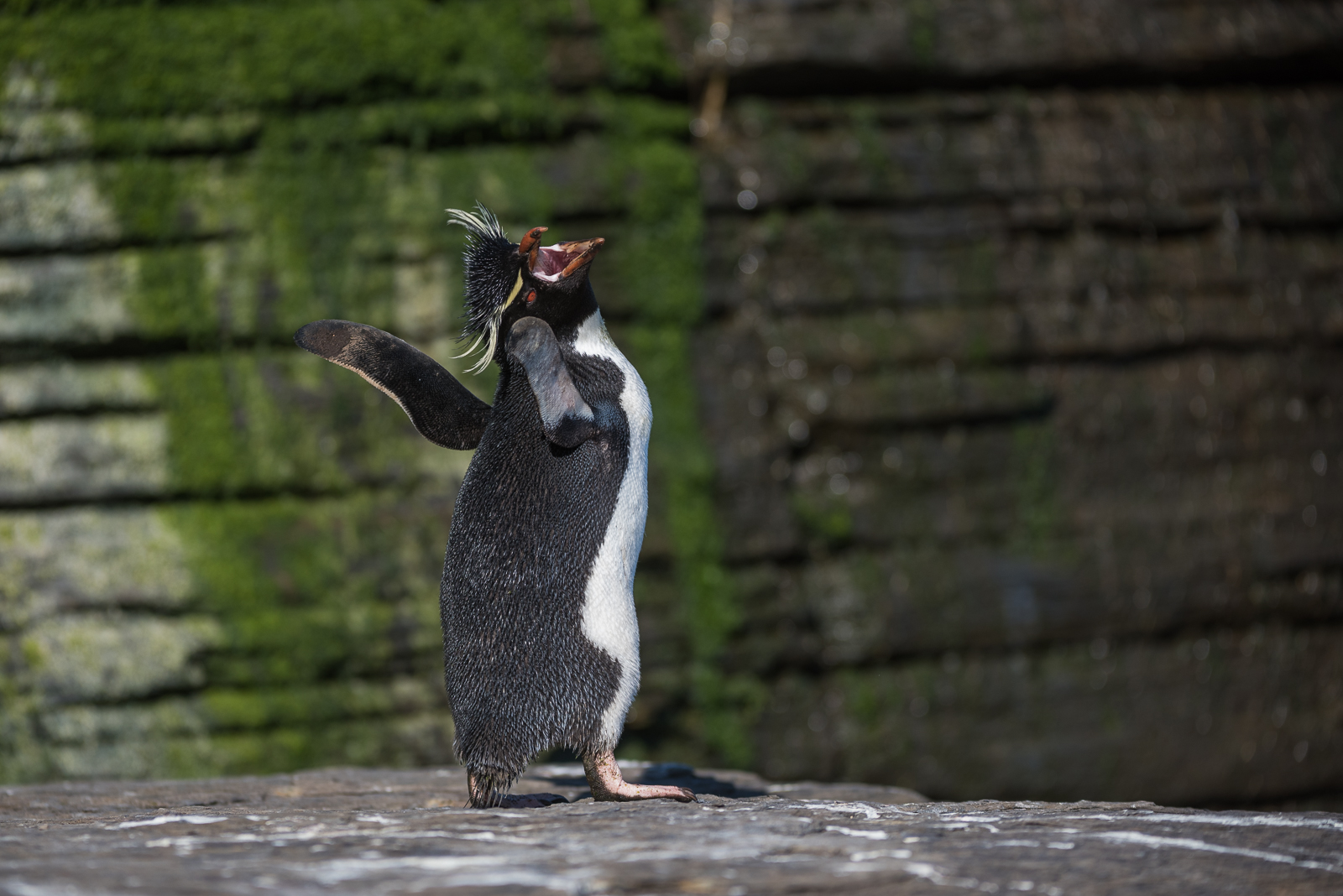
Rockhopper penguins can be quite boisterous as a group. This individual, however, was taking it to another level. Photographed on Saunders Island in the Falkland Islands. Nikon D810 with Nikkor 200-400mm lens (at 200mm) ISO 200, f/4 at 1/1600th of a second.
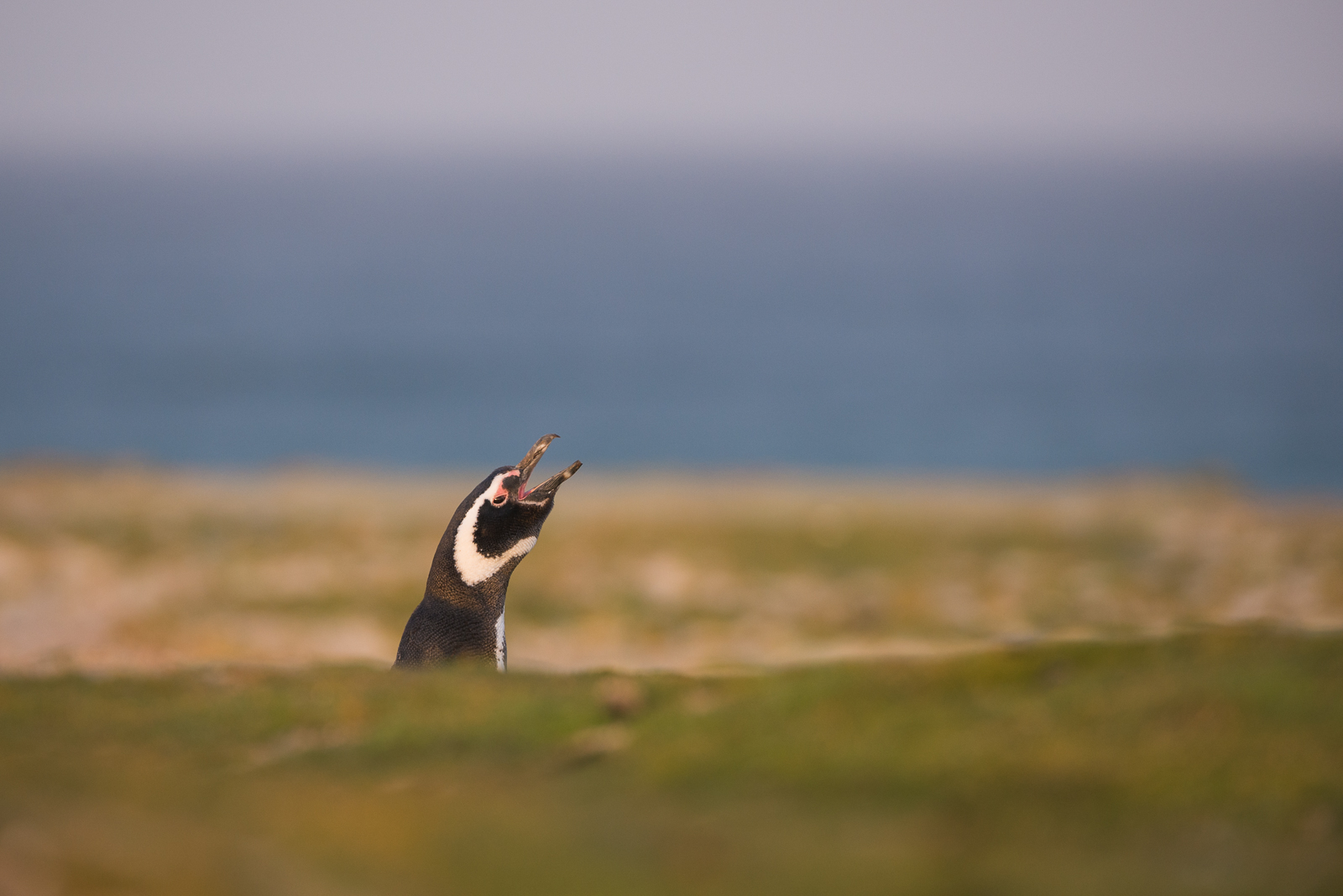
Magellanic penguins cry out, or bray, like donkeys, earning them the nickname jackass penguin. They’re unique among the penguins on the Falkland Islands in that they don’t live in colonies, but rather burrows underground. Nikon D800 with Nikkor 200-400mm lens (at 400mm) ISO 800, f/5 at 1/250th of a second.
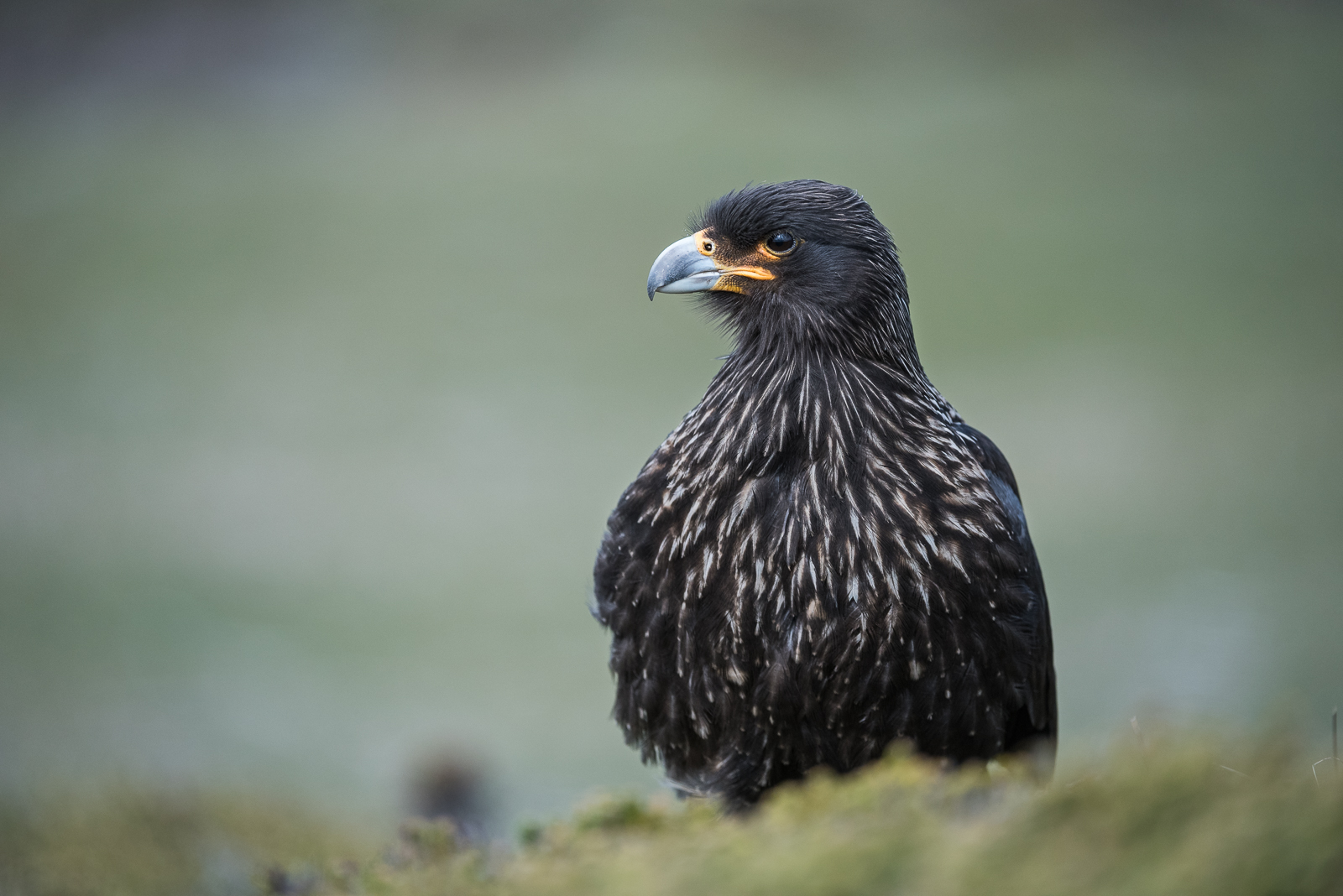
In the Falkland Islands, the striated caracara is locally known as the Johnny Rook. They are fairly common around the islands — sometimes a bit too common — as they always seem to be waiting for an opportunity to get into your backpack to see what they can find. I photographed this guy on Saunders Island, my first stop in my Falklands trip back in 2014. Nikon D810 with Nikkor 200-400mm lens (at 290mm) ISO 800, f/4 at 1/3200th of a second.
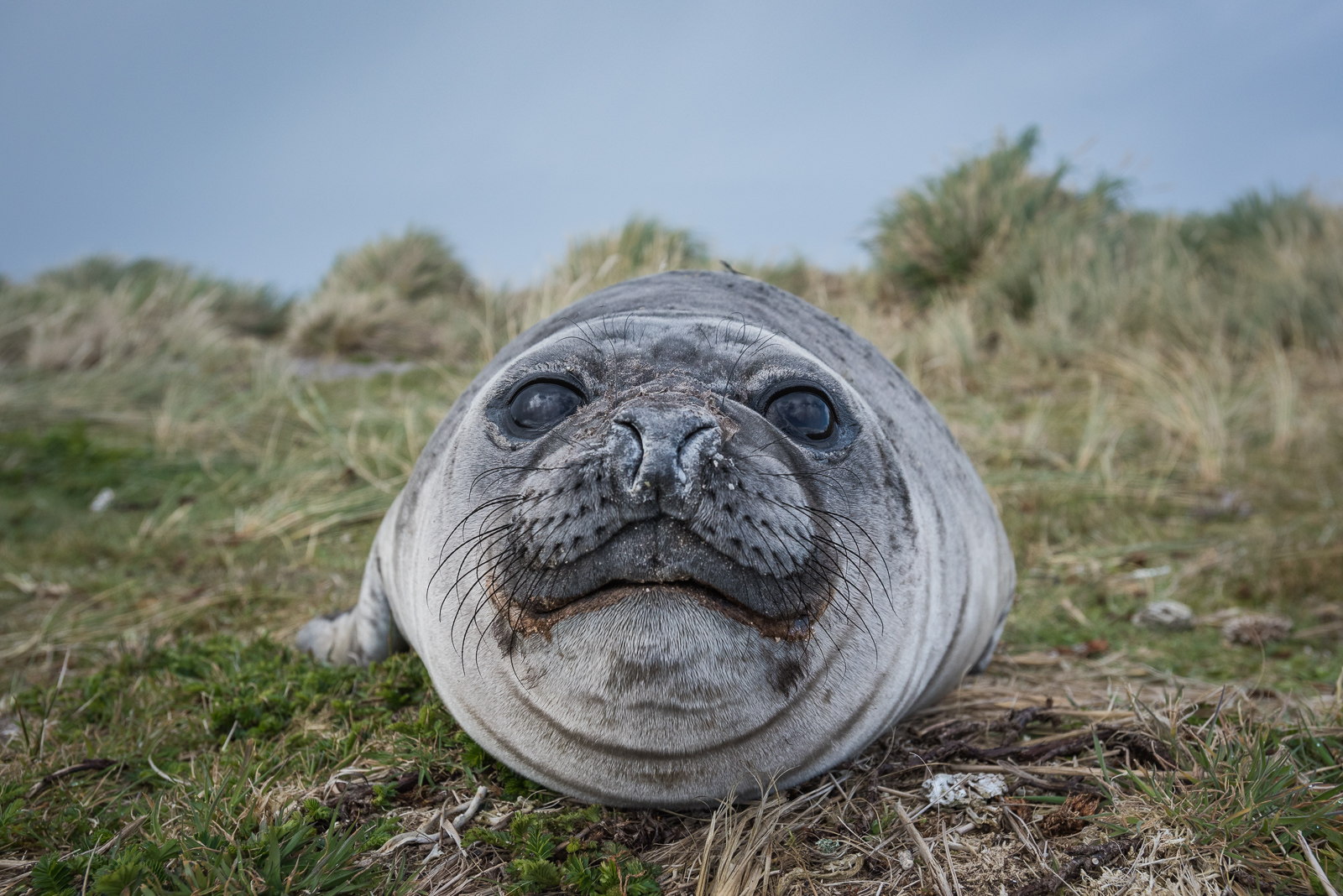
The southern elephant seal ranges throughout the Antarctic and Sub-Antarctic regions. They are the largest species of pinniped, which includes seals, sea lions, and walruses. This one is a juvenile and much smaller than the average adult. Of course, in this shot, it just looks like a head sitting in the grass. Photographed on Carcass Island in the Falkland Islands. Nikon D810 with Nikkor 17-35mm lens (at 28mm) ISO 800, f/6.3 at 1/1600th of a second.
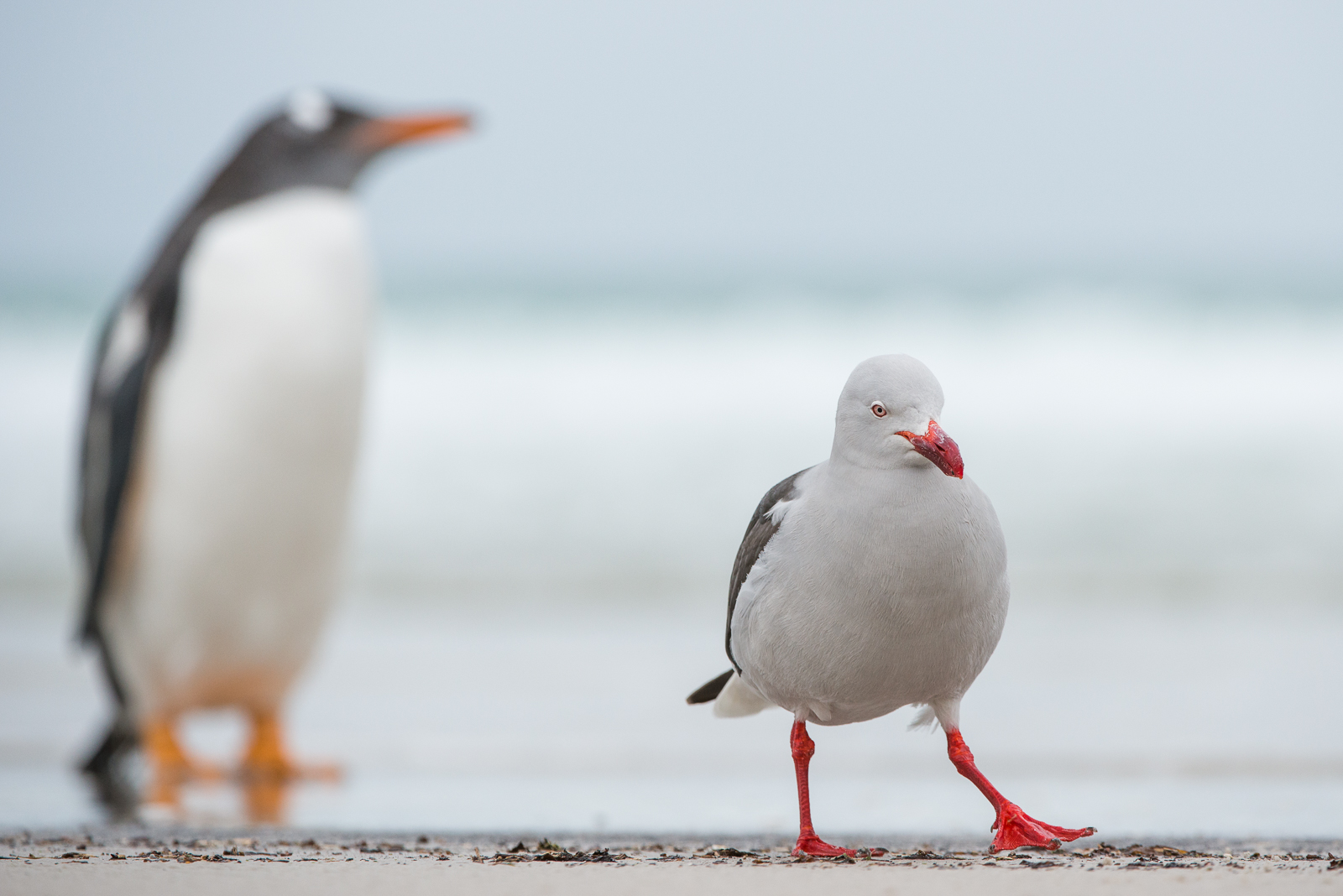
These dolphin gulls were pretty common in the Falklands. Of course, I was usually focused on penguins, but in this instance, I switched focus from the gentoo penguin in the background to the gull in the foreground. They are actually quite attractive as far as gulls go with their predominant gray coloring. Nikon D800 with Nikkor 200-400mm lens (at 350mm) ISO 800, f/5.6 at 1/1600th of a second.
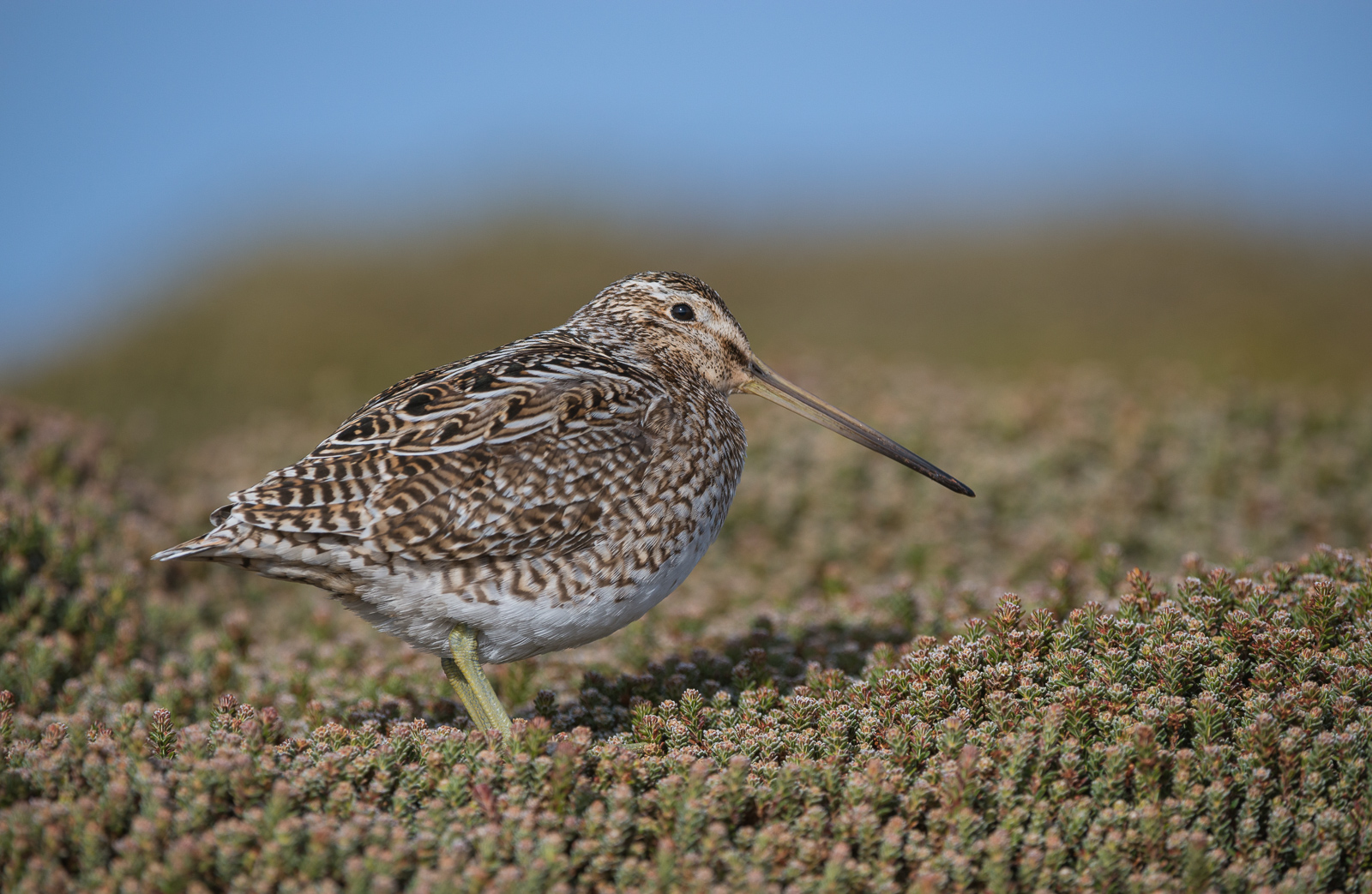
With snipes, it’s all about the beak. This is the Magellanic snipe, just one of many snipe species in the world. But back to that beak, which is highly complex and can distinguish between many different delicacies beneath the soil such as larvae and other food sources. Apparently extra sensory filaments within the beak are what allow the snipe to be so discriminating. Photographed on Sea Lion Island in the Falkland Islands. Nikon D800, with Nikkor 200-400mm lens (at 400mm) ISO 400, f/5.6 at 1/2500th of a second.
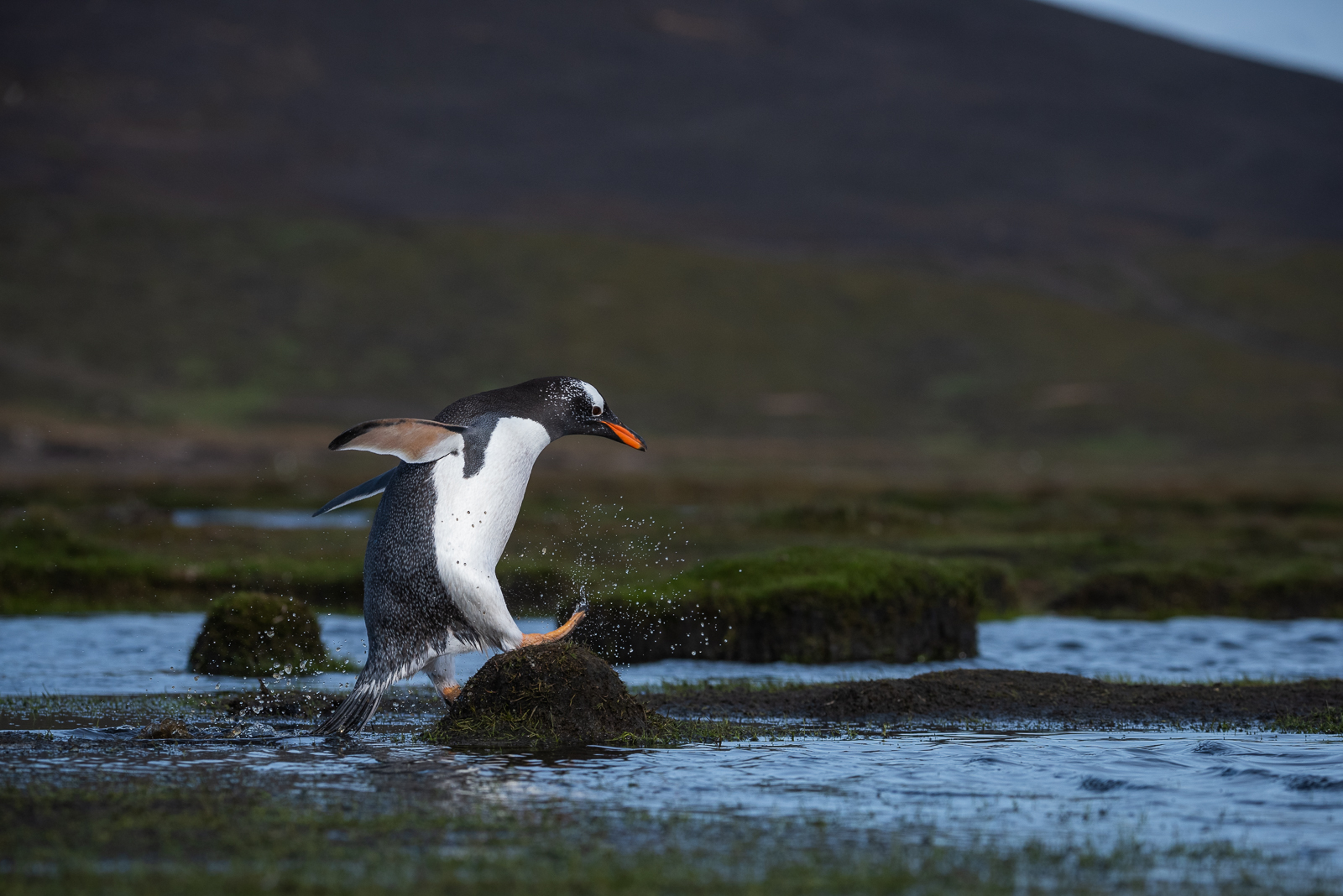
I don’t believe there were any gentoo penguins among the characters in the Happy Feet movie (they were all emperors, adelies and rockhoppers) but this gentoo was doing his best interpretation of the dance, splashing around in the marshlands of Saunders Island in the Falklands. Nikon D810 with Nikkor 200-400mm lens (at 200mm) ISO 800, f/5.6 at 1/2000th of a second.
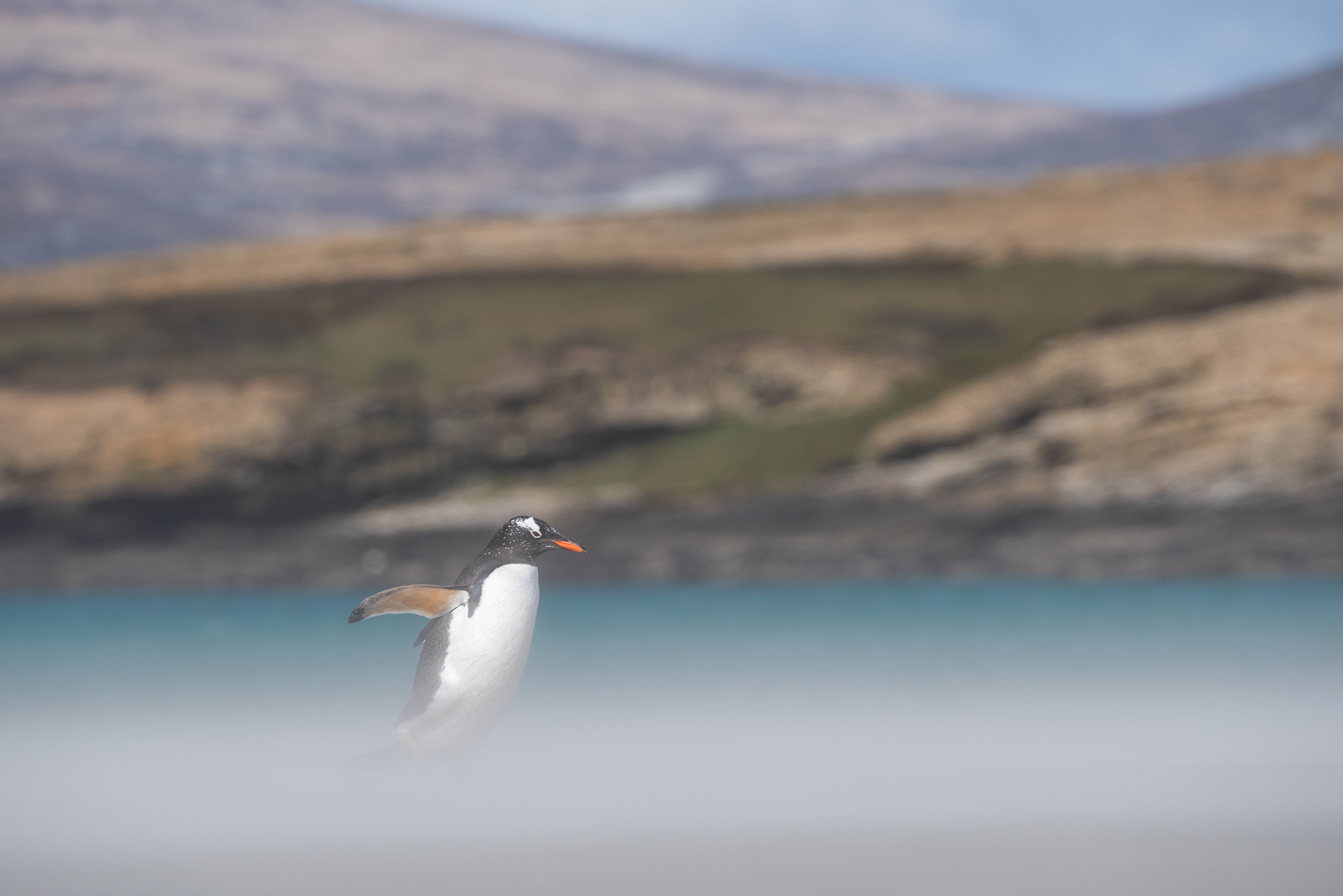
It can get awfully windy on the beaches of the Falkland Islands. The repair bill on my cameras and lenses to remove all the sandy grit can attest to that. But babying my equipment is usually the last thing on my mind when out in the field. For this shot I was face down in all that prickly blowing sand to capture gentoo penguins as they fought their way back to the relative calm of their colony. Nikon D810 with Nikkor 200-400mm lens (at 400mm) ISO 400, f/7.1 at 1/2000th of a second.
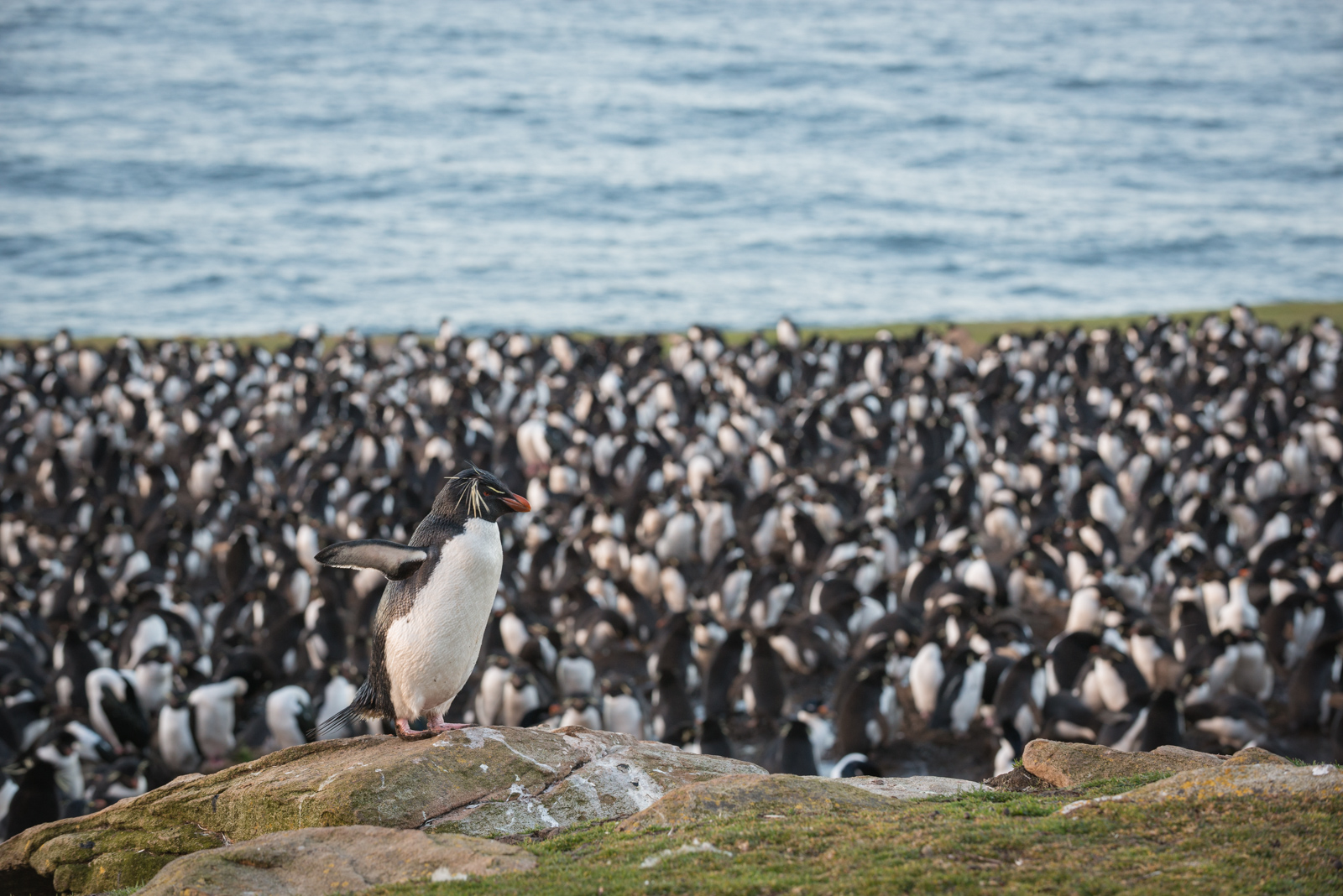
This rockhopper penguin appeared to be speaking on high while addressing the masses down below. Another day on Saunders Island in the Falklands. Nikon D800 with Nikkor 70-200mm lens (at 110mm) ISO 800, f/7.1 at 1/80th of a second.
We use cookies to enhance your experience while using our website. If you are using our Services via a browser you can restrict, block or remove cookies through your web browser settings. We also use content and scripts from third parties that may use tracking technologies. You can selectively provide your consent below to allow such third party embeds. For complete information about the cookies we use, data we collect and how we process them, please check our Privacy Policy