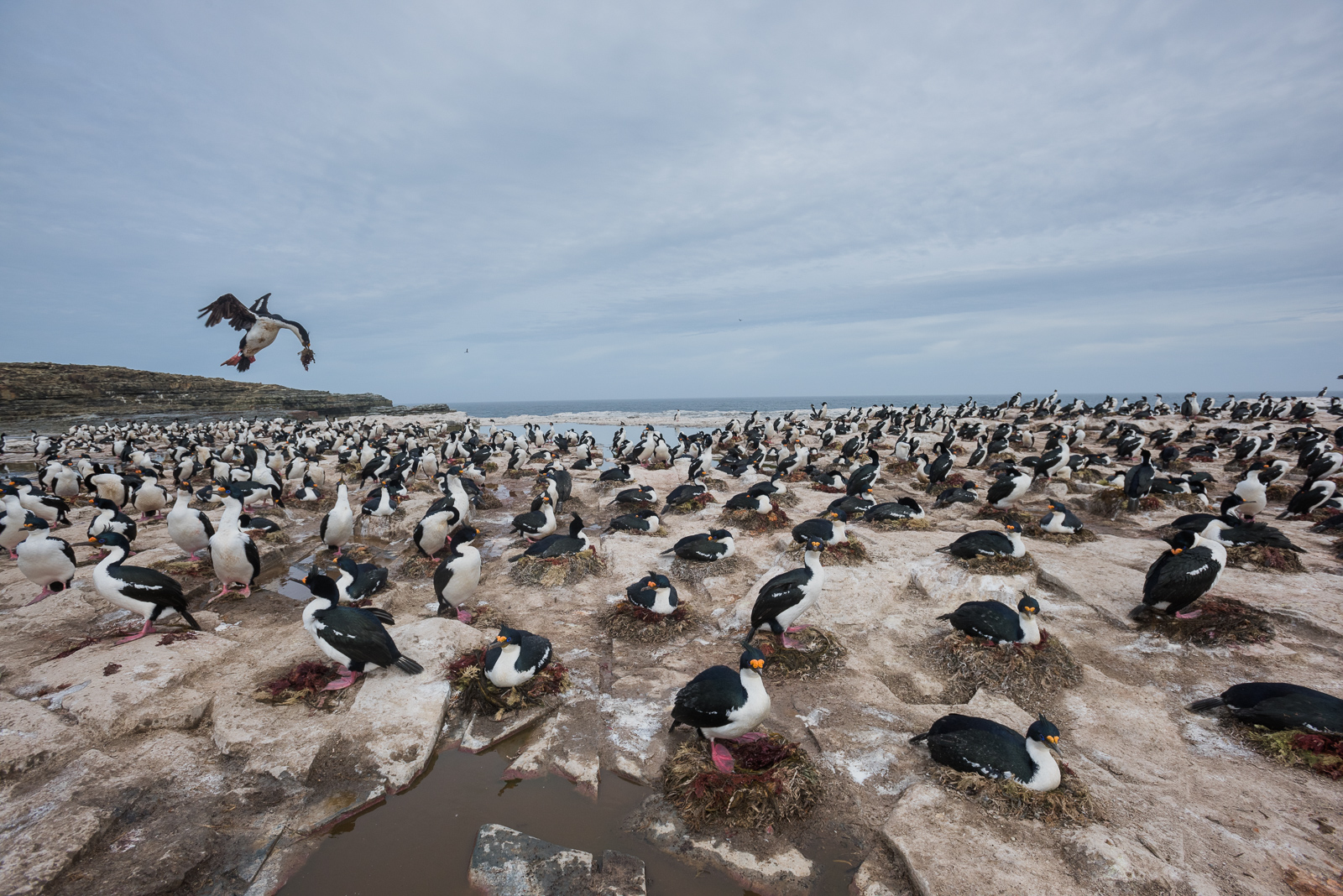
At one of the southernmost points of one of the southernmost islands in the Southern Hemisphere lies this barren spot, taken over as an imperial shag nesting site. The shags, or cormorants, are constantly at work, flying out to sea to collect kelp for their nests. There is also a fair amount of thievery going on. When one shag leaves the nest, neighbors attempt to pilfer the unattended kelp. I had a great afternoon, alone with the shags, watching all the goings on. Photographed on Sea Lion Island in the Falkland Islands. Nikon D810 with Nikkor 17-35mm lens (at 17mm) ISO 400, f/10 at 1/1600th of a second.
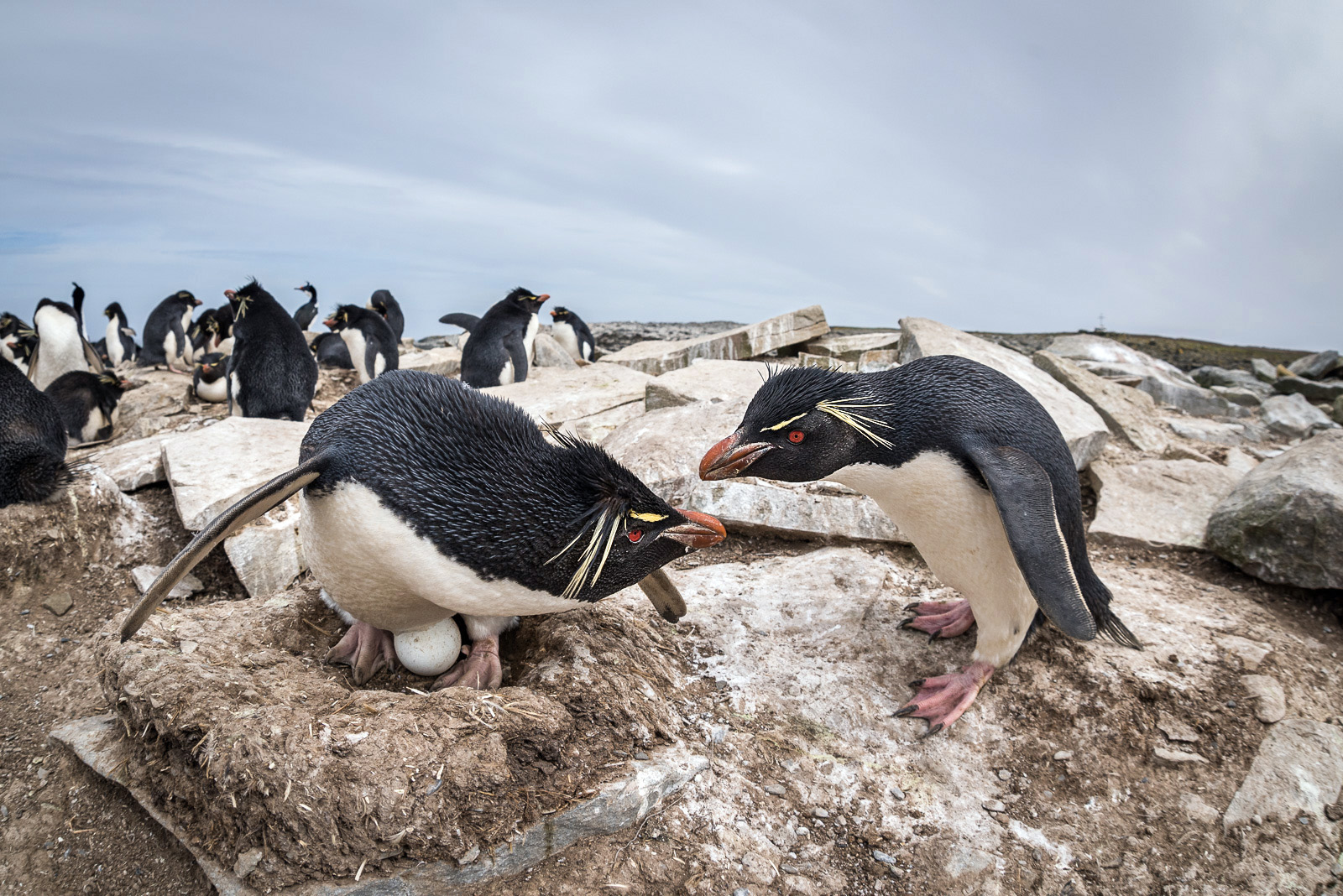
My trip to the Falkland Islands coincided with the breeding season for the rockhopper penguins. Both parents tend to the eggs (usually two) for the first week or so, after which the males go out to sea to fish, returning two to four weeks later. In this photo, a breeding pair is still in the shared duty phase, which happens in November. Nikon D810 with Sigma 15mm fisheye lens, ISO 400, f/8 at 1/1250th of a second.
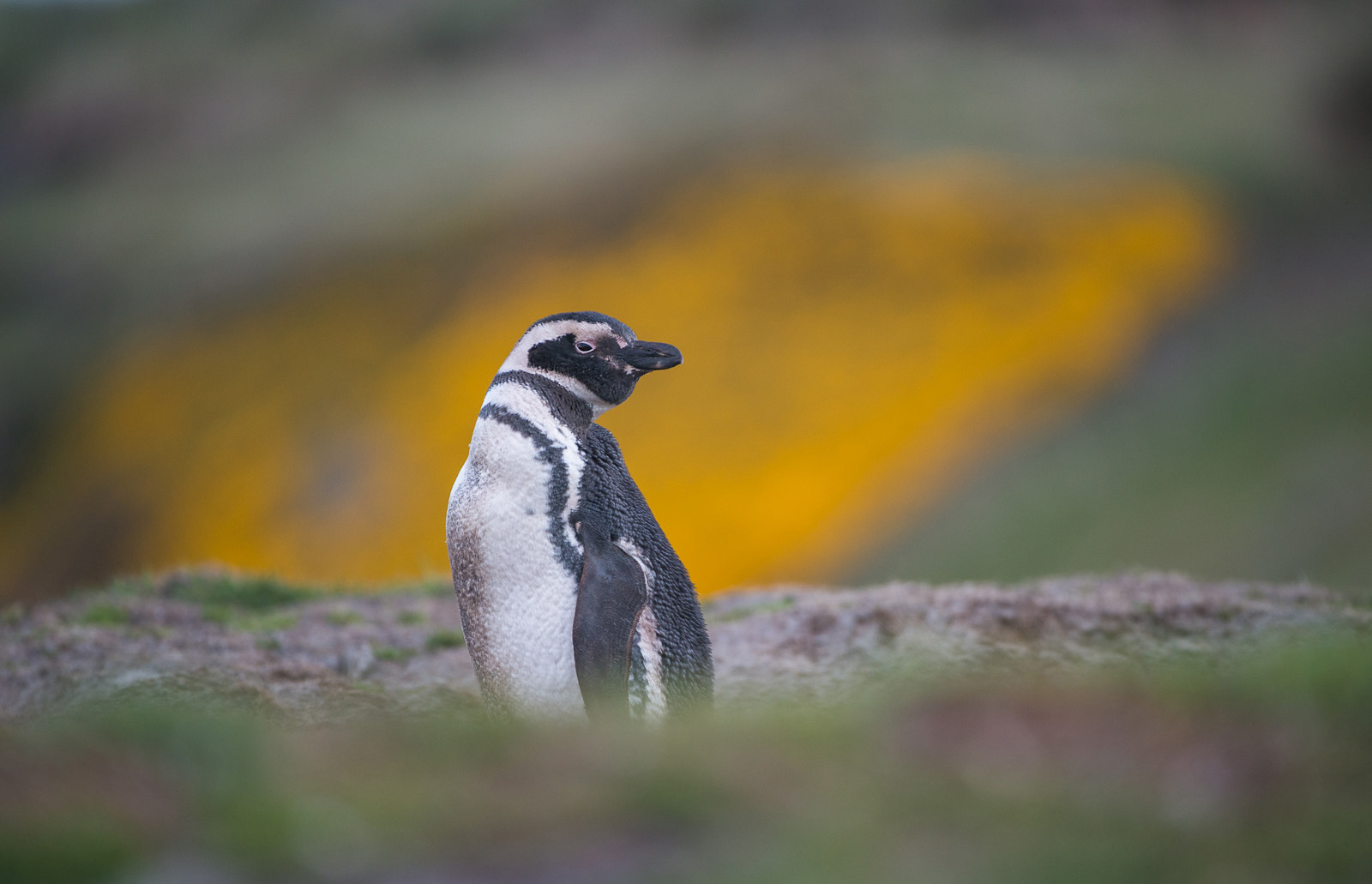
Last week I posted a rockhopper penguin from my trip to the Falkland Islands. Here is a much different member of the order — the Magellanic penguin. Unlike the highly social rockhoppers that live in open colonies, these guys live independently in burrows in the ground. They were much more skittish to my approach. Of course, they don’t have the safety in numbers that the rockhoppers, gentoos and kings do. That yellow patch in the background is from the gorse bush flowers that were blooming all over the hillsides. Nikon D800 with Nikkor 200-400mm lens (at 400mm) ISO 800, f/4 at 1/125th of a second.
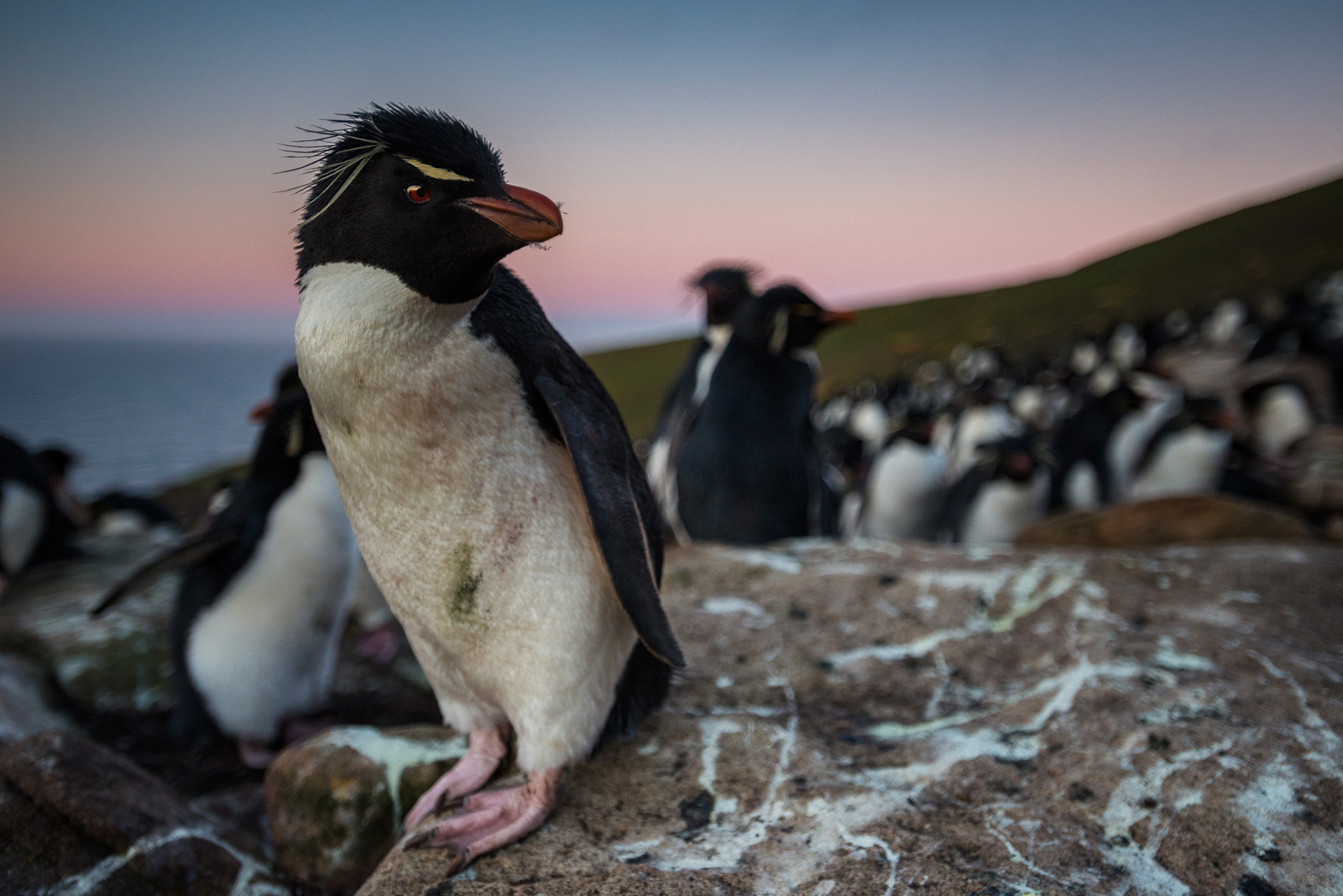
A rockhopper penguin stands above the colony as the sun sets over the south Atlantic Ocean on Saunders Island in the Falklands. It was one of the highlights of my wildlife career to spend a few weeks alone with rockhopper, king, gentoo, Magellanic and macaroni penguins — unconcerned with time or having to be anywhere in particular other than right where I was. Nikon D800 with Nikkor 17-35mm lens (at 28mm) ISO 1600, f/2.8 at 1/250th of a second.
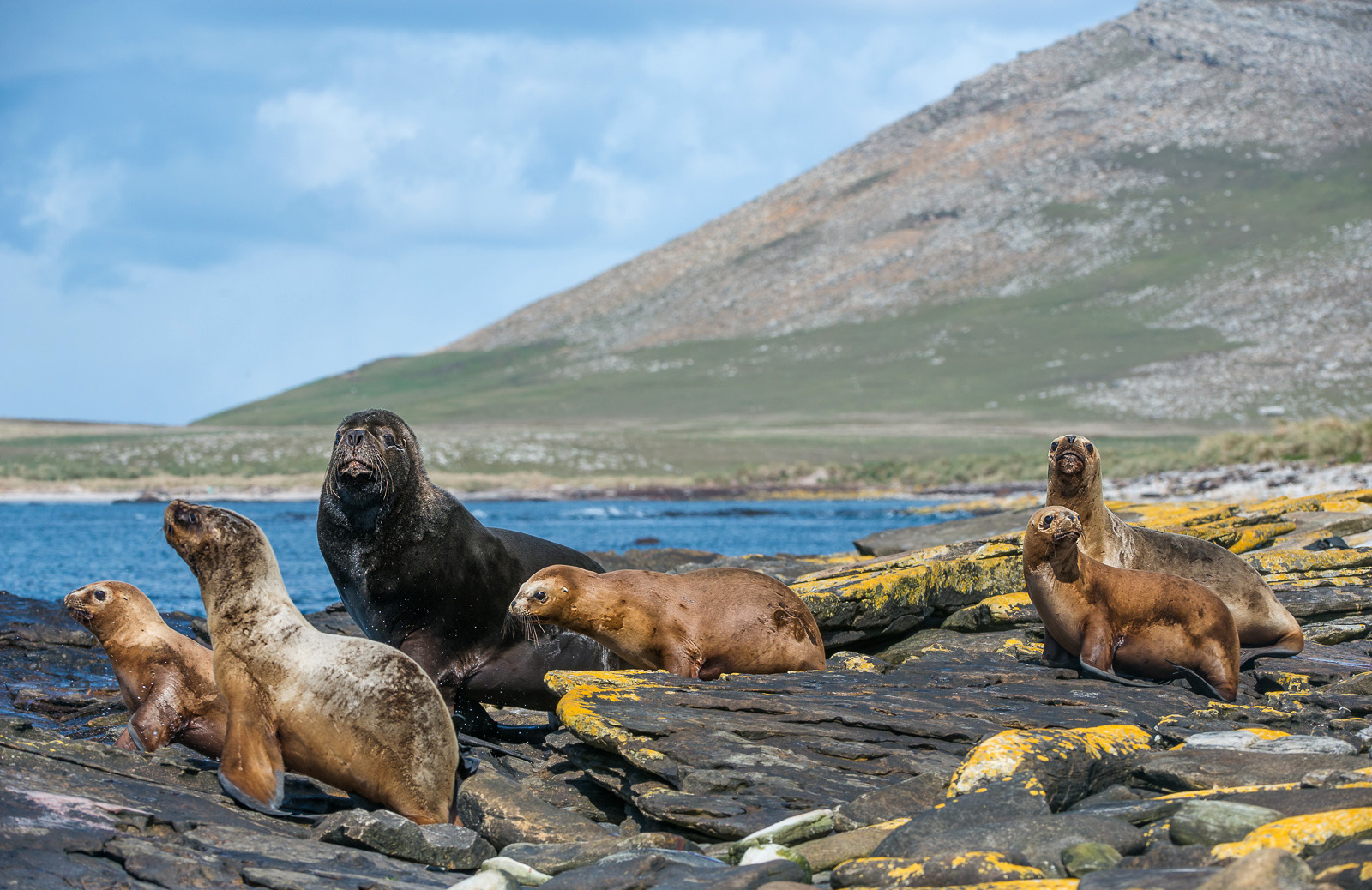
A family of southern sea lions head toward the water on Carcass Island in the Falkland Islands. These guys are also called the South American sea lion and the Patagonian sea lion. On the west coast of South America, they range from Peru in the north to the southern tip of Chile and the Falkland Islands and then on the east coast on up into southern Brazil. Nikon D800 with Nikkor 200-400mm lens (at 200mm) ISO 400, f/8 at 1/1000th of a second.
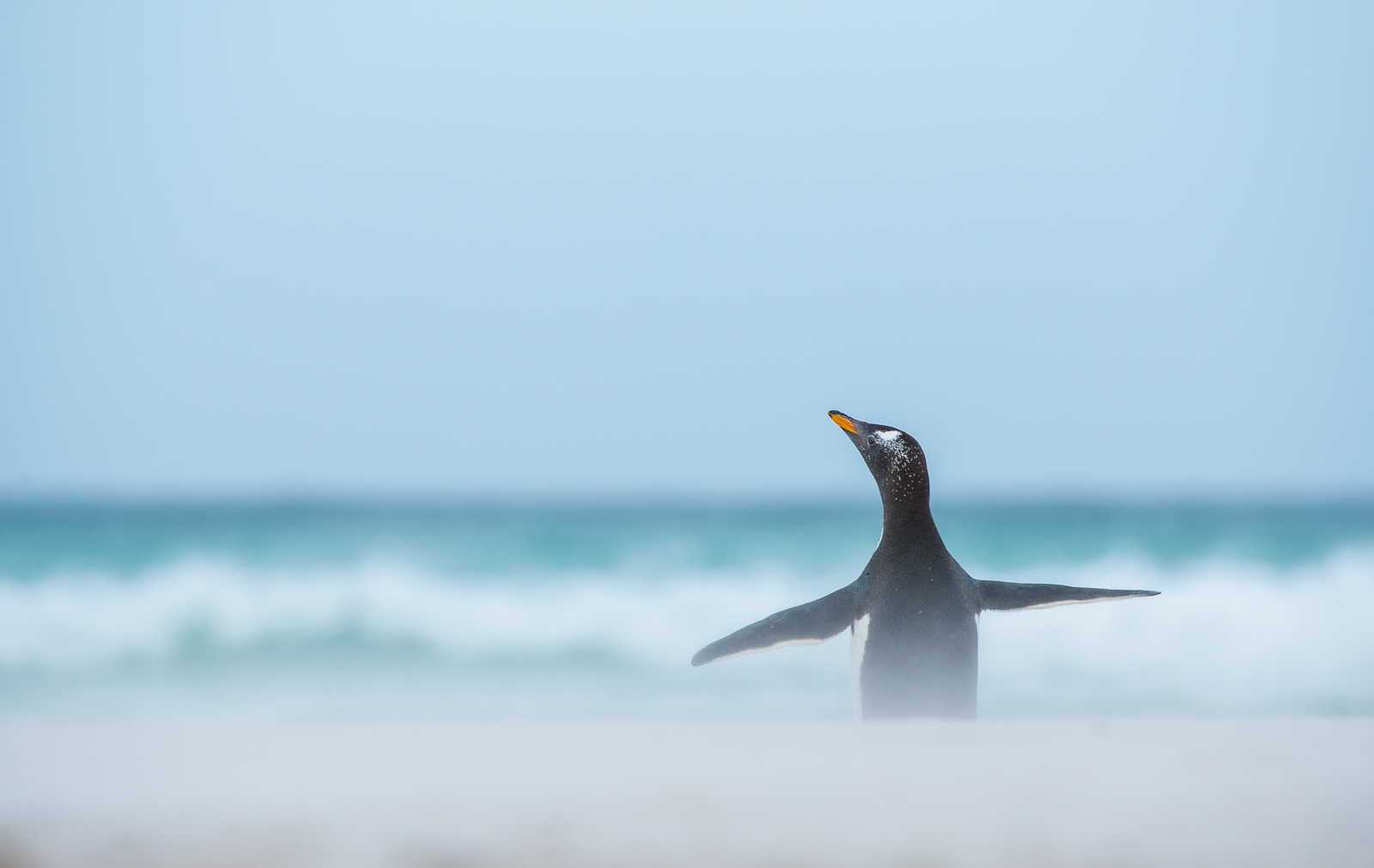
For the next few weeks, these posts may become a bit sporadic as Karen, our three pets and I are living out of hotels due to a bat infestation at the house we were renting. I’m posting images I can find on the hard drive of my laptop or iPad that I haven’t posted before. This is a gentoo penguin I thought looked like an umpire calling a runner safe. Nikon D800 with Nikkor 200-400mm lens (at 400mm) ISO 400, f/6.3 at 1/500th of a second.
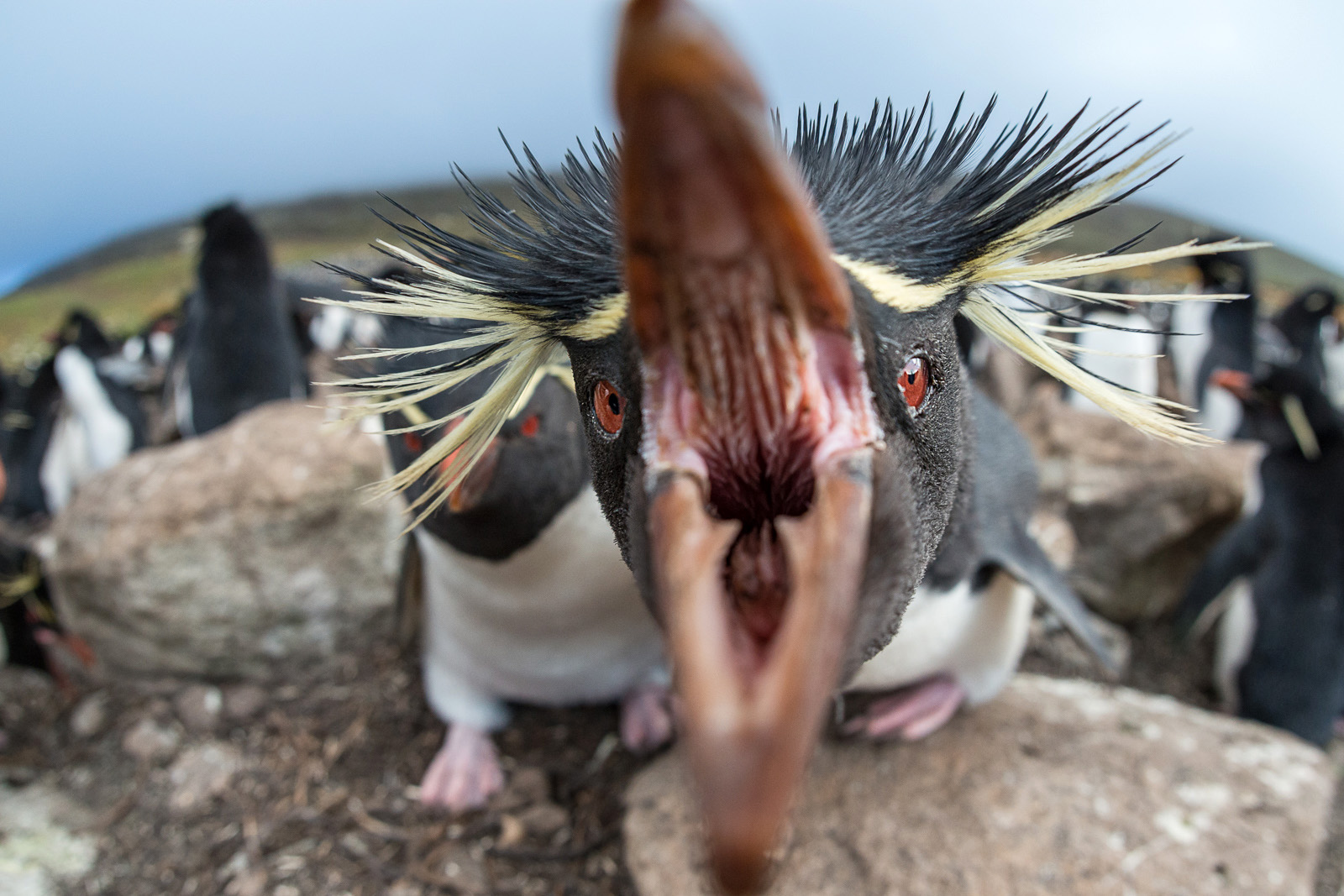
I think this rockhopper penguin wanted to eat my lens. I had been photographing these very curious penguins at close range when two of them came even closer and started pecking at the front element of my fisheye lens, perhaps seeing their own reflection in the glass. I posted a similar photo a few years back, but this one really got in there for an up close and personal perspective. Nikon D800 with Sigma 15mm fisheye lens, ISO 1600, f/5.6 at 1/2000th of a second.
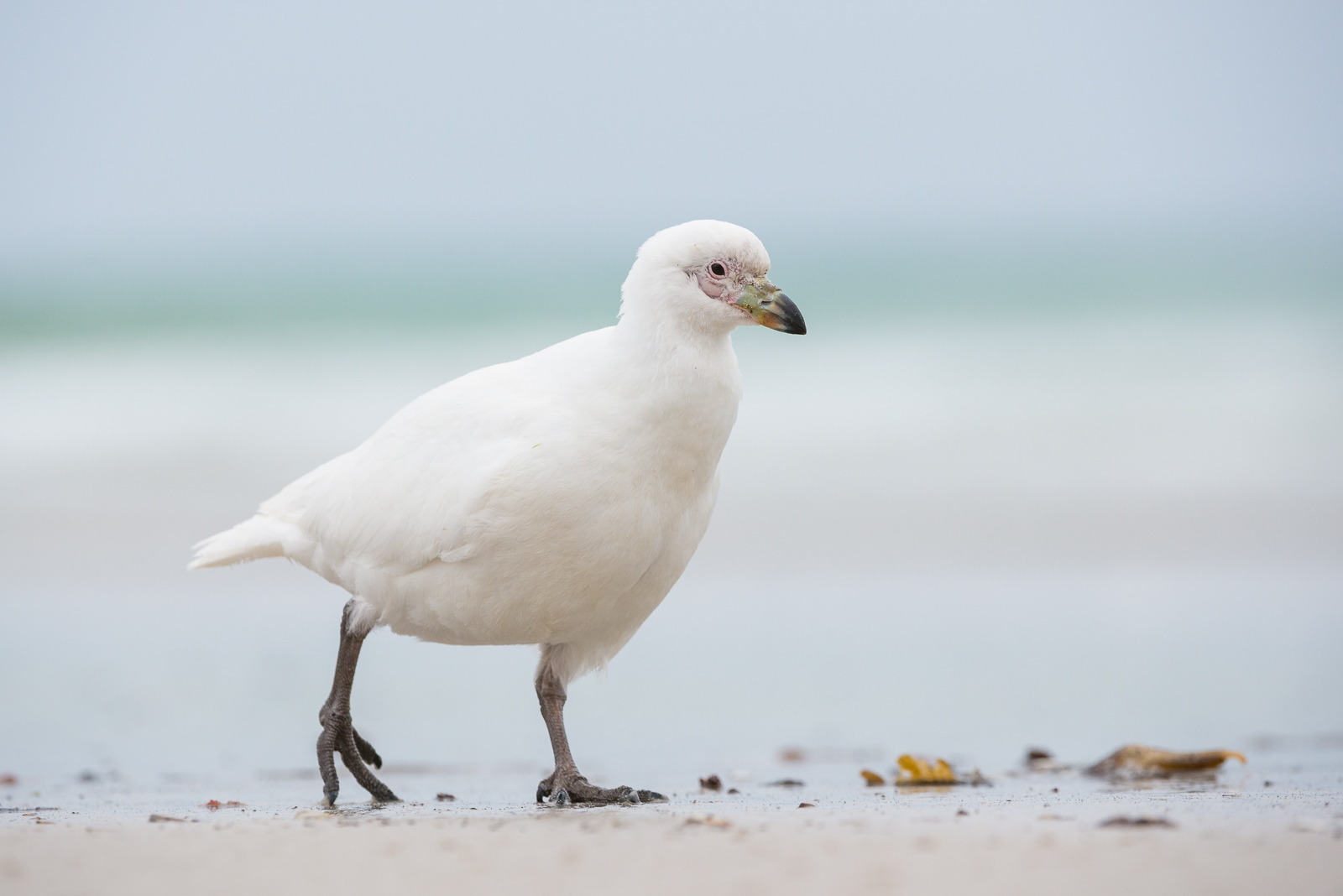
The pale-faced sheathbill is the only land bird native to the Antarctic continent. I photographed this one in the Falkland Islands. Also known as the snowy sheathbill, greater sheathbill and paddy, it’s certainly not going to win any beauty contests. That said, its looks are perhaps its most charming characteristic. Not having webbed feet, this shorebird does not fish but instead finds its food on land by scavenging. It will eat almost anything, including but not limited to regurgitated food from penguins, penguin eggs, and if the opportunity presents itself, penguin chicks. But that’s when it’s living clean. It will also eat carrion, animal feces, and, if and when available, human waste. It has even been known to eat tapeworms that have been living inside a penguin’s intestines. There’s probably a reason, I’ve never posted a pale-faced sheathbill. Tomorrow I promise to return with something slightly more adorable. Nikon D800 with Nikkor 200-400mm lens (at 330mm) ISO 800, f/5.6 at 1/1250th of a second.
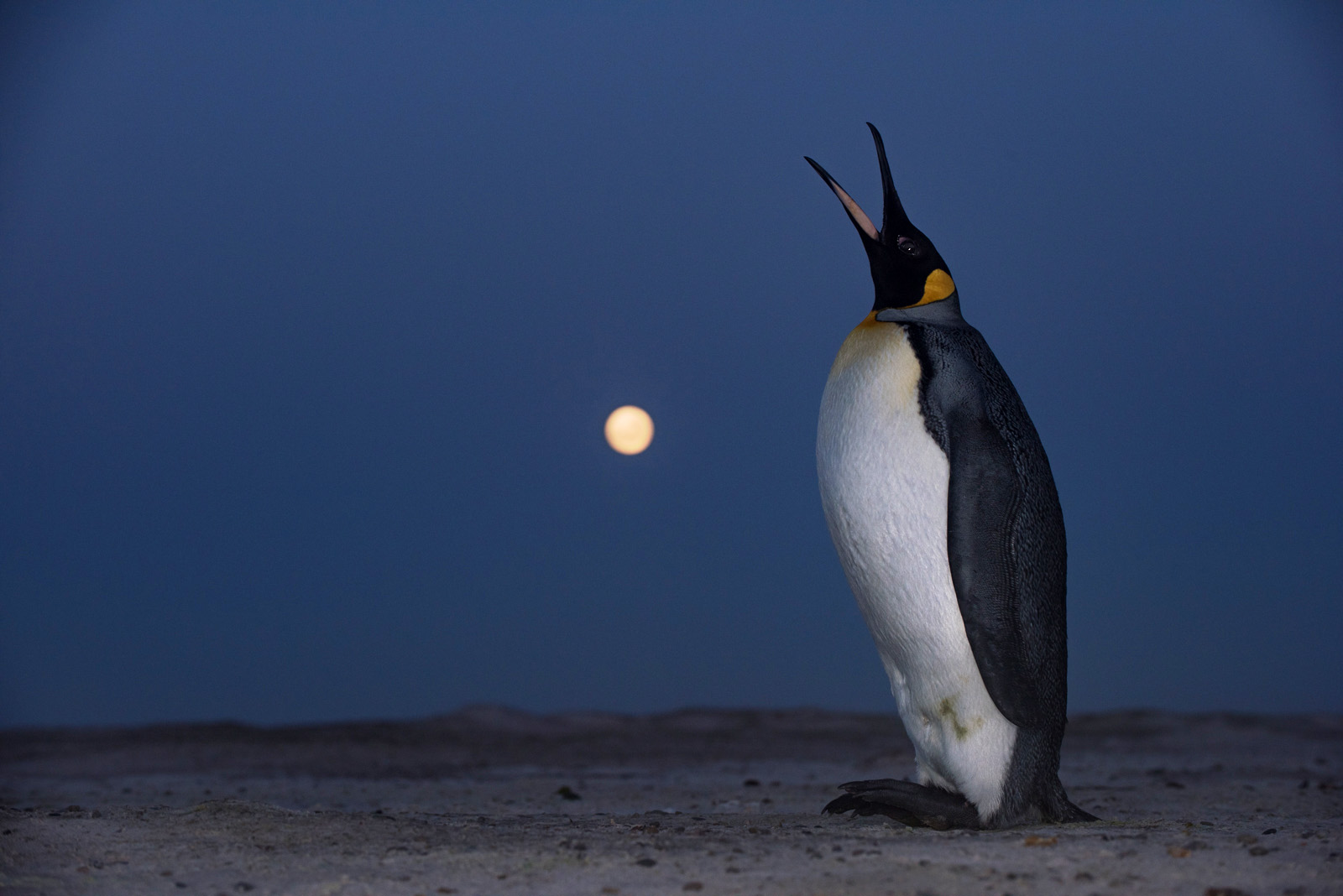
This king penguin seemed to be channelling his best wolf impersonation. This was the last morning of my trip to the Falkland Islands and I got up before the sun to see what was happening down by the king penguin colony. I didn’t get far before I spotted this guy doing his thing. Nikon D810 with Nikkor 70-200mm lens (at 105mm) ISO 400, f/8 at 1/160th of a second, Nikon SB-900 flash.
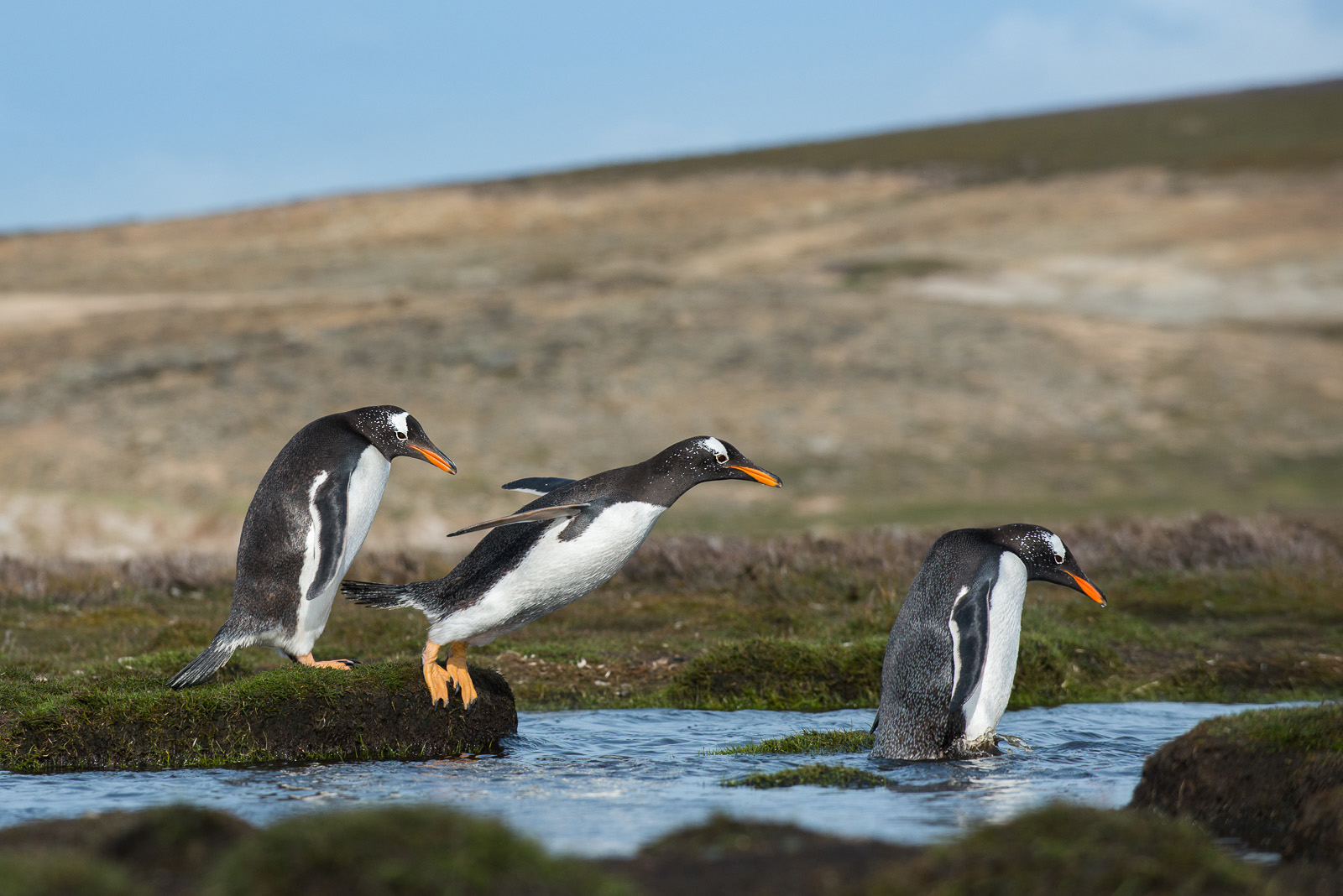
These three gentoo penguins were making their way from the ocean, across an open marshland, and on back to their colony. One at a time they took this small leap — considering it for a few seconds (as penguins do) before forging ahead. Photographed on Saunders Island in the Falkland Islands. Nikon D800 with Nikkor 70-200mm lens (at 200mm) ISO 400, f/6.3 at 1/1600th of a second.
We use cookies to enhance your experience while using our website. If you are using our Services via a browser you can restrict, block or remove cookies through your web browser settings. We also use content and scripts from third parties that may use tracking technologies. You can selectively provide your consent below to allow such third party embeds. For complete information about the cookies we use, data we collect and how we process them, please check our Privacy Policy