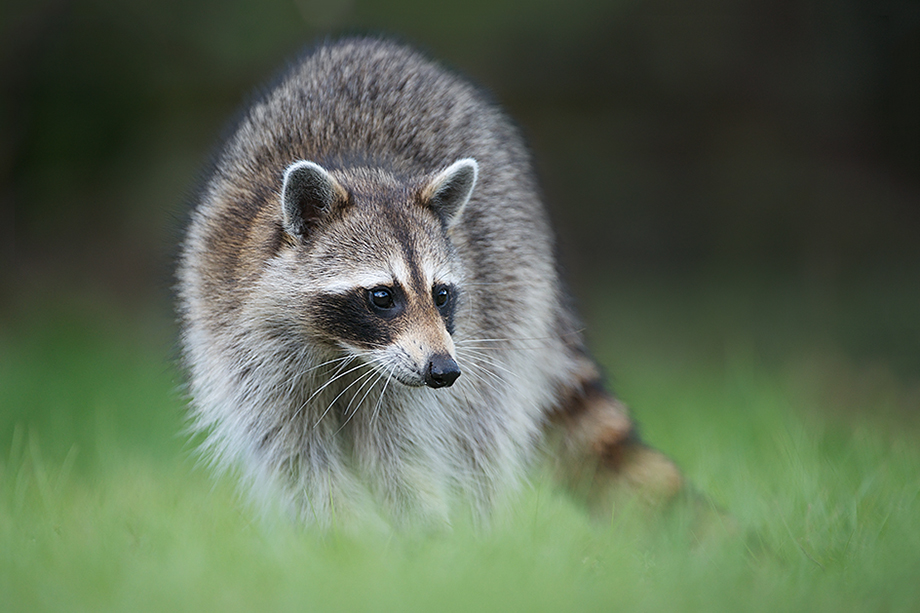
Where there are people eating there will be raccoons. And there were a lot of people eating in Bill Baggs State Park in Key Biscayne on Saturday. Just before the park closed for the night, I took a quick drive through and found two opportunistic raccoons canvassing the recently abandoned picnic areas. They got a little skiddish every time I got down on the ground, but eventually they relaxed and I was able to get some decent narrow depth of field, eye level shots like this one. Nikon D800 with Nikkor 200-400mm lens (at 400mm) ISO 800, f/4 at 1/200th of a second
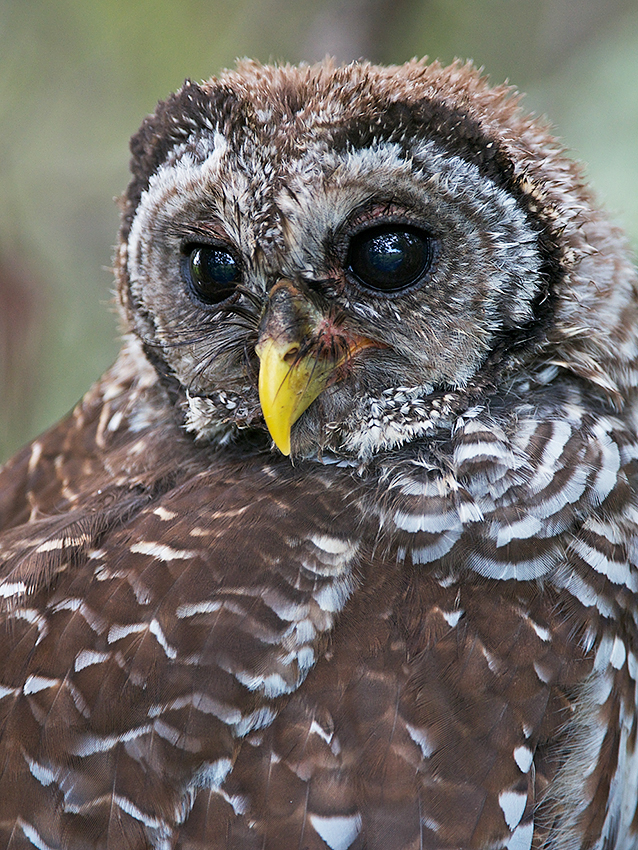
For Karen and I, the holiday weekend was all about relaxation down in the Florida Keys. But relaxation wouldn’t quite be relaxing if I wasn’t able to slip away for at least a few hours to search for wildlife. So early Saturday morning I got up before the sun and ventured into Everglades National Park where I eventually found this young, and very bold, barred owl. The owl seemed to hardly notice me as it patiently hunted for grasshoppers — and allowed frame filling portraits in the process. Nikon D800 with Nikkor 200-400mm lens (at 400mm) ISO 800, f/4 at 1/125th of a second
Bears weren’t the only creatures I came across last weekend in Minnesota. I saw quite a few painted turtles as well, usually attempting to cross the road. Have a great 4th of July everyone. See you back on Monday with more from the north woods.
Nikon D800 with Nikkor 200-400mm lens (at 330mm) ISO 800, f/5.6 at 1/125th of a second
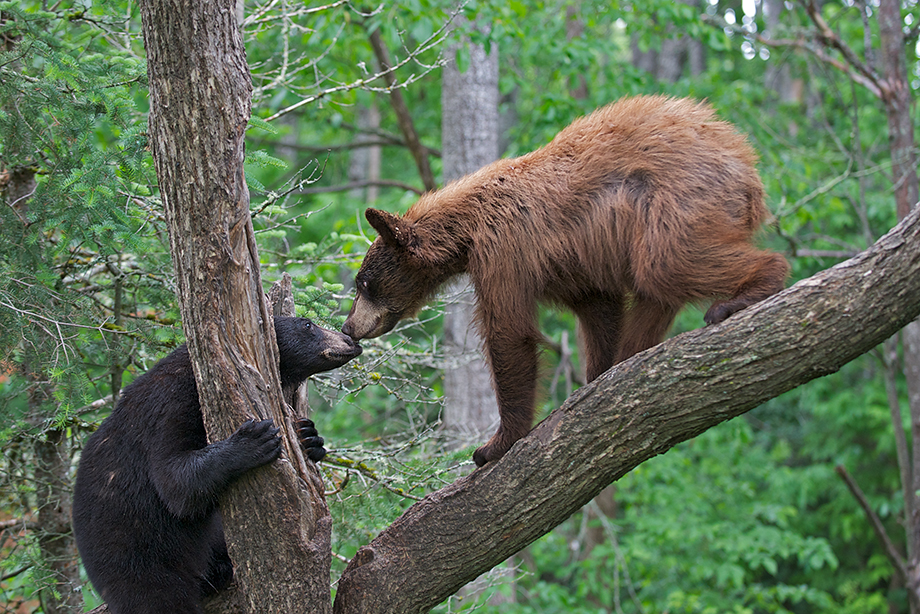
Here’s another from this past weekend in northern Minnesota. These two young black bears seemed a bit smitten with each other. You can see the clear difference in coat colors between the two. Nikon D700 with Nikkor 70-200mm lens (at 82mm) ISO 800, f/2.8 at 1/200th of a second
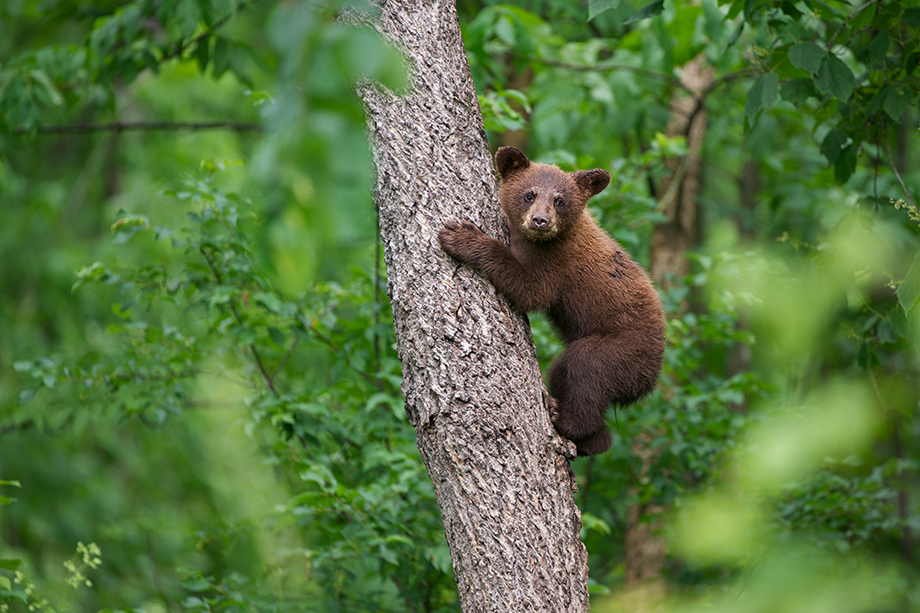
Just back from a weekend up in northern Minnesota photographing black bears. Haven’t gone through all the photos yet, but just quickly grabbed this one of a young chocolate cub climbing down a tree. Black bears come in many colors, from black to blonde. I kind of like this chocolate color. Many more of these bears to come. Nikon D800 with Nikkor 200-400mm lens (at 380mm) ISO 500, f/4 at 1/400th of a second
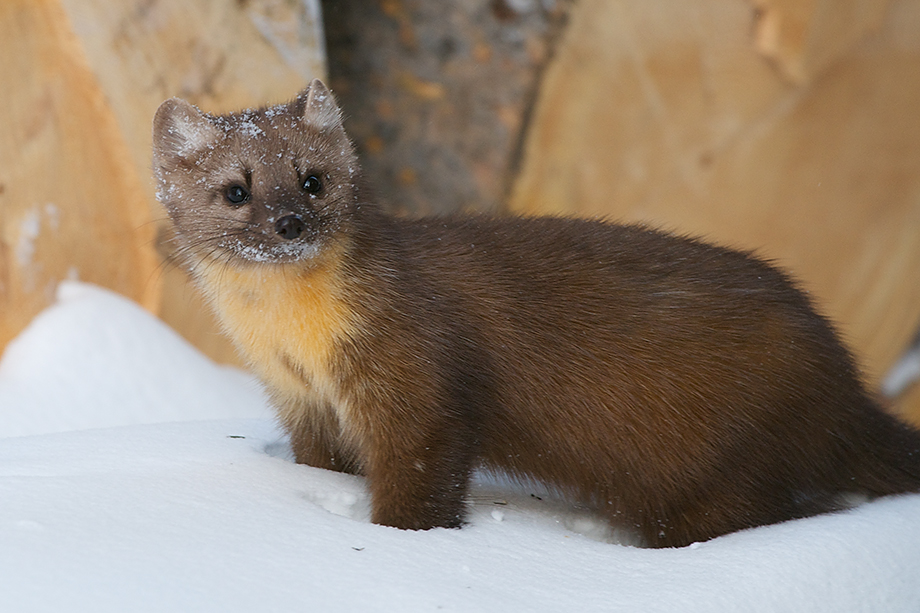
This is an American marten, also commonly known as a pine marten. Martens have very shiny and luxuriant fur and at the turn of the century, they were nearly wiped out in North American due to the fur trade. They have since made a nice comeback thanks to conservation efforts and the population is now healthy throughout much of Canada and pockets of the United States. I photographed this one in front of a wood pile just outside of the northeast entrance to Yellowstone National Park in Silver Gate, Montana. Nikon D300 with Nikkor 200-400mm lens (at 400mm) ISO 400, f/5.6 at 1/250th of a second
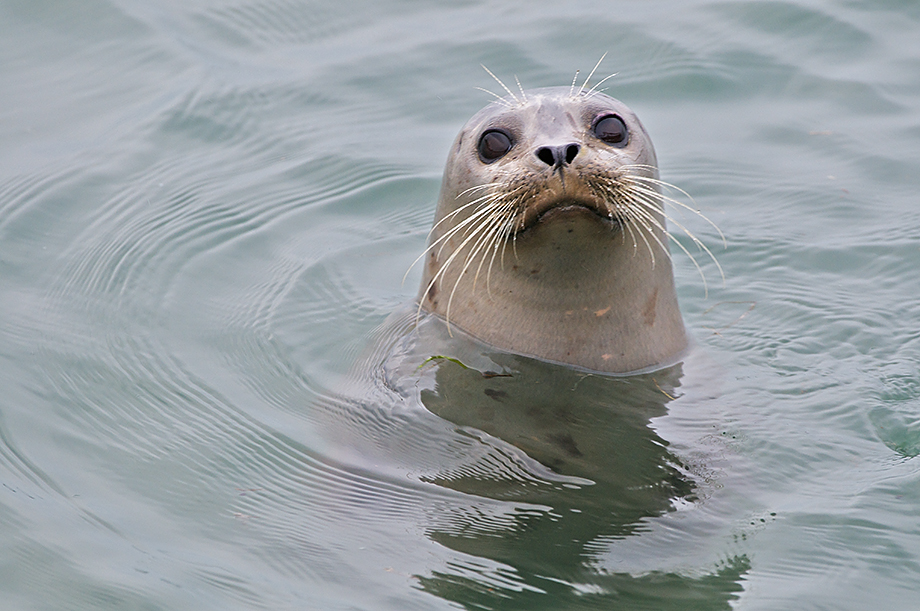
Always nice to start the week off with a seal face. This particular face happens to belong to a harbor seal. Harbor seals can be very curious and they tend to follow behind kayakers in Elkhorn Slough — just north of Monterey, California — where I took this photo. As soon as you turn around, however, they often dive beneath the surface. Nikon D300 with Nikkor 200-400mm lens (at 400mm) ISO 500, f/5.6 at 1/250th of a second
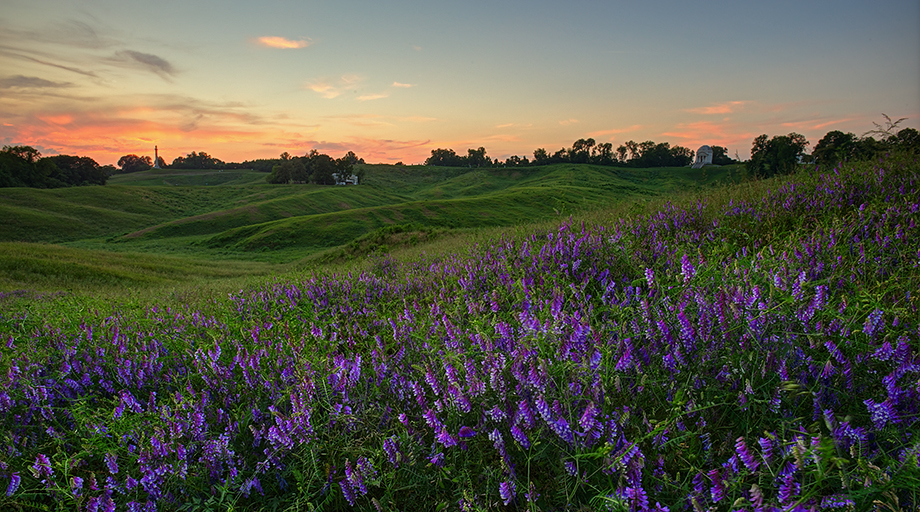
This photo was taken in the same general area as the previous one I posted from Vicksburg. In the distance to the left is the Louisiana Memorial. To the right is the Illinois Memorial, perhaps the most impressive structure in the park. In the middle, you can see how hilly the terrain is, making it difficult for either the Union or Confederate armies to gain much ground. Tomorrow, back to the animals. Nikon D800 with Nikkor 17-35mm lens (at 17mm) ISO 200, f/22, shutter speeds of 1.6, .4, .8, 3 and 6 seconds (5 shot HDR image)
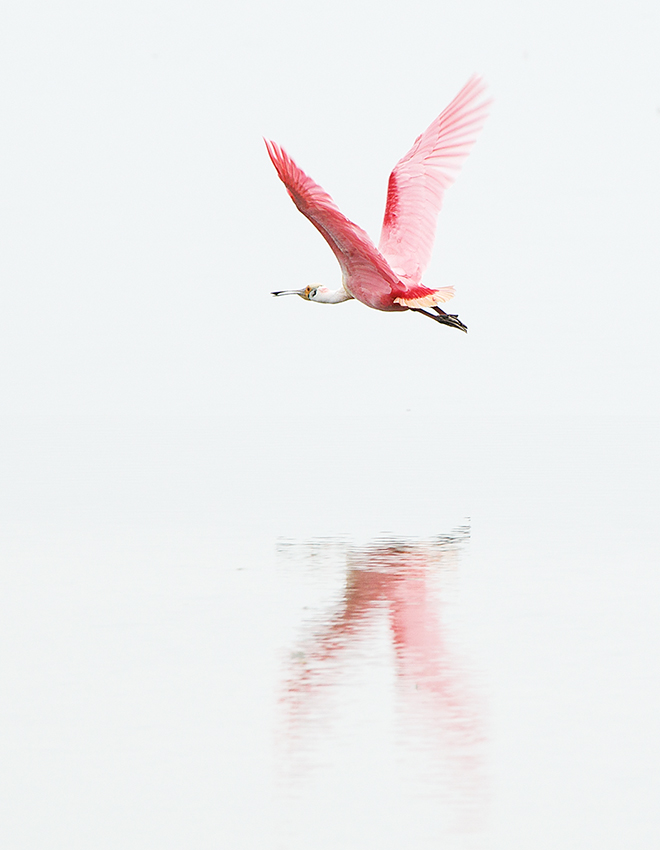
At first I was disappointed with the near white out conditions that I was greeted with several years ago down on Sanibel Island in Florida, but then the mist lifted and I was able to get some nice pink on white shots of spoonbills and their reflections in the water. Nikon D300 with Nikkor 200-400mm lens (at 550mm with Nikon 1.4 teleconverter) ISO 400, f/9 at 1/640th of a second
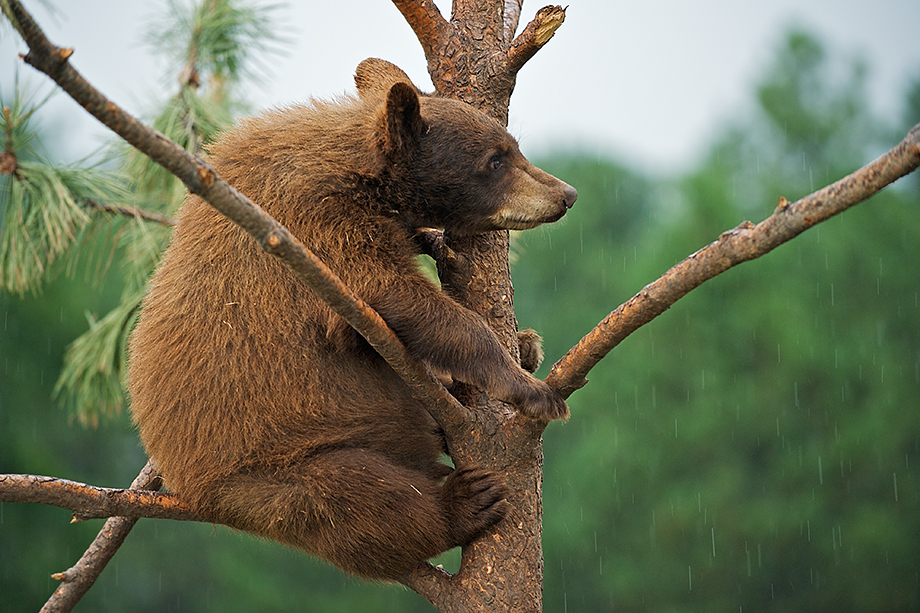
It’s rare that I post a captive animal. That being said, this pudgy little black bear cub was one of several orphans taken in by a wildlife park in South Dakota. There were a bunch of little cubs ranging in color from blond to cinnamon to black. This guy seemed to keeping watch over the others from the top of a small tree. Nikon D700 with Nikkor 70-200mm lens (at 160mm) ISO 800, f/3.2 at 1/200th of a second
We use cookies to enhance your experience while using our website. If you are using our Services via a browser you can restrict, block or remove cookies through your web browser settings. We also use content and scripts from third parties that may use tracking technologies. You can selectively provide your consent below to allow such third party embeds. For complete information about the cookies we use, data we collect and how we process them, please check our Privacy Policy