Heading to Florida for a few days, so this will be last post until later in the week.
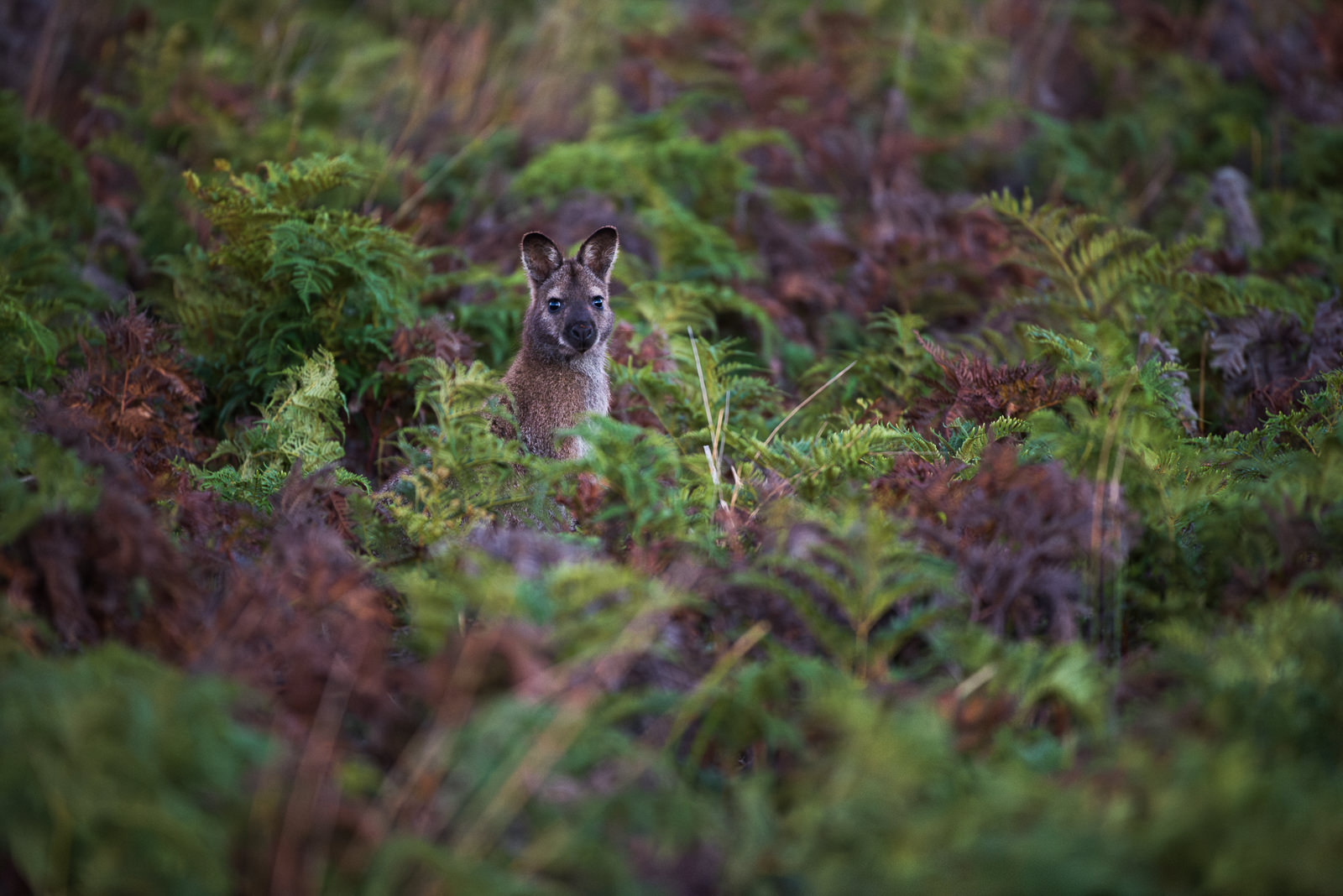
A group of wallabies is sometimes called a court. The term draws from the image of social gathering and display, especially during breeding season, when males gather around a receptive female. That dynamic can resemble a royal “court,” with suitors assembling and posturing. Wallabies aren’t highly social like kangaroos, but when they do cluster, the name captures a sense of quiet ceremony in the bush. And per usual, this Bennett’s wallaby was alone, perhaps looking for that elusive court. For more animal group names, visit my store, Species Limited. Nikon D810 with Nikkor 200-400mm lens (at 400mm) ISO 3200, f/4 at 1/250th of a second.
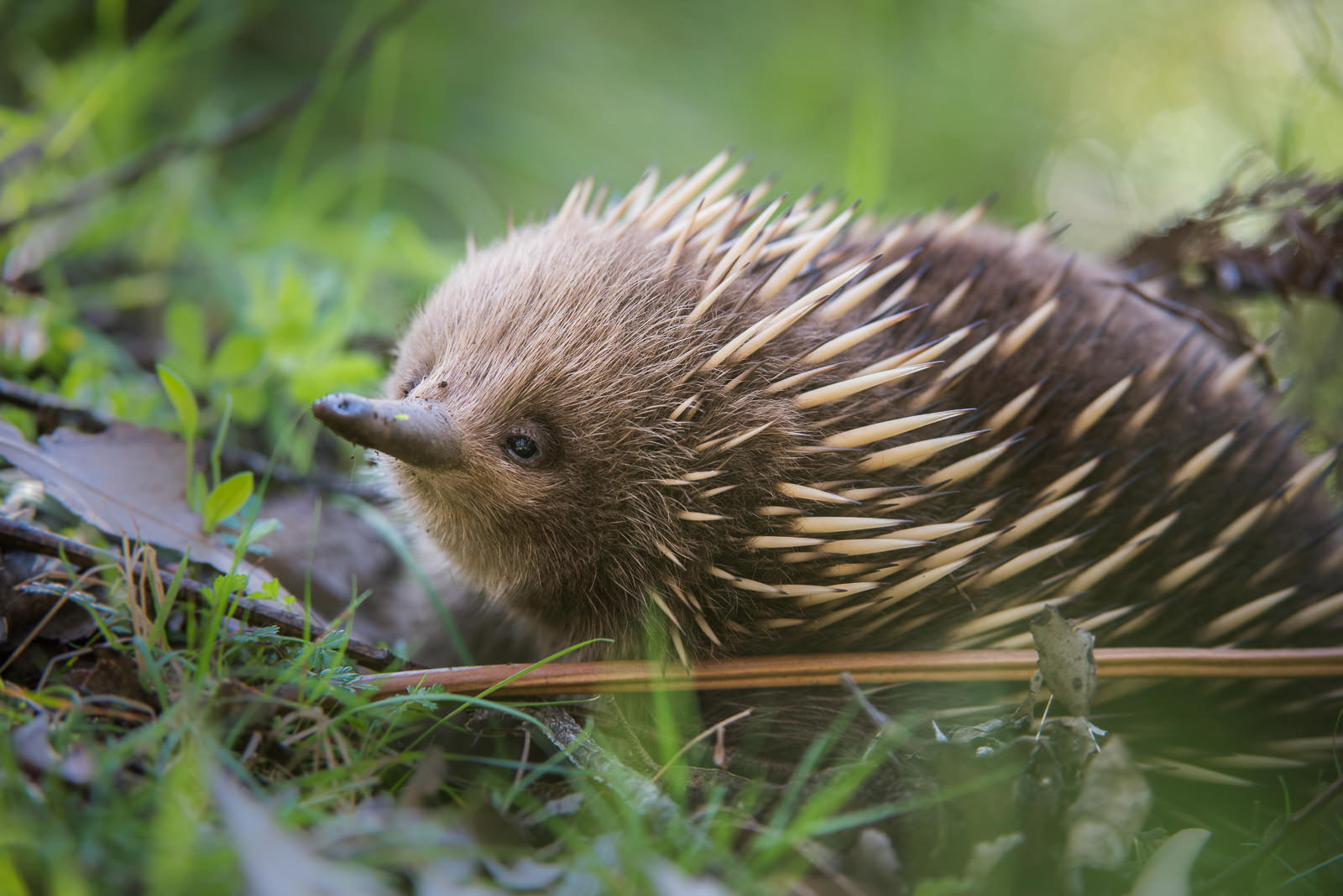
The name “Parade” of echidnas comes from the unusual sight of multiple echidnas waddling along in a slow, purposeful line, especially during the breeding season when males may follow a single female in what’s called an “echidna train.” There was no evident parade when I photographed this guy. Just a single echidna along the side of the road in Tasmania. Nikon D810 with Nikkor 200-400mm lens (at 200mm) ISO 800, f/4 at 1/125th of a second.
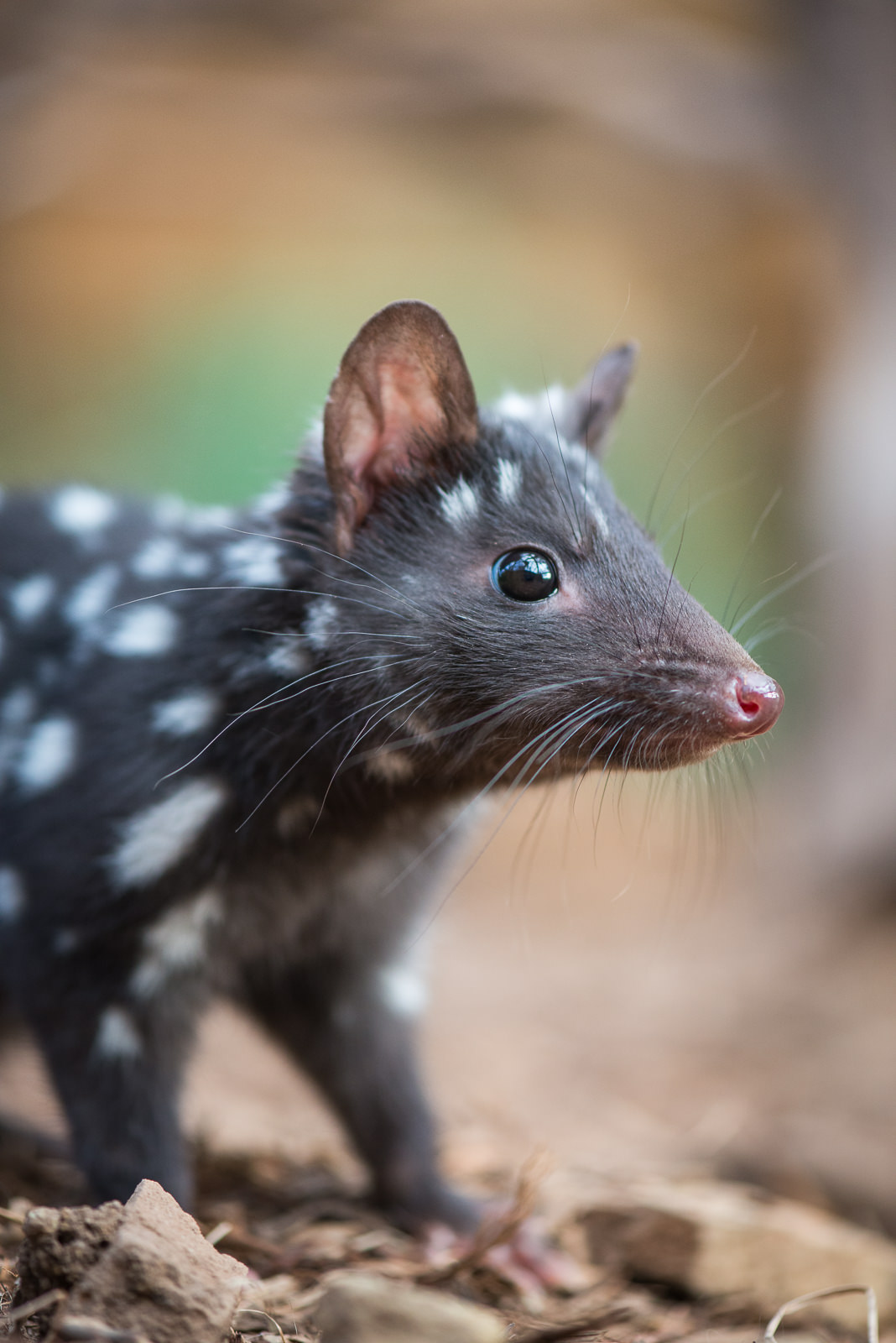
Interesting fact about the endangered eastern quoll — they glow under UV light, revealing hidden blue-green patterns. It’s thought that this is for communication or camouflage in nocturnal environments, but the exact purpose is still being researched. Quolls are night hunters, crucial to controlling pests like mice and insects, and they are known as risky scavengers, sometimes even stealing scraps from Tasmanian devils. Nikon D800 with Nikkor 105mm lens, ISO 160, f/3 at 1/320th of a second.
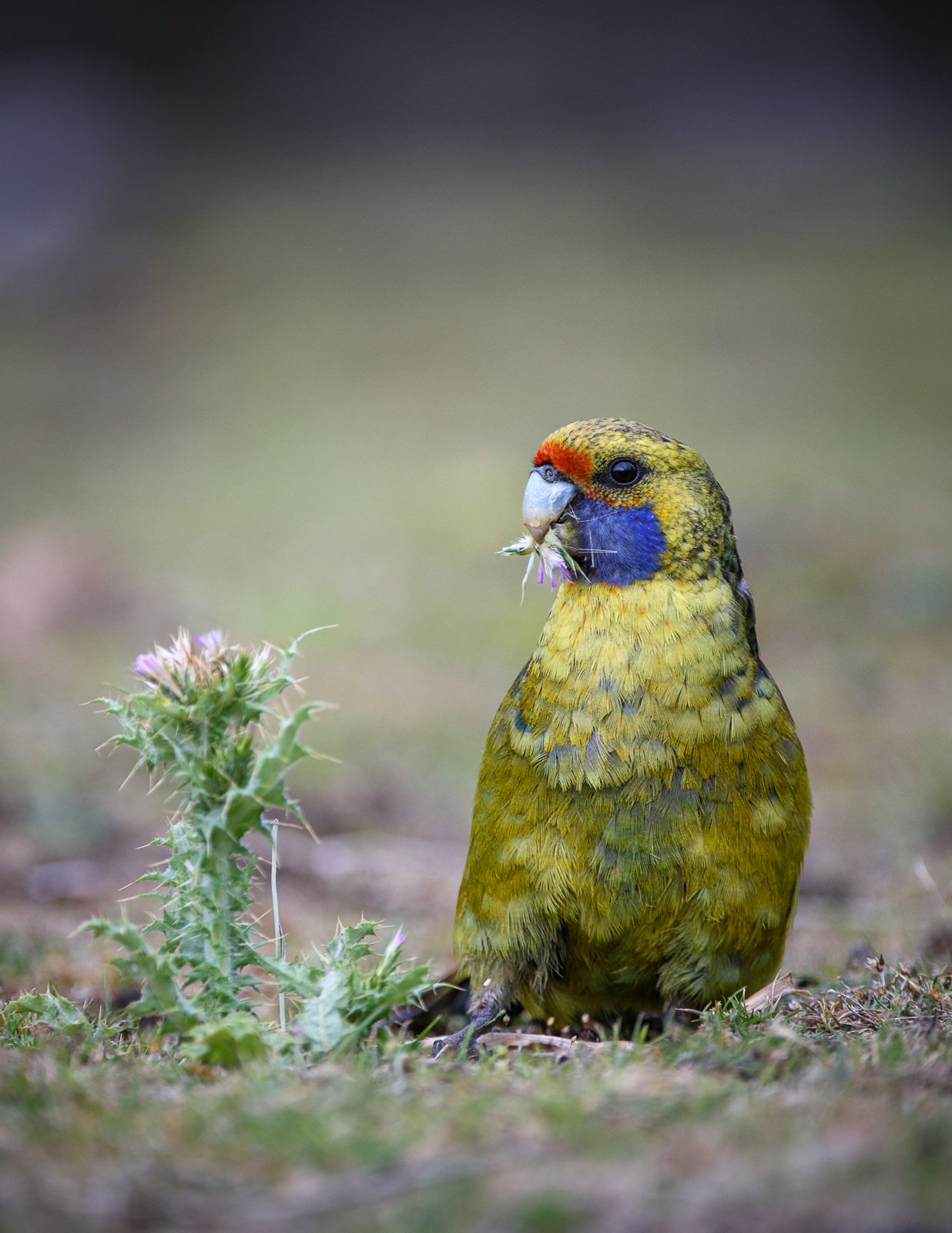
The green rosella is Tasmania’s largest parrot. It is often seen foraging on the ground for seeds, berries, and flowers, including the prickly blooms of thistles and other spiny plants. I photographed this guy on Maria Island, off the east coast of Tasmania. Nikon D810 with Nikkor 200-400mm lens (at 400mm) ISO 400, f/4 at 1/1600th of a second.
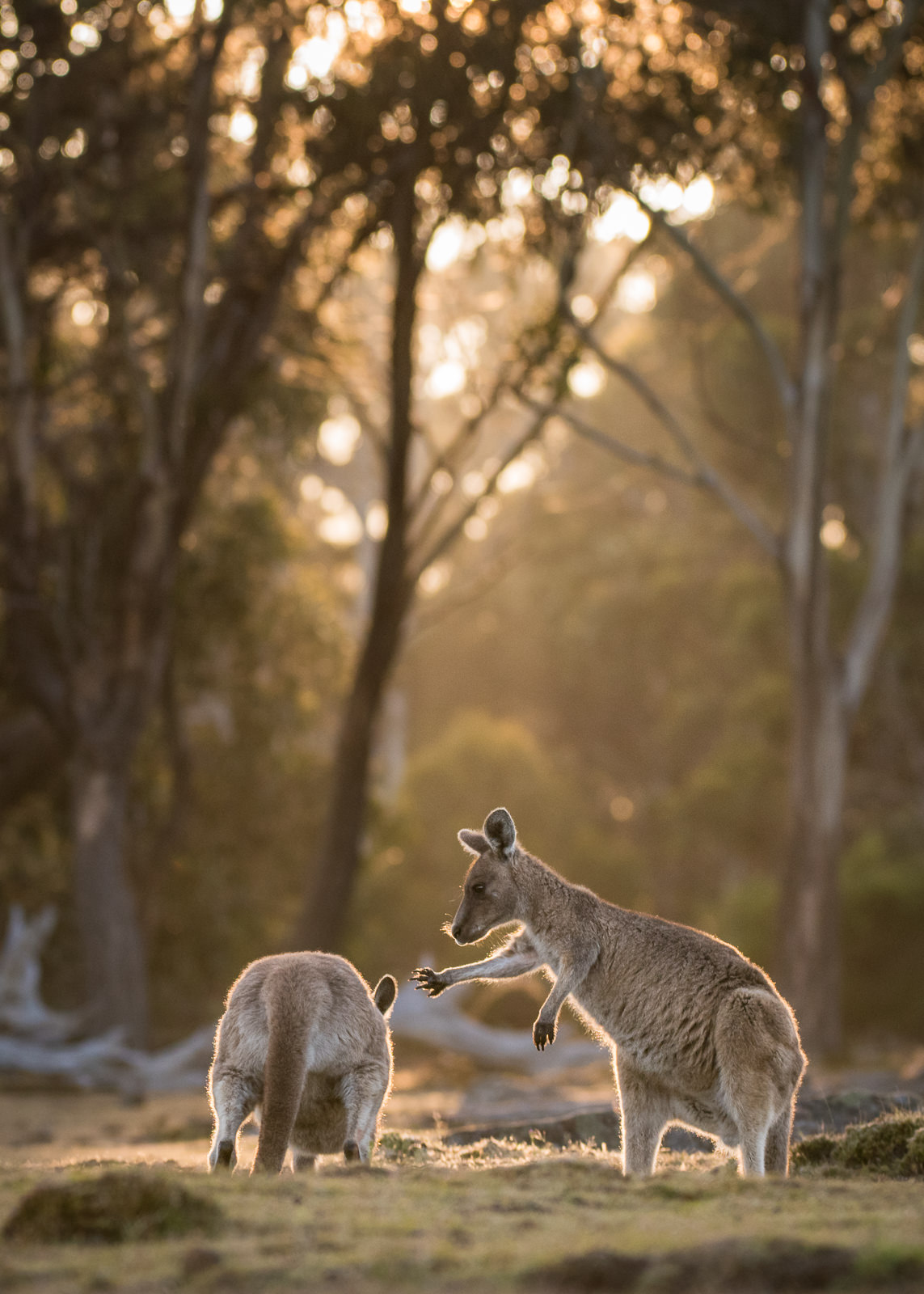
One forester kangaroo reaches out to another on Maria Island in Tasmania, Australia. The proper common name for these guys (if that’s a thing) is eastern grey kangaroo — but locally they are known as foresters. Nikon D810 with Nikkor 200-400mm lens (at 220mm) ISO 800 f/5 at 1/1000th of a second.
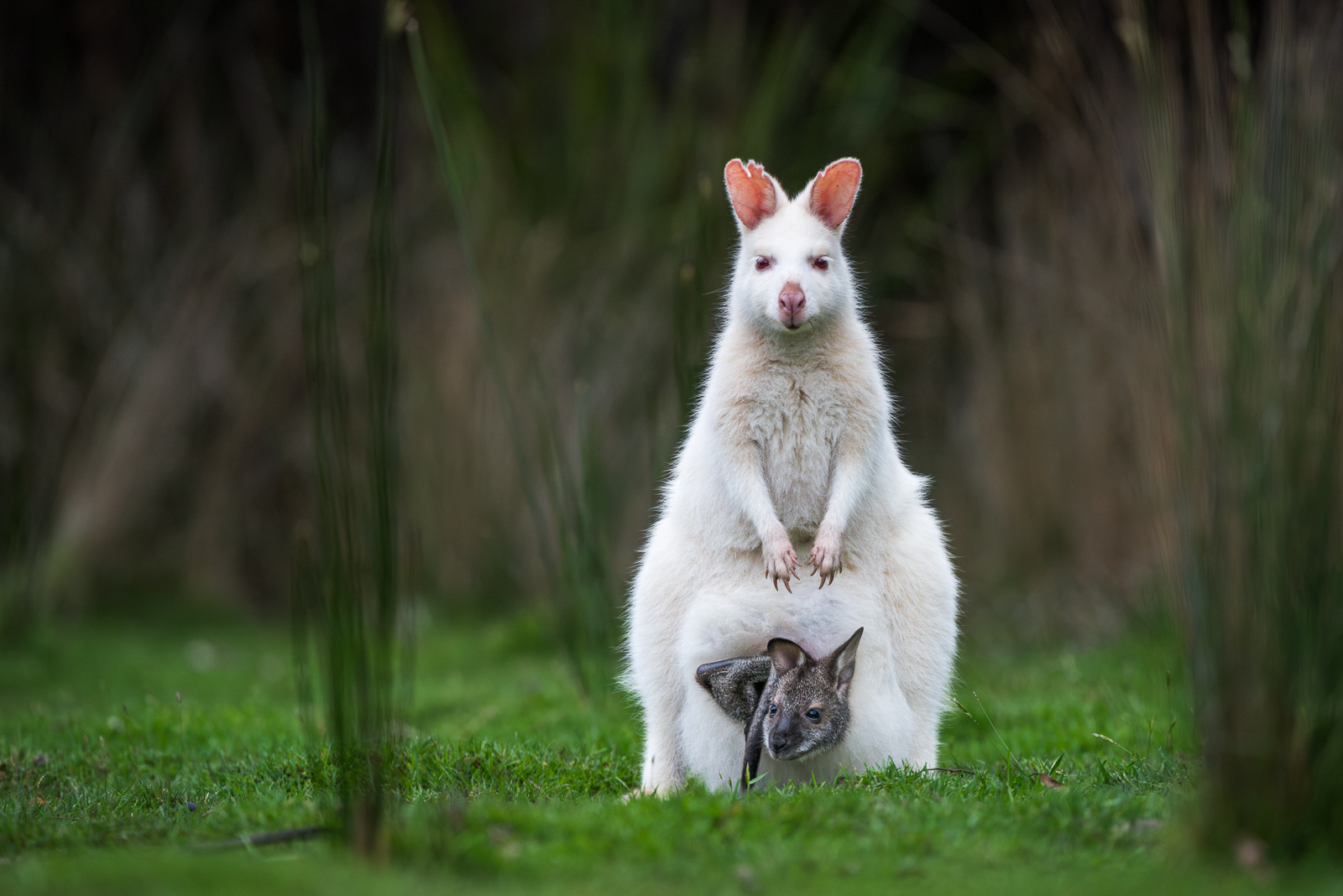
Keeping the mothers theme going, here’s a Bennett’s wallaby with her joey. This is a rare white morph of the Bennett’s wallaby found on Bruny Island in Tasmania, Australia. Another white wallaby with joey did make my 2026 wall calendar. Head on over the www.specieslimted.com to see which one. And to buy a calendar (or shirt), of course. Nikon D810 with Nikkor 200-400mm lens (at 350mm) ISO 1600, f/5.6 at 1/250th of a second.
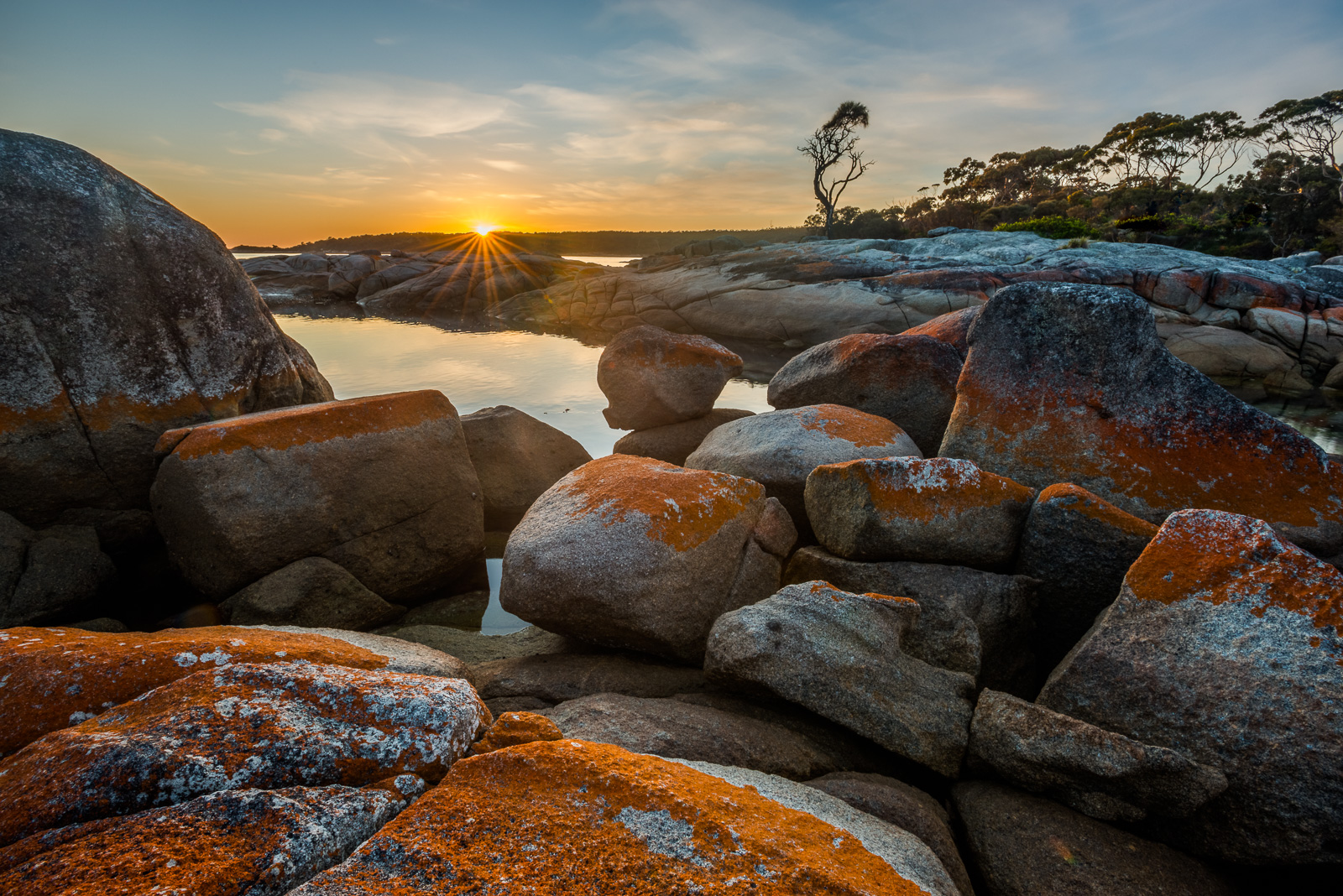
The orange lichen found on the granite boulders of Binalong Bay in Tasmania’s Bay of Fires is one of the area’s most iconic features. The coloration comes from a species of lichen which thrives in the coastal environment thanks to its tolerance for salty air and strong sunlight. The lichen-covered rocks give the coastline a glowing, almost surreal appearance. Nikon D800 with Nikkor 17-35mm lens (at 17mm) ISO 200, f/20 at 1/40th of a second.
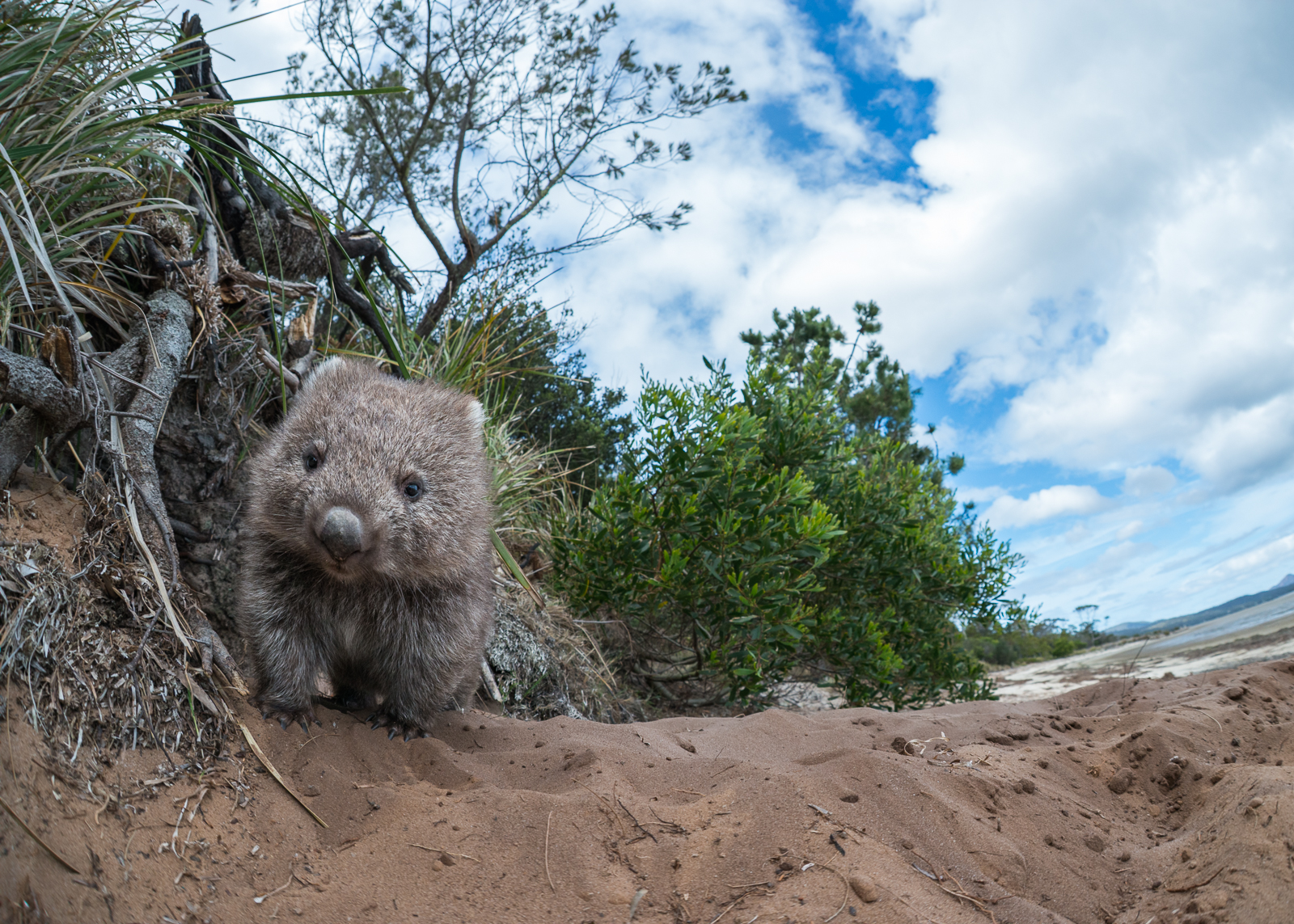
The common wombat is a sturdy, nocturnal marsupial known for its powerful digging abilities. Using strong claws, it excavates complex burrow systems that can extend over 100 feet underground. These burrows provide shelter from extreme temperatures and predators, making them essential for survival. Uniquely, wombats have a backward-facing pouch to keep dirt from filling it while they dig. Nikon D800 with Sigma 15mm fisheye lens, ISO 800, f/7.1 at 1/1600th of a second.
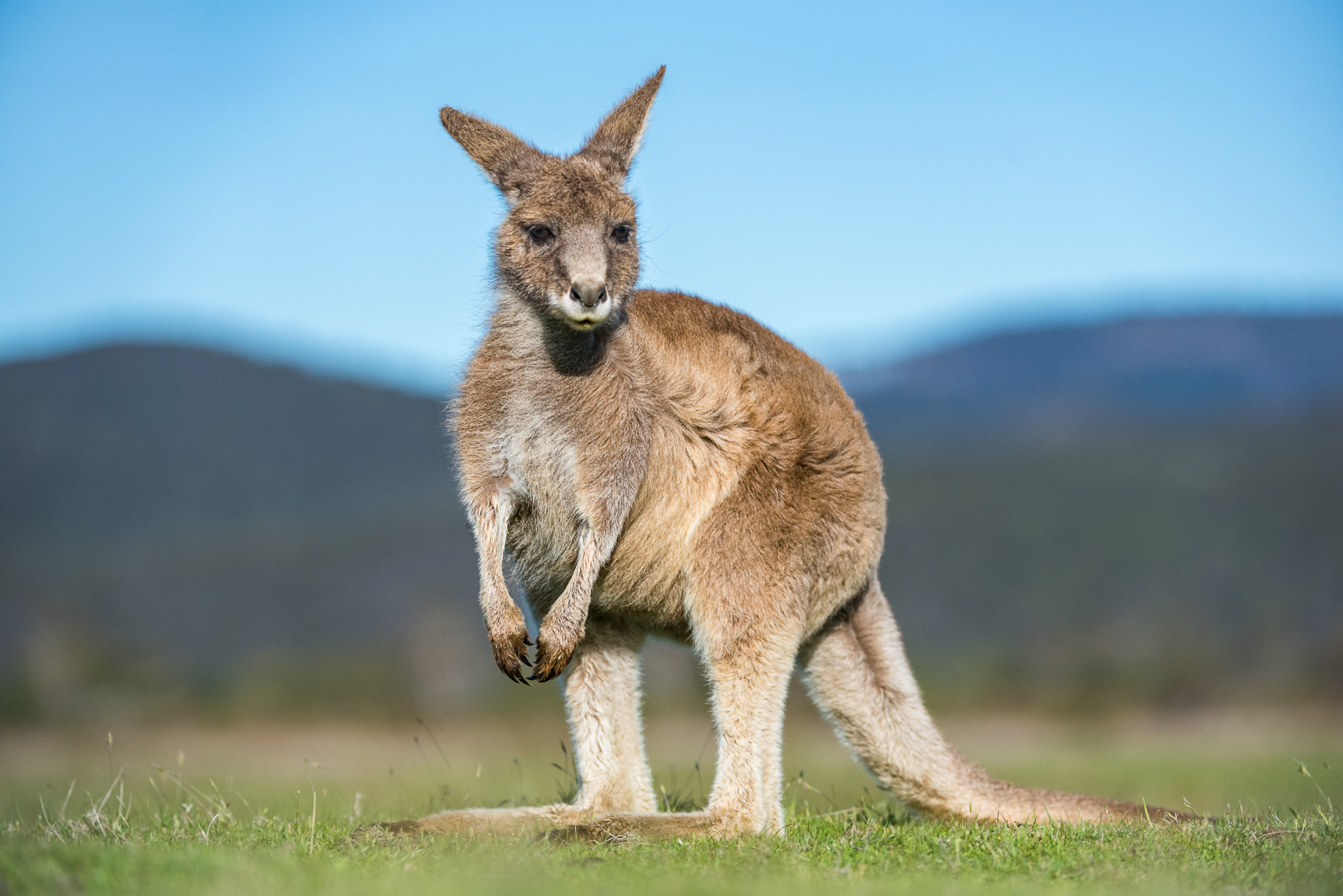
The eastern grey kangaroo (Macropus giganteus) is one of the largest and most common kangaroo species in Australia. Eastern greys are known for their powerful hind legs and graceful leaping ability that can cover over 25 feet in a single hop. I got the camera on the ground for this low-angle perspective in Narawntapu National Park, Tasmania. Nikon D810 with Nikkor 200-400mm lens (at 200mm) ISO 800, f/5 at 1/5000th of a second.
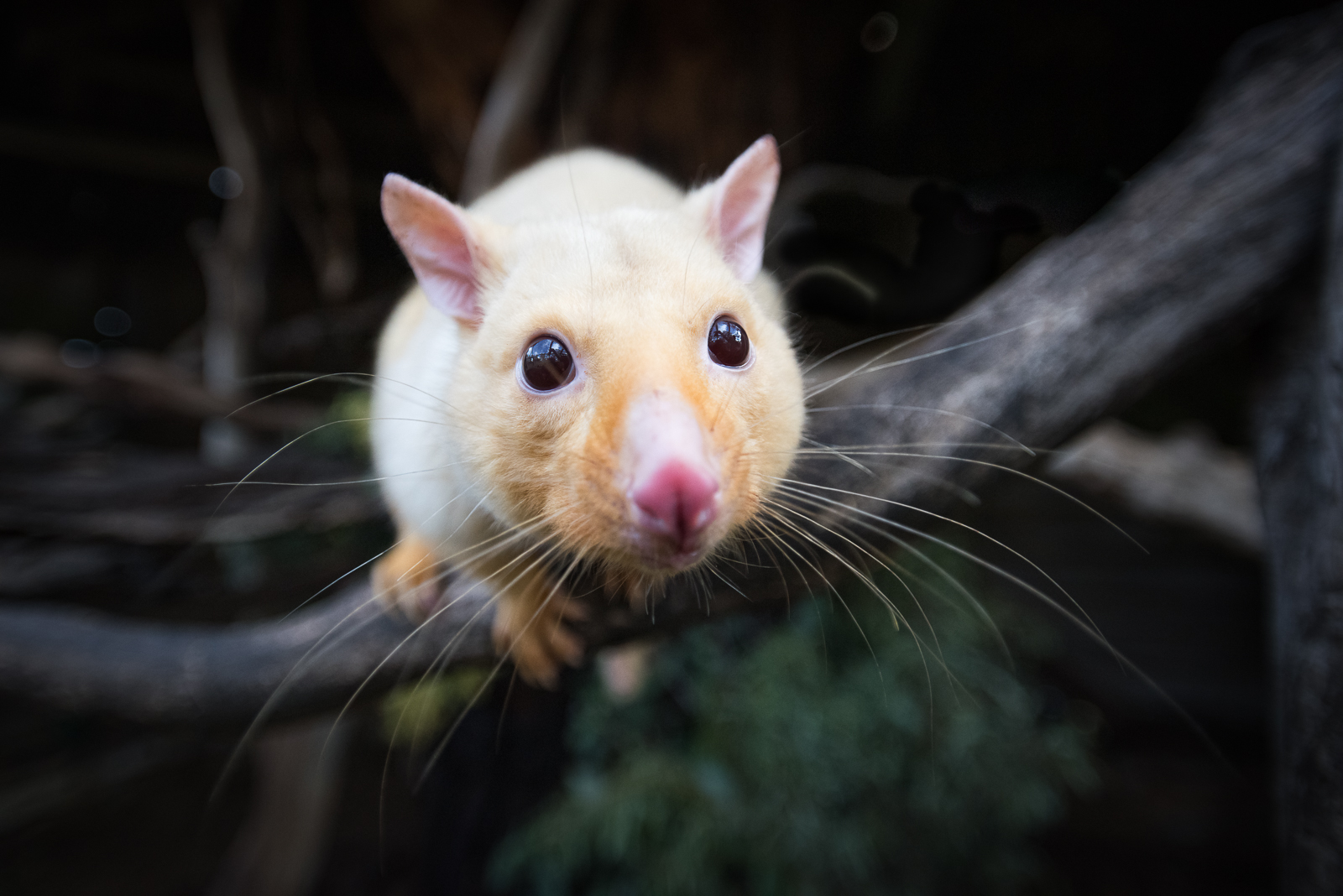
The golden brushtail possum is a color variant of the common brushtail possum. In other words, it’s just a common brushtail possum with a fancier name. And a cooler-looking coat. This was a captive individual photographed at a rehabilitation center in Tasmania. Like so many other of the mammals I photographed in Australia, brushtail possums are nocturnal marsupials. Nikon D810 with Nikkor 17-35mm lens (at 20mm) ISO 1600, f/2.8 at 1/2000th of a second.
We use cookies to enhance your experience while using our website. If you are using our Services via a browser you can restrict, block or remove cookies through your web browser settings. We also use content and scripts from third parties that may use tracking technologies. You can selectively provide your consent below to allow such third party embeds. For complete information about the cookies we use, data we collect and how we process them, please check our Privacy Policy