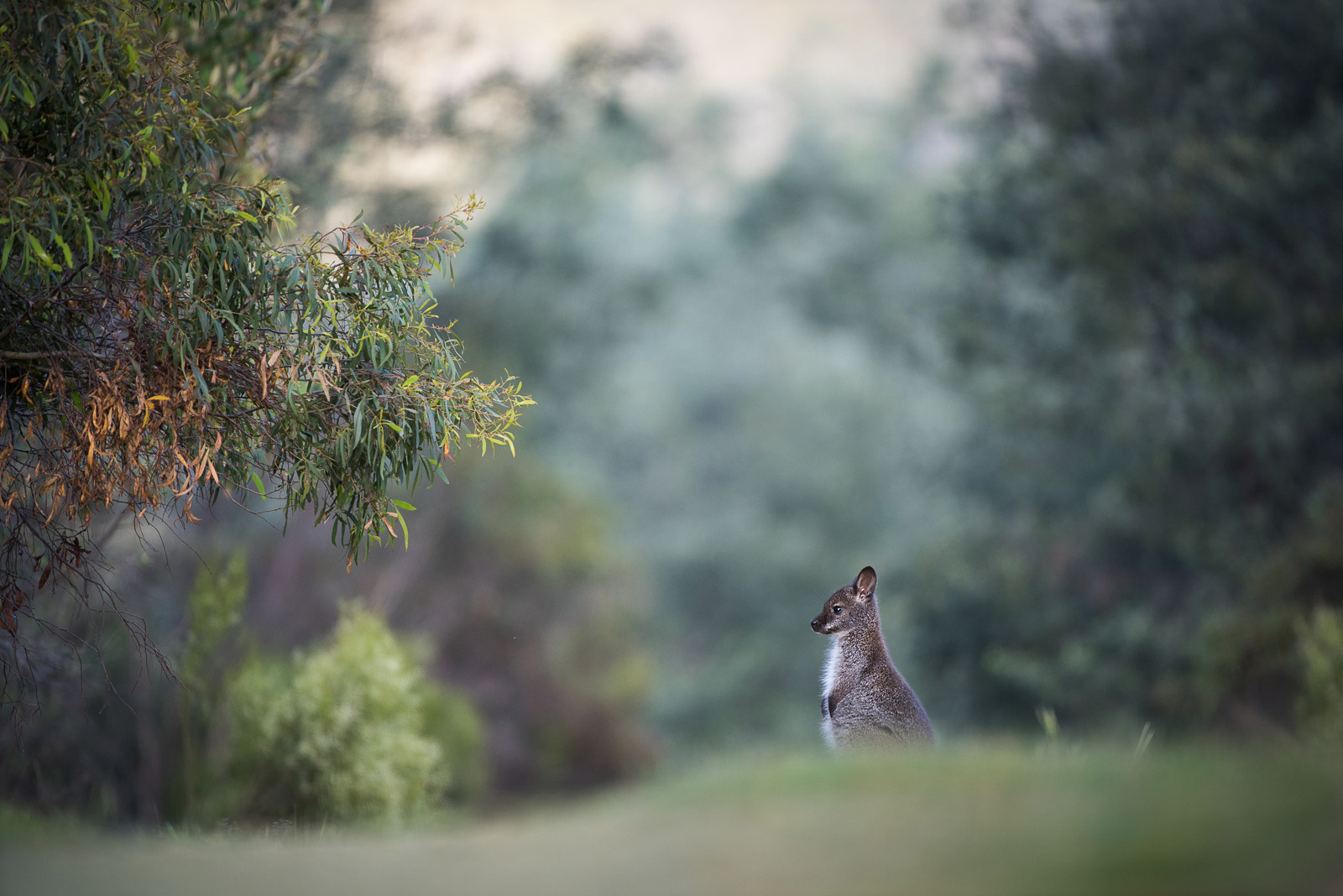
Young Wallaby
A young Bennett’s wallaby takes a moment to enjoy the scenery in a field near Scottsdale in Tasmania, Australia. Nikon D810 with Nikkor 200-400mm lens (at 400mm) ISO 800, f/4 at 1/400th of a second.


A young Bennett’s wallaby takes a moment to enjoy the scenery in a field near Scottsdale in Tasmania, Australia. Nikon D810 with Nikkor 200-400mm lens (at 400mm) ISO 800, f/4 at 1/400th of a second.
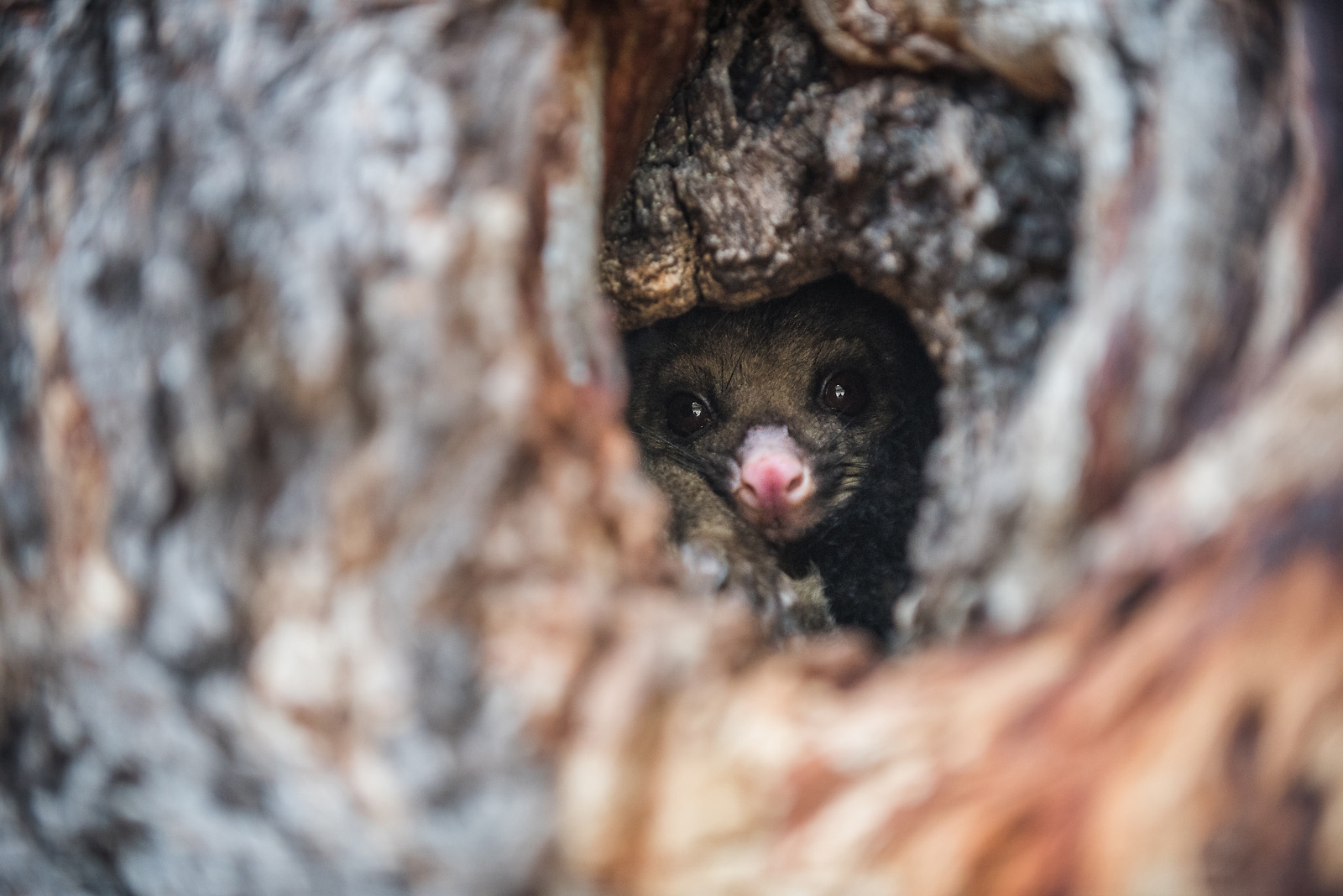
I can only imagine all the animals over the years that quietly watched me pass as I hiked trails unaware. Occasionally, I also catch a glimpse of them. Thus was the case with this common brushtail possum that I spotted while hiking in Coles Bay in Tasmania. These guys are strictly nocturnal, but this one obviously woke up from its daytime resting place to take a quick look at what those footsteps on the trail down below were all about. After I passed, I’m sure those eyes closed right back up for a few more hours until the sun went down. Nikon D810 with Nikkor 70-200mm lens (at 135mm) ISO 1600, f/2.8 at 1/100th of a second.
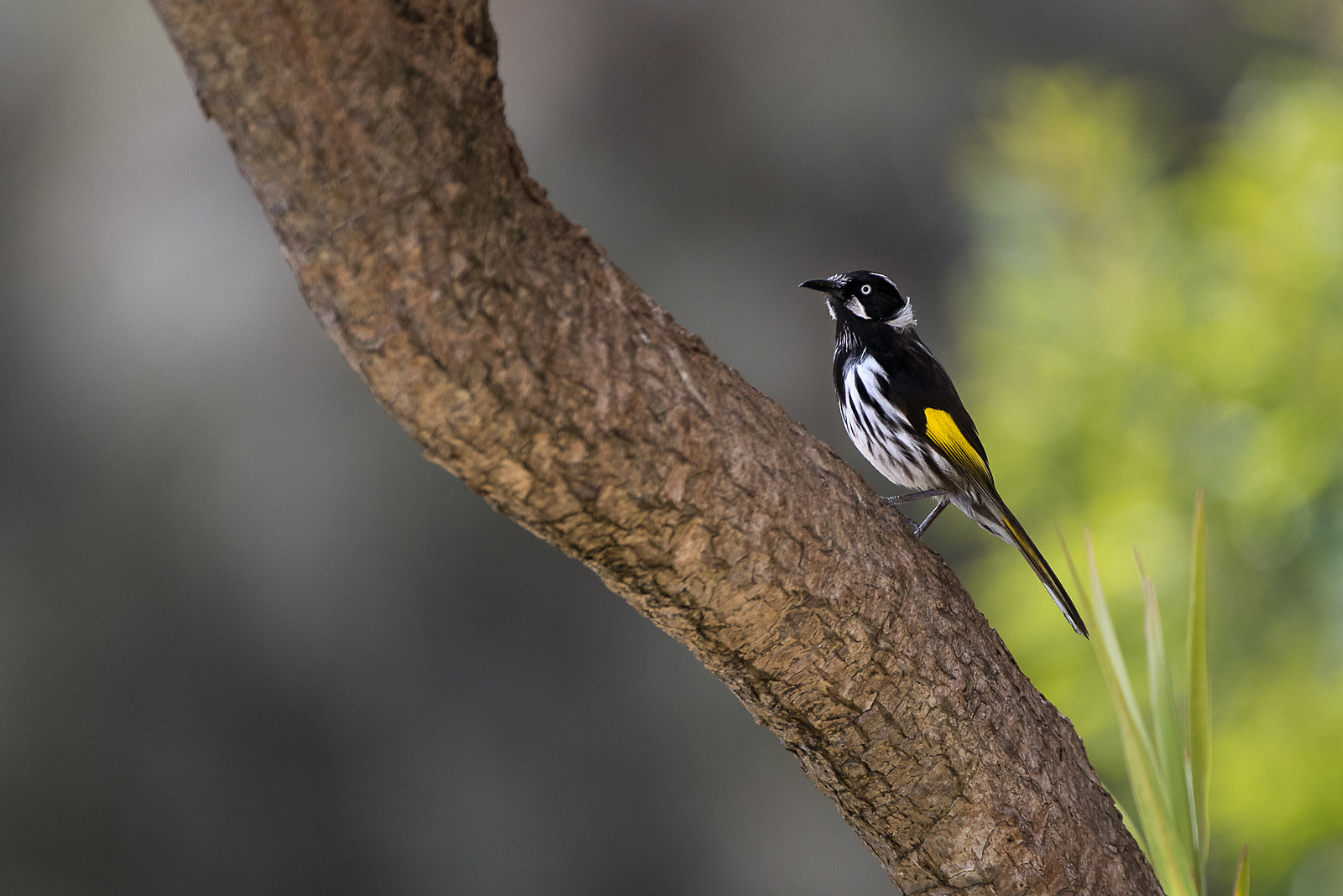
I love birding in Australia. There’s just so many species around and of all varieties. This is one of the more common birds that I’ve seen in my travels — the new Holland honeyeater. I photographed this one from the open window of the house I was staying at on Maria Island off the coast of Tasmania. Nikon D810 with Nikkor 200-400mm lens (at 400mm) ISO 800, f/4 at 1/2000th of a second.
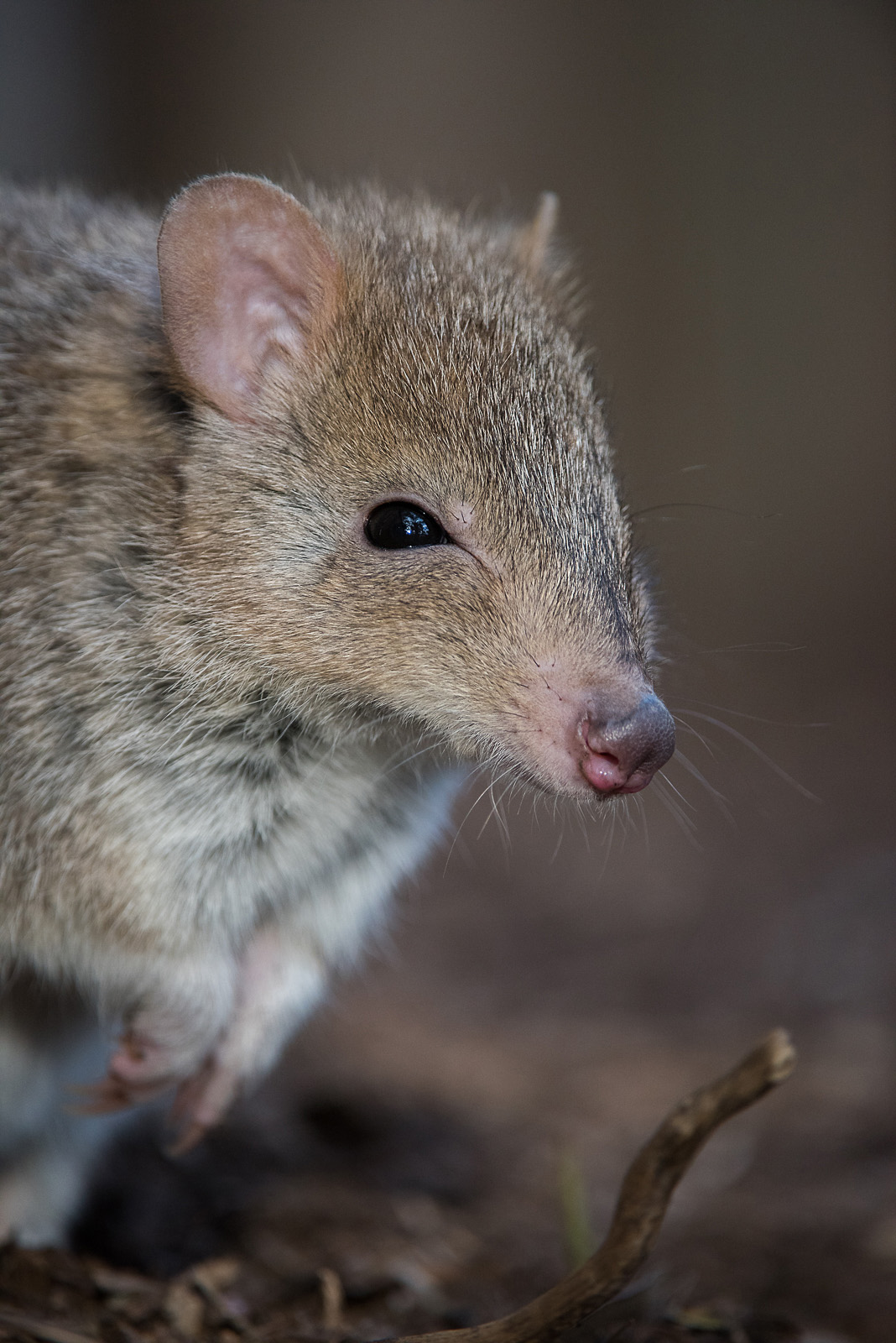
Bettongs are often called rat kangaroos in their native Australia. There are four different species, this being the Eastern Bettong, found in Tasmania. They are small marsupials and all are threatened due to predation by introduced predators like cats and foxes, as well as the general management of land since the British settlement of Australia. Difficult to spot in the wild due to their scarcity and nocturnal habits, I was able to photograph this one at the Bonorong Wildlife Sanctuary, a rehabilitation center in southern Tasmania. Nikon D810 with Nikkor 200-400mm lens (at 400mm) ISO 1600, f/4 at 1/800th of a second.
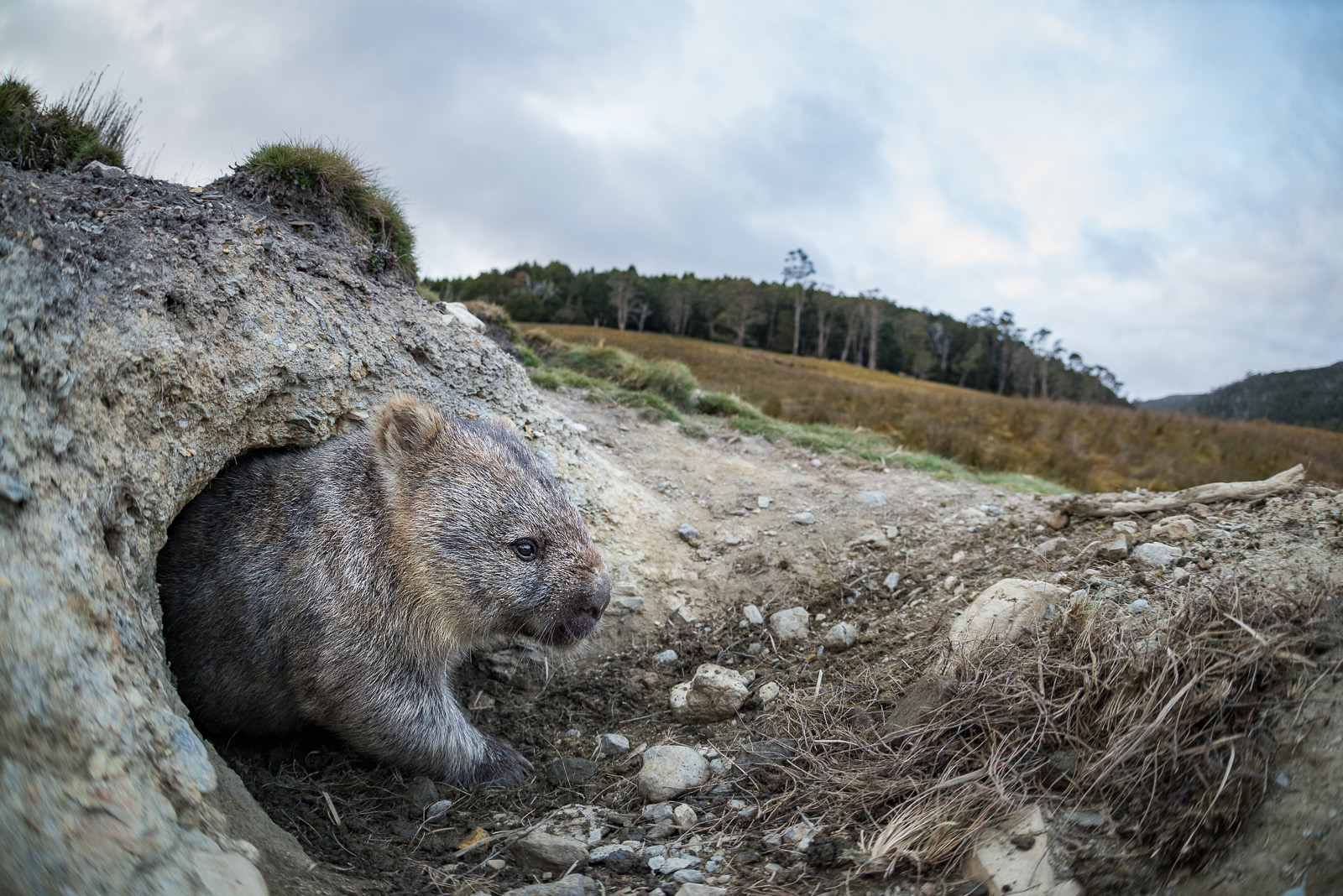
Wombats can often be photographed at very close range. Thus was obviously the case as this one emerged from its burrow in Cradle Mountain National Park in Tasmania. In fact, I had my fisheye lens mounted to my camera, allowing me to get very up close and personal but still show the environment. Nikon D810 with Sigma 15mm fisheye lens, ISO 800, f/4 at 1/125th of a second.
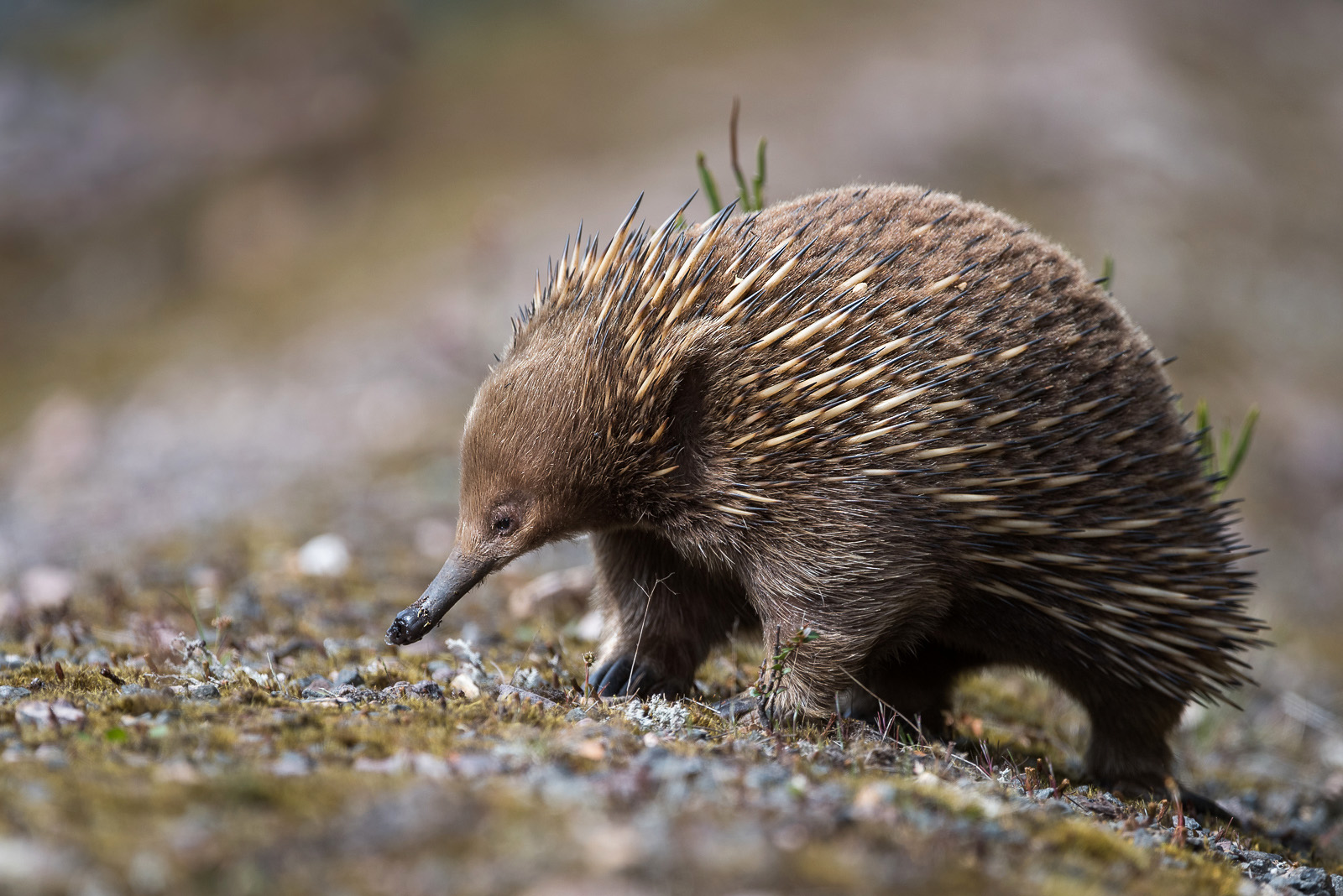
There are four different species of echidna in the world. This is the short-beaked echidna. They are interesting little mammals in the monotreme order. Monotremes are the only mammals that lay eggs. Their namesake “beak” allows short-beaked echidnas to suck up ants and other insects from the ground at an impressive speed. I spotted this one along the side of a road in Cradle Mountain National Park in Tasmania, Australia. Nikon D810 with Nikkor 200-400mm lens (at 400mm) ISO 400, f/5.6 at 1/1250th of a second.
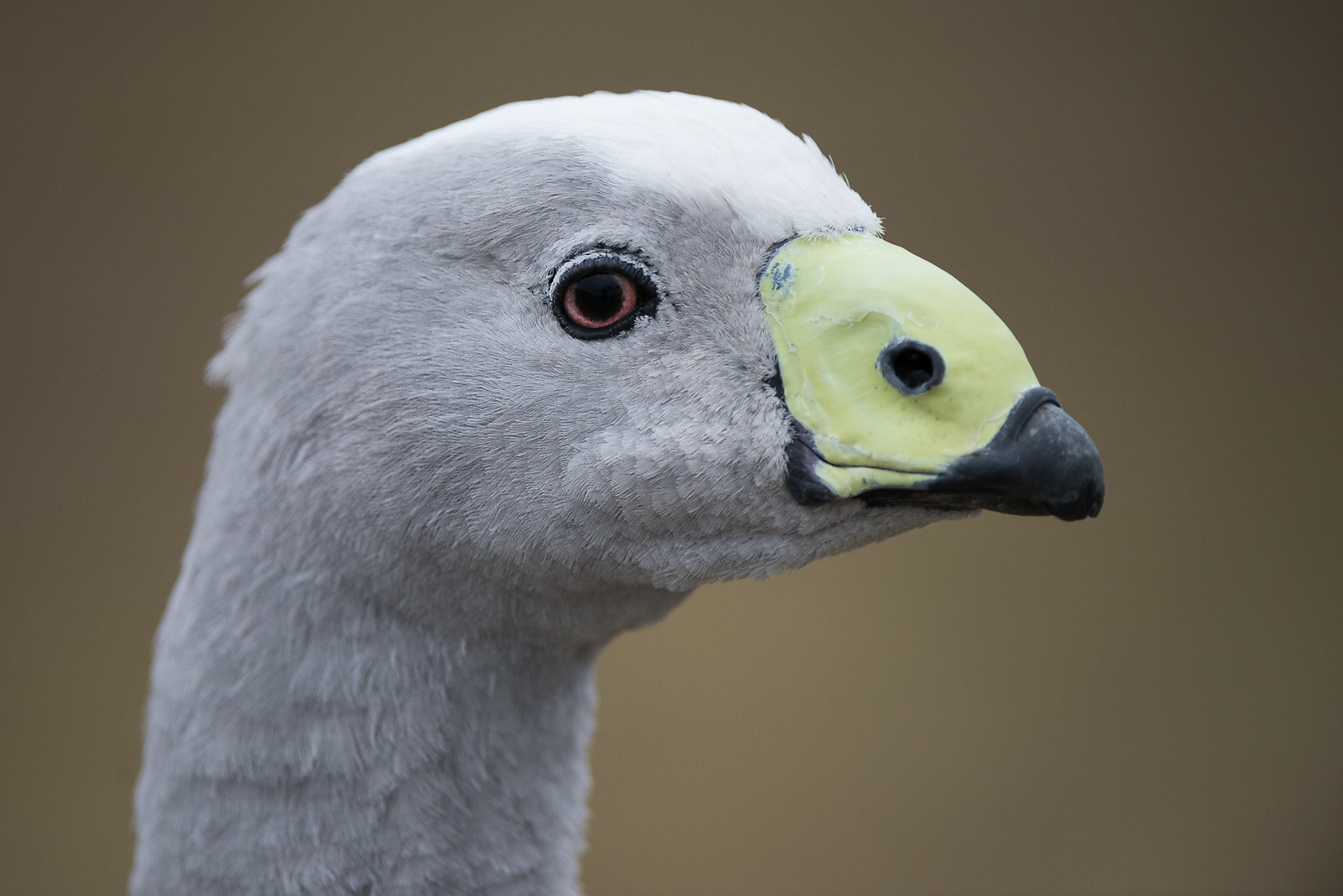
Cape barren geese only exist in the extreme south of Australia (with a small, introduced population also in New Zealand). I photographed this one on Maria Island in Tasmania. They were quite common on Maria Island and, as with most geese, allowed a close approach. Nikon D810 with Nikkor 200-400mm lens (at 400mm) ISO 800, f/4 at 1/1600th of a second.
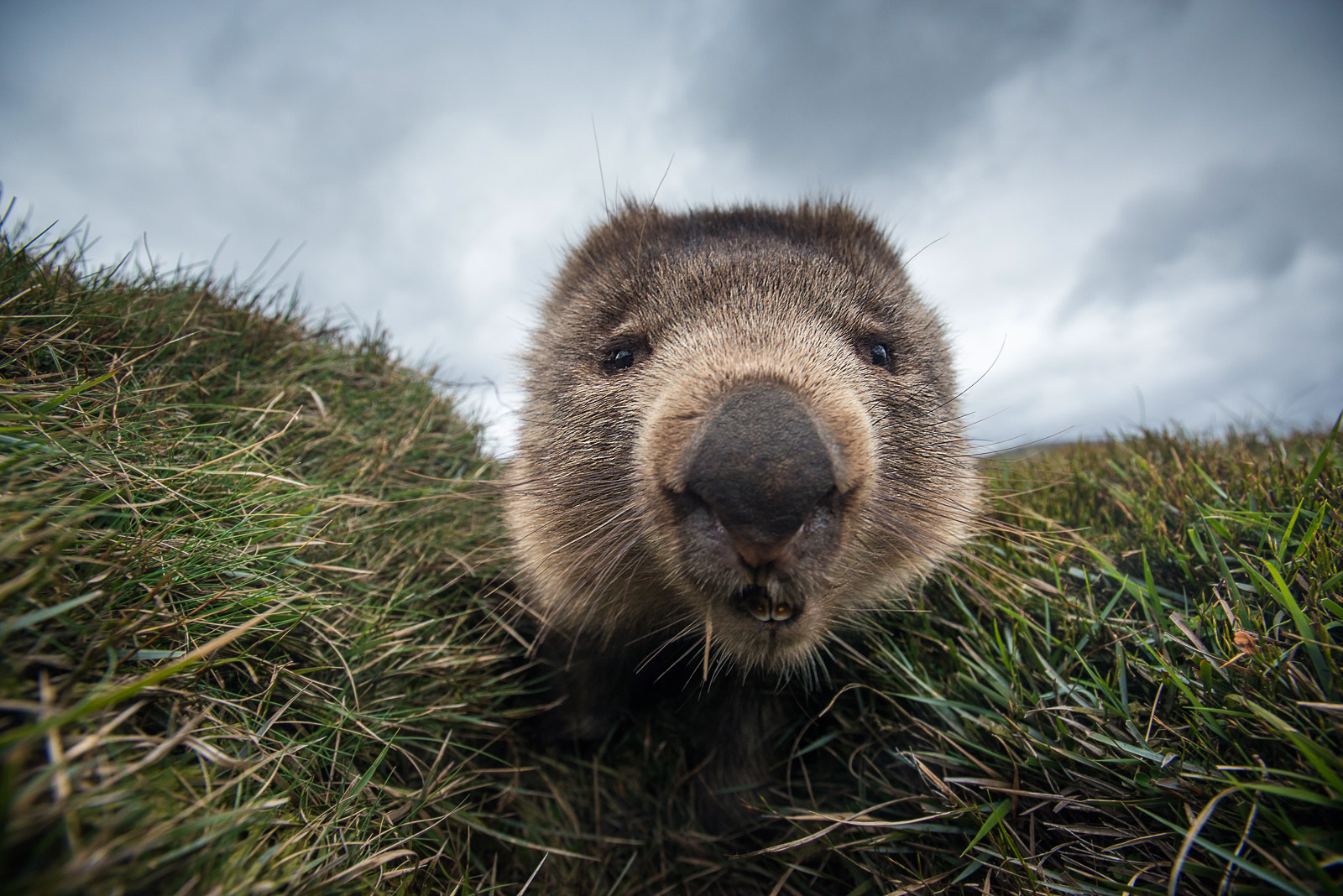
Wombats eat grass. It’s what they do. This wombat was so focused on the task that he/she hardly noticed that I was there. Perfect situation for my wide angle zoom. Nikon D800 with Nikkor 17-35mm lens (at 17mm) ISO 800, f/5.6 at 1/320th of a second.
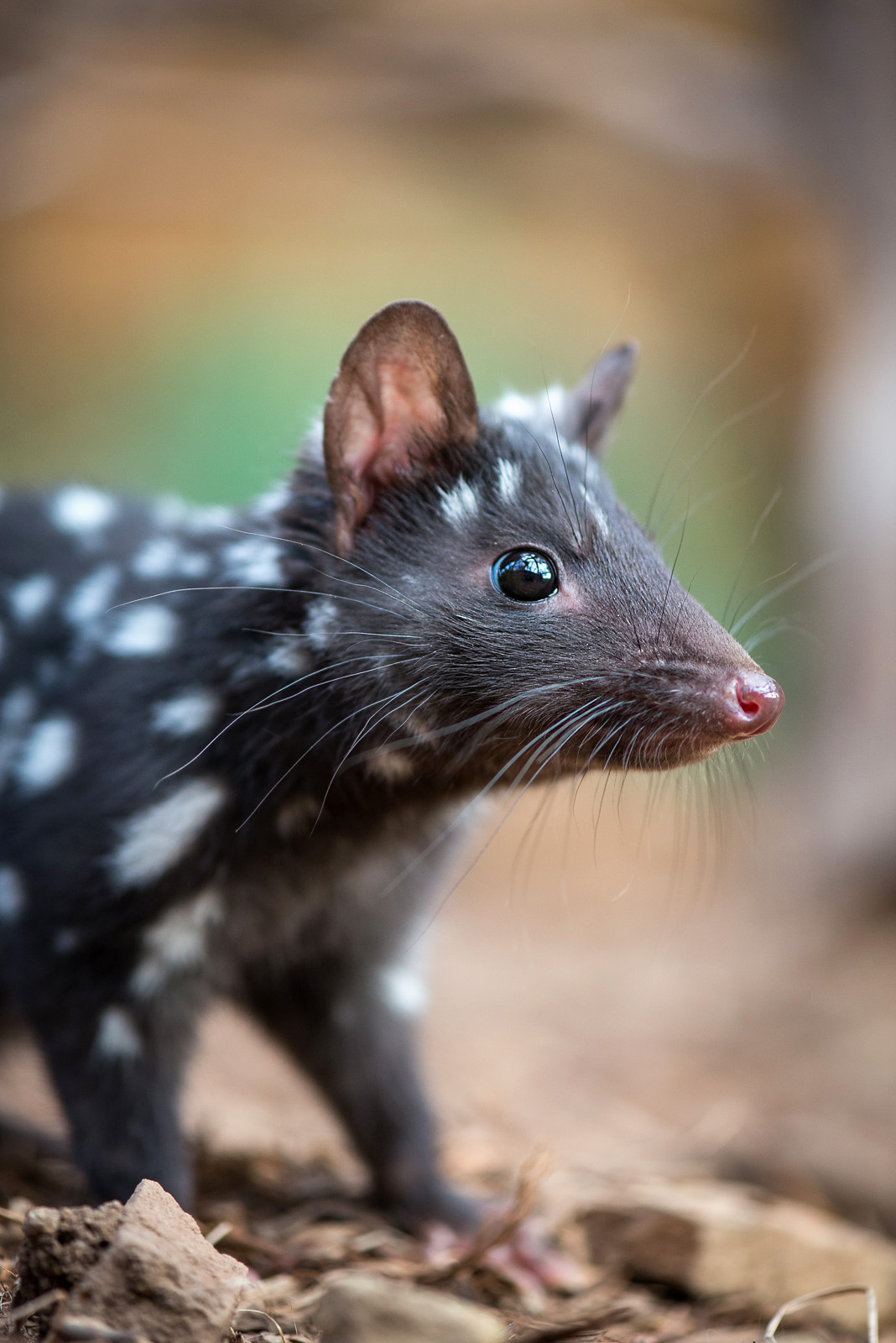
One of the eastern quolls that I had the pleasure of meeting at the Bonorong Wildlife Sanctuary in Tasmania. These little spotted carnivorous marsupials really do rate right up there in the cutest animal category. Nikon D800 with Nikkor 105mm macro lens, ISO 1600, f/3 at 1/320th of a second.
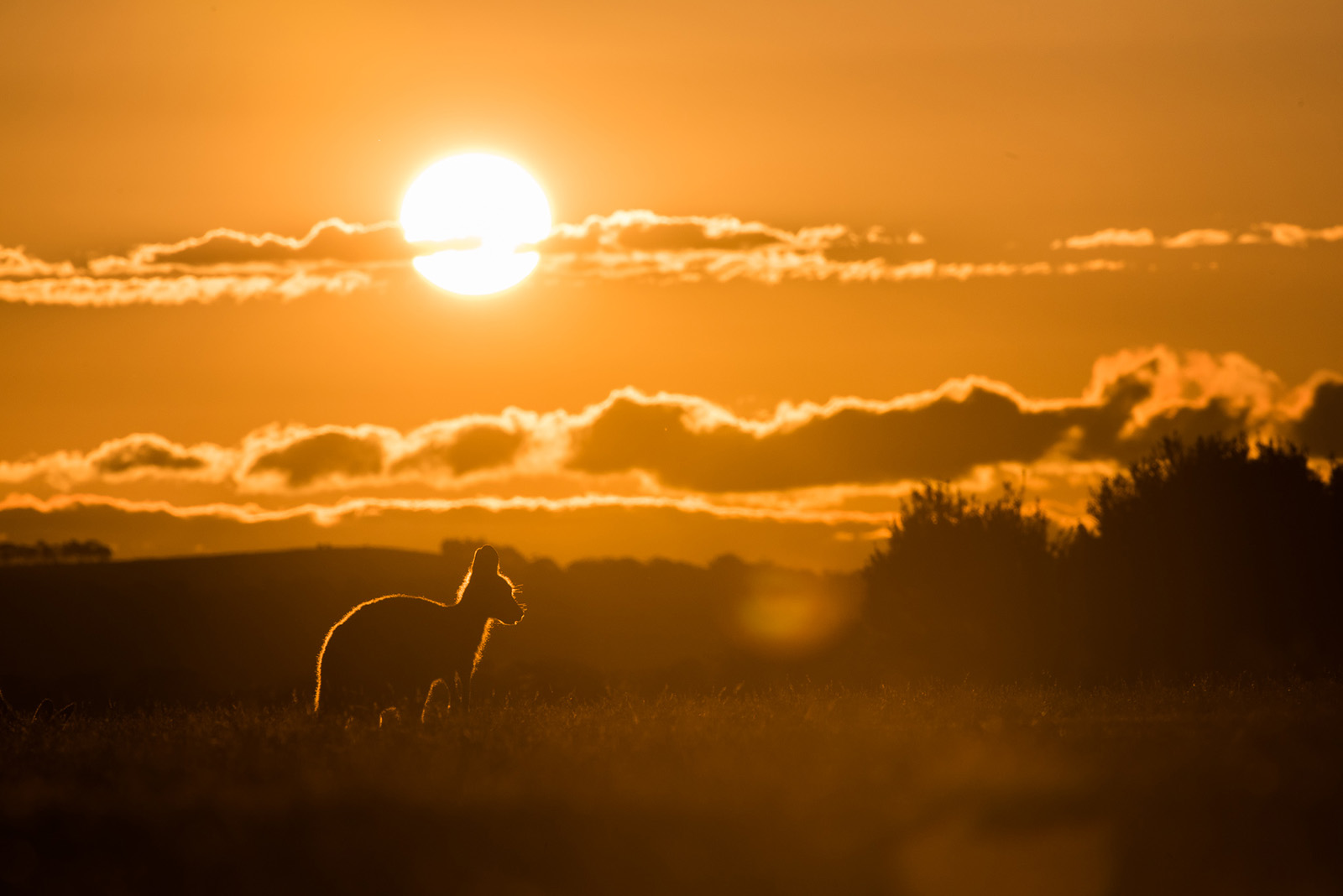
This photo was taken on perhaps my favorite day of a very enjoyable two week trip to Tasmania. I only had a few hours in Narawntapu National Park and thankfully the light cooperated. So did the eastern grey kangaroos, locally known as foresters. I had the place to myself as a large troop of them ate, played and boxed, giving me the opportunity to get a large variety of shots, including some nice rim lit silhouettes like this one. Nikon D810 with Nikkor 200-400mm lens (at 400mm) ISO 400, f/16 at 1/1600th of a second.