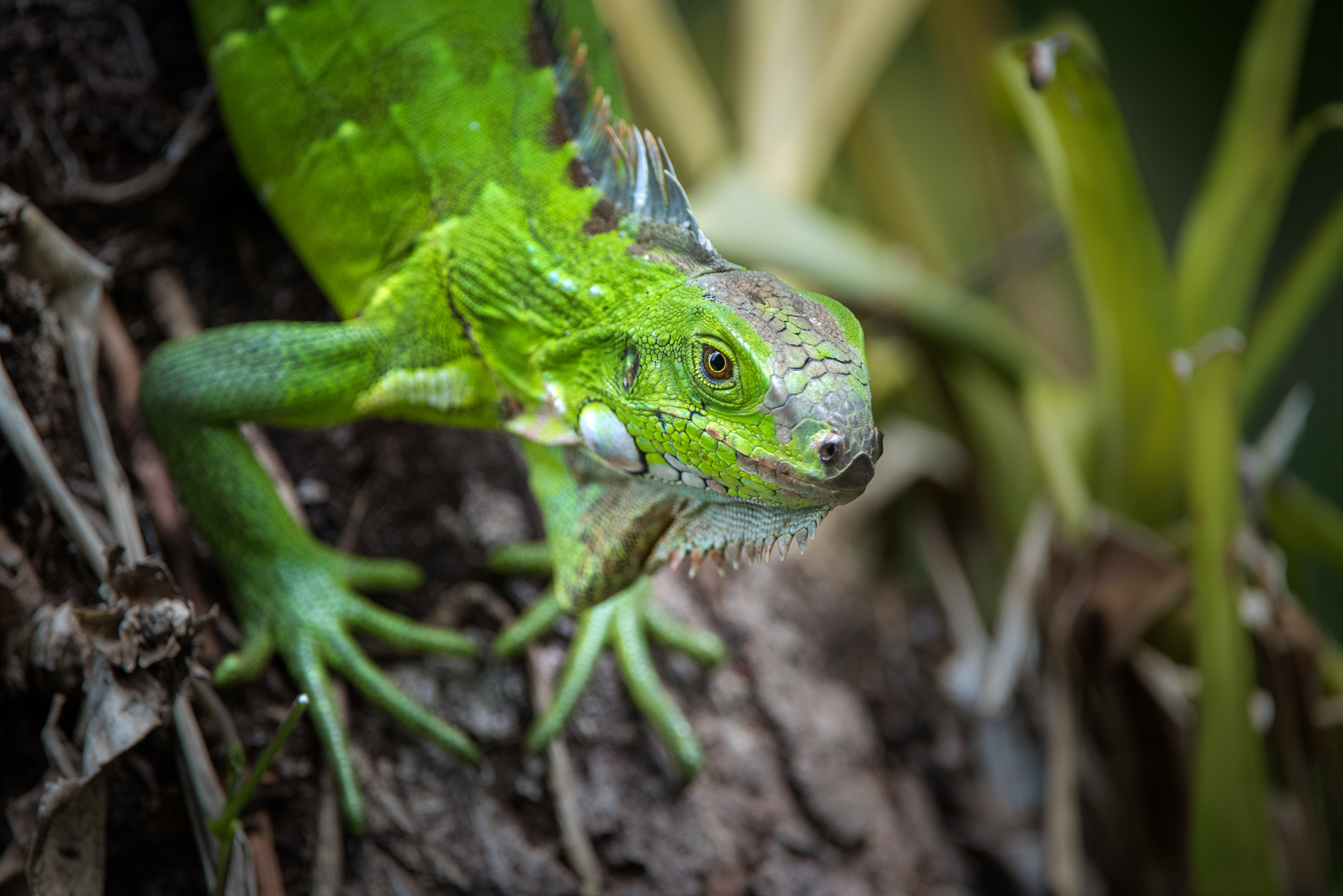
Depending upon location, green iguanas can come in many colors, including orange, blue and even pink. This one, however, properly lives up to the name. It was photographed in Trinidad at the Asa Wright Nature Center. Green iguanas are a widely distributed species and they can be found as far south as southern Brazil and Paraguay, all the way up to the Florida keys. Nikon D810 with Nikkor 200-400mm lens (at 400mm) ISO 800, f/4 at 1/2000th of a second
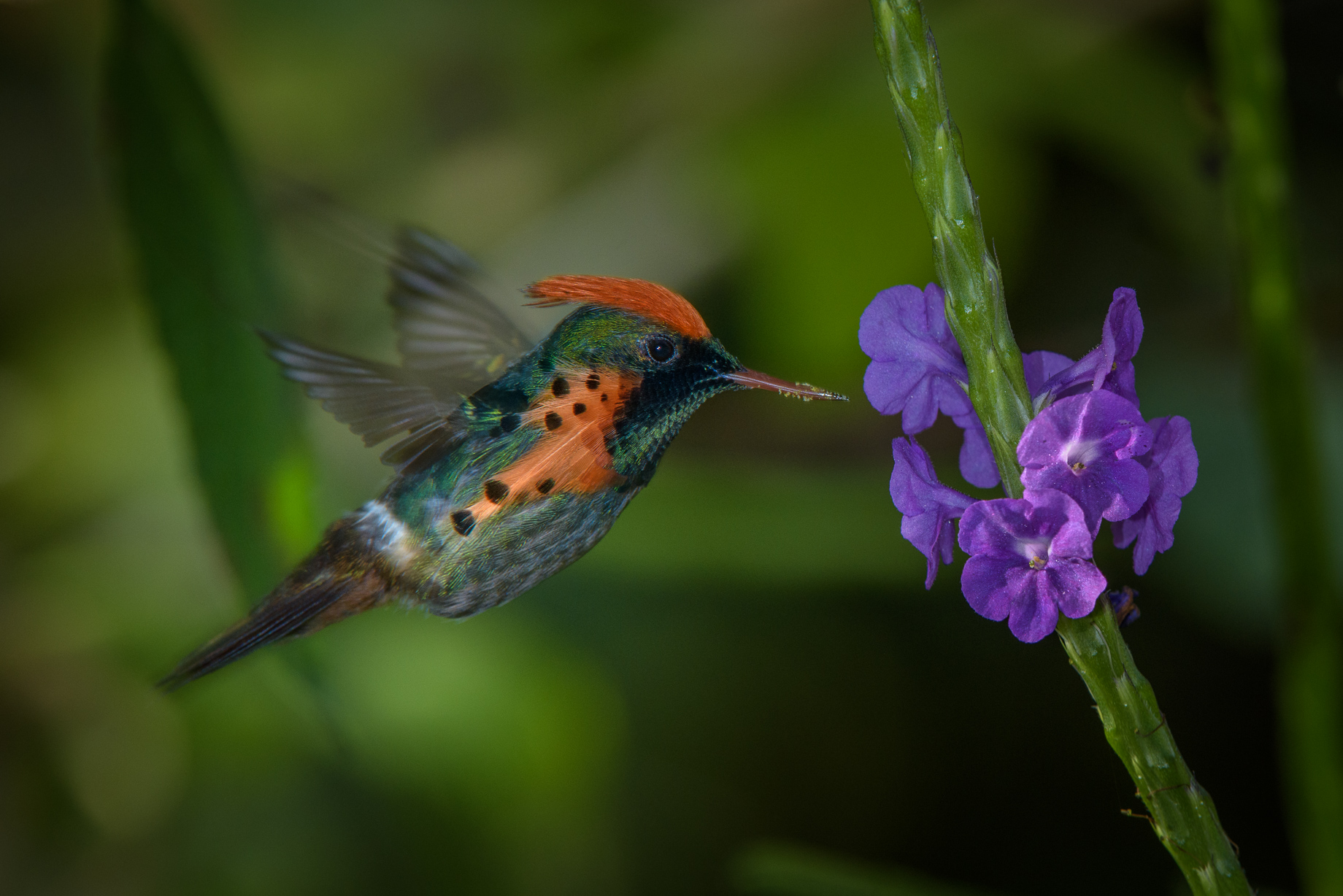
Here’s another look at the tufted coquette. This diminutive hummingbird (not much larger than a big bee) was the reason I went to the Asa Wright Nature Center in Trinidad. There weren’t many of them around, and they were difficult to photograph as they would suddenly appear and then flit from flower to flower, but I was able to get a few keepers. This is the male bird, far more stylish than the female, with his flashy feathers and spots. Nikon D810 with Nikkor 200-400mm lens (at 400mm) ISO 640, f/11 at 1/250th of a second, two Nikon SB-900 flash units
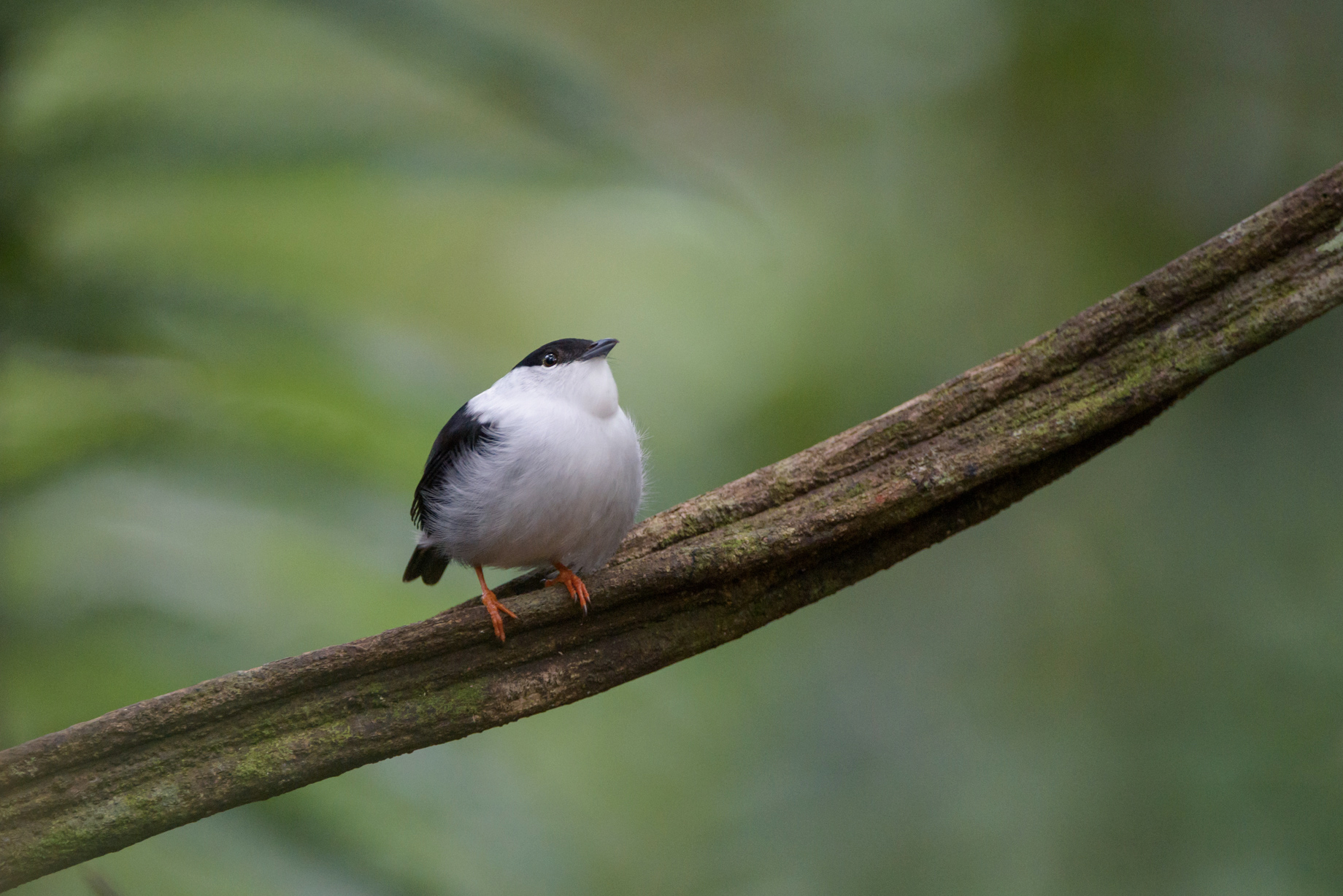
You might remember a few months ago I posted a photo of a bearded bellbird in the rainforest of Trinidad. As it turns out, the bellbird doesn’t have the corner on the market when it comes to avian beards. Behold the white bearded manakin. Granted, not nearly as spectacular of a beard as the bellbird, but the diminutive manakin makes up for it in confidence. Nikon D810 with Nikkor 200-400mm lens (at 400mm) ISO 800, f/4 at 1/125th of a second
I caught this leatherback hatchling, enveloped in a wave, just as it was about to get swept out to sea. Here’s to hoping the rest of the journey is as successful as the initial dash from the nest to the ocean. As with all my photos over the last couple of weeks, click for a much larger view. Nikon D800 with Nikkor 17-35mm lens (at 17mm) ISO 1600, f/2.8 at 1/500th of a second
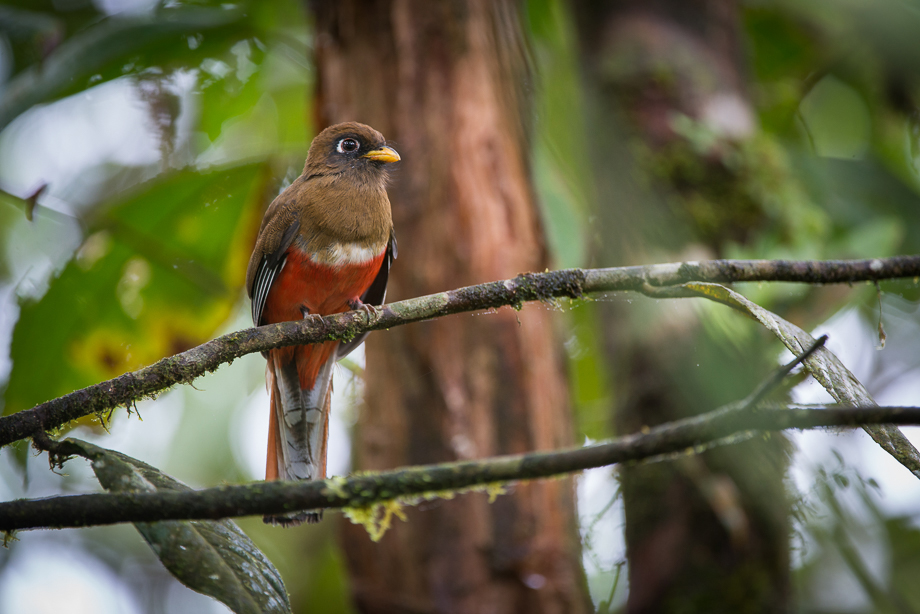
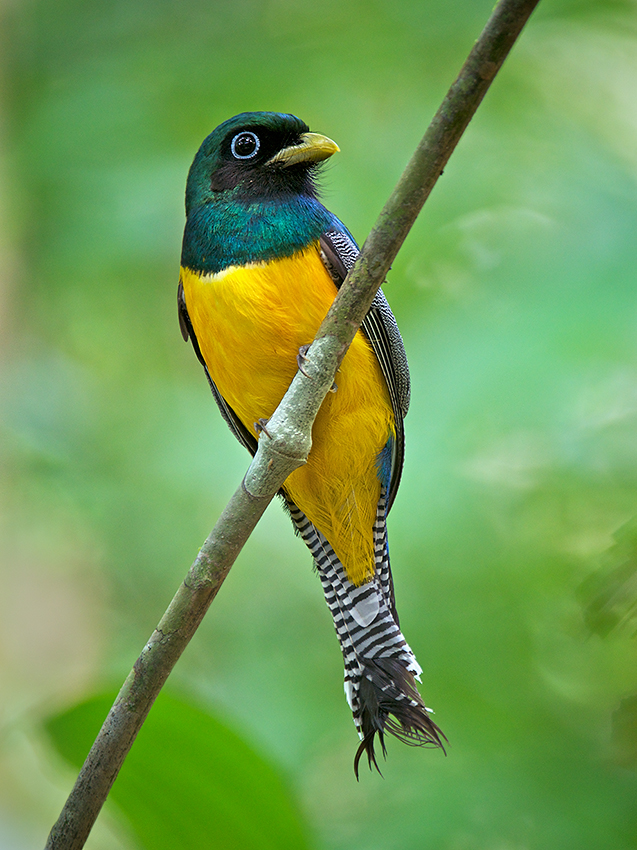
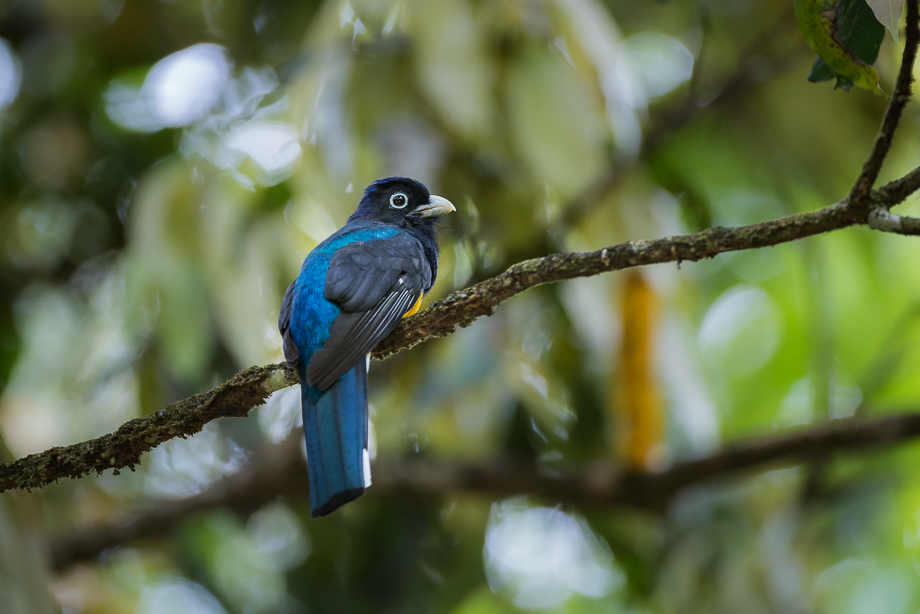
Trogons are among my favorite birds. There are many different species which live in tropical regions across the globe. The males are generally much more colorful but the females have that sturdy and exotic trogon-look that is characteristic of all species. The top photo is a female collared trogon from the cloud forest of Ecuador. The middle shot is a male black-throated trogon from Corcovado National Park in Costa Rica. And the third is a green-backed trogon from my most recent trip to Trinidad.
Collared Trogon — Nikon D800 with Nikkor 200-400mm lens (at 400mm) ISO 800, f/4 at 1/100th of a second
Black Throated Trogon — Nikon D800 with Nikkor 200-400mm lens (at 360mm) ISO 800, f/4 at 1/60th of a second
Green Backed Trogon — Nikon D810 with Nikkor 200-400mm lens (at 400mm) ISO 640, f/4 at 1/100th of a second
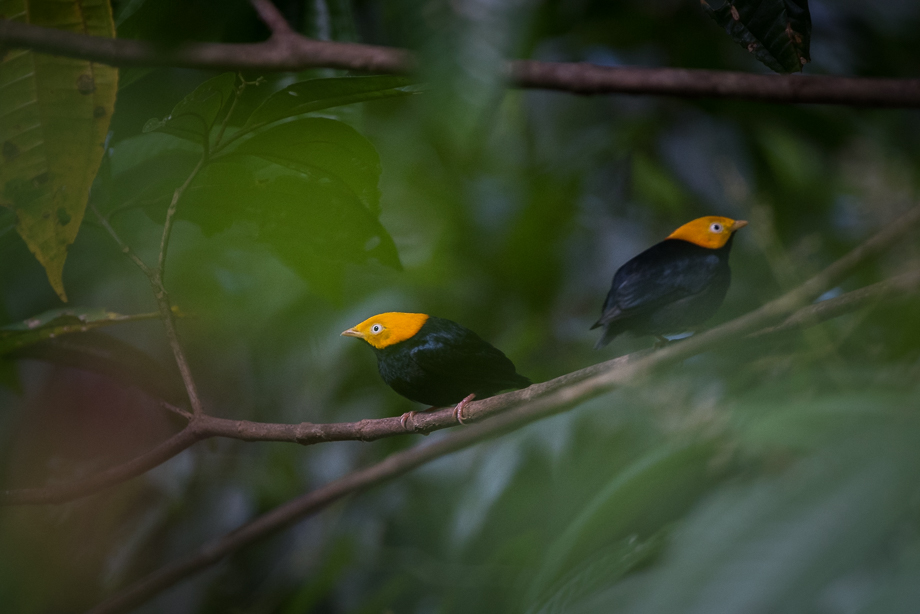
These are male golden-headed manakins that I came across at a lek early one morning in Trinidad at the Asa Wright Nature Center. Manakins are sometimes called Michael Jackson birds because of their courtship display — it resembles the moonwalk as they slide forward and then backwards on their perches. Nikon D810 with Nikkor 200-400mm lens (at 400mm) ISO 800, f/4 at 1/250th of a second
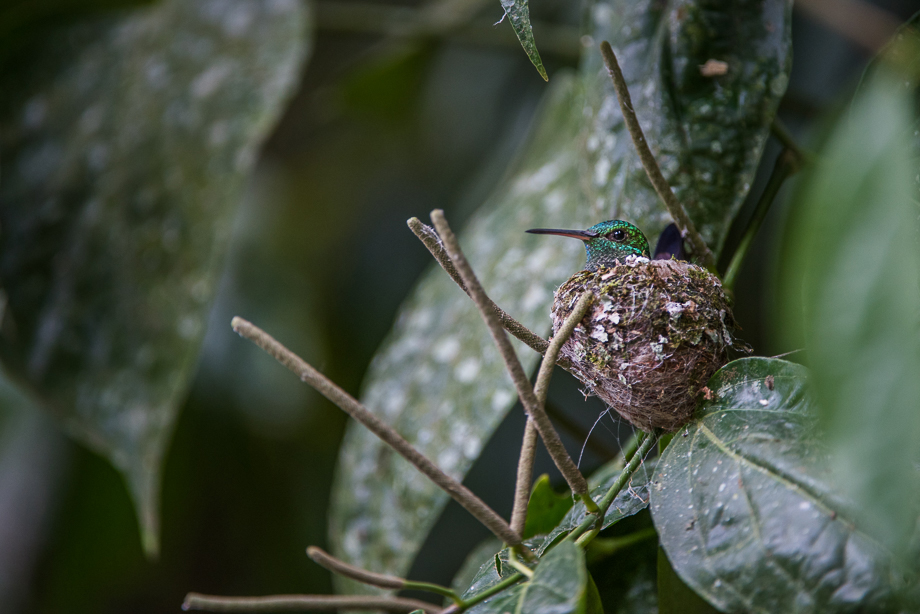
With all the hummingbirds that I saw at the Asa Wright Nature Center in Trinidad, you’d think I’d see a few nests around, but this was the only one that I could find. Sitting inside is a copper rumped hummingbird. She was flying back and forth, collecting material to reinforce the nest. Nikon D810 with Nikkor 200-400mm lens (at 400mm) ISO 800, f/4 at 1/200th of a second
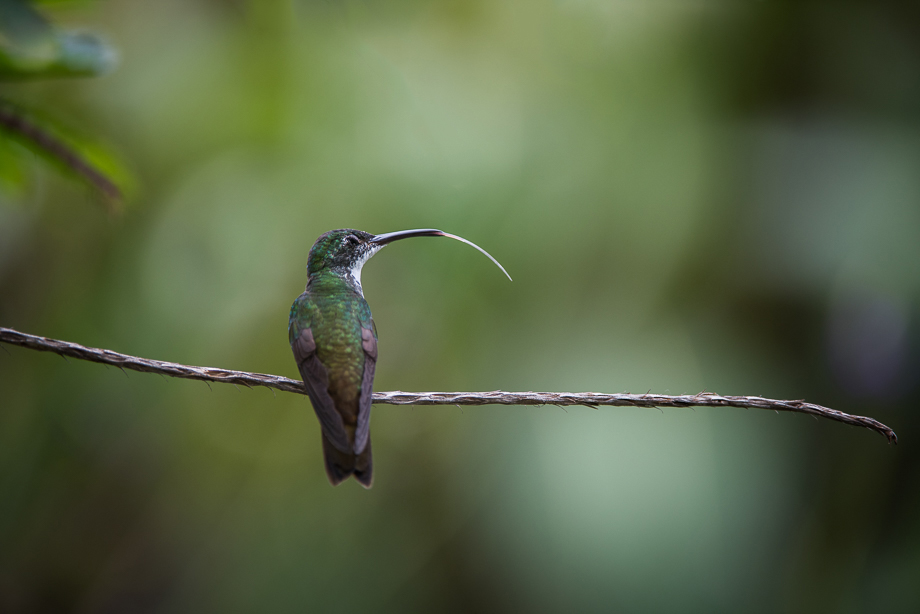
This is a white chested emerald. And yes, that is its tongue. Previously thought to suck up liquid via capillary action, ornithologists recently discovered through high speed video that hummingbirds actually use their long tongues to trap nectar by curling around it. This guy was at rest and obviously not sucking up nectar, so was probably just cleaning his tongue. Either that or he didn’t like getting his picture taken. Nikon D810 with Nikkor 200-400mm lens (at 400mm) ISO 500, f/4 at 1/500th of a second
It was a beautiful night on Trinidad’s Grande Riviere beach when three nests of leatherback hatchlings emerged from the sand and began their long journey to the ocean. I was just inches from this little guy with my fisheye lens. Nice when being so close is actually good for the animals, as no vulture dared come close as I escorted the turtle to the sea. Nikon D800 with Sigma 15mm fisheye lens, ISO 1600, f/2.8 at 1/320th of a second
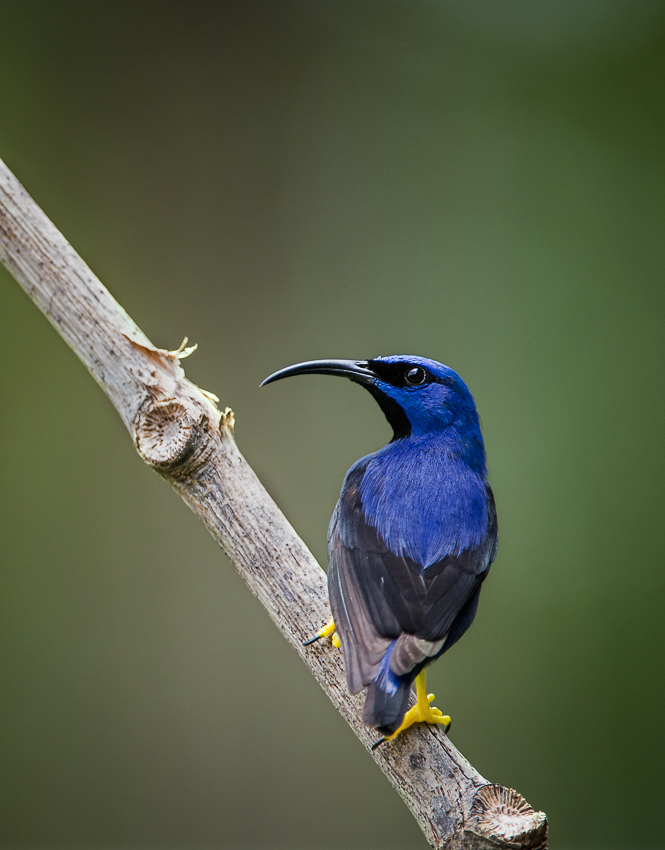
The purple honeycreeper is a very small bird in the tanager family — only about four and a half inches long. Its range extends from Panama in the north, as far south as the Pantanal in Brazil. The subspecies that exists on Trinidad has a slightly longer beak than those on the mainland. I saw quite a few of these guys at the Asa Wright Nature Center but they don’t stay still for very long and proved to be difficult to photograph. With their purplish-blue feathers and bright yellow legs, they provided a spectacular splash of color to the rainforest. Nikon D810 with Nikkor 200-400mm lens (at 400mm) ISO 500, f/4 at 1/800th of a second, two Nikon SB-900 flash units
We use cookies to enhance your experience while using our website. If you are using our Services via a browser you can restrict, block or remove cookies through your web browser settings. We also use content and scripts from third parties that may use tracking technologies. You can selectively provide your consent below to allow such third party embeds. For complete information about the cookies we use, data we collect and how we process them, please check our Privacy Policy