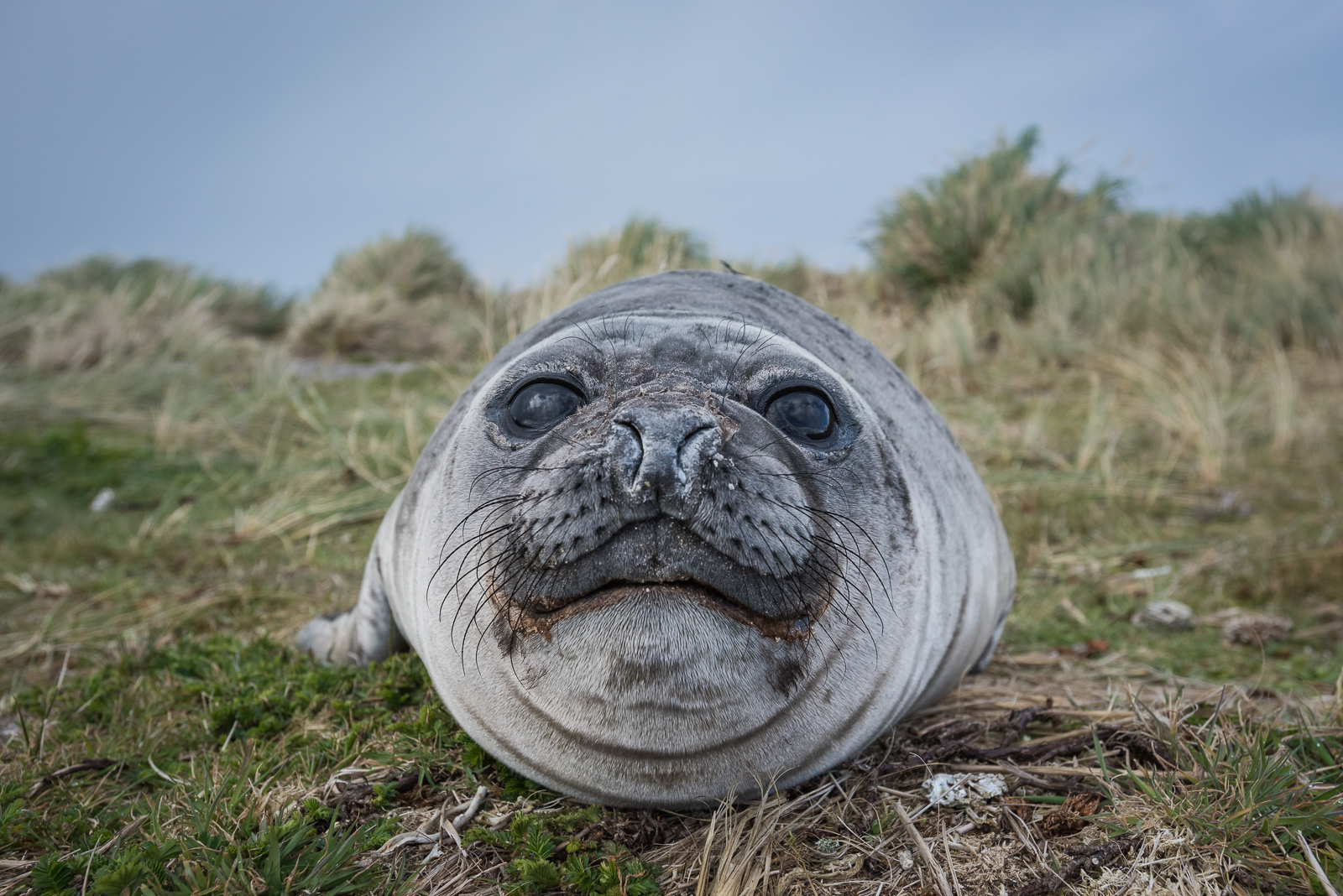
The southern elephant seal ranges throughout the Antarctic and Sub-Antarctic regions. They are the largest species of pinniped, which includes seals, sea lions, and walruses. This one is a juvenile and much smaller than the average adult. Of course, in this shot, it just looks like a head sitting in the grass. Photographed on Carcass Island in the Falkland Islands. Nikon D810 with Nikkor 17-35mm lens (at 28mm) ISO 800, f/6.3 at 1/1600th of a second.
I usually try to avoid anything man-made in my images, but in this case, the National Park sign added a nice element to go along with this seemingly-pregnant pronghorn. No location information needed. Nikon D700 with Nikkor 70-200mm lens (at 70mm) ISO 1600, f/2.8 at 1/800th of a second.
It’s that rabbit time of year again. This is a swamp hare, or swamp rabbit, a subspecies of the eastern cottontail. As the name suggests, they prefer damp, swampy habitat. In this case, Saint Andrews State Park in Panama Beach City, Florida. Nikon D810 with Nikkor 200-400mm lens (at 400mm) ISO 800, f/4 at 1/1000th of a second.
Capybaras are the world’s largest rodent. I have a particular fondness for them and think they’re quite personable. Unfortunately for them, they serve as a main food source for larger (and sometimes smaller) predators like jaguar and caiman. I’ve seen them in several location in South America in both Brazil and Bolivia. This mother was nursing her pups along the Yacuma River in the Pampas region of Bolivia. Nikon D700 with Nikkor 70-200mm lens (at 130mm) ISO 1250, f/5 at 1/100th of a second.
I know I’ve posted a lot of squirrels lately, but that’s what my camera trap has been capturing. This guy was caught running along a fallen tree this afternoon. There’s a bit of a delay with the trigger so action shots usually happen when something else (like a bird or another squirrel) sets off the trap just before the subject enters frame. A lot of luck involved, but with the abundance of squirrels running around in the back woods these days, it’s bound to happen sooner or later. Nikon D810 with Nikkor 17-35mm lens (at 17mm) ISO 500, f/14 at 1/200th of a second, Cognisys camera box, trail monitor and remote flash units.
I wish those distracting twigs weren’t in this image, but I really liked the look on the honey badger’s face. A very human expression. My guide and I built a makeshift blind out of old boxes in anticipation of the honey badger’s arrival on his afternoon rounds. I was able to get a nice series of shots before he continued on his way, deeper into the Kalahari desert of Botswana. Nikon D300 with Nikkor 200-400mm lens (at 400mm) ISO 800, f/4 at 1/250th of a second.
This one goes by a few names — the emerald awlet, the green awl, small green awlet and a few others derivatives on the theme. Whichever you choose to go with, it’s a fine looking little butterfly, found in Thailand and a few other spots in that part of the world. I photographed this one down on the Malay Peninsula of Thailand at Kaeng Krachan National Park. Nikon D500 with Nikkor 105mm macro lens, ISO 1600, f/3.5 at 1/80th of a second.
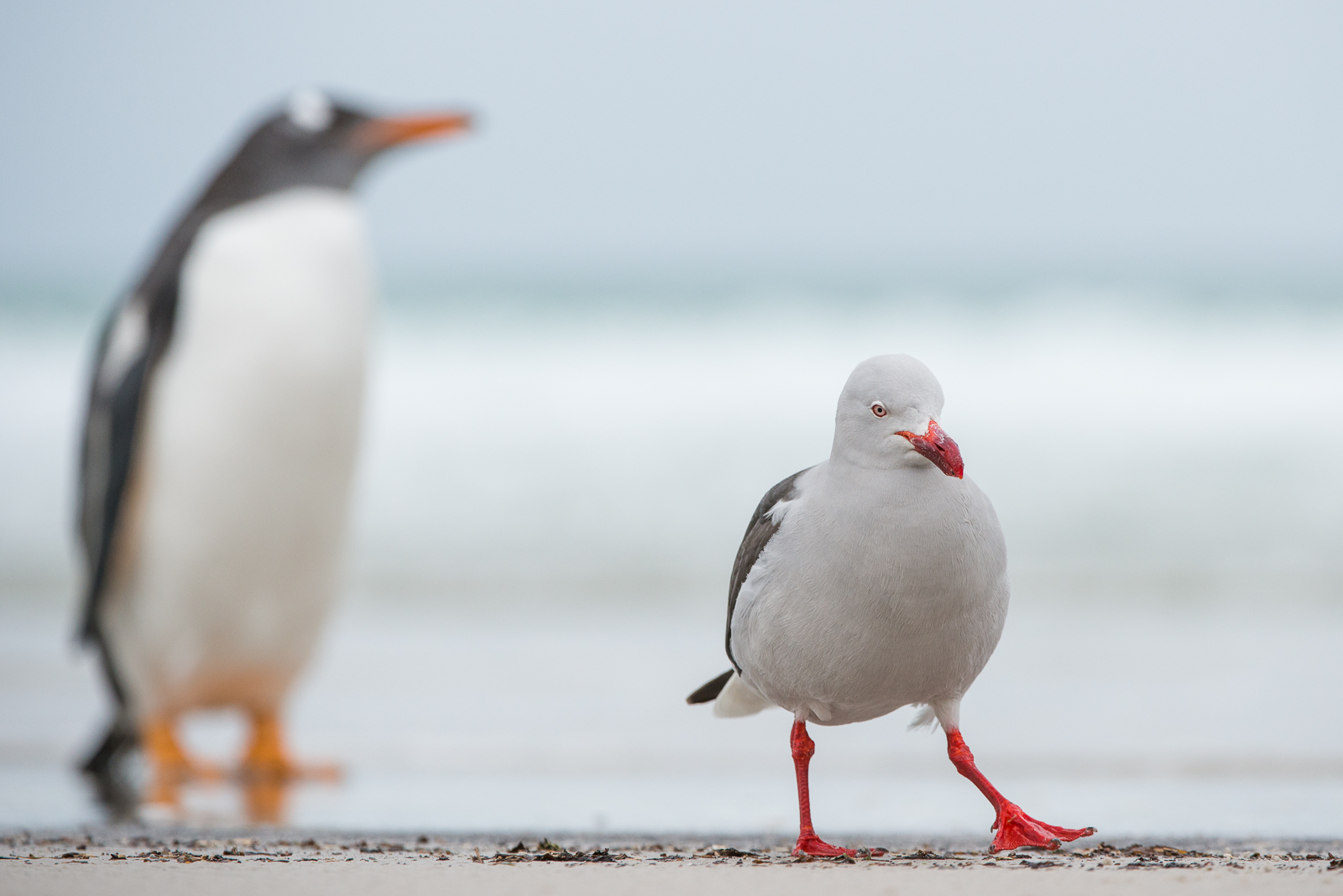
These dolphin gulls were pretty common in the Falklands. Of course, I was usually focused on penguins, but in this instance, I switched focus from the gentoo penguin in the background to the gull in the foreground. They are actually quite attractive as far as gulls go with their predominant gray coloring. Nikon D800 with Nikkor 200-400mm lens (at 350mm) ISO 800, f/5.6 at 1/1600th of a second.
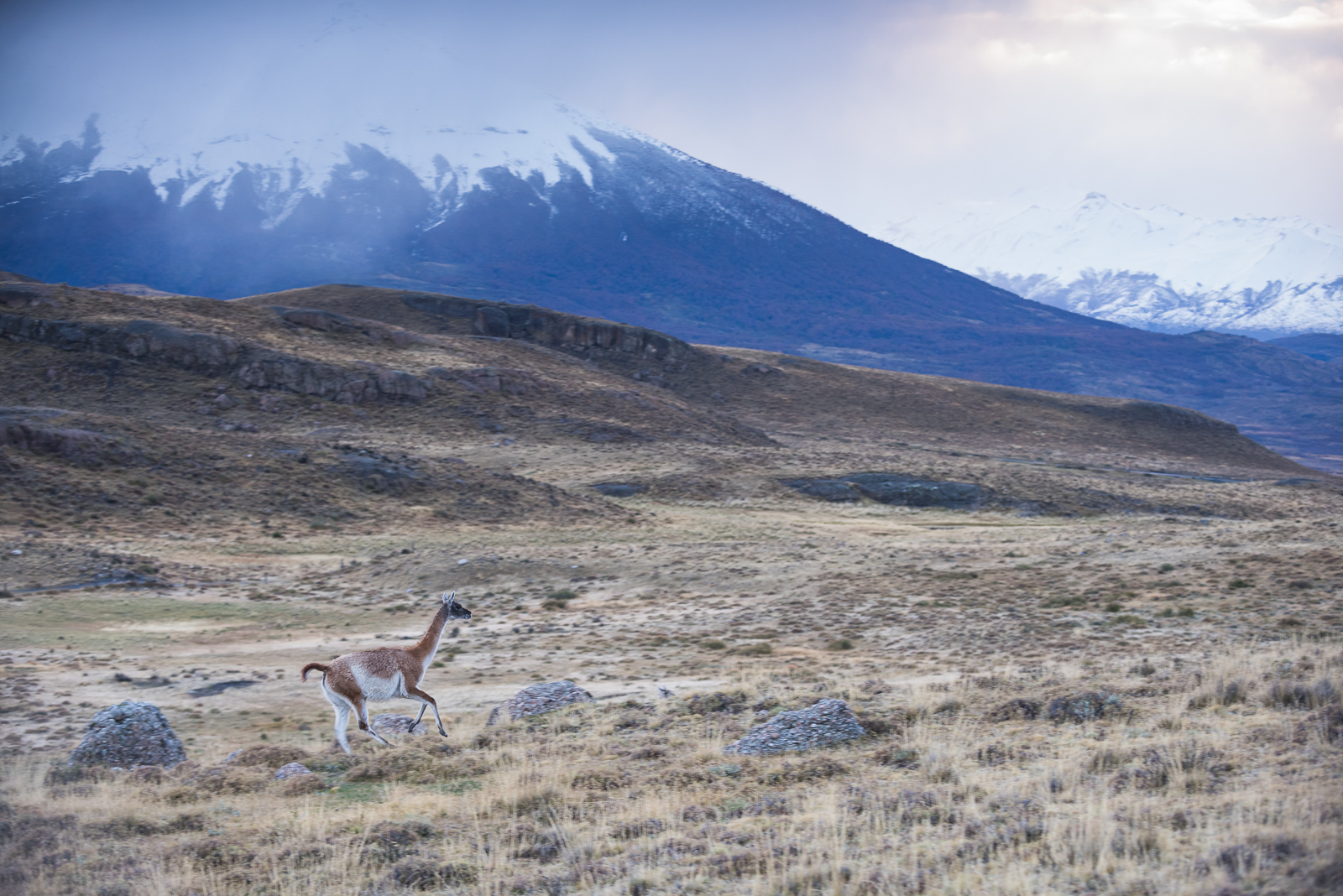
Patagonia is all about the majestic landscapes. And there’s quite often a guanaco somewhere in that landscape. This guanaco caught wind of a nearby puma and was heading for safer territory. I had just scrambled up a hill in search of the aforementioned puma. We found her and got a few shots before heading back down and realizing the great backdrop that had been behind us. Nikon D810 with Nikkor 70-200mm lens (at 78mm) ISO 800, f/4 at 1/200th of a second.
It was late in the afternoon and this cheetah had found a nice resting spot for the evening. Unlike most other predatory cats which tend to be creatures of the night, cheetahs are mostly diurnal and hunt during the day. They rely more on sight than their other senses and prefer the morning and afternoon hours when the sun is still in the sky. I photographed this one in the Linyanti concession of northern Botswana. Nikon D300 with Nikkor 200-400mm lens (at 400mm) ISO 400, f/5.6 at 1/320th of a second.
We use cookies to enhance your experience while using our website. If you are using our Services via a browser you can restrict, block or remove cookies through your web browser settings. We also use content and scripts from third parties that may use tracking technologies. You can selectively provide your consent below to allow such third party embeds. For complete information about the cookies we use, data we collect and how we process them, please check our Privacy Policy