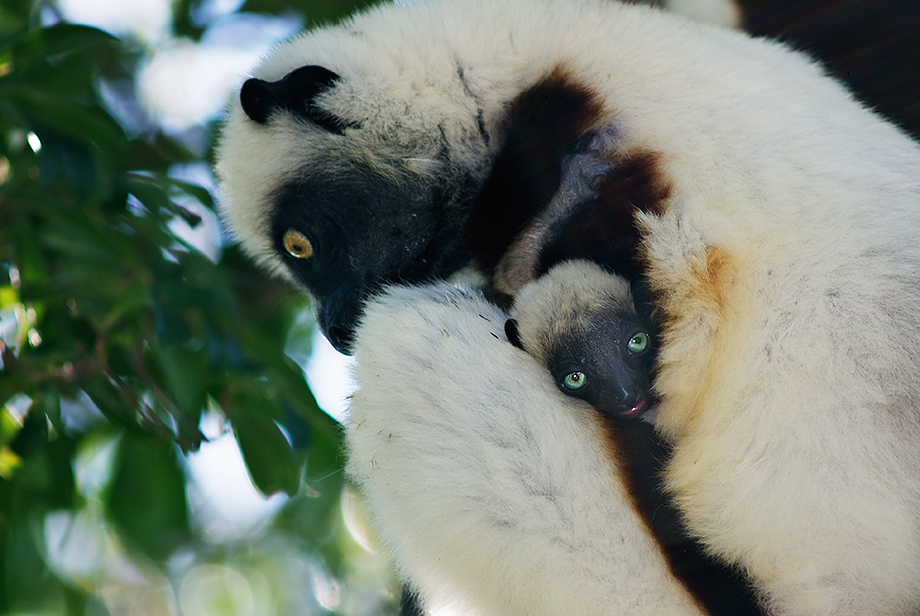
Here’s another shot that I never posted to the blog, although it’s been in my “Madagascar” gallery for a while. This is a mother Coquerel’s sifaka and her baby. Most baby lemurs are born in the fall. These guys are an exception and are born in June and July. This one was about two weeks old. It was very difficult photographing these babies. First of all there weren’t many of them, but also, the mothers were very protective and kept them tucked away and out of sight. Even though I was quite far away with a 600mm lens, if they saw me, they’d shift to hide the baby and retreat into the middle of a large tree. This shot was a finalist last year in the BBC Wildlife Photographer of the year competition in the endangered species category, but ultimately it didn’t make the show. Nikon D200, Nikkor 600mm f/5.6 manual focus lens, ISO f/5.6 at 1/60th of a second
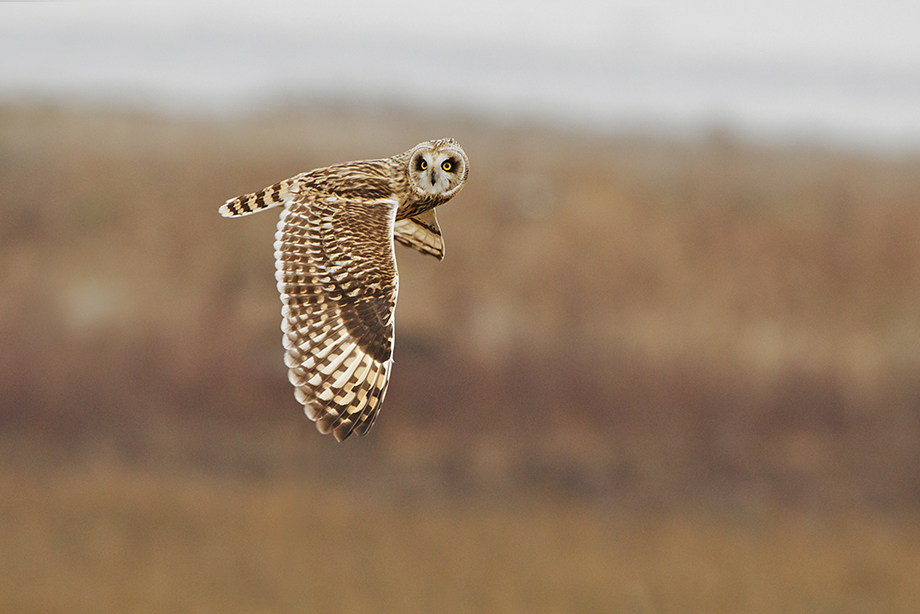
While short eared owls are in flight, they look around a lot, always scanning the landscape not only for dinner, but also for danger. They are small owls and their heads turn so quickly that it’s hard to see with the naked eye when they do, but I got quite a few shots like this with the owl’s body going in one direction and the head looking in the other. Nikon D800 with Nikkor 200-400mm lens (at 400mm) ISO 1250, f/5 at 1/1000th of a second
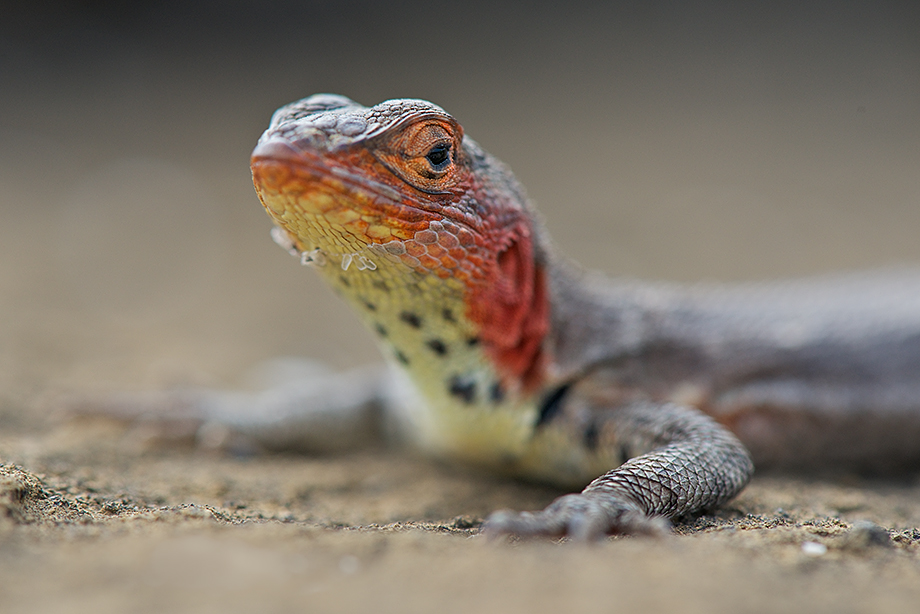
This lava lizard was in the process of shedding its skin, face first. Each island in the Galapagos has a slightly different version of the lava lizard, with slightly different skin colors to match the general environment of the given island. Nikon D800 with Nikkor 105mm macro lens, ISO 400, f/8 at 1/400th of a second
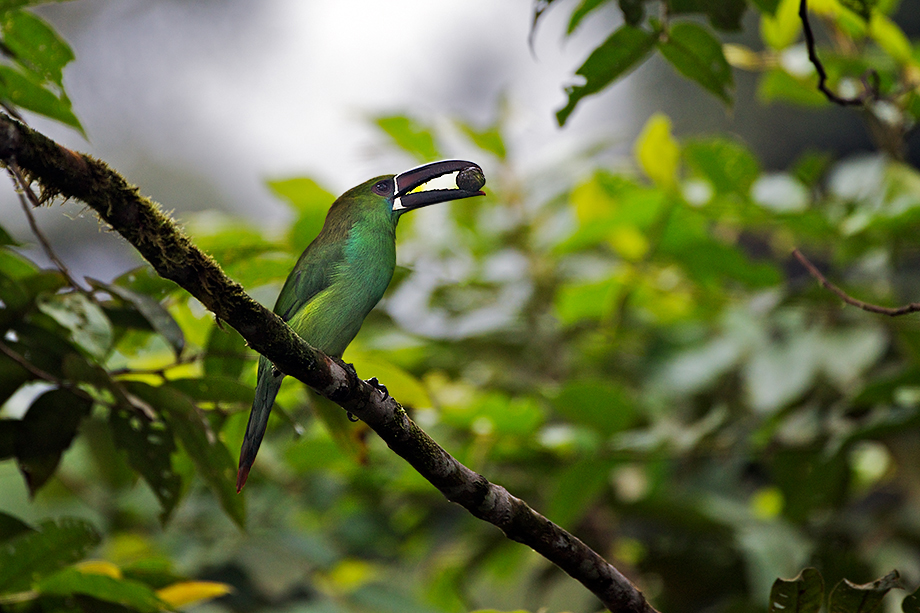
This crimson-rumped toucanet was outside our window while staying in the cloud forest of Ecuador. In fact, this shot was through the glass of our floor to ceiling windows — good thing the lodge keeps them nice and clean. Nikon D800 with Nikkor 200-400mm lens (at 400mm) ISO 800, f/4 at 1/400th of a second
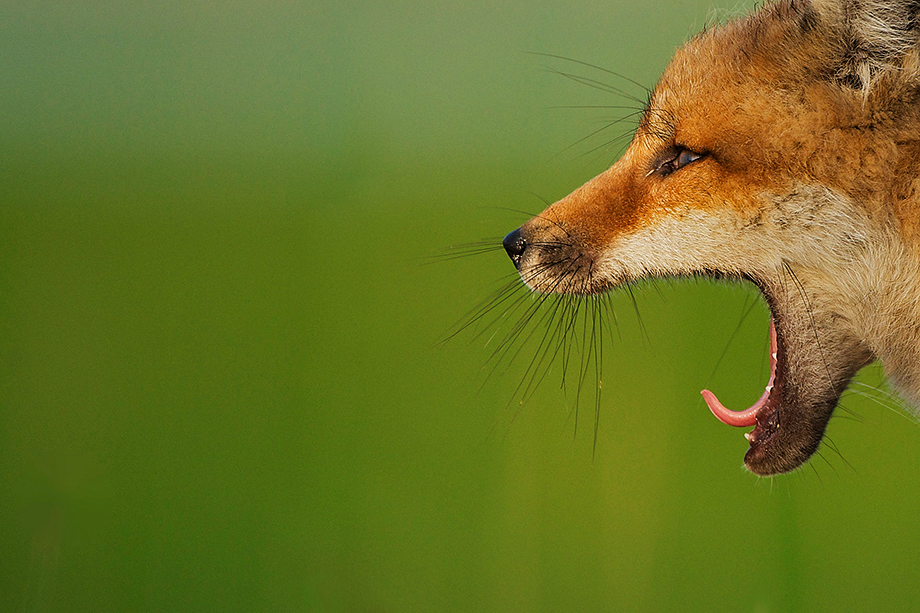
This is an oldie but I have never uploaded it to the blog. It was early one morning in Delaware at Bombay Hook National Wildlife Refuge. This fox was so cooperative that I was able to move in close for some more interesting angles. Seems that whatever the species, a big yawn is always a treat. Nikon D300 with Nikkor 200-400mm lens (at 400mm) ISO 400, f/4.5 at 1/640th of a second (-0.33 ev)
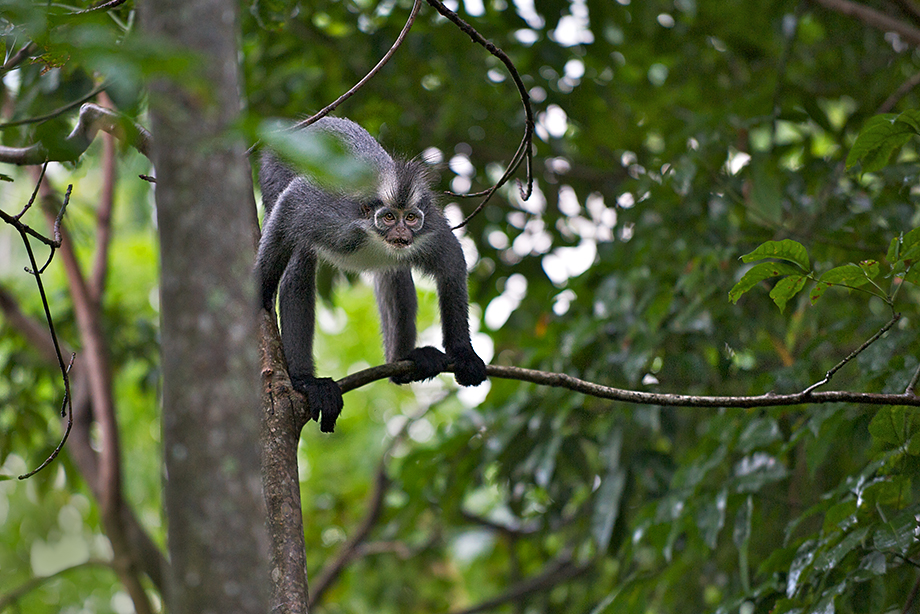
Time for another look at the Thomas’s leaf monkey from Sumatra. These guys are also called Thomas’s langurs. They live in the subtropical and tropical dry forests of Indonesia. Unfortunately, they are considered a vulnerable species due to the rapid loss of their habitat. Nikon D700 with Nikkor 70-200mm lens (at 200mm) ISO 1600, f/2.8 at 1/250th of a second (-0.33 ev)
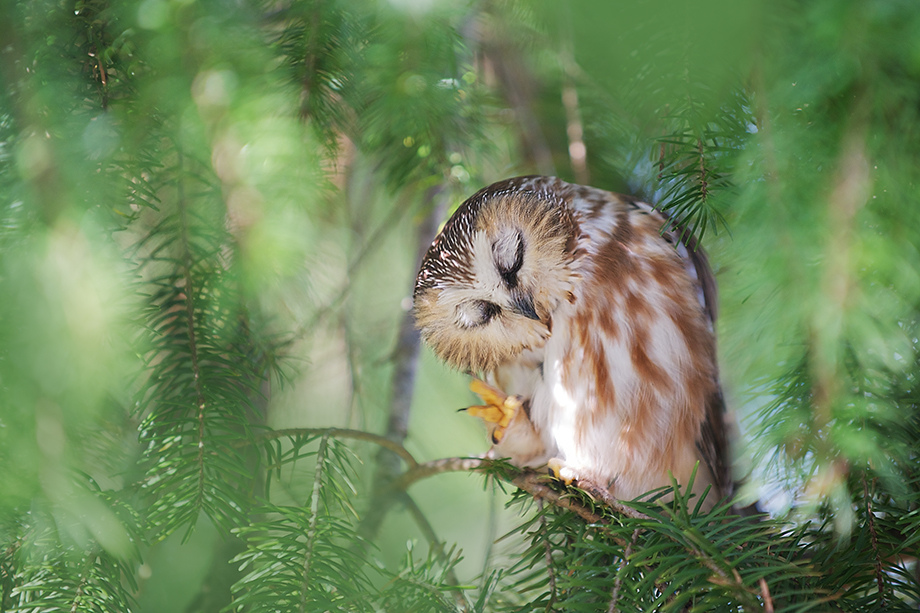
Saw whet owls are strictly nocturnal and they sleep for most of the day. I waited a long time for this little guy to wake up… yawn… do anything. After what seemed like a few hours, it finally shuffled around a bit on the branch before giving itself a good scratch. The eyes never opened. Nikon D700 with Nikkor 70-200mm lens (at 200mm) ISO 800, f/2.8 at 1/200th of a second
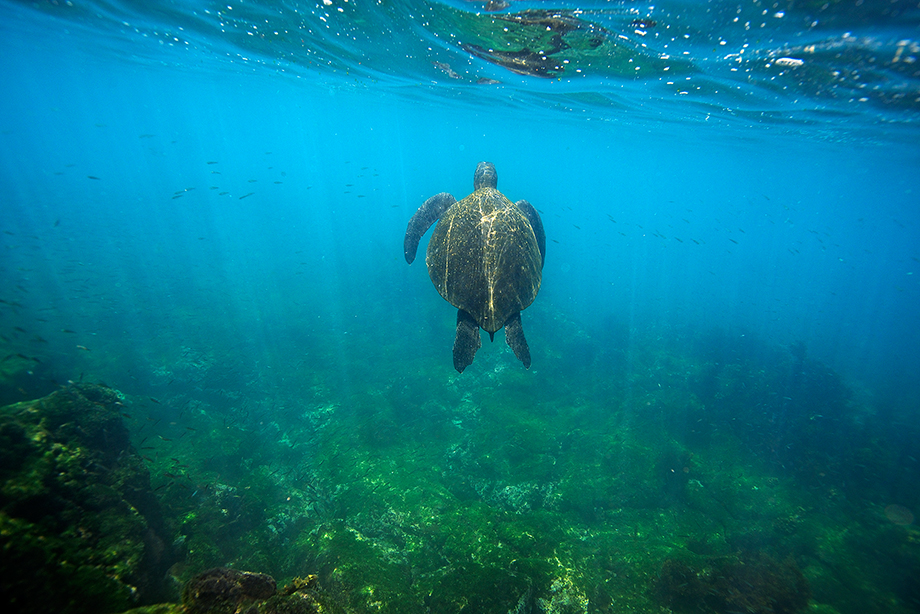
I was surprised at how many Pacific green sea turtles we saw in the Galapagos Islands. We snorkeled almost every day and almost every time we got in the water we saw a few of these guys. I got plenty of shots at close range of them staring into the camera, but I really liked this one of the turtle surfacing for air amidst the the diffused rays of the sun. Nikon D800 with Nikkor 17-35mm lens (at 22mm) ISO 320, f/5.6 at 1/800th of a second, Ikelite underwater housing with 8-inch dome port
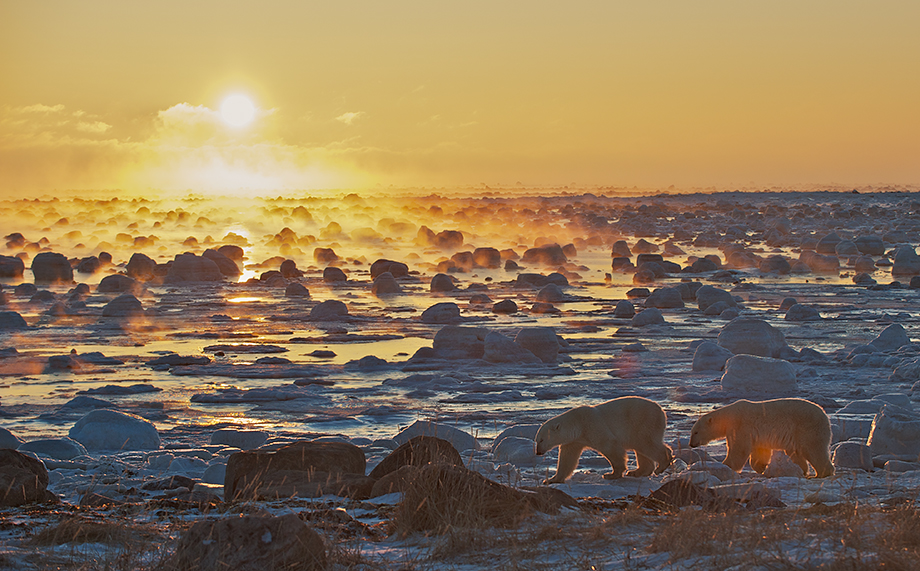
Hear’s another shot from that magical morning up at Seal River Lodge in northern Manitoba, Canada. This was a little later in the morning from the photo that is in my “Favorites” gallery. The light wasn’t quite as soft but still pretty great with the backlit mist rising from low tide on the Hudson Bay. Nikon D700 with Nikkor 70-200mm lens (at 98mm) ISO 800, f/5.6 at 1/1250th of a second (+2 ev)
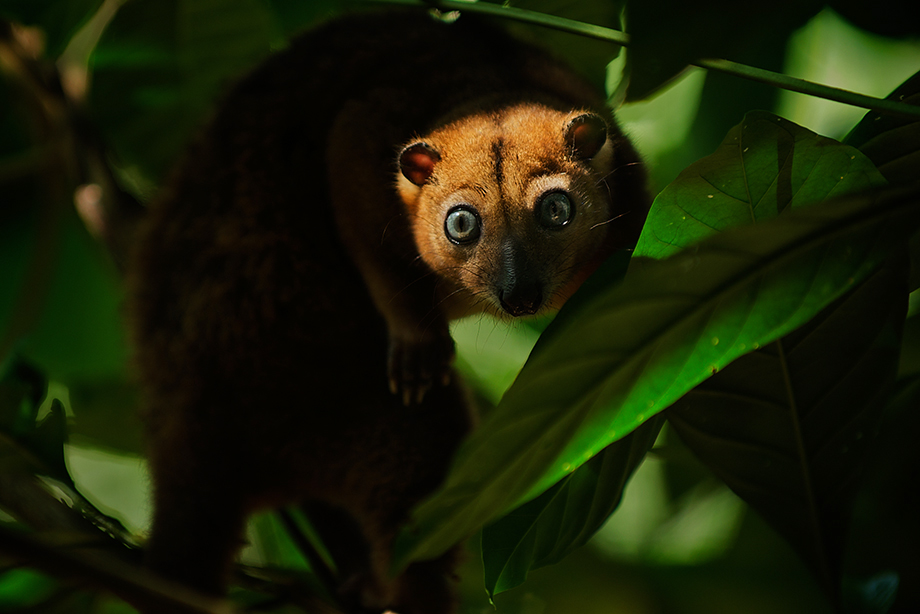
This Sulawesi dwarf cuscus was a challenge to photograph due to the mixed lighting conditions of the deep shadows caused by the thick foliage and the bright highlights caused by the rising sun. For this particular image, I set my camera to expose for the bright areas and waited for the cuscus to pop its head into the light. These guys are pretty rare and only exist on a few islands in Indonesia. I was lucky to see this one. Cuscus are marsupials and are a type of possum. Nikon D700 with Nikkor 70-200mm lens (at 200) ISO 800, f/2.8 at 1/250th of a second
We use cookies to enhance your experience while using our website. If you are using our Services via a browser you can restrict, block or remove cookies through your web browser settings. We also use content and scripts from third parties that may use tracking technologies. You can selectively provide your consent below to allow such third party embeds. For complete information about the cookies we use, data we collect and how we process them, please check our Privacy Policy