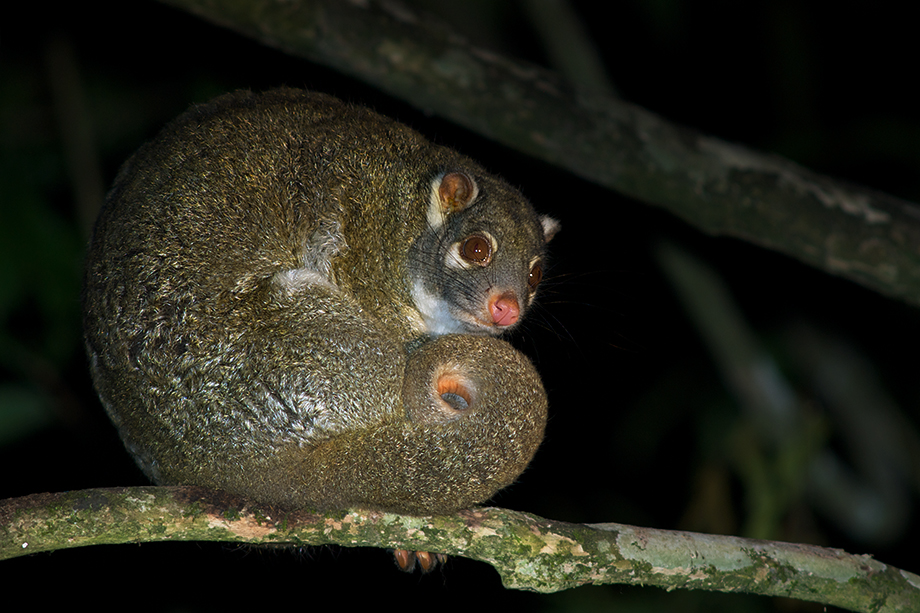
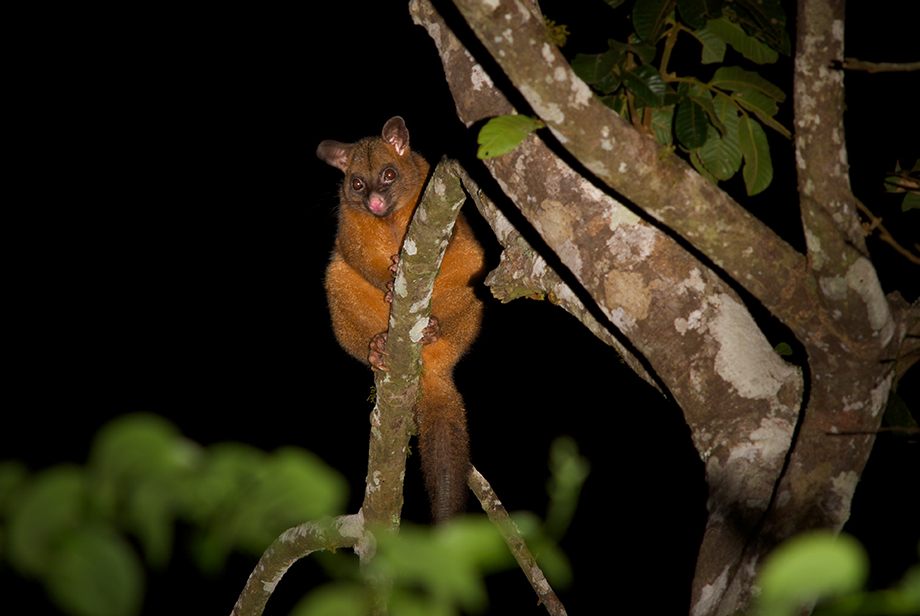
Australia is full of great night creatures, including many different species of possum. This is a green ringtail possum that I encountered one night on a spotlighting hike in the Atherton Tablelands of Queensland. Nikon D200 with Nikkor 600mm f/5.6 manual focus lens, ISO 200, f/5.6 at 1/60th of a second, Nikon SB-800 flash
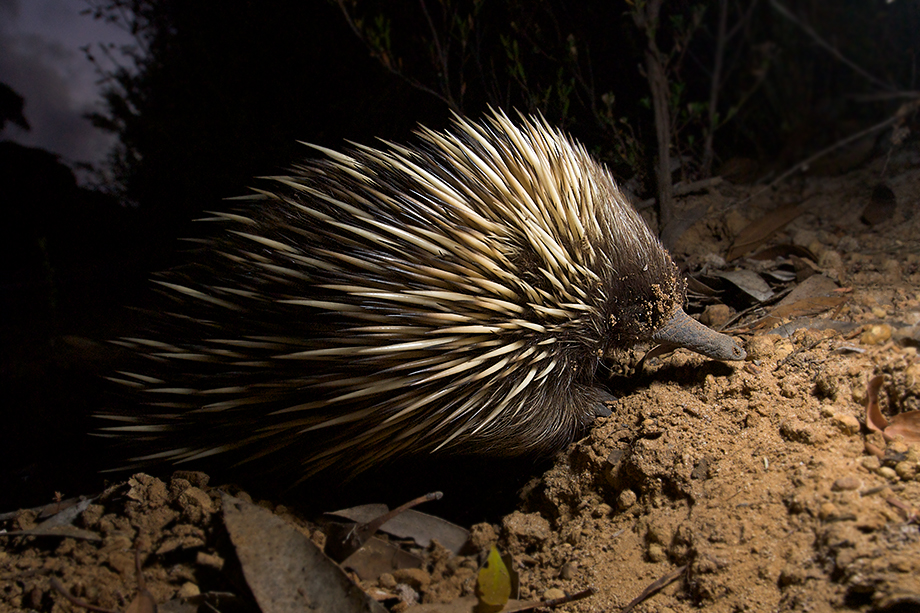
This spiny little creature is called a short-beaked echidna. It was photographed early one evening in Flinders Chase National Park on Kangaroo Island in South Australia. Echidnas are monotremes, meaning they are mammals that lay eggs. The only other surviving monotreme is the platypus. Nikon D200 with Nikkor 17-35mm lens (at 17mm) ISO 400, f/8 at 1/60th of a second, Nikon SB-800 flash
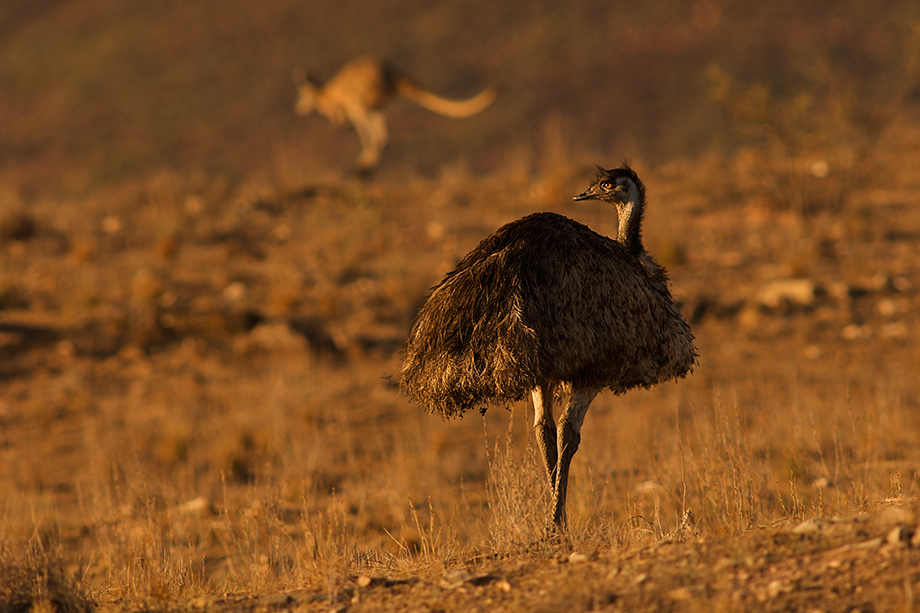
Not just an emu, but an emu with a kangaroo running around in the background. Just part of the landscape in Flinders Ranges National Park in South Australia. Nikon D200 with Nikkor 600mm manual focus lens, ISO 200, f/8 at 1/250th of a second
A while back I posted a common brushtail possum from Australia. Here is another species, the coppery brushtail. These guys are common in their home range, but that range is very small — restricted to the Atherton Tablelands area of Queensland in the northeastern part of the country. As you can see, it gets its name from the copper color of its fur — the common brushtail being much more grey. Nikon D200 with Nikkor 600mm f/5.6 manual focus lens, ISO 200, f/11 at 1 second, Nikon SB-800 flash
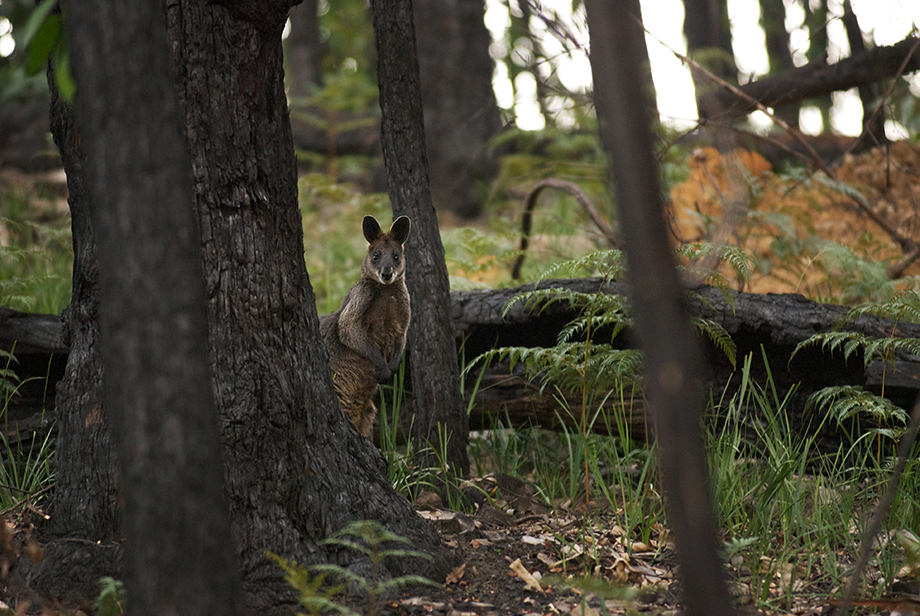
This little guy has many names — the swamp wallaby, the black wallaby, fern wallaby, black pademelon, and my personal favorites, the black stinker, or simply, the stinker. it’s a small macropod species, usually solitary and nocturnal. Lucky for the swamp wallaby — and probably a reason why it is also called the stinker — the Aboriginal people of Australia find it to be inedible due to its smell and taste after cooking. But seriously, who in their right mind could eat this little guy. Nikon D200 with Nikkor 80-200mm lens (at 200mm) ISO 800, f/2.8 at 1/40th of a second
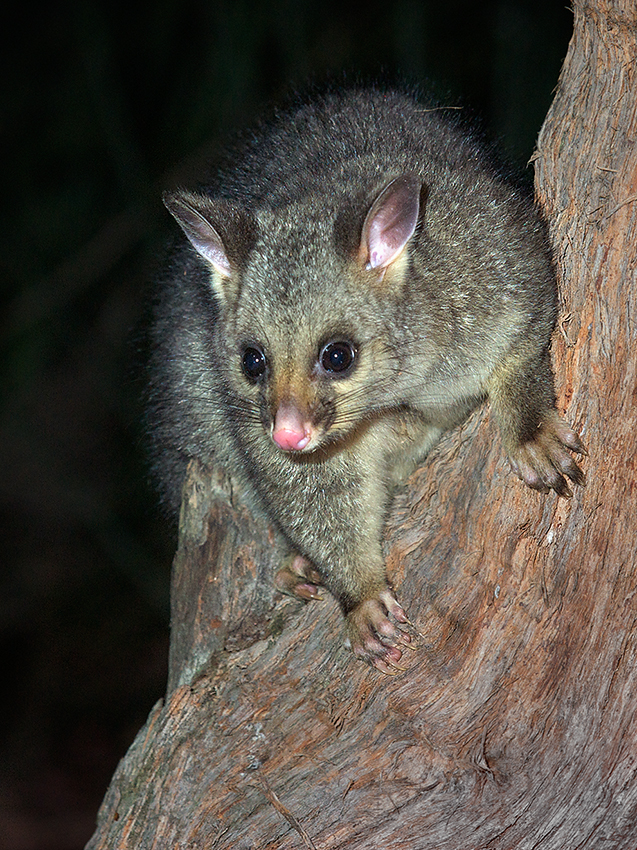
I feel for animals whose official name starts with the word “common.” As if they’re not as worthy of our attention. Thus is the case with Australia’s common brushtail possum. I guess it’s appropriate, however, as this is the most widely seen possum species not only in wild, forested environments of the country, but it is also seen quite regularly in urban areas. I much prefer the Latin name Trichosurus vulpecula, from the Greek for “furry tailed” and the Latin for “little fox.” As for the above furry-tailed-little-fox, he was spotted while creeping around in a tree outside of the lodge I was staying at on Kangaroo Island in South Australia. Nikon D200 with Nikkor 80-200mm lens (at 155mm) ISO 200, f/5 at 1/60th of a second, Nikon SB-800 flash
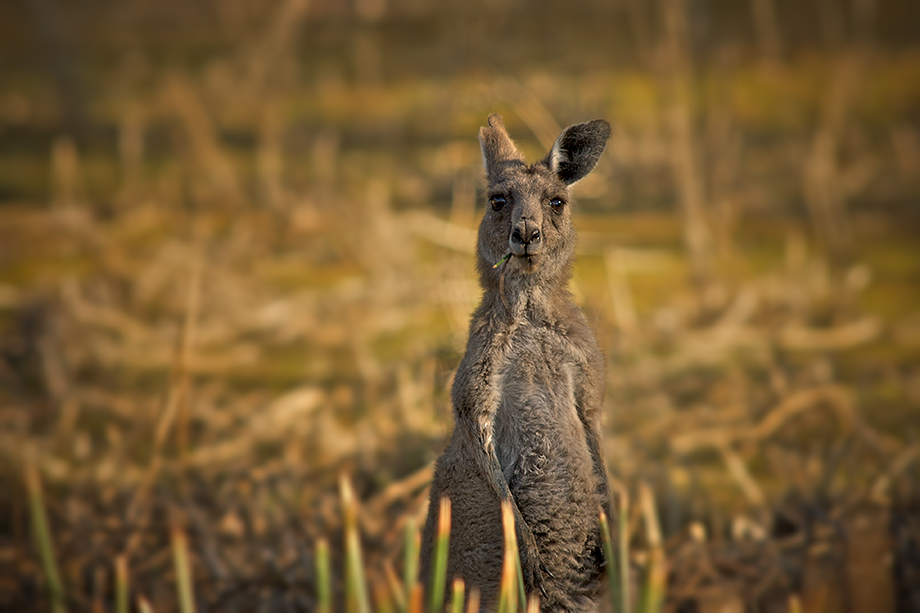
Western grey kangaroos are one of the most common species of kangaroo in Australia. They are also the second largest of all the kangaroos. And from what I could tell, they are one of the most personable. This guy seemed genuinely pleased to make my acquaintance late one morning in Flinders Ranges National Park in South Australia. Nikon D200 with Nikkor 600mm f/5.6 manual focus lens, ISO 100, f/8 at 1/90th of a second
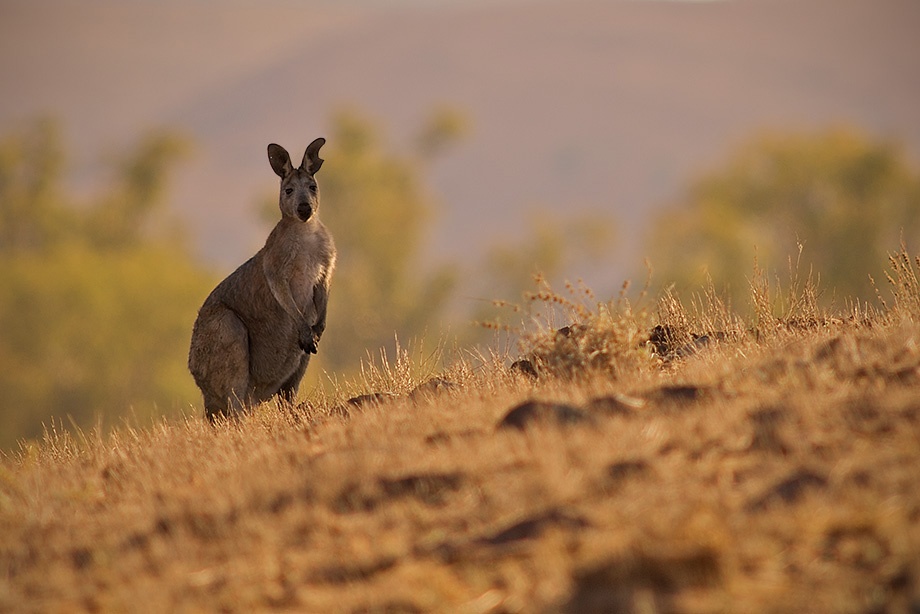
This poor kangaroo looks like someone might have taken a big bite out of her ear. She was just one of the many kangaroos and wallabies that I saw while in Flinders Ranges National Park in South Australia back in 2006. Nikon D200 with Nikkor 600mm f/5.6 manual focus lens, ISO 100, f/5.6 at 1/180th of a second
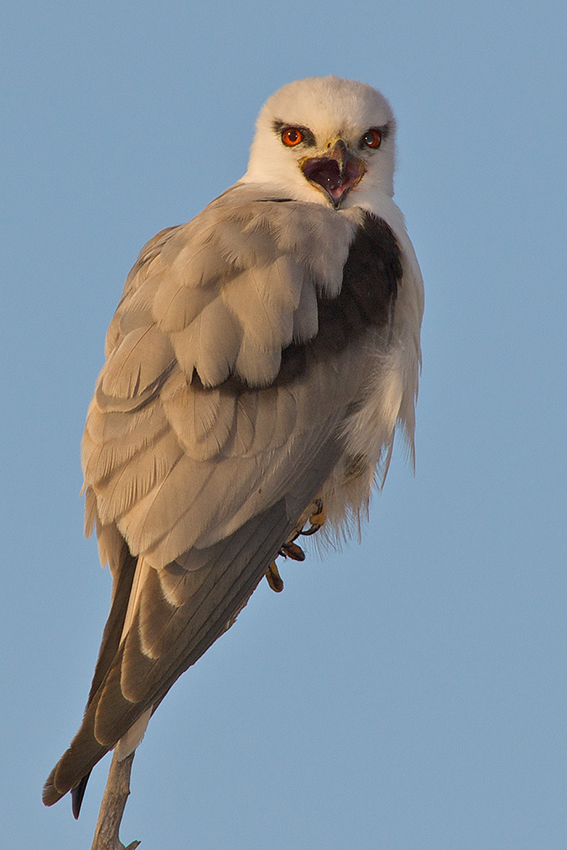
Black shouldered kites — also known as Australia black shouldered kites — are found in open habitat throughout much of Australia. They are smaller raptors, with a wingspan of up to 37 inches. Mostly white and grey in appearance, they have piercing red eyes set against patches of black — very cool looking birds. I saw this one on my last morning on Kangaroo Island in Southern Australia. Nikon D200 with Nikon 600mm f/5.6 manual focus lens, ISO 200, f/8 at 1/250th of a second
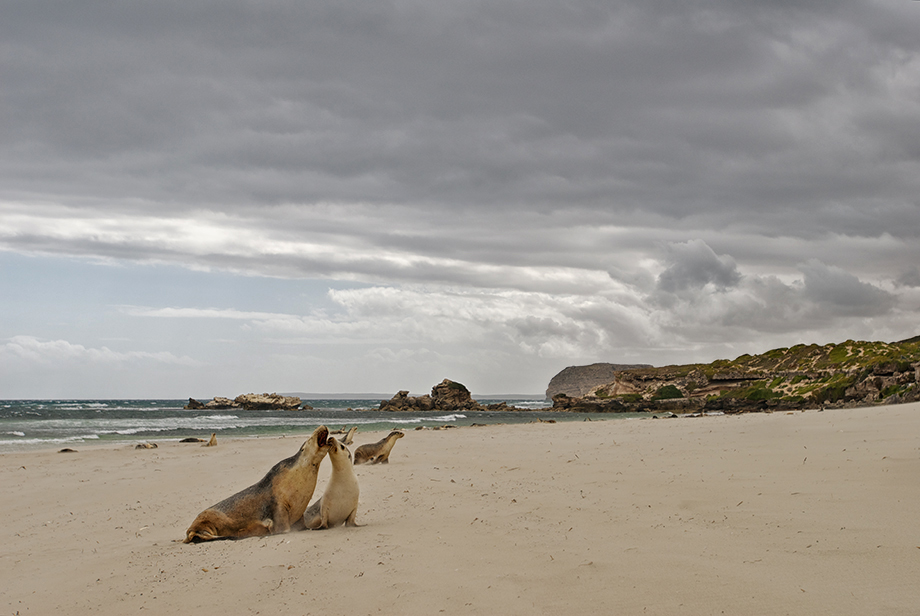
This is an old one from my Australia trip back in 2006. Kangaroo Island is just south of Adelaide in Southern Australia. It’s a haven for wildlife, including quite a few seals and sea lions. Seal Bay is accessible by guide only and, unfortunately, viewing times are well after sunrise and well before sunset. On this particular day, however, I got lucky when the stormy clouds rolled in, providing a respite from the harsh mid-day sun and adding drama to the sky. Nikon D200 with Nikkor 17-35mm lens (at 35mm) ISO 100, f/5.6 at 1/400th of a second
We use cookies to enhance your experience while using our website. If you are using our Services via a browser you can restrict, block or remove cookies through your web browser settings. We also use content and scripts from third parties that may use tracking technologies. You can selectively provide your consent below to allow such third party embeds. For complete information about the cookies we use, data we collect and how we process them, please check our Privacy Policy