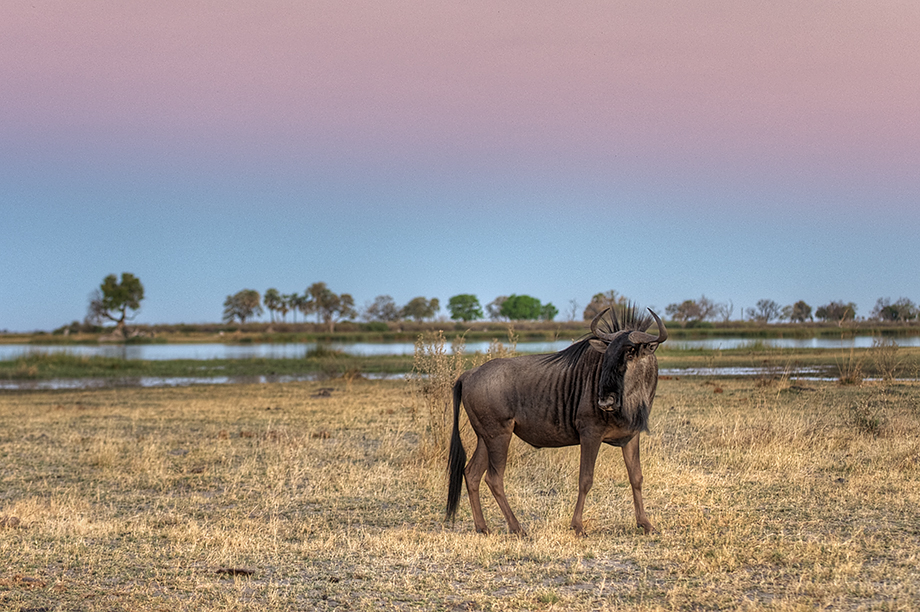
Wildebeest don’t get much respect. Not from the predators that consider them their main food source, or from the locals who claim that they are made up of all the spare parts that the other animals didn’t want. As the saying goes, they have the tail of a horse, the quarters of a hyena, the stripes of a zebra, the mane of a lion, the horn of a buffalo, the brain of a bird, and the face of a grasshopper. All of which kind of makes me like them even more. This one was photographed at the tail end of twilight one night in the Linyanti swamp area of northern Botswana. The sexy beast was just still enough, watching a herd of elephants, to allow me to capture several exposures and combine them in post. Nikon D700 with Nikkor 70-200mm lens (at 70mm) ISO 800, f/2.8 at 1/13th, 1/25th, 1/50th, 1/100th and 1/200th of a second shutter speeds
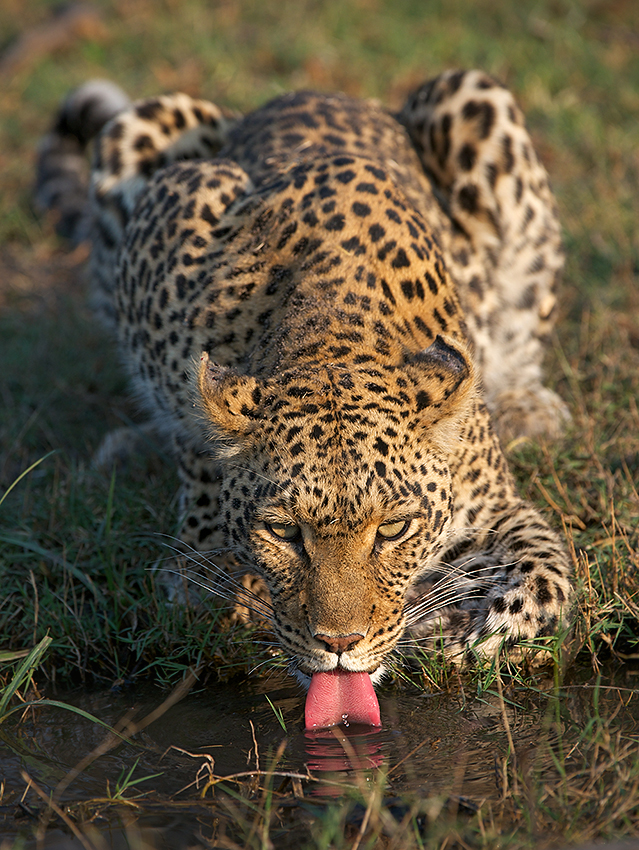
This leopard had a busy morning stalking and taking down a male impala. We missed the kill, but we caught back up to her later in the day and caught her quenching her thirst. Nikon D800 with Nikkor 200-400mm lens (at 350mm) ISO 400, f/5.6 at 1/800th of a second
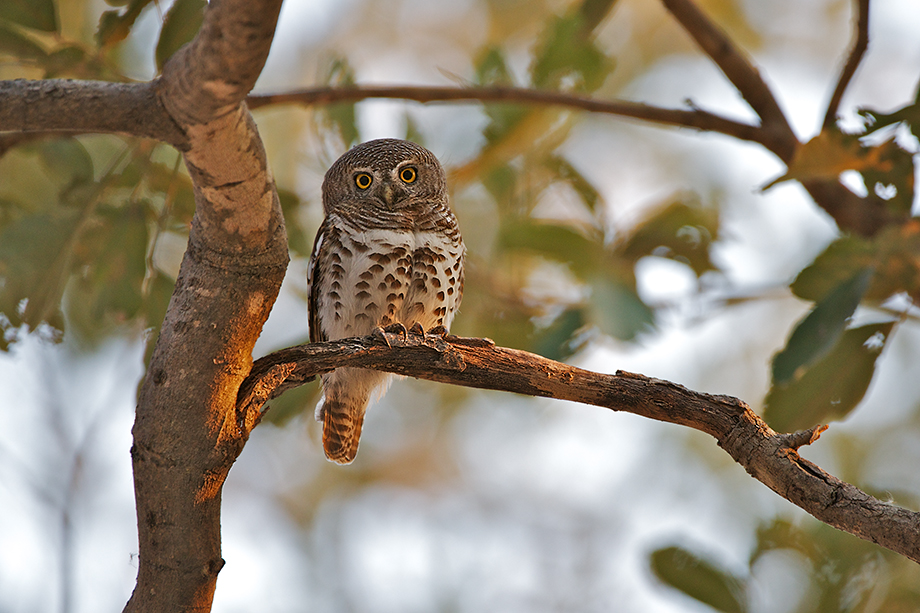
I came across this little Africa barred owlet early one morning on safari. There were actually two of them in the tree and they were probably just heading out to hunt (unlike many owls they are active during the day). They live throughout sub-Sahara Africa and are only about 7 to 8 inches tall. Nikon D800 with Nikkor 200-400mm lens (at 400mm) ISO 800, f/4 at 1/200th of a second
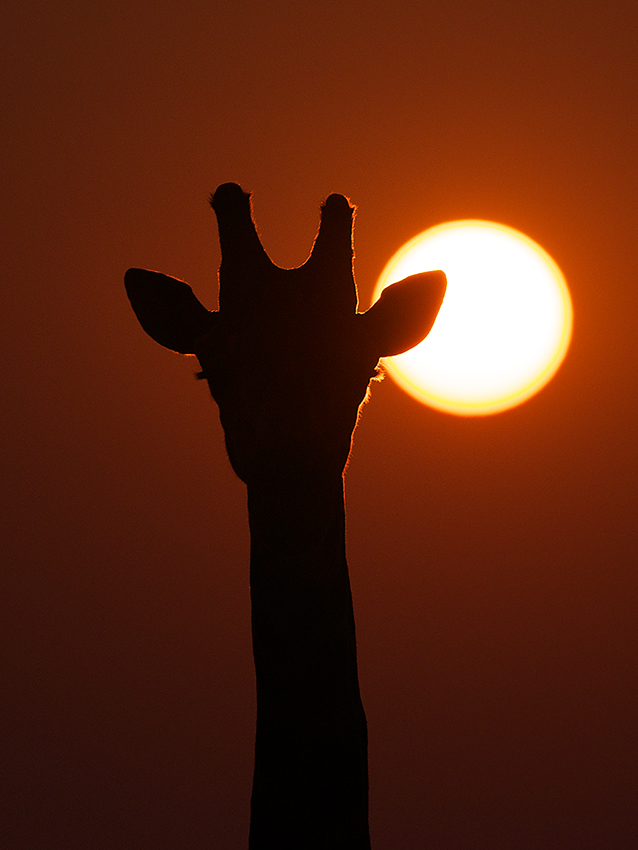
I’m usually not a big silhouette fan. If I can record at least a little detail in the shadow areas I’ll do that — but in this case, I liked the way that the eyelashes and fur were rim lit by the rising sun. Plus, this was Karen’s favorite wildlife shot from the Botswana portion of our honeymoon, so it’s about time I posted it. Nikon D800 with Nikkor 200-400mm lens (at 400mm) ISO 800, f/6.3 at 1/4000th of a second
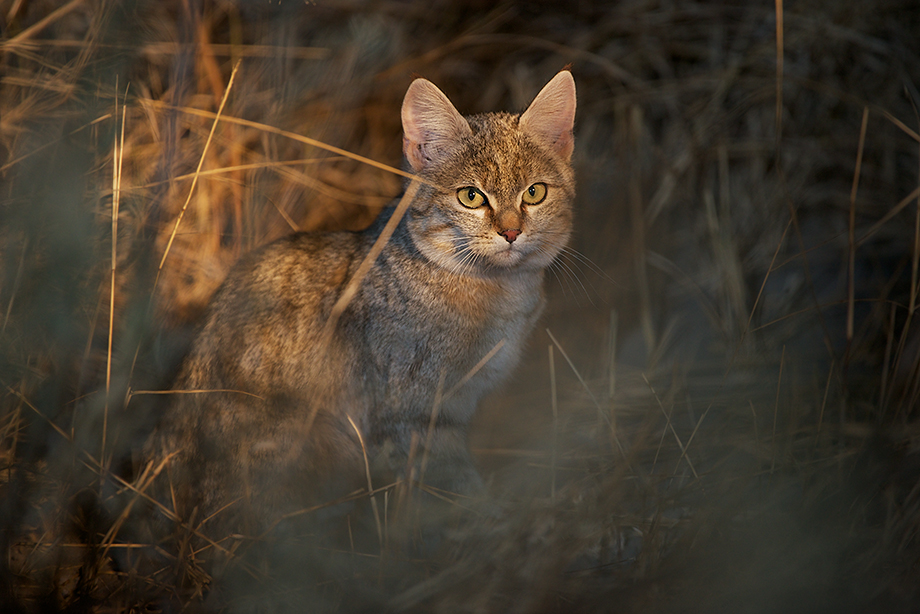
A friend of mine recently asked if I ever look at giraffes or elephants while on safari and think about how amazing it is that such large beasts roam around in the wild. My answer, of course, was yes — but even more amazing to me is that this little cat that looks like it should be crawling out of a little box in my apartment, roams around in the wild amongst lions and leopards. It’s an African wildcat and it is, in fact, an ancestor of the domestic house cat. It’s believed that African wildcats were first domesticated some 9,000 years ago. They are mainly active during the night, which is when we came across this one, well after the sun had set. Nikon D800 with Nikkor 200-400mm lens (at 400mm) ISO 800, f/4 at 1/60th of a second, Nikon SB-900 flash, balanced with a spotlight
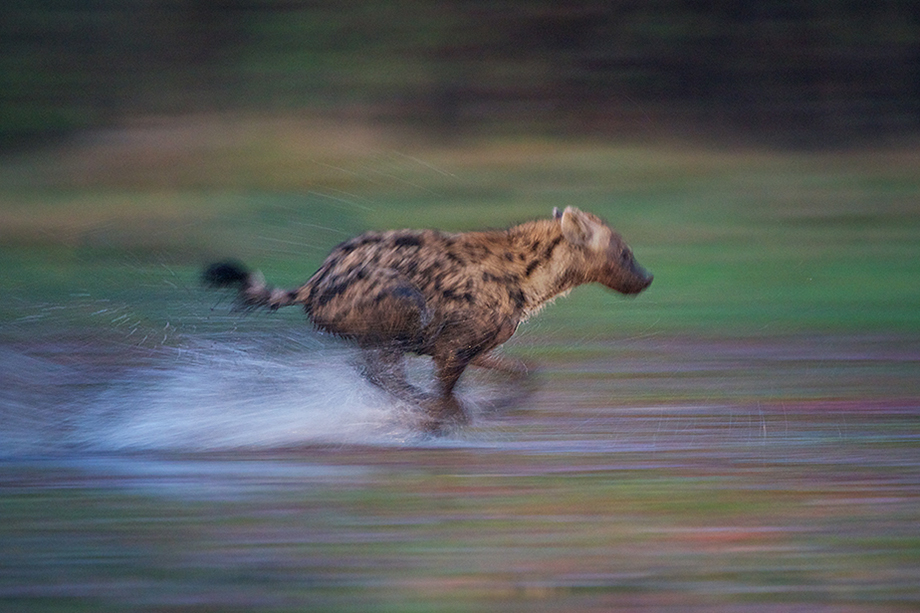
This is one of my favorite images from Botswana. It was pre-sunrise and there was very little light, so even at ISO 3200 I was getting extremely slow shutter speeds. It all added up to the perfect opportunity for some panning, motion blurred shots. It was so dark, in fact, that the guide was shining a spotlight on the hyena to help me focus, and in the process, adding that extra touch of light that you see on the fur. For their part, the hyenas were quite cooperative as they raced back and forth through the shallow water. Our guide mentioned that this was very odd behavior for hyenas. They seemed downright giddy as they chased each other through the water, playing like a bunch of retriever pups at a dog run. Nikon D800 with Nikkor 200-400mm lens (at 400mm) ISO 3200, f/4 at 1/20th of a second
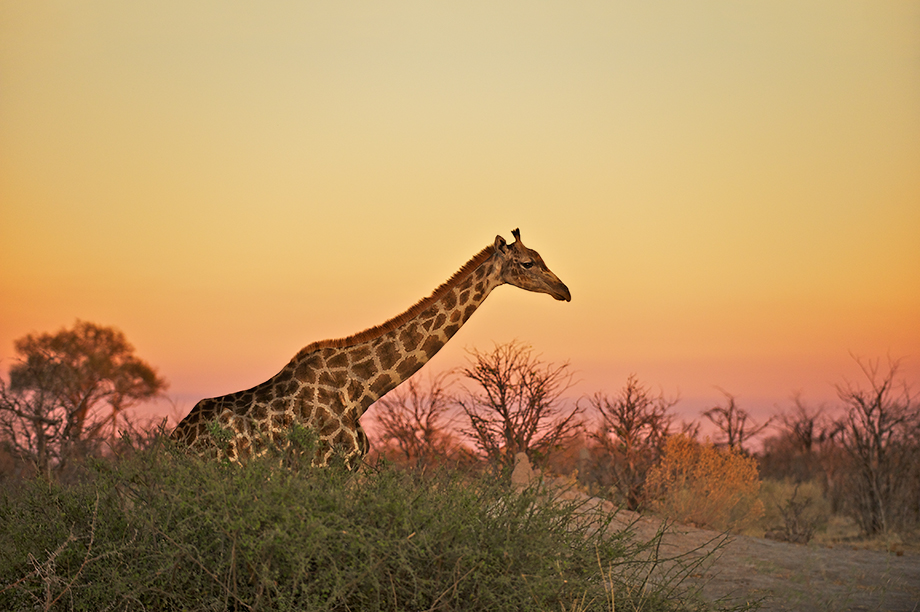
Each morning in Botswana I got up and out before the sunrise. That way I was in position for the incredible light that often comes at dawn. Giraffes and elephants are always good subjects for this time of day. Nikon D700 with Nikkor 70-200mm lens (at 140mm) ISO 800, f/2.8 at 1/1250th of a second
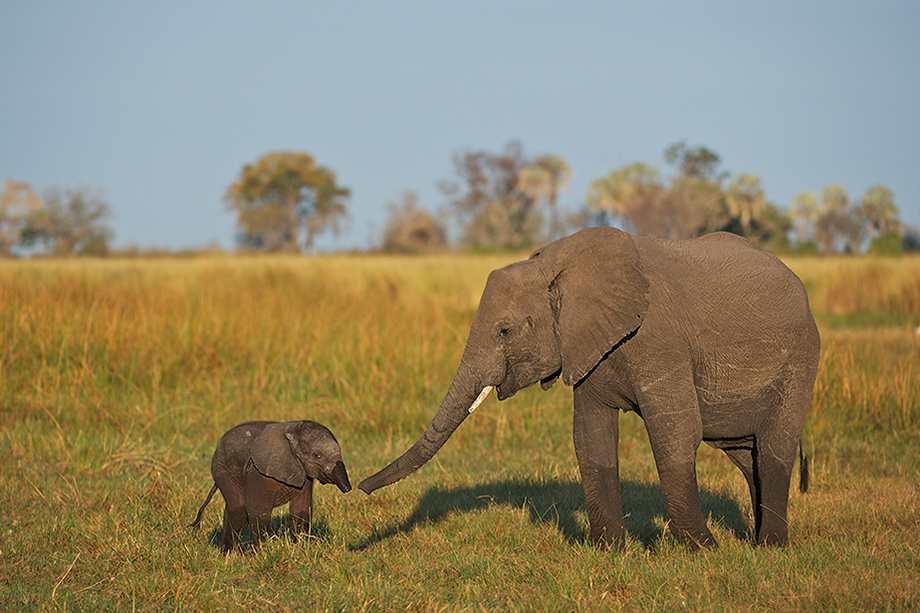
Not much in the wild is cuter than a baby elephant. This little guy was only a few months old according to our guide. They believe that its shortened trunk is either from a predator, or some sort of birth defect. The elephant to the right was actually one of the smaller members of the herd, so you can get an idea of just how tiny the baby is. The little trunk is dark because it was wet from drinking water. Nikon D800 with Nikkor 200-400mm lens (at 260mm) ISO 400, f/4 at 1/2000th of a second
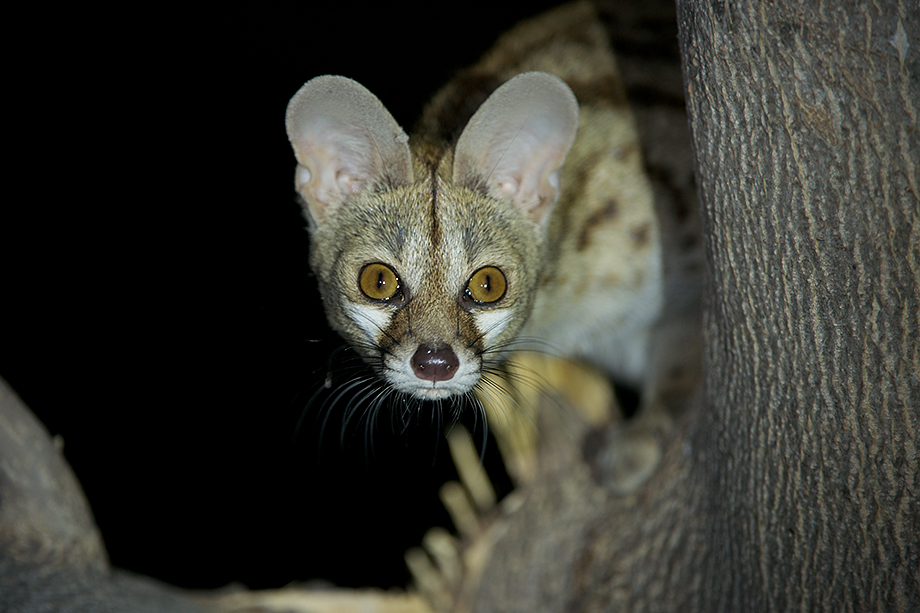
Another new species for me (at least to get a photograph of) was the genet. I’ve seen them before, but usually just a quick glimpse before running away. They are strictly nocturnal and I was lucky to have my camera with me one night at dinner when I saw this guy creeping around. They are commonly called genet cats, although they aren’t technically cats. They are related to cats, but more closely to mongooses and civets. Nikon D800 with Nikkor 200-400mm lens (at 400mm) ISO 1250, f/4 at 1/60th of a second, Nikon SB-900 strobe
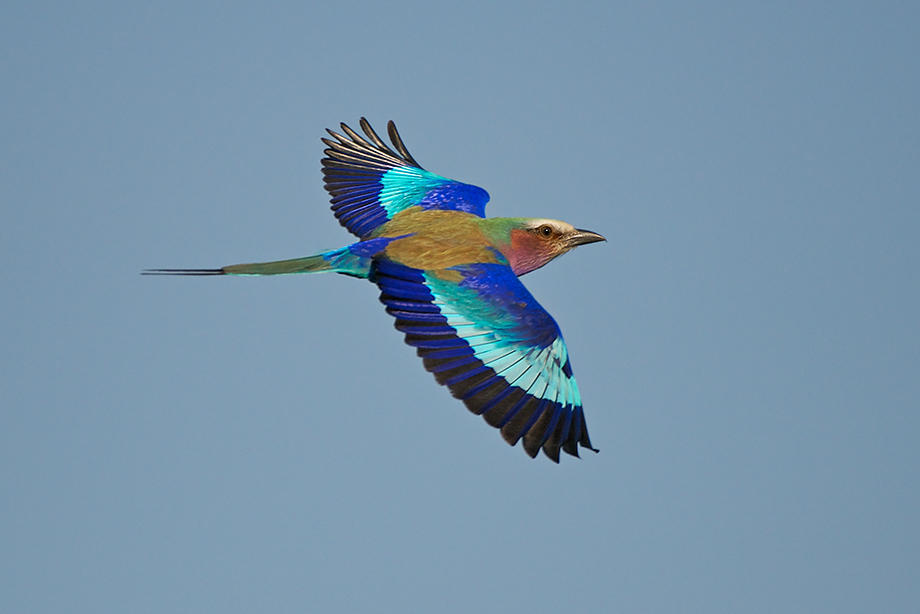
The lilac breasted roller is a common bird while on safari, and it also happens to be one of the most beautiful birds — especially while in flight. Nikon D800 with Nikkor 200-400mm lens (at 400mm) ISO 400, f/4 at 1/6400th of a second
We use cookies to enhance your experience while using our website. If you are using our Services via a browser you can restrict, block or remove cookies through your web browser settings. We also use content and scripts from third parties that may use tracking technologies. You can selectively provide your consent below to allow such third party embeds. For complete information about the cookies we use, data we collect and how we process them, please check our Privacy Policy