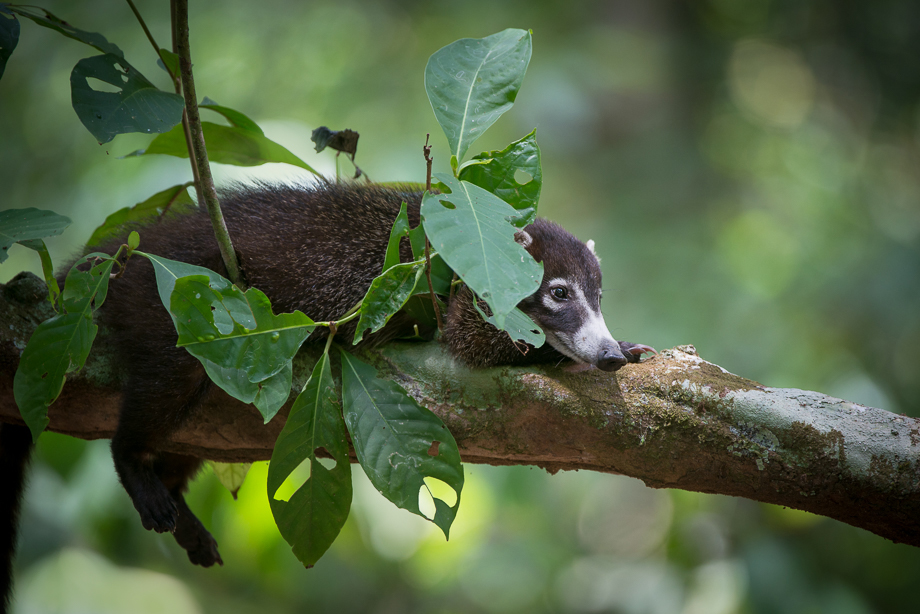
Coatis are fairly common in Costa Rica. They are comfortable both on the ground and in trees. This guy was resting during the heat of the day in Corcovado National Park. You can see why they have the nickname of “hog-nosed raccoon.” Nikon D800 with Nikkor 200-400mm lens (at 400mm) ISO 800, f/4 at 1/250th of a second
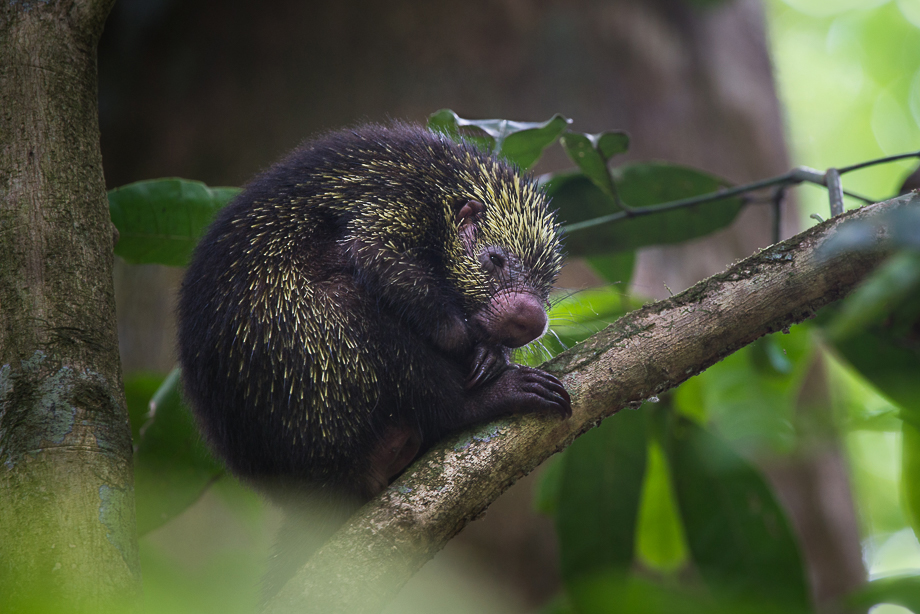
Some animals I like just because of their names. Thus is the case with the Mexican hairy dwarf porcupine. I was lucky enough to come across this one early in the morning in Corcovado National Park in Costa Rica. Porcupines are primarily nocturnal so it was great to photograph this bristly beast in daylight. Even so, the light was very dim, but due to the fact that he/she was resting, I was able to use a slow shutter of 1/30th of a second with no worry of motion blur. Nikon D800 with Nikkor 200-400mm lens (at 400mm) ISO 800, f/5.6 at 1/30th of a second
There was no Africa trip this year, and I didn’t get out with the camera with the frequency of some previous years, but 2014 was still a great year for me and wildlife. The time that I did spend in the field yielded some excellent sightings, even when I was only able to get away for a day or two. The following photos represent some of the highlights of the year — all new shots that I haven’t shared yet. Enjoy, and thanks for continuing to check out my posts on a daily basis.
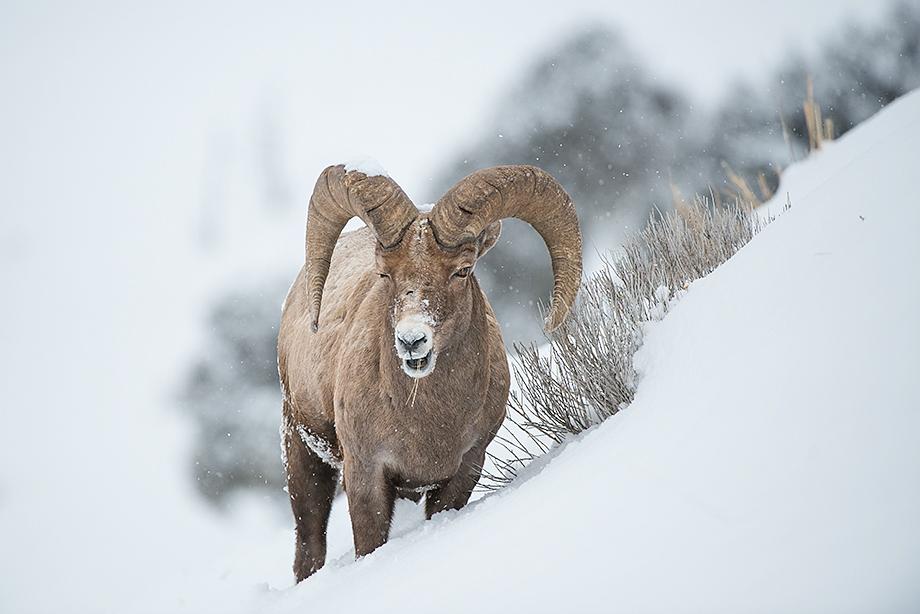
Things started a bit slow in Yellowstone back in February. I’ve been to Yellowstone many times, still hoping for better looks at wolves. It didn’t happen this time, but I did have some great opportunities with bighorn, pronghorn, bison and all the other usual suspects. This ram was working hard to find grass beneath the thick bed of snow. Nikon D800 with Nikkor 200-400mm lens (at 380mm) ISO 800, f/4 at 1/8000th of a second
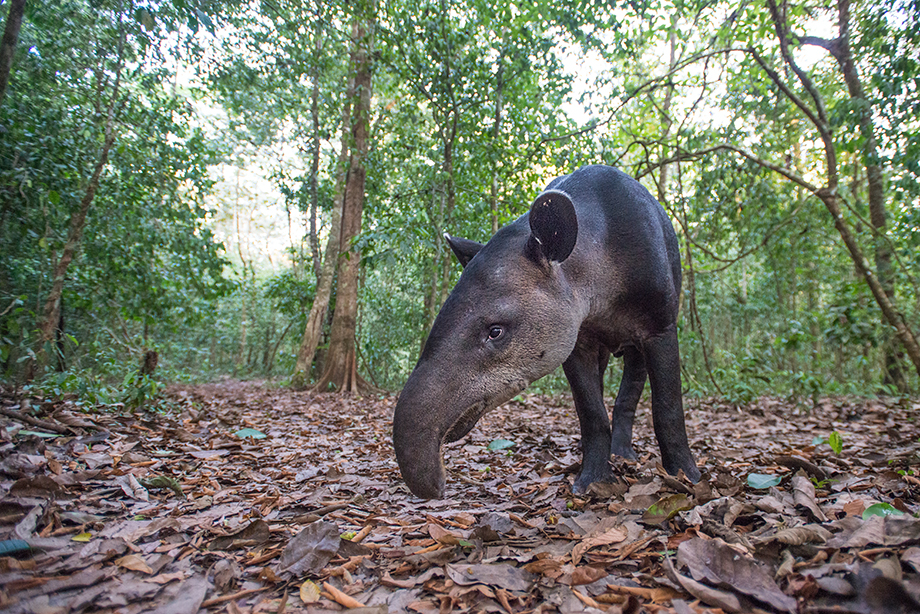
I went to Costa Rica for a long week in March, hoping to photograph tapirs and photograph tapirs I did. In fact this one I photographed from only about a foot away, as I remained very quiet, on the ground, with my wide angle zoom. Nikon D800 with Nikkor 17-35mm lens (at 17mm) ISO 3200, f/2.8 at 1/320th of a second
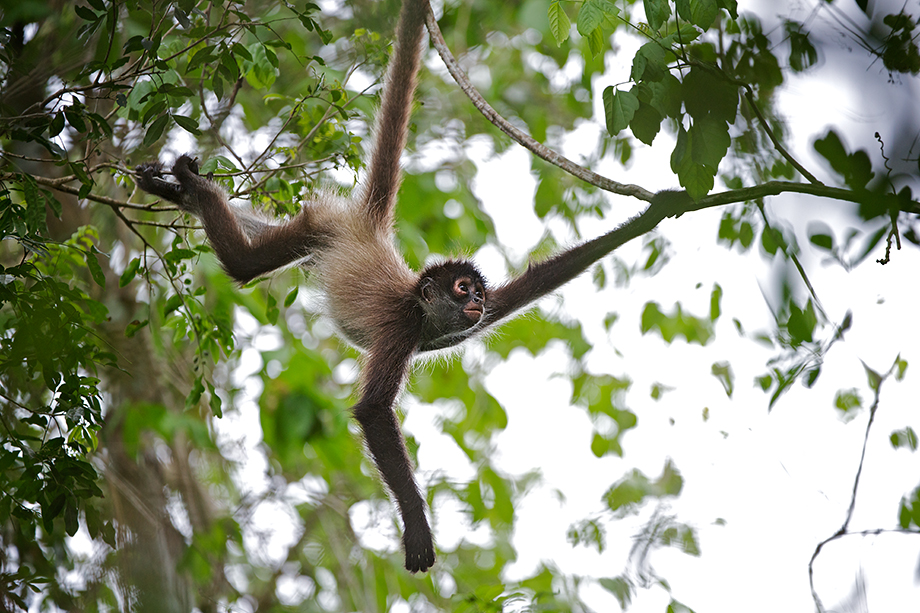
In May, Karen and I took a five day trip to Tulum, Mexico. It was mostly a beach holiday, but I got away one afternoon and headed to the Punta Laguna Nature Reserve where I was able to photograph spider monkeys. Nikon D800 with Nikkor 200-400mm lens (at 310mm) ISO 1600, f/4 at 1/640th of a second
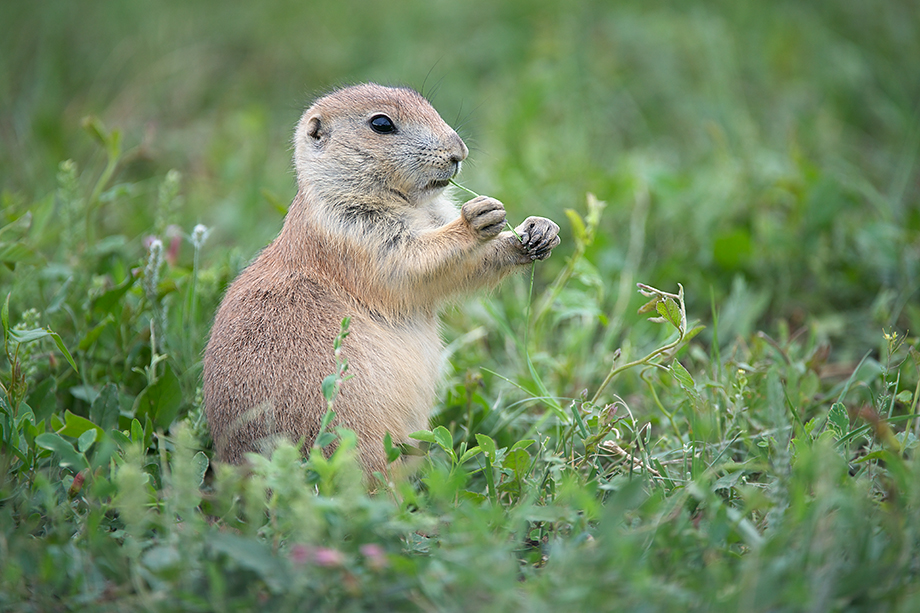
In June, I headed out to the great parks of southwestern South Dakota. Badlands is one of my favorite parks in the country and never seems to disappoint. It was the time of year for baby prairie dogs and I saw many of them. Nikon D800 with Nikkor 200-400mm lens (at 400mm) ISO 400, f/4 at 1/400th of a second
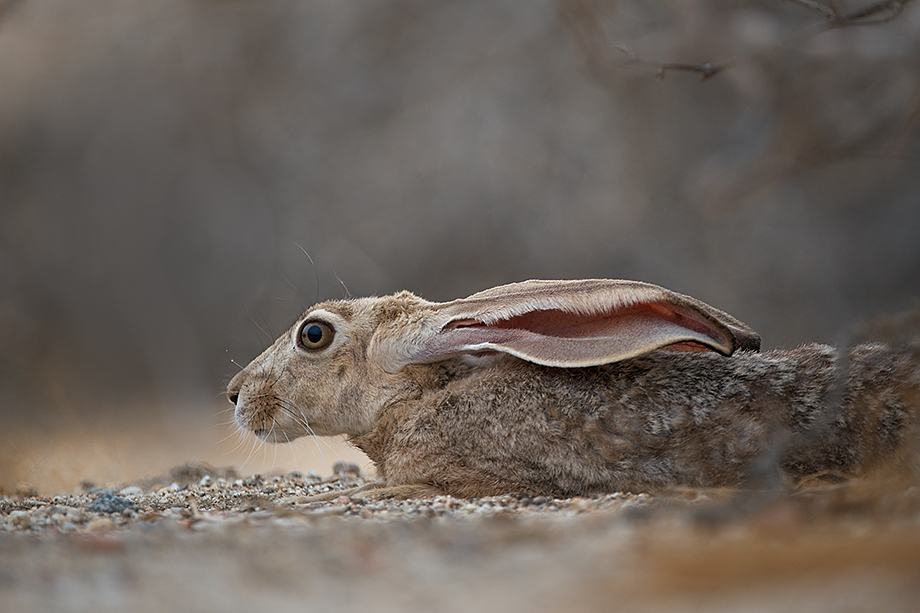
In July, I had to be in Los Angeles for business. I was able to get away for a night over the weekend so I headed to Anza-Borrego Desert State Park. This was the 122 degree day that I’ve talked about in several posts. I love photographing black-tailed jackrabbits and have posted a few from this trip. My mother had asked about whether or not their ears are ever down. Well, here you go. When relaxed and at rest, the ears are down, but when they hear something or are on alert, the ears stick straight up. Nikon D800 with Nikkor 200-400mm lens (at 400mm) ISO 400, f/4 at 1/1000th of a second
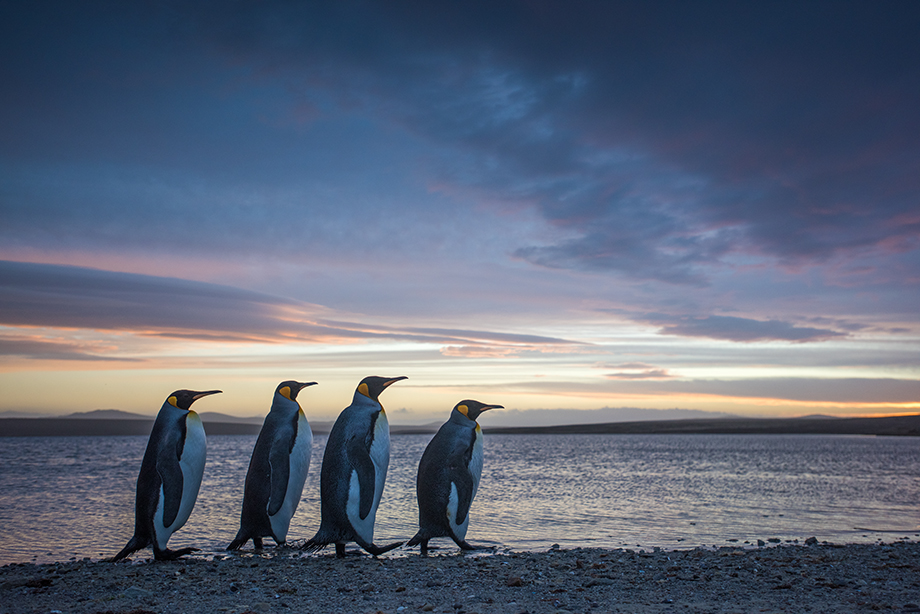
And finally, my big trip of the year was to the Falkland Islands in October/November. I’m still going through all the photos from this trip — two awesome weeks with five different species of penguin and assorted other creatures. I photographed these four king penguins at twilight at Volunteer Point, on the main island of East Falkland. Nikon D810 with Nikkor 17-35mm lens (at 35mm) ISO 800, f/4 at 1/320th of a second
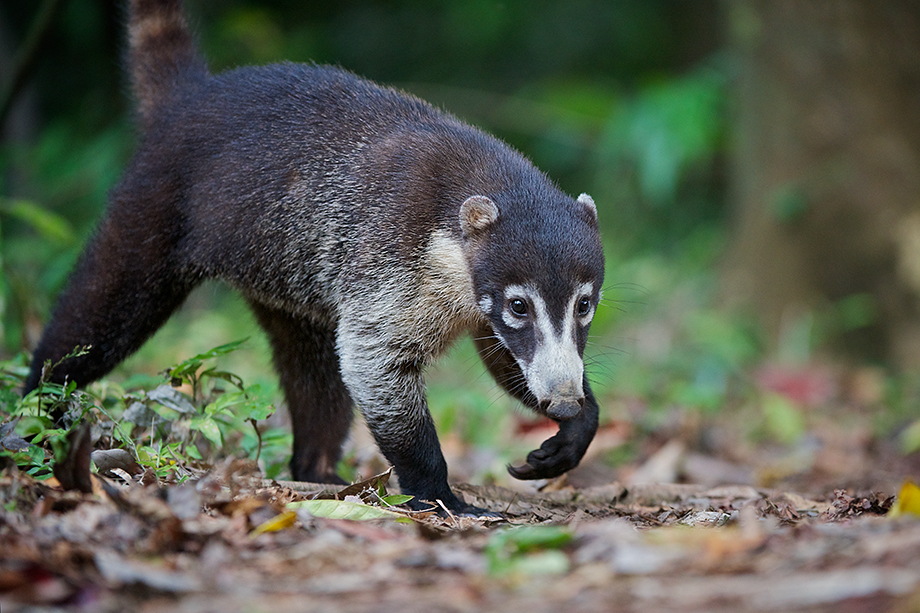
This was the first of many coatis that I saw on my trip to Costa Rica back in March. These guys are pretty widespread throughout much of South and Central America and even range up into the southwestern United States. I had my camera on the ground when this one passed by, foraging in the leaves — most likely looking for crabs — in Corcovado National Park. Nikon D800 with Nikkor 200-400mm lens (at 250mm) ISO 3200, f/4 at 1/400th of a second
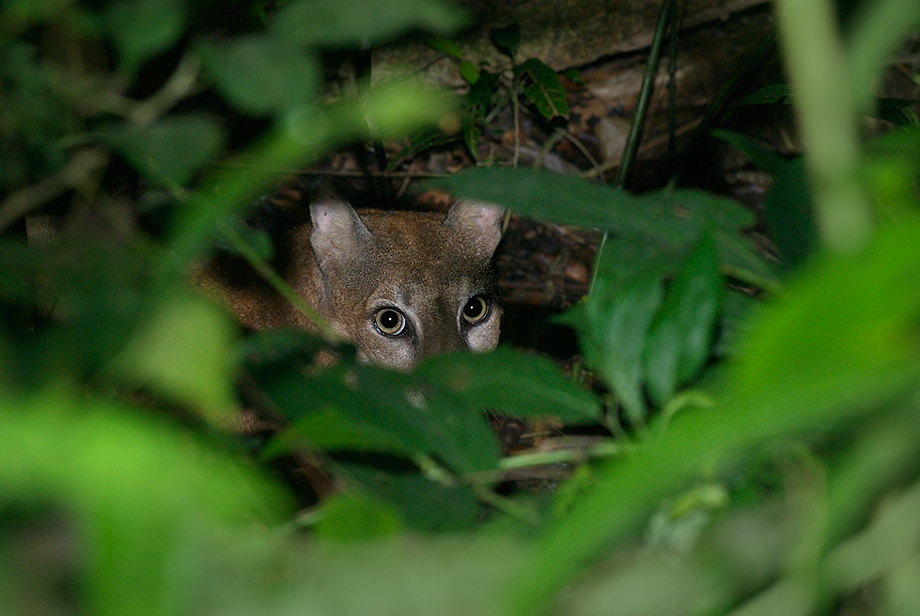
If you’ve looked into my Costa Rica gallery, you may have seen this shot before but I never posted it to the blog. This was the only time I’ve ever seen a mountain lion/puma/cougar (they’re all the same thing) in the wild. And she was only five feet away. She wasn’t five feet away when I took this photo — more like 40 feet — but she was five feet away when I first came across her the night before. It was the first time I visited Corcovado National Park down in southern Costa Rica. I arrived late in the day and had to hike for about an hour or so to reach a permanent tented camp on the beach. I had about an hour of good light left after setting up camp so decided to go for a hike in the rain forest that led down to the beach. The forest was very thick and I had my longest lens mounted to my camera so I decided to stop, take off my backpack and change to a shorter lens. As soon as I had my lens off my camera is when I felt a presence to my left and turned to see the puma. She had a dead white faced capuchin monkey in her mouth and was backing into the brush. I couldn’t believe my bad luck — the shot of a lifetime and I had a camera with no lens on it. The next morning I got up at about 4 AM and hiked through forest. Sure enough, I found the puma, but without the monkey. This is the one shot that I got before the puma turned and walked away. Nikon D200 with Nikkor 70-200mm lens (at 200mm) ISO 400, f/5.6 at 1/60th of a second, Nikon SB-800 flash
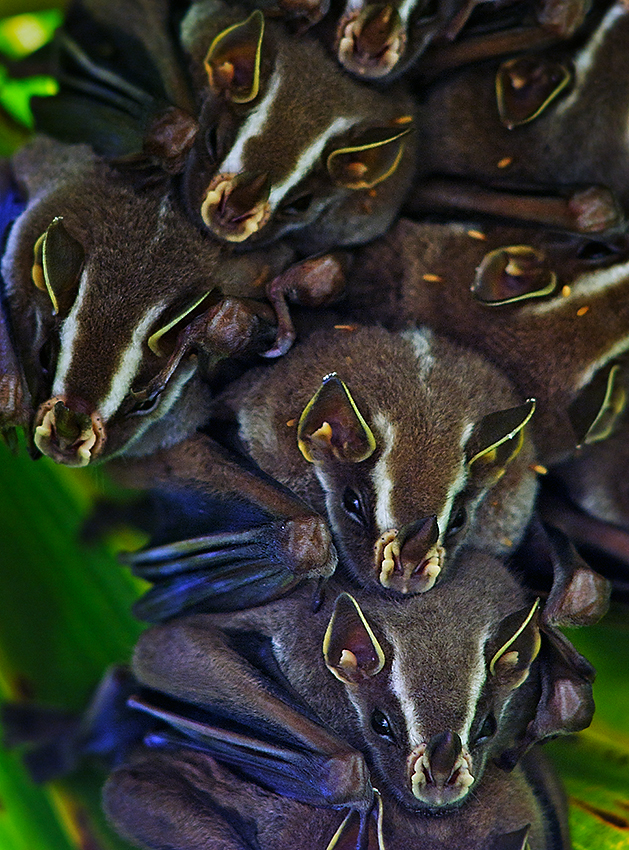
I photographed these tent making bats on my second trip to Costa Rica, back in 2007. They get their name from the practice of constructing tents out of large leaves. Many bats will roost under one tent, sheltered from the tropical weather. These particular bats were roosting in the tree right next to my tent and were just getting ready to head out for the night. Contrary to the reputation of most bats, I find these guys quite charming looking with their furry little faces. Nikon D200 with Nikkor 600mm f/5.6 manual focus lens, ISO 100, f/5.6 at 1.1 seconds
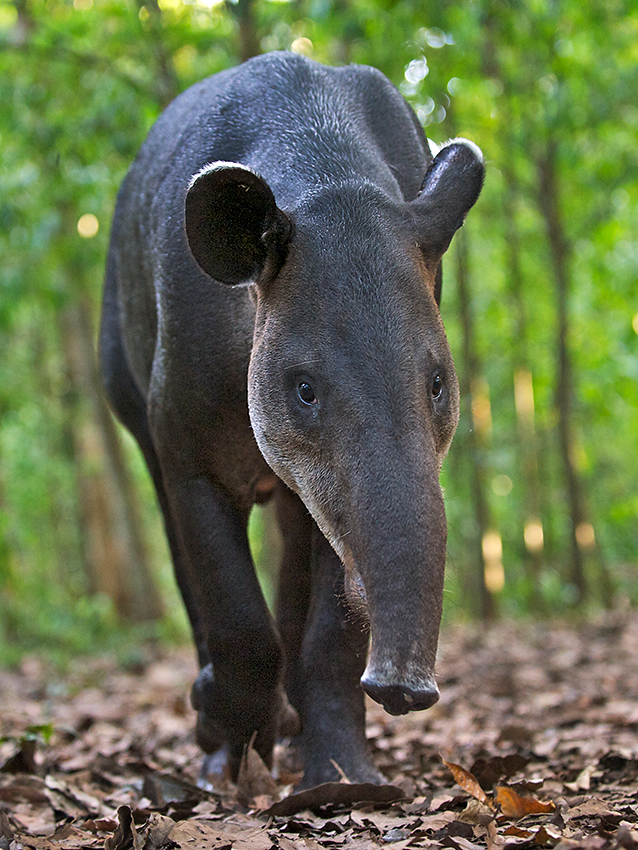
Baird’s Tapirs are the largest land mammals in Latin America. They aren’t particularly aggressive, however, and act more like a docile cow as they forage in the rain forest. This one had no idea that I was lying on the ground just in front of him and he kept coming toward me, nose sniffing the ground, searching for fresh leaves to eat. Nikon D700 with Nikkor 70-200mm lens (at 70mm) ISO 3200, f/2.8 at 1/100th of a second
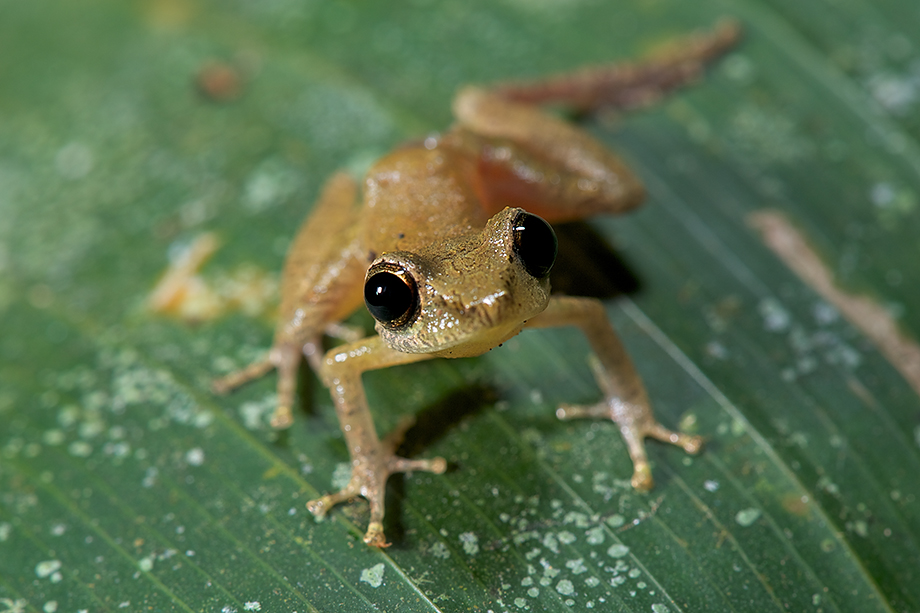
This is one of the many tree frogs that I met on several night walks in Corcovado National Park in Costa Rica. I’m not sure of the exact species (if you do, please let me know). He was a little guy, but seemed to have a big personality as he boldly peered into the front of my macro lens. Nikon D700 with Nikkor 105mm macro lens, ISO 200, f/16 at 1/60th of a second, two Nikon SB-900 flash units
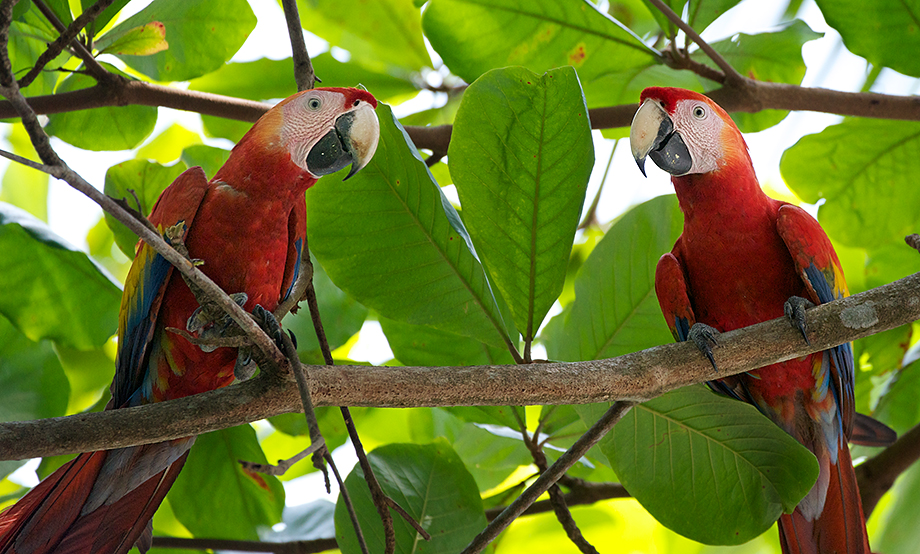
These two scarlet macaws seemed to be having a pleasant conversation high in the canopy of Corcovado National Park in Costa Rica. Scarlet Macaws mate for life, so maybe they were discussing plans for the future. Nikon D800 with Nikkor 200-400mm lens (at 400mm) ISO 1600, f/4 at 1/1000th of a second
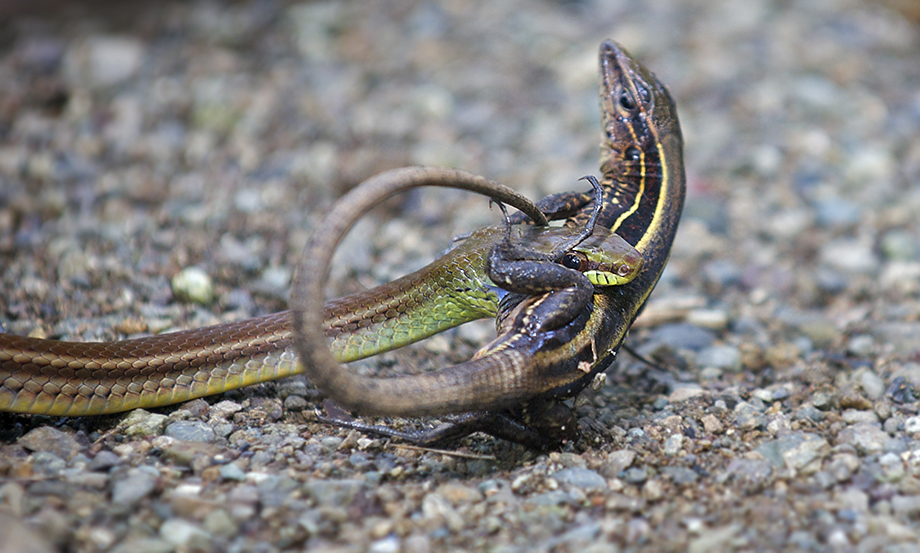
It ended up being a good day for the snake and a very bad day for the lizard, but for a moment it looked quite the opposite. The green rat snake was obviously trying to eat the whiptail lizard, but the lizard put up a good fight and at one point actually had a bit of a strangle hold on the snake. Eventually, however, the snake was too much to handle and nature did what nature does. This was taken in Corcovado National Park in Costa Rica — not on my recent trip but on a previous trip back in 2007. Nikon D200 with Nikkor 70-200mm lens (at 200mm) ISO 400, f/4 at 1/125th of a second
We use cookies to enhance your experience while using our website. If you are using our Services via a browser you can restrict, block or remove cookies through your web browser settings. We also use content and scripts from third parties that may use tracking technologies. You can selectively provide your consent below to allow such third party embeds. For complete information about the cookies we use, data we collect and how we process them, please check our Privacy Policy