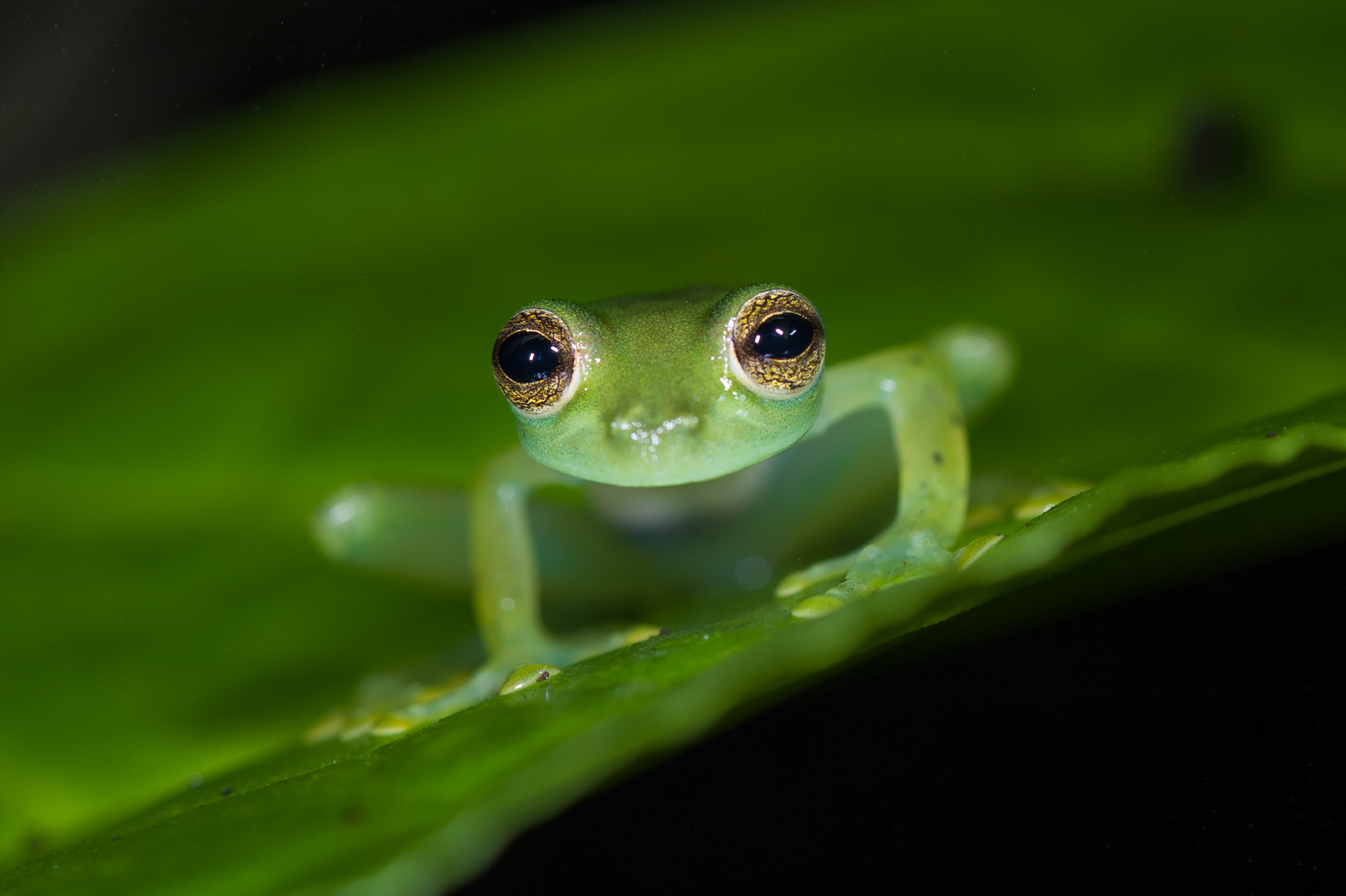
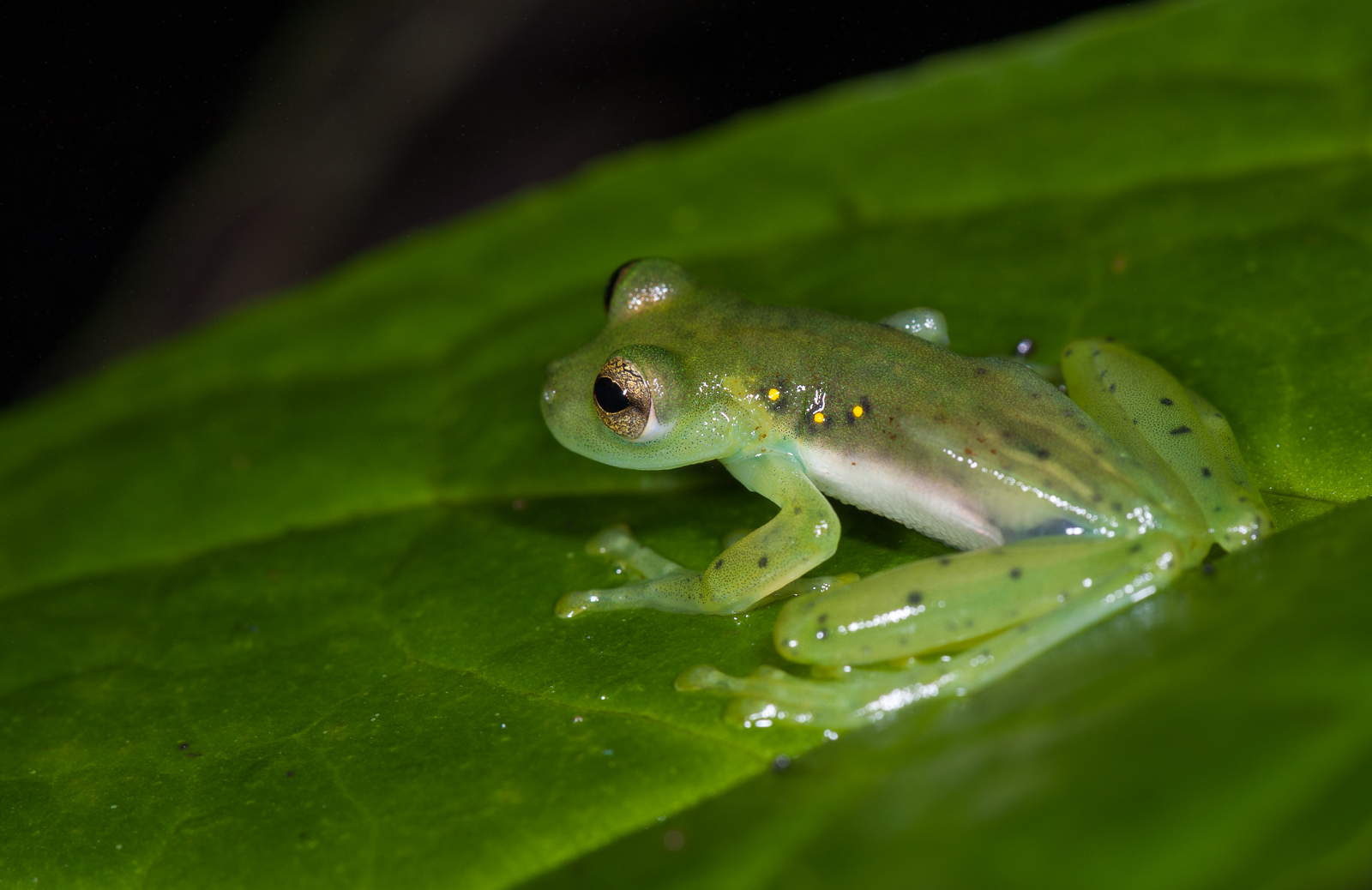
Tree frogs, and glass frogs in particular, are a favorite of mine. I love going out at night in tropical locations to find and photograph them. I’m not quite sure if this is a Fleischmann’s glass frog or an emerald glass frog. Or perhaps something else. There are quite a few species and identification for the casual herpetologist can prove difficult. All glass frogs are characterized by their translucent skin on their underside that gives them their name. I photographed this one on a misty night in the cloud forest of Ecuador. Nikon D700 with Nikkor 105mm macro lens, ISO 200, f/10 at 1/60th of a second, two Nikon SB-900 flash units.
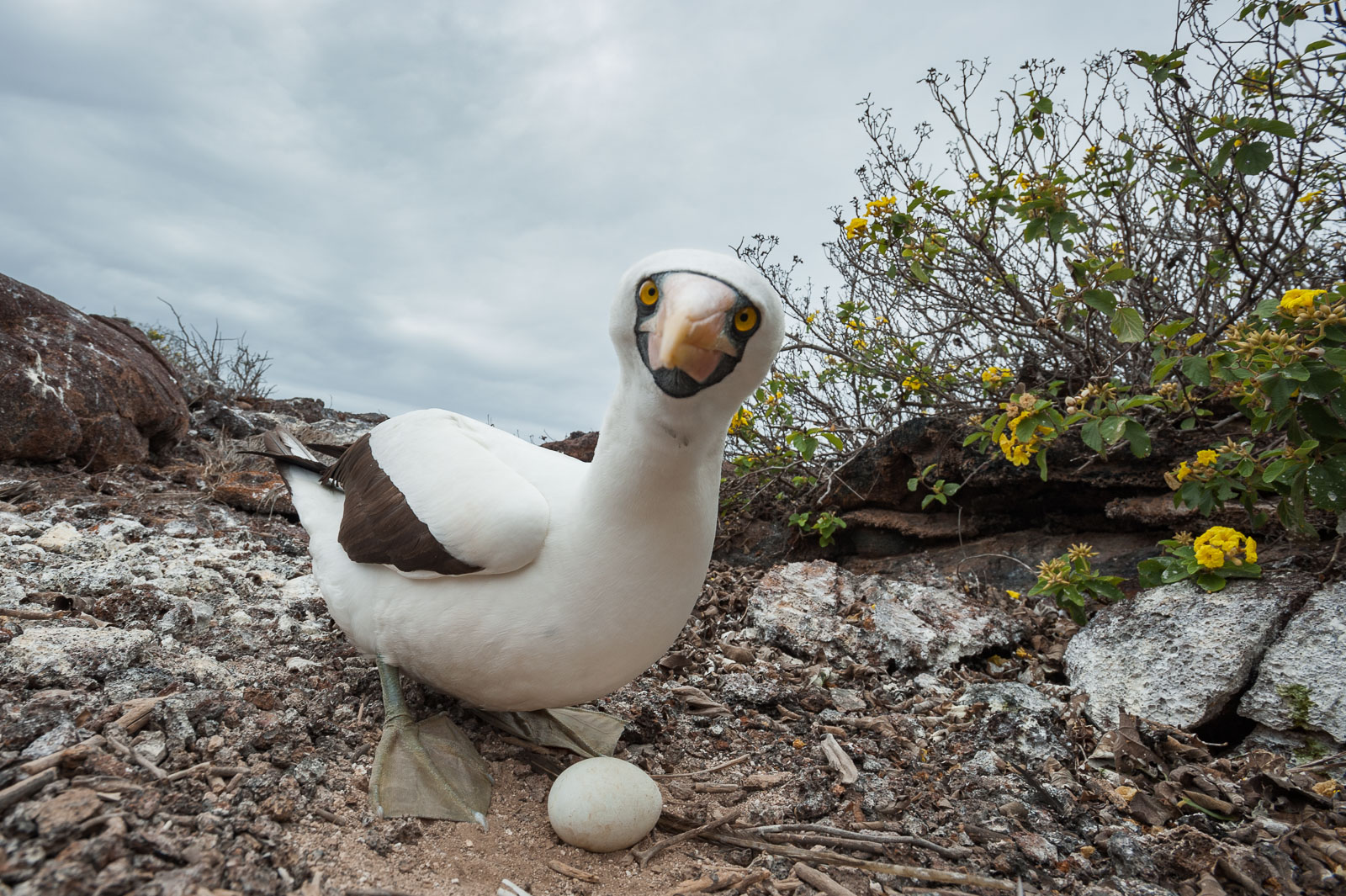
We saw a lot of these Nazca boobies throughout the Galápagos Islands. Quite a few of them were tending to their eggs. This photo was taken on Genovesa Island. Nikon D700 with Nikkor 17-35mm lens (at 17mm) ISO 400, f/11 at 1/500th of a second.
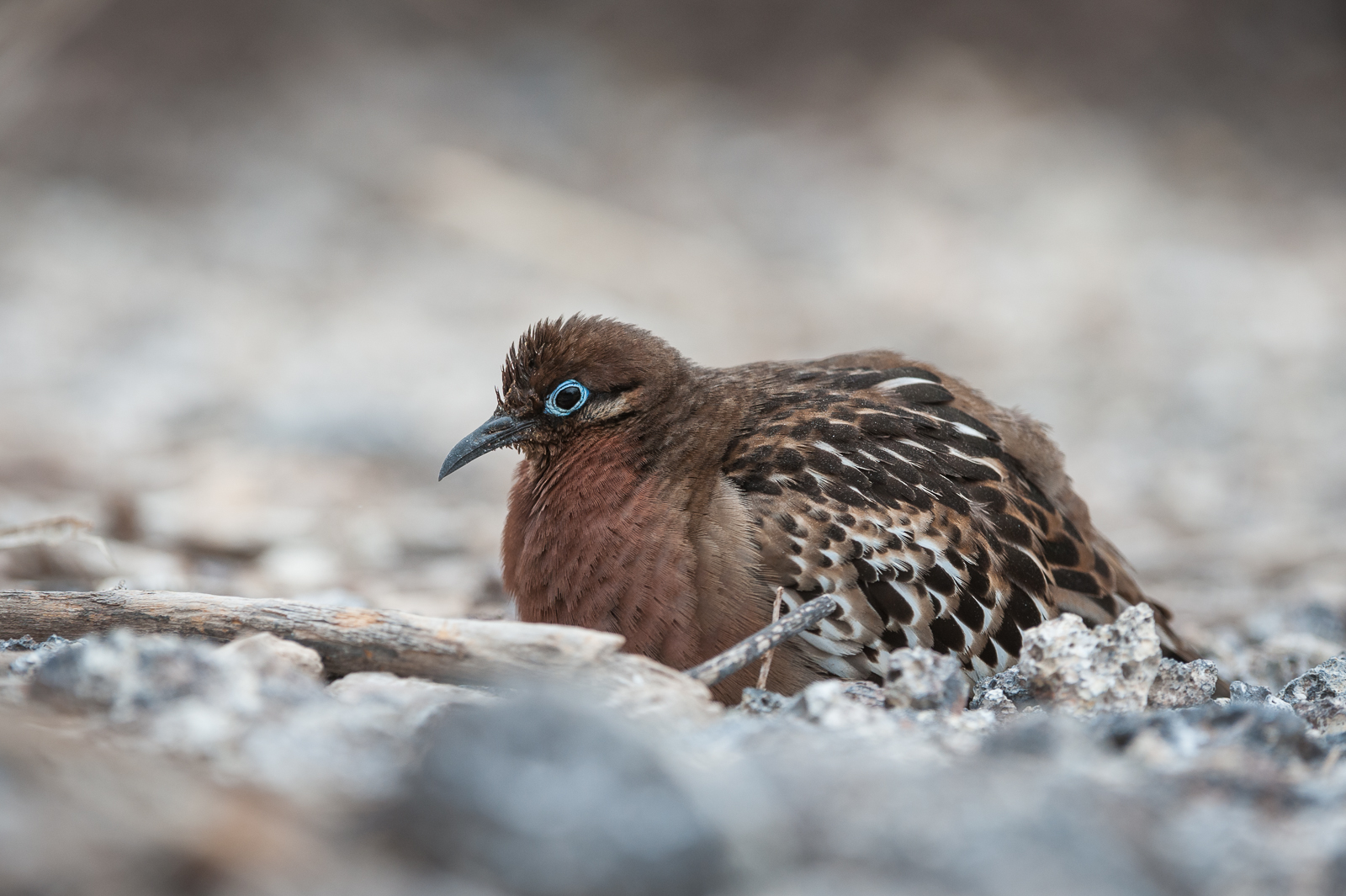
Felt like a good night for a dove. In this case a Galápagos dove. Photographed on Genovesa Island. This species is found only in the Galápagos archipelago, but is fairly common in its limited range. Nikon D700 with Nikkor 200-400mm lens (at 330mm) ISO 400, f/5 at 1/640th of a second.
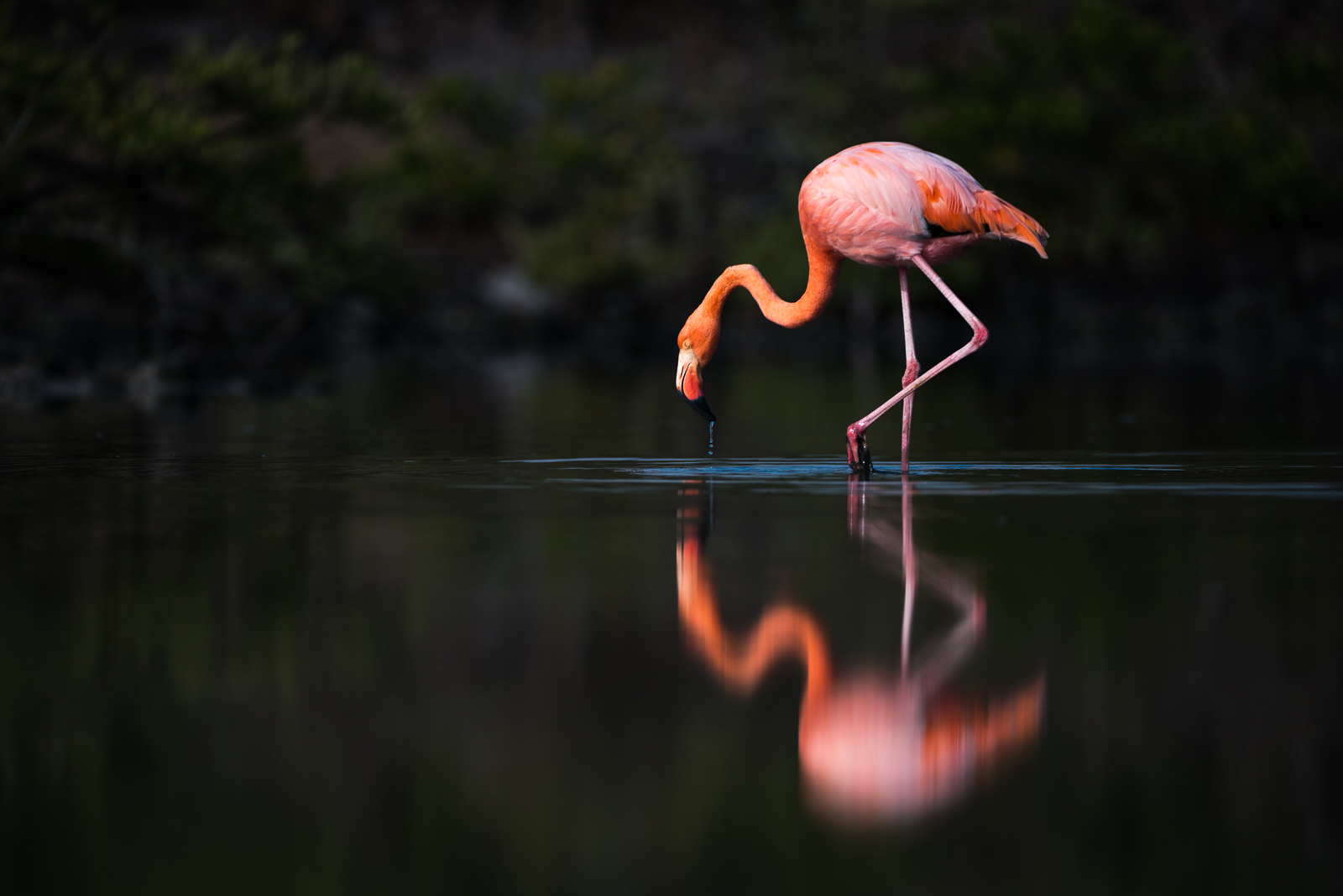
We only saw one Galápagos flamingo on our trip to the Islands, but considering there are only 500 of them on the archepelago, those aren’t bad odds. And he/she had the decency to wallow in a dark area while the sun illuminated his/her body. I was okay with that. Photographed on Santa Cruz island. Nikon D800 with Nikkor 200-400mm lens (at 310mm) ISO 400, f/4 at 1/2500th of a second.
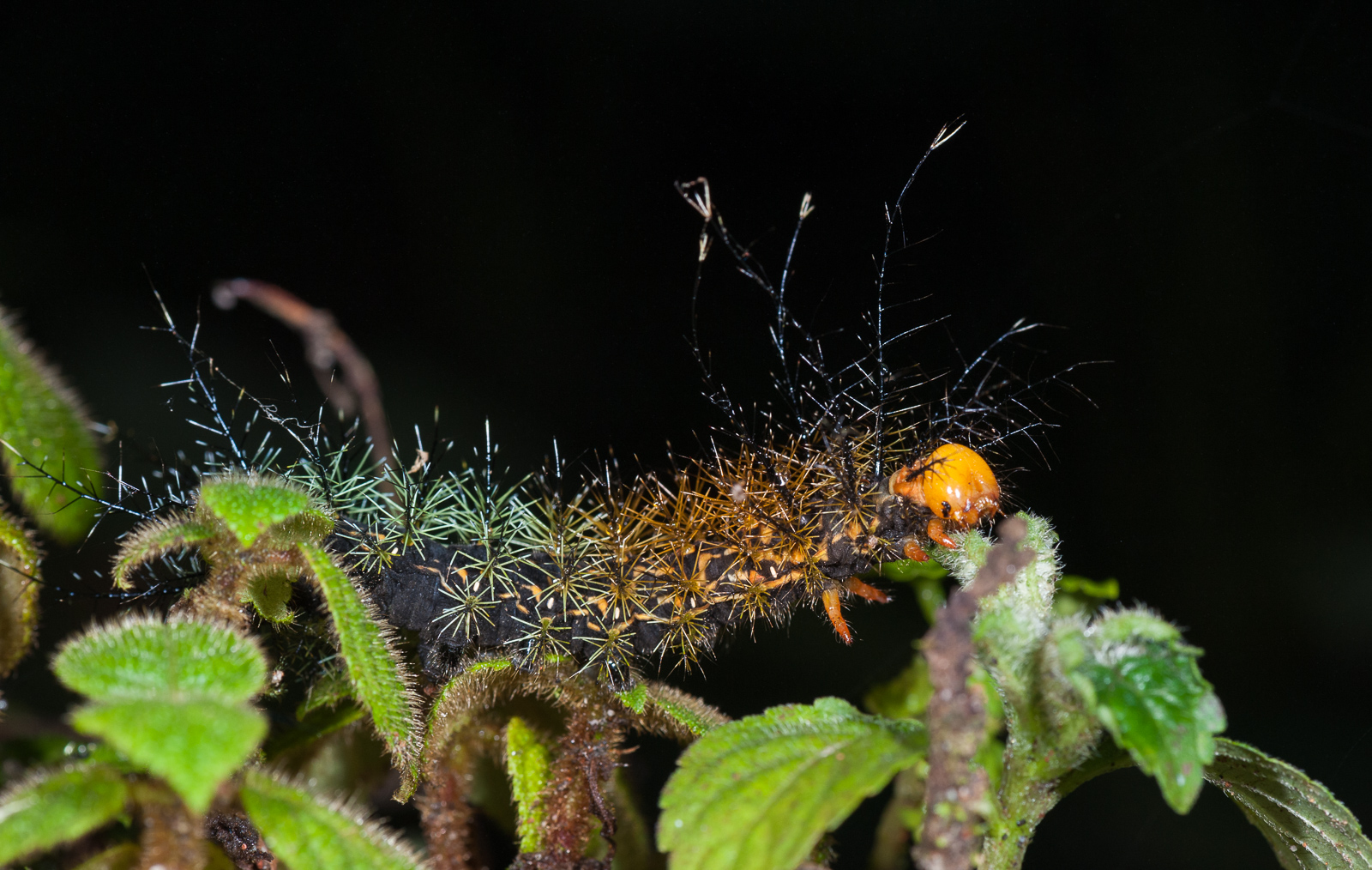
This was an interesting little creature that came to visit while I was hiking in the cloud forest of Ecuador. I have no idea of the species (please let me know if you do, thanks) but sure was cool looking with the two-toned body of orange and green and all those clusters of spikey hair. Nikon D700 with Nikkor 105mm macro lens, ISO 800, f/13 at 1/60th of a second.
There’s a saying that you can gauge the health of an environment by the health of its frogs. And there’s a sad truth to it. When frogs start to die off in a particular area, more often than not it can be traced back to toxicity in that environment. One of the reasons frogs are so susceptible is because they breath through their skin. Any imbalance in the air can be lethal. Unfortunately, frog species worldwide have been declining in numbers in recent decades. Frogs are a particular favorite of mine, and I always get excited for nocturnal walks in tropical environments to search for these colorful little prophets of the night. This is one of the many species of glass frog that can be found in healthy parts of Central and South America. If photographed from underneath, you’d be able to see the internal organs through that delicate air-breathing skin. Photographed in the mountainous cloud forest of Ecuador. Nikon D700 with Nikkor 105mm macro lens, ISO 200, f/14 at 1/60th of a second, two Nikon SB-900 flash units.
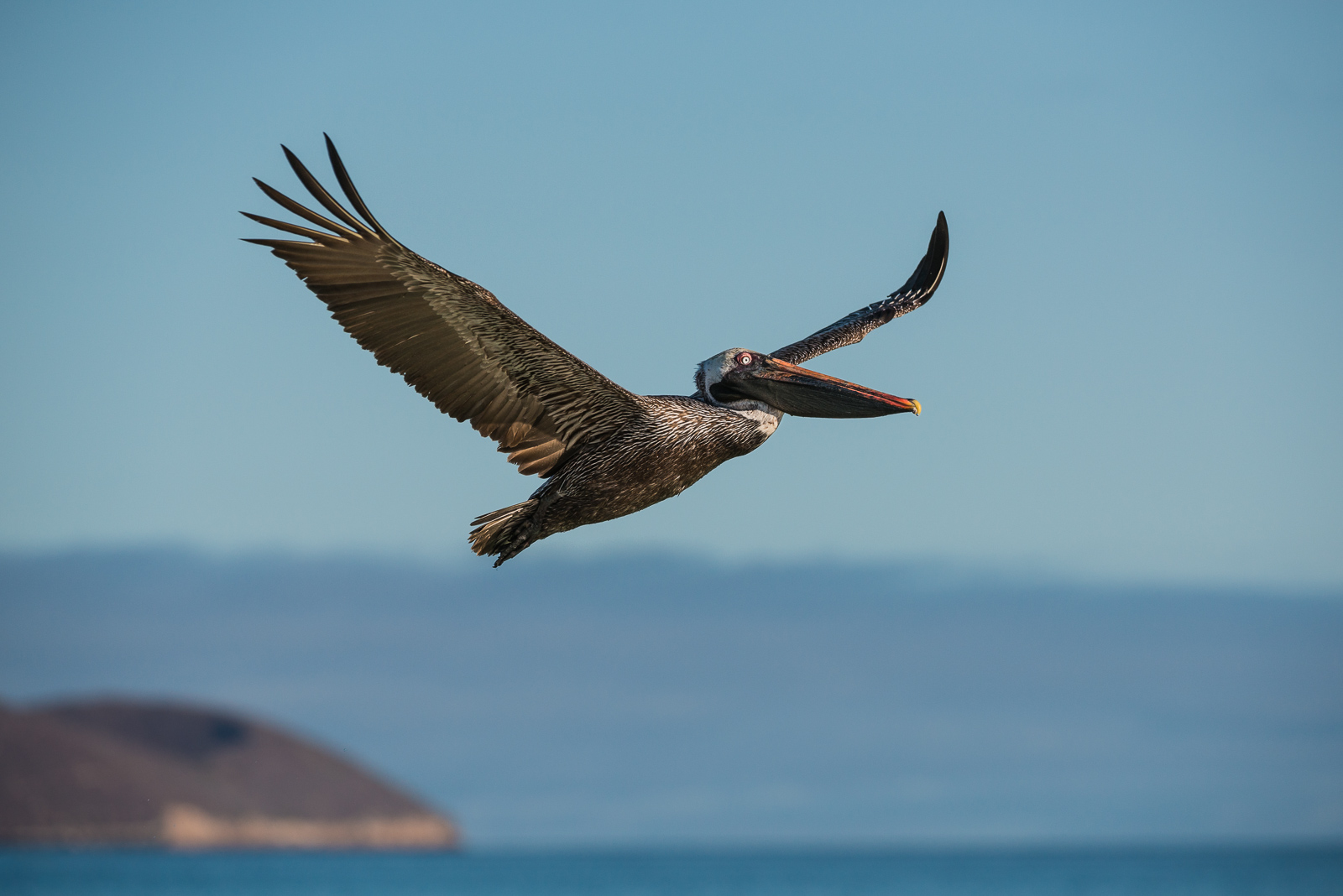
When photographing birds in flight, it’s always a nice bonus to get some of the landscape in the background. Even just a bit back there can add context to the image. In this case, a brown pelican flying over Santa Cruz island in the Galapagos. Nikon D800 with Nikkor 200-400mm lens (at 330mm) ISO 400, f/5.6 at 1/3200th of a second.
This handsome guy was enjoy a bit of sunbathing atop the lava rock on La Fe Island in the Galapagos. Nikon D700 with Nikkor 200-400mm lens (at 200mm) ISO 800, f/5 at 1/1250th of a second.
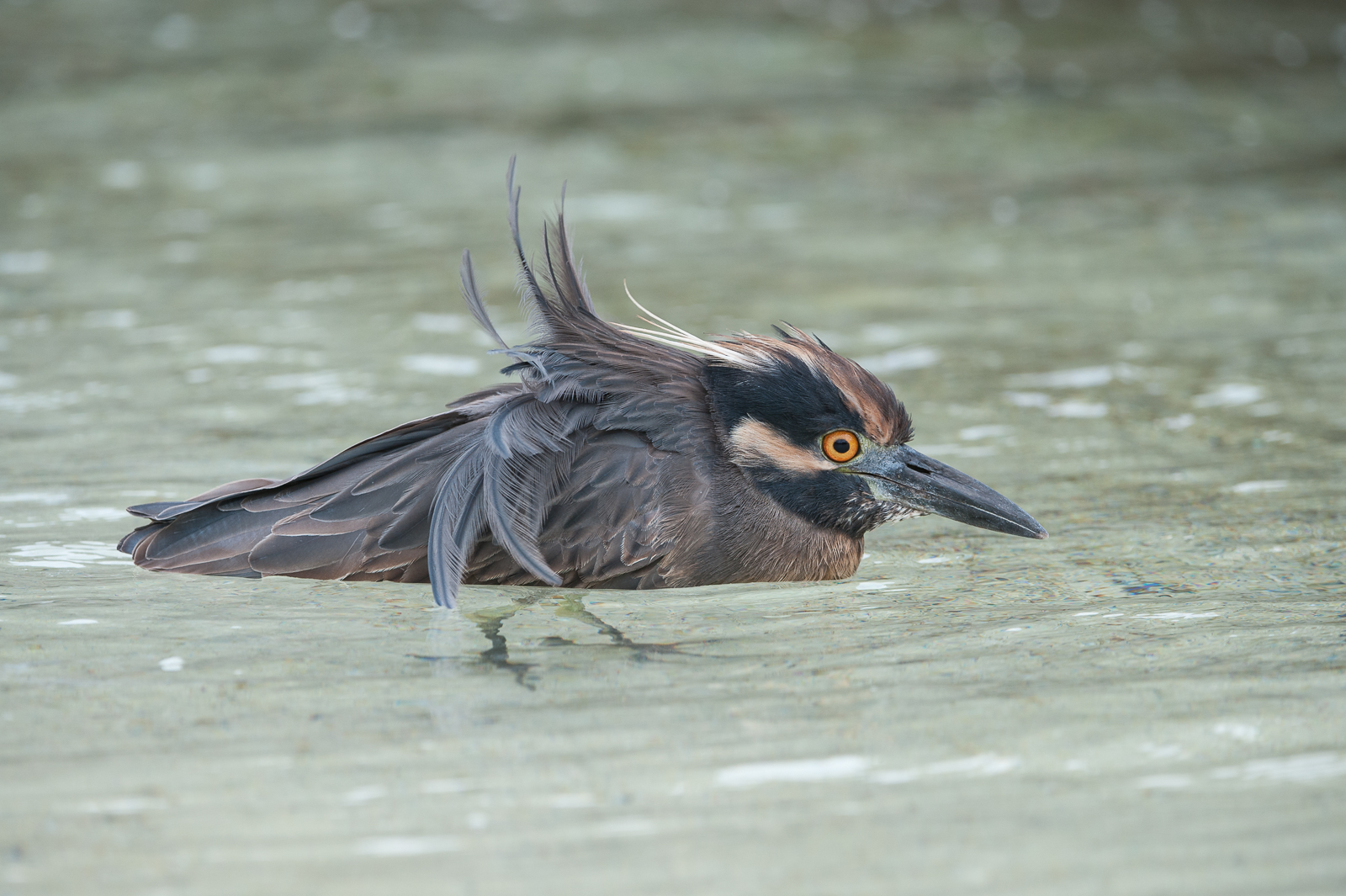
A yellow-crowned night heron stealthily moves through the shallow water off the coast of Genovesa Island in the Galapagos Islands. The heron was hunting for fish and being very patient in the process. Nikon D700 with Nikkor 200-400mm lens (at 330mm) ISO 400, f/5.6 at 1/640th of a second.
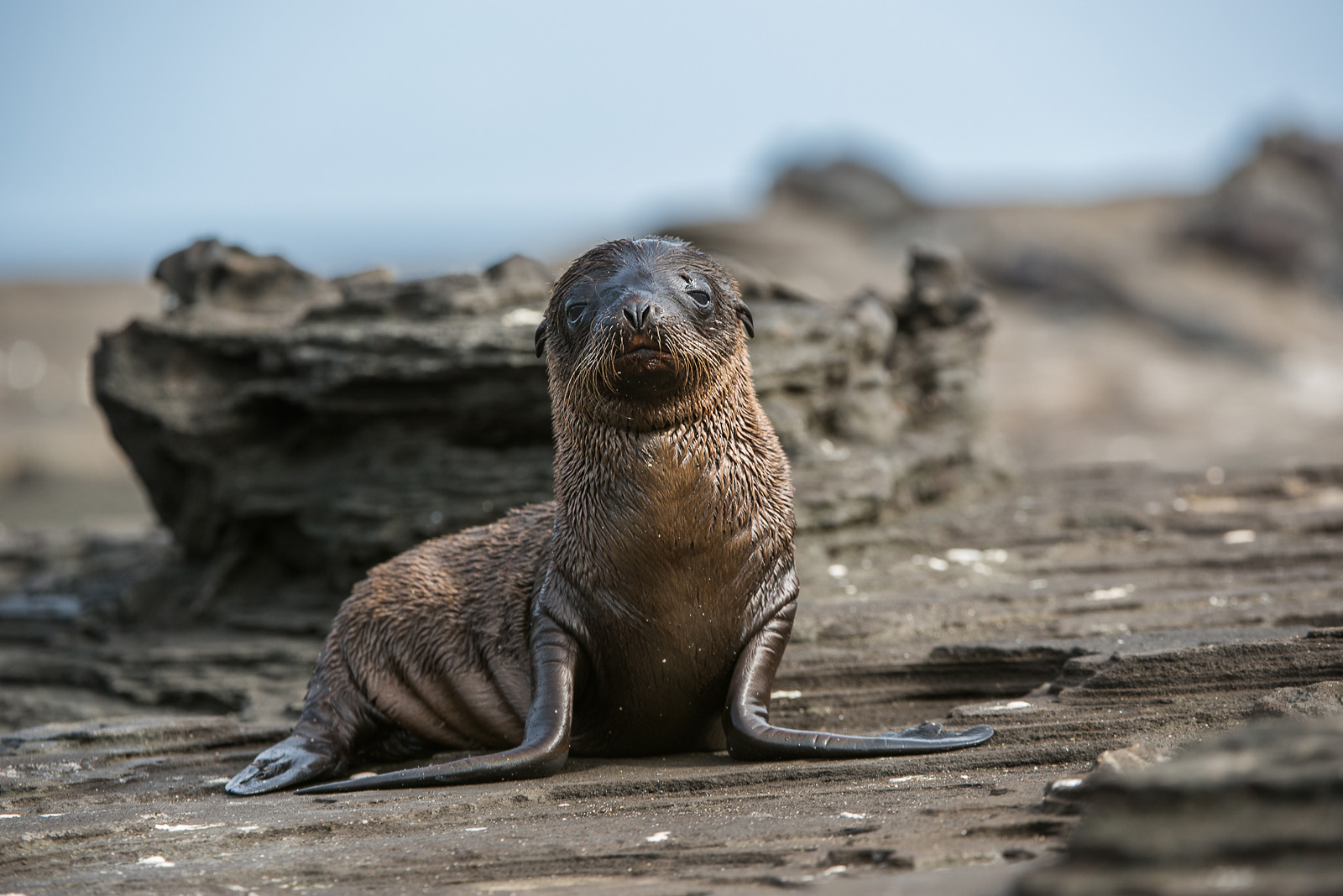
This young Galápagos sea lion was clearly not impressed with the size of my camera. Photographed on Santiago Island in the Galápagos. Nikon D800 with Nikkor 200-400mm lens (at 290mm) ISO 400, f/5.6 at 1/500th of a second.
We use cookies to enhance your experience while using our website. If you are using our Services via a browser you can restrict, block or remove cookies through your web browser settings. We also use content and scripts from third parties that may use tracking technologies. You can selectively provide your consent below to allow such third party embeds. For complete information about the cookies we use, data we collect and how we process them, please check our Privacy Policy