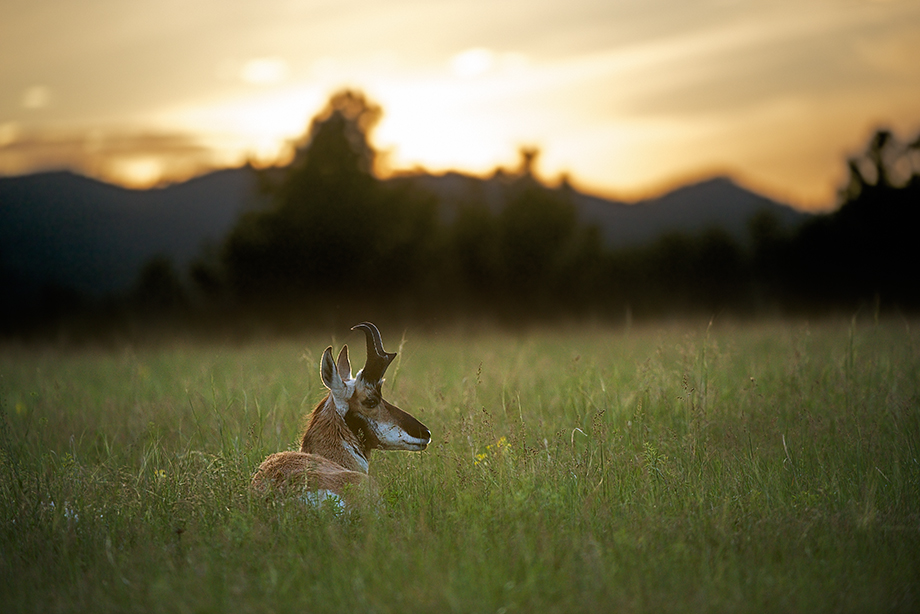
Just down the road from Badlands National Park is another of our country’s fifty-nine National Parks — Wind Cave. People primarily go to Wind Cave to explore what’s under ground, but I prefer it for what’s above. It’s a great area to view pronghorn and I photographed quite a few, including this guy just settling down for the night. I shot two frames and blended them together in post to expose for both the foreground and the sky. Nikon D800 with Nikkor 200-400mm lens (at 300mm) ISO 800, f/4 at 1/1250th of a second and 1/8000th of a second
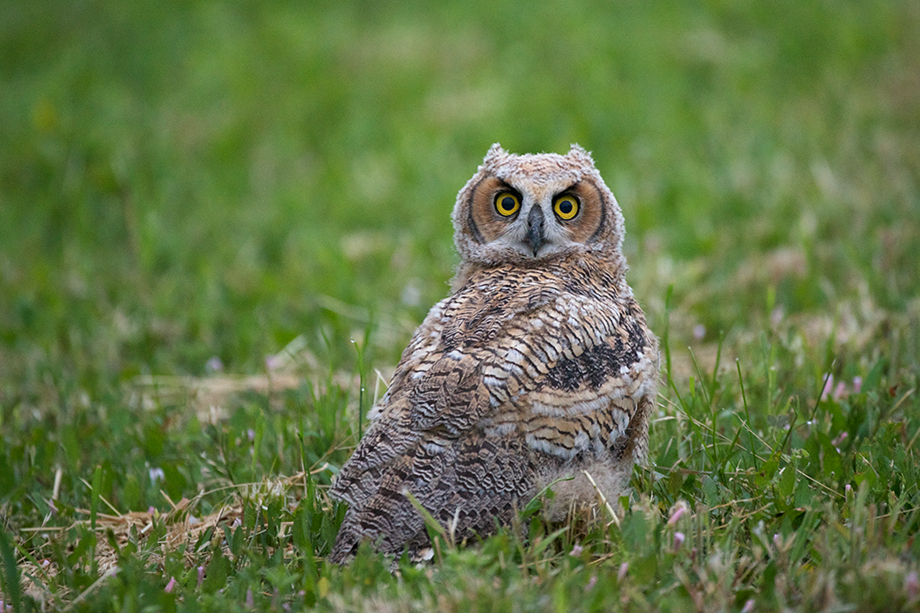
It was very early in the morning in the Badlands when I came across this young great horned owl. This is one of those cases where I chose a slower shutter speed/aperture combination to brighten the exposure and make it look like it was much later in the day. It was actually about 4:45 AM and pre-dawn light was just starting to lighten up the sky. I saw a medium to large owl fly across the street and I pulled over to get a closer look. The owl was nowhere to be found as I sat in my car scanning the trees. Suddenly, it landed in the grass right in front of my car. I used the headlights at first to get a few exposures at a decent speed, then turned off the lights and tried this one at only 1/10th of a second (at ISO 3200 with a wide open aperture). I was able to steady my camera on the side view mirror — and with vibration reduction enabled — I got two in-focus shots before the owl flew off. I still wasn’t quite sure what kind of owl it was until I took a closer look on my camera’s LCD screen. The not-yet-fully-formed ear tufts threw me off at first but indicate that this is a young great horned owl. Eventually those ear tufts will get much more defined. Nikon D800 with Nikkor 200-400mm lens (at 400mm) ISO 3200, f/4 at 1/10th of a second
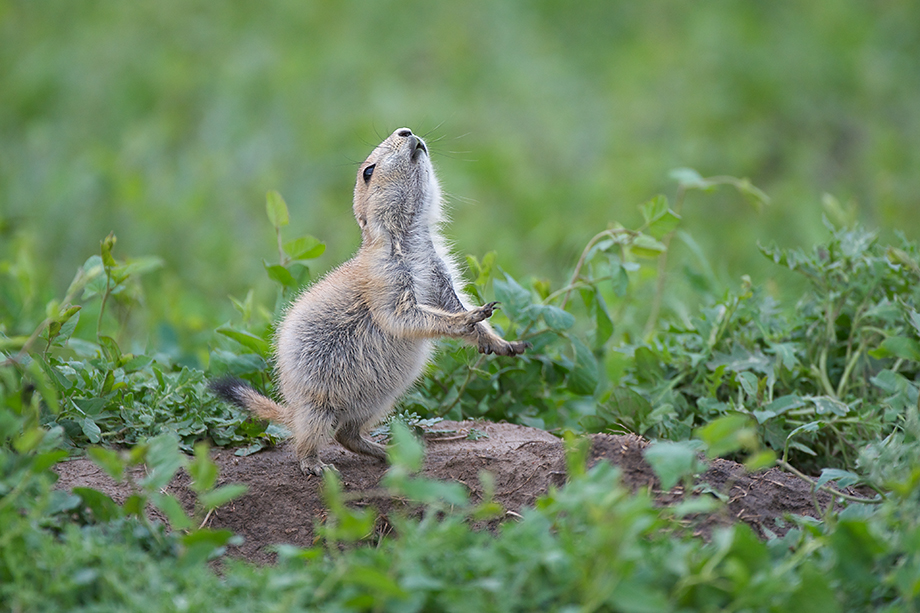
Other than bison, the one thing I knew I was guaranteed to find in the Badlands were prairie dogs. They are virtually all over the place. And this time of year it is baby season. This little guy was mimicking a whistle call often performed by the adult prairie dogs. To alert others in the town of possible danger, they will throw their heads back and whistle the alarm. Nikon D800 with Nikkor 200-400mm lens (at 400mm) ISO 400, f/4 at 1/320th of a second
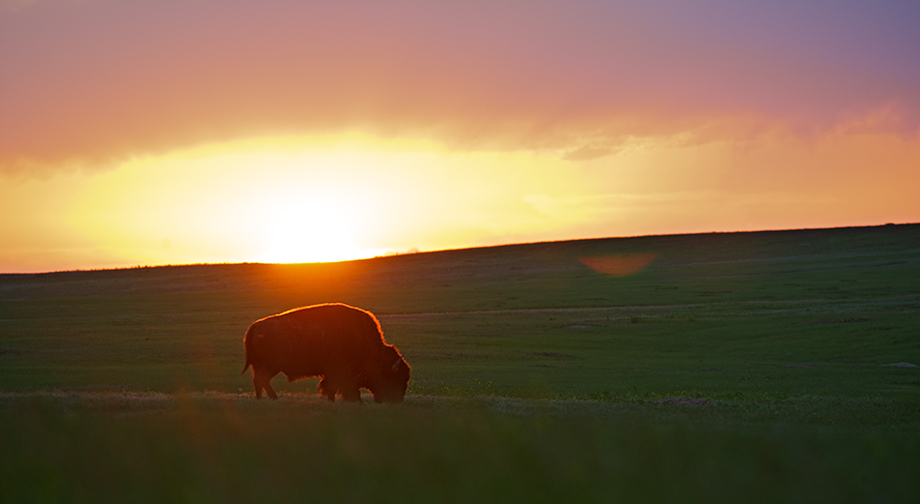
Here’s another one from this past weekend at Badlands National Park. People know the Badlands for the sweeping landscape of eroded buttes, but the area is also great for wildlife, thanks to one of the largest expanses of mixed grass prairie in the country. Bison are very common, especially in the northern section of the park which is largely rolling hills. This guy was grazing a bit away from the rest of the herd allowing a nice portrait beneath the setting sun. Nikon D800 with Nikkor 200-400mm lens (at 400mm) ISO 800, f/5 at 1/160th of a second
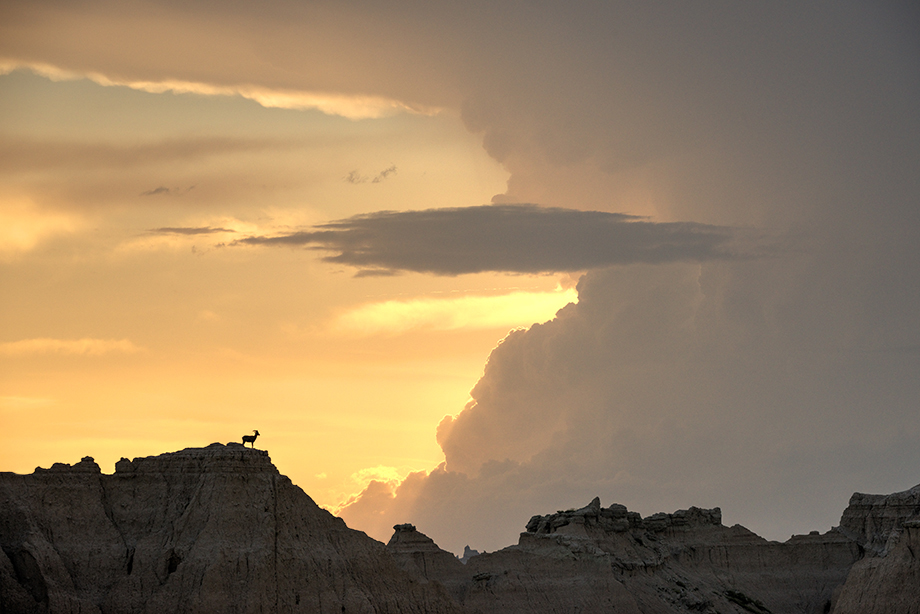
Just back from a few days in the Black Hills of South Dakota. Too many photos to go through at the moment and I need sleep, but here’s a quick one that I took yesterday in Badlands National Park. Look closely and you can see a bighorn sheep silhouetted against the great sky. Nikon D800 with Nikkor 200-400mm lens (at 250mm) ISO 400, f/8 at 1/640th of a second
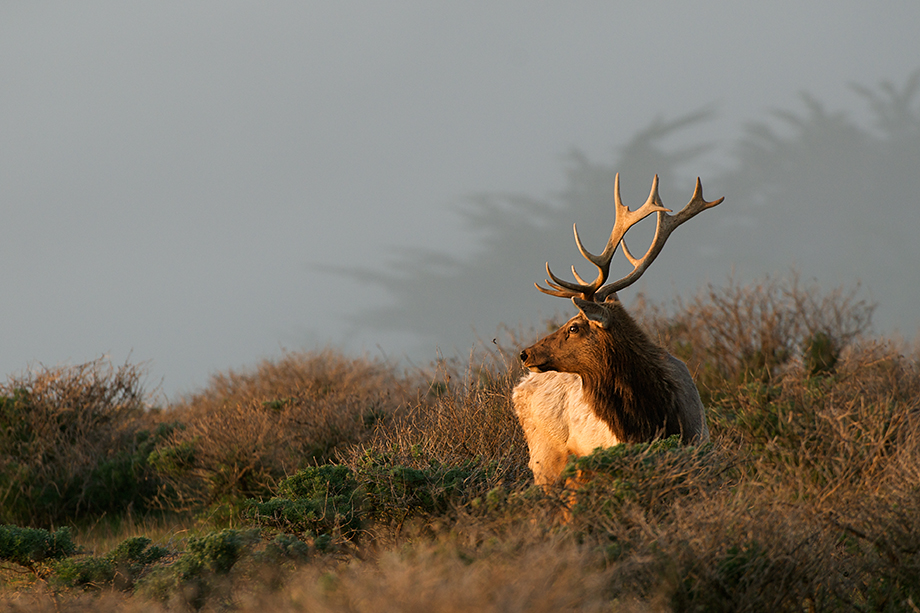
A couple of months ago, I posted a wide angle shot of tule elk on the horizon at twilight. Here’s one a bit closer and a bit earlier in the day. This bull was keeping watch over his harem as the fog was just starting to roll in in the background. I’m off to the Black Hills of South Dakota tomorrow for a few days. I’ll be back mid next week with new posts. Nikon D300 with Nikkor 200-400mm lens (at 400mm) ISO 400, f/5.6 at 1/100th of a second
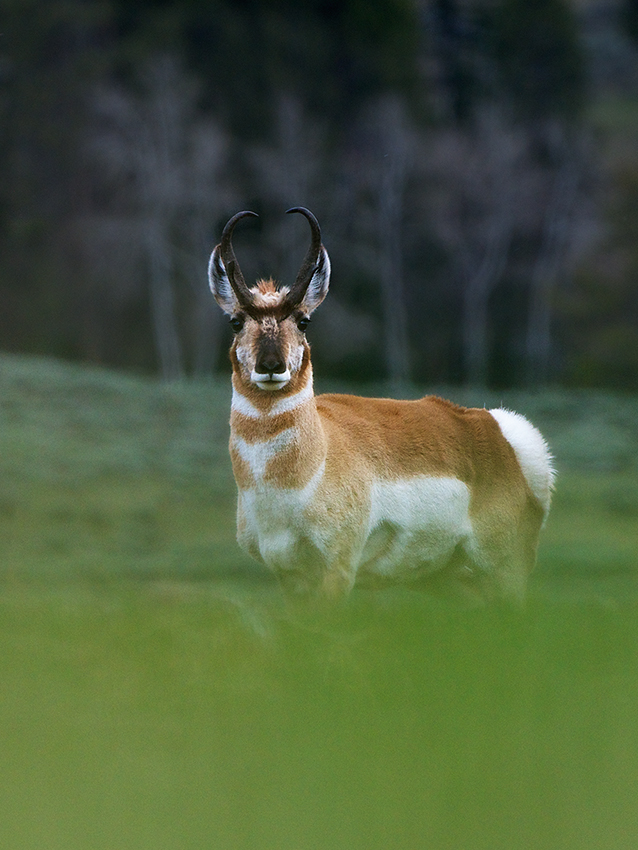
Not much to say here. Just a simple portrait of a pronghorn taken last year in Yellowstone. Nikon D300 with Nikkor 200-400mm lens (at 400mm) ISO 400, f/6.3 at 1/640th of a second
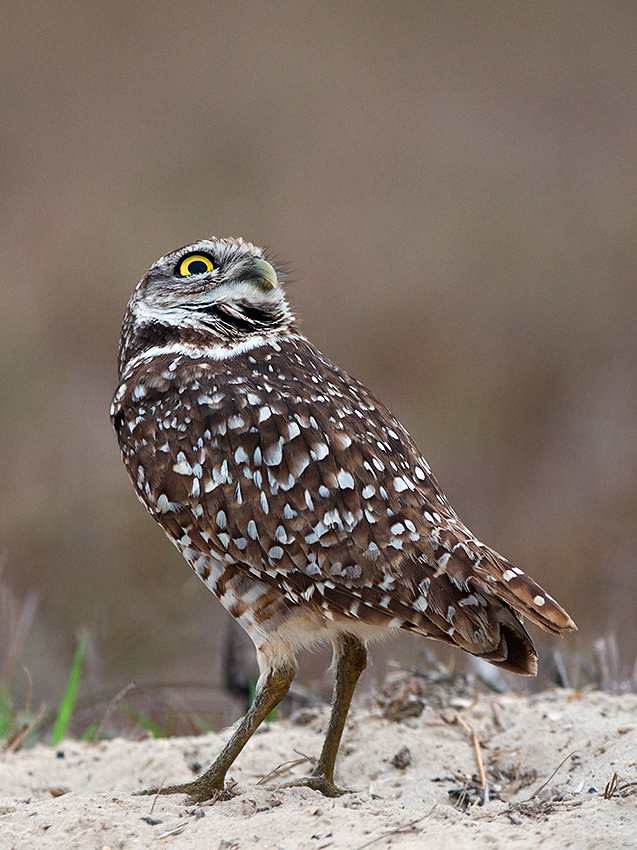
This burrowing owl was displaying the ability to turn its head 180 degrees, keeping an eye on a possible predator flying above (probably an eagle or a hawk). I took this one down in Cape Coral, Florida — one of the best places in the country to see burrowing owls. Nikon D300 with Nikkor 200-400mm lens (at 350mm) ISO 800, f/4.5 at 1/200th of a second
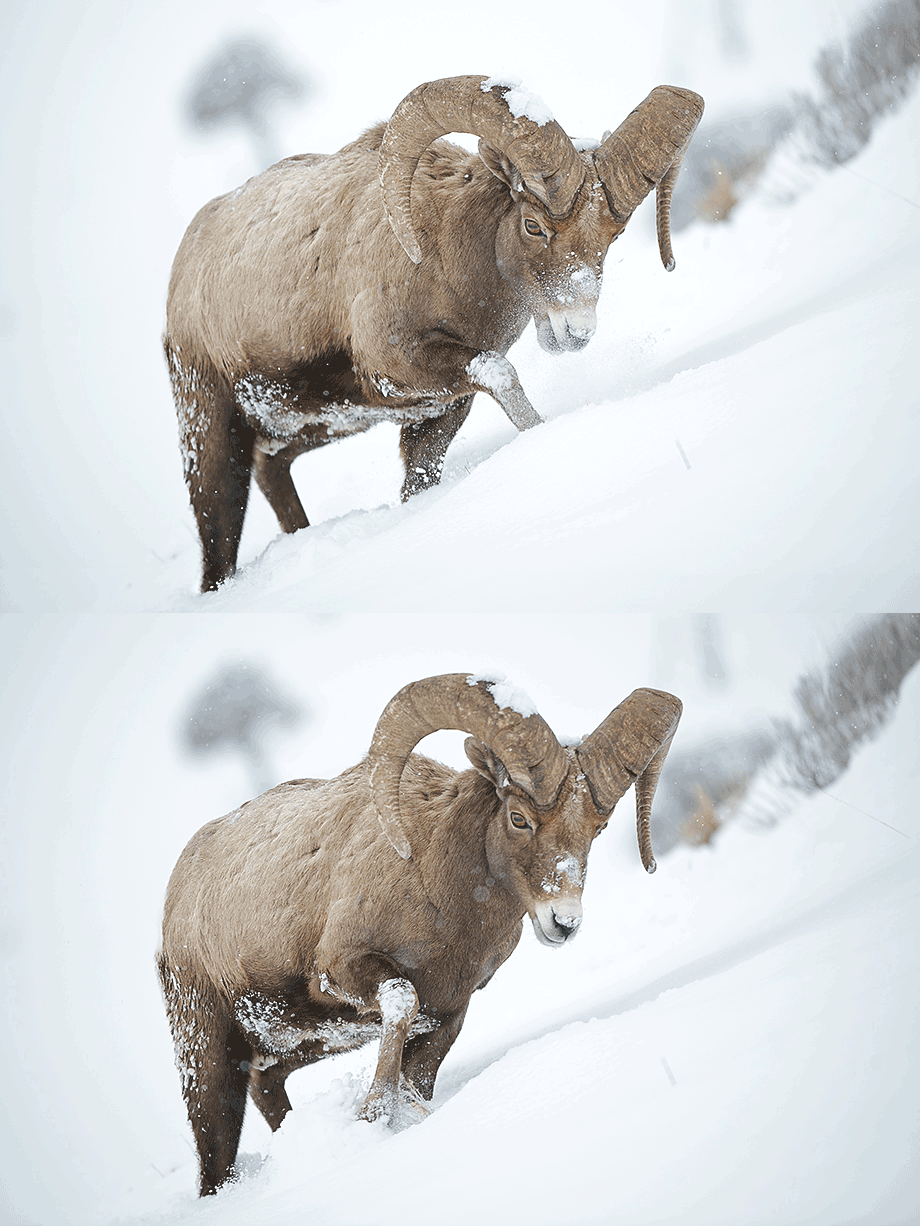
Meals don’t come easy for bighorn rams in the wintertime. I photographed this guy a few months back in Yellowstone. There was a small bachelor herd of rams on a steep mountainside, all digging through the snow in search of any edible grass. Nikon D800 with Nikkor 200-400mm lens (at 310mm) ISO 400, f/4 at 1/2000th of a second
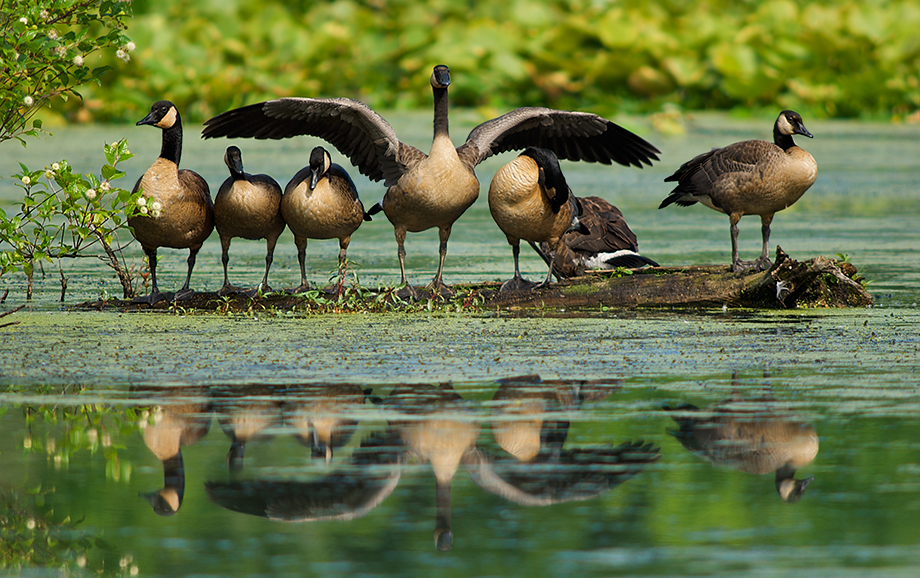
The Canada goose in the middle seems to be trying to protect the rest of the geese from the sun. This was taken several years back when I was searching for river otters in Muscatatuck National Wildlife Refuge in Southern Indiana — one of my favorite locations in the National Wildlife Refuge system. Nikon D200 with Nikkor 600mm f/5.6 manual focus lens, ISO 100, f/5.6 at 1/250th of a second
We use cookies to enhance your experience while using our website. If you are using our Services via a browser you can restrict, block or remove cookies through your web browser settings. We also use content and scripts from third parties that may use tracking technologies. You can selectively provide your consent below to allow such third party embeds. For complete information about the cookies we use, data we collect and how we process them, please check our Privacy Policy