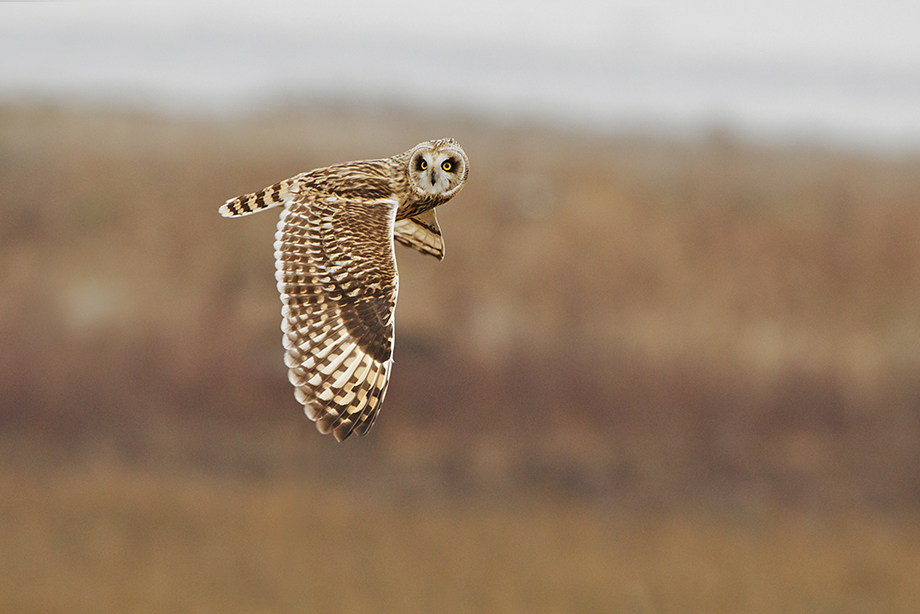
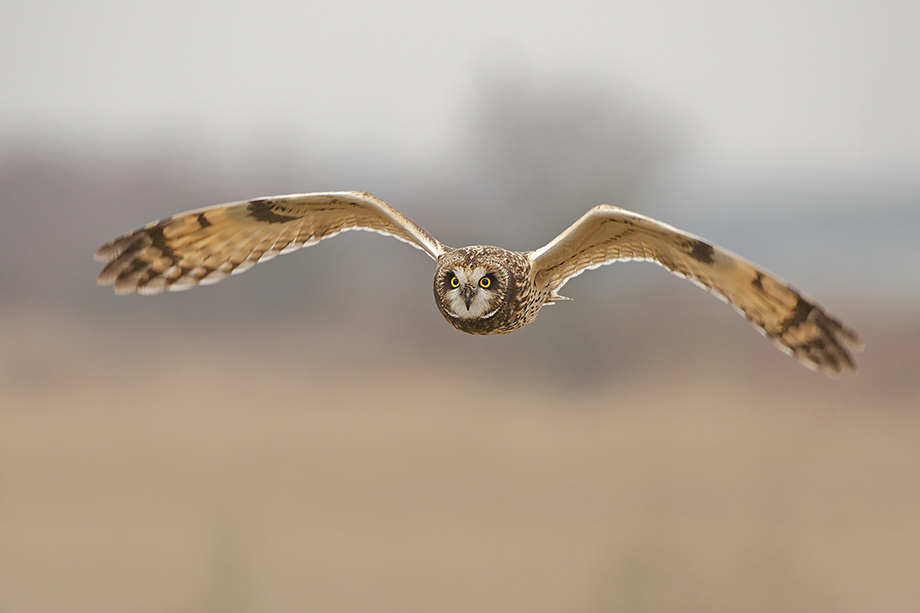
While short eared owls are in flight, they look around a lot, always scanning the landscape not only for dinner, but also for danger. They are small owls and their heads turn so quickly that it’s hard to see with the naked eye when they do, but I got quite a few shots like this with the owl’s body going in one direction and the head looking in the other. Nikon D800 with Nikkor 200-400mm lens (at 400mm) ISO 1250, f/5 at 1/1000th of a second
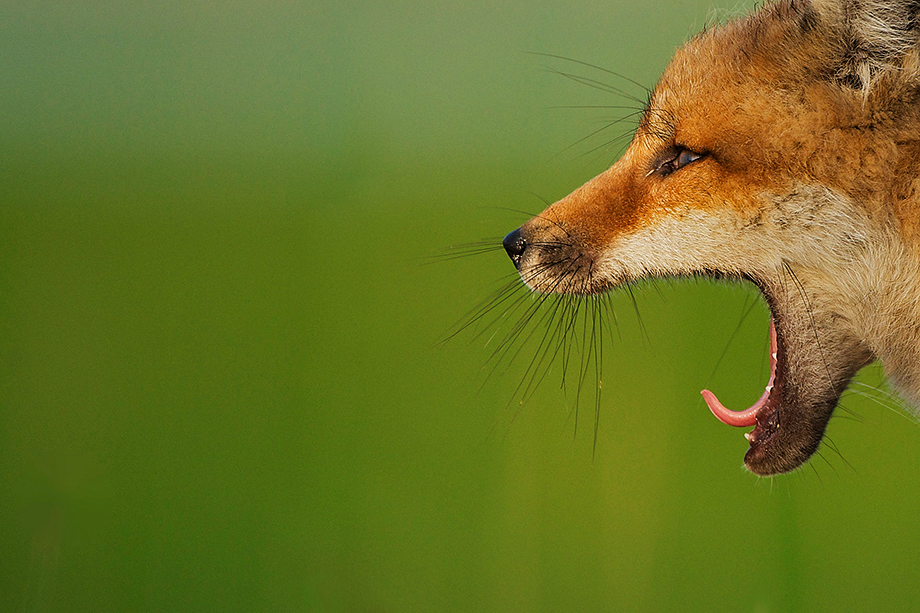
This is an oldie but I have never uploaded it to the blog. It was early one morning in Delaware at Bombay Hook National Wildlife Refuge. This fox was so cooperative that I was able to move in close for some more interesting angles. Seems that whatever the species, a big yawn is always a treat. Nikon D300 with Nikkor 200-400mm lens (at 400mm) ISO 400, f/4.5 at 1/640th of a second (-0.33 ev)
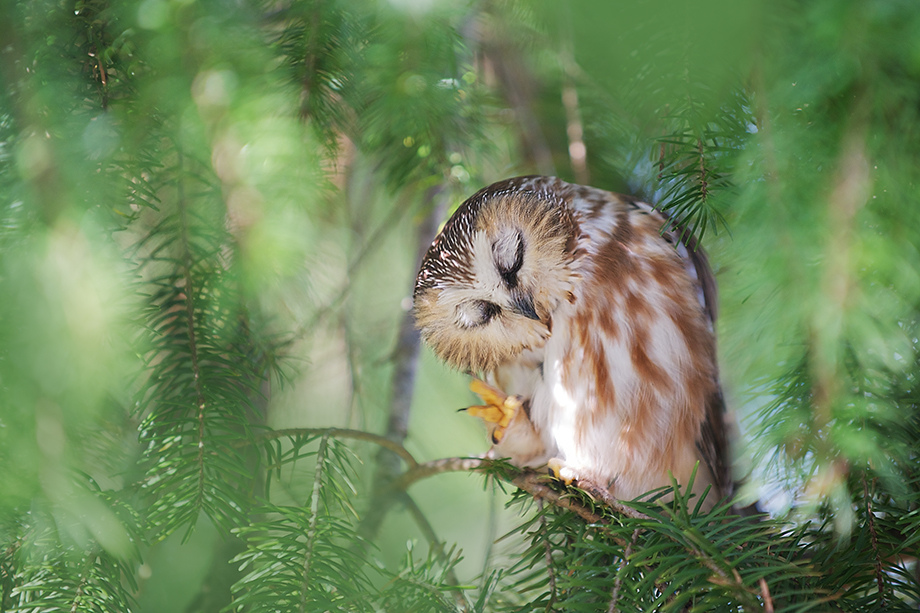
Saw whet owls are strictly nocturnal and they sleep for most of the day. I waited a long time for this little guy to wake up… yawn… do anything. After what seemed like a few hours, it finally shuffled around a bit on the branch before giving itself a good scratch. The eyes never opened. Nikon D700 with Nikkor 70-200mm lens (at 200mm) ISO 800, f/2.8 at 1/200th of a second
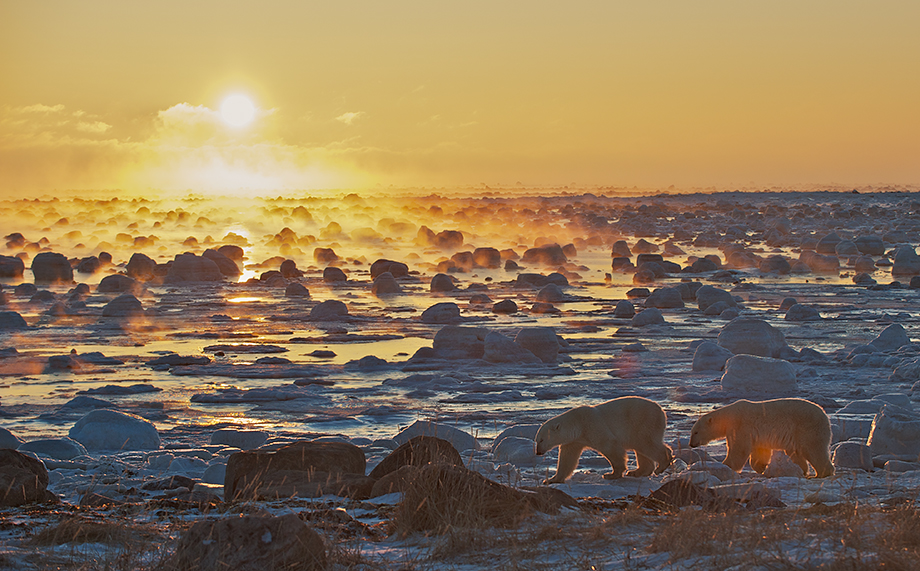
Hear’s another shot from that magical morning up at Seal River Lodge in northern Manitoba, Canada. This was a little later in the morning from the photo that is in my “Favorites” gallery. The light wasn’t quite as soft but still pretty great with the backlit mist rising from low tide on the Hudson Bay. Nikon D700 with Nikkor 70-200mm lens (at 98mm) ISO 800, f/5.6 at 1/1250th of a second (+2 ev)
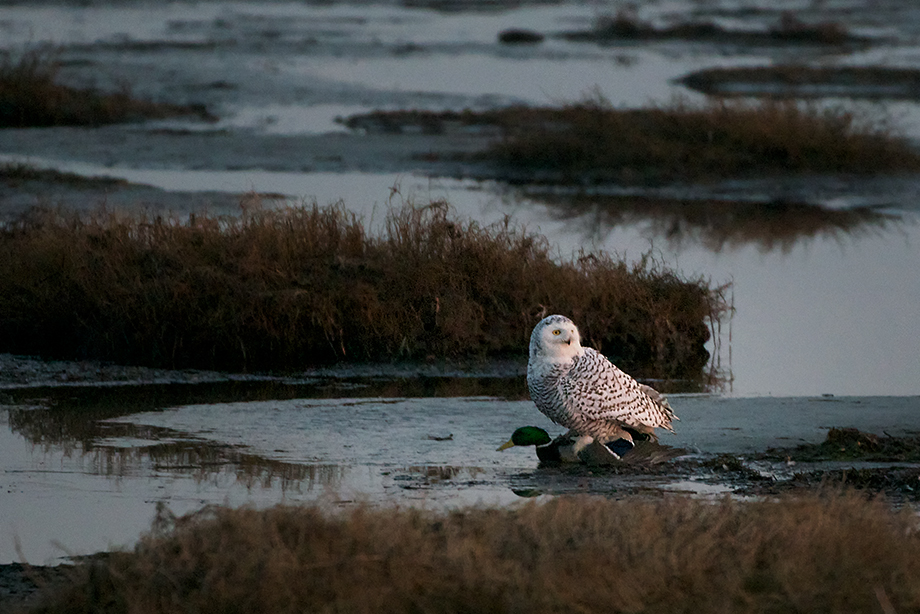
It’s owl Friday again, and this one isn’t technically the best photo in the world, nor is the subject matter going to be appreciated by everyone, but it is very unusual behavior — at least it seems that way from all the research that I did. It was very late in the day and the sun had long since set when I saw this snowy owl attack a male mallard. Even the owl seemed a bit surprised and confused as to what to do next with this unusual catch. It tried several times to fly away with the duck but didn’t seem to have the strength. Twenty minutes later, it remained sitting on top of the duck trying to decide what to do about the situation. Eventually it got too dark for me to even see what was going on anymore so I left the scene and let nature take its course. I usually don’t like to shoot above 1600 ISO but this one was captured at 3200 because of the extreme low light (it was actually much darker than it appears in the photo). Nikon D800 with Nikkor 200-400mm lens (at 400mm) ISO 3200, f/4 at 1/125th of a second
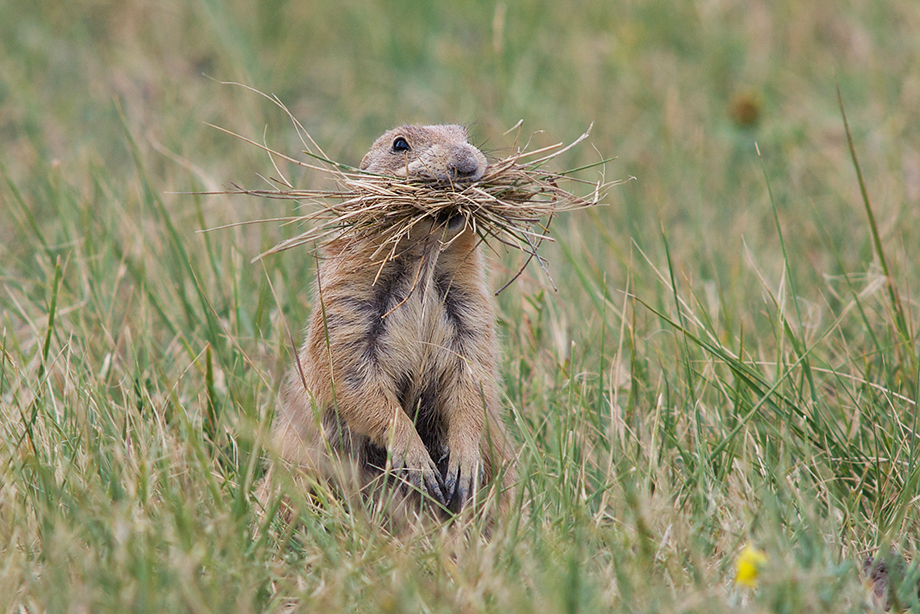
I took this one about four years ago in Badlands National Park in South Dakota. There’s a nice prairie dog town there in the northern part of the park and I sat and watched for quite a while as the little guys popped in and out of their burrows, gathering dried grass to line their maze of underground tunnels. It is believed that they do this for insulation purposes. Nikon D200 with Nikkor 600mm f/5.6 manual lens, ISO 200, f/11 at 1/320th of a second
I used to post the Friday frog — until I ran out of suitable frogs to post. So now it’s time for the Friday owl. This one is a short eared owl. They are one of the most widely distributed birds in the world, occurring on every continent except for Antarctica and Australia. Like most owls, short eared owls tend to be nocturnal and hunt at night. But in areas — and years — where the rodent population is high, they will become quite active in the day. This was the case when I was in Boundary Bay and I was able to get quite a few shots of them flying around hunting for voles. Nikon D800 with Nikkor 200-400mm lens (at 400mm) ISO 1250, f/5 at 1/1000th of a second
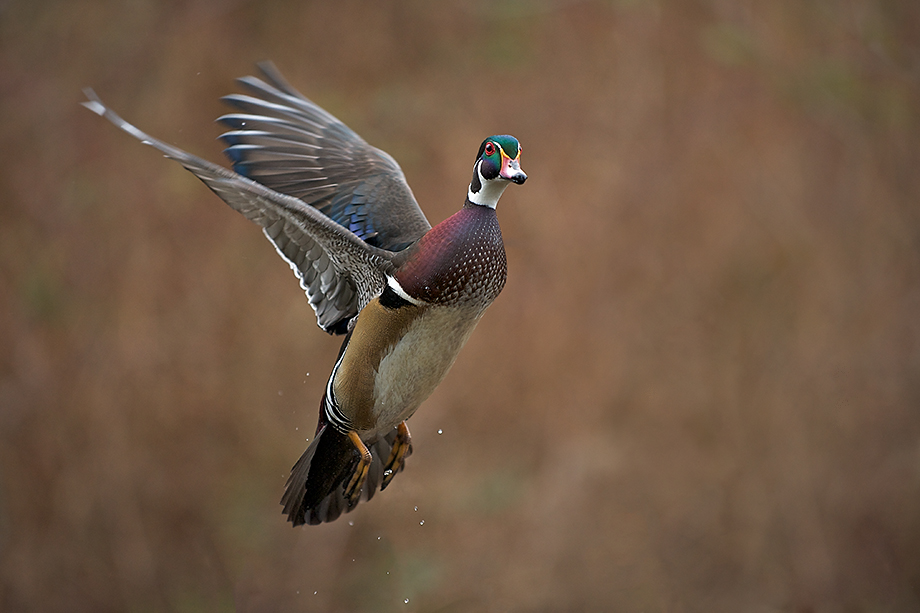
Here’s another wood duck — this time, just after it lifted off from a pond. Wood ducks get their name because they nest in trees. The females will lay 7 to 15 eggs in the tree cavity and the day after hatching, the ducklings will climb to the nest entrance and jump to the ground. Miraculously, they can jump from a height of 290 feet without injury. Even so, the parents will try to find a tree over a body of water so that the landing will be softer than if over the ground. The mother will call to the young ducklings, but they are able to swim and find food on their own by this time. Nikon D700 with Nikkor 70-200mm lens (at 200mm) ISO 800, f/2.8 at 1/1250th of a second
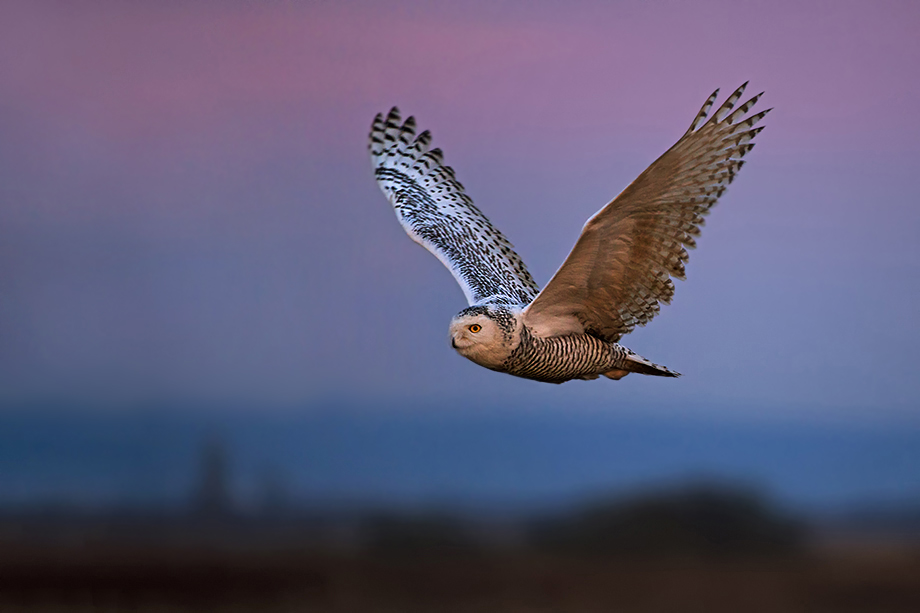
A week of owls is never enough, so here’s another snowy from my weekend at Boundary Bay. This photo was taken after the sun had set, in the fading glow of twilight. I had just enough light to up the ISO and still keep a reasonable shutter speed for a flight shot. Nikon D800 with Nikkor 200-400mm lens (at 400mm) ISO 1600, f/4 at 1/500th of a second
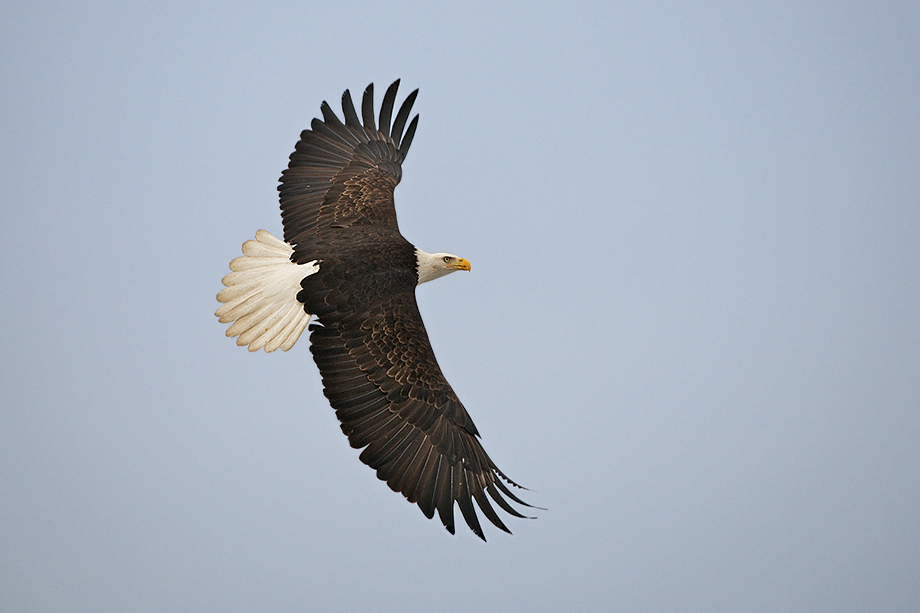
In addition to the owls and ducks, bald eagles were also patrolling the coast of Boundary Bay. Most often, I saw them perched in tall trees against bright, unattractive backgrounds — or on the ground but too far away in the middle of a plowed field. Occasionally, however, I caught them in flight with halfway decent light. I still need to do a proper bald eagle trip to Alaska, but in the meantime, it was nice to get a few more pics in my library of our national emblem.
We use cookies to enhance your experience while using our website. If you are using our Services via a browser you can restrict, block or remove cookies through your web browser settings. We also use content and scripts from third parties that may use tracking technologies. You can selectively provide your consent below to allow such third party embeds. For complete information about the cookies we use, data we collect and how we process them, please check our Privacy Policy