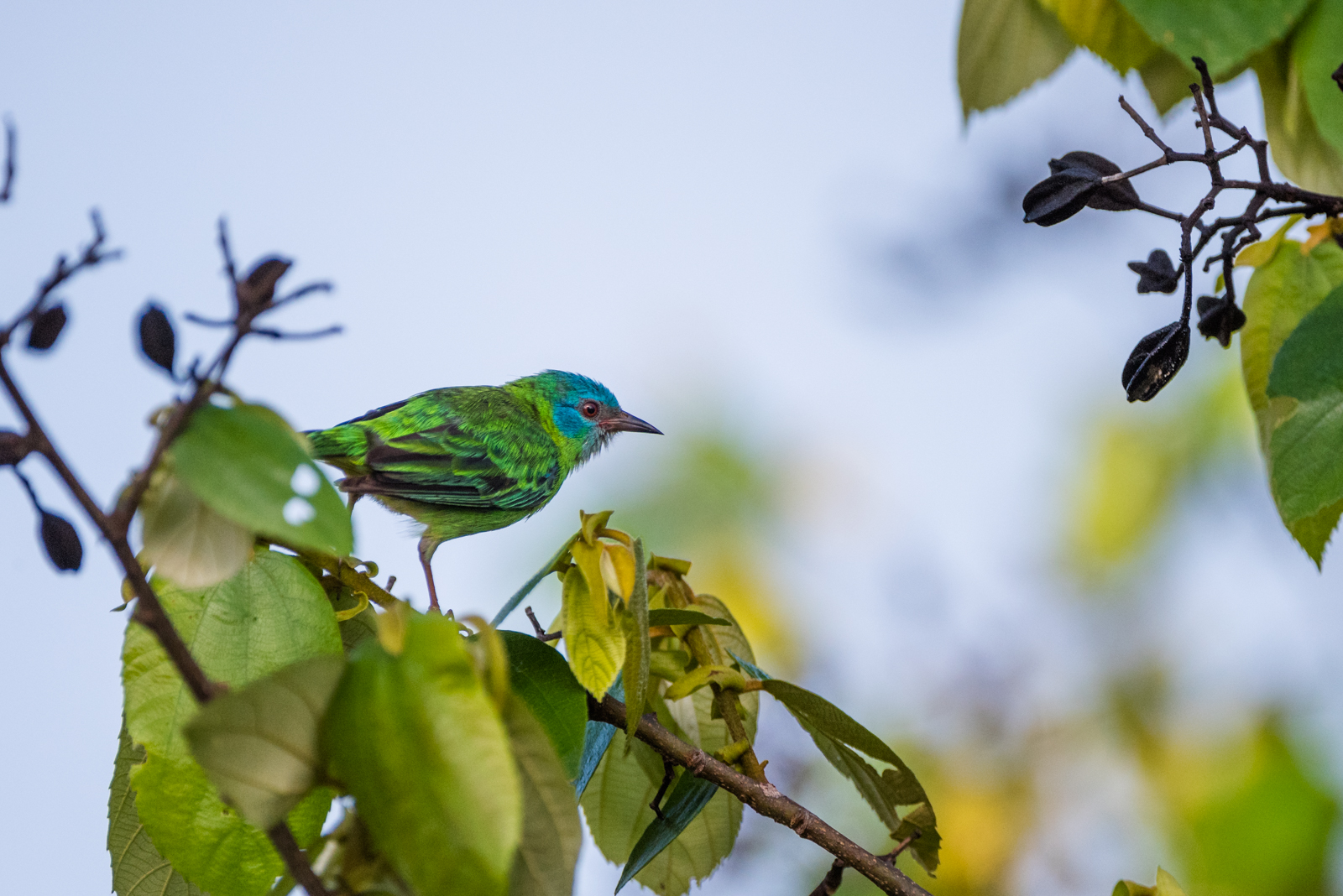
The blue dacnis is a small bird in the tanager family, and one of rare species of bird where the female plumage gives the male a run for its money. The males are turquoise blue and black while the females are mostly green with a blue head. They range from mid-Central America down to northern Argentina. I photographed this one in Soberania National Park in Panama. Nikon D810 with Nikkor 200-400mm lens (at 400mm) ISO 800, f/4 at 1/5000th of a second
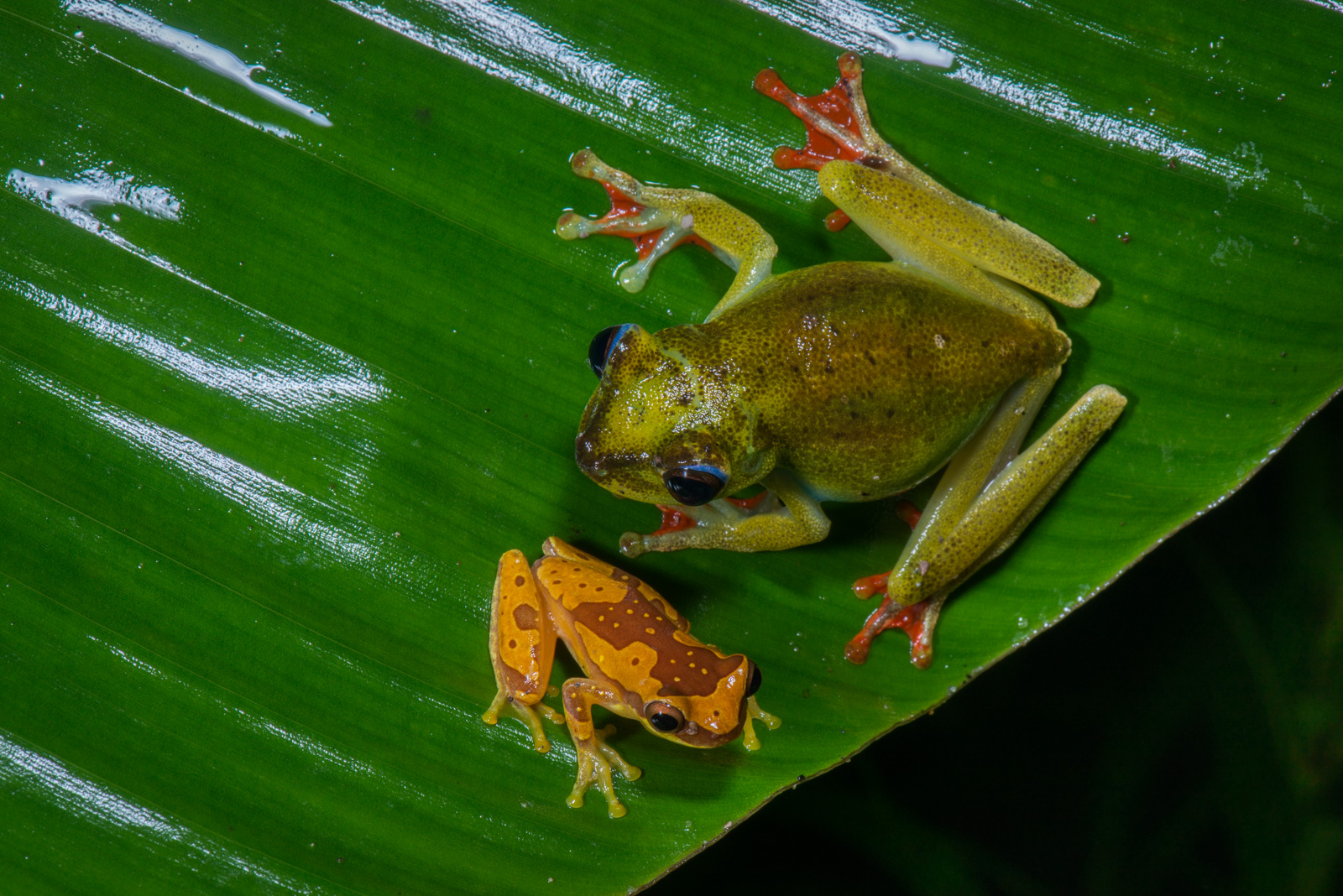
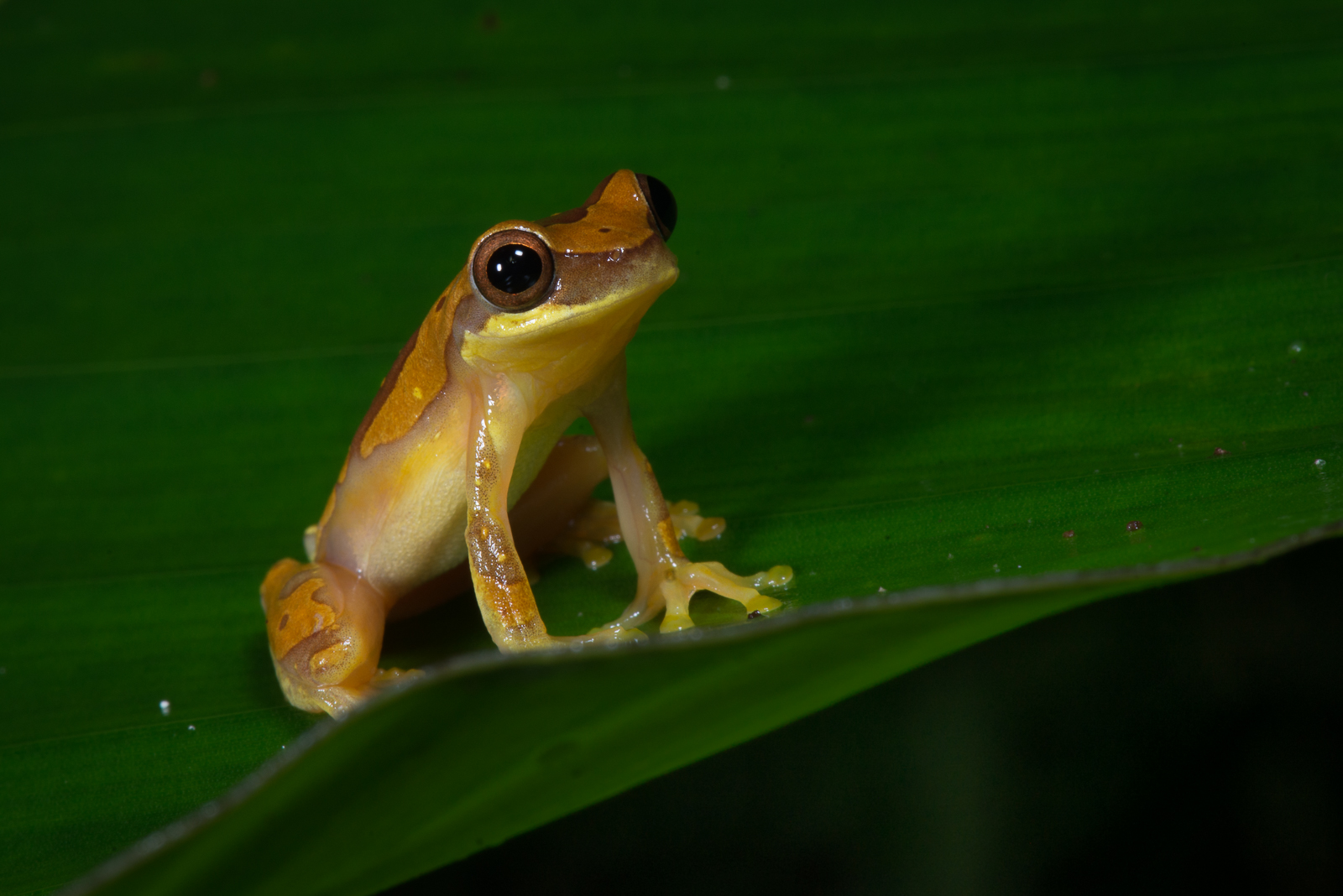
I previously posted a canal zone tree frog and an hourglass tree frog from my trip to Panama. But not in the same photo on the same leaf. These two completely unrelated frogs seemed perfectly content to be sharing the same real estate. This one goes out to the other frog lover in my family, my sister Mo, in honor of her birthday on Sunday — a double shot of the Friday frog. Nikon D800 with Nikkor 105mm macro lens, ISO 200, f/25 at 1/60th of a second, two Nikon SB-900 flash units
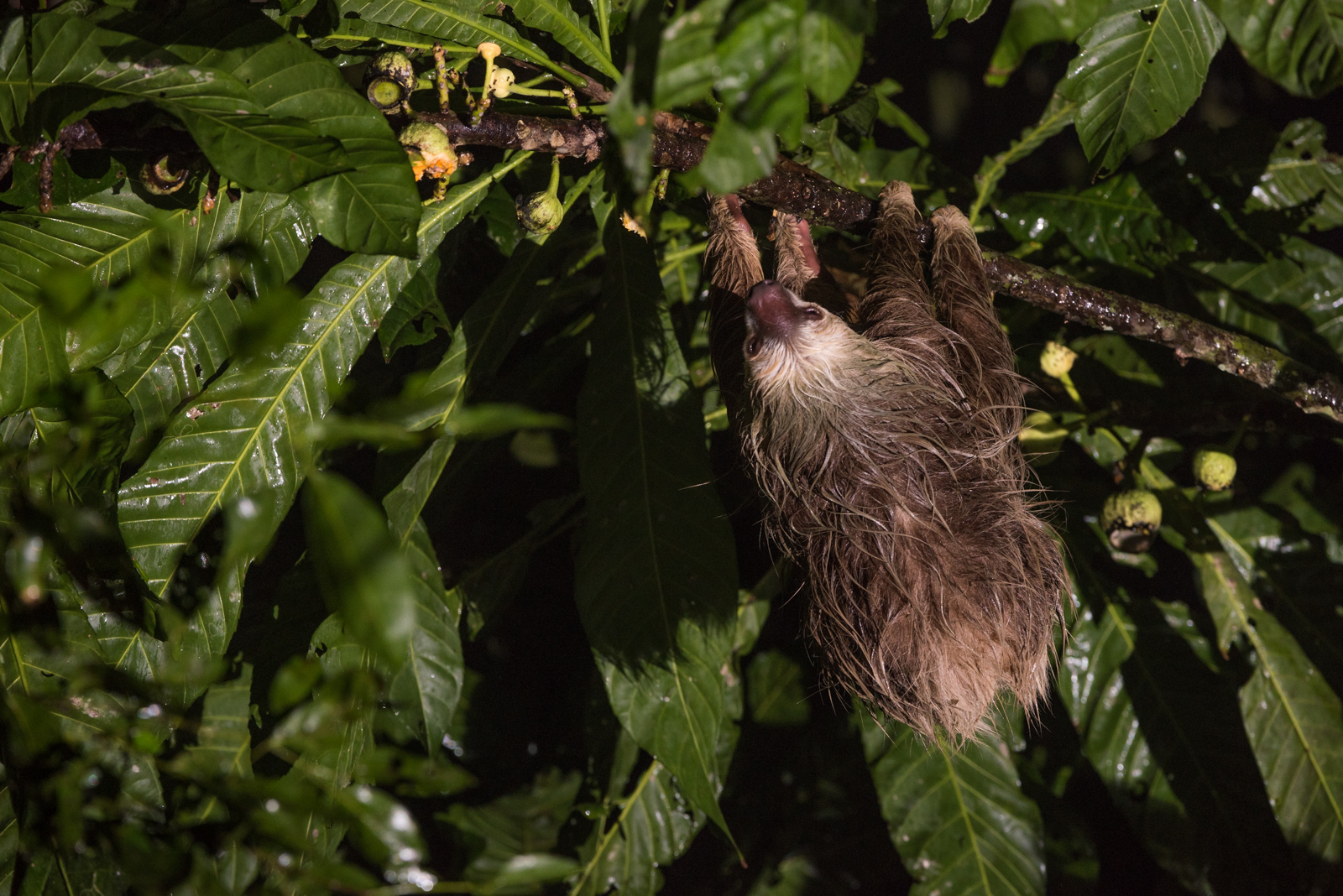
Here’s the other sloth species that I saw in Panama. I really wanted better photos of these guys but they just didn’t give me that many good looks. They are generally more nocturnal than three-toed sloths, so there was that, but they also had a habit of either hiding behind foliage, or showing me their backside. They actually look quite a bit different from three-toed sloths, other than the obvious difference of having one less toe. They are lighter and more blonde in color, with longer, softer looking, less matted fur. And they have a different shaped face, with more of a pinkish nose. This one was doing his/her sloth-y thing at night in the rain. Nikon D810 with Nikkor 200-400mm lens (at 310mm) ISO 800, f/6.3 at 1/160th of a second
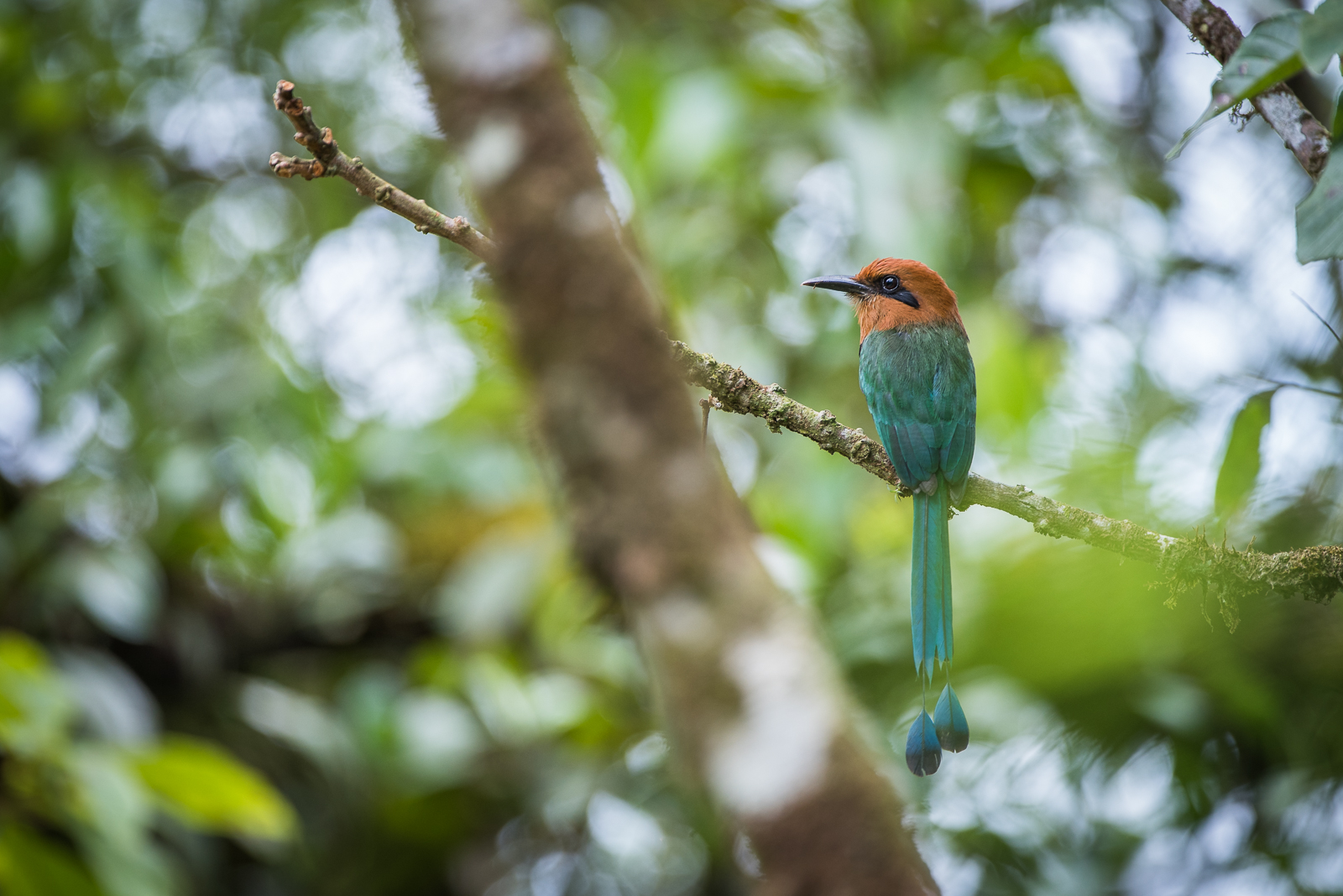
Here’s another of the four species of motmot that I photographed on this most recent trip to Panama. A few weeks ago I posted the tody motmot. This is the broad-billed motmot. You can see the classic racket-tip of the tail. Nikon D810 with Nikkor 200-400mm lens (at 400mm) ISO 400, f/4 at 1/320th of a second
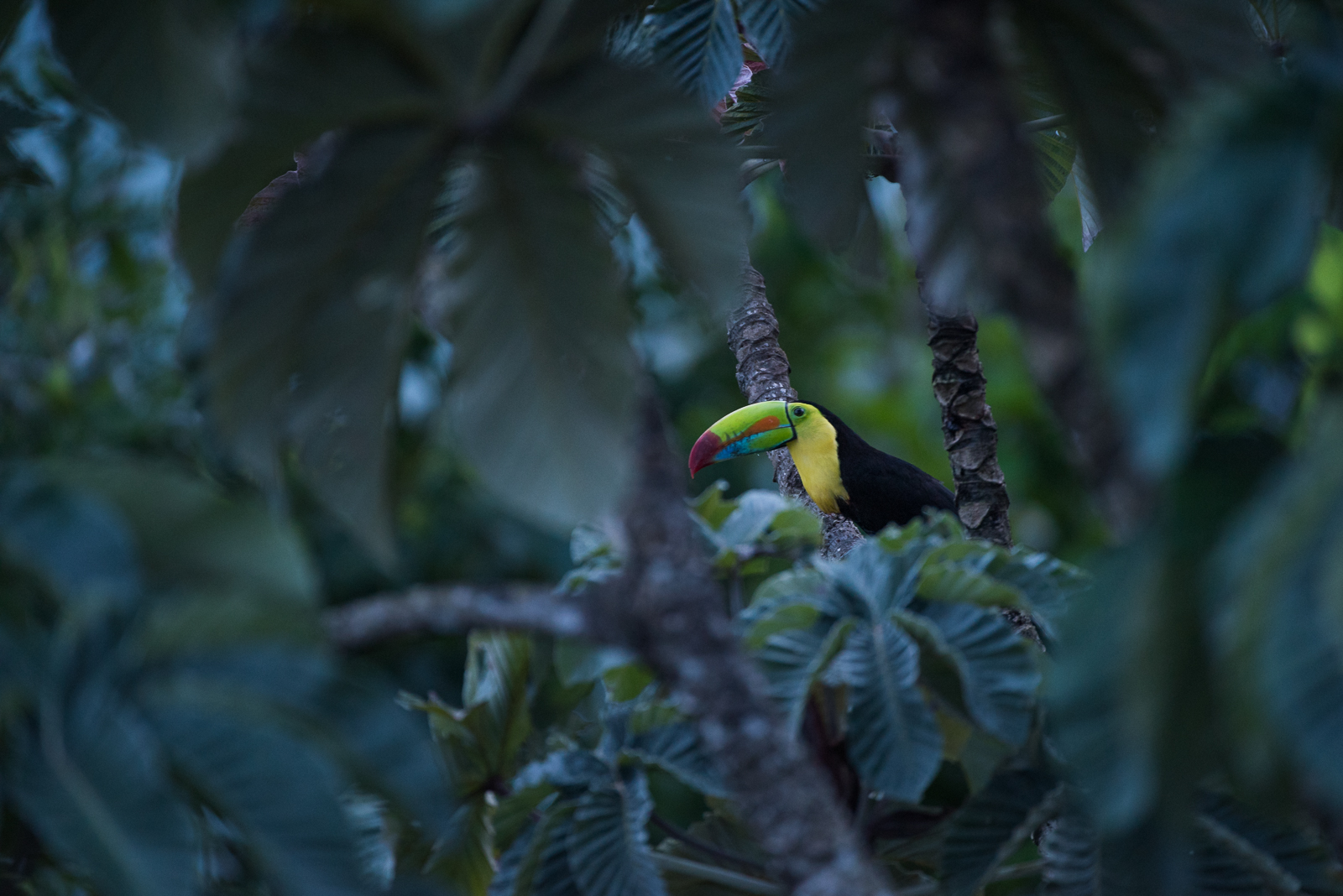
I took quite a few photos of keel-billed toucans in good early morning light, but there was something about this particular exposure that I liked, captured in very dim, pre-sunrise conditions. The light in the forest was still quite blue when I spotted the toucan through a window in the cecropia trees. I was shooting at only 1/15th of a second but was able to get a few shots when the bird was completely still. Nikon D810 with Nikkor 200-400mm lens (at 400mm) ISO 1600, f/4 at 1/15th of a second
These little guys are pretty common in Panama (I also saw them quite a bit in Costa Rica). They are known for being the only vertebrate that can lay their eggs either on land or in the water. With ample shade, they will lay them above water, but with little or no shade they will attach their eggs to submerged vegetation. Nikon D800 with Nikkor 105mm macro lens, ISO 200, f/25 at 1/60th of a second, two Nikon SB-900 flash units
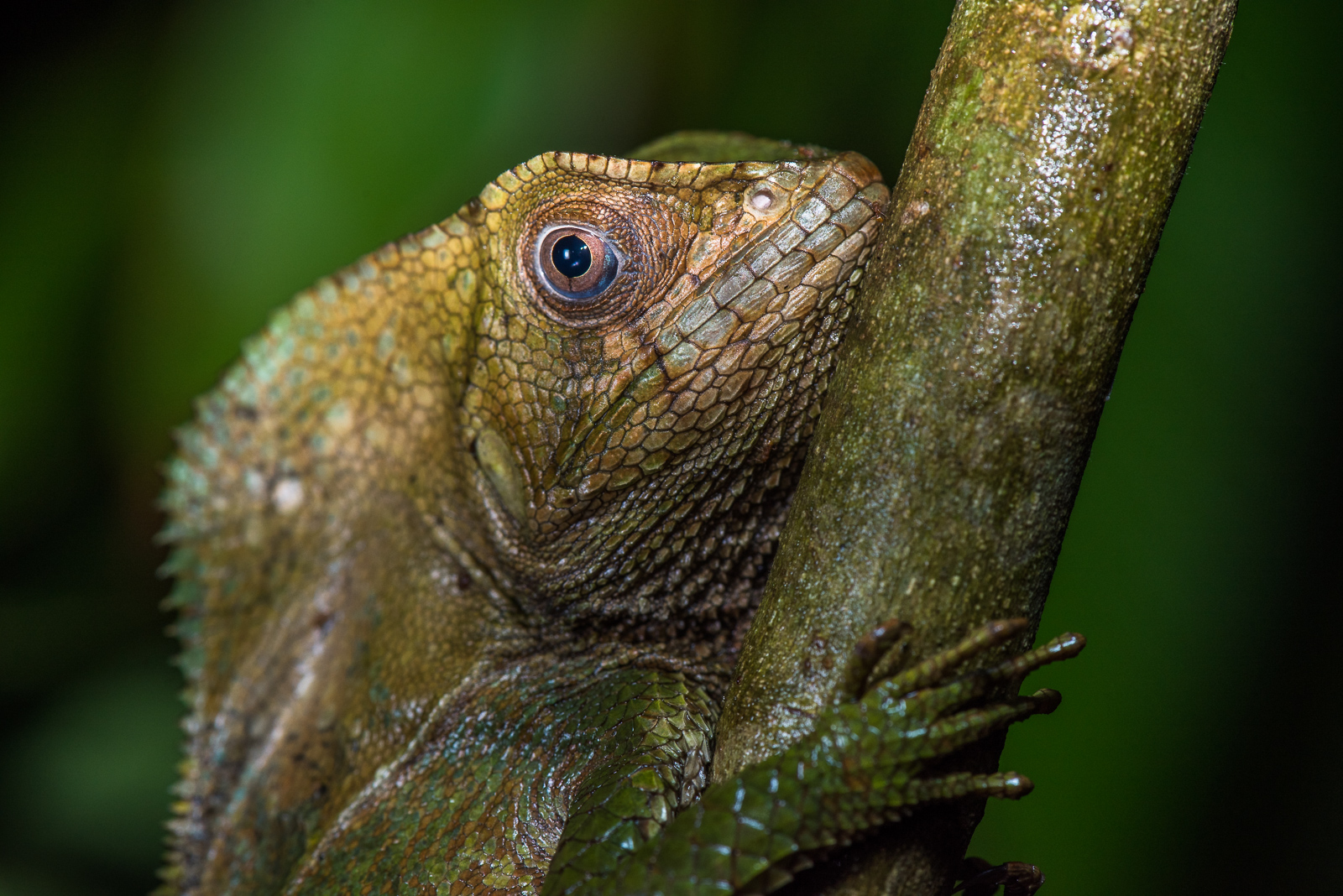
There are several different species of basilisk lizards that live in tropical regions of the Americas. They are sometimes called Jesus Christ lizards for their ability to run across the surface of the water. This guy is the helmeted basilisk. He/she was hugging a small branch, keeping a watchful eye on me as I was searching for tree frogs in El Valle, Panama. Nikon D810 with Nikkor 105mm macro lens, ISO 200, f/11 at 1/60th of a second, two Nikon SB-900 flash units
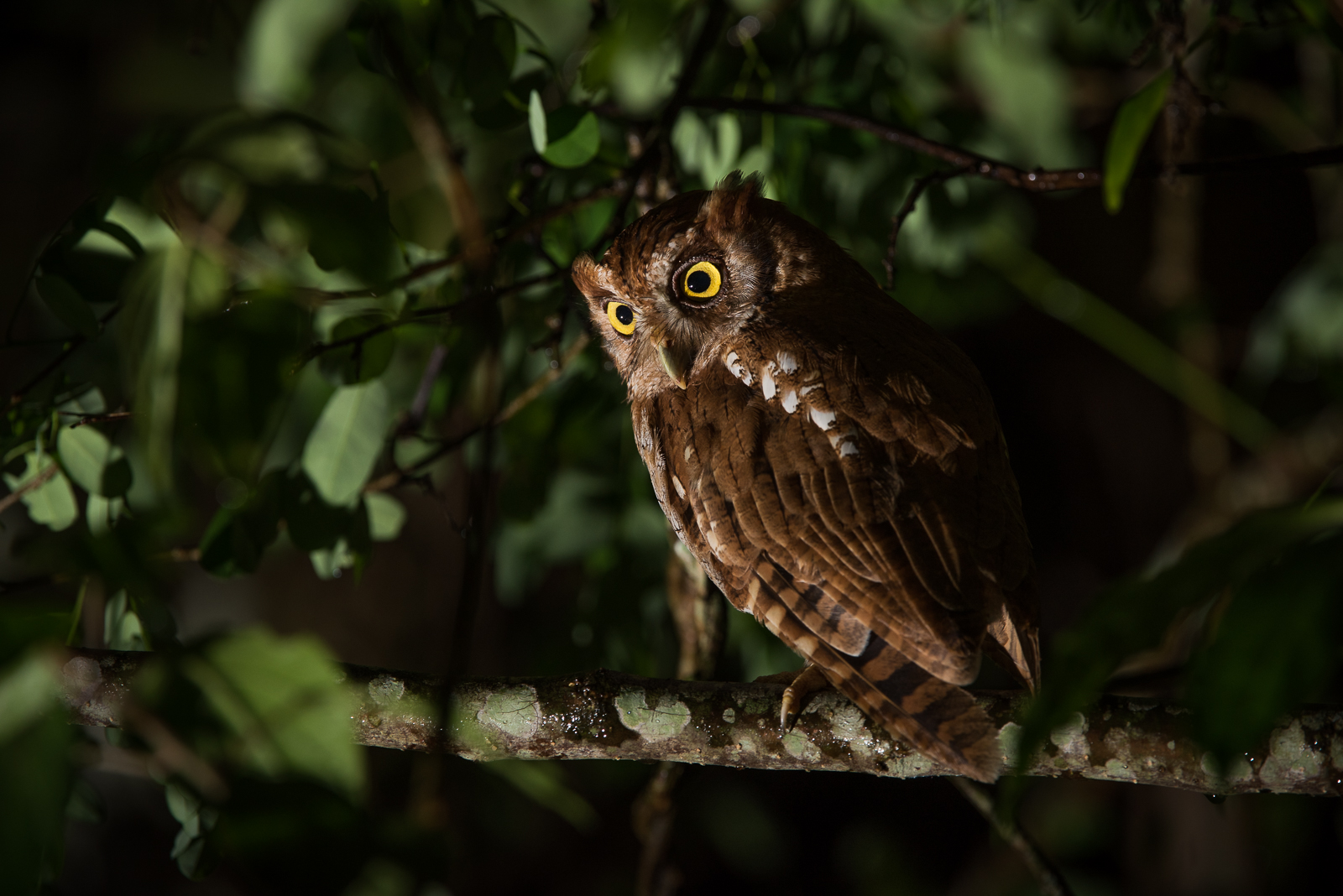
In addition to the spectacled owl which I posted last week, I also photographed a tropical screech owl while in Panama. Unlike the spectacled owl, this guy is quite small — less than ten inches in length. Tropical screech owls are pretty widespread throughout much of South America and up through Panama, Costa Rica and the Caribbean. Nikon D810 with Nikkor 200-400mm lens (at 330mm) ISO 400, f/8 at 1/200th of a second, Nikon SB-900 flash
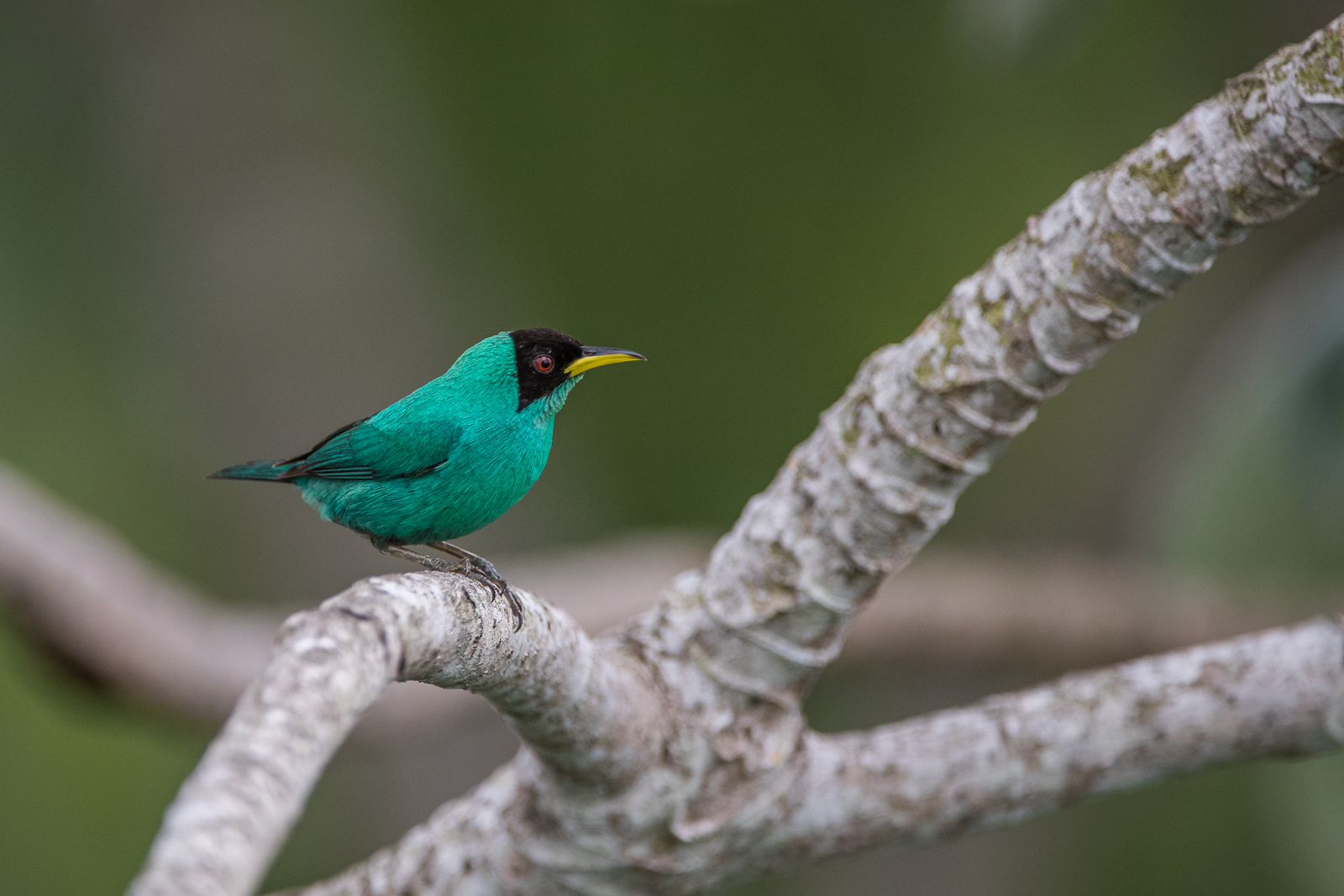
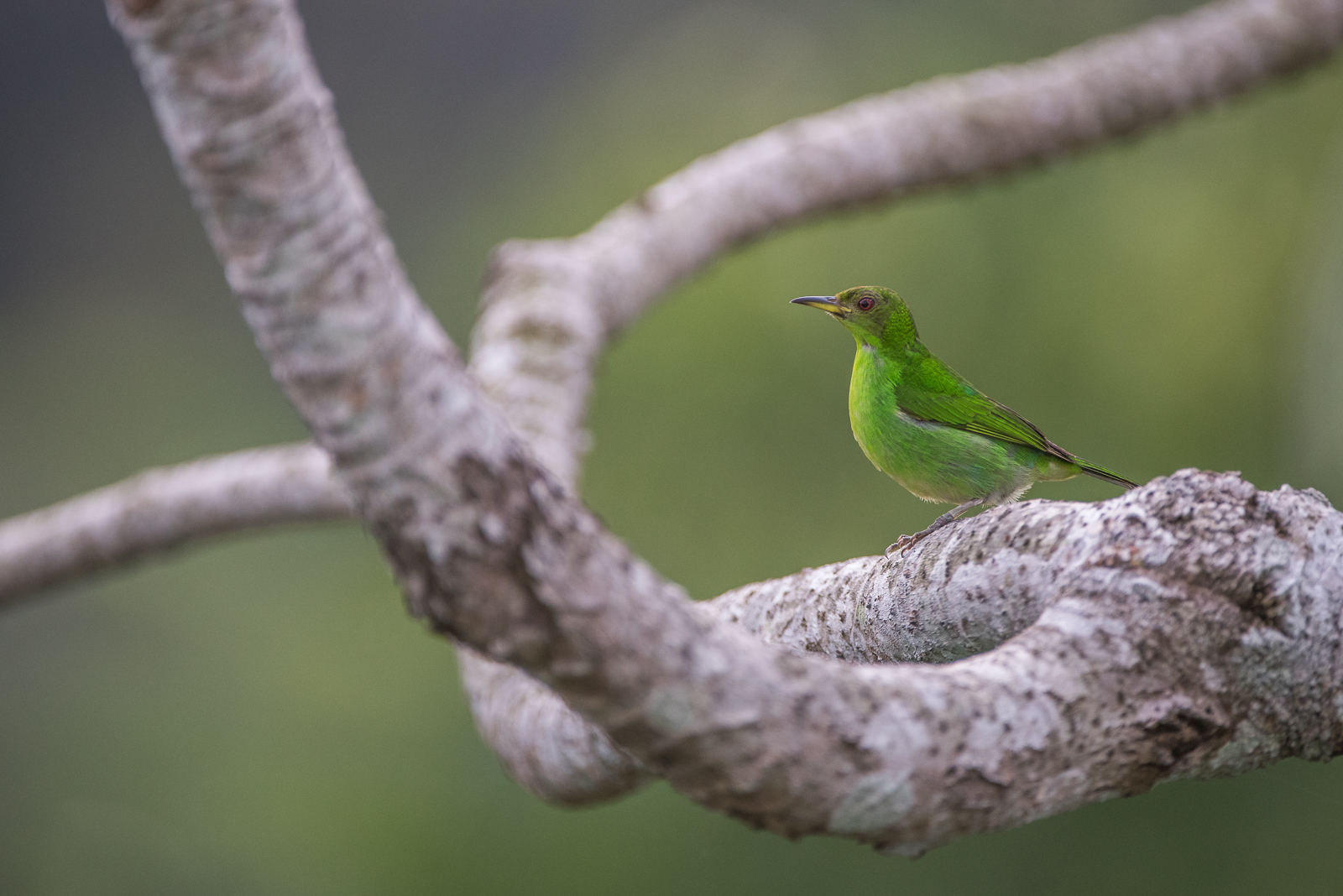
As most of you know, I tend to favor creatures with fur above those with feathers. That being said, I certainly love both, and Panama is arguably the best place in the world for the latter. I’ve photographed green honeycreepers before in both Costa Rica and Trinidad but it was nice to get such good looks at both the male and the female in the tree-top canopy in Soberania National Park. The top shot is the male and the bottom is the female. Both Photos — Nikon D810 with Nikkor 200-400mm lens (at 400mm) ISO 800, f/4 at 1/1250th of a second
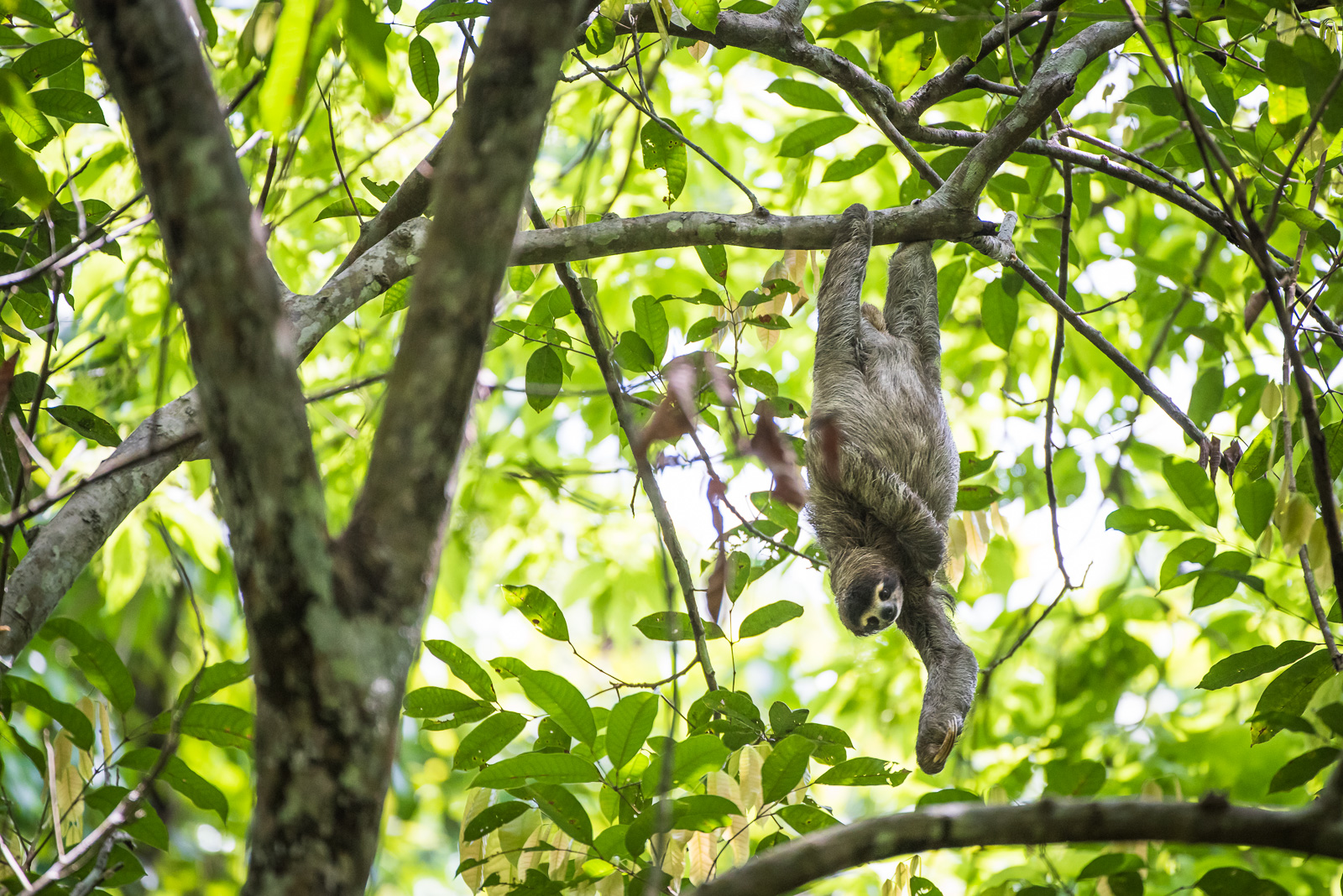
Here’s another look at a three-toed sloth. They sleep most of the day, but quite often you can see them hanging upside down giving themselves a good scratch. Sloths enjoy a symbiotic relationship with algae. Their fur gives the algae a great place to grow and the algae gives the sloths camouflage and nutrients through absorption. The algae also makes the sloth a magnet for moths, beetles and other insects. Nikon D810 with Nikkor 200-400mm lens (at 400mm) ISO 1250, f/4 at 1/1000th of a second
We use cookies to enhance your experience while using our website. If you are using our Services via a browser you can restrict, block or remove cookies through your web browser settings. We also use content and scripts from third parties that may use tracking technologies. You can selectively provide your consent below to allow such third party embeds. For complete information about the cookies we use, data we collect and how we process them, please check our Privacy Policy