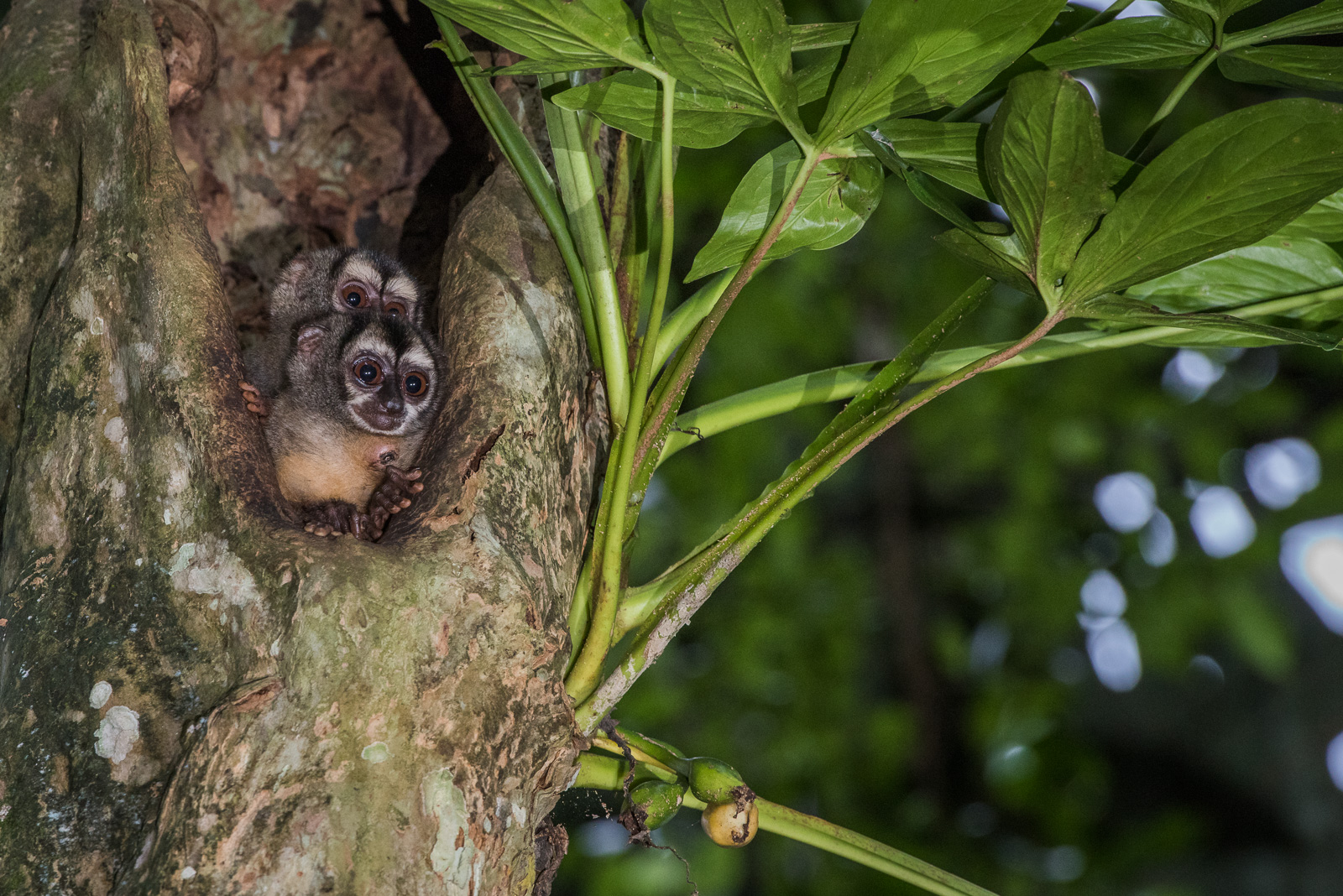
I photographed an Azara’s night monkey years ago in Bolivia. These two guys are believed to be either a subspecies or a different species all together, depending on who you talk to. All night monkeys are of the genus Aotus, but there are several different subspecies split across two groups, the red-necked and the gray-necked. The Panamanian night monkeys fall under the gray-necked group. As the name would suggest, they are strictly nocturnal. I took this shot just before sunset, and the monkeys seemed to be about ready to leave their daytime resting spot and head out for the night. One interesting fact about night monkeys is that they are one of the few mammals affected by the malaria virus and are therefore useful in malaria research. Nikon D810 with Nikkor 200-400mm lens (at 400mm) ISO 1600, f/9 at 1/15th of a second, two Nikon SB-900 flash units
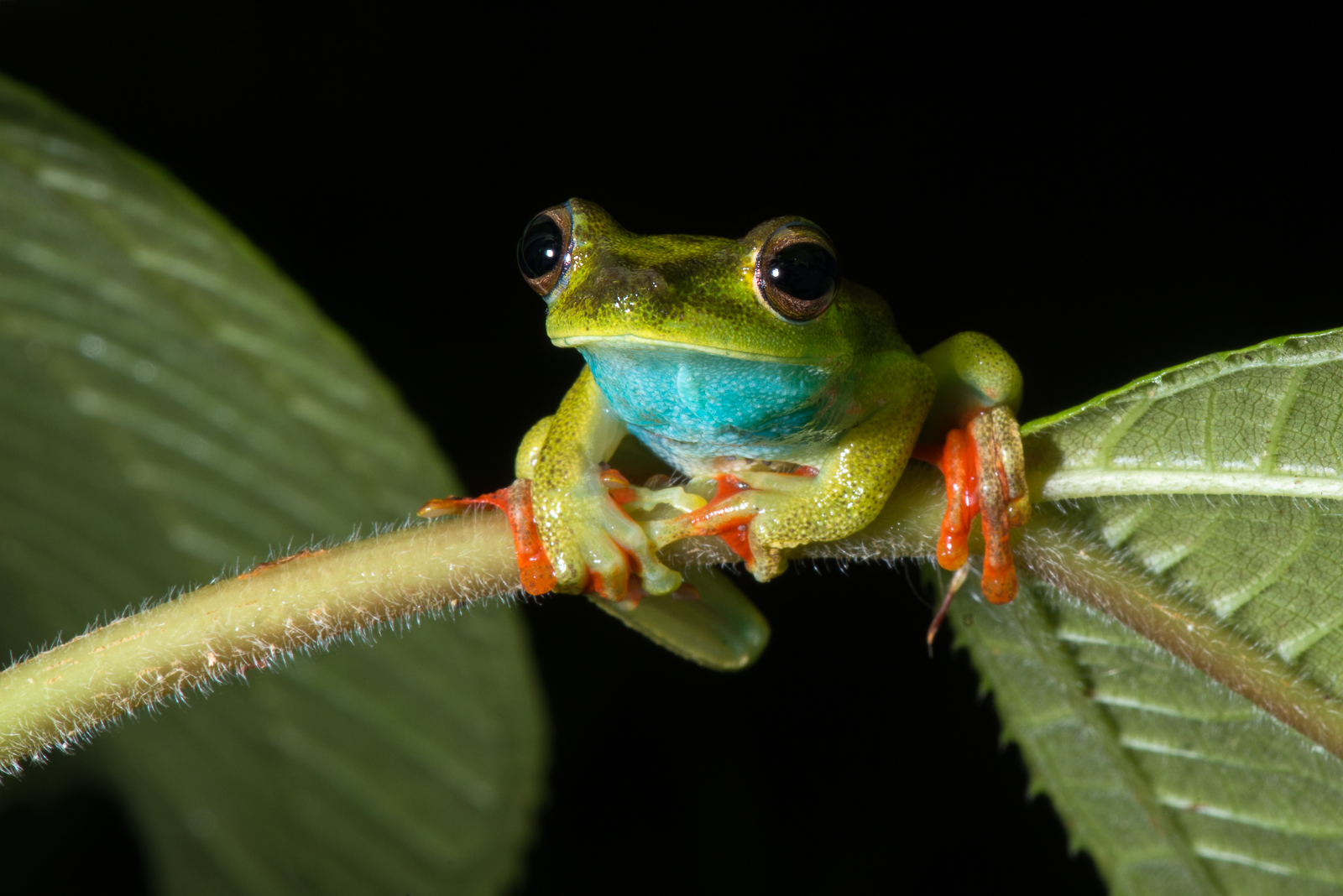
My sister Mo put in a request for a frog. Here’s a beauty from last weekend in Panama. My guide was calling it a red-webbed treefrog, but a bit of research led me to the conclusion that the red-webbed treefrog is actually a southeast Asian species, and this guy is more likely the Canal Zone treefrog. Perhaps locally it goes by both common names (Hipsiboas rufitelus being the Latin name). If any of you herpetologists out there think otherwise, please let me know. In either case, it sure was a great looking frog. Very similar in size and shape (and even some of the coloring) to the more famous red-eyed tree frog, also native to the El Valle region of Panama where I took this shot. Nikon D800 with Nikkor 105mm macro lens, ISO 200, f/25 at 1/60th of a second, two Nikon SB-900 flash units
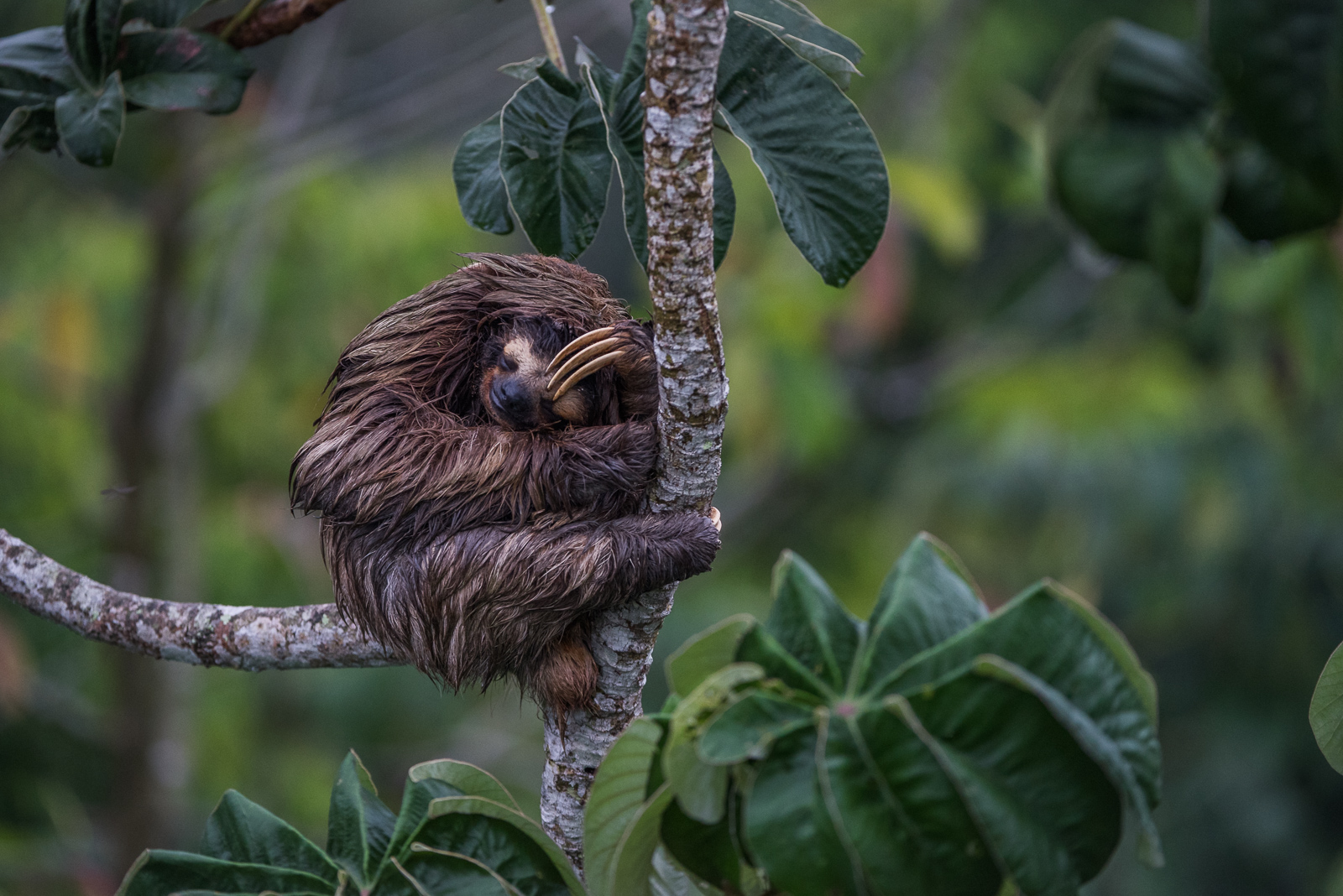
This three-toed sloth was the first creature that greeted me when I arrived in Panama. There are four species of three-toed sloth, the most common being the brown three-toed sloth that is found throughout much of Central and South America. Like the toucan that I posted yesterday, the sloth prefers to hang out in, and eat the leaves of, the cecropia tree. This guy was doing what sloths spend most of their day doing — taking a nap while giving itself a good scratch. And they always seem to have a smile on their faces, even while sleeping. Nikon D810 with Nikkor 200-400mm lens (at 250mm) ISO 1600, f/4 at 1/100th of a second
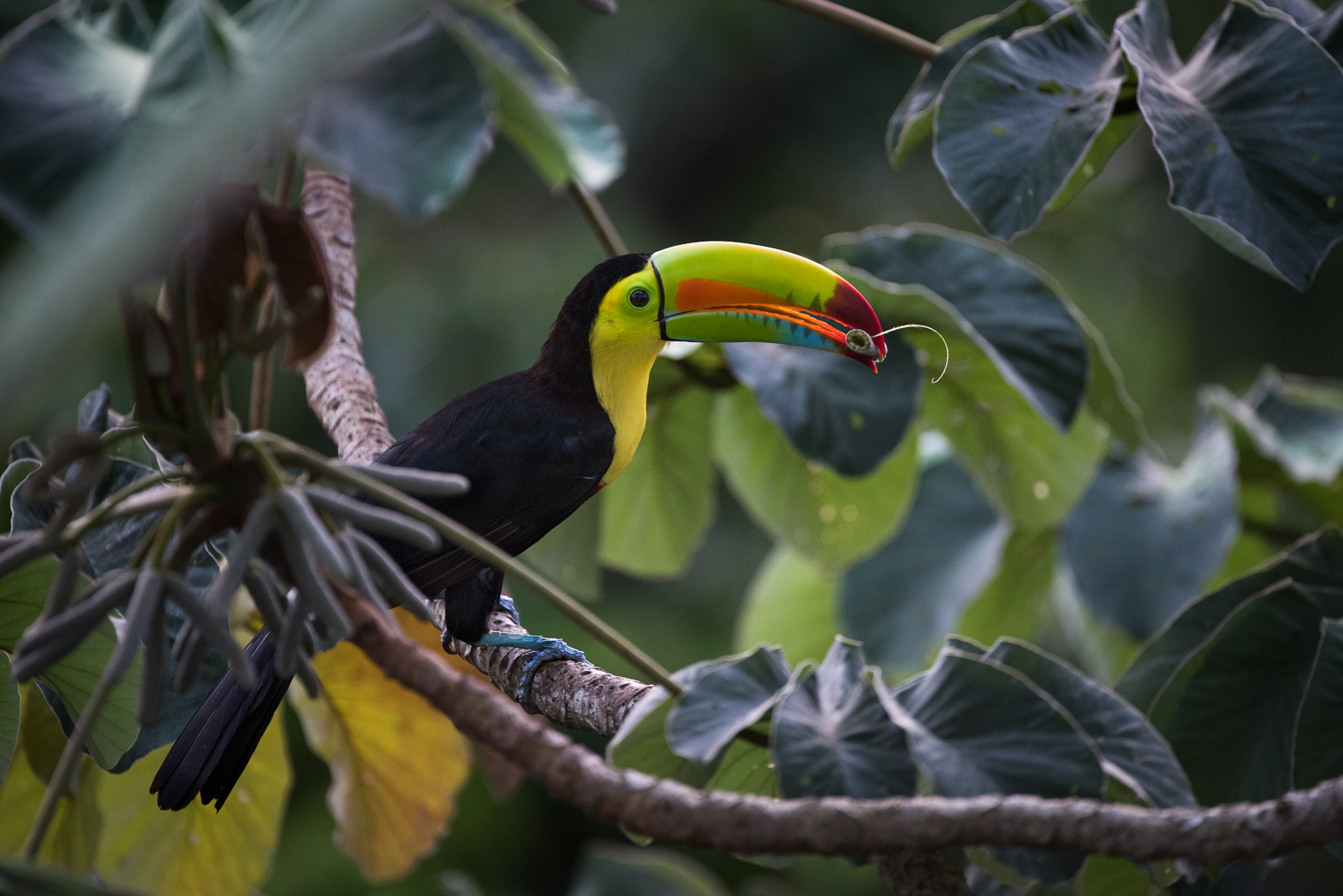
I just got back from my short trip to Panama late last night. It was a good one, although marred by lots of rain and very poor timing on tamarin monkeys and two-toed sloths — two of my target species. That being said, I can’t wait to go back because it was quite evident that it is very rich in wildlife diversity. The monkeys and sloths were there alright, but they kept showing up in places that I had just been and departing other places just before I arrived — or they had a knack for showing me their backsides and hiding behind lush vegetation. Thus is the nature of nature. But that being said, the three-toed sloths, howler monkeys, night monkeys, opossums, frogs, lizards, iguanas, bats, agoutis, butterflies, birds, and especially toucans, were quite cooperative. I’ve seen and photographed keel-billed toucans before, but never at such close range and in such numbers. They would visit every morning to eat the flowering fruits and seeds of the cecropia trees surrounding the Canopy Tower accommodation where I was staying for the first four nights — less than an hour’s drive from Panama City. I would have done this trip just to photograph these toucans, which are at the very top of my favorite-birds-in-the-world list. With their spectacularly colorful beaks, they are amazing to see flying from tree top to tree top in the forest canopy. Nothing quite says the Central American tropics like the iconic keel-billed toucan. Much more on these guys in upcoming posts. Nikon D810 with Nikkor 200-400mm lens (at 400mm) ISO 1600, f/4 at 1/320th of a second
We use cookies to enhance your experience while using our website. If you are using our Services via a browser you can restrict, block or remove cookies through your web browser settings. We also use content and scripts from third parties that may use tracking technologies. You can selectively provide your consent below to allow such third party embeds. For complete information about the cookies we use, data we collect and how we process them, please check our Privacy Policy