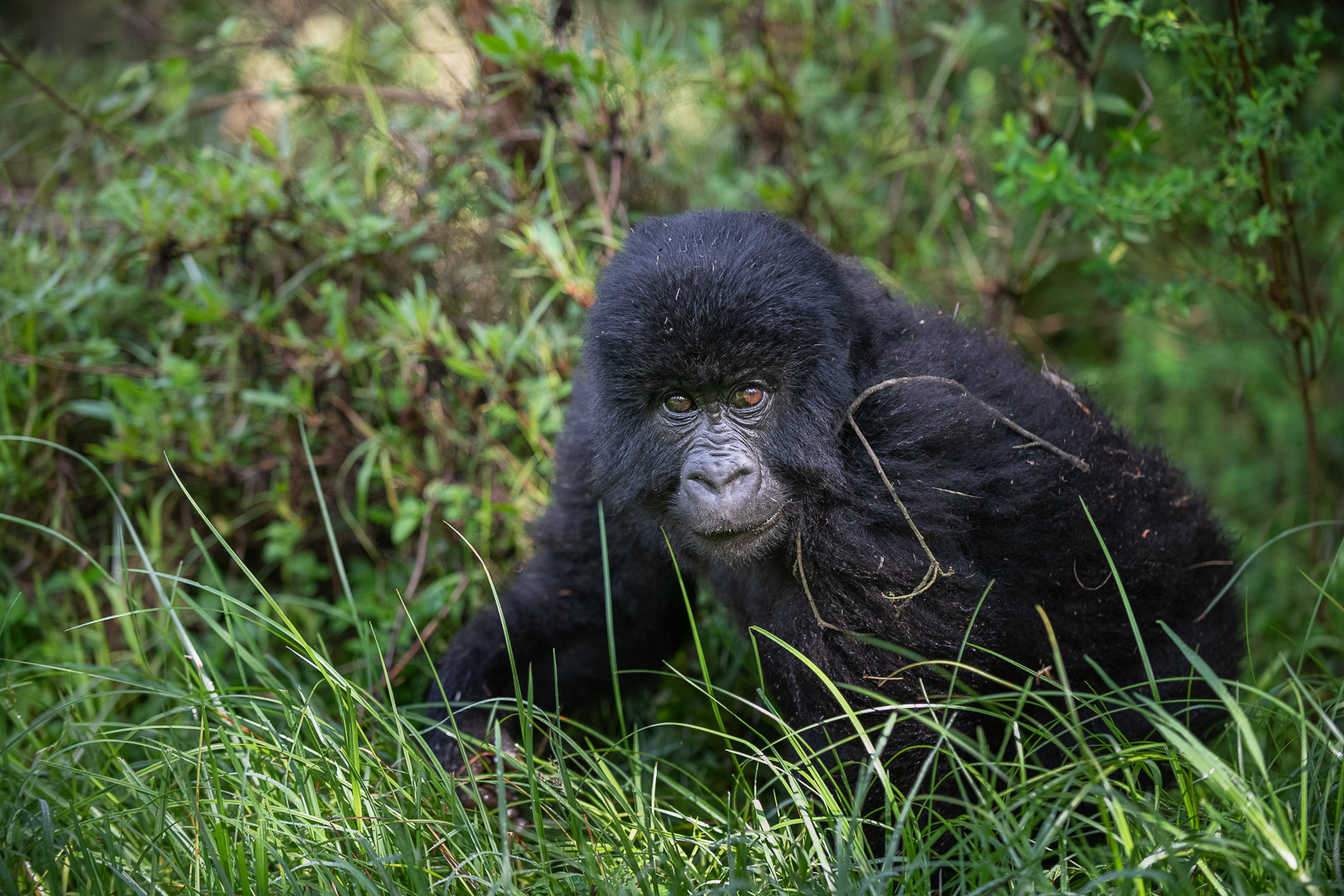
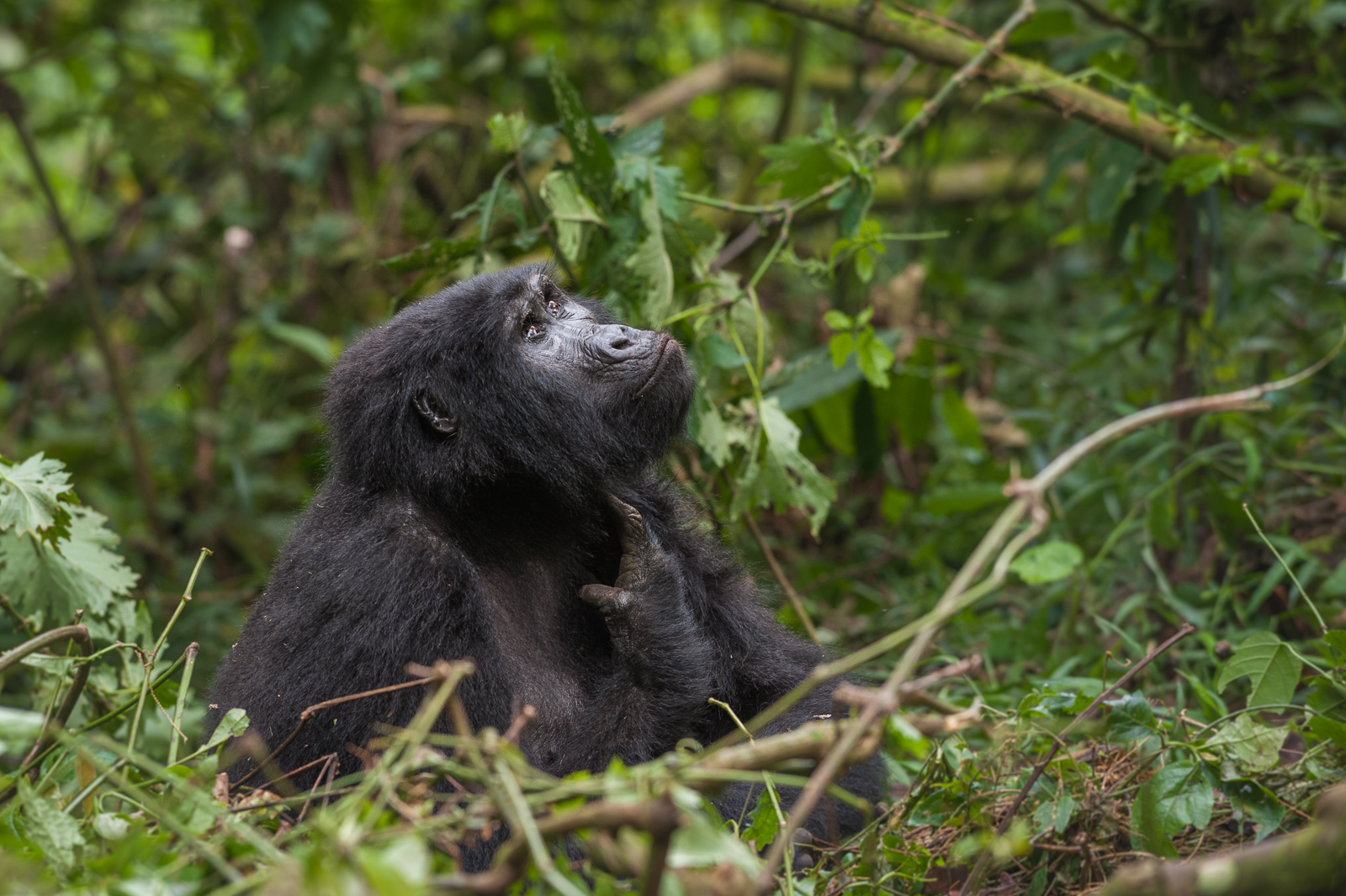
When trekking for mountain gorillas on my most recent trip to Uganda, this youngster was the first of the troop to come tumbling out of the thick vegetation. He/she (too early tell gender) appeared as surprised to see us as we were to see him/her. Photographed in Mgahinga National Park. Nikon D850 with Nikkor 70-200mm lens (at 98mm) ISO 1600, f/2.8 at 1/1250th of a second.
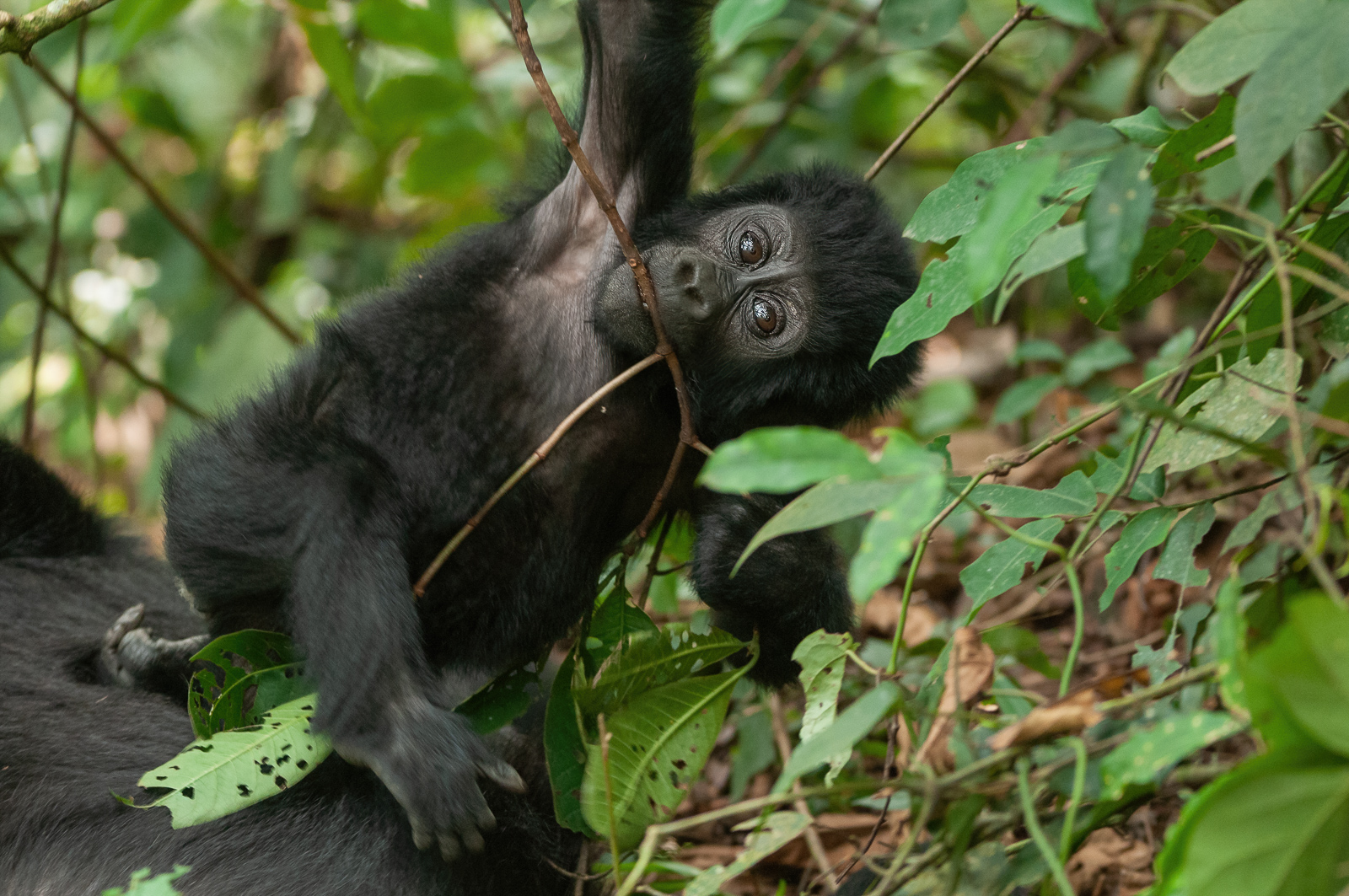
In this large troop of 23 mountain gorillas, there were a couple of babies. This one was putting on show for me while Mom remained somewhat disinterested. Nikon D300 with Nikkor 200-400mm lens (at 210mm) ISO 800, f/4 at 1/60th of a second.
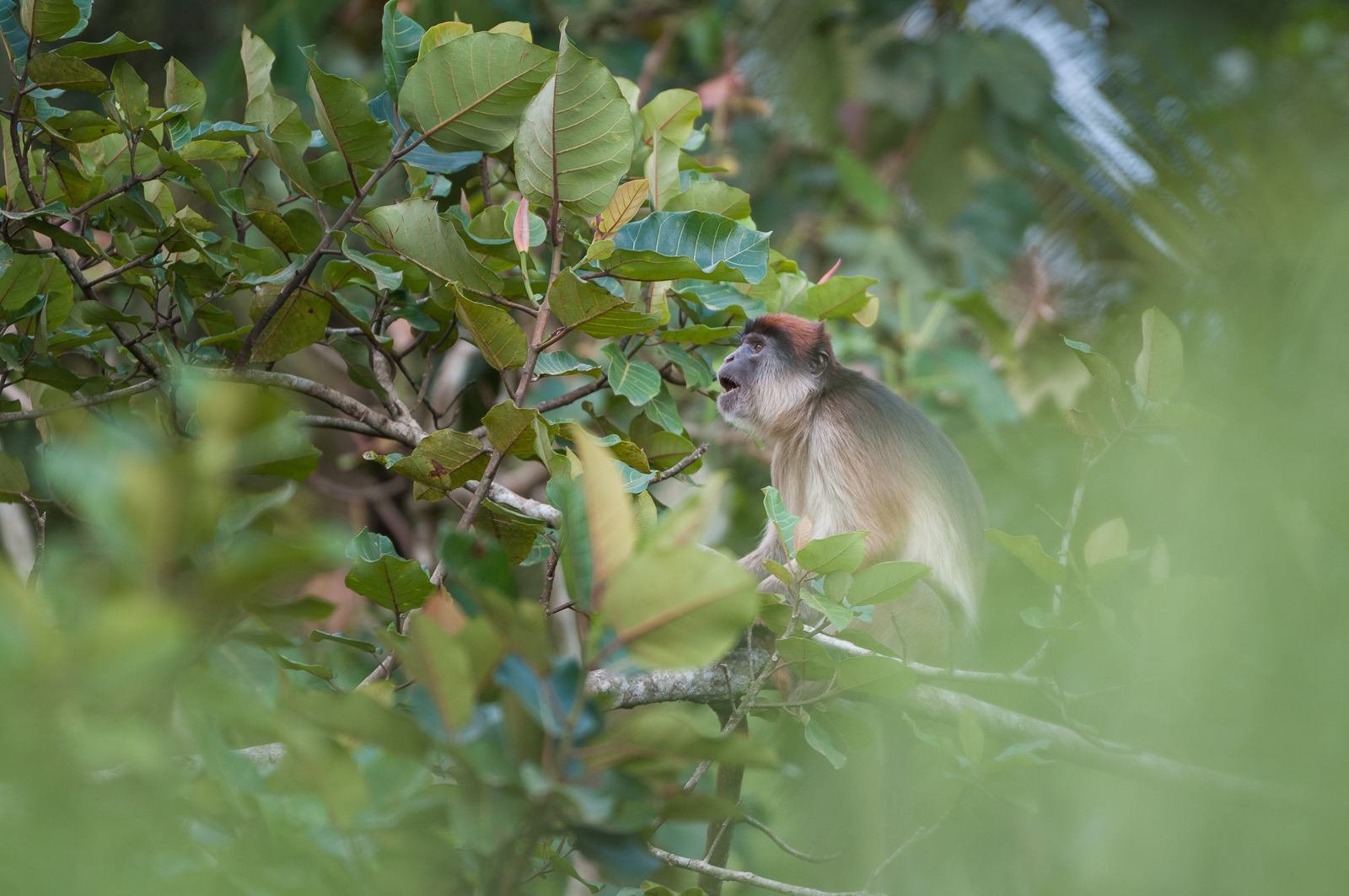
The red colobus monkey was one of eight species of primate I photographed on my first trip to Uganda. Interesting fact about these monkeys — they will often eat charcoal or clay to help combat the cyanide that exists in some of the leaves they eat. This “medicinal cure” appears to be passed down from mother to child. Just one of the adaptations to their completely vegetarian, but extremely varied diet. Nikon D300 with Nikkor 200-400mm lens (at 400mm) ISO 400, f/4 at 1/125th of a second.
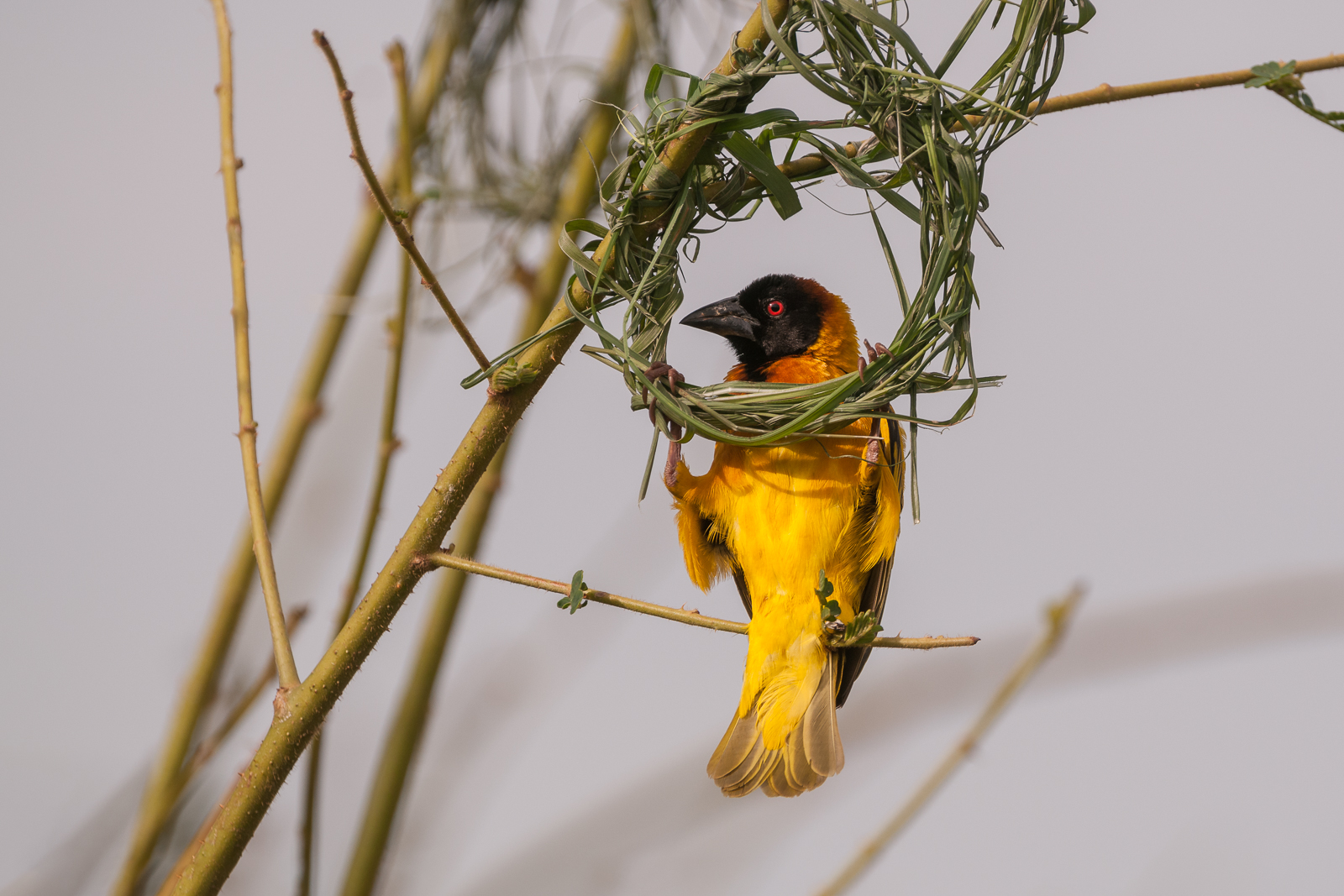
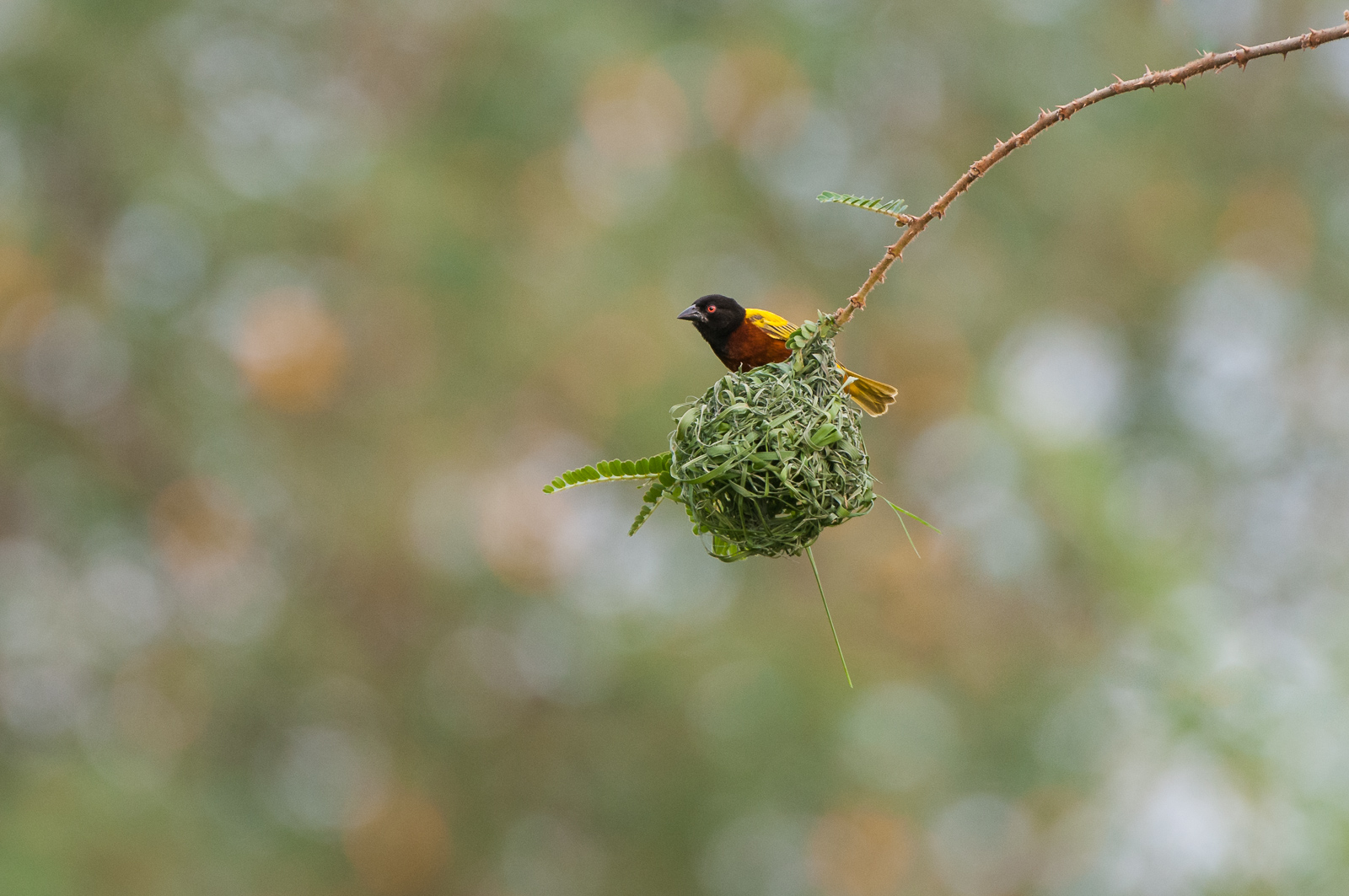
This masked weaver was in the early stages of building its nest. That ring of grass will eventually be an intricate orb dangling from the branch. Photographed on my first trip to Uganda when I went to Queen Elizabeth National Park. Nikon D300 with Nikkor 200-400mm lens (at 400mm) ISO 200, f/5.6 at 1/800th of a second.
Who knows what this gorilla was thinking, but they sure do share a lot of our facial expressions and body language (not to mention we are 98% identical on a genetic level). This was from my first trip to Uganda to photograph the endangered species. Back then there were only 800 estimated in the wild and they were listed as “critically endangered” by the IUCN. Today that number has risen to over a thousand and they have subsequently lost the “critically” part of their designation. A rare bit of good news in the wildlife conservation community and the world at large. Nikon D700 with Nikkor 70-200mm lens (at 200mm) ISO 800, f/4.5 at 1/160th of a second.
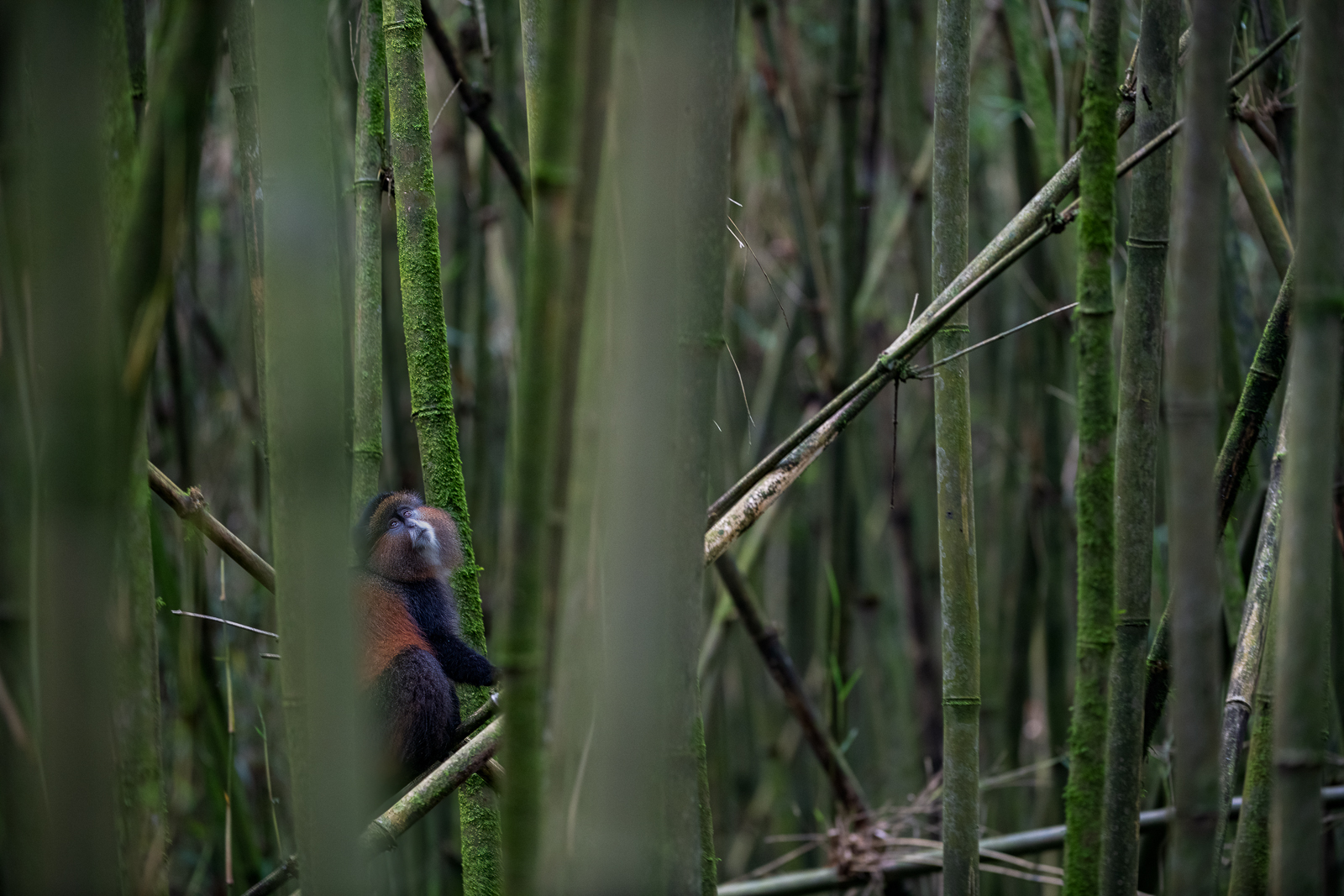
This image had some motion blur on the monkey’s face because he was turning just as I was snapping the picture at a slow shutter speed. Using Topaz Sharpen AI I was able to eliminate a good deal of the blur and salvage the shot. Which is great, because I love this type of portrait where you can really get a sense of the animal’s environment. In this case, the environment is the bamboo forest of Mgahinga National Park in Uganda. Nikon D850 with Nikkor 200-400mm lens (at 240mm) ISO 1600, f/4 at 1/50th of a second.
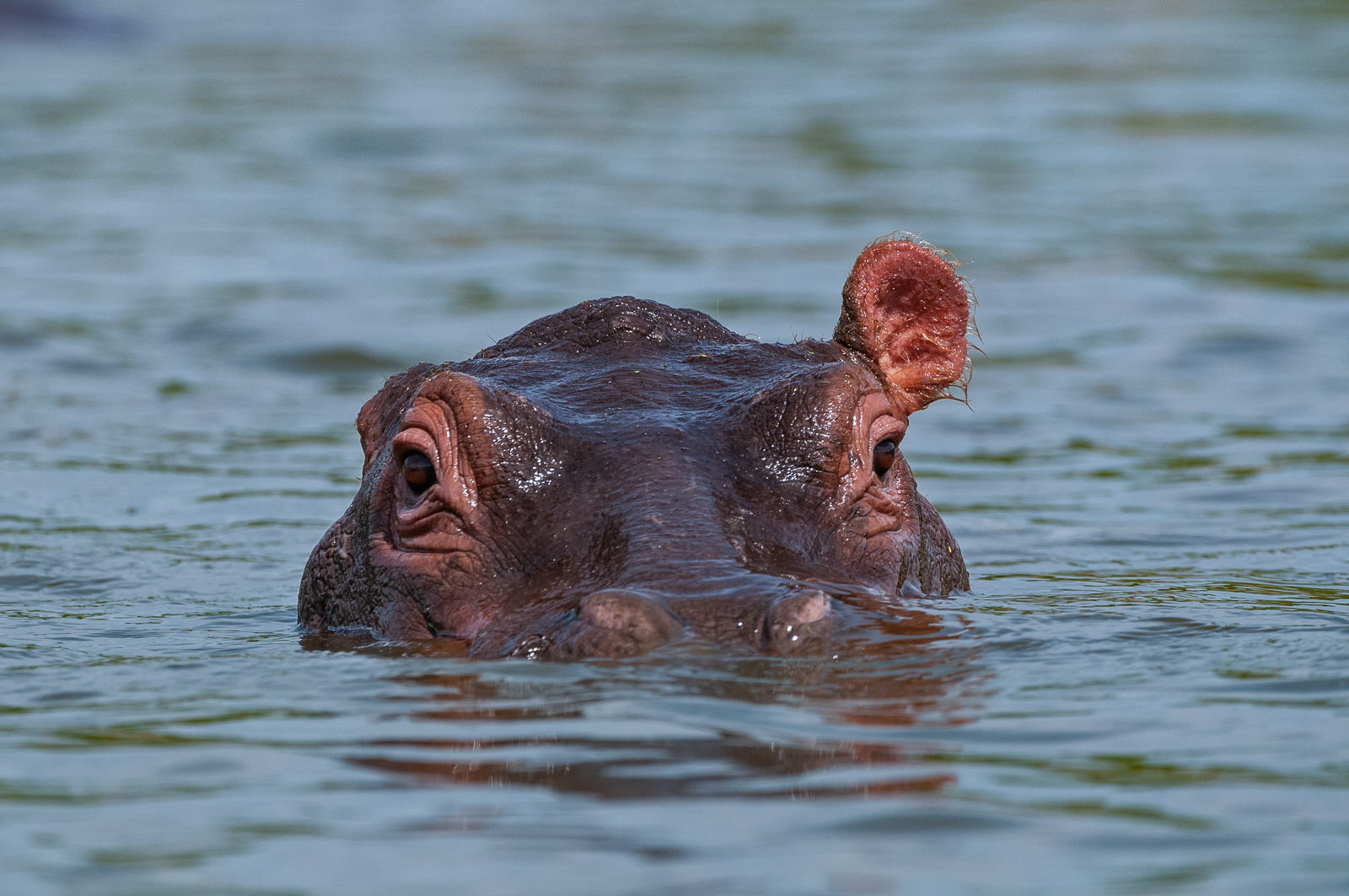
What appears to be a one-eared hippo, is just a hippo wiggling one of his ears, perhaps brushing away a fly. Shot in Queen Elizabeth National Park in Uganda. Nikon D300 with Nikkor 200-400mm lens (at 400mm) ISO 400, f/5.6 at 1/1600th of a second.
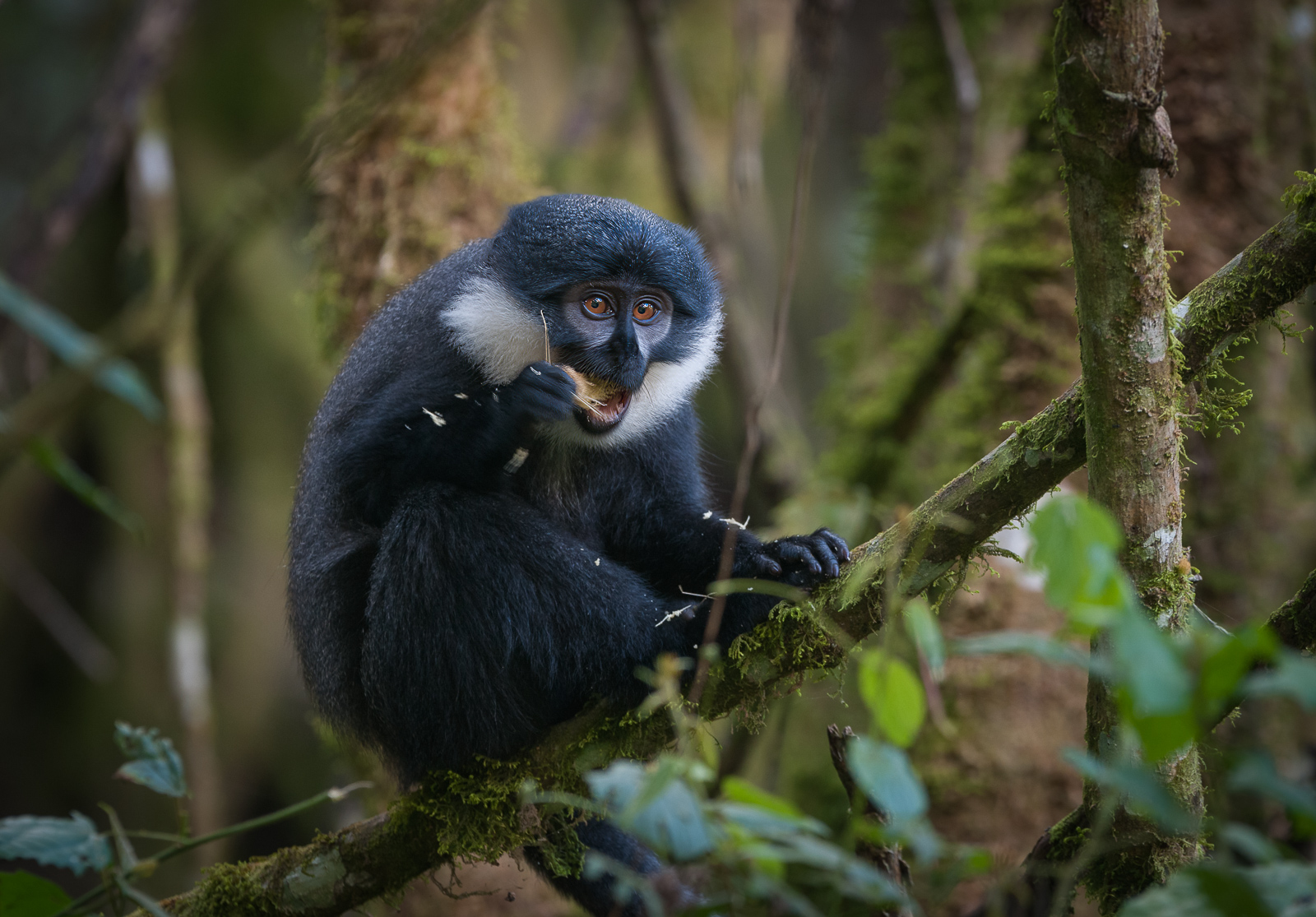
The L’Hoest’s monkey shares the same habitat at the mountain gorilla in Uganda. I came across this one while hiking in Bwindi National Park the day before going on a gorilla trek. They can be very skittish and this one only allowed me two shots before bounding off into the forest. Next week Karen and I will be vacationing on Block Island so I won’t post until we return. Not sure how the wildlife viewing will be on the island but should I come back with anything interesting, I’ll be sure to share. Nikon D300 with Nikkor 200-400mm lens (at 360mm) ISO 400, f/5 at 1/15th of a second.
Weavers are great little architects and seem to always be working on their orbed nests. They are called, weavers, in fact, because of the dexterity in which they weave together grasses and other nesting materials. There are many different species, most living in Africa. I photographed this masked weaver in Uganda. When multiple weavers nest in a single acacia tree, it looks like ornaments have been hung — earning the nickname African Christmas trees. Nikon D300 with Nikkor 200-400mm lens (at 400mm) ISO 400, f/4.5 at 1/400th of a second.
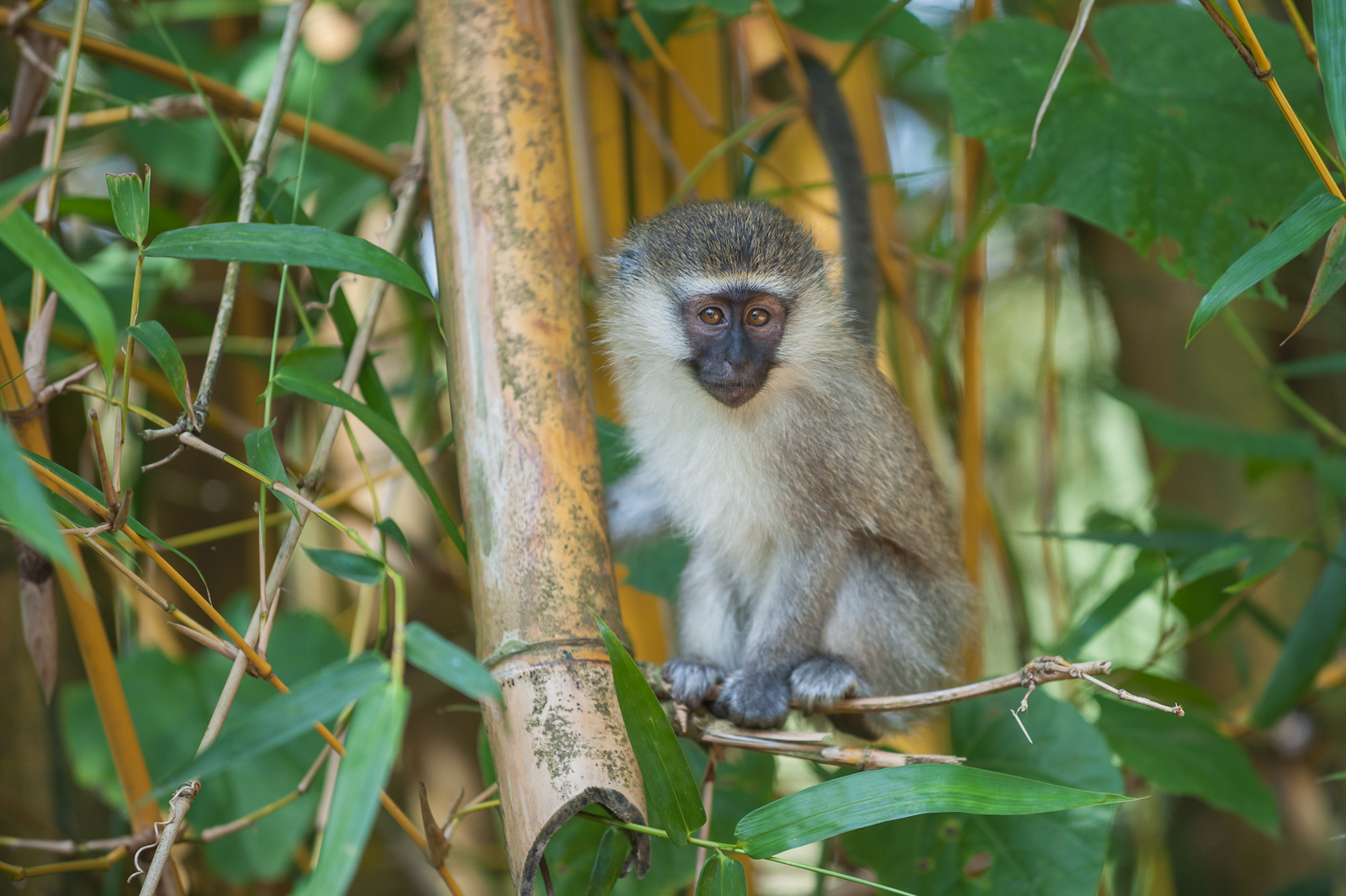
Continuing on with the monkey theme from last week, here’s another of Uganda’s many primates, and undoubtedly it’s most conspicuous, the vervet monkey. In fact, I saw many of these guys on my first day in the country in a city park in Entebbe, not far from the international airport. Nikon D700 with Nikkor 70-200mm lens (at 200mm) ISO 400, f/3.2 at 1/320th of a second.
We use cookies to enhance your experience while using our website. If you are using our Services via a browser you can restrict, block or remove cookies through your web browser settings. We also use content and scripts from third parties that may use tracking technologies. You can selectively provide your consent below to allow such third party embeds. For complete information about the cookies we use, data we collect and how we process them, please check our Privacy Policy