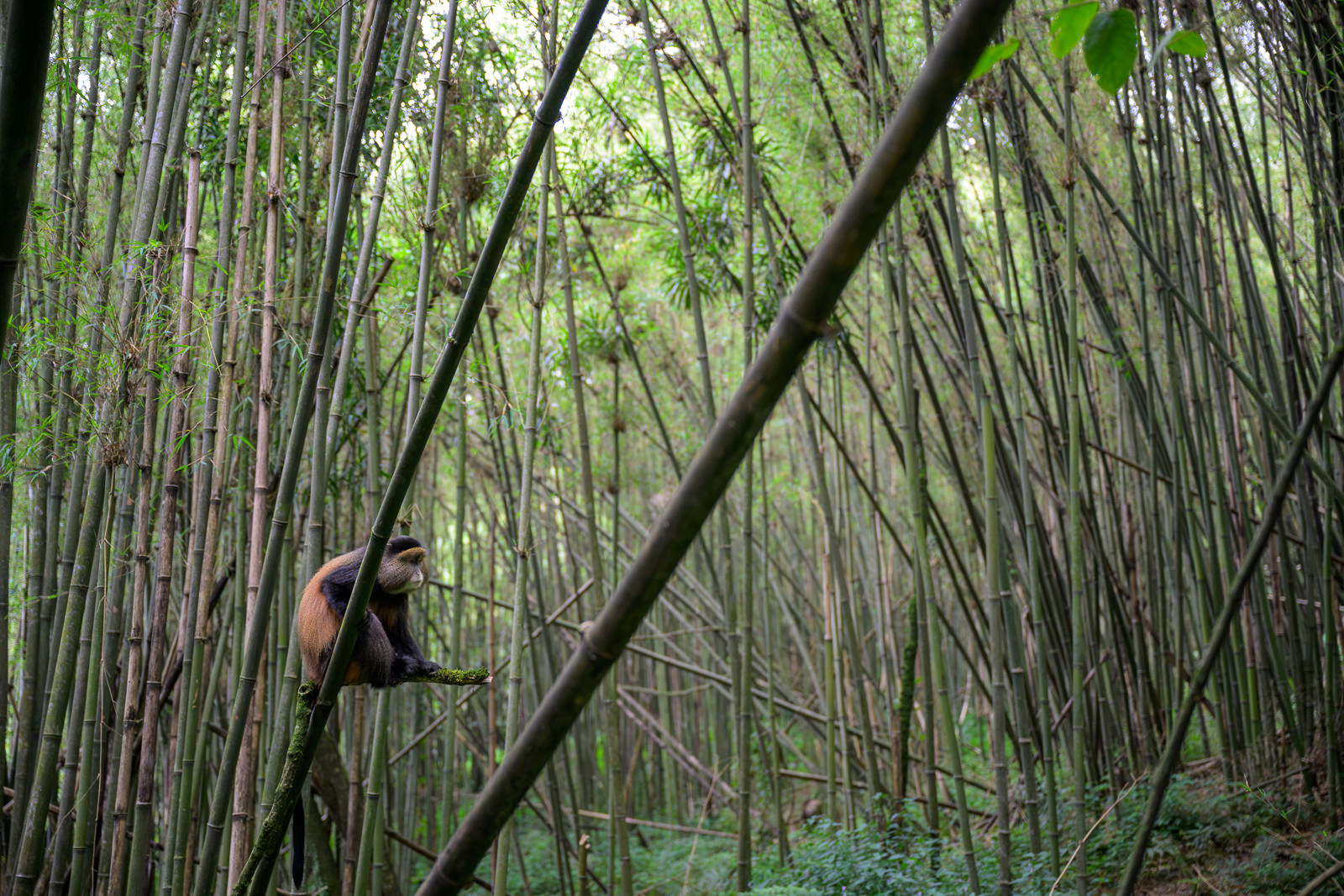
I love when I’m able to capture a wildlife image that highlights the environment the animal lives in. Seven years ago in Uganda we found the golden monkeys in a bamboo forest. I’ve gone back nearly every year since and finally found them in the bamboo again this summer. Their favorite food is the fresh shoots they dig from the ground. This guy had taken one of those shoots up to that mossy perch to enjoy a mid-day snack. Nikon Z8 with Nikkor 24-70mm lens (at 46mm) ISO 2200, f/2.8 at 1/400th of a second.
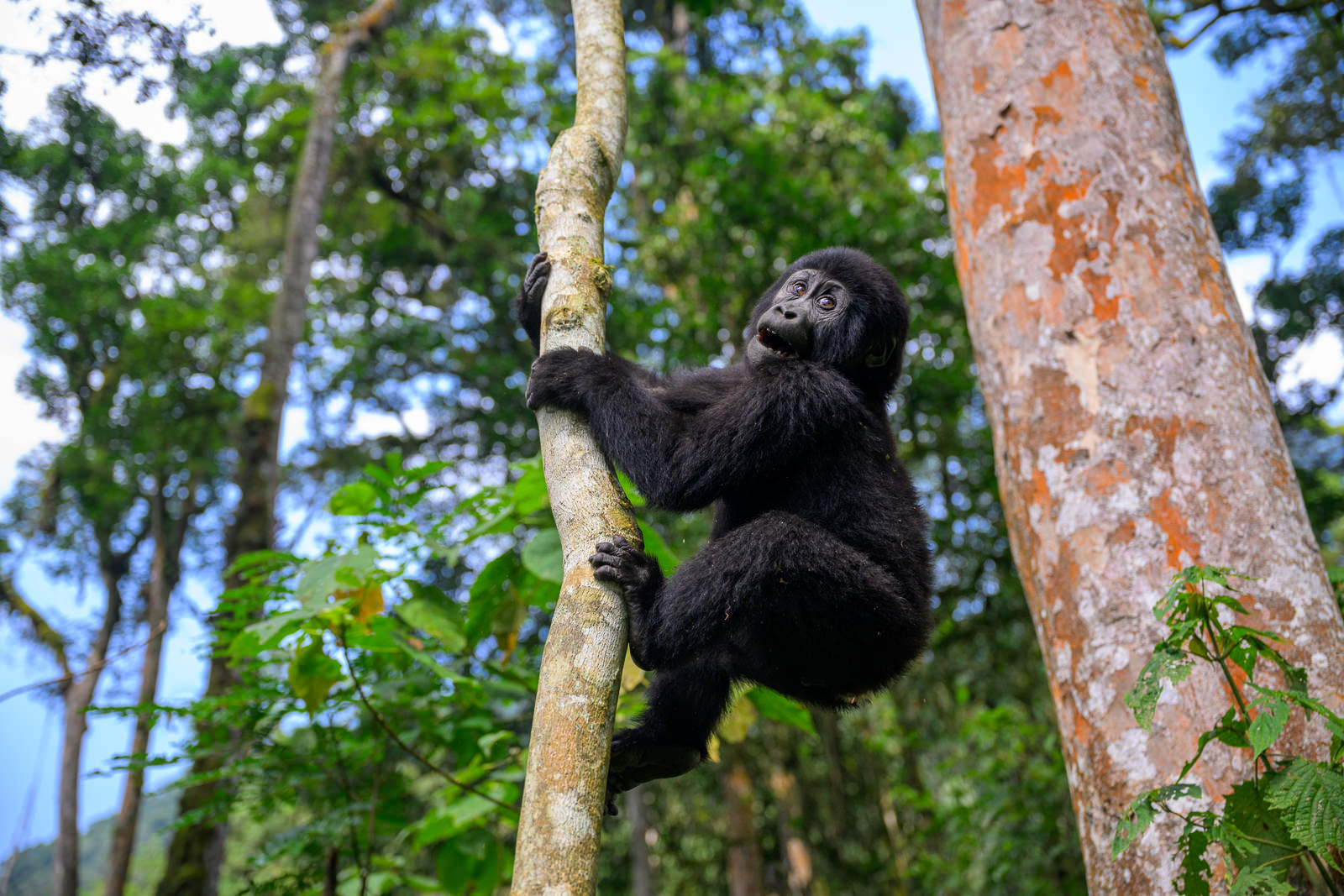
When speaking of humans, the term infant usually means up to one year old, but with mountain gorillas, an infant is classified as any individual up to there and half years old. After that they are classified as juveniles until the age of six. We saw this infant on our August trip to Uganda. He was playing on the ground only a few feet away when he suddenly started racing up that tree. Nikon Z8 with Nikkor 24-70mm lens (at 39mm) ISO 900, f/2.8 at 1/640th of a second.
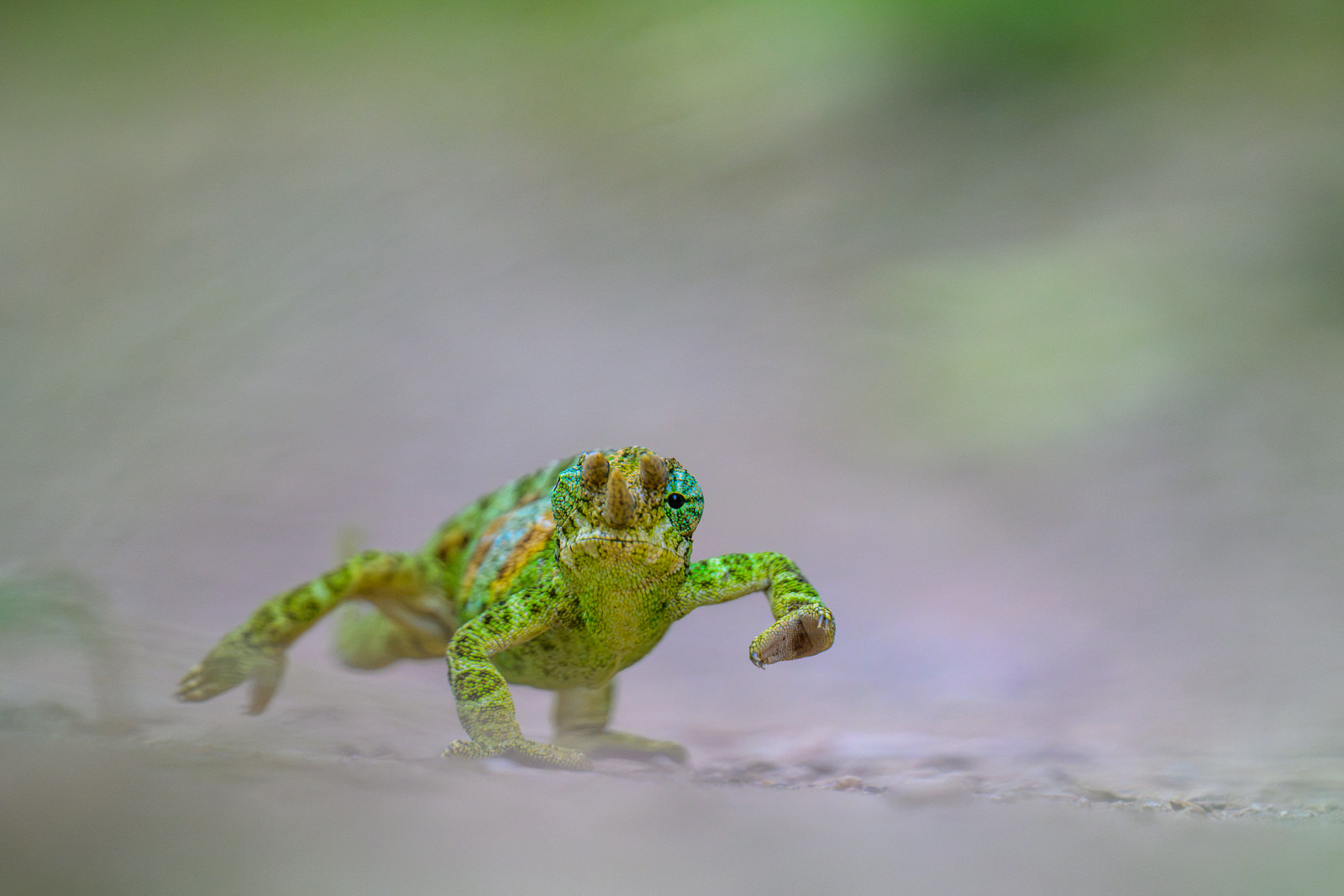
A bonus on gorilla treks is that we occasionally see a Jackson’s chameleon. Also known as the three-horned chameleon, these guys are medium-sized chameleons and the males get to about 15 inches in length. The males also have the three horns, which give them a triceratops-like appearance. Nikon Z8 with Nikkor 180-600mm lens (at 600mm) ISO 1400, f/6.3 at 1/1250th of a second.
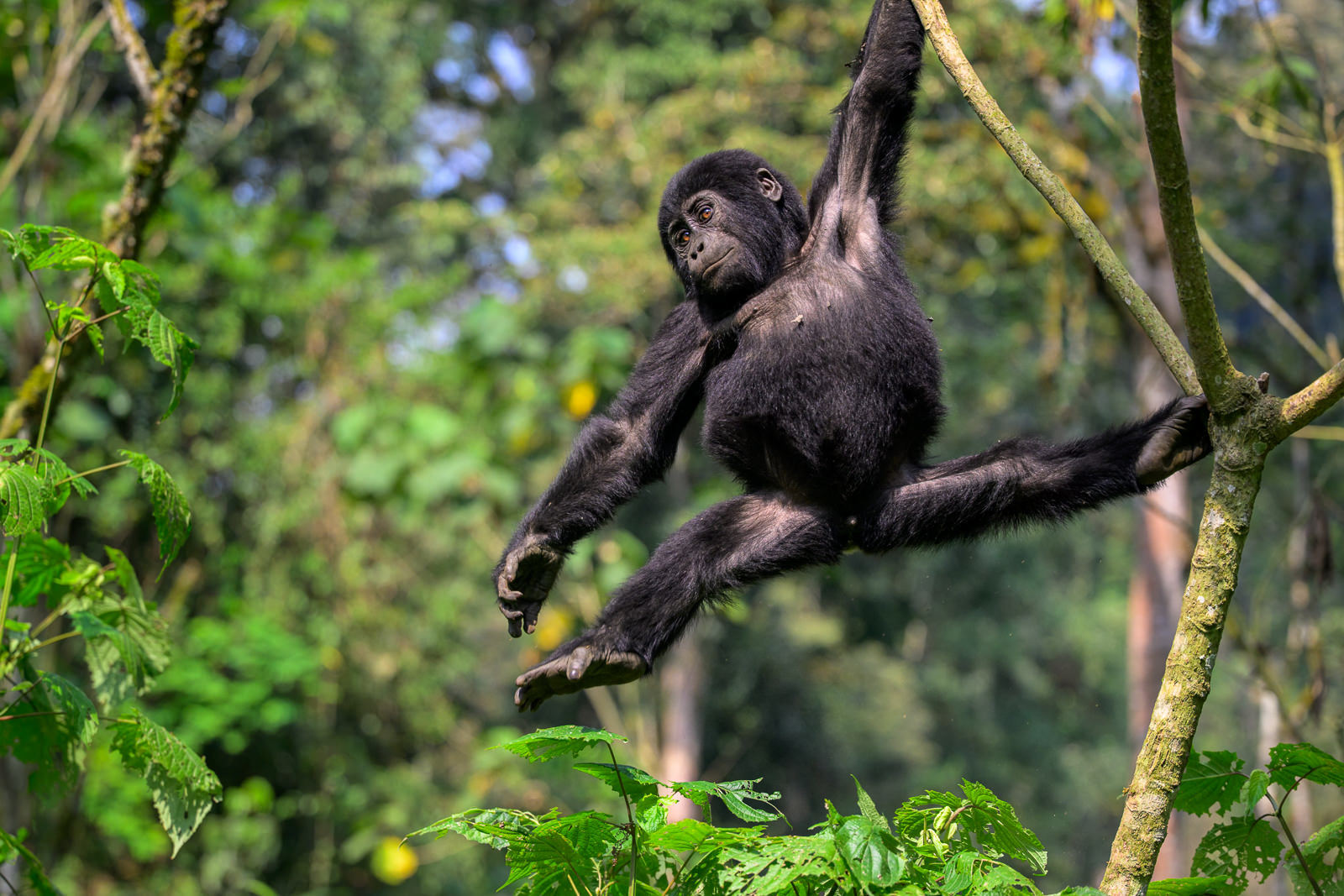
Over the course of five days, I had the opportunity to visit the same gorilla family twice — the Nshongi family. The Nshongis are famous for being one of the largest gorilla families ever recorded in the Virunga Mountains of Uganda, with 36 members. They’ve since split a few times and the current family consists of 23 members, including four babies and toddlers. It was fun to see them on different days in slightly different situations and environments. The first time I saw them, two of the young ones put on quite a show swinging from one small tree to another. Nikon Z8 with Nikkor 24-70mm lens (at 74mm) ISO 500, f/2.8 at 1/640th of a second.
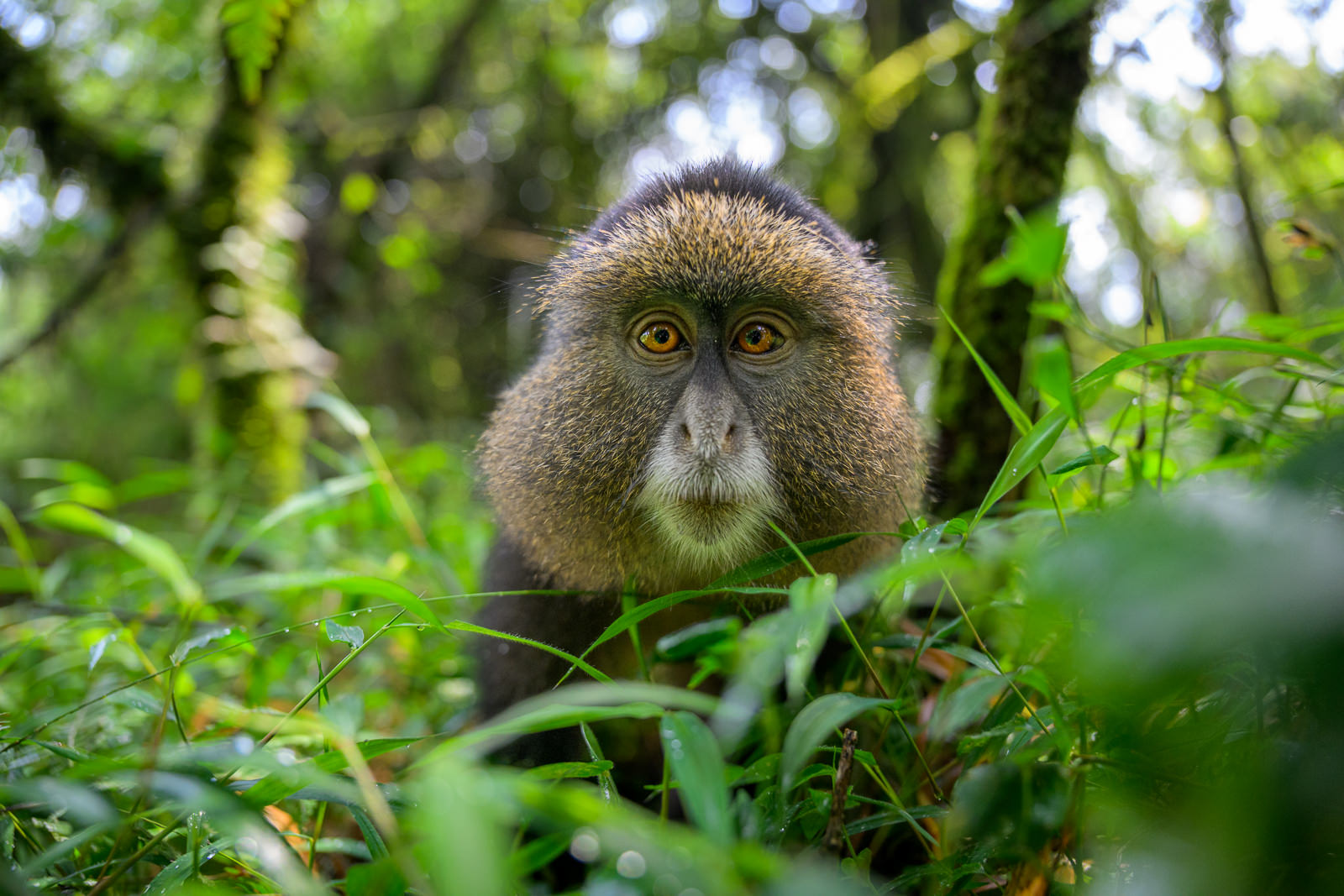
When we take guests to Rwanda and Uganda for gorilla trekking, we always add an extra day for another endangered primate — the golden monkey. These guys are a lot of fun to view and photograph. They occasionally jump from the trees and land right at your feet. In this case, a young golden monkey even started reaching for and touching the front of my lens. Nikon Z8 with Nikkor 24-70mm lens (at 24mm) ISO 2000, f/2.8 at 1/1000th of a second.
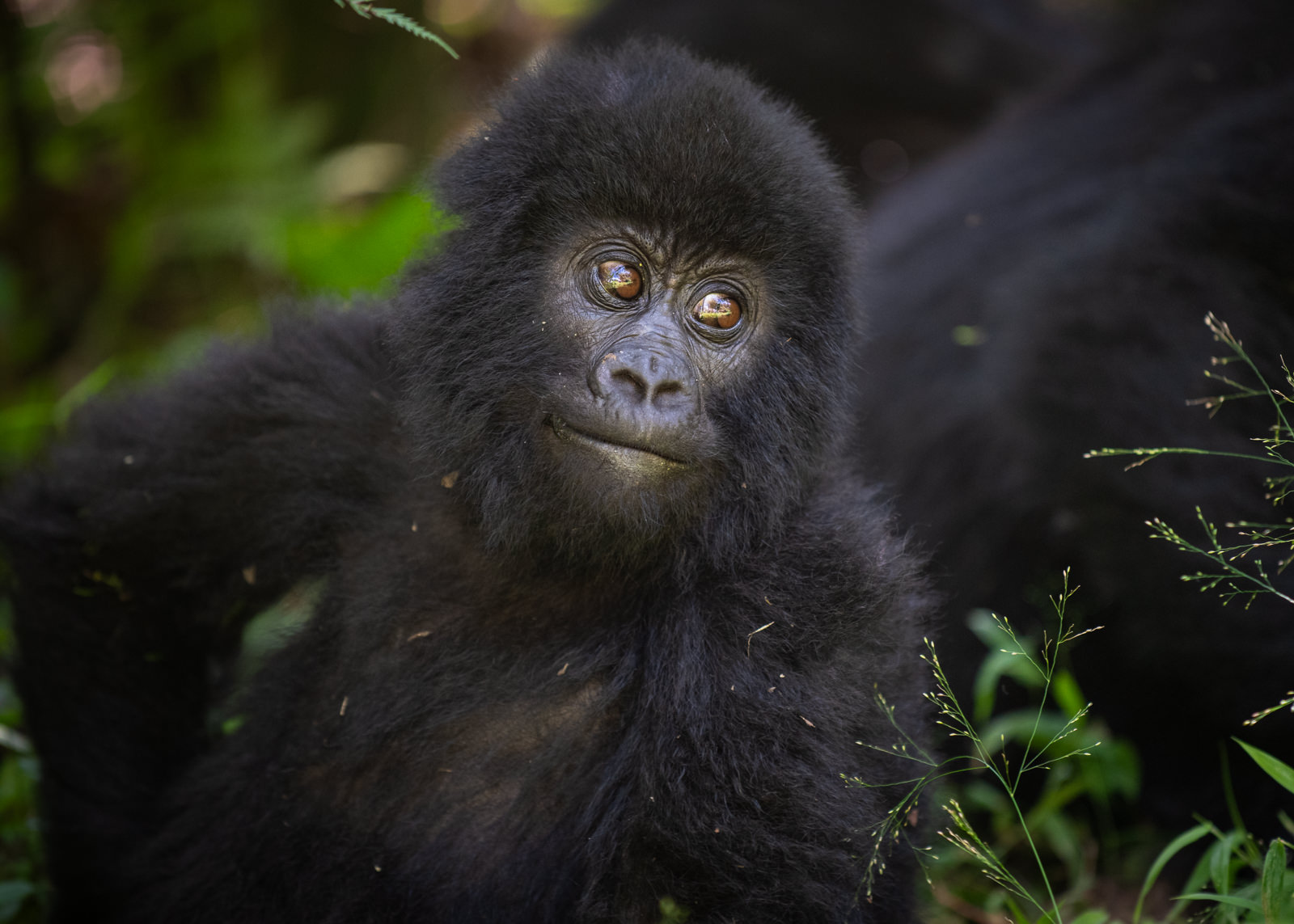
As we start to prepare for our tour season in East Africa, I’m looking forward to seeing more Mountain gorillas in the Virunga Mountains of Uganda. This little guy put on quite a show for us back in 2023. Babies can be very curious and expressive — tumbling, wrestling, and climbing around the troop while developing the social bonds and skills they’ll rely on throughout their lives. Nikon Z8 with Nikkor 70-200mm lens (at 190mm) ISO 2200, f/2.8 at 1/320th of a second.
I put this video together for an upcoming podcast I’m going to be featured on. Thanks to my sister Kerry and my wife Karen for grabbing footage of me while I’m grabbing footage of wildlife.
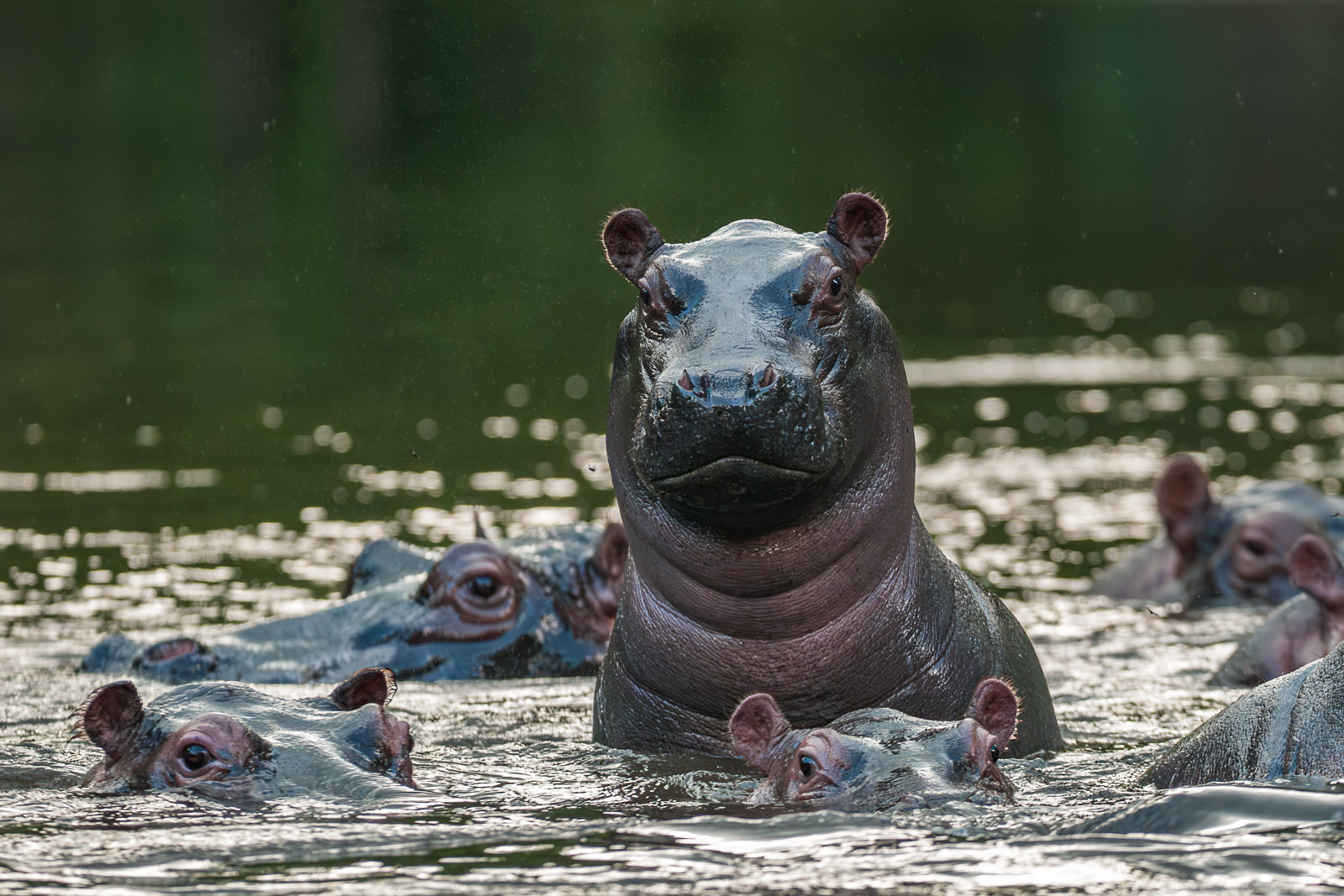
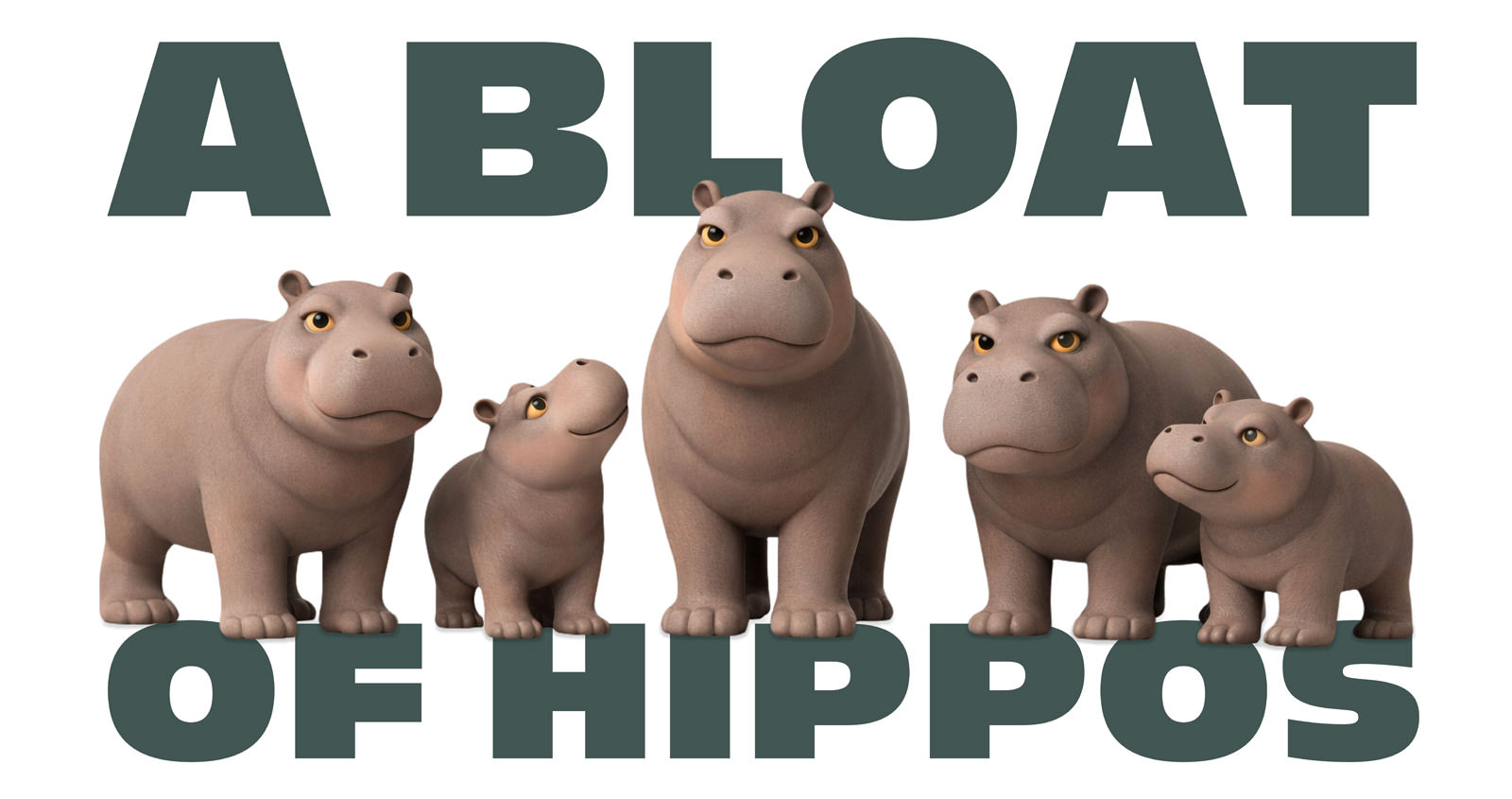
A group of hippos is called a bloat because the word perfectly captures the visual impact of several enormous, barrel-bodied animals packed together in shallow water. When hippos gather in pods — often dozens at a time — their rounded backs and swollen-looking forms rise from the river like floating boulders, giving the impression of something oversized and “bloated.” To get your Bloat of Hippos merchandise, visit Species Limited. Nikon D300 with Nikkor 200-400mm lens (at 300mm) ISO 800, f/4 at 1/640th of a second.
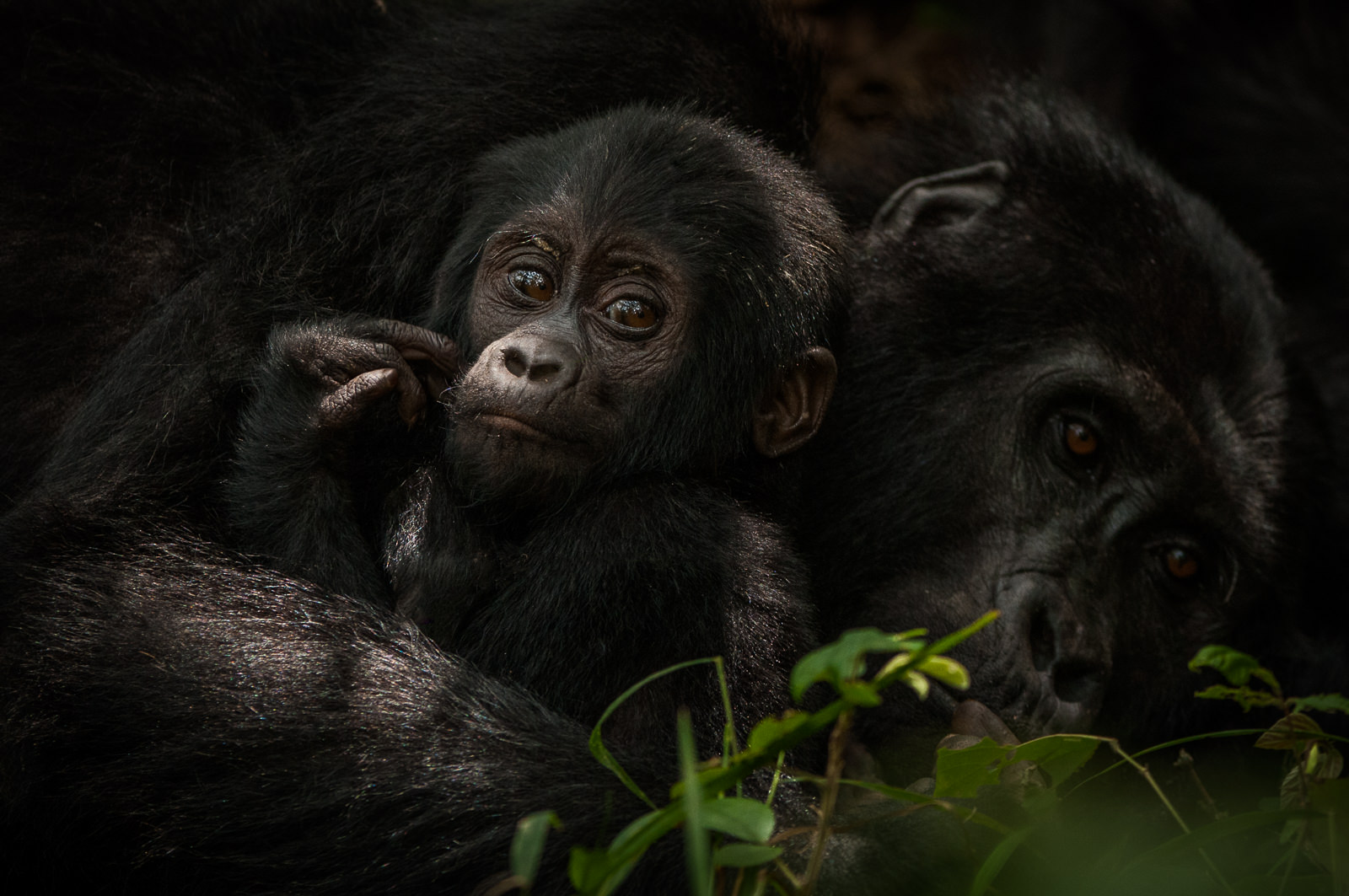
Only four days left to order the 2026 calendar at www.specieslimited.com or any of the great shirt designs. Well, only four days left for guaranteed Christmas delivery. This gorilla represents February in the “Mother’s Nature” calendar. Get those last minute gifts and feel good that 10% of select purchases is going back to wildlife conservation. And even better, join us next June in Kenya and Uganda and see the gorillas in the wild. Spots still available.Nikon D300 with Nikkor 200-400mm lens (at 240mm) ISO 800, f/4 at 1/125th of a second.
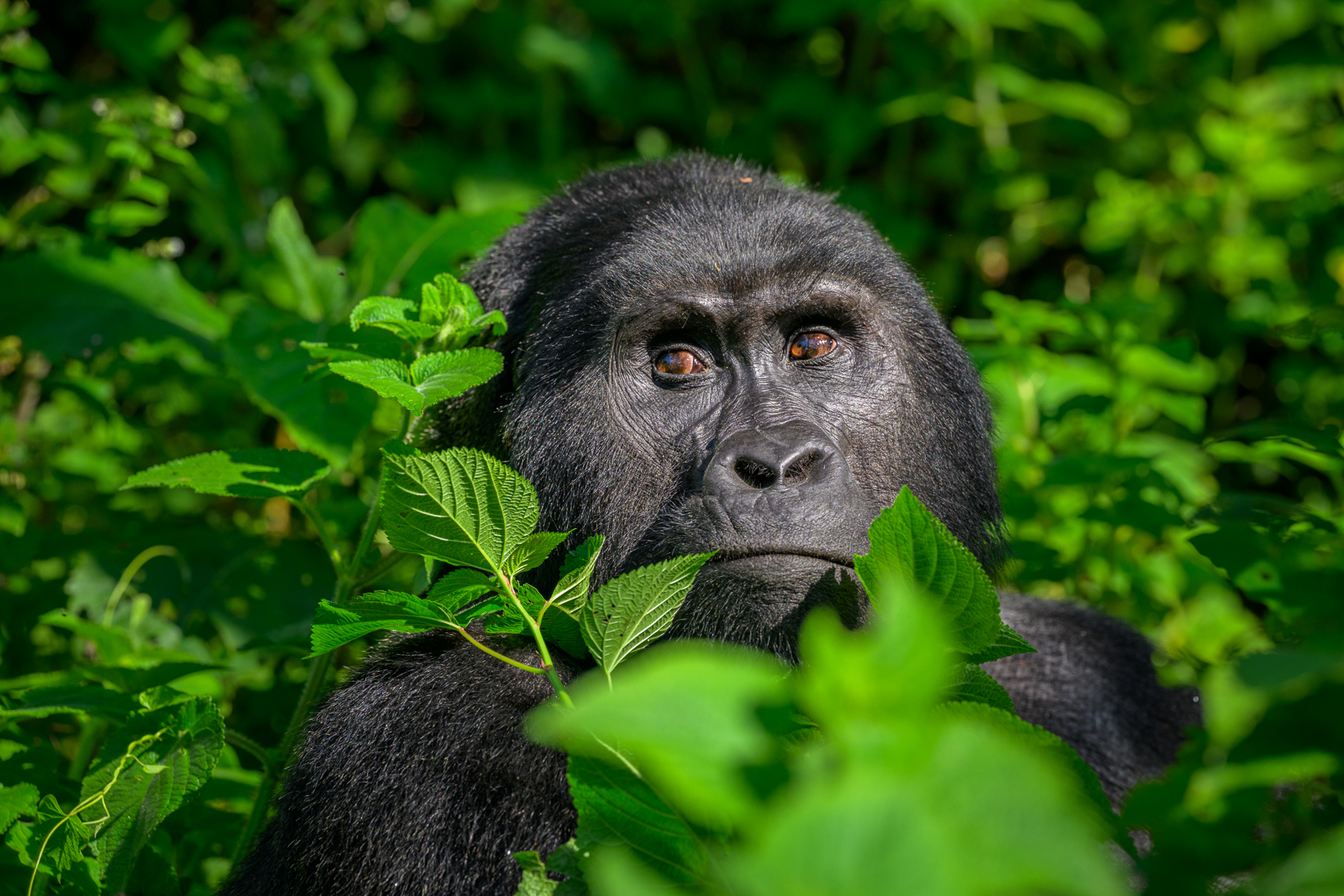
Photographing mountain gorillas can be a challenge, even though you can get extremely close. You can only be with the gorillas for an hour once you find them and there’s no guarantee on the setting or the light. On our last trip, the thick vegetation and bright sunshine definitely presented some difficulties, but every now and again a gorilla turned to a favorable angle to the sun and I was able to get a handful of shots that I liked. A polarizing filter also came in handy to take the bright spots off the leaves. Nikon Z8 with Nikkor 70-200mm lens (at 135mm), ISO 1000, f/5 at 1/640th of a second.
We use cookies to enhance your experience while using our website. If you are using our Services via a browser you can restrict, block or remove cookies through your web browser settings. We also use content and scripts from third parties that may use tracking technologies. You can selectively provide your consent below to allow such third party embeds. For complete information about the cookies we use, data we collect and how we process them, please check our Privacy Policy


 I love when I’m able to capture a wildlife image that highlights the environment the animal lives in. Seven years ago in Uganda we found the golden monkeys in a bamboo forest. I’ve gone back nearly every year since and finally found them in the bamboo again this summer. Their favorite food is the fresh shoots they dig from the ground. This guy had taken one of those shoots up to that mossy perch to enjoy a mid-day snack. Nikon Z8 with Nikkor 24-70mm lens (at 46mm) ISO 2200, f/2.8 at 1/400th of a second.