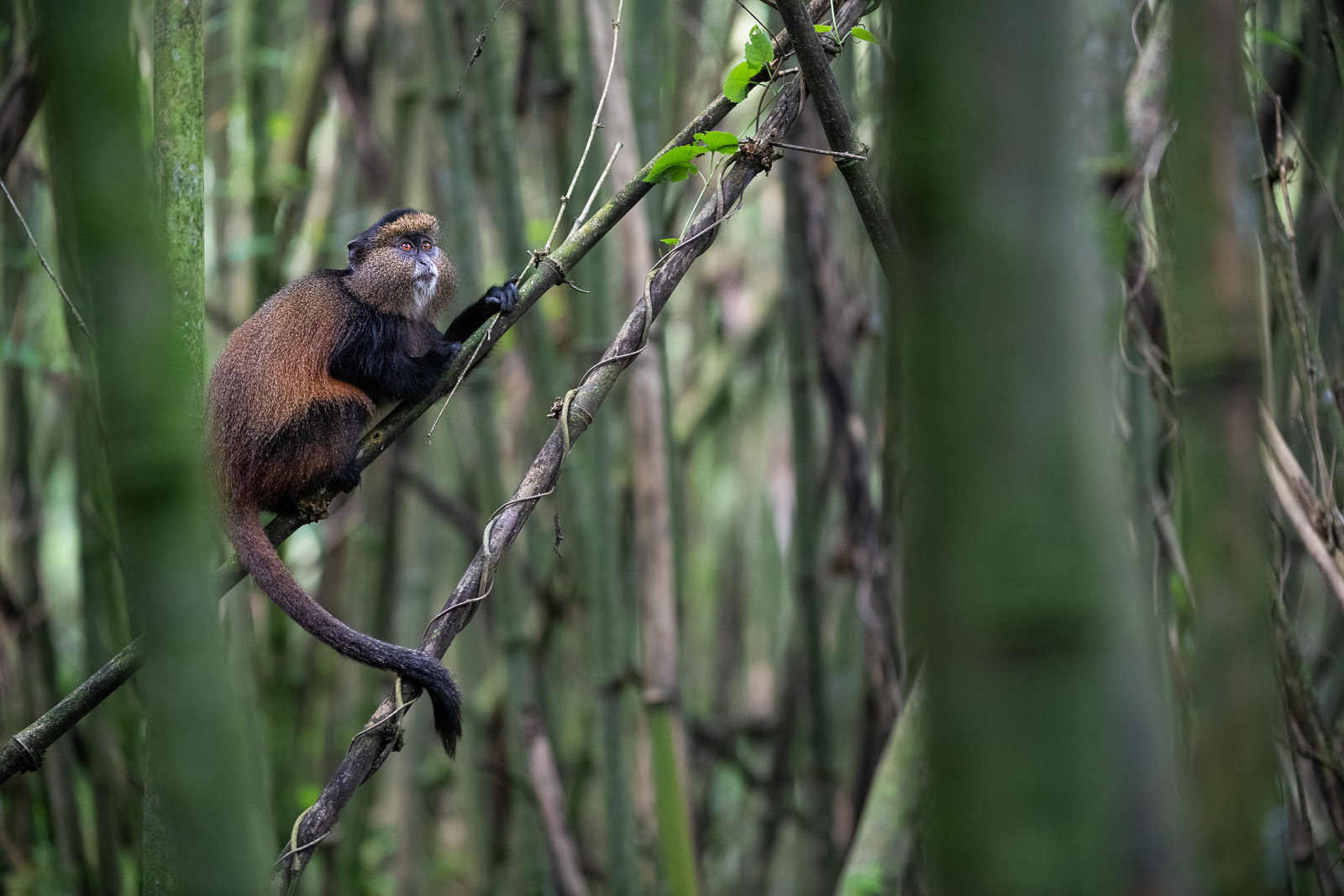
The golden monkey is a new species for me. Previously thought to be a subspecies of the blue monkey (which I have photographed before in Tanzania) it is now listed as a distinct species. They are considered endangered due to continued loss of habitat and wars in their limited range. They exist only in the Virunga mountains that span the border between Uganda, Rwanda and the Congo. They prefer the bamboo forests at higher elevations — their diet consisting mainly of bamboo shoots and leaves. It was a bit of a trek to reach the monkeys (and we passed a few gorillas on the way) but well worth it when we finally came upon a troop of about thirty individuals going about their business of playing, eating and doing all other manner of golden monkey-y things. Photographed in Mgahinga National Park in Uganda. Nikon D850 with Nikkor 200-400mm lens (at 200mm) ISO 3200, f/4 at 1/100th of a second.
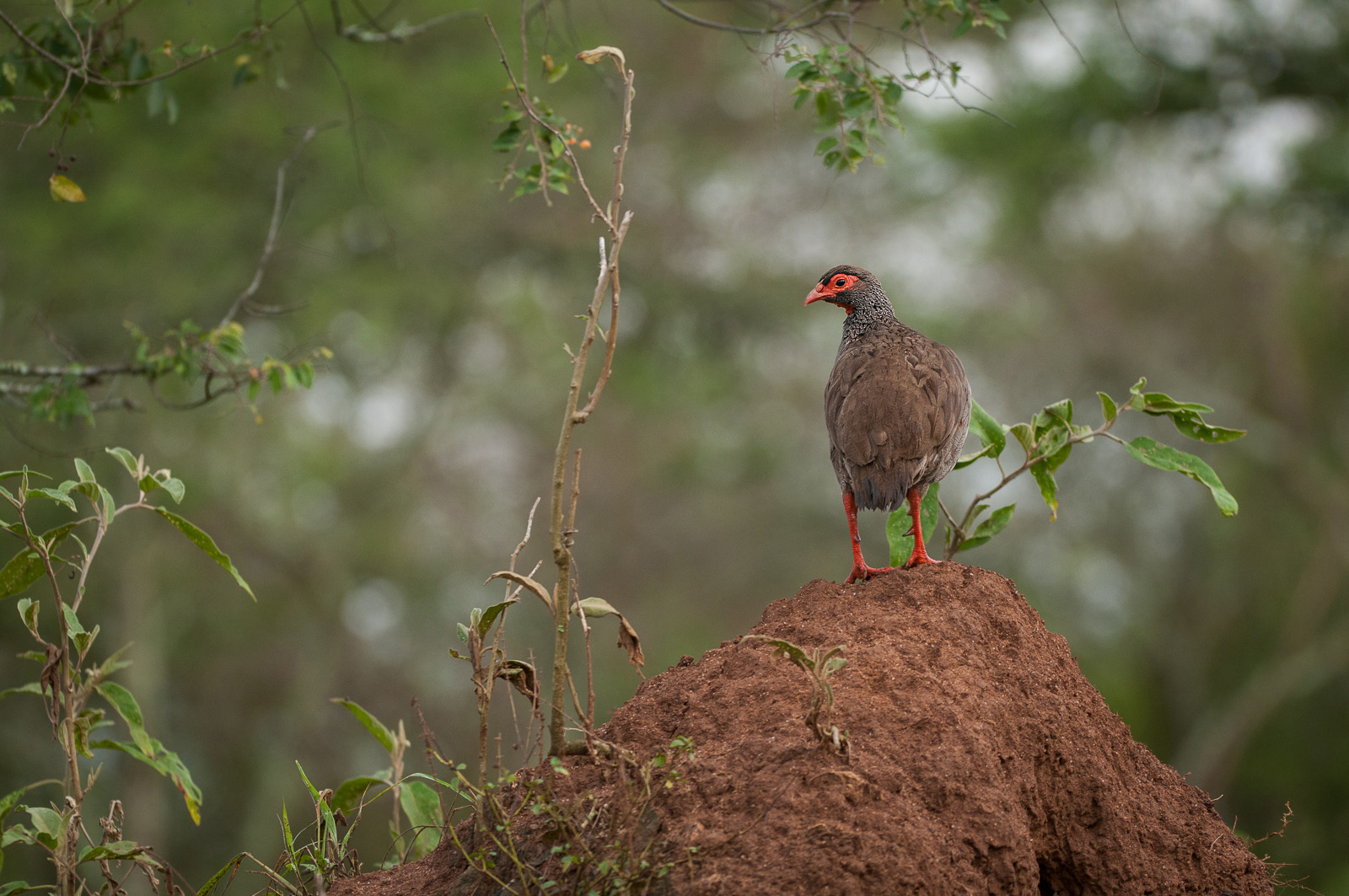
Francolin, or spurfowl, are a common sight while on safari in Africa. There are several different species and they are often referred to as African chickens or safari chickens for their tendency to scurry out of the way of vehicles. This red-necked francolin was photographed in Uganda, sitting atop a termite mound. Nikon D300 with Nikkor 200-400mm lens (at 200mm) ISO 400, f/4 at 1/500th of a second.
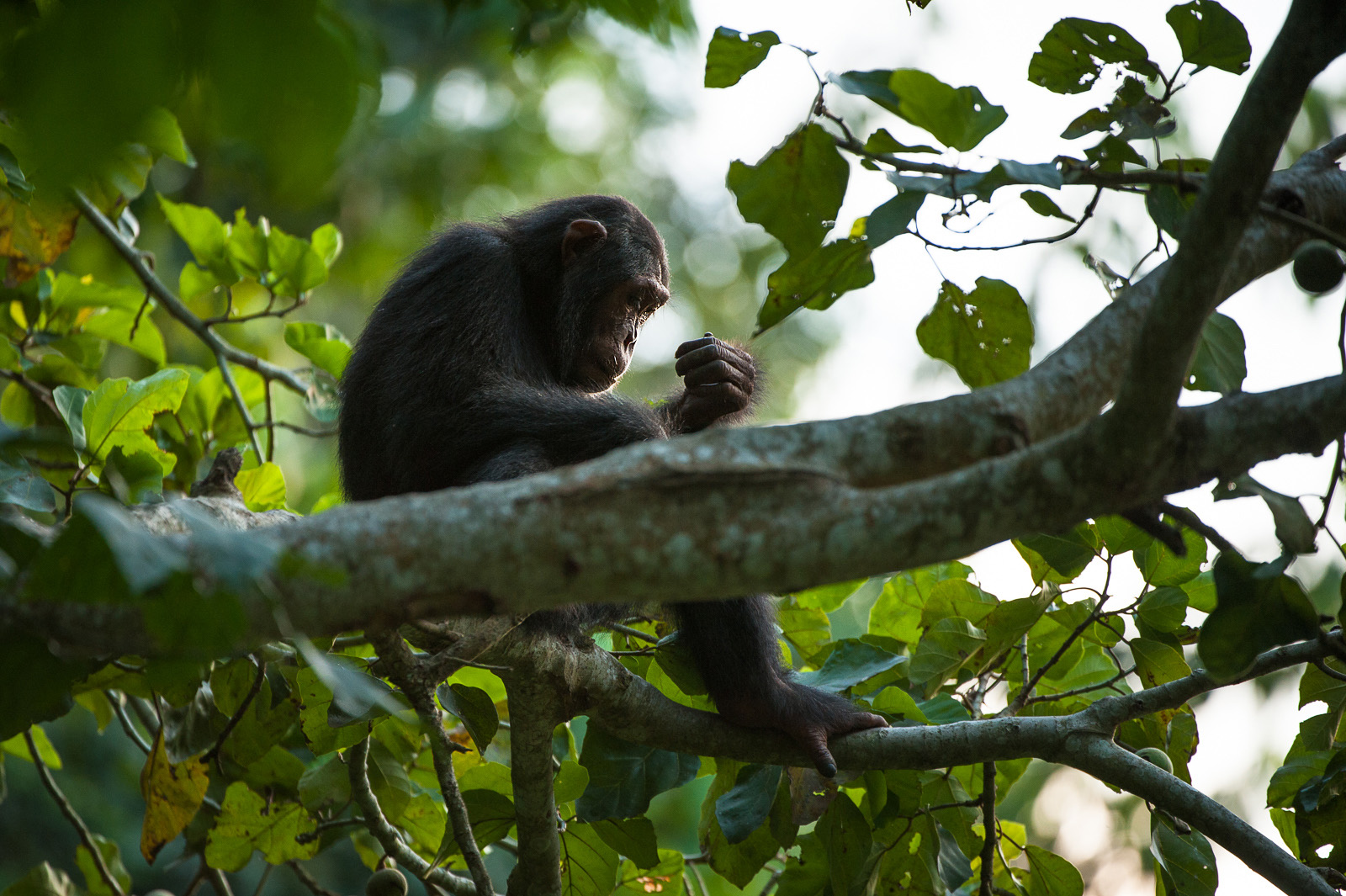
It’s been a long dry spell for me since my last adventure, but looking forward to getting back into the wild soon. I’ll be leading a tour to Kenya and Uganda in early January. The Uganda portion of the trip will be primarily for gorillas, but you never know when you might encounter a chimpanzee as well. This was taken on my last trip to Uganda, in Queen Elizabeth National Park. Nikon D700 with Nikkor 200-400mm lens (at 400mm) ISO 800, f/4 at 1/320th of a second.
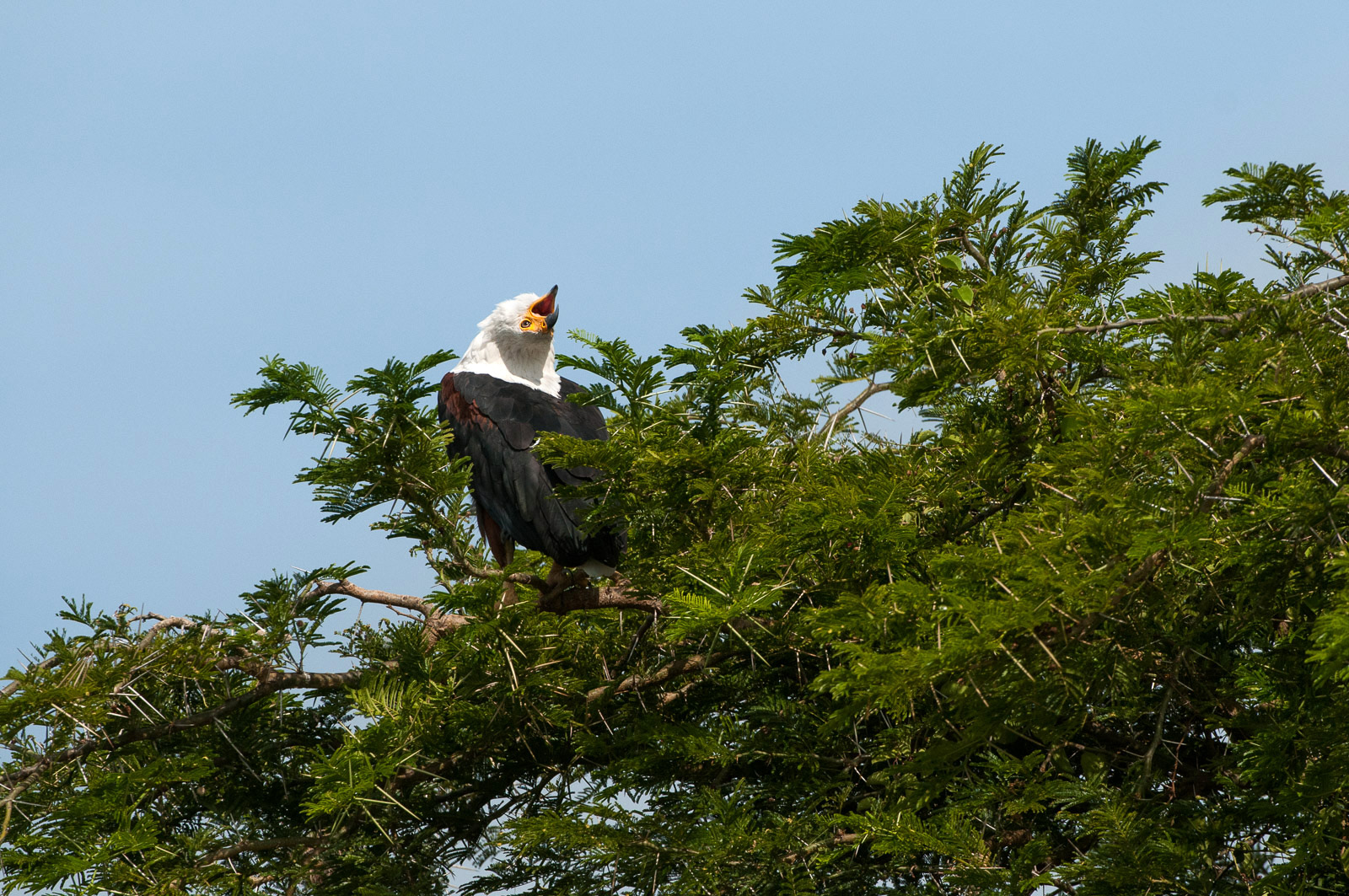
The African fish eagle is an impressive bird. So much so, that it’s the national bird of four countries — Namibia, South Sudan, Zambia and Zimbabwe. I photographed this one in Uganda. It was perched along a river in Queen Elizabeth National Park, throwing its head backward as it cried out. Nikon D300 with Nikkor 200-400mm lens (at 400mm) ISO 400, f/6.3 at 1/3200th of a second.
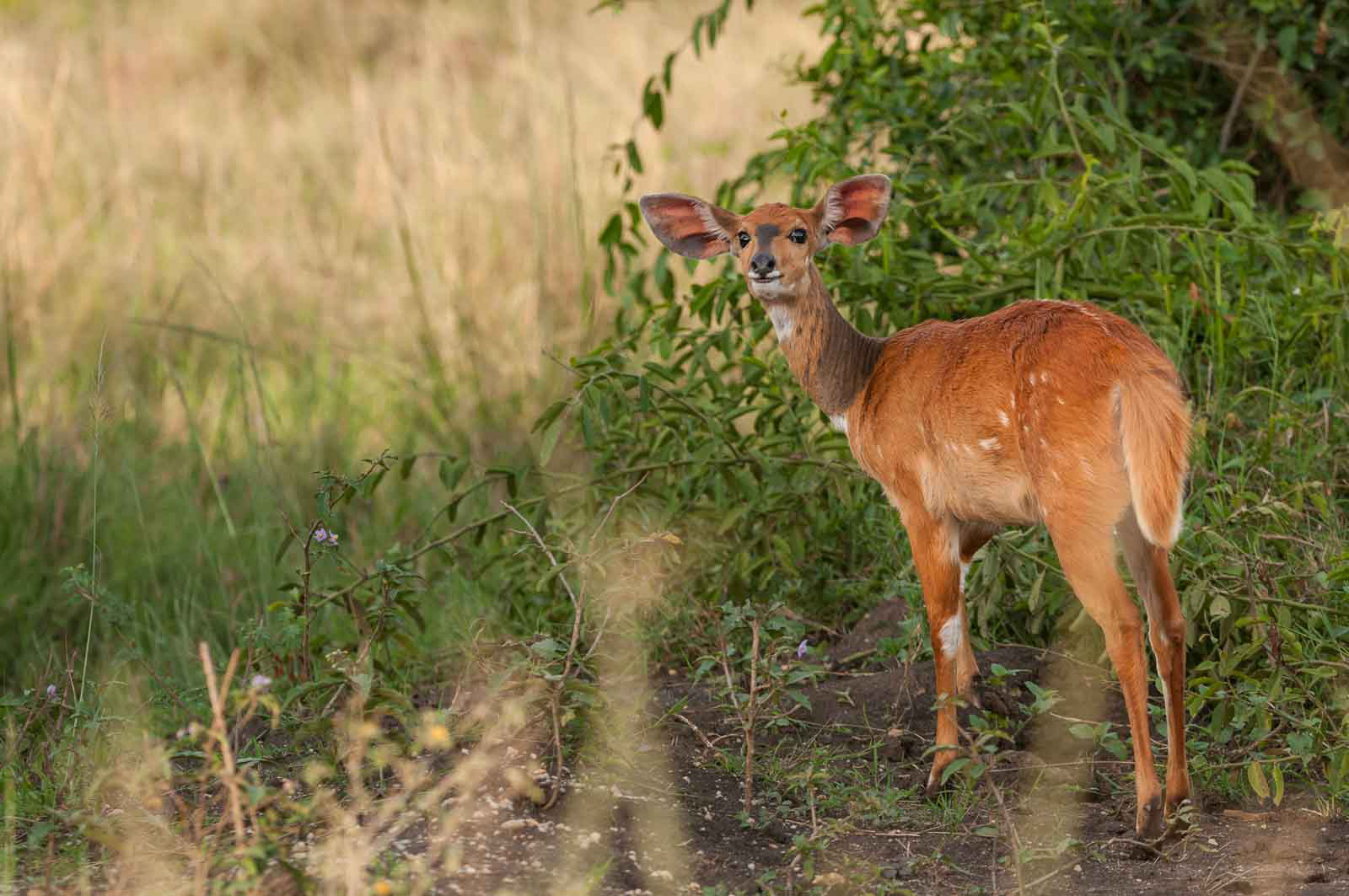
Of the many antelope species in Africa, the bushbuck — by my estimation at least — has some of the most impressive ears. I encountered this one in Queen Elizabeth National Park in Uganda. Nikon D300 with Nikkor 200-400mm lens (at 270mm) ISO 200, f/5.6 at 1/200th of a second.
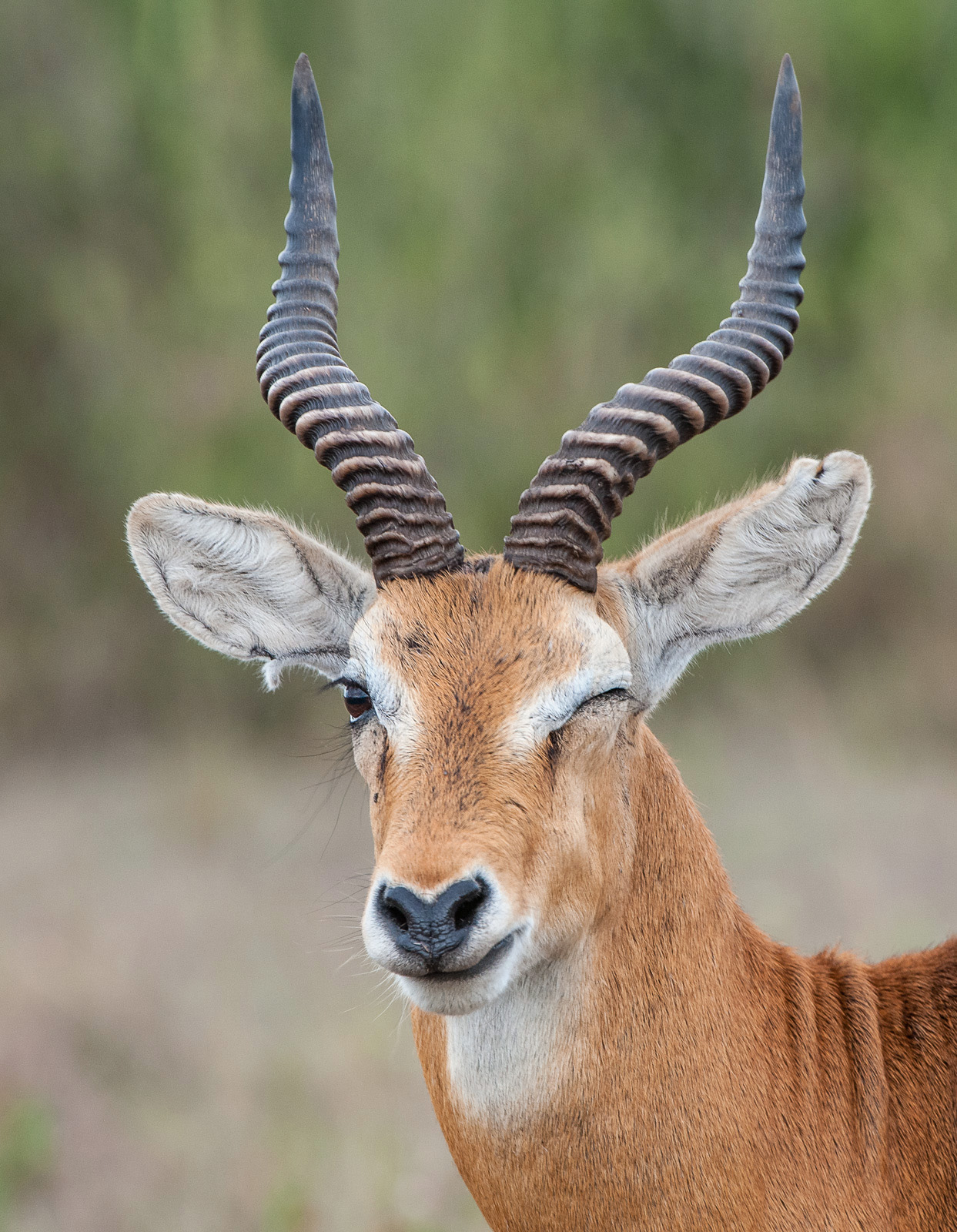
Africa is full of different species of antelope. To the Ugandan’s, however, the kob is special among them. It’s the national animal and appears on the coat of arms. This image of a winking male kob was one of my first award winners about ten years ago. Searching my site tonight, I realized that I never posted it to the photo of the day, so here it is. Nikon D300 with Nikkor 200-400mm lens (at 400mm) ISO 400, f/5.6 at 1/100th of a second.
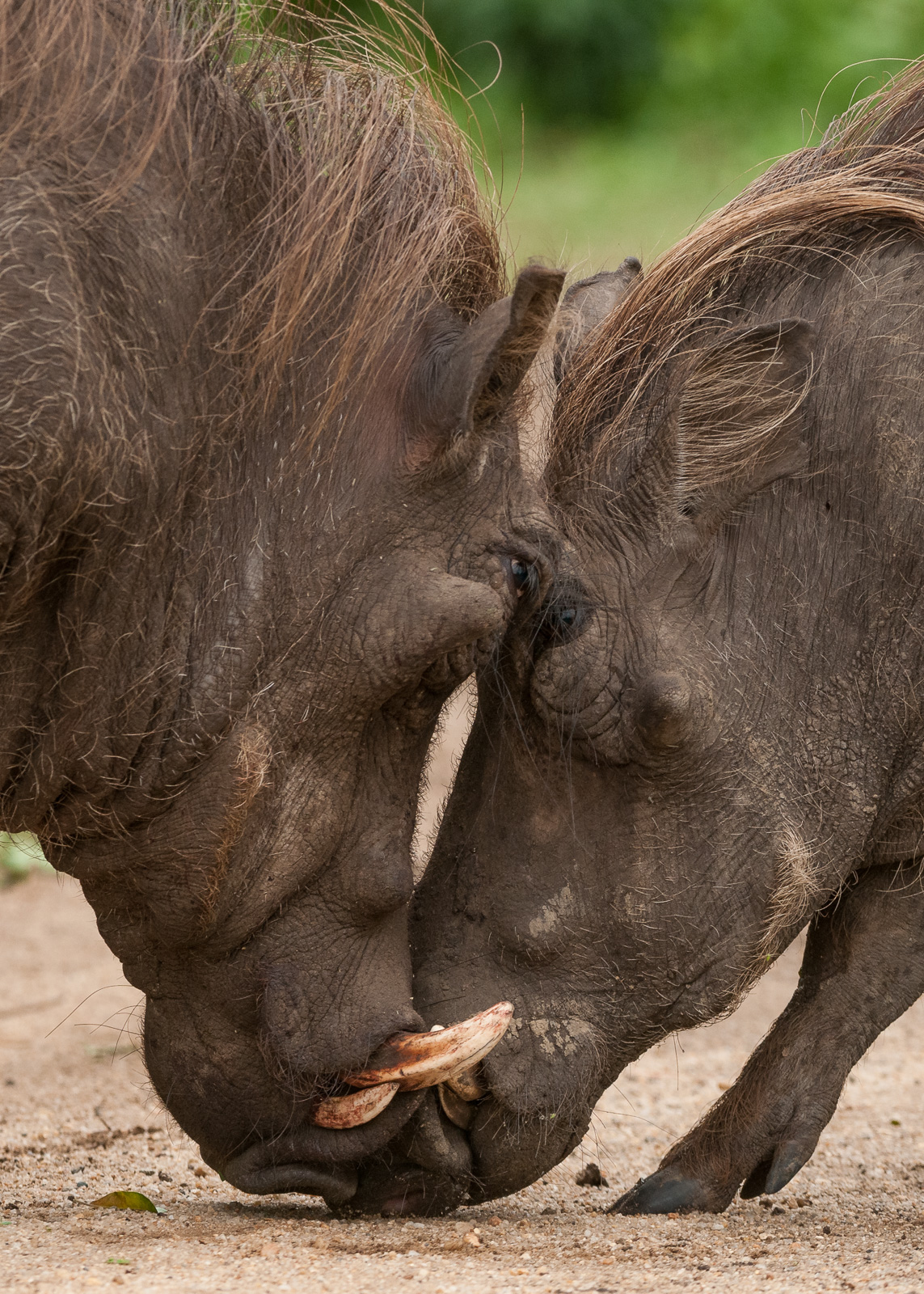
These two warthogs appeared to be trying to out ugly each other. Actually, I think warthogs are quite elegant in all their hairy-faced glory and these two were most likely just having a bit of a territorial dispute. They were photographed in Uganda’s Queen Elizabeth National Park. Nikon D300 with Nikkor (200-400mm lens) at 270mm, ISO 400, f/5.6 at 1/250th of a second.
When you’re a red-billed oxpecker, romance can happen anywhere. Including the back of a cape buffalo. Oxpeckers are actually a very common site on most big game in east Africa, including zebras, giraffes and impala. It’s sort of a blessing and a curse for the mammals. The oxpeckers have a voracious appetite for blood-engorged ticks and they will eat up to a 100 a day — a good thing. But they will also skip the middle man when the opportunity arises and peck directly at the buffalo’s blood, thus keeping open wounds from healing. This buffalo and his tenants were photographed in Queen Elizabeth National Park in Uganda. Nikon D300 with Nikkor 200-400mm lens (at 400mm) ISO 400, f/5.6 at 1/200th of a second.
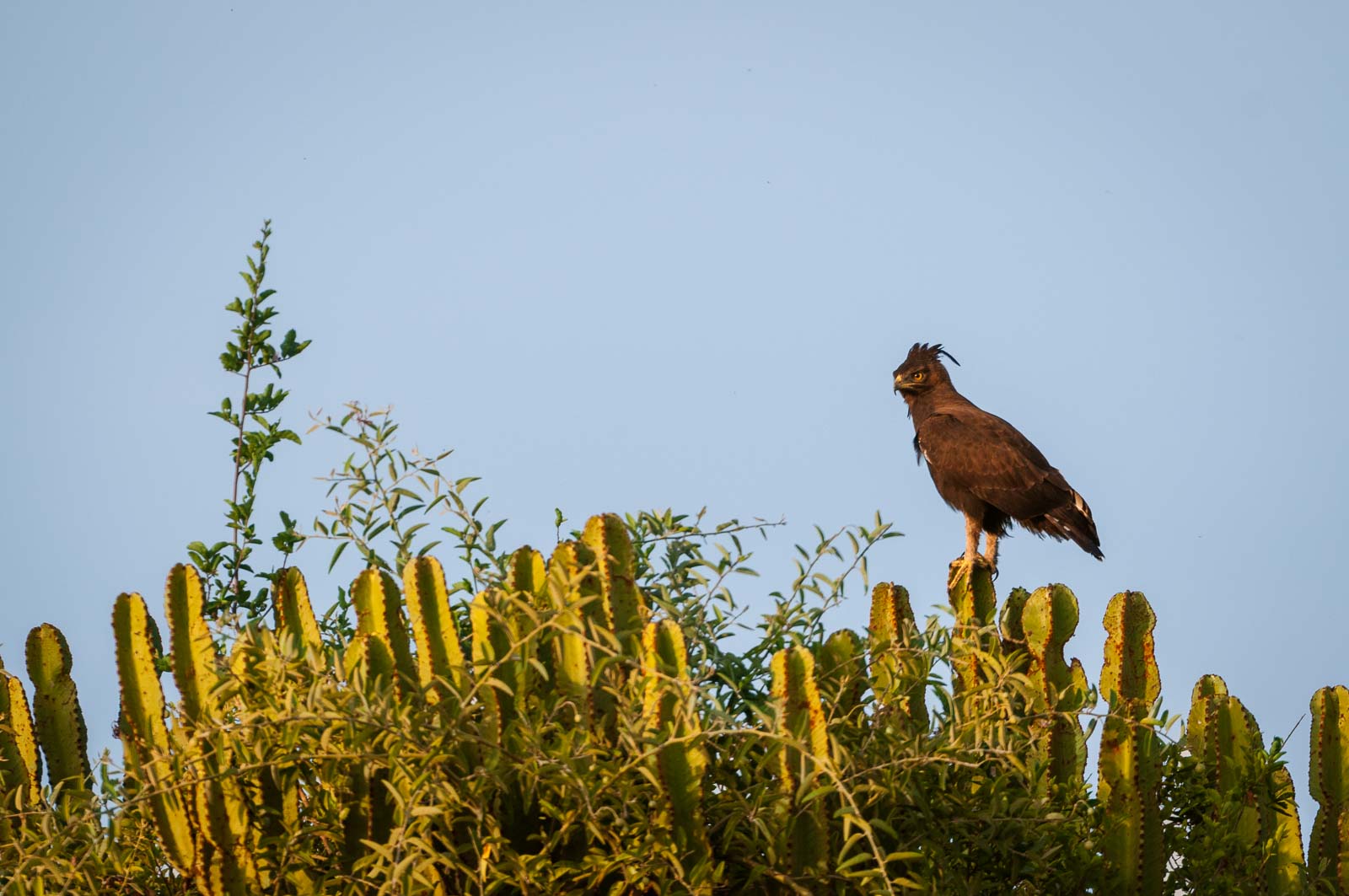
Long-crested eagles — aptly named for the long crest that extends backward from the top of their heads — are found throughout much of sub-Sahara Africa. I photographed this one in Queen Elizabeth National Park in Uganda. They are opportunistic hunters although their favorite prey by far is rodents. Unlike many other raptors that scan the ground as they fly above, long-crested eagles are known as “sit and wait” hunters as they will patiently wait for food to come to them. It would appear that this guy is doing just that. Nikon D300 with Nikkor 200-400mm lens (at 400mm) ISO 400, f/5.6 at 1/400th of as second
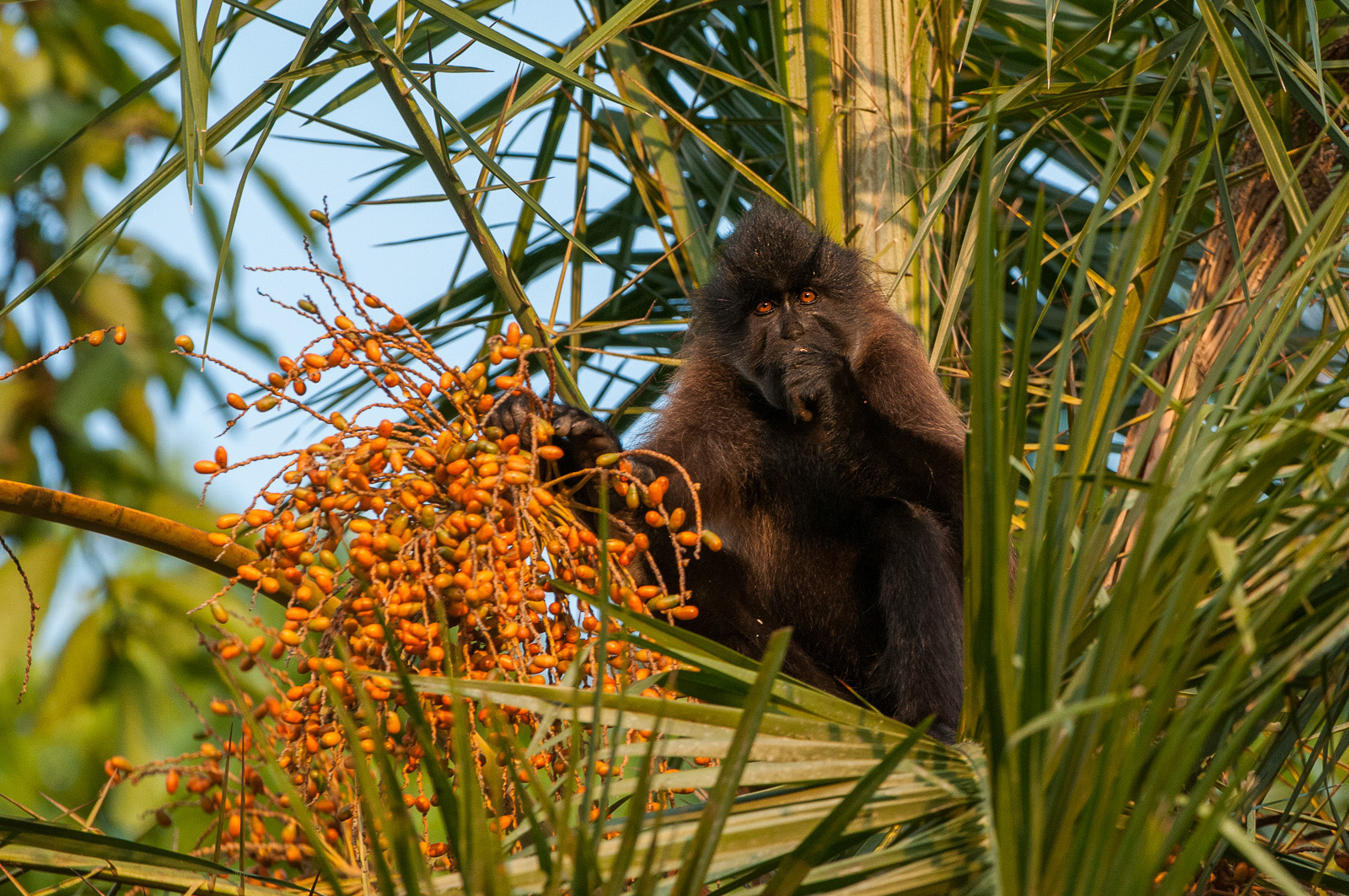
The grey-cheeked mangabey is an old world monkey that lives in the forests of central Africa. I encountered this one in Kibale National Park in Uganda, the eastern edge of its range. They resemble baboons, but if you look at this guy’s face, you’ll see they also resemble the Grinch. Nikon D300 with Nikkor 200-400mm lens (at 350mm) ISO 800, f/5 at 1/200th of a second
We use cookies to enhance your experience while using our website. If you are using our Services via a browser you can restrict, block or remove cookies through your web browser settings. We also use content and scripts from third parties that may use tracking technologies. You can selectively provide your consent below to allow such third party embeds. For complete information about the cookies we use, data we collect and how we process them, please check our Privacy Policy