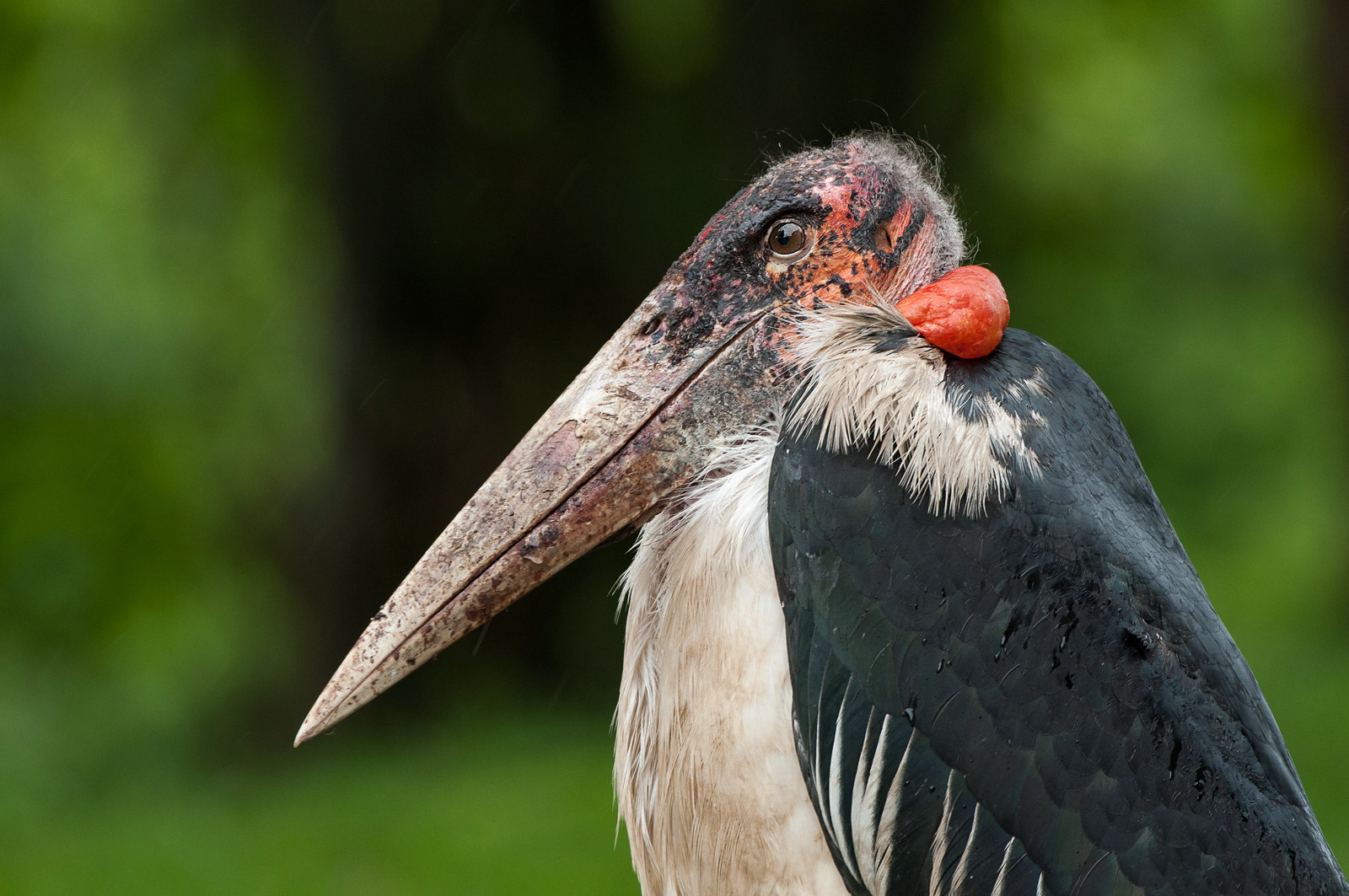
The marabou stork isn’t going to win any beauty contests. But… they’re still kind of cool looking in a Mad Magazine “Spy Vs Spy” kind of way. Sometimes they are called the undertaker bird because of their black, cloak-like feathers on their backs. They are very large and like to hang out near human habitation, especially where there is plenty of delicious garbage to forage on. They live in much of sub-Sahara Africa. This one was photographed in Uganda at Queen Elizabeth National Park. Nikon D300 with Nikkor 200-400mm lens (at 400mm) ISO 400, f/5.6 at 1/200th of a second
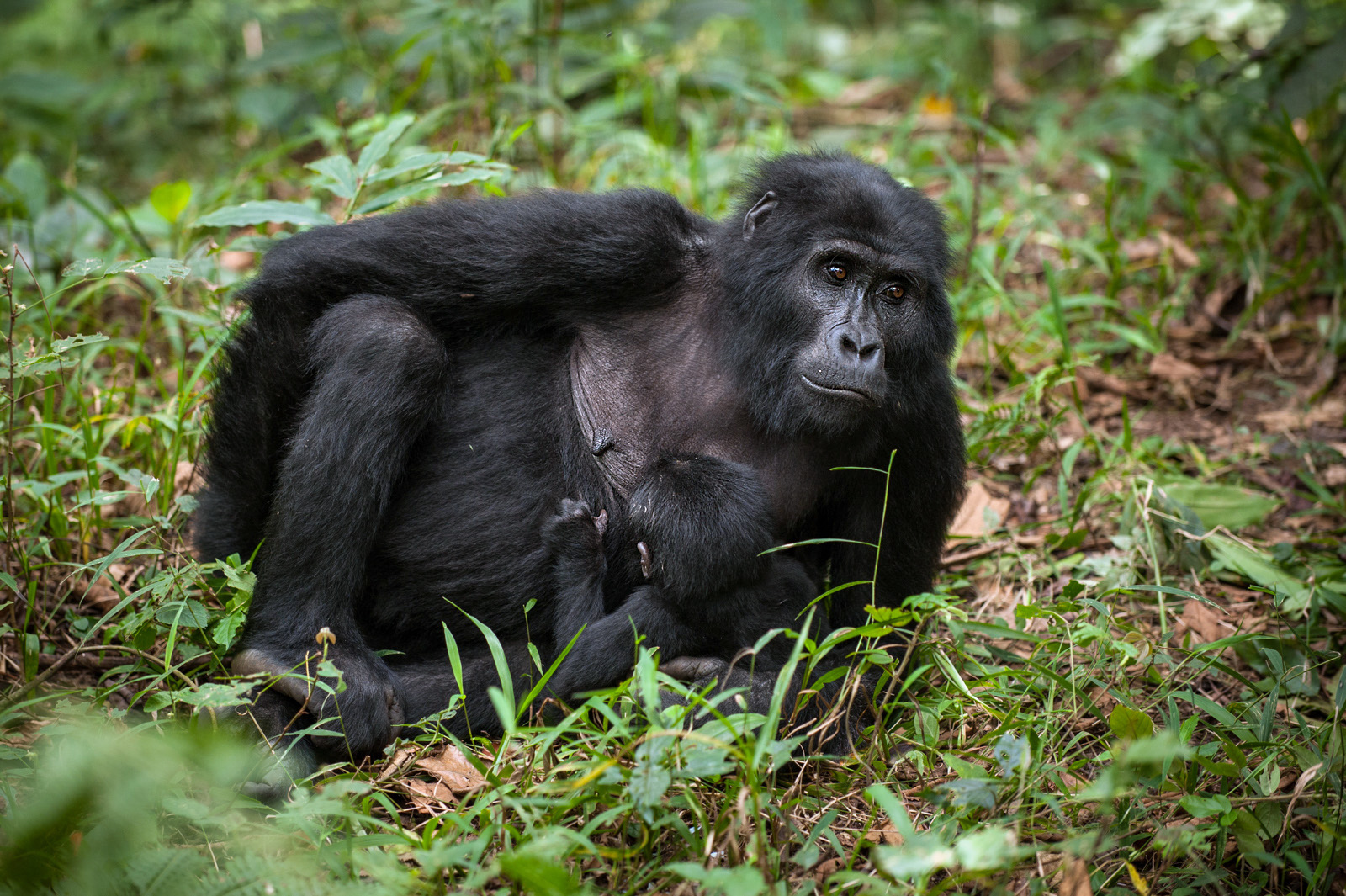
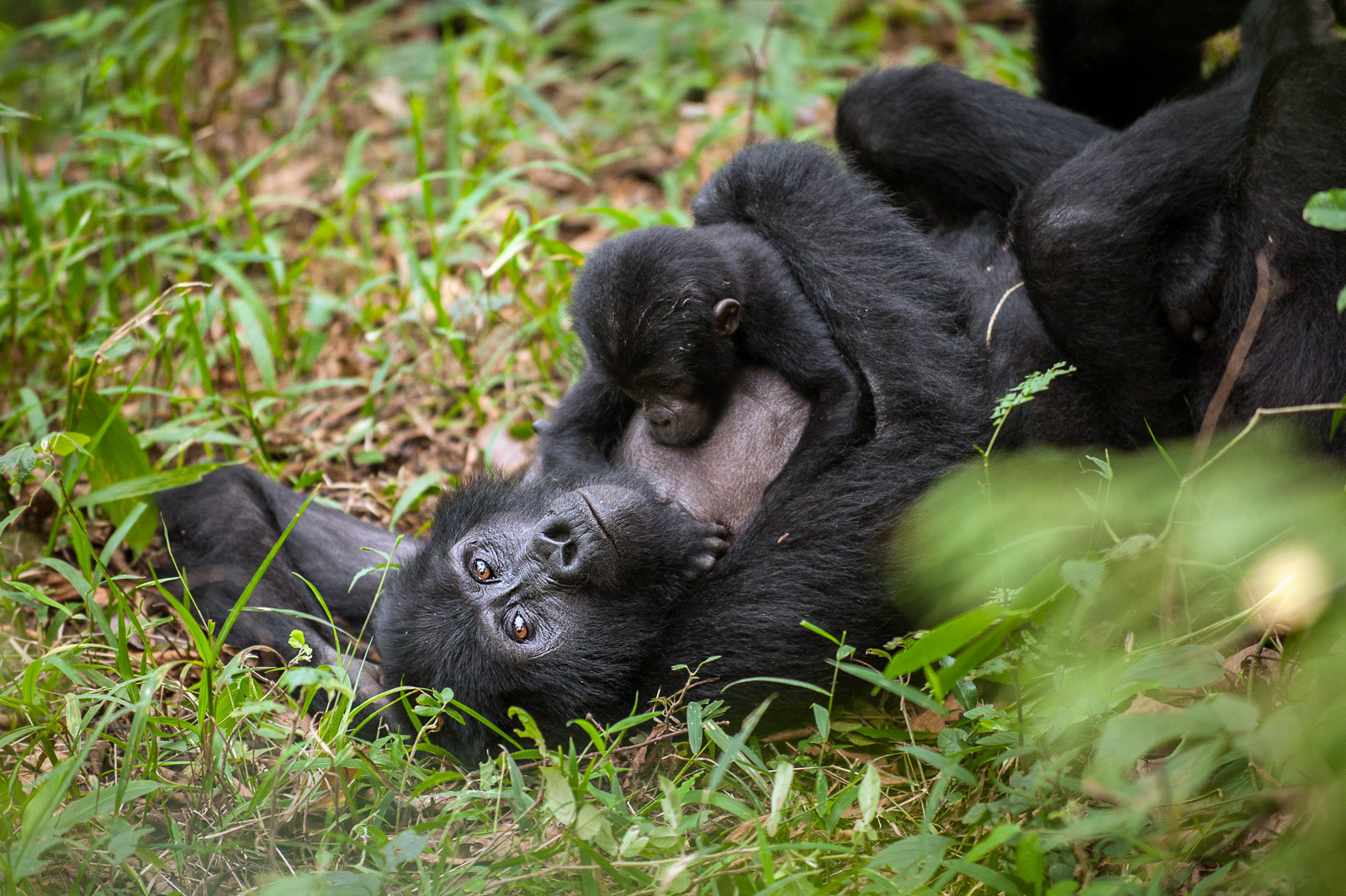
A few weeks ago I posted a male “silverback” mountain gorilla. Here’s a mother and her baby from that same troop, Bwindi Impenetrable Forest, Uganda. Nikon D700 with Nikkor 70-200mm lens (at 155mm) ISO 800, f/2.8 at 1/200th of a second
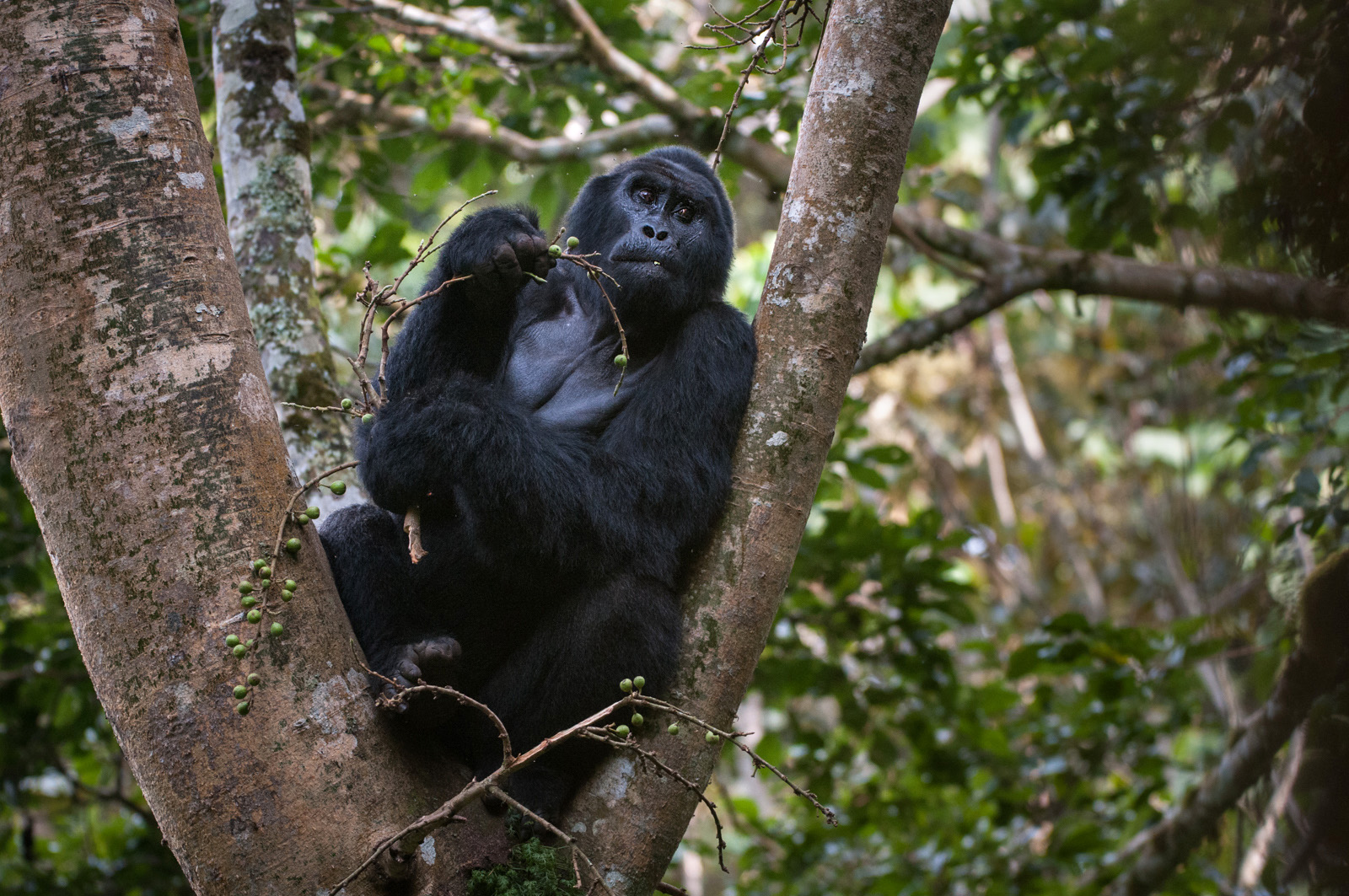
Alpha male mountain gorillas are usually referred to as a silverbacks because they tend to have white-tipped fur on their backs. This guy was no exception, although from this angle you can’t tell. This particular troop of gorillas was unusual because it was so big — twenty three members. And there were two silverbacks, but one clearly outranked the other. I was told that eventually the younger of the two would challenge the elder and most likely take half the troop. At the moment this photo was taken, however, it was time to just sit back, relax and enjoy some figs. Nikon D300 with Nikkor 200-400mm lens (at 200mm) ISO 800, f/4 at 1/500th of a second
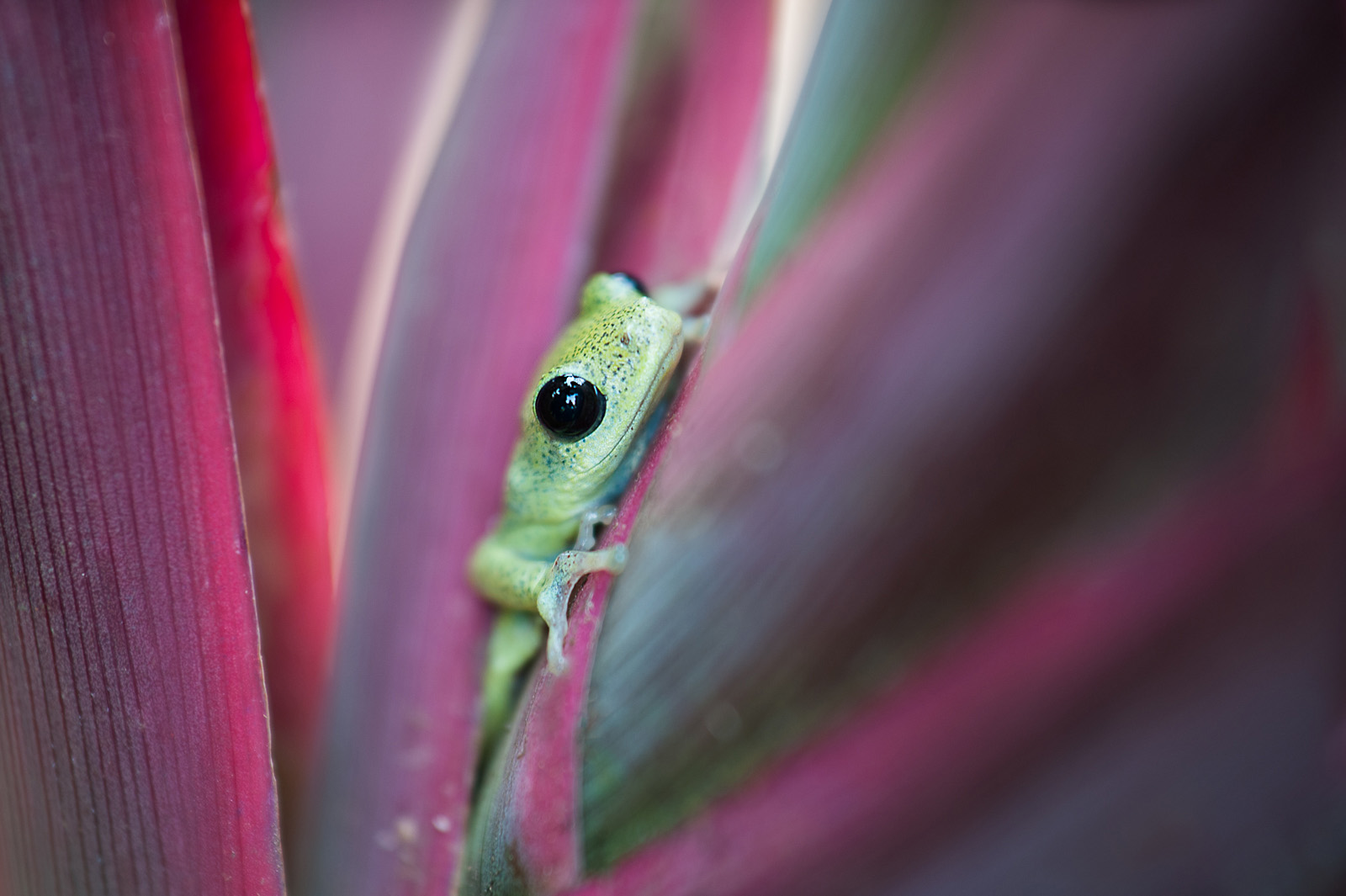
I came across this tree frog in a city park in Entebbe, Uganda. It was sandwiched inside a six foot red and green plant. Not sure of the species so if there are any herpetologists out there who have a clue, I’d greatly appreciate it. Nikon D700 with Nikkor 70-200mm lens (with Canon 500D close up lens attached) ISO 400, f/4 at 1/60th of a second
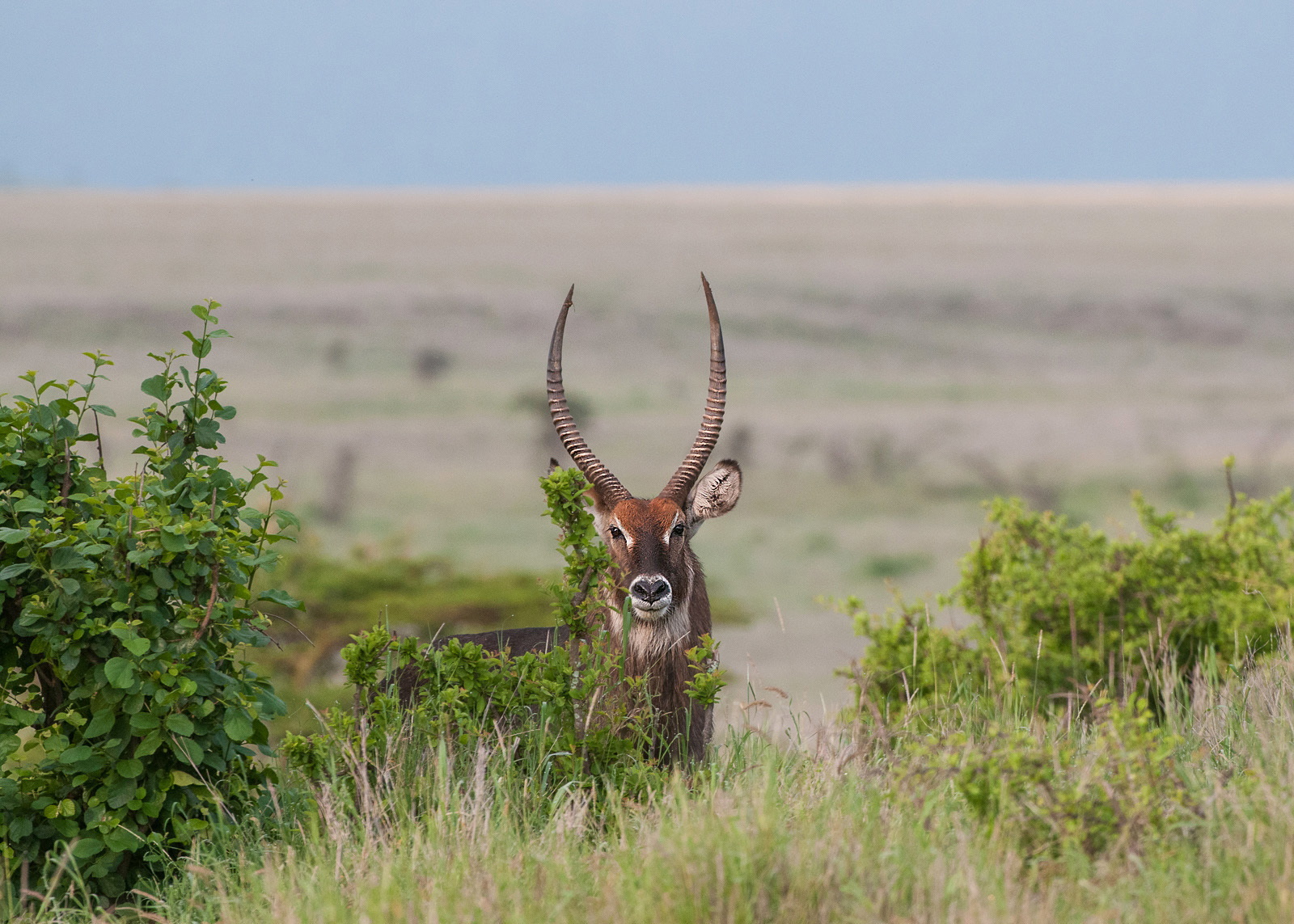
Waterbucks are a pretty big — their stocky build accounts for the fact that they are among the heaviest antelopes in Africa. The males have those nice spiraled horns which the females lack. I photographed this curious guy in Queen Elizabeth National Park in Uganda. Nikon D300 with Nikkor 200-400mm lens (at 400mm) ISO 800, f/5.6 at 1/800th of a second
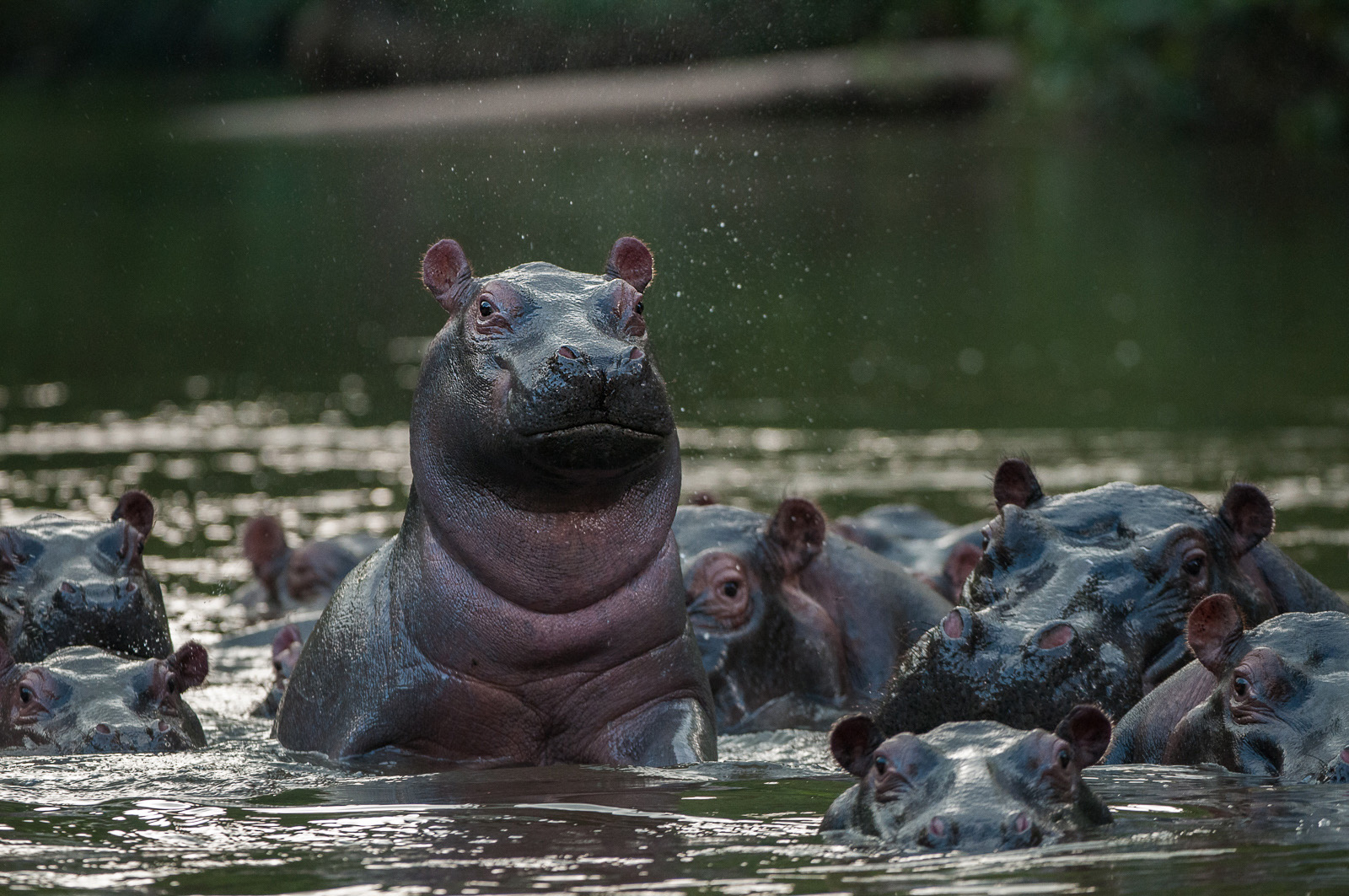
These curious hippos were photographed in Queen Elizabeth National Park in Uganda. Despite the fact that they are mainly vegetarian, hippos can be the most dangerous animals in Africa due to their territorial ways. Getting in the way of their route into and out of the water is never a good idea. Nikon D300 with Nikkor 200-400mm lens (at 300mm) ISO 800, f/4 at 1/400th of a second
The hour I spent photographing mountain gorillas in the jungles of Uganda still ranks as one of my favorite wildlife experiences. I’d love to get back some day and try again. Due to their status as critically endangered, tracking permits only allow you to stay with the gorillas for an hour once they’ve been tracked down. The tracking down part, however, can take up to eight hours as they are always on the move. We got lucky and found them in less than an hour. It was a big troop too, of about 23 individuals. There were three babies, including this young one resting on his mother’s chest as she took a carefree glance over at me. Nikon D700 with Nikkor 70-200mm lens (at 200mm) ISO 800, f/2.8 at 1/160th of a second
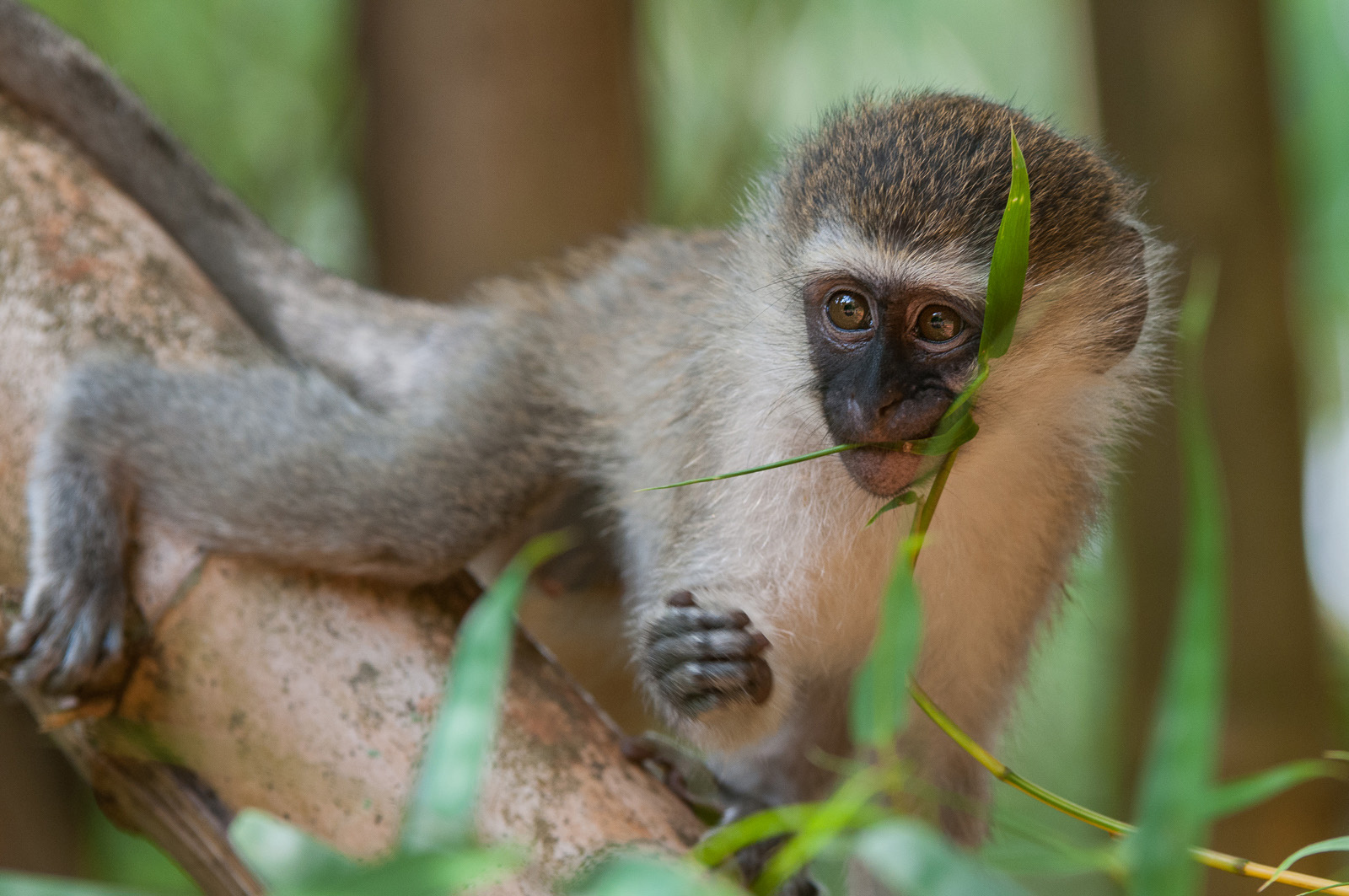
I met this vervet monkey on my first day in Uganda. The little guy was hanging out with the rest of the troop in a city park in the town of Entebbe. Entebbe isn’t too far from Kampala and is home to the international airport that I flew into. It was cool to see several different species of monkey living in the park — sort of their version of a squirrel I suppose. Nikon D300 with Nikkor 200-400mm lens (at 220mm) ISO 400, f/4.5 at 1/250th of a second
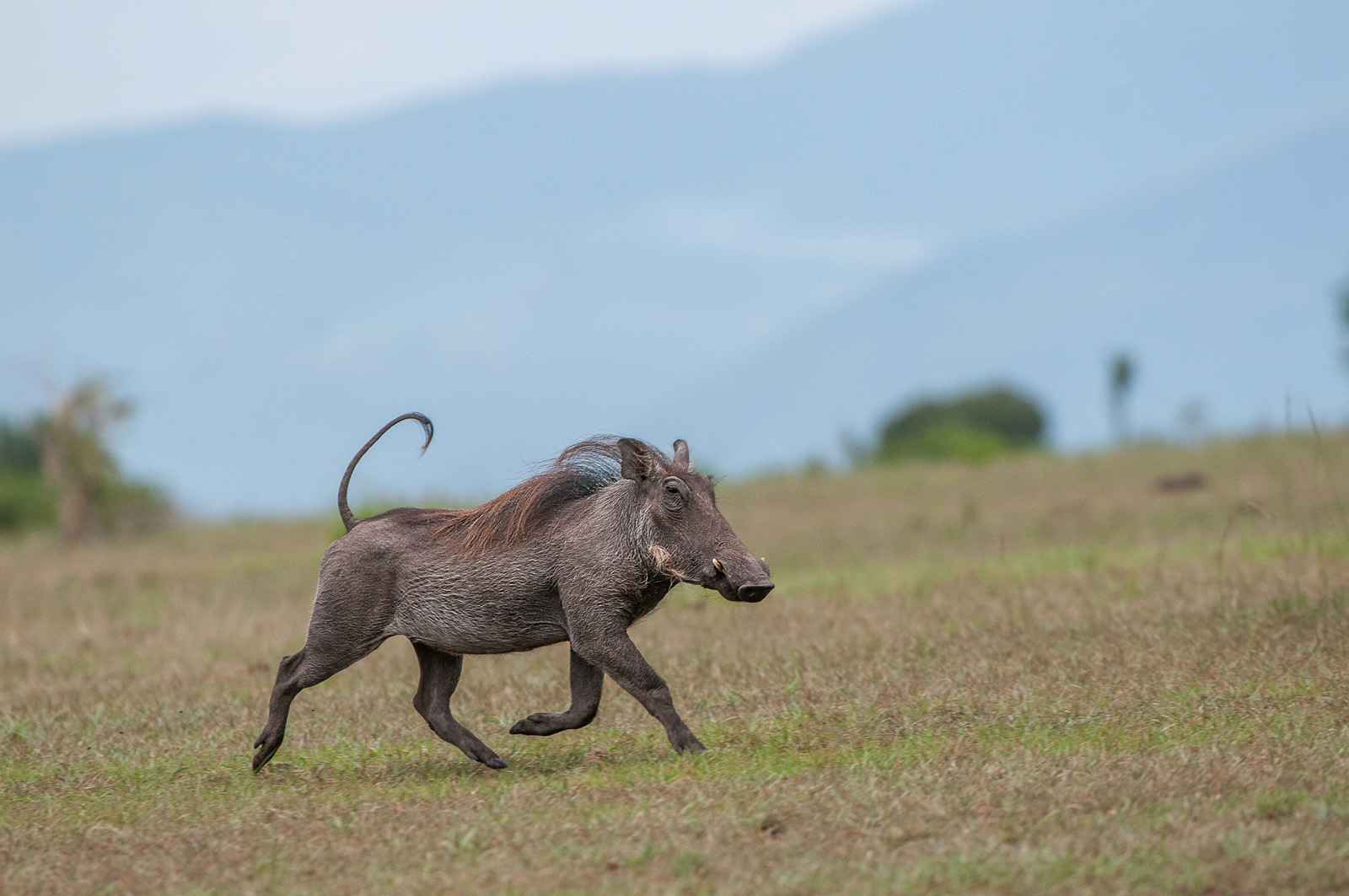
Warthogs don’t get a lot of respect from the safari-going crowd, but they’ve always been one of my favorites. Something about the way that they strut proudly across the savanna despite their decidedly unsexy appearance. This one was doing its thing in Queen Elizabeth National Park in Uganda. Nikon D300 with Nikkor 200-400mm lens (at 400mm) ISO 400, f/5 at 1/400th of a second
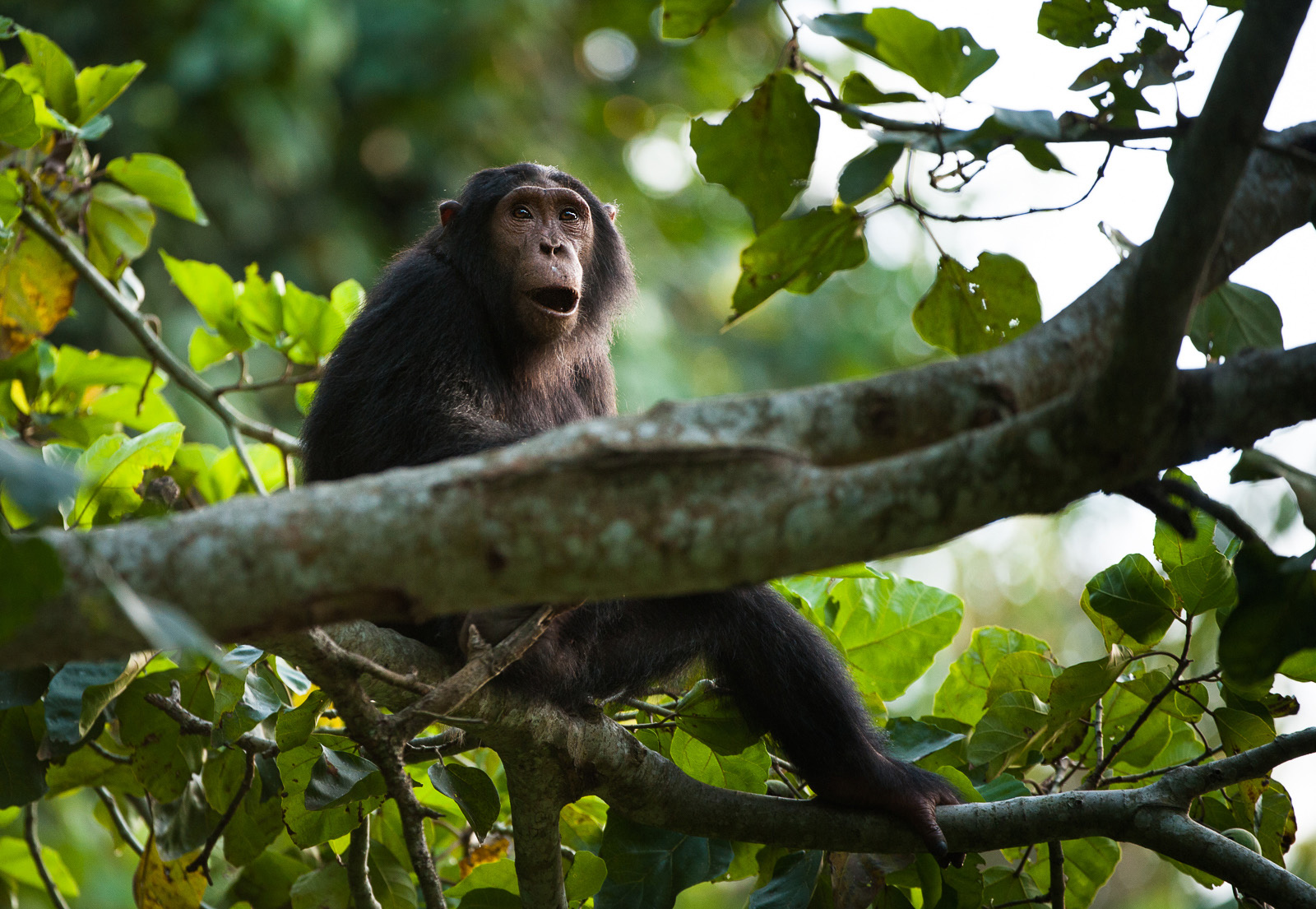
Chimps are actually pretty hard to photograph in the wild. They usually hang out high in the tree tops and are very active, ducking in and out of thick vegetation. I was lucky to encounter a troop at the end of the day in Queen Elizabeth National Park in Uganda, fairly low to the ground. I was able to get very close to this young lady and had just enough light before the sun disappeared. Nikon D700 with Nikkor 200-400mm lens (at 350mm) ISO 800, f/4 at 1/200th of a second
We use cookies to enhance your experience while using our website. If you are using our Services via a browser you can restrict, block or remove cookies through your web browser settings. We also use content and scripts from third parties that may use tracking technologies. You can selectively provide your consent below to allow such third party embeds. For complete information about the cookies we use, data we collect and how we process them, please check our Privacy Policy