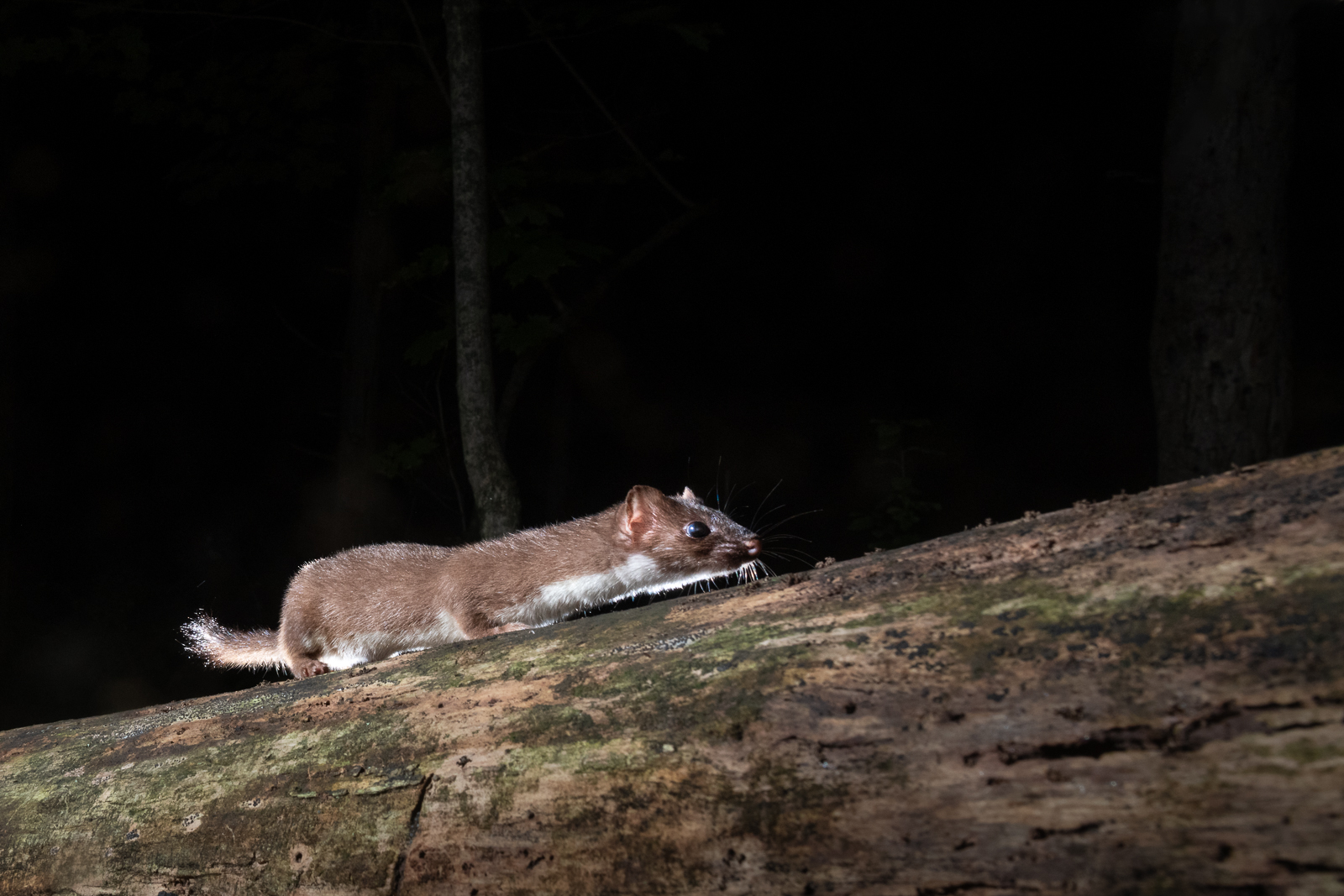
After four years of occasional glimpses and near misses, my camera trap finally captured an in-focus shot of a short-tailed weasel. I usually see a blurry butt shot as the weasel chases a chipmunk across the fallen tree. Weasels are carnivores and this one was likely stalking its prey which includes the aforementioned chipmunks, as well as voles, rats, shrews, rabbits, and birds. Also known as a stoat or an ermine, a short-tailed weasel will change the color of its fur from brown to completely white as the winter approaches — all the better camouflage for sneak attacks when the snow starts to fall. I’m still hoping for the weasel and chipmunk shot, but until then this will have to do. Nikon D850 with Nikkor 20mm lens, ISO 500, f/14 at 1/200th of a second, Camtraptions camera box, triggers and trail monitor with two Nikon SB-900 flash units.
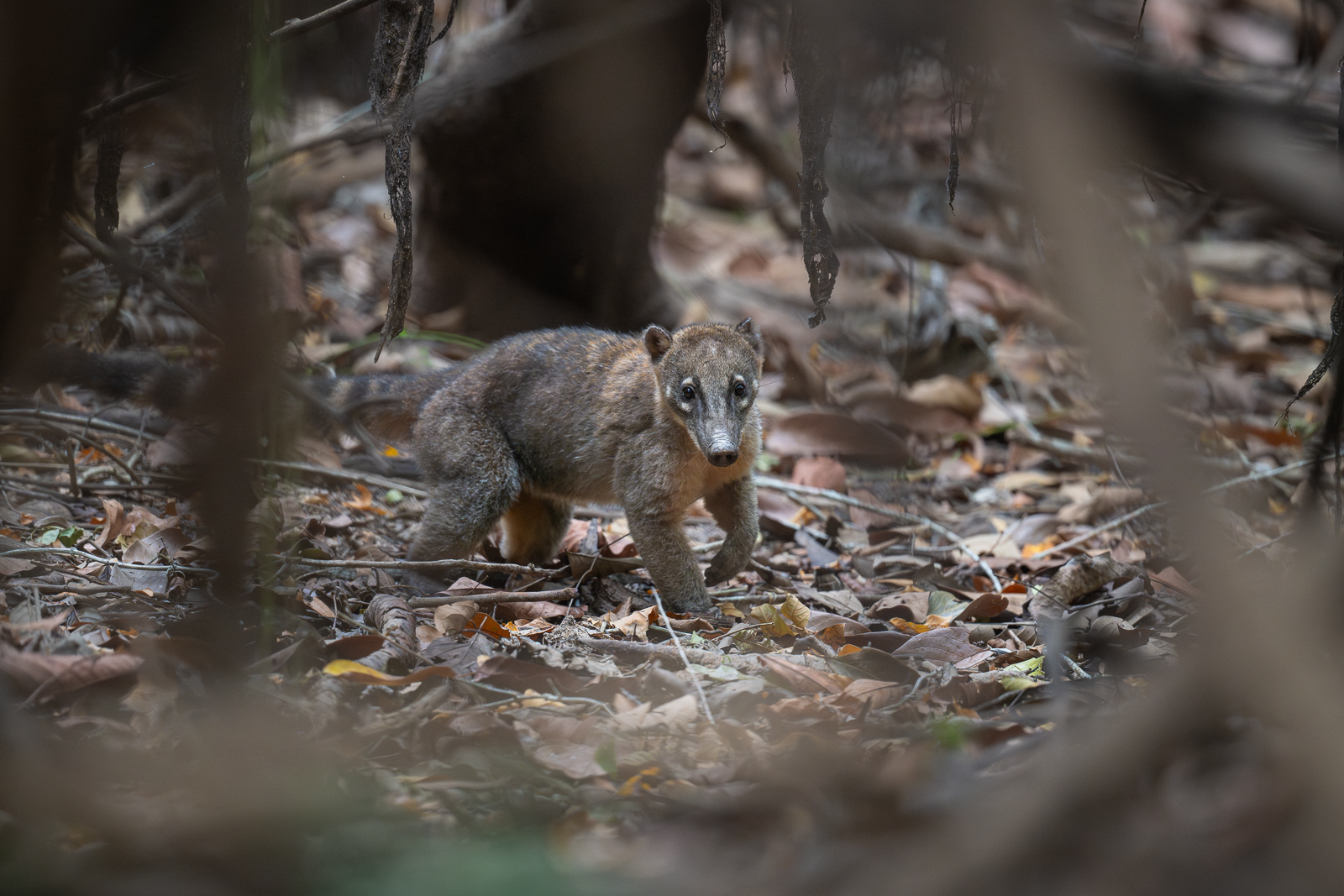
Coatis can be locally common throughout their range, but always exciting to come across one… or two, or twenty on a hike through the forest. I found this skittish coati in the dry forest of Guyana’s Rupununi region. Nikon Z8 with Nikkor 500mm PF lens, ISO 5600, f/5.6 at 1/500th of a second.
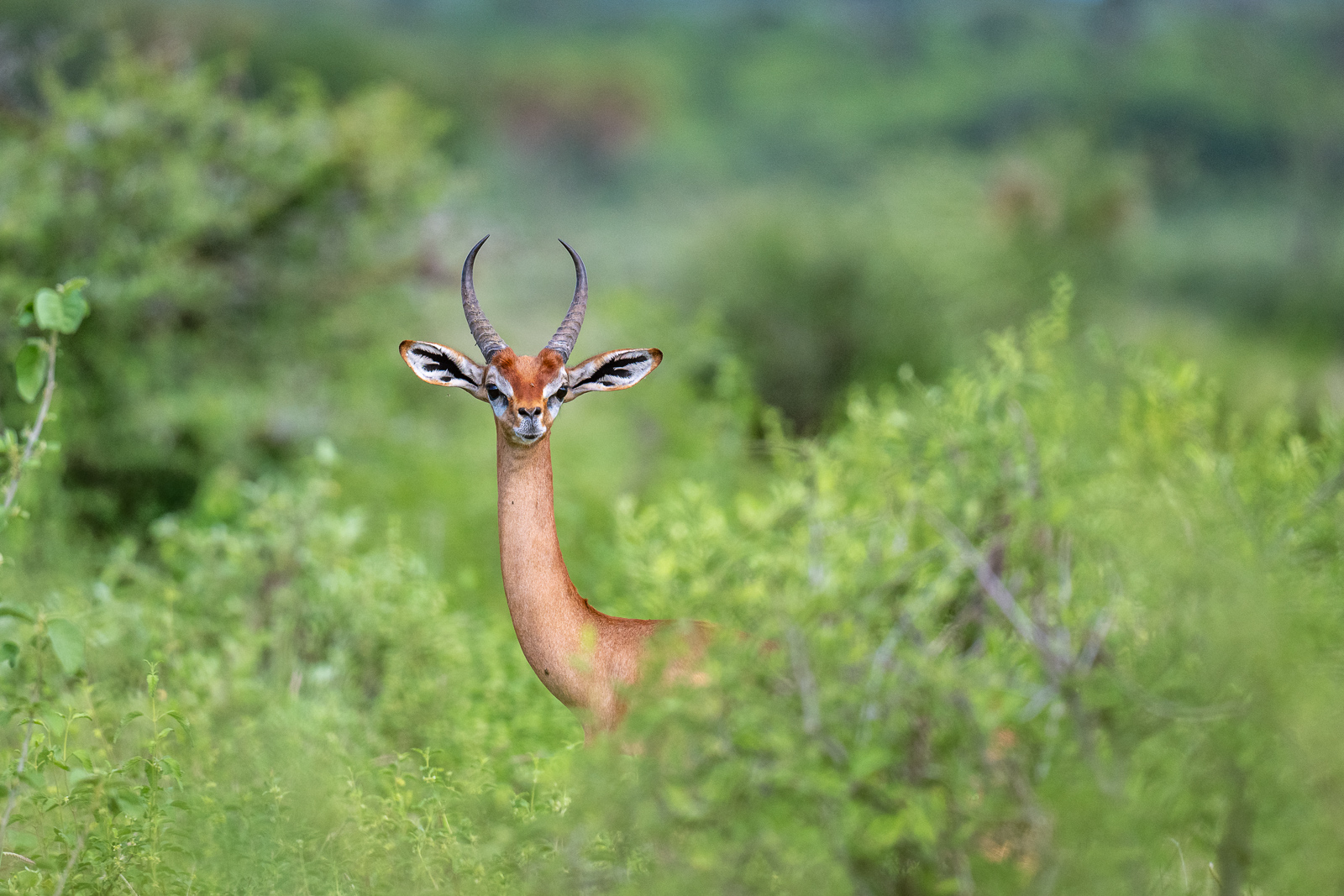
Always fun to see a gerenuk’s head pop up from behind a bush. This is a young male. He took a moment to check us out before getting back to feeding. Photographed in Samburu National Reserve in the north central region of Kenya. Nikon Z8 with Nikkor 500m PF lens, ISO 800, f/5.6 at 1/2500th of a second.
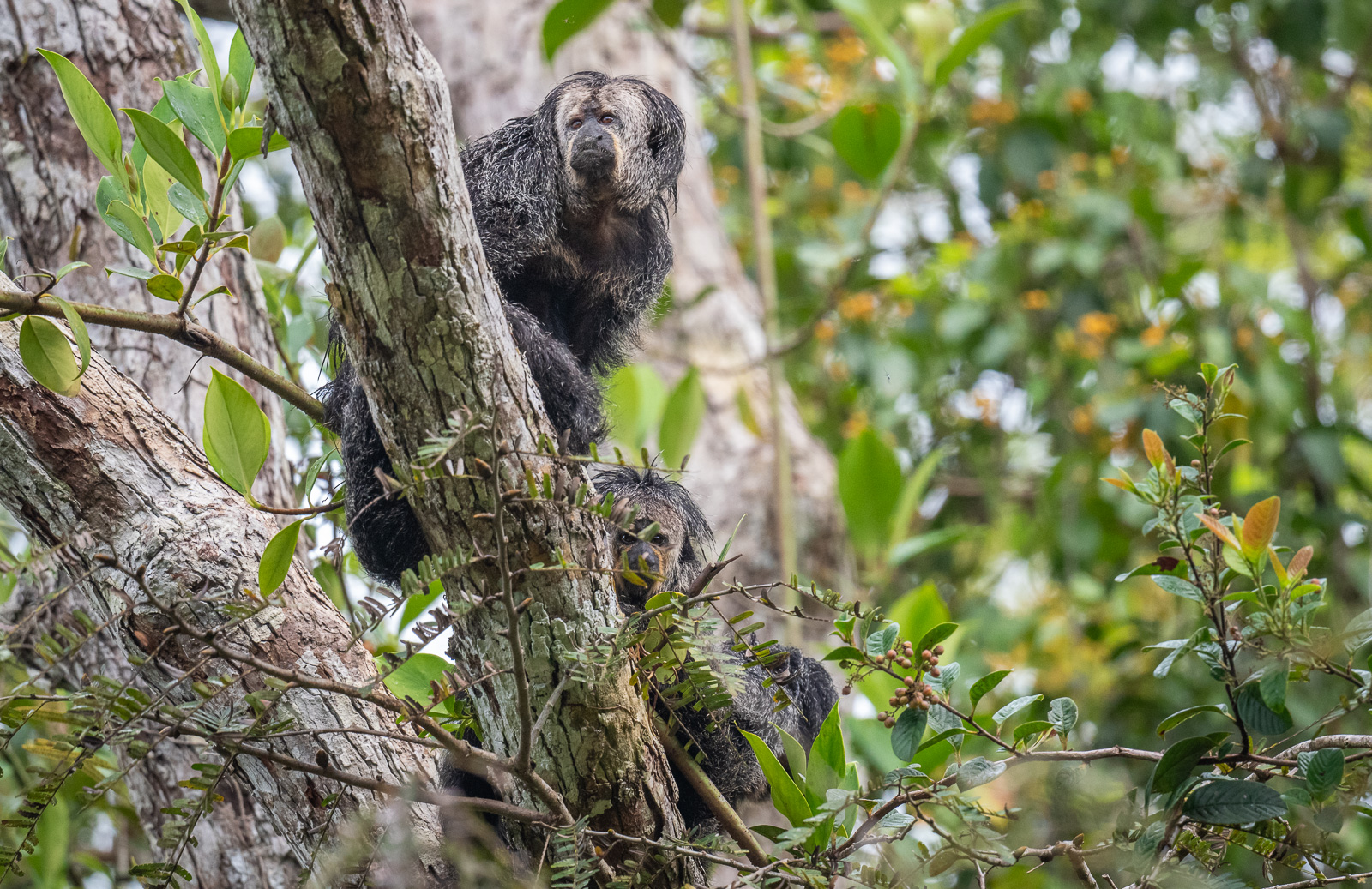
Monk sakis are really interesting looking primates. Although, they seem a bit over dressed for the hot and humid Amazonian rainforest weather — but to each his own. These two were keeping watch from high in the canopy of the northern Amazon basin in Peru. Nikon D500 with Nikkor 500mm PF lens, ISO 1600, f/5.6 at 1/320th of a second.
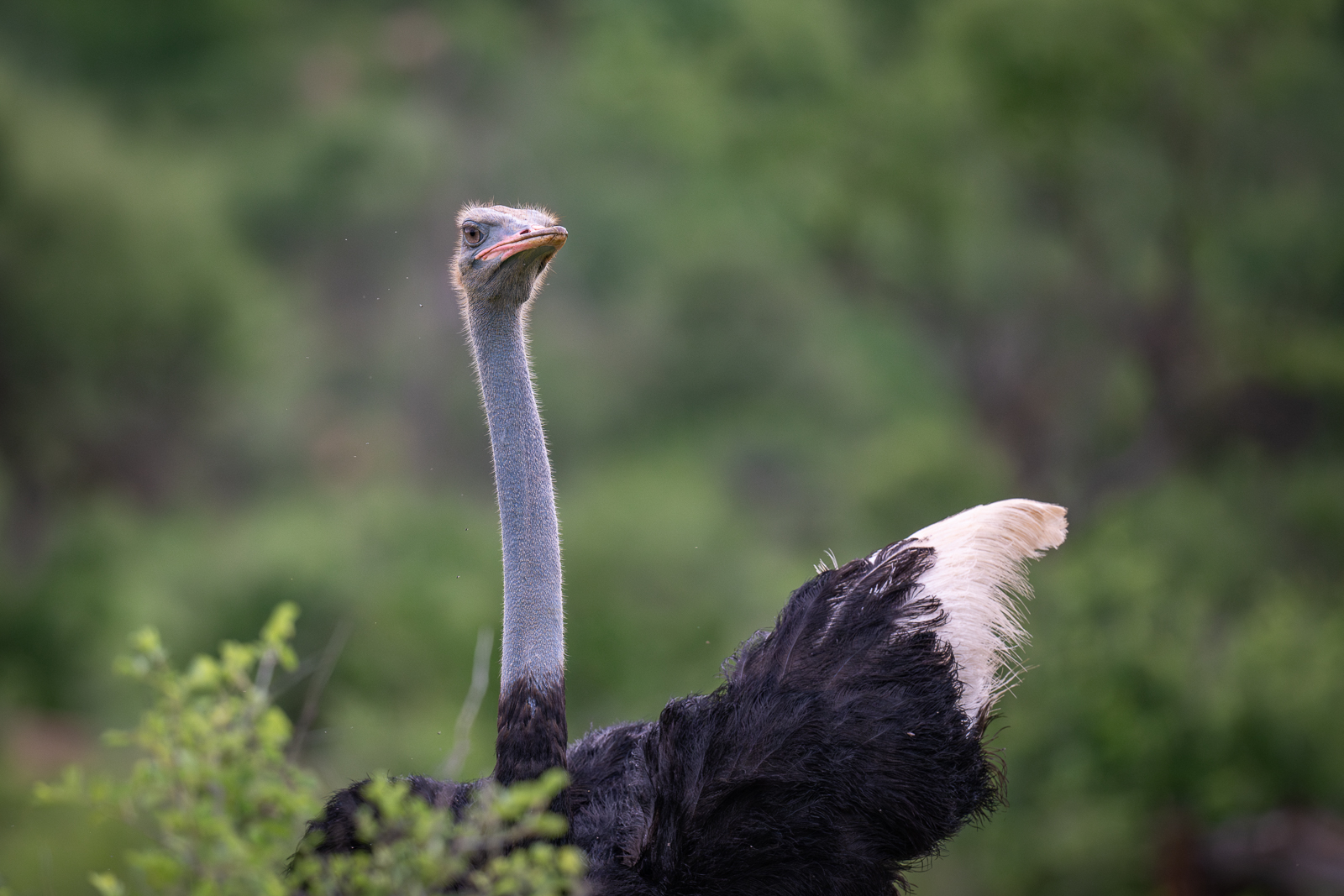
We like to add Samburu National Reserve to our Kenya tour itineraries for a chance at species we don’t see in other areas of the country. One of those species is the Somali ostrich. The males have an almost bluish tint to their necks and legs. This big boy was doing a lot of preening and I caught him with one of his wings outstretched as if telling us where to go. Nikon Z8 with Nikkor 500mm PF lens, ISO 2000, f/5.6 at 1/1600th of a second.
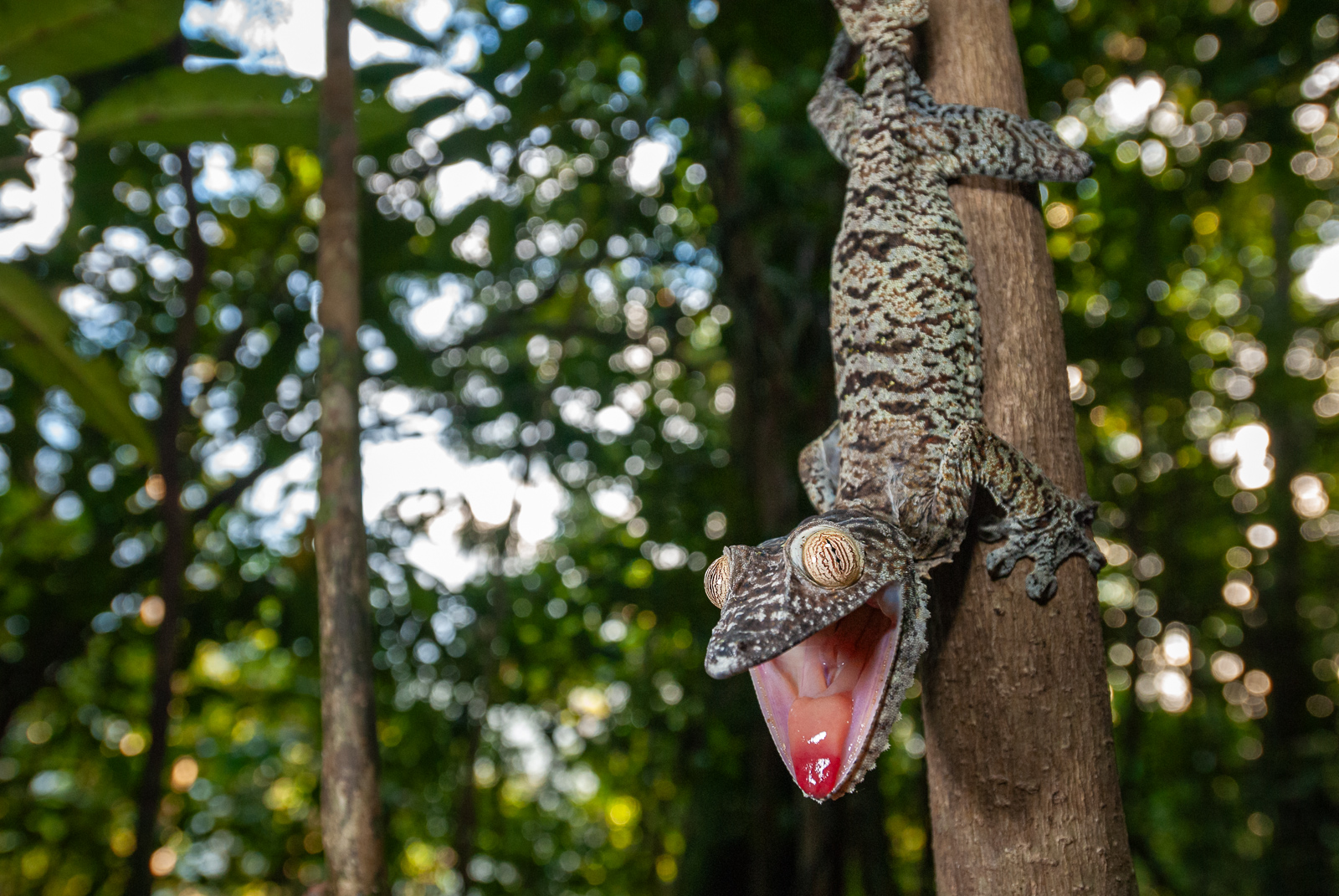
This photo was taken back in 2007 on my first and only trip to Madagascar. It remains the place I want to return to more than anywhere else. I can best describe it as the only place in the world that doesn’t feel like anywhere else in the world. Especially with creatures like this — a leaf-tailed gecko. Usually these guys are quite camouflaged, but this one must have felt threatened and began to display that ferocious-looking, but harmless mouth. Here’s hoping I get back for a visit sometime soon. Nikon D200 with Nikkor 17-35mm lens (at 17mm) ISO 400, f/4.5 at 1/60th of a second, two Nikon SB-600 flash units.
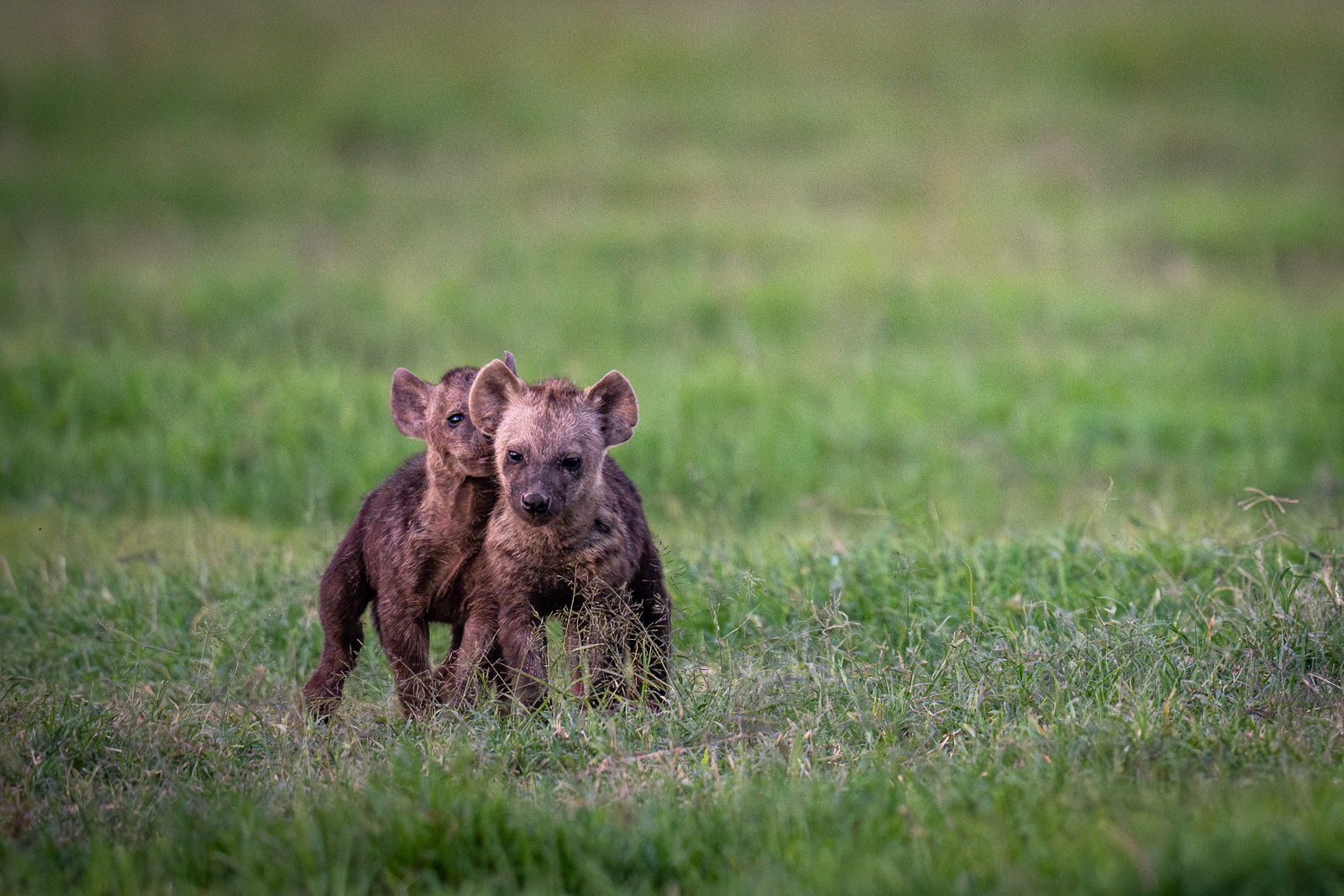
These two hyena cubs were playing with each other at the end of the day while their six other siblings were resting at the den watching the action and waiting for mom and dad to call it a night. Nikon Z8 with Nikkor 500mm PF lens, ISO 3600, f/5.6 at 1/1250th of a second.
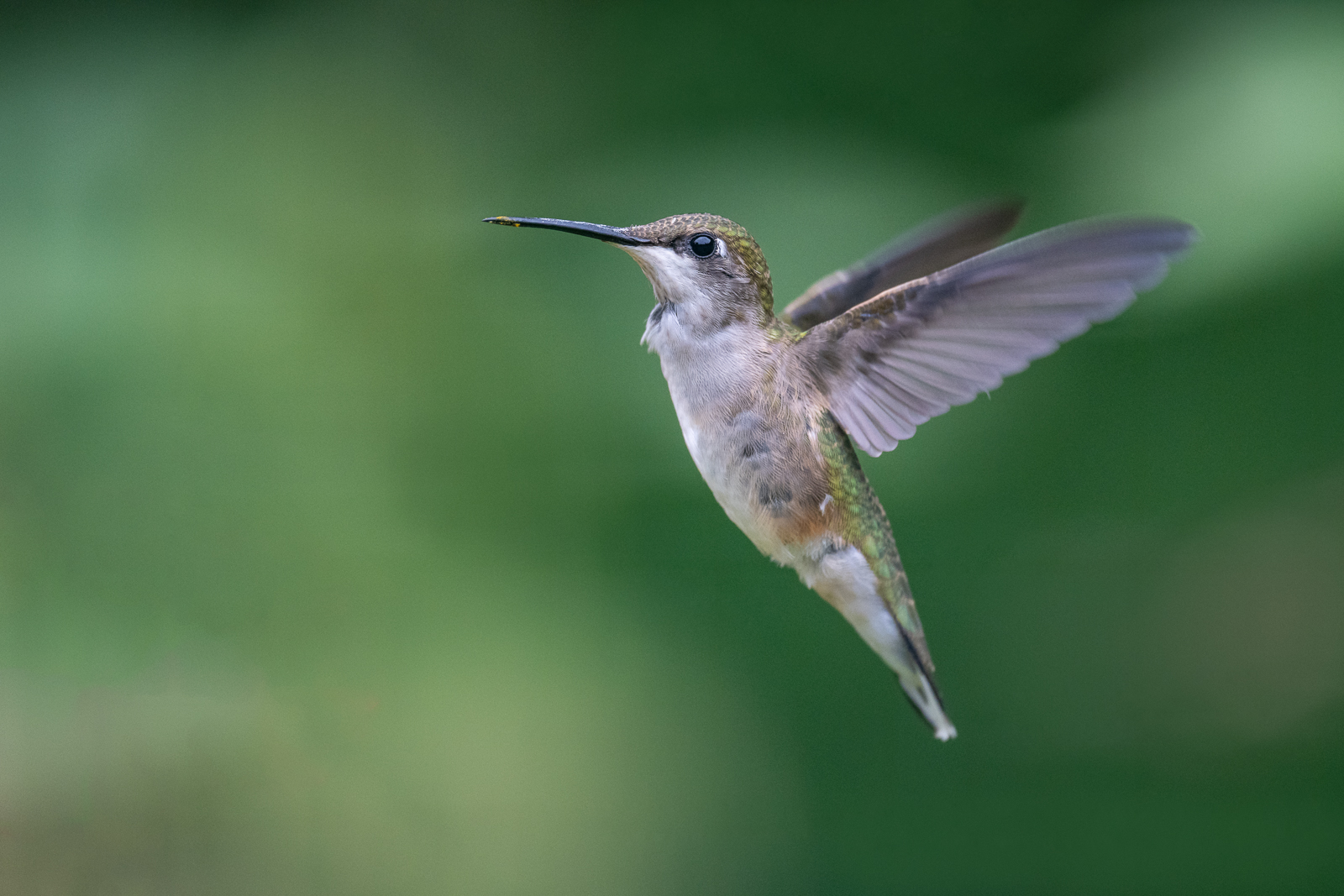
It’s been such a busy summer that I haven’t really gotten the camera out in the yard much. The camera traps, of course, are working 24/7 but I haven’t been out there myself very often with the long lens. So this weekend I did a lot of walking around trying to find a few of my wild neighbors. In my garden I encountered this ruby-throated hummingbird flying from zinnia to zinnia. The lack of the ruby throat indicates either an immature male or a female. I’m pretty sure this is the latter. Nikon Z8 with Nikkor 500mm PF lens, ISO 1800, f/5.6 at 1/1000th of a second.
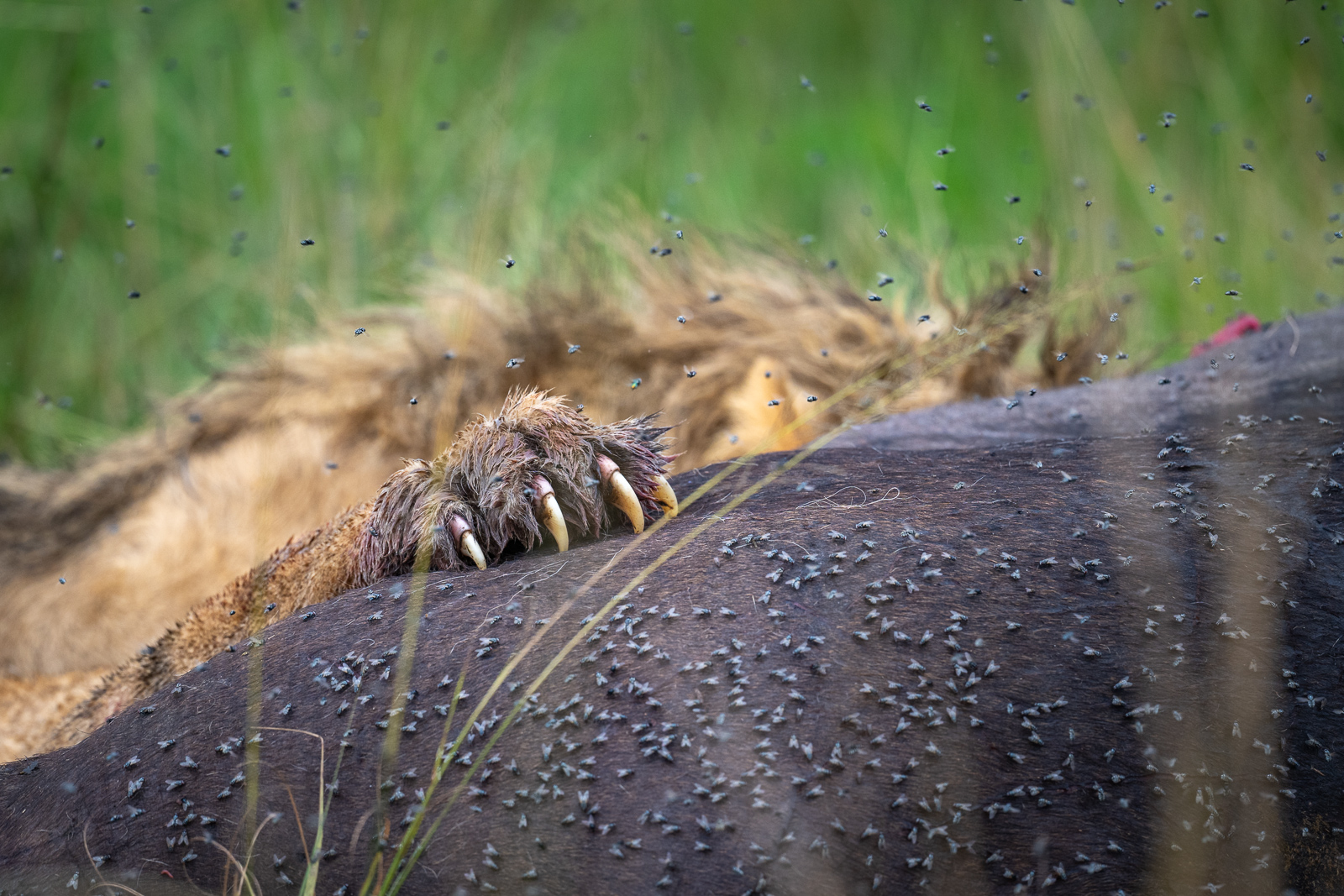
Predator on prey images aren’t always the prettiest to look at. But I did like this close up of a lion’s paw on the back of a fallen Cape buffalo. Taken in the Masai Mara of Kenya. Nikon Z8 with Nikkor 500mm PF lens, ISO 720, f/5.6 at 1/800th of a second.
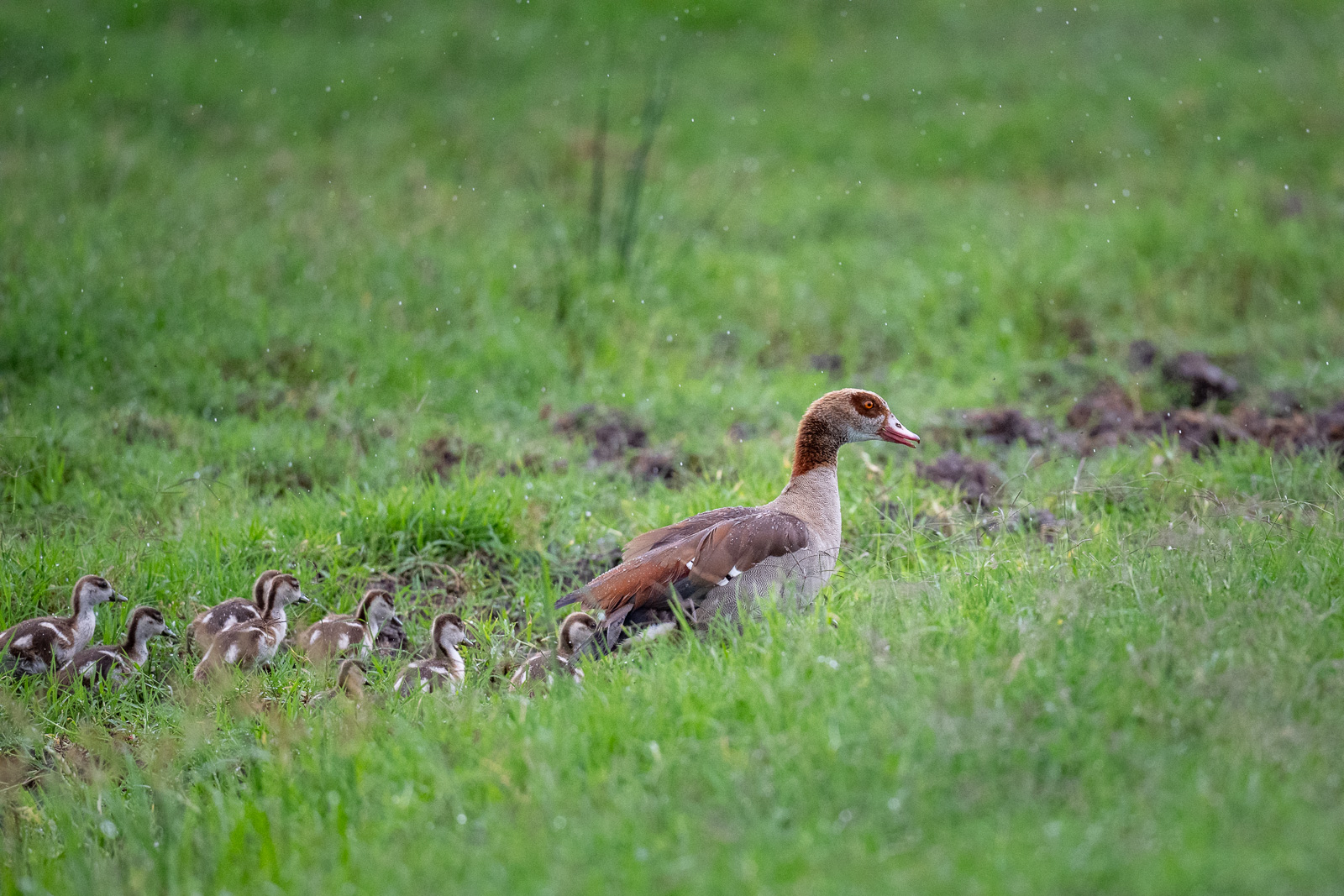
Egyptian goose sightings are fairly common on our Kenya trips. This goose leading her chicks was within our camp grounds at Ol Pajeta Conservancy. This species is native to Africa, but has been introduced to Europe the United States and a few more locations around the world. Nikon Z8 with Nikkor 500mm PF lens, ISO 4000, f/5.6 at 1/2500th of a second.
We use cookies to enhance your experience while using our website. If you are using our Services via a browser you can restrict, block or remove cookies through your web browser settings. We also use content and scripts from third parties that may use tracking technologies. You can selectively provide your consent below to allow such third party embeds. For complete information about the cookies we use, data we collect and how we process them, please check our Privacy Policy