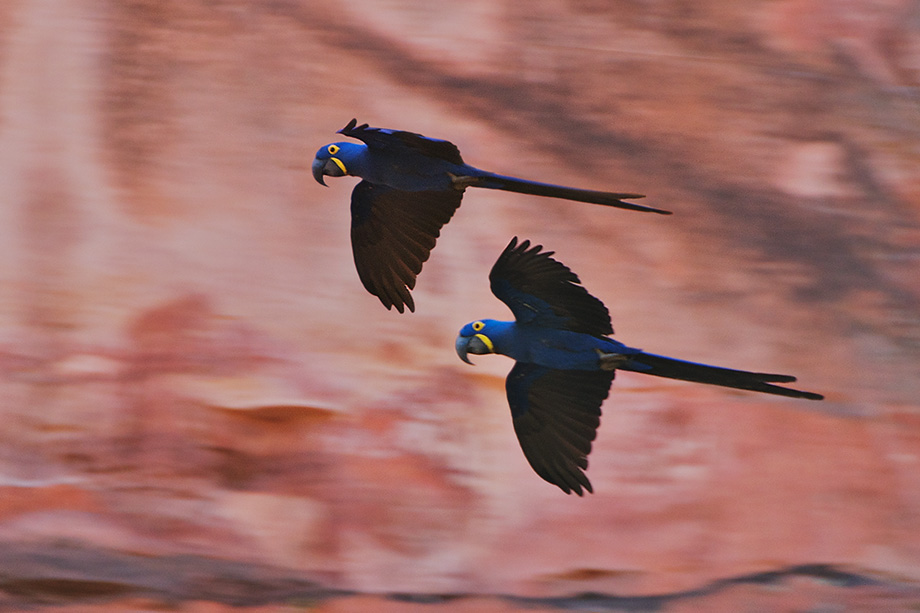
When I went to Brazil two years ago, one of the main species that I wanted to photograph — and expected to photograph — were hyacinth macaws. As it turned out, I only saw about four of them, and not until they were flying away. These are two of the four. Beautiful birds — brought to life in the Disney movie “Rio.” Nikon D300 with Nikkor 200-400mm lens and Nikon TC-E14 II teleconverter (for a total of 550mm/825mm with crop factor) ISO 400, f/5.6 at 1/200th of a second
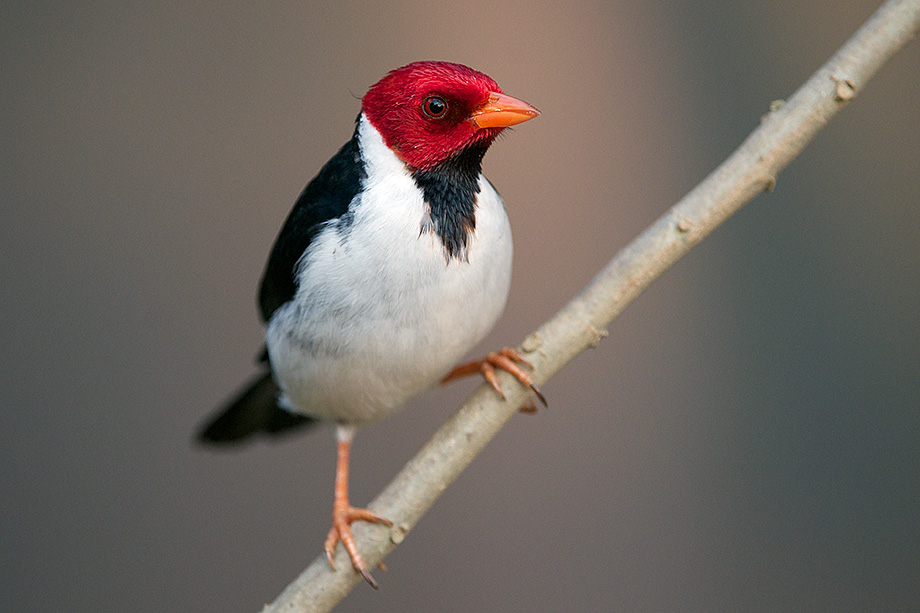
Just a simple portrait of a red-capped cardinal for today. These guys are fairly common in the Pantanal of Brazil where I took this shot. Apologies to the non-bird fans. Back tomorrow with fur. Nikon D300 with Nikkor 200-400mm lens (at 310mm) ISO 800, f/4 at 1/640th of a second
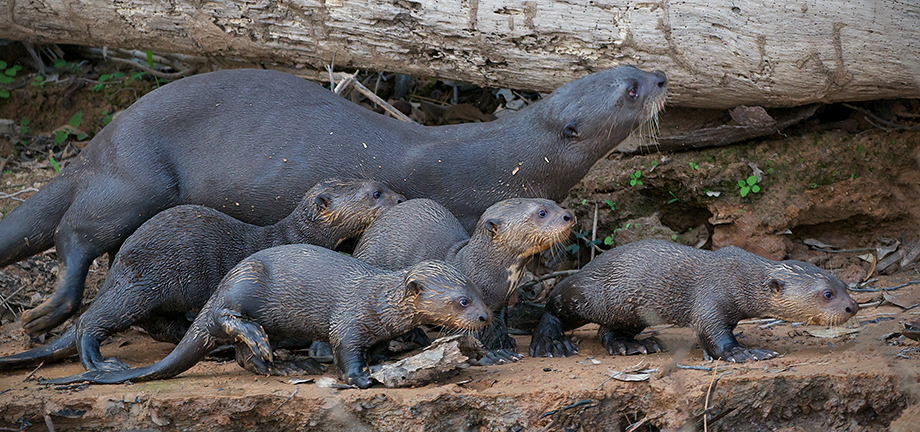
Last week I posted a photo of the river otters that we get in North America. These are their cousins in South America, the giant river otters. As the name would suggest, they are big — when full grown, an adult can exceed six feet in length. This mother was moving along the river bank with her six pups — the four pictured, and two that were lagging behind in the water. Nikon D300 with Nikkor 200-400mm lens (at 270) ISO 800, f/4 at 1/400th of a second
Nikon D800 with Nikkor 17-35mm lens (at 17mm) ISO 800, f/11 at 1/15th of a second
Nikon D800 with Nikkor 200-400mm lens (at 400mm) ISO 800, f/4 at 1/320th of a second
Nikon D700 with Nikkor 70-200mm lens (at 175mm) !SO 400, f/8 at 1/500th of a second
Nikon D700 with Nikkor 70-200mm lens (at 82mm) ISO 800, f/5.6 at 1/80th of a second
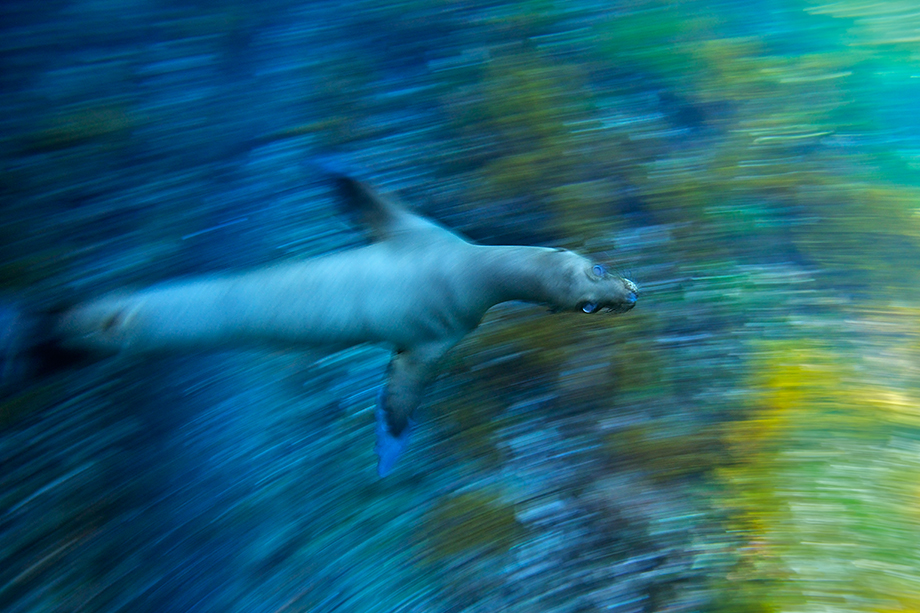
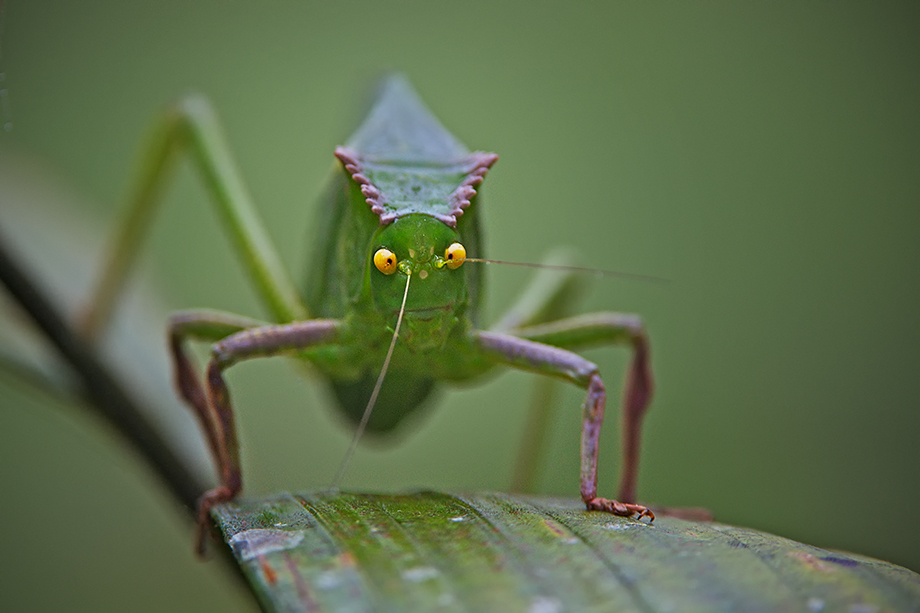
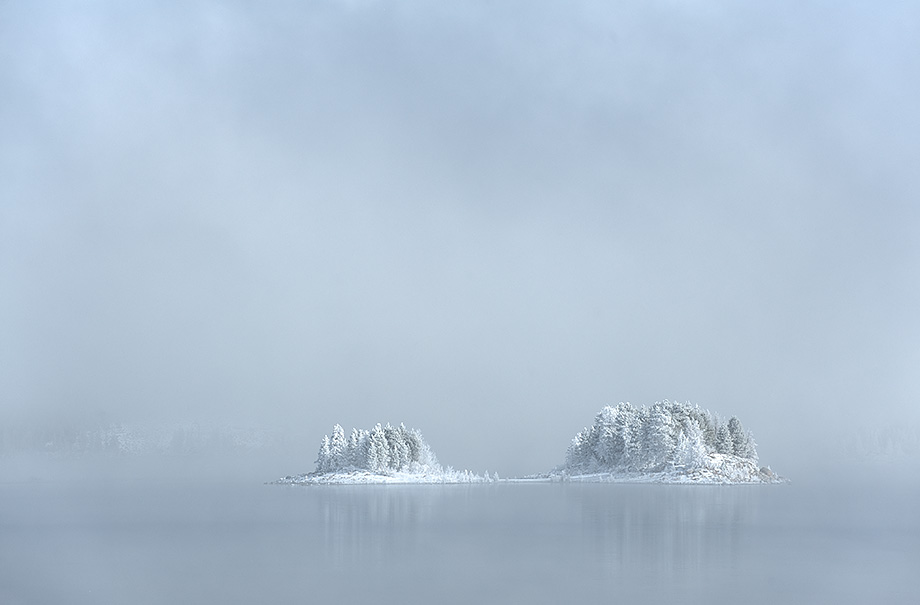
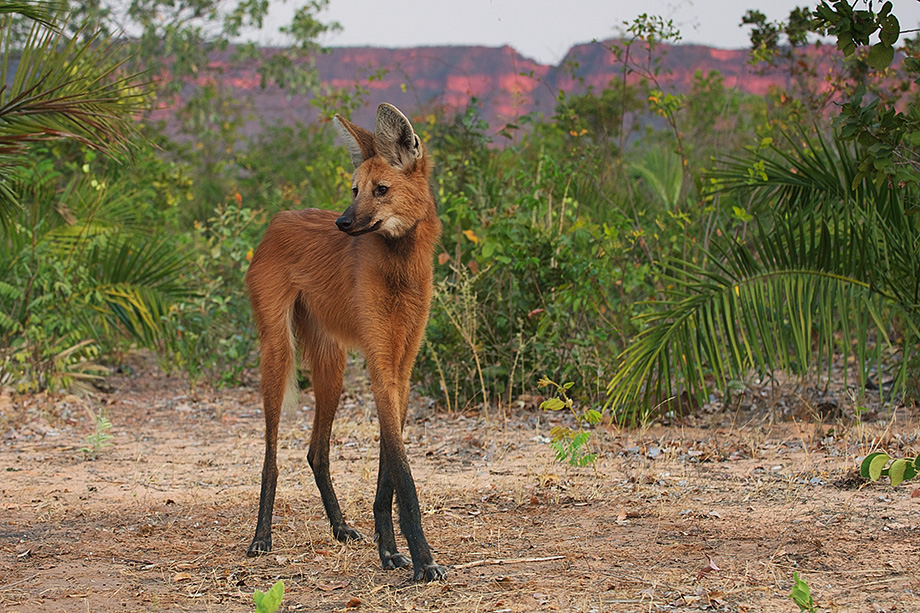
These four photos have all been posted before, but I thought I’d share them again as they were all finalists this year in the BBC Wildlife Photography of the Year competition. Unfortunately, none of them made the final cut, but still a nice honor to have four make it as far as they did in what is generally considered the world’s most prestigious photography competition for wildlife. The sea lion was a finalist in the “Art in Nature” category. The Lake Granby shot was in the “Wild Spaces” category. The maned wolf was in the “Endangered Species” category. And the leaf insect was in the “Animal Portraits” category.
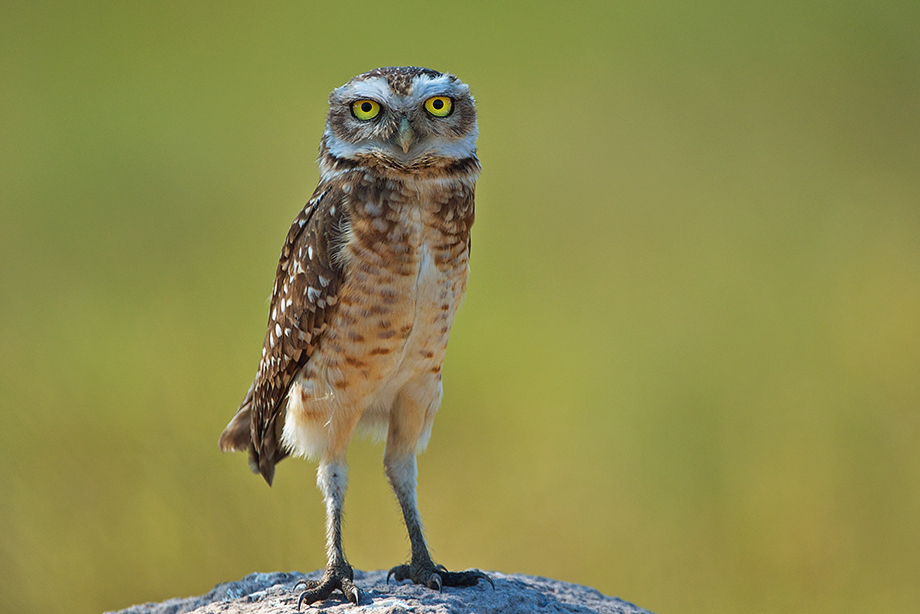
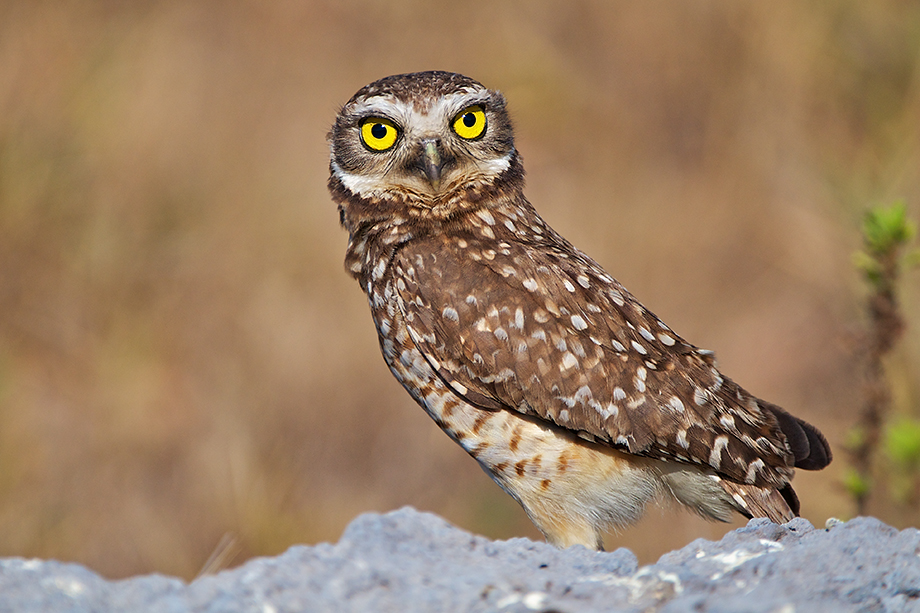
Okay, I realize that I just posted a Brazilian burrowing owl a few weeks ago, but this is a completely different owl. And c’mon, who couldn’t use another burrowing owl to start the morning? Enjoy. Nikon D300 with Nikkor 200-400mm lens (at 380mm) ISO 400, f/4 at 1/1250th of a second (-1/3 stop ev)
I came across this little guy late one afternoon in Hyacinth Valley in Piaui State, Brazil. We get the same species here in the States and I’ve photographed them in Florida, South Dakota and California. Even so, there’s something a little more exotic about them when you see them in Brazil. Nikon D300 with Nikkor 200-400mm lens (at 400mm) ISO 400, f/4 at 1/3200th of a second
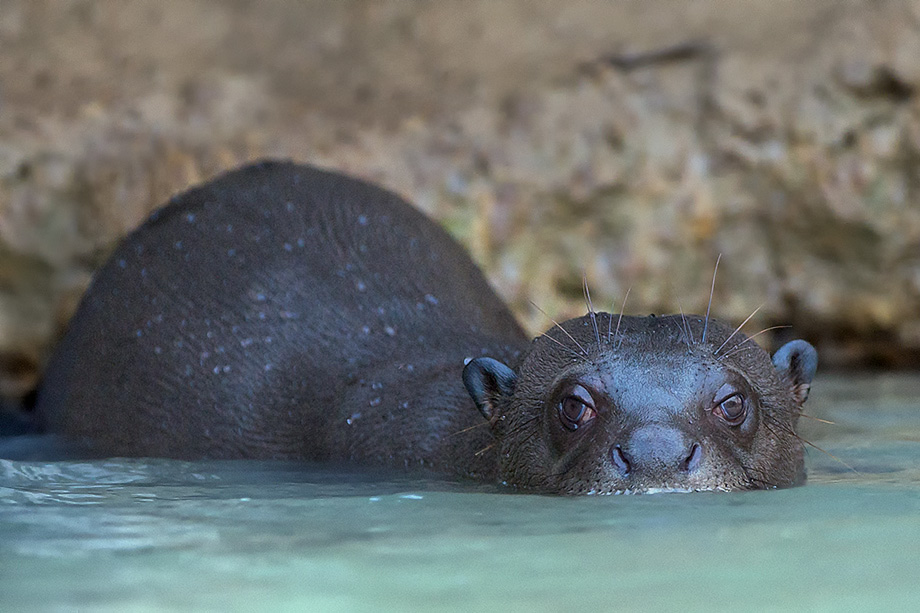
It’s been a while since I posted one from the Pantanal in Brazil so here’s a giant river otter — the largest otter in the world. They can grow to almost six feet in length. This one was quietly slipping back into the water after being on the riverbank taking a rest. Nikon D300 with Nikkor 200-400mm lens (at 350mm) ISO 800, f/4 at 1/400th of a second
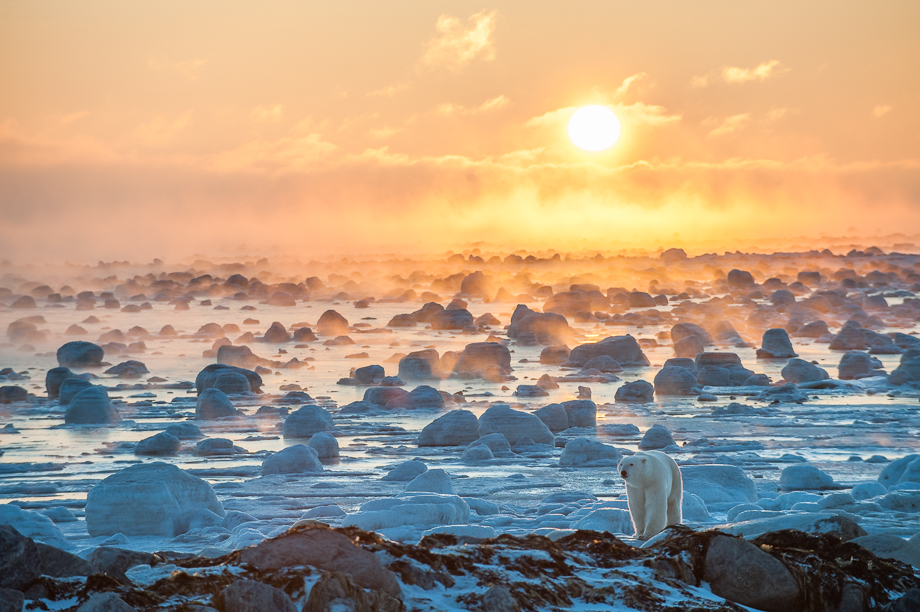
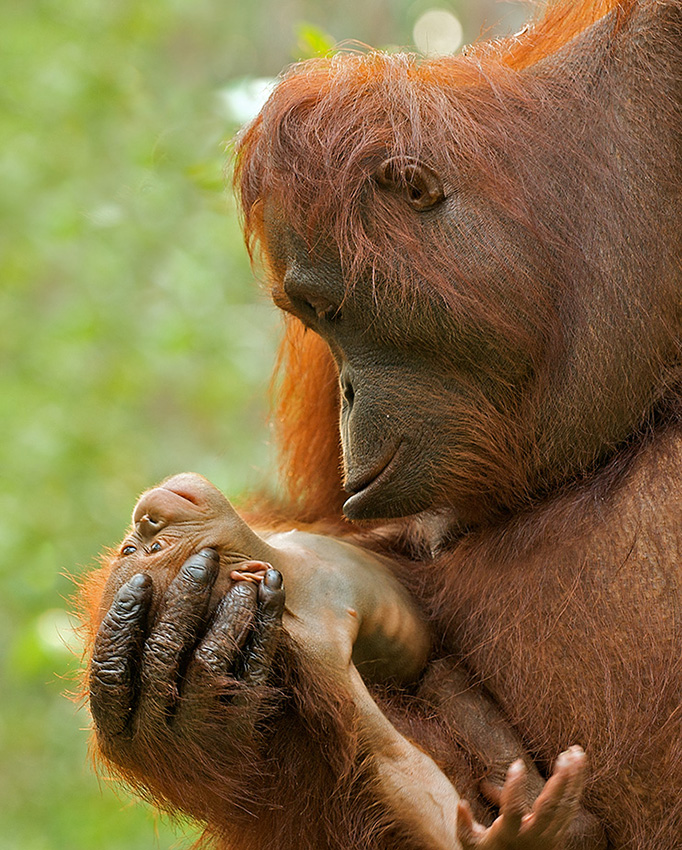
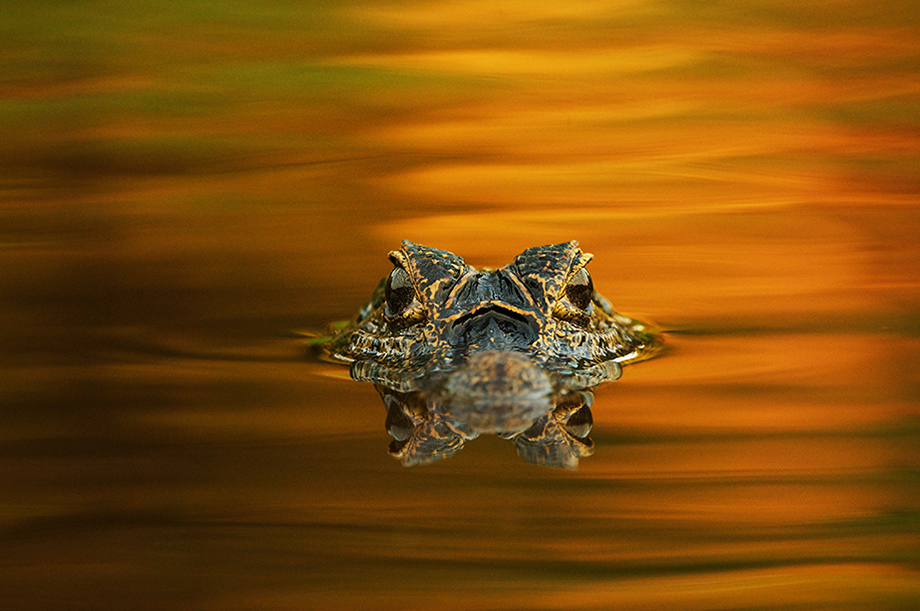
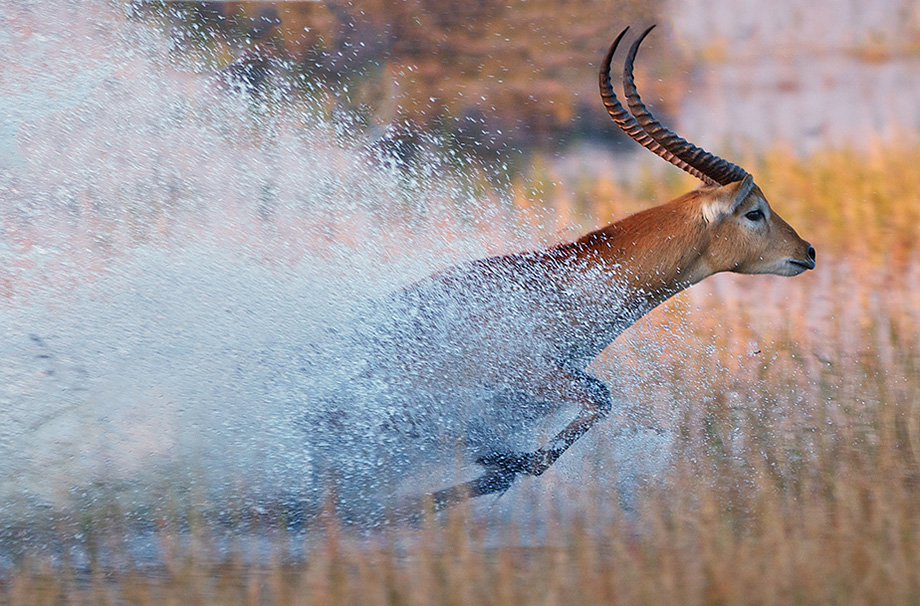
I just found out that the following seven images were selected for inclusion in this year’s North American Nature Photographers Association (NANPA) award showcase. A total of 100 images are selected each year. All seven will appear in the Showcase print book and will be featured at the 2013 Nature Photography Summit in Jacksonville, Florida. I’ve previously posted all these photos before, but thought I’d get them up here on the blog again.
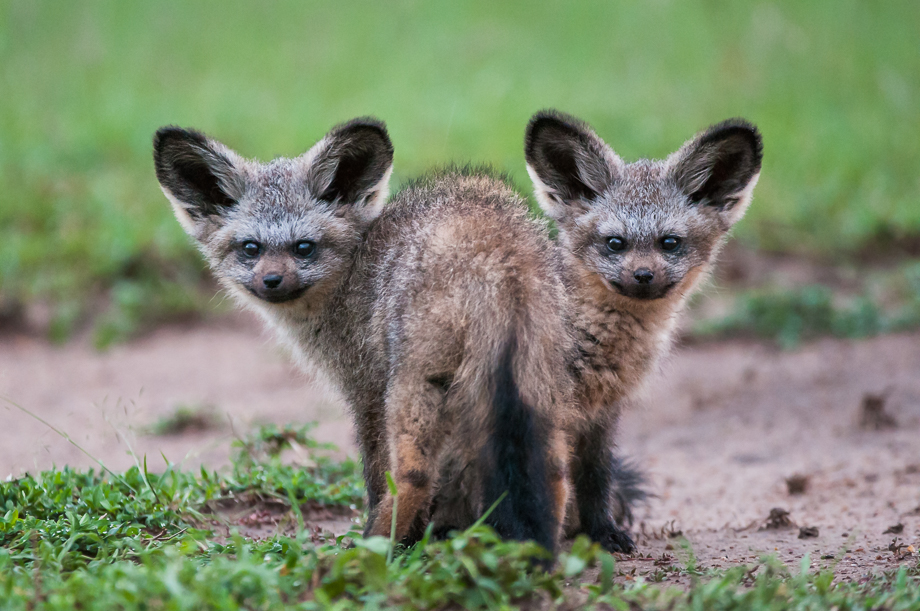
Bat Eared Fox Pups, Masai Mara, Kenya
Polar Bear and Sunrise, Seal River, Manitoba, Canada
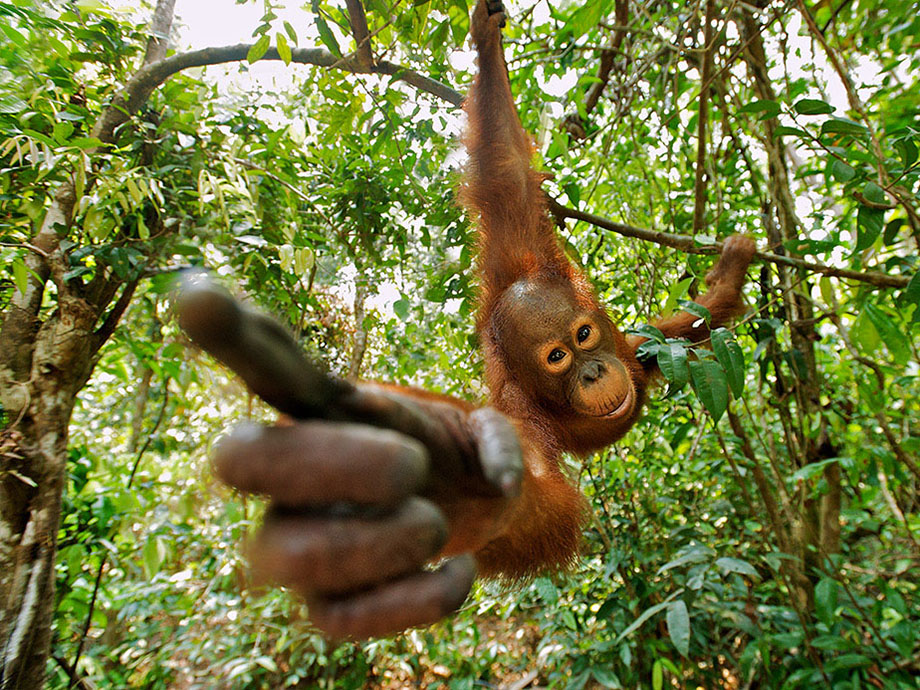
Orangutan Mother and Newborn, Indonesian Borneo
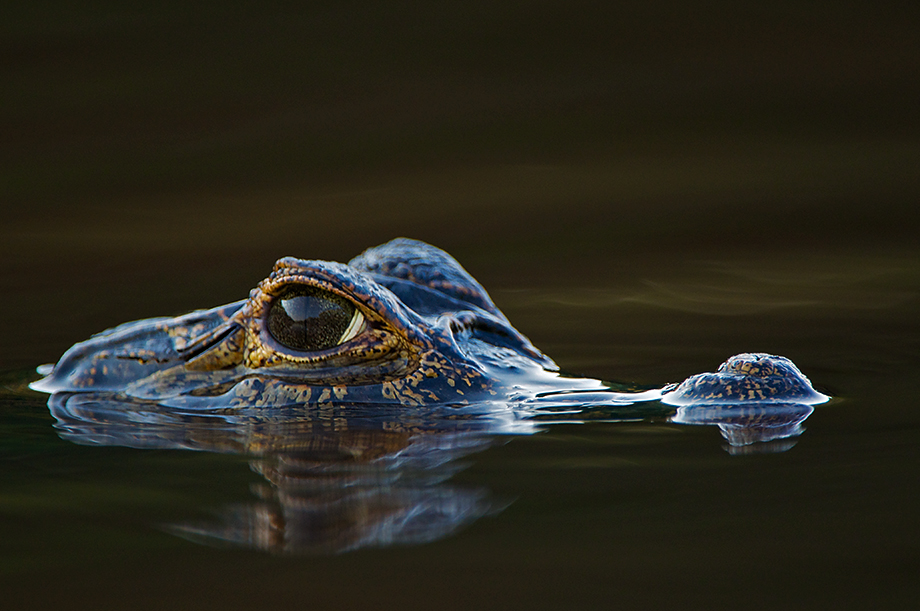
Yacaré Caiman, Pantanal, Brazil
Red Lechwe, Okavango Delta, Botswana
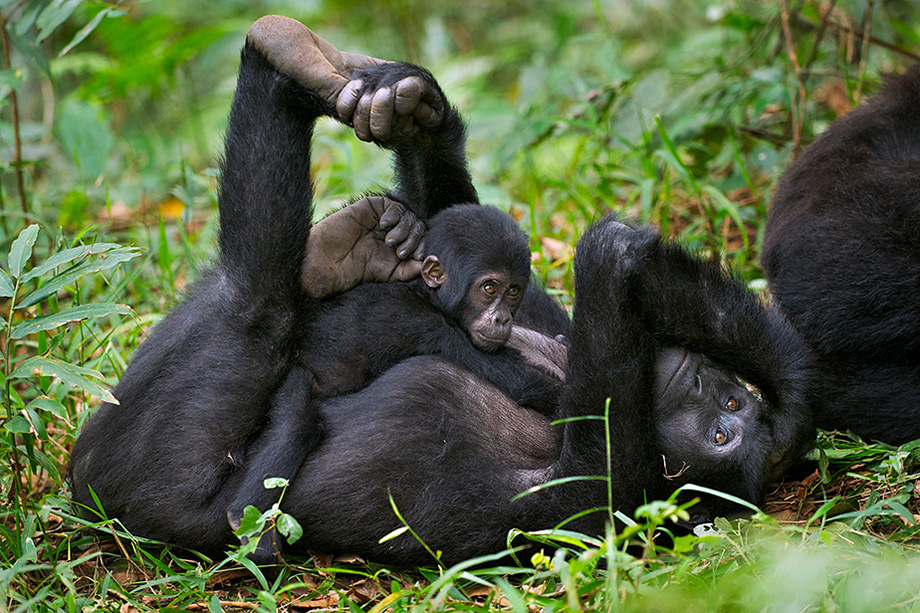
Mountain Gorilla Mother and Baby, Bwindi Impenetrable Forest, Uganda
The Pantanal in Brazil is full of yacaré caiman. In fact, at roughly 10 million individuals, they make up the largest crocodilian population on earth. This is a fairly young caiman, but when fully grown they can get to be about 10 feet in length. It was late in the afternoon when I took this shot and the dark shadows in the water were caused by the surrounding trees.
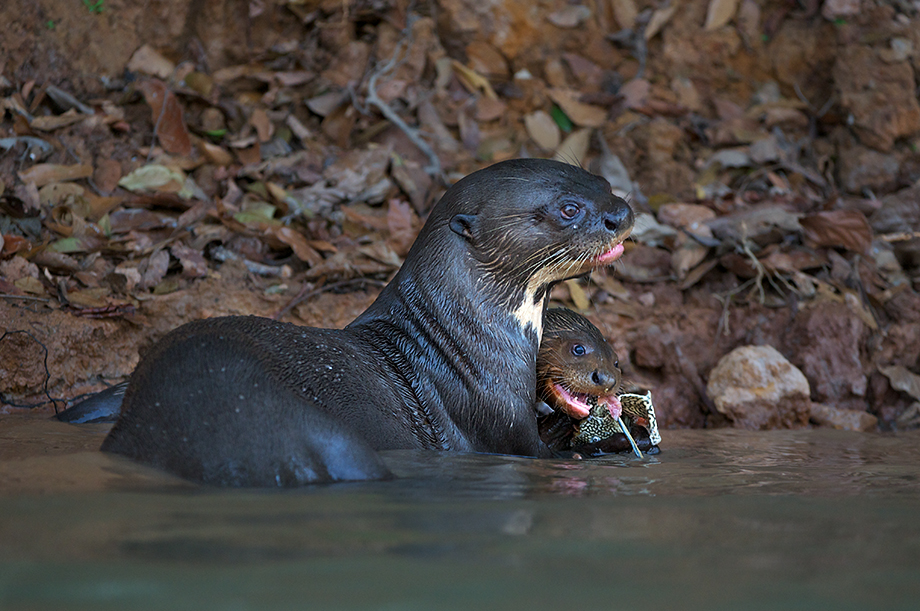
Back down to Brazil for a giant river otter mother and one of her pups feeding on a catfish. I saw quite a few of these enormous otters when I was in the Pantanal, cruising up and down the various rivers and tributaries of South America’s great flooded wetland.
We use cookies to enhance your experience while using our website. If you are using our Services via a browser you can restrict, block or remove cookies through your web browser settings. We also use content and scripts from third parties that may use tracking technologies. You can selectively provide your consent below to allow such third party embeds. For complete information about the cookies we use, data we collect and how we process them, please check our Privacy Policy