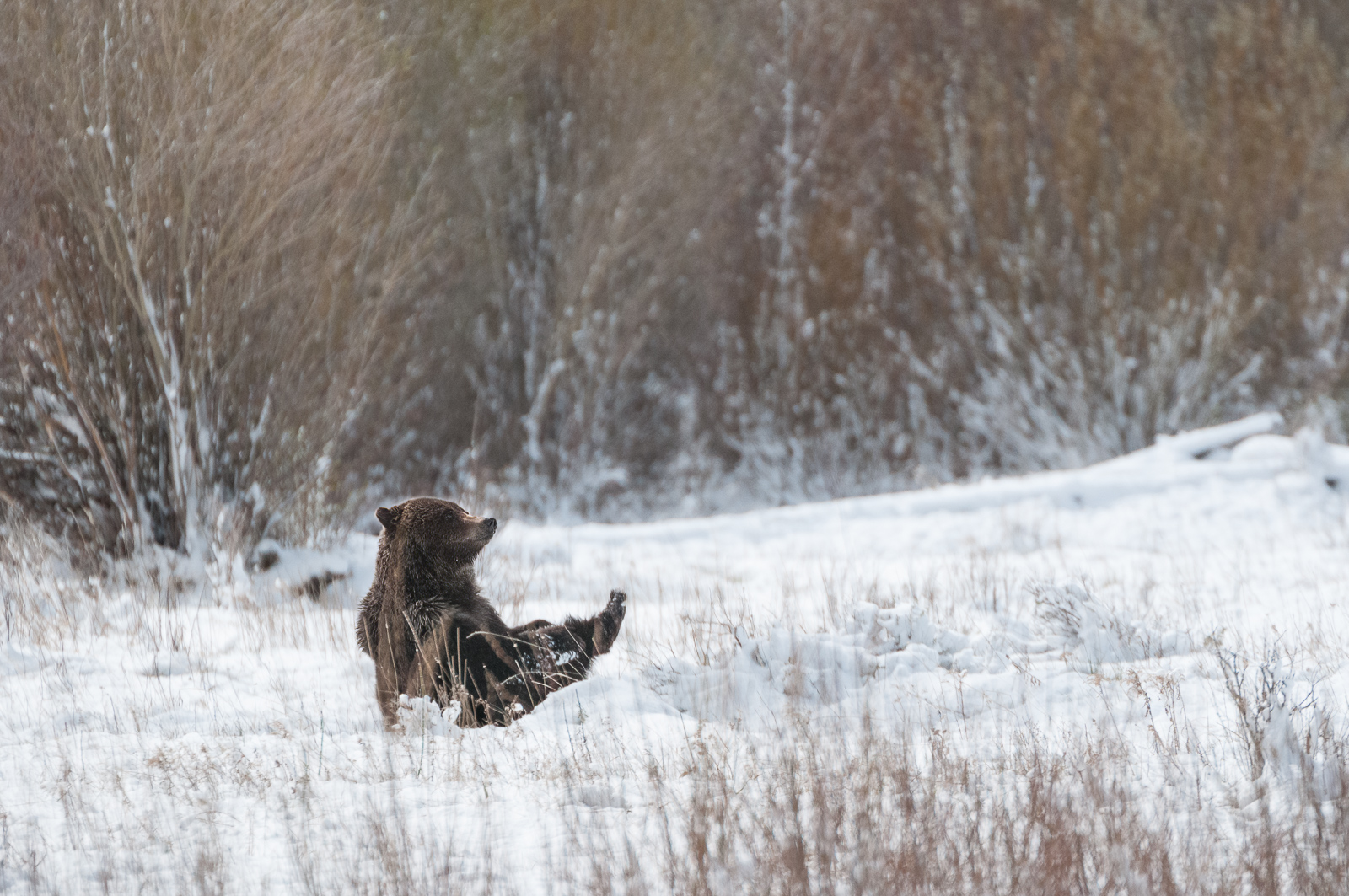
There are three different species of bear in the United States — the black, brown and polar bear. The term grizzly bear refers to the subspecies of the brown bear that ranges from Alaska down into Wyoming, also known as the North American brown bear. I photographed this one playing in the snow in Yellowstone. At least it looked like he was playing in the snow as he sat back, grabbed his feet and rocked back and forth. Nikon D300 with Nikkor 200-400mm lens (at 550mm with 1.4 TC) ISO 800, f/5.6 at 1/5000th of a second.
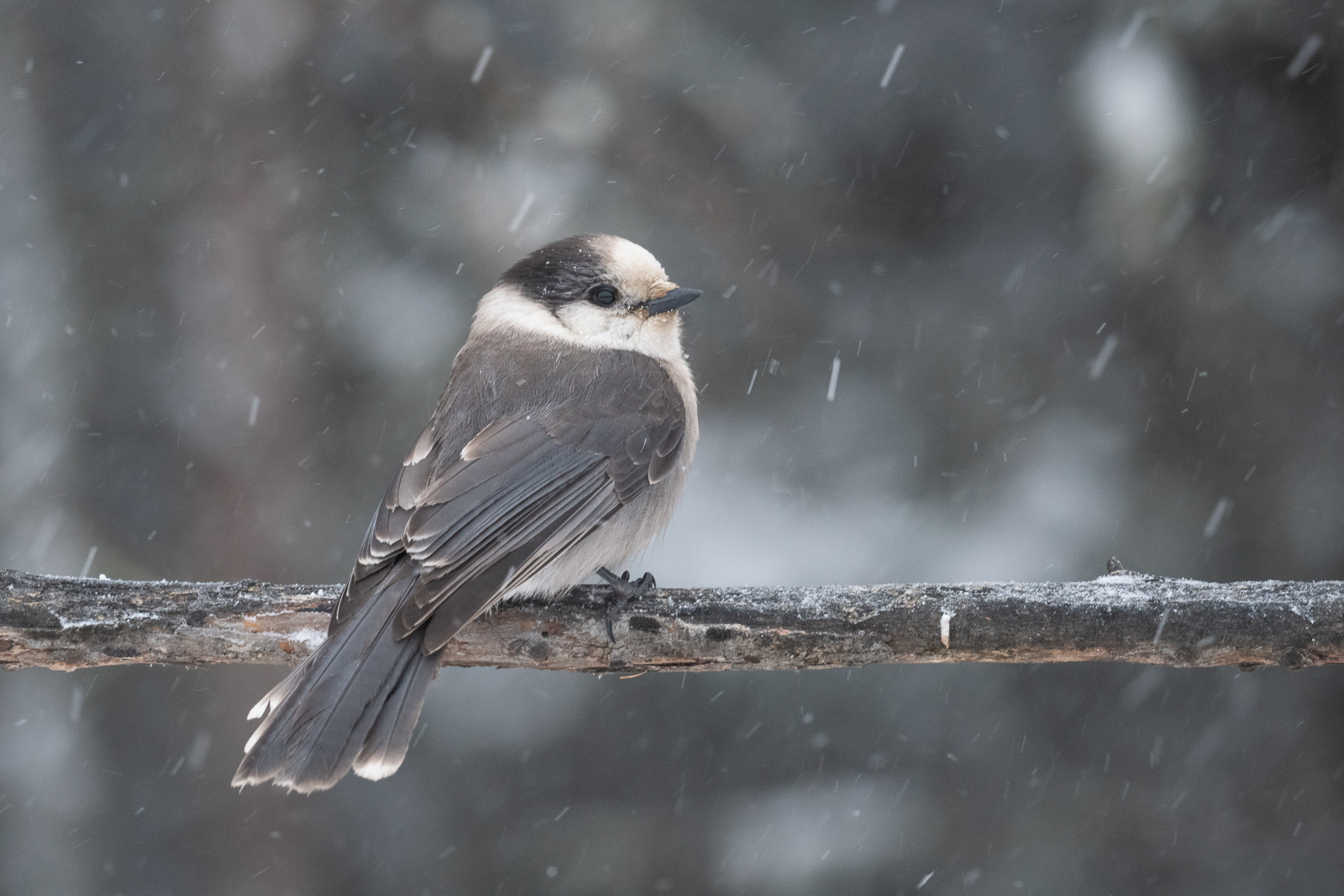
This is one of those birds that is much more impressive seen live than in photos — the Canada jay. I say that mainly because they are actually much larger than they look in all the shots I captured. They typically grow to 13 inches in length with an 18 inch wingspan. Not huge, but big for a songbird. They also have some pretty cool names other than the rather pedestrian Canada jay — my favorites being the camp robber and whisky jack. I saw this one on my recent trip to Sax Zim Bog in northern Minnesota where they are relatively common. Nikon D500 with Nikkor 500mm PF lens, ISO 1600, f/5.6 at 1/125th of a second.
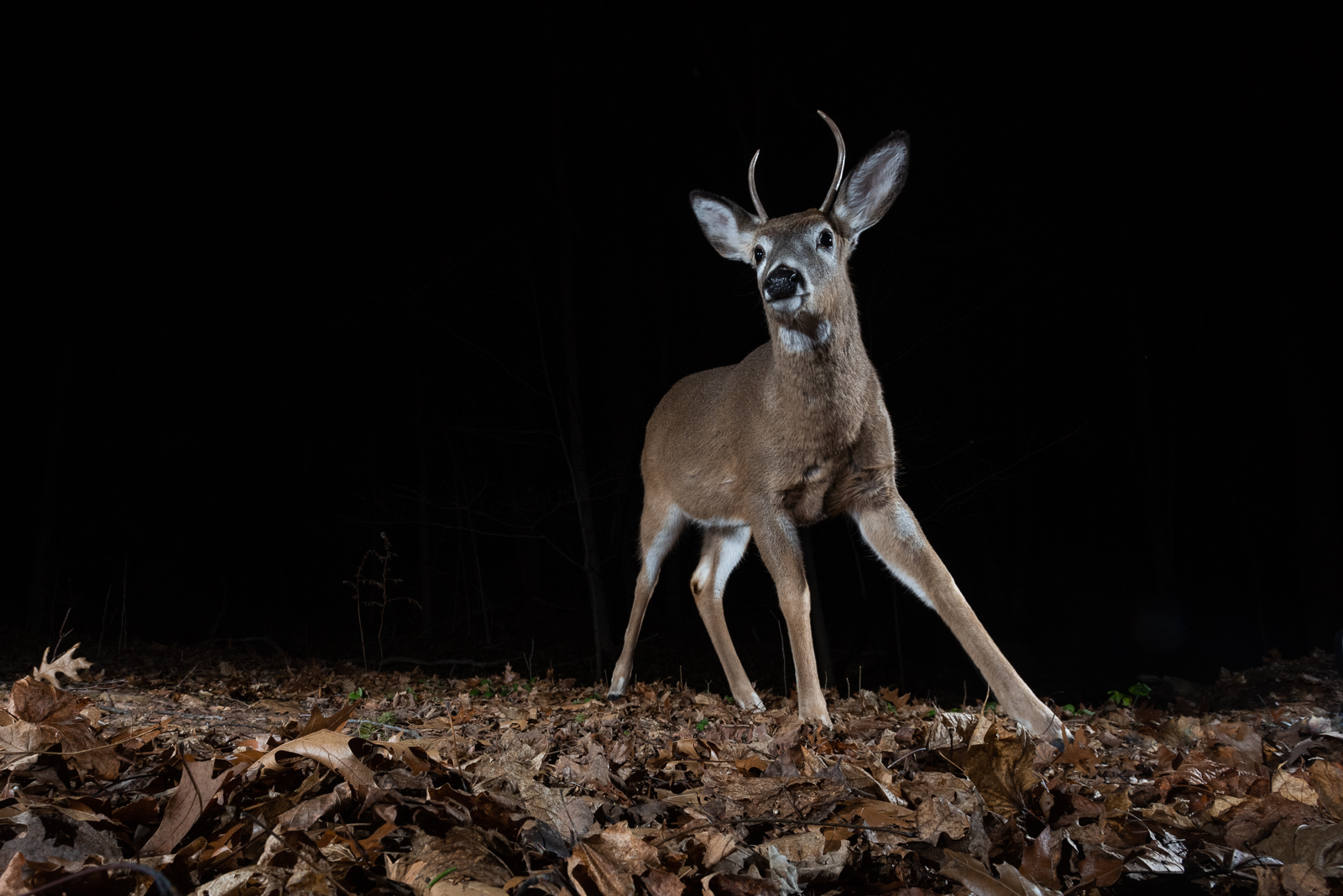
I’ve seen this white-tailed deer hanging around the fringes of the yard a few times — a young male. On this occasion, he tripped the camera trap while passing through. For whatever reason, the deer seem to show up in greater numbers during the winter. Nikon D810 with Nikkor 17-35mm lens (at 17mm) ISO 500, f/14 at 1/200th of a second, Cognisys camera box, trail monitor and remote flashes.
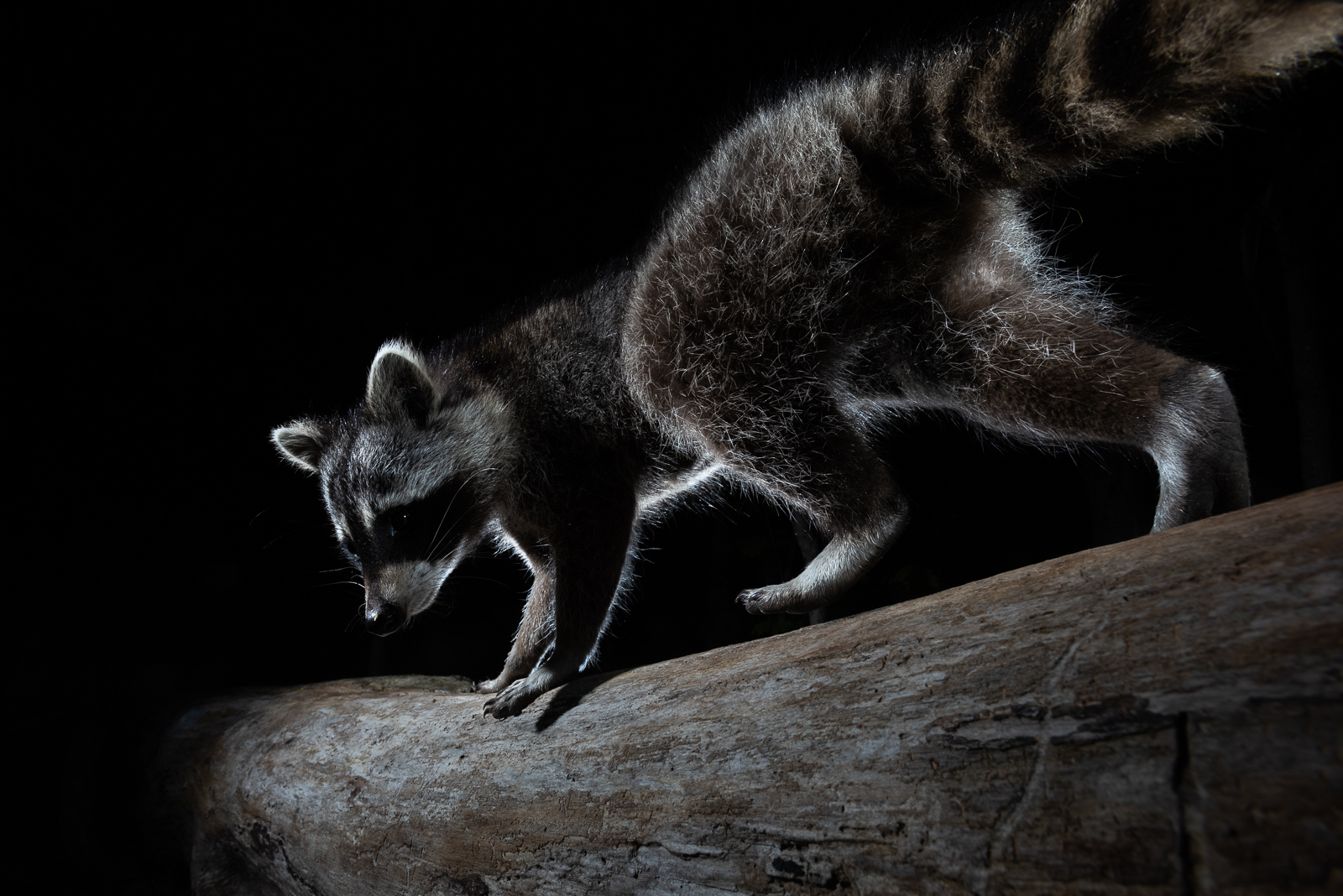
Raccoon fact of the day — it isn’t a sense of sight or smell that makes a raccoon a stealthy nocturnal forager, but rather touch. In fact, the part of the brain that is responsible for sensory function is dedicated overwhelmingly to tactile impulses — a full two thirds, which is more than any other known animal. I know I post a lot of raccoons, but that’s who likes to come visit at night. Nikon D810 with Nikkor 17-35mm lens (at 17mm) ISO 500, f/14 at 1/160th of a second, Cognisys camera box, trail monitor and remote flash units.
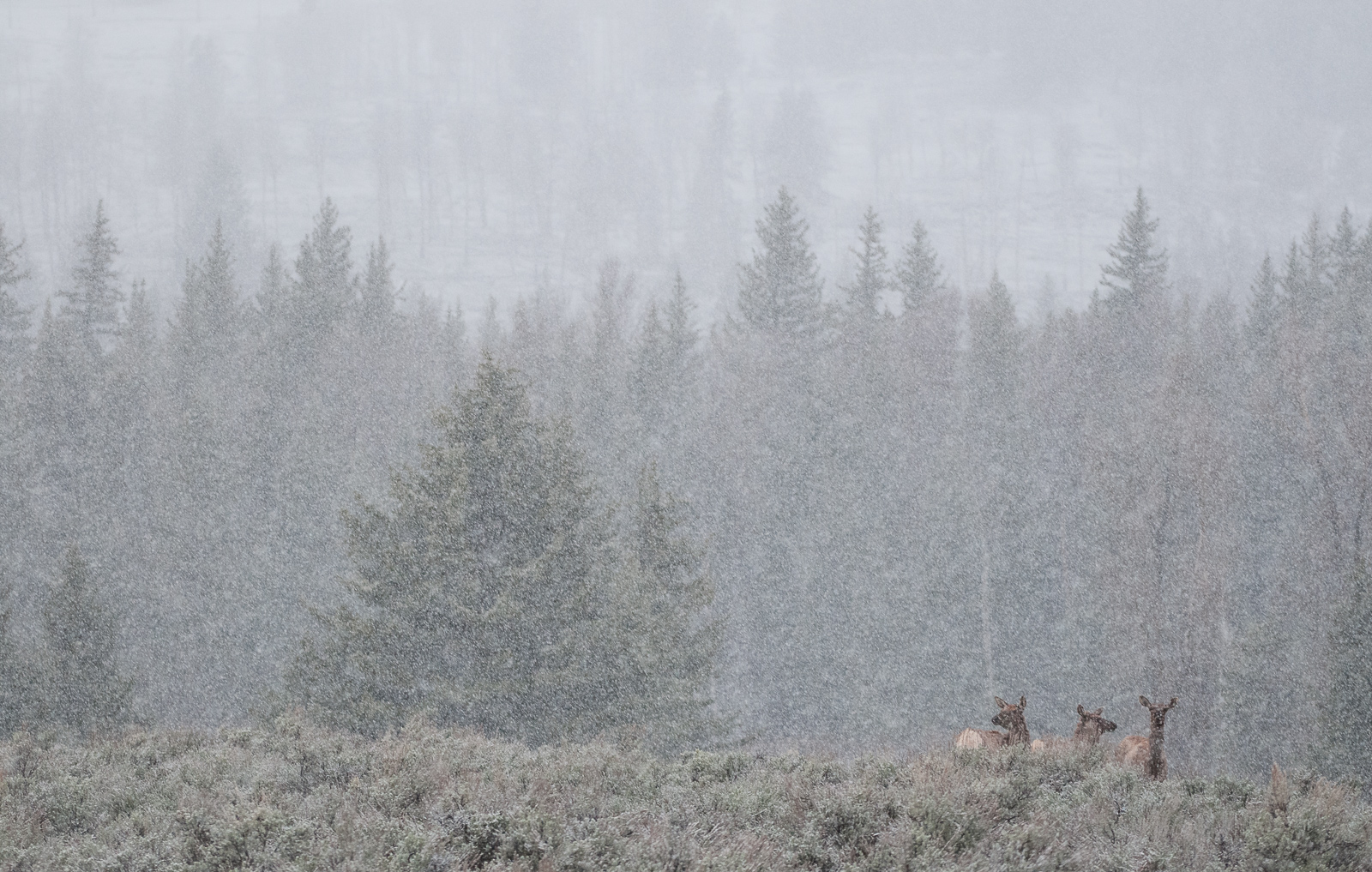
This is what late springtime can look like in Yellowstone and Grand Teton National Parks. This image was taken while I was driving from one park to the next several years ago in late May. Happy New Year everyone. Nikon D300 with Nikkor 200-400mm lens (at 200mm) ISO 800, f/4 at 1/160th of a second.
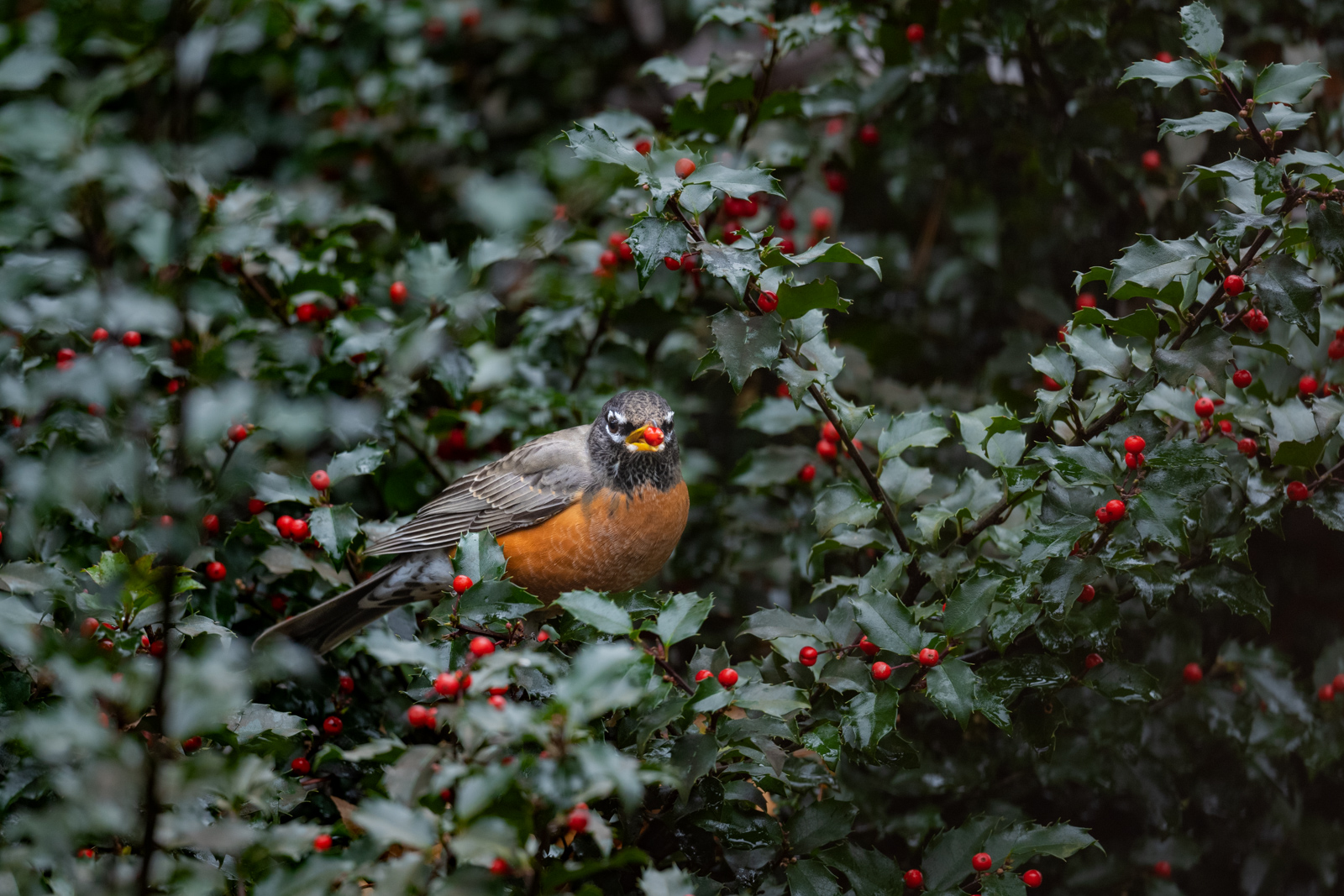
I let the local robins know that it’s okay to start taking down the holiday ornaments. A flock of them happily obliged, dining on the holly berries in our side yard this afternoon. Nikon D850 with Nikkor 500mm PF lens, ISO 1600, f/5.6 at 1/200th of a second.
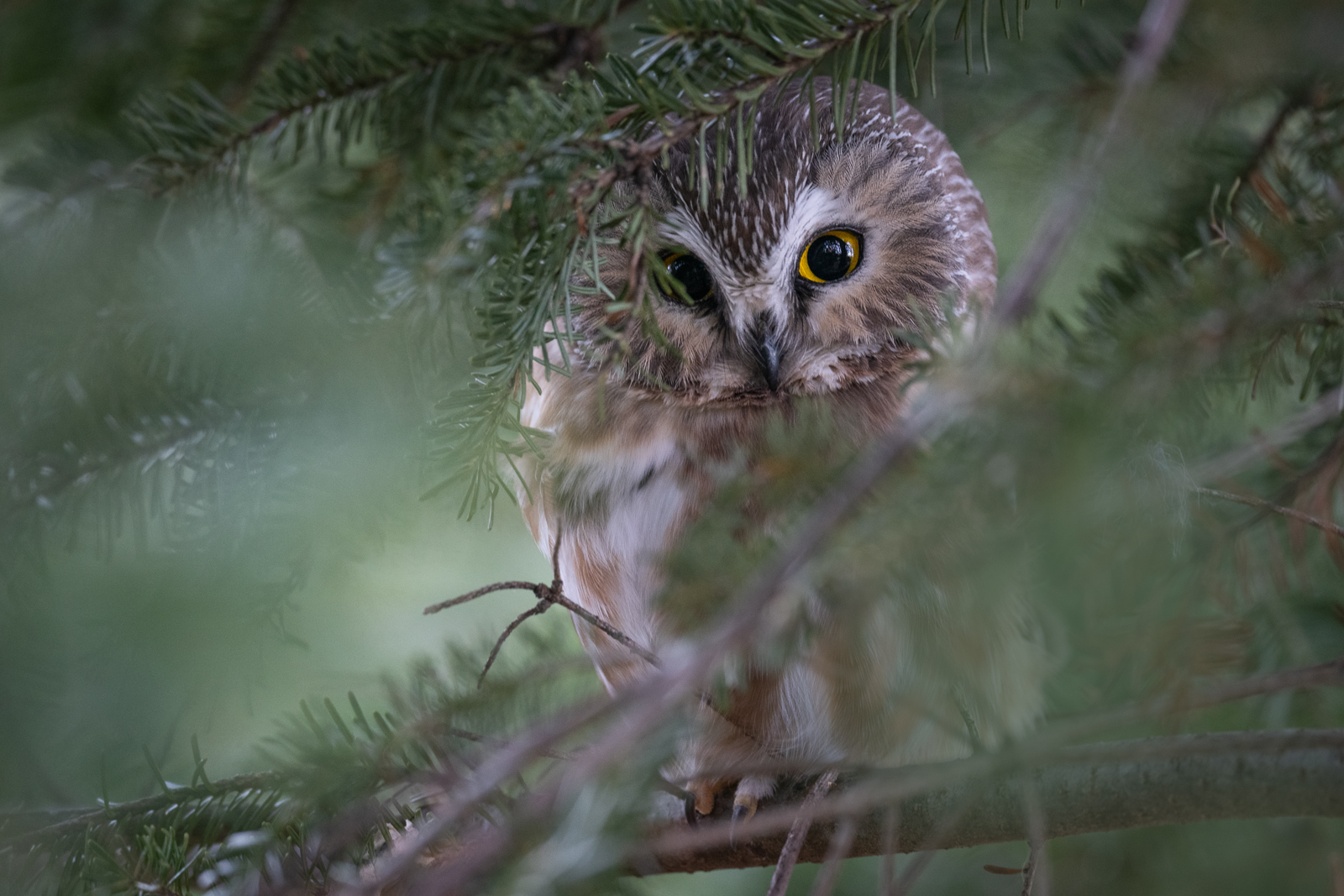
The best ornaments find their own trees. Merry Christmas and Happy Holidays everyone. This is the same saw-whet owl I posted a few weeks ago, spotted by Jackson Staley while shopping for a Christmas tree with his Dad. Nikon D850 with Nikkor 500mm PF lens, ISO 1600, f/5.6 at 1/80th of a second.
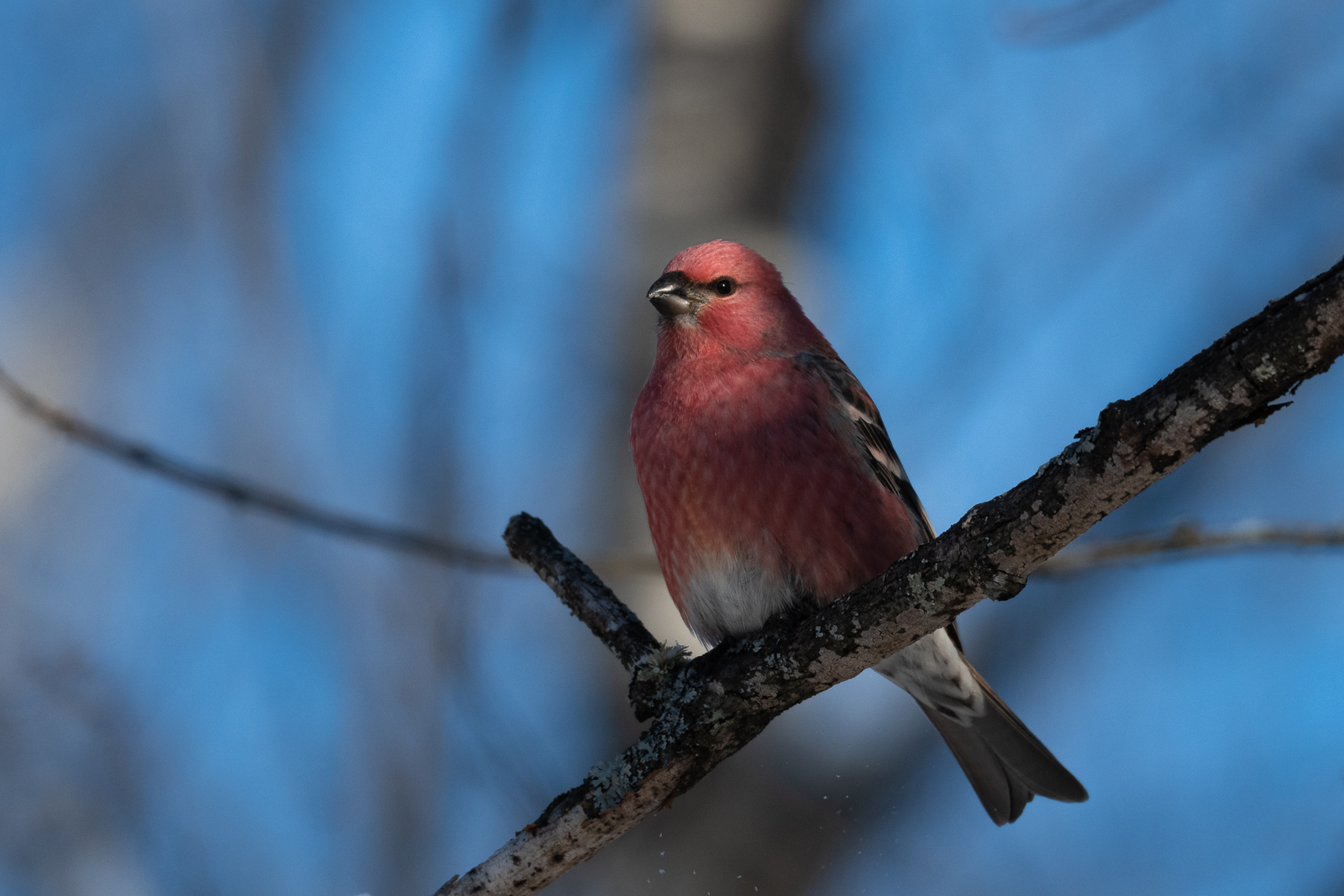
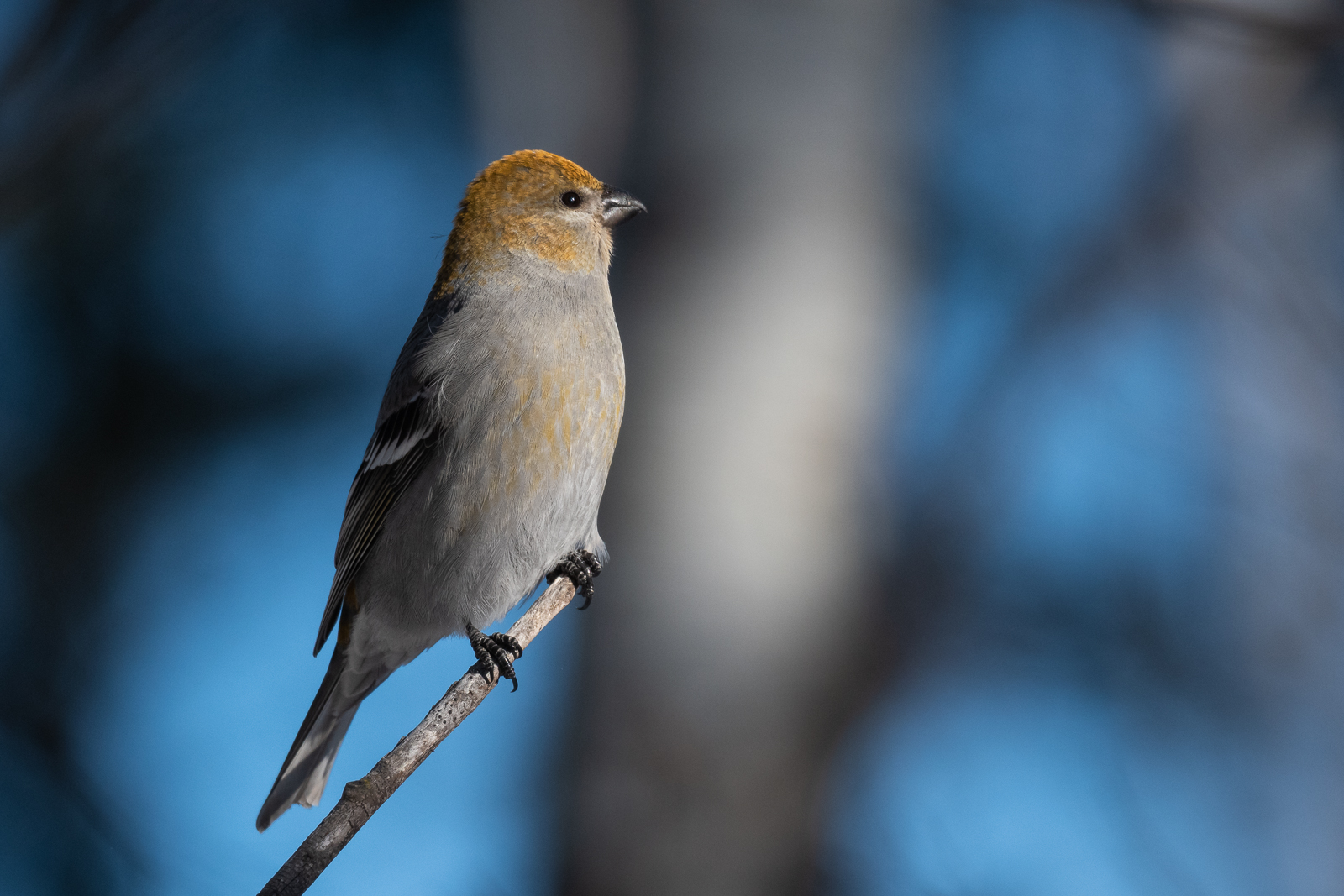
One of the specialties of Sax Zim Bog in Minnesota is the pine grosbeak. They prefer much more northern territory but will venture to the tropical paradise of northern Minnesota in the winter months. There are many species of grosbeak, which translates from French to “thick beak.” The top photo is the more uniformly red male and the bottom photo shows the female with her splotches of yellow, most notably on the head, but also on the back, which you can’t see in this photo. Both Photos: Nikon D500 with Nikkor 500mm PF lens, ISO 800, f/5.6 at 1/4000th of a second.
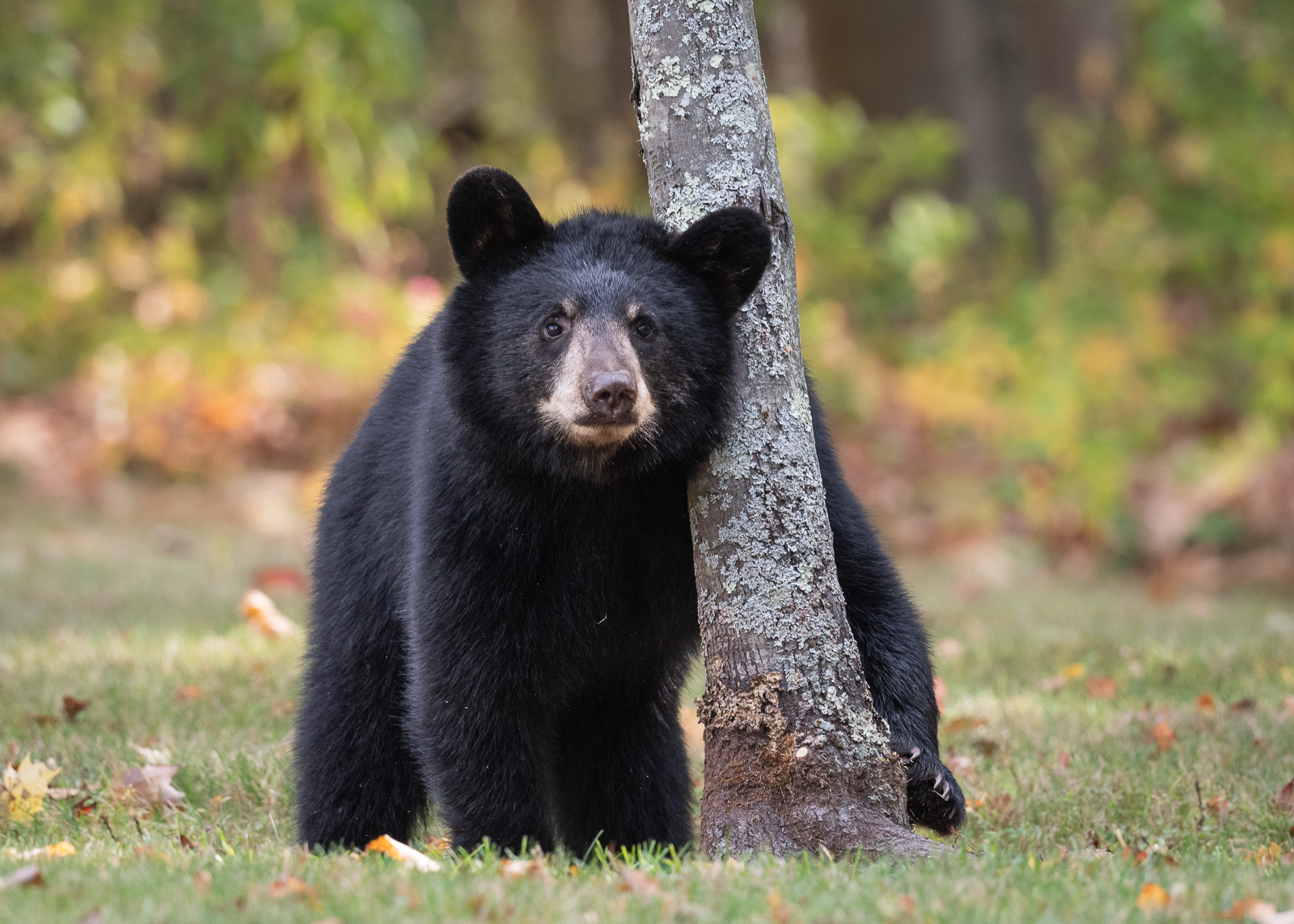
Here’s a non-camera trap shot of one of the bears that passed through the yard in October of 2020. Always nice when I actually get to see them in person when they pay a visit. This guy really liked that tree and didn’t seem to want to let it go. Nikon D500 with Nikkor 500mm PF lens, ISO 800, f/6.3 at 1/500th of a second.
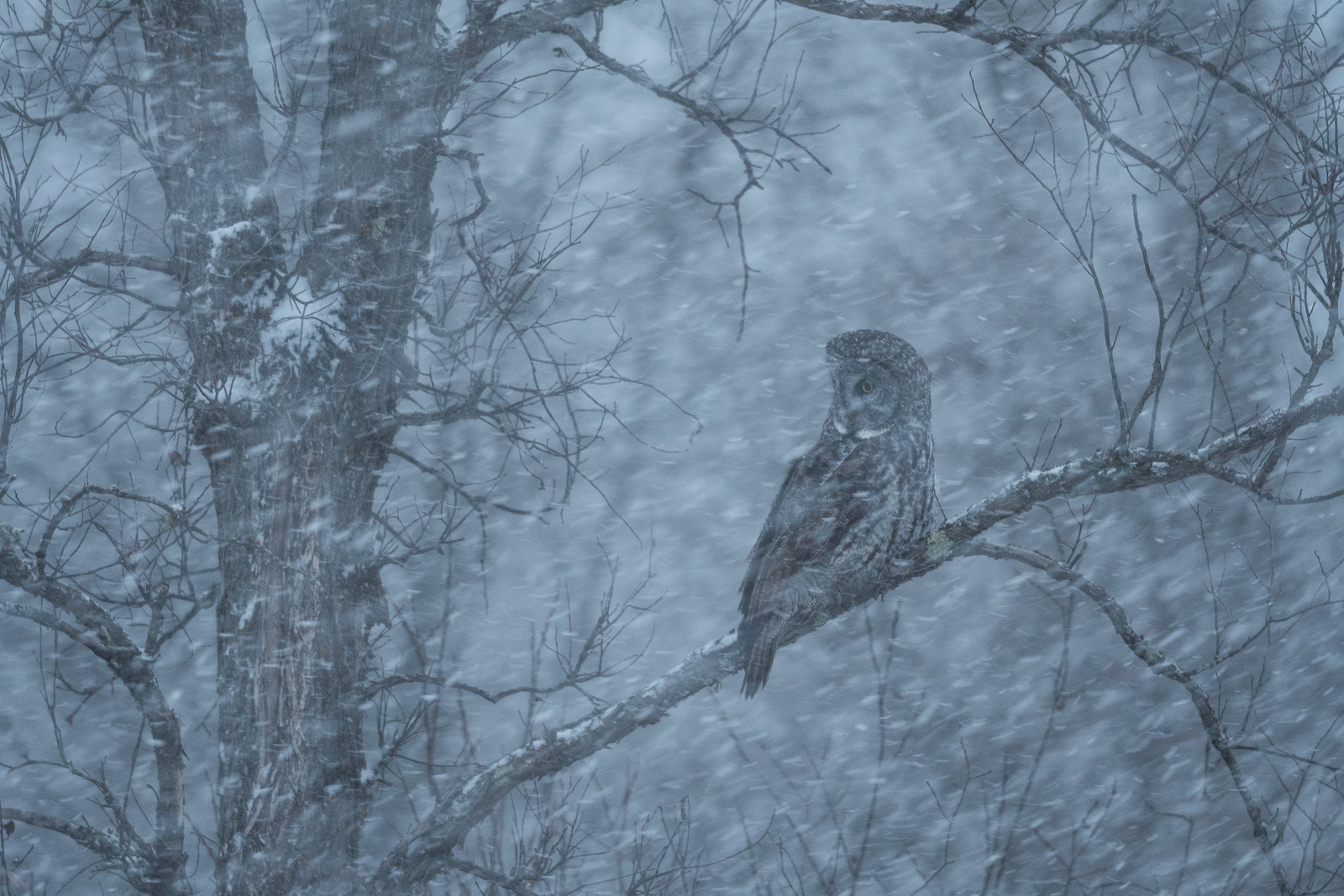
Here’s one more great gray owl to end the week. It was very early in the morning, very cold, very windy and very much blizzard-ing. Which made for a very monochromatic, moody image. The owl didn’t seem too concerned with the storm and was going about its business of hunting for mice and voles just like any other morning. Photographed at Sax Zim Bog in northern Minnesota. Nikon D500 with Nikkor 500mm PF lens, ISO 1600, f/5.6 at 1/50th of a second.
We use cookies to enhance your experience while using our website. If you are using our Services via a browser you can restrict, block or remove cookies through your web browser settings. We also use content and scripts from third parties that may use tracking technologies. You can selectively provide your consent below to allow such third party embeds. For complete information about the cookies we use, data we collect and how we process them, please check our Privacy Policy