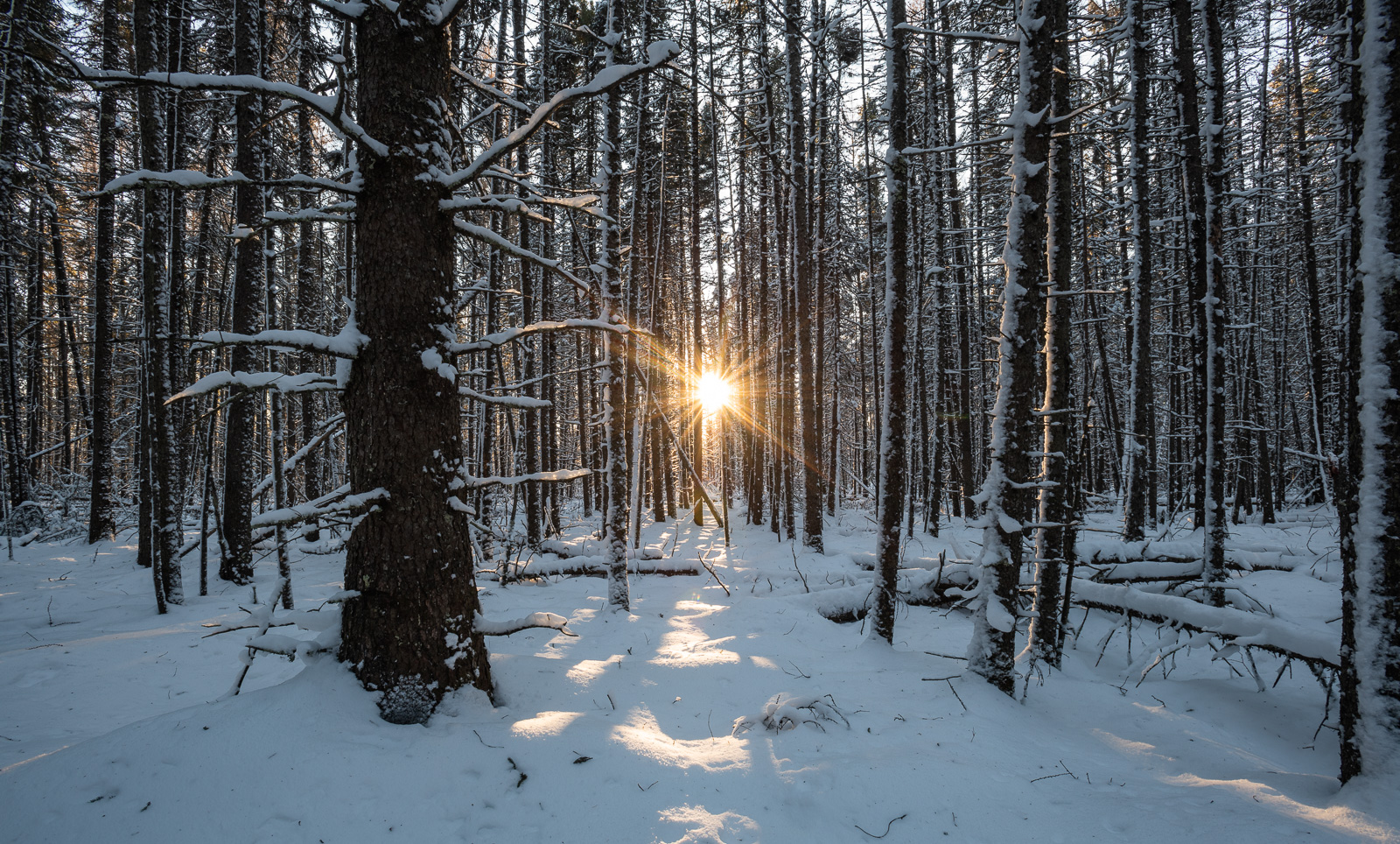
I took many laps around this pine forest in northern Minnesota’s Sax Zim Bog. I was hoping to photograph an ermine, otherwise known as a short-tailed weasel. I never did find an ermine, but it was nice to be alone in the bog nonetheless. Granted, the temperature was 2° at the time. So what is a bog? According to Wikipedia it’s “a wetland that accumulates peat, a deposit of dead plant material—often mosses, and in a majority of cases, sphagnum moss. It is one of the four main types of wetlands. Other names for bogs include mire, mosses, quagmire, and muskeg.” Basically, it’s a spongy swamp formed by decades of decomposing pine needles and other plant matter. Mice and voles love bogs which means that owls love them too, which means that people who love owls love them too. Personally, I can’t wait to get back. Nikon D850 with Nikkor 17-35mm lens (at 17mm) ISO 200, f/18 at 1/6th of a second.
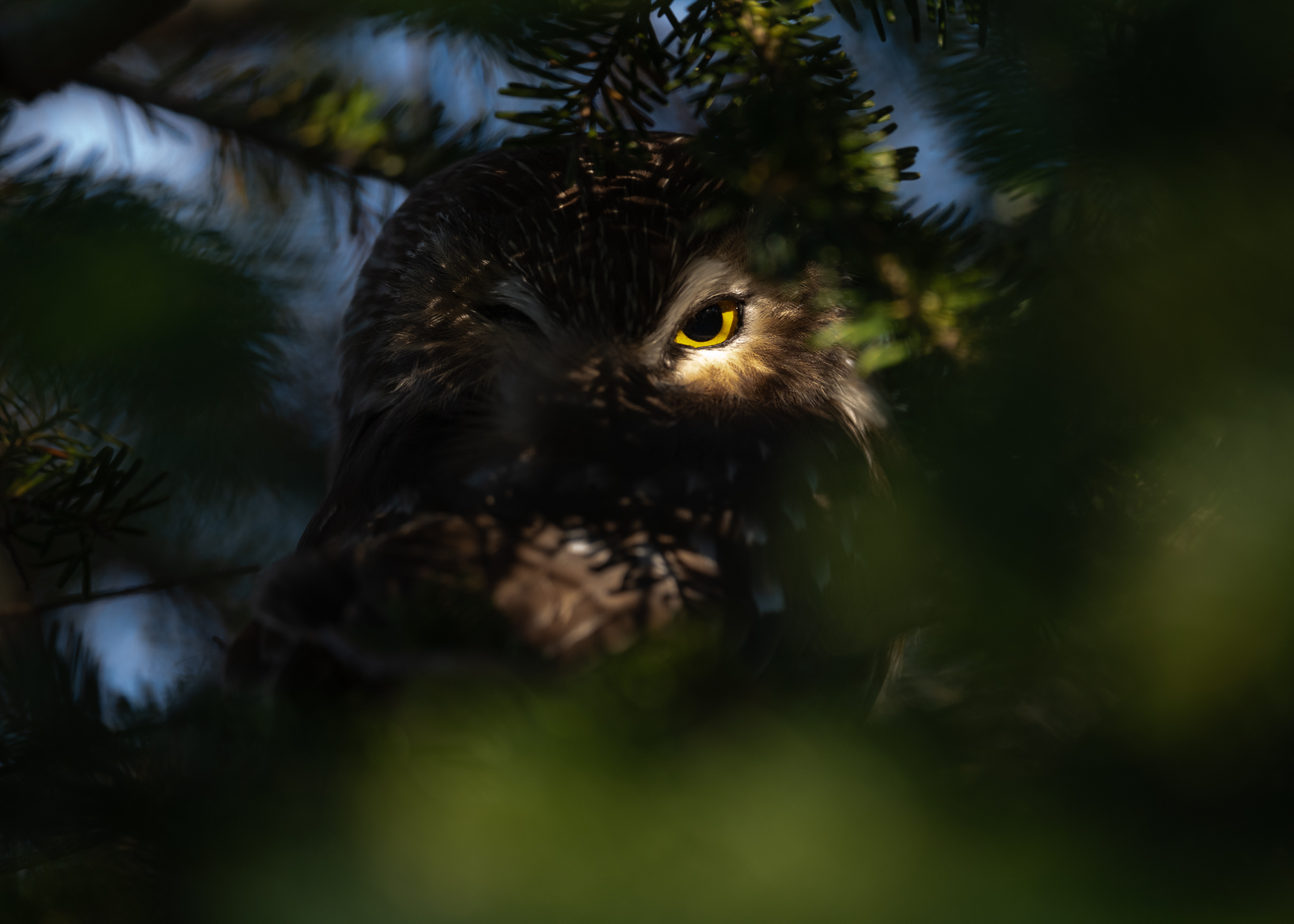
Two days after returning home to Connecticut from my owl excursion in northern Minnesota, my high school friend Pete and his young son Jackson texted because they noticed something unusual while shopping for their Christmas tree. Deep inside one of the trees they were considering, Jackson spotted two yellow eyes staring back at him. They sent an iPhone pic and I knew immediately it was a northern saw-whet owl, the smallest species we get around here (about 7 inches tall). I also knew that if left alone, it would likely be roosting in that same spot for at least the remainder of the day — they are strictly nocturnal — so I drove the thirty minutes to meet them. The sun was shining bright when I arrived and the wind was moving the branches around so I found a position where I could see through to the owl’s face, set my camera to expose for the bright spot, and waited for it to hit the open eye. I returned a few hours later when the sun was setting to get a few shots in even light, but ended up liking this one best. I’ll post a few of the others soon. Nikon D850 with Nikkor 500mm PF lens, ISO 800, f/5.6 at 1/100th of a second.
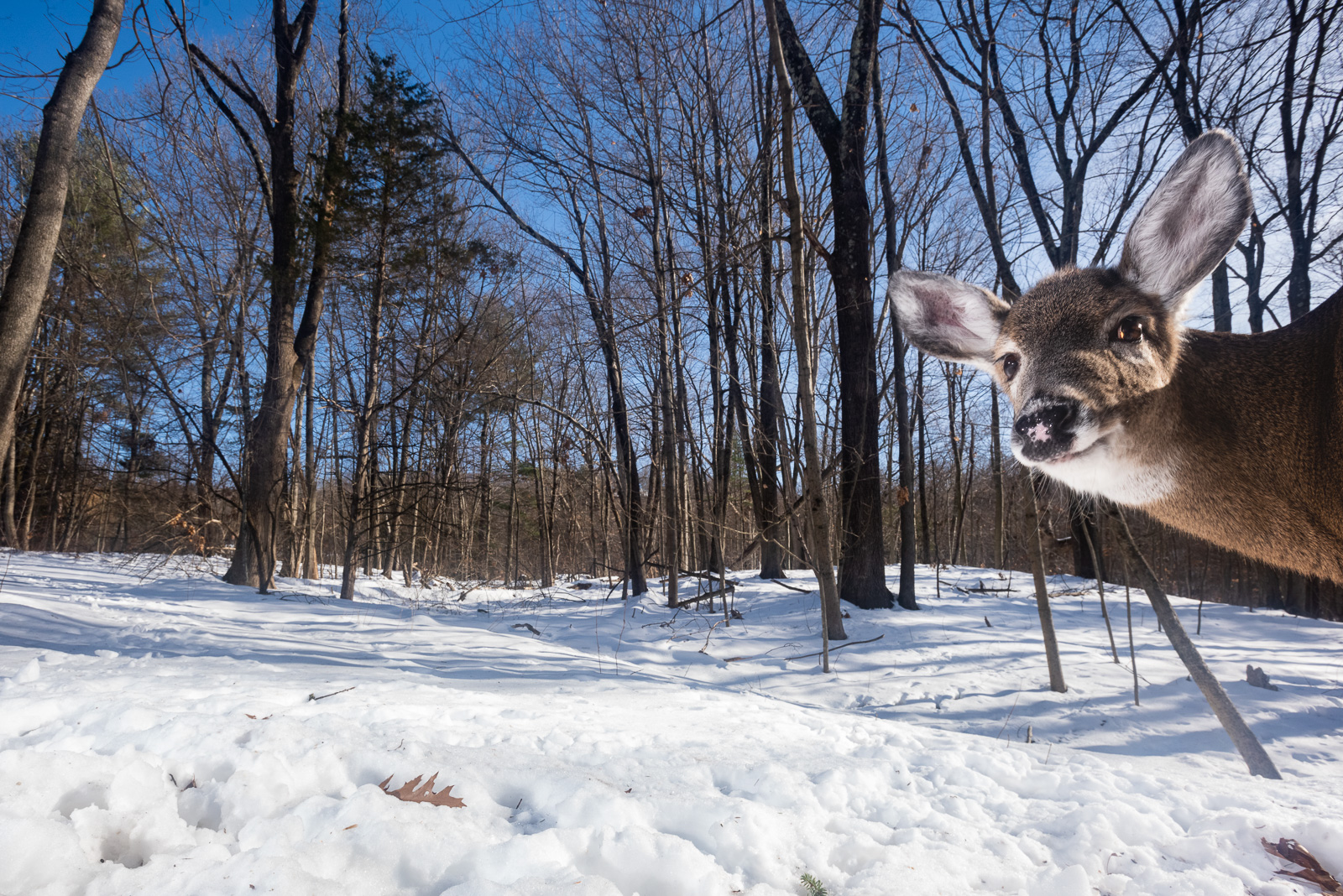
This deer gave it a good effort but didn’t quite make the cut for the article on my camera trapping adventures in the backyard that is featured in the December/January issue of National Wildlife magazine. If you didn’t see my post on social media yesterday, you can check out the article at this LINK.
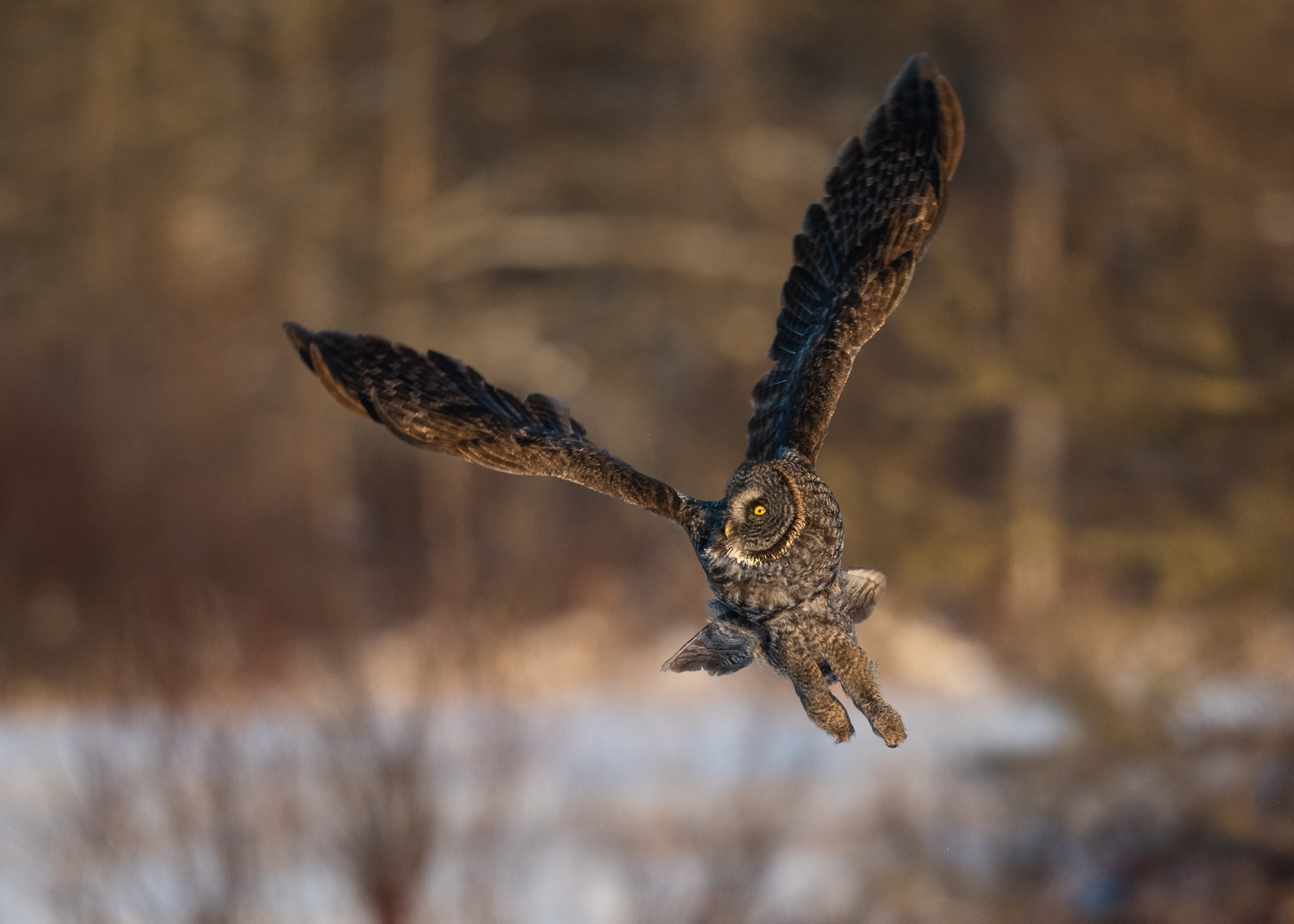
Here’s another great gray owl from last week’s trip to northern Minnesota. The day after the snowstorm, we had bright, sunny conditions. The high was only 3 degrees, but the clear skies and visibility made flight shots considerably easier. The owl was looking up at, and heading toward a perch after what seemed to be an unsuccessful mission to capture a vole. You get a good look at the wingspan — which is in excess of four feet — and those furry trousers on the legs. Nikon D500 with Nikkor 500mm PF lens, ISO 800, f/5.6 at 1/1250th of a second.
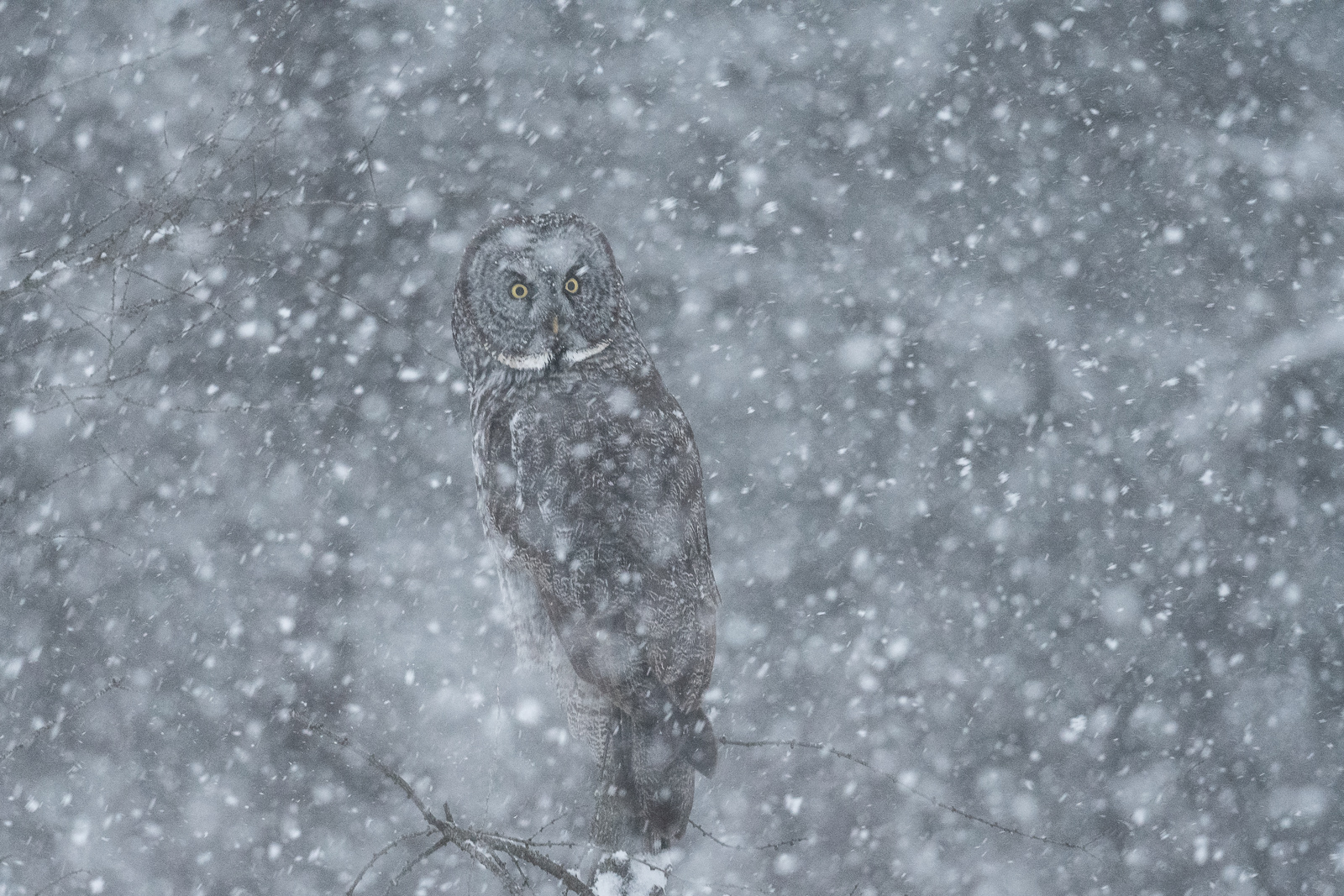
Great gray owls have always eluded me on my many trips across the country. Even in Yellowstone where they are quite frequently seen. So I decided to head to Sax Zim Bog in northern Minnesota — one of the most reliable places to see the “Ghost of the North Woods.” My first full day coincided with the first major snow storm of the season. Blizzard-like conditions lasted throughout the day. I had hoped for snow, but this was so thick and blustery that visibility was an issue, making flight shots extremely difficult, especially in the low light of dawn and dusk when the owls are active. That said, I managed to see a few owls, and am happy with many of the perched shots I captured. Getting very close to this particular owl allowed me cut through the storm to reveal some of the detail in the face and feathers. Nikon D500 with Nikkor 500mm PF lens, ISO 3200, f/5.6 at 1/250th of a second.
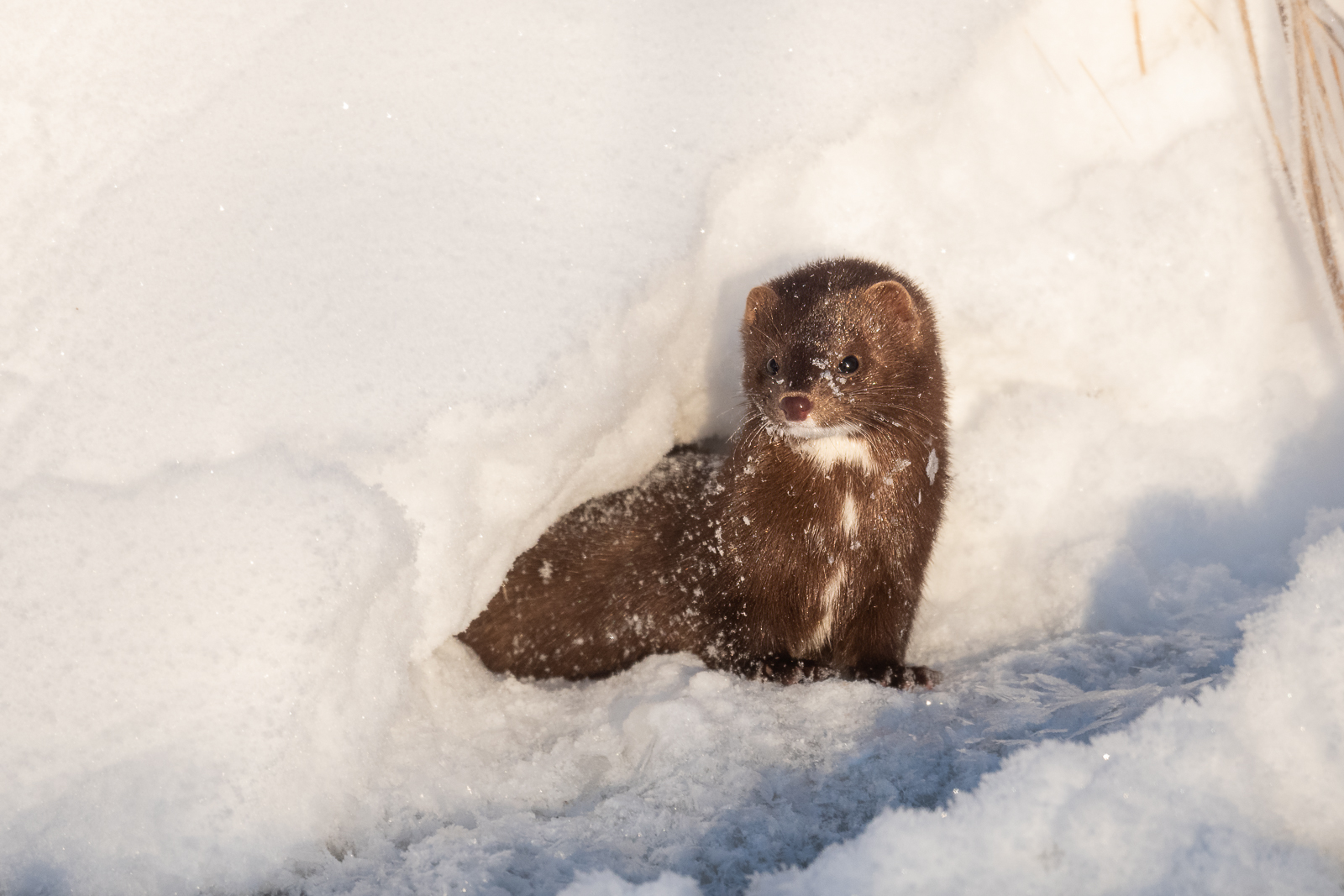
I was in northern Minnesota for the last four days in search of great gray owls. But more on the owls tomorrow. For today I wanted to post the trip’s unexpected surprise — an American mink. I’ve been after mink for years but have only caught a fleeting glimpse here and there and no photos. But while scanning for owls yesterday morning, I saw this little thing out of the corner of my eye. It scurried across the ice, before diving into a hole in snowbank. I thought the encounter was over, but a few seconds later the mink popped its head out of the hole, came out on the ice, rolled around a bit, and then headed back inside. Nikon D500 with Nikkor 500mm PF lens, ISO 800, f/5.6 at 1/2000th of a second.
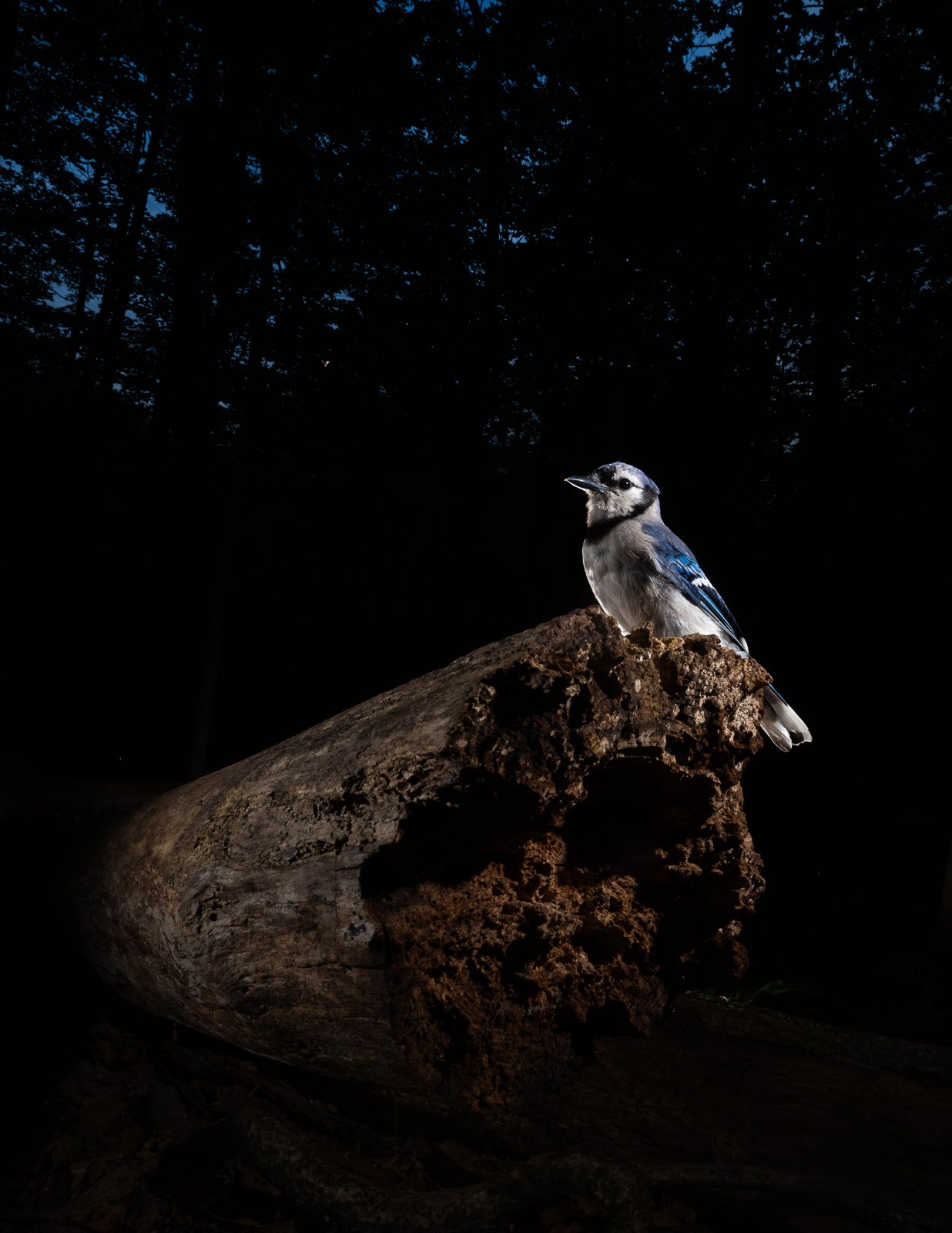
Here’s another one from a few months back when my camera trap was at the end of a fallen ash tree in the back woods. Always nice when the birds stop by for a photo. In this case a blue jay pausing for a moment before moving on. Nikon D810 with Nikkor 17-35mm lens (at 17mm) ISO 500, f/14 at 1/160th of a second, Cognisys camera box, trail monitor and three remote flash units.
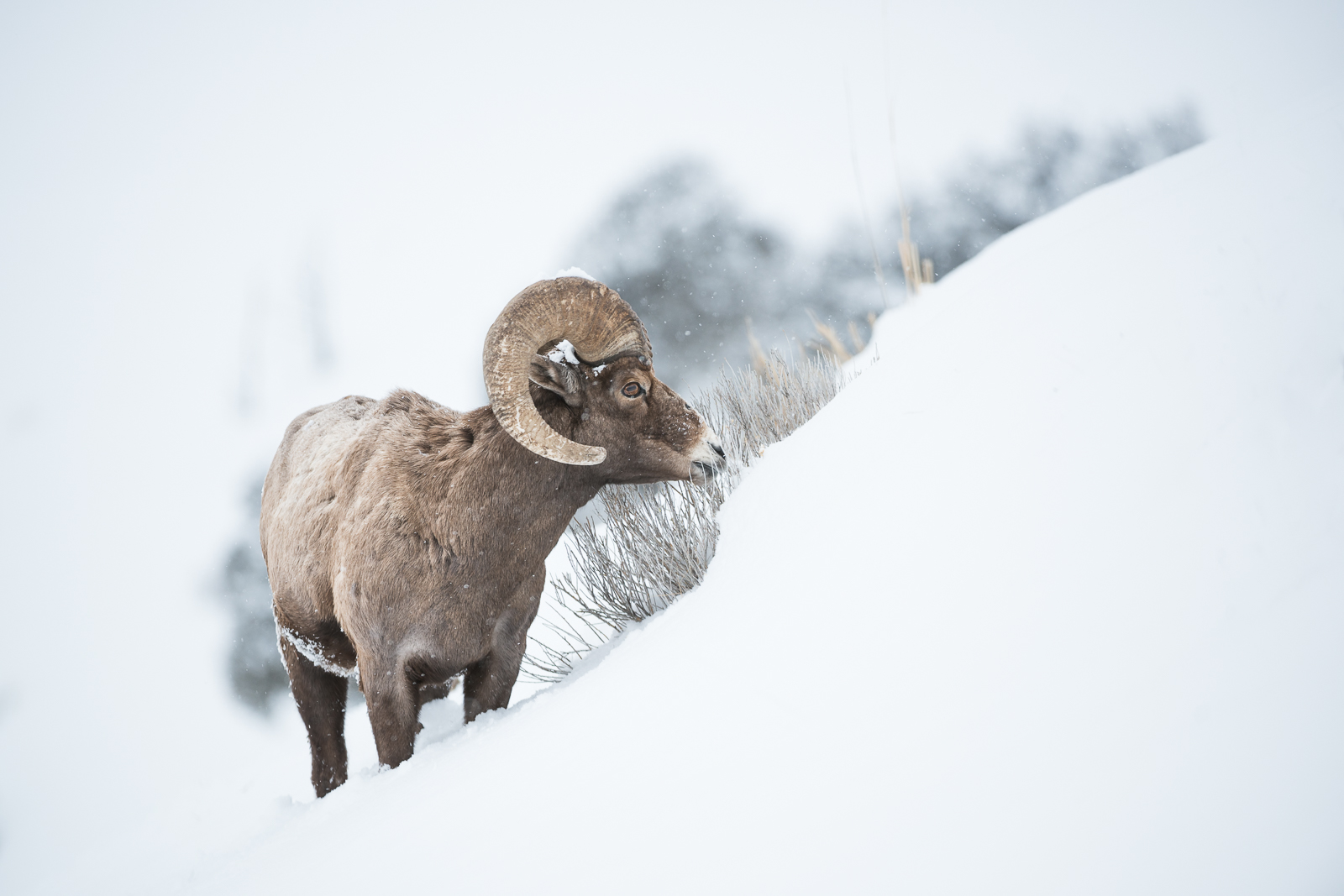
A bighorn ram finds a patch of exposed grass on a steep, snow-covered hillside. Photographed in Yellowstone a few years back. Nikon D800 with Nikkor 200-400mm lens (at 330mm) ISO 400, f/4 at 1/1600th of a second.
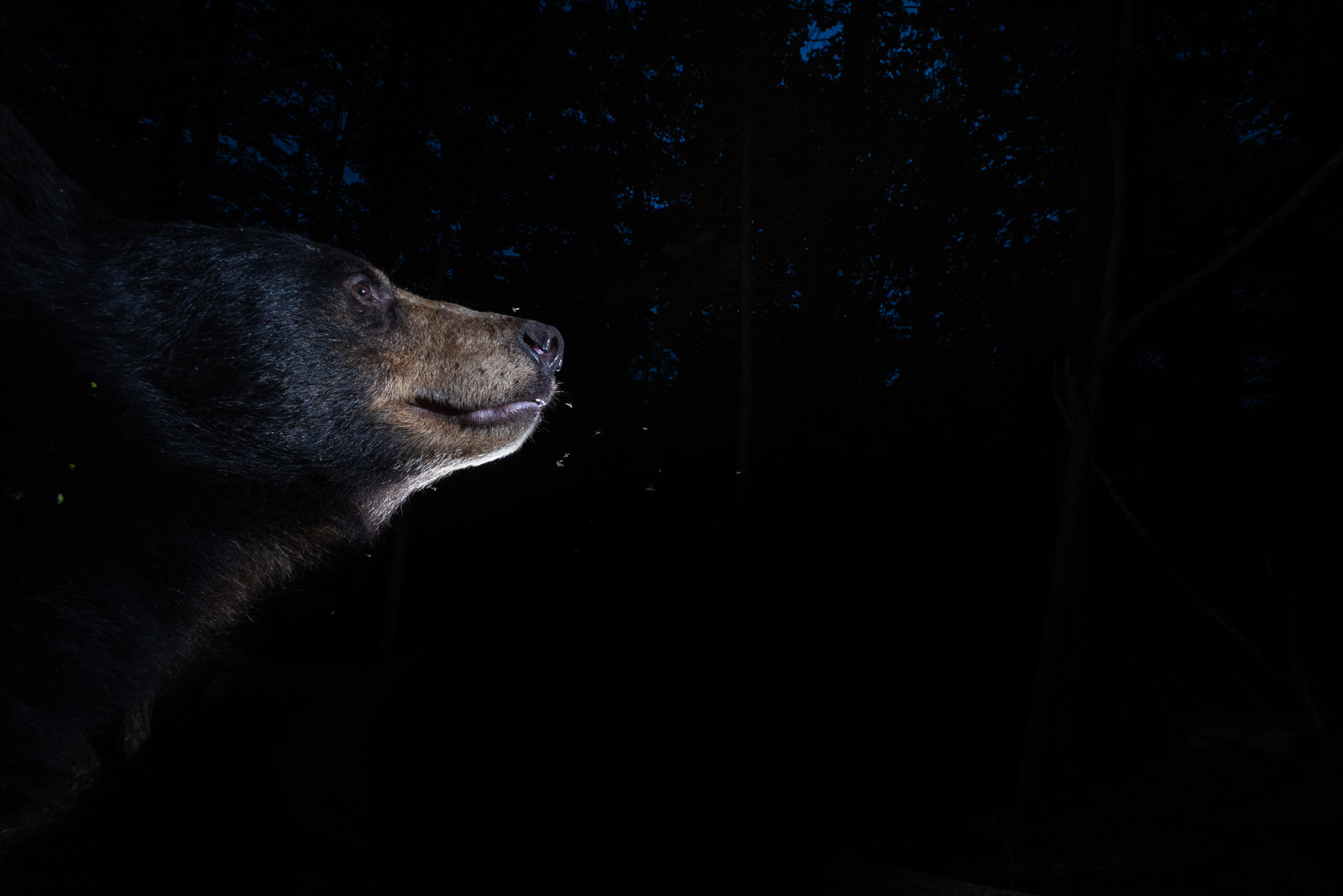
This black bear stuck his head into frame while passing through the backyard a few months ago. I’m assuming the bears are all settling in for the winter at this point, but you never know. They don’t fully hibernate and may wander around a bit on unseasonably warm days. Nikon D810 with Nikkor 17-35mm lens (at 35mm) ISO 500, f/14 at 1/160th of a second, Cognisys camera box, trail monitor and remote flash units.
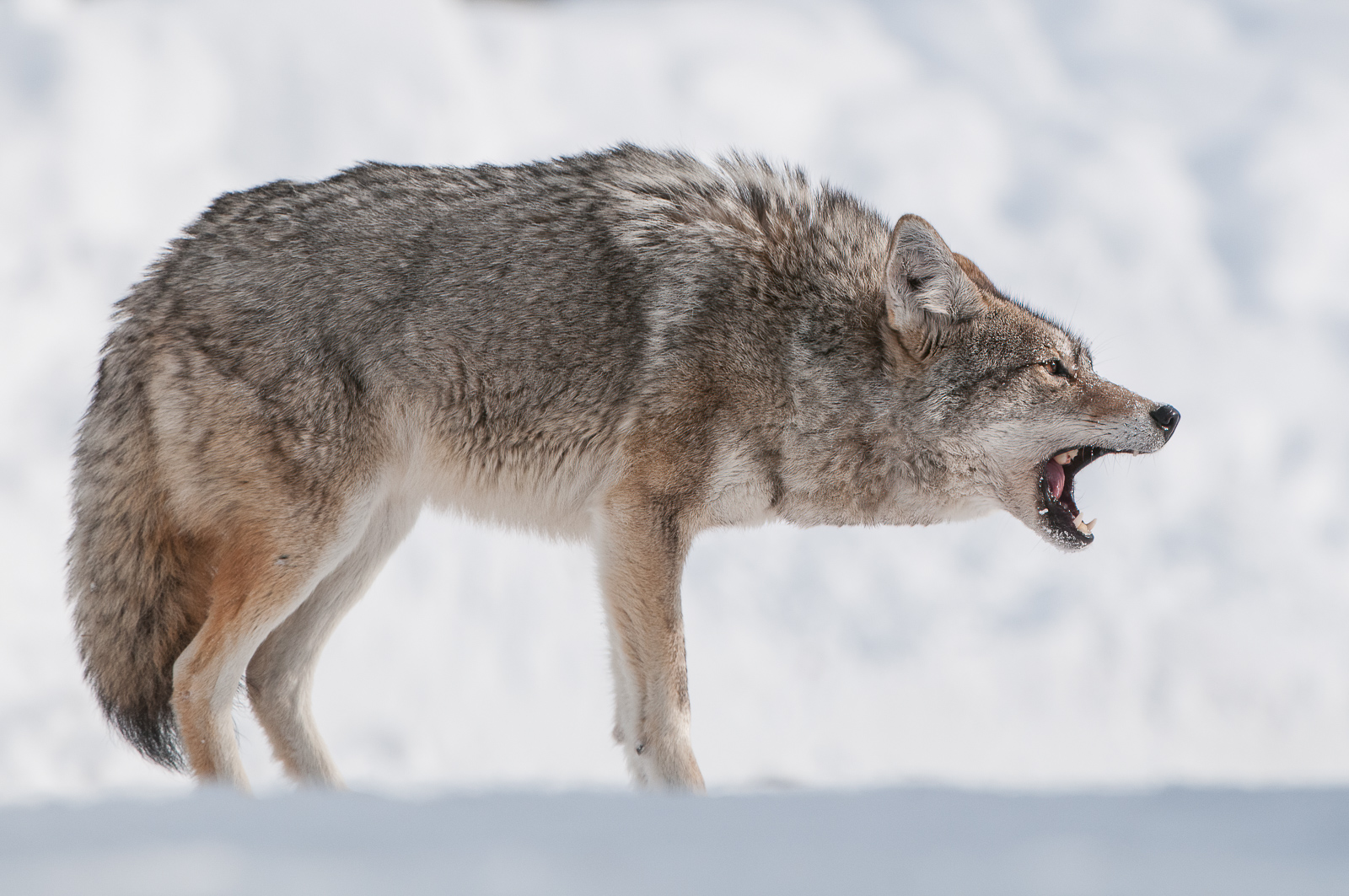
I photographed this coyote a few years back while in Yellowstone National Park. Winter is my favorite time to visit Yellowstone. Access to a majority of the park is restricted, but predators are very active due to the slowed metabolism of their prey. And they also happen to be wearing their finest coats in the winter months. Nikon D300 with Nikkor 200-400mm lens (at 400mm) ISO 400, f/5.6 at 1/2000th of a second.
We use cookies to enhance your experience while using our website. If you are using our Services via a browser you can restrict, block or remove cookies through your web browser settings. We also use content and scripts from third parties that may use tracking technologies. You can selectively provide your consent below to allow such third party embeds. For complete information about the cookies we use, data we collect and how we process them, please check our Privacy Policy