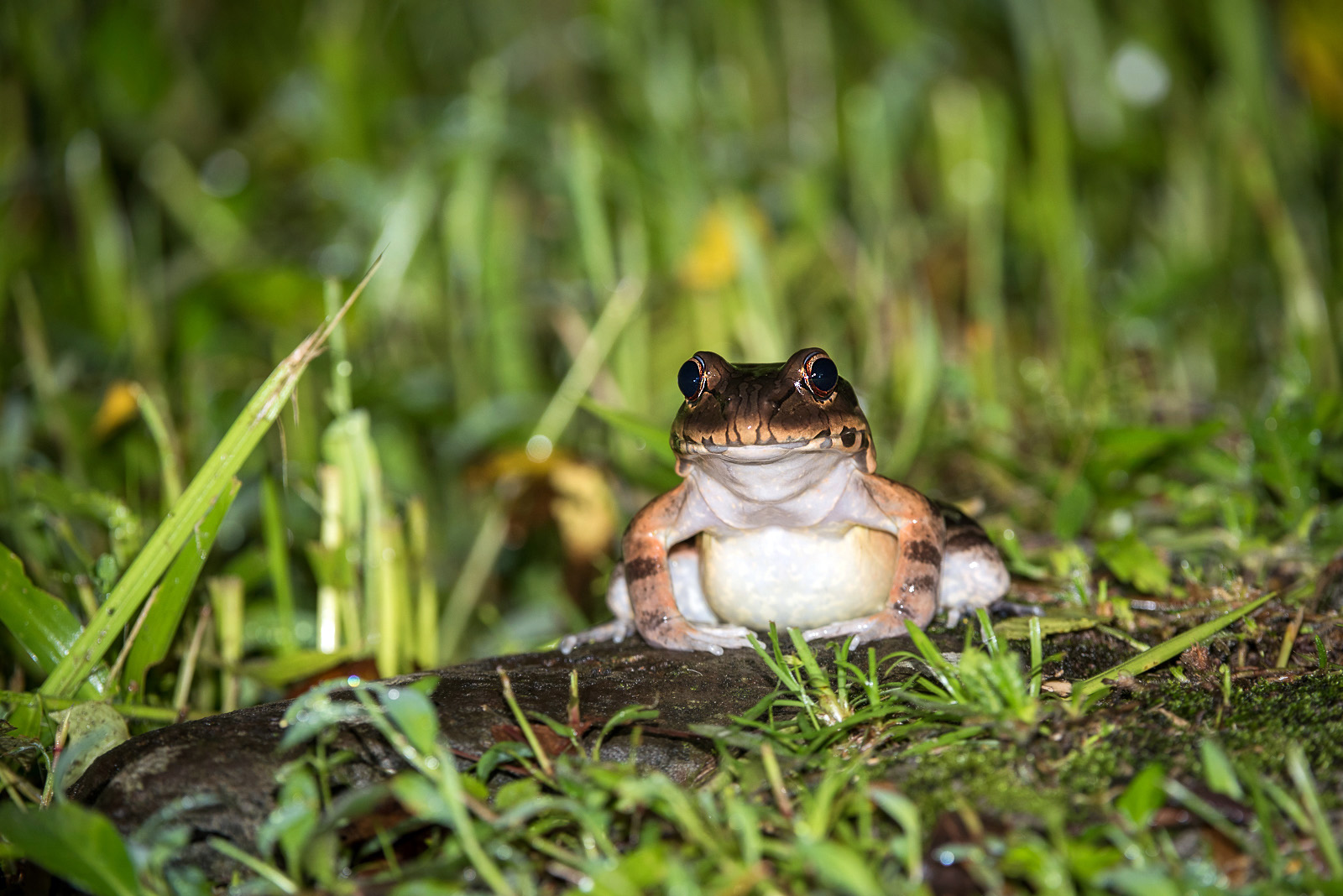
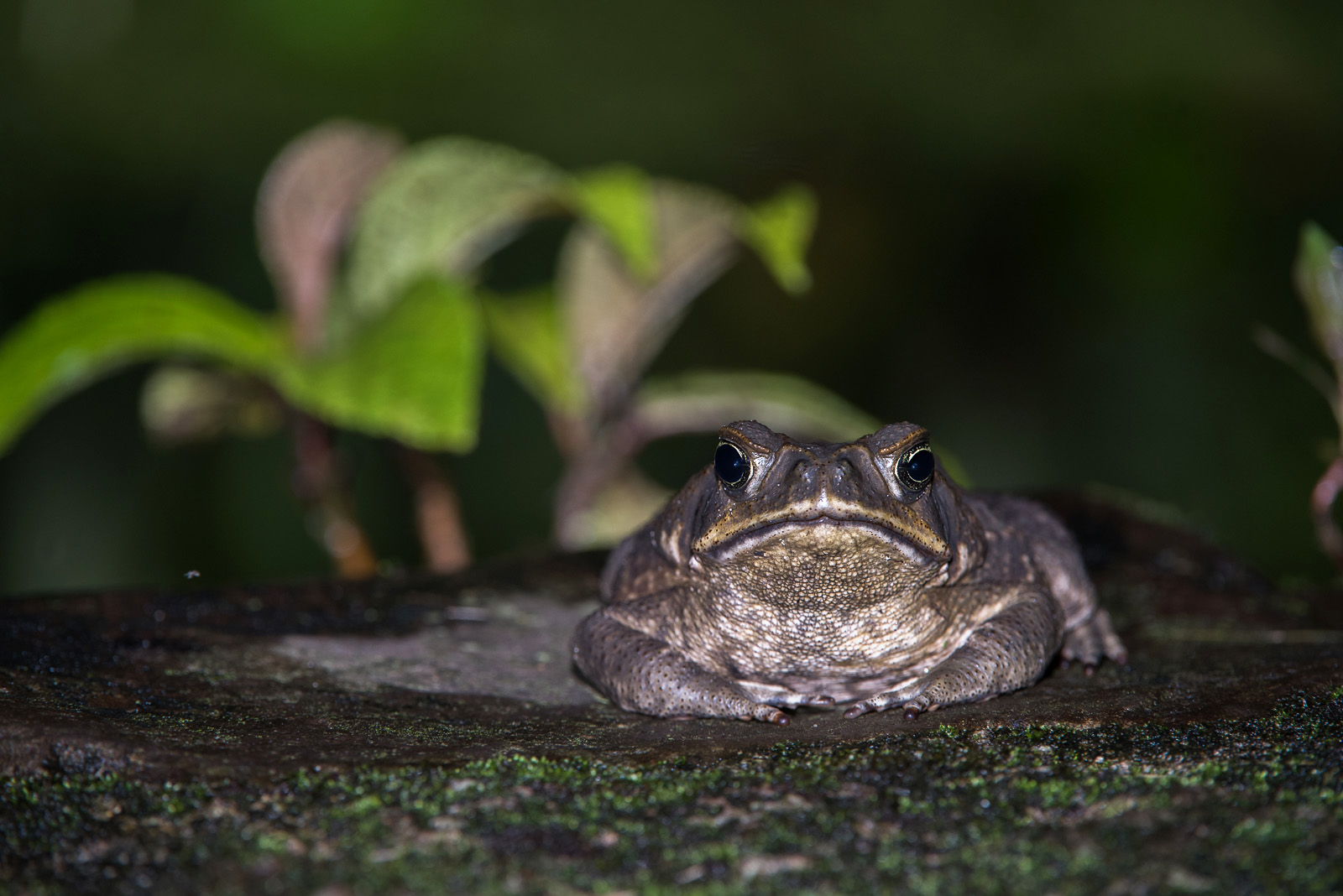
Some of you might remember when I posted an image of one of these frogs in the past and referred to it as the “chicken eating frog.” It’s true. They have been known to eat chickens. They also eat bats, among other unfortunate creatures. They are very large and bulky. Over seven inches in length. And they are also toxic. They live in tropical regions of Central and South America and are strictly nocturnal. I photographed this one in the El Valle region of Panama. Nikon D810 with Nikkor 200-400mm lens (at 310mm) ISO 800, f/6.3 at 1/160th of a second, two Nikon SB-900 flash units.
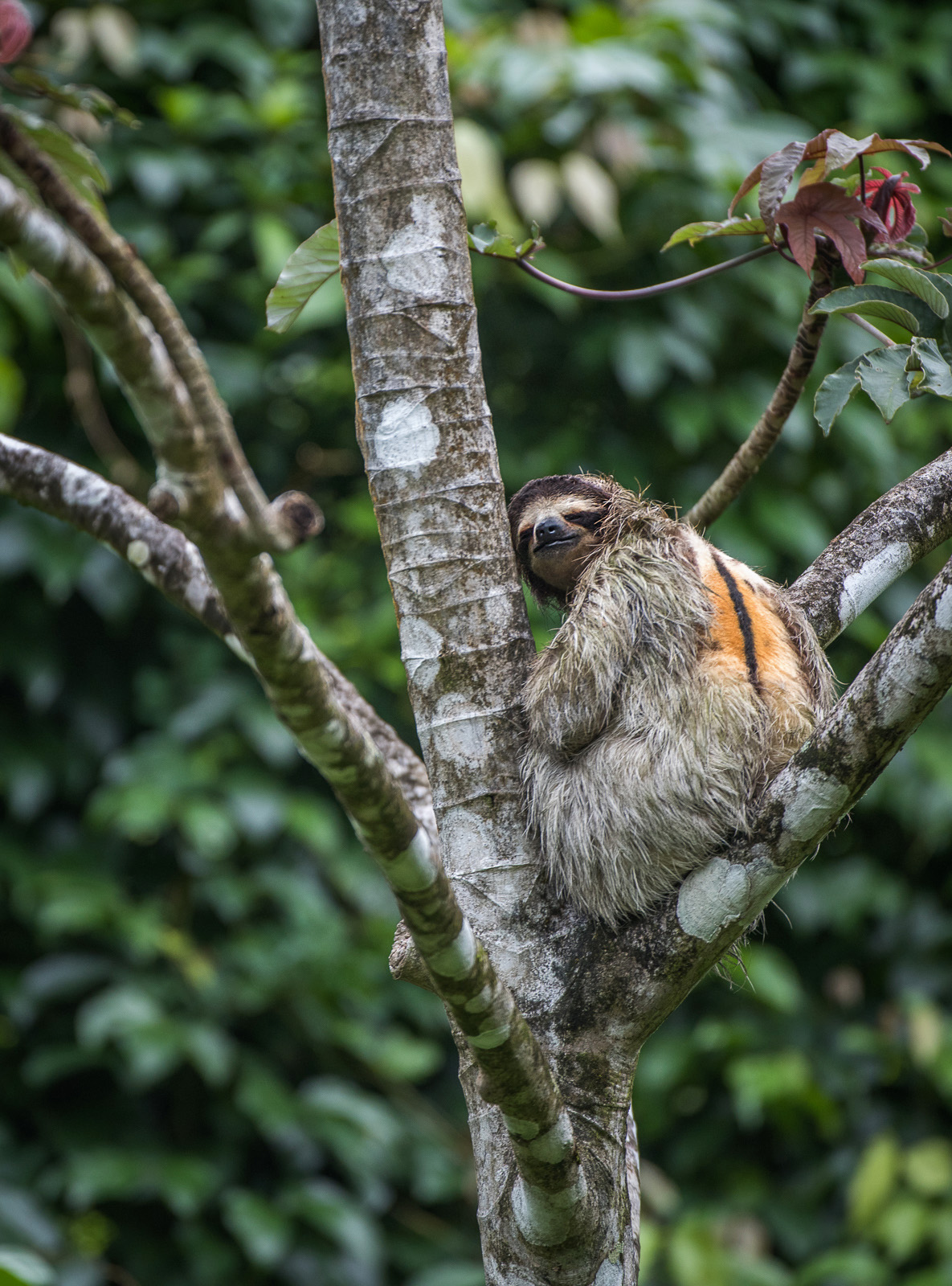
Male three-toed sloths are easily distinguishable from females because they have an orange patch with a black vertical stripe down the middle of their backs. I photographed this sleepy guy one morning in El Valle, Panama. Nikon D810 with Nikkor 200-400mm lens (at 400mm) ISO 400, f/4 at 1/320th of a second
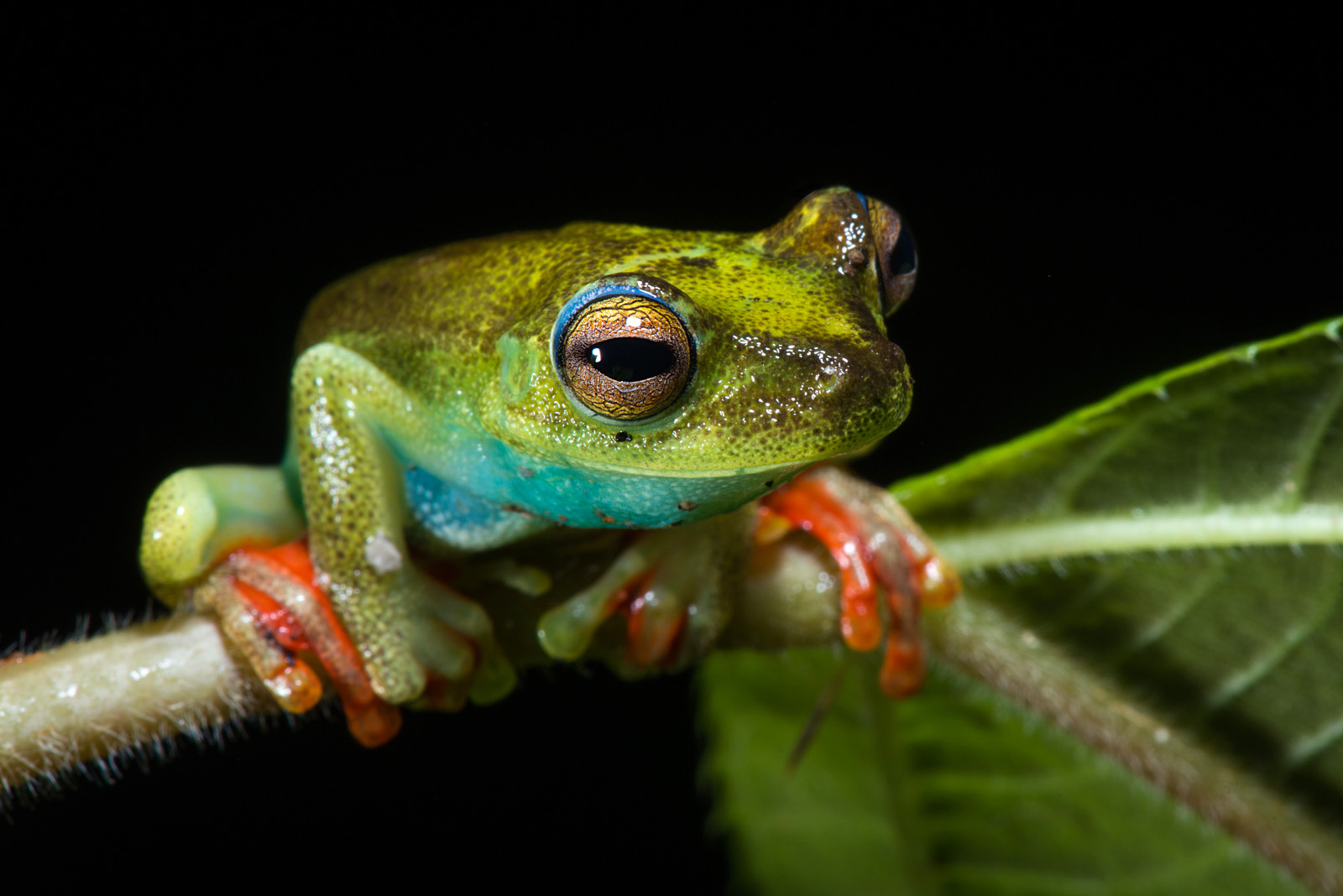
Just a canal zone tree frog sitting on a leaf in El Valle, Panama. The internet doesn’t provide much info on these guys, so let’s just leave it at that. Nikon D800 with Nikkor 105mm macro lens, ISO 200, f/25 at 1/60th of a second, two Nikon SB-900 flash units
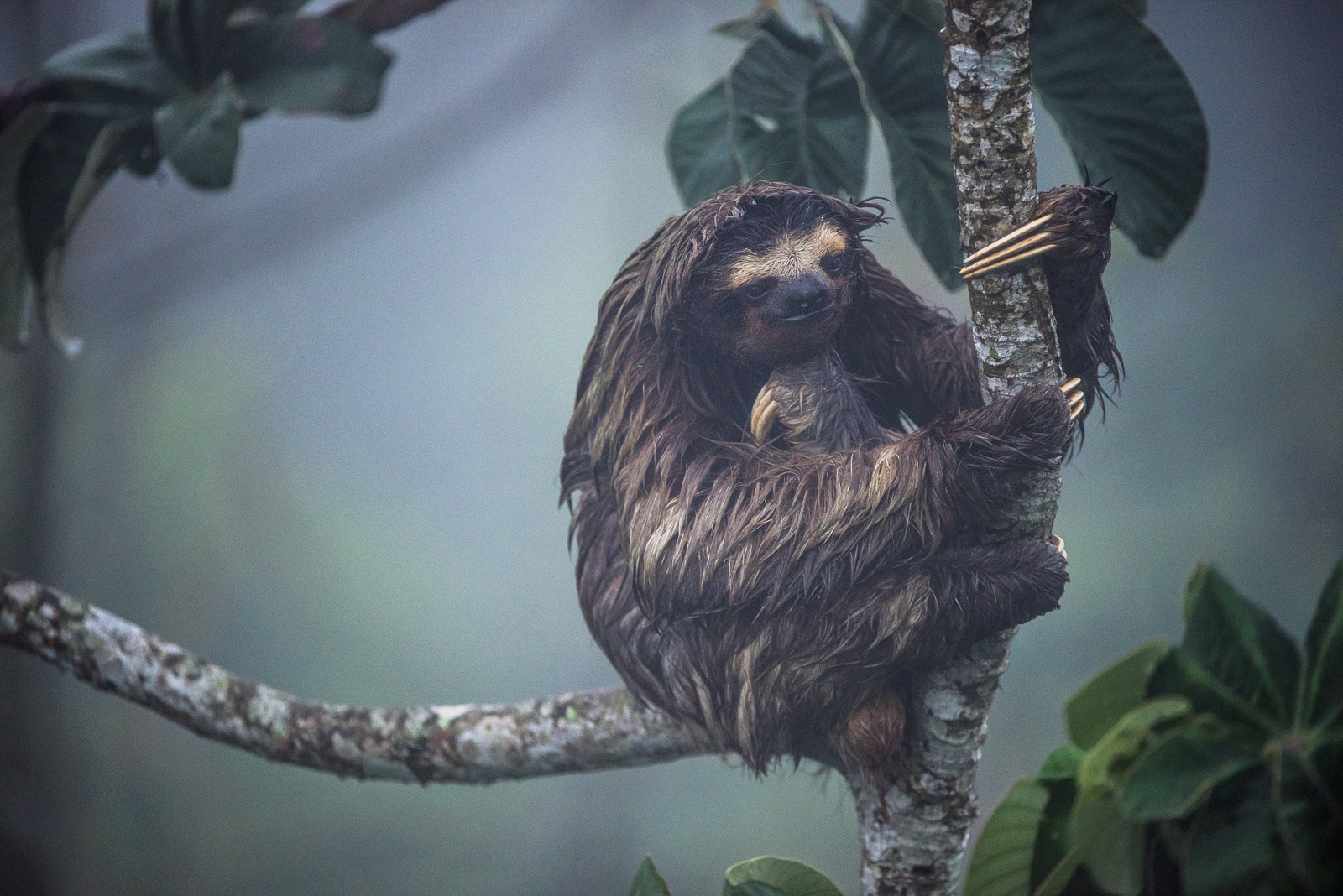
A three-toed sloth clings to a tree on a misty afternoon in Soberania National Park in Panama. I had to keep waiting for the wind to clear the worst of the mist out so that I could even see this guy. Nikon D810 with Nikkor 200-400mm lens (at 350mm) ISO 1600, f/4 at 1/80th of a second
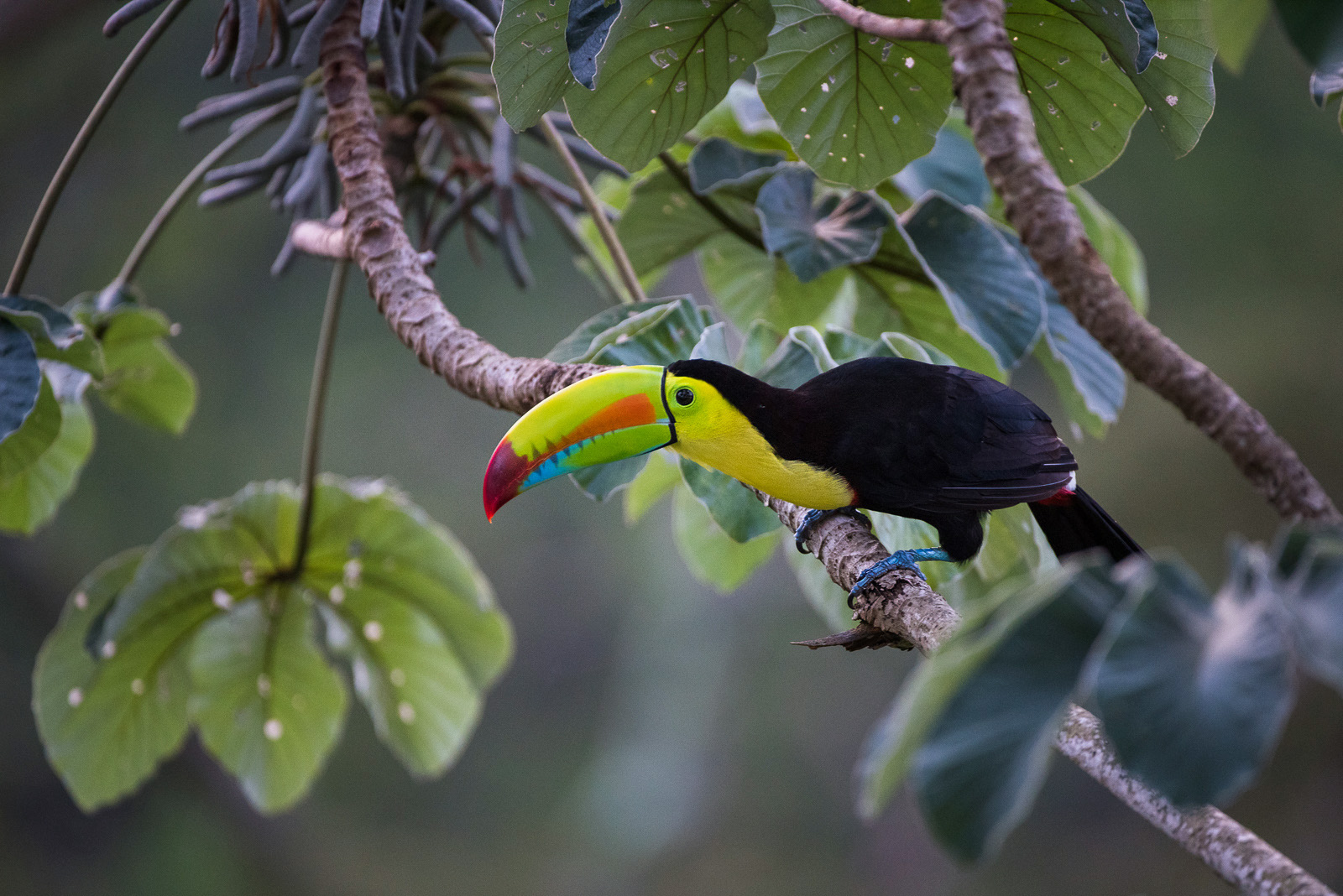
Here’s another keel-billed toucan from my Panama trip last year. I’ve said it before and I’ll say it again — nothing says Central American tropics like the keel-billed toucan. Also known as the rainbow billed toucan, for obvious reasons. Nikon D810 with Nikkor 200-400mm lens (at 400mm) ISO 1600, f/4 at 1/320th of a second
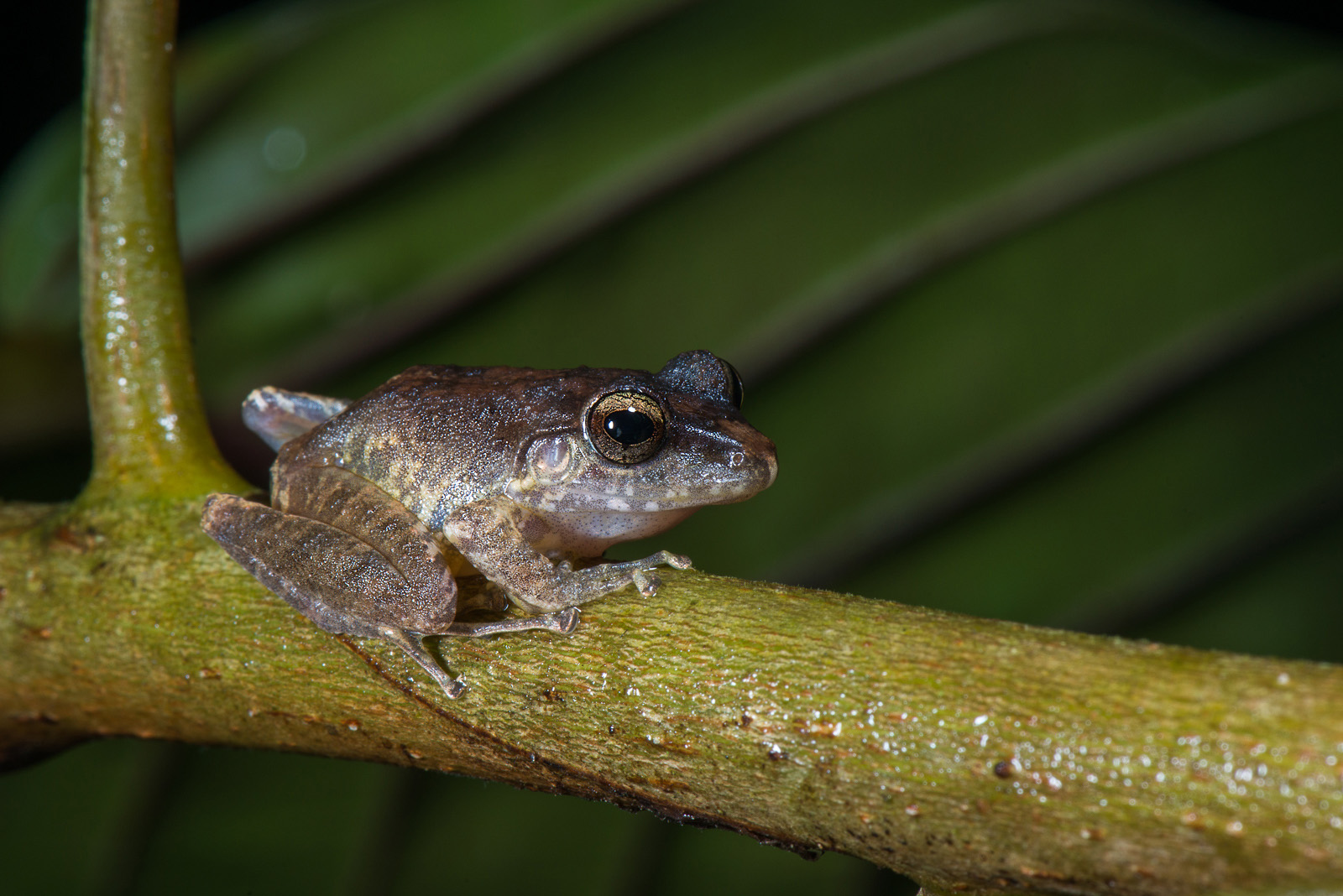
This tiny little guy is called a Fitzinger’s Rain Frog (I’m going to go out on a limb here and say he was discovered by Fitzinger). He was probably no more than an inch in length, but I somehow spotted him while on a hike in El Valle, Panama.Nikon D800 with Nikkor 105mm macro lens, ISO 200, f/25 at 1/60th of a second, two Nikon SB-900 flash units
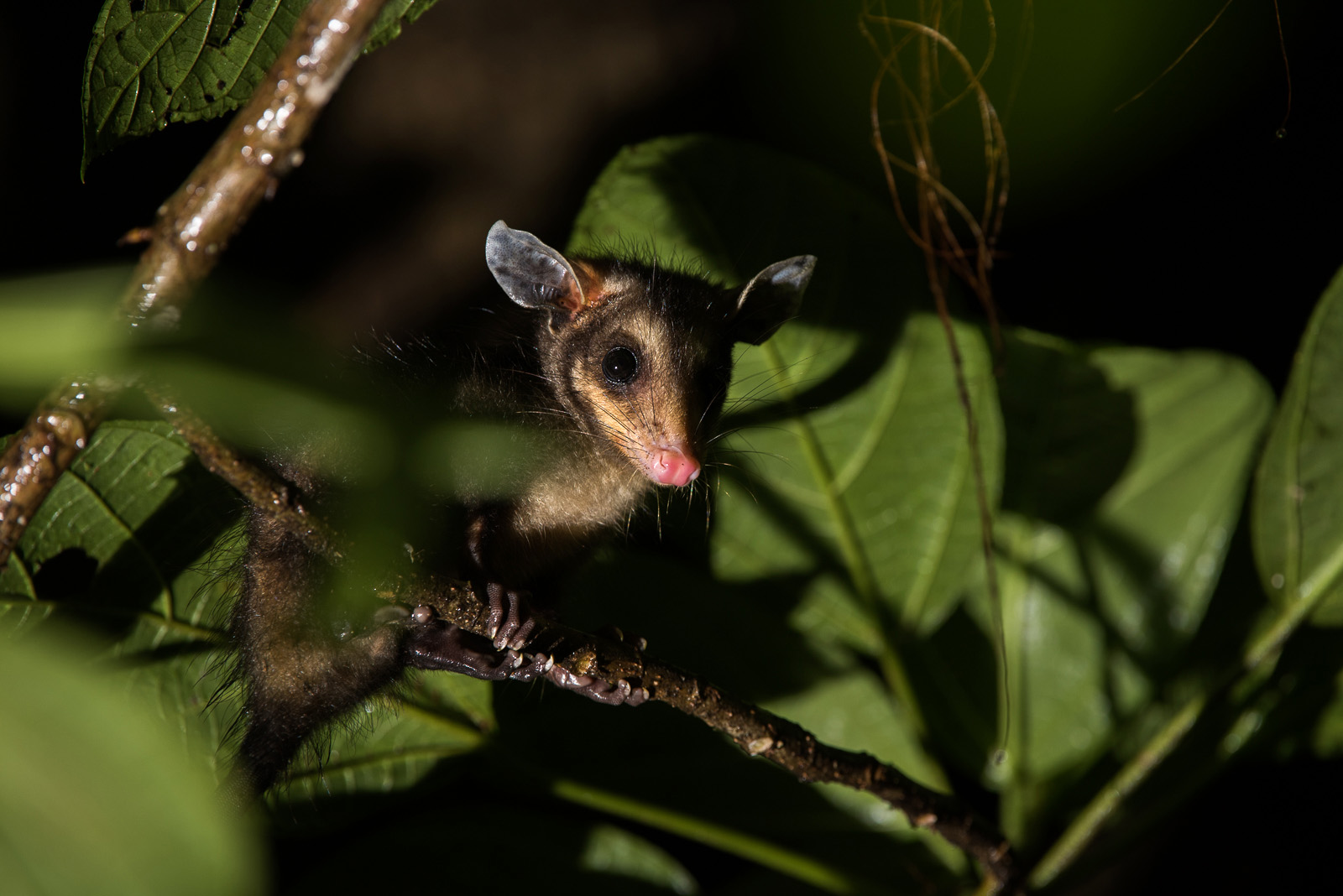
Panama is a great location for nocturnal photography. All sorts of creatures come out as soon as the sun goes in — including quite a few different species of opossum. This one is the four-eyed opossum, named for the bright areas above the eyes that will get more distinct as this youngster grows older. Nikon D810 with Nikkor 200-400mm lens (at 400mm) ISO 500, f/8 at 1/100th of a second, Nikon SB-900 flash
This giant neotropical toad wasn’t exactly pleased, but accepting at least of having his picture taken. He allowed me a few flash bursts before… well, he didn’t go anywhere, just stared at me with that disapproving glare. We were in the town of El Valle in Panama. Nikon D810 with Nikkor 200-400mm lens (at 400mm) ISO 800, f/8 at 1/160th of a second
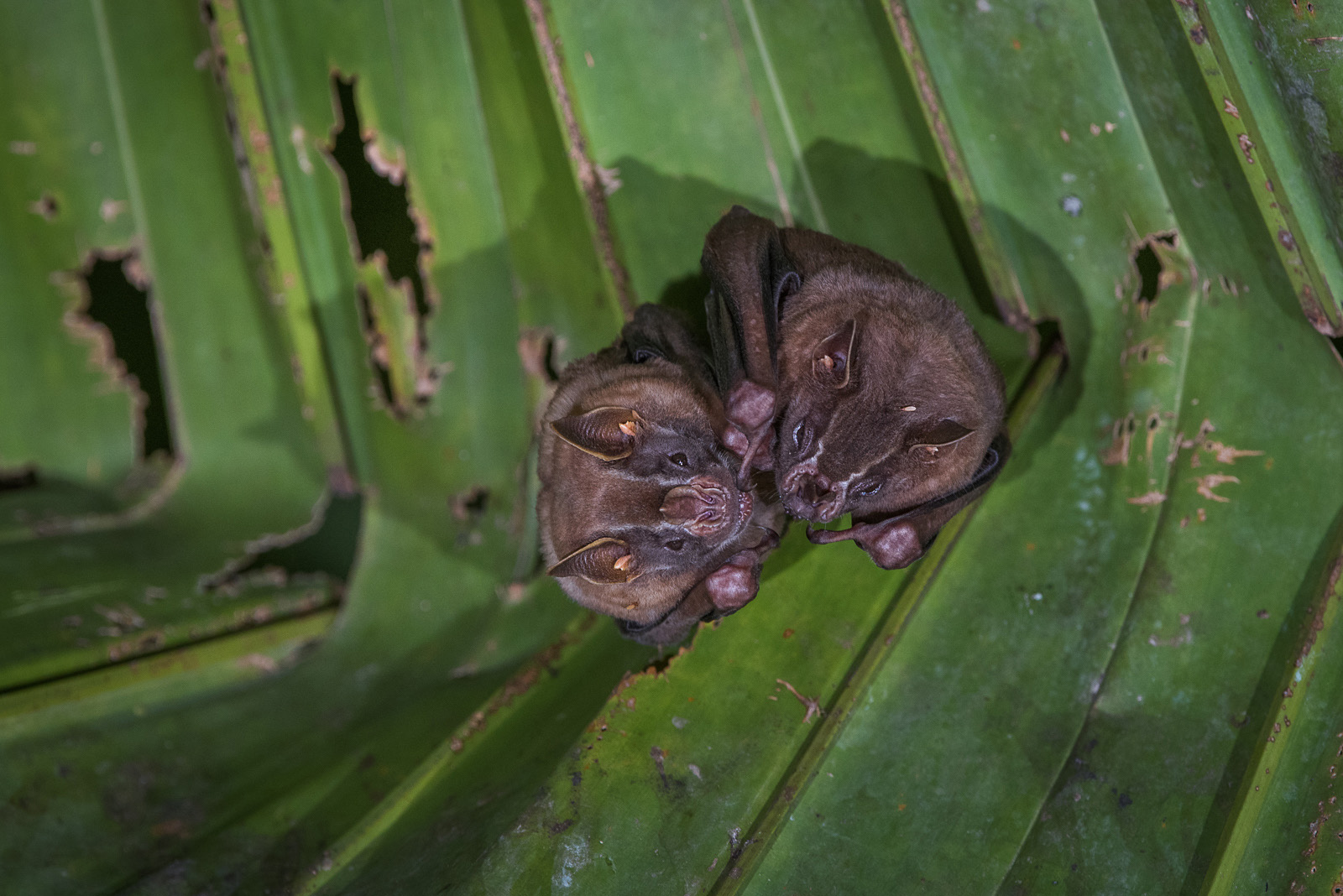
I found these tent-making bats roosting under the broad leaves of a palm tree in a parking lot in Panama (albeit, a parking lot to a park). The bats get their name from the tents that they construct out of leaves, which they then roost under during the day in order to stay dry. There were probably forty of these bats in this single tree. Nikon D810 with Nikkor 200-400mm lens (at 400mm) ISO 800, f/7.1 at 1/125th of a second, two Nikon SB-900 flash units
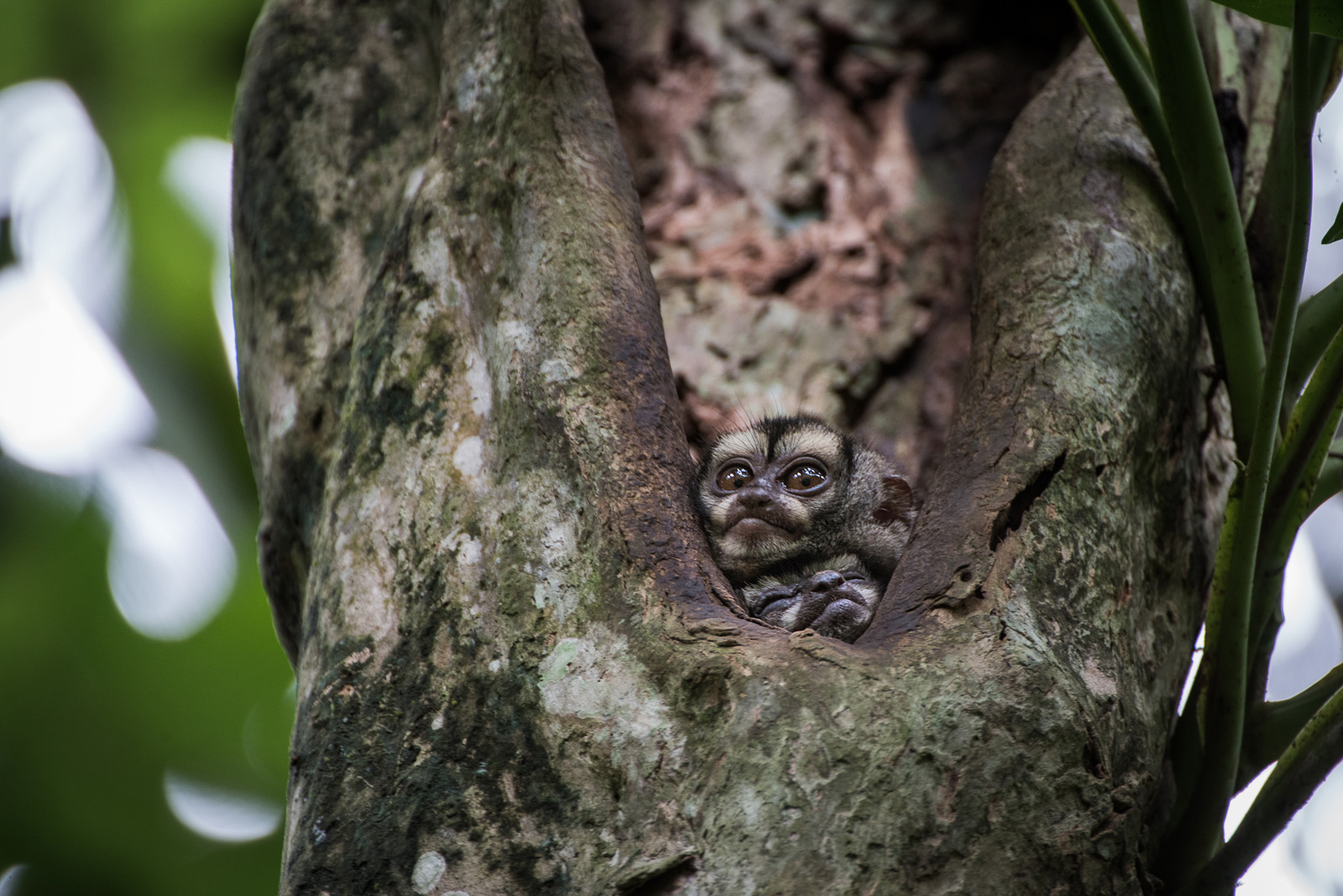
Night monkeys are the only nocturnal monkeys found in the Americas. There are several distinct species, including these two little guys which go by either the Chocoan night monkey or the Panamanian night monkey. I took this photo just before sunset, at about that time that they wearily start to peak out of the tree hollows of their daytime resting spots. You can see the second face, still sleeping, below the top monkey. This one is from Soberania National Park, not far from Panama City. Due to the quickly fading light, I had to use a very slow shutter speed to dig detail out of the shadows. Nikon D810 with Nikkor 200-400mm lens (with 2x teleconverter for 800mm) ISO 800, f/8 at 1/13th of a second
We use cookies to enhance your experience while using our website. If you are using our Services via a browser you can restrict, block or remove cookies through your web browser settings. We also use content and scripts from third parties that may use tracking technologies. You can selectively provide your consent below to allow such third party embeds. For complete information about the cookies we use, data we collect and how we process them, please check our Privacy Policy