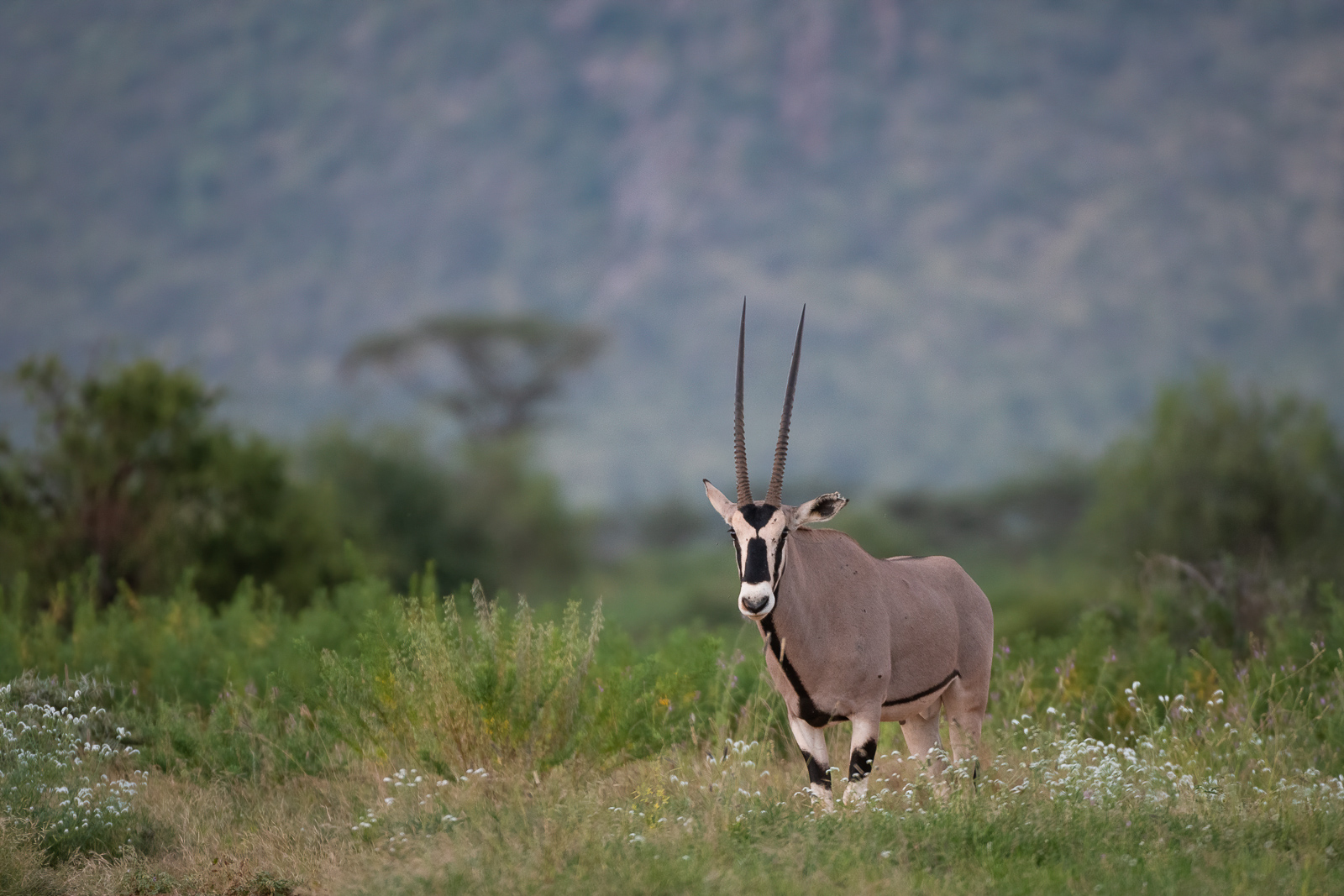
On the other end of the size spectrum from the dik-dik I posted yesterday is the East African oryx. This is one of the larger antelope species to be found in Kenya (the eland is the largest). Also known as the beisa, the oryx is often said to be the inspiration for the unicorn. Photographed in Samburu National Reserve. Nikon D500 with Nikkor 200-400mm lens (at 400mm) ISO 800, f/4 at 1/200th of a second.
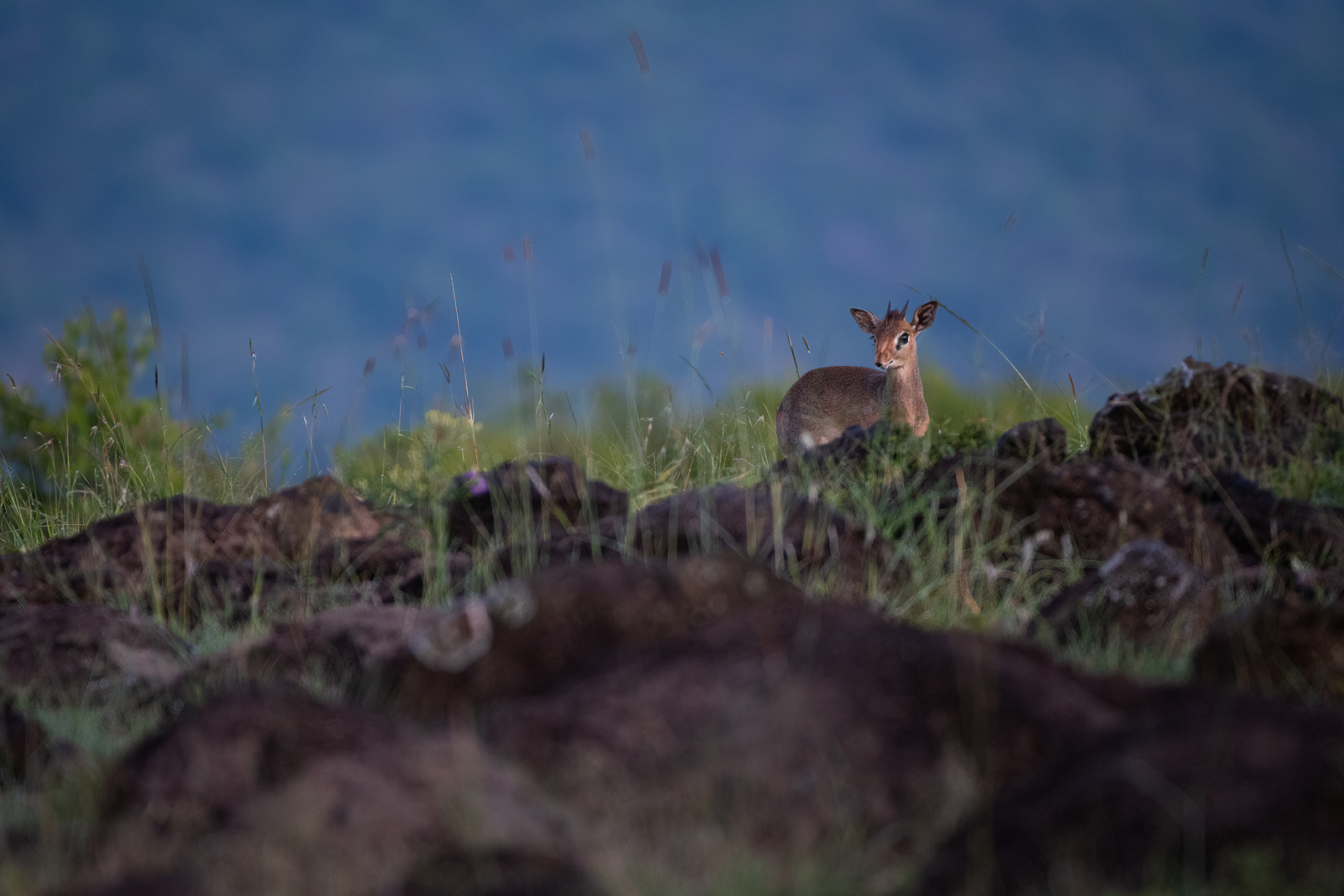
I photographed two different species of dik-dik on this recent trip. The Gunther’s dik-dik and the Kirk’s dik-dik. This is the latter. I saw lots of these guys, usually first thing in the morning and then again later in the day. Dik-diks are the smallest of the African antelopes. It’s hard to illustrate just how small they are without any reference, but to me, they look not much bigger than a jackrabbit. I mean, really small. I captured a lot of frame-filling shots of them, but preferred this composition with the foreground rocks. Photographed in the Maasai Mara of Kenya. Nikon D500 with Nikkor 200-400mm lens (at 400mm) ISO 1600, f/4 at 1/160th of a second.
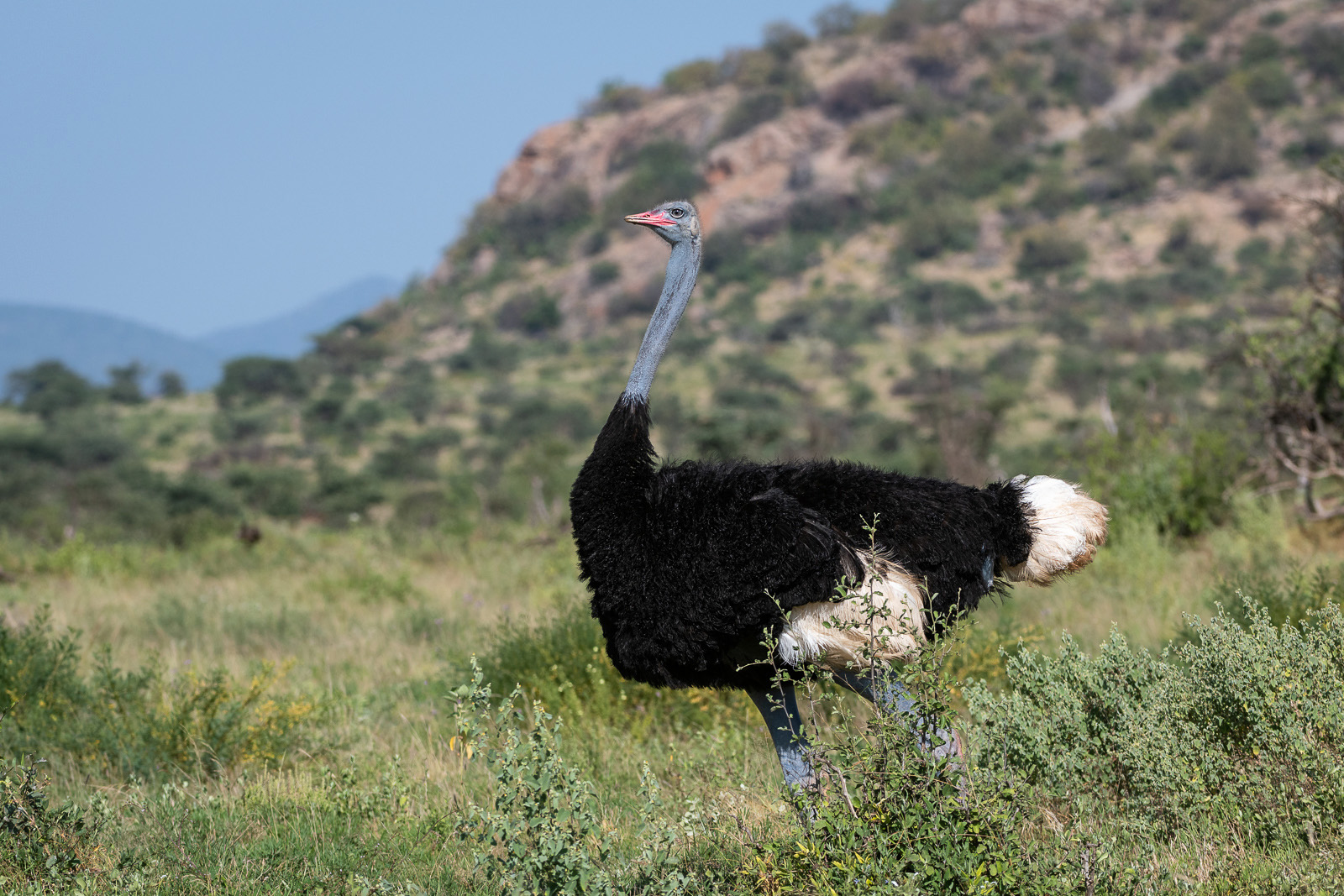
The Somali ostrich, also known as the blue-necked ostrich, was another new species for me. It was previously thought to be a subspecies of the common ostrich but was given its own distinct species designation in 2014. The males, like this one, have the blue neck and legs, which become even more blue during mating season. Photographed in Samburu National Reserve, Kenya. Nikon D500 with Nikkor 200-400mm lens (at 200mm) ISO 200, f/5.6 at 1/1600th of a second.
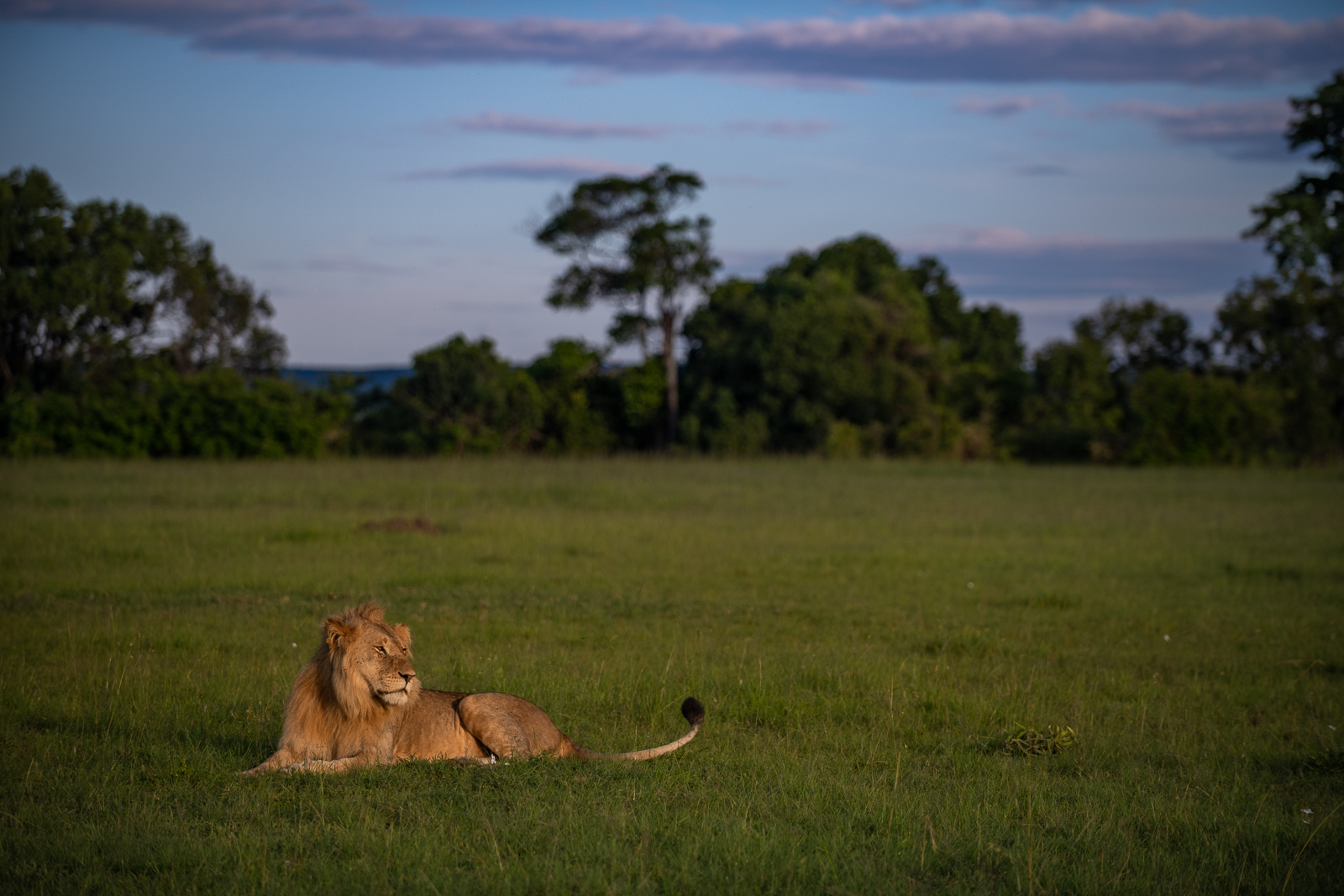
This young male lion hadn’t grown his full mane in just yet. We found him lounging around in the grass one night in the Maasai Mara in Kenya. Nikon D850 with Nikkor 70-200mm lens (at 135mm) ISO 400, f/2.8 at 1/4000th of a second.
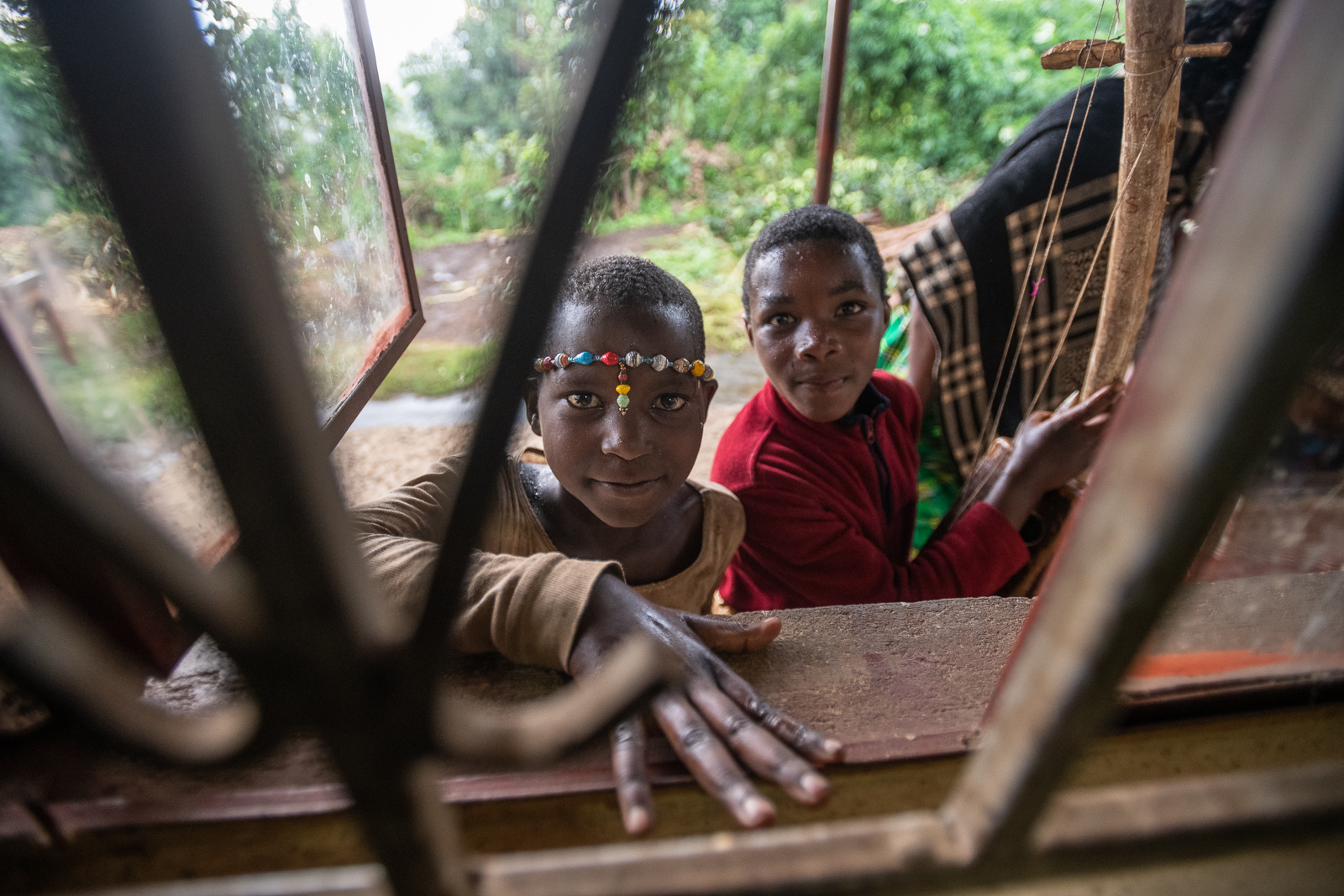
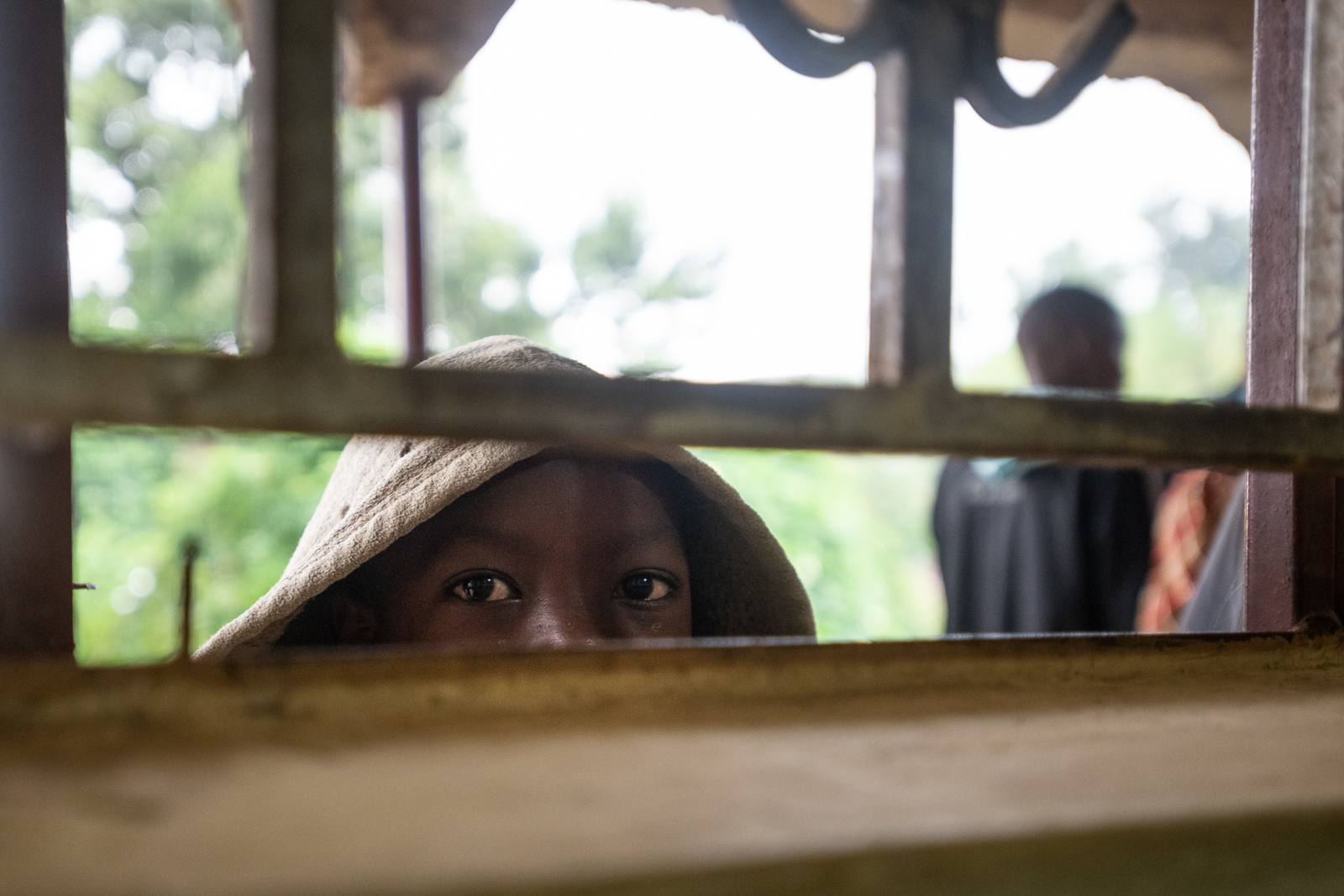
I don’t photograph people very often these days, but while in Kisoro, Uganda we arranged for a visit to one of the local communities. This particular village doesn’t get visitors often and the children were intrigued by my camera and delighted with the resultant images of themselves on the back of my LCD screen. I only wish I could have printed something out for them to keep. These were two of my favorites of a series taken through an open window. Top image: Nikon D850 with Nikkor 17-35mm lens (at 17mm) ISO 1600, f/2.8 at 1/60th of a second. Bottom image: Nikon D850 with Nikkor 17-35mm lens (at 35mm) ISO 1600, f/2.8 at 1/50th of a second.
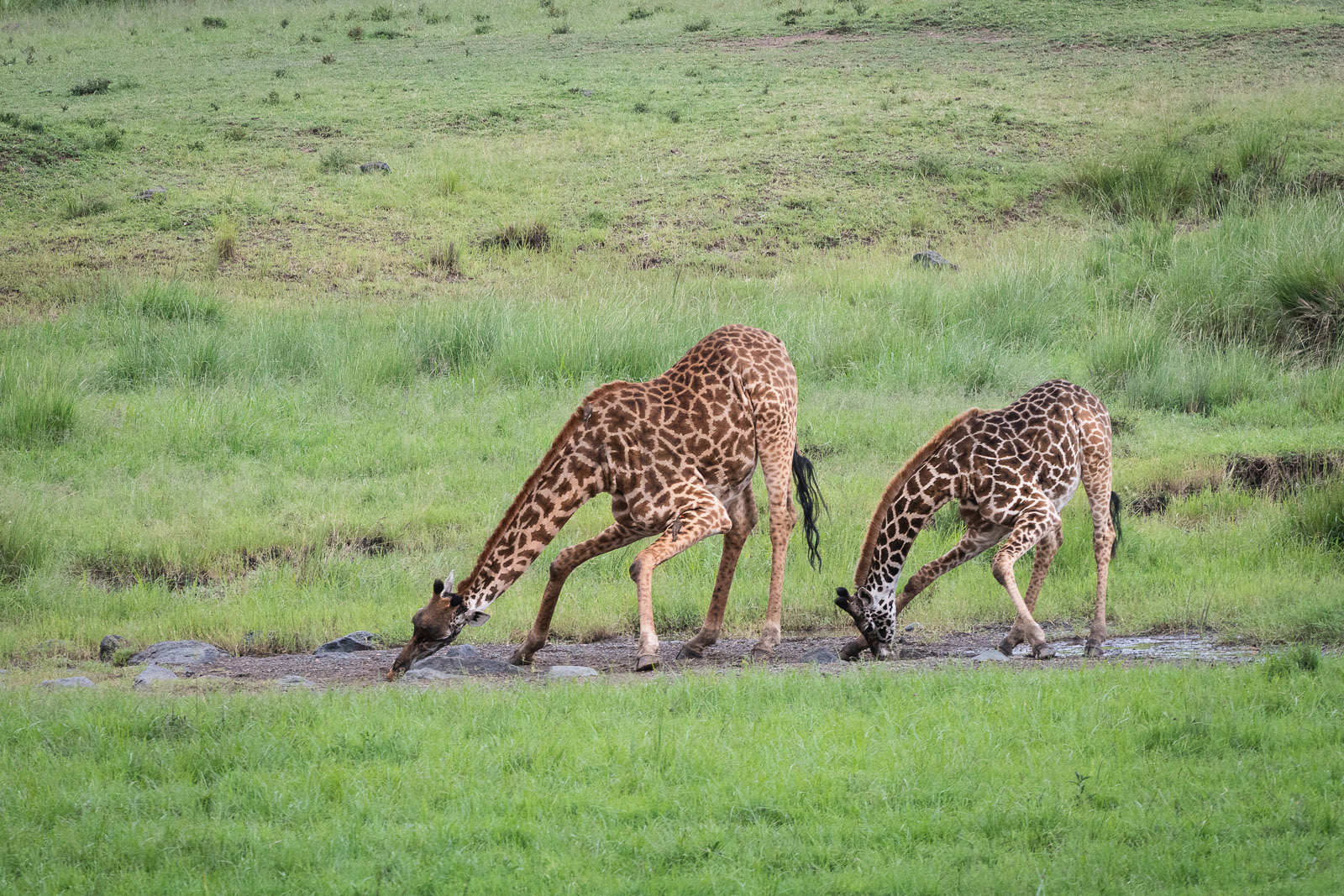
I photographed this one from the back porch of my tent in the Maasai Mara. The camp (Tangulia Mara) is set in a beautiful location up on a hill overlooking a natural salt lick. It really does have a Garden of Eden feel to it. Throughout the day, every kind of animal imaginable stops by to eat and get nutrients from the salt. At one point I counted fourteen giraffes. There were also elephants, baboons, waterbucks, buffalos, hippos, impala, zebras and more. This is a very awkward (and vulnerable) position for a giraffe. In fact, giraffes only drink water once every few days and spend the vast majority of their time standing up, including when they sleep and give birth. That said, they are very cautious about the whole process of splaying out their legs and getting low. These two giraffes seemed to be taking turns. One would go to the ground while the other stood guard. For a brief moment, however, they both got down for a mouthful of salt. Nikon D500 with Nikkor 200-400mm lens (at 400mm) ISO 800, f/8 at 1/640th of a second.
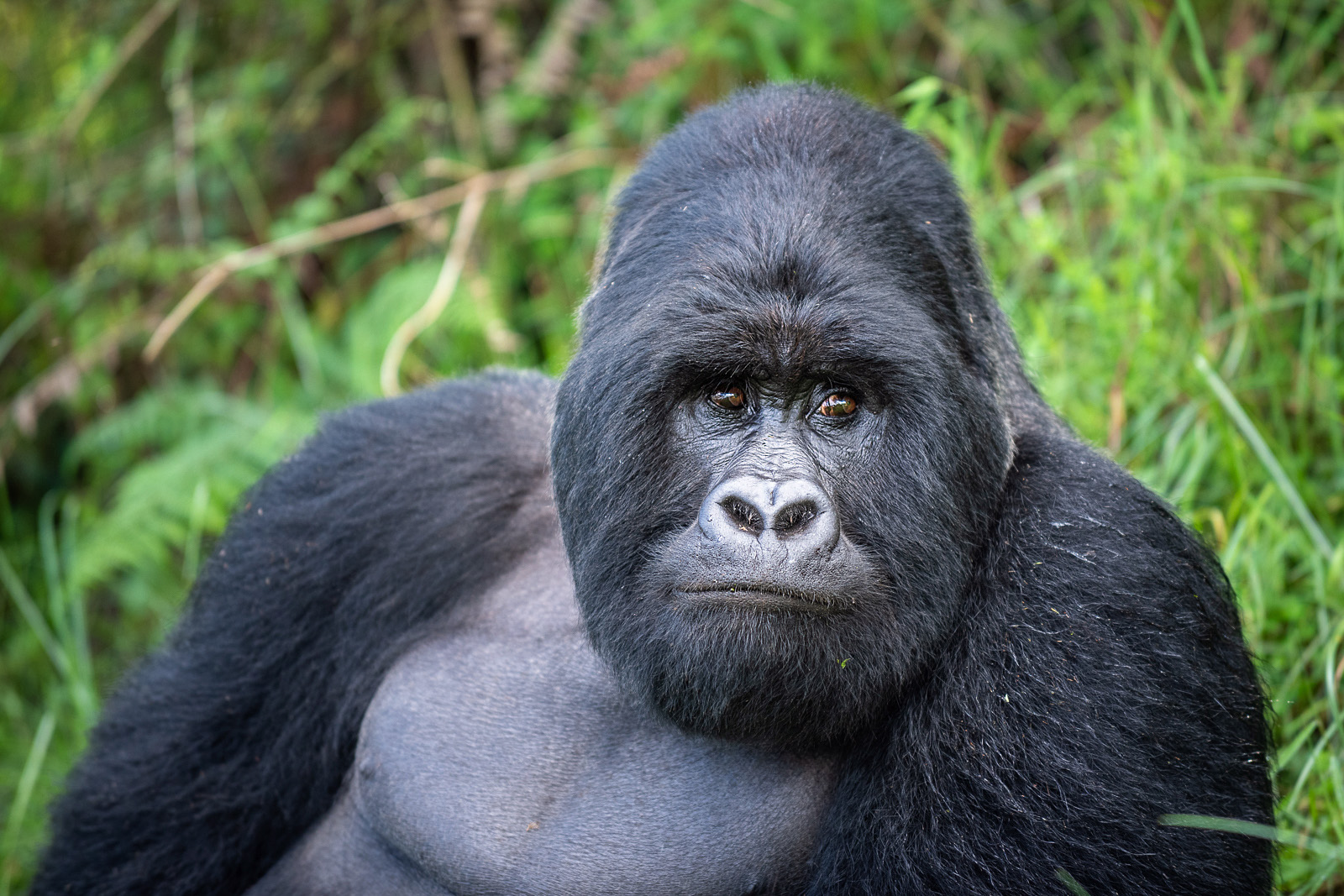
Sometimes a simple headshot works best. This handsome guy was one of three silverbacks we saw in a small troop of nine mountain gorillas. That’s an unusual amount of adult males in such a small troop, but they are all related and thus, get along just fine. At least, for the time being. Eventually, one of the younger males will challenge the older alpha for reproductive rights. Photographed in Mgahinga National Park in Uganda. Nikon D850 with Nikkor 70-200mm lens (at 200mm) ISO 800, f/2.8 at 1/400th of a second.
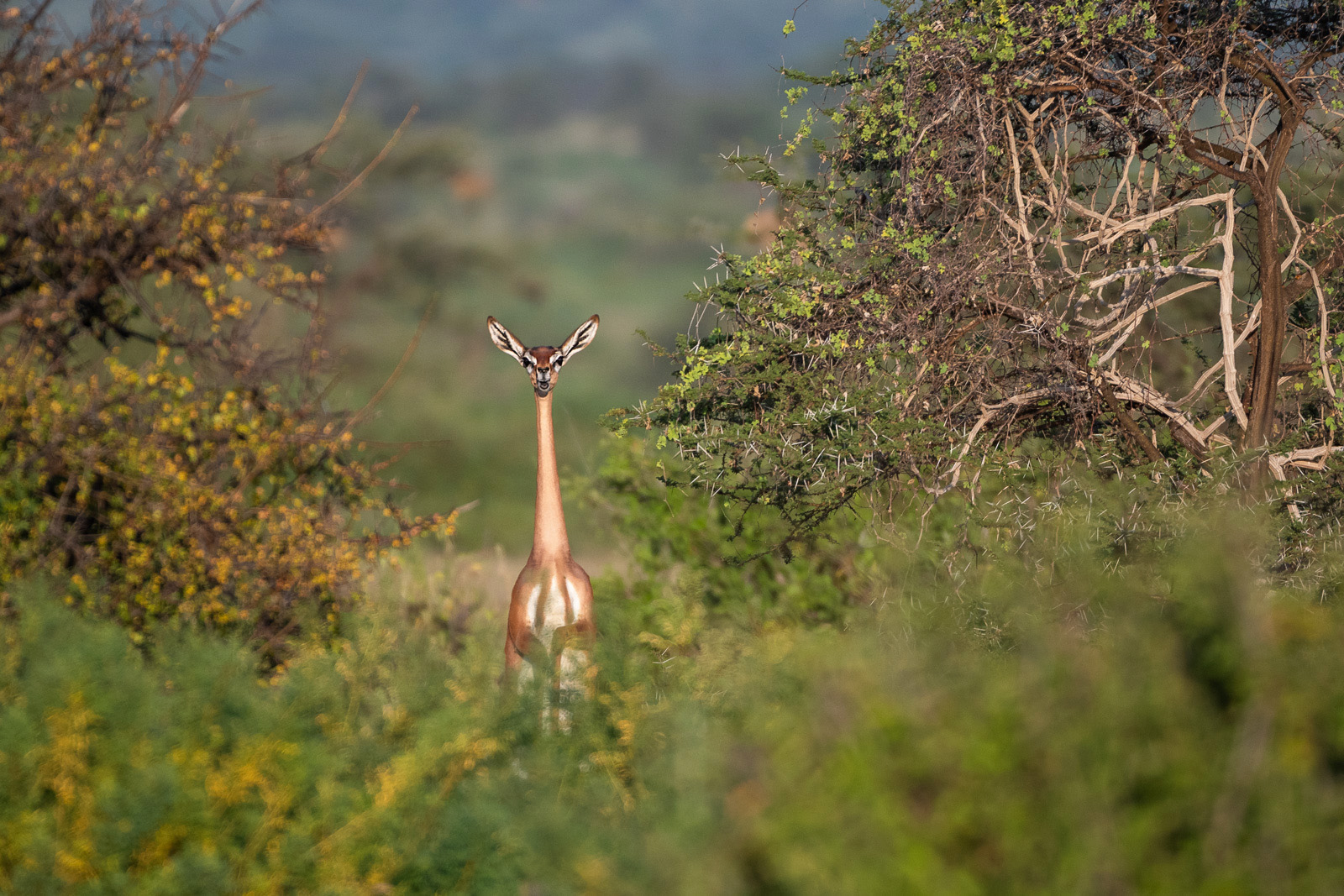
Gerenuk’s are known for their long necks — in fact, they are commonly called giraffe-necked antelope. At times, they will rear back on their hind legs and stand upright while feeding on higher leaves. This female gerenuk was doing just that before turning to look in our direction. Photographed in Samburu National Reserve in Kenya. Nikon D500 with Nikkor 200-400mm lens (at 400mm) ISO 400, f/4 at 1/1600th of a second.
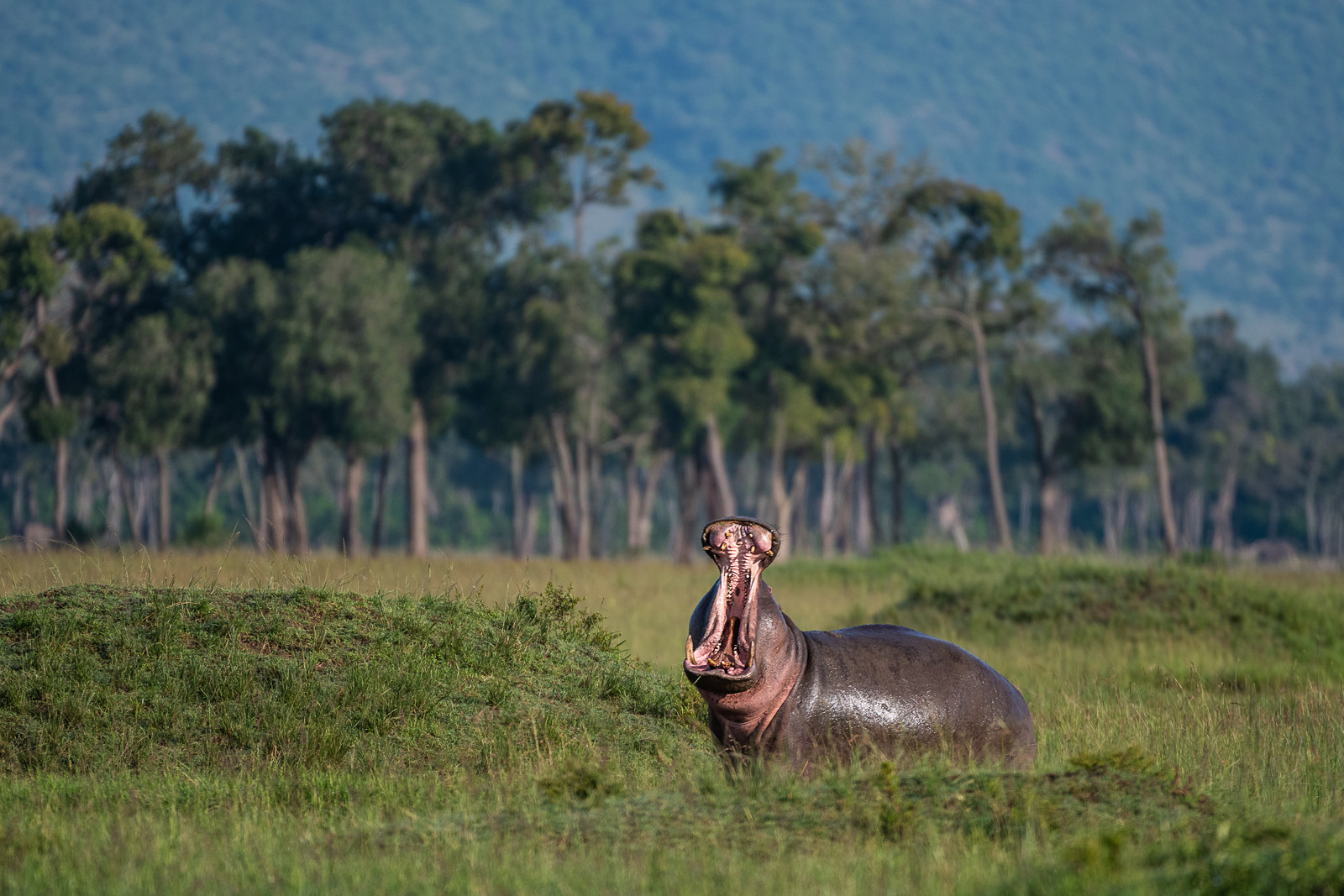
I look for two things when photographing hippos — being out of the water and having the mouth open. This guy granted me both as we drove past. Although it looks as if he might have been reacting to us, he was simply letting out a good yawn. Photographed in the Maasai Mara National Reserve of Kenya. Nikon D500 with Nikkor 200-400mm lens (at 400mm) ISO 400, f/4 at 1/2000th of a second.
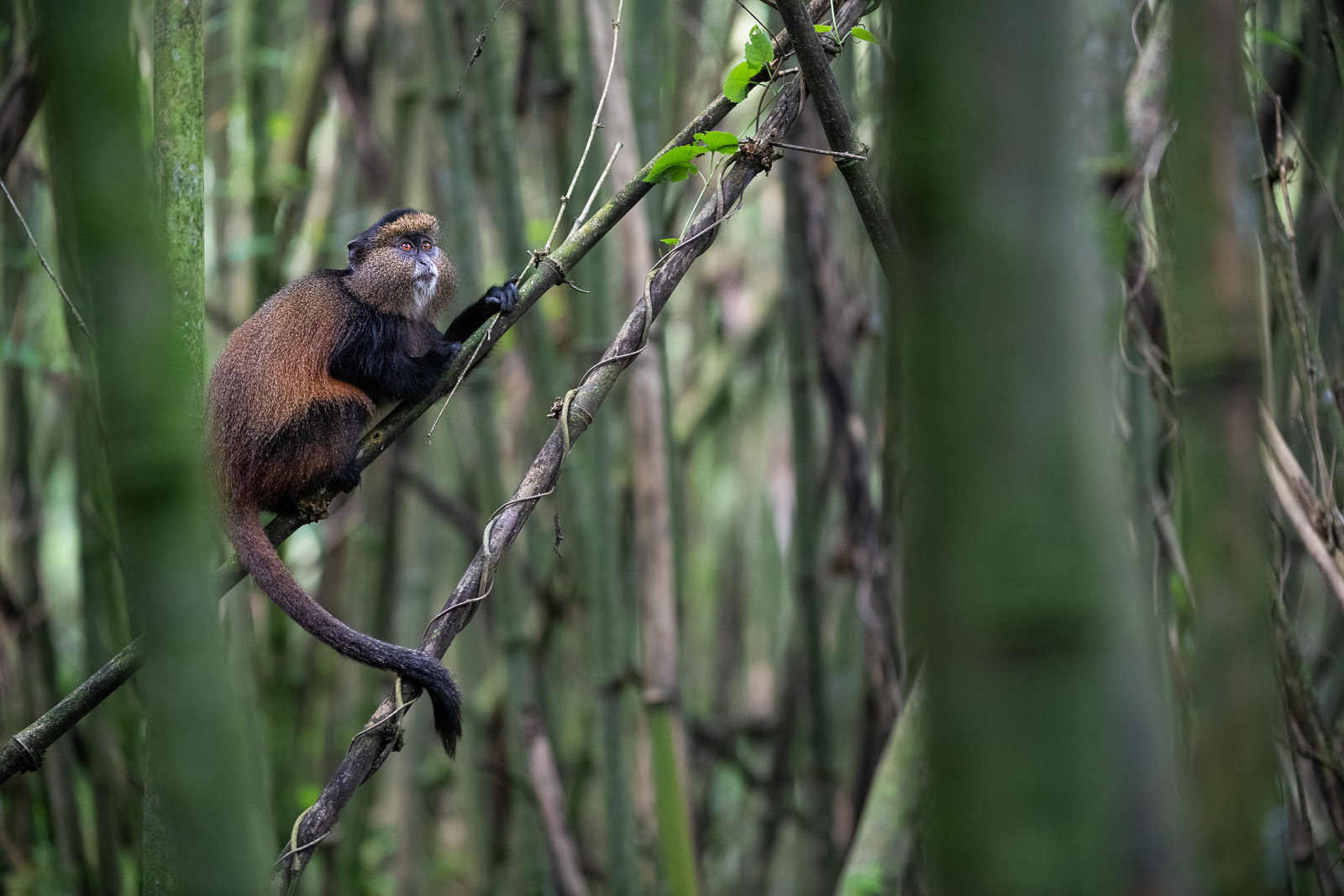
The golden monkey is a new species for me. Previously thought to be a subspecies of the blue monkey (which I have photographed before in Tanzania) it is now listed as a distinct species. They are considered endangered due to continued loss of habitat and wars in their limited range. They exist only in the Virunga mountains that span the border between Uganda, Rwanda and the Congo. They prefer the bamboo forests at higher elevations — their diet consisting mainly of bamboo shoots and leaves. It was a bit of a trek to reach the monkeys (and we passed a few gorillas on the way) but well worth it when we finally came upon a troop of about thirty individuals going about their business of playing, eating and doing all other manner of golden monkey-y things. Photographed in Mgahinga National Park in Uganda. Nikon D850 with Nikkor 200-400mm lens (at 200mm) ISO 3200, f/4 at 1/100th of a second.
We use cookies to enhance your experience while using our website. If you are using our Services via a browser you can restrict, block or remove cookies through your web browser settings. We also use content and scripts from third parties that may use tracking technologies. You can selectively provide your consent below to allow such third party embeds. For complete information about the cookies we use, data we collect and how we process them, please check our Privacy Policy